
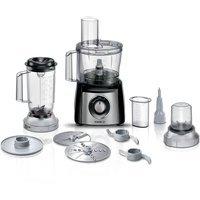
Serie 8 MUMS8ZS00 - Food Processor BOSCH - Free user manual and instructions
Find the device manual for free Serie 8 MUMS8ZS00 BOSCH in PDF.


| Brand | Bosch |
| Model | Serie 8 MUMS8ZS00 |
| Category | Food processor |
| Product type | Multifunction stand mixer |
| Power | Not specified |
| Power supply | 220-240 V ~ 50-60 Hz |
| Main bowl capacity | 6 liters (large bowl) and 5.3 liters (small bowl) |
| Bowl material | Stainless steel |
| Number of speeds | 7 speeds + pulse function (M) and stop (0) |
| Main functions | Kneading, beating, mixing, weighing, timer, automatic programs |
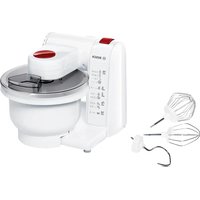
| Included accessories | Professional dough hook, pro beater, Pro Flexi whisk, large bowl, small bowl, lids |
| Integrated scale | Yes, max capacity 5000 g, precision 5 g |
| Timer | Integrated, allows setting processing time |
| Automatic programs | Yes, for cream, egg whites, doughs (yeast, shortcrust, cake), sorbet maker (with accessory) |
| Safety | Anti-start, anti-restart, overload protection, pivoting arm safety |
| Maintenance and cleaning | Bowl and accessories dishwasher-safe; base unit clean with damp cloth |
| Weight | Approximately 10 kg (estimate) |
| Dimensions (W x D x H) | Approximately 38 x 25 x 35 cm (estimate) |
| Cord length | Approximately 1.2 m (estimated) |
| Warranty | See manual for conditions |
| Repairability | Spare parts available through Bosch customer service |
| Additional information | EasyArm Lift pivoting arm, indicator light ring |
Frequently Asked Questions - Serie 8 MUMS8ZS00 BOSCH
User questions about Serie 8 MUMS8ZS00 BOSCH
0 question about this device. Answer the ones you know or ask your own.
Ask a new question about this device
Download the instructions for your Food Processor in PDF format for free! Find your manual Serie 8 MUMS8ZS00 - BOSCH and take your electronic device back in hand. On this page are published all the documents necessary for the use of your device. Serie 8 MUMS8ZS00 by BOSCH.
USER MANUAL Serie 8 MUMS8ZS00 BOSCH
Register your new device on MyBosch now and get free benefits: bosch-home.com/welcome
Series 18
MUMS8...
[en] Information for Use Universal kitchen machine 20
https://digitalguide.bsh-group.com/?mat-no=8001357049
[en] You can find additional information and explanations online. Scan the QR code on the title page.


2
3
4
5
6
7
8
9
10
12
Therefore, m = 3/11
14
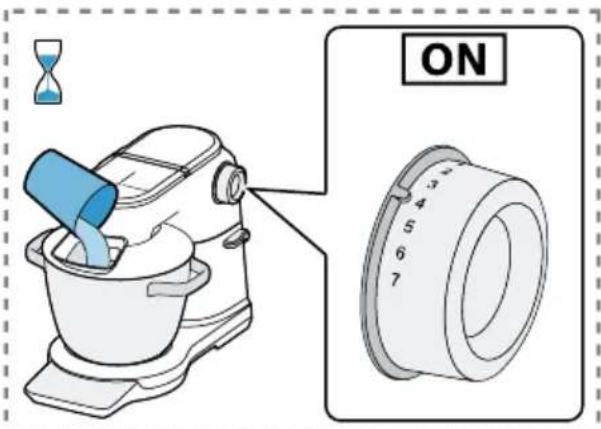
Therefore, m = 3/11
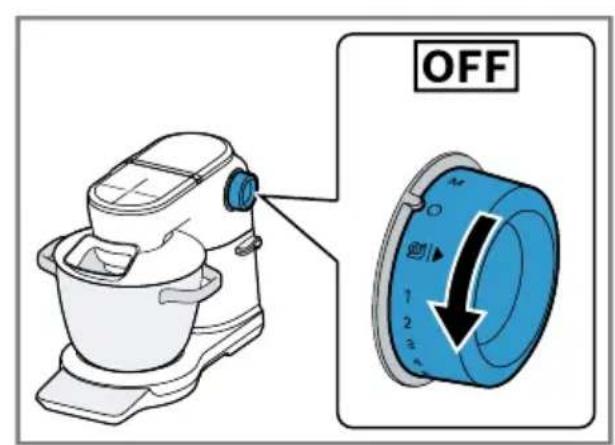
16
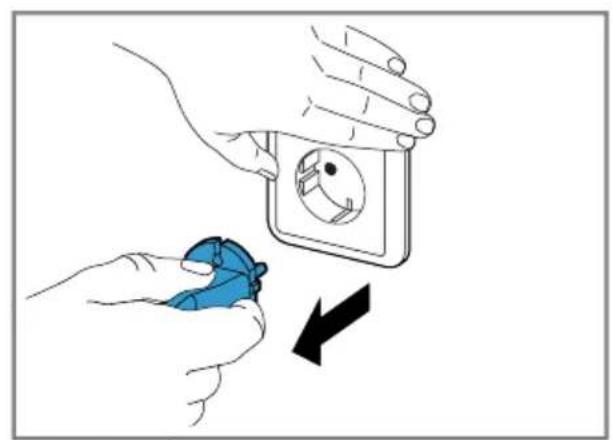
17
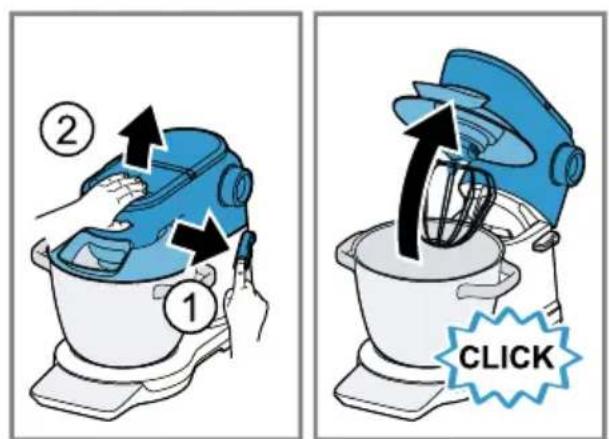
18
20
22
 | √ | × | × | × | × |
 | √ | √ | √ | √ | √ |
24
 |  |  |  |  |  A A | |
 |  |  | 200 - 1700 ml300 - 1700 ml | 7 | 11/2 - 8 min | √ |
 |  | 2 - 16 x | 7 | 4 - 9 min | √ | |
 | 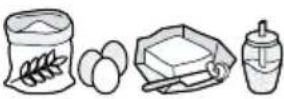 | 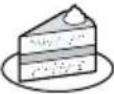 | 550 - 3600 g | 7 | 30 s3 - 7 min | √ |
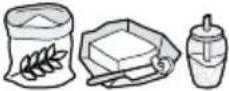 | 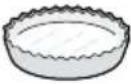 | ≤ 500 g350 - 1100 g | 4 | 30 s1 - 3 min | √ | |
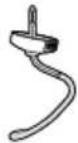 | 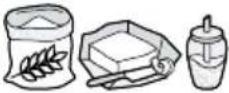 |  | > 500 g1100 - 2400 g | 3 | 30 s3 - 6 min | √ |
 |  | 250 - 1000 g | 3 | 30 s3 - 6 min | √ | |
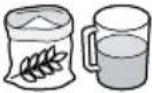 |  | 350 - 1700 g3000 g | 3 | 30 s6 - 10 min | √ | |
 |  | 350 - 1500 g | 3 | 30 s6 - 10 min | × | |
 |  |  |  |  |  | |
 |  |  | 200 - 500 ml | 7 | 11/2 - 4 min | |
 |  | 2 - 12 x | 7 | 4 - 9 min | ||
 |  |  | 550 - 2000 g | 7 | 30 s | |
 |  | 350 - 500 g | 4 | 30 s | ||
| 2 - 6 min | ||||||
 |  |  | 250 - 750 g | 3 | 30 s | |
| 3 - 6 min | ||||||
 |  | 350 - 1000 g | 3 | 30 s | ||
| 2000 g | 3 | 6 - 10 min | ||||
 |  | 350 - 1000 g | 3 | 30 s | ||
| 3 | 6 - 10 min | |||||
Safety
- Read this instruction manual carefully. ■ Please note the additional instructions when using supplied or optionally available accessories.
- Keep the instruction manual and the product information safe for future reference or for the next owner. ■ Do not connect the appliance if it has been damaged in transit.
Only use this appliance:
■ with genuine parts and accessories. ■ for mixing, kneading and beating food. ■ for additional applications described in the instructions for accessories that are optional or come with the appliance. ■ under supervision. ■ for normal processing quantities and for normal processing times for domestic use. ■ in private households and in enclosed spaces in a domestic environment at room temperature. ■ up to an altitude of max. 2000 m above sea level.
The appliance must always be disconnected from the mains after each use, whenever it is left unattended, prior to assembly, disassembly or cleaning, when approaching rotating parts and in the event of an error.
This appliance can be used by persons with reduced physical, sensory or mental capabilities or a lack of experience and/or knowledge if they have been given supervision or instruction concerning use of the appliance in a safe way and if they understand the hazards involved.
Do not let children play with the appliance.
Cleaning and user maintenance must not be performed by children.
The appliance must not be used by children. Keep children away from the appliance and power cord.
▶ Never operate a damaged appliance. ▶ Never operate an appliance with a cracked or fractured surface. ▶ Never pull on the power cord to unplug the appliance. Always unplug the appliance at the mains. - If the appliance or the power cord is damaged, immediately unplug the power cord or switch off the fuse in the fuse box. ▶ Call customer service.→Page 28
- Connect and operate the appliance only in accordance with the specifications on the rating plate.
- Repairs to the appliance should only be carried out by trained specialist staff.
▶ Only use genuine spare parts when repairing the appliance.
- If the power cord of this appliance is damaged, it must be replaced by the manufacturer, the manufacturer's Customer Service or a similarly qualified person in order to prevent any risk.
▶ Never immerse the appliance or the power cord in water or clean in the dishwasher.
▶ Only use the appliance in enclosed spaces.
▶ Never expose the appliance to intense heat or humidity.
- Do not use steam- or high-pressure cleaners to clean the appliance.
▶ Never let the power cord come into contact with hot appliance parts or heat sources.
▶ Never let the power cord come into contact with sharp points or edges.
▶ Never kink, crush or modify the power cord.
▶ Never place the appliance on or near hot surfaces.
- Keep hands, hair, clothing and utensils away from rotating parts.
▶ Only attach and remove tools and accessories once the drive has stopped and you have unplugged the appliance.
Before changing tools or cleaning the appliance, switch off and disconnect it from the mains.
- Only use the tools when the bowl is inserted and the drive covers are in place.
▶ Never open the swivel arm during processing.
- Parts which show cracks or other damage or do not fit correctly must be replaced with genuine spare parts.
- Do not reach into the bowl or housing when lowering the swivel arm.
- Keep packaging material away from children.
- Do not let children play with packaging material.
- Keep small parts away from children.
- Do not let children play with small parts.
▶ Follow the cleaning instructions.
- Clean surfaces which come in contact with food before each use.
Avoiding material damage
▶ Never use different drives at the same time. - Observe the colour coding marked on the accessories and drive. ▶ Never operate the appliance longer than necessary. ▶ Do not operate the appliance at no-load. ▶ Never use genuine parts and accessories for other appliances. - Do not exceed maximum processing quantities. Before use, check the bowl for foreign objects and remove. - Do not place the appliance on moving or vibrating surfaces.
Familiarising yourself with your appliance
Overview
After unpacking all parts, check for any damage in transit and completeness of the delivery.
→Fig. 1
| 1 | Control panel |
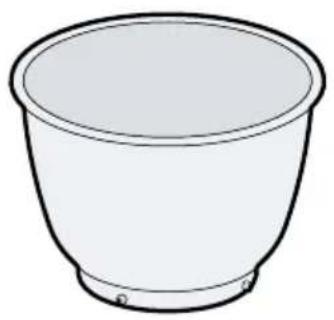
| 2 | Large mixing bowl, 6.0 l |
| 3 | Lid with integrated filling shaft |
| 4 | Protective cover for drive 2 |
| 5 | Protective cover for drive 3 |
| 6 | Illuminated ring |
| 7 | Rotary switch |
| 8 | Swivel arm |
| 9 | Release button for swivel arm |
| 10 | Drive 2, yellow |
| 11 | Drive 3, red |
| 12 | Main drive, black |
| 13 | Recesses for bowl |
| 14 | Cord storage |
| 15 | Small mixing bowl, 5.3 l 1 |
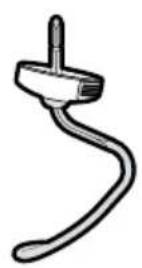
| 16 | Professional kneading hook |
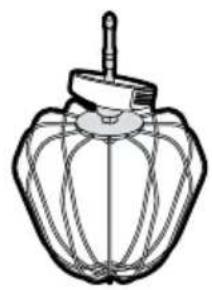
| 17 | Professional beating whisk |
| 18 | Professional flexible stirrer |
Rotary switch
| Symbol Description | |
| ○ | Stop processing. |
| ▶ | Depending on the application:▪ Fold in food at the lowest speed.▪ Start automatic programme. |
| 1 | Low speed |
| 7 | Maximum speed |
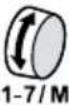
| M | Non-locking switch: highest speed as long as the rotary switch is held in this position |
Tip: You can change the speed at any time during processing or interrupt processing.
Illuminated ring
The illuminated ring on the rotary switch informs you about the operating status of your appliance.
Display Status
| The illuminated ring lights up and processing is underway. | The appliance is functioning perfectly. |
| The illuminated ring flashes and processing cannot start or continue. | A safety system has been activated.There is a fault with the appliance. |
Tip: You can find further information here:
→ "Safety systems", Page 24
→ "Troubleshooting", Page 28
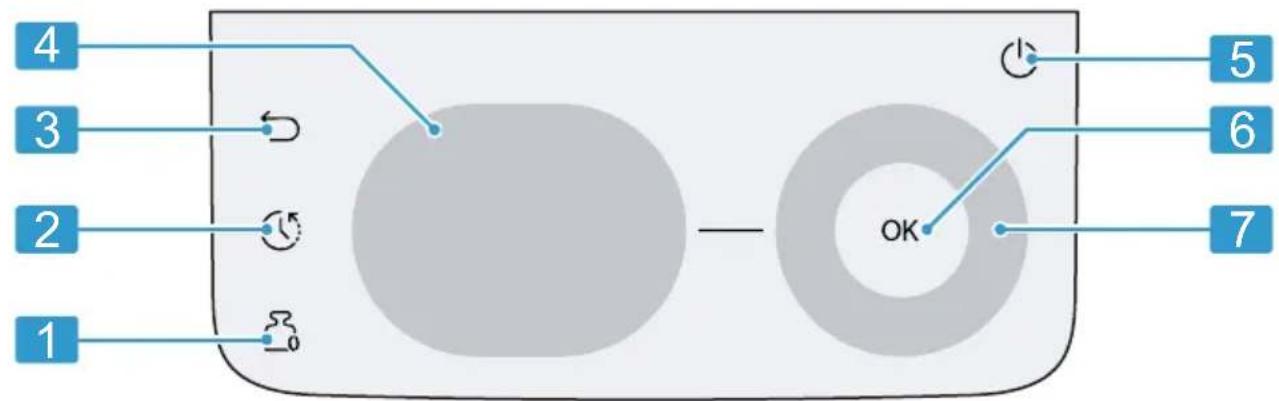
Control panel
→Fig. 2
| 1 | Scales |
| 2 | Timer |
| 3 | Back button |
| 4 | Display |
| 5 | On/off button |
| 6 | OK button |
| 7 | Navigation ring |
Function buttons
| Symbol Function | |
| Use scales or set scales to 0 (tare). | |
| Use timer. | |
| Navigate back in the menu. | |
| Switch the display on or off. | |
| OK | Confirm a selection or entry. |
Note: Press the buttons with your fingers without wearing rubber/oven gloves. Do not operate buttons with objects, e.g. a wooden spoon.
Navigation ring
The navigation ring is a round, touch-sensitive surface on the control panel.
To navigate in the menus or adjust values, place your finger in the recessed ring and move it slowly, following the shape.
Move clockwise:
■ Scroll down in menus.
■ Increase values.
Move anticlockwise:
■ Scroll up in menus.
■ Reduce values.
Display
The display shows selection options, settings and values, as well as messages about the operation status.
Note: The display will switch off automatically if the appliance is not operated for a given period of time. To reactivate the display, press the on/off button, turn the rotary switch or move the swivel arm.
Swivel arm and drives
If the release button is pressed, the swivel arm can be moved to the required position.
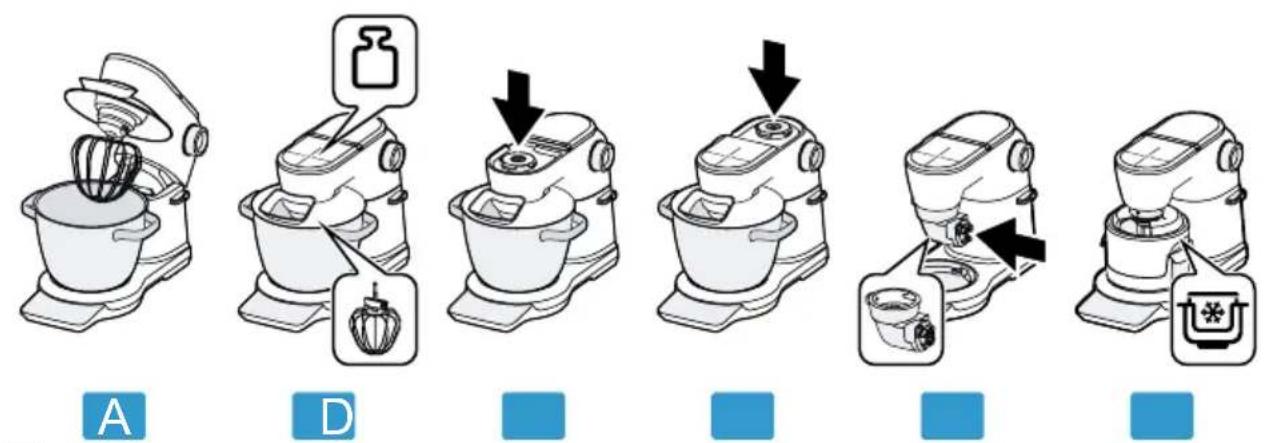
→Fig. 3
Preparation:

■ Insert or remove bowl ■ Attach or remove lid - Insert or remove tool ■ Add greater quantities to the bowl
Main drive:

Processing food with the tools
Weighing area:
Using the scales
| C | Drive 2: Use accessories, e.g. Continuous feed shredder. |
| D | Drive 3: Use accessories, e.g. To-Go blender jug. |
| E | Main drive with universal adapter: Use accessories, e.g. Meat mincer. |
| F | Main drive: Using Ice cream maker |
Note: The swivel arm features the EasyArm Lift function. This function supports upwards movement of the swivel arm.
Tools
Tools Use
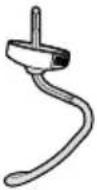 | Professional kneading hook■ Knead dough, e.g. yeast dough, bread dough, pizza dough, pasta dough, pastry dough.■ Fold food into the dough, e.g. seeds. |
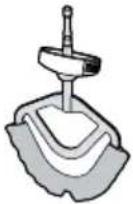 | Professional flexible stirrer■ Mix dough, e.g. cake mixture, fruit flan.■ Fold food into the dough, e.g. raisins, chocolate chips. |
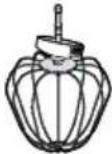
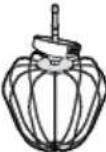
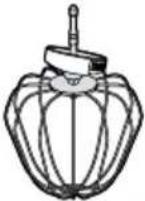 | Professional beating whisk■ Beat whipped egg whites and cream (at least 30% fat).■ Mix light dough, e.g. sponge mixture. |
Fine adjustment of the professional whisk
Use the fine adjustment system to correct the distance between the bowl and the professional beating whisk.
Note: The professional beating whisk has been factory-set so that the food is mixed together perfectly.
Correcting tool adjustment
▶ Never operate a tool that touches the bowl.
Requirements
■ The mains plug is not inserted. ■ The swivel arm is open.
Familiarising yourself with your appliance
■ The professional beating whisk is inserted. ■ The bowl has been inserted.
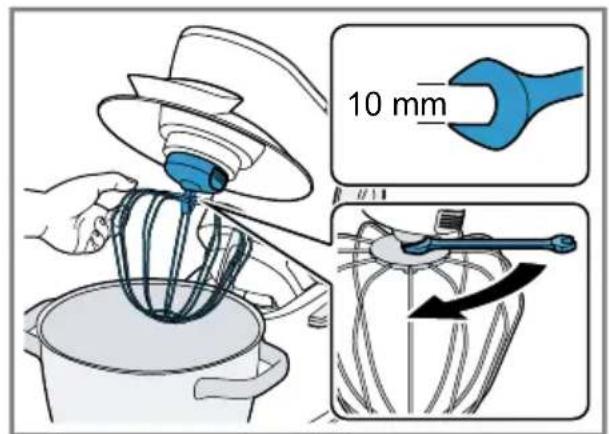
- Hold the beating whisk at the bottom with one hand and release the lock nut clockwise using a spanner wrench.
→Fig. 4
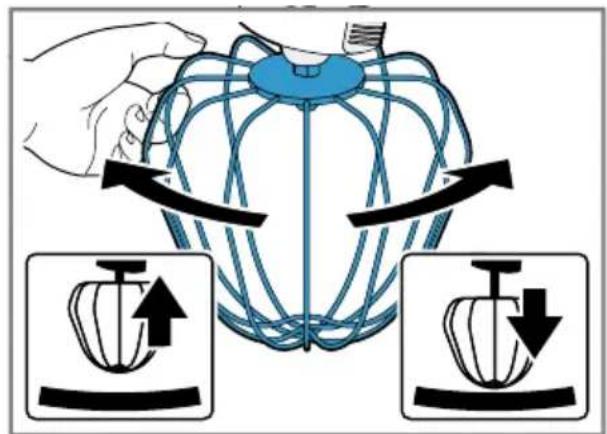
- To change the setting, turn the tool in the desired direction.
→Fig. 5
Optimum setting: distance to the bowl approx. 2.5 mm
Turn clockwise: lift tool
Turn anticlockwise: lower tool
- Press the release button and push the swivel arm down until it engages.
- Check the setting.
- Press the release button and raise the swivel arm until it engages.
- Hold the beating whisk at the bottom with one hand and tighten the lock nut anticlockwise using a spanner wrench.
Mixing bowls
2 different mixing bowls are included in the scope of supply depending on the model.
To save space when storing the bowls, place the small bowl in the large one.
Always use the large bowl with the lid fitted.
The lid is not suitable for the small bowl.
Settings
| Setting Description | |
| Language Select the display language. | |
| Accessory Activate or deactivate access to automatic programmes for accessory. If an accessory has been deactivated, it will not appear in the main menu. | |
| Sound Set the volume of the audible signals and button tones. | |
| Unit Set the units for the scales. | |
| Brightness Select the brightness of the display. |
| Setting Description | |
| Idle mode Set the time after which the display is dimmed. | |
| Standby time Set the time after which the appliance switches to standby mode. | |
| Factory setting Reset appliance to the factory settings. | |
| Appliance information | Information about the appliance software. |
Safety systems
Start lock-out
Start lock-out prevents your appliance from being switched on accidentally.
The appliance can only be switched on and operated if the swivel arm is engaged in the horizontal position and one of the following conditions is satisfied.
■ The bowl or the ice cream maker has been inserted. ■ The universal adapter has been attached to the main drive.
If the swivel arm is opened during processing, the appliance switches off automatically.
Restart lock-out
Restart lock-out prevents your appliance from automatically restarting processing after a power failure.
The appliance is switched on again after a power failure. Processing cannot start again until the rotary switch has been set to O.
Overload protection
The overload protection system prevents the motor and other components from being damaged through being overloaded.
Swivel arm protection device
The swivel arm protection device prevents the swivel arm from being opened if an accessory is attached to the rear drive.
Signal tone
In case of a malfunction or if a safety system switches off the appliance, a signal tone is output.
Possible malfunctions include the pivot arm not being correctly engaged or the appliance overheating.
Before using for the first time: Setting up the appliance
- Place the appliance on a stable, level, clean, and flat work surface.
- Adjust the power cable to the required length.
- To shorten the cord, push it into the cord storage compartment.
- To lengthen the cord again, pull it out of the cord storage compartment.
- Insert the mains plug.
Performing initial start-up
When switching on the appliance for the first time or after resetting to the factory settings, the language and display units selected will appear. This is followed by a brief tutorial.
▶ Follow the instructions on the display and go through the tutorial with the help of the navigation ring.
Operation
Preparing the appliance
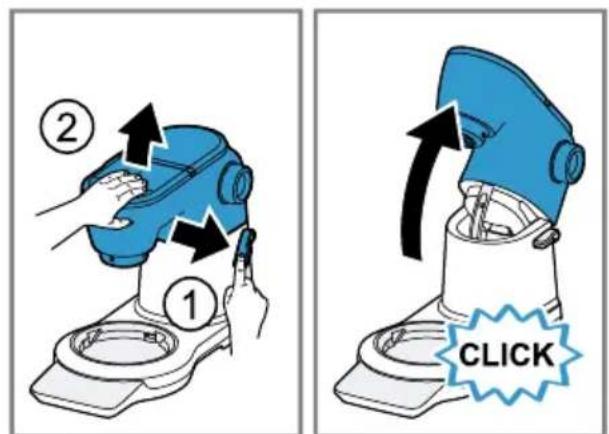
- Press the release button and raise the swivel arm until it engages.
→Fig. 6
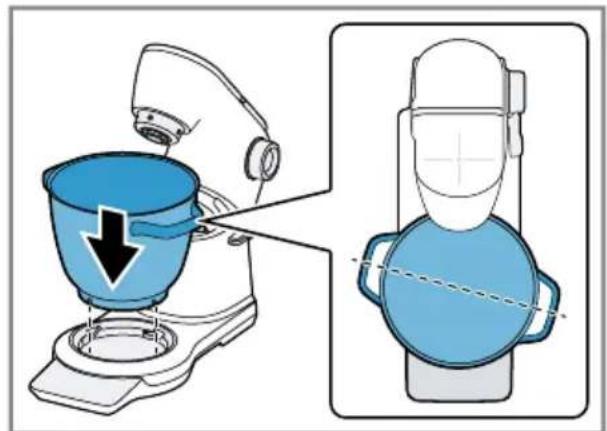
- Place the bowl in the main unit.
→Fig. 7
Use the recesses on the main unit.
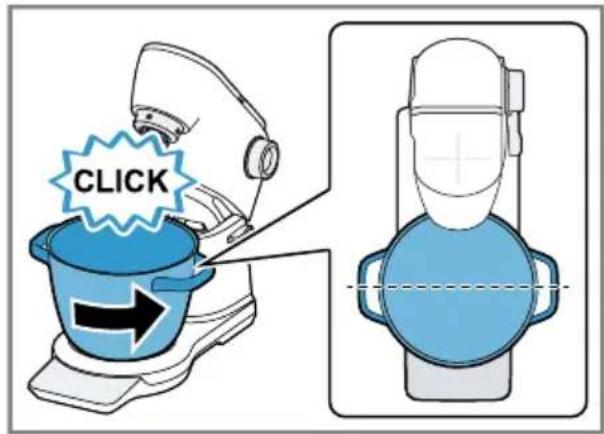
- Turn the bowl anticlockwise until it engages.
→Fig. 8
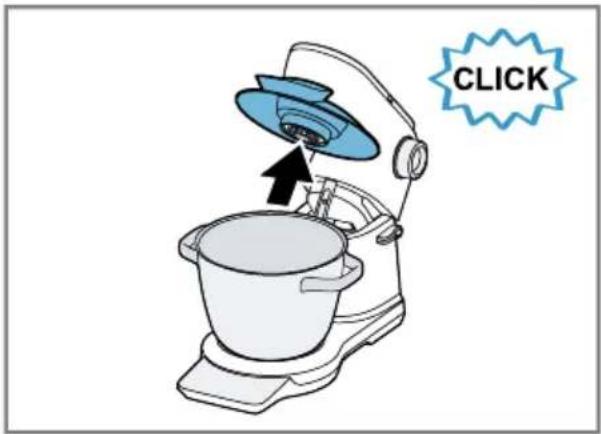
- Fit the lid onto the main drive until it engages.
→Fig. 9
The filling shaft must face towards the front.
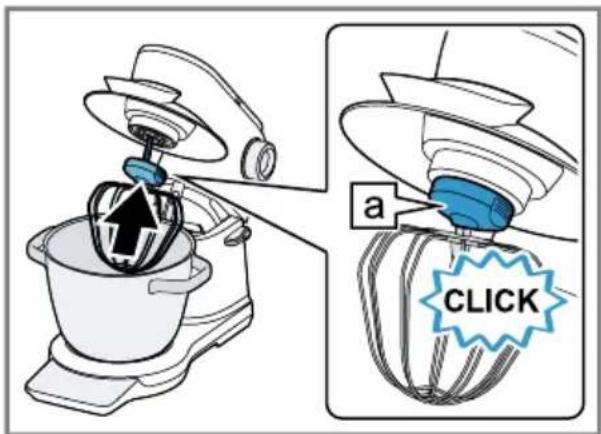
- Press the tool into the main drive until it engages.
→Fig. 10
The protective cap must cover the main drive completely.
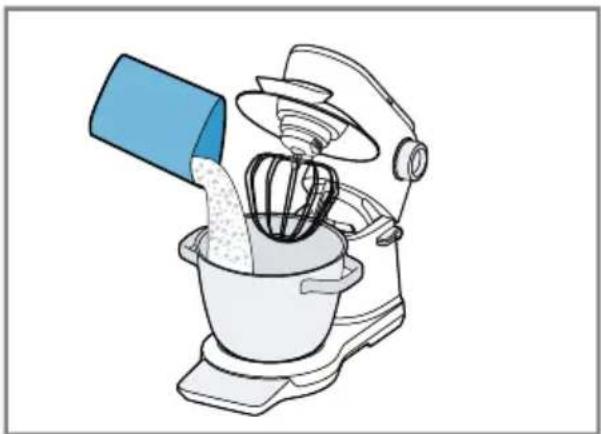
- Add the food to the bowl.
→Fig. 11
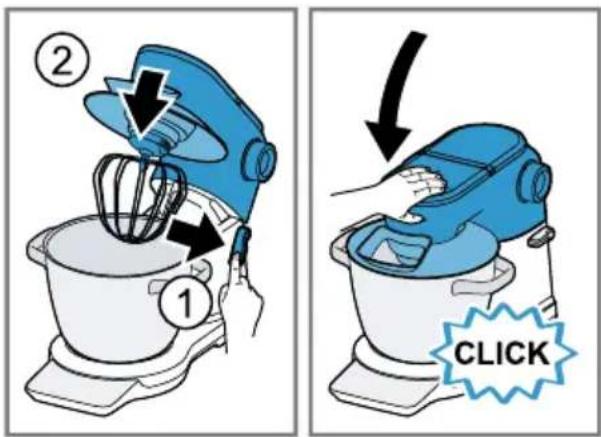
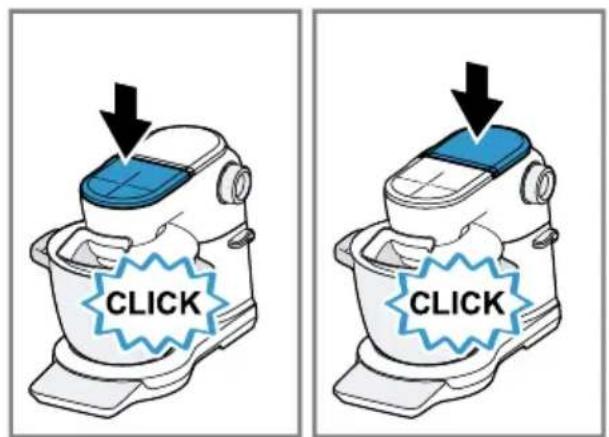
- Press the release button and push the swivel arm down until it engages.
→Fig. 12
Processing food with the tools
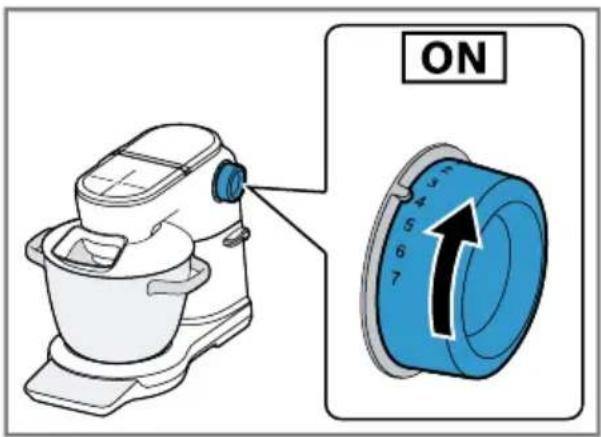
- Set the rotary switch to the required speed.
→Fig. 13
- To process the food at maximum speed for a short time, set the rotary switch to M and hold for the desired processing time.
→Fig. 14
- If desired, add further food during processing using the filling shaft.
→Fig. 15
To add greater quantities, switch off the appliance, open the swivel arm and transfer the food to the bowl.
- Process the food until you achieve the required result.
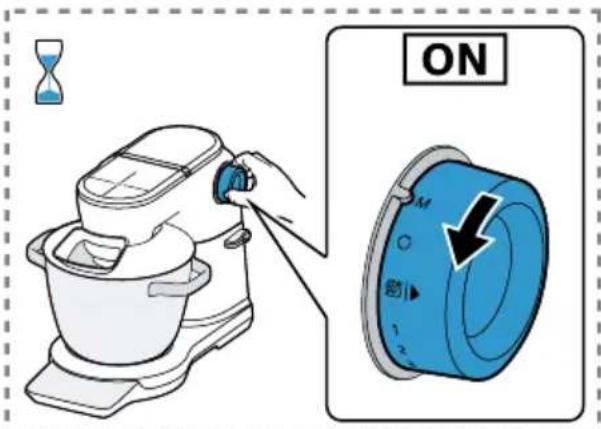
- Set the rotary switch to O.
→Fig. 16
Wait until the appliance stops.
Finishing processing
- Unplug the mains plug.
→Fig. 17
- Press the release button and raise the swivel arm until it engages.
→Fig. 18
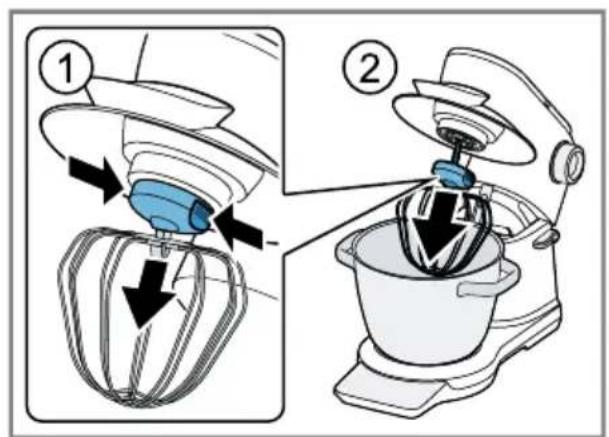
- Press the two ejector buttons together and pull the tool completely out of the drive.
→Fig. 19
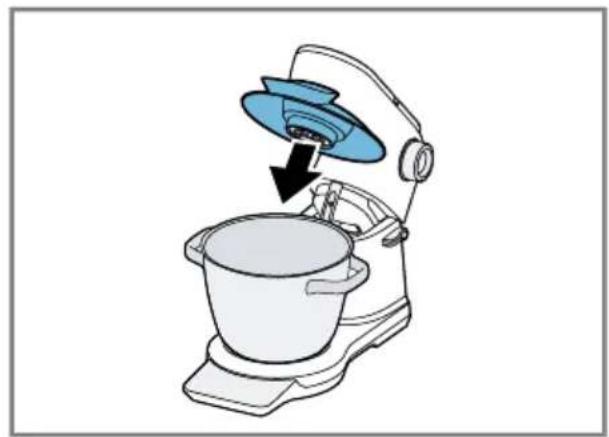
- Take the cover off the main drive.
→Fig. 20
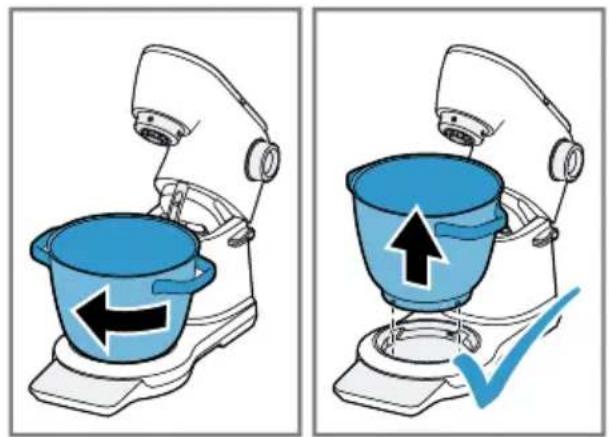
- Turn the bowl clockwise and remove.
→Fig. 21
Using accessory drives
Notes
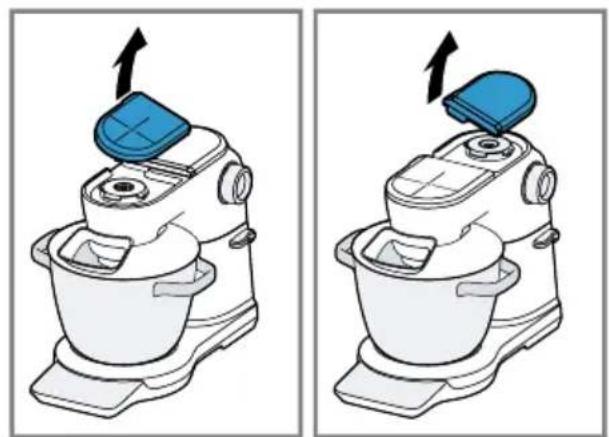
■ Remove the cover to use accessories on drive 2 or 3. ■ Always close unused drives with the protective covers. - Please follow the instructions for the accessory.
→Fig. 22 - 23
Timer
You can process food with the timer for a preset time. You can also start the timer without processing food, e.g. to monitor resting times for dough or cooking times.
Using the timer
- To start the timer, press
- Use the navigation ring to set the minutes and confirm with OK
- Use the navigation ring to set the seconds and confirm with OK
- To process food with the timer, select "Timer with setting" and set the rotary switch to the required speed. The display shows the speed selected and the remaining processing time. Once this time has elapsed, the appliance stops processing.
- Set the rotary switch to
- To use the timer without processing food, select "Egg timer" and press OK. The display shows the remaining time. Once this time has elapsed, a signal tone sounds and the display shows "Finished".
Scales
Your appliance is equipped with built-in scales.
The main unit has 4 weight sensors in its feet.
The following factors can falsify the measuring result:
Feet not standing on the work surface properly, work surface vibrating, objects underneath the main unit, weight too low, main unit slipped, main unit touched.
Weighing food
- To start the scales, press √. The scales will be calibrated. √ The display shows "0" and the preset unit.
- If desired, touch the navigation ring, select a different display unit and confirm with OK. √ The scales will be calibrated again.
- Add the food to the bowl you inserted or a fitted accessory. √ The display shows the quantity that was filled in the display unit selected.
- To set the scales back to "0" and weigh further food separately, press 📁 and wait for calibration.
Tip: When the swivel arm is engaged in a horizontal position, containers or packagings can be placed on the weighing area and weighed.
Automatic programmes
The automatic programmes help you to process food with the tools and to use accessories.
Sensors monitor the processing of the food and end it automatically once the preprogrammed consistency is reached.
For optimal results please note the following:
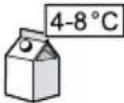
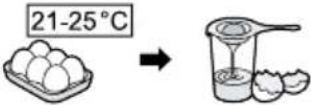
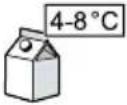
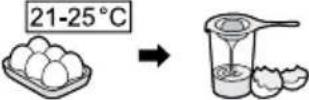
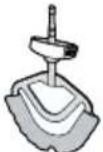
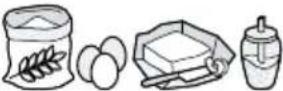
■ The beating whisk must be correctly adjusted to ensure optimal mixing of the food and proper functioning of the automatic programmes. → "Correcting tool adjustment", Page 23 ■ Before using one of the automatic programmes for the first time, operate your new appliance for at least 10 minutes without an automatic programme. - Do not add any more food once an automatic programme has started. - If food has already been processed, do not process it again with an automatic programme. If the processing result produced by the automatic programme does not meet your wishes, continue processing the food manually until you get the desired result. Observe the recommended speeds. → "Application examples", Page 27 ■ The age, temperature and constituents of the food used will affect the time required and the result. ■ Only use fresh eggs. The automatic programme is not suitable for alternatives, e.g. aquafaba or protein powders. - It is only possible to make beaten egg white if the tool and bowl are clean and free of grease or residues from dish-washer detergent. ■ Only process cream that has been cooled to approx. 6 °C and has a fat content of 30-36%. - Cream that was previously frozen cannot be whipped. - For optimal results after selecting the programme "Whipped cream", set the type of cream you are using: "Fresh
cream", "Plant based cream" or "Lactose free cream".
- Do not use bowls that are warm when whipping cream, e.g. directly out of the dishwasher.
- Do not add sugar, flavourings or other additives for cream or beaten egg white until the automatic programme has ended. ■ Take note of the ingredients and quantities suggested. ■ The automatic programmes for dough will not function if it is too dry. Dough recipes need a sufficient quantity of liquid or moist ingredients.
- The programme "Yeast dough and sour-dough" interrupts kneading for approx. 15 minutes so the dough can prove. Another kneading process then starts automatically. Do not take the dough out until the end of the programme.
- For the programmes "Cake mixture" and "Shortcrust pastry", use butter or margarine in 2-cm cubes at room temperature. Cold or frozen butter or margarine will not deliver the desired results. Leave shortcrust pastry to rest in the refrigerator before baking.
- The programme "Cake mixture" is not suitable for very liquid consistencies, e.g. pancake batter. ■ The programme "Ice-cream maker" is only suitable for the recipes Vanilla Ice Cream and Chocolate Ice Cream, as described in the accessory instructions for the ice cream maker MUZ9EB1.
Using automatic programmes
- In the main menu, use the navigation ring to select "Intelligent Sensing Programmes" or an activated accessory and confirm with OK
- Use the navigation ring to select the required automatic programme, confirm with OK and follow the instructions on the display.
Overview of cleaning
Clean all parts immediately after use so that residues do not dry on.
- Do not use cleaning agents containing alcohol or spirits.
- Do not use sharp, pointed or metal objects.
- Do not use abrasive cloths or cleaning agents. ▶ Only clean the control panel and the display using a damp microfibre cloth.
Tip: When processing food such as carrots, plastic parts may become discoloured. Remove discolouration with a soft cloth and a few drops of cooking oil.
Clean the individual parts as indicated in the table.
→Fig. 24
Application examples
Notes
■ To ensure that the ingredients of yeast dough or sourdough with a high water content mix best, pour the liquid into the bowl first. ■ If you select the appropriate automatic programme for the recipe, the appliance will set the right speed and monitor the processing time.
Observe the information and values in the table.
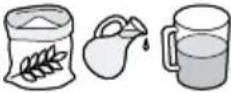
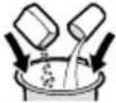
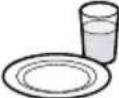
→Fig. 25 →Fig. 26
Sample recipe
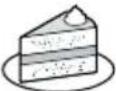
Heavy fruit cake
Ingredients
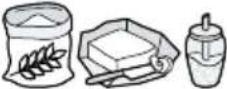
■ 3 eggs ■ 135 g sugar ■ 135 g margarine ■ 255 g flour ■ 10 g baking powder ■ 150 g currants ■ 150 g mixed dried fruit
Note: Process max. 2 times the quantity at the same time.
Cooking method
■ Insert stirring whisk. ■ Add all ingredients except the dried fruit. ■ Process for 30 seconds at setting. ■ Then process for 3-5 minutes at setting 7. - Select setting ■ Add the dried fruit within the next 30-60 seconds.
en Accessories
To process the ingredients automatically, select the "Cake mixture" programme. If you are using the automatic programme, don't add the dried fruit until the programme has finished and fold in at setting 📄.
Accessories
You can buy accessories from the after-sales service, from specialist retailers or online. Only use genuine accessories as these have been specifically designed for your appliance.
Accessories vary from one appliance to another. When purchasing accessories, always quote the exact product number (E no.) of your appliance.
You can find out which accessories are available for your appliance in our catalogue, in the online shop or from our after-sales service.
www.bosch-home.com
Disposing of old appliance
- Dispose of the appliance in an environmentally friendly manner. Information about current disposal methods are available from your specialist dealer or local authority.
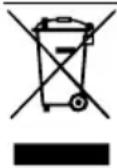
This appliance is labelled in accordance with European Directive 2012/19/EU concerning used electrical and electronic appliances (waste electrical and electronic equipment - WEEE).
The guideline determines the framework for the return and recycling of used appliances as applicable throughout the EU.
Customer Service
Detailed information about the warranty period and the warranty conditions in your country is available via the QR code on the enclosed document on service contacts and warranty conditions, from our customer service or on our website.
You can find the contact details for our customer service via the QR code on the enclosed document on service contacts and warranty conditions or on our website.
You can find the information required as per Regulation (EU) 2023/826 online at www.bosch-home.com on the product and service pages for your appliance, in the area of user manuals and additional documents.
Troubleshooting
| Fault Cause and troubleshooting | |
| The appliance is not working. | Appliance has no power supply.▸ Check whether your appliance is supplied with power. |
| Appliance does not start processing. | Rotary switch is set incorrectly.▸ Set the rotary switch to○ before processing. |
| Appliance does not start processing or switches off during processing. | Processing quantity is too big or processing time was too long.▸ Set the rotary switch to○.▸ Reduce the quantity of ingredients.▸ Allow the appliance to cool down to deactivate the overload protection device. |
| Appliance or accessory is blocked.▸ Set the rotary switch to○.▸ Remove the blockage. | |
| A safety system has been activated.▸ Eliminate the problem that caused the appliance to stop.→ "Safety systems", Page 24 | |
Fault Cause and troubleshooting
| Release button cannot be pressed. | An accessory is fitted to red drive 3.▸ Remove the accessory from drive 3. |
| The professional beating whisk is touching the bowl or the food is not mixed properly. | The distance to the bowl is not set correctly.▸ Correct the fine adjustment of the professional beating whisk.→ "Fine adjustment of the professional whisk", Page 23 |
| An error code appears on the display, e.g."E9025". | The electronics have detected a fault.1. Set the rotary switch to○ and pull out the mains plug.2. Re-insert the mains plug in the socket.3. If the fault persists, call Customer Service.→ "Customer Service", Page 28 |
| "Insert bowl" appears on the display. | Bowl is not inserted or not engaged correctly.▸ Insert the bowl and turn it anticlockwise as far as possible. |
| "Check arm position" appears on the display. | Swivel arm is not engaged properly or has become detached.1. Set the rotary switch to○.2. Move the swivel arm until it engages correctly. |
| "Motor stopped automatically" appears on the display. | Different causes are possible.1. Set the rotary switch to○.2. If the fault persists, call Customer Service.→ "Customer Service", Page 28 |
| "Reset scale" appears on the display. | Calibration of scales has failed.1. Set up the appliance on a flat, clean work surface free of vibrations.2. Check there are no objects under the appliance.3. Press ⚙to start calibration again, taking care not to touch the appliance during calibration. |
| "Max. weight reached" appears on the display. | Weight above measuring range of scales.1. When using the scales, observe the maximum weight of 5000 g or 11.00 lb.2. Reduce the total weight to be weighed. |
| "Min. weight reached" appears on the display. | Weight below measuring range of scales.1. When using the scales, observe the minimum weight of 5 g or 0.01 lb.2. Increase the total weight to be weighed. |
| Appliance is not set up correctly.1. Set up the appliance on a flat, clean work surface free of vibrations.2. Check there are no objects under the appliance. |
e-mail: ala-infokz@bshg.com
Thank you for buying a Bosch Home Appliance!
Register your new device on MyBosch now and profit directly from:
- Expert tips & tricks for your appliance
- Warranty extension options • Discounts for accessories & spare-parts • Digital manual and all appliance data at hand
- Easy access to Bosch Home Appliances Service
Free and easy registration – also on mobile phones:
www.bosch-home.com/welcome
BOSCH HOME APPLIANCES SERVICE
Looking for help? You'll find it here.
Expert advice for your Bosch home appliances, help with problems or a repair from Bosch experts.
Find out everything about the many ways Bosch can support you: www.bosch-home.com/service
Contact data of all countries are listed in the attached service directory.
BSH Hausgeräte GmbH
Carl-Wery-Straße 34
81739 München, GERMANY
www.bosch-home.com
A Bosch Company
Valid within Great Britain:
Imported to Great Britain by
BSH Home Appliances Ltd.
Grand Union House
Old Wolverton Road
Wolverton, Milton Keynes
MK12 5PT
United Kingdom

8001357048 (050708)
de, en, fr, it, nl, da, no, sv, fi, es, pt, el, tr, pl, uk, ru, ar


- SERIES
- MUMS
- HTTPS://DIGITALGUIDE.BSH-GROUP.COM/?MAT-NO
- SAFETY
- AVOIDING MATERIAL DAMAGE
- FAMILIARISING YOURSELF WITH YOUR APPLIANCE
- OVERVIEW
- ILLUMINATED RING
- NAVIGATION RING
- DISPLAY
- SWIVEL ARM AND DRIVES
- PREPARATION
- MAIN DRIVE
- WEIGHING AREA
- TOOLS
- FINE ADJUSTMENT OF THE PROFESSIONAL WHISK
- CORRECTING TOOL ADJUSTMENT
- REQUIREMENTS
- MIXING BOWLS
- SAFETY SYSTEMS
- START LOCK-OUT
- RESTART LOCK-OUT
- OVERLOAD PROTECTION
- SWIVEL ARM PROTECTION DEVICE
- SIGNAL TONE
- BEFORE USING FOR THE FIRST TIME: SETTING UP THE APPLIANCE
- PERFORMING INITIAL START-UP
- OPERATION
- PREPARING THE APPLIANCE
- PROCESSING FOOD WITH THE TOOLS
- FINISHING PROCESSING
- USING ACCESSORY DRIVES
- NOTES
- TIMER
- USING THE TIMER
- SCALES
- WEIGHING FOOD
- AUTOMATIC PROGRAMMES
- USING AUTOMATIC PROGRAMMES
- OVERVIEW OF CLEANING
- APPLICATION EXAMPLES
- SAMPLE RECIPE
- HEAVY FRUIT CAKE
- EN ACCESSORIES
- ACCESSORIES
- DISPOSING OF OLD APPLIANCE
- CUSTOMER SERVICE
- THANK YOU FOR BUYING A BOSCH HOME APPLIANCE
- LOOKING FOR HELP? YOU'LL FIND IT HERE
Brand : BOSCH
Model : Serie 8 MUMS8ZS00
Category : Food Processor