
7X 1233 - Air suspension kit Vevor - Free user manual and instructions
Find the device manual for free 7X 1233 Vevor in PDF.
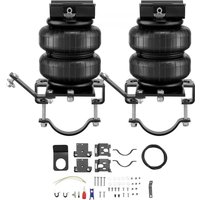


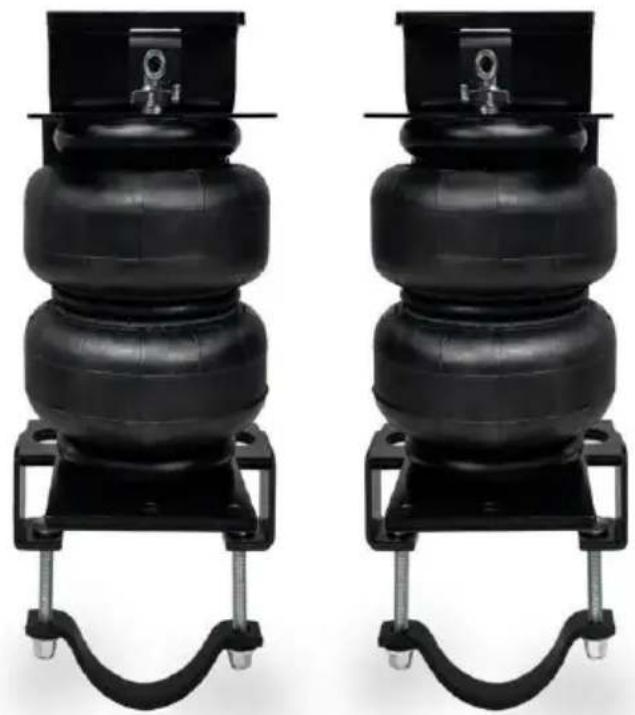
| Product Type | Air Suspension Kit |
| Brand | Vevor |
| Model | 7X 1233 |
| Compatible Vehicles | Chevrolet Silverado 2500HD/3500HD (2001-2010) and GMC Sierra 2500HD/3500HD (2001-2010) in 4WD and RWD |
| Rated Load | 5000 kg |
| Operating Pressure | 5-150 psi (recommended 60-80 psi) |
| Burst Pressure | 550 psi |
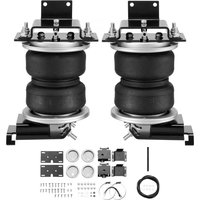
| Kit Contents | 2 air springs, 2 upper brackets, 2 lower brackets, Schrader valve, fittings, 15-foot air hose, straps, bolts, nuts, heat shield, etc. |
| Main Functions | Replaces factory bump stops, allows adjusting ride height and load capacity by adjusting air pressure |
| Maintenance | Check air pressure every week, maintain normal ride height, use soapy water solution (1:4) to detect leaks |
| Safety | Do not exceed vehicle maximum load (GVWR), do not exceed 150 psi, ensure sufficient clearance for spring movement |
| Installation | Requires lifting the vehicle, removal of factory bump stops, installation of brackets with bolts and nuts (detailed instructions provided) |
| Warranty | Technical support and electronic warranty certificate at www.vevor.com/support |
| General Information | Manufactured by Shanghaimuxinmuyeyouxiangongsi. Imported into the United States by Sanven Technology Ltd., into Australia by SIHAO PTY LTD., into the United Kingdom by YH CONSULTING LIMITED. |
Frequently Asked Questions - 7X 1233 Vevor
User questions about 7X 1233 Vevor
0 question about this device. Answer the ones you know or ask your own.
Ask a new question about this device
Download the instructions for your Air suspension kit in PDF format for free! Find your manual 7X 1233 - Vevor and take your electronic device back in hand. On this page are published all the documents necessary for the use of your device. 7X 1233 by Vevor.
USER MANUAL 7X 1233 Vevor
Technical Support and E-Warranty Certificate www.vevor.com/support
Air Bag Suspension Kit
MODEL: 7X 1233
We continue to be committed to provide you tools with competitive price.
"Save Half", "Half Price" or any other similar expressions used by us only represents an estimate of savings you might benefit from buying certain tools with us compared to the major top brands and does not necessarily mean to cover all categories of tools offered by us. You are kindly reminded to verify carefully when you are placing an order with us if you are actually saving half in comparison with the top major brands.
VEVOR®
TOUGH TOOLS, HALF PRICE
Air Bag Suspension Kit
MODEL: 7X 1233
NEED HELP? CONTACT US!
Have product questions? Need technical support? Please feel free to contact us:
Technical Support and E-Warranty Certificate www.vevor.com/support
This is the original instruction, please read all manual instructions carefully before operating. VEVOR reserves a clear interpretation of our user manual. The appearance of the product shall be subject to the product you received. Please forgive us that we won't inform you again if there are any technology or software updates on our product.
SECURITY & WARNINGS
Thank you for purchasing the 7X 1233 Kit! Please kindly be advised to read the instructions carefully before installing the air spring kit.
Please take safety precautions accordingly during installation.
The installation instructions are based on the left side or the driver's side of the vehicle, and the structure on the right side can refer to the same method on the left side.
The retrofit kit you purchased is a single valve inflation system.
Please note that the air spring will bend and expand under working conditions. Ensure there is enough space for it to work properly and avoid friction between the air spring and other chassis parts.
PARAMETER LIST
| Model | standard |
| Adapted models | 2001-2010 Chevrolet Silverado 2500HD/3500HD 4WD & RWD2001-2010 GMC Sierra 2500HD/3500HD 4WD & RWD |
| rated load (lbs) | 5000 |
| Use the pressu (psi) | 5-100 |
PARTS LIST
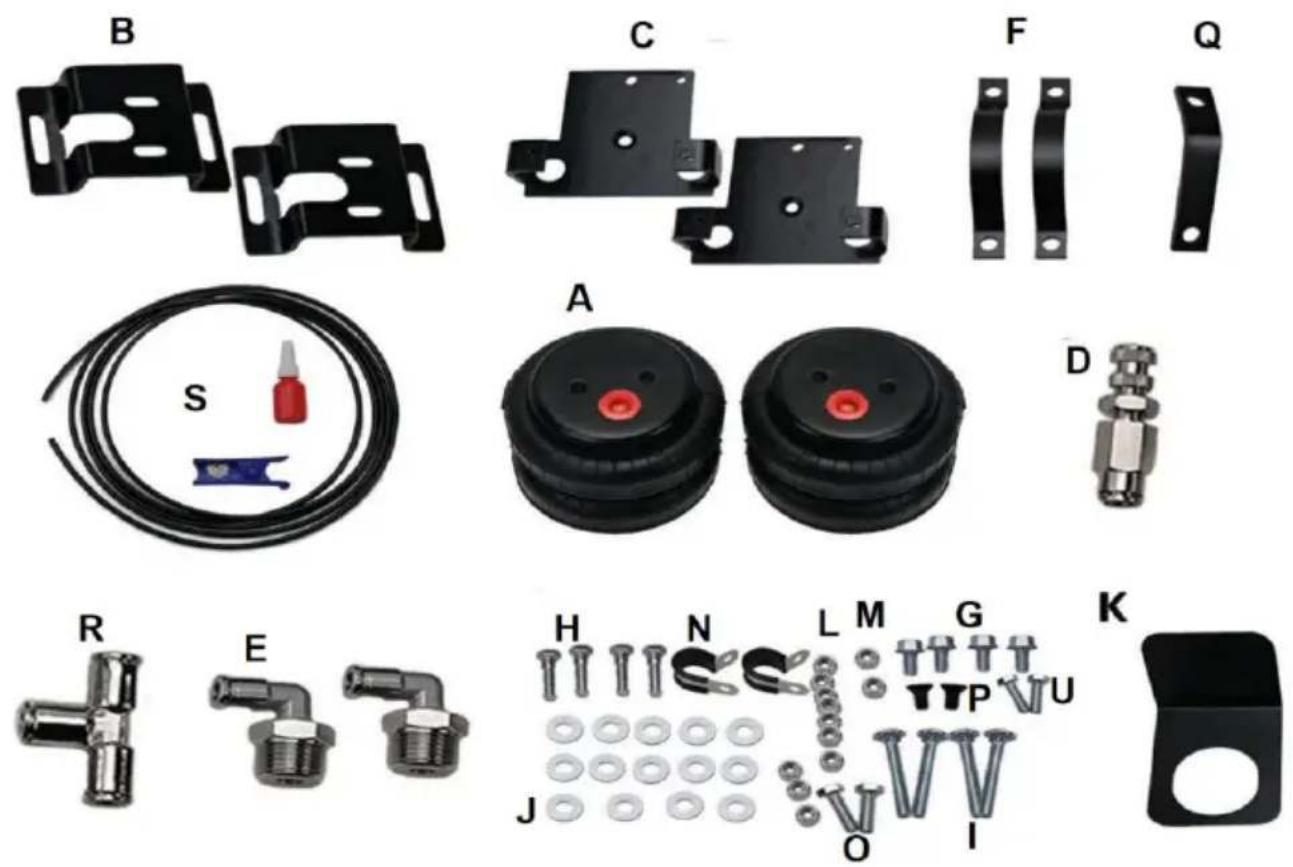
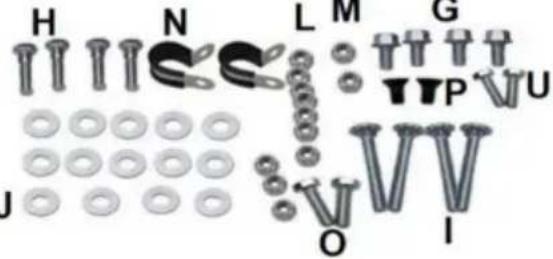
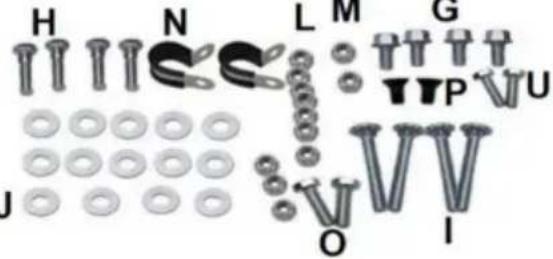
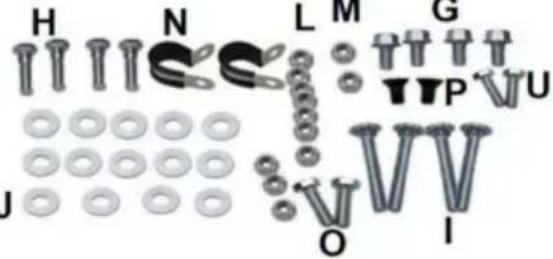
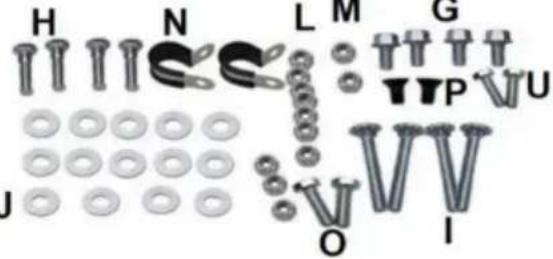
| ITEM | DESCRIPTION | QTY | ITEM | DESCRIPTION | QTY |
| A | Air spring | 2 | K | Heat Shield | 1 |
| B | Upper Bracket | 2 | L | 3/8" nyloc nut | 10 |
| C | Lower Bracket | 2 | M | 3/16" nyloc nut | 2 |
| D | 1/4" Schrader valve | 1 | N | 5/8" Clip | 2 |
| E | Elbow fitting | 2 | O | 5/8""-18×1" Bolt | 2 |
| F | Axle Strap | 2 | P | 3/8" 16×3/4" Flat head screw | 2 |
| G | 3/8” 16×7/8” Bolt | 4 | Q | Brake Line Bracket | 1 |
| H | 3/8” 16×1.5” Bolt | 4 | R | 1/4" T- Valve | 1 |
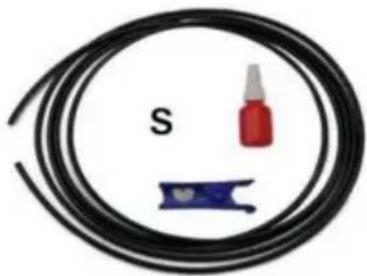
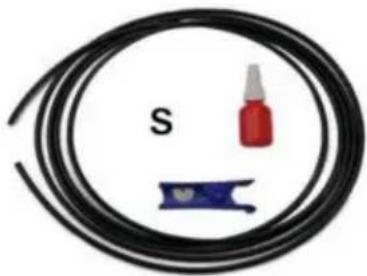
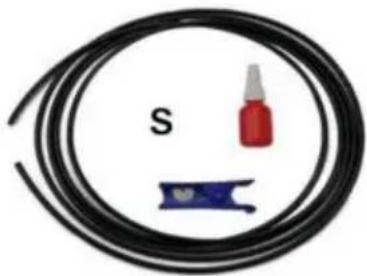
| I | 3/8” 16×25” Carriage Bolt | 4 | S | 1/4" DOT Air Hose (15'), Cutter & Loctite | 1 |
| J | 3/8” Flat Washer | 14 | U | 3/8” 16×3/4” Bolt | 2 |
* not pictured in the Installation Diagram
| DESCRIPTION | QTY |
| instruction book | 1 |
| nylon cable tie | 4 |
WARNING
IMPORTANT!
For your own safety and to prevent possible damage to the vehicle, do not exceed the maximum load recommended by the vehicle manufacturer. Your air bag helper springs are rated at a maximum inflation pressure of 150 PSI. You are allowed to carry a greater load on some vehicles with this pressure.
It is best to have your vehicle weighed once it is completely loaded and compare that weight to the maximum allowed.
Check your vehicle's owner's manual or data plate on your driver's side door for maximum loads listed for your car.
When inflating your airbag helper springs, add air pressure in small quantities, checking pressure frequently during inflation. Each air spring requires much less air volume than a tire and inflates much quicker.
NOTE: The elbow fitting will point toward the rear of the vehicle on the driver side and toward the front of the vehicle on the passenger side (add liquid thread sealer to threaded end on the fittings)
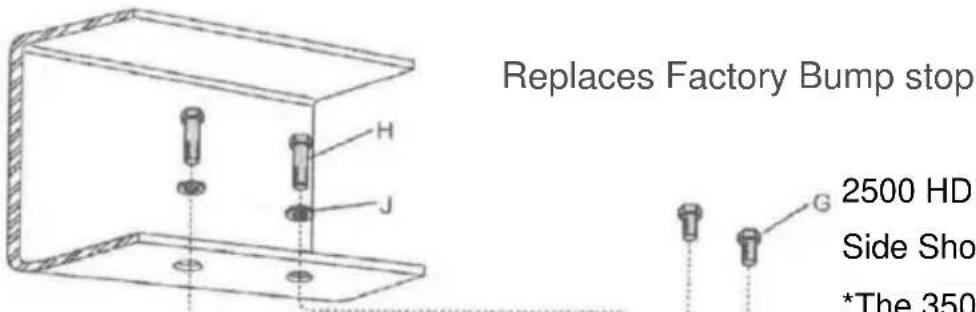
2500 HD Model, Driver Side Shown
*The 3500 model has a different style strike plate
L, only on 2500 HD
U, only on 2500 HD
P, small weld nut bracket must be removed. Only on 2500 HD model.
Minimum pressure 5 psi
Normal air pressure 60-80 psi
Max pressure 150 psi (under full load)
Burst pressure 550 psi
INSTALLATION INSTRUCTIONS
ASSEMBLING AIR SPRING BAGS & BRACKETS
Step 1- Add thread sealant to the 90° elbow fitting and install it on the top of the air spring. Tighten finger tight plus 1 1/2 turns. Do not over tighten.
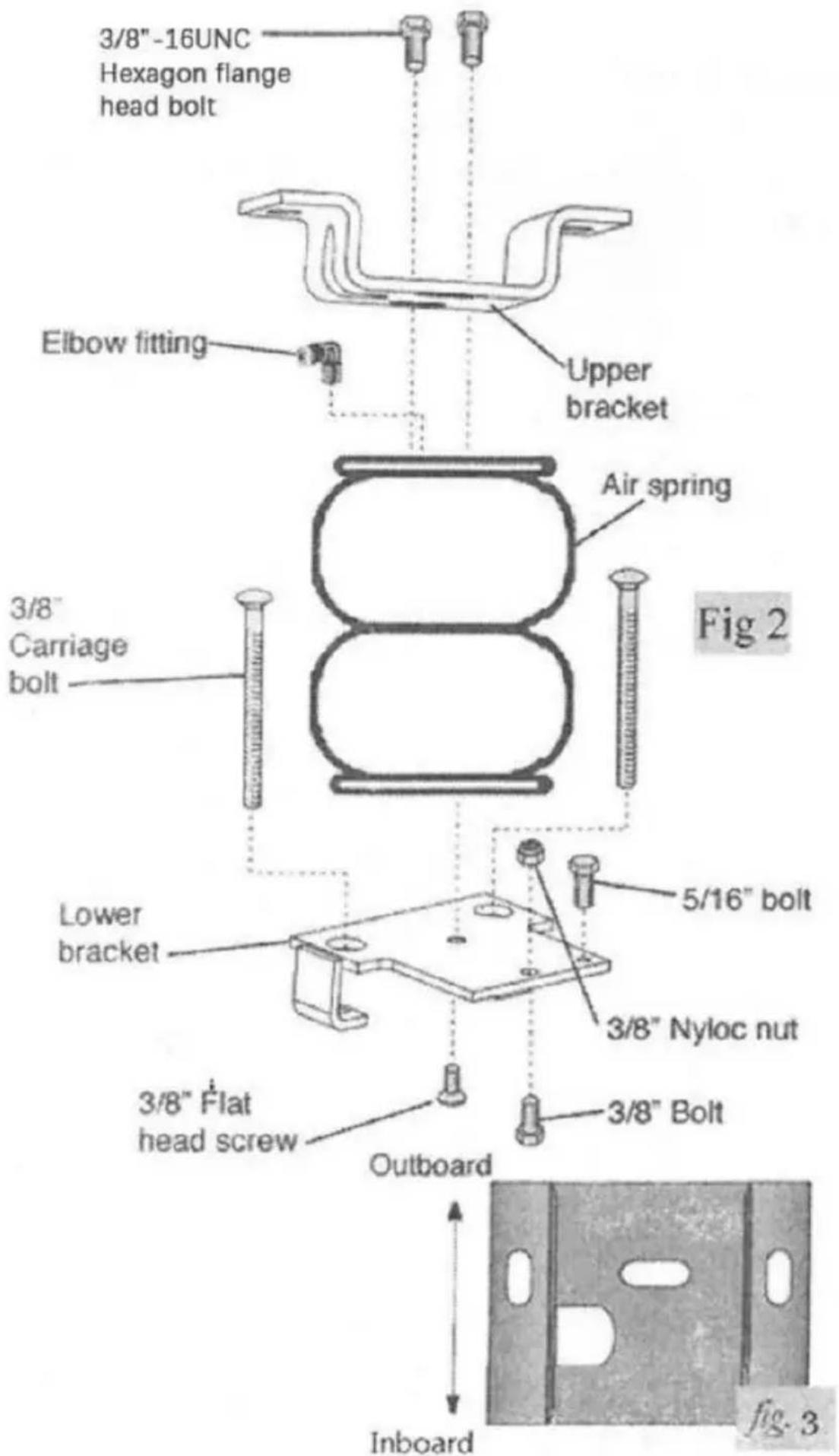
Step 2- Install the upper bracket (B) onto the below assembly. Attach using two 3/8" bolts. Leave the bolts loose at this time (Fig. 2 & Fig. 3)
Drivers Side Only: Insert a 5/16" bolt into the small hole on the lower bracket (C) before attaching the lower bracket to the air spring assembly.
2500 HD Models Only: Install a 3/8" bolt and lock nut through the hole in the lower bracket (Fig. 2) with the head of the bolt facing down. Tighten securely.
Step 3- Insert two 3/8" carriage bolts (I) through the large holes and into the square holes of the legs in the lower bracket.
Step 4- Attach the lower bracket (C) to the bottom of the air bag assembly using a 3/8" flat head screw. Tighten securely.
REMOVING THE JOUNCE BUMPER
Step 5- Jack up the rear of the vehicle and support the frame with jack stands. Drop the axle to gain clearance to install the assembly.
Step 6- Remove both jounce bumpers under the frame rail and discard them.
POSITIONING THE ASSEMBLY ON THE AXLE
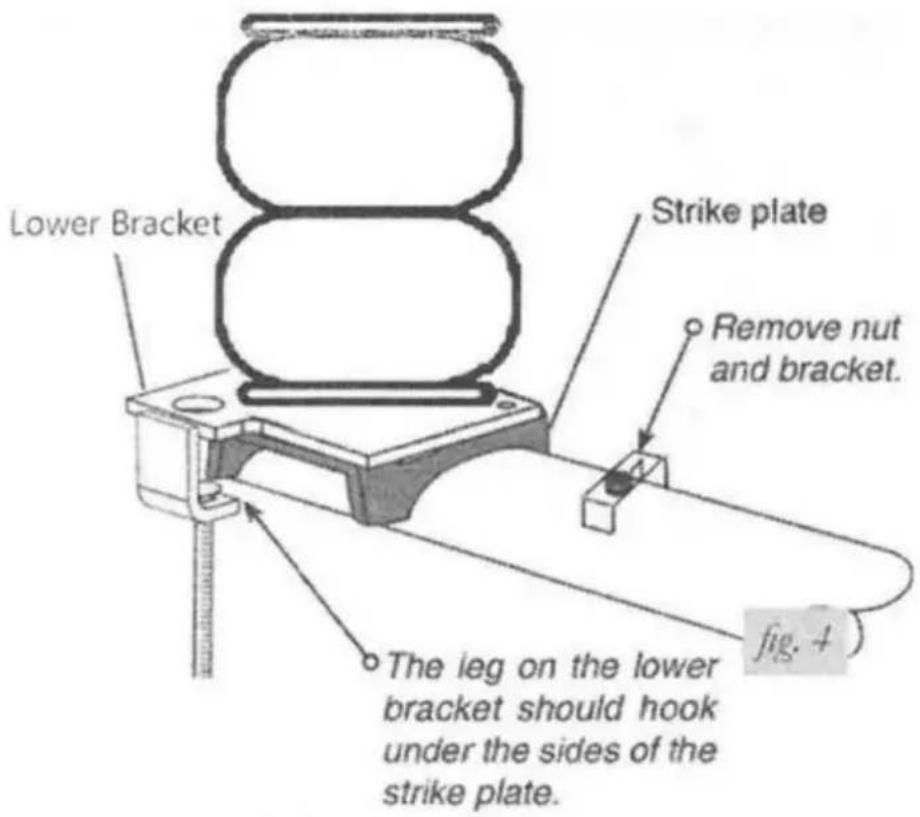
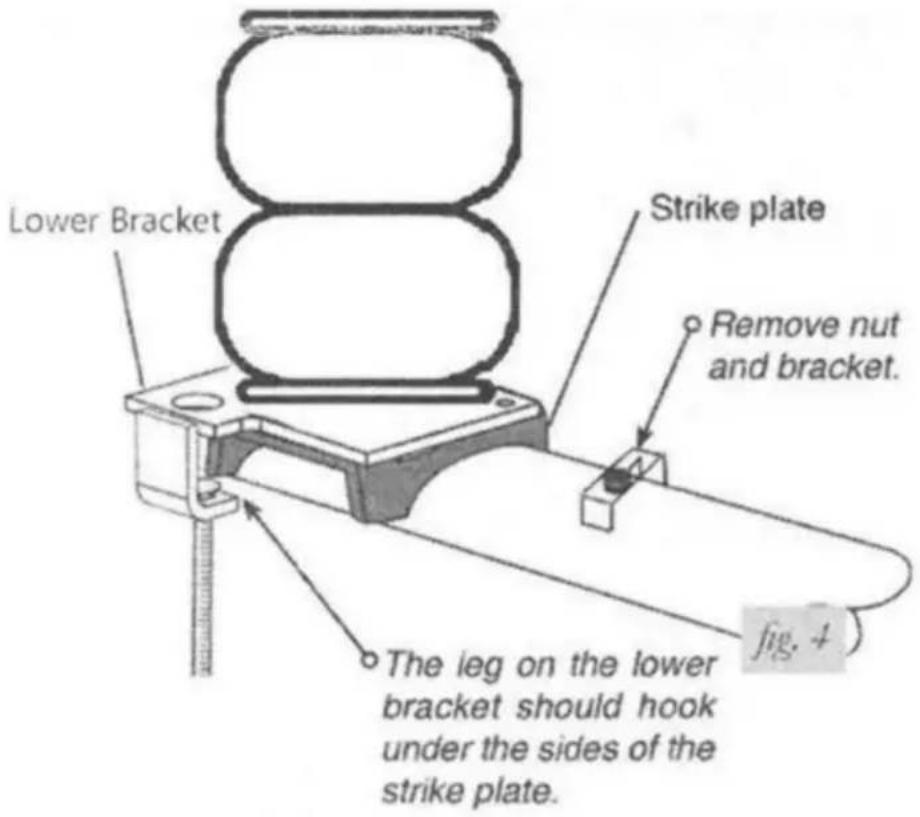
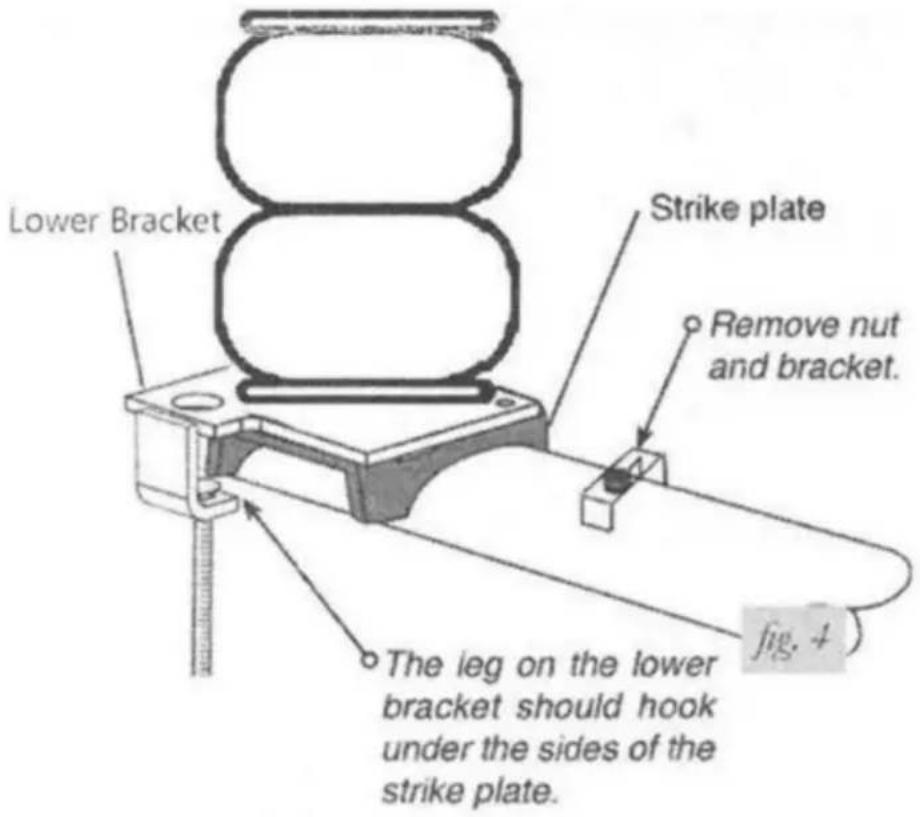
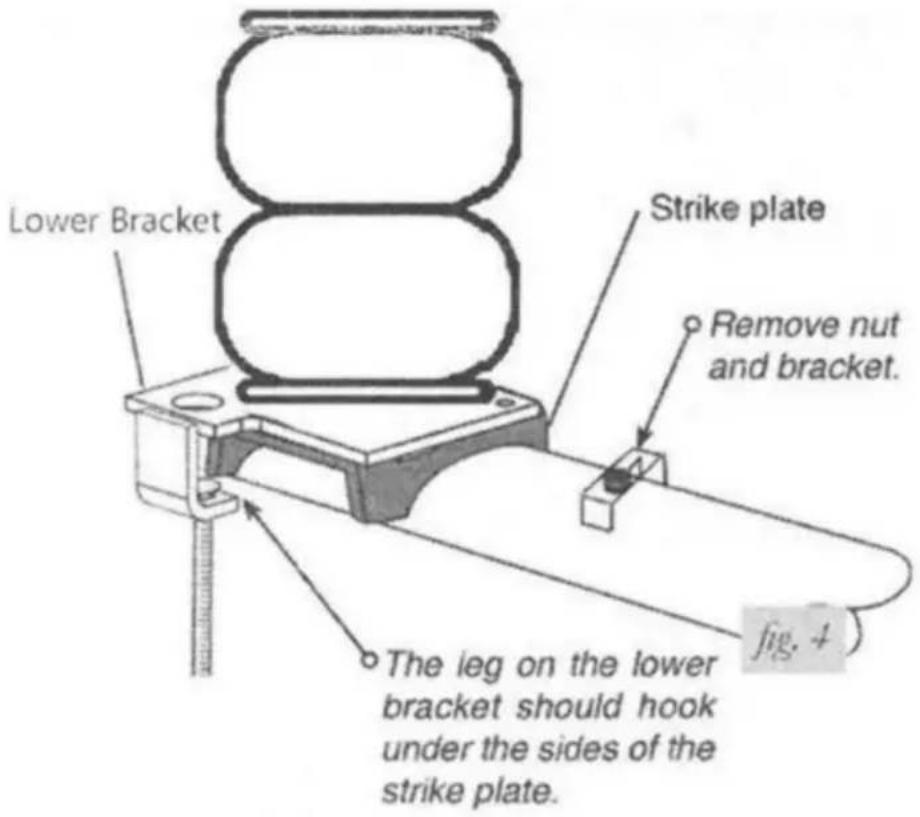
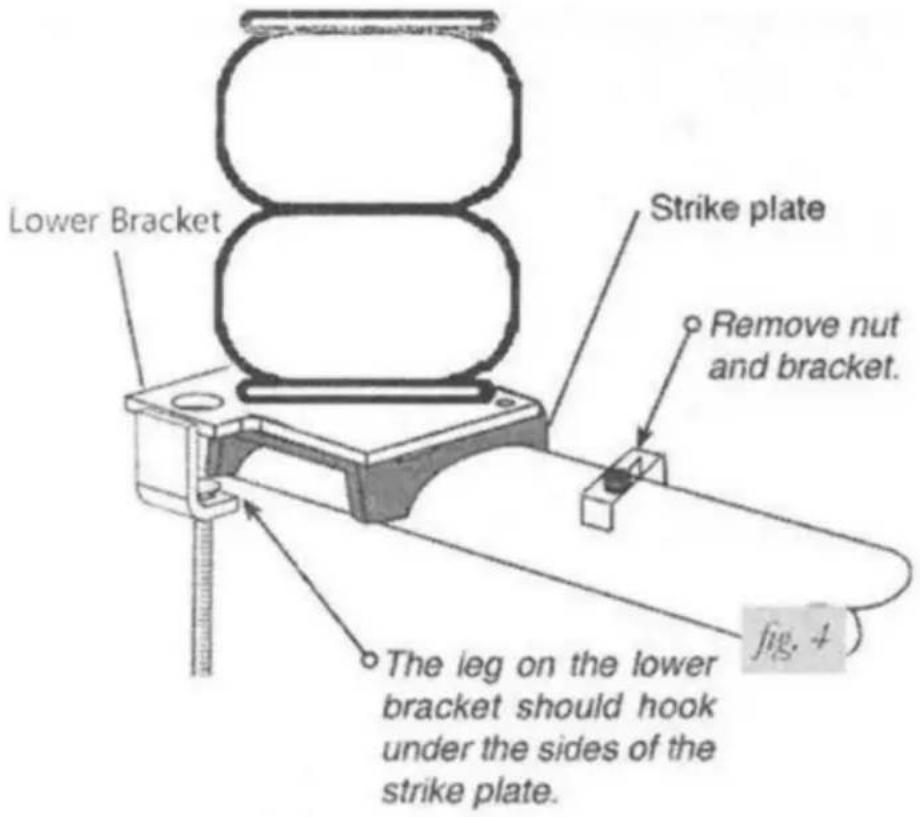
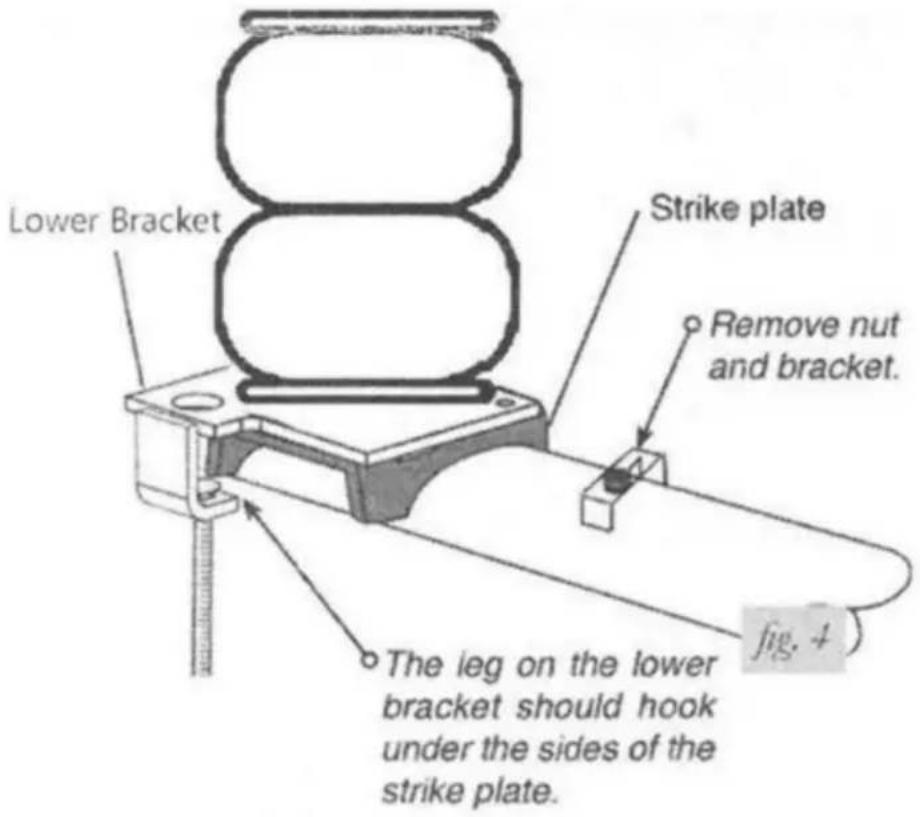
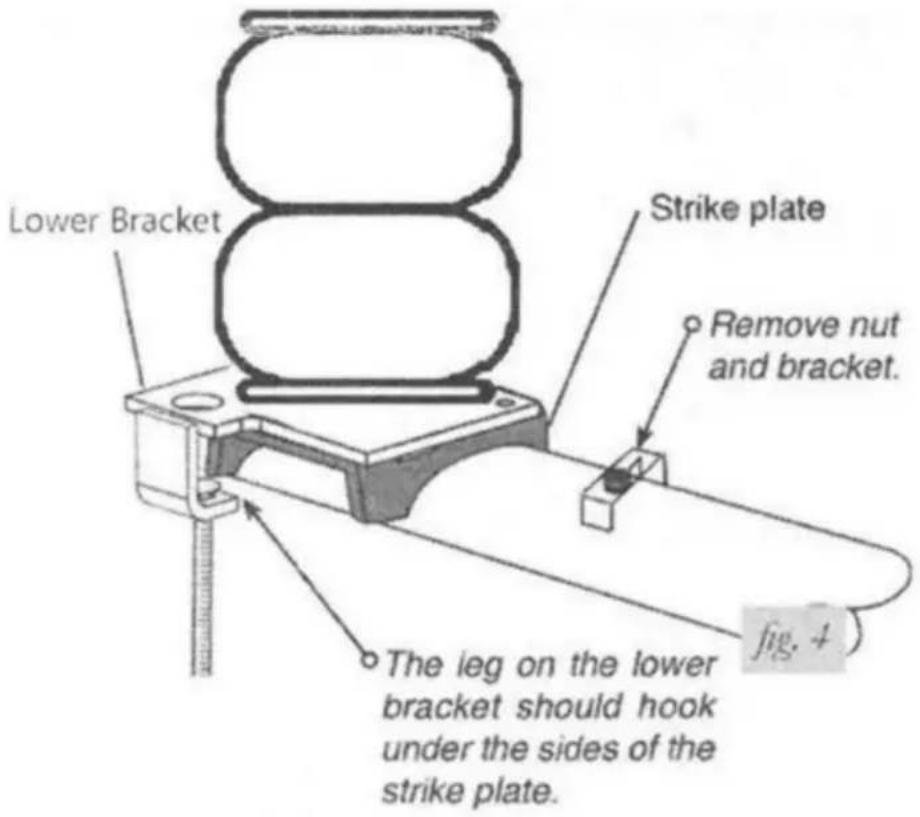
On the 2500 HD models only, the driver side axle may have a small bracket with a nut that has nothing attached to it. This bracket must be trimmed off of the axle in order to install the assembly. (Fig. 4)
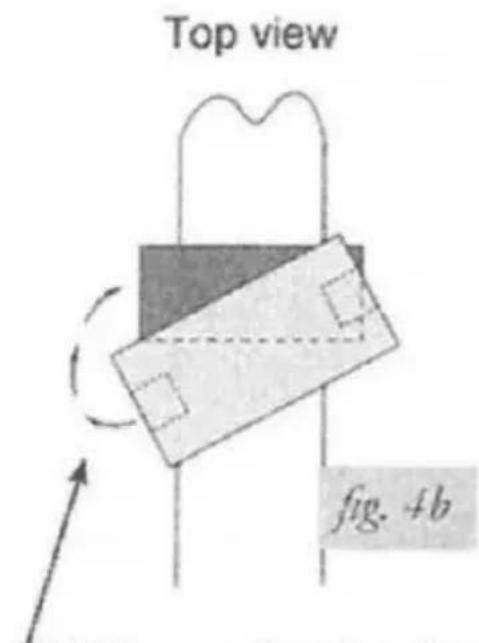
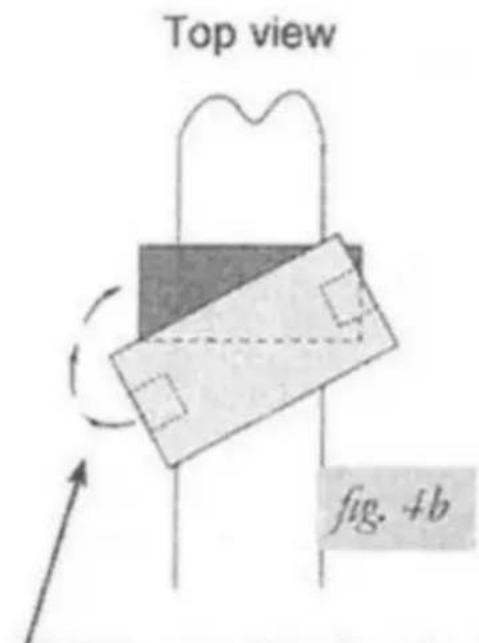
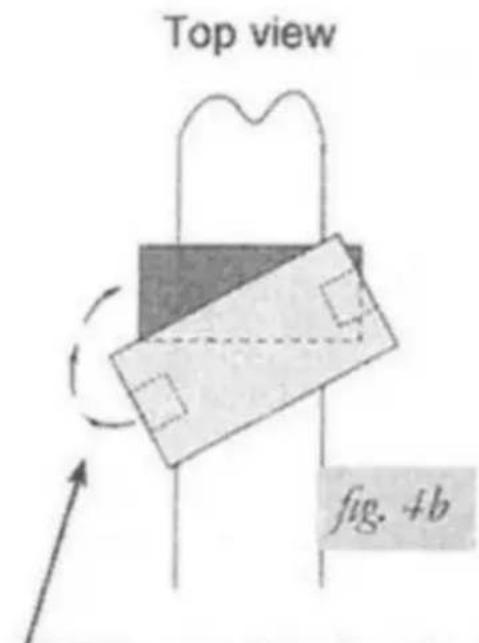
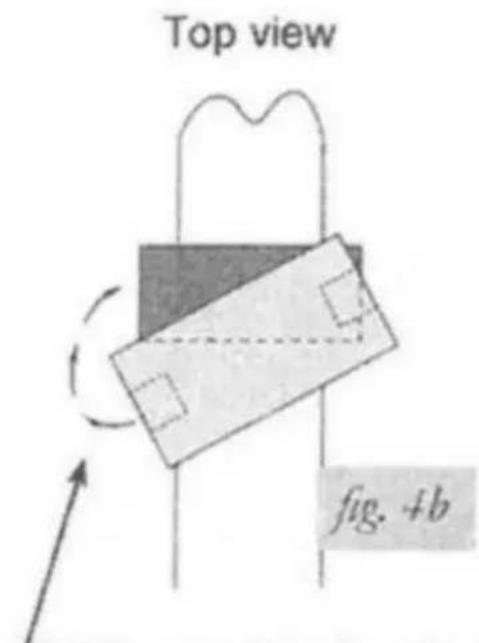
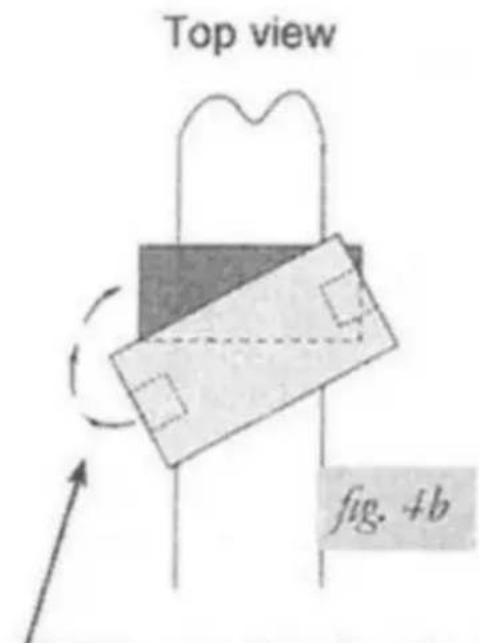
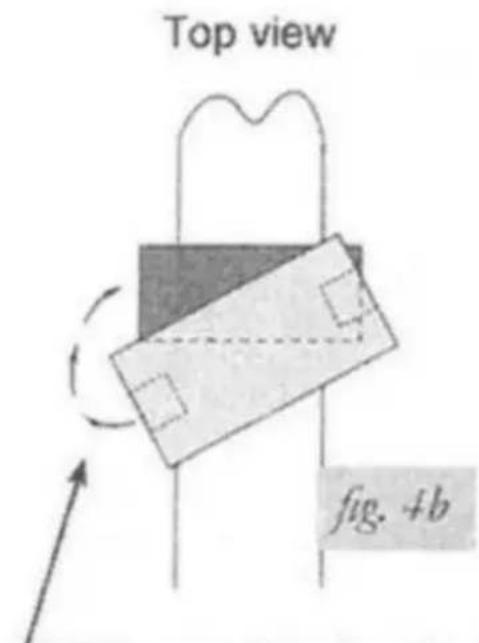
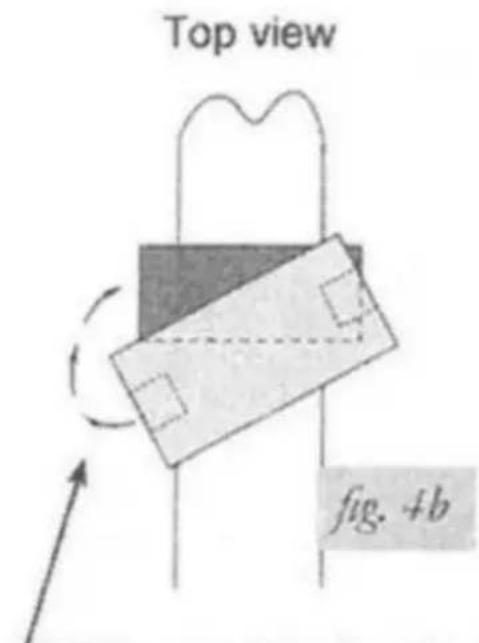
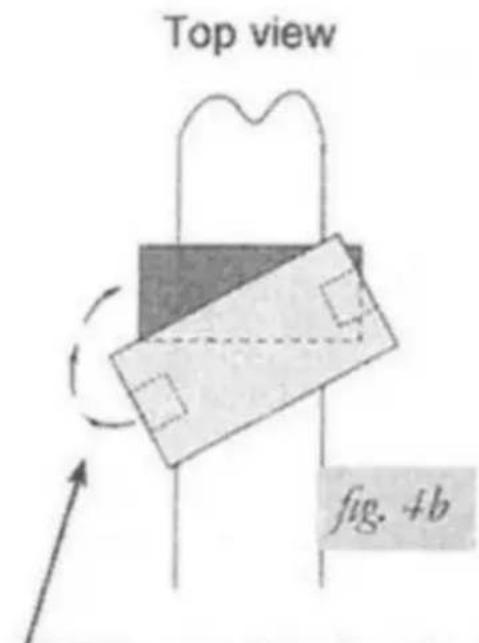
2500 HD Models: Set the assembly that has the cinch bolt onto the driver's side. It will be necessary to index the lower legs under the jounce bumper strike plate. With the lower bracket parallel to the strike plate, hook one leg under the side of the strike plate and turn the assembly until the other leg is under the strike plate on the other side (Fig. 4B).
Once the legs are under the strike plate, proceed with the upper bracket instructions.
3500 Models:
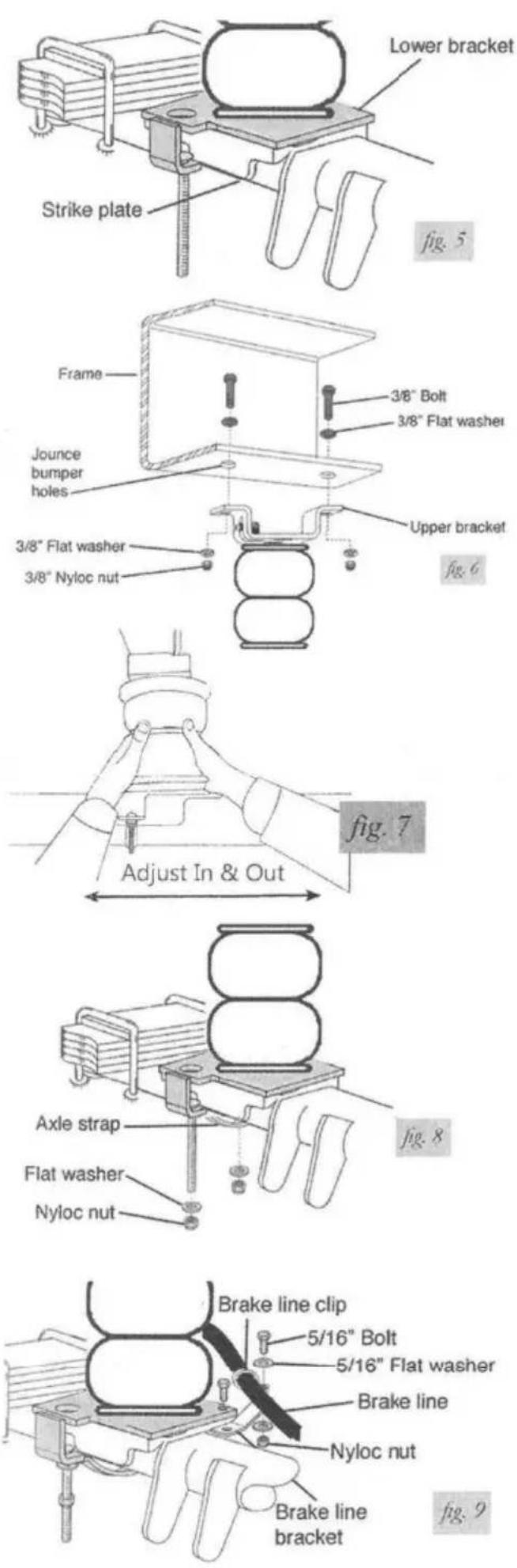
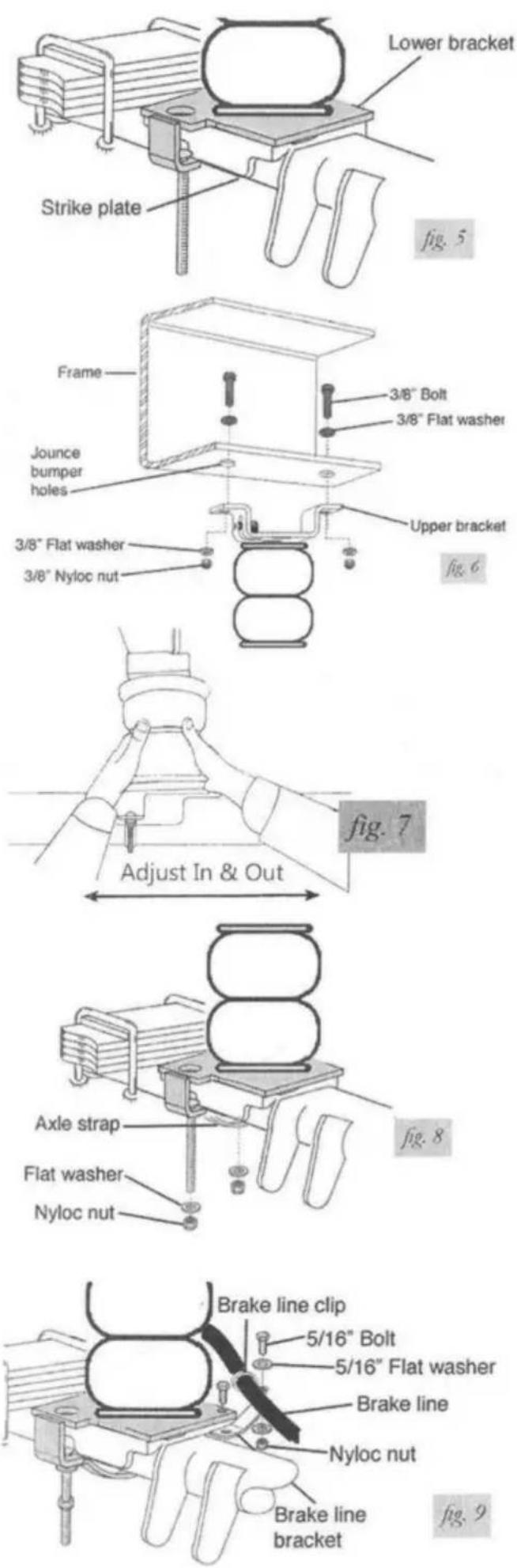
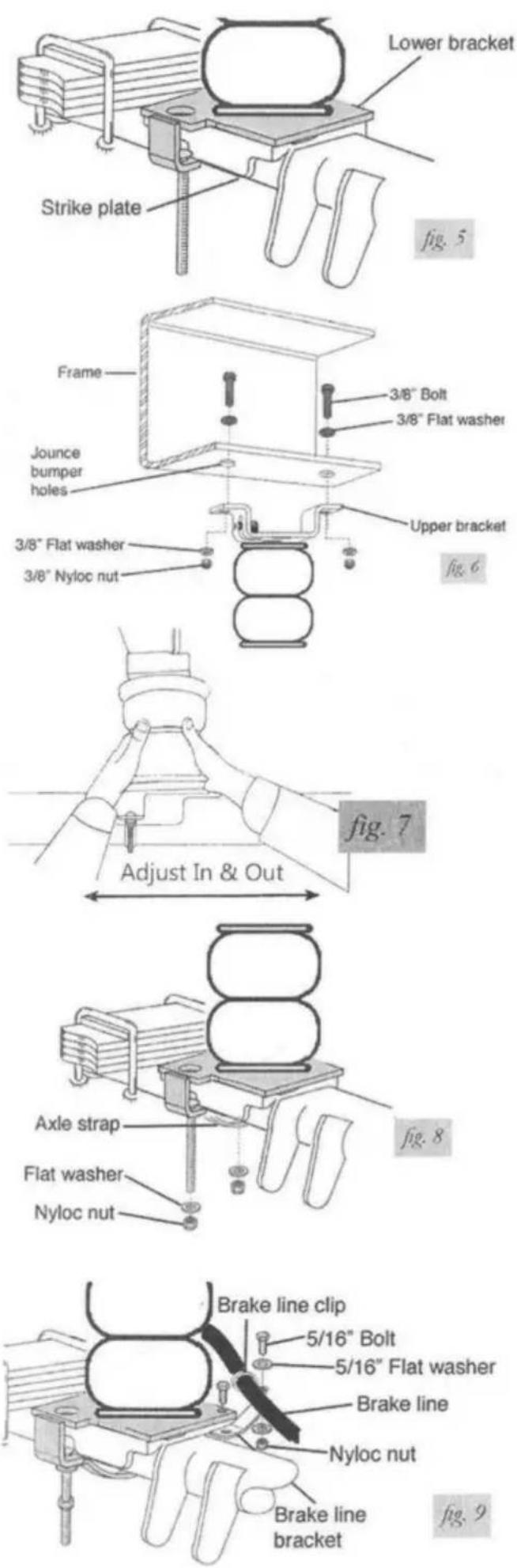
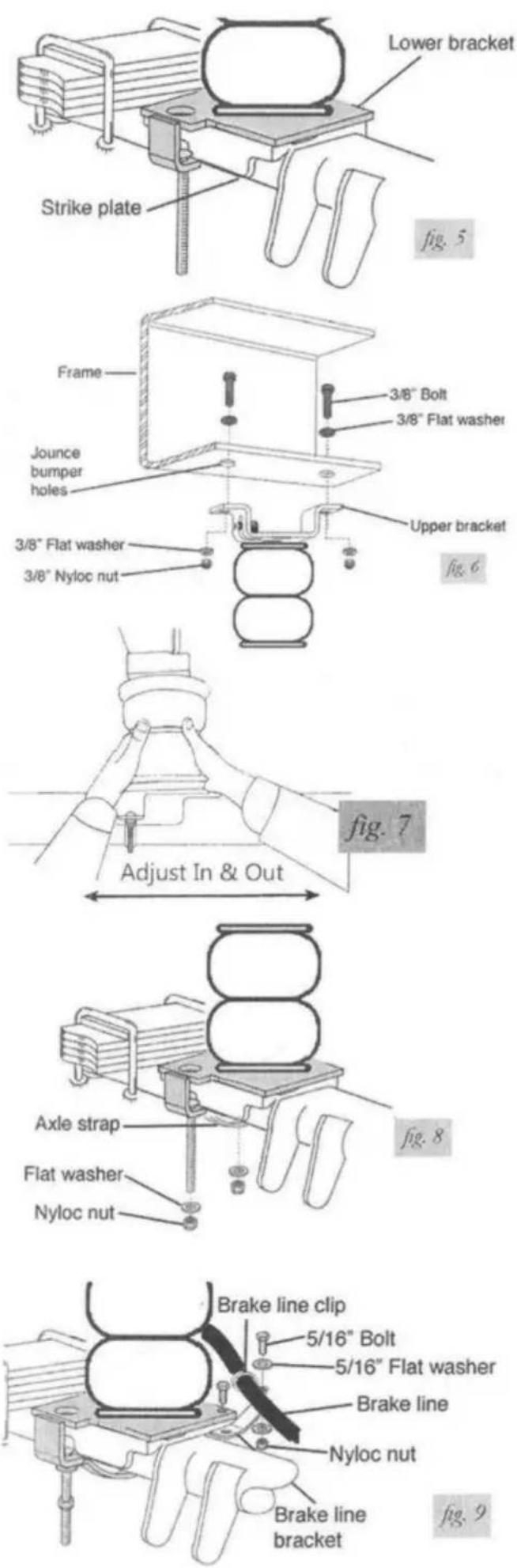
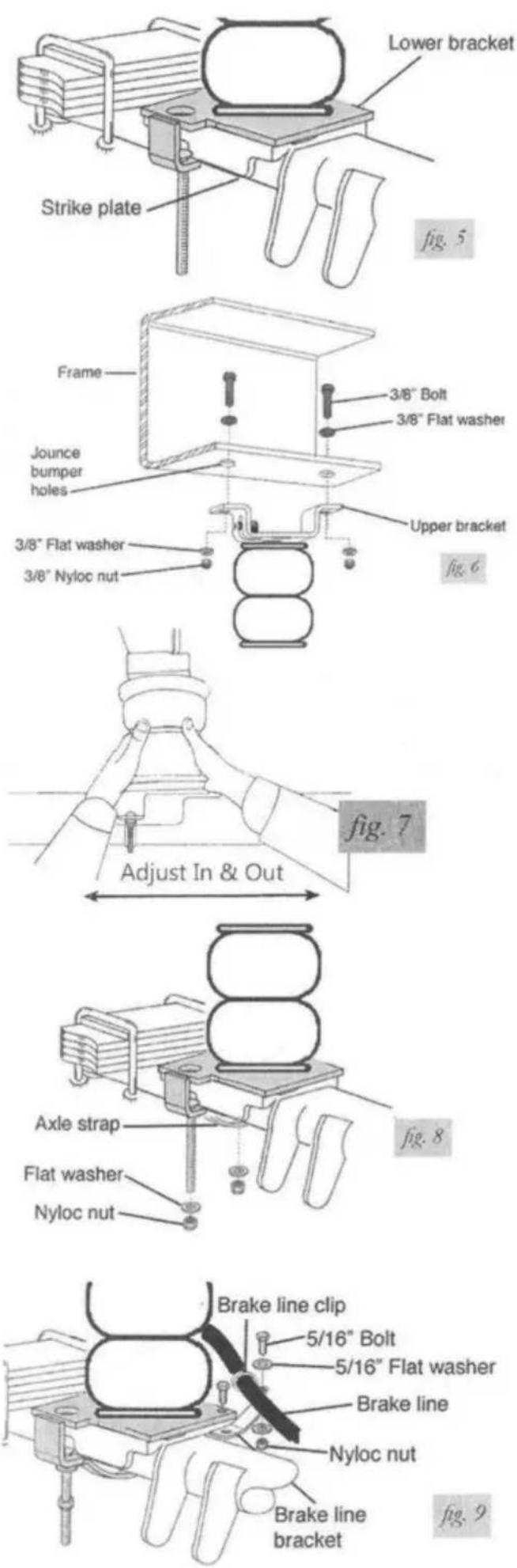
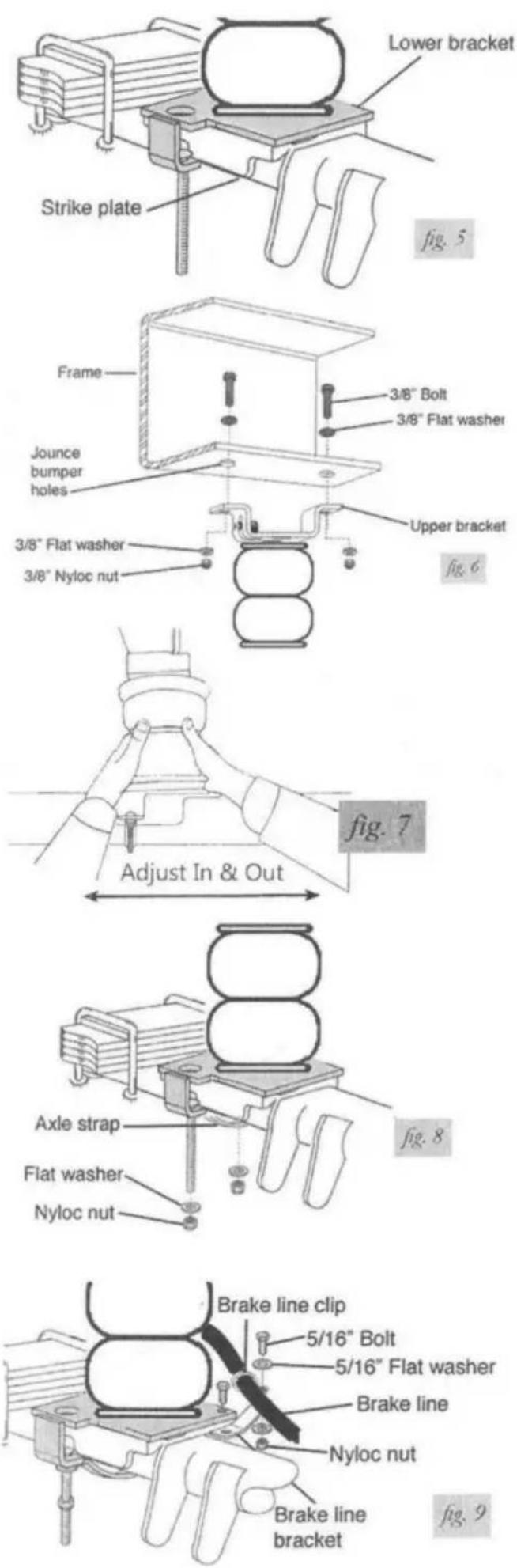
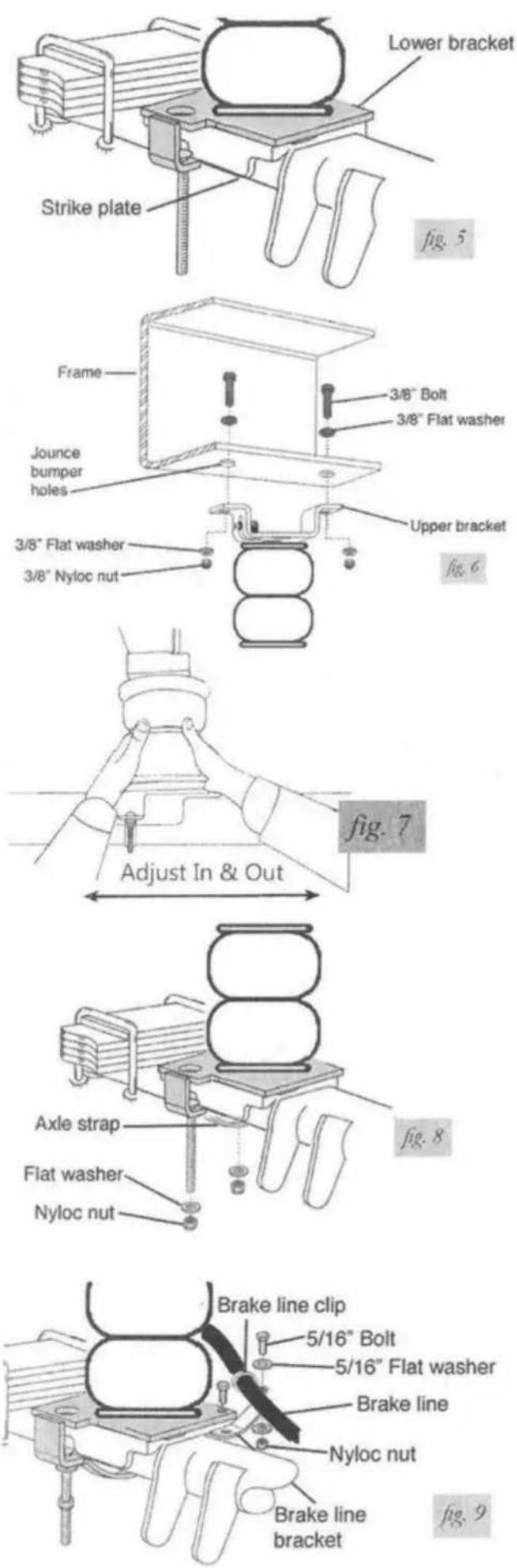
Set the assembly on the strike plate so that the legs of the lower bracket are forward and behind the axle (Fig. 5)
With one leg hooked under the strike plate, turn the assembly to hook the other leg under the strike plate.
INSTALLING THE HEAT SHIELD
Find the closest point between the exhaust pipe and the air bag. Mount the heat shield in this spot.
ATTACHING THE UPPER BRACKET
Step 7-
- The elbow fitting points toward the rear of the vehicle on the driver's side and toward the front of the vehicle on the passenger side.
- Insert two 3/8" bolts and flat washers through the existing jounce bumper holes and the slotted holes in the upper bracket (Fig. 6). It may be helpful to raise the axle at this point so that the upper bracket touches the frame.
- Attach the upper bracket using two flat washers and nyloc nuts on each previously installed bolt (Fig. 6).
- Push the bracket inboard and tighten both upper bolts.
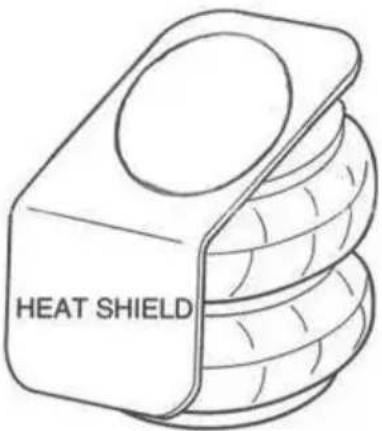
ALIGNING AND ATTACHING THE ASSEMBLY AND LOWER BRACKET Step 8-
- Bring the axle all the way up and remove the jack stand previously used to support the frame when removing the jounce bumper. The upper bracket is slotted for forwarding and backward adjustment. The bottom adjusts by moving the bracket on the axle in or out (Fig. 7).
- Adjust the assembly so that the air spring is perpendicular to the bottom and top mounting brackets.
- Tighten the top mounting bolts to 20 lb.-ft.
- Attach the axle strap to both lower bracket carriage bolts using two flat washers and two nyloc nuts. Torque evenly to 16 lb.-ft. (Fig. 8).
INSTALLING THE EMERGENCY BRAKE LINE BRACKET AND CLIP
Step 9-
- Attach the brake line bracket to the lower bracket using the previously installed 5/16" bolt with one flat washer and nyloc nut (Fig. 9).
- Attach the brake line clip to the emergency brake line bracket (Fig. 9).
- Attach the clip assembly to the brake line bracket using a 5/16" bolt, two flat washers, and a nyloc nut (Fig. 9).
- Align the brake line bracket and clip assembly so that the two do not bind to the cable. Tighten all mounting hardware in this assembly securely. Be sure the cable does not rub against the bellows when it is fully inflated. If it does, adjust the assembly accordingly.
WHEN CUTTING OR TRIMMING THE AIR LINE, USE A HOSE CUTTER, A RAZOR BLADE, OR A SHARP KNIFE. A CLEAN, SQUARE CUT WILL ENSURE AGAINST LEAKS. DON'T USE WIRE
CUTTERS OR SCISSORS TO CUT THE AIR LINE. THESE MAY FLATTEN OR CRIMP THE AIR LINE CAUSING IT TO LEAK AROUND THE O-RING SEAL INSIDE THE ELBOW FITTING.
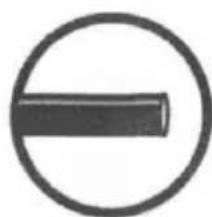
Good Cut
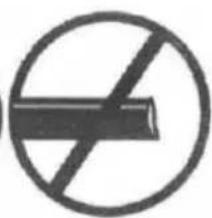
Bad Cut
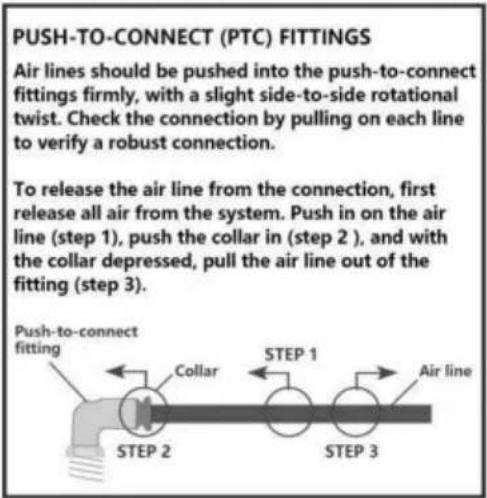
PUSH-TO-CONNECT (PTC) FITTINGS
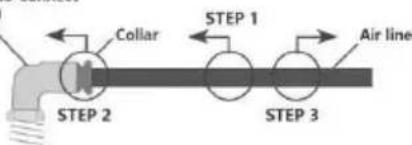
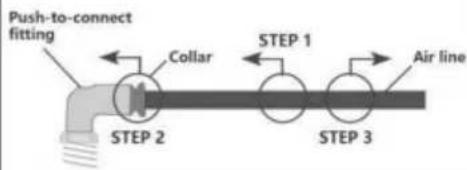
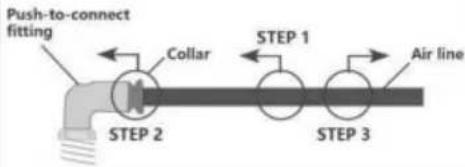
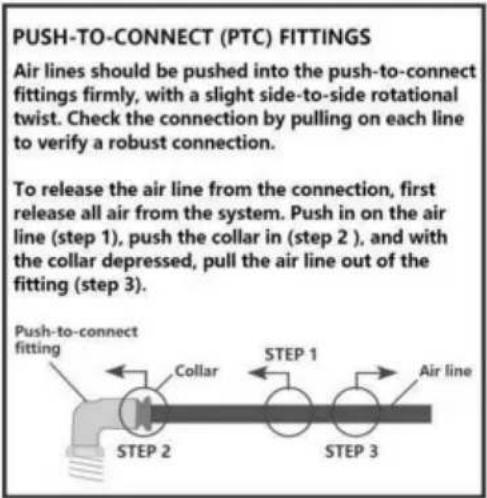
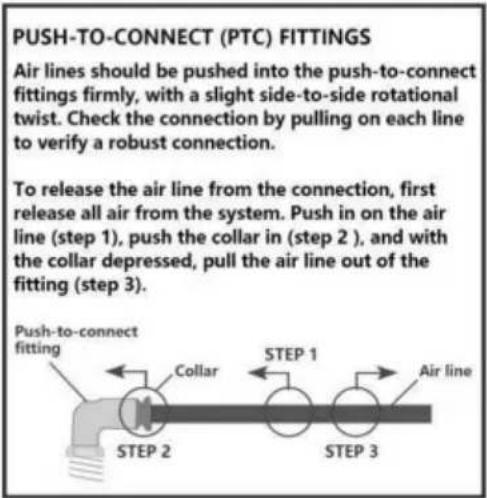
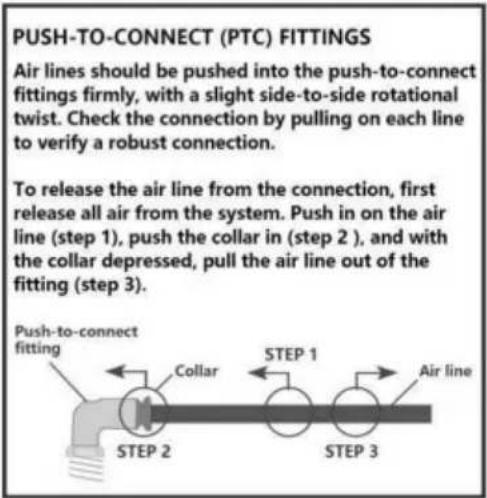
Air lines should be pushed into the push-to-connect fittings firmly, with a slight side-to-side rotational twist. Check the connection by pulling on each line to verify a robust connection.
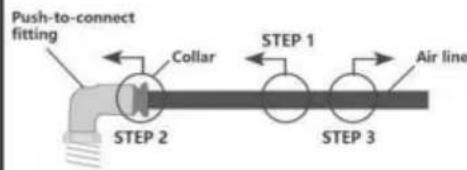
To release the air line from the connection, first release all air from the system. Push in on the air line (step 1), push the collar in (step 2), and with the collar depressed, pull the air line out of the fitting (step 3).
Push-to-connect
fitting
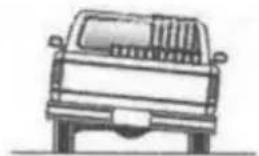
GUIDE LINE FOR ADDING AIR
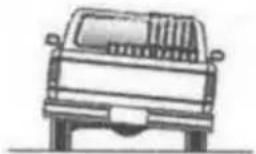
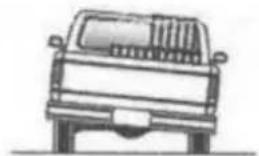
- Start with the vehicle level or slightly above.
- When in doubt, always add air.
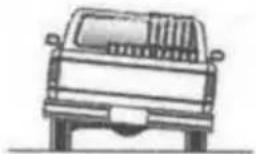
- If the front of the vehicle dives while braking, increase the pressure in the front air bag if equipped.
- If it is ever suspected that the air bags have bottomed out, increase the pressure.
- Adjust the pressure up and down to find the best ride.
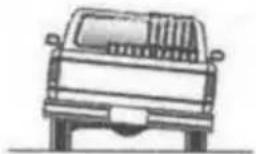
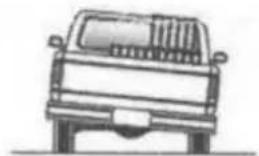
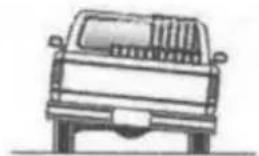
- It may be necessary to maintain different pressures on each side of the vehicle. Loads such as water, fuel, and appliances will cause the vehicle to be heavier on one side. As much as a 50 PSI difference is not uncommon.
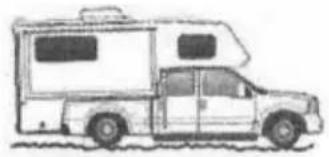
Bottoming out
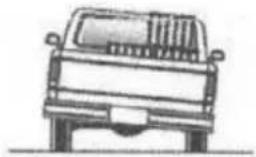
Unlevel
Level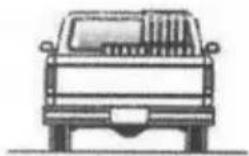
By following the steps below, vehicle owners will obtain the longest life and best result from their air springs.
- Check the air pressure weekly.
- Always maintain normal ride height.
- If you develop an air leak in the system, use a soapy water solution (1 part dish soap, 4 parts water) to check all air line connections and the inflation valve core before deflating and removing the air spring.
- When increasing load, always adjust the air pressure to maintain the normal ride height. Increase or decrease pressure from the system as necessary to attain normal ride height for optimal ride and handling. Remember that loads carried behind the axle (including tongue loads) require more leveling force (pressure) than those carried directly over the axle.
FOR YOUR SAFETY AND TO PREVENT POSSIBLE DAMAGE TO YOUR VEHICLE, DO NOT EXCEED THE MAXIMUM GROSS VEHICLE WEIGHT RATING
(GVWR) AS INDICATED BY THE VEHICLE MANUFACTURER.
IMPORTANT SAFETY NOTICE:
The installation of this kit does not alter the Gross Vehicle Weight Rating (GVWR) or payload of the vehicle. Check your vehicle's owner's manual and do not exceed the maximum load listed for your vehicle.
Gross Vehicle Weight Rating:
The maximum allowable weight of the fully-loaded vehicle (including passengers and cargo). This number— along with other weight limits, as well as tire, rim size and inflation pressure data— is shown on the vehicle's Safety Compliance Certification Label
Manufacturer: Shanghai Muxin Muye Youxian Gongsi
Address: Shuangchenglu 803nong11hao1602A-1609shi, Baoshanqu, Shanghai 200000 CN.
Imported to AUS: SIHAO PTY LTD. 1 ROKEVA STREET EASTWOOD NSW 2122 Australia
Imported to USA: Sanven Technology Ltd. Suite 250, 9166 Anaheim Place, Rancho Cucamonga, CA 91730
| UK | REP |
YH CONSULTING LIMITED.
C/O YH Consulting Limited Office 147,
Centurion House, London Road,
Staines-upon-Thames, Surrey, TW18 4AX
| EC | REP |
E-CrossStu GmbH
Mainzer Landstr.69,
60329 Frankfurt am Main.
VEVOR®
TOUGH TOOLS, HALF PRICE
Technical Support and E-Warranty Certificate
www.vevor.com/support
VEVOR®
TOUGH TOOLS, HALF PRICE
NEED HELP? CONTACT US!
With one leg hooked under the strike plate, turn the assembly to hook the other leg under the strike plate.
INSTALLATION OF THE HEAT SHIELD
PUSH-TO-CONNECT (PTC) FITTINGS
Air lines should be pushed into the push-to-connect fittings firmly, with a slight side-to-side rotational twist. Check the connection by pulling on each line to verify a robust connection.
To release the air line from the connection, first release all air from the system. Push in on the air line (step 1), push the collar in (step 2), and with the collar depressed, pull the air line out of the fitting (step 3).
GUIDE LINE FOR ADDING AIR
Bottoming out
Unlevel
Level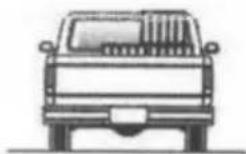
C/O YH Consulting Limited Bureau 147,
Centurion House, London Road,
Staines-upon-Thames, Surrey, TW18 4AX
| EC | REP |
E-CrossStu GmbH
Mainzer Landstr.69,
NEED HELP? CONTACT US!
C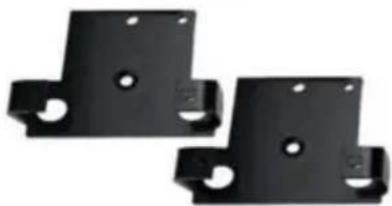
F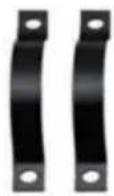
Q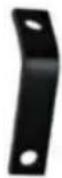
A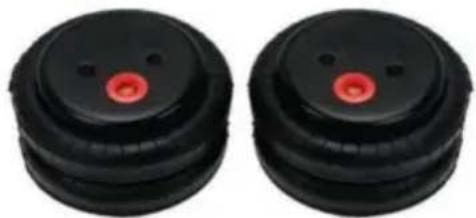
D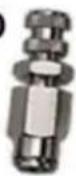
R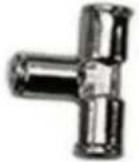
E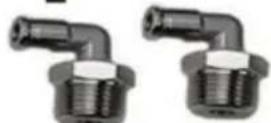
K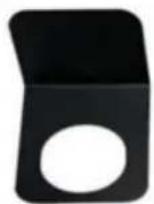
With one leg hooked under the strike plate, turn the assembly to hook the other leg under the strike plate.
PUSH-TO-CONNECT (PTC) FITTINGS
Air lines should be pushed into the push-to-connect fittings firmly, with a slight side-to-side rotational twist. Check the connection by pulling on each line to verify a robust connection.
To release the air line from the connection, first release all air from the system. Push in on the air line (step 1), push the collar in (step 2), and with the collar depressed, pull the air line out of the fitting (step 3).
GUIDELINE FOR ADDING AIR
Bottoming out
Unlevel
Level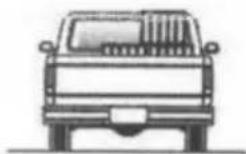
C/O YH Consulting Limited Office 147,
Centurion House, London Road,
Staines-upon-Thames, Surrey, TW18 4AX
| EC | REP |
E-CrossStu GmbH
Mainzer Landstr.69,
60329 Frankfurt am Main.
VEVOR®
TOUGH TOOLS, HALF PRICE
www.vevor.com/support
VEVOR®
TOUGH TOOLS, HALF PRICE
NEED HELP? CONTACT US!
With one leg hooked under the strike plate, turn the assembly to hook the other leg under the strike plate.
Bottoming out
Unlevel
Level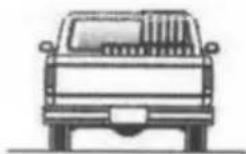
Imported in AUS: SIHAO PTY LTD. 1 ROKEVA STREET EASTWOOD NSW 2122 Australia
C/O YH Consulting Limited Office 147,
Casa del Centurione, London Road,
Staines-upon-Thames, Surrey, TW18 4AX
| EC | REP |
E-CrossStu GmbH
Mainzer Landstr.69,
C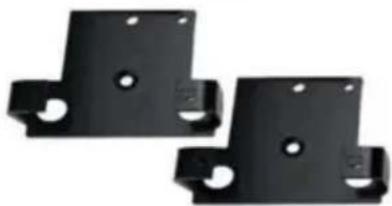
F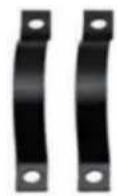
Q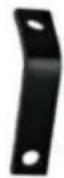
A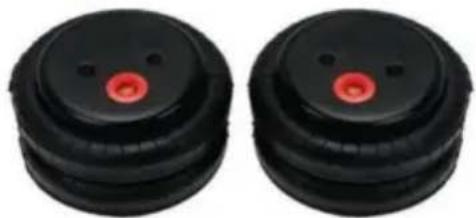
D
R
E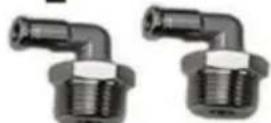
K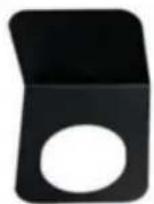
With one leg hooked under the strike plate, turn the assembly to hook the other leg under the strike plate.

GUIDELINE FOR ADDING AIR
Bottoming out
Unlevel
Level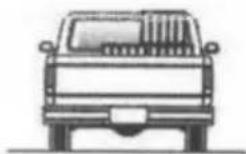
Casa Centurión, London Road,
Staines upon Thames, Surrey, TW18 4AX
| EC | REP |
E-CrossStu GmbH
Mainzer Landstr.69,
NEED HELP? CONTACT US!
C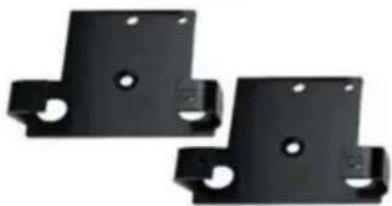
F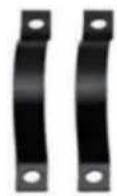
Q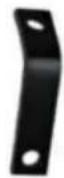
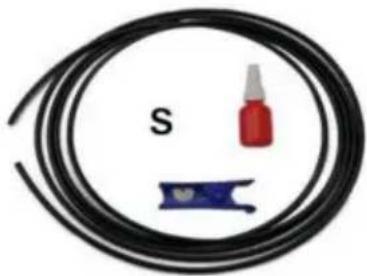
A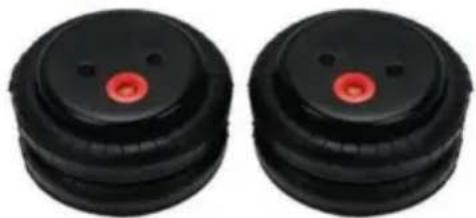
D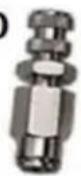
R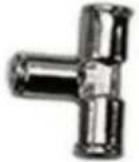
E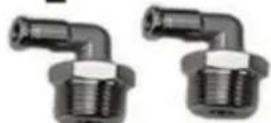
K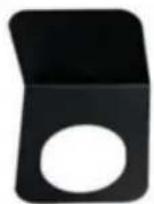
Machine Translated by Google
With one leg hooked under the strike plate, turn the assembly to hook the other leg under the strike plate.
INSTALLING THE THERMAL SHIELD
PUSH-TO-CONNECT (PTC) FITTINGS
Air lines should be pushed into the push-to-connect fittings firmly, with a slight side-to-side rotational twist. Check the connection by pulling on each line to verify a robust connection.
To release the air line from the connection, first release all air from the system. Push in on the air line (step 1), push the collar in (step 2), and with the collar depressed, pull the air line out of the fitting (step 3).
TIP FOR ADDING AIR
Bottoming out
Unlevel
Level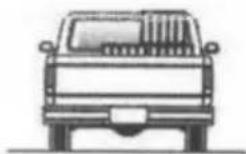
C/O YH Consulting Limited Office 147,
Centurion House, London Road,
Staines-upon-Thames, Surrey, TW18 4AX
| EC | REP |
E-CrossStu GmbH
Mainzer Landstr.69,
60329 Frankfurt am Main.
VEVOR®
TOUGH TOOLS, HALF PRICE
www.vevor.com/support
VEVOR®
TOUGH TOOLS, HALF PRICE
Technical support and e-warranty certificate www.vevor.com/support
Airbag suspension kit
MODEL: 7X 1233
NEED HELP? CONTACT US!
C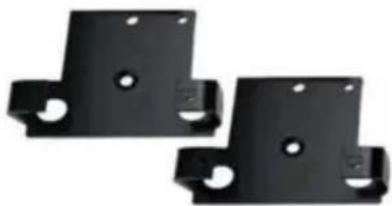
F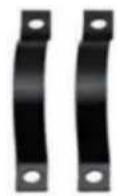
Q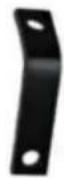
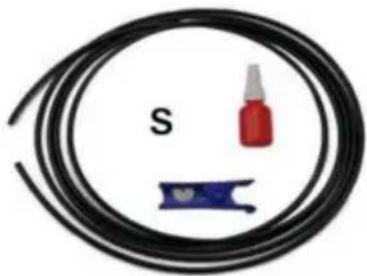
A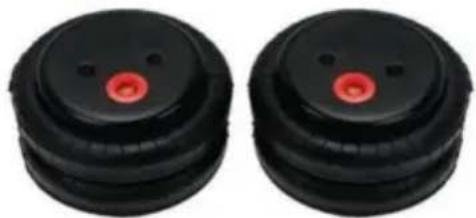
D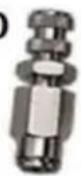
R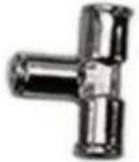
E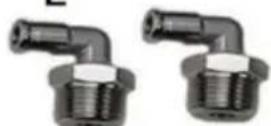

K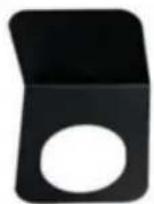
| ITEM | BESCHRIJVING | AANTAL | ITEM | BESCHRIJVING | AANTAL |
| Een luchtveer | 2 | K Hitteschild | 1 | ||
| B | Bovenste beugel | 2 | L | 3/8" nylon moer | 10 |
| C Onderbeugel | 2 | M 3/16" nylon moer | 2 | ||
| D | 1/4" Schrader-ventiel | 1 | N 5/8"-clip | 2 | |
| EN | Elleboog passend | 2 | O 5/8""-18×1" winkel | 2 | |
| F | Asriem | 2 | P | 3/8" 16×3/4" plat kop schroef | 2 |
| G 3/8" | 16×7/8" Winkel | 4 | Q Remleidingbeugel | 1 |
| H | 3/8" 16×1,5" Bout | 4 | R 1/4" T-ventiel | 1 |
| I | 3/8" 16×2,5" Vervoerbout | 4 | S 1/4" DOT-luchtslang (15'), Snijder & Loctite | 1 |
| J | 3/8" platte sluitring | 14 | U 3/8" 16×3/4" Bout | 2 |
With one leg hooked under the strike plate, turn the assembly to hook the other leg under the strike plate.
GUIDELINES FOR ADDING AIR
Bottoming out
Unlevel
Level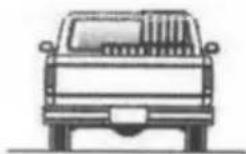
C/O YH Consulting Limited Office 147,
Centurion House, London Road,
Staines-upon-Thames, Surrey, TW18 4AX
| EC | REP |
E-CrossStu GmbH
Mainzer Landstr.69,
60329 Frankfurt am Main.
VEVOR®
TOUGH TOOLS, HALF PRICE
Technical support and e-warranty certificate www.vevor.com/support
VEVOR®
TOUGH TOOLS, HALF PRICE
NEED HELP? CONTACT US!
C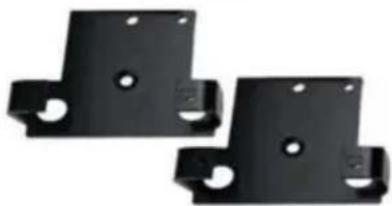
F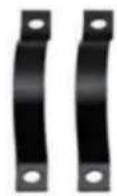
Q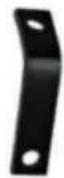
A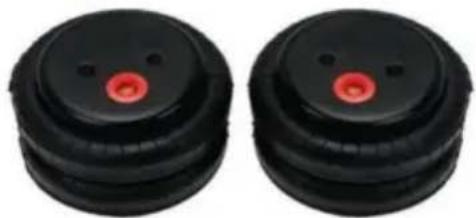
D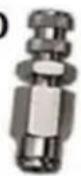
R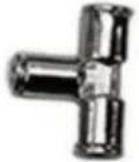
E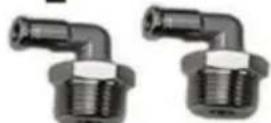
Max pressure 150 psi (under full load)
Burst pressure 550 psi
INSTALLATION INSTRUCTIONS
INSTALLING AIR SPRINGS AND BRACKET

With one leg hooked under the strike plate, turn the assembly to hook the other leg under the strike plate.
INSTALLING THE HEAT SHIELD
GUIDELINE FOR ADDING AIR
Bottoming out
Unlevel
Level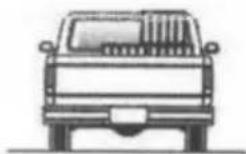
C/O YH Consulting Limited Office 147,
Centurion House, London Road,
Staines-upon-Thames, Surrey, TW18 4AX
| EC | REP |
E-CrossStu GmbH
Mainzer Landstr. 69,
60329 Frankfurt am Main.
VEVOR®
TOUGH TOOLS, HALF PRICE
www.vevor.com/support
- AIR BAG SUSPENSION KIT
- VEVOR®
- NEED HELP? CONTACT US
- SECURITY & WARNINGS
- PARTS LIST
- WARNING
- IMPORTANT
- INSTALLATION INSTRUCTIONS
- ASSEMBLING AIR SPRING BAGS & BRACKETS
- REMOVING THE JOUNCE BUMPER
- POSITIONING THE ASSEMBLY ON THE AXLE
- MODELS
- INSTALLING THE HEAT SHIELD
- ATTACHING THE UPPER BRACKET
- STEP
- ALIGNING AND ATTACHING THE ASSEMBLY AND LOWER BRACKET STEP
- INSTALLING THE EMERGENCY BRAKE LINE BRACKET AND CLIP
- PUSH-TO-CONNECT (PTC) FITTINGS
- GUIDE LINE FOR ADDING AIR
- BY FOLLOWING THE STEPS BELOW, VEHICLE OWNERS WILL OBTAIN THE LONGEST LIFE AND BEST RESULT FROM THEIR AIR SPRINGS
- IMPORTANT SAFETY NOTICE
- GROSS VEHICLE WEIGHT RATING
- TOUGH TOOLS, HALF PRICE
- INSTALLATION OF THE HEAT SHIELD
- GUIDELINE FOR ADDING AIR
- MACHINE TRANSLATED BY GOOGLE
- TIP FOR ADDING AIR
- AIRBAG SUSPENSION KIT
- GUIDELINES FOR ADDING AIR
- INSTALLING AIR SPRINGS AND BRACKET
Brand : Vevor
Model : 7X 1233
Category : Air suspension kit