
ALK-T5 - Fiber fusion tool Vevor - Free user manual and instructions
Find the device manual for free ALK-T5 Vevor in PDF.
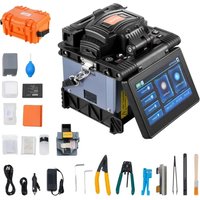


| Product Type | Fusion Fiber Optic Splicer |
| Brand | Vevor |
| Model | ALK-T5 |
| Applicable Fibers | SM, MM, DS, NZDS, UI, BUI, EDF, etc. |
| Fiber Diameter (Coating) | 80–150 μm |
| Fiber Diameter (Cladding) | 100–1000 μm |
| Number of Motors | 6 |
| Alignment Mode | Core to Core, Cladding to Cladding |
| Splicing Time | 9 s (standard), 7 s (rapid) |
| Average Splice Loss (SM) | 0.02 dB |
| Return Loss | ≥ 60 dB |
| Display | 5-inch TFT Color HD LCD Screen, Touchscreen |
| Magnification | X/Y: 210×, 320× (zoom up to 1100×) |
| Power Supply | Lithium battery 10.9 V / 7800 mAh or 220 V AC adapter |
| Battery Capacity | About 260 splice + heat cycles |
| Charging Time | 3 h (rechargeable battery 500 times) |
| Internal Memory | 100,000 splice records, 10,000 images |
| USB Port | USB 2.0 |
| Operating Temperature | -10 °C to +45 °C |
| Operating Humidity | ≤ 95% RH (non-condensing) |
| Maximum Wind Speed | 15 m/s |
| Tension Test | ≥ 2 N (optional) |
| Maintenance | Regular cleaning of V-grooves, lenses, and electrodes |
| Warranty | Electronic warranty certificate at www.vevor.com/support |
Frequently Asked Questions - ALK-T5 Vevor
User questions about ALK-T5 Vevor
0 question about this device. Answer the ones you know or ask your own.
Ask a new question about this device
Download the instructions for your Fiber fusion tool in PDF format for free! Find your manual ALK-T5 - Vevor and take your electronic device back in hand. On this page are published all the documents necessary for the use of your device. ALK-T5 by Vevor.
USER MANUAL ALK-T5 Vevor
Technical Support and E-Warranty Certificate
www.vevor.com/support
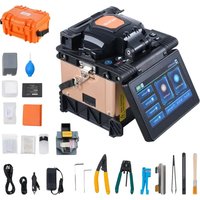
OPTICAL FIBER FUSION SPLICER
MODEL: ALK-T5
We continue to be committed to providing you with tools at competitive prices. "Save Half", "Half Price", or any other similar expressions used by us only represent an estimate of savings you might benefit from buying certain tools with us compared to the major top brands and do not necessarily mean to cover all categories of tools offered by us. You are kindly reminded to verify carefully when placing an order with us if you are actually saving half in comparison with the top major brands.
MODEL: ALK-T5
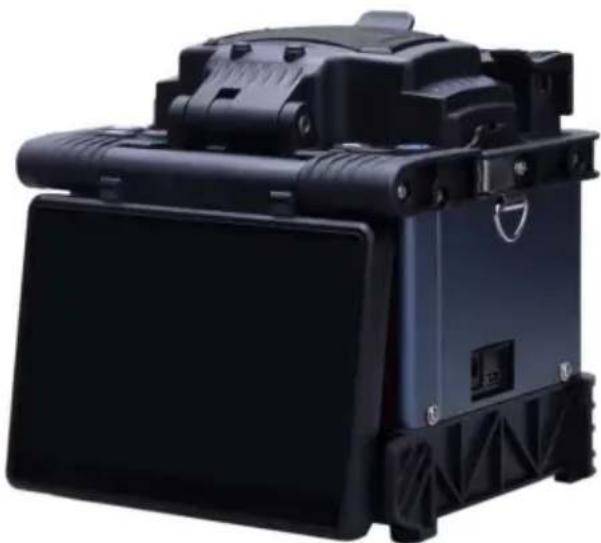
NEED HELP? CONTACT US!
Have product questions? Need technical support? Please feel free to contact us:
Technical Support and E-Warranty Certificate www.vevor.com/support
This is the original instruction. Please read all manual instructions carefully before operating. VEVOR reserves a clear interpretation of our user manual. The appearance of the product shall be subject to the product you received. Please forgive us that we won't inform you again if there are any technology or software updates on our product.

Warning:
Please strictly follow the safety guidance of the manual in application of the optical fiber fusion splicer (hereinafter referred to as Splicer). The ignorance or violation of the rules or notices stressed in the manual may cause electric shock, fire disaster, and injuries to users.
to as Splicer). Ignoring or violating the rules or notices emphasized in the manual may cause electric shock, fire, and injury to users.
The manufacturer shall not be held responsible for accidents caused by improper use.
- The input voltage of this model of machine is definite; please do not use the voltage outside the scope. Please use the correct AC and DC power supply.
- When the fusion splicer encounters the following failures, immediately unplug the AC power cord from the power supply input and turn off the fusion splicer. Failure to do so may result in irreparable damage, personal injury, death, or fire.
• Smoke, smell, noise, or abnormal heat • Broken or damaged machine • Liquid or foreign matter entering the interior of the machine 3. This model of fusion splicer does not require maintenance of internal components. Dismantling the fusion splicer or power modules is prohibited; any maintenance error may render the machine irreparable and cause bodily harm. 4. The machine strictly limits the power supply module used. 5. The fusion splicer is prohibited from use in environments with flammable liquids or gases; otherwise, it may lead to fire, explosion, or other serious consequences.
Disclaimer Clause
The Company assumes no liability for any damage caused by the use of non-original batteries.
- To avoid possible incorrect operation or insecurity, a valid grounded three-hole socket must be used when the AC/DC adapter is connected to AC 220V 50Hz power.
CORRECT DISPOSAL

This product is subject to the provisions of European Directive 2012/19/EC. The symbol showing a wheelie bin crossed through indicates that the product requires separate refuse collection in the European Union. This applies to the product and all
accessories marked with this symbol. Products marked as such may not be discarded with normal domestic waste, but must be taken to a collection point for recycling electrical and electronic devices.
BATTERY DISPOSAL

To minimize hazards to health and the environment at the end of this product's life, laws dealing with Waste Electrical and Electronic Equipment (WEEE) and the Waste Battery Directive require you to dispose of this product at a suitable collection facility where it will be sent in order to remove the batteries and
for appropriate recycling. Please contact your local authorities for more details on recycling and safe disposal of these in your area.
FCC INFORMATION
CAUTION: Changes or modifications not expressly approved by the party responsible for compliance could void the user's authority to operate the equipment!
This device complies with Part 15 of the FCC Rules. Operation is subject to the following two conditions:
1) This product may cause harmful interference. 2) This product must accept any interference received, including interference that may cause undesired operation.
WARNING: Changes or modifications to this product not expressly approved by the party responsible for compliance could void the user's authority to operate the product.
Note: This product has been tested and found to comply with the limits for a Class B digital device pursuant to Part 15 of the FCC Rules. These limits are designed to provide reasonable protection against harmful interference in a residential installation.
This product generates, uses and can radiate radio frequency energy, and if not installed and used in accordance with the instructions, may cause harmful interference to radio communications. However, there is no guarantee that interference will not occur in a particular installation. If this product does cause harmful interference to radio or television reception, which can be determined by turning the product off and on, the user is encouraged to try to correct the interference by one or more of the following measures.
- Reorient or relocate the receiving antenna.
- Increase the distance between the product and receiver.
- Connect the product to an outlet on a circuit different from that to which the receiver is connected.
- Consult the dealer or an experienced radio/TV technician for assistance.
1. Working Environment
1.1 Cautions for use/storage of the splicer:
- Working Temperature: -10°C ~ +45°C
- Temperature Limitation: -20°C ~ +55°C
- Working Humidity: ≤95%RH (No condensation) Maximum Wind Speed: 15 m/s
- Storage Conditions: -10°C ~ +45°C (With battery, no condensation)
- -20°C ~ +60°C (No battery, no condensation)
Don't use the splicer in an environment vulnerable to fire or explosion, in case any fire disaster or explosion is caused.
Do not use or store the splicer in environments with high temperature or high humidity, as this may cause damage to the machine. When moving the splicer from a low-temperature environment to a higher-temperature environment, take appropriate warming measures to eliminate condensation.
When using the machine in a dusty environment, take suitable dust-resistance measures to prevent large amounts of dust from entering the machine and causing device malfunction.
2. Power Supply
Use only the matching accessories of the splicer. Do not use any power adapter, battery, or power cord that is not specified in the instruction manual.
Do not use the splicer under voltages not specified for the model, as this may cause fire or electric shock. The customized car charger power cord is only available for 12V power supply of gasoline cars. Under no circumstances should it be used on diesel cars with 24V power supply.
3. Battery
Strictly follow the instructions when using the battery. Improper use of the battery may cause it to heat up, burst, explode, cause fire, or result in injuries to users.
Do not charge the battery using methods not specified in the manual.
Do not dispose of the battery in fire.
Do not reverse the positive and negative poles.
Do not expose the discharging battery to sunshine, high-temperature environments, or fire.
Do not throw or strike the battery.
If the battery electrolyte leaks, handle it carefully. If the user's skin or eyes are accidentally contaminated by the electrolyte, wash thoroughly and seek medical help immediately. Also, inform the after-sales department to handle the battery.
4. Other Cautions
Prevent any liquid or metal materials from entering the internal structure of the product, as this may cause fire, electric shock, or product malfunction. If water or any metal materials get into the product, stop using it, cut the power supply, turn off the equipment, and contact the maintenance service department.
Please do not touch the electrodes when the equipment is working in case getting hurt by the high voltage. Please do cut the power supply and turn off the equipment before changing electrodes.
Do not disassemble or demolish the splicer, its battery or its adapter in case overheating, burst or fire disaster caused.
Except the components that are allowed to be changed in this manual please do not try to demolish any parts of the splicer. The maintenance or repair of the equipment must be operated by professional technicians from our company, improper operations may cause fire or electric shock.
Do not touch the shrinkable tube in heating process or when it's just finished, as the shrinkable tube is very hot and may cause scald.
Do not touch the splicer, power cord or power plug with wet hands in case electric shock caused.
Do not clean the microscope lens, V groove, screen etc with any chemical materials except alcohol. Otherwise it may cause image blur or spots on screen, or may even cause corrosion or damage of the equipment.
Please prevent the equipment from strong shaking or crash, or the equipment may be damaged. Please transport or store the splicer by dedicated carrying box.
Please do entire machine maintenance once a year to maintain the performance of the splicer.
Production Introduction
Optical Fiber Fusion Splicer is mainly used for optical fiber cable maintenance and relative operations. Thus it is also called fiber cable splicer. It is a device that uses high precision propulsion structure to push two fibers
to get closer to each other and uses an electric arc to melt two optical fibers together at their end faces, to form a single long fiber.
Optical fiber fusion splicers are mainly applied by: Telecom carriers, ISP, network project contractors, laboratories. And they're applied in: Fiber cable network maintenance, telecom projects, emergent repairing, optical experiments, manufacture and testing of optical devices, academic researches in colleges.
1. Introduction of Function Buttons
| Appearance | Name | Function |
| Menu / Confirm | Enter menu page/Confirm or save | |
| Power On / Off | Turn on/off the power | |
| Next | Switch to next option/Switch X/Y views | |
| Return / Reset | Return/Reset the motor | |
| Start / + | Run to start splicing/Adjust parameters(Decrease/Switch) | |
| Heating | Start heating |
2.Description of Product Structure
| Appearance | Name | Function |
| Heater | For heating process of shrinkable tubes after splicing. |
Battery Fixing Button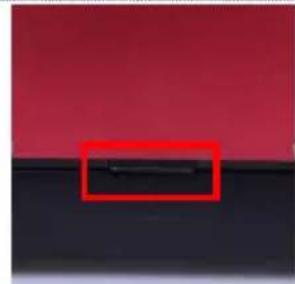
Put on/take off the battery
3. Fundamental Parameters
Applicable Optical Fibers: SM, MM, DS, NZDS, UI, BUI, EDF, etc. Applicable Core Type: Single Core. Applicable Fiber Diameter: Cladding diameter 80-150 μm, Coating diameter 100-1000 μm. Number of motors: 6 Motors
Splicing Mode
- Pre-store: 18 groups. Customize: 982 groups
- Splicing Results Recording: 100,000-group splicing records & 10,000 image storage. Splicing Speed: 9 SEC (Standard Mode), 7 SEC (Fast Mode)
- Alignment: Core to core alignment, clad to clad alignment
Splicing Loss
- Average Splicing Loss: 0.02 dB (SM), 0.01 dB (MM), 0.04 dB (DS), 0.04 dB (NZDS)
- Return Loss: ≥60 dB
Splicing Loss Estimation: Exist
Power Supply
- Battery: 10.9V Lithium battery, typically splicing and heating 260 times, charging time 3h, 500 times rechargeable, 7800mAh lithium battery
Operation Conditions
Operation Environment: Altitudes 0-5000 m, relative humidity 0-95% (No condensation), temperature -20°C to 55°C, maximum wind speed 15 m/s. Storage Conditions: Relative humidity 0-95% (No condensation), temperature -40°C to 80°C. Corrosiveness Resistance: The main device, components and constituent materials meet the requirements of GB/T 2423.54-2005 corrosion and are not vulnerable to the corrosiveness of fluid pollution.
Heating Shrinkable Tube
Applicable Diameter: 2mm, 3mm, 4mm, 6mm. Applicable Length: 60mm, 50mm, 45mm, 40mm, 25mm, 20mm. Heating Time: 2mm tube (10-15S adjustable), 4mm tube (14-19S adjustable), 6mm tube (17-23S adjustable). Heating Temperature: 10 - 260°C (Custom). Automatic Heating: Auto fiber recognition and heating after covered.
Other Parameters
- Tension Test: ≥ 2N (Optional)
- Display: 5 inches TFT true color HD LCD screen, support multi-language selection, touch screen.
- Magnification: X/Y: 210 times, X/Y: 320 times. The result can be double-clicked to magnify 1100 times after the fusion is complete.
- USB Port: USB2.0
- Illumination: LED double white light
- IOT function: Optional
- Password management function: Optional
4. Initial Interface
Language
Selection (English, French, German, Portuguese, Italian, Spanish)
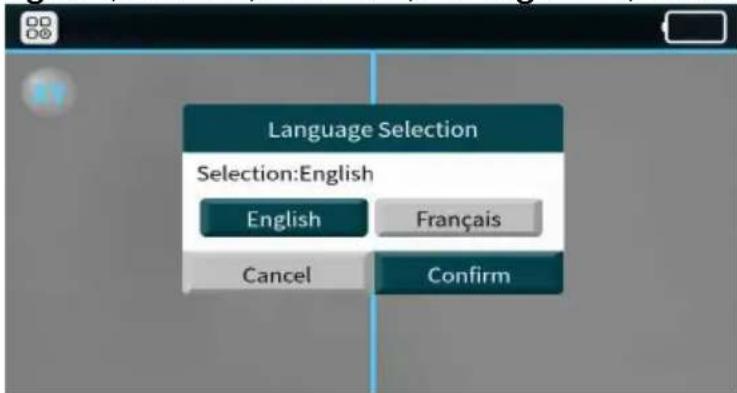
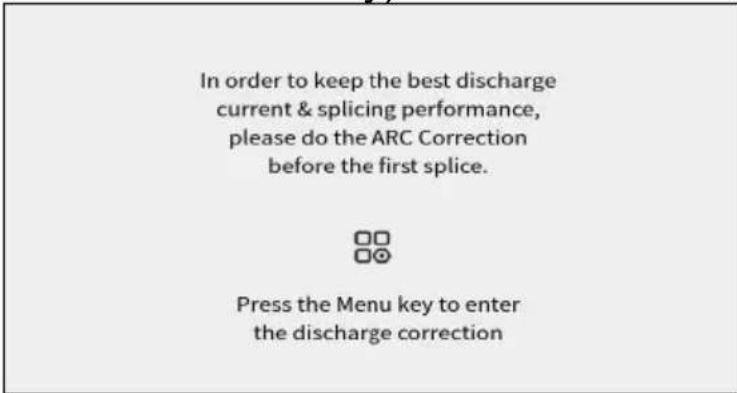
♦ First time ARC Correction (ARC correction could enhance the splicing performance and stability)
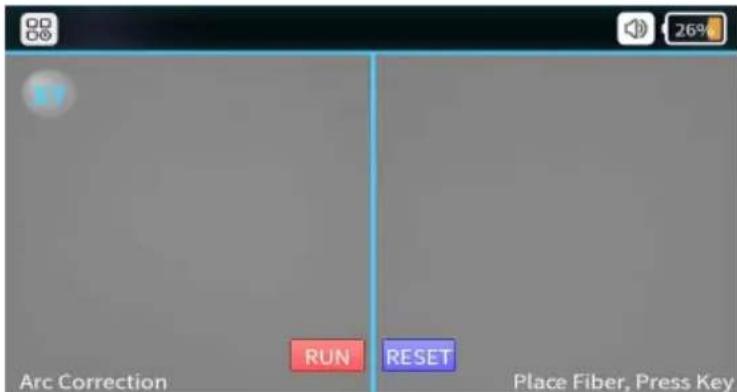
♦ ARC Correction Interface (Cutting and placing the fiber via correct way)
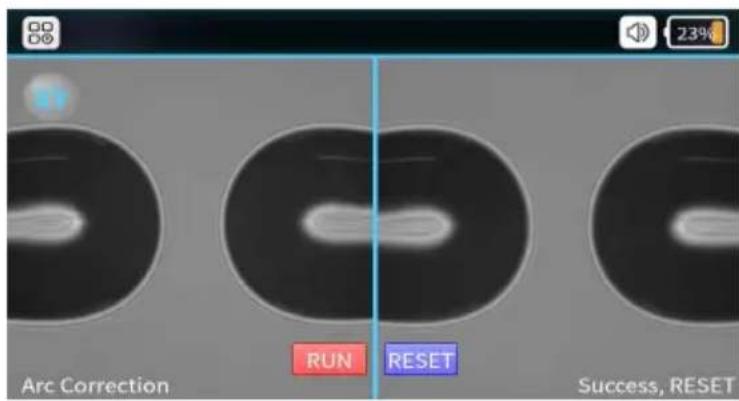
ARC Correction Success (After "success" shows on screen, ARC correction process is done, then using [Rest] button to quit the mode.)
5. Description of UI
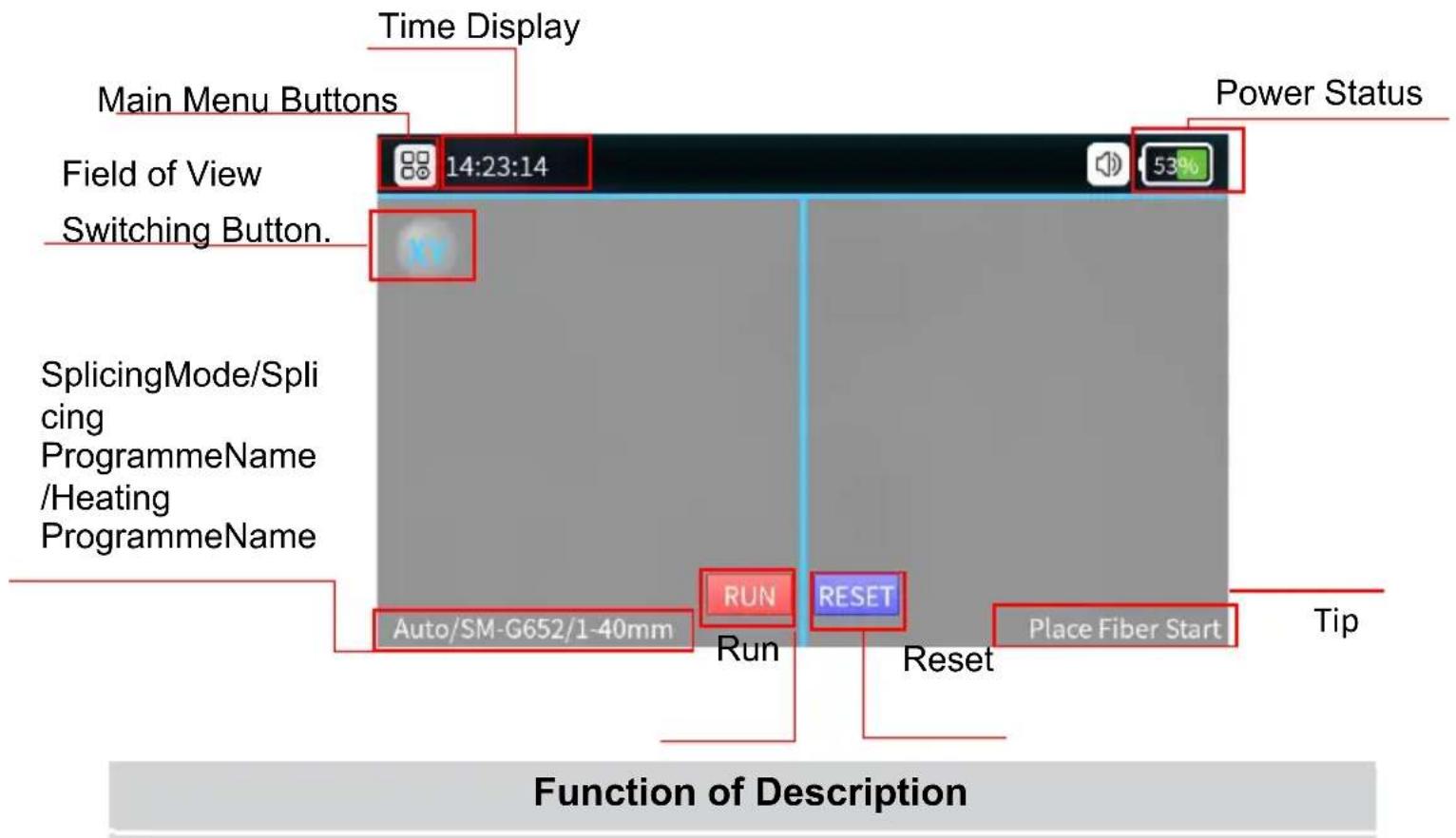
1. Function Introduction of the Splicer
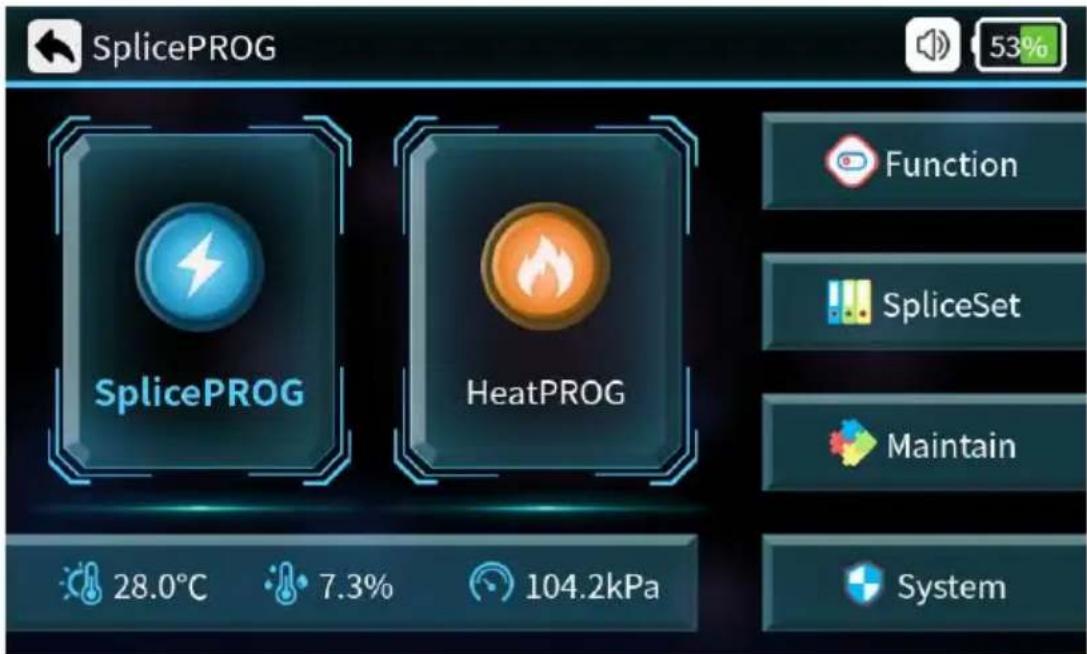
2. Shortcut Function
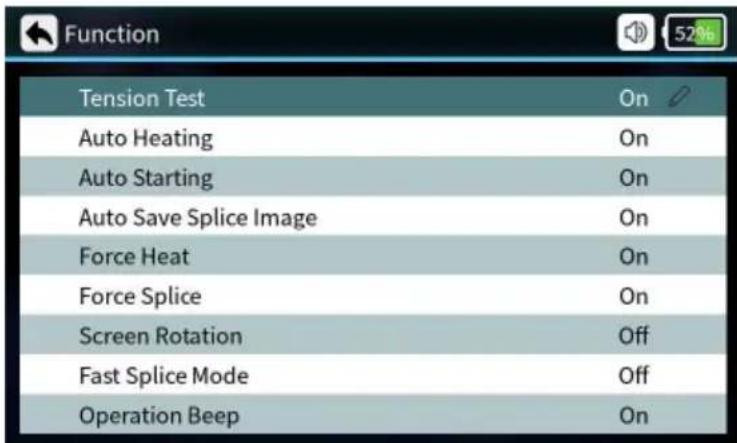
| Parameters Instructions | |
| Tension Test | When it's on, the tension test will be executed automatically after splicing. |
| Auto Heating Put in the optical fiber, cover after automatic heating | |
| Auto Starting | When it's on, automatically splicing once cover closed. |
| Auto Save Splice Image | When it's on, automatically saving splice picture. |
| Force Heat | When it's on, no fiber optic detected, pressing the heat button also heats it up. |
| Force splice | When it's on, the user can press the start button to force the fusion splicing to continue, when the fusion splicing process detects an angle failure or fiber mismatch. |
| Screen Rotation | Screen interface rotated 180° |
| Fast splice Mode | Can be set on or off, fusion time is reduced when fast mode is on. |
| Operation Beep | Beeps can be set to be on or off. |
3. SpliceSet
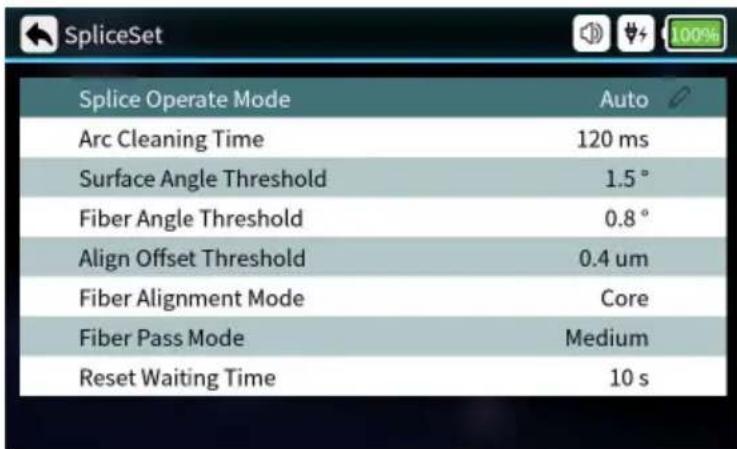
| Parameters Description | |
| Splicer operate Mode | Automatic mode, semiautomatic mode, manual mode optional. |
| Arc Cleaning Time | Clean discharge refers to the cleaning of fine dust adhering to the surface of an optical fiber by discharging the fiber prior to fusion splicing. |
| Surface Angle Threshold | Limit value of fiber end face angle. |
| Fiber Angle Threshold | Angle limit after alignment of left and right fibers. |
| Align offset Threshold | Limit of centre deviation after alignment of left and right fibers. |
| Fiber Alignment Mode | Core alignment, cladding alignment, and fine alignment can be set. |
| Fiber Pass Mode | Low, medium and high standards can be set. |
| Reset Waiting Time | When the tensile test is turned on, waiting time for motor reset after opening the windproof cover |
4. Edit Splice Program
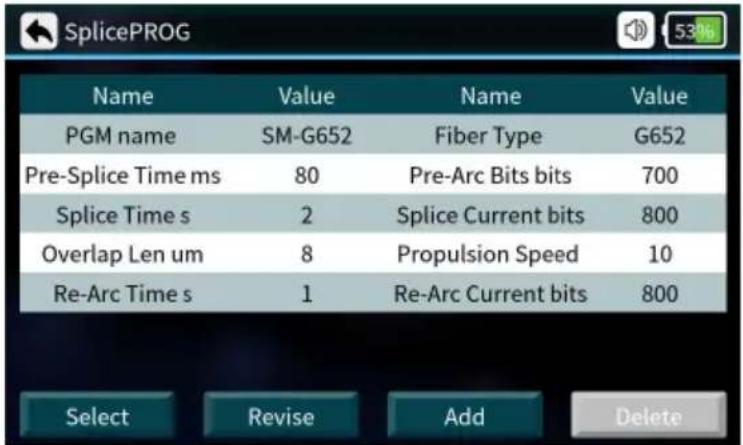
| Edit Splice Program | |
| Splice PN Name of splicer program | |
| Pre-Splice Time | Pre-Splice time can be set from: 0-500 (ms) |
| Splice Time | Splice time can be set from:0-5 (s) |
| Overlap Len | Overlap Len can be set from:0-50 (um) |
| Re-Arc Time | Re-Arc Time can be set from:0-5 (s) |
| Fiber Type Types of Fiber | |
| Pre-Arc Bits | Pre-Arc Bits can be set from:0-4000 (bits) |
| Splice Current Bits | Splice Current can be set from:0-4000 (bits) |
| Propulsion Speed | Propulsion Speed can be set from:0-50 (um/s) |
| Re-Arc Current Bits | Re-Arc Current can be set from:0-4000 (bits) |
5. Sleeve Set
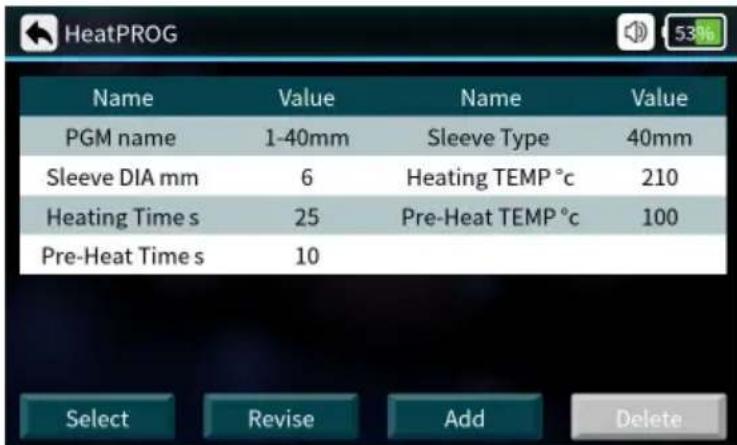
| Parameters | Description |
| Heating PN | There are many heating programs for different shrinkable tubes pre-stored in the system, also many self-set programs are offered to users. |
| Sleeve DIA | 2mm,3mm,4mm,6mm |
| Heating Time | Heat shrink heating time |
| Pre-Heat Time | Pre-heating time |
| Sleeve Type | 10mm-60mm normal tube, FC, SC |
| Heating Temp | The temperature limit of heating process |
| Pre-Heat Temp | The temperature limit of preheating process |
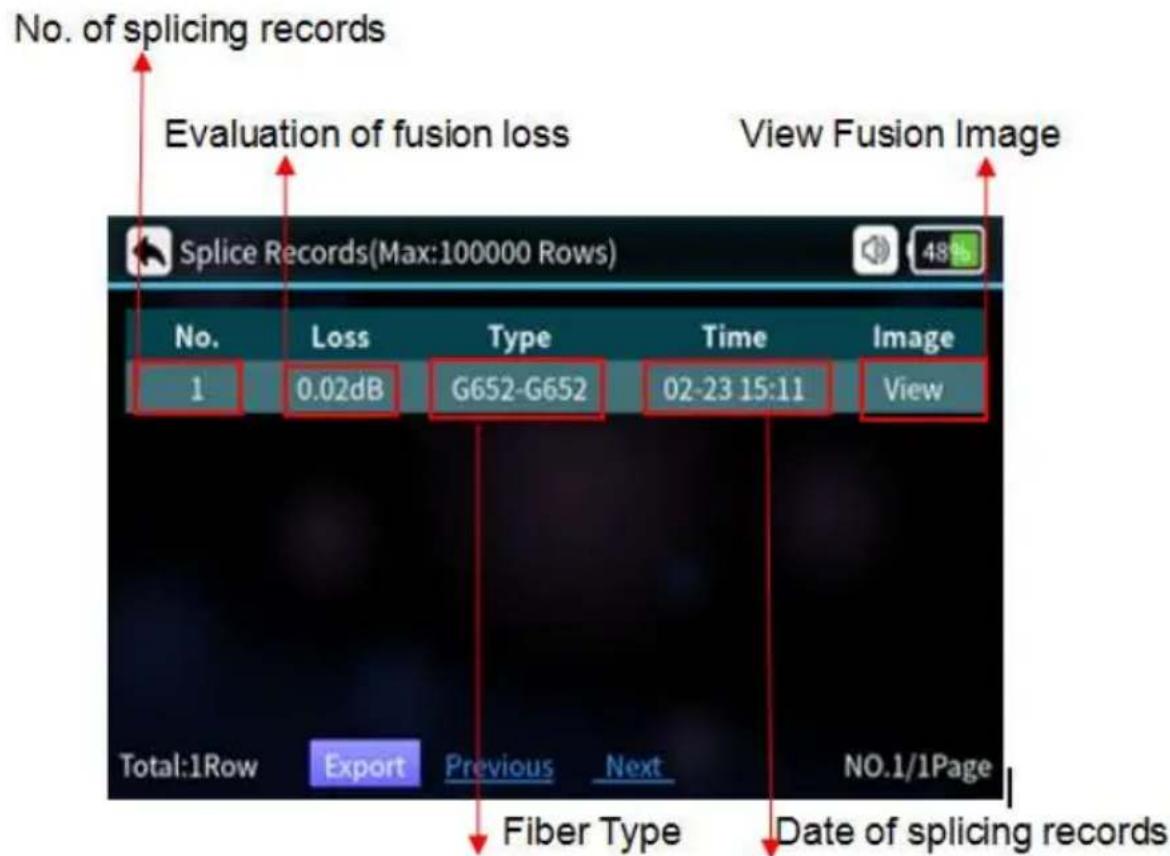
6. Splice Records
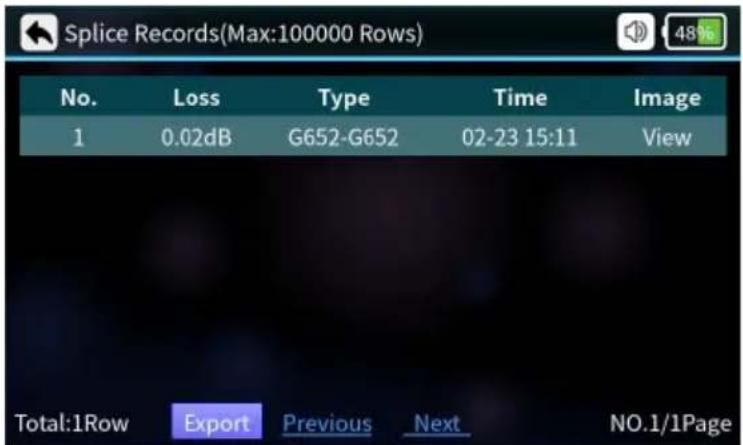
| Parameters Description | |
| No. Sorting by Splice Time | |
| Loss Loss after splicing | |
| Type Types of fiber for splicing | |
| Time Splice time | |
| Image Viewable | image of the finished splice |
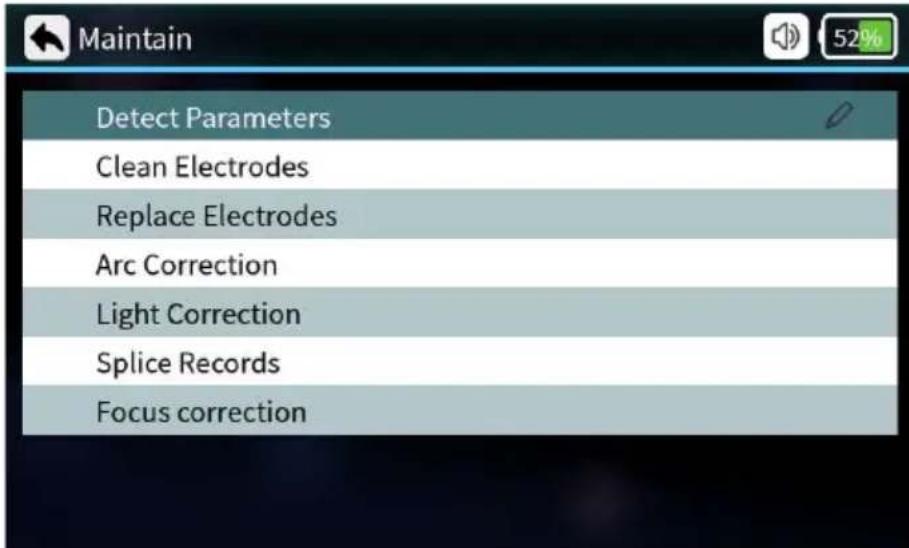
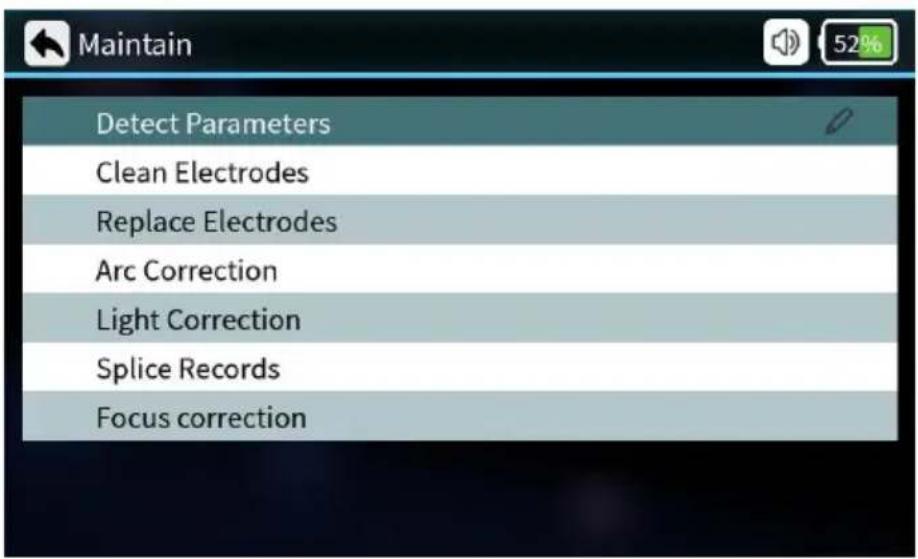
7. Maintain
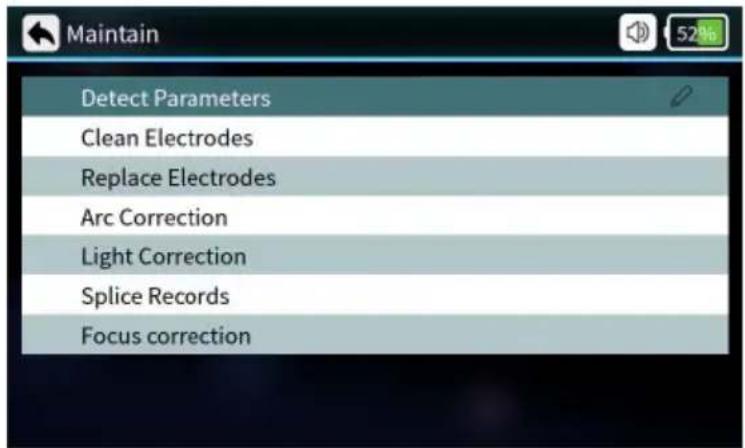
| Parameters Description | |
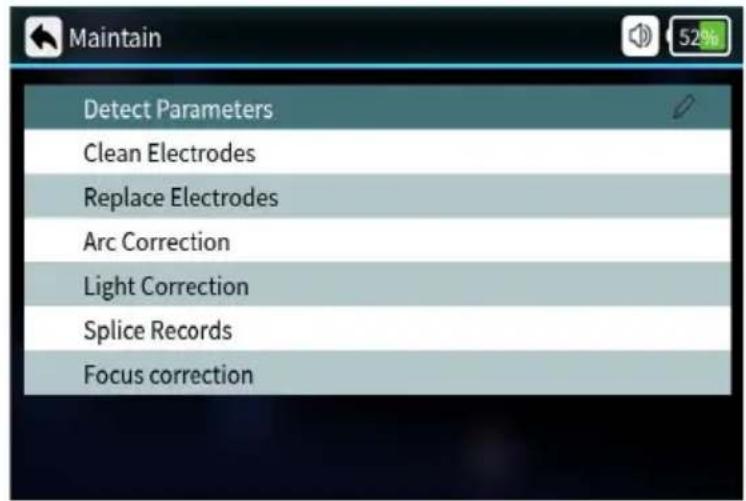
| Detect Parameters | Automatic self-test of electrode position, motor and other system parameters. |
| Clean Electrodes | Multiple high-current discharges to clean the electrodes. |
| Replace Electrodes | After replacing the electrode, the discharge position is automatically determined and the electrode is stabilized by multiple discharges. |
| Arc Correction | Performs Arc Correction operation and automatically corrects the discharge current. |
| Light Correction | Automatic correction of red light source. |
| Splice Records | Query splice time, evaluate loss, image, etc. |
| Focus correction | Automatic correction of fiber focus on screen. |
8. System
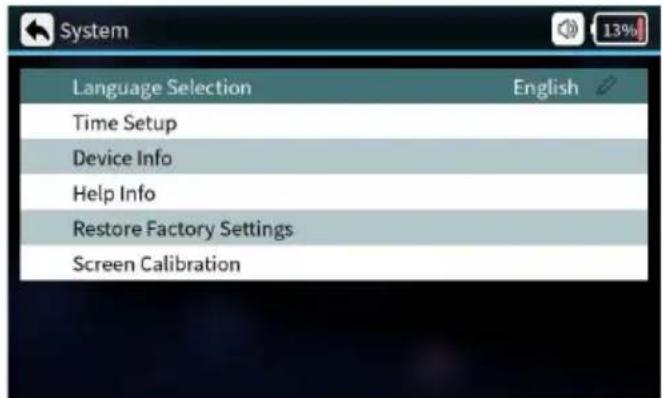
| Parameters Description | |
| Language Selection | English, French, German, Italian, Portuguese, Spanish |
| Time Setup Setting the time setup | |
| Device Info | Current device related information |
| Help Info instruction manual | |
| Restore Factory Setting | Settings are restored to factory settings |
| Screen Calibration | Calibration touch screen |
Basic operating instructions
1. Turn on the power
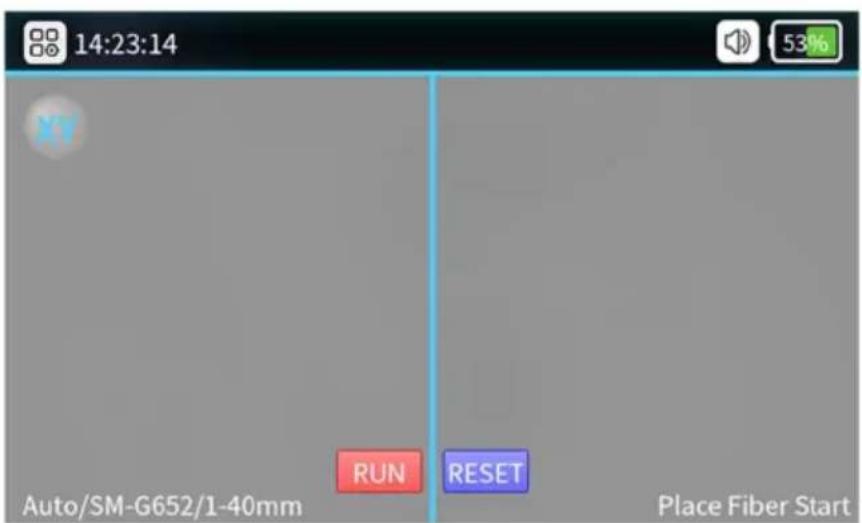
Optical fiber observation interface: Short push the power switch then the indicator on the operation panel will turn to red and the buzzer will be sounds like "Di Di". All motors will return back to their initial positions and the fiber observation interface shows.
2. Preparation before splicing
(1) Put the shrinkable splicing tube on
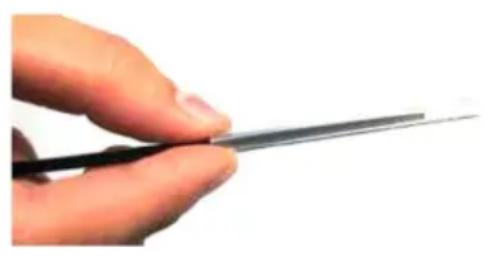
Put the fiber through the splicing tube to protect the fusion point after splicing. Make sure there is no impurity inside the tube and keep the tube parallel with the fiber.
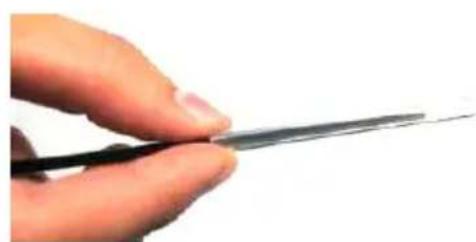
② Strip down the protective layers except the glass coating layer.
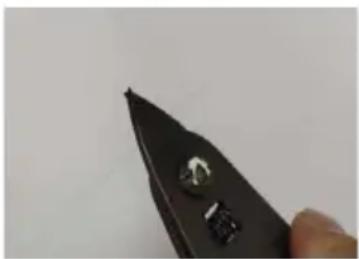
Strip the coating layer by 40mm with strippers.
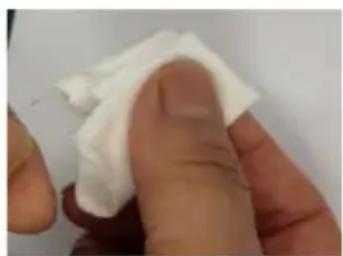
After stripping the optical fiber, use dust-free paper dipped in 99% purity alcohol to clean the coating layer in a circular direction. Starting from the interface between the coating and the bare fiber, rotate the paper in the direction of the bare fiber in a circular direction and get rid of the debris of coating layers.
3. Fiber Cutting
Position the tip of the fiber at 13 - 13.5 mm above the top of the slot. Keep the slider at the outer side. Then cover the pressure pad. Push the slider and finish the cutting. Open the fiber holder and open up the pressure pad, take the fiber and keep it away from other items in case it may get polluted.
Notice: When there is a poor cutting surface, please adjust the blade surface of the fiber cleaver. What's more, we'd like to suggest you use specified fiber cleavers equipped with our machines.
4. Fiber Placement
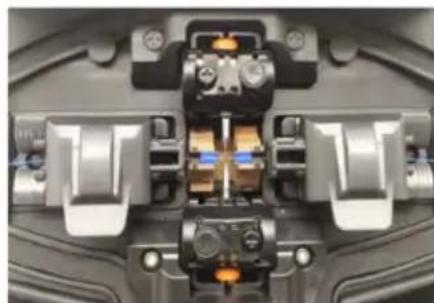
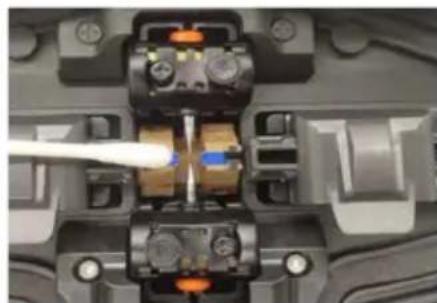
♠ Open the wind-proof cover and check if the V-groove is clean. If not, please use air blow or blade to clean the V-groove. ♠ Put the cut fibers in the V-groove of the splicing modules and make sure the fibers are right in the V-groove. ♠ Check if the end-faces of the fibers are in the position between the electrode tips and the V-grooves. And make sure they're close to the electrode tips. Or the fibers shall be re-placed.
♠ Close the wind-proof cover gently and start splicing.
5. Check Splicing Result
6. Auto-alignment and End Face Correction
To assure splicing quality, the product uses an image processing system to observe fibers. But in some conditions the system may not be able to detect the splicing errors. So we still need to inspect the splicing process with eyes through the display screen to get better splicing quality.
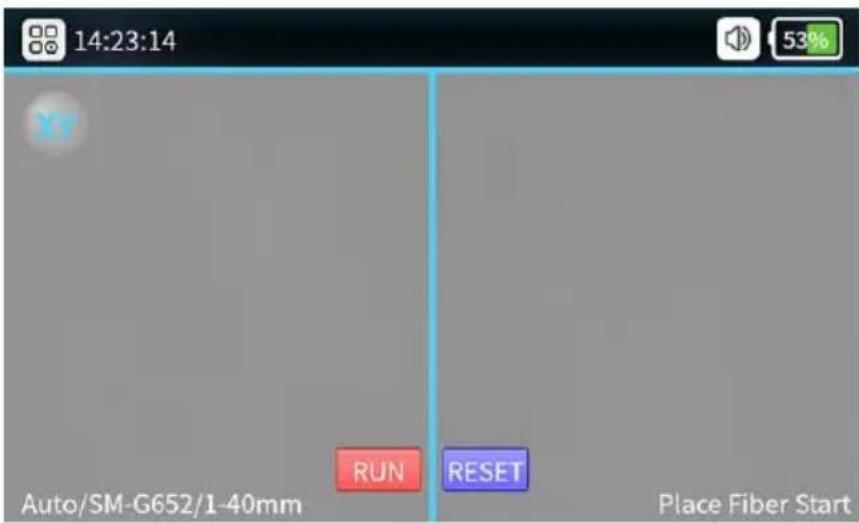
Close the wind-proof cover or press the start button, the optical fiber enters the automatic alignment state, and the left and right optical fibers begin to do phase movement. The system will check the cut faces after cleaning discharge, if the end faces are not qualified the splicing will not be started and there will be an error notice on the screen. If the cut faces are qualified the aligning process will continue. After alignment the end-face angles of fibers
on both sides will be shown on the screen. If the detected angles exceed the limited angle there will be an error notice on the screen. The fibers will need to be re-cut.
If it shows following images or notice info in aligning process the system will reset the motors. Users can also push reset button to reset motors and retry to cut or put fibers.
7. Solutions of Abnormal Alignment Issues
| Displayed Images ( X/Y Axis) | Notice | Possible Reasons | Solutions |
| Fiber on the right side is improperly placed | Fiber on the right side is not placed into the V-groove or it's too short | Reposition the fiber, Re-cut the fiber | |
| Fiber on the left side is improperly placed | Fiber on the left side is not placed into the V-groove or it's too short | Reposition the fiber, Re-cut the fiber | |
| Alignment Error | Fiber on the right/left side is not placed in the V-groove | Reposition the fiber, Re-cut the fiber | |
| Please reposition the fiber | Left/right side cuts too short | Reposition the fiber, re-cut the fiber | |
| Please reposition the fiber | Fibers on left/right side are too long | Reposition the fiber, re-cut the fiber | |
| Fibers are not qualified | Dust or dirt on fibers | Clean and reposition the fibers | |
| Displayed Images ( X/Y Axis) | Notice | Possible Reasons | Solutions |
| Angles of fiber end- faces are not qualified | Problems with the fiber cutting process ) | Re-cut the fiber |
After fiber alignment the system will automatically discharge and splice. If the setting is set to semiautomatic splice, the message "Alignment complete" is displayed on the screen. Then the user can push start button to splice or push reset button to reset motors.
Maintenance
1. ARC Correction
When the outer environment suddenly change or for following situations the ARC correction will be needed to adjust current intensity so to ensure low loss, high stability splicing.
- Temperature, humidity or air pressure changes
- Aging or pollution of electrodes
- Continuous splice fails or high splicing loss
- Machine is idle for a long time
- Electrodes over used
- Electrodes are newly cleaned or replaced Discharge Correcting Method:
① Choose "Arc Correction" Under
Put cut fibers on fiber holders and close the wind-proof cover.
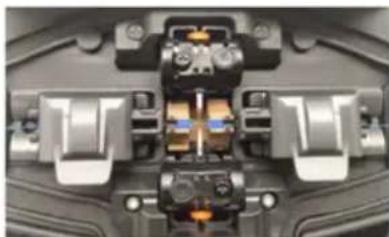
③ If there is "Large Current" or "Small current" please repeat the operation of ②③ until it shows the correction is successful.
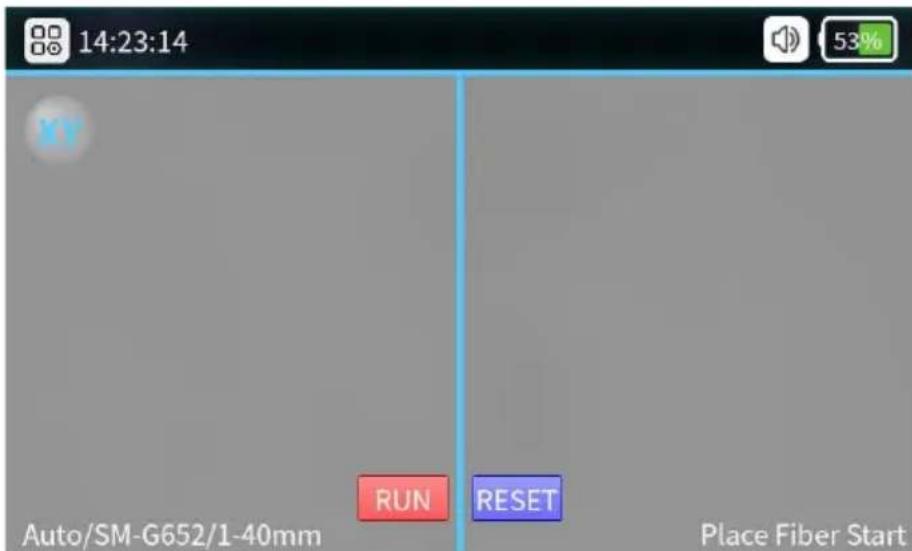
Notice:
The cutting angles under discharge correcting mode are separately set, and are not related to those under splicing modes. Discharge correction usually needs to be repeated several times. Please operate with patience.
2. Detect System Parameters
The self-test function offered is able to test and inspect the system based on several important parameters.
We strongly suggest that users perform a parameters self-test in case splicing quality may be affected:
After system updating, after replacing or moving electrodes, after enduring long-distance transportation or strong shock, after continuous splicing failures or abnormally high splicing loss, or when there is continuous over-adjusting in the alignment process.
Operations are as follows:
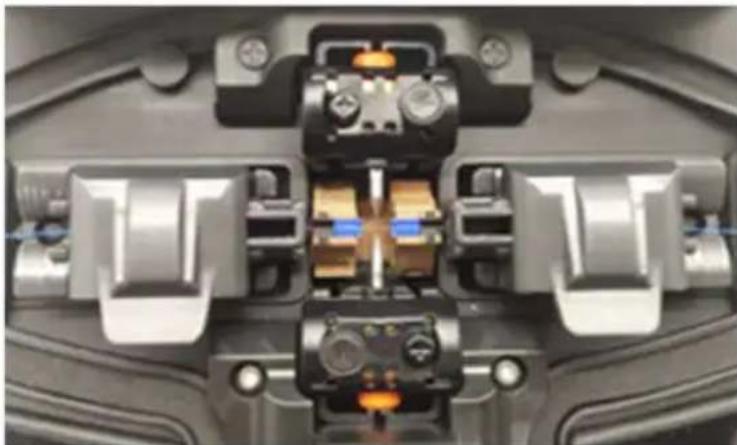
① Clean the V-groove and pressers with a cotton swab dipped in alcohol.
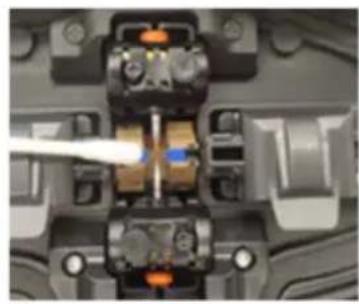
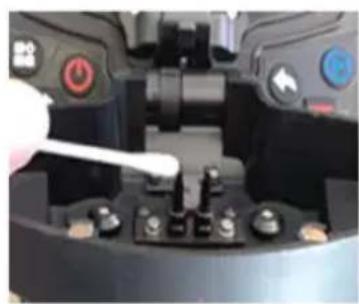
(2) Choose "Detect Parameters" under "Maintain".
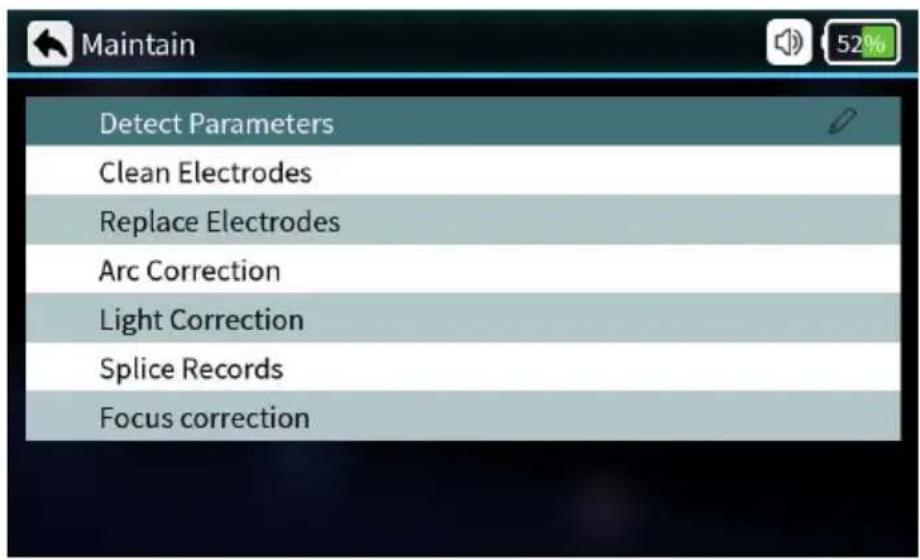
(3) Put fibers in and close the cover; the self-test will begin. Normally the test will continue for 2 minutes. Please observe the notice on the LCD screen. If the test fails, please operate according to the instructions on the screen and re-enable system detection (Step ①).
Notice:
Cleaning is the most important step. Please clean the specified parts before further operations.
3. Electrodes Replacement
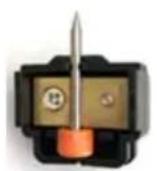
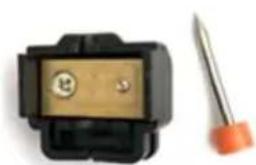
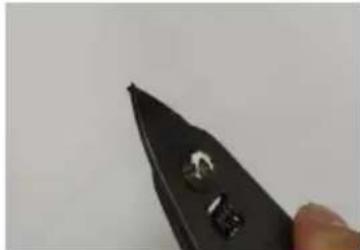
The electrodes will be damaged due to long-term use. Please replace the electrodes after 5000 discharges, or the splicing quality will be affected, causing higher loss and lower steadiness of spliced fibers. The system will automatically remind you that the electrodes need to be replaced when the discharge count reaches 5000. After electrode replacement, the discharge record shall be reset. Be careful of the sharp tips of the electrodes when replacing them. The operations are as follows:
- Users shall cut the power and turn off the machine before replacing electrodes. Press the power button to switch off the power; the red LED goes out.
- Unscrew the screws on the electrode cover, take off the electrode cover, and remove the electrodes.
- Place new electrodes into the electrode groove, then put the cover back on and tighten the screws gently.
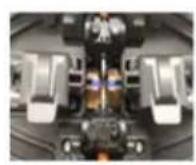
- Check that the two electrodes are aligned both horizontally and vertically. If not, reposition the electrodes.
- Turn on the machine and insert well-cut fiber into it. Select "Replace Electrodes" under "Maintain".
- Perform "Detect system parameters" and then do "Arc Correction".
4. V-groove Cleaning
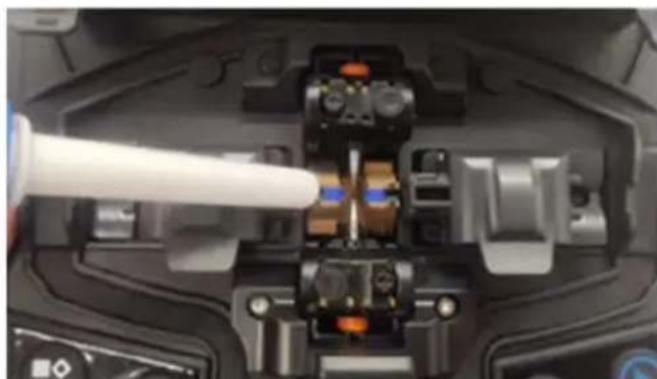
If there is contamination in the V-groove, the fibers will deviate from their normal position, affecting alignment and potentially causing abnormally high splicing loss. Therefore, users must regularly check and clean the V-groove. The procedure is as follows:
• Open the wind-proof cover. • Clean the contamination on the V-groove with the provided dust blower. • Clean the bottom of the V-groove with a cotton swab dipped in alcohol.
Note: Do not touch the tips of the electrodes. Clean the V-groove gently and do not use any hard objects (such as blades) to clean the groove, as this could cause damage that affects normal operation.
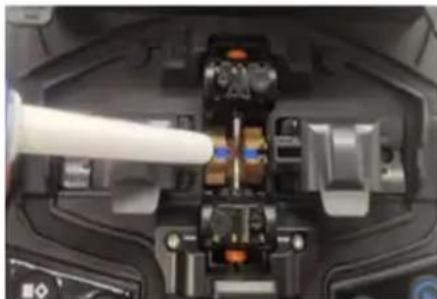
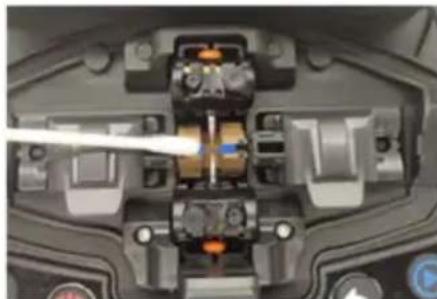
5. Microscope Lens Cleaning
The splicer is equipped with an image processing system to observe fibers. If the microscope lenses are dirty, normal observation will be affected, potentially leading to poor splicing results. Users should regularly clean the two lenses to ensure they remain clean.
A. Turn off the machine and open the wind-proof cover. B. Clean the lenses gently with a cotton swab dipped in alcohol. C. Note: Do not touch the electrodes. Do not touch the lenses with hard objects. D. Remove any residual alcohol with a clean, dry cotton swab, ensuring the lenses are clean and free of contamination. E. Turn on the machine, observe the image on the screen, and check for dust. If dust is present, clean the lenses again.
6. Fiber Pressers Cleaning
Dust on the fiber pressers can cause issues with fiber fixing or holding, which
will directly affect splicing quality. Users should regularly check and clean the fiber pressers.
- Open the wind-proof cover.
- Clean the surface of the pressers with a fine cotton swab dipped with alcohol, dry the presser with a dry cotton swab after cleaning.
Others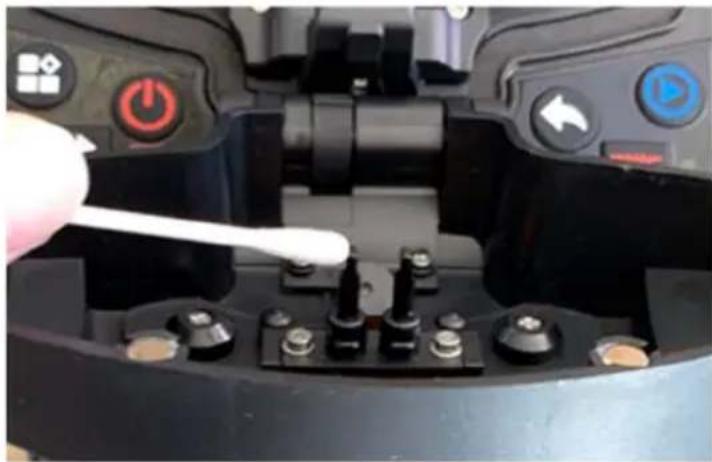
Troubleshooting
| Abnormal Phenomenons | Reasons Solutions | |
| Abnormal sounds such as snorting when discharging | Improper installation position of electrodes | Please strictly following the instruction when installing electrodes |
| Delayed discharge or no discharge | 1. Improper installation position of electrodes2. The tips of electrodes are wrapped by silicon oxide | 1. Please strictly following the instruction when installing electrodes2. Clean the tips of electrodes or replace the electrodes |
| The machine crash when discharging | Improper installation position of electrodes | Please strictly following the instruction when installing electrodes |
| Discharge Correction Failure | Current environment is interfering the discharging process | If it keeps warning over-current, please lower the current before discharge correction. Otherwise please increase the current. If it still fails please contact after-sales department. |
| Fibers alignment failures | 1.There is dust on lens, LED light, V-groove. 2.Power system malfunction. | Try to clean lens, LED lights and V-groove. If the problem still exists please contact after-sales department. |
| Low quality of splicing point | 1.Dust on fibers 2.Wrong fiber type settings or wrong splicing program 3.Splicing environment changes 4.Controlling motor malfunction | 1.Re-prepare the fibers and splice again. 2.Choose right fiber type and right splicing program 3.Do discharge correction to adjust current to normal intensity 4.Retry parameters self-test |
After-Sales Service card
Name: Tele:
Product S/N No.: Product Model:
Address:
purchasing office:
Description of the problem:
Manufacturer: Shanghaiuxinmuyeyouxianggsi
Address: Shuangchenglu 803nong11hao1602A-1609shi, baoshanqu, shanghai 200000 CN.
Imported to AUS: SIHAO PTY LTD. 1 ROKEVA STREETEASTWOOD NSW 2122 Australia
Imported to USA: Sanven Technology Ltd. Suite 250, 9166 Anaheim Place, Rancho Cucamonga, CA 91730
E-CrossStu GmbH
Mainzer Landstr.69, 60329 Frankfurt am Main.

YH CONSULTING LIMITED.
C/O YH Consulting Limited Office 147, Centurion House, London Road, Staines-upon-Thames, Surrey, TW18 4AX
VEVOR®
TOUGH TOOLS, HALF PRICE
Technical Support and E-Warranty Certificate
www.vevor.com/support
VEVOR®
TOUGH TOOLS, HALF PRICE
www.vevor.com/support
| Appearance | Name | Function |
| Menu / Confirm | Enter menu page/Confirm or save | |
| Power On / Off | Turn on/off the power | |
| Next | Switch to next option/Switch X/Y views | |
| Return / Reset | Return/Reset the motor | |
| Start / + | Run to start splicing/Adjust parameters(Increase/Switch) | |
| Heating | Start heating |
2. Description of Product Structure
Function of Description
Basic operating instructions
1. Turn on the power
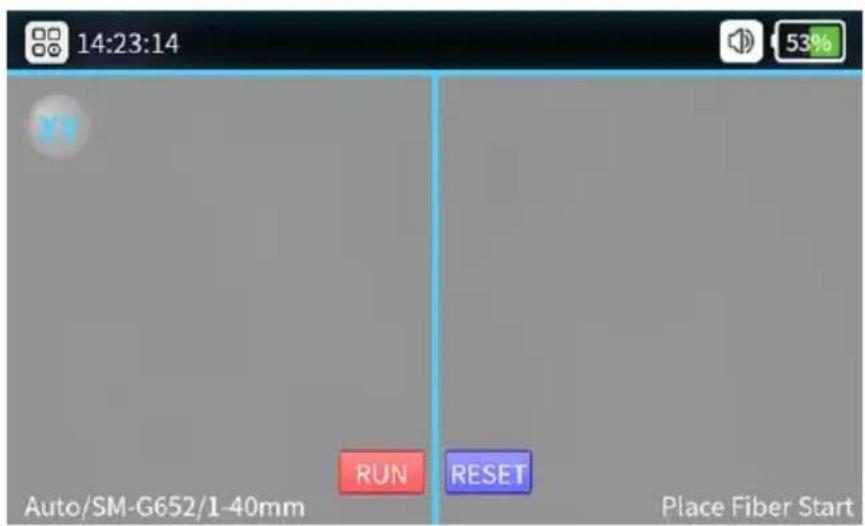
(1) Put the shrinkable splicing tube on
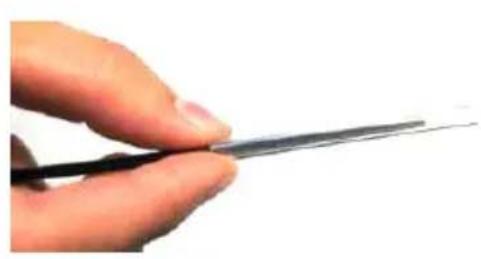
Put the fiber through the splicing tube to protect the fusion point after splicing. Make sure there is no impurity inside the tube and keep the tube parallel to the fiber.
② Strip down the protective layers except the glass coating.
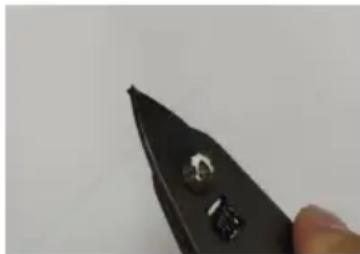
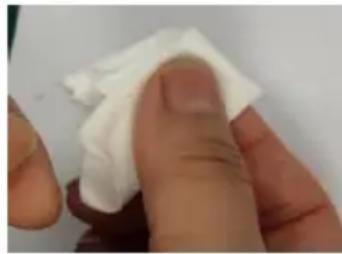
Strip the coating layer by 40mm with strippers.
① Select "Arc Correction" under
www.vevor.com/support
VEVOR®
TOUGH TOOLS, HALF PRICE
| Appearance | Name | Function |
| Menu / Confirm | Enter menu page/Confirm or save | |
| Power On / Off | Turn on/off the power | |
| Next | 7 Switch to next option/Switch X/Y views |
2. Description of Product Structure
Function Description
Basic operating instructions
- Turn on the power
(1) Put the shrinkable splicing tube on
Put the fiber through the splicing tube to protect the fusion point after splicing. Make sure there is no impurity inside the tube and keep the tube parallel to the fiber.
② Strip down the protective layers except the glass coating.
Strip the coating
layer by 40mm
STREET EASTWOOD NSW 2122 Australia
Import warning to USA: Sanven Technology Ltd. Suite 250, 9166 Anar
Place, Rancho Cucamonga, CA 91730
| EC | REP |
E-CrossStu GmbH Mainzer Landstr.69, 60329 Frankfurt am Main
| UK | REP |
YH CONSULTING LIMITED. C/O YH Consulting Limited Office 147, Centurion House, London Road, Staines-upon-Thames, Surrey TW18 4AX
VEVOR®
TOUGH TOOLS, HALF PRICE
www.vevor.com/support
VEVOR®
TOUGH TOOLS, HALF PRICE
| Appearance | Name | Function |
| Menu / Confirm | Enter menu page/Confirm or save | |
| Power On / Off | Turn on/off the power | |
| Next | 7 Switch to next option/Switch X/Y views | |
2. Description of Product Structure
Heat-shrinkable tube
Basic operating instructions
1. Turn on the power
(1) Put the shrinkable splicing tube on
Put the fiber through the splicing tube to protect the fusion point after splicing. Make sure there is no impurity inside the tube and keep the tube parallel to the fiber.
② Strip down the protective layers except the glass coating layer.

Strip the coating layer by 40mm.
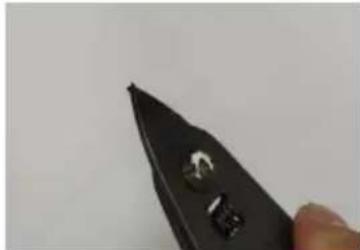
| Appearance | Name | Function |
| Menu / Confirm | Enter menu page/Confirm or save | |
| Power On / Off | Turn on/off the power | |
| Next | Switch to next option/Switch X/Y views | |
| Return / Reset | Return/Reset the motor | |
| Start / + | Run to start splicing/Adjust parameters(Increase/Switch) |
2. Description of Product Structure
Basic operating instructions
(1) Put the shrinkable splicing tube on
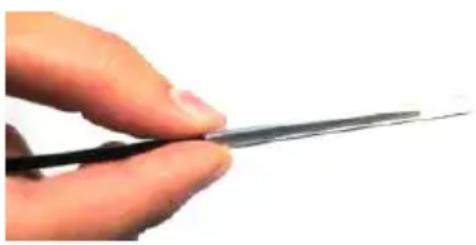
Put the fiber through the splicing tube to protect the fusion point after splicing. Make sure there is no impurity inside the tube and keep the tube parallel to the fiber.
② Strip down the protective layers except the glass coating layer.
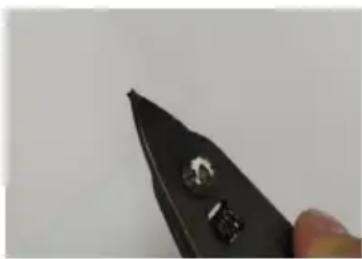
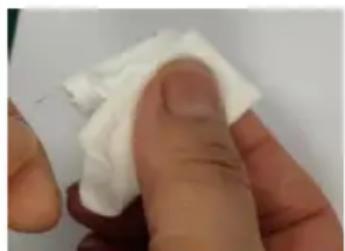
Strip the coating layer by 40mm with strippers.
TOUGH TOOLS, HALF PRICE
Technical Support and E-warranty Certificate www.vevor.com/support
VEVOR®
TOUGH TOOLS, HALF PRICE
| Appearance | Name | Function |
| Menu / Confirm | Enter menu page/Confirm or save | |
| Power On / Off | Turn on/off the power | |
| Next | Switch to next option/Switch X/Y views | |
| Return / Reset | 7 Return/Reset the motor |
2. Description of Product Structure
Basic operating instructions
1. Turn on the power
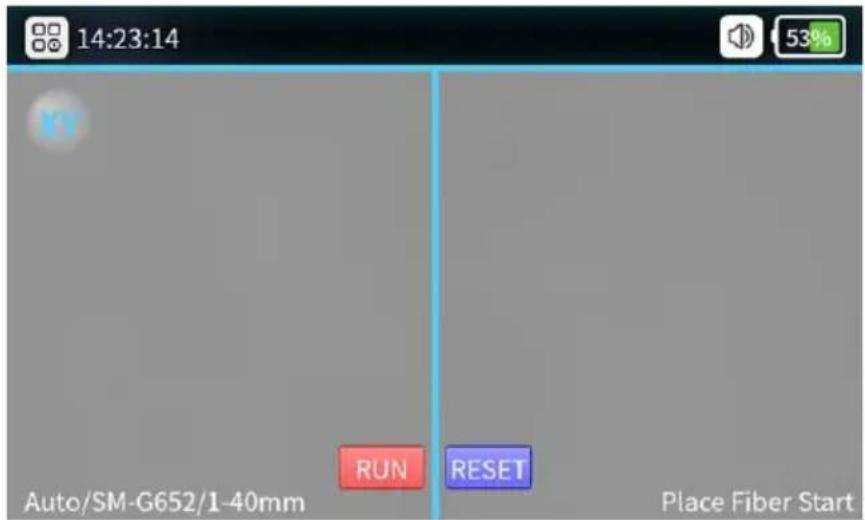
(1) Put the shrinkable splicing tube on
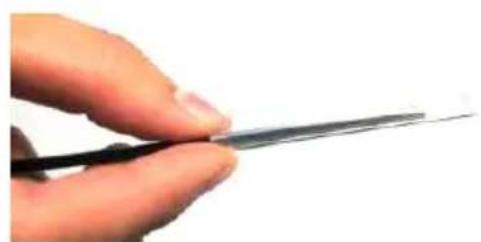
Put the fiber through the splicing tube to protect the fusion point after splicing. Make sure there is no impurity inside the tube and keep the tube parallel to the fiber.
② Strip down the protective layers except the glass coating
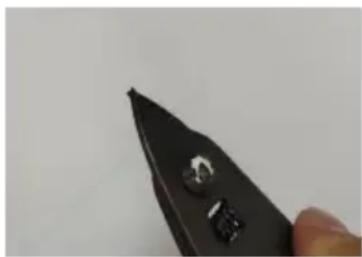
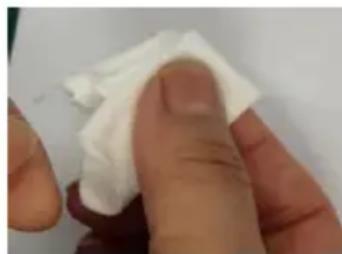
Strip the coating layer by 40mm with strippers.
VEVOR®
TOUGH TOOLS, HALF PRICE
Note: Anything that is not a product of the above mentioned products will be considered as an innovation.
| Appearance | Name | Function |
| Menu / Confirm | Enter menu page/Confirm or save | |
| Power On / Off | Turn on/off the power | |
| Next | Switch to next option/Switch X/Y views | |
| Return / Reset | Return/Reset the motor | |
| Start / + | Run to start splicing/Adjust parameters(Decrease/Switch) | |
| Heating | Start heating |
2. Description of Product Structure
Function Description
Basic Operating Instructions
(1) Put the shrinkable splicing tube on
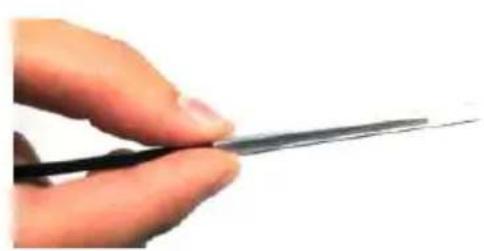
Put the fiber through the splicing tube to protect the fusion point after splicing. Make sure there is no impurity inside the tube and keep the tube parallel to the fiber.
② Strip down the protective layers except the glass coating
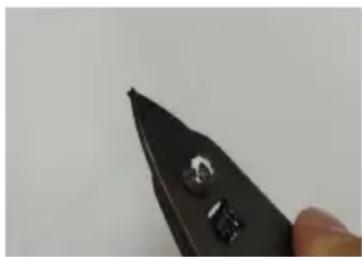
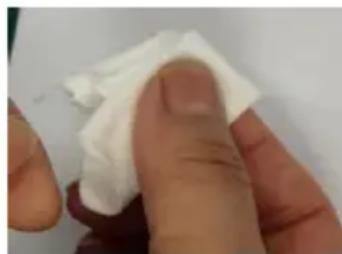
Strip the coating layer by 40mm with strippers.
Imported in AUS: SIHAO PTY LTD. 1 ROKEVA STREET EASTWOOD NSW 2122 Australia
Imported in USA: Sanven Technology Ltd. Suite 250, 9166 Anaheim Place, Rancho Cucamonga, CA 91730
| EC | REP |
E-CrossStu GmbH
Mainzer Landstr.69, 60329 Frankfurt am Main
| UK | REP |
YH CONSULTING LIMITED.
C/O YH Consulting Limited Office 147, Centurion House, London Road, Staines-upon-Thames, Surrey TW18 4AX
VEVOR
TOUGH TOOLS, HALF PRICE
| Appearance | Name | Function |
| Menu / Confirm | Enter menu page/Confirm or save | |
| Power On / Off | 7 Turn on/off the power | |
2. Description of Product Structure
Function Description
Basic Operating Instructions
(1) Put the shrinkable splicing tube on
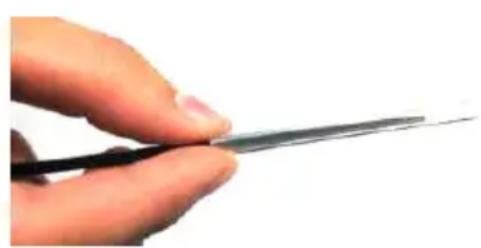
Put the fiber through the splicing tube to protect the fusion point after splicing. Make sure there is no impurity inside the tube and keep the tube parallel to the fiber.
② Strip down the protective layers except the glass coating
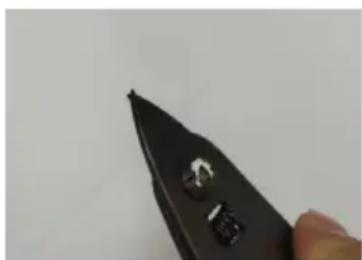
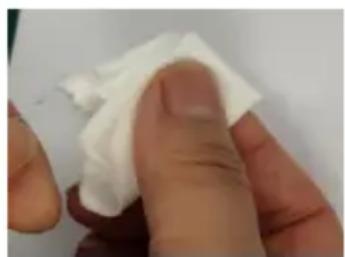
Strip the coating layer by 40mm with strippers.

- NEED HELP? CONTACT US
- TECHNICAL SUPPORT AND E-WARRANTY CERTIFICATE WWW.VEVOR.COM/SUPPORT
- WARNING
- CORRECT DISPOSAL
- BATTERY DISPOSAL
- FCC INFORMATION
- WORKING ENVIRONMENT
- CAUTIONS FOR USE/STORAGE OF THE SPLICER
- POWER SUPPLY
- BATTERY
- OTHER CAUTIONS
- PRODUCTION INTRODUCTION
- INTRODUCTION OF FUNCTION BUTTONS
- DESCRIPTION OF PRODUCT STRUCTURE
- FUNDAMENTAL PARAMETERS
- SPLICING MODE
- SPLICING LOSS
- OPERATION CONDITIONS
- HEATING SHRINKABLE TUBE
- OTHER PARAMETERS
- INITIAL INTERFACE
- LANGUAGE
- DESCRIPTION OF UI
- FUNCTION INTRODUCTION OF THE SPLICER
- SHORTCUT FUNCTION
- SPLICESET
- EDIT SPLICE PROGRAM
- SLEEVE SET
- SPLICE RECORDS
- MAINTAIN
- SYSTEM
- BASIC OPERATING INSTRUCTIONS
- TURN ON THE POWER
- PREPARATION BEFORE SPLICING
- FIBER CUTTING
- FIBER PLACEMENT
- CHECK SPLICING RESULT
- AUTO-ALIGNMENT AND END FACE CORRECTION
- SOLUTIONS OF ABNORMAL ALIGNMENT ISSUES
- MAINTENANCE
- ARC CORRECTION
- NOTICE
- DETECT SYSTEM PARAMETERS
- OPERATIONS ARE AS FOLLOWS
- ELECTRODES REPLACEMENT
- V-GROOVE CLEANING
- MICROSCOPE LENS CLEANING
- FIBER PRESSERS CLEANING
- AFTER-SALES SERVICE CARD
- VEVOR®
- TOUGH TOOLS, HALF PRICE
- FUNCTION OF DESCRIPTION
- FUNCTION DESCRIPTION
- HEAT-SHRINKABLE TUBE
- VEVOR
Brand : Vevor
Model : ALK-T5
Category : Fiber fusion tool