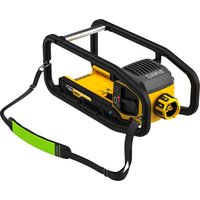
DCPS320 - Gas blower DEWALT - Free user manual and instructions
Find the device manual for free DCPS320 DEWALT in PDF.


User questions about DCPS320 DEWALT
0 question about this device. Answer the ones you know or ask your own.
Ask a new question about this device
Download the instructions for your Gas blower in PDF format for free! Find your manual DCPS320 - DEWALT and take your electronic device back in hand. On this page are published all the documents necessary for the use of your device. DCPS320 by DEWALT.
USER MANUAL DCPS320 DEWALT
English (original instructions) 20
natural_image
Icon of a person using a computer (no text or symbols)Fig. A
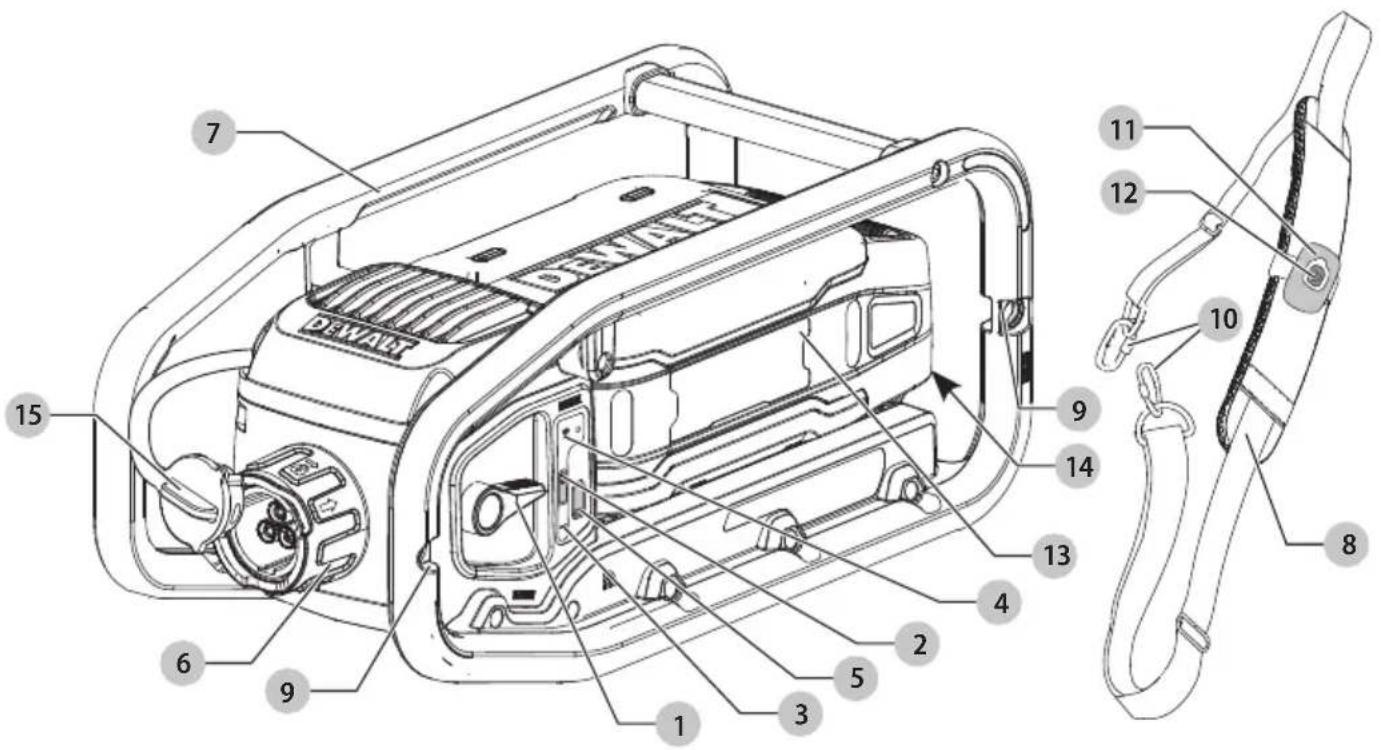
Fig. B Fig. C
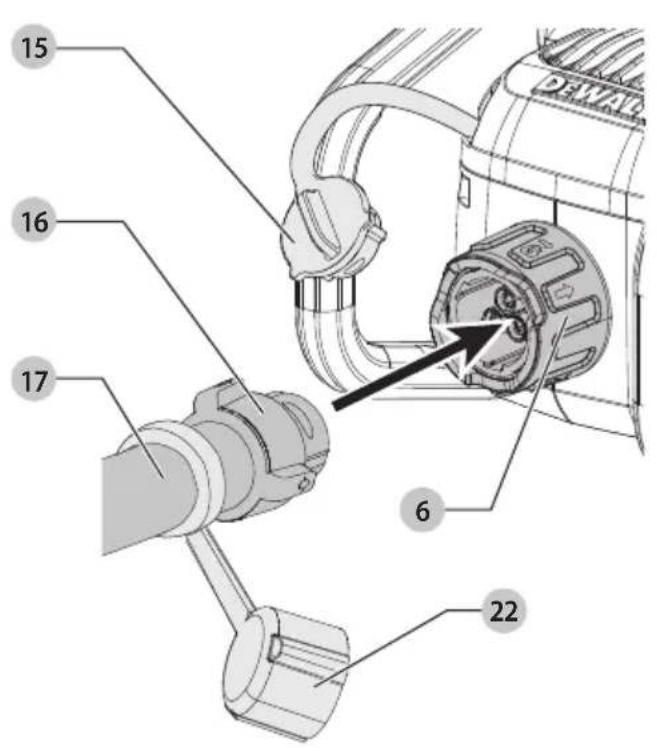
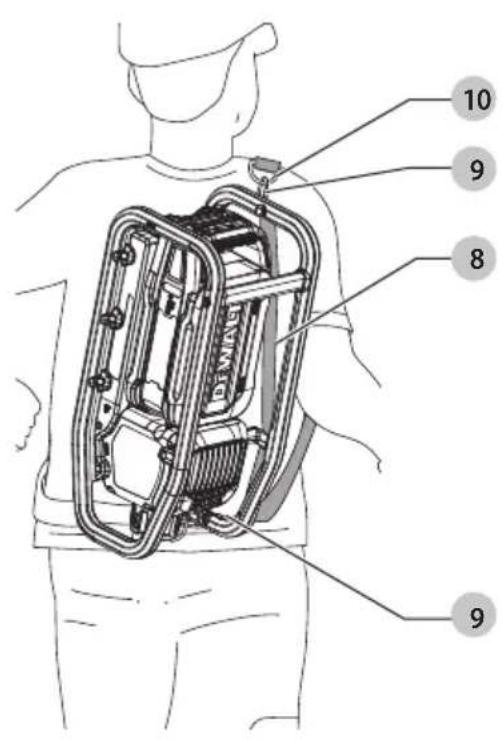
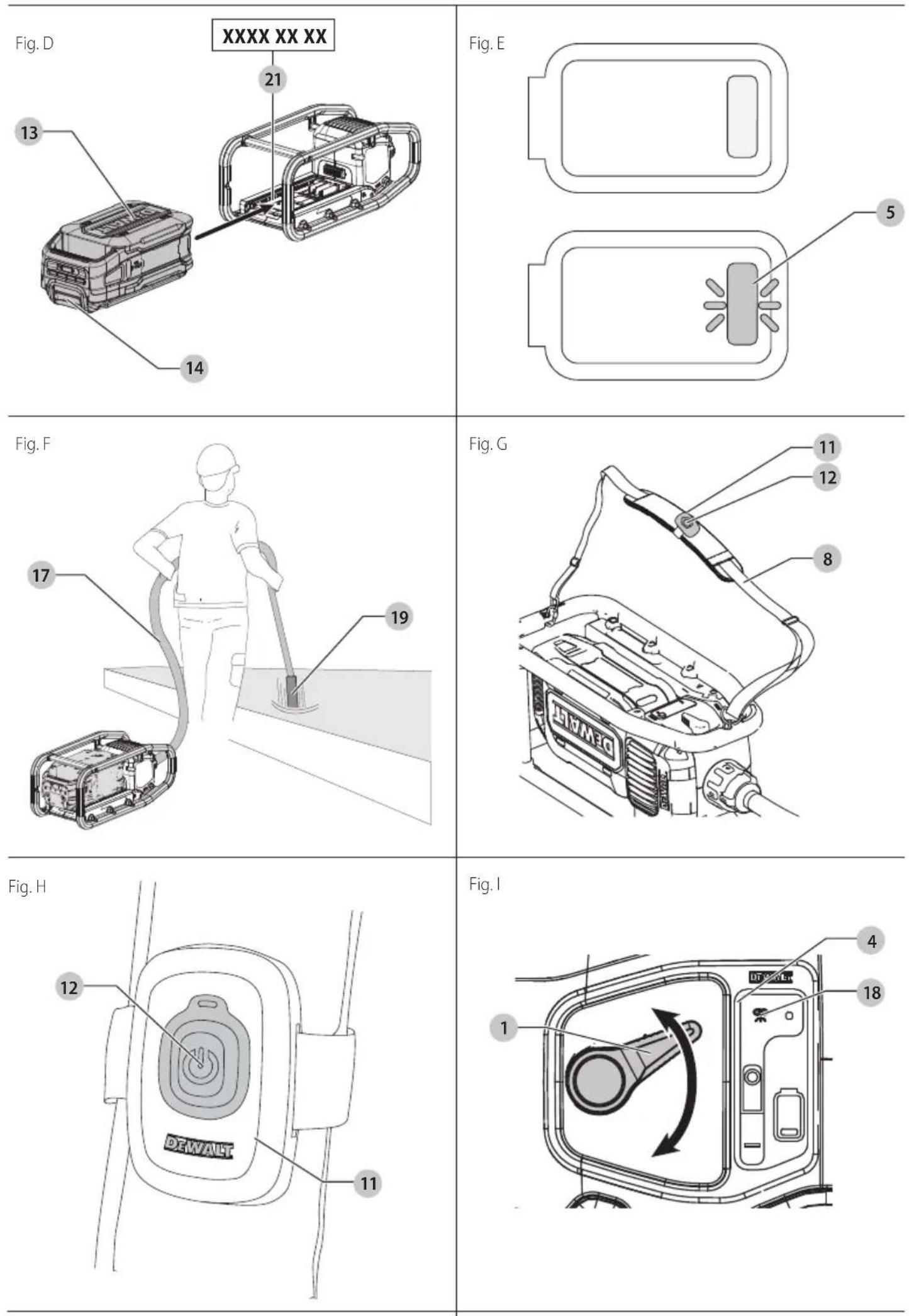
Fig. J
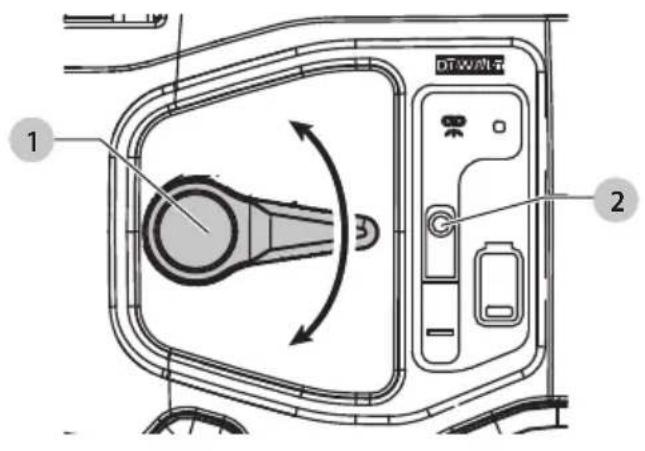
Fig. K
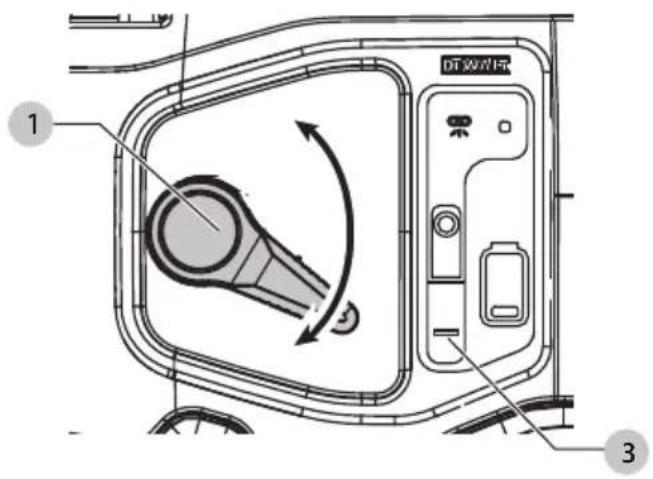
Fig. L
DEWALT POWERSHIFT™ BETON-VIBRATOR POWERPACK DCPS320

Vice-President Engineering, PTE-Europe
DEWALT POWERSHIFT™ CONCRETE VIBRATOR POWERPACK DCPS320

WARNING: Read all safety warnings, instructions, illustrations, and specifications in this manual, including the battery and charger sections provided in an original tool manual or the separate Batteries and Chargers manual. Manuals can be obtained by contacting

Customer Service (refer to the back page of this manual).
WARNING: Read the DEWALT POWERSHIFT™ Concrete
Vibrator manual.
Technical Data
DCPS320
Type 1
Weight (without battery pack) kg 4.5
Wireless Tool Control™ Remote Transmitter
Frequency Band MHz 433
Max. Power (EIRP) mW 0.03
Bluetooth® Transmitter
Frequency Band MHz 2400
Max. Power (EIRP) mW 0.28
NOTE: The Bluetooth® word mark and logos are registered trademarks owned by the Bluetooth, SIG, Inc. and any use of such marks by DEWALT is under license. Other trademarks and trade names are those of their respective owners.
EC-Declaration of Conformity
Machinery Directive and Radio Equipment Directive

DEWALT POWERSHIFT™ Concrete Vibrator Powerpack DCPS320
DEWALT declares that these products described under Technical Data are in compliance with: 2006/42/EC, EN 62841-1:2015 +AC:2015+A11:2022 and EN IEC 62841-2-12:2024+A11:2024.
These products also comply with Directive 2014/53/EU and 2011/65/EU.
The full text of the EU declaration of conformity can be requested at below address or is available at the following internet address: www.2helpu.com (search by the Product and Type Number indicated on the nameplate).
For more information, please contact DEWALT at the following address or refer to the back of the manual.
The undersigned is responsible for compilation of the technical file and makes this declaration on behalf of DEWALT.
Markus Rompel
Vice-President Engineering, PTE-Europe
65510, Idstein, Germany
31.12.2004

WARNING: To reduce the risk of injury, read the tion manual.
Definitions: Safety Guidelines
The definitions below describe the level of severity for each signal word. Please read the manual and pay attention to these symbols.
RANGER: Indicates an imminently hazardous situation which, if not avoided, will result in death or serious injury.
WARNING: Indicates a potentially hazardous situation which, if not avoided, could result in death or serious injury.
CAUTION: Indicates a potentially hazardous situation which, if not avoided, may result in minor or moderate injury. NOTICE: Indicates a practice not related to personal injury which, if not avoided, may result in property damage.
Denotes risk of electric shock.
A denotes risk of fire.
GENERAL POWER TOOL SAFETY WARNINGS
WARNING: Read all safety warnings, instructions, illustrations and specifications provided with this power tool. Failure to follow all instructions listed below may result in electric shock, fire and/or serious injury.
SAVE ALL WARNINGS AND INSTRUCTIONS FOR FUTURE REFERENCE
The term "power tool" in the warnings refers to your mains-operated (corded) power tool or battery-operated (cordless) power tool.
1) Work Area Safety
a) Keep work area clean and well lit. Cluttered or dark areas invite accidents.
b) Do not operate power tools in explosive atmospheres, such as in the presence of flammable liquids, gases or dust. Power tools create sparks which may ignite the dust or fumes.
c) Keep children and bystanders away while operating a power tool. Distractions can cause you to lose control.
2) Electrical Safety
a) Power tool plugs must match the outlet. Never modify the plug in any way. Do not use any adapter plugs with earthed (grounded) power tools. Unmodified plugs and matching outlets will reduce risk of electric shock.
b) Avoid body contact with earthed or grounded surfaces, such as pipes, radiators, ranges and refrigerators. There is an increased risk of electric shock if your body is earthed or grounded.
c) Do not expose power tools to rain or wet conditions. Water entering a power tool will increase the risk of electric shock.
d) Do not abuse the cord. Never use the cord for carrying, pulling or unplugging the power tool. Keep cord away from heat, oil, sharp edges or moving parts. Damaged or entangled cords increase the risk of electric shock.
e) When operating a power tool outdoors, use an extension cord suitable for outdoor use. Use of a cord suitable for outdoor use reduces the risk of electric shock.
f) If operating a power tool in a damp location is unavoidable, use a residual current device (RCD) protected supply. Use of an RCD reduces the risk of electric shock.
3) Personal Safety
a) Stay alert, watch what you are doing and use common sense when operating a power tool. Do not use a power tool while you are tired or under the influence of drugs, alcohol or medication. A moment of inattention while operating power tools may result in serious personal injury.
b) Use personal protective equipment. Always wear eye protection. Protective equipment such as a dust mask, non-skid safety shoes, hard hat or hearing protection used for appropriate conditions will reduce personal injuries.
c) Prevent unintentional starting. Ensure the switch is in the off position before connecting to power source and/or battery pack, picking up or carrying the tool. Carrying power tools with your finger on the switch or energising power tools that have the switch on invites accidents.
d) Remove any adjusting key or wrench before turning the power tool on. A wrench or a key left attached to a rotating part of the power tool may result in personal injury.
e) Do not overreach. Keep proper footing and balance at all times. This enables better control of the power tool in unexpected situations.
f) Dress properly. Do not wear loose clothing or jewellery. Keep your hair and clothing away from moving parts. Loose clothes, jewellery or long hair can be caught in moving parts.
g) If devices are provided for the connection of dust extraction and collection facilities, ensure these are connected and properly used. Use of dust collection can reduce dust-related hazards.
h) Do not let familiarity gained from frequent use of tools allow you to become complacent and ignore tool safety principles. A careless action can cause severe injury within a fraction of a second.
4) Power Tool Use and Care
a) Do not force the power tool. Use the correct power tool for your application. The correct power tool will do the job better and safer at the rate for which it was designed.
b) Do not use the power tool if the switch does not turn it on and off. Any power tool that cannot be controlled with the switch is dangerous and must be repaired.
c) Disconnect the plug from the power source and/or remove the battery pack, if detachable, from the power tool before making any adjustments, changing accessories, or storing power tools. Such preventive safety measures reduce the risk of starting the power tool accidentally.
d) Store idle power tools out of the reach of children and do not allow persons unfamiliar with the power tool or these instructions to operate the power tool. Power tools are dangerous in the hands of untrained users.
e) Maintain power tools and accessories. Check for misalignment or binding of moving parts, breakage of parts and any other condition that may affect the power tool's operation. If damaged, have the power tool repaired before use. Many accidents are caused by poorly maintained power tools.
f) Keep cutting tools sharp and clean. Properly maintained cutting tools with sharp cutting edges are less likely to bind and are easier to control.
g) Use the power tool, accessories and tool bits, etc. in accordance with these instructions, taking into account the working conditions and the work to be performed. Use of the power tool for operations different from those intended could result in a hazardous situation.
h) Keep handles and grasping surfaces dry, clean and free from oil and grease. Slippery handles and grasping surfaces do not allow for safe handling and control of the tool in unexpected situations.
5) Battery Tool Use and Care
a) Recharge only with the charger specified by the manufacturer. A charger that is suitable for one type of battery pack may create a risk of fire when used with another battery pack.
b) Use power tools only with specifically designated battery packs. Use of any other battery packs may create a risk of injury and fire.
c) When battery pack is not in use, keep it away from other metal objects, like paper clips, coins, keys, nails, screws or other small metal objects, that can make a connection from one terminal to another. Shorting the battery terminals together may cause burns or a fire.
d) Under abusive conditions, liquid may be ejected from the battery; avoid contact. If contact accidentally occurs, flush with water. If liquid contacts eyes, additionally seek medical help. Liquid ejected from the battery may cause irritation or burns.
e) Do not use a battery pack or tool that is damaged or modified. Damaged or modified batteries may exhibit unpredictable behaviour resulting in fire, explosion or risk of injury.
f) Do not expose a battery pack or tool to fire or excessive temperature. Exposure to fire or temperature above 130 °C may cause explosion.
g) Follow all charging instructions and do not charge the battery pack or tool outside the temperature range specified in the instructions. Charging improperly or at temperatures outside the specified range may damage the battery and increase the risk of fire.
6) Service
a) Have your power tool serviced by a qualified repair person using only identical replacement parts. This will ensure that the safety of the power tool is maintained.
b) Never service damaged battery packs. Service of battery packs should only be performed by the manufacturer or authorised service providers.
Additional Safety Rules for Concrete Vibrators
- The tool is designed for long period of usage, the vibration level is below 5m / s^2 . Use gloves to provide extra cushion, take frequent rest periods, and limit daily time of use.
- Keep hands away from vibrating parts. Never place your hands near the vibrator head.
- Do not hold vibrator head when starting the tool or during operation. Serious personal injury may result.
- Ensure switch is in the off position and disconnect battery pack before cleaning the vibrator head or hose.
-
Use gloves when cleaning the vibrator head. Concrete is caustic and may cause personal injury.
-
Keep hands and body parts clear of immediate work area.
- Do not overreach. Maintain proper footing and balance at all times. This enables better control of the tool in unexpected situations.
- Use both hands for safe handling of this tool (Fig. F). This tool should not be used while standing on a ladder.
- This tool is intended only for vibrating concrete. Any other use of the product may cause serious personal injury.
- Actuating tool may result in flying debris, collation material or dust which could harm operator's eyes. The operator and all those persons in the general area should wear approved safety glasses with permanently attached side shields. It is the employer's responsibility to enforce the use of eye protection equipment by the tool operator and other people in the work area.
- Actuating tool may result in flying debris, collation material or dust which could harm operator's eyes. To minimize risk of flying debris only operate tool while vibrator head is fully submerged in the wet, mixed, poured concrete.
- Do not use tool in a concrete mixer. Serious personal injury may result.
- Disconnect battery pack from the tool whenever assembling or disassembling the tool, performing any maintenance or repair, moving the tool or when the tool is unattended.
- When assembling or disassembling the hose from the power unit, the internal hose core may act like a spring.
Slowly separate the hose from the power unit, while wearing eye protection and gloves to prevent personal injury.
- Do not alter or modify the tool in any way.
- Do not use tool in or around grain hoppers, flammable dust, gases or fumes. The tool may produce a spark that could ignite gases causing an explosion.
- Do not contact the vibrator head to any part of your body while it is running.
- Do not point the tool at co-workers or yourself at any time. No horseplay! Work safe! Respect the tool as a working implement.
- RISK OF INJURY OR BEING BURNED. Do not touch the vibrator head with unprotected skin after the vibrator head has been operated for an extended time. The vibrator head may become hot during use.
Residual Risks
In spite of the application of the relevant safety regulations and the implementation of safety devices, certain residual risks cannot be avoided. These are:
- Impairment of hearing.
- Risk of personal injury due to flying particles.
- Risk of burns due to accessories becoming hot during operation.
- Risk of personal injury due to prolonged use.
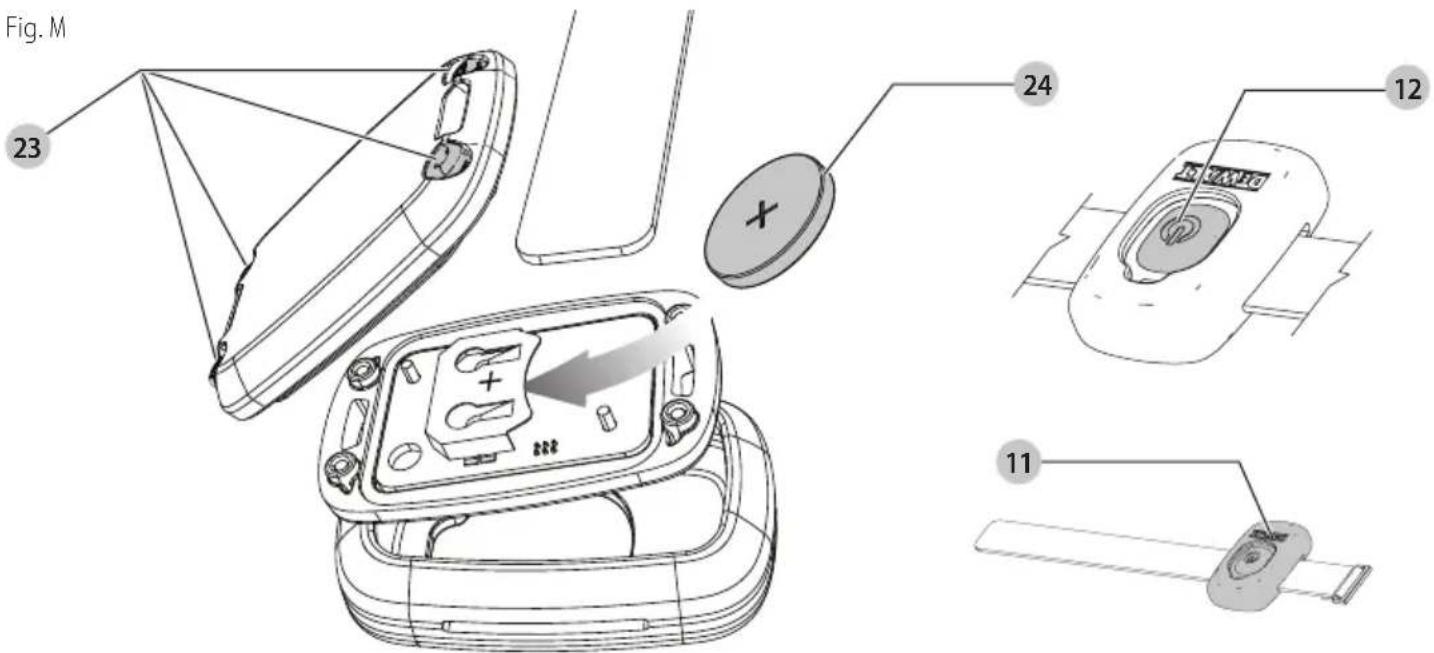
Coin Cell Battery Replacement and Warnings (Fig. M)
| WARNING | |
| • INGESTION HAZARD: This product contains a button cell or coin battery.• DEATH or serious injury can occur if ingested.• A swallowed button cell or coin battery can cause Internal Chemical Burns in as little as 2 hours.• KEEP new and used batteries OUT OF REACH of CHILDREN.• Seek immediate medical attention if a battery is suspected to be swallowed or inserted inside any part of the body. | 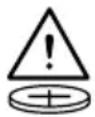 |
Remove and immediately recycle or dispose of used batteries according to local regulations and keep away from children. Do NOT dispose of batteries in household waste or incinerate. Even used batteries may cause severe injury or death. Seek professional medical attention for treatment information. The tool uses a CR2450 type battery of nominal 3V voltage. The Wireless Tool Control™ remote uses a CR2032 type battery of nominal 3V voltage. Non-rechargeable batteries are not to be recharged. Do not force discharge, recharge, disassemble, heat above 60 °C, or incinerate. Doing so may result in injury due to venting, leakage or explosion resulting in chemical burns. Ensure the batteries are installed correctly according to polarity (+ and -). Do not mix old and new batteries, different brands or types of batteries, such as alkaline, carbon-zinc, or rechargeable batteries. Remove and immediately recycle or dispose of batteries from equipment not used for an extended period of time according to local regulations. Always completely secure the battery compartment. If the battery compartment does not close securely, stop using the product, remove the batteries, and keep them away from children.
Replacing the Coin Cell Battery in the Wireless Tool Control™ Remote (Fig. M)
- To open the housing, remove the 4 screws 23 from the rear panel with a T10 torx screwdriver.
- Pull out sideways the discharged coin cell battery from the battery holder. Immediately recycle or dispose of battery.
- Insert sideways the new CR2032 coin cell battery 24 into the battery holder, paying attention to the orientation of the battery in terms of polarity.
- Replace the back cover, insert the screws and tighten.
Battery Type
These battery packs may be used:
| Battery (kg) |
| DCBPS0554 5.3 |
The DCAFVPS DEWALT FLEXVOLT® to DEWALT POWERSHIFT™ adapter** can also be used with the following battery packs:
| Battery (kg) Battery and adapter |
| DCB546 2.78 |
| DCB547/G 3.16 |
| DCB548 3.16 |
| DCB549 3.90 |
**DCAFVPS DEWALT FLEXVOLT® to DEWALT POWERSHIFT™ adapter is not for sale or use in Germany.
Package Contents
The package contains:
1 DEWALT POWERSHIFT™ Powerpack
1 Wireless Tool Control™ remote
1Shoulderstrap
1 Instructionmanual
- Check for damage to the tool, parts or accessories which may have occurred during transport.
• Take the time to thoroughly read and understand this manual prior to operation.
Markings on Tool
The following pictograms are shown on the tool:

Read instruction manual before use.

Wear eye protection.
Date Code Position (Fig. A)
The production date code 21 consists of a 4-digit year followed by a 2-digit week and is extended by a 2-digit factory code.
Description (Fig. A)
WARNING: Never modify the power tool or any part of it.
Damage or personal injury could result.
1 Control dial
2 Off position
3 On position
4 Wireless Tool Control™ position
5 Low battery indicator LED
6 Quick-change collar
7 Cage
8 Shoulder strap
9 Strap mount
10 Strap latch
11 Wireless Tool Control™ remote
13 Battery
14 Battery release button
15 Quick-change collar cap
16 Quick-change plug (Shown in Fig. B)
12 Wireless Tool Control™ remote's on/off button
Intended Use
This DEWALT POWERSHIFT™ DCPS320 is designed to power DEWALT POWERSHIFT™ vibrators.
DO NOT use under wet conditions or in the presence of flammable liquids or gases.
This DEWALT POWERSHIFT™ DCPS320 is a professional power tool.
DO NOT let children come into contact with the tool.
Supervision is required when inexperienced operators use this tool.
- Young children and the infirm. This product is not intended for use by young children or infirm persons without supervision.
- This product is not intended for use by persons (including children) suffering from diminished physical, sensory or mental abilities; lack of experience, knowledge or skills unless they are supervised by a person responsible for their safety. Children should never be left alone with this product.
BENEFITS OF VIBRATING CONCRETE
- Increased concrete strength by removing air voids.
- Improved appearance by removing air voids.
- Increased bond between reinforcing bars and concrete.
- Provides low permeability to water and to aggressive substances contained therein.
- Reduced cold joints and honeycombing.
- Increased life cycle of concrete.
ASSEMBLY AND ADJUSTMENTS
WARNING: To reduce the risk of serious personal injury, turn tool off and disconnect battery pack before making any adjustments or removing/installing attachments or accessories. An accidental start-up can cause injury.
WARNING: Use only DEWALT batteries and chargers.
Compatible Vibrator Attachments
WARNING: Use only compatible attachments as follows.
| SKU # Weight DIMENSIONS - HEAD/HOSE | |
| DCPS3382 4.35 kg | 38 mm head / 2 m hose |
| DCPS3385 6.4 kg | 38 mm head / 5 m hose |
| DCPS3502 6.7 kg | 50 mm head / 2 m hose |
| DCPS3505 9.1 kg | 50 mm head / 5 m hose |
| DCPS3592 9.2 kg | 59 mm head / 2 m hose |
| DCPS3595 13.2 kg | 59 mm head / 5 m hose |
Attaching the DEWALT POWERSHIFT™ Vibrator Head and Hose to the DEWALT POWERSHIFT™ Powerpack (Fig. B)
(DEWALT POWERSHIFT™ Vibrator Head and Hose Sold Separately)
- To attach the hose 17 to the DEWALT POWERSHIFT™ Powerpack, first remove the quick-change plug cap 22 from the quick-change plug 16, and remove the quick-change collar cap 15 from the quick-change collar 6.
- Then align the arrows on the quick-change plug 16 located at the end of the hose, with the arrows on the quick-change collar 6. Rotate the quick-change collar to help with arrow alignment.
- Firmly press the plug 16 into the quick-change collar 6 until it clicks into the locked position.
NOTE: Do not use a wrench to tighten the quick-change collar.
- To disconnect, rotate the quick-change collar 6 as indicated by the unlock arrow and pull the quick-change plug 16 from the quick-change collar 6.
Attaching and Adjusting the Shoulder Strap (Fig. C)
WARNING: The shoulder strap 8 should only be slung over one shoulder and not across the body.
WARNING: The shoulder strap is intended to be used only for transporting the unit.
Attach the shoulder strap 8 to the DEWALT POWERSHIFT™ Powerpack as shown in Fig. C and adjust for proper balance and support.
- Snap the strap latch 10 onto the strap mount 9 located on the DEWALT POWERSHIFT™ Powerpack, as shown in Fig. C.
- Adjust the shoulder strap 8 so it fits over your shoulder and provides proper balance and support.
- To remove the shoulder strap 8 pinch the strap latch 10 and pull it from the strap mount 9.
OPERATION
Instructions for Use
WARNING: Always observe the safety instructions and applicable regulations.
WARNING: To reduce the risk of serious personal injury, turn tool off and disconnect battery pack before making any adjustments or removing/installing attachments or accessories. An accidental start-up can cause injury.
Vibration of Concrete
WARNING: Leaving the vibrator head in the mix too long can cause defects.
The result of the compression depends on the following factors:
• The time the vibrator head is in the concrete.
• The diameter of the vibrator head.
• The consistency of the concrete.
- Narrow spacing between the reinforcing bars.
Proper Hand Position (Fig. F)
WARNING: To reduce the risk of serious personal injury, ALWAYS use proper hand position as shown.
WARNING: To reduce the risk of serious personal injury, ALWAYS hold securely in anticipation of a sudden reaction. Proper hand position requires both hands on the hose 17.
Installing and Removing the Battery Pack (Fig. B)
WARNING: Ensure the tool is in the off position before inserting the battery pack.
NOTE: For best results, make sure your battery pack 13 is fully charged.
To Install the Battery Pack into the Tool
- Align the battery pack with the rails.
- Slide it in until the battery pack is firmly seated in the tool and ensure that you hear the lock snap into place.
To Remove the Battery Pack from the Tool
- Press the battery release button 14 and firmly pull the battery pack.
- Insert battery pack into the charger as described in the battery/charger manual.
Low Battery Charge Indicator LED (Fig. E)
When the battery charge becomes low, the low battery charge indicator LED 5 will flash every ten seconds. When the battery charge is depleted, the charge indicator LED will illuminate. This indicates that you need to charge or replace the battery before continuing to work.
Operation Modes (Fig. A, G–K)
The DEWALT POWERSHIFT™ Powerpack can be operated remotely using the Wireless Tool Control™ remote 11 or by setting the control dial 1 to the on position 3.
Pairing the Wireless Tool Control™ Remote with the DEWALT POWERSHIFT™ Powerpack (Fig. A, H, I)
CAUTION: When the DCPS320 is being controlled with the Wireless Tool Control™ remote, it may start or stop without warning.
WARNING: Do not attach the Wireless Tool Control™ remote's strap to any moving parts.
- Move the control dial 1 on the DCPS320 to the Wireless Tool Control™ position 4.
- Press and hold the Wireless Tool Control™ pairing button 18 on the DCPS320 and press the remote on/off button 12 on the remote at the same time.
The LED above the Wireless Tool Control™ pairing button 18 will be steadily illuminated to indicate a successful pairing.
NOTE: Only one transmitter can be paired to the DCPS320 at a time. If the DCPS320 has already paired, the previous transmitter will be overridden.
To Unpair The Wireless Tool Control Remote On/Off Switch
- Press and hold the Wireless Tool Control™ pairing button 18 on the DCPS320 and press the on/off button 12 on the remote at the same time.
The LED above the Wireless Tool Control™ pairing button will flash slowly to indicate a successful unpairing.
CAUTION: To prevent unintentional switch-on after the end of work, move the control dial 1 to the off position 2 or unpair the Wireless Tool Control™ remote from the POWERSHIFT® Powerpack.
LED FLASH PATTERN
- Move the control dial 1 to the Wireless Tool Control™ position 4 as shown in Fig. I.
- Locate the Wireless Tool Control™ remote 11 and press the remote's on/off button 12 to turn on the vibrator head 19.
- Press the remote's on/off button 12 to turn off the vibrator head as shown in Fig. H. You can also move the control dial 1 to the off position 2 as shown in Fig. J.
Direct Operation
- Move the control dial 1 to the on position 3 as shown in Fig. K. The vibrator head 19 will turn on.
- To turn the vibrator head off, move the control dial to the off position ☐ 2 as shown in Fig. J.
To Operate (Fig. A, F)
- Place the DEWALT POWERSHIFT™ Powerpack on a flat, stable surface or place the attached shoulder strap 8 over your shoulder to provide proper balance and support of the DEWALT POWERSHIFT™ Powerpack.
-
Switch the DEWALT POWERSHIFT™ Powerpack on as described in Operation Modes.
-
Hold the hose 17 with both hands.
- Immerse the vibrator head 19 into the freshly mixed concrete allowing the weight of the vibrator head to fully penetrate.
-
Guide the vibrator head through the freshly mixed concrete for five to fifteen seconds, then slowly lift the vibrator head out to avoid retrapping air. Small up and down movements will close any holes formed by the vibrator head.
-
Move the vibrator head to the next location and repeat.
NOTE: Lift the vibrator head vertically from the mix at a rate of about three seconds per 30 cm of thickness of the concrete.
NOTE: For best results, it is usually best to keep the vibrator head vertical at all times and to avoid side-to-side movement.
NOTE: Compact particularly intensely within formwork corners as reinforcement density is the greatest there.
NOTE: If a small diameter vibrator head is used, it must be compacted longer to achieve the same effect as with a large diameter.
IMPORTANT: Do not drag the vibrator head through the mix, as this will form mortar channels (areas where there is no stone). Once the vibrator head reaches the surface, remove it quickly to avoid churning the concrete at the surface.
NOTE: Under rare environmental conditions, the product may switch off; this is not a product failure. By switching off and removing the battery, the product is reset.
After reinstalling the battery, the product can be used again as intended.
Signs that the Concrete has been Sufficiently Compacted:
• Concrete no longer settles.
- Little to no air bubbles are rising to the surface.
After Use
WARNING: Do not let the machine run outside of the freshly mixed concrete.
WARNING: Risk of burning from hot surface.
WARNING: Damage to the machine from increased wear.
If Vibrator Head Becomes Too Hot
- Slowly pull the vibrator head 19 out of the freshly mixed concrete and hold it in the air.
- Turn the control dial 1 to the off position 2.
- Wait until the vibrator head comes to a complete stop.
- To disconnect, rotate the quick-change collar 6 as indicated by the unlock arrow and pull the quick-change plug 16 from the quick-change collar 6.
- Allow the vibrator head to cool down before attempting to use again.
MAINTENANCE
Your power tool has been designed to operate over a long period of time with a minimum of maintenance. Continuous satisfactory operation depends upon proper tool care and regular cleaning.
WARNING: To reduce the risk of serious personal injury, turn tool off and disconnect battery pack before making any adjustments or removing/installing attachments or accessories. An accidental start-up can cause injury.
The charger and battery pack are not serviceable.
Please refer to the back page of this manual for service centre contact information, or visit www.2helpU.com.
Storage and Transportation
AUTION: To prevent accidental starting, always transport your DEWALT POWERSHIFT™ Powerpack with the batteries removed!
Always store DEWALT POWERSHIFT™ Powerpack with the battery removed!
- Before storing or transporting, install the quick-change collar cap 15 onto the quick-change collar 6 and the quick-change plug cap 22 onto the quick-change plug 16.
- Avoid exposure to rain or other precipitation. Do not store outdoors.
- Transport the vibrator head and hose disconnected from the DEWALT POWERSHIFT™ Powerpack to avoid heavy weight and possible tripping hazards.
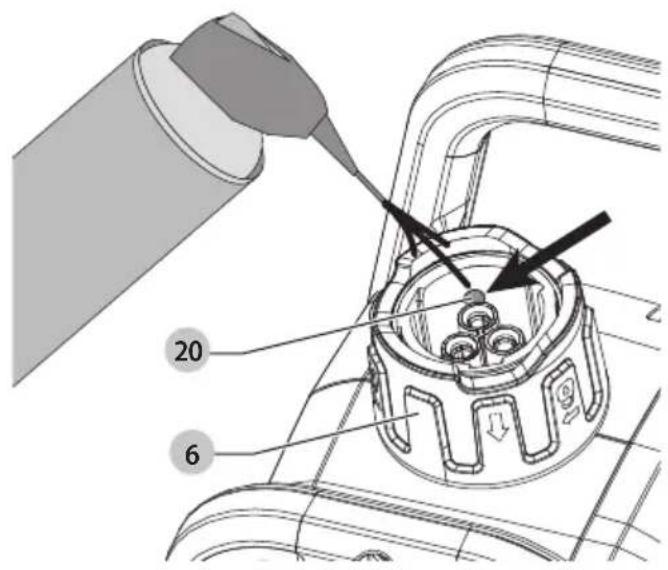
Collar Ball Lubrication (Fig. L)
WARNING: Do not lubricate electric contacts. Conductive lubrication on electric contacts can cause fire or electric shock. It is recommended to lubricate the collar ball 20, inside the collar 6, twice a year using a spray penetrant and moisture displacer as shown in Fig. L. DO NOT use grease.
Cleaning
WARNING: Risk of electrical shock and mechanical hazard. Before cleaning, turn the tool off and disconnect the battery pack.
WARNING: Before cleaning, disconnect the vibrator head and hose from the quick-change collar.
WARNING: Blow dirt and dust out of all air vents with clean, dry air at least once a week. To minimise the risk of eye injury, always wear approved eye protection when performing this procedure.
WARNING: Never use solvents or other harsh chemicals for cleaning the non-metallic parts of the tool. These chemicals may weaken the plastic materials used in these parts. Use a cloth dampened only with water and mild soap. Never let any liquid get inside the tool; never immerse any part of the tool into a liquid.
WARNING: DO NOT clean with a high pressure cleaner.
- Rinse the vibrator head and hose with clean water from a garden hose.
- Rinse any dirt or debris from the quick-change plug and collar with clean water from a hose. Allow to thoroughly dry before using again.
Replacing the Coin Cell Battery in the Remote (Fig. M)

DANGER: DO NOT INGEST BATTERY; CHEMICAL BURN HAZARD. This product
contains a coin / button cell battery. If the coin / button cell battery is swallowed, it can cause severe internal burns in just 2 hours and can lead to death.

WARNING: KEEP NEW AND USED BATTERIES AWAY
FROM CHILDREN. If the battery compartment does not close securely, stop using the product and keep it away from children. If you think batteries might have been swallowed or placed inside any part of the body, seek immediate medical attention.
WARNING: WHEN REPLACING BATTERY, REPLACE IT WITH THE SAME OR EQUIVALENT TYPE CR2032. Observe correct polarity (+ and -) when replacing batteries. Do not store
or carry batteries so that metal objects can contact exposed battery terminals.
WARNING: ENSURE THAT COIN CELL REPLACEMENT IS CARRIED OUT PROPERLY. There is a risk of explosion.
- When replacing battery, replace it with the same or equivalent type CR2032. Do not use any other coin cells or other forms of electrical power supply.
- Do not attempt to recharge the coin cell battery and do not short circuit the coin cell battery. The coin cell battery may leak, explode, catch fire and cause personal injury.
- Do not overheat the coin cell or throw it into fire. The coin cell may leak, explode, catch fire and cause personal injury.
- Do not damage the coin cell and do not disassemble the coin cell. The coin cell may leak, explode, catch fire and cause personal injury.
- Do not allow damaged coin cells to come into contact with water. Leaking lithium may mix with water to create hydrogen, which could cause a fire, an explosion, or personal injury.
- Do not dispose of the button cell battery with normal household waste. Contact your local waste disposal department to dispose of the device/batteries in accordance with applicable local laws and regulations.
- Remove and dispose of drained coin cell correctly. Drained coin cell may leak and damage the product or cause personal injury.
- To open the housing, remove the 4 screws 23 from the rear panel with a T10 torx screwdriver.
- Pull out sideways the discharged coin cell battery from the battery holder.
- Insert sideways the new coin cell battery 24 into the battery holder, paying attention to the orientation of the battery in terms of polarity.
- Replace the back cover, insert the screws and tighten.
Repairs
The charger and battery packs are not serviceable. There are no serviceable parts inside the charger or battery pack.
The vibrator heads and hoses contain no user serviceable parts.
WARNING: To assure product SAFETY and RELIABILITY, repairs, maintenance and adjustment should be performed by an authorised service centre. Always use identical replacement parts.
Optional Accessories
WARNING: Since accessories, other than those offered by DEWALT, have not been tested with this product, use of such accessories with this tool could be hazardous. To reduce the risk of injury, only DEWALT-recommended accessories should be used with this product.
Consult your dealer for further information on the appropriate accessories.
Protecting the Environment

Products/batteries are recyclable, but if marked with the crossed-out bin, they must not be disposed of with normal household waste.
Run the batteries down completely and separate them, and separate any light sources from the product if possible. It is the user's responsibility to delete personal data from the
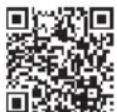
product. Then take the waste to an official waste collection center or a participating retailer who will often accept it free of charge. Packaging should be discarded based on the marked material code. Operating and safety instructions should only be discarded once the applicable product is no longer in use. Please check with your local community/municipality for waste management guidance. For further information, visit www.2helpU.com and scan the above QR code.
VIBRADOR DE HORMIGÓN POWERPACK DEWALT POWERSHIFT™, DCPS320

WAARSCHUWING: Lees alle

Vice-President Engineering, PTE-Europe
DEWALT POWERSHIFT™ Betongvibrator
Powerpack
DCPS320
Vice-President Engineering, PTE-Europe
65510, Idstein, Germany
31.12.2004

ADVARSEL: Les bruksanvisningen slik at skaderisikoen
kan reduseres.
Vice-President Engineering, PTE-Europe