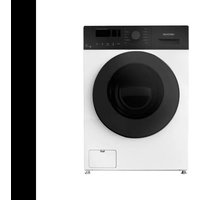
Bolero DressCode 6150 - Washing machine CECOTEC - Free user manual and instructions
Find the device manual for free Bolero DressCode 6150 CECOTEC in PDF.


| Product Type | Washing Machine |
| Brand | Cecotec |
| Model | Bolero DressCode 6150 Inverter A |
| Reference | 00974 |
| Load Capacity | 6 kg |
| Dimensions (H x W x D) | 85 x 60 x 44 cm |
| Rated Voltage | 220-240 V ~ |
| Rated Frequency | 50 Hz |
| Maximum Power | 1650 W |
| Rated Washing Power | 200 W |
| Maximum Spin Speed | 1000 rpm |
| Energy Efficiency Class | A |
| Wash Programs | Cotton, Eco 40-60, Sportswear, Bedding, Baby Care, Steam, Mix, Quick 15', 20 °C, Wool, Rinse+Spin, Spin |
| Special Functions | Delayed Start (3-24 h), Child Lock, Prewash, Drum Clean, Add Garment |
| Installation Type | Freestanding (not built-in) |
| Water Pressure | 0.03 - 1 MPa |
| Water Supply | Cold water only (one valve) |
| Cleaning and Maintenance | Clean pump filter, drum, detergent drawer, inlet hose |
| Transport Bolts | 4 bolts to remove before use |
| Adjustable Feet | Yes, for leveling |
| Door Lock | Automatic during operation, unlocks after pause |
| Noise Emissions (spin) | 76 dB(A) (class B) |
| Warranty | According to applicable regulations, Cecotec after-sales service |
Frequently Asked Questions - Bolero DressCode 6150 CECOTEC
User questions about Bolero DressCode 6150 CECOTEC
0 question about this device. Answer the ones you know or ask your own.
Ask a new question about this device
Download the instructions for your Washing machine in PDF format for free! Find your manual Bolero DressCode 6150 - CECOTEC and take your electronic device back in hand. On this page are published all the documents necessary for the use of your device. Bolero DressCode 6150 by CECOTEC.
USER MANUAL Bolero DressCode 6150 CECOTEC
natural_image
Product display of circular washers and washing machines in various orientations (no visible text or labels)Safety instructions 10
-
Parts and components 104
-
Before use 104
-
Appliance installation
-
Operation 109
-
Cleaning and maintenance
-
Troubleshooting 125
-
Technical specifications 127
B. Disposal of old electrical
and electronic appliances 136
-
Technical support and warranty 137
-
Copyright 137
SOMMAIRE
Read these instructions thoroughly before using the appliance. Keep this instruction manual for future reference or new users.
- Ensure that the mains voltage matches the voltage specified on the device rating label and that the plug is earthed.
- If the power cord is damaged, it must be replaced by the official Cecotec Technical Support Service or by a similarly qualified person to prevent hazards.
- This appliance is for indoor use only.
-
Make sure the device is installed in places where the temperature is above 0 °C.
-
The device is not designed for built-in installation.
- Use the hose set supplied with the appliance. Do not reuse old hoses.
- Check hose connections regularly to ensure that no water leaks out.
- Do not use the appliance if parts are missing or defective or if the power cord or plug is damaged.
- Do not use the appliance until you are sure that it is installed in accordance with the instructions provided in this manual and all water, drain, electrical and grounding connections comply with all applicable local regulations and/or other requirements.
- Before carrying out any maintenance or cleaning in the device, unplug the appliance from the mains.
- As a safety measure, we advise you to unplug the appliance and cut the water supply after every use. Maximum water-inlet pressure: 1 MPa. Minimum water-inlet pressure: 0.03 MPa.
- Never unplug the appliance with wet hands.
- For safety, be sure to connect the plug to a 3-pin socket. Check carefully and make sure that your socket is properly and reliably earthed.
- It must be possible to disconnect the appliance from the power supply by unplugging it if the plug is accessible, or by means of an all-pole switch upstream of the plug, in accordance with national electrical safety regulations.
- The maximum current of the device is 10 A, make sure that the power supply system (voltage, current and cable) is applicable to the load of the device.
-
Make sure that the socket outlet is capable of supporting the Maximum Power rating of the appliance as indicated on the rating plate.
-
Water and electrical devices must be connected by a qualified technician in accordance with the manufacturer's instructions and local safety regulations.
- The glass door may reach high temperatures during operation. Keep children and pets away from the glass door. Never open the door during the washing stage.
- Do not operate the device in very wet rooms or in rooms with explosive or caustic gas.
- Adequate ventilation has to be provided to avoid the back flow of gases into the room from appliances burning other fuels, including open fires.
- Do not dry unwashed items in the appliance.
- Do not wash items that have been soiled with substances such as cooking oil, acetone, alcohol, petrol, kerosene, spot removers, turpentine, waxes, and wax removers.
- Do not wash articles that have been cleaned in, washed in, soaked in, or stained with flammable or explosive substances, like wax, oil, paint, petrol, degreasers, dry-cleaning solvents, kerosene, etc., which may result in fire or explosion.
- Fabric softeners or similar products should be used as specified by manufacturer.
- Do not wash or dry articles that have been cleaned in, washed in, soaked in, or dabbed with combustible or explosive substances (such as wax, oil, paint, petrol, degreasers, dry-cleaning solvents, kerosene, etc.). This may result in fire or explosion.
- When washing fabrics that contain vegetable or cooking oil or have been contaminated by hair care products, they should first be washed in hot water with extra detergent. This will reduce, but not eliminate, the hazard.
- The air openings must not be obstructed by a carpet.
- Appliances with a single inlet valve can only be connected
to a cold water supply. Appliances with a double inlet valve must be correctly connected to a hot water and cold water supply (depending on the washing machine model).
- The plug must be accessible after installation.
- The appliance must not be installed behind a lockable door, a sliding door, or a door with a hinge on the opposite side to that of the device.
- The appliance shall not be installed in a humid place.
- Do not place other items or appliances (such as microwaves) or objects under pressure on the device.
- The product is exclusive for household use and is only designed for the textiles suitable for machine washing.
- The product cannot be used for commercial or industrial purposes. Do not use the appliance outdoors, even if the area is protected, as it may be exposed to moisture, rain or thunderstorms.
- Do not insert more laundry load than the allowed load (maximum allowed load indicated in the product data tables).
- The device is not designed to be operated by external switching devices such as timers or remote control systems.
- Do not use an extension lead or multiple sockets.
- Do not wash garments containing glass fibre, such as certain curtains or blinds, as particles may remain in the washing machine and adhere to other types of garments, causing skin irritation.
- Do not stand or sit on the appliance.
- Do not lean against appliance door.
-
Flammable and explosive or toxic solvents are forbidden. Do not use detergents containing petrol, alcohol, etc. Use only detergents suitable for machine washing, especially for the drum.
-
Garments containing oil may catch fire spontaneously, especially when exposed to heat sources such as a washing machine. The garments are heated, causing an oxidation reaction in the oil. Oxidation generates heat. If heat cannot escape, garments may become hot enough to catch fire. Piling, stacking or storing garments containing oil retains heat and therefore creates a fire hazard.
- Garments containing vegetable cooking oil or hair care products should first be washed in hot water with extra detergent, this will reduce the hazard, but will not completely eliminate it.
- Make sure that no objects such as lighters, matches, etc. are introduced.
- Close the door properly, if it is difficult to close, check that clothing does not prevent proper closing.
- Make sure that there is no water in the drum before opening the door.
- Once the washing cycle has finished, we recommend removing the laundry as soon as possible to prevent creases.
- This appliance can be used by children aged 8 and above and people with reduced physical, sensory, or mental capabilities or lack of experience and knowledge, as long as they have been given supervision or instruction concerning the use of the appliance in a safe way and understand the hazards involved. Do not allow children to play with the device. The cleaning and maintenance of the appliance should not be carried out by children without supervision.
- Children of less than 3 years should be supervised to ensure that they do not play with the appliance.
- Children should be supervised to make sure that they do not play with the device.
-
Cleaning and maintenance should not be carried out by children without supervision.
-
Be sure to use the child lock function and to switch off the appliance when not in use.
- Keep the cleaning products out of the reach of children.
Cautions during the handling of the appliance
- If you wish to change the location of the washing machine, make sure you install the transport bolts again in the device, as they will ensure the interior of the product is not damaged during transport.
- Water accumulated inside the appliance must be drained out.
- Handle the machine carefully. Never hold each protruded part on the machine while lifting. Do not use the door of the device as a handle during transport.
- The device is heavy. Transport it with care.
- Secure the drain and water-supply hose correctly.
- Do not insert hands into the running water extracting tub.
- Do not close the door with excessive force. If it is found difficult to close the door, please check if the clothes are put in or distributed well.
- It is forbidden to wash carpets.
- Never refill the water by hand during washing.
Installation
- The appliance must be handled and installed by 2 or more people to avoid risk of injury. Wear protective gloves when unpacking and installing the appliance to avoid cutting hazards.
- Keep children away during installation process.
- During installation, make sure that the power cable is not damaged to avoid possible risk of fire or electric shock.
-
Before using the device, it is imperative to remove the transport screws.
-
Keep the room dry and ventilated.
- Never place the appliance over the opening of an uncovered drain.
- Do not expose the device to temperatures below 5 °C or above 35 °C.
- Do not install in bathrooms or very damp rooms.
- Check that it is correctly levelled on the floor by means of the feet.
- WARNING! Cecotec accepts no liability for incidents caused by improper use outside the rules set out in this instruction manual.
INSTRUCTIONS DE SÉCURITÉ
- Detergent/fabric softener drawer
- Door
- Drum
- Adjustable feet
- Body
- Power cable
- Control panel
- Water inlet
Accessories
Fig. 2
1. Instruction manual
2. Cold water supply hose
3. Fixed spanner
4. Caps for transport bolt holes
NOTE:
The graphics in this manual are schematic representations and may not exactly match the device.
2. BEFORE USE
- This appliance is packaged in a way as to protect it during transport. Take the appliance out of its box and remove all packaging materials. You can keep the original box and other packaging elements in a safe place to prevent damage to the device if you need to transport it in the future. In case the original packaging is disposed of, make sure all packaging materials are recycled accordingly.
- Make sure all parts and components are included and in good conditions. If there is any piece missing or in bad conditions, contact the official Cecotec Technical Support Service immediately.
Box content
- Instruction manual
-
Water supply hose
-
Fixed spanner
-
Caps (x4)
-
Unpack the appliance and keep the original packaging and materials in a safe place. It will help prevent any damage if the appliance needs to be transported in the future. In case the original packaging is disposed of, make sure all packaging materials are recycled accordingly.
- To remove the lower part of the packaging, do not tilt the appliance on its front side. Carefully tilt to the side. Never place the appliance directly on the floor on its back or front part.
- Make sure all parts and accessories are present and in good conditions. If there is any piece missing or not in good condition, contact the official Cecotec Technical Support Service immediately.
- Keep all packaging materials away from children.
- Before using the washing machine, the appliance shall be calibrated.
- Before the first wash, you must perform a complete washing cycle without laundry (i.e. with an empty drum).
- Make sure that all pockets are empty. Sharp and rigid items such as coins, brooches, nails, screws or stones may cause serious damage to this appliance.
3. APPLIANCE INSTALLATION
- Make sure that the temperature of the places where the appliance is installed or placed is higher than 0 °C.
- Install the washing machine correctly according to this instruction manual. Keep the washing machine base well-ventilated when it is placed on a carpeted floor. Keep the place neat and tidy as damage caused by insects is not covered by the appliance warranty.
Transport bolts
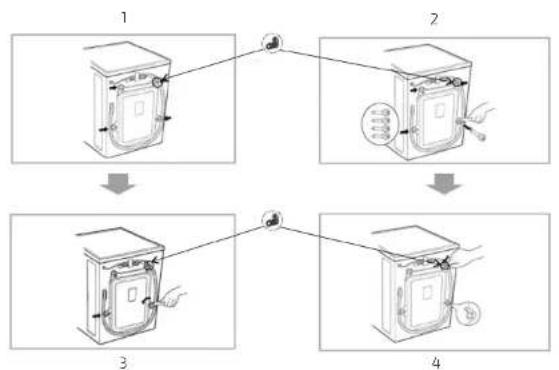
The appliance is equipped with transport bolts at the back to prevent internal damage during transport.
Removing the transport bolts (Fig. 3)
- 4 bolts are installed to prevent internal damage during transport. Remove the bolts before using the appliance.
- If the bolts are not removed, violent vibrations, noise and problems will occur and may even lead to serious damage.
- Use the spanner provided to loosen the 4 bolts.
- Slightly twist the rubber on the bolt and then pull out the bolts. Store the bolts and the spanner.
ENGLISHENGLISH
- The bolts must be rel tted when the appliance is transported again.
- Use the provided caps to seal the screw holes.
Correct installation (Fig. 4)
Horizontal adjustment:
The angle of inclination must be less than 1 degree.
Fig. 4 key:
-
- Drain hose
2.- 2 cm distance (approx)
Power socket
- The distance between any side of the washing machine and the power socket must be 1.5 metres.
- Do not use too many electrical appliances in one socket.
Cleaning up the surroundings
- The wall, door and door need to be cleaned.
- Install the washing machine on a hard, stable floor with a floor drain instead of a soft carpet or wooden floor.
- Do not place laundry or other items on top of the appliance, otherwise it may affect the normal operation.
Electric connection
-
Do not use a multiple adapter or similar.
-
After using the washing machine, switch oil and close the tap.
-
Connect the washing machine to an earthed socket so that it corresponds to the wiring principles.
-
Place the washing machine where the drain hose connection is easy.
- Contact the technical support service and ask professionals to install the washing machine. Non-specialists can cause damage and problems in the washing machine.
- Do not place the washing machine in a place where the temperature is below zero. Pipes will freeze and burst. In addition, temperature below zero will damage the knob and buttons.
- If you transport the appliance in an environment where the temperature is below freezing, then keep the appliance at room temperature for a few hours before starting it.
Earthing
- The washing machine must be connected to an earthed socket. Should a problem occur, the appliance can reduce the risk of electric shock. This appliance is equipped with a cable that includes a wire and a grounded plug. The earthed plug must be plugged into a suitable socket outlet. If you want to know if the appliance is properly grounded, contact your
professional service personnel. If the plug does not match the socket, do not change it yourself.
- Once the washing machine emits smoke or an odour, turn of the power and contact technical support service.
- The appliance must be connected to a water inlet. Use new hoses instead of old ones.
- To ensure quality, water injection tests are carried out before the washing machine leaves the factory, so it is normal that water may be present inside the drum, door seals and door panel.
Water inlet connection
- The water supply pressure must be between 30kPa and 1000kPa.
- Do not scrape the screw thread when connecting the inlet hoses to the valves.
- If the water supply exceeds 1000kpa, install a pressure regulator.
- Two seals are provided on the connectors at both ends of the hose to prevent water leakage (Figure 5).
- Open the tap and check the connectors for leaks.
- Check the hoses regularly. Make sure that the hoses are not kinked or intertwined.
Connection of inlet hose and taps
Figure 6
Check the rubber seals on both sides of the hose, insert a rubber seal into the threaded fittings of each hose.
Fig. 6 key:
1. Rubber seal
2. Water hose
Figure 7
Connect the water supply hoses to the water taps firmly by hand and then tighten another 2/3 turn with pliers. Connect the blue hose to the water tap.
Figure 8
After connecting the inlet hose to the water taps, open the water taps to remove foreign substances (dirt, sand or sawdust) from the hoses. Let the water drain into a bucket and check the water temperature.
Figure 9
Connect the hoses to the water inlet firmly by hand and then tighten another 2/3 turn with pliers.
Do not over-tighten the hoses as this could damage the valves and cause leaks. Check for leaks
ENGLISHENGLISH
by opening the taps. If water leaks, recheck steps 1 to 4.
Fig. 9 key:
- Water inlet
- The washing machine is designed for domestic use, do not install it on a ship or caravan.
- Please, close the tap if it is not going to be used for a long time
- (e.g. holidays).
- Remove the plug and cancel the door lock function to prevent children from locking themselves inside.
- Packaging materials (e.g. plastic, foam) can damage the child's safety and cause suffocation.
Warning: PLACE ALL PACKAGING MATERIALS OUT OF THE REACH OF CHILDREN.
Installing the drain hose
- Secure the drain hose with a rope, wire, cable tie or similar item.
- To avoid damage caused by leakage to the floor, position the drain hose correctly.
- The height of the drain hose should be between (0.85 m - 1.25 m) above, the terminal should not be placed directly in the water.
- If the drain hose is too long, do not force it to insert it into the appliance, as this will cause abnormal noise.
Please, check Fig. 10 below.
Fig. 10 key:
-
Sink
-
Hose bracket (not included)
-
Wire (not included)
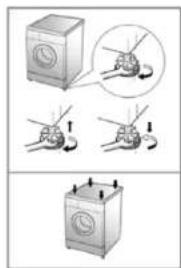
Horizontal adjustment
To avoid noise and vibrations by adjusting the washing machine level:
- Preferably place it in the corner of the room.
- If the floor is not level, straighten with the adjustable feet. Do not place pieces of wood or the like, make sure that all four adjustable feet touch the floor firmly and that the appliance is completely levelled.
Adjusting the adjustable feet
Adjust the adjustable feet to ensure that the washing machine is levelled and that it can be placed firmly on the floor. After adjustment, screw on the locknut to secure. To prevent the machine from falling down, do not place it on a platform that is higher than the floor.
Vertical adjustment
By applying downward force on the washing machine, the washing machine should not shake (both diagonals should be checked, if the washing machine shakes, the adjustable feet should be readjusted).
Figure 11
Locking and unlocking the door
Door locking
- After starting the appliance, the door will automatically lock, and the Door lock indicator light will light up on the control panel.
NOTE: when pressing the Start/Pause button, it is normal to hear the "click" sound of the door locking, this is not a fault.
If any error code appears, press the Start/Pause button twice to continue running the washing programme.
Door unlocking
- When the Door lock indicator light lights up on the control panel, press Start/Pause, the drum will stop operating. Wait a few seconds, the door lock will automatically deactivate, and the indicator light will switch off.
- NOTE: for security reasons, it may take several minutes for the door to unlock.
- ATTENTION: foam will overflow if you open the door in the middle of a washing cycle. If this happens, use a towel to clean it.
- If the water temperature is too high, the door will not open during operation.
- If the water level is too high, the door cannot be opened during operation.
4. OPERATION
- Washing cycle times can be altered by many factors such as water pressure, weight and type of fabric, water temperature, etc.
- During the operating cycle, the wash and spin time may be different from the actual run time.
- During the washing cycle, the time shown on the display will vary according to multiple factors.
- If the spin speed is too low, the rinsing efficiency may be reduced.
ENGLISHENGLISH
Detergent/fabric softener drawer
Fig.12

- Prewash detergent:
Add detergent moderately and then select the Pre-wash function if the laundry is very dirty.

2.- Synthetic washing powder:
Dissolve the detergent (e.g. pieces of soap) before dosing.

2.- Liquid detergent/bleach:
- Use detergent that produces less foam.
- Use two thirds of water (approx.) to dilute the concentrated detergent before dosing. - Do not exceed the MAX mark.
3.- Softener:
- Add fabric softener before washing, so it will be poured into the drum automatically. - When using a concentrated type of fabric softener, dilute it appropriately with water.
- Do not exceed the MAX mark.
- Use specific detergent for delicate clothes.
- Do not use too much detergent, as it will produce too much foam and affect the quality of the wash or cause malfunction.
- Select the detergent according to the type of laundry, colour, water temperature and water hardness level. Use a neutral detergent for washing effect and to protect the environment.
Tips on the use of detergents at different temperatures
When washing heavily soiled whites, we recommend using cotton programmes of 60 °C or higher and a normal (heavy duty) washing powder containing bleaching agents which at medium/high temperatures give excellent results.
- For washing cycles at temperatures between 40 °C and 60 °C, the type of detergent used must be suitable for the type of fabric and the level of soiling.
- Normal washing powders are suitable for white or non-fading fabrics with heavy soiling, whereas liquid detergents or K-colour protective washing powders are suitable for coloured fabrics with light soiling levels.
For washing at temperatures below 40 °C we recommend the use of liquid detergents or detergents specifically labelled as suitable for low temperature washing.
| PROGRAMME MAXIM | LIMLOAD (kg) | TYPE OF WASHING MACHINEDETERGENT SOFTENER | |||
| 6 kg | 7 kg | ALL FABRICS SPECIFIC FABRIC | |||
| Cotton 6 | 7 | L/P - 0 | |||
| ECO 40-60 2 | 2 | L/P - 0 | |||
| Sportswear 4 | 4 | L/P - 0 | |||
| Bedding 2 | 2 | L/P L/P 0 | |||
| Baby Care 3 | 3 | L/P - 0 | |||
| Steam 2 | 2 | L/P - 0 | |||
| Mix | 4 | 4 | L/P - 0 | ||
| Quick 15' | 2 | 2 | L/P - 0 | ||
| 20 °C | 2 | 2 | L/P - 0 | ||
| Wool | 2 | 2 | - | L/P - | |
| Rinse&Spin | 6 | 7 | - | -- | |
| Spin | 6 | 7 | - | -- | |
L: liquid detergent (if you use liquid detergent, it is not recommended to enable Delay start).
P: powder detergent.
D: optional
- no detergent or softener.
Use recommendations:
Use powder detergent from 20 °C to 90 °C.
Use wool detergent from 20 °C to 40 °C.
NOTE: maximum loads are approximate and recommended values to achieve the best results.
Control panel functions (Fig. 13 and 13.1)
- Power button
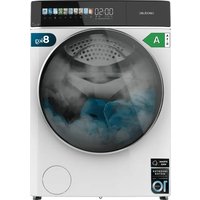
BOLERO DRESSCODE 6150 INVERTER A
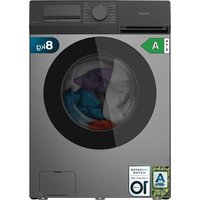
BOLERO DRESSCODE 7150 INVERTER A
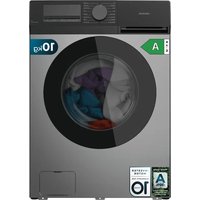
BOLERO DRESSCODE 7150 INVERTER STEEL A
BOLERO DRESSCODE 6150 INVERTER A
BOLERO DRESSCODE 7150 INVERTER A
BOLERO DRESSCODE 7150 INVERTER STEEL A
ENGLISHENGLISH
- Press the power button to switch on the appliance.
- When the washing cycle is finished, press the power button again to switch off the appliance.
- Start/Pause button
- Press to start the washing cycle.
- Press it to pause during operation, press it again to resume operation.
3. Delay start button
When using the Delay start function for washing, you can select a delay time between 3 and 24 hours. Press the Delay button repeatedly to select the desired time in 1-hour intervals.
You must select this function after selecting a washing programme on the knob and before pressing the Start/Pause button.
4. Child lock function
You can lock and unlock this function by pressing the Delay button for about 3 seconds when the machine is in operation.
Once the child lock function has been set, all other buttons will be locked except the power button.
When the washing programme is finished, press the power button. The child lock function will not be unlocked. This means that the child lock function must be unlocked manually. When the appliance is switched on, if the child lock function is activated (child lock indicator light on), press the Delay button for 3 seconds to unlock the appliance and then continue with the washing programme.
5. Speed button
You can change the spin speed according to the capacity (Kg) in each washing cycle.
Press the Speed button repeatedly to select the desired option.
You must select this function after selecting a washing programme on the knob and before pressing the Start/Pause button.
6. Pre-wash function
If the laundry is too dirty, you can select this function to have the appliance perform a prewash before the main washing cycle.
Press the Speed button for more than 3 seconds to activate/deactivate the pre-wash function. You must select this function after selecting a washing programme on the knob and before pressing the Start/Pause button.
7. Temperature button
You can select different temperatures depending on the type of fabric and the soiling degree of the items to be washed.
Press the Temperature button repeatedly to select the desired option.
You must select this function after selecting a washing programme on the knob and before pressing the Start/Pause button.
8. Drum cleaning function
It is advisable to periodically clean, sterilise and disinfect the drum.
To do this, press the Temperature button for more than 3 seconds.
NOTE: the drum must be empty to perform this function and no detergent or softener should be poured into the drawer.
9. Programmes knob
Turn the knob to choose one of the 12 washing programmes according to the type of fabric and the degree of soiling of the laundry.
Special functions
- Memory function (not available on all models)
When you switch on the appliance after a period of shutdown, the washing machine will have saved the last settings.
- Automatic switch of function (not available on all models)
Once the washing cycle is finished, the machine will switch off automatically after 120 seconds.
Adding garments
If you want to add laundry during a washing cycle, press the Start/Pause button to stop operation.
After about 5 seconds*, you will hear an unlocking sound, while the door lock indicator light on the display disappears, then you can open the door.
NOTE*: the time may vary depending on multiple factors.
Add the additional garment inside the drum.
Do not force the door while opening it, as you may damage it. If there is water inside the appliance while you are opening the door, water may spill out of the washing machine. Exercise extreme caution. RISK OF BURNS.
If the water temperature is above 45^ C and there is a lot of water inside the drum, the door will not open for safety reasons. If you want to open the door, follow the instructions below:
(1) Press the Start/Pause button (wait until the drum stops turning).
ENGLISHENGLISH
(2) Wait until the water temperature cools down to less than 45 °C.
(3) If you want to open the door when the water temperature is above 45°C, turn off the appliance and open the door after about 5 minutes. Exercise extreme caution. RISK OF BURNS.
The water level must be below the door gasket and the spin speed must be 0.
The door lock indicator light should switch off on the display.
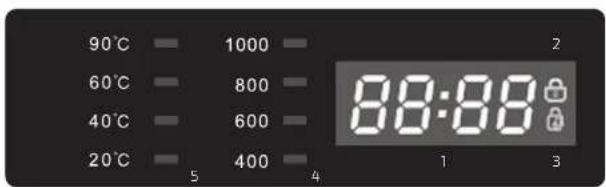
Display Fig. 14 and 14.1
Fig. 14 key:
-
Display: shows the time of the washing cycle as well as possible errors.
-
Door lock: this indicator light shows the open and closed status of the door.
-
Child Lock: this indicator light shows the status of the Child lock function.
-
Spin speed.
00974 Bolero DressCode 6150 Inverter A > 1000, 800, 600, 400 rpm
- 00975 Bolero DressCode 7150 Inverter A > 1400, 1000, 800, 400 rpm
- 00977 Bolero DressCode 7150 Inverter Steel A > 1400, 1000, 800, 400 rpm
- Water temperature (90 °C, 60 °C, 40 °C, 20 °C)
Programmes and functions
Use for regular clothes
- Preparing for the washing cycle.
Open the door, put the laundry in and close the door.
- Open the detergent drawer, add detergent and close the drawer.
- Connect the inlet hose and make sure the tap is open.
-
Press the power button.
-
The programmes can be selected depending on the laundry and the degree of soiling.
-
Press the Start/Pause button to start washing.
-
At the end of the washing cycle:
Open the door to remove the clothes.
- Switch the appliance off and close the tap.
Cotton programme
Use this programme to wash light to moderately soiled laundry such as cotton, bed linen, underwear, towels and shirts, etc.
• Preparing for the washing cycle.
Open the door, put the laundry in and close the door.
- Open the detergent drawer and add detergent/softener (if applicable) and then close it.
- Make sure that the hose connections are correct and that the tap is open.
- Press the power button.
- Turn the knob to select the Cotton programme.
- The washing programme will be selected automatically.
- Choose the required water temperature and spin speed (if applicable).
- Press the Start/Pause button to start the washing cycle.
- When the programme is finished, the appliance will beep.
Eco 40-60 programme
This programme is suitable for washing cotton laundry with normal soiling, labelled as washable at 40 °C 60 °C, in the same cycle, saving time and water. This programme is used to assess compliance with EU eco-design legislation.
• Preparing for the washing cycle.
- Open the door, put the laundry in and close the door.
- Open the detergent drawer and add detergent/softener (if applicable) and then close it.
- Make sure that the hose connections are correct and that the tap is open.
- Press the power button.
- Turn the knob to select the Eco 40-60 programme.
- The washing programme will be selected automatically.
- Choose the required water temperature and spin speed (if applicable).
- Press the Start/Pause button to start the washing cycle.
- When the programme is finished, the appliance will beep.
Sportswear programme
Use this programme to wash machine washable sportswear.
• Preparing for the washing cycle.
- Open the door, put the laundry in and close the door.
- Open the detergent drawer and add detergent/softener (if applicable) and then close it.
- Make sure that the hose connections are correct and that the tap is open.
- Press the power button.
- Turn the knob to select the Sportswear programme.
- The washing programme will be selected automatically.
- Choose the required water temperature and spin speed (if applicable).
- Press the Start/Pause button to start the washing cycle.
- When the programme is finished, the appliance will beep.
Bedding programme
Suitable for machine washable clothes, e.g. bed linen, sheets, curtains, etc.
• Preparing for the washing cycle.
- Open the door, put the laundry in and close the door.
- Open the detergent drawer and add detergent/softener (if applicable) and then close it.
- Make sure that the hose connections are correct and that the tap is open.
- Press the power button.
- Turn the knob to select the Bedding programme.
BOLERO DRESSCODE 6150 INVERTER A
BOLERO DRESSCODE 7150 INVERTER A
BOLERO DRESSCODE 7150 INVERTER STEEL A
BOLERO DRESSCODE 6150 INVERTER A
BOLERO DRESSCODE 7150 INVERTER A
BOLERO DRESSCODE 7150 INVERTER STEEL A
ENGLISHENGLISH
- The washing programme will be selected automatically.
- Choose the required water temperature and spin speed (if applicable).
- Press the Start/Pause button to start the washing cycle.
- When the programme is finished, the appliance will beep.
- Electric blankets and carpets cannot be washed (they will damage the appliance and clothes).
- Place the laundry in the drum properly and evenly, to avoid high vibrations during spinning.
- The drying time can be extended in this programme.
- Heavy laundry should not be put in the washing machine rolled or tangled, instead, it should be put in after shaking it out.
Baby care programme
This programme is specific for washing children's clothes, allergic people's clothes or clothes that need a high temperature to eliminate bacteria and dust mites.
• Preparing for the washing cycle.
- Open the door, put the laundry in and close the door.
- Open the detergent drawer and add detergent/softener (if applicable) and then close it.
- Make sure that the hose connections are correct and that the tap is open.
- Press the power button.
- Turn the knob to select the Baby care programme.
- The washing programme will be selected automatically.
Choose the required water temperature and spin speed (if applicable).
- When removing the laundry from the drum, pay attention to the internal steam. To avoid burns, first open the door, wait a few minutes and then remove the clothes.
- Press the Start/Pause button to start the washing cycle.
- When the programme is finished, the appliance will beep.
Steam programme
This programme is activated to heat the inside of the drum, improving wash performance and removing dirt more efficiently.
• Preparing for the washing cycle.
- Open the door, put the laundry in and close the door.
- Open the detergent drawer and add detergent/softener (if applicable) and then close it.
- Make sure that the hose connections are correct and that the tap is open.
- Press the power button.
- Turn the knob to select the Steam programme.
- The washing programme will be selected automatically.
- Choose the required water temperature and spin speed (if applicable).
- Press the Start/Pause button to start the washing cycle.
- When the programme is finished, the appliance will beep.
- When removing the laundry from the drum, pay attention to the internal steam. To avoid burns, first open the door, wait a few minutes and then remove the clothes.
Mix programme
Use this programme to wash mixed laundry such as cotton and synthetics (do not mix laundry that fades easily or tears in the washing machine).
• Preparing for the washing cycle.
- Open the door, put the laundry in and close the door.
- Open the detergent drawer and add detergent/softener (if applicable) and then close it.
- Make sure that the hose connections are correct and that the tap is open.
- Press the power button.
- Turn the knob to select the Mix programme.
- The washing programme will be selected automatically.
- Choose the required water temperature and spin speed (if applicable).
- Press the Start/Pause button to start the washing cycle.
- When the programme is finished, the appliance will beep.
- Separate white or brightly coloured clothes from dark clothes.
Quick 15' programme
For washing clothes that are frequently used, not too dirty and delicate.
• Preparing for the washing cycle.
- Open the door, put the laundry in and close the door.
- Open the detergent drawer and add detergent/softener (if applicable) and then close it.
- Make sure that the hose connections are correct and that the tap is open.
- Press the power button.
- Turn the knob to select the Quick 15 ^° programme.
- The washing programme will be selected automatically.
- Choose the required water temperature and spin speed (if applicable).
- Press the Start/Pause button to start the washing cycle.
- When the programme is finished, the appliance will beep.
- To ensure optimal results, it is recommended not to wash more than 2 kg of laundry in this programme.
20 °C programme (only available for model 720 E)
Use this programme to wash lightly stained and lightly used laundry.
• Preparing for the washing cycle.
- Open the door, put the laundry in and close the door.
BOLERO DRESSCODE 6150 INVERTER A
BOLERO DRESSCODE 7150 INVERTER A
BOLERO DRESSCODE 7150 INVERTER STEEL A
BOLERO DRESSCODE 6150 INVERTER A
BOLERO DRESSCODE 7150 INVERTER A
BOLERO DRESSCODE 7150 INVERTER STEEL A
ENGLISHENGLISH
- Open the detergent drawer and add detergent/softener (if applicable) and then close it.
- Make sure that the hose connections are correct and that the tap is open.
- Press the power button.
- Turn the knob to select the 20 °C programme.
- The washing programme will be selected automatically.
- Choose the required water temperature and spin speed (if applicable).
- Press the Start/Pause button to start the washing cycle.
- When the programme is finished, the appliance will beep.
Wool programme
Use this programme to wash wool fibre texture, such as machine washable woollen fabrics, etc.
• Preparing for the washing cycle.
- Open the door, put the laundry in and close the door.
- Open the detergent drawer and add detergent/softener (if applicable) and then close it.
- Make sure that the hose connections are correct and that the tap is open.
- Press the power button.
- Turn the knob to select the Wool programme.
- The washing programme will be selected automatically.
- Choose the required water temperature and spin speed (if applicable).
- Press the Start/Pause button to start the washing cycle.
- When the programme is finished, the appliance will beep.
- After the washing cycle is finished, do not leave the laundry in the washing machine for a long time. Dry it as quickly as possible.
- Separate white or brightly coloured clothes from dark clothes for washing.
- The use of special detergent for wool can reduce the damage of the laundry and improve the washing effect.
Rinse & Spin programme
Use this programme so that the appliance does not perform a washing cycle, but only rinses and spins.
• Preparing for the washing cycle.
- Open the door, put the laundry in and close the door.
- Open the detergent drawer and add detergent/softener (if applicable) and then close it.
- Make sure that the hose connections are correct and that the tap is open.
- Press the power button.
- Turn the knob to choose the Rinse&Spin programme.
- The washing programme will be selected automatically.
- Press the Start/Pause button to start the rinse and spin cycle.
- When the programme is finished, the appliance will beep.
- The highest spin speed can be selected, but the temperature cannot be adjusted.
Spin programme
The machine does not wash or rinse, it will only spin.
• Preparing for the washing cycle.
- Open the door, put the laundry in and close the door.
- Make sure that the hose connections are correct and that the tap is open.
- Press the power button
- Turn the knob to choose the Spin programme.
- The washing programme will be selected automatically.
- Press the Start/Pause button to start the spin cycle.
- When the programme is finished, the appliance will beep.
- The highest spin speed can be selected, but the temperature cannot be adjusted.
- During the spin process, the actual spin speed may not match the programme speed, which is due to the fact that the appliance adjusts the speed according to the weight of the laundry.
- There may be a rhythmic buzzing noise during the spin process, which is the normal noise of the drain. This is not a fault of the washing machine.
NOTE: If you want to change the current setting during the washing cycle, first press the Start/Pause button to stop the cycle temporarily, change the settings and then press the button again to restart (not available for all programmes).
NOTE: washing programmes may vary depending on the washing machine model.
NOTE: some functions, such as spin speed and temperature, are not configurable in certain programmes.
Washing programmes
00974_Bolero DressCode 6150 Inverter A
| Programmes Temperature (°C) Spin speed (r/min) Time (min) | |||
| Cotton | Cold (20 °C-40 °C-60 °C-90 °C) 800 (0, 400, 600, 1000) | 88 | |
| Eco 40 - 60 | 40 °C (cold water, 20 °C, 60 °C) | 1000 (0, 400, 600, 800) 135 | |
| Sportswear | 20°C (cold water, 40 °C) | 800 (0, 400, 600) | 79 |
BOLERO DRESSCODE 6150 INVERTER A
BOLERO DRESSCODE 7150 INVERTER A
BOLERO DRESSCODE 7150 INVERTER STEEL A.
BOLERO DRESSCODE 6150 INVERTER A
BOLERO DRESSCODE 7150 INVERTER A.
BOLERO DRESSCODE 7150 INVERTER STEEL A
ENGLISHENGLISH
| Bedding | 60 °C (cold water, 20 °C, 40 °C, 90 °C) | 1000 (0, 400, 600, 800) 11H | |
| Baby care | 60 °C (40 °C, 90 °C) | 800 (0, 400, 600) | 109 |
| Steam | 20 °C (cold water, 40 °C, 60 °C, 90 °C) | 800 (0, 400, 600, 1000) 8: | |
| Mix | Cold water (20 °C, 40 °C) | 800 (0, 400, 600) | 66 |
| Quick 15° | Cold water (20 °C, 40 °C) | 600 (0, 400, 800) | 15 |
| 20 °C 20 °C | 1000 (0, 400, 600, 800) 63 | ||
| Wool | Cold water (20 °C, 40 °C) | 600 (0, 400) | 56 |
| Rinse&Spin - | 800 (0, 400, 600, 1000) 20 | ||
| Spin - | 800 (0, 400, 600, 1000) 14 | ||
Washing programmes
Bolero DressCode 7150 Inverter A
Bolero DressCode 7150 Inverter Steel A
| Programmes | Temperature (°C) | Spin speed (r/min) | Time (min) |
| Cotton | Cold (20 °C, 40 °C, 60 °C, 90 °C) | 1000 (0, 400, 800, 1400) | 94 |
| Eco 40-60 | 40 °C (cold water, 20 °C, 60 °C) | 1400 (0, 400, 800, 1000) | 145 |
| Sportswear | 20 °C (cold water, 40 °C) | 1000 (0, 400, 800) | 83 |
| Bedding | 60 °C (cold water, 20 °C, 40 °C, 90 °C) | 1400 (0, 400, 800, 1000) | 125 |
| Baby care | 60 °C (40 °C, 90 °C) | 1000 (0, 400, 800) | 130 |
| Steam | 20 °C (cold water, 40 °C, 60 °C, 90 °C) | 800 (0, 400, 1000, 1400) | 83 |
| Mix Cold water (20 °C) | 40 °C) 1000 (0, 400, 800) | 13 | |
| Quick 15' Cold water (20 °C, 40 °C) 800 (0, 400, 1000) 15 | |||
| 20 °C 20 °C | 1000 (0, 400, 600, 1400) | 63 | |
| Wool Cold water (20 °C, 40 °C) 800 (0, 400, 1000) | 57 | ||
| Rinse&Spin - | 1000 (0, 400, 600, 1400) | 38 | |
| Spin - | 1000 (0, 400, 800, 1400) | 14 | |
Warnings
- Check whether the water inside the drum has been drained before opening its door. Do not open the door if there is still water inside the machine.
- Do not wash one garment only, as this could destabilise the washing machine. Always introduce at least 3 or 4 clothes so that draining can be done smoothly. For a better efficiency and water and energy save, we recommend filling two thirds of the drum with laundry.
- The information given for programmes other than the ECO 40-60 programme are indicative only.
- The eco 40-60 programme can clean normally soiled cotton clothes declared as washable at 40 °C or 60 °C, together in the same cycle. This programme is used to assess compliance with EU eco-design legislation.
- The times indicated for each programme match the length with standard loads and temperatures. Other loads and temperatures will need different programme length.
- The most efficient programmes in terms of energy consumption are generally those that are carried out at lower temperatures and longer length.
- Load the washing machine to the quantity estimated for each programme, this will help you save energy and water.
- The length, and energy and water consumption of each programme may vary according to the weight and type of laundry, the additional functions active, water, and ambient temperature.
- It is recommended the use of liquid detergent for washing programmes at low temperature. You can vary the quantity of detergent according to the quantity of laundry and its soiling level. Follow the detergent manufacturer recommendations for the quantity of detergent you must use.
- Noise and remaining moisture level depend on the spin speed. The higher the spin speed,
ENGLISHENGLISH
the higher the noise and the lower the residual moisture content.
- You can access the product database, where the information on this model defined in Delegated Regulation (EU) 2019/2014 is stored, by scanning the QR code (also found on the energy label).
Before washing
1. Washing labels
Please check the washing labels on the clothes, which show the type of fabric and washing method.
(Available on garment labelling).
2. Washing classification
Please wash clothes of the same texture, as different textures need different water temperature, speed and washing programme, separate brightly coloured clothes from white ones. Separate dyed cotton clothes from whites, otherwise the latter will be dyed. If possible, do not wash heavily soiled clothes together with less soiled ones.
Degree of soiling (high, medium, light)
Sort and wash clothes according to soiling degree
Colour (white, light colours, dark colours)
Sort and wash
Velvet (easy deterioration)
Sort into white and dark colours
Note:
- When putting small and large clothes together, put the large clothes first, they should be less than half of the total number of clothes. Do not wash a single cloth as this may cause imbalance problems.
- Add one or two similar items.
- It is advisable to use 34 of the drum for each wash.
- Small items of clothing, such as silk stockings and handkerchiefs, should be stored in mesh laundry bags. Before washing a bra with steel rings, remove the rings. If this is not convenient, place them in mesh bags to prevent the bra from slipping into the space between the inner and outer drums.
- Check all pockets and make sure there is nothing inside them. Nails, hairpins, matches, pens, coins and keys will damage the washer and clothes.
- Zip all clothing, fasten the button and hook and tie the belt loosely, to ensure that they do not damage other garments.
-
First use water with a little detergent to wash the parts with too many stains, such as collar and cuffs.
-
Check the door seal and make sure that there is nothing in it.
- Make sure that there is nothing in the drum before washing.
- Use low-foaming detergent.
5. CLEANING AND MAINTENANCE
Maintenance
- Proper maintenance prolongs the lifespan of the appliance.
- Before maintenance, unplug the appliance.
Appliance body
After washing, wipe with a soft cloth. If there is a lot of dirt, use a suitable neutral detergent or soap.
- Do not wet directly.
- Do not use putty powder, thinner, petrol or alcohol to clean the body of the machine.
Door gasket
After washing, remove dirt, paper waste, etc., if there is any foreign matter, remove it.
Cleaning the detergent drawer
Clean the detergent drawer regularly. Take it out and wash it with clean water, then replace it.
Fig. 15 key:
- Push down
- Remove
Cleaning the water inlet of the water hose
(Suggestion: once every six months)
If debris accumulates, it will influence the water inlet speed.
- Disconnect the water inlet hose.
- Remove the coupling device according to the shown arrow.
- Clean the inside of the coupling device.
- Reinstall the hose after cleaning.
Figure 16
Cleaning the water inlet valve
of the washing machine (Suggestion: once / half a year).
- Disconnect the hose from the washing machine.
- Remove the filter net from the water valve.
- Clean the filter mesh with a soft bristle toothbrush.
- Reinstall the hose after cleaning.
BOLERO DRESSCODE 6150 INVERTER A
BOLERO DRESSCODE 7150 INVERTER A
BOLERO DRESSCODE 7150 INVERTER STEEL A
BOLERO DRESSCODE 6150 INVERTER A
BOLERO DRESSCODE 7150 INVERTER A
BOLERO DRESSCODE 7150 INVERTER STEEL A
ENGLISHENGLISH
Fig. 17 key:
- Water inlet valve
In case of freezing
-
Cover the tap and the coupling device with a hot towel.
-
Remove the inlet hose and place it in 50 degree water.
-
Pour approximately 2 - 3 L of water at 50 degrees into the drum.
-
Connect the inlet hose, open the tap and switch on the washing machine, check if the inlet and outlet are normal.
Fig. 18 key:
a.
-
Tap
-
Connection pipe
-
Inlet tube
b. Remove the inlet tube and place it in water at 50 °C.
- Water at 50 °C
c.- Pour approximately 2 - 3 L of water at 50 °C into the drum.
- Water at 50 °C
Cleaning of the drain pump filter (Suggestion: once a month)
-
Press the lock on the pump after draining (with the washing machine switched off), open the water pump filter cover. (Attention: if there is hot water inside, wait for it to cool down).
-
Remove the filter counterclockwise.
-
Wash the filter.
-
Go to the pump and insert the filter, tighten it clockwise and tighten the cap.
Warning:
a. Secure the filter tightly to prevent leakage.
b. Do not clean during operation.
NOTE: use extreme caution as spillage may occur. Use a container to collect the water.
Drum cleaning (Suggestion: one a month)
After use over a period of time, some dirt may remain. You can clean the inside and outside of the drum using the Drum Cleaning programme.
Caution: do not insert laundry nor detergent/softener when using this function.
6. TROUBLESHOOTING
Non-faulty conditions
The door cannot be opened
Programme is running.
- There is clothing between the door and the door seal.
A slight odour is produced
There may be a rubber odour from some components, the odour will disappear with use. It is recommended to leave the door ajar after each wash until the inside of the drum is completely dry, this will prevent odours and the formation of mould.
There is too little water when washing and rinsing
The washing machine only needs a little water during operation.
No water inlet
- Is the water supply tap open?
- Is the inlet hose frozen?
- Are the filters blocked or dirty?
- Is there sufficient water pressure?
Water inlet at half
If the water level is low, the appliance will automatically supply water.
Water comes out when washing
Check if you added detergent with too much foam or too much quantity.
Remaining time change
If the laundry is not evenly placed inside the drum when spinning, the spin time will be increased, in order to even out the imbalance and correct the deviation.
There is an abnormal noise when spinning
Have the transport bolts been removed?
Are there pieces of metal or coins in the drum?
Washing machine cannot work after a power failure
The washing machine will stop working after a power failure. When power is restored, for safety reasons, it will not start up. Press the power button and restart the programme.
BOLERO DRESSCODE 6150 INVERTER A
BOLERO DRESSCODE 7150 INVERTER A
BOLERO DRESSCODE 7150 INVERTER STEEL A
BOLERO DRESSCODE 6150 INVERTER A
BOLERO DRESSCODE 7150 INVERTER A
BOLERO DRESSCODE 7150 INVERTER STEEL A
ENGLISHENGLISH
Troubleshooting Guide
Problem POSSIBLE CAUSE TROUBLESHOOTING
| The washing machine does not switch on | It is not plugged in. You have not pressed the Start/Pause button. Power outage. Blown fuse. | Plug it in. Press the Start/Pause button. Check the power supply. Replace the fuse. |
| Spinning fault, display shows "UE" | Make sure that the transport bolts have been removed. Make sure that the machine is positioned in a stable position. Garments may be too small or too lightweight. Appliance feet are not correctly adjusted. | Remove the transport bolts. Position the machine in a fixed and secure manner. Add more clothes. Position the feet correctly. |
| Water inlet fault, display shows "IE" | Check if the tap is open. Check that the water supply is not cut off. Check that the pipes are not frozen. Check that the filters are not clogged. | Open the tap. Contact your water supplier. Use hot water for thawing. Remove filters and clean them. |
| Water outlet fault, display shows "OE" | Water outlet pipes may be too high. Pipes may be frozen. Pipes may be blocked. Drainage pump blocked. | Reposition the pipes correctly within a height of 1 m. Thaw the pipes. Clean the pipes. Clean the drain pump. |
| Door fault, display shows "DE" | Drum door may not be properly closed. Make sure that no objects block the door. | |
| No heating, display shows "FE" | Unplug the washing machine. Contact the official Cecotec Technical Support Service. | |
| Water keeps entering the drum, the display shows "FE" | Incidence on solenoid valve or pressure switch. | Contact the official Cecotec Technical Support Service. |
| Drum does not spin, display shows "LE" or "FE" | Unplug the washing machine. Contact the official Cecotec Technical Support Service. | |
If none of these situations match your problem, do not attempt to disassemble or repair the appliance by yourself. Repairs carried out by unqualified people may result in injury or serious malfunctions. Contact the official Cecotec Technical Support Service. The repair must be carried out by an authorised technician, and you must use only original spare parts.
Unauthorised self-maintenance or maintenance will affect the safe use of the product and the application of the warranty policy.
NOTE:
Any electrical repairs to this appliance must conform to local and/or state laws. Please contact the official Cecotec Technical Support Service in case of doubt and before carrying out any of the above operations. Always disconnect the device from the power supply when opening it.
7. TECHNICAL SPECIFICATIONS
| Reference 00974 00975 | 00977 | |
| Model Bolero DressCode6150 Inverter A | Bolero DressCode7150 Inverter A | Bolero DressCode7150 Inverter Steel A |
QR code
Voltage 220-240V -
ENGLISHENGLISH
| Rated frequency | 50 Hz | |
| Washing capacity | 6 kg | 7 kg |
| Rated power rating | 500 W | 500 W |
| Rated heating capacity | 1500 W | 1600 W |
| Rated washing power | 200 W | 200 W |
| Maximum power | 1650 W | 1700 W |
Technical specifications may change without prior notification to improve product quality. Made in China | Designed in Spain
Frequently used programmes
Bolero DressCode 6150 Inverter A
The following data is for reference only and may vary depending on many factors.
| Programmes | Tempera-ture (°C) | Time (min) | Water consump-tion (L/cycle) | Energy consump-tion (kWh/cycle) | Revo-lutions (rpm) | Maxi-mum load | Average residual moisture |
| Wool | Cold | 0.56 | 30 | 0.06 | 800 | ≤ 2 kg | 95 % |
| Cotton 20 °CCotton | 20 | 1:37 | 55 | 0.25 | 800 | Rated | 76 % |
| Cotton 90 °CCotton | 80 | 2:30 | 65 | 1.8 | 800 | Rated | 76 % |
| 20 °C | 20 | 1:03 | 55 | 0.25 | 800 | Rated | 76 % |
| Quick 15'(Quick) | Cold | 0:15 | 30 | 0.05 | 800 | ≤ 2 kg | 80% |
Bolero DressCode 7150 Inverter A
Bolero DressCode 7150 Inverter Steel A
The following data is for reference only and may vary depending on many factors.
| Programmes | Temperature (°C) | Time (min) | Water consumption (l/cycle) | Energy consumption (kWh/cycle) | Revolutions (rpm) | Maximum load | Average residual moisture |
| Wool Cold 0.57 | 35 0.06 800 | ≤slant 2 kg 95 % | |||||
| Cotton 20 °CCotton | 20 1:37 60 | 0.25 1000 | Rated 76 % | ||||
| Cotton 90 °CCotton | 80 | 2:30 | 70 1.8 1000 | Rated 76 % | |||
| 20 °C | 20 | 1:03 | 60 | 0.25 | 1000 | Rated | 76 % |
| Quick 15'(Quick) | Cold 0:15 | 35 0.05 | 800 ≤slant 2 kg 80% |
PRODUCT DATA SHEET
Supplier's name or trademark: Cecotec Innovaciones, S.L.
Supplier's address (b): Av. Reyes Católicos, 60, 46910, Alfatar, Valencia (Spain)
Model Identifier: 00974_Bolero DressCode 6150 Inverter A
General product parameters:
| Parameter | Value | Parameter | Value | |
| Rated capacity (a) (kg) | 6.0 | Dimensions in cmWidthDepth | Height 85 | |
| 60 | ||||
| 44 | ||||
| IEE_w(^) | 52.0 | Energy efficiency class (°) | A | |
| Washing efficiency index (°) | 1,031 | Rinsing efficiency (g/kg) (°) | 5.0 | |
BOLERO DRESSCODE 6150 INVERTER A
BOLERO DRESSCODE 7150 INVERTER A
BOLERO DRESSCODE 7150 INVERTER STEEL A
BOLERO DRESSCODE 6150 INVERTER A
BOLERO DRESSCODE 7150 INVERTER A
HOLERO DRESSCODE 7150 INVERTER STEEL A
ENGLISHENGLISH
| Energy consumption in kWh per cycle, based on the Eco 40-60 programme. The actual energy consumption will depend on how the appliance is used. | 0.421 | Water consumption in litre per cycle, based on the Eco 40-60 programme. The actual water consumption will depend on how the appliance is used and on the hardness of the water. | 36 | ||
| Maximum temperature inside the treated fabric (a) (°C) | Rated capacity 30 | Amount of residual moisture (°) (%) | 62.91 half | 24 | |
| Quarter | 21 | ||||
| Spin speed (°) (rpm) | Rated capacity | 1000 | Spin-drying efficiency class (°) | C | |
| Half | 1000 | ||||
| Quarter | 1000 | ||||
| Programme duration (°) (l/min) | Rated capacity | 3:18 | Type | Free installation | |
| Half | 2:36 | ||||
| Quarter | 2:36 | ||||
| Airborne acoustical noise emissions in the spin phase (°) (dB(A) re 1 pW) | 76 | Airborne acoustic noise emission class (°) (spin phase) | B | ||
| Oil mode (W) | 0.50 | Standby mode (W) | N/A | ||
| Delay start (W) (if applicable) | 4.00 | Standby on mains (W) (if applicable) | N/A | ||
Minimum duration of the guarantee offered by the supplier (b):
This appliance has been designed to release silver ions during the washing cycle. NO
Further information:
Link to the supplier's website, where the information of point 9 of Annex II of the Commission Regulation (EU) 2019/2023 (1) (b) can be found:
(a) for the eco 40-60 programme.
(b) changes to these elements shall not be considered relevant for the purposes of paragraph 4 of Article 4 of Regulation (EU) 2017/1369.
(c) if the product database automatically generates the final contents of the cell, the supplier does not have to enter this data.
BOLERO DRESSCODE 6150 INVERTER A
BOLERO DRESSCODE 7150 INVERTER A
BOLERO DRESSCODE 7150 INVERTER STEELA
Information to be included in the technical documentation for household washing machines
| SETTING UNIT VALUE | |
| Nominal capacity for Eco programme 40-60, at 0.5 kg intervals (c) | kg 6.0 |
| Power consumption of Eco programme 40-60 at nominal capacity (EW, full) | kWh/cycle 0.605 |
| Power consumption of Eco programme 40-60 at half nominal capacity (E w1/2) | kWh/cycle 0.320 |
| Power consumption of the Eco programme 40-60 at one quarter of the nominal capacity (E w1/4) | kWh/cycle 0.205 |
| Weighted energy consumption of Eco 40-60 programme (Ew) kWh/cycle 0.421 | |
| Standard energy consumption of the Eco 40-60 programme (SCEw) | kWh/cycle 0.810 |
| Energy Efficiency Index (IEE _w ) - 52.0 | |
| Water consumption of the Eco programme 40-60 at nominal capacity ( W_water ) | L/cycle 40.0 |
| Water consumption of Eco programme 40-60 at half nominal capacity ( W_oil ) | L/cycle 35.0 |
| Water consumption of Eco programme 40-60 at one quarter of nominal capacity ( W_oil ) | L/cycle 30.0 |
| Weighted water consumption ( W_oil ) L/cycle 36 | |
| Washing efficiency rating of the Eco 40-60 programme at rated capacity ( I_oil ) | - 1.031 |
| Washing efficiency rating of Eco programme 40-60 at half rated capacity ( I_oil ) | - 1.031 |
| Washing efficiency rating of the Eco programme 40-60 at one quarter of the rated capacity ( I_oil ) | - 1.031 |
| Rinsing effectiveness of the Eco 40-60 programme at nominal capacity ( I_e ) | g/kg 5.0 |
BOLERO DRESSCODE 6150 INVERTER A
BOLERO DRESSCODE 7150 INVERTER A
HOLERO DRESSCODE 7150 INVERTER STEEL A
ENGLISHENGLISH
| Rinsing effectiveness of Eco 40-60 programme at half rated capacity ( t_p ) | g/kg | 5.0 |
| Rinsing efficiency of the Eco 40-60 programme at one quarter of the rated capacity ( t_p ) | g/kg | 5.0 |
| Duration of Eco programme 40-60 at rated capacity ( t_w ) | (h.min) 3:18 | |
| Programme duration Eco 40-60 at half rated capacity ( t_w ) | (h.min) 2:36 | |
| Eco programme duration 40-60 at one quarter of nominal capacity ( t_w ) | (h.min) 2:36 | |
| Temperature reached for a minimum of 5 minutes within the load during the Eco 40-60 programme at rated capacity (T) | °C | 30 |
| Temperature reached for a minimum of 5 minutes within the load during the Eco 40-60 programme at half the rated capacity (T) | °C | 24 |
| Temperature reached for a minimum of 5 minutes within the load during the Eco 40-60 programme at one quarter of the rated capacity (T) | °C | 21 |
| Spin speed in the spin phase of the Eco programme spin phase 40-60 at rated capacity (S) | rpm | 1000 |
| Spin speed in the spin phase of the Eco programme 40-60 at half the nominal capacity (S) | rpm | 1000 |
| Spin speed in the spin phase of the Eco programme 40-60 at one-quarter of the rated capacity (S) | rpm | 1000 |
| Weighted residual moisture content (D) | % | 62.9 |
| Airborne acoustic noise emissions during Eco 40-60 programme (spin phase) | dB(A) re 1 pW | 76 |
| Power consumption in off mode ( P_s ) | W | 0.50 |
| Power consumption in standby mode ( P_w ) | W | N/A |
| Does 'standby mode' include the display of information? | - | NO |
| Standby power consumption ( P_w ) in mains standby conditions (if applicable) | W | N/A |
| Power consumption at 'delay start' ( P_d ) (if applicable) | W | 4.0 |
PRODUCT DATA SHEET
Supplier's name or trademark: Cecotec Innovaciones, S.L.
Supplier's address (b): Av. Reyes Católicos, 60, 46910, Alfatar, Valencia (Spain)
Model identifier
00975\_Bolero DressCode 7150 Inverter A
00977\_Bolero DressCode 7150 Inverter Steel A
General product parameters:
| Parameter Value Parameter Value | |||||
| Rated capacity (a) (kg) | 7.0 Dimensions in cm Width Depth | Height 85 | |||
| 60 | |||||
| 48 | |||||
| IEE_on(^) 52.0 Energy efficiency class ( ) A | ^ A | ||||
| Washing efficiency index (°) | 1.031 Rinsing efficiency (g/kg) ( ) 5.0 | ||||
| Energy consumption in kWh per cycle, based on the Eco 40-60 programme. The actual energy consumption will depend on how the appliance is used. | 0.447 | Water consumption in litre per cycle, based on the Eco 40-60 programme. The actual water consumption will depend on how the appliance is used and on the hardness of the water. | 37 | ||
| Maximum temperature inside the treated fabric (^) (°C) | Rated capacity | 31 | Amount of residual moisture (*) (%) | 53.9 | |
| Half 25 | |||||
| Quarter | 21 | ||||
| Spin speed (*) (rpm) | Rated capacity | 1400 | Spin-drying efficiency class (°) | B | |
| Half | 1400 | ||||
| Quarter | 1400 | ||||
BOLERO DRESSCODE 6150 INVERTER A
BOLERO DRESSCODE 7150 INVERTER A
BOLERO DRESSCODE 7150 INVERTER STEEL A.
BOLERO DRESSCODE 6150 INVERTER A
BOLERO DRESSCODE 7150 INVERTER A.
BOLERO DRESSCODE 7150 INVERTER STEEL A
ENGLISHENGLISH
| Programme duration (-) (h.min) | Rated capacity | 3:28 | Type Free installation | |
| Half 2:42 | ||||
| Quarter 2:42 | ||||
| Airborne acoustical noise emissions in the spin phase(°) (dB(A) re 1 pW) | 76 | Airborne acoustic noise emission class (°) (spin phase) | B | |
| Off mode (W) | 0.50 | Standby mode (W) | N/A | |
| Delay start (W) (if applicable) | 4.00 | Standby on mains (W) (if applicable) | N/A | |
| Minimum duration of the guarantee offered by the supplier (b): | ||||
| This appliance has been designed to release silver ions during the washing cycle. | NO | |||
| Further information:Link to the supplier's website, where the information of point 9 of Annex II of the Commission Regulation (EU) 2019/2023 (1) (b) can be found:(a) for the eco 40-60 programme.(b) changes to these elements shall not be considered relevant for the purposes of paragraph 4 of Article 4 of Regulation (EU) 2017/1369.(c) if the product database automatically generates the final contents of the cell, the supplier does not have to enter this data | ||||
Information to be Included in the technical documentation for household washing machines
| SETTING | UNIT | VALUE |
| Nominal capacity for Eco programme 40-60, at 0.5 kg intervals (c) | kg | 7.0 |
| Power consumption of Eco programme 40-60 at nominal capacity (EW, full) | kWh/cycle | 0.698 |
| Power consumption of Eco programme 40-60 at half nominal capacity (E w1/2) | kWh/cycle | 0.361 |
| Power consumption of the Eco programme 40-60 at one quarter of the nominal capacity (E w/1/4) | kWh/cycle | 0.183 |
| Weighted energy consumption of Eco 40-60 programme (Ew) | kWh/cycle | 0.448 |
| Standard energy consumption of the Eco 40-60 programme (SCEw) | kWh/cycle | 0.862 |
| Energy Efficiency Index (IEE _w ) - 52.0 | ||
| Water consumption of the Eco programme 40-60 at nominal capacity ( W_p_oem ) | L/cycle 45.0 | |
| Water consumption of Eco programme 40-60 at half nominal capacity ( W_w/2 ) | L/cycle 34.0 | |
| Water consumption of Eco programme 40-60 at one quarter of nominal capacity ( W_p_w ) | L/cycle 28.0 | |
| Weighted water consumption ( W_w ) L/cycle 37 | ||
| Washing efficiency rating of the Eco 40-60 programme at rated capacity ( I_w ) | -1.031 | |
| Washing efficiency rating of Eco programme 40-60 at half rated capacity ( I_w ) | -1.031 | |
| Washing efficiency rating of the Eco programme 40-60 at one quarter of the rated capacity ( I_w ) | -1.031 | |
| Rinsing effectiveness of the Eco 40-60 programme at nominal capacity ( I_w ) | g/kg 5.0 | |
| Rinsing effectiveness of Eco 40-60 programme at half rated capacity ( I_w ) | g/kg 5.0 | |
| Rinsing efficiency of the Eco 40-60 programme at one quarter of the rated capacity ( I_w ) | g/kg 5.0 | |
| Duration of Eco programme 40-60 at rated capacity ( t_w ) (h:min) 3:28 | ||
| Programme duration Eco 40-60 at half rated capacity ( t_w ) (h:min) 2:42 | ||
| Eco programme duration 40-60 at one quarter of nominal capacity ( t_w ) | (h:min) 2:42 | |
| Temperature reached for a minimum of 5 minutes within the load during the Eco 40-60 programme at rated capacity (T) | °C 31 |
BOLERO DRESSCODE 6150 INVERTER A
BOLERO DRESSCODE 7150 INVERTER A
BOLERO DRESSCODE 7150 INVERTER STEEL A.
BOLERO DRESSCODE 6150 INVERTER A
BOLERO DRESSCODE 7150 INVERTER A.
BOLERO DRESSCODE 7150 INVERTER STEEL A
ENGLISH ENGLISH
| Temperature reached for a minimum of 5 minutes within the load during the Eco 40-60 programme at half the rated capacity (T) | °C 25 | |
| Temperature reached for a minimum of 5 minutes within the load during the Eco 40-60 programme at one quarter of the rated capacity (T) | °C 21 | |
| Spin speed in the spin phase of the Eco programme spin phase 40-60 at rated capacity (S) | rpm 1400 | |
| Spin speed in the spin phase of the Eco programme 40-60 at half the nominal capacity (S) | rpm 1400 | |
| Spin speed in the spin phase of the Eco programme 40-60 at one-quarter of the rated capacity (S) | rpm 1400 | |
| Weighted residual moisture content (D) %: 53.9 | ||
| Airborne acoustic noise emissions during Eco 40-60 programme (spin phase) | dB(A) re 1 pW | 76 |
| Power consumption in off mode ( P_a ) 0.50 | W | |
| Power consumption in standby mode ( P_oc ) N/A | W | |
| Does 'standby mode' include the display of information? - NO | ||
| Standby power consumption ( P_oc ) in mains standby conditions (if applicable) | W | N/A |
| Power consumption at 'delay start' ( P_a ) (if applicable) 4.00 | W |
8. DISPOSAL OF OLD ELECTRICAL AND ELECTRONIC APPLIANCES

This symbol indicates that, according to the applicable regulations, the product and/or batteries must be disposed of separately from household waste. When this product reaches the end of its shelf life, you should dispose of the cells/batteries/accumulators and take them to a collection point designated by the local authorities.
Consumers must contact their local authorities or retailer for information concerning the correct disposal of old appliances and/or their batteries.
Compliance with the above guidelines will help protecting the environment.
9. TECHNICAL SUPPORT AND WARRANTY
Cecotec shall be liable to the end user or consumer for any lack of conformity that exists at the time of delivery of the product under the terms, conditions, and deadlines established by the applicable regulations.
It is recommended that repairs be carried out by qualified personnel.
If at any moment you detect any problem with your product or have any doubt, do not hesitate to contact the official Cecotec Technical Support Service at -34 96 321 07 28.
10. COPYRIGHT
The intellectual property rights over the texts in this manual belong to CECOTEC INNOVACIONES, S.L. All rights reserved. The contents of this publication may not, in whole or in part, be reproduced, stored in a retrieval system, transmitted or distributed by any means (electronic, mechanical, photocopying, recording or similar) without the prior authorization of CECOTEC INNOVACIONES, S.L.
FRANÇAISFRANÇAIS
1. PIÈCES ET COMPOSANTS
Img. 1,
3. INSTALLATION DU PRODUIT
- Evier
- Support tuyau (non inclus)
- Fil (non inclus)
Réglage horizontal
3. INSTALLATIE VAN HET APPARAAT
Sportkleding programma (Sportwear)
Was de sportkleding die in de wasmachine gewassen kan worden
Wol programma (Wool)
6. PROBLEEMOPLOSSING
Nlet-foutleve omstandigheden
Fig./Img./Abb./Afb./Rys.1
1234
 | 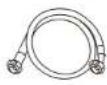 |  |  |
Fig./Img./Abb./Afo./Rys.2
flowchart
graph TD
    A["1: Device selection"] --> B["2: Display with hand"]
    B --> C["3: Display with hand"]
    C --> D["4: Display with hand and switch"]
Fig./Img./Abb./Afb./Rys.3
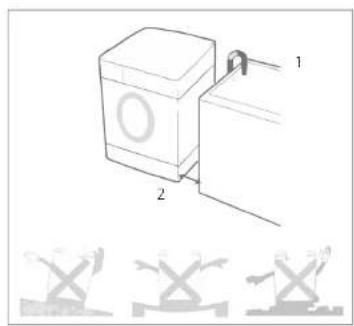
Fig./Img./Abb./Afb./Rys.4
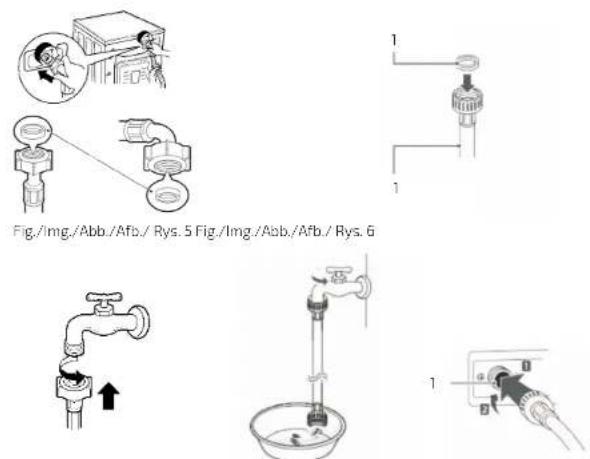
Fig./Img./Abb./Afb./Rys. 7 Fig./Img./Abb./Afb./Rys. 8 Fig./Img./Abb./Afb./Rys. 9
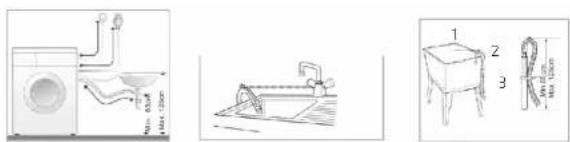
Fig./Img./Abb./Afb./Rys.10
natural_image
Illustration of a washing machine with hand gestures and a magnified view showing the wheel (no text or symbols)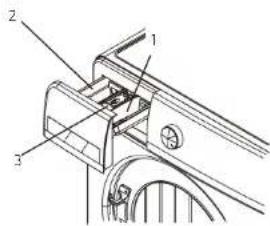
Fig./Img./Abb./Afb./Rys.11 Fig./Img./Abb./Afb./Rys.12
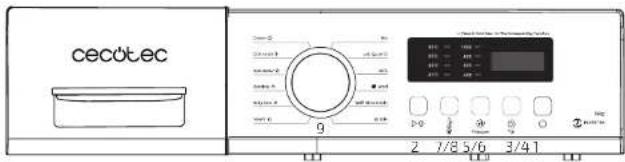
Fig./Img./Abb./Afo./Rys.13
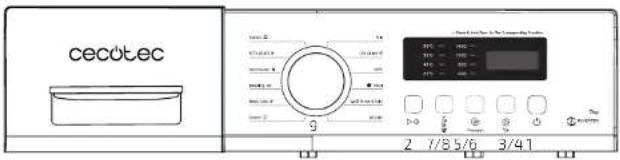
Fig./Img./Abb./Afb./Rys.13.1
- SOMMAIRE
- Cautions during the handling of the appliance
- Installation
- INSTRUCTIONS DE SÉCURITÉ
- Accessories
- BEFORE USE
- Box content
- APPLIANCE INSTALLATION
- Transport bolts
- Removing the transport bolts (Fig. 3)
- ENGLISHENGLISH
- Correct installation (Fig. 4)
- Power socket
- Cleaning up the surroundings
- Electric connection
- Earthing
- Water inlet connection
- Connection of inlet hose and taps
- Fig. 9 key:
- Installing the drain hose
- Fig. 10 key:
- Horizontal adjustment
- Adjusting the adjustable feet
- Vertical adjustment
- Locking and unlocking the door
- Door locking
- Door unlocking
- OPERATION
- Detergent/fabric softener drawer
- - Prewash detergent:
- 2.- Synthetic washing powder:
- 2.- Liquid detergent/bleach:
- Tips on the use of detergents at different temperatures
- Delay start button
- Child lock function
- Speed button
- Pre-wash function
- Temperature button
- Drum cleaning function
- Programmes knob
- Special functions
- - Memory function (not available on all models)
- Adding garments
- Display Fig. 14 and 14.1
- Programmes and functions
- Cotton programme
- Eco 40-60 programme
- Sportswear programme
- Bedding programme
- Baby care programme
- Steam programme
- Mix programme
- Quick 15' programme
- °C programme (only available for model 720 E)
- Wool programme
- Rinse & Spin programme
- Spin programme
- Washing programmes
- Warnings
- Before washing
- Washing labels
- Washing classification
- Degree of soiling (high, medium, light)
- Colour (white, light colours, dark colours)
- Velvet (easy deterioration)
- Note:
- CLEANING AND MAINTENANCE
- Maintenance
- Appliance body
- Door gasket
- Cleaning the detergent drawer
- Fig. 15 key:
- Cleaning the water inlet of the water hose
- Cleaning the water inlet valve
- In case of freezing
- Cleaning of the drain pump filter (Suggestion: once a month)
- Drum cleaning (Suggestion: one a month)
- TROUBLESHOOTING
- Non-faulty conditions
- The door cannot be opened
- A slight odour is produced
- There is too little water when washing and rinsing
- No water inlet
- Water inlet at half
- Water comes out when washing
- Remaining time change
- There is an abnormal noise when spinning
- Washing machine cannot work after a power failure
- TECHNICAL SPECIFICATIONS
- Frequently used programmes
- Bolero DressCode 7150 Inverter A
- Bolero DressCode 7150 Inverter Steel A
- PRODUCT DATA SHEET
- Minimum duration of the guarantee offered by the supplier (b):
- Further information:
- 00975\_Bolero DressCode 7150 Inverter A
- 00977\_Bolero DressCode 7150 Inverter Steel A
- DISPOSAL OF OLD ELECTRICAL AND ELECTRONIC APPLIANCES
- TECHNICAL SUPPORT AND WARRANTY
- COPYRIGHT
- FRANÇAISFRANÇAIS
- PIÈCES ET COMPOSANTS
- INSTALLATION DU PRODUIT
- Réglage horizontal
- INSTALLATIE VAN HET APPARAAT
- Wol programma (Wool)
- PROBLEEMOPLOSSING
- Nlet-foutleve omstandigheden
Brand : CECOTEC
Model : Bolero DressCode 6150
Category : Washing machine