KSH 710 SDS - Saw ATIKA - Free user manual and instructions
Find the device manual for free KSH 710 SDS ATIKA in PDF.


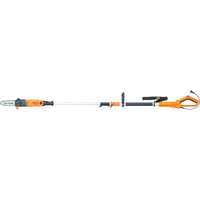
| Product type | Electric pole pruner |
| Brand | ATIKA |
| Model | KSH 710 SDS |
| Rated power | 710 W |
| Supply voltage | 230 V ~ 50 Hz |
| Mains fuse | 10 A delayed |
| Idle speed | 8300 min⁻¹ |
| Chain speed | 13 m/s |
| Chain type | 90JG033X or 90PX033X (3/8” - 1.1 - 33) |
| Guide bar length | 203 mm (effective cutting length 180 mm) |
| Oil tank capacity | 150 ml max. |
| Protection class | II (double insulation) |
| Guaranteed sound power level | 103 dB(A) |
| Sound pressure level | 83 dB(A) |
| Hand-arm vibration | 3.64 m/s² (K=1.5 m/s²) |
| Weight (without accessories, empty tank) | approx. 4.5 kg |
| Intended use | Pruning of tree branches while standing (private use) |
| Required safety equipment | Helmet, goggles, hearing protection, gloves, safety shoes |
| Maintenance and cleaning | Clean after each use, sharpen chain if necessary, automatic lubrication |
| Spare parts | Guide bar, chain, spark plug (not applicable), brushes, etc. – use original parts |
| Repairability | Repairs by the manufacturer or authorized service center |
Frequently Asked Questions - KSH 710 SDS ATIKA
User questions about KSH 710 SDS ATIKA
0 question about this device. Answer the ones you know or ask your own.
Ask a new question about this device
Download the instructions for your Saw in PDF format for free! Find your manual KSH 710 SDS - ATIKA and take your electronic device back in hand. On this page are published all the documents necessary for the use of your device. KSH 710 SDS by ATIKA.
USER MANUAL KSH 710 SDS ATIKA
natural_image
Black and white photo of a Oorsprang tool with metal handle and attached grip (no visible text or symbols)Hochentaster
Original instructions – Safety instructions – Spare parts

Page 15
Perche élagueuse
You may not start to operate the machine until you have read these operating instructions, observed all the instructions given and installed the machine as described!
Contents
| Extent of delivery | 15 |
| Operating times | 15 |
| Symbols operating manual | 15 |
| Symbols on the power pruner | 15 |
| Normal intended use | 16 |
| Residual risks | 16 |
| Safety instructions | 16 |
| - General safety instructions | 16 |
| - Work area safety | 16 |
| - Electrical safety | 16 |
| - Safety of persons | 17 |
| - Power tool use and care | 17 |
| - Service | 17 |
| - Chain saw safety warnings | 17 |
| - General safety instructions | 18 |
| - Electrical safety | 18 |
| Vibrations | 19 |
| Assembly | 19 |
| Before the first start-up | 20 |
| - Chain lubrication | 20 |
| - Charging the oil tank | 20 |
| - Checking the chain lubrication | 20 |
| Start-up | 20 |
| - Clamping of saw chain | 20 |
| - Wearing the shoulder belt | 20 |
| - Setting the working height | 20 |
| - Setting the working angle | 20 |
| - Mains connection | 20 |
| - Mains fuse | 20 |
| - Mounting of the extension cable | 20 |
| - Switching on / off | 21 |
| Working with the power pruner | 21 |
| - Saw backstroke | 21 |
| - How to avoid backstrokes | 21 |
| - General conduct when pruning | 21 |
| - Before sawing | 21 |
| Work instructions (saw techniques) | 22 |
| - Step cut | 22 |
| Maintenance and cleaning | 22 |
| - Maintenance | 22 |
| - Sharpening of saw chain | 22 |
| - Cleaning of guide bar | 22 |
| - Chain wheel | 22 |
| - Cleaning | 23 |
| Transport | 23 |
| Storage | 23 |
| Description of device / spare parts | 23 |
| Possible faults | 24 |
| Technical data | 24 |
| EC Declaration of Conformity | 25 |
| Guarantee | 25 |
Extent of delivery
After unpacking, check the contents of the box
▶ That it is complete
▶ Check for possible transport damage
Report any damage or missing items to your dealer or the manufacturer immediately. Complaints made at a later date will not be acknowledged.
• 1 pre-assembled device unit
• 1 guide bar (1)
- 1 saw chain (2)
• 1 guide bar cover (28)
• 1 front handhold (19)
• Fasteners for front handle
• 1 operating manual
• 1 assembly and operating instruction
• 1 warranty declaration
Operating times
Before initiating the device please observe the provisions pertaining to corresponding laws (regional provisions) for the noise control.
Symbols operating manual
 | Threatened hazard or hazardous situation. Not observing this instruction can lead to injuries or cause damage to property. | |
 | Important information on proper handling. Not observing this instruction can lead to faults. | |
 | User information. This information helps you to use all the functions optimally. | |
 | Assembly, operation and servicing. Here you are explained exactly what to do. | |
   ... ... | Please refer to the attached assembly and operating instruction sheet for references to figure numbers in the text. |  |
Symbols on the power pruner


Carefully read operator's manual and the safety instructions before starting the machine and observe the instructions when operating.
Before starting any repair, maintenance or cleaning work, always switch off the motor and remove the plug from the socket.
When connecting cable is damaged or cut through immediately pull out the power plug.
Wear hardhat, eye and ear protection.






Wear protective gloves.
Wear safety shoes.
Do not expose to rain. Protect against humidity.
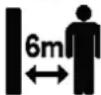
Keep other persons away from the work area. Safety distance at least 6 m.
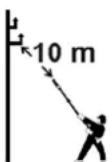
Do not operate the power pruner near cables, power or phone lines. Keep a safety distance of 10 m to overhead power lines when working with the power pruner.
Mind the running direction of the chain links Mind the running direction of the chain links
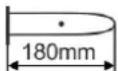
Max. cutting length 180 mm
Machine of the protection class II (double insulated)
This product complies with European regulations specifically applicable to it.
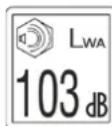
Measured sound power level L_WA 103 dB (A), measured according to regulation 2000/14/EC)
Normal intended use
■ The power pruner is only suitable for cutting branches on standing trees.
■ The power pruner is not suitable to cut down trees, saplings or shrubs.
■ Do not use the power pruner for sawing building materials and plastics.
■ The power pruner is only suitable for private use in gardens and allotments.
■ The power pruner is not suitable for forestry works (pruning branches in the forest). The necessary safety of the operator is not guaranteed by the cable joint.
■ The intended usage also includes compliance with the operating, servicing and repair conditions prescribed by the manufacturer and following the safety instructions included in the instructions.
■ Any other use is deemed not to be intended use. The manufacturer is not liable for any type of damage resulting from this: the user bears the sole risk.
Residual risks
Even if used properly, residual risks can exist even if the relevant safety regulations are complied with due to the design determined by the intended purpose.
Residual risks can be minimised if the “Safety instructions” and the “Normal intended use” as well as the whole of the operating instructions are observed.
Observing these instructions, and taking proper care, will reduce the risk of personal injury or damage to the equipment.
■ Risk of backstrokes when touching the guide bar tip with a hard object.
■ Risk of injuries of fingers and hands by the tool (saw chain).
■ Injury by catapulted workpiece parts.
■ Electric shock.
■ Risk from electricity, by using non-standard electrical connections.
■ Touching live parts of opened electrical components.
■ Impairment of hearing when working on the machine for longer periods of time without ear protection.
Risk of fire.
In addition, in spite of all the precautionary measures taken, non-obvious residual risks can still exist.
Safety instructions
General Power Tool Safety Warnings
WARNING
Read all safety warnings and all instructions. Failure to follow the warnings and instructions may result in electric shock, fire and/or serious injury.
Save all warnings and instructions for future reference.
The term "power tool" in the warnings refers to your mains-operated (corded) power tool or battery-operated (cordless) power tool.
1) Work area safety
a) Keep the work area clean and well lit. Cluttered or dark areas invite accidents.
b) Do not operate power tools in explosive atmospheres, such as in the presence of flammable liquids, gases or dust. Power tools create sparks which may ignite the dust or fumes.
c) Keep children and bystanders away while operating a power tool. Distractions can cause you to lose control.
2) Electrical safety
a) Power tool plugs must match the outlet. Never modify the plug in way. Do not use any adapter plugs with earthed (grounded) power tools. Unmodified plugs and matching outlets will reduce risk of electric shock.
b) Avoid body contact with earthed or grounded surfaces, such as pipes, radiators, ranges and refrigerators. There is an increased risk of electric shock if your body is earthed or grounded.
c) Do not expose power tools to rain or wet conditions. Water entering a power tool will increase the risk of electric shock.
d) Do not abuse the cord. Never use the cord for carrying, pulling or unplugging the power tool. Keep cord away
from heat, oil, sharp edges or moving parts. Damaged or entangled cords increase the risk of electric shock.
e) When operating a power tool outdoors, use an extension cord suitable for outdoor use. Use of cord suitable for outdoor use reduces the risk of electric shocks.
f) If operating a power tool in a damp location is unavoidable, use a residual current device (RCD) protected supply. Use of an RCD reduces the risk of electric shocks.
3) Personal safety
a) Stay alert, watch what you are doing and use common sense when operating a power tool. Do not use a power tool while you are tired or under the influence of drugs, alcohol or medication. A moment of inattention while operating power tools may result in serious personal injury.
b) Use personal protective equipment. Always wear eye protection. Protective equipment such as dust mask, non-skid safety shoes, hard hat or hearing protection used for appropriate conditions will reduce personal injuries.
c) Prevent unintentional starting. Ensure the switch is in the off-position before connecting to power source and/or battery pack, picking up or carrying the tool. Carrying power tools with your finger on the switch or energising power tools that have the switch on invites accidents.
d) Remove any adjusting key or wrench before turning power tool on. A wrench or a key left attached to a rotating part of the power tool may result in personal injury.
e) Do not overreach. Keep proper footing and balance at all times. This enables better control of the power tool in unexpected situations.
f) Dress properly. Do not wear loose clothing or jewellery. Keep your hairs, clothing and gloves away from moving parts. Loose clothes, jewellery or long hair can be caught in moving parts.
g) If devices are provided for the connection of dust extraction and collection facilities, ensure these are connected and properly used. Use of dust collection can reduce dust related hazards.
4) Power tool use and care
a) Do not force the power tool. Use the correct power tool for your application. The correct power tool will do the job better and safer at the rate for which it was designed.
b) Do not use the power tool if the switch does not turn it on and off. Any power tool that cannot be controlled with the switch is dangerous and must be repaired. Power tool that cannot be controlled with the switch is dangerous and must be repaired.
c) Disconnect the plug from the power source and/or the battery pack from the power tool before making any adjustments, changing accessories, or storing power tool. Such preventive safety measures reduce the risk of starting the power tool accidentally.
d) Store idle power tools out of the reach of children and do not allow persons unfamiliar with the poser tool or these instructions to operate the power tool. Power tools are dangerous in the hands of untrained users.
e) Maintain power tools. Check for misalignment or binding of moving parts, breakage of parts and any other condition that may affect the power tools operation. If damaged, have the power tool repaired before use. Many accidents are caused by poorly maintained power tools.
f) Keep cutting tools sharp and clean. Properly maintained cutting tools with sharp cutting edges are less likely to bind and are easier to control.
g) Use the power tool, accessories and tool bits etc. in accordance with these instructions, being into account the working conditions and the work to be performed. Use of the power tool for operations different from those intended could result in a hazardous situation.
5) Service
a) Have your power tool serviced by a qualified repair person using only identical replacement parts. This will ensure that the safety of the power tool is maintained.
Power pruner safety warnings:
- Keep all parts of the body away from power pruner when the chain saw is operating. Before you start the power pruner, make sure the saw chain is not contacting anything. A moment of inattention while operating power pruner may cause entanglement of your clothing or body with the saw chain.
- Always hold the power pruner with your right hand on the rear handle and your left hand on the front handle. Holding the power pruner with a reversed hand configuration increases the risk of personal injury and should never be done.
- Hold the power tool on the insulated handle surfaces as the saw chain may come into contact with the unit's mains supply cable. A contact of the saw chain with a live conductor may apply hazardous voltage to metallic parts of the unit and cause electric shock.
- Wear safety glasses and hearing protection. Further protective equipment for head, hands, legs and feet is recommended. Adequate protective clothing will reduce personal injury by flying debris or accidental contact with the saw chain.
- Do not operate a power pruner in a tree. Operation of a power pruner while up in a tree may result in personal injury.
- Always keep proper footing and operate power pruner only when standing on fixed, secure and level surface. Slippery or unstable surfaces such as ladders may cause a loss of balance or control of the power pruner.
- When cutting a limb that is under tension be alert for spring back. When the tension in the wood fibres is released the spring loaded limb may strike the operator and/or throw the power pruner out of control.
- Use extreme caution when cutting brush and saplings. The slender material may catch the saw chain and be whipped toward you or pull you off balance.
- Carry the power pruner by the front handle with the chain saw switched off and away from your body. When transporting or storing the power pruner always fit the guide bar cover. Proper handling of the power pruner will
reduce the likelihood of accidental contact with the moving saw chain.
- Follow instructions for lubricating, chain tensioning and changing accessories. Improperly tensioned or lubricated chain may either break or increase the chance for kickback.
- Keep handles dry, clean and free from oil and grease. Greasy, oily handles are slippery causing loss of control.
- Cut wood only. Do not use power pruner for purposes not intended. For example: do not use power pruner for cutting plastic, masonry or non-wood building materials. Use of the power pruner for operations different than intended could result in a hazardous situation.
General Safety Warnings
Before starting this device, read and keep to the following advice. Also observe the preventive regulations of your professional association and the safety provisions applicable in the respective country, in order to protect yourself and others from possible injury.
Keep these safety instructions (operating instructions) always together with the power pruner.
Give or lend the power pruner only to persons who are familiar with the power pruner and its operation. Pass the safety instructions on to all persons who work with the machine.
⚠️ Repair works on the device must be carried out by the manufacturer or by companies appointed by the manufacturer respectively.
- Persons who work with the power pruner must exhibit on request a training certificate appropriate to the intended use and be familiar with the use of the power pruner and personal protective equipment.
- Be attentive. Be careful what you do. Behave sensibly when working. Do not use the device when you are tired or under the influence of drugs, alcohol or medicaments. One moment of carelessness when using the device can result in serious injuries.
■ Make yourself familiar with the equipment before using it, by reading and understanding the operating instructions.
- Do not use the machine for unsuitable purposes (see "Normal intended use").
- Do not modify the device or parts of the device respectively.
- Supervise children to make sure they do not play with the device.
- Do not allow other persons, especially children, to touch the tool or the cable.
- Persons under the age of 18 may not operate the power pruner.
- The operator is responsible to third persons within the area of operations.
- The operator is responsible for accidents or risks which occur to other persons or their properties.
■ Before leaving the power pruner for work breaks bring it in a safe condition (cover the chain guard) and put it on a place where nobody is endangered. Secure the power pruner against unauthorized access.
- Never work without suited protective equipment.
- Do not wear loose-fitting clothes or jewellery; they could be caught by movable parts.
— Hairnet in case of long hair
– certificated hardhat
- Visor
- ear protection
- Protective jacket with striking colour
– Cut-proof trousers and gloves
- Anti-slipping cut-proof boots (safety shoes) with steel-toes
- First-aid material
– Mobile telephone if required
- Switch the machine off and remove the mains plug from the socket when
- Contacting the power pruner with soil, stones, nails or other foreign substances
Check immediately chain and guide bar.
– carrying out repair works - maintenance and cleaning
- Eliminating faults.
– cut through connection cables - Checking connecting lines, whether these are knotted or damaged.
- Transport
- clamping again the chain
-
chain change
– Leaving the machine (also during temporary interruption) -
Protect yourself against an electric shock. Avoid body contact with grounded parts (e.g. pipes, heating apparatus, cookers, fridges etc.)
■ Maintain your power pruner with care:
- Comply with the maintenance instructions and the advices for lubrication and for the tool change.
- Keep your tools sharp and clean in order to be able to work better and safer.
- Keep the handholds dry and free from resin, oil and grease.
■ Do not expose the power pruner to rain.
- Check the machine for possible damage:
- Before further use of the machine the safety devices must be checked carefully for their proper and intended function. Only operate the machine with complete and correctly attached safety equipment and do not alter anything on the machine that could impair the safety.
- Check whether movable parts function perfectly and do not stick or whether parts are damaged. All parts must be correctly installed and fulfil all conditions to ensure perfect operation of the machine.
- Damaged guards and parts must be properly repaired or exchanged by a recognized, specialist workshop; insofar as nothing else is stated in the instructions for use.
- Damaged or illegible safety labels should be replaced immediately.
■ Do not allow any tool to be plugged in!
Before switching on, check always that all tools are removed.
Electrical safety
■ Design of the connection cable according to IEC 60245 (H 07 RN-F) with a core cross-section of at least
- 1.5 ~mm^2 for cable lengths up to 25 ~m
-
2.5 ~mm^2 for cable lengths over 25m
-
Long and thin connection lines result in a potential drop. The motor does not reach any longer its maximal power; the function of the device is reduced.
- Plugs and coupler outlets on connection cables must be made of rubber, non-rigid PVC or other thermoplastic material of same mechanical stability or be covered with this material.
- The connector of the connection cable must be splash-proof.
- When running the connection line observe that it is not squeezed, bended and the plug connection does not get wet.
- Do not use the connection cable for purposes for which it is not meant. Protect the connection cable against heat, oil and sharp edges. Do not use the connection cable to pull the plug from the socket.
■ Wind off completely the cable when using a cable drum. - Regularly check the connection cables and replace them if they are damaged.
■ Do not use any defective connection cables. - When working outdoors, only use connection cables especially approved and appropriately labelled for outdoor use.
■ Do not set up any provisional electrical connections.
■ Never bypass protective devices or deactivate them. - Only hook up the machine by means of a fault-current circuit breaker (30 mA).
The electrical connection or repairs to electrical parts of the machine must be carried out by a certified electrician or one of our customer service points. Local regulations – especially regarding protective measures – must be observed.
⚠️ Damaged mains leads must be replaced by the manufacturer or one of their service workshops or a similar qualified person to prevent dangers.
Do not carry out repair operations on the machine other than those described in section "Maintenance" but contact the manufacturer or authorized customer service centres.
⚠️ Use only original spare parts. Accidents can arise for the user through the use of other spare parts. The manufacturer is not liable for any damage or injury resulting from such action.
Vibrations
Hand arm vibration a_h = 3.64 m/s^2
Measuring uncertainty K_hd = 1.5 m/s^2
The indicated vibration emission level has been measured according to a standardised test method and can be used to compare power tools.
It can also be used for an initial estimate of the vibration exposure.
⚠ The actual vibration emission level during the use of the machine may differ from that indicated in the operating instructions or indicated by the manufacturer.
This may be caused by the following factors to be minded before and during the use:
– Proper use of the machine
– Correct cutting or machining of material
– Proper condition of the machine for use
— Use of the correct and sharp cutting tool
– Handles and optional anti-vibration handles properly mounted on the machine body
When you feel uncomfortable or notice discoloration of skin on your hands during the use of the machine, stop working immediately. Observe sufficient break times to rest. Failure to have sufficient break times may result in a hand-arm vibration syndrome.
The extent of exposure depending on the type of work or machine use should be estimated and appropriate breaks taken. In this way, the extent of exposure can be considerably reduced over the entire work time. Minimise the risk caused by vibrations. Maintain this machine according to the instructions in the manual. If you intend to use this machine frequently, contact your local authorised dealer and purchase anti-vibration accessories if required. Avoid the use of this machine at temperatures under 10^ C. Create a work schedule in order to minimise vibration exposure.
Assembly
⚠️ Connect the power pruner to the power supply system only after having finished the complete assembly.
Assembling the power pruner
2 Slide the telescope rod (7) into the holder (8) of the telescope rod (11) as shown.
→ Tighten the screw (9).
Attaching the front handle
3 Put the bushing (21) in the handle (19).
4 Push the handle with the bushing on the lower telescope rod (7) and fasten it with the hexagon screw (22) and nut (23).
Installing the guide bar and the saw chain
Risk of injury! Wear protective gloves when working on the guide bar and the saw chain.
5 Place the power pruner on an even surface as shown.
→ 5/6 Remove the cover (4) by loosening the fastening screw (3).
→ 7 Insert the saw chain (2) into the circular guide slot of the guide bar (1).
⚠️ 6 Attend to the correct running direction of the chain links.
⚠️ Take care that the clamping plate (25) rests on the guide bar (1) as shown.
8 Put on the guide bar (1). The guide bar retainers (a) must reach into the slot of the guide rail,
When assembling, pay attention that the chain links are lying correctly within the guide slot and on the chain wheel (24).
9 Remount the cover (5) and tighten the fastening screw (3) hand-tight.
Clamping the saw chain as described in section "Clamping of saw chain".
Before the first start-up
Chain lubrication
The power pruner is not delivered filled with saw chain adhering oil.
① Any use without chain saw oil may result in damage of the saw chain and guide bar.
The durability and cutting power of the chain depends on the optimal lubrication. During operation the saw chain is automatically wetted with oil.
Charging the oil tank
Stop the engine and wear protective gloves. Avoid eye and skin contact.
→ 10 Put the power pruner on a suitable base.
10 Unscrew the oil tank lock (20).
Fill the oil tank with bio-degradable chainsaw oil (order no. 400144). For easier filling use a funnel.
When filling observe that no dirt reaches the oil tank.
10 Screw on the oil tank lock (20) again.
Never use recycled oil or used oil. The guarantee expires when using oil which is not allowed for such devices.
Checking the chain lubrication
⚠️ Never operate the power pruner without functioning chain lubrication.
Check the function of the automatic chain lubrication by switching on the power pruner and holding it with the spike in direction of a carton or paper on the ground.
⚠️ Do not get in contact with the ground with the chain. Keep a safe distance of 20 cm.
If an increasing oil track is caused when checking it the oil automatic works faultless.
If there is no oil track despite full oil tank
6 Clean the oil flow channel (26) and
17 clean the chain clamping boring (27)
If this is not successful please contact the customer service.
Start-up
- Before each setting or checking the device pull out power plug.
• In order to avoid injuries wear protective gloves.
Clamping of saw chain
Check the saw chain tension
→ before start of work
→ after the first steps
→ during sawing regularly all 10 minutes
Only with a correct clamped saw chain and a sufficient lubrication you can influence the durability.
i Please observe the following:
→ a new saw chain must be reclamped more often.
→ in case of heating of chain to operating temperature it expands and needs to be reclamped.
⚠️ After finishing the sawing works release tension of saw chain as in case of cooling too high tensions would emerge in the saw chain.
if chain flakers or comes out of the guide clamp it again immediately.
Clamping of saw chain
9 Place the power pruner on an even surface as shown.
9 Loosen the fastening screw (3) by max. 1 turn.
9 Turn the chain tension ring (12) stepwise clockwise until the correct chain tension is reached.
① The fastening screw (3) turns with it; possibly it must be released again during the clamping process.
11 The saw chain is correctly stretched when it can be lifted in the centre of the chain guide by approx. 3–4 mm.
9 Turn the chain tension ring (4) anti-clockwise when the saw chain is stretched too much.
Check that the chain links are positioned correctly in the guiding groove of the guide bar.
9 Refasten the fastening screw with the hand.
Wearing the shoulder belt
13 Place the belt (17) over the shoulder and adjust the belt length so that the belt attachment (b) is positioned at hip level. The quick acting closure (18) is located at the front.
The quick acting closure can be opened with the left hand.
Setting the working height
14 Loosen the clamping screw (10); you can then pull the two telescope rods (7, 11) apart or push them together.
Setting the working angle
15 / 16 Press the angle adjustment (6) and swivel the device head into the desired position.
i Mains connection
■ Compare the voltage given on the machine model plate e.g. 230 V with the mains voltage and connect the machine to the relevant and properly earthed plug.
① Use a shockproof plug, mains voltage 230 V with residual current circuit breaker (FI switch 30 mA).
■ Only use extension cables with sufficient core cross-section.
i Mains fuse
10 A inert
Mounting of the extension cable
12 Plug the female connector of the extension cable on the male connector of the device.
12 Thread the extension cable through the pull relief device (14) as a loop and hang it up.
12 Make sure that the extension cable has sufficient play and is routed toward the rear away from the power pruner, outside of the range of the saw chain and material to be sawed.
Switching on / off
Do not use any device where the switch can not be switched on and off. Damaged switches must be repaired or replaced immediately by the customer service.
Securely support the power pruner when switching it on and hold it with both hands. Chain and guide bar must stand free.

Switching on
12 Push and hold automatic trip switch (12). Then operate the On/Off switch (13). Now, you can release the throttle automatic trip switch.

Switching off
→ 12 Release On/Off switch.
Working with the power pruner
⚠ Saw backstroke
What is saw backstroke? Saw backstroke is the sudden strike upwards or backwards of the running power pruner in direction of the operator.
This happens when
- the guide bar tip gets in contact with the sawing material (unintended) or other hard objects.
— the saw chain is jammed at the guide bar tip.
The power pruner reacts uncontrolled and frequently causes heavy injuries of the operator.
How to avoid saw backstroke?
- For better control saw with the lower edge of the guide bar. Place the power pruner as horizontally as possible when contacting wood.
— Never saw with the guide bar tip. - Sawing with the upper guide bar edge may cause a saw backstroke if the saw gets jammed or hits a hard object in the wood.
— Start cutting only with running saw chain.
— Never switch on the machine with the saw chain put on.
— Always hold the power pruner firmly with both hands.
— Only work with correctly sharpened and clamped saw chain.
General conduct when pruning
■ Take into consideration environmental influences:
- Do not work on snow, ice or recently peeled wood – slip hazard.
-
Do not work under insufficient light conditions (e.g. fog, rain, snow flurry or twilight). You cannot see any more details within the falling area – risk of accident.
-
Delay the work in case of disadvantageous weather (rain, snow, ice, wind) – increased risk of accidents!
- Do not use the power pruner near inflammable liquids or gases.
- Keep a safety distance of 10 m to overhead power lines.
-
Do not use the power pruner in a humid or wet environment.
-
Plan an escape route from falling branches in advance. This escape route must be free from obstacles to ensure retreating without danger.
■ Position yourself outside the range of falling branches.
■ Make sure that someone is within calling distance in case of an accident. - Keep other persons away. The safety distance is 2.5-times the length of the branch to be cut, but at least 6 m. ➞ 18
- Avoid abnormal posture. Keep at any time the balance. Do not work with the upper part of the body leaned forward.
- Operate the power pruner only with safe standing position. Hold the power pruner slightly to the right of the own body.
- Hold the power pruner always firmly with both hands, left hand on the front handle (19) and right hand on the rear handle (16). Always use the carrying strep supplied.
- Frequently change the working position to prevent a one-sided work position.
- Immediately stop working when you feel unwell (e.g. headache, dizziness, nausea, etc.). Otherwise there is an increased risk of accidents. Observe sufficient break times to rest.
■ Never work
– with stretched arms
— standing on a ladder, a staging or a tree.
■ Do not attempt to hit an already existing cut.
- Do not use the power pruner for lifting or moving of wood.
- Saw splintered wood with care. There is risk of injury by wood pieces carried away.
■ Make sure that the wood is free of foreign object (nails etc).
- Do not overload the machine! You work better and safer in the given performance range.
- Be careful at the end of a sawing cut. As soon as the power pruner leaves the wood the force of weight changes. There is risk of accident for legs and feet.
- Remove the power pruner only with running saw chain out of the cut.
- If the saw chain gets jammed in the wood, stop it immediately and remove the mains plug from the socket. Use a wedge to free the guide bar.
- Do not use any cracked saw chains or such that have changed their shape.
- Never touch wire fences or the ground with the running saw chain.
- Switch off the power pruner between the cuts when several cuts are carried out.
■ Make breaks when sawing so that the engine can cool down.
Before sawing
Carry out the following checks before the initiation and regularly during the sawing process:
→ Has the power pruner been assembled completely and properly?
→ Is the power pruner in good and safe condition?
→ Is the oil tank filled?
Check the oil level on a regular basis. Replenish immediately oil when oil level indicates „MIN“ so that the saw chain does not run dry.
→ Is saw chain clamped correctly?
Observe the points in paragraph „Clamping saw chain“.
→ Is saw chain sharpened correctly?
Use only well sharpened saw chains as edgeless saw chains increase not only the risk of backstrokes but also charge the motor.
→ Is handhold clean and dry – free of oil and resin?
→ Is workplace free of risks to stumble?
→ Do you wear the required protective equipment?
→ Did you read and understand all advices?
Is the power plug and the extension cable in good condition?
⚠️ Do not use any defective cables.
→ Is the extension cable correctly placed? ➕ 12
Work instructions (saw techniques)
■ Do not cut thin branches or bosks. The power pruner is not suitable for those works.
- Cut larger branches into several sections to avoid splintering and breaking.
■ Do not cut any branches where their diameter is greater than the cutting length of the device.
■ Do not stand directly underneath a branch to be cut.
■ Watch out especially for falling branches.
■ Also look out for branches snapping back.
Always wear a helmet in order to protect yourself against perches falling down.
Step cut ➕ 19
→ For horizontal branches without being top heavy
The branch section falls down in a controlled manner without tipping over.
① Set the first cut from below, approx. one third of the branch diameter.
② The second cut is made on the same level as the first cut or moved further toward the inside (negative breaking step).
③ Remove the remaining branch section.
Attention: Step cut error! ➕ 20
If the cut is made offset toward the outside (positive breaking step) and exceeded, the power pruner can be pulled along.
Maintenance and cleaning

Before each maintenance and cleaning work
- switch off device
— Wait for standstill of the power pruner
— Pull out power plug
Maintenance and repair work other than those described in this chapter is only allowed to be carried out by service staff.
For maintaining and cleaning, removed security devices must unconditionally be mounted properly and proved again.
Use only original parts. Other parts can result in unexpected damages and injuries.
Maintenance
⚠ In order to avoid possible injuries wear gloves.
To guarantee a long and reliable usage of the power pruner carry out the following maintenance works regularly.
Check the power pruner for
– loose or damaged saw chain
- loose fastenings
— wear, especially chain, guide bar and chain wheel
- worn or damaged components
- correct assembly and faultless covers and protective devices.
Necessary repair works or maintenance have to be carried out before using the power pruner.
Saw chain and guide bar
Saw chain and guide bar are exposed to a great extent of wearing. Replace the saw chain and the guide bar without any delay if their proper function is no longer ensured. ➞ "Installing the guide bar and the saw chain".
Sharpening of saw chain

You can only work safely and well with a sharp and clean saw chain. Damaged or incorrectly sharpened saw chains increase the risk of kickbacks.
The saw chain has to be sharpened if
instead of wood shavings only saw dust is ejected
→ you have to press the power pruner through the wood during cutting
For sharpening a saw chain some expertise is necessary. The saw chain must be regrinded in a specialised shop.
You can also sharpen your saw chain yourself by using our electric sharpener KSG 220 A (article-no.: 302360).
Cleaning of guide bar
→ Regularly inspect and clean
21 the guide slot (c) of the guide bar and
→ 17 the clamping plate (25) and the chain clamping boring (27)
→ Remove any burr using a flat file and emery paper.
⇒ Turn round the guide bar after each chain exchange/sharpening to avoid single-side wearing.
① Immediately replace a damaged guide bar.
Chain wheel
The demand of the chain wheel (24) is particularly great. Check regularly the teeth of the chain wheel for wear or damages.
A worn or damaged chain wheel reduces the durability of the saw chain and should therefore immediately be exchanged by the customer service.
Cleaning
Clean the power pruner carefully after each application so that the faultless function is kept.
→ Clean the case with a soft brush or a dry cloth.
⚠️ Water, solvents and polishing agents shall not be applied.
→ Check that the ventilation slots for the motor cooling are free (risk of overheating).
→ 9 After a longer operation period (1 – 3 hours) remove the cover (5), the guide bar (1) and the chain (2) and clean them with a brush.
⇒ If heavily contaminated, clean the device using a commercial chain cleaner.
→ 6 Remove all adhering substances with a brush from the chain wheel (24) and guide bar retainers (a).
→ 6 Clean the oil flow canal (26) with a clean cloth or a brush.
Transport
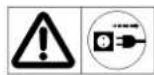
Remove mains plug before each transport.
⚠️ Transport the power pruner only with the chain protection put on.
Storage
■ Store unused equipment in a dry, locked place out of the reach of children.
■ Before a longer period of storage carry out the following to extend the power pruner's service life and ensure an easy operation:
→ thoroughly clean the device
→ Remove the oil from the oil tank.
■ Some chain oils tend to encrustations after a longer period. For this reason the oil system should be flushed before a longer storing with a chain saw cleaner. Fill the cleaner up to the middle (approx. 50 ml) into the oil tank. Close the tank. Switch on the power pruner without assembled guide bar and chain until the complete cleaner has left the oil opening of the power pruner.
⇒ Put the saw chain for a short time into an oil bath and enwrap it afterwards in an oil paper.
■ Put the chain guard in place.
Description of device / spare parts ➕ 1
| Pos. | Order-No. | Denomination |
| 1 | 364447 | Guide bar (sword) |
| 2 | 364406 | Saw chain |
| 2 | 364437 | Saw chain |
| 3 | Fastening screw | |
| 4 | Chain tension ring | |
| 5 | 364475 | Cover |
| 6 | Angle adjustment | |
| 7 | Upper telescope rod | |
| 8 | 364444 | Adapter |
| 9 | 364408 | Holding screw - Adapter |
| 10 | Holding screw - | |
| 11 | Lower telescope rod | |
| 12 | Trip switch | |
| 13 | On/Off switch | |
| 14 | Cable strain relief | |
| 15 | Apparatus cable with plug |
| Pos. | Order-No. | Denomination |
| 16 | Rear handle | |
| 17 | 364409 | Carrying strap |
| 18 | Quick acting closure | |
| 19 | 364410 | Front handhold |
| 20 | 364413 | Oil tank cap |
| 21 | 364417 | Bushing ➕ 3 |
| 22 | 364415 | Hexagonal screw M 6 x 65 |
| 23 | 364416 | Hexagonal nut M6 |
| 24 | 364414 | Chain wheel ➕ 6 |
| 25 | 364476 | Clamping plate ➕ 7 |
| 26 | Oil flow canal ➕ 6 | |
| 27 | Chain clamping bore ➕ 17 | |
| 28 | 364412 | Guide bar cover (scabbard) |
| 29 | 364404 | Safety label |
| 30 | 364448 | Carbon brush set (without picture) |
| 31 | 400144 | Saw chain oil 1 l (without picture) |
Possible faults


Before each fault elimination:
- switch off device
— Wait for the power pruner to come to a standstill
— Pull out power plug

After each fault clearance, put into operation and recheck all security installations.
| Fault | Possible cause | Remedy |
| Power pruner does not start after switching on | no powerExtension cable damagedMains plug, motor or switch defect | Check power supply, power outlet, fuse protectionCheck extension cable, exchange defect cable immediatelyHave motor or switch checked by an approved electrician or replaced by original spare parts |
| Power pruner works with interruptions | external loose connectioninternal loose connectionON / OFF switch defective. | Contact the customer service |
| Power pruner picks, vibrates or does not saw correctly | Chain edgelessChain wornChain tensionChain not assembled correctly (teeth face to wrong direction) | Chain must be regrinded or exchangedExchange chainCheck and adjust chain tensionAssemble chain again |
| Power pruner does not work with full power | Extension cable too long, or cross-section too small.Socket too far from mains supply. | Only use extension cables with sufficient core cross-section.Use power outlet which is nearer within the working area |
| Saw chain gets hot | no oil in the tankoil flow canal blockedchain tension too highChain edgeless | Refill oilClean oil flow canalAdjust chain tensionChain must be regrinded or exchanged |
| No saw chain lubrication | no oil in the tankoil flow canal blocked | Refill oilClean oil flow canal |
Technical data
Year of construction see last page
Motor rating P_1 710 W
Mains voltage 230 V
Mains frequency 50 Hz
Mains fuse 10 A inert
No-load speed of the sprocket 8300 min -1
Saw chain speed 13 m/s
Oil tank volume max. 150 ml
Protection class II /
Saw chain 90JG033X, alternative 90PX033X (3/8" - 1.1 - 33)
Guide bar 084LNE A041 → 203 mm (8")
Cutting length 180 mm
Measured sound power level L_WA 101.9 dB (A) (measured according to regulation 2000/14/EC)
Guaranteed sound power level L_WA 103 dB (A) (measured according to regulation 2000/14/EC)
Measuring uncertainty K_WA 0.31 dB (A)
Sound pressure level L_PA 83 dB (A) (according to regulation 2000/14/EC)
Measuring uncertainty K_PA 3.0 dB (A)
Hand arm vibration a_vhw 3.64 m/s 2
Measuring uncertainty K 1.5 m/s ^4
Weight without cutting assembly and with empty oil tank approx. 4.5 kg
EC Declaration of Conformity
No. (S-No.): 16581
according to EC directive: 2006/42/EC
We,
ATIKA GmbH
herewith declare under our sole responsibility that the product
Hochentaster (Power Pruner) type KSH 710 SDS
Serial number: 000001 - 030000
is conform with the above mentioned EC directives as well as with the provisions of the guidelines below:
2014/30/EU, 2000/14/EC and 2011/65/EU.
Following harmonized standards have been applied:
EN 60745-1:2009+A11:2010; EN ISO 11680-1:2011; EN 62233:2008; EN55014-1:2006+A1:2009;
EN55014-2:1997+A1:2001+A2:2008; EN61000-3-2:2006+A1:2009/+A2:2009; EN61000-3-3:2008; EN ISO 3744; ISO 11201
Conformity assessment procedure: 2000/14/EC - Appendix V.
Measured sound power level L_WA 101.9 dB (A).
Guaranteed sound power level L_WA 103 dB (A).
Duly authorised person for the compilation of technical documents:
ATIKA GmbH – Technical department – Josef-Drexler-Str. 8 - 89331 Burgau – Germany
i.A.
Burgau, 01.06.2016

Guarantee
Please observe the enclosed terms of guarantee.

89331 Burgau – Germany
Conformity assessment procedure 2000/14/UE – Appendix V
89331 Burgau – Germany
natural_image
Black-and-white photo of a person using a tool to cut a tree trunk, surrounded by tiled roofs and branches (no visible text or symbols)D Baujahr
GB Year of construction
F Année de construction
BG година на производство
CZ Rok výroby
E Año de fabricación
Gyártási év
HR Godina gradnje