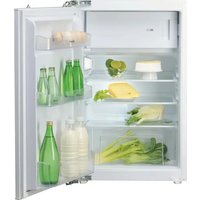
KSI 9GF3E - Freezer BAUKNECHT - Free user manual and instructions
Find the device manual for free KSI 9GF3E BAUKNECHT in PDF.


| Product type | Freezer |
| Brand | Bauknecht |
| Model | KSI 9GF3E |
| Height with metal lid | 875 - 883 mm |
| Climate class | SN, N, ST, T |
| Refrigerant | R600a (isobutane) |
| Power supply | 220-240 V ~ 50 Hz (estimate) |
| Main functions | Super freeze, Super cool, Standby mode, Open door alarm |
| Interior lighting | LED |
| Refrigerator defrosting | Automatic |
| Freezer defrosting | Manual |
| Temperature adjustment | Electronic by button |
| Included accessories | Ice cube tray, door bins, shelves, vegetable drawer |
| Maintenance | Regular cleaning with baking soda, brush condenser 2 times/year |
| Safety instructions | Do not damage the refrigeration circuit, do not use mechanical tools to defrost |
| Spare parts availability | 10 years after the last unit of the model |
Frequently Asked Questions - KSI 9GF3E BAUKNECHT
User questions about KSI 9GF3E BAUKNECHT
0 question about this device. Answer the ones you know or ask your own.
Ask a new question about this device
Download the instructions for your Freezer in PDF format for free! Find your manual KSI 9GF3E - BAUKNECHT and take your electronic device back in hand. On this page are published all the documents necessary for the use of your device. KSI 9GF3E by BAUKNECHT.
USER MANUAL KSI 9GF3E BAUKNECHT
Thank you for choosing this product.
This user manual contains important information on safety and instructions intended to assist you in the operation and maintenance of your appliance.
Please take the time to read this user manual before using your appliance and keep this book for future reference.
| Icon Type Meaning | |
| 警告 | WARNING Serious injury or death risk |
| RISK OF ELECTRIC SHOCK Dangerous voltage risk | |
| FIRE Warning; Risk of fire / flammable materials | |
| CAUTION Injury or property damage risk | |
| IMPORTANT Operating the | system correctly |
CONTENTS
1 SAFETY INSTRUCTIONS 4
1.1 IMPORTANT TO BE READ AND OBSERVED. 4
2 DESCRIPTION OF THE APPLIANCE 15
2.1 Dimensions 16
3 USING THE APPLIANCE 17
3.2 Operating your Fridge 18
3.2.1 Temperature Set Button 18
3.2.2 Temperature Settings 18
3.2.3 Super Freeze Mode 18
3.2.4 Super Cooling Mode 18
3.2.5 Stand-By Mode 18
3.2.6 Door Open Alarm Function 18
3.3 Temperature SettingsWarnings 18
3.1 Display and Control Panel 18
3.4 Accessories 19
3.4.1 Ice Tray (In some models) 19
3.4.2 The Fresh Dial (In some models) 19
4 FOOD STORAGE 19
4.1 Refrigerator Compartment 19
4.2 Freezer Compartment 21
5 CLEANING AND MAINTENANCE 23
5.1 Defrosting 23
6SHIPMENT AND REPOSITIONING 25
6.1 Transportation and Changing Positioning 25
7 BEFORE CALLING AFTER-SALES SERVICE 25
8 TIPS FOR SAVING ENERGY 26
9 TECHNICAL DATA 26
10 INFORMATION FOR TEST INSTITUTES 27
11 CUSTOMER CARE AND SERVICE 27
1 SAFETY INSTRUCTIONS
1.1 IMPORTANT TO BE READ AND OBSERVED.
Before using the appliance, read these safety instructions. Keep them nearby for future reference. These instructions and the appliance itself provide important safety warnings, to be observed at all times. The manufacturer declines any liability for failure to observe these safety instructions, for inappropriate use of the appliance or incorrect setting of controls.
Very young children (0-3 years) should be kept away from the appliance. Young children (3-8 years) should be kept away from the appliance unless continuously supervised. Children from 8 years old and above and persons with reduced physical, sensory or mental capabilities or lack of experience and knowledge can use this appliance only if they are supervised or have been given instructions on safe use and understand the hazards involved. Children must not play with the appliance. Cleaning and user maintenance must not be carried out by children without supervision.
Children aged from 3 to 8 years are allowed to load and unload refrigerating appliances.
PERMITTED USE
CAUTION: The appliance is not intended to be operated by means of an external switching device, such as a timer, or separate remote controlled system.
This appliance is intended to be used in household and similar applications such as: staff kitchen areas in shops, offices and other working environments; farm
houses; by clients in hotels, motels, bed & breakfast and other residential environments.
This appliance is not for professional use. Do not use the appliance outdoors.
The bulb used inside the appliance is specifically designed for domestic appliances and is not suitable for general room lighting within the home (EC Regulation 244/2009).
The appliance is designed for operation in places where the ambient temperature comes within the following ranges, according to the climatic class given on the rating plate. The appliance may not work properly if it is left for a long time at a temperature outside the specified range.
Climatic class ambient temperatures:
SN: From 10^ to 32^ ;
N: From 16^ C to 32^ C
ST: From 16^ C to 38^ C ;
T: From 16^ C to 43^ C
This appliance does not contain CFCs. The refrigerant circuit contains R600a (HC).
Appliances with Isobutane (R600a): isobutane is a natural gas without environmental impact, but is flammable.
Therefore, make sure the refrigerant circuit pipes are not damaged, especially when emptying the refrigerant circuit.
WARNING: Do not damage the appliance refrigerant circuit pipes.
WARNING: Keep ventilation openings, in the appliance enclosure or in the built-in structure, clear of obstruction.
WARNING: Do not use mechanical, electric or chemical means other than those recommended by the Manufacturer to speed up the defrost process.
WARNING: Do not use or place electrical devices inside the appliance compartments if they are not of the type expressly authorised by the Manufacturer.
WARNING: Ice makers and/or water dispensers not directly connected to the water supply must be filled with potable water only.
WARNING: Automatic ice-makers and/or water dispensers must be connected to a water supply that delivers potable water only, with mains water pressure between 0.17 and 0.81 MPa (1.7 and 8.1 bar).
Do not store explosive substances such as aerosol cans and do not place or use gasoline or other flammable materials in or near the appliance.
Do not swallow the contents (non-toxic) of the ice packs (provided with some models). Do not eat ice cubes or ice lollies immediately after taking them out of the freezer since they may cause cold burns.
For products designed to use an air filter inside an accessible fan cover, the filter must always be in position when the refrigerator is in function.
- Do not store glass containers with liquids in the freezer compartment since they may break.
- Do not obstruct the fan (if included) with food items.
After placing the food check that the door of compartments closes properly, especially the freezer door.
Damaged gaskets must be replaced as soon as possible.
Use the refrigerator compartment only for storing fresh food and the freezer compartment only for storing frozen food, freezing fresh food and making ice cubes.
Do not store unwrapped food in the refrigerator or freezer compartments to avoid direct contact with internal surfaces.
Appliances could have special compartments (Fresh Food Compartment, Zero Degree Box,...).
Unless differently specified in the specific booklet of product, they can be removed, maintaining equivalent performances.
C-Pentane is used as blowing agent in the insulation foam and it is a flammable gas.
The most appropriate compartments of the appliance where specific types of food are to be stored, taking into account different temperature distribution in different compartments in the appliance, are as follows:
- Refrigerator compartment:
1) Upper area of the refrigerator compartment & door - temperature zone: Store tropical fruit, cans, drinks, eggs, sauces, pickles, butter, jam
2) Middle area of the refrigerator compartment - cool zone: Store cheese, milk, dairy food, deli food, yoghurt
3) Lower area of the refrigerator compartment - coldest zone: Store cold cuts, desserts, meat and fish, cheesecake, fresh pasta, sour cream, pesto/salsa, home-cooked food, pastry cream, pudding and cream cheese
4) Fruit & vegetable drawer at the bottom of the refrigerator compartment: Store vegetables and fruits (excluding tropical fruits)
5) Chiller compartment: Only store meat and fish in the coldest drawer
- Freezer compartment:
4 star zone (^****) compartment is suitable for freezing foodstuffs from ambient temperature and for storing frozen food as the temperature is evenly distributed throughout the entire compartment. Purchased frozen food has the storage expiration date stated on the packaging. This date takes into account the type of food being stored and therefore this date should be respected. Fresh food should be stored for the following time periods: 1-3 months for cheese, shellfish, ice cream, ham/sausage, milk, fresh liquids; 4 months for steak or chops (beef, lamb, pork); 6 months for butter or margarine, poultry (chicken, turkey); 8-12 months for fruits (except citrus), roast meat (beef, pork, lamb), vegetables. Expiration dates on the packaging of foods in the 2-star zone must be respected.
To avoid food contamination, please observe the following:
- Opening the door for long periods can cause a significant increase of the temperature in the compartments of the appliance.
- Regularly clean surfaces that may come into contact with food and accessible drainage systems.
- Clean water tanks if they have not been used for 48 h; flush the water system connected to a water supply if water has not been drawn for 5 days.
- Store raw meat and fish in suitable containers in the refrigerator, so that it does not come into contact with or drip onto other food.
- Two-star frozen food compartments are suitable for storing pre-frozen food, storing or making ice cream and ice cubes.
- Do not freeze fresh food in one, two or three-star compartments.
- If the refrigerating appliance is left empty for long periods, switch off, defrost, clean, dry, and leave the door open to prevent mould developing inside the appliance.
INSTALLATION
The appliance must be handled and installed by two or more persons - risk of injury. Use protective gloves to unpack and install - risk of cuts.
Installation, including water supply (if any), electrical connections and repairs must be carried out by a qualified technician. Do not repair or replace any part of the appliance unless specifically stated in the user manual. Keep children away from the installation site.
After unpacking the appliance, make sure that it has not been damaged during transport. In the event of problems, contact the dealer or your nearest After-sales Service. Once installed, packaging waste (plastic, styrofoam parts etc.) must be stored out of reach of children - risk of suffocation. The appliance must be disconnected from the power supply before any installation operation - risk of electrical shock. During installation, make sure the appliance does not damage the power cable - risk of fire or electrical shock. Only activate the appliance when the installation has been completed.
- Be careful not to damage the floors (e.g. parquet) when moving the appliance. Install the appliance on a floor or support strong enough to take its weight and in a place suitable for its size and use. Make sure the appliance is not near a heat source and that the four feet are stable and resting on the floor, adjusting them as required, and check that the appliance is perfectly level using a spirit level. Wait at least two hours before switching the appliance on, to ensure that the refrigerant circuit is fully efficient.
WARNING: When positioning the appliance, ensure the supply cord is not trapped or damaged.
WARNING: To avoid a hazard due to instability, positioning or fixing of the appliance must be done in accordance with the manufacturer instructions. It's forbidden to place the refrigerator in such way that the metal hose of gas stove, metal gas or water pipes, or electrical wires are in contact with the refrigerator back wall (condenser coil).
All dimensions and spacing needed for installation of the appliance are in the Installation Instruction booklet. Please remove the power cord from condenser hook during installation before connecting product to power supply.
ELECTRICALWARNINGS
It must be possible to disconnect the appliance from the power supply by unplugging it if plug is accessible, or by a multi-pole switch installed upstream of the socket in accordance with the wiring rules and the appliance must be earthed in conformity with national electrical safety standards.
Do not use extension leads, multiple sockets or adapters. The electrical components must not be accessible to the user after installation. Do not use the appliance when you are wet or barefoot.
Do not operate this appliance if it has a damaged power cable or plug, if it is not working properly, or if it has been damaged or dropped.
If the supply cord is damaged, it must be replaced with an identical one by the manufacturer, its service agent or similarly qualified persons in order to avoid a hazard - risk of electrical shock.
WARNING: Do not locate multiple portable socket-outlets or portable power supplies at the rear of the appliance.
CLEANING AND MAINTENANCE
WARNING: Ensure that the appliance is switched off and disconnected from the power supply before performing any maintenance operation. To avoid risk of personal injury use protective gloves (risk of laceration) and safety shoes (risk of contusion); be sure to handle by two persons (reduce load); never use steam cleaning equipment (risk of electric shock). Non-professional repairs not authorised by the manufacturer could result in a risk to health and safety, for which the manufacturer cannot be held liable. Any defect or damage caused from non-professional repairs or maintenance will not be covered by the guarantee, the terms of which are outlined in the document delivered with the unit.
Do not use abrasive or harsh cleaners such as window sprays, scouring cleansers, flammable fluids, cleaning waxes, concentrated detergents, bleaches or cleansers containing petroleum products on plastic parts, interior and door liners or gaskets. Do not use paper towels, scouring pads, or other harsh cleaning tools.
DISPOSAL OF PACKAGING MATERIALS
The packaging material is 100% recyclable and is marked with the recycle symbol
The various parts of the packaging must therefore be disposed of responsibly and in full compliance with local authority regulations governing waste disposal.
DISPOSAL OF HOUSEHOLD APPLIANCES
This appliance is manufactured with recyclable or reusable materials.
Dispose of it in accordance with local waste disposal regulations.
For further information on the treatment, recovery and recycling of household electrical appliances, contact your local authority, the collection service for household waste or the store where you purchased the appliance. This appliance is marked in compliance with European Directive 2012/19/EU, Waste Electrical and Electronic Equipment (WEEE) and with the Waste Electrical and Electronic Equipment regulations 2013 (as amended). By ensuring this product is disposed of correctly, you will help prevent negative consequences for the environment
and human health. The symbol on the product or on the accompanying documentation indicates that it should not be treated as domestic waste but must be taken to an appropriate collection center for the recycling of electrical and electronic equipment.
ENERGY SAVING TIPS
To guarantee adequate ventilation follow installation instructions.
Insufficient ventilation at the back of the product increases energy consumption and decreases cooling efficiency.
Frequent door opening might cause an increase in Energy Consumption.
The internal temperature of the appliance and the Energy Consumption may be affected also by the ambient temperature, as well as location of the appliance.
Temperature setting should take into consideration these factors. Reduce door opening to minimum.
When thawing frozen food, place it in the refrigerator. The low temperature of the frozen products cools the food in the refrigerator.
Allow warm food and drinks to cool down before placing in the appliance.
Positioning of the shelves in the refrigerator has no impact on the efficient usage of energy. Food should be placed on the shelves in such way to ensure proper air circulation (food should not touch each other and distance between food and rear wall should be kept).
You can increase storage capacity of frozen food by removing baskets and, if present, Stop Frost shelf.
Do not worry about noises coming from the compressor which are normal operation noises.
ECODESIGN LEAFLET - 2020
The intent of this document is to provide a list of suggestions that can help to optimize the energy performance and usage of the appliance.
The drawers, baskets and shelves should be kept in their current position unless otherwise specified in this quick guide. The light system inside the refrigerator compartment uses
LED lights, allowing for better lighting than with traditional light bulbs, as well as for very low energy consumption.
Doors and lids of the refrigeration appliance should be removed before disposal in the landfill, to avoid children or animals getting trapped inside.
Recommended setting:
- Refrigerator compartment: +4^ or MED
- Freezer compartment: -18°C (if available)
To optimise freezing speed and get more storage space, the freezer compartment can be used without the freezer drawers and the food can be placed directly on the bottom of the compartment.
The quantity of fresh food that can be frozen in a specific time period is indicated on the rating plate.
Load limits are determined by baskets, flaps, drawers, shelves etc. Make sure that these components can still close easily after loading.
To avoid food waste, please refer to the recommended setting and storage times found in the online user manual.
ICE CUBES
Fill 2/3 of the ice tray with water and put it back in the freezer compartment. Do not, under any circumstances, use sharp or pointed objects to remove the ice (if available).
FREEZING FRESH FOOD
- It is advisable to set the temperature colder or turn on the Fast Freeze/Fast Cool* at least four hours before removing the food from the freezer compartment, to prolong the preservation of the food during the defrosting phase.
- To defrost, unplug the appliance and remove the drawers. Leave the door open to allow the frost to melt. To prevent the water from escaping during the defrost, it is advised that you place an absorbent cloth on the bottom of the freezer compartment and wring it out regularly.
- Clean the inside of the freezer compartment and dry it carefully.
- Turn the appliance back on and put the food back inside.
If the declaration for the "chiller/chill" drawer is on the rating plate, the declaration applies only to standard EN 62552:2013, valid until February 28^th , 2021.
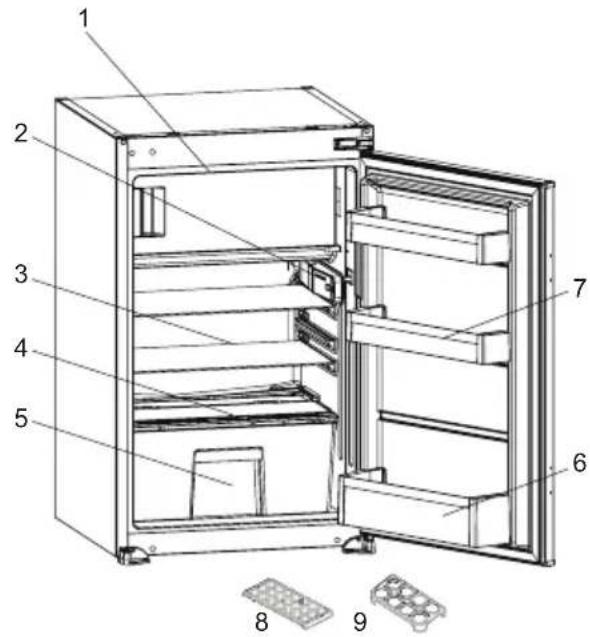
2 DESCRIPTION OF THE APPLIANCE
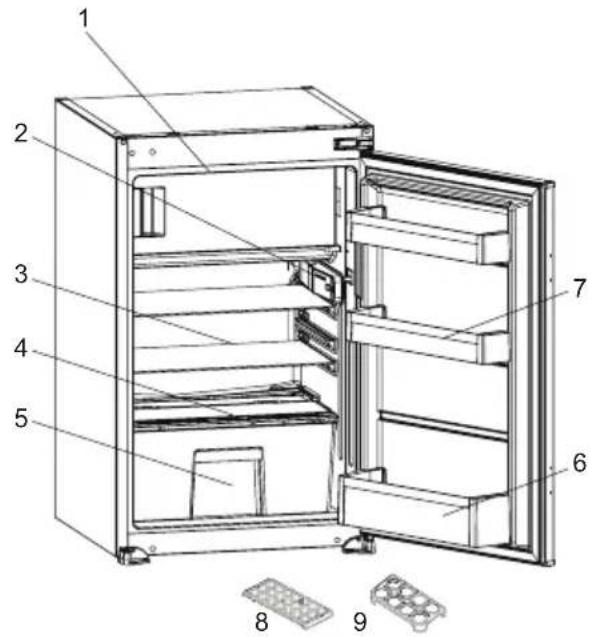

This presentation is only for
information about the parts of the
appliance. Parts may vary according to the appliance model.
1) Freezer compartment door
2) Thermostat box / Interior display
3) Refrigerator shelves
4) Crisper cover
5) Crisper
6) Bottle shelf
7) Door shelves
8) Ice box tray
9) Egg holder
- In some models
General notes:
Fresh Food Compartment (Fridge): Most efficient use of energy is ensured in the configuration with the drawers in the bottom part of the appliance, and shelves evenly distributed, position of door bins does not affect energy consumption.
Freezer Compartment (Freezer): Most Efficient use of energy is ensured in the configuration with the drawers and bins are on stock position.
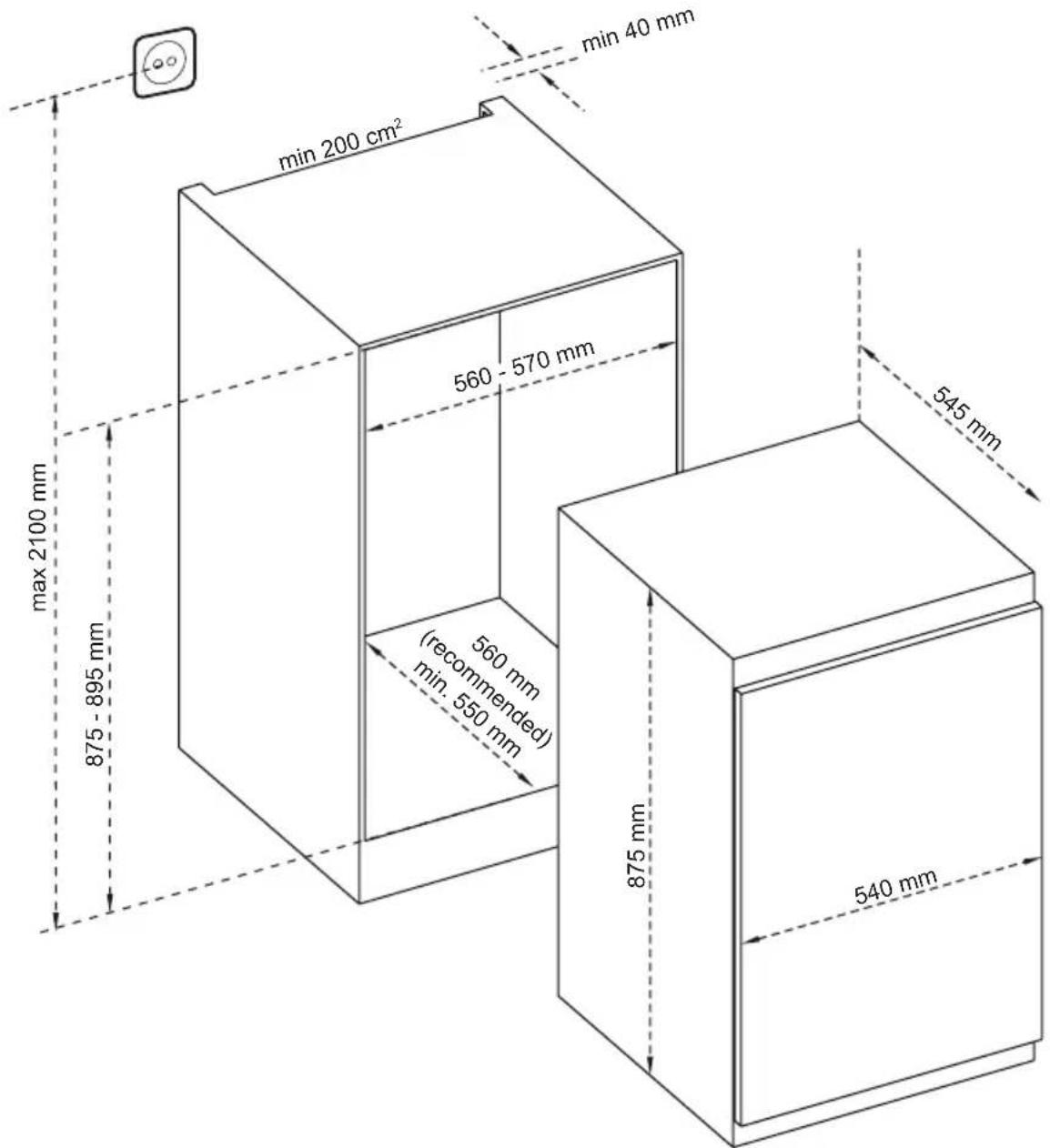
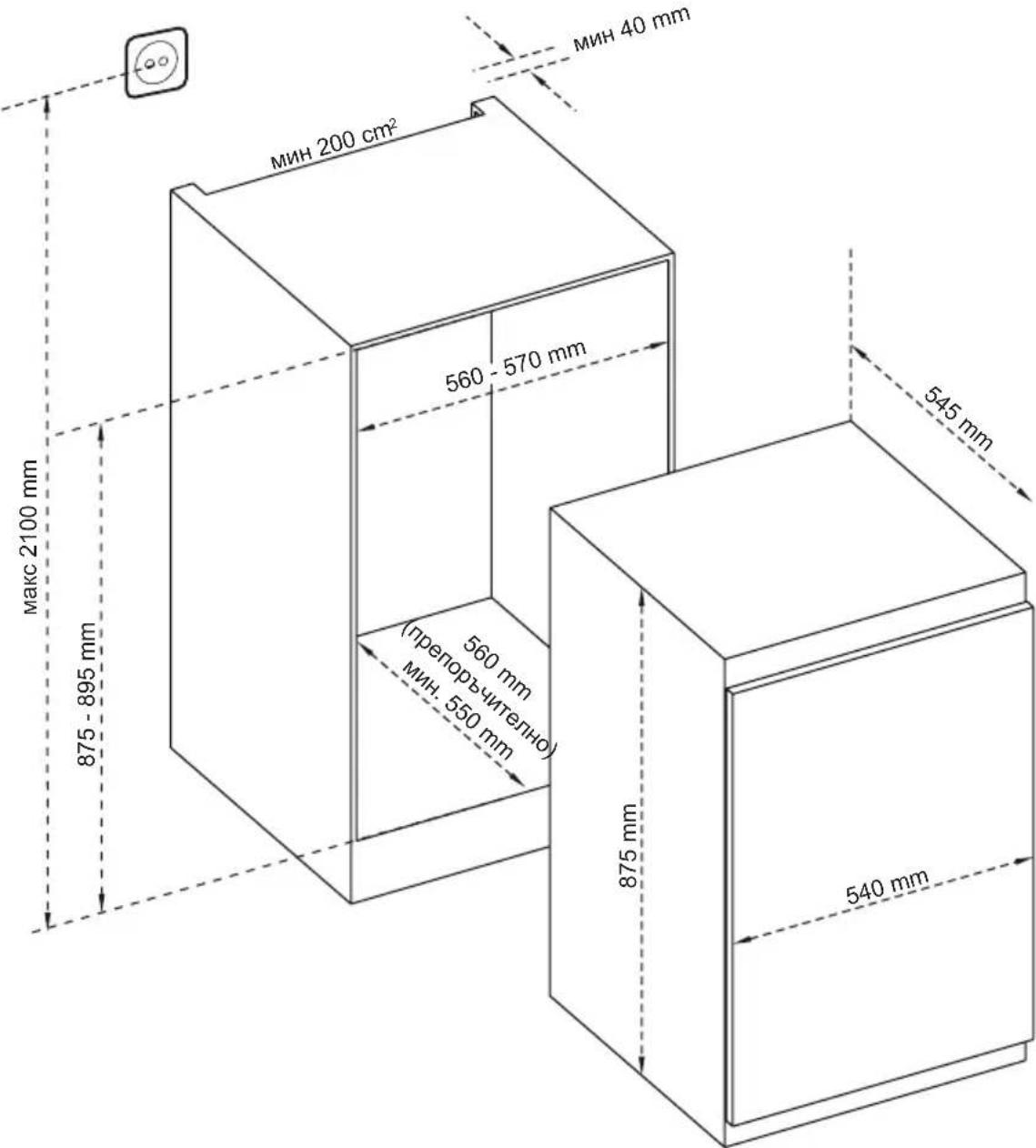
2.1 Dimensions
- 875 - 883 for metal top cover
3 USING THE APPLIANCE
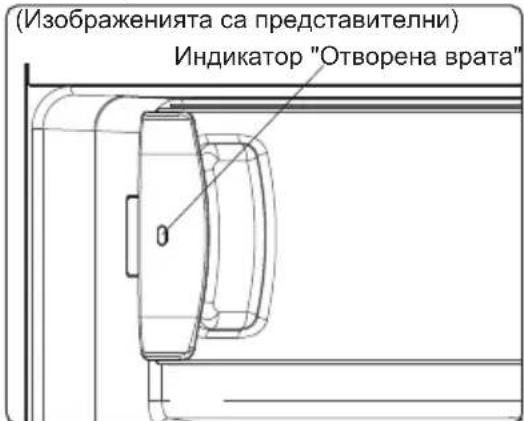
"Door Open" Indicator;
The "Door Open" indicator on the handle shows whether the door has closed properly or whether it remains open. If the indicator is red, the door is still open. If the indicator is white, the door is properly closed.
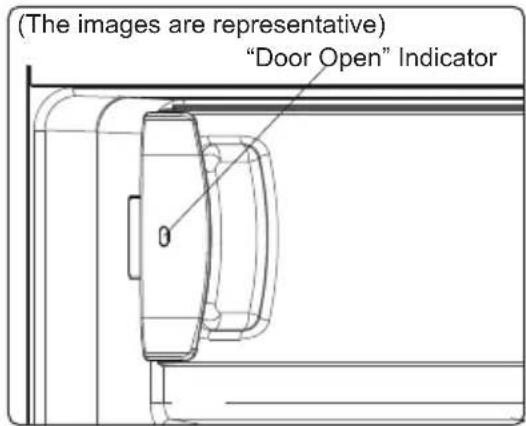

The freezer door should always be
kept closed. This will prevent food
products from defrosting. Any heavy ice and frost build-up inside the freezer, and an unnecessary increase in energy consumption, will be avoided.
3.1 Display and Control Panel
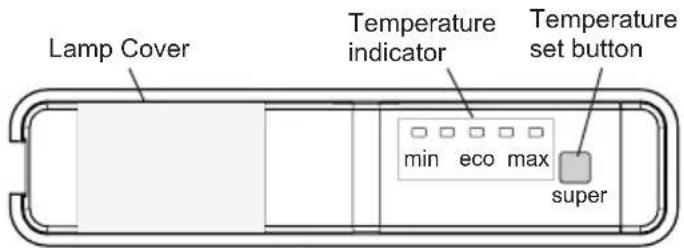
3.2 Operating your Fridge
Lighting (If available)
When the product is plugged in for the first time, the interior lights may turn on 1 minute late due to opening tests.
3.2.1 Temperature Set Button
This button allows setting temperature of the fridge. In order to set values for fridge partition, press this button.
3.2.2 Temperature Settings
- Every time you press the button, the setting temperature will decrease.
- Settings display and you do not press any button within the following 3 seconds.
If refrigerator has got freezer compartment
3.2.3 Super Freeze Mode When would it be used?
- To freeze huge quantities of food.
- To freeze fast food.
- To freeze food quickly.
- To store seasonal food for a long time. If refrigerator is cooler
3.2.4 Super Cooling Mode
When would it be used?
- To cooling huge quantities of food.
- To cooling fast food.
To cooling food quickly. - To store seasonal food for a long time.
How to use?
- Hold down temperature set button for 5 seconds to activate super mode when set is MAX.
All lights will be lighted constantly.
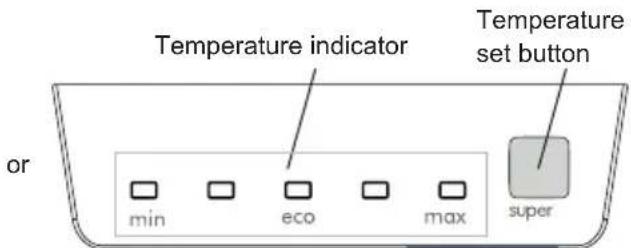
During this mode:
If you hold down set button for 5 seconds, super mode will be deactivated.

The super mode will be cancel automatically after max 24 hours.
3.2.5 Stand-By Mode
How to Activate?
Hold down set button for 5 seconds when it is set for "Min". All leds are blink three times.
How It Works?
In stand-by mode; all components will be disabled. If user push set button while in stand-by mode, all leds will blink three times to show stand-by mode is active.
How To Deactivate?
Push and hold set button until display returns to normal working.
3.2.6 Door Open Alarm Function
If the door is left open for more than 2 minutes, the interior lighting (if available) will start flashing.
3.3 Temperature SettingsWarnings
- Your appliance is designed to operate in the ambient temperature ranges stated in the standards, according to the climate class stated in the information label. It is not recommended that your fridge is operated in the environments which are outside of the stated temperature ranges. This will reduce the cooling efficiency of the appliance.
-
Temperature adjustments should be made according to the frequency of door openings, the quantity of food kept inside the appliance and the ambient temperature in the location of your appliance.
-
When the appliance is first switched on, allow it to run for 24 hours in order to reach operating temperature. During this time, do not open the door and do not keep a large quantity of food inside.
- A 5 minute delay function is applied to prevent damage to the compressor of your appliance when connecting or disconnecting to mains, or when an energy breakdown occurs. Your appliance will begin to operate normally after 5 minutes.
Climate class and meaning:
T (tropical): This refrigerating appliance is intended to be used at ambient temperatures ranging from 16^ to 43^ .
ST (subtropical): This refrigerating appliance is intended to be used at ambient temperatures ranging from 16^ to 38^ .
N (temperate): This refrigerating appliance is intended to be used at ambient temperatures ranging from 16^ to 32^ .
SN (extended temperate): This
refrigerating appliance is intended to be used at ambient temperatures ranging from 10^ to 32^ .
3.4 Accessories
Visual and text descriptions in the accessories section may vary according to the model of your appliance.
3.4.1 Ice Tray (In some models)
- Fill the ice tray with water and place in the freezer compartment.
After the water has completely frozen, you can twist the tray as shown below to remove the ice cubes.
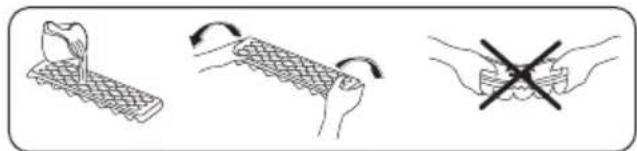
3.4.2 The Fresh Dial (In some models)
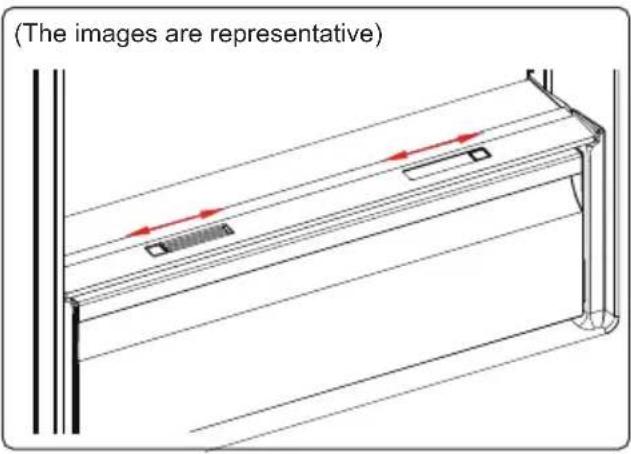
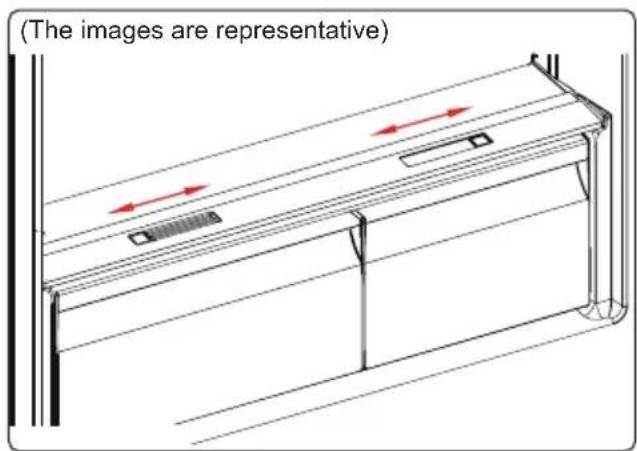
or
If the crisper is full, the fresh dial located in front of the crisper should be opened. This allows the air in the crisper and the humidity rate to be controlled, to increase the life of food within.
The dial, located behind the shelf, must be opened if any condensation is seen on the glass shelf.
4 FOOD STORAGE
4.1 Refrigerator Compartment
To reduce humidity and avoid the consequent formation of frost, always store liquids in sealed containers in the refrigerator. Frost tends to concentrate in the coldest parts of the evaporating liquid and, in time, your appliance will require more frequent defrosting.
Cooked dishes must remain covered when they are kept in the fridge.Do not place warm foods in fridge. Place them when they are cool, otherwise the
temperature/humidity inside the fridge will increases, reducing the fridge's efficiency.
- Make sure no items are in direct contact with the rear wall of the appliance as frost will develop and packaging will stick to it. Do not open the refrigerator door frequently.
- We recommend that meat and clean fish are loosely wrapped and stored on the glass shelf just above the vegetable bin where the air is cooler, as this provides the best storage conditions.
- Store loose fruit and vegetable items in the crisper containers.
- Storing fruit and vegetables separately helps prevent ethylene-sensitive vegetables (green leaves, broccoli, carrot, etc.) being affected by ethylene-releaser fruits (banana, peach, apricot, fig etc.).
- Do not put wet vegetables into the refrigerator.
- Storage time for all food products depends on the initial quality of the food and an uninterrupted refrigeration cycle before refrigerator storage.
- Water leaking from meat may contaminate other products in the refrigerator. You should package meat products and clean any leakages on the shelves.
- Do not put food in front of the air flow passage.
- Consume packaged foods before the recommended expiry date.
Do not allow food to come into contact with the temperature sensor, which is located in the refrigerator compartment, in order to keep the refrigerator compartment at optimum temperature.
- For normal working conditions, it will be sufficient to adjust the temperature setting of your refrigerator to 'eco'.
-
The temperature of the fridge compartment should be in the range of 0 - 8^ , fresh foods below 0^ are iced and rotted, bacterial load increases above 8^ , and spoils.
-
Do not put hot food in the refrigerator immediately, wait for the temperature to pass outside. Hot foods increase the degree of your refrigerator and cause food poisoning and unnecessary spoiling of the food.
- Meat, fish, etc. should be store in the chiller compartment of the food, and the vegetable compartment is preferred for vegetables. (if available)
- To prevent cross contamination, meat products and fruit vegetables are not stored together.
- Foods should be placed in the refrigerator in closed containers or covered to prevent moisture and odors.
The table below is a quick guide to show you the most efficient way to store the major food groups in your refrigerator compartment.
| Food | Maximum storage time | How and where to store |
| Vegetables and fruits | 1 week Vegetable | le bin |
| Meat and fish | 2 - 3 days | Wrap in plastic foil, bags, or in a meat container and store on the glass shelf |
| Fresh cheese | 3 - 4 days | On the designated door shelf |
| Butter and margarine | 1 week | On the designated door shelf |
| Bottled products e.g. milk and yoghurt | Until the expiry date recommended by the producer | On the designated door shelf |
| Eggs 1 month | On the designated egg shelf | |
| Cooked food | 2 days All shelves |
NOTE:

Potatoes, onions and garlic should not be stored in the refrigerator.
4.2 Freezer Compartment
- The freezer is used for storing frozen food, freezing fresh food, and making ice cubes.
- Food in liquid form should be frozen in plastic cups and other food should be frozen in plastic folios or bags. For freezing fresh food; wrap and seal fresh food properly, that is the packaging should be air tight and shouldn't leak. Special freezer bags, aluminum foil polythene bags and plastic containers are ideal.
- Do not store fresh food next to frozen food as it can thaw the frozen food.
- Before freezing fresh food, divide it into portions that can be consumed in one sitting.
- Consume thawed frozen food within a short period of time after defrosting
- Always follow the manufacturer's instructions on food packaging when storing frozen food. If no information is provided food, should not be stored for more than 3 months from the date of purchase.
- When purchasing frozen food, make sure that it has been stored under appropriate conditions and that the packaging is not damaged.
- Frozen food should be transported in appropriate containers and placed in the freezer as soon as possible.
- Do not purchase frozen food if the packaging shows signs of humidity and abnormal swelling. It is probable that it has been stored at an unsuitable temperature and that the contents have deteriorated.
-
The storage life of frozen food depends on the room temperature, the thermostat setting, how often the door is opened, the type of food, and the length of time required to transport the product from the shop to your home. Always follow the instructions printed on the packaging and never exceed the maximum storage life indicated.
-
If the freezer door has been left open for a long time or not closed properly, frost will form and can prevent efficient air circulation. To resolve this, unplug the freezer and wait for it to defrost. Clean the freezer once it has fully defrosted.
- The freezer volume stated on the label is the volume without baskets, covers, and so on.
- Do not refreeze thawed food. It may pose a danger to your health and cause problems such as food poisoning.
NOTE: If you attempt to open the freezer door immediately after closing it, you will find that it will not open easily. This is normal. Once equilibrium has been reached, the door will open easily.

The table below is a quick guide to show you the most efficient way to be the major food groups in your freezer compartment.
| Meat and fish Preparation | Maximum storage time (months) |
| Steak Wrap in foil 6 - 8 | |
| Lamb meat Wrap in foil 6 - 8 | |
| Veal roast Wrap in foil 6 - 8 | |
| Veal cubes In small pieces 6 - 8 | |
| Lamb cubes In pieces 4 - 8 | |
| Minced meat In packaging without using spices 1 - 3 | |
| Giblets (pieces) In pieces 1 - 3 | |
| Bologna sausage/salami Should be kept packaged even if it has a membrane 1 - 3 | |
| Chicken and turkey Wrap In foil 4 - 6 | |
| Goose and duck Wrap in foil 4 - 6 | |
| Deer, rabbit, wild boar In 2.5 kg portions or as fillets | 6 - 8 |
| Freshwater fish (Salmon, Carp, Crane, Catfish) After cleaning the bowels and scales of the fish, wash and dry it. If necessary, remove the tail and head. | 2 |
| Lean fish (Bass, Turbot, Flounder) | |
| Fatty fishes (Tuna, Mackerel, Bluefish, Anchovy) | |
| Shellfish Clean and in a bag | 4 - 6 |
| Caviar In its packaging, or in an aluminium or plastic container | 2 - 3 |
| Snails In salty water, or in an aluminium or plastic container 3 | |
| NOTE: Thawed frozen meat should be cooked as fresh meat. If the meat is not cooked after defrosting, it must not be re-frozen. | |
| Vegetables and Fruits | Preparation | Maximum storage time (months) |
| String beans and beans | Wash, cut into small pieces and boil in water | 10 - 13 |
| Beans | Hull, wash and boil in water | 12 |
| Cabbage | Clean and boil in water | 6 - 8 |
| Carrot | Clean, cut into slices and boil in water | 12 |
| Pepper | Cut the stem, cut into two pieces, remove the core and boil in water | 8 - 10 |
| Spinach | Wash and boil in water | 6 - 9 |
| Cauliflower | Remove the leaves, cut the heart into pieces and leave it in water with a little lemon juice for a while | 10 - 12 |
| Eggplant | Cut into pieces of 2cm after washing | 10 - 12 |
| Corn | Clean and pack with its stem or as sweet corn 12 | |
| Apple and pear | Peel and slice | 8 - 10 |
| Apricot and Peach | Cut into two pieces and remove the stone | 4 - 6 |
| Strawberry and Blackberry | Wash and hull | 8 - 12 |
| Vegetables and Fruits Preparation | Maximum storage time (months) |
| Cooked fruits Add 10 % of sugar to the container 12 | |
| Plum, cherry, sourberry Wash and hull the stems 8 - 12 |
| Maximum storage time (months) | Thawing time at room temperature (hours) | Thawing time in oven (minutes) | |
| Bread 4 - 6 2 - 3 4-5 (220-2 | 25 °C) | ||
| Biscuits 3 - 6 1 - 1,5 5-8 (190-200 °C) | |||
| Pastry 1 - 3 2 - 3 5-10 (200-225 °C) | |||
| Pie 1 - 1,5 3 - 4 5-8 (190-200 °C) | |||
| Phyllo dough 2 - 3 1 - 1,5 5-8 (190-200 °C) | |||
| Pizza 2 - 3 2 - 4 15-20 (200 °C) |
| Dairy products Preparation | Maximum storage time (months) | Storage conditions | |
| Packet (Homogenized) Milk | In its own packet 2 - 3 Pure Milk – in its own packet | ||
| Cheese - excluding white cheese | In slices | 6 - 8 | Original packaging may be used for short-term storage. Keep wrapped in foil for longer periods. |
| Butter, margarine | In its packaging | 6 | |
5 CLEANING AND MAINTENANCE

Disconnect the unit from the power supply before cleaning.

Do not wash your appliance by pouring water on it.

Do not use abrasive products, detergents or soaps for cleaning the ance. After washing, rinse with clean r and dry carefully. When you haveed cleaning, reconnect the plug to the s supply with dry hands.
- Make sure that no water enters the lamp housing and other electrical components.
- The appliance should be cleaned regularly using a solution of bicarbonate of soda and lukewarm water.
- Clean the accessories separately by hand with soap and water. Do not wash accessories in a dish washer.
- Clean the condenser with a brush at least twice a year. This will help you to save on energy costs and increase productivity.


The power supply must be disconnected during cleaning.
5.1 Defrosting
Defrosting the Refrigerator Compartment
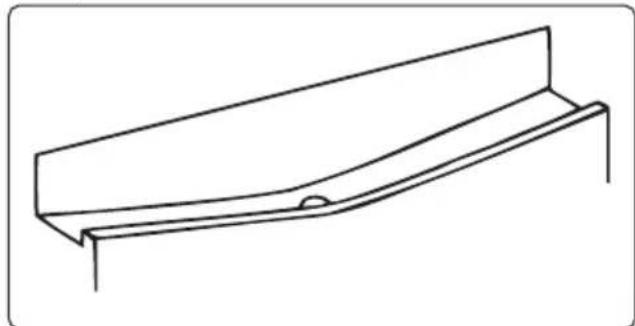
- Defrosting occurs automatically in the refrigerator compartment during operation. The water is collected by the evaporation tray and evaporates automatically.
-
The evaporation tray and the water drain hole should be cleaned periodically with a pipe cleaner to prevent the water from collecting at the bottom of the refrigerator instead of flowing out.
-
You can also clean the drain hole by pouring half a glass of water down it.
Freezer defrosting process
- Small amounts of frost will accumulate inside the freezer, depending on the length of time the door may be left open or the amount of moisture introduced. It is essential to ensure that no frost or ice is allowed to form in places where it will affect the close fitting of the door seal. This might allow air to penetrate the cabinet, encouraging continuous running of the compressor. Thin frost formation is quite soft and can be removed with a brush or plastic scraper. Do not use metal or sharp scrapers, mechanical devices or other means to accelerate the defrosting process. Remove all dislodged frost from the cabinet floor. It is not necessary to switch off the appliance for the removal of thin frost.
- For the removal of heavy ice deposits, disconnect the appliance from the mains supply, empty the contents into cardboard boxes and wrap in thick blankets or layers of paper to keep cool. Defrosting will be most effective if carried out when the freezer is nearly empty and should be carried out as quickly as possible to prevent an unnecessary increase in the temperature of the contents.
- Do not use metal or sharp scrapers, mechanical devices or other means to accelerate the defrosting process. An increase in temperature of frozen food during defrosting will shorten the storage life. Keep contents well wrapped and cool while defrosting is taking place.
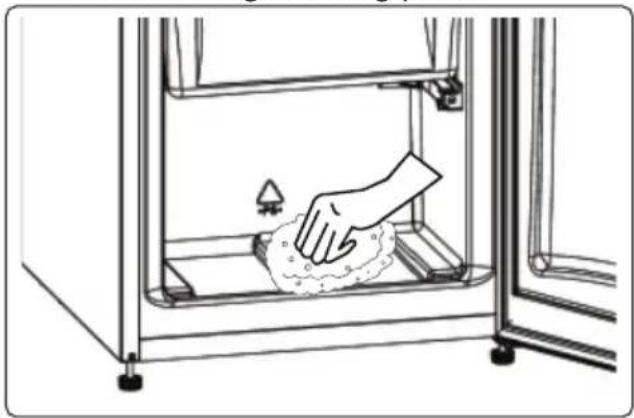
- Dry the inside of the compartment with a sponge or a clean cloth.
To accelerate the defrosting process, place one or more bowls of warm water in the freezer compartment. - Examine the contents when replacing them in the freezer and if some of the packages have thawed out, they should be eaten within 24 hours, or be cooked and re-frozen.
After defrosting is complete, clean the inside of the appliance with a solution of warm water and a little bicarbonate of soda, then dry thoroughly. Wash all removable parts in the same way and reassemble. Reconnect the appliance to the mains supply and leave for 2 to 3 hours on setting number MAX before introducing the food back into the freezer.
Replacing LED Lighting
To replace any of the LEDs, please contact the nearest Authorised Service Centre.

Note: The numbers and location of the LED strips may change according to model.
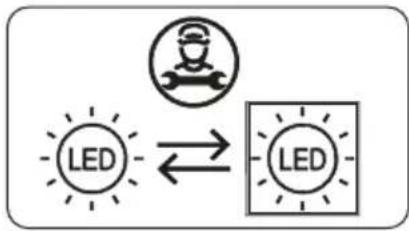
If product equipped with LED lamp
This product contains a light source of energy efficiency class < E> .
If product equipped with LED Strip(s) or LED card(s)
This product contains a light source of energy efficiency class < F>
6 SHIPMENTAND REPOSITIONING
6.1 Transportation and Changing Positioning
- The original packaging and foam may be kept for re-transportation (optional).
- Fasten your appliance with thick packaging, bands or strong cords and follow the instructions for transportation on the packaging.
- Remove all movable parts or fix them into the appliance against shocks using bands when re-positioning or transporting.

Always carry your appliance in the upright position.
7 BEFORECALLINGAFTERSALES SERVICE
If you are experiencing a problem with your appliance, please check the following before contacting the after-sales service.
Your appliance is not operating Check if:
There is power
- The plug is correctly placed in the socket
- The plug fuse or the mains fuse has blown
- The socket is defective. To check this, plug another working appliance into the same socket.
The appliance performs poorly
Check if:
The appliance is overloaded
The appliance door is closed properly
- There is any dust on the condenser
- There is enough space near the rear and side walls.
Your appliance is operating noisily Normal noises
Cracking noise occurs:
During automatic defrosting
- When the appliance is cooled or warmed (due to expansion of
Short cracking noise occurs: When the thermostat switches the compressor on/off.
Motor noise: Indicates the compressor is operating normally. The compressor may cause more noise for a short time when it is first activated.
Bubbling noise and splash occurs: Due to the flow of the refrigerant in the tubes of the system.
Water flowing noise occurs: Due to water flowing to the evaporation container. This noise is normal during defrosting.
Air blowing noise occurs: In some models during normal operation of the system due to the circulation of air.
The edges of the appliance in contact with the door joint are warm
Especially during summer (warm seasons), the surfaces in contact with the door joint may become warmer during the operation of the compressor, this is normal.
There is a build-up of humidity inside the appliance
Check if:
- All food is packed properly. Containers must be dry before being placed in the appliance.
- The appliance door is opened frequently. Humidity of the room enters the appliance when the doors are opened. Humidity increases faster when the doors are opened more frequently, especially if the humidity of the room is high.
The door does not open or close properly
Check if:
- There is food or packaging preventing the door from closing
- The door joints are broken or torn
- Your appliance is on a level surface.
- The compressor can run loudly or the noise of the compressor/refrigerator may increase in some models during operating in some conditions such that the product is plugged in for the first time,
depending on change in the ambient temperature or change of usage. That is normal; when the refrigerator reaches the required temperature, the noise decreases automatically.
Recommendations
- If the appliance is switched off or unplugged, wait at least 5 minutes before plugging the appliance in or restarting it in order to prevent damage to the compressor.
- If you will not use your appliance for a long time (e.g. in summer holidays) unplug it. Clean your appliance according to chapter cleaning and leave the door open to prevent humidity and smell.
If a problem persists after you have followed all the above instructions, please consult the nearest authorised service centre. - The appliance you have purchased is designed for domestic use only. It is not suitable for commercial or common use. If the consumer uses the appliance in a way that does not comply with this, we emphasise that the manufacturer and the dealer will not be responsible for any repair and failure within the guarantee period.
8 TIPS FOR SAVING ENERGY
- Install the appliance in a cool, well-ventilated room, but not in direct sunlight and not near a heat source (such as a radiator or oven) otherwise an insulating plate should be used.
- Allow warm food and drinks to cool before placing them inside the appliance.
-
Place thawing food in the refrigerator compartment if available. The low temperature of the frozen food will help cool the refrigerator compartment while the food is thawing. This will save energy. Frozen food left to thaw outside of the appliance will result in a waste of energy.
-
Drinks or other liquids should be covered when inside the appliance. If left uncovered, the humidity inside the appliance will increase, therefore the appliance uses more energy. Keeping drinks and other liquids covered helps preserve their smell and taste.
- Avoid keeping the doors open for long periods and opening the doors too frequently as warm air will enter the appliance and cause the compressor to switch on unnecessarily often.
- Keep the covers of the different temperature compartments (such as the risper and chiller if available) closed.
- The door gasket must be clean and pliable. In case of wear, replace the gasket.
9 TECHNICALDATA
The technical information is situated in the rating plate on the internal side of the appliance and on the energy label.
The QR code on the energy label supplied with the appliance provides a web link to the information related to the performance of the appliance in the EU EPREL database.
Keep the energy label for reference together with the user manual and all other documents provided with this appliance. It is also possible to find the same information in EPREL using the link https://eprel.ec.europa.eu and the model name and product number that you find on the rating plate, the appliance.
See the link www.theenergylabel.eu for detailed information about the energy label.
10 INFORMATION FOR TEST INSTITUTES
Appliance for any EcoDesign verification shall be compliant with EN 62552.
Ventilation requirements, recess dimensions and minimum rear clearances shall be as stated in this User Manual at Chapter 2. Please contact the manufacturer for any other further information, including loading plans.
11 CUSTOMERCAREAND SERVICE
Always use original spare parts.
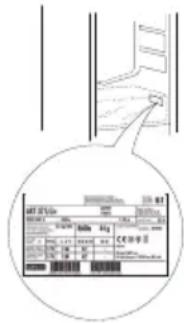
When contacting our Authorised Service Centre, ensure that you have the following data available: Model, Serial Number and Service Index.
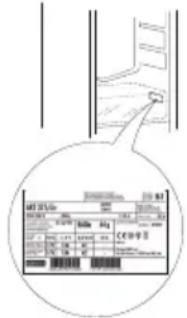
The information can be found on the rating plate. You can find the rating label inside the fridge zone on the left lower side.
The original spare parts for some specific components are available for a minimum of 7 or 10 years, based on the type of component, from the placing on the market of the last unit of the model.
Visit our website to:
https://docs.emeaappliances-docs.eu
Compartment congestion
3.2.3 Mode Super congélation
Pourquelusage?
- Koelkastcompartment:
- Diepvriescompartment:
- Koelkastcompartment: +4 °C of MED
Diepvriescompartment: -18 °C (indien aanwezig)
2 BESCHRIJVING VAN HET APPARAAT

9 TECHNINIAIDUOMENYS
I PEPdUYPeXdEHNc: BnMaBaTe Da He NOBpeDITe Tpb6nte Ha XlaadinHna KOHTyp Ha ypeDa.
I PENEYPPEKDEHNE: He 3anyBaIte BeHTnla- cnoHHnte OTBOpN B KOpnyca Ha ypeDa IIN BbB Brpa- deHaTa KOHCTpyKcIy.
PPEyPExEHE: He n3noJ3BaIte mexaHnH, eJIeKtpueckn IIn XmNueckn CpeIcTba, pa3JIu-
HN OT npenopbubAHnte OT npo3BOinteJIa, 3a yckopraBaHe Ha npoceca Ha pa3Mpa3raBaHe.
PPEyPExEHNHe H3no3BaTe N He noCTaBnTe eJektpnueckn yctpoNCTBa B OTdJeHnTaHa ypeDa, aKO Te He ca OT BnDa, n3pnuHo Odo6peH OT npOn3BODnteJIa.
PPEyPExEHE: UcTpoIcTBaTa 3a JeIuNn DInCpeHcbpnte 3a BOda, KOnTO He ca DInpeKTHO CBbp-3aHN KbM BODoCHa6DInteJIHaTa MpeXa, Tp8Ba Da ce PbJHrT cAmO C NITeINHa BOda.
PPEyPExEHE: ABTOMaTnHnTe IeOreHe- pAtOpN n/nn nnncnncbprte 3a BOna Tp8Ba da 6b- DaT Cbbp3aHn KbM BoDOnHa6dnteJIHa MpeXa, K0rTO Pndaba camo nHTeHa BOna c HaNJaRaHe mexdy 0,17 n 0.81 MPa (1,7 n 8,1 bar).
He cbyxpaHbAte n36yXnBn BeIeCTBa KaTo KyTIN C aepo30JI N He NoCTaBryTe, HHTO n3IOJ3BaITe 6eH3IN NII dpyrN 3aIaNIMMaTePnaJI N BbB INN B 6IIN3OcT Do ypeDa.
He norlbuaite cblbpkaHneTO (heTOKcUHO) Ha onakOBknte 3a nei (npn Harykon moJeN). He koncympaite neeHN Ky6yeTa nnn neeHN 6n3aJKN BeHa-ra cIeN n3BaXdaHeto NM OT pOu3epa, TbN KaTO TOBa MoKe Da npedn3BnKa neeHN n3rapaHn.
3a npoduktn, npoektipahn 3a n3noJ3BaHe Ha Bb3dyweH cnIbP, Hamnpauch ce noD doCTbpeH kanaK Ha BeHTnlaTopa, cnIbPbT BuHaRn Tp8Ba da e noCTaBeH, KOrato XnaHnHKbT pa6OTn.
He cbyxpaHЯBaIte CTbKJIeHn KOHTeHepn, CbIbPJXaU N TeuHOCTN, B OTdJIeHNeTO Ha 0pN3epa, TbN KATO Te MOrat Da Ce CUnyT. He 3aKpNaBTe BENTUaTopa (aKO nMa TaKbB) C xpaHn. CJeI NOCTaBraHTo Ha XpaHn IpoBepTe DaJI N BpatITE Ha OTdJIeHnraTa ce 3aTBaprT Do6pe, Oco6eHo Ta3n Ha 0pN3epa.
Повреedingупьтенья Тразва за ce поимЕнгТ Вьзможно Най-сКОРО.
I3noJ3BaIte OTdJeHHeTo Ha XJaIINHnka cAmO 3a CbXpaHЯBaHe Ha npeChn npOdykTn, a OTdJeHneTo Ha @pn3epa cAmO 3a CbXpaHЯBaHe Ha 3aMpa3eHn XpaHn, 3aMpa3raBaHe Ha npeChn XpaHn I npaBeHe Ha IeHn Ky6yeta.
He cxbxpaHЯBaIte HeonakOBaHN XpaHn B XJaIIN-HNka nIIu φpN3epa, 3a da n36eHete npK KOHTaKT C BbTpEshHnte NOBbpxHocTn. YpeiTe moKe da pa3noIarat Cbc CneuaJIHn OTdJeHEny (OTdJeHne 3a IpeCHn XpaHn, Kytna 3a Hyla rpaDyca...).
Ako He e yka3aHO dpyro B cboTBeTHaTa 6poWypa 3a npodykTa, Te MOraT da ce OTCTpaHЯBaT Cbc 3aAna3BaHe Ha eKBnBaJIeHTHInTe XapaKTePncTnKn.
C-пентан се ИЗПОЛЗВа кATO ra3006pa3yBaц areHT B ИЗОЛацноHHaТа пЯнИ e 3aПалIM ra3.
I36poeHnte NO-dOJy OTdJeHnHa ypeDa ca Hau-NOxOJa7n 3a CbXpaHHe Na ONpeDeJIeHn TINOBe XpaHn, KaTO Ce nMa IpeBnD pa3JInuHOTo pa3- PpeJelHne Ha Tempepatypata B TjX:
-XnaIINHOOTdJeHne:
1) Горна зона на OTделенецу На Хладинka вва-ta - умерега зона: 3a сьхсане На Трочески ПLOДов, КОнсерв, НаNTК, Рца, Туршin, Масло, KOнфintюр
2) CpeiHa 3oHa Ha OTdJeHHeTo Ha XJaIINHnKa -CTydeHa 3oHa: 3a cbXpaHene Ha cIpeHe, MJIko, MJIeuHn IpoDyKTI, DeJIHKaTeCHN XpaHn, KInCeIIO MJIko
3) Долна зона на OTделенeto Ha xладинka -Най-студана 3ona: 3a сьханени Ha konlbасn, De-ceptи, Meco n рба, чизkeи, пясан пacTa, подьвасна сmetаHa, necTo/caIca, domaшно приготberиХрани, садкишс крем, рдinhг и Кретma сирепe
4) YeKMeJxke 3a ПLOOBe I 3eJIeHcyuB HaN-ДОЛHaT a Yact Ha OTdIeJIeHnETo Ha XJaIINHnKa: 3a CbXpaHHeNc Ha ПLOOBe I 3eJIeHcyu (C n3KJIIOUeHne Ha TpOPIueCKn PLOOBe)
5)Отделене на чильpa:В това най-студино
чекmedж ecbхраняbaite camo meco n риба
-Отделене на Фрпзера:
OTdelenHeTo "3oHa 4 3Be3DnUckn (^**) e noDxOJaIoo 3a 3aMpa3raBaHe Ha xpaHnteJnnpOdykTn CbC CTaHa Tempeatypa n 3a CbXpaHneHne Ha 3aMpa3eHn XpaHn, Tb' Kato Tempeatypata Ce pa3npdeJn nopAIBHO B ZraIoto OTdelenHe. CpokbT Ha roDnoCT Ha 3aKyPeneHte 3aMpa3eHn XpaHn e IocOueHn Ha OnakOBkata Nm. Ta3n DaTa e onpeDeJenHa B 3aBncIMoCT OT TnPa Ha XpaHata, KOrTO Ue Ce CbXpaHya BbB Oprn3epa, 3a-TOBa cIeDbA da Ce cna3Ba. IpeChnte XpaHn Tp86Ba Da ce CbXpaHyaBt 3a CJIeDNn IepNoD OT BpeMe: 1-3 Meceua 3a CInpeHe, YepuNecTN MeKOTeJN, CJaIOJeI, ShYNka/HaJeHNz, MIAKO, IpeCHN HApNTKn; 4 Meceua 3a CTeKOBe INPi NpRxoJN (ROBeJDi, aRHeJKN, CBNHCKN); 6 Meceua 3a MacNo INPi MaprapIN n PTTue MeCo (PiJeJko, PyeJko); 8-12 Meceua 3a PIIODObE (C IN3-KJIoucHne Ha zITpyCOBn), NeyeHO Meco (ROBeJDo, CBNHCKO, arHeJko), 3eJIeHuZn. 3a XpaHnte, CbXpaHnBAHN B 3oHaTa C 2 3Be3DnUckn, Cpa3BaIte IocOueHny Ha OnakOBkata CpOK Ha roDnoCT.
3a n36yBaHe Ha pa3BaJrHe Ha xpaHnte cna3BaITe CneiHnte yka3aHn:
- OctabrayeTo Ha BpaTata OTBopeHa 3a npoDbJnxTeJIen NepNoD OT BpeMe MoKe Da IOBeDe Do 3NaChTeJIHO NOBnShaBaHe Ha TempePaTypaTa B OTdJeHnra Ta Ha ypeDa.
- Почиствашие рedingовно NOBbpxHOCHTte, KONTO MOraTда ВлЯЗТВ KOHTaKT C XpaHnte И ДОCTынITE СИСTe-MN 3a ИЗTOUBAHe.
-Почистваite pe3epBoapnte 3a BODa,akO He ca 6nI IN3noI3BaHn B npoIbJxKeHne Ha 48 yaca; nyscheTe BODa Ipe3 cnCTeMaTa,CBbp3aHa KbM BOIOIpaBAHeTo,aKO He CTe IN3TOUBAJI N B ODA B npoIbJxKeHne Ha 5 dHn.
- CbXpaHЯBaIte cypoBO meco n pnbA B IOxOJaIcBdoBe B XlaIaIIHnka, Taka Ye da He BIn3aT B KOHTaKT C dpyrN XpaHn IJI Na npoteKaT Bbpxy Tax.
-Отделенята 3a 3ampa3eHn xpaHn, Маркирани сдve 3Be3dInuKn, ca ПODхОДЯши 3a CBxPанeHne HaпразВарптELNo 3aMpa3eHn XpaHn, CBxPанeHne ИпригOTьЯне Ha СладоЛeДи И павеНe Ha КубчeТа ЛeД.
- He 3aMPa3BaIte IpeChn XpaHn B OTdJeHnra, MapKnpaHn C eHa, DBe NJI TpN 3Be3DnUKN.
-Ako XlaaIINHkBt e OCTaBeH npa3eH 3a npoDbJxN-TeJeH nepnoD OT BpeMe, n3KlNoyete rO, o6e3ckpeXeTe rO, noynCTeTe rO n rO pOnCySeTe n OCTaBeTe BpaTaTa OTbOpEHa, 3a da npeDoTbPaTnTe o6pa3yBaHeTo Ha PJIecen B HeRo.
MOHTAX
Bopabeheto IMOHTaXbT Ha ypeDa Tp86Ba da ce H3BbPWBaT OT DBe NJII NOBeYe JNca - CbUeCTByBa ONaCHOCT OT HapAHyBaHe. I3NoJ3BaIte npedna3Hn PbKaBUni Prn pa3ONaKOBaHETo IMOHTaJa - Ima ONaCHOCT OT NOp83BaHnJ.
HCTaIInpaHETo, BKJIIOUHTeJIHO BOJOnOJaBAaTa CnCTema (aKO nMa) n eIeKTPnueCKnte BpB3Kn, KaKTO n peMOHTHInTe DeiHOCTn, CJeDBA Da Ce N3BbPWBaT OT KBaJIINΦuIpaH TexnK. He nonpaBraIte n He 3aMe-Ha Te qACTn OT ypeDa, aKO TOBa He e N3pNHyNO NOco-yeHo B pBkoBOdCTBOTO Ha Notpe6nteJia. DeaTa H 6nBa Da CToRr 6JIIN30 Do MAcTOTO 3a MoNTaJx. CJeI KATO pa3ONaKOBaTe ypeDa, npOBepTe daJIi He e NO-BpeDeH IO BpeMe Ha TpaHCnOpTnPaHeTo. Ppi npo-6JIemn ce O6bpHeTe KbM TbproBCKn IpeDcTaBtTeJ
Или Кым Най-близки Серви за Следни рожьени обслухвае. След кato уретьт SFыд e монтуран, OTпадьцITE OT onakobka tа (пл actmaca, CTирогори др.) Тразьда стоядалей OT obceга на дeца - Има Опасноct OT 3адушаван. Уретьт Тразьда SFыд ИЗКЛюун ET 3axpaHbaHeTO прedi MOHTжа - CS- ШecTBByBa ONaCHocT OT TOKOB уdap. ПО Врeme Na MOТжа ВнIMаВaIte уретьт Дa He Поврedi 3axpaH- Вaшия Кабел - SFчecTBByBa ONaCHocT OT TOKOB уdap. Актувраite урета edBa след 3abpbшвае Na NH- Сталиранeto.
BnHmBaIte da He NOBpeIte NODOBITE HaCTNIK (HaNPIMep napKeTa), KOrato MeCTnte ypeDa. HnCTaIIpaIte ypeDa Bbpxu NOD INN ONOPa, DocTaTbUHO 3dpaBn 3a NODbPkaHe Ha TeJecTTa, IN HA MAcTO, NODXoJIo 3a pa3Mepa N ynoTppe6aTa Ha ypeDa. Pn INHCTaIIpaHeto Ce yBepTe, Ye ypeBt He e 6In3o Do IN3ToUHK Ha TOnLIHa N yeTnpTE KpaueTa ce OINpAT PJIbTHO Ha IOna, KaTO pRn Heo6xOIMocr rN HarglaceTe, IN CLeD TOBa npOBepTe DaJIy ypeBt E HNBeJInpaH 6e3ynpueHc c NOMo7Ta Ha HNBeIrp. N3quakTe noHe DBA Yaca, PpeDi Da BkIIOHTe ypeDa, 3a Da e cnrypHo, Ye XJaIINHHaT KOHTyp e HaNbJIHo fYHKcNoHa-Jen.
PPEyPExEHE: Korato noctabTe ypeHa Ha My, ce yBepTe, ye 3axpaHbauT Ka6eI He e npITnCHaT nII NOBpeH.
I PEPDyPEXKDEHNE: 3a n36raBHe Ha onaCHOCT, NopoJeHa OT HeCTa6nHocT, NoCTaB8HeTo nIn 3aKpeINBaHTo Ha ypeDa Tp6Ba Da ce n3BbPbWA B CbOTBETCTBHe C INHCTpyKcNtE Ha npOn3BOdnteJ. 3a6paHeHO e Da Ce NoCTaBxJaADnHNKbT TaKa, Ye MeTaJIHaTA Tp6Ba Ha ra3OBA 6yTNkA, MetaJIHn Tp6n 3a Ra3 nII BODa, nIn eNeKTpnueckn Ka6eJn Da ca B KOHTaKT CbC 3aAdHaTa CTeHa Ha XJaADnIHnKa (HaMOTka-
Ta Ha KOHdEHN3aTOPa). BcNch Pa3Mepn i pa3CTOHNy, Heo6XODIMN 3a MOHTaJa Ha ypeJa, ca nocOueHn B KHNKkata C INHCTpyKznn 3a MoHTaJ. Po BpeMe Ha IHCTaIIPAHe Ha ypeJa i ppei Da rO CBbPjKeTe KbMeJeKTPnuYeCKaT a MpeJa, CBAJIeTe 3axpaHbAun Ja KaBeJ OT KyKaTHa KOHdEHN3aTOPa.
ПЕДУПЕЖДECHИВБВВРБ3KA C ELEK-TPO3AXPAHBAHETO
Tp6Ba Da e Bb3MOxHo ypeBt Da ce N3KJIuOuN OT 3aXpaHbaHeTo Upe3 N3BaJdaHe Ha UeIeCela, aKO e DoCTbPeH, IIN Upe3 DOCTbPeH MHOrONoJIocEH PpeB- KIOUbATEJ, MOHTupaH CJIeD KOHTaKTA, KaKTO N ypeBt Da e 3a3eMeH B CbOTBcETCTBne C HaUNoHaJIHnTe CTaHdApTN 3a eJeKtpnuecka 6e3OnaCHOCT.
He n3noJ3BaIte ydIbJIxNITeJI, pa3KIOHnTeJIc HЯKoJko rHe3da nIaIaIaItePn. CJeI MOHTnpaHeto eJeKTPnueckITE KOMNoHEHTn He Tp8Ba Da 6bDaT DoCTbHN 3a noTppe6nteJI. He n3noJ3BaIte ypeJa, aKO cTe C MOKpn IIN 6OcN KpaKa. He n3noJ3BaIte To3n Upei, aKO 3axpaHbAunr My Ka6eI nIIn UcenCeI e NOBpeDeH, aKO He pa6OTn npabUNHO IIN aKO e 6uII NOBpeDeH IIN n3nyckaH.
Ako 3axpaHbauT Ka6eI e nobpeJeH, TOn Tp6Ba Da Ce CMeHr OT npON3BOJNTeJIa, HerOB cepBn3eH areHT IIN JInCe C aHaJIoRnUHa KBaJINoΦnKauzna, 3a Da ce n36erHe OnaCha cnTyauZna.
PPEyPExEHNHe He nocTaBryTe pa3KIOHnTeN C HЯKOJIko rHe3da nIIN ppeHOCIMN 3aXpaHBaUu yCTpoiCTBa B 3aHaT aYact Ha ypeDa.
IpeiHa3Hn pBkauu (ONaCHOCT OT pa3KbCBAHn) n 3aunTHn OByBkn (ONaCHOCT OT KOHTy3n); ypeiBT Tp6Ba Da Ce IpeHacr OT DbAma Duyn (3a HamaJIyBaHe Ha TObapa); He n3PON3BaIte Nocobn 3a NouchTbaHe C npap (ONaCHOCT OT eJeKtpnueckn ydap).
HenpoceNoHaJIHn peMOHTn, HeoO6peHn OT npOn3- BODIteJIa, MoJc Da IOBeJaT Do pNcK 3a 3dpaBcTo n 6e3OpacHOCTTa, 3a KoETo npOn3BOJnteJIaT He MoJc Da 6bJe DbPjXan OTROBOpEn. BcEKn DeΦeKT nII NIOBpeDa, PruHHEnr OT HenpoceNoHaJIHn peMOHTn IIN ObCnykBaHe, Hma Da 6bDaT POKpNTn OT rapaHtca, YcNOBnTa Ha KOaTO ca NODUePtAHn B DOkyMeHTa, DOCTaBeH C ypeDa.
He n3noJ3BaIte a6pa3INBHN IJI IN rpy6n IOUncTBA- ⅢCpeIcTBA, KaTO cnpeIOBE 3a Ipo3OpzN, CTbprAJI- KN, 3aIaJIIMN TeuHOCTN, IOUncTBAU N BAKCN, KOHcEHTpIpaHn IpenapATN, 6JIInHa IJI N IOUncTBAU N CpeIcTBA, CbIbPkaU N PeTpOJH N PPOdYKTN, Bbpxy IJIaCTMaCOBNTe YactN, BbTpEShOcTTa N yIJIbTHEnHra- Ta IJI N 3OJaunrTa Ha BpaTata. He n3noJ3BaIte XapTHeH N KbpN, CTbprAJIKN IJI IN dpyrN rpy6n IOUncTBA- ⅢCpeIcTBA.
N3XBbPJIHE HA ONAKOBbHNTEMATEPNAJN
OnakOBbHnT MaTePnAe 100% roJeH 3a peuKnIpaHe n e MapKnIpaH cbc CmBOJa 3a peuKnIpaHe . Pa3nUHnTe qactn OT onakOBkata Tp6Ba Da 6bDat n3XBpIeHn OTROBOPHO B cBoTBcTCTBne C HapeD6Nte Ha MeCTHnTe OprAHn 3a N3XBbpIaH He Ha OTNaDbuN.
N3XBbPJIaHE HA DOMAKHCKN EJEK-TPOYPeIi
To3n ypeE npOn3BeDeH C MaTePnaJI, roJHi 3a peuKInpaHe nIi 3a NOBTOpHO n3NoI3BaHe.
Ipn n3XBpJHETO My cna3BaHTe MeCTHITepa3npope6n 3a n3XBpJHHe Ha OTnadbU.3a donbHNHTeJIHa INΦopMaucn OTHOCHO TpeTnpaHTo, ONoI3OTBOPaHTo n peuKlnpaHTo Ha DomaknHckn eJeKTPOypeiNce o6bpHete KbM KOMnTeHTHNTe MeCTHINopraHn, Cnyk6bata 3a 6ntOBn OTnadbUc NIMARa3nHa, OTkbTeTO CTE 3aKynuNHypea. To3n ypeE mApKnpaH B cbOTBeTCTBuec Ebponecka dIpeKTbRa 2012/19/EC,OTnabYho eJeKTPnuCecko n eJeKTPoHNOobOpuyDahe (WEEE) n c npabunata 3a OTnabYHo eJeKTPnuCecko n eJeKTPoHNOobOpyDahe ot 2013 r. (c n3MeHenraTa). KaTo ce NorpXHTe ypeBt Da 6bDe n3XBbPLeHNo npabInen HauHH, Bne Ue NOMOrHete 3a npedOTBpTaBAHe Ha Bb3MOxHNTe HeTINBnIOcNeDCTBua 3a OKONHaTcpeDa n3dpAbeto Ha Xopata.CmBOJbT BbpxyyePa nn pnpdujkaBaUaTa rO DokymehTaun POKa3Ba, ye To3n ypeI He Tp8Ba daCe TpeTnpa KaTo 6ntOB OTnadbk, a da 6bDe npedeAen B cbOTBeTHNa Cb6npaTeJIENyHKT, ppeHa3HaueH 3a peuKnPaHae Ha eJeKTPnuCeKa n eJeKTPoHNa anapatya.
CbBETN3A NECTEHE HA EHEPnIa
3a da ce rapaHTnpaBnHaTa BeHTnla- cna, cneBaIte nHCTpyKcInTe 3a IHCTa- npaHe. HeOCTaTbUHaT a BeHTnlaaun B 3aHaTata yact Ha ypeDa yBeJInuAba pa3XoJa Ha eHepnra HamaJRAeEeKtNBocCTTa Ha OxJaXdaHeto.
YeCTOTO OTBaprHe Ha BpaTnUkKaTa MoKe da yBeJIuN KoHcymaIra Ta Ha eHeprIy.
BbtpeHaTa TempepaTpa Ha ypea n KOHCymaunraHa eHepnma MoKe Da ce nobIne OTe TEMpepaTpaTa B NOMEueHNHeTo, KaKTo IOT pa3noJoxeHNeTo Ha ypea. Pn HAcTpoBaHcTo Ha TempepaTpaTa Tp6Ba Da ce mMat npedBnD Te3n fakTopn. CBeDeTe Do MInHMym OTbapAHeTo Ha BpaTata. Korato pa3mpa3raBate 3ampa3eHn XpaHn, rN NOCTaBeTe B xJaINHnKa. Hnckata TempepaTpaHa 3ampa3eHnTe pOdykTu OxJaXda XpaHnTe B XJaINHnKa.
Octabete ToPnIte XpaHn HAnITKn Da ce oxJaT, npEi Da Tn NoCTaBtTe B ypeHa.
I03nHnpaHTo Ha paTOBete B XJaINHnKa He OKa3Ba BnHnE Bbpxy eKTHBHO To N3No3BaHe Ha eHeprna.
XpaHnTe Tp8Ba Da ce NoCTaBrt Ha paΦTOBete NO TaKbB Naun, Ye Da ce rapaHTnpa npaBnHa cnpkUaCnHa Bb3dyx (XpaHnTe He Tp8Ba Da ce DoNpaT eDHa B dpyra N Tp8Ba Da ce OCTaBpa3CToRHe MeJky XpaHnTe n 3aDnata CteHa).
Moxete da yBelenuHte kanaunTeTa 3a cbxpanHeHne Ha 3ampa3eHn xpaHn, kaTo maxHeTe KoUHnTe n paTb Stop Frost (ako mTaKbB).
UymoBeTe, KOnTo n3daBa KOMnpecOpbT no BpeMe Ha pa60Ta, ca HopMaJIHn I He 6nBa Da Bn npITeChraBt.
БРОШУРЕ ECODESIGN - 2020
LcetaHaTo3nDOKymeHTdaPpeIOCTaBn CnncbK C PpeIIOXeHna, KOITO Da CNOMOrHaT 3a ONTtMM3NpaHe Ha eHeprInHaTa eΦeKTUBHOCT N EKCnNoaTaunraHa Ha ypeDa.
YeKMeJxEtata, KoHnUHTe n paΦTOBeTe Tp6Ba Da ce 3ana3rT B HAcToIOTO m NOJIOKeHne, OCBeH aKO B TOBA KpaTKo pBkoBOdCTBO He e NocOueHO dpyro. CnCTeMaTa 3a OCBETJIeHne B XnaIINHOTO OTDeJIeHne N3NoI3Ba CBeTOIDNOHN JAmNnUKN, KOeTO N03BOJRA BA No-Do6po OCBETJIeHne I NO-HNcKa KOHCymuaN Ha eHepnA B cpaBHeHne C ObIKHOBeHnte KpyuKn. BpaNTe n KaNaIte Ha XnaIINHka Tp6Ba Da ce DeMoHTnpaT, PpeN da IN3XBpJIte ypeDa Ha CMeTIeTo, 3a Da ce IN36erHe Bb3MOXHOCTTa Deza INI INJN JKBOTHn Da OCTaHaT 3aTBopeHn BbTpE.
IpenopbUHTeHa HacTpoiKa:
XnaIuHo oTdeJeHHe: +4°C uIN MED
- ΦριπερHo oτδεηνηνe: -18°C (aκο e ḤαπηνΗ)
C ceI ONTUMN3npaHe Ha CKOpocTTa Ha 3aMpa3raBaHe I NOlyuYBaHe Ha NOBeYe MRCTo 3a CbXpaHHe HcPn3epHO To OTdEJIHe MoKe Da Ce I3NoJ3Ba 6e3 YekMeJxKetA IN XpaHITe Da Ce NocTABrT HApBaO Ha DbHOTo Ha OTdEJIHeNTo. KOInueCTBOTo Ha NpeCHNTe XpaHN, KOnTO MORaT Da 6bDaT 3aMpa3eHn 3a KOHKpeTeH NepNOd OT BpeMe, e NOCOyeHO Ha TaBeNKaTa C OCHOBHTe DaHHN. OrpaHnueHnRA B 3apeXdaHEnoCe ONpeJeIrT OT KOWHNtte, KanaHTe, YekMeJxKEtAta, paTOBete n dp. YBepTe ce, ye cneI 3apeXdaHe Te3N KOMNoHEHTN MORaT Da Ce 3aTBaprT JecHO. 3a Da I36erHeTe Noxa6raBaHe Ha XpaHn, BIXTe IpeOpbUHTeJIHa Tn HAcTpoiKa I BpeMeHa Ha CbXpaHEnHe B OHnaH PbKOBOIDCTBOTo 3a Notpe6nteJr.
Ky6yETAJIeI
HaIbIhHeTe 2/3 ot fOpMaTa 3a IeI C BODa IЯ NOCTaBete O6paTHO BbB φpN3epHTo OTdJIeHne. Iprn HnKaBn O6cToIeJIcTBA He N3NoI3BaIte OcTpN IJI N 3aOcTpEHN IpeJMeTn 3a N3BaJdaHe Ha Jeda (aKO Ima HaNueH).
3AMPA3RABAHE HA IPECHN XPAHIN
- ПpenopbHTeHNo eДа 3aJaTe Te-NHcKa TeMnepaTpya IIn Da BKnIOuHTe ΦyHKUraTa Fast Freeze/Fast Cool* Na-Мanko 4 Yaca npedn Da n3BaJnte XpaHNTe OT pnp3epHOTO otJeHne, 3a Da yIbJIxNtE 3aNa3BaHeTo Ha KaueCTBaTa NM NO BpeMe Ha φa3aTa Ha obe3ckpeXaBaHe.
- 3a da obe3ckpeknte ypeda, n3knioyeTe ro ot 3axpaHbaHeTo n 3BaJeTe yeKMeJKeTata. OctabeTe BpataTa OTbOpeHa, 3a da MoKe cKpeXbT da ce pa3ToPi. 3a n36raVe Ha n3n3aHTo Ha BODATA NO Bpeme Ha oBe3ckpekkaBaHTo Ce npenOpbUBA da noCTaBnTe nonBaUa KaBpna BdoHaTaaCT Ha pIn3epHTo OTdeJIeHne I da ra n3CTNCBAte peDobHO.
- Nocntete BbtpewHOCTTa Ha pnn3epHOTo OTdeneHne ITO NOcUwTe BHIMaTeJIHO.
- BkIIOUeTe OTHOBO ypeJa n noCTaBeTe o6paTHo XpaHaTa BbTpe.
Ako Ha TabeIkaTc DaHn IMa DeKnapaun 3a YeKMeJKeTo "chiller/chill", Ta3n DeKnapaunCe OTHacr cAmo 3a CTAHdApT EN 62552:2013, BaIIuJeH do 28 Febpayu 2021 r.
2ОпИСАнгЕHAУРEDA
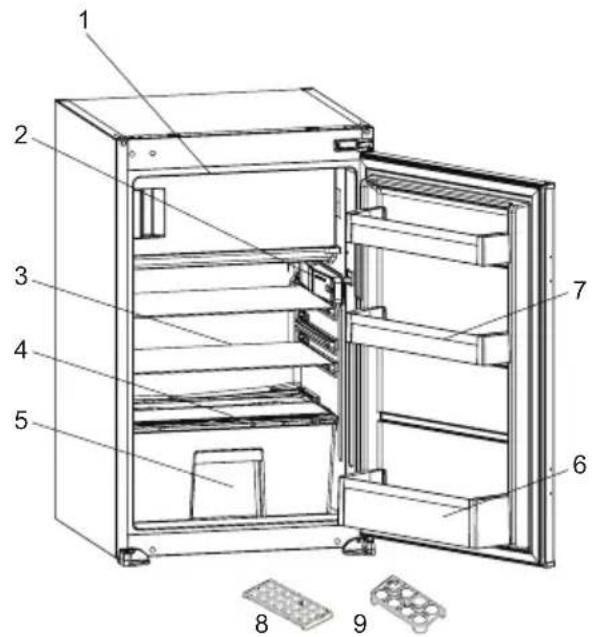

TaN ppe3eHTaun e cmo 3a INHOpMaun 3a Yactnte Ha ypea. Yactnte
MOrat Da BapuPaT B 3aBnCmOCT OT MoeJa Ha ypeHa.
1)Bpata pnp3epno OToJeHne
2) TepmoctaTha KyTnA / BbTppeWeH DnCnIeN
3) PaΦTOBe Ha xlaDNHnKa
4) Kanak Ha yeKMeJKeTo 3a nIoDoBe n 3eJIeHcyu
5) YeKMeJxKe 3a nIooBe n 3eIeHcyu
6) PaΦT 3a 6yTuJIKn
7) PaΦTOBe Ha BpaTaTa
8) Taba kytna 3a JeiD*
9) NocTbKa 3a Jnca*
- Ppu Håkou MODEJU
O6uN 6eJekn:
OTdeneHne 3a npesChi xpAHn (xJaunnHK): Hai-epeKTHBHOTo n3noJ3BaHe Ha eHeprnaTae rapaHTnpaHO npi KOHpypaIraTa CyeKMeJKeTa BdoJHaTa Yact Ha ypeIa I paBHOMePHo pa3npeJeHn paTOBe, KaTO pO3uYraTa Ha KOWHnUte Ha BpaTaTa He BnRe Ha KOHCyMaIraTa Ha eHepn.
Φpns3epHo OTdeneHne (Φpns3ep):
Ha-epeKtNBHOTo n3nOJ3BaHe Ha eHepTnra e ocNpyeHo npi KOHpNpyaunTaC YeKMeDxKeTa N KOWOB E B CKJaOBO NOLOKeHne.
2.1 Pa3mepn
- 875 - 883 3a MeTaNen H OpeH Kanak
3ИЗПОЛЗВАЕHAУРЕДА
ИнданkaTOp 3a OTBopeHa BpaTa;
HnKaTOpbT "OTBopeHa Bpata" Ha npkKaTa, noka3Ba daJIb BpaTata e 3aTBopeHa npabINHO nn daJIe BCE oUe OTBopeHa.
Ako nHnIkaTOpbTe uepBeH, BpaTaTa e BCE OuSe OTBopeHa.
Ako nHdkaTopbTe 6aI, BpaTata e npabNlHO 3aTBopeHa.

BpataHaΦpns3epa Tpr6Ba BnHaN Da ce Dbpxn 3aTBopeHa. ToBa Ue
IpeDToBpaTn pa3Mpa3raBaHeTo Ha XpaHITeHNHTe npOdykTN; ToBa Hma Da n03BOJNHaTPynBaHETo Ha Jei N cKpeX BbBΦpN3epa I HeHyxHO yBeJIyUbaHe Ha KOHCymaunTa Ha eHepn.
- Bcunk CBeTJIHHIe CBETrT NOCTOHHO.
PnTo3nPexKm:
Ako 3aIbpxKnte HaTnCHaT 6yToHa 3a Ha- cTpoKa 3a 5 cekyHn, cynepe pexmblt ue ce DeakTNBupa.

CynepeXmblT ce ce OTMeHn aBTOMaTHUHO cIeMaKcIMyM 24 yaca.
3.2.5 Pekm cTeHd6a
Kak da ce aKTbBnpa?
3aApbXTe HaTnchat 6yToHa 3a HacTpOJa 3a5cekyHn, KOraTo e 3aJaDeHa cToHocT "Min". BcNcKn CBeToDIOOn npMmRbat TpN PbTN.
Kakpa60Tu?
BpeKIM cTeH6a; BCNUK KOMNOHEHTN Ⅲe 6bDat De3akTnBnpanH. Ako Notpe6nteJrT HaTNCHe 6yToHa 3a HactpoKa, DOKaTO e B B peKIM cTeH6a, BCNUK CBETOINODn Ⅲe MmRat TpN IIbTN 3a NOKa3BaHe Ha TOBa, Ye peKIMbT cTeH6aI e aKTNBEn.
Kak Da DeaKTnBnpaTe?
HaTncheTe n 3aApbXte 6yToHa 3a HacTpOka, DOKATO INCPIeT He ce BbpHe KbM HopMaJIHa pa6ota.
3.2.6ФункциЯHa anapMaTa 3a OTBopeHa BpaTa
Ako BpataTa octaHe OTBopeHa 3a NOBue O T 2 MInHyTu, BbTpEshHTo OCBeTJIeHne (ako mTaKoBa) 3e 3aNoUHe Da Mnra.
BpaTata He ce OTbapn 3aTbap npabnlo
PpOBepeTe DaJI:
- ИмахранаилпOnaKOBka,КояTo npeунHa 3aTbapЯHeTo Ha BpaTaTa
- NaHTnte Ha BpaTnte ca ChypeHn NJIOTKbCHaTI
Baunaypee noctaben ha paBna NOBbpxHOCT.
KOMnpecopbT MoKe Da pa60Tu CnHNO nn WymbT Ha KOMnpecopa/XnaDnHnKa MoKe Da Ce yBeJIuN Prn HAKoN MoDeJI N O BpeMe Ha pa6Ota B HAKoN YcNoBnA, HAnpImep Korato PPOdYkTBe BKNIOUeH 3a IIpbN PbT, B 3aBNCIMOCCT OT IpomHaTa Ha OKoJHata TempepaTpa nn IpnomHaTa B NaHnHa H3noJ3BaHe. ToBa e HopMaIHO; KOrato XnaDnHnKbT DOCTnRHe Heo6XoDmata TempepaTpa, WymbT Ce HamaJIra BA bTOMaTNUHO.
Ppenopbkn
Ako ypeBt e n3KIOueH IIN C N3BaDeH ⅢeNcE, n3aKaIte NOHe 5 MNHyTN, Ppei Da BkIOUHTe IIN peCTapTnpaTe ypeHa, 3a Da ppeoTbPaTnTe NOBpeHa Ha KOMnPecopa.
- Ako HЯMaДа ИЗПОЛЗВATEхладинИКа 3a
Дьлго Врeme(HanримерпpeЗ ЛeТнITE
Вakahци),ИЗКЛЮЧЕТе ГОТКонтА.
ПочистeteхладинИКасьгласно Гл
Вata 3a ПОчИСТВаHEИ OCTabete BpaTATA
OTBор�а,3a Дд пpeДOTВратeВлагаИ
МириЗМИ.
Ako npo6IembT npoIbIkaBa, cnei KaTo CTe n3IbJIHnII BCnUKN IopEnOCOeHN yKa3aHnI, MOJN KOHCyIITnpaIte Ce C Hai-6IIN3KnI OTOpN3npaH cepBn3eH ueHTbp.
- YpeIbT, KOITo CTe 3aKyIINu, e npEHa3-HaueH cAmO 3a DomaSha yNoTppe6a. He e NODXODJU 3a TbprOBcKa IIN oBceCT-BeHa yNoTppe6a. Ako nOtpe6nteJrT N3N0J3Ba yPeDa No HauHH, KOITo He OTROBapra Ha TOBa, Hne NOpUepTaBaMe, Ye npOn3BOIDNTeJIrT INpOdaBaYbT He HocrT OTROBOPHOCT 3a KaKBTO I Da e peMOHT IIN IOBpeDa B pAMKIne Ha rapaHcIOHnIa CpOK.
8 CbBETN 3A NECTEHE HA EHEPnIa
- MoNTnpaIte ypeBa B XlaIHo, Do6pe npOBeTpEHO NOMEuEHe, Ho He Ha npraKa CJIbHueBa CBETIIHa I He B 6JIu3OCT Do n3TOUHnK Ha TOnIIHa (KaTo paINaTOp nIi PhypHa), B npOTIBeH clyuaI Tp86Ba Da ce n3NoJ3Ba n3OJaCUNHnA IIIOua.
- OctaBeTe TOnnIte XpaHn HAnNTKn Da ce OxJaT, IpeDn Da rN NoCTaBtE BypeDa.
- NocTaBeTe pa3Mpa3raBaUaTa ce XpHa B OTdJeHHeTo Ha XJaIINHnKa, aKO nMa TakoBa. Hnckata Tempepatypa Ha 3aMpa3eHaTa XpHa, npn HeHOTo pa3- Mpa3raBaHe, Ie NOMOrHe 3a OxJaXdaHe Ha XJaIINHOTo OTdJeHHe. ToBa Ie CnecTn eHepn. 3aMpa3eHa XpHa, oc-TaBeHa Da ce pa3Mpa3raBa N3BbH ypeDa, BOi Do 3aRy6a Ha eHepn.
- HanNTKInTe ININ DpyrN TeUHocTn Tp8Ba Da 6bDat NOKPHTN, KORATO CE HAMnPAT B ypeDa. Ako OCTaHe HENOKPIT, BnaX-HOCCTTa B ypeDa Ue Ce yBelenu, NopadN KOETO ypeDbT Ue n3NOJ3BA NOBuee eHepnra. OCBEN TOBa NOKPINAHeTO Ha HanNTKInTe IN DpyrNte TeUHocTn DOnpHa- C3a 3ana3BaHeTo Ha MmPNC IN BKUC.
- OnntaTe ce da n36rBaTe da DbpxKeTbPaTte OTBOpEn npOdbJXnTeJHNO nnDa OTBapTe BpaTte TBbpDe YeCTO, TbKaTO B WkaFa ige BNe3e TOnbJ Bb3dYx NIe DOBeJe Do HeHyxHo YecTo BKIOUByAHe Ha KOMnpecopa.
6.ДрьжTe 3aTBOpEHn KaNaUte Ha OTdeJIeHnIra c pa3JIuHa TeMnepaTypa (kaTo HAnpIMep XpyNkABn KoHTeINHep INxJaIINHata KaMepa, aKO nMa TaKnBa). - YnIbTHNITeJIaT Ha BpaTaTa TpI6Ba Da 6bJe uNCT n eJAcTnueH. B cIyauHa H3HOcBaHe CMeHete yIbTHHeHneTO.
9 TEXHnueCKn DAHHN
TexHnueckaTaNHOpMaunCeHAMnpa Ha TaBeIknKaTACOCHOBHTe DaHHN BbB BbTpewHaTa Yact Ha ypeDa.
QR KoobT Bbpxy eheprnHnra etnkeT, npedocTaBeH 3aeDnO C ypea, npedocTabyaye6 Bpb3ka KbM INHΦopMaunra, CBpb3aHa cekcnloatauOnHHnte XapaKTePncTNKa Ha ypea, B 6a3aT a daHHN EPREL Ha EC.
CbxpaaBaiTe eHepnHnEeTKeT 3a cnpaBka 3aeDHO C pkoBOdCTBOTO 3a notpe6nteJI N BCNUkN dpyrN DOKymeHTN, npedocTaBeHc T03n ypeI.
CbuaTa INΦopMaζn MaKe Da ce Hamep n B EPREL, KaTo ce n3noJ3Ba Bpb3KaTa https://eprel.ec.europa.eu n NMeTo Ha MoDeJa N Homepa Ha npOdyKta, KOnto Ce HAmnpaT Ha Ta6eIkaTc HOMHaJIHnTe napaMeTpN, Ha ypeDa.
BuxTe Bpb3kata www.theenergylabel.eu 3a noDpo6Ha INΦopMaζη OTHOCHOheprn-Hnra etNKeT.
10 NHΦOPMALIa 3A INHCTNTY-TTE 3A N3ΠNTBAHE
UpeIbT 3a BCa npoBepKa Ha EkoI3aHn Tp6Ba Da e B cBoTBeTCTBne c EN 62552.
N3nCKBaHnraTa 3a BeHTnlaucn, pa3mepnte Ha BdIb6HaTnHnte N MInHMaJIHnTe 3aDnH pa3CTOHH Na 6bDaT TaKnBa, KaKTo e nocoueHO B rna 2 Ha HactoTO pBkoBOcTBo 3a Notpe6nteJ. MoJ, CBpXte Ce C npOn3BOUHeTJe 3a BCaKaKBa Dpyra DoIbHNHeJIHa INΦopMaucn, BKIOuHTeJHo PIIaHObe 3a TOBapeHe.
11 TPNK3A KJINEHTNTE N OBCJIYXBAHE
BnHa n3noJ3BaIte opnHaJIHn pe3epB-Hn Yactn.
Korato ce cBbP3BaTe c Haunr OToPn3npan cepBn3eH ueHTbp, yBepTe ce, ye pa3- noIarate cbc cneHNte daHHN: Moden, cepHeH Homep n cepBn3eH INDeKC.
HOpMaTAt MoKe Da ce HamepHa TaBeKata C HOMHaJIHnTe CTOnHOCTN.
ETnkeTbT 3a OueHka Moxete Da Hamepnte BbTpE B 30HaTa Ha XJaDnIHnKa B JIyBaTa DOJHa Yact.
OpunHaJIHnTe pe3epBn YacTn 3a HaryKo nCneuOuHn KOMNoHEnTc Ce npedlaRat 3a MInHMym 7 nn 10 roDHH, B 3aBNCmOCT OT BnDa Ha KOMNoHEnTa,OT NyCKaHETO Ha na3apa Ha NoCJeDnE ek3eMnIp O T MoDeJa.
6 WYSYLKA I REPOZYCJONOWANIE
- Compartmentul congelator:
4.2 Compartmentul congelator
4.2 Compartmentul congelator 437
5 CURATAREA I INTRETINEREA 439
5.1Dezghearea 439