One Therm - Coffee machine MELITTA - Free user manual and instructions
Find the device manual for free One Therm MELITTA in PDF.


| Product type | Filter coffee machine |
| Brand | Melitta |
| Model | One Therm |
| Maximum capacity | 10 cups |
| Coffee type | Ground coffee |
| Recommended filter | Melitta® 1x4® |
| Carafe | Thermal with lid and handle |
| Water tank | Illuminated, cup graduations |
| Small quantity function | Yes, for 2 to 5 cups, extends extraction |
| Descaling program | Yes, with red indicator light |
| End sound signal | Adjustable (on/off) |
| Drip-stop system | Yes, closes automatically |
| Auto shut-off | Yes, at end of brewing |
| Filter holder | Removable with release button |
| Drip device | Removable, cleanable with hot water |
| Cleaning of parts | Filter holder and lid dishwasher safe |
| Descaling frequency | Every 4 weeks or when indicator lights up |
| Recommended descaler | Melitta® Anti Calc liquid |
| Use | Domestic or similar |
| Cord holder | Integrated in base |
Frequently Asked Questions - One Therm MELITTA
User questions about One Therm MELITTA
0 question about this device. Answer the ones you know or ask your own.
Ask a new question about this device
Download the instructions for your Coffee machine in PDF format for free! Find your manual One Therm - MELITTA and take your electronic device back in hand. On this page are published all the documents necessary for the use of your device. One Therm by MELITTA.
USER MANUAL One Therm MELITTA
natural_image
Line drawing of a coffee maker with a filter and kettle (no text or symbols)Inhaltsverzeichnis
natural_image
Technical line drawing of a mechanical component with a central circular perforated area and connecting rod (no text or symbols)natural_image
Diagram of a kettle being heated by a machine, showing heat transfer arrows (no text or symbols)natural_image
Illustration of a hand pouring liquid into a container with a measuring rod (no text or symbols)natural_image
Technical diagram of a mechanical assembly with a bracket and housing, showing internal components and an upward arrow (no text or symbols)7 Gerät entkalken
I For your safety....
I.I Proper use....II
1.2 Danger from electric current...... 11
1.3 Risk of burns and scalds....12
1.4 General safety 12
1.5 Insulated jug....12
1.6 Children.... 12
2 Appliance at a glance....|3
3 First steps.... 14
3.1 Unpacking the appliance .... 14
3.2 Setting up the appliance....14
3.3 Connecting the appliance .... 14
3.4 Removing the filter 14
3.5 Removing the jug....14
3.6 Removing the jug lid 14
3.7 Filling the water tank....15
3.8 Rinsing the appliance.... 15
4 Operating the appliance .... 15
4.1 Dosing recommendation.... 15
4.2 Preparing coffee....16
4.3 Preparing small coffee quantities...... 16
5 Changing settings....16
5.1 Setting the signal tone....16
6 Cleaning the appliance....16
7 Descaling the appliance....17
8 Disposal....17
Dear Customer,
Thank you for purchasing our Melitta One® filter coffee machine. We hope you enjoy using it. If you require further information or have any questions, contact Melitta® or visit our website at: www.melitta.co.uk.
I For your safety
The appliance complies with the valid European directives. The appliance was inspected by independent test institutes and certified. Please read the safety instructions and the operating instructions through completely. You must observe the safety and operating instructions to avoid dangers. Melitta® accepts no liability for damage caused by failure to observe the instructions.
I.1 Proper use
The appliance is intended for use in private households or comparable environments to prepare coffee beverages.
Any other use is regarded as improper and may lead to personal injury and material damage.
1.2 Danger from electric current
Only use the appliance if it is in a technically flawless condition.
Only connect the appliance to a correctly installed earthed mains socket.
If the appliance or the power cable is damaged, there is a risk of fatal electric shock. You may not use the appliance in this case, but instead you need to have it repaired by the manufacturer, the customer services or a service partner.
You must not immerse the appliance in water or let the power cable come into contact with water.
Disconnect the appliance from the power supply when left unsupervised for a long time.
I.3 Risk of burns and scalds
The coffee and steam produced are very hot. Avoid direct contact with the flowing coffee and the steam. Do not remove the filter during preparation.
I.4 General safety
Do not operate the appliance in a cabinet.
Do not reach into the interior of the appliance during operation.
You may not open the housing or manipulate the appliance in any other way.
You may not use the jug in a microwave.
Do not use abrasive cleaning agents or scouring milk to clean parts that come into contact with food. Remove the remains of the cleaning agents with clear water.
1.5 Insulated jug
You may not use the jug in a microwave.
Do not place the jug on a hot stove.
Do not use the jug to store dairy products or baby food. There is a risk of bacterial growth.
Do not lay the filled jug on its side as liquid could leak out.
1.6 Children
Children must not be allowed to play with the appliance.
You must keep children who are younger than 8 years away from the appliance.
This appliance may be used by children over 8 years of age and by persons with reduced physical, sensory or mental capabilities or a lack of experience and knowledge, but only if they are supervised or have been instructed in using the appliance safely and understand the resulting risks.
Cleaning and maintenance must not be undertaken by children younger than 8 years of age.
Children older than 8 years of age must be supervised during cleaning and maintenance.
2 Appliance at a glance
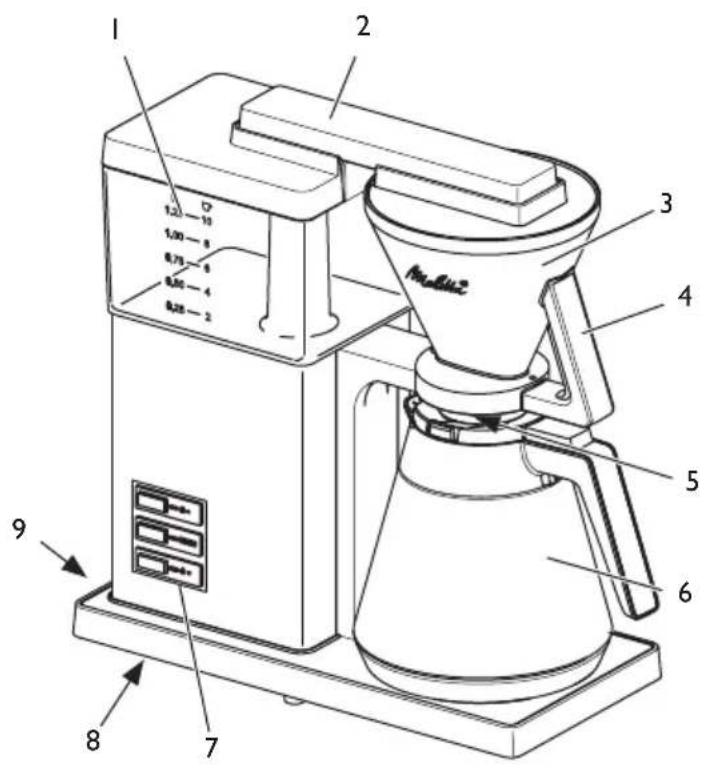
I Water tank with water tank lid
2 Water overflow
3 Filter with filter lid
4 Filter handle with lever
5 Drip stop
6 Jug with jug lid
7 Control panel
8 Cable-winding facility
9 Power cable
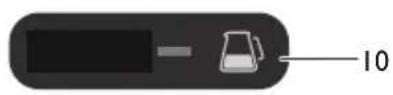
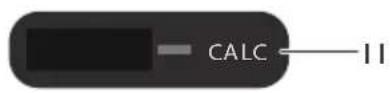
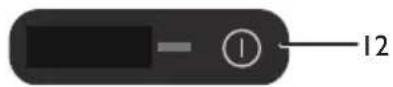
Item Designation Main function Secondary function
10 "Small Quantity" button with white lamp
II "Descaling" button with red lamp
12 "Start/stop" button with white lamp
Optimises the brewing process for preparation of small quantities of coffee.
Activates the descaling program. –
Starts or stops the preparation. —
Sets the signal tone for the end of brewing.
3 First steps
3.1 Unpacking the appliance
Remove the packaging material and the adhesive strips from the appliance. Please keep the original packaging.
3.2 Setting up the appliance
■ Set up the appliance in a dry room.
- Set up the appliance on a stable, flat and dry surface. The surface may not be hot. The appliance may not be placed in the vicinity of sinks or the like.
- Route the power cable so it does not lie over edges or cannot be damaged by hot surfaces.
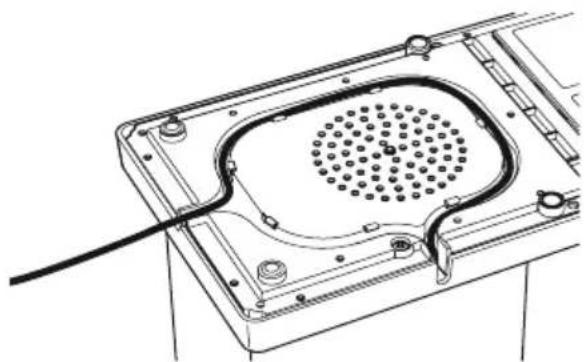
■ Store the length of cable that you do not need in the cable-winding facility in the base of the appliance.
natural_image
Technical line drawing of a mechanical component with a central circular perforated area and connecting rod (no text or symbols)3.3 Connecting the appliance
Only connect the appliance to an easily accessible, properly installed earthed mains socket. After connecting, all lamps will illuminate briefly one after the other.
Full isolation from the mains is achieved by disconnecting the mains plug.
3.4 Removing the filter
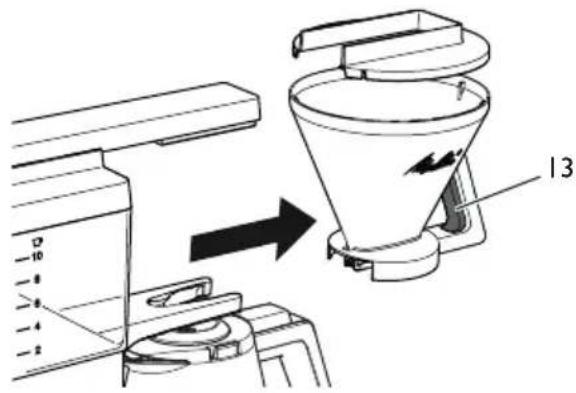
To remove the filter, press the lever (13) and pull the filter by the filter handle out of the appliance.
The filter must click in audibly upon inserting. Place the filter lid on the filter.
3.5 Removing the jug
Always hold the jug by the jug handle when removing and inserting it.
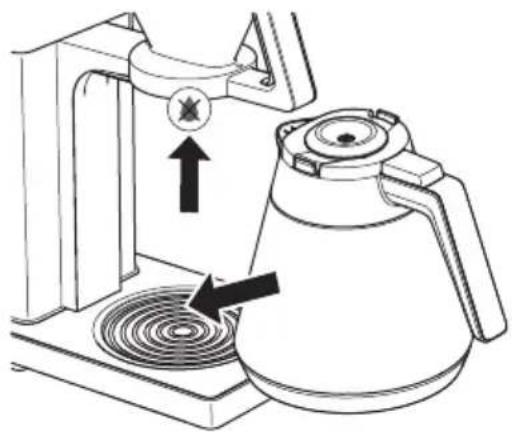
Place the jug under the filter holder so that the jug lid pushes the drip stop up slightly. This opens the drip stop and the contents of the filter can flow into the jug. The drip stop stops coffee dripping when you remove the jug.
natural_image
Line drawing of a kettle being heated by a machine, with an arrow indicating the process (no text or symbols present)3.6 Removing the jug lid
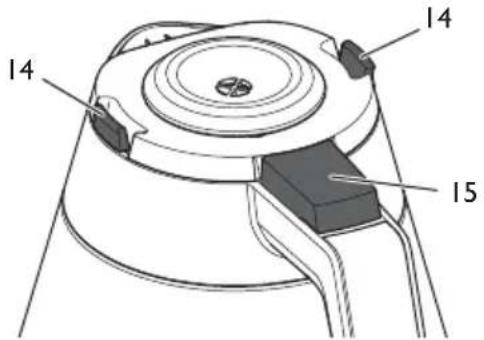
To remove the lid, press and hold the side catches (14) and lift the lid. Also press and hold the side catches when you fit the lid again.
To pour, press the lever (15) on the jug handle.
3.7 Filling the water tank
The markings on the water tank correspond with the number of cups that you prepare during a brewing process. The brewing process will always use up all of the water in the water tank. Therefore, fill only the quantity of water that you require for the subsequent brewing process. The filled quantity of water may not exceed the 10 cup marking as the jug will otherwise overflow.
Fill fresh, clean tap or drinking water into the water tank. Do not use carbonated water or any other liquids.

natural_image
Illustration of a glass pitcher pouring liquid into a beaker with a measuring rod (no text or symbols)I. Take the water tank lid off the water tank.
- Fill the water tank with the required quantity of water.
» The water tank is illuminated.
- Close the water tank with the water tank lid.
3.8 Rinsing the appliance
Before using for the first time and after descaling, you need to rinse the appliance twice. You should also rinse the appliance if you do not use the appliance for a longer period.
Rinsing is done without a filter and without coffee.
I. Fill the water tank with fresh, cold tap water up to the 10-cup marking.
» The water tank is illuminated.
2 Close the water tank.
-
Push the filter with the fitted filter lid into the appliance. The filter must click in audibly.
-
Place the jug with fitted jug lid under the filter.
-
Start the rinsing process with the "Start/Stop" button.
» The "Start/stop" button will flash.
» The rinsing process ends automatically. The “Start/Stop” lamp goes out and a signal tone sounds depending on the setting.
» The water tank illumination goes out.
- Empty the jug.
Always allow the water to flow through completely and empty the jug.
4 Operating the appliance
Observe the following instructions during preparation:
- Use Melitta® filters in the size 1x4®.
- After preparation, dispose of the used filter.
- You can end preparation at any time by pressing the "Start/Stop" button again. Some water will continue to flow after you press the button.
4.1 Dosing recommendation
For preparation, light to medium roasts with a medium grinding fineness are particularly well suited.
Weigh 6 to 8 g freshly ground coffee per cup. Put ground coffee into the filter paper according to your taste and the number of cups required. Then smooth the surface of the coffee powder as much as possible.
The Melitta One® has been checked according to the ECBC standards (European Coffee Brewing Centre, www.ecbc.info) and fulfils the demanding conditions of the “Coffee Brewer Certification Programme” in terms of coffee quality.
4.2 Preparing coffee
I. Fill the water tank with the required quantity of water.
» The water tank is illuminated.
2 Close the water tank.
3. Pull the filter out of the appliance with the lever pressed.
4. Take the filter lid off the filter.
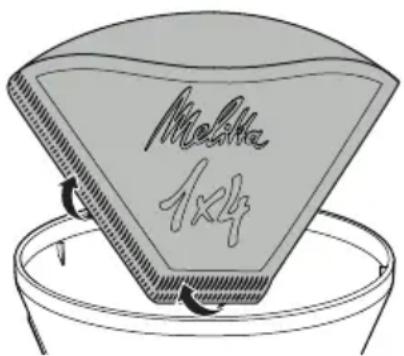
5. Fold a filter along the stamped seam.
6. Fit the filter paper in the filter. Press it down lightly and into the edges of the filter.
- Fill the filter paper with coffee powder according to the filled quantity of water and your taste.
- Close the filter with the filter lid.
- Push the filter into the appliance. The filter must click in audibly.
- Place the jug with fitted jug lid under the filter.
- Start preparation with the "Start/Stop" button.
» The "Start/stop" button will flash.
» The preparation ends automatically. The “Start/Stop” lamp goes out and a signal tone sounds depending on the setting.
» The water tank illumination goes out.
4.3 Preparing small coffee quantities
The “Small Quantity” button extends the brewing time. As a result, you will get an aromatic, full coffee flavour even when you prepare small coffee quantities (2 to 5 cups).
Proceed in the way described first of all, see chapter 4.2.
Press the “Small Quantity” button before starting preparation. Activation is confirmed by the illuminated lamp.
Then, press the "Start/Stop" button. The "Small Quantity" lamp flashes during preparation.
5 Changing settings
5.1 Setting the signal tone
The end of brewing is indicated by a signal tone. The signal tone can be set.
I. Press the "Small Quantity" button for longer than 2 seconds.
» The “Small Quantity” lamp flashes.
» The water tank is illuminated.
- Press the "Small Quantity" button repeatedly until the desired signal tone is set. The flashing rhythm indicates the set signal tone, see the following table.
- Press the "Small Quantity" button for longer than 2 seconds to save the setting.
The setting is retained even when you disconnect the appliance from the electricity mains.
| Signal tone | “Small Quantity” lamp flashing rhythm |
| On | ■ ■ |
| Off | ■■ ■■ |
6 Cleaning the appliance
Regular cleaning and maintenance of the appliance guarantee the consistent high quality of your coffee.
Attention! Unsuitable cleaning agents can damage the appliance. Only use the recommended cleaning agents.
Always allow the appliance to cool down before cleaning it.
Do not immerse the appliance or the mains plug in water.
-
Clean the surfaces of the housing with a soft, moist cloth.
■ Clean the jug and the filter after every use. -
Rinse the jug, the filter and the lid with clear, warm water. You can also clean the filter and the filter lid parts in the dish-washer.
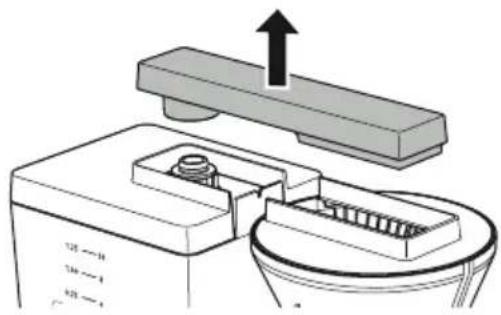
- The water overflow can be removed. Clean the water overflow with clear, warm water.
natural_image
Diagram of a mechanical device with an upward arrow indicating force or movement, showing internal components and housing (no text or symbols)7 Descaling the appliance
After you have used the appliance for a while, limescale deposits will build up inside it. To ensure that your appliance works perfectly and has a long life, you need to descale it on a regular basis.
The Descale program removes the limescale deposits. You should run the program every four weeks or when the red lamp next to the "Descaling" button lights up. The program takes approximately 8 minutes and should not be interrupted.
Use Melitta® Anti Calc liquid descaling agent for filter coffee machines.
Caution! Descaling agent causes eye irritation. If it accidentally comes into contact with your eyes, you should rinse them with clear water for several minutes. Consult a doctor if symptoms persist.
I. Remove the filter from the appliance.
2 Push the filter with the fitted filter lid into the appliance. The filter must click in audibly.
3. Fill at least 500 ml of descaling fluid into the water tank. Follow the instructions on the packaging of the descaling agent.
- Place the jug with fitted jug lid under the filter.
- CALC Press the "Descaling" button to start the program.
» The “Descaling” lamp will flash.
» The program ends automatically and a signal tone sounds depending on the setting.
» The “Descaling” lamp goes out.
- You must rinse the appliance twice to remove all remains of the descaling agent, see chapter 3.8.
8 Disposal

Appliances marked with this symbol are subject to the European Directive for WEEE (Waste Electrical and Electronic Equipment).
Electrical appliances do not belong in domestic waste. Dispose of the appliance in an environmentally friendly way via suitable collection systems.
The packaging materials are raw materials and recyclable. Please return them to the raw materials cycle.
GB
Sommaire
natural_image
Technical line drawing of a mechanical component with a central circular perforated area and connecting rod (no text or symbols)natural_image
Diagram of a kettle being heated by a lathe, showing heat transfer and cooling process (no text or symbols)natural_image
Technical diagram of a mechanical assembly with a bracket and housing, showing internal components and an upward arrow (no text or symbols)natural_image
Technical line drawing of a mechanical component with a central circular perforated area and connecting rod (no text or symbols)natural_image
Diagram of a kettle being heated by a machine, showing heat transfer and cooling process (no text or symbols)natural_image
Illustration of a glass pitcher pouring liquid into a container with a measuring rod (no text or symbols)natural_image
Technical diagram of a mechanical assembly with a bracket and housing, showing internal components and an upward arrow (no text or symbols)7 Apparaat ontkalken
Waste Electrical and Electronic Equipment).
natural_image
Technical line drawing of a mechanical component with a central circular perforated area and connecting rod (no text or symbols)natural_image
Diagram of a kettle being heated by a machine, showing heat transfer and cooling process (no text or symbols)
natural_image
Illustration of a hand pouring liquid into a container with a magnifying glass (no text or symbols)natural_image
Technical diagram of a mechanical assembly with a bracket and housing (no text or symbols)natural_image
Technical line drawing of a mechanical component with a central circular perforated area and connecting rod (no text or symbols)3.3 Conectar la cafetera
natural_image
Diagram of a coffee maker with a kettle and fan, showing heat transfer process (no text or symbols)natural_image
Illustration of a laboratory procedure showing a beaker pouring liquid into a beaker with a magnified inset (no text or symbols)natural_image
Technical diagram of a mechanical device with an upward arrow indicating motion or force (no text or symbols present)7 Descalcificar la cafetera
natural_image
Technical line drawing of a mechanical component with a central circular perforated area and connecting rod (no text or symbols)natural_image
Diagram of a kettle being heated by a machine, showing heat transfer and cooling process (no text or symbols)natural_image
Illustration of a hand pouring liquid into a container with a magnifying glass (no text or symbols)natural_image
Diagram of a mechanical device with an upward arrow indicating motion or force, showing internal components and housing (no text or symbols)natural_image
Technical line drawing of a mechanical component with a central circular perforated area and connecting rods (no text or symbols)3.3 Anslutning
natural_image
Diagram of a kettle being heated by a machine, showing heat transfer and cooling process (no text or symbols)natural_image
Illustration of a glass pitcher pouring liquid into a container with a magnifying glass, no text or symbols presentnatural_image
Diagram of a mechanical device with an upward arrow indicating force or movement, showing internal components and housing (no text or symbols)natural_image
Technical line drawing of a mechanical component with a central perforated plate and connecting rod (no text or symbols)natural_image
Diagram of a kettle being heated by a machine, showing heat transfer and cooling process (no text or symbols)natural_image
Illustration of a container with liquid being poured into a beaker using a stand (no text or symbols visible)I. Ta lokket av vanntanken.
2 Fyll på ønsket vannmengde i vanntanken. » Vanntanken belyses.
3. Lukk vanntanken med lokket.
5.1 Stille inn signaltone
Bryggeslutt indikeres med en signaltone. Signaltonen kan stilles inn.
natural_image
Diagram of a mechanical device with an upward arrow indicating motion or force, showing internal components and housing (no text or symbols)
natural_image
Technical line drawing of a mechanical component with a central perforated plate and connecting rod (no text or symbols)natural_image
Diagram of a kettle being heated by a machine, showing heat transfer and cooling process (no text or symbols)natural_image
Illustration of a hand pouring liquid into a beaker with a magnifying glass, no text or symbols presentnatural_image
Diagram of a mechanical assembly with a bracket and housing, showing internal components and an upward arrow (no text or symbols)natural_image
Technical line drawing of a mechanical component with a central perforated plate and connecting rod (no text or symbols)natural_image
Diagram of a kettle being heated by a machine, showing heat transfer and cooling process (no text or symbols)natural_image
Illustration of a glass pitcher pouring liquid into a beaker with a magnified inset (no text or symbols)natural_image
Technical diagram of a mechanical assembly with a bracket and housing, showing internal components and an upward arrow (no text or symbols)Division Household Products
Ringstr. 99
D-32427 Minden
Germany
www.melitta.de
Editorial department:
ZINDEL AG
www.zindel.de

- Inhaltsverzeichnis
- Gerät entkalken
- Dear Customer,
- I For your safety
- I.1 Proper use
- Danger from electric current
- I.3 Risk of burns and scalds
- I.4 General safety
- Insulated jug
- Children
- Appliance at a glance
- Item Designation Main function Secondary function
- First steps
- Unpacking the appliance
- Setting up the appliance
- Connecting the appliance
- Removing the filter
- Removing the jug
- Removing the jug lid
- Filling the water tank
- Rinsing the appliance
- Operating the appliance
- Dosing recommendation
- Preparing coffee
- Preparing small coffee quantities
- Changing settings
- Setting the signal tone
- Cleaning the appliance
- Descaling the appliance
- Disposal
- Sommaire
- Apparaat ontkalken
- Conectar la cafetera
- Descalcificar la cafetera
- Anslutning
- Stille inn signaltone
Brand : MELITTA
Model : One Therm
Category : Coffee machine