DH18DPB - Hammer HiKOKI - Free user manual and instructions
Find the device manual for free DH18DPB HiKOKI in PDF.



| Product Type | Cordless Rotary Hammer |
| Brand | HiKOKI |
| Model | DH18DPB |
| Power Source | 18V Lithium-ion battery (not included) |
| Compatible Battery Type | BSL18xx series, Multi-volt |
| Weight (with battery) | Approximately 2.5–3.5 kg depending on battery |
| Functions | Rotation + hammering, rotation only, auto stop, reactive force control (RFC) |
| Speed Modes | Low Mode, Normal Mode |
| Lighting | Integrated LED |
| Side Handle | Yes, adjustable |
| Chuck System | SDS-plus |
| Safety | Auto stop, thermal overload protection, RFC, battery lock |
| Maintenance | Regular cleaning of terminals and battery compartment, periodic lubrication with specific grease |
| Operating Temperature | −5°C to 40°C |
| Charging Temperature | 0°C to 40°C |
| Sound Level | Sound pressure 90 dB(A), sound power 101 dB(A) |
| Vibration (concrete) | 11.6 m/s² (uncertainty K=1.5 m/s²) |
| Warranty | According to national regulations, see warranty certificate |
Frequently Asked Questions - DH18DPB HiKOKI
User questions about DH18DPB HiKOKI
0 question about this device. Answer the ones you know or ask your own.
Ask a new question about this device
Download the instructions for your Hammer in PDF format for free! Find your manual DH18DPB - HiKOKI and take your electronic device back in hand. On this page are published all the documents necessary for the use of your device. DH18DPB by HiKOKI.
USER MANUAL DH18DPB HiKOKI

en Handling instructions
de Bedienungsanleitung
fr Mode d'emploi
it Istruzioni per l'uso
nl Gebruiksaanwijzing
es Instrucciones de manejo
pt Instruções de uso
sv Bruksanvisning
da Brugsanvisning
no Bruksanvisning
fi Käyttöohjeet
el Οδηγίες χειρισμού
pl Instrukcja obsługi
hu Kezelési utasítás
cs Návod k obsluze
tr Kullanım talimatları
ro Instructiuni de utilizare
① Navodila za rokovanje
sk Pokyny na manipuláciu
bg Инструкция за експлоатация
sr Uputstvo za rukovanje
hr Upute za rukovanje
1
2
3
4
5


6

7

8
9
10 11
12 13
| n0 | 800 | 1080 |
| Bpm | 41005 | 500 |
14
15

16 17


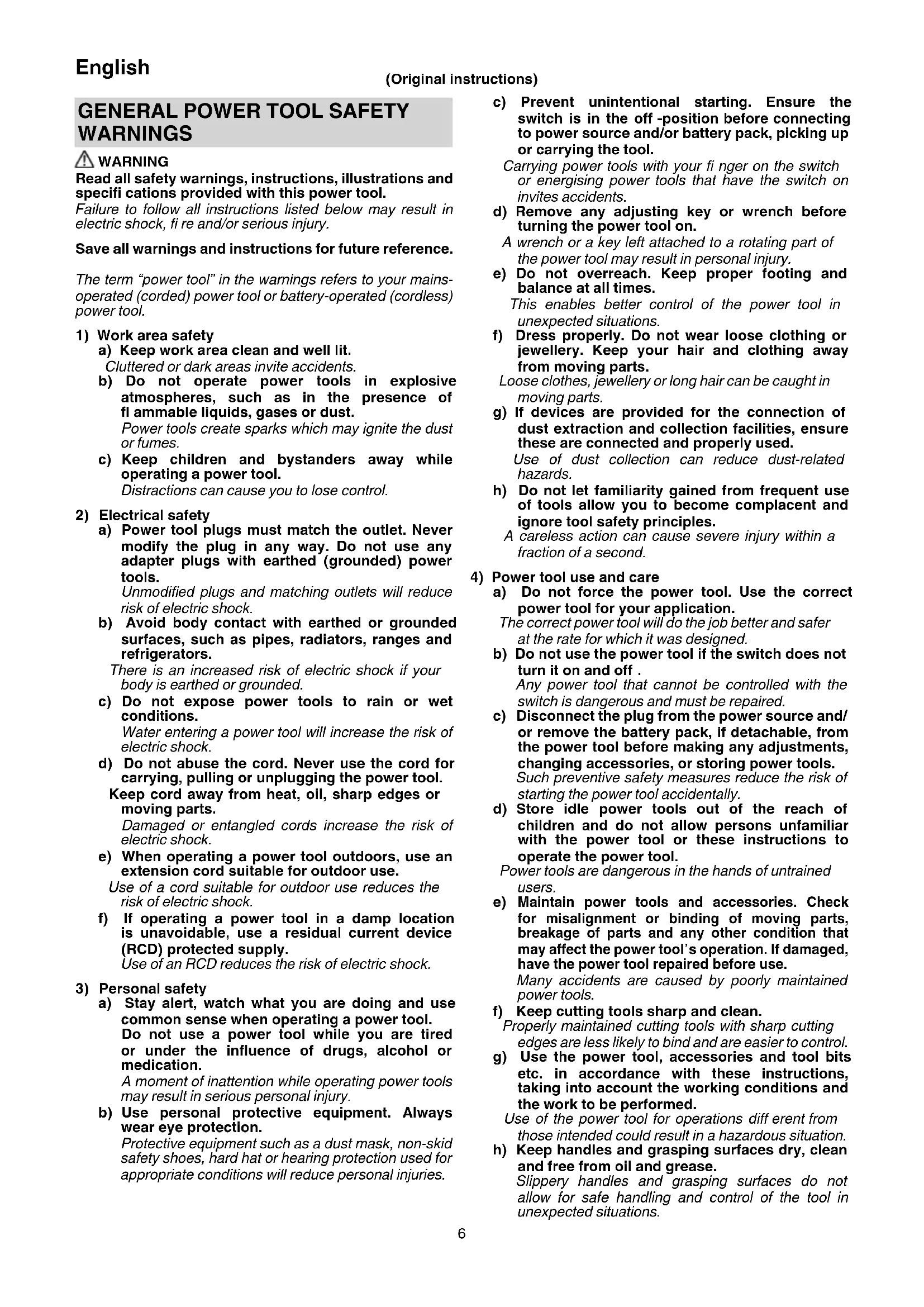
GENERAL POWER TOOL SAFETY WARNINGS

WARNING
Read all safety warnings, instructions, illustrations and specifications provided with this power tool.
Failure to follow all instructions listed below may result in electric shock, fi re and/or serious injury.
Save all warnings and instructions for future reference.
The term "power tool" in the warnings refers to your mains-operated (corded) power tool or battery-operated (cordless) power tool.
1) Work area safety
a) Keep work area clean and well lit. Cluttered or dark areas invite accidents
b) Do not operate power tools in explosive atmospheres, such as in the presence of fl ammable liquids, gases or dust.
Power tools create sparks which may ignite the dust or fumes.
c) Keep children and bystanders away while operating a power tool.
Distractions can cause you to lose control.
2) Electrical safety
a) Power tool plugs must match the outlet. Never modify the plug in any way. Do not use any adapter plugs with earthed (grounded) power tools.
Unmodified plugs and matching outlets will reduce risk of electric shock.
b) Avoid body contact with earthed or grounded surfaces, such as pipes, radiators, ranges and refrigerators.
There is an increased risk of electric shock if your body is earthed or grounded.
c) Do not expose power tools to rain or wet conditions. Water entering a power tool will increase the risk of electric shock.
d) Do not abuse the cord. Never use the cord for carrying, pulling or unplugging the power tool.
Keep cord away from heat, oil, sharp edges or moving parts.
Damaged or entangled cords increase the risk of electric shock.
e) When operating a power tool outdoors, use an extension cord suitable for outdoor use.
Use of a cord suitable for outdoor use reduces the risk of electric shock.
f) If operating a power tool in a damp location is unavoidable, use a residual current device (RCD) protected supply.
Use of an RCD reduces the risk of electric shock.
3) Personal safety
a) Stay alert, watch what you are doing and use common sense when operating a power tool. Do not use a power tool while you are tired or under the influence of drugs, alcohol or medication.
A moment of inattention while operating power tools may result in serious personal injury.
b) Use personal protective equipment. Always wear eye protection.
Protective equipment such as a dust mask, non-skid safety shoes, hard hat or hearing protection used for appropriate conditions will reduce personal injuries.
c) Prevent unintentional starting. Ensure the switch is in the off -position before connecting to power source and/or battery pack, picking up or carrying the tool.
Carrying power tools with your fi nger on the switch or energising power tools that have the switch on invites accidents.
d) Remove any adjusting key or wrench before turning the power tool on.
A wrench or a key left attached to a rotating part of the power tool may result in personal injury.
e) Do not overreach. Keep proper footing and balance at all times.
This enables better control of the power tool in unexpected situations.
f) Dress properly. Do not wear loose clothing or jewellery. Keep your hair and clothing away from moving parts.
Loose clothes, jewellery or long hair can be caught in moving parts.
g) If devices are provided for the connection of dust extraction and collection facilities, ensure these are connected and properly used.
Use of dust collection can reduce dust-related hazards.
h) Do not let familiarity gained from frequent use of tools allow you to become complacent and ignore tool safety principles.
A careless action can cause severe injury within a fraction of a second.
4) Power tool use and care
a) Do not force the power tool. Use the correct power tool for your application.
The correct power tool will do the job better and safer at the rate for which it was designed.
b) Do not use the power tool if the switch does not turn it on and off. Any power tool that cannot be controlled with the switch is dangerous and must be repaired.
c) Disconnect the plug from the power source and/or remove the battery pack, if detachable, from the power tool before making any adjustments, changing accessories, or storing power tools. Such preventive safety measures reduce the risk of starting the power tool accidentally.
d) Store idle power tools out of the reach of children and do not allow persons unfamiliar with the power tool or these instructions to operate the power tool.
Power tools are dangerous in the hands of untrained users.
e) Maintain power tools and accessories. Check for misalignment or binding of moving parts, breakage of parts and any other condition that may affect the power tool's operation. If damaged, have the power tool repaired before use.
Many accidents are caused by poorly maintained power tools.
f) Keep cutting tools sharp and clean.
Properly maintained cutting tools with sharp cutting edges are less likely to bind and are easier to control.
g) Use the power tool, accessories and tool bits etc. in accordance with these instructions, taking into account the working conditions and the work to be performed.
Use of the power tool for operations different from those intended could result in a hazardous situation.
h) Keep handles and grasping surfaces dry, clean and free from oil and grease.
Slippery handles and grasping surfaces do not allow for safe handling and control of the tool in unexpected situations.
5) Battery tool use and care
a) Recharge only with the charger specified by the manufacturer.
A charger that is suitable for one type of battery pack may create a risk of fire when used with another battery pack.
b) Use power tools only with specifically designated battery packs.
Use of any other battery packs may create a risk of injury and fire.
c) When battery pack is not in use, keep it away from other metal objects, like paper clips, coins, keys, nails, screws or other small metal objects, that can make a connection from one terminal to another.
Shorting the battery terminals together may cause burns or a fire.
d) Under abusive conditions, liquid may be ejected from the battery; avoid contact. If contact accidentally occurs, fl ush with water. If liquid contacts eyes, additionally seek medical help.
Liquid ejected from the battery may cause irritation or burns.
e) Do not use a battery pack or tool that is damaged or modified.
Damaged or modified batteries may exhibit unpredictable behaviour resulting in fire, explosion or risk of injury.
f) Do not expose a battery pack or tool to fire or excessive temperature.
Exposure to fire or temperature above 130° C cause explosion.
g) Follow all charging instructions and do not charge the battery pack or tool outside the temperature range specified in the instructions.
Charging improperly or at temperatures outside the specified range may damage the battery and increase the risk of fire.
6) Service
a) Have your power tool serviced by a qualified repair person using only identical replacement parts.
This will ensure that the safety of the power tool is maintained.
b) Never service damaged battery packs. Service of battery packs should only be performed by the manufacturer or authorized service providers.
PRECAUTION
Keep children and infi rm persons away.
When not in use, tools should be stored out of reach of children and infi rm persons.
CORDLESS ROTARY HAMMER SAFETY WARNINGS
1) Safety instructions for all operations
a) Wear ear protectors
Exposure to noise can cause hearing loss.
b) Use auxiliary handle(s), if supplied with the tool. Loss of control can cause personal injury.
c) Hold the power tool by insulated gripping surfaces, when performing an operation where the cutting accessory may contact hidden wiring.
Cutting accessory contacting a "live" wire may make exposed metal parts of the power tool "live" and could give the operator an electric shock.
2) Safety instructions when using long drill bits with rotary hammers
a) Always start drilling at low speed and with the bit tip in contact with the workpiece.
At higher speeds, the bit is likely to bend if allowed to rotate freely without contacting the workpiece, resulting in personal injury.
b) Apply pressure only in direct line with the bit and do not apply excessive pressure.
Bits can bend causing breakage or loss of control, resulting in personal injury.
ADDITIONAL SAFETY WARNINGS
- Do not allow foreign matter to enter the hole for connecting the rechargeable battery.
- Never disassemble the rechargeable battery and charger.
- Never short-circuit the rechargeable battery. Shortcircuiting the battery will cause a great electric current and overheat. It results in burn or damage to the battery.
- Do not dispose of the battery in fire. If the battery is burnt, it may explode.
- When using this unit continuously, the unit may overheat, it leading to damage in the motor and switch. Please leave it without using it for approximately 15 minutes.
- Do not insert object into the air ventilation slots of the charger. Inserting metal objects or inflammables into the charger air ventilation slots will result in electrical shock may hazard or damaged charger.
- Bring the battery to the shop from which it was purchased as soon as the post-charging battery life becomes too short for practical use. Do not dispose of the exhausted battery.
- Before starting to break, chip or drill into a wall, floor or ceiling, thoroughly confi rm that such items as electric cables or conduits are not buried inside.
- Ensure that the power switch is in the OFF position. If the battery is installed while the power switch is in the ON position, the power tool will start operating immediately, which could cause a serious accident.
- Do not touch the bit during or immediately after operation. The bit becomes very hot during operation and could cause serious burns.
- Always hold the body handle and side handle of the power tool firmly. Otherwise the counterforce produced may result in inaccurate and even dangerous operation.
- Wear a dust mask
Do not inhale the harmful dusts generated in drilling or chiseling operation. The dust can endanger the health of yourself and bystanders.
-
Make sure that the battery is installed firmly. If it is at all loose it could come off and cause an accident.
-
To prevent accidents, make sure to turn the switch off and pull out the battery before changing accessories, storing, carrying or when not using the tools.
-
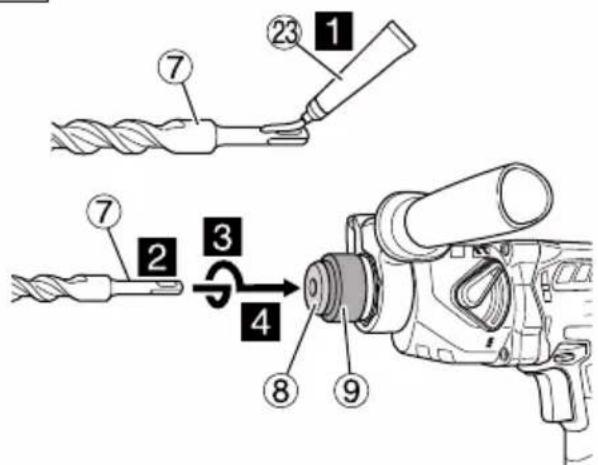
Mounting the drill bit
To prevent accidents, make sure to turn the switch off and pull out the battery.
When using tools such as bull points, drill bits, etc., make sure to use the genuine parts designated by our company.
○ Clean the shank portion of the drill bit.
○ Check the latching by pulling on the drill bit.
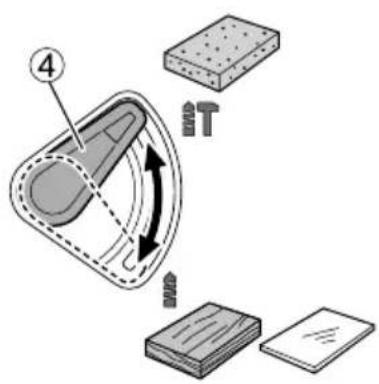
16. Operate the change lever only when the motor is at a full stop. Operating the change lever while the motor is running may cause the tip tool to unexpectedly rotate and result in an accident. (Fig. 9)
English
- Rotation + hammering
When the drill bit touches construction iron bar, the bit will stop immediately and the rotary hammer will react to revolve. Therefore firmly tighten the side handle, hold the body handle and side handles.
- Rotation only
To drill wood or metal material using the drill chuck and chuck adapter (optional accessories).
Application of force more than necessary will not only expedite the work, but will deteriorate the tip edge of the drill bit and reduce the service life of the rotary hammer in addition.
Drill bits may snap off while withdrawing the rotary hammer from the drilled hole. For withdrawing, it is important to use a pushing motion.
○ Do not attempt to drill anchor holes or holes in concrete with the machine set in the rotation only function.
Do not attempt to use the rotary hammer in the rotation and striking mode with the drill chuck and chuck adapter attached. This would seriously shorten the service life of every component of the machine.
19. Do not look directly into the light. Such actions could result in eye injury.
Wipe off any dirt or grime attached to the lens of the LED light with a soft cloth, being careful not to scratch the lens.
Scratches on the lens of the LED light can result in decreased brightness.
- Always use the tool and battery at temperatures between -5°C and 40°C
- Always charge the battery at an ambient temperature of 0–40°C.
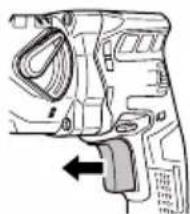
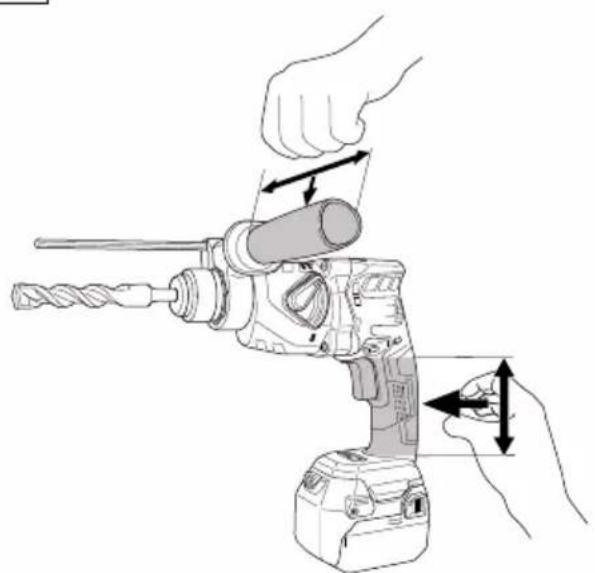
- Make sure to securely hold the tool as shown in Fig. 16 during operation.
CAUTION ON LITHIUM-ION BATTERY
To extend the lifetime, the lithium-ion battery equips with the protection function to stop the output.
In the cases of 1 to 3 described below, when using this product, even if you are pulling the switch, the motor may stop. This is not the trouble but the result of protection function.
- When the battery power remaining runs out, the motor stops.
In such a case, charge it up immediately.
- If the tool is overloaded, the motor may stop. In this case, release the switch of tool and eliminate causes of overloading. After that, you can use it again.
- If the battery is overheated under overload work, the battery power may stop.
In this case, stop using the battery and let the battery cool. After that, you can use it again.
Furthermore, please heed the following warning and caution.
WARNING
In order to prevent any battery leakage, heat generation, smoke emission, explosion and ignition beforehand, please be sure to heed the following precautions.
- Make sure that swarf and dust do not collect on the battery.
- During work make sure that swarf and dust do not fall on the battery.
○ Make sure that any swarf and dust falling on the power tool during work do not collect on the battery. - Do not store an unused battery in a location exposed to swarf and dust.
Before storing a battery, remove any swarf and dust that may adhere to it and do not store it together with metal parts (screws, nails, etc.). -
Do not pierce battery with a sharp object such as a nail, strike with a hammer, step on, throw or subject the battery to severe physical shock.
-
Do not use an apparently damaged or deformed battery.
- Do not use the battery in reverse polarity.
- Do not connect directly to an electrical outlets or car cigarette lighter sockets.
- Do not use the battery for a purpose other than those specified.
- If the battery charging fails to complete even when a specified recharging time has elapsed, immediately stop further recharging.
- Do not put or subject the battery to high temperatures or high pressure such as into a microwave oven, dryer, or high pressure container.
- Keep away from fi re immediately when leakage or foul odor are detected.
- Do not use in a location where strong static electricity generates.
- If there is battery leakage, foul odor, heat generated, discolored or deformed, or in any way appears abnormal during use, recharging or storage, immediately remove it from the equipment or battery charger, and stop use.
- Do not immerse the battery or allow any fluids to flow inside. Conductive liquid ingress, such as water, can cause damage resulting in fire or explosion. Store your battery in a cool, dry place, away from combustible and flammable items. Corrosive gas atmospheres must be avoided.
CAUTION
- If liquid leaking from the battery gets into your eyes, do not rub your eyes and wash them well with fresh clean water such as tap water and contact a doctor immediately.
If left untreated, the liquid may cause eye-problems. - If liquid leaks onto your skin or clothes, wash well with clean water such as tap water immediately.
There is a possibility that this can cause skin irritation. - If you find rust, foul odor, overheating, discolor, deformation, and/or other irregularities when using the battery for the first time, do not use and return it to your supplier or vendor.
WARNING
If a conductive foreign matter enters in the terminal of lithium ion battery, the battery may be shorted, causing fire. When storing the lithium ion battery, obey surely the rules of following contents.
- Do not place conductive debris, nail and wires such as iron wire and copper wire in the storage case.
To prevent shorting from occurring, load the battery in the tool or insert securely the battery cover for storing until the ventilator is not seen.
REGARDING LITHIUM-ION BATTERY TRANSPORTATION
When transporting a lithium-ion battery, please observe the following precautions.
WARNING
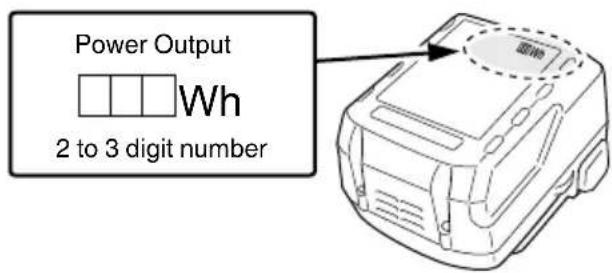
Notify the transporting company that a package contains a lithium-ion battery, inform the company of its power output and follow the instructions of the transportation company when arranging transport.
☐ Lithium-ion batteries that exceed a power output of 100 Wh are considered to be in the freight classification of Dangerous Goods and will require special application procedures.
☐ For transportation abroad, you must comply with international law and the rules and regulations of the destination country.
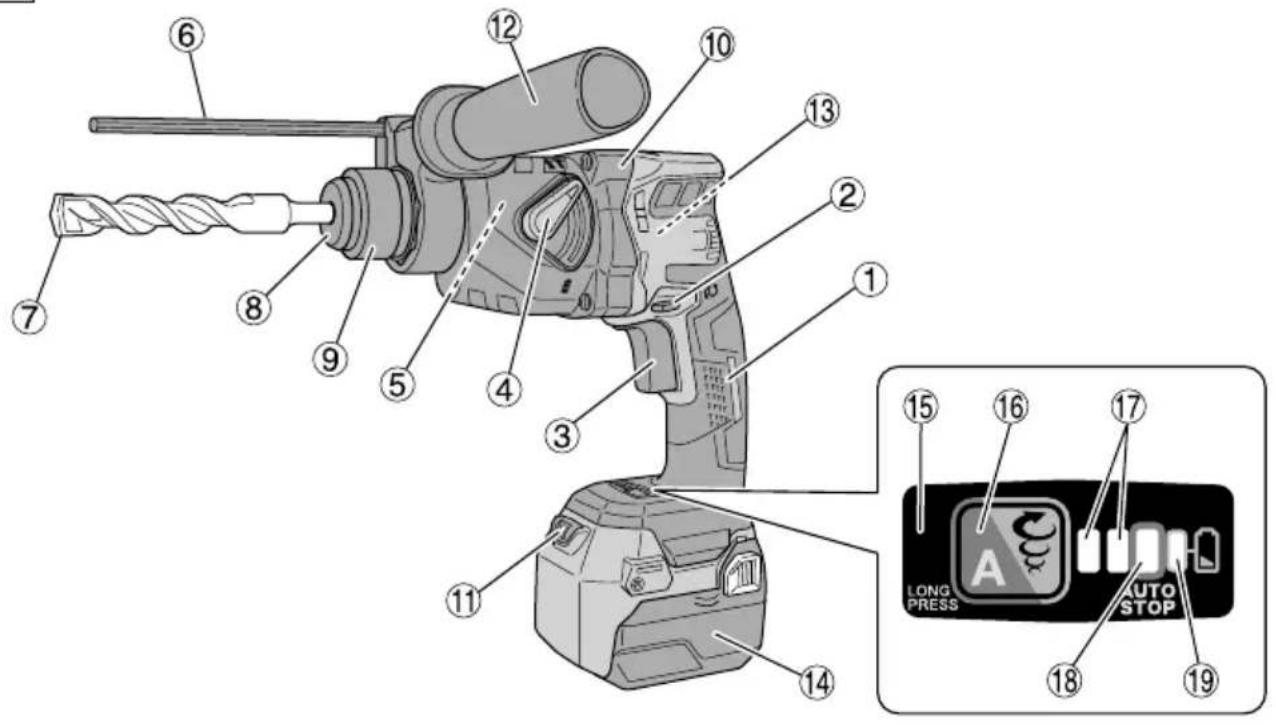
NAMES OF PARTS (Fig. 1–Fig. 17)
| 1 | Handle Changeover switch | ||
| 2 | Pushing button Display lamp | ||
| 3 | Switch trigger Auto stop lamp | ||
| 4 | Change lever Indicator lamp | ||
| 5 | Name plate Latch | 20 | |
| 6 | Depth gauge Pilot lamp | 21 | |
| 7 | Drill bit Indicator lamp: Lights | ||
| 8 | Front cap Grease | 23 | |
| 9 | Grip Auto stop lamp: Links | ||
| 10 | Housing Auto stop lamp: Lights | ||
| 11 | LED light | 26 | Battery sliding grooves |
| 12 | Side handle Terminal (Product) | ||
| 13 | Motor Air gun | 28 | |
| 14 | Battery Terminal (Battery) | ||
| 15 | Display panel Sliding grooves |
SYMBOLS
WARNING
The following show symbols used for the machine. Be sure that you understand their meaning before use.
 | DH18DPB: Cordless Rotary Hammer |
 | To reduce the risk of injury, user must read instruction manual. |
 | Only for EU countriesDo not dispose of electric tools together with household waste material!In observance of European Directive 2012/19/EU on waste electrical and electronic equipment and its implementation in accordance with national law, electric tools that have reached the end of their life must be collected separately and returned to an environmentally compatible recycling facility. |
| V Rated voltage | |
| n0 | No-load speed |
| Bpm Full-load impact rate | |
| φ max | Drilling diameter, max. |
| Weight*(According to EPTA-Procedure 01/2014) | |
| Concrete | |
| Steel | |
| Wood | |
| Rotation only function | |
| Rotation and hammering function | |
| Switching ON | |
| Switching OFF | |
| Low mode | |
| Normal mode | |
| Disconnect the battery | |
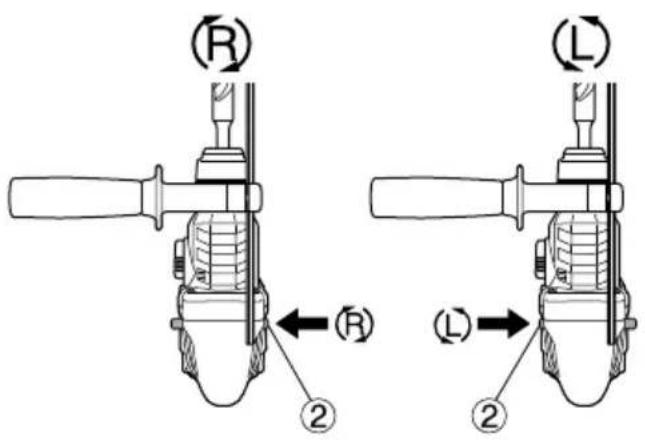
| Clockwise rotation | |
| Counterclockwise rotation | |
* Depending on attached battery. The heaviest weight is measured with BSL36B18 (sold separately).
STANDARD ACCESSORIES
In addition to the main unit (1 unit), the package contains the accessories listed on page 217.
Standard accessories are subject to change without notice.
APPLICATIONS
Rotation and hammering function IT
○ Drilling anchor holes
○ Drilling holes in concrete
○ Drilling holes in tile
Rotation only function
○ Drilling in steel or wood (with optional accessories)
○ Tightening machine screws, wood screws (with optional accessories)
SPECIFICATIONS
The specifications of this machine are listed in the Table on page 217.
NOTE
Due to HiKOKI's continuing program of research and development, the specifications herein are subject to change without prior notice.
CHARGING
Before using the power tool, charge the battery as follows.
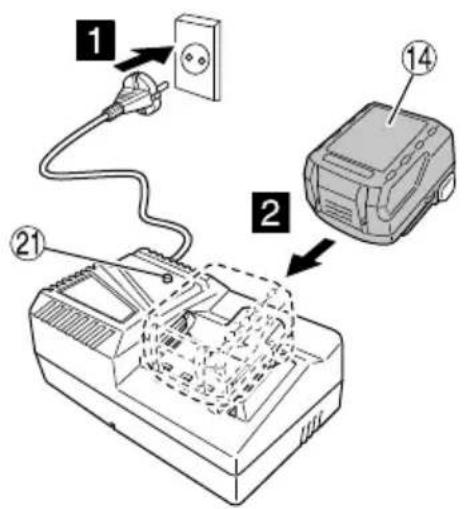
- Connect the charger's power cord to the receptacle. When connecting the plug of the charger to a receptacle, the pilot lamp will blink in red (At 1-second intervals).
- Insert the battery into the charger.
Firmly insert the battery into the charger as shown in Fig. 3 (on page 2).
- Charging
When inserting a battery in the charger, charging will commence and the pilot lamp will light continuously in red. When the battery becomes fully recharged, the pilot lamp will blink in red. (At 1-second intervals) (See Table 1)
● Pilot lamp indication
The indications of the pilot lamp will be as shown in Table 1, according to the condition of the charger or the rechargeable battery.
Table 1
| Indications of the pilot lamp | ||||
| Pilot lamp(red) | Beforecharging | Blinks | Lights for 0.5 seconds. Does not light for 0.5 seconds. (off for 0.5 seconds) | |
| Whilecharging | Lights | Lights continuously | ||
| Chargingcomplete | Blinks | Lights for 0.5 seconds. Does not light for 0.5 seconds. (off for 0.5 seconds) | ||
| Chargingimpossible | Flickers | Lights for 0.1 seconds. Does not light for 0.1 seconds. (off for 0.1 seconds) | Malfunction in the battery or the charger | |
| Overheatstandby | Blinks | Lights for 1 second. Does not light for 0.5 seconds. (off for 0.5 seconds) | Battery overheated. Unable to charge. (Charging will commence when battery cools) | |
● Regarding the temperatures and charging time of the battery.
The temperatures and charging time will become as shown in Table 2.
Table 2
| Charger | UC18YFSL | ||||||
| Battery | Type of battery Li-ion | ||||||
| Temperatures at which the battery can be recharged | 0°C-50°C | ||||||
| Charging voltage V | 14.4 18 | ||||||
| Charging time, approx. (At 20°C) | BSL14xx series BSL18xx series | Multi volt series | |||||
| (4 cells) (8 cells) (5 cells) (10 cells) (10 cells) | |||||||
| min. | BSL1415S:20BSL1415:22BSL1415X:22BSL1420:30BSL1425:35BSL1430C:45 | BSL1430:45BSL1440:60BSL1450:75BSL1460:90 | BSL1815S:20BSL1815:22BSL1815X:22BSL1820:30BSL1825:35BSL1830C:45BSL1850C:75 | BSL1830:45BSL1840:60BSL1850:75BSL1860:90 | |||
NOTE
The recharging time may vary according to the ambient temperature and power source voltage.
CAUTION
When the battery charger has been continuously used, the battery charger will be heated, thus constituting the cause of the failures. Once the charging has been completed, give 15 minutes rest until the next charging.
-
Disconnect the charger's power cord from the receptacle.
-
Hold the charger firmly and pull out the battery.
NOTE
Be sure to pull out the battery from the charger after use, and then keep it.
Regarding electric discharge in case of new batteries, etc.
As the internal chemical substance of new batteries and batteries that have not been used for an extended period is not activated, the electric discharge might be low when using them the first and second time. This is a temporary phenomenon, and normal time required for recharging will be restored by recharging the batteries 2–3 times.
How to make the batteries perform longer.
(1) Recharge the batteries before they become completely exhausted.
When you feel that the power of the tool becomes weaker, stop using the tool and recharge its battery. If you continue to use the tool and exhaust the electric current, the battery may be damaged and its life will become shorter.
(2) Avoid recharging at high temperatures.
A rechargeable battery will be hot immediately after use. If such a battery is recharged immediately after use, its internal chemical substance will deteriorate, and the battery life will be shortened. Leave the battery and recharge it after it has cooled for a while.
CAUTION
☐ If the battery is charged while it is heated because it has been left for a long time in a location subject to direct sunlight or because the battery has just been used, the pilot lamp of the charger lights up green or lights for 1 second, does not light for 0.5 seconds (off for 0.5 seconds). In such a case, first let the battery cool, then start charging.
When the pilot lamp flickers in red (at 0.2-seconds intervals), check for and take out any foreign objects in the charger's battery connector. If there are no foreign objects, it is probable that the battery or charger is malfunctioning. Take it to your authorized Service Center.
○ Since the built-in micro computer takes about 3 seconds to confirm that the battery being charged with chargers are taken out, wait for a minimum of 3 seconds before reinserting it to continue charging. If the battery is reinserted within 3 seconds, the battery may not be properly charged.
MOUNTING AND OPERATION
| Action Figure Page | ||
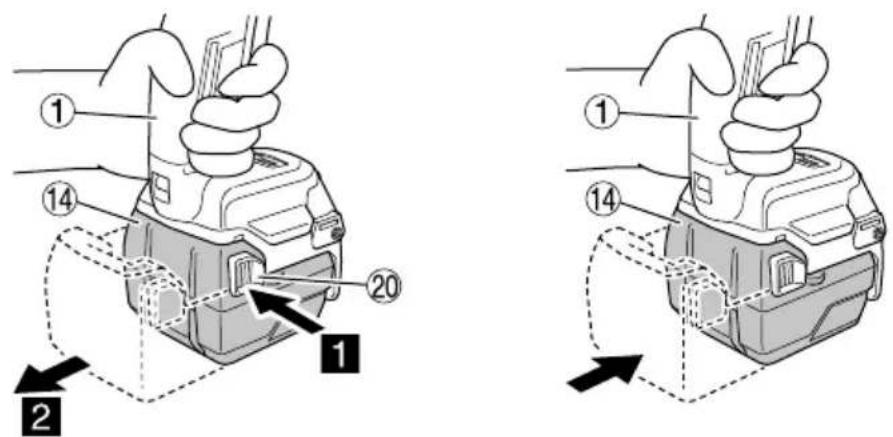
| Removing and inserting the battery 2 | 2 | |
| Charging | 3 2 | |
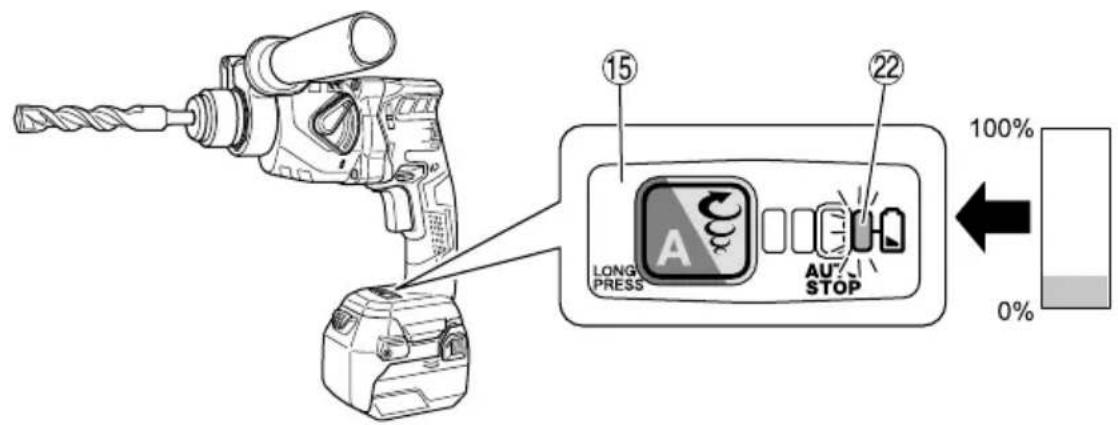
| Indicator lamp lights when battery is low | 4 | 3 |
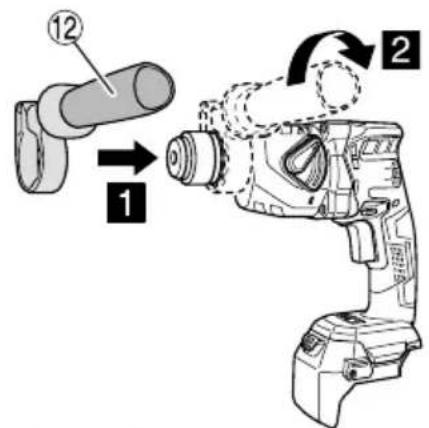
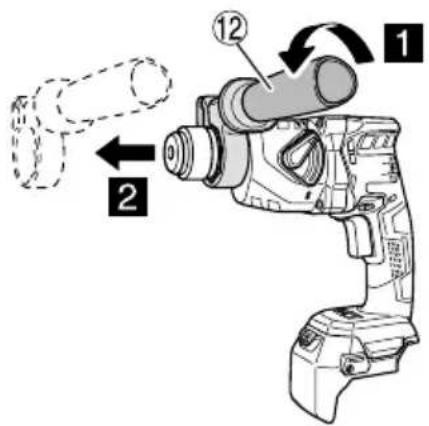
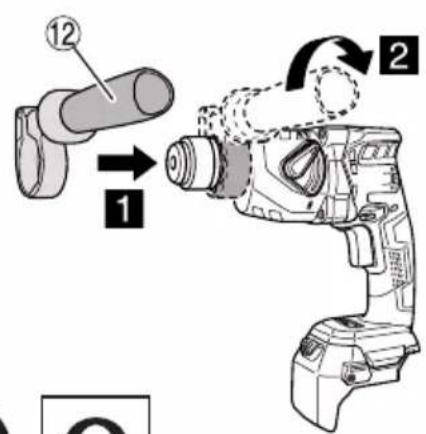
| Installing/Removing the side handle | 5 3 |
| Inserting SDS-plus drilling tools | 6 3 | |
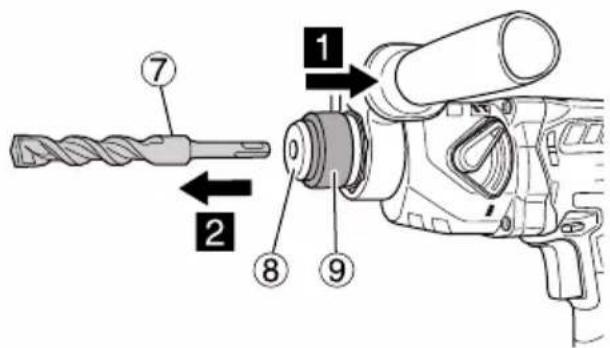
| Removing SDS-plus drilling tools | 7 3 | |
| Selecting rotation direction | 8 4 | |
| Selecting the operating mode | 9 4 | |
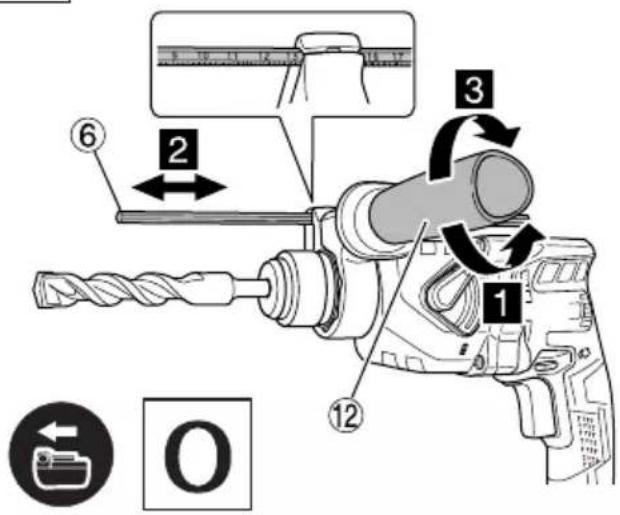
| Adjusting the drilling depth | 10 | 4 |
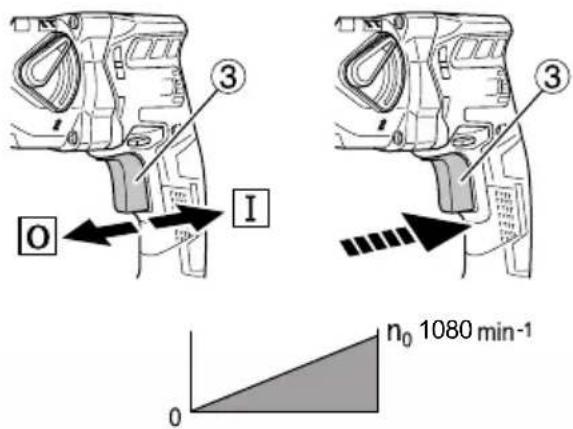
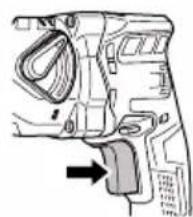
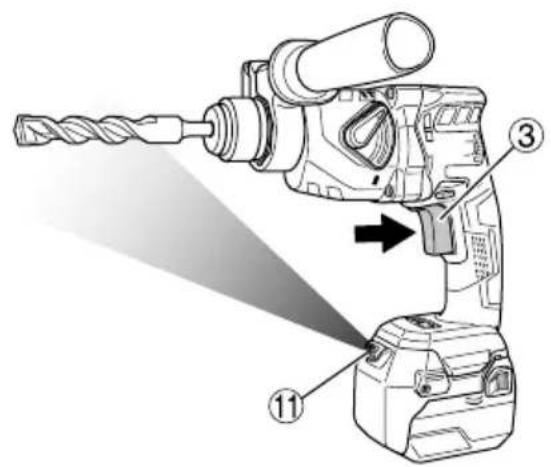
| Switch operation | 11 | 4 |
| Setting the speed | 12 | 4 |
| Auto stop function | 13 | 4 |
| How to use the LED light | 14 | 5 |
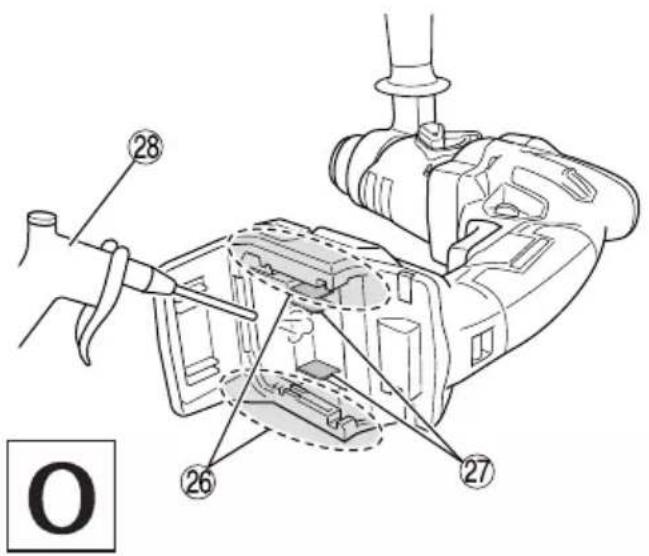
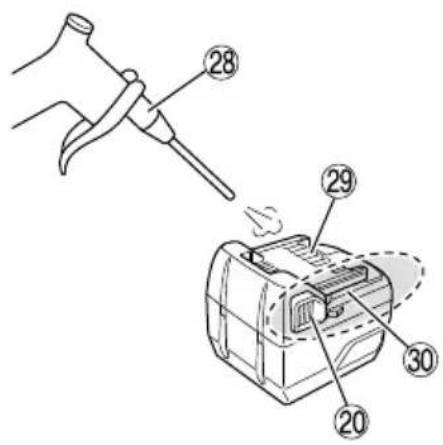
| Cleaning the battery installation compartment and the battery | 15 | 5 |
| Installing the side handle | 17 | 5 |
| Selecting accessories* | — | 218, 219 |
* For detailed information regarding each tool, contact a HiKOKI authorized service center.
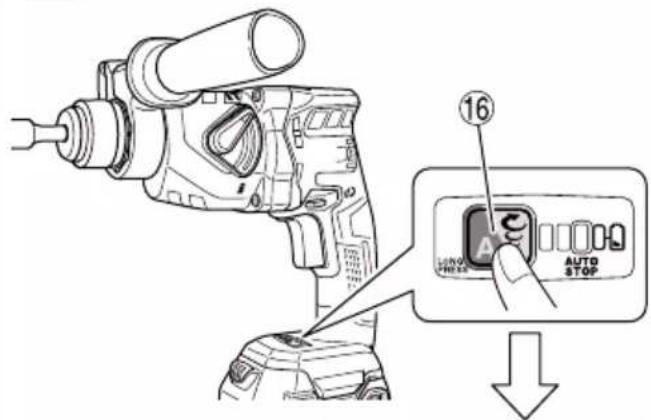
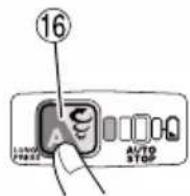
Pressing the changeover switch allows the selection of rotation speed and the auto stop function.
○ Rotation speed (Low mode/Normal mode) (Fig. 12)
Select either Low mode or Normal mode and operate the tool in the selected speed.
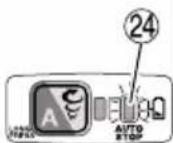
○ Auto stop mode (on/off) (Fig. 13)
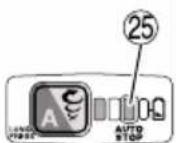
This product is equipped with an auto stop function to support continuous drilling work. The function features a memory mode for storing the work time for drilling from switch ON to switch OFF, and an auto stop mode that automatically stops the motor from the second drilling onward should the work exceed the stored work time while the switch is ON.
AUTO STOP FUNCTION
In selection mode, pressing the button for longer than two seconds will move to memory mode. (Fig. 13)
(At the same time the auto stop lamp will blink.)
Conduct drilling when the auto stop lamp is flashing. The time between switching ON and switching OFF is stored by the tool.
(At the same time, the auto stop lamp will light up.)
Conduct drilling when the auto stop lamp is flashing. Continuous drilling is possible as the memory storage time will be recorded by the tool until the auto stop function's auto stop mode is cancelled.
The auto stop function is cancelled by pressing the changeover switch once again for over two seconds.
(At the same time, the auto stop lamp will switch off.)
CAUTION
○ Switch ON the tool once you place the tip of the tool on the work material.
○ The rotation speed and the level at which the switch is pulled during drilling is not stored to memory.
- Fully carry out drilling in one go during auto stop mode.
- The motor will stop even if you switch OFF within the memory storage time.
When you switch OFF within the memory storage time, the count will be reset. If you rework a task in which a hole has been partially drilled, the memory storage time will be fully recounted.
- The auto stop function will remain active until canceled.
REACTIVE FORCE CONTROL
This product is equipped with a Reactive Force Control (RFC) feature that reduces jerking of the tool body. If the tool bit is suddenly overburdened, any jerking of the tool body is reduced by activation of the slip clutch or by stopping of the motor by the sensor built into the tool body. If the motor is stopped because of overburdening detection by the controller, the display lamp will blink while the switch is pulled. In addition, the lamp will continue blinking for approximately three seconds after the switch is released. The motor will remain stopped while the lamp is blinking. (Fig. 18)
Because the RFC feature may not activate or its performance may be insufficient depending on the working environment and conditions, be careful not to suddenly overburden the tool bit while operating.
● Possible causes of sudden overburdening
① Tool bit biting into material
② Impact against nails, metal or other hard objects
③ Tasks involving prying or any excess application of pressure, etc.
Also, other causes include any combination of the aforementioned.
● When the reactive force control (RFC) is triggered
When the RFC is triggered and the motor stops, turn off the tool's switch and remove the cause of the overburdening before continuing operation.
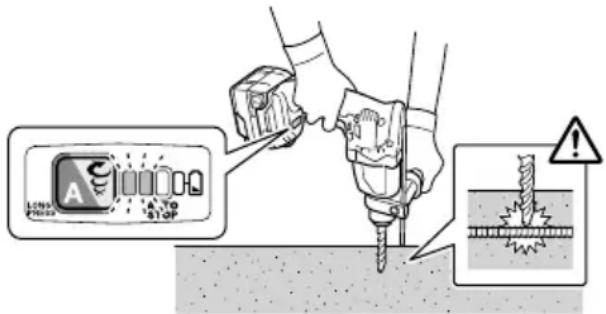
Fig. 18
ABOUT THE PROTECTION FUNCTION
This tool has a built-in protection circuit for preventing damage to the unit in the event of an abnormality. Depending on the following, the display lamp and the indicator lamp will flash, and the unit will cease to operate. Verify the problem indicated by the flashing and take the necessary steps to correct the problem.
When pressing the changeover switch, do so when the switch is not being pulled.
Changeover switch
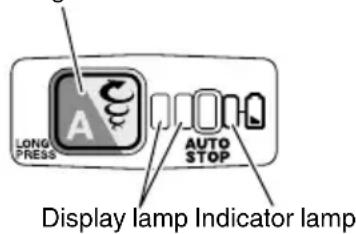
Fig. 19
Table 3
| Display lamp fl ashing | Cause Solution | |
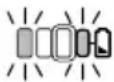 | Operation has ceased because the internal temperature has exceeded the temperature limit. (High temperature protection function) | Allow the unit to cool for 15 to 30 minutes. When the temperature goes down and the display lamp and the indicator lamp blinking stops, pull the switch trigger to recover operation. |
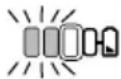 | Sudden overburdening of the tool bit has activated the RFC, stopping further operation of the tool. RFC (See page 12 “REACTIVE FORCE CONTROL”) | Release the switch trigger and leave it until the display lamp blinking stops. Pull the switch trigger again to recover operation. Before continuing operation, remove the cause of the overburden. |
NOTE
Despite taking steps to correct a problem, the display lamp may continue to blink. Should this be the case, the unit may require repair. If so, please contact the outlet from which this product was purchased for repairs.
LUBRICATION
Low viscosity grease is applied to this rotary hammer so that it can be used for a long period without replacing the grease. Please contact the nearest service center for grease replacement when any grease is leaking from loosened screw.
Further use of the rotary hammer despite the grease shortage causes damage to reduce the service life.
CAUTION
A specific grease is used with this machine, therefore, the normal performance of the machine may be badly affected by use of different grease. Please be sure to let one of our service centers to undertake replacement of the grease.
MAINTENANCE AND INSPECTION
CAUTION
Be sure to turned off the switch and remove the battery before maintenance and inspection.
1. Inspecting the tool
Since use of as dull tool will degrade efficiency and cause possible motor malfunction, sharpen or replace the tool as soon as abrasion is noted.
2. Inspecting the mounting screws
Regularly inspect all mounting screws and ensure that they are properly tightened. Should any of the screws be loose, retighten them immediately. Failure to do so could result in serious hazard.
3. Maintenance of the motor
The motor unit winding is the very “heart” of the power tool. Exercise due care to ensure the winding does not become damaged and/or wet with oil or water.
4. Inspection of terminals (tool and battery)
Check to make sure that swarf and dust have not collected on the terminals.
On occasion check prior, during and after operation.
CAUTION
Remove any swarf or dust which may have collected on the terminals.
Failure to do so may result in malfunction.
5. Cleaning on the outside
When the power tool is stained, wipe with a soft dry cloth or a cloth moistened with soapy water. Do not use chloric solvents, gasoline or paint thinner, for they melt plastics.
6. Cleaning the battery installation compartment and the battery
After drilling concrete, if concrete dust has accumulated on the battery installation compartment and the battery, clean off the accumulated concrete dust with an air gun or a dry cloth before using the tool. (Fig. 15) Also, after cleaning, ensure that the battery can be installed and removed smoothly from the tool.
CAUTION
Using the tool when the battery is covered with concrete dust may lead to accidents such as the battery falling during use.
Furthermore, such use may cause a malfunction or contact failure between the battery and the terminals.
7. Storage
Store the power tool and battery in a place in which the temperature is less than 40° C and out of reach of children.
NOTE
Storing lithium-ion batteries.
Make sure the lithium-ion batteries have been fully charged before storing them.
Prolonged storage (3 months or more) of batteries with a low charge may result in performance deterioration, signifi cantly reducing battery usage time or rendering the batteries incapable of holding a charge.
However, signifi cantly reduced battery usage time may be recovered by repeatedly charging and using the N batteries two to five times.
If the battery usage time is extremely short despite repeated charging and use, consider the batteries dead and purchase new batteries.
Information concerning airborne noise and vibration
The measured values were determined according to EN62841 and declared in accordance with ISO 4871.
Measured A-weighted sound power level: 101 dB (A)
Measured A-weighted sound pressure level: 90 dB (A) Uncertainty K: 3 dB (A).
Wear hearing protection.
Vibration total values (triax vector sum) determined according to EN62841.
Hammer drilling into concrete:
Vibration emission value ah , HD = 11.6 m/s 2
Uncertainty K = 1.5 m/s 4
The declared vibration total value and the declared noise emission value have been measured in accordance with a standard test method and may be used for comparing one tool with another.
They may also be used in a preliminary assessment of exposure.
WARNING
☐ The vibration and noise emission during actual use of the power tool can differ from the declared total value depending on the ways in which the tool is used especially what kind of workpiece is processed; and
- Identify safety measures to protect the operator that are based on an estimation of exposure in the actual conditions of use (taking account of all parts of the operating cycle such as the times when the tool is switched off and when it is running idle in addition to the trigger time).
NOTE
Due to HiKOKI's continuing program of research and development, the specifications herein are subject to change without prior notice.
CAUTION
In the operation and maintenance of power tools, the safety regulations and standards prescribed in each country must be observed.
Important notice on the batteries for the HiKOKI cordless power tools
Please always use one of our designated genuine batteries. We cannot guarantee the safety and performance of our cordless power tool when used with batteries other than these designated by us, or when the battery is disassembled and modified (such as disassembly and replacement of cells or other internal parts).
GUARANTEE
We guarantee HiKOKI Power Tools in accordance with statutory/country specific regulation. This guarantee does not cover defects or damage due to misuse, abuse, or normal wear and tear. In case of complaint, please send the Power Tool, undismantled, with the GUARANTEE CERTIFICATE found at the end of this Handling instruction, to a HiKOKI Authorized Service Center.
TROUBLESHOOTING
Use the inspections in the table below if the tool does not operate normally. If this does not remedy the problem, consult your dealer or the HiKOKI Authorized Service Center.
- Power tool
| Symptom Possible cause Remedy | ||
| Tool doesn't run No remaining battery power Charge the battery. | ||
| Battery isn't securely attached. Push in the battery until a click is heard. | ||
| Concrete dust has accumulated on the terminals of the battery installation compartment as well as on the battery sliding grooves. | ||
| Tool suddenly stopped Tool was overburdened Get rid of the problem causing the overburden. | ||
| Reactive force control was activated | ||
| The battery is overheated. Let the battery cool down. | ||
| Tool bits -can't be attached -fall off | The shape of the attachment portion doesn't match | For the SDS-plus shank type, use a bit with a diameter that is within the designated range. |
| Holes can't be smoothly drilled. | The drill is worn Replace with a new drill. | |
| The drill is rotating in reverse Switch to forward rotation. | ||
| Screw head slips or comes loose. | Bit number doesn't match with the screw size | Install a suitable bit. |
| The bit is worn Replace with a new bit. | ||
| Battery cannot be installed A attempting to install a battery other than that specified for the tool. | Please install batteries that are multi volt or BSL18xx series. | |
ALLGEMEINE
Abb. 18
● Causes possibles de surcharge soudaine
Fig. 18
À PROPOS DE LA FONCTION DE PROTECTION
Afb. 18
OVER DE BESCHERMINGSFUNCTIE
NOMES DOS COMPONENTES
(Fig. 1–Fig. 17)
Fig. 18
Bild 18
OM SKYDDSFUNKTIONEN
STYRING AF REAKTIONSKRAFT
Fig. 18
OM BESKYTTELSESFUNKTIONEN
SIKKERHETSFORHOLDSREGLER FOR ELEKTROVERKT∅Y
ADVARSEL
Fig. 18
OM BESKYTTELSESFUNKSJONEN
VEDLIKEHOLD OG INSPEKSJON
FORSIKTIG
Rys. 18
O FUNKCJI OCHRONY
- ábra
A VÉDŐ FUNKCIÓ
ZVOLTE REŽIM PROVOZU
obr. 18
O FUNGOVÁNÍ OCHRANY
Şekil 18
KORUMA İŞLEVİ HAKKINDA
Fig. 18
DESPRE FUNCTIA DE PROTECTIE
Sl. 18
O ZAŠČITNI FUNKCIJI
Obr. 18
INFORMÁCIE O OCHRANNEJ FUNKCII
Фиг. 18
Sl. 18
O FUNKCIJI ZAŠTITE
Ovaj alat ima ugrađeno kolo zaštite za sprečavanje štete na jedinici u slučaju abnormalnosti. U zavisnosti od sledećeg, lampa prikaza i lampa indikatora će blještati a jedinica će prestati da radi. Verifikujte problem na koji ukazuje blještanje i preuzmite neophodne korake da biste ispravili problem. Kada pritisnete preklopni prekidač, uradite to kada se prekidač ne povlači.
Preklopni prekidač
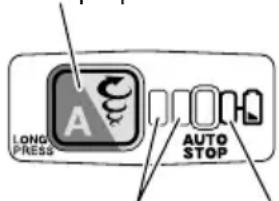
Lampa prikaza Lampa indikatora
Sl. 19
Tabela 3
| Lampa prikaza blješti | Uzrok Rešenje | |
 | Rukovanje je prestalo jer je interna temperatura prešla ograničenje temperature. (Funkcija zaštite od visoke temperature) | Dozvolite da se jedinica ohladi 15 do 30 minuta.Kada temperatura opadne a lampa prikaza i lampa indikatora prestanu da blješte, pritisnite preklopn prekidač da biste povratili radnju. |
 | Naglo preopterećenje burgije alatke je aktiviralo RFC, zaustavljanje daljeg rukovanja alatkom. RFC (pogledajte stranu 205 „KONTROLA REAKTIVNE SILE“) | Pritisnite preklopn prekidač i ostavite ga uključenim dok se ne zaustavi treperenje lampe prikaza. Ponovo pritisnite preklopn prekidač da biste povratili radnju.Pre nastavka rukovanja, uklonite uzrok preopterećenja. |
NAPOMENA
Slika 18
O FUNKCIJI ZAŠTITE
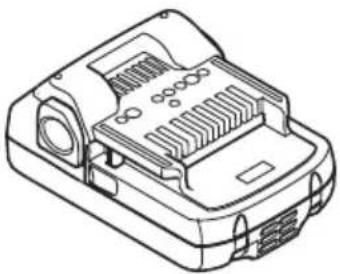
BSL18..
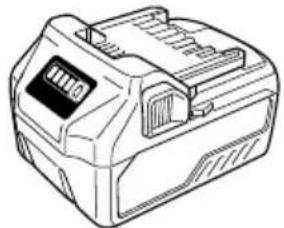
BSL36..18..
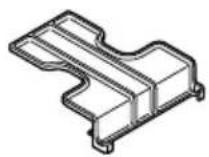
329897
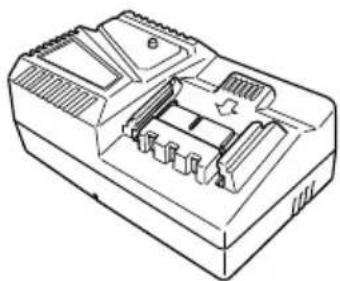
UC18YFSL (14,4V - 18V)
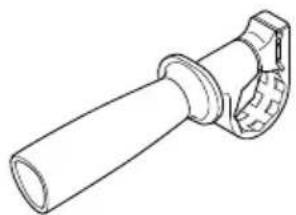
324548
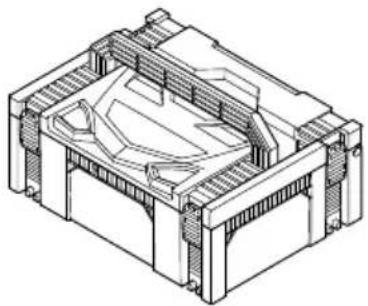
336471
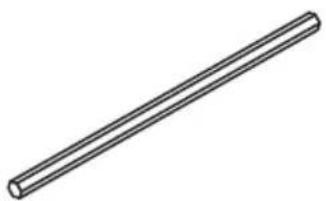
303709
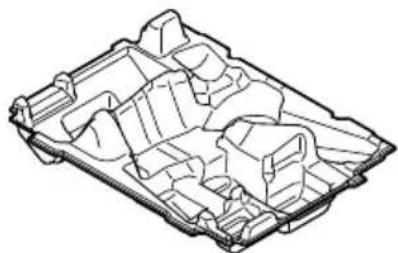
376671
![graph TD A["1: 303617"] --> B["944477"] C["2: 303618"] --> B D["A: 303619"] --> B E["B: 303620"] --> B F["303332"] --> G["105mm: 303625"] F --> H["300mm: 303626"] I["982684"] --> J[" "] K["303046"] --> L[" "] M["981122"] --> N["321814"] O["303623"] --> P[" "] Q["971787 306885"] --> R[" "] S[" "] -->…](/content/2026/04/642975/images/67cbda362f5aafdcaa694504d17b949d400e6a303757dfc90c3597b6c1afde4e.jpg)
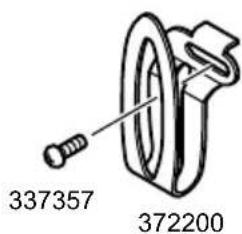
| English Dansk Română | |||
| GUARANTEE CERTIFICATE1 Model No.2 Serial No.3 Date of Purchase4 Customer Name and Address5 Dealer Name and Address(Please stamp dealer name and address) | GARANTIBEVIS1 Modelnummer2 Serienummer3 Købsdato4 Kundes navn og adresse5 Forhandlers navn og adresse(Indsæt stempel med forhandlers navn og adresse) | CERTIFICAT DE GARANTIE1 Model nr.2 Nr. de serie3 Data cumpărării4 Numele și adresa clientului5 Numele și adresa distribuitorului(Vă rugăm aplicați ștampila cu numele și adresa distribuitorului) | |
| Deutsch Norsk Slovenščina | |||
| GARANTIESCHEIN1 Modell-Nr.2 Serien-Nr.3 Kaufdatum4 Name und Anschrift des Kunden5 Name und Anschrift des Händlers(Bitte mit Namen und Anschrift des Handlers abstempeln) | GARANTISERTIFIKAT1 Modellnr.2 Serienr.3 Kjøpsdato4 Kundens navn og adresse5 Forhandlerens navn og adresse(Vennligst stempel forhandlerens navn og adresse) | GARANCIJSKO POTRDILO1 Št. modela2 Serijska št.3 Datum nakupa4 Ime in naslov kupca5 Ime in naslov prodajalca(Prosimo vtisnite žig z imenom in naslovom prodajalca) | |
| Français Suomi Slovenčina | |||
| CERTIFICAT DE GARANTIE1 No. de modèle2 No de série3 Date d'achat4 Nom et adresse du client5 Nom et adresse du revendeur(Cachet portant le nom et l'adresse du revendeur) | TAKUUTODISTUS1 Malli nro2 Sarja nro3 Ostopäivämäärä4 Asiakkaan nimi ja osoite5 Myyjän nimi ja osoite(Leimaa myyjän nimi ja osoite) | ZÁRUČNÝ LISTA1 Č. modelu2 Sériové č.3 Dátum zakúpenia4 Meno a adresa zákaznika5 Názov a adresa predajcu(Pečiatka s názvom a adresou predajcu) | |
| Italiano Ελληνικά Български | |||
| CERTIFICATO DI GARANZIA1 Modello2 N° di serie3 Data di acquisto4 Nome e indirizzo dell'acquirente5 Nome e indirizzo del rivenditore(Si prega di apporre il timbro con questi dati) | ПІЗТОПОІНТИКО ЕГГУНЗНЗ1 Ар. Мовтёлou2 Aŭξων Ap.3 Нμερομηνια αγοράς4 ́Овоја кай дієшвунот пелâtтн5 ́Овоја кай дієшвунот метапішлтн’ї(Паракалоўє на хрношопотићєі офрауіба) | ГАРАНЦИОНЕН СЕРТИФИКАТ1 Модел No2 Сериен No3 Дата за закупуване4 Име и адрес на клиента5 Име и адрес на търговецаМоля, отпечатайте името и адрес на дилъра) | |
| Nederlands Polski Srpski | |||
| GARANTIEBEWIJS1 Modelnummer2 Serienummer3 Datum van aankoop4 Naam en adres van de gebruiker5 Naam en adres van de handelaar(Stempel a.u.b. naam en adres vande de handelaar) | GWARANCJA1 Model2 Numer seryjny3 Data zakupu4 Nazwa klienta i adres5 Nazwa dealera i adres(Pieczęć punktu sprzedaży) | GARANTNI SERTIFIKAT1 Br. modela.2 Serijski br.3 Datum kupovine4 Ime i adresa kupca5 Ime i adresa prodavca(Molimo da stavite pečat na ime i adresu trgovca) | |
| Español Magyar Hrvatski | |||
| CERTIFICADO DE GARANTÍA1 Número de modelo2 Número de serie3 Fecha de adquisición4 Nombre y dirección del cliente5 Nombre y dirección del distribuidor(Se ruega poner el sello del distribuidor con su nombre y dirección) | GARANCIA BIZONYLAT1 Típusszám2 Sorozatszám3 A vásárlás dátuma4 A Vásárló neve és címe5 A Kereskedő neve és címe(Kérjük ide elhelyezni a Kereskedő nevének és címének pecsétjtét) | JAMSTVENI CERTIFIKAT1 Br modela.2 Serijski br.3 Datum kupnje4 Ime i adresa kupca5 Ime i adresa trgovca(Molimo stavite pečat na ime i adresu trgovca) | |
| Português Češčina | |||
| CERTIFICADO DE GARANTIA1 Número do modelo2 Número do série3 Data de compra4 Nome e morada do cliente5 Nome e morada do distribuidor(Por favor, carimbe o nome e morada do distribuidor) | ZÁRUČNÍ LIST1 Model č.2 Série č.3 Datum nákupu4 Jméno a adresa zákaznika5 Jméno a adresa prodejce(Prosíme o razítko se jménem a adresou prodejce) | ||
| Svenska Türkçe | |||
| GARANTICERTIFIKAT1 Modellnr2 Serienr3 Inköpsdatum4 Kundens namn och adress5 Försäljarens namn och adress(Stàmpla försäljarens namn och adress) | GARANTÍ SERTÍFÍKASI1 Model No.2 Seri No.3 Satin Alma Tarihi4 Müşteri Adi ve Adresi5 Bayi Adi ve Adresi(Lütfen bayi adini ve adresini kaşe olarak basin) | ||
HiKOKI
| 1 | |
| 2 | |
| 3 | |
| 4 | |
| 5 |
Siemensring 34, 47877 willich, Germany
Tel: +49 2154 49930
Fax: +49 2154 499350
URL: http://www.hikoki-powertools.de
Hikoki Power Tools Netherlands B.V.
Brabanthaven 11, 3433 PJ Nieuwegein, The Netherlands
Tel: +31 30 6084040
Fax: +31 30 6067266
URL: http://www.hikoki-powertools.nl
Hikoki Power Tools (U.K.) Ltd.
25 Majestic Road, Southampton, SO16 OYT,
United Kingdom
Tel: +44 1908 660663
Fax: +44 1908 606642
URL: http://www.hikoki-powertools.uk
Hikoki Power Tools France S.A.S.
Hikoki Power Tools Belgium N.V./S.A.
Koningin Astridlaan 51, B-1780 Wemmel, Belgium
Tel: +32 2 460 1720
Fax: +32 2 460 2542
URL http://www.hikoki-powertools.be
Hikoki Power Tools Italia S.p.A
Via Piave 35, 36077, Altavilla Vicentina (VI), Italy
Tel: +39 0444 548111
Fax: +39 0444 548110
URL: http://www.hikoki-powertools.it
Hikoki Power Tools Ibérica, S.A.
C/ Puigbarral, 26-28, Pol. Ind. Can Petit, 08227 Terrassa
(Barcelona), Spain
Tel: +34 93 735 6722
Fax: +34 93 735 7442
URL: http://www.hikoki-powertools.es
Kjeller Vest 7, N-2007 Kjeller, Norway
Tel: (+47) 6692 6600
Fax: (+47) 6692 6650
URL: http://www.hikoki-powertools.no
Hikoki Power Tools Sweden AB
Rotebergsvagen 2B SE-192 78 Sollentuna, Sweden
Tel: (+46) 8 598 999 00
Fax: (+46) 8 598 999 40
URL: http://www.hikoki-powertools.se
Hikoki Power Tools Denmark A/S
Lillebaeltsvej 90, 6715 Esbjerg N, Denmark
Tel: (+45) 75 14 32 00
Fax: (+45) 75 14 36 66
URL: http://www.hikoki-powertools.dk
Hikoki Power Tools Finland Oy
Tupalankatu 9, 15680 Lahti, Finland
Tel: (+358) 20 7431 530
Fax: (+358) 20 7431 531
URL: http://www.hikoki-powertools.fi
Hikoki Power Tools Hungary Kft.
Hikoki Power Tools Romania S.R.L.
Ring Road, No. 66, Mustang Traco Warehouses, Warehouse
No.1, Pantelimon City, 077145, Ilfov County, Romania
| English Nederlands | ||
| EC DECLARATION OF CONFORMITYWe declare under our sole responsibility that Cordless Rotary Hammer, identified by type and specific identification code *1), is in conformity with all relevant requirements of the directives *2) and standards *3). Technical fi le at *4) – See below.The European Standard Manager at the representative office in Europe is authorized to compile the technical fi le.The declaration is applicable to the product affi xed CE marking. | EC VERKLARING VAN CONFORMITEITWij verklaren onder onze eigen verantwoordelijkheid dat Snoerloze boorhamer, geïdentificeerd door het type en de specifieke identificatiecode*1), voldoet aan alle relevante bepalingen van der richtlijnen*2) en normen*3). Technische documentatie bij*4) – zie onder.De Europese Normen Manager bij de vertegenwoordiging in Europa is gemachtigd om het technisch dossier samen te stellen.Deze verklaring is van toepassing op producten voorzien van de CE-markeringen. | |
| Deutsch Español | ||
| EG-KONFORMITÄTSERKLÄRUNGWir erklären in alleiniger Verantwortung, dass der durch den Typ und den spezifischen Identifizierungscode *1) identifizierte Akku-Bohrhammer allen einschlägigen Bestimmungen der Richtlinien *2) und Normen *3) entspricht. Technische Unterlagen unter *4) – Siehe unten.Die Leitung der repräsentativen Behörde für europäische Normen und Richtlinien ist berechtigt, die technischen Unterlagen zusammenzustellen.Die Erklärung gilt für die an dem Produkt angebrachte CE-Kennzeichnung. | DECLARACIÓN DE CONFORMIDAD DE LA CEDeclaramos bajo nuestra única responsabilidad que el Martillo perforador a batería, identificado por tipo y por código de identificación específico *1), está en conformidad con todas las disposiciones correspondientes de las directivas *2) y de las normas *3). Documentación técnica en *4) – Ver a continuación.El Director de Normas Europeas en la oficina de representación en Europa está autorizado para elaborar el expediente técnico.La declaración se aplica al producto con marcas de la CE. | |
| Français Português | ||
| DECLARATION DE CONFORMITE CENous déclarons sous notre entière responsabilité que le marteau perforateur à batterie, identifié par le type et le code d'identification spécifique *1) est en conformité avec toutes les exigences applicables des directives *2) et des normes *3). Dossier technique en *4) - Voir ci-dessous.Le Gestionnaire des normes européennes du bureau de représentation en Europe est autorisé à constituer le dossier technique.Cette déclaration s'applique aux produits désignés CE. | DECLARAÇÃO DE CONFORMIDADE CEDeclaramos, sob nossa única e inteira responsabilidade, que Martelo Perfurador a Bateria, identificado por tipo e código de identificação específico *1), está em conformidade com todos os requerimentos relevantes das diretivas *2) e normas *3). Ficheiro técnico em *4)-Consulte abaixo.O Gestor de Normas Europeias no escritório de representação na Europa está autorizado a compilar o fi cheiro técnico.A declaração aplica-se aos produtos com marca CE. | |
| Italiano Svenska | ||
| DICHIARAZIONE DI CONFORMITÀ CEDichiariamo sotto la nostra esclusiva responsabilità che il martello perforatore a batteria, identificato dal tipo e dal codice identificativo spécifique *1), è conforme a tutti i requisiti delle direttive *2) e degli standard *3). Documentazione tecnica presso *4) – Vedere sotto.Il gestore delle norme europee presso l'ufficio di rappresentanza in Europa è autorizzato a compilare il fascicolo tecnico.La dichiarazione è applicabile ai prodotti cui sono applicati i marchi CE. | EG-DEKLARATION BETRÄFFANDE LIKFORMIGHETVi förklarar på eget ansvar att denna batteridrivna borrhammare, identifierad enligt typ och särskild identifikationskod *1), överensstämmer med alla relevanta krav i direktiven *2) och standarderna *3). Teknisk fi i enligt *4) – Se nedan.Den europeiska standardansvariga på representationskontoret i Europa är auktoriserad att sammenställa den tekniska fi len.Denna försäkran gäller för produkten med tillhörande CE-märkning. | |
| *1) DH18DPB C360016S*2) 2006/42/EC, 2014/30/EU, 2014/35/EU, 2011/65/EU*3) EN62841-1:2015EN IEC 62841-2-6:2020+A11:2020EN60335-1:2012+A11:2014EN60335-2-29:2004+A2:2010EN55014-1:2006+A1:2009+A2:2011EN55014-2:1997+A1:2001+A2:2008 | ||
*4) Representative offi ce in EuropeHikoki Power Tools Deutschland GmbHSiemensring 34, 47877 Willich, GermanyHead offi ce in Japan  Koki Holdings Co., Ltd.Shinagawa Intercity Tower A, 15-1, Konan 2-chome, Minato-ku, Tokyo, Japan31. 1. 2023Akihisa YahagiEuropean Standard Manager31. 1. 2023 Koki Holdings Co., Ltd.Shinagawa Intercity Tower A, 15-1, Konan 2-chome, Minato-ku, Tokyo, Japan31. 1. 2023Akihisa YahagiEuropean Standard Manager31. 1. 2023 K. YokoyamaGeneral Manager ofQuality Assurance Division K. YokoyamaGeneral Manager ofQuality Assurance Division | ||
| Dansk Polski | ||
| EF-OVERENSSTEMMELSESERKLÆRINGVi erklærer os fuldstændige ansvarlige for, at den Kabelfri borehammer, identificeret ved type og specifik identifikationskode *1), er i overensstemmelse med alle relevante krav i direktiverne *2) og standarderne *3). Teknisk fi i *4) – Se nedenfor.Lederen af europæiske standarder på repræsentationskontoret i Europa er bemyndiget til at kompilere den tekniske fi I. Erklæringen gælder produktet, der er mærket med CE. | DEKLARACJA ZGODNOŚCI Z WEOświadczamy na własną wyłączną odpowiedzialność, że Młotowiertarka akumulatorowa podanego typu i oznaczona unikalnym kodem identyfikacyjnym *1) jest zgodna z wszystkimi właściwymi wymogami dyrektyw *2) i norm *3). Dokumentacja techniczna w *4) – Patrz poniżej.Menedzer Norm Europejskich przedstawicielstwa firmy w Europie jest upoważniony do sporządzania dokumentacji technicznej.Niniejsza deklaracja ma zastosowanie do produktu opatrzonego znakiem CE. | |
| Norsk Magyar | ||
| EF'S ERKLÆRING OM OVERENSSTEMMELSEVi erklærer på eget ansvar at oppladbar borhammer, identifisert etter type og spesifik identifikasjonskode *1), er i samsvar med alle relevante krav i direktiver *2) og standarder *3). Teknisk fil under *4) - Se nedenfor.Styreren for europeiske standarder ved representantkontoret i Europa er autorisert til å kompilere den tekniske fi len. Erklæringen gjelder for CE-merket på produktet. | EK MEGFELELŐSÉGI NYILATKOZATA kizárólagos felelősségünkre kijelentjük, hogy az Akkus fúrókalapács, amely típus és egyedi azonosító kód *1) alapján azonosított, megfelel az irányelvek *2) és szabványok *3) vonatkozó követelményeinek. Műszaki fáji a *4) - Lásd alább.AZ EU képviseleti iroda európai szabványügyi menedzsere jogosult a műszaki dokumentació összeállitására.Jelen nyilatkozat a terméken feltüntetett CE jelzésre vonatkozik. | |
| Suomi Češtiņa | ||
| EY-ILMOITUS YHDENMUKAISUUDESTAVakuutamme yksinomaisella vastuillumme, että johdoton poravasara, joka identifioidaan tyypin ja erityisen tunnistuskoodin *1) perusteella, on kaikkien direktivien *2) ja standardien *3) asiaankuuluvien vaatimusten mukainen. Tekninen tiedosto kohdassa *4) – katso alta.Eurooppalaisten standardien hallintaelin Euroopan edustustossa on valtuutettu kokoamaan teknisen tiedoston.Ilmoitus on sovellettavissa tuotteeseen kiinnitettyn CE-merkintään. | PROHLÁŠENÍ O SHODĚ S ESProhlašujeme na svou výhradní zodpovědnost, že akku vrtací kladivo, identifikované podle typu a specifického identifikačního kódu *1), je v souladu se všemi příslušnými požadavky směrnic *2) a norem *3). Technický soubor *4) - viz niže.K sestavení technické dokumentace je oprávněn manažer pro evropské standardy v evropském obchodním zastoupení.Toto prohlášení platí pro výrobek označený značkou CE. | |
| Ελληνικά Türkçe | ||
| EK ΔΗΛΩΣΗ ΕΝΑΡΜΟΝΙΣΜΟΥΔηλώνουμε με αποκλειστική μας ευθύνη ότι το Σφυροδραπανο περιστροφικο μπαταριας, το οποίο προσδιορίζεται από τον τύπο και ειδικό αναγνωριστικό κωδικό *1), είναι σύμφωνο με όλες τις σχετικές απαιτήσεις των Οδηγιών *2) και στα σχετικά πρότυπα *3). Τεχνικό Άρχείο στο *4) – Δείτε παρακάτω.Ο Διαχειριστής Ευρωπαϊκών Προτύπων στο γραφείο εκπροσώτησης στην Ευρώπη είναι εξουσιοδοτημένος για τη σύνταξη του τεχνικού φακέλου.Η δήλωση ισχύει μόνο για το προϊόν που είναι τοποθετημένη σήμανση CE. | AT UYGUNLUK BEYANITip ve özel tanım koduyla *1) tanımlı Akülü Delici'nin direktiflerin *2) ve standartların *3) tüm ilgili gereksinimlerine uygun olduğunu tamamen kendi sorumluluğumuz altında beyan ederiz. Teknik dosya *4)'dedir – Aşagiya bakın.Avrupa'daki temsilcilik ofisindeki Avrupa Standartları Yöneticisi, teknik dosyayi derlemek için yetkilendirilmiştir.Beyan, üzerinde CE işareti bulunan ürünler için geçerlidir. | |
| *1) DH18DPB C360016S*2) 2006/42/EC, 2014/30/EU, 2014/35/EU, 2011/65/EU*3) EN62841-1:2015EN IEC 62841-2-6:2020+A11:2020EN60335-1:2012+A11:2014EN60335-2-29:290+A2:2010EN55014-1:2006+A1:2009+A2:2011EN55014-2:1997+A1:2001+A2:2008 | ||
| *4) Representative office in EuropeHikoki Power Tools Deutschland GmbHSiemensring 34, 47877 Willich, GermanyHead office in JapanKoki Holdings Co., Ltd.Shinagawa Intercity Tower A, 15-1, Konan 2-chome,Minato-ku, Tokyo, Japan | 31. 1. 2023Akihisa YahagiEuropean Standard Manager31. 1. 2023 K. YokoyamaGeneral Manager ofQuality Assurance Division K. YokoyamaGeneral Manager ofQuality Assurance Division | |
| Română Български | ||
| DECLARATIE DE CONFORMITATE CEDeclarăm pe propria răspundere că Ciocanul rotopercutor cu accumulator, identificat după tipul și codul de identificare specific *1), este în conformitate cu toate cerințele relevante ale directivelor *2) și ale standardelor *3). Fișier tehnic la *4) – Vezi mai jos.Managerul standardelor europene de la biroul reprezentanței din Europa este autorizat să întocmească dosarul tehnic.Declarația se referă la produsul pe care este aplicat semnul CE. | EO ДЕНЛАРАЦИЯ ЗА СЪОТВЕТСТВИЕДекларираме на своя собствена отговорност, че Акумулаторният перфоратор, идентифициран по тип и специален идентификационен код *1), е в съответствие с всички съответни изисквания на директивите *2) и стандартите *3). Техническо досие в *4) - Винте по-долу.Мениджърът по европейските стандарти в представителния офис в Европа е упълномощен да съставя техническото досие.Декларацията е приложима за продукта, който има поставена CE маркировка. | |
| Slovenščina Srpski | ||
| ES IZJAVA O SKLADNOSTINa lastno odgovornost izjavljamo, da je Akumulatorski vrtalno rušilno kladivo, označeno z vrsto in posebno identifikacijsko kodo *1), v skladu z vsemi ustreznimi zahtevami direktiv *2) in standardov *3). Tehnična dokumentacija pod *4) – glejte spodaj.Upravitelj evropskih standardov na predstavništvu v Evropi je pooblašćen za pripravo tehnične dokumentacije.Deklaracija je označena na izdelku s pritrjeno oznako CE. | EZ DEKLARACIJA O USAGLAŠENOSTIPod punom odgovornošću izjavljujemo da je Bežični rotacioni čekić, identifikovan prema tipu i specifičnom identifikacionom kodu *1), u skladu sa svim relevantnim zahtevima direktiva *2) i standardima *3). Tehnička datoteka pod *4) - Pogledajte dole.Direktor za evropske standarde u kancelariji predstavništva u Evropi je odgovoran za sastavljanje tehničke dokumentacije.Deklaracija je primenjiva na proizvod na koji je stavljena CE oznaka. | |
| Slovenčina Hrvatski | ||
| ES VYHLÁSENIE O ZHODETýmto vyhlasujeme na vlastnú zodpovednosť, že výrobok Akumulátorové vřtacie kladivo identifikovaný podľa typu a špecifického identifikačného kódu *1) je v zhode so všetkými príslušnými požiadavkami smerníc *2) a noriem *3). Technický súbor v *4) – Pozrite nižšie.Manazér európskych noriem na zastupujúcom úrade v Európe má oprávnenie na zostavovanie technickej dokumentácie.Toto vyhlásenie sa vzťahuje na výrobok označený značkou CE. | EZ IZJAVA O SUKLADNOSTIIzjavljujemo pod vlastitom odgovornošću da je Bežični rotirajući čekić, identificiran prema vrsti i posebnom identifikacijskom kodu *1), u skladu sa svim relevantnim zahtjevima direktiva *2) i standarda *3). Tehnička dokumentacija na *4) - Vidi dolje.Menadžer za europske standarde u europskom predstavništvu tvrtke ovlašten je za sastavljanje tehničke dokumentacije.Izjava se primjenjuje na proizvod na kojem je stavljena CE oznaka. | |
| *1) DH18DPB C360016S*2) 2006/42/EC, 2014/30/EU, 2014/35/EU, 2011/65/EU*3) EN62841-1:2015EN IEC 62841-2-6:2020+A11:2020EN60335-1:2012+A11:2014EN60335-2-29:2004+A2:2010EN55014-1:2006+A1:2009+A2:2011EN55014-2:1997+A1:2001+A2:2008 | ||
| *4) Representative offi ce in EuropeHikoki Power Tools Deutschland GmbHSiemensring 34, 47877 Willich, GermanyHead offi ce in JapanKoki Holdings Co., Ltd.Shinagawa Intercity Tower A, 15-1, Konan 2-chome, Minato-ku, Tokyo, Japan | 31. 1. 2023Akihisa YahagiEuropean Standard Manager31. 1. 2023K YokoyamaGeneral Manager ofQuality Assurance Division | |

- GENERAL POWER TOOL SAFETY WARNINGS
- WARNING
- WORK AREA SAFETY
- ELECTRICAL SAFETY
- PERSONAL SAFETY
- POWER TOOL USE AND CARE
- PRECAUTION
- CORDLESS ROTARY HAMMER SAFETY WARNINGS
- ADDITIONAL SAFETY WARNINGS
- ENGLISH
- CAUTION ON LITHIUM-ION BATTERY
- CAUTION
- REGARDING LITHIUM-ION BATTERY TRANSPORTATION
- SYMBOLS
- STANDARD ACCESSORIES
- APPLICATIONS
- SPECIFICATIONS
- NOTE
- CHARGING
- REGARDING ELECTRIC DISCHARGE IN CASE OF NEW BATTERIES, ETC
- HOW TO MAKE THE BATTERIES PERFORM LONGER
- MOUNTING AND OPERATION
- AUTO STOP FUNCTION
- REACTIVE FORCE CONTROL
- ABOUT THE PROTECTION FUNCTION
- LUBRICATION
- MAINTENANCE AND INSPECTION
- INSPECTING THE TOOL
- INSPECTING THE MOUNTING SCREWS
- MAINTENANCE OF THE MOTOR
- INSPECTION OF TERMINALS (TOOL AND BATTERY)
- CLEANING ON THE OUTSIDE
- CLEANING THE BATTERY INSTALLATION COMPARTMENT AND THE BATTERY
- STORAGE
- INFORMATION CONCERNING AIRBORNE NOISE AND VIBRATION
- IMPORTANT NOTICE ON THE BATTERIES FOR THE HIKOKI CORDLESS POWER TOOLS
- GUARANTEE
- TROUBLESHOOTING
- ALLGEMEINE
- À PROPOS DE LA FONCTION DE PROTECTION
- OVER DE BESCHERMINGSFUNCTIE
- NOMES DOS COMPONENTES
- (FIG. 1–FIG. 17)
- OM SKYDDSFUNKTIONEN
- STYRING AF REAKTIONSKRAFT
- OM BESKYTTELSESFUNKTIONEN
- SIKKERHETSFORHOLDSREGLER FOR ELEKTROVERKT∅Y
- ADVARSEL
- OM BESKYTTELSESFUNKSJONEN
- VEDLIKEHOLD OG INSPEKSJON
- FORSIKTIG
- O FUNKCJI OCHRONY
- A VÉDŐ FUNKCIÓ
- ZVOLTE REŽIM PROVOZU
- O FUNGOVÁNÍ OCHRANY
- KORUMA İŞLEVİ HAKKINDA
- DESPRE FUNCTIA DE PROTECTIE
- O ZAŠČITNI FUNKCIJI
- INFORMÁCIE O OCHRANNEJ FUNKCII
- O FUNKCIJI ZAŠTITE
- NAPOMENA
- HIKOKI POWER TOOLS NETHERLANDS B.V
- HIKOKI POWER TOOLS (U.K.) LTD
- HIKOKI POWER TOOLS FRANCE S.A.S
- HIKOKI POWER TOOLS BELGIUM N.V./S.A
- HIKOKI POWER TOOLS ITALIA S.P.A
- HIKOKI POWER TOOLS IBÉRICA, S.A
- HIKOKI POWER TOOLS SWEDEN AB
- HIKOKI POWER TOOLS DENMARK A/S
- HIKOKI POWER TOOLS FINLAND OY
- HIKOKI POWER TOOLS HUNGARY KFT
- HIKOKI POWER TOOLS ROMANIA S.R.L
Brand : HiKOKI
Model : DH18DPB
Category : Hammer