USER MANUAL KG155E.9 KRESS
natural_image
Technical line drawing of a mechanical device with articulated arms and a cylindrical component (no text or symbols)
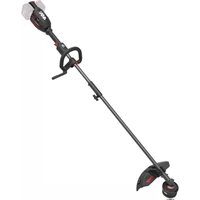
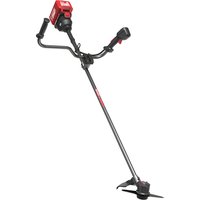
| Cordless Grass Line Trimmer & Brushcutter, Attachment-Capable | EN | P07 |
| Kabellose/r Grastrimmer/Motorsense, geeignet für Zubehör | D | P21 |
| Coupe-bordure et débroussailleuse sans fil, compatible avec différents accessoires | F | P38 |
| Tabgliaerba a batteria a filo e decespugliatore, Supporto per accessori | I | P55 |
| Cortacésped y desbrozadora sin cable, compatible con implementos | ES | P72 |
| Snoerloze graskantentrimmer & borstelmaaier, opzetbaar | NL | P89 |
| Ledningsfri græstrimmer og kratrydder. Vedhæftning - Effektivt | DK | P106 |
| Аккумуляторный триммер и кусторез, прикрепление | RU | P121 |
| Sladdlös grästrimmer och buskklippare med fäste | SV | P140 |
| KG155E KG155E.X |
natural_image
Technical line drawing of a Kressi-branded electrical connector (no text or symbols on the diagram itself)
natural_image
Illustration of a robotic hand connecting a cable to a device (no text or symbols visible)
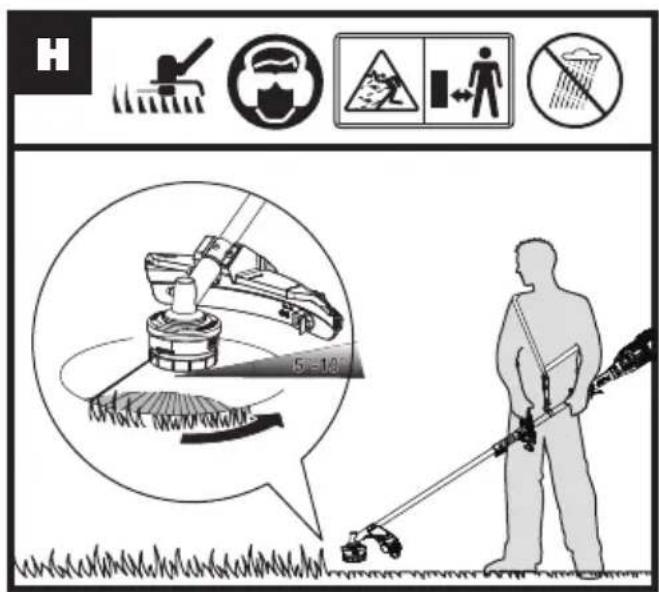
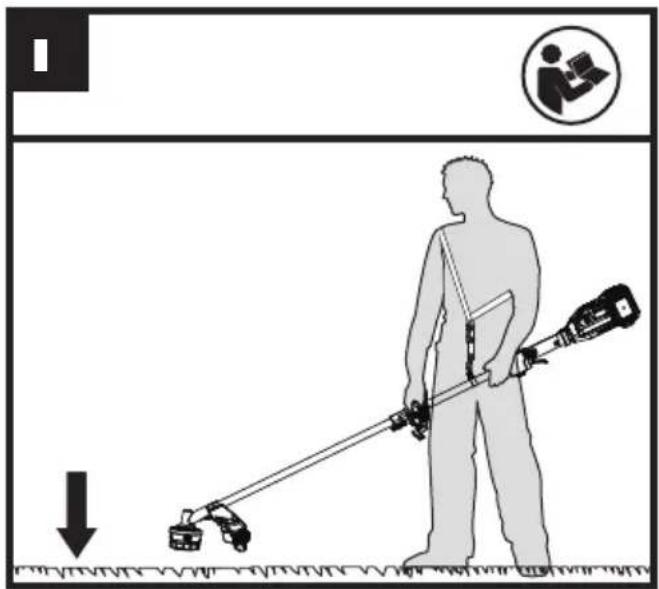
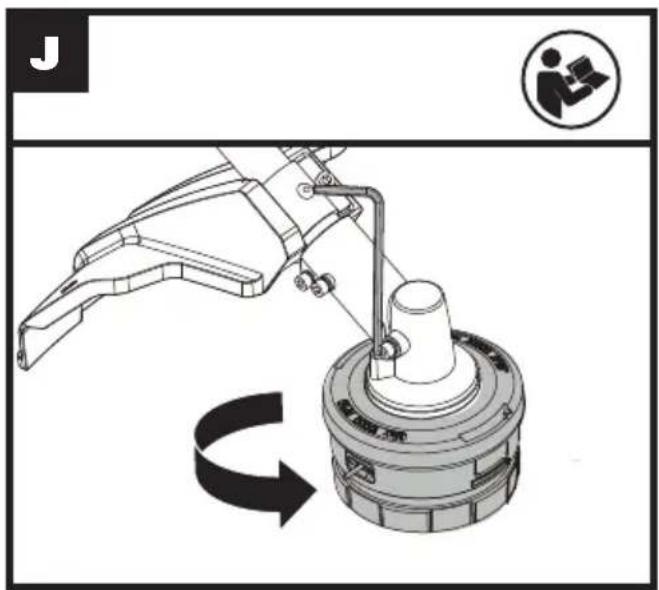
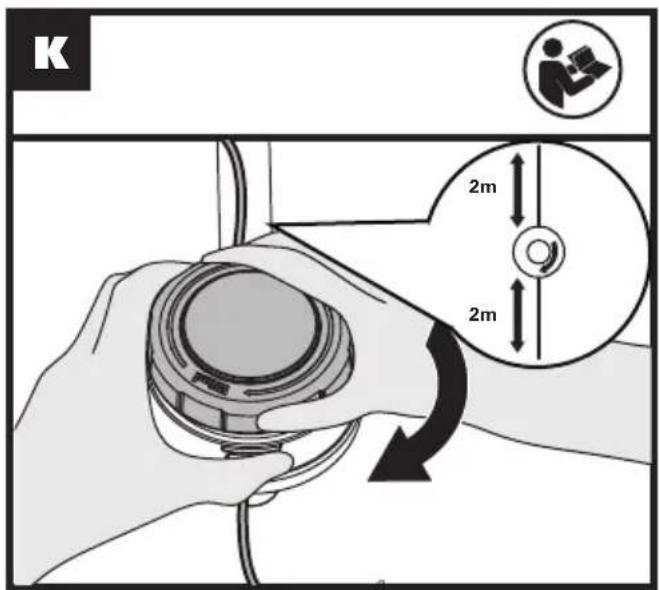
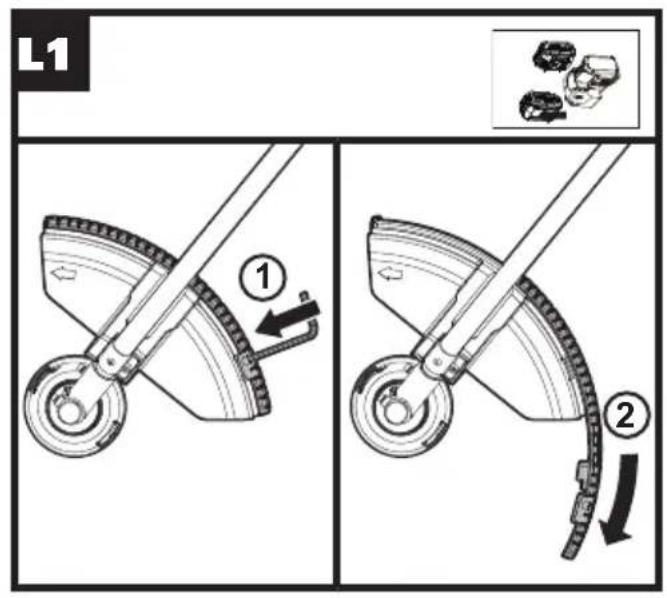
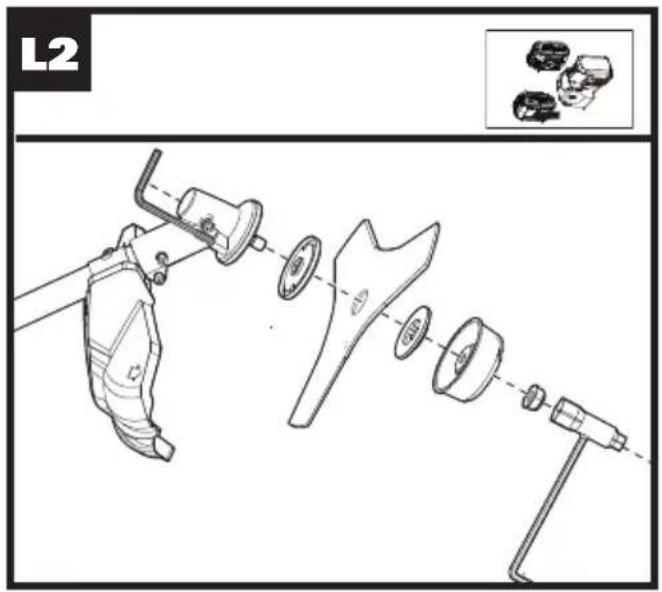
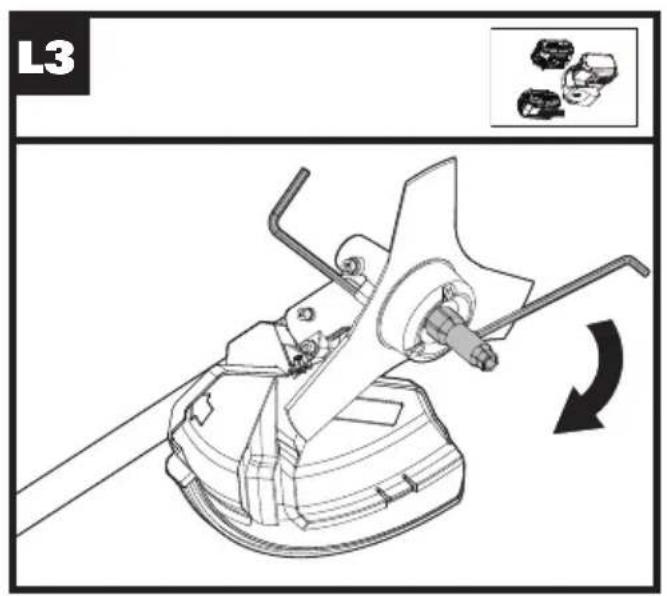
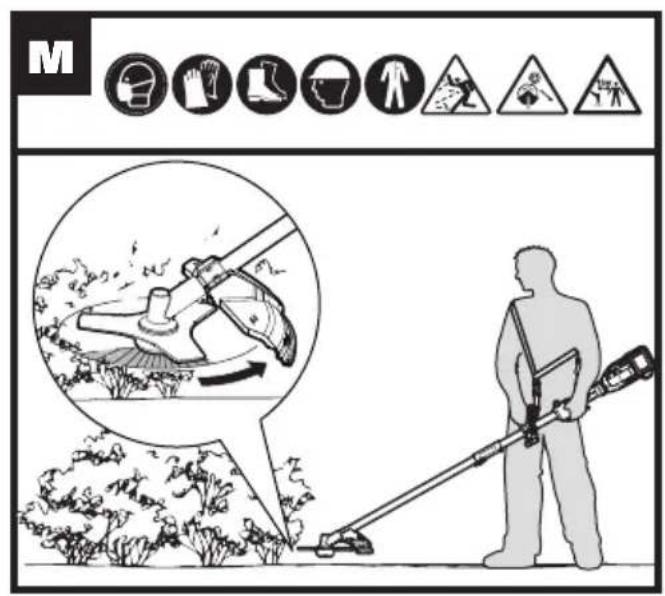
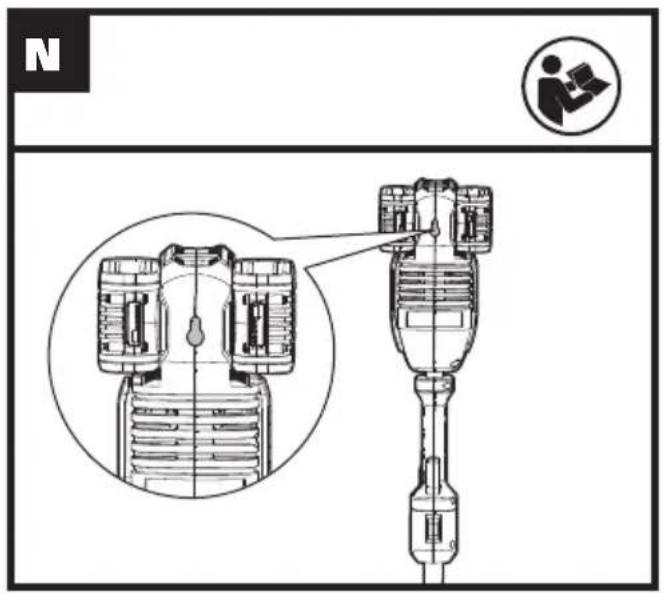
TABLE OF CONTENTS
Introduction....7
Safety Instructions....8
Component List....15
Specifications....16
Assembly&Operation....17
Maintenance....18
Environmental Protection....19
Troubleshooting....19
Declaration of Conformity....20
INTRODUCTION
Dear Customer,
Thank you for buying this Kress product. We are dedicated to developing high quality products to meet your lawn & garden requirements.
The Kress brand is synonymous with premium quality service. Over the years of your products life, if you have any questions or concerns about your product, please contact your location of purchase or our Customer Service Team for assistance.
We are confident you will enjoy working with your Kress product for years to come.
INTENDED USE
The machine is intended for the cutting of grass and weeds under bushes, as well as on slopes and edges that cannot be reached with the lawn mower.
WARNING Read all safety warnings, instructions, illustrations and specifications provided with this power tool. Failure to follow all instructions listed below may result in electric shock, fire and/or serious injury.
Save all warnings and instructions for future reference.
The term "power tool" in the warnings refers to your mains-operated (corded) power tool or battery-operated (cordless) power tool.
1) Work area safety
a) Keep work area clean and well lit. Cluttered or dark areas invite accidents.
b) Do not operate power tools in explosive atmospheres, such as in the presence of flammable liquids, gases or dust.
Power tools create sparks which may ignite the dust or fumes.
c) Keep children and bystanders away while operating a power tool.
Distractions can cause you to lose control.
2) Electrical safety
a) Power tool plugs must match the outlet. Never modify the plug in any way. Do not use any adapter plugs with earthed (grounded) power tools.
Unmodified plugs and matching outlets will reduce risk of electric shock.
b) Avoid body contact with earthed or grounded surfaces, such as pipes, radiators, ranges and refrigerators. There is an increased risk of electric shock if your body is earthed or grounded.
c) Do not expose power tools to rain or wet conditions.
Water entering a power tool will increase the risk of electric shock.
d) Do not abuse the cord. Never use the cord for carrying, pulling or unplugging the power tool. Keep cord away from heat, oil, sharp edges or moving parts. Damaged or entangled cords increase the risk of electric shock.
e) When operating a power tool outdoors, use an extension cord suitable for outdoor use. Use of a
cord suitable for outdoor use reduces the risk of electric shock.
f) If operating a power tool in a damp location is unavoidable, use a residual current device (RCD) protected supply. Use of an RCD reduces the risk of electric shock.
3) Personal safety
a) Stay alert, watch what you are doing and use common sense when operating a power tool. Do not use a power tool while you are tired or under the influence of drugs, alcohol or medication. A moment of inattention while operating power tools may result in serious personal injury.
b) Use personal protective equipment. Always wear eye protection.
Protective equipment such as dust mask, non-skid safety shoes, hard hat, or hearing protection used for appropriate conditions will reduce personal injuries.
c) Prevent unintentional starting. Ensure the switch is in the off-position before connecting to power source and/or battery pack, picking up or carrying the tool. Carrying
power tools with your finger
on the switch or energising
power tools that have the
switch on invites accidents.
d) Remove any adjusting key or wrench before turning the power tool on. A wrench or a key left attached to a rotating part of the power tool may result in personal injury.
e) Do not overreach. Keep proper footing and balance at all times. This enables better control of the power tool in unexpected situations.
f) Dress properly. Do not wear loose clothing or jewellery. Keep your hair and clothing away from moving parts. Loose clothes, jewellery or long hair can be caught in moving parts.
g) If devices are provided for the connection of dust extraction and collection facilities, ensure these are connected and properly used. Use of dust collection can reduce dust-related hazards.
h) Do not let familiarity gained from frequent use of tools allow you to become complacent and ignore tool safety principles. A careless action can cause severe injury
within a fraction of a second.
4) Power tool use and care
a) Do not force the power tool. Use the correct power tool for your application. The correct power tool will do the job better and safer at the rate for which it was designed.
b) Do not use the power tool if the switch does not turn it on and off. Any power tool that cannot be controlled with the switch is dangerous and must be repaired.
c) Disconnect the plug from the power source and/or remove the battery pack, if detachable, from the power tool before making any adjustments, changing accessories, or storing power tools. Such preventive safety measures reduce the risk of starting the power tool accidentally.
d) Store idle power tools out of the reach of children and do not allow persons unfamiliar with the power tool or these instructions to operate the power tool.
Power tools are dangerous in the hands of untrained users.
e) Maintain power tools and accessories. Check for misalignment or binding
of moving parts, breakage of parts and any other condition that may affect the power tool's operation. If damaged, have the power tool repaired before use. Many accidents are caused by poorly maintained power tools.
f) Keep cutting tools sharp and clean. Properly maintained cutting tools with sharp cutting edges are less likely to bind and are easier to control.
g) Use the power tool, accessories and tool bits etc. in accordance with these instructions, taking into account the working conditions and the work to be performed.
Use of the power tool for operations different from those intended could result in a hazardous situation.
h) Keep handles and grasping surfaces dry, clean and free from oil and grease. Slippery handles and grasping surfaces do not allow for safe handling and control of the tool in unexpected situations.
5) Battery tool use and care
a) Recharge only with the charger specified by the manufacturer. A charger that is suitable for one type
of battery pack may create a risk of fire when used with another battery pack.
b) Use power tools only with specifically designated battery packs. Use of any other battery packs may create a risk of injury and fire.
c) When battery pack is not in use, keep it away from other metal objects, like paper clips, coins, keys, nails, screws or other small metal objects, that can make a connection from one terminal to another. Shorting the battery terminals together may cause burns or a fire.
d) Under abusive conditions, liquid may be ejected from the battery; avoid contact. If contact accidentally occurs, flush with water. If liquid contacts eyes, additionally seek medical help. Liquid ejected from the battery may cause irritation or burns.
e) Do not use a battery pack or tool that is damaged or modified. Damaged or modified batteries may exhibit unpredictable behaviour resulting in fire, explosion or risk of injury.
f) Do not expose a battery pack or tool to fire or excessive temperature.
Exposure to fire or temperature above 130 °C may cause explosion.
g) Follow all charging instructions and do not charge the battery pack or tool outside the temperature range specified in the instructions. Charging improperly or at temperatures outside the specified range may damage the battery and increase the risk of fire.
6) Service
a) Have your power tool serviced by a qualified repair person using only identical replacement parts. This will ensure that the safety of the power tool is maintained.
b) Never service damaged battery packs. Service of battery packs should only be performed by the manufacturer or authorized service providers.
BRUSH CUTTER SAFETY WARNINGS
-
Do not use the machine when the operator is tired, ill or under the influence of alcohol or other drugs.
-
Keep a firm footing and balance during operating. Use the harness provided.
- Replace cutting blade if cracked, chipped, or damaged in any way. Be sure the blade is properly installed and securely fastened. Failure to do so can cause serious injury.
- Keep away from cutting blade. Even after the motor has stopped, the cutting blade will continue to rotate for several seconds. Please wait until cutting blade has fully stopped before putting the machine down or accessing the cutting area.
- Switch off the machine when not cutting. Never leave the machine running when unattended.
GENERAL SAFETY WARNINGS

WARNING Read all safety warnings and all
instructions. Failure to follow the warnings and instructions may result in electric shock, fire and/or serious injury.
Save all warnings and instructions for future reference.
The appliance is only to be used with the power supply unit provided with the appliance.
IMPORTANT
READ CAREFULLY BEFORE USE
KEEP FOR FUTURE REFERENCE
Safe operating practices
1. Training
a) Read the instructions carefully. Be familiar with the controls and the correct use of the machine.
b) Never allow children, persons with reduced physical, sensory or mental capabilities or lack of experience and knowledge or people unfamiliar with these instructions to use the machine, local regulations may restrict the age of the operator.
c) Keep in mind that the operator or user is responsible for accidents or hazards occurring to other people or their property.
2. Preparation
a) Before use, always visually inspect the machine for damaged, missing or misplaced guards or shields.
b) Never operate the machine while people, especially
children, or pets are nearby.
3. Operation
a) Wear eye protection, long trousers and stout shoes at all times while operating the machine.
b) Avoid using the machine in bad weather conditions especially when there is a risk of lightning.
c) Use the machine only in daylight or good artificial light.
d) Never operate the machine with damaged guards or shields or without guards or shields in place.
e) Switch on the motor only when the hands and feet are away from the cutting means.
f) Always disconnect the machine from the power supply (e.g. remove the battery pack from the machine)
- whenever the machine is left unattended;
- before clearing a blockage;
- before checking, cleaning or working on the machine;
- after striking a foreign object;
- whenever the machine starts vibrating abnormally.
g) Take care against injury to feet and hands from the cutting means.
h) Always ensure that the
ventilation openings are kept clear of debris.
i) Never fit metal cutting elements.
j) Always be sure of your footing on slopes.
k) Walk, never run.
I) Not overreach and keep the balance at all times.
m) Not to touch moving hazardous parts before removing the battery pack from the machine and the moving hazardous parts have come to a complete stop.
4. Maintenance and storage
a) Disconnect the machine from the power supply (e.g. remove the battery pack from the machine) before carrying out maintenance or cleaning work.
b) Use only the manufacturer's recommended replacement parts and accessories.
c) Inspect and maintain the machine regularly. Have the machine repaired only by an authorized repairer.
d) When not in use, store the machine out of the reach of children.
SAFETY WARNINGS FOR BATTERY PACK
a) Do not dismantle, open
or shred cells or battery pack.
b) Do not short-circuit a battery pack. Do not store battery packs haphazardly in a box or drawer where they may short-circuit each other or be short-circuited by conductive materials. When battery pack is not in use, keep it away from other metal objects, like paper clips, coins, keys, nails, screws or other small metal objects, that can make a connection from one terminal to another. Shorting the battery terminals together may cause burns or a fire.
c) Do not expose battery pack to heat or fire. Avoid storage in direct sunlight.
d) Do not subject battery pack to mechanical shock.
e) In the event of battery leaking, do not allow the liquid to come into contact with the skin or eyes. If contact has been made, wash the affected area with copious amounts of water and seek medical advice.
f) Keep battery pack clean and dry.
g) Wipe the battery pack
terminals with a clean dry
cloth if they become dirty.
h) Battery pack needs to be charged before use. Always refer to this instruction and use the correct charging procedure.
i) Do not maintain battery pack on charge when not in use.
j) After extended periods of storage, it may be necessary to charge and discharge the battery pack several times to obtain maximum performance.
k) Recharge only with the charger specified by Kress. Do not use any charger other than that specifically provided for use with the equipment.
I) Do not use any battery pack which is not designed for use with the equipment.
m) Keep battery pack out of the reach of children.
n) Retain the original product literature for future reference.
o) Remove the battery from the equipment when not in use.
p) Dispose of properly.
q) Do not mix cells of different manufacture,
capacity, size or type within a device.
r) Keep the battery away from microwaves and high pressure.
SYMBOLS
 | To reduce the risk of injury, user must read instruction manual |
 | Wear dust mask |
 | Wear protective gloves |
 | Wear protective footwear |
 | Wear head protection |
 | Wear protective clothing |
 | Keep bystanders away |
 | Wear eye and ear protection |
 | Do not expose to rain |
 | The distance between the machine and bystanders shall be at least 15 m |
 | Beware of thrown objects |
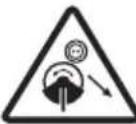 | Beware of blade thrust |
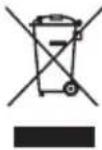 | Waste electrical products must not be disposed of with household waste. Please recycle where facilities exist. Check with your local authorities or retailer for recycling advice. |
 Li-Ion Li-Ion | Li-Ion battery This product has been marked with a symbol relating to ‘separate collection’ for all battery packs and battery pack. It will then be recycled or dismantled in order to reduce the impact on the environment. Battery packs can be hazardous for the environment and for human health since they contain hazardous substances. |
 | Do not burn |
 | Batteries may enter water cycle if disposed improperly, which can be hazardous for ecosystem. Do not dispose of waste batteries as unsorted municipal waste. |
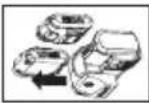 | Make sure the battery is removed prior to changing accessories. |
 | Trimming |
* Not all the accessories illustrated or described are included in standard delivery.
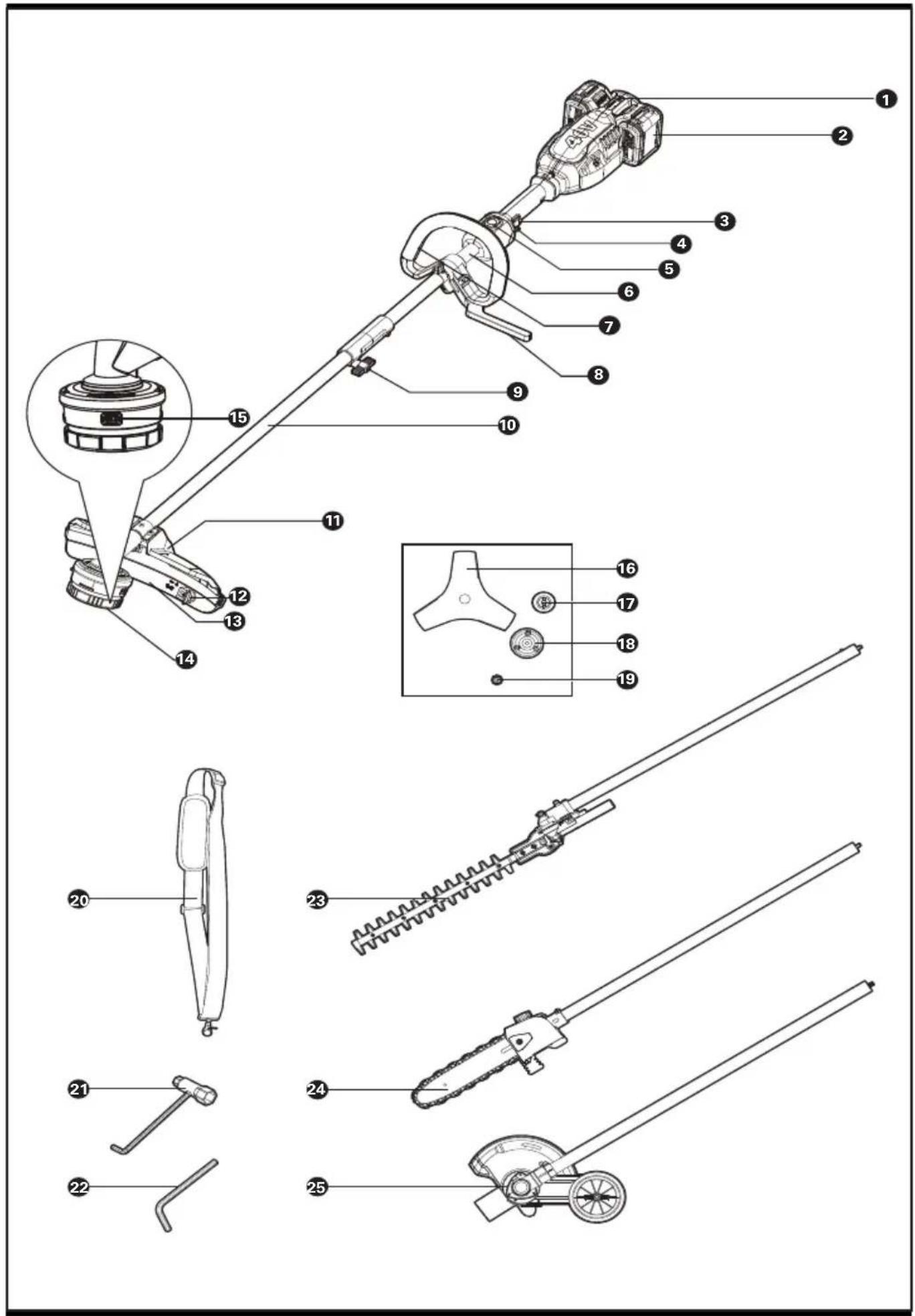
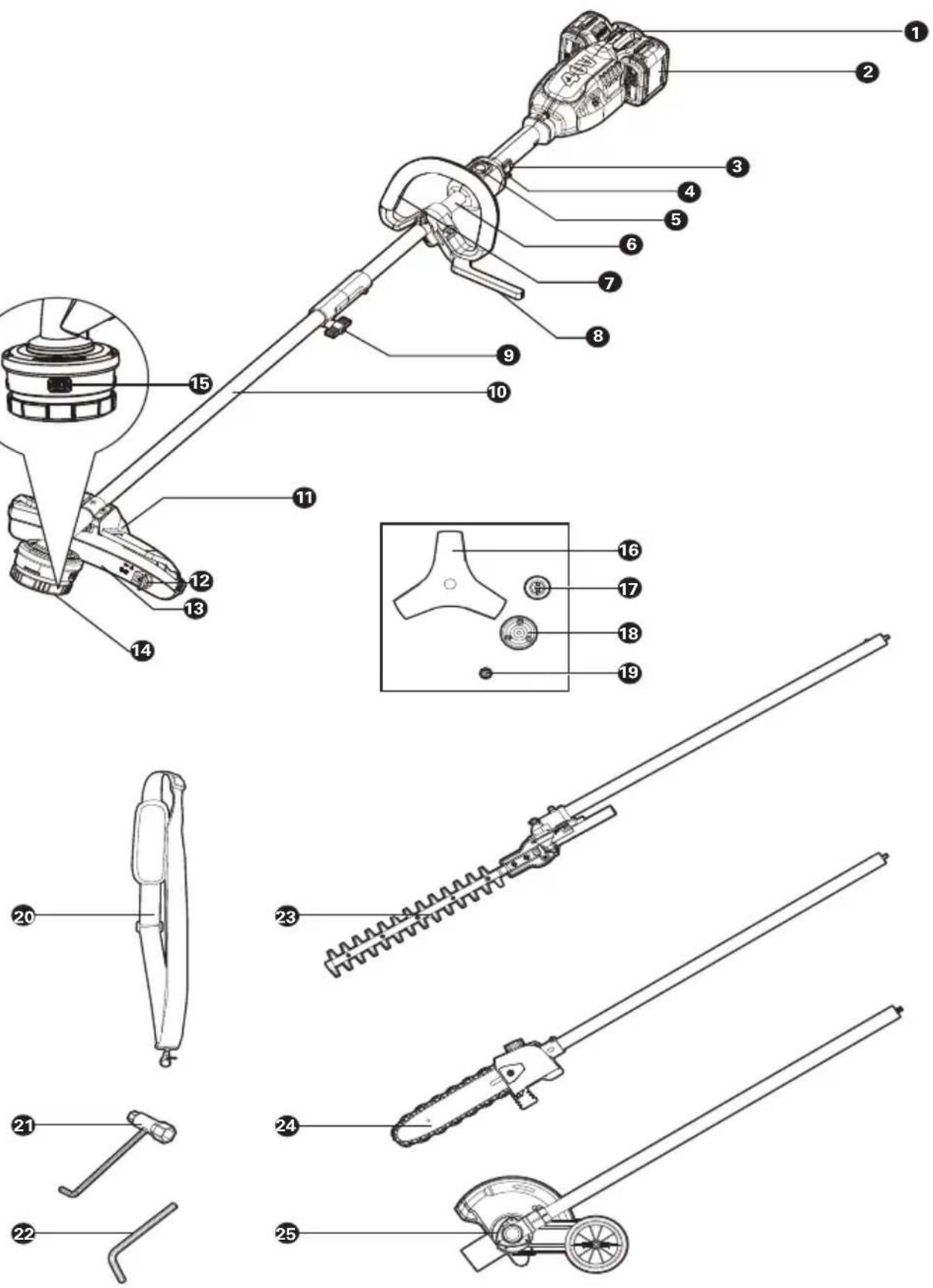
COMPONENT LIST
| 1. BATTERY INDICATOR LIGHT |
| 2. BATTERY PACK * |
| 3. LOCK-OFF BUTTON |
| 4. SWITCH TRIGGER |
| 5. ECO BUTTON |
| 6. UPPER SHAFT |
| 7. AUXILIARY HANDLE |
| 8. SAFETY-STOP HANDLE |
| 9. LOCKING KNOB |
| 10. LOWER SHAFT |
| 11. SAFETY GUARD |
| 12. LINE CUTTER |
| 13. SKIRT |
| 14. TRIMMER HEAD (BUMP HEAD) |
| 15. RELEASE TAB |
| 16. BRUSH-CUTTER BLADE |
| 17. WASHER |
| 18. BLADE HOUSING |
| 19. LOCK-NUT |
| 20. SHOULDER STRAP |
| 21. WRENCH |
| 22. HEX KEY |
| 23. POLE HEDGE TRIMMER ATTACHMENT* |
| 24. POLE SAW ATTACHMENT * |
| 25. EDGER ATTACHMENT * |
TECHNICAL DATA
Type Designation: KG155E KG155E.X (1-designation of machinery, representative of Cordless Grass Trimmer)
| KG155E KG155E.X ** |
| Voltage 40V MAX (2x20V-MAX) *** |
| No Load Speed 6000/min |
| Cutting Diameter for grass trimmer | 38cm |
| Cutting diameter for brush cutter blade | 25cm |
| Line Diameter Recommended 2.4mm twist line |
| Line length | Recommended 4m (Dual-Exit) |
| Machine weight (bare tool) | 4.1 kg |
** X=1-999, A-Z, M1-M9 they are only used for different customers, there are no safe relevant changes between these models
*** Voltage measured without workload. Initial battery voltage reaches maximum of 20 volts. Nominal voltage is 18 volts.
| Category Model Capacity | |
| 20V Battery | KAB04 | 4.0Ah | |
| 20V Charger | KAC04 | 4.0A | |
We recommend that you purchase your accessories from the same store that sold you the tool. Refer to the accessory packaging for further details. Store personnel can assist you and offer advice.
| A weighted sound pressure | L_pA = 81.5dB(A) |
| K_pA | 1.93dB(A) |
| A weighted sound power | L_wA = 94.4dB(A) |
| K_wA | 1.93dB(A) |
| Wear ear protection |  |
| Typical weighted vibration | a_n=2.822m/s^2 |
| Uncertainty | K = 1.5m/s2 |
The declared vibration total value may be used for comparing one tool with another, and may also be used in a preliminary assessment of exposure.
WARNING: The vibration emission value during actual use of the power tool can differ from the declared value depending on the ways in which the tool is used dependant on the following examples and other variations on how the tool is used: How the tool is used and the materials being cut or drilled.
The tool being in good condition and well maintained.
Using the correct accessory for the tool and ensuring it is sharp and in good condition.
The tightness of the grip on the handles and if any anti vibration accessories are used.
And the tool is being used as intended by its design and these instructions.
WARNING: To be accurate, an estimation of exposure level in the actual conditions of use should also take account of all parts of the operating cycle such as the times when the tool is switched off and when it is running idle but not actually doing the job. This may significantly reduce the exposure level over the total working period.
Helping to minimise your vibration exposure risk.
Always use sharp chisels, drills and blades.
Maintain this tool in accordance with these instructions and keep well lubricated (where appropriate).
If the tool is to be used regularly then invest in anti vibration accessories.
Plan your work schedule to spread any high vibration tool use across a number of days.
| A weighted sound pressure | L_pA = 72.53dB(A) |
| K_pA | 3dB(A) |
| A weighted sound power | L_wA = 92.53dB(A) |
| K_wA | 3dB(A) |
| Wear ear protection | |
Vibration total values (triax vector sum) determined according to EN 62841:
| Vibration emission value: | a_h = 2.673m/s^2 |
| Uncertainty K = 1.5m/s2 |
NOTE: Before using the tool, read the instruction book carefully.
ASSEMBLY:
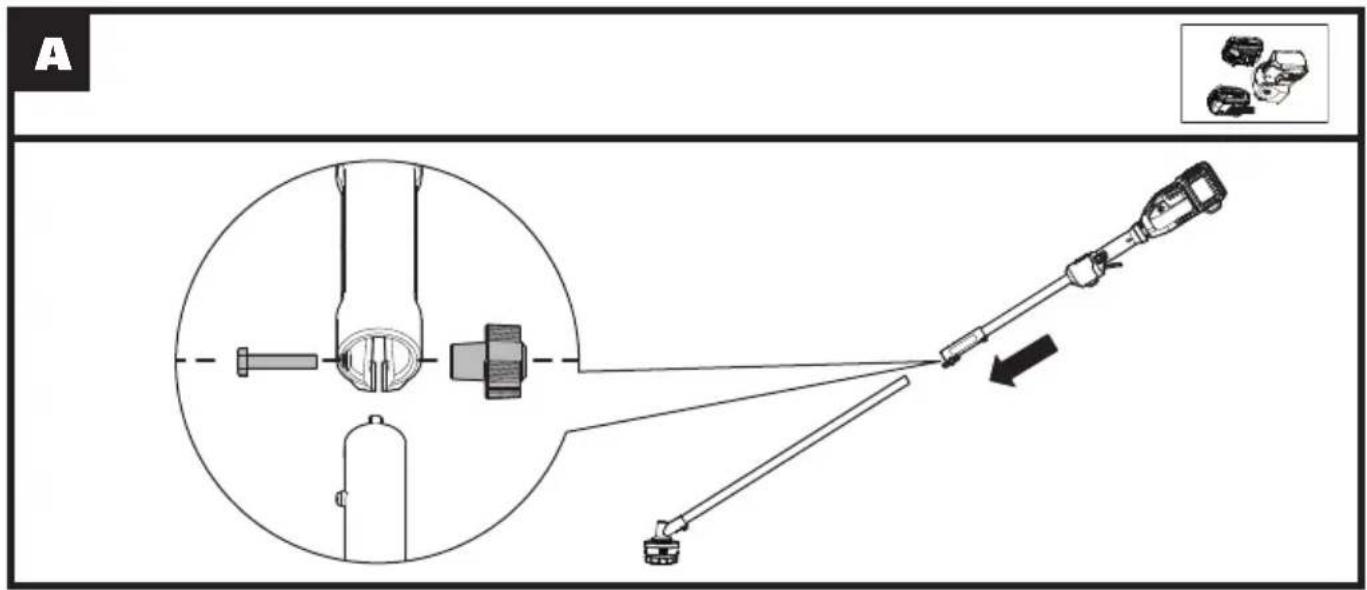
Assembling the Trimmer Shaft(See Fig. A)
Insert the screw into the hole, then tighten the locking knob
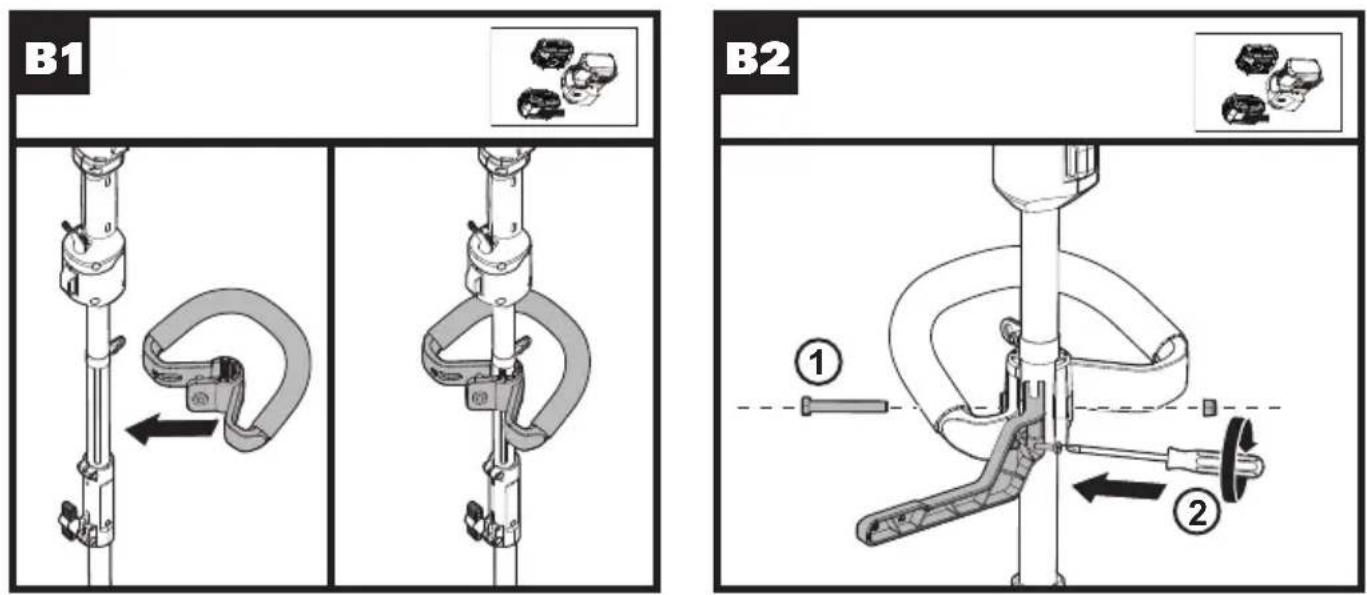
Assembling the Auxiliary Handle and Safety-stop Handle(See Fig. B1, B2)
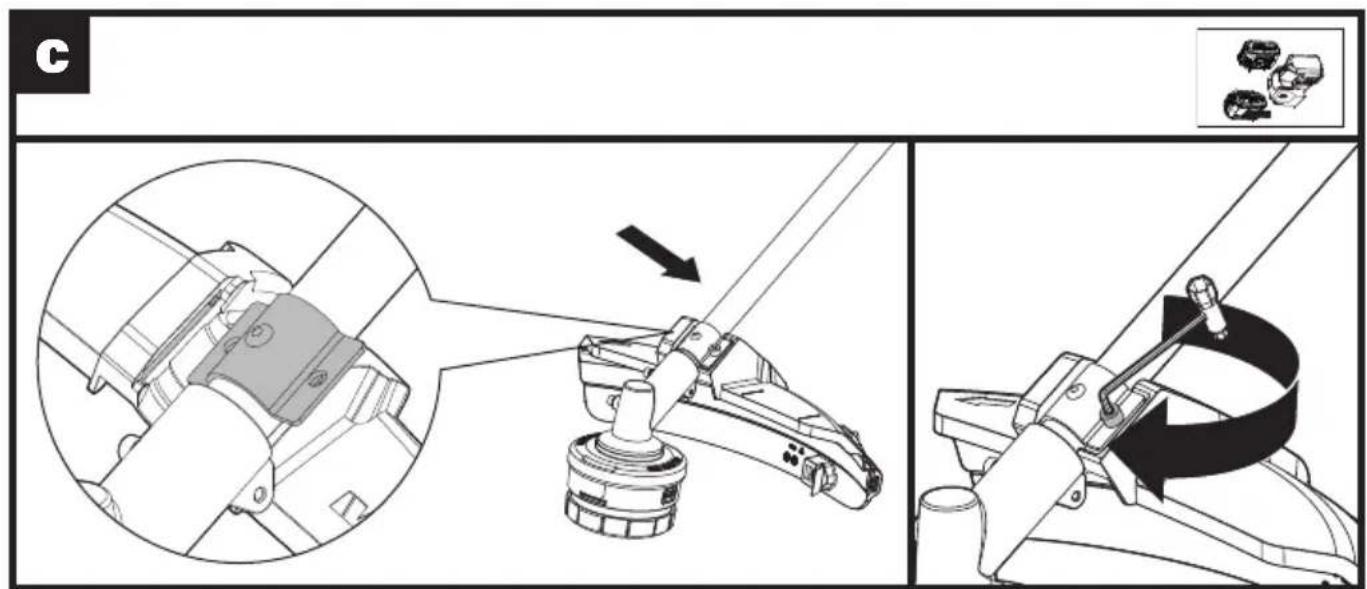
Assembling the Safety Guard(See Fig. C)
Insert the metal bracket into the slot on the safety guard, then secure the guard in place using the screw and hex key.
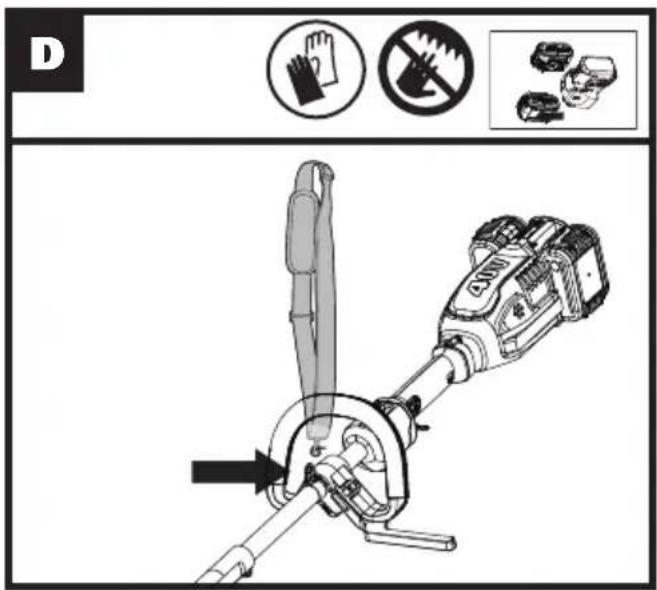
Assembling the Shoulder Strap(See Fig. D)
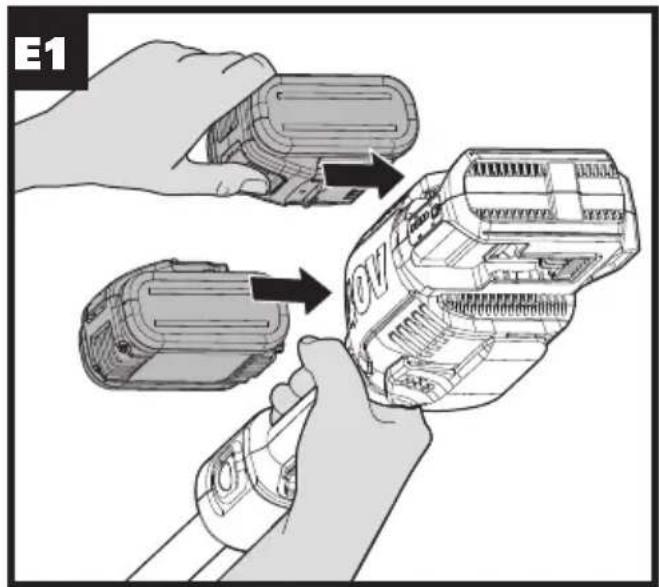
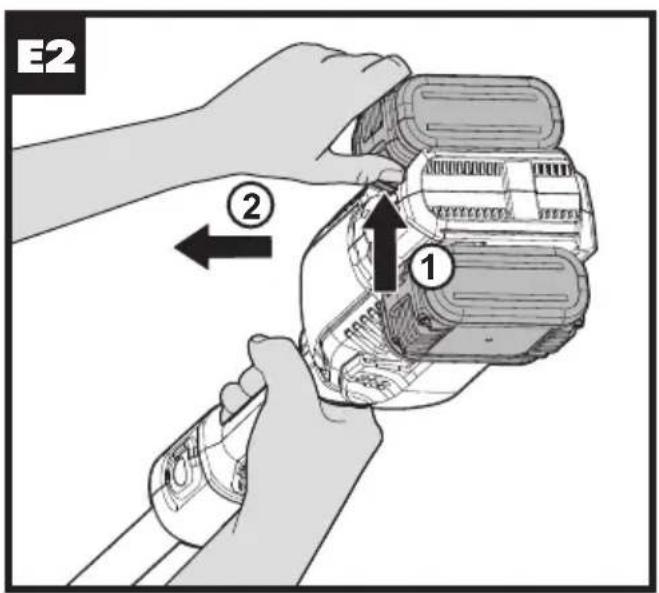
Installing and Removing the Battery Pack(See Fig. E1, E2)
NOTE:
• This machine will only run when 2 batteries are
installed. It is recommended to use the same two batteries and charge the two batteries at the same time.
- When two batteries are used with different amp hours or charge level, the machine will run to the lowest common denominator.
* It is recommended that using 4.0Ah or above battery pack for better performance and longer run time.
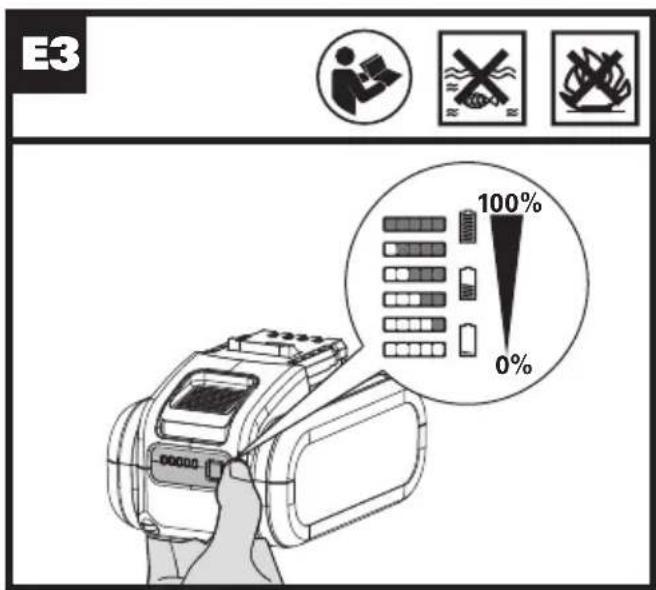
Checking the battery charge condition(See Fig. E3)
NOTE: Fig. E3 only applies for the battery pack with battery indicator light.
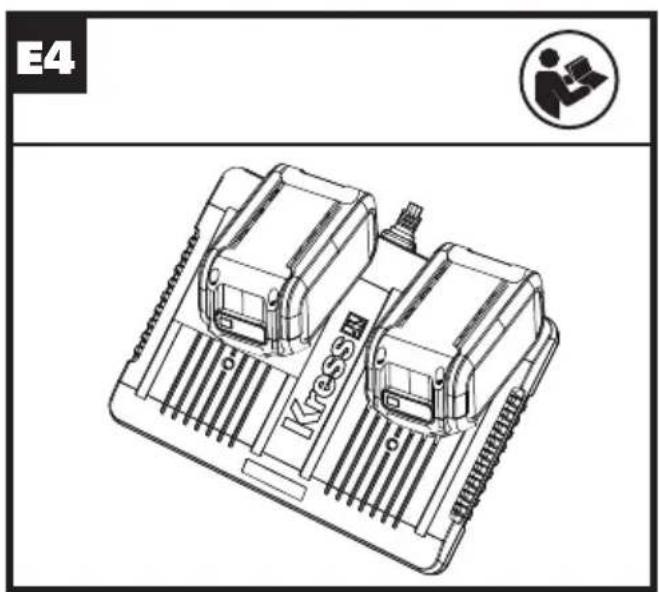
Charging the battery pack(See Fig. E4)
NOTE:
- The batteries are shipped uncharged. Each battery must be fully charged before the first use.
- Always fully charge the two batteries at same time. More details can be found in charger's manual.
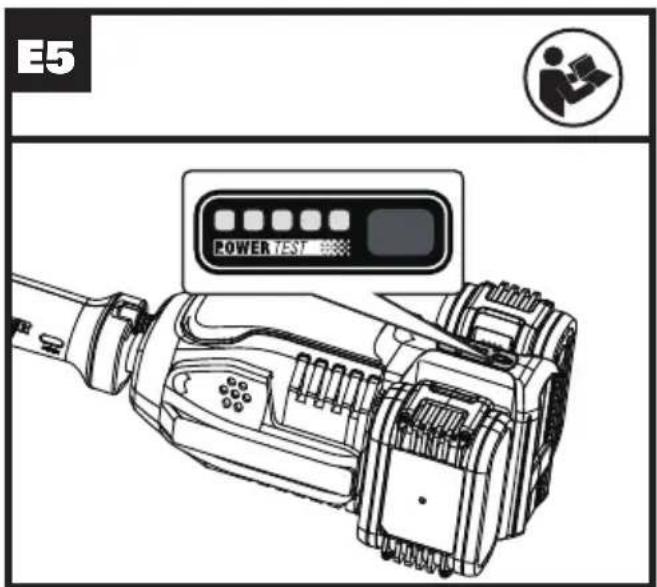
Battery power indicator on the machine (See Fig. E5)
Before starting or after use, press the button beside the power indicator light on the machine to check the battery capacity. During operation, the battery capacity will be indicated automatically by the battery power indicator.
The indicator constantly senses and displays the battery condition as follows.
For the machine with 2 battery packs with different power, the power indicator light displays the battery condition with the lower one of the two batteries.
| Battery power indicator status | Battery condition |
| Five green lights (■) are illuminated. | The two batteries are in a highly charged condition. |
| Two, three or four green lights are illuminated. | The two batteries have a remaining charge. The more lights are illuminated, the more battery capacity. |
| Only one green light (■) is illuminated. | At least one battery is almost depleted and needs to be charged. |
| No light is illuminated. | At least one battery is not fully installed or battery may be defective. |
| Only one light is flashing twice per cycle. | At least one battery is over discharged (please refer to the battery charge condition), please recharge the two batteries at once before use again or storage. |
| Only one light is flashing three times per cycle. | At least one battery is hot, wait for them cool down before start again. |
| Only one light is flashing four times per cycle. | The machine is over load. Raise the cutting height or push slowly. |
OPERATION:
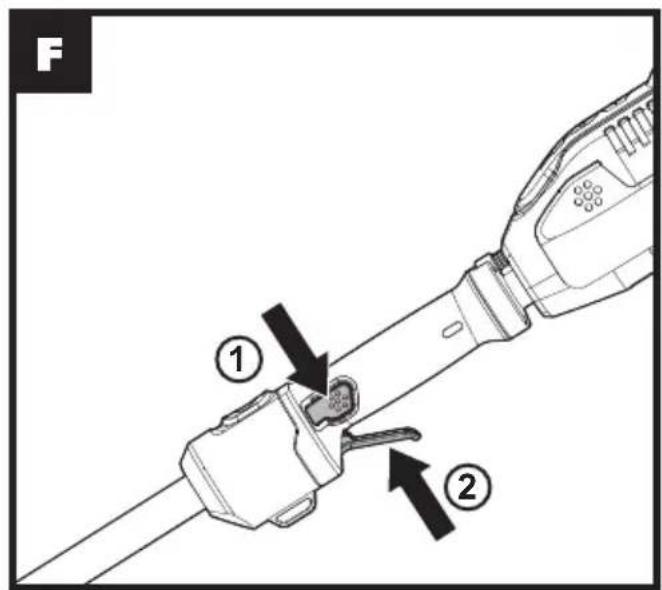
To start(See Fig. F)

Warning! The cutting head continues to rotate after the trimmer has been switched off; wait until it has completely stopped then lay down the tool. Press the lock-off button first, then press the switch trigger to start the machine.
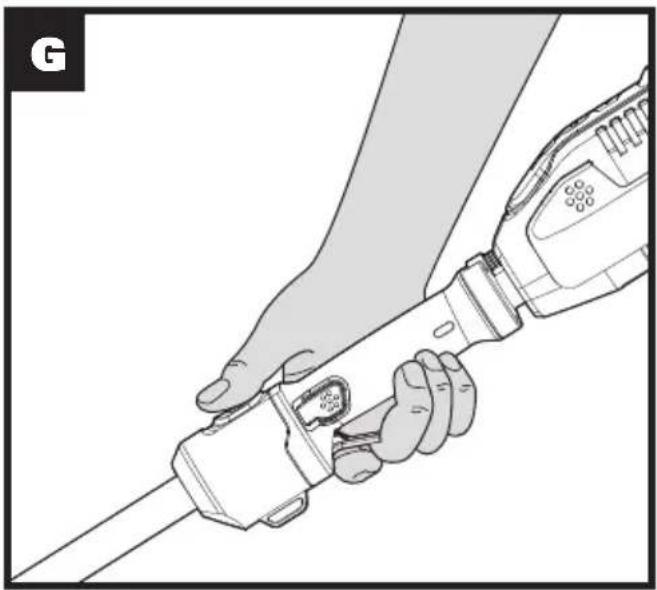
ECO Speed (See Fig.G)
For longer run time, press the ECO button and switch trigger, then your machine will operate at a low speed.
Trimming(See Fig.H)
Bump feed(See Fig.1)
Assembling and removing the trimmer head (See Fig. J)
Insert the hex key into the hole and rotate the trimmer head until it stops in a locked position. Then, rotate counterclockwise to remove it, and clockwise to assemble it.
Winding the trimmer line(See Fig. K)
NOTE: The spool must be wound while inside the trimmer head. The spool cannot be wound with line, then installed into the trimmer head.
Assembling the brush cutter blade(See Fig. L1, L2, L3)
Remove the trimmer head and the skirt before assembling the brush cutter blade.
Insert the hex key into the hole. Place the brush-cutter blade on top of the spacer, place washer on top of the brush-cutter blade, place blade housing over washer. After that, use the wrench to tighten the lock-nut.
Cutting(See Fig. M)
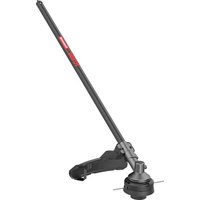
ATTACHMENT-CAPABLE ACCESSORIES
The below attachment accessories are sold separately to convert the grass trimmer into a tool for various applications.
-
Hedge trimmer attachment (KA0420)
This attachment is intended for cutting and trimming hedges and bushes in domestic use.
-
Pruning saw attachment (KA2642)
This attachment is intended for sawing of trees, tree trunks, branches, limbs, etc. Cuts can be sawed with or across the grain. This product is not suitable for sawing mineral materials.
3. Edger attachment (KA2283)
This attachment is intended for edging around walkways, driveways, flower beds, etc.
OPERATION INSTRUCTIONS

WARNING! The charger and battery pack are specially designed to work together so do not attempt to use any other devices. Never insert or allow metallic objects into your charger or battery pack connections because of an electrical failure and hazard will occur.
1. Bump-line feed system (See Fig. I)
The trimmer is equipped with a bump-line system. Just bump the trimmer head while the machine is running, new line will feed out.
2. Winding the trimmer line (See Fig. K)
Insert the replacement line through the eyelet and feed it through the other side. Ensure both ends of the line are even on each end of the trimmer head (recommended 2m) and cut the line. Turn the dial clockwise to wind the line around the spool until about 19cm remains on either side.
STORING YOUR GRASS TRIMMER

Always remove the battery pack from your trimmer after use.
To store your grass trimmer
The trimmer is provided with a hanging slot for storing the trimmer on the wall. (See Fig. N) Store in a dry place where the trimmer and battery can be protected from damage.
MAINTENANCE

Always remove the battery pack from your trimmer after use.
Always check the product prior to being used for any damage.
After use, disconnect the battery from the tool and check for damage.
Your power tool requires no additional lubrication or maintenance. There are no user serviceable parts in your power tool. Never use water or chemical cleaners to clean your power tool. Wipe clean with a dry cloth. Always store your power tool in a dry room temperature location. Keep the motor ventilation slots clean. Keep all working controls free of dust.
The ambient temperature range for the use and
storage of tool and battery is 0^ C- 45^ C.
The recommended ambient temperature range for the charging system during charging is 0^ C- 40^ C.
ENVIRONMENTAL PROTECTION
Waste electrical products must not be disposed of with household waste. Please recycle where facilities exist. Check with your local authorities or retailer for recycling advice.
TROUBLESHOOTING
The following table gives problems and actions that you can perform if your machine does not operate correctly.

Warning: Switch the machine off and remove the battery prior to any troubleshooting.
| Problems Possible Causes Corrective Action | |
| Trimmer fails to operate. | Battery discharged.Battery too hot/cold.Motor is broken.Internal wiring of machine damaged. | Recharge battery; also see the content in charger manual.Allow to cool/warm.Contact Service Agent.Contact Service Agent. |
| Trimmer runs intermittently | Motor is broken.Battery not fully charged.On/Off switch defective. | Contact Service Agent.Recharge battery.Contact Service Agent. |
| Excessive vibrations/noise. | Machine defective.Line spool is not wound well. | Contact Service Agent.Rewind the line. See ” To fit spool and line assembly.” |
| Cutting time per battery charge too short. | Battery has not been used for long period or only charged for short term.Grass too high.Battery defective. | Fully charge battery; also see the content in charger manual.Cut in stages.Replace the battery. |
| Machine does not cut. | Line broken.Battery not fully charged.Motor is broken (speed is too low).Grass entangled around cutting head. | Replace the line.Recharge battery; also see the content in charger manualContact Service Agent.Remove grass. |
| Continuous lighting of the battery charge indicator.No charging procedure possible. | Battery not (properly) inserted.Battery contacts contaminated.Battery defective. | Properly insert battery into battery charger.Clean the battery contacts or replace the battery.Replace the battery. |
| Battery charge indicator does not light up. | Plug of battery charger not plugged in (properly).Socket outlet, mains cable or battery charger defective. | Insert mains plug (fully) into the socket outlet.Check the mains voltage; have the battery charger checked by an authorized after-sales service agent. |
We,
Positec Germany GmbH
Postfach 32 02 16, 50796 Cologne, Germany
Declare that the product
Description Cordless Grass Trimmer/ Brush Cutter
Type KG155E KG155E.X (1-designation of machinery, representative of Cordless Grass Trimmer/ Brush Cutter)
Function cutting grass and similar soft vegetation and for trimming grass edges
Complies with the following Directives:
2006/42/EC, 2014/30/EU
2011/65/EU&(EU)2015/863
2000/14/EC amended by 2005/88/EC
For grass trimmer:
2000/14/EC amended by 2005/88/EC:
- Conformity Assessment Procedure as per Annex
VI
- Measured Sound Power Level 94.4 dB (A)
- Declared Guaranteed Sound Power Level 96 dB (A)
The notified body involved
Address: Westendstraße 199, 80686 München, Germany
For brush cutter:
2000/14/EC amended by 2005/88/EC:
- Conformity Assessment Procedure as per Annex
V
- Measured Sound Power Level 92.53dB(A)
- Declared Guaranteed Sound Power Level 96 dB(A)
Standards conform to
EN 62841-1, EN ISO 11806-1,
EN 60335-1, EN 50636-2-91
EN 62233, EN ISO 3744
EN 55014-1, EN 55014-2
The person authorized to compile the technical file,
Name Marcel Filz
Address Positec Germany GmbH
Postfach 32 02 16, 50796 Cologne, Germany

2021/10/26
Allen Ding
Deputy Chief Engineer, Testing & Certification
Positec Technology (China) Co., Ltd
18, Dongwang Road, Suzhou Industrial Park, Jiangsu 215123, P. R. China
INHALTSVERZEICHNIS
Einführung......21
18, Dongwang Road, Suzhou Industrial
Park, Jiangsu 215123, P. R. China
SOMMAIRE
Introduction....38
ACCESSOIRES FIXATION POSSIBLE
18, Dongwang Road, Suzhou Industrial
Park, Jiangsu 215123, P. R. China
INDICE
Introduzione....55
18, Dongwang Road, Suzhou Industrial
Park, Jiangsu 215123, P. R. China
ÍNDICE
Introducción....72
18, Dongwang Road, Suzhou Industrial Park,
Jiangsu 215123, P. R. China
INHOUDSOPGAVE
Inleiding....89
Specifications....99
Assemblage En Bediening....101
Onderhoud....103
WAARSCHUWING Lees alle
VEILIGHEIDSWAARSCHUWING GRASMAAIER
ALGEMENE VEILIGHEIDSWAARSCHUWINGEN
18, Dongwang Road, Suzhou Industrial
Park, Jiangsu 215123, P. R. China
INDHOLDSFORTEGNELSE
Introduktion....106
18, Dongwang Road, Suzhou Industrial
Park, Jiangsu 215123, P. R. China
СОДЕРЖАНИЕ
Введение....121
The notified body involved
18, Dongwang Road, Suzhou Industrial
Park, Jiangsu 215123, P. R. China
INNEHÅLLSFÖRTECKNING
Introduktion....140
18, Dongwang Road, Suzhou Industrial
Park, Jiangsu 215123, P. R. China