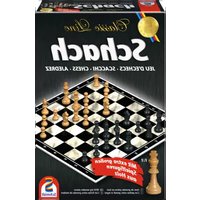
Schach - Board game Schmidt - Free user manual and instructions
Find the device manual for free Schach Schmidt in PDF.



| Product Type | Board game (chess) |
| Brand | Schmidt |
| Model | Schach |
| Number of pieces | 32 (16 white, 16 black) |
| Board dimensions | Approximately 30 x 30 cm |
| Weight | Approximately 500 g |
| Power supply | None (non-electric game) |
| Main material | Wood or plastic (depending on version) |
| Number of players | 2 |
| Recommended age | From 6 years |
| Rule language | French |
| Main functions | Complete chess game with classic rules: movement of all pieces, castling, checkmate, stalemate |
| Care and cleaning | Clean with a soft, dry cloth. Avoid moisture. |
| Safety | Contains small parts. Not suitable for children under 3 years. |
| Spare parts and repairability | Spare parts available on request from the manufacturer. |
| Warranty | 2 years (according to applicable law) |
Frequently Asked Questions - Schach Schmidt
User questions about Schach Schmidt
0 question about this device. Answer the ones you know or ask your own.
Ask a new question about this device
Download the instructions for your Board game in PDF format for free! Find your manual Schach - Schmidt and take your electronic device back in hand. On this page are published all the documents necessary for the use of your device. Schach by Schmidt.
USER MANUAL Schach Schmidt
Die Dame
Der Turm
Der Läufer
Der Springer
Schach/Matt
La Dame
La Tour
Les fous
Le cavalier
Echec et Matt
La regina (o donna)
La torre
L'alfiere
Il cavallo
Scacco matto
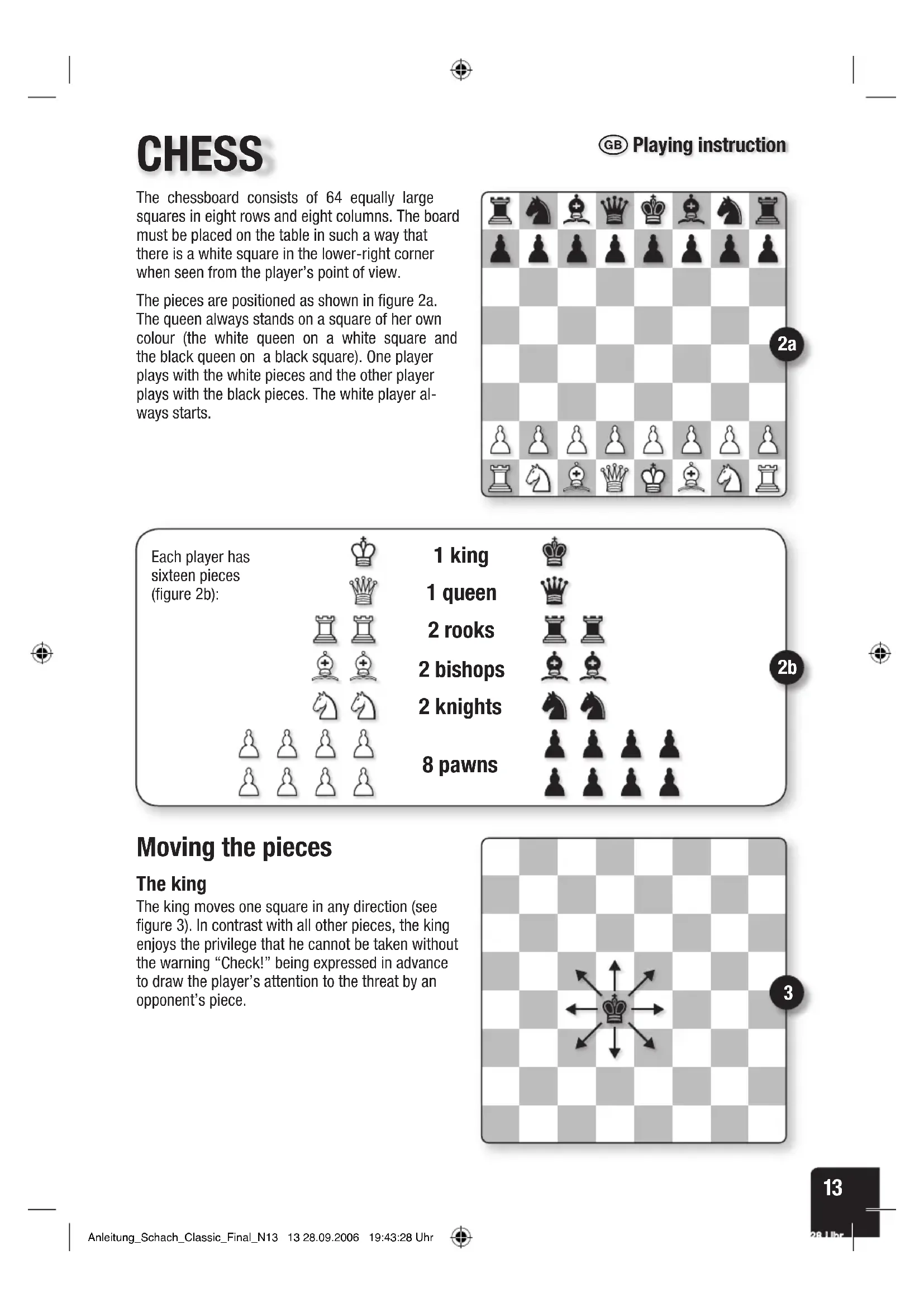
The chessboard consists of 64 equally large squares in eight rows and eight columns. The board must be placed on the table in such a way that there is a white square in the lower-right corner when seen from the player's point of view.
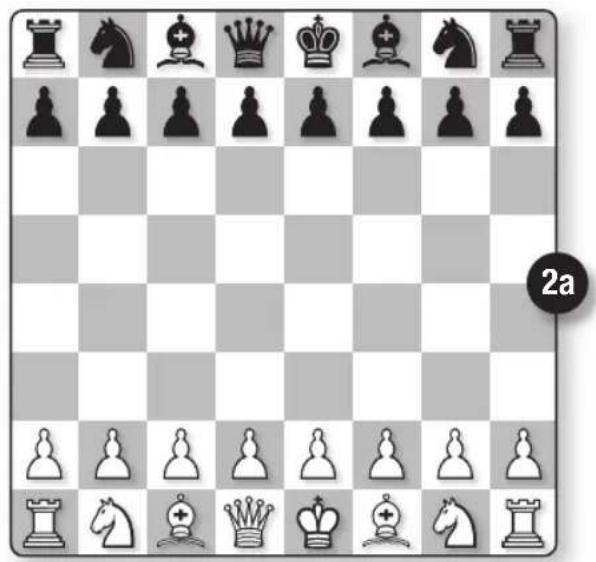
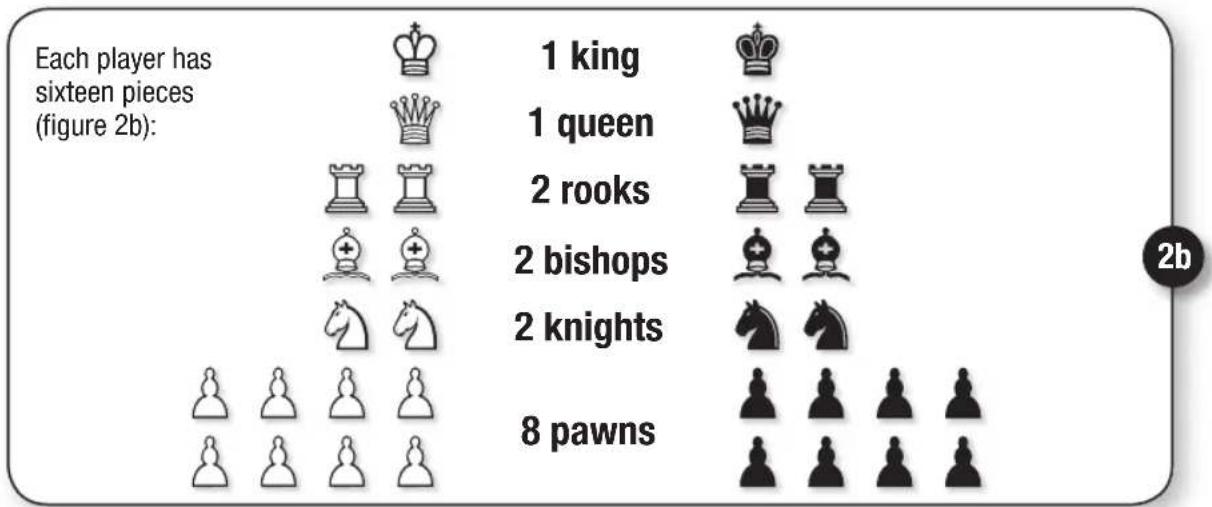
The pieces are positioned as shown in figure 2a. The queen always stands on a square of her own colour (the white queen on a white square and the black queen on a black square). One player plays with the white pieces and the other player plays with the black pieces. The white player always starts.
GB Playing instruction
Moving the pieces
The king
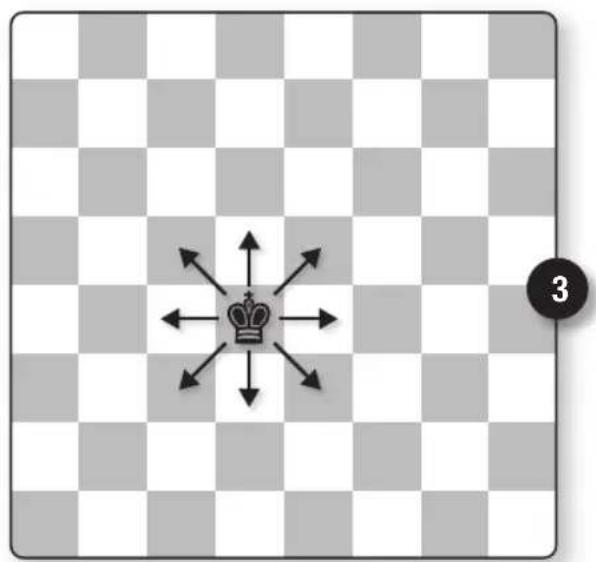
The king moves one square in any direction (see figure 3). In contrast with all other pieces, the king enjoys the privilege that he cannot be taken without the warning "Check!" being expressed in advance to draw the player's attention to the threat by an opponent's piece.
The queen
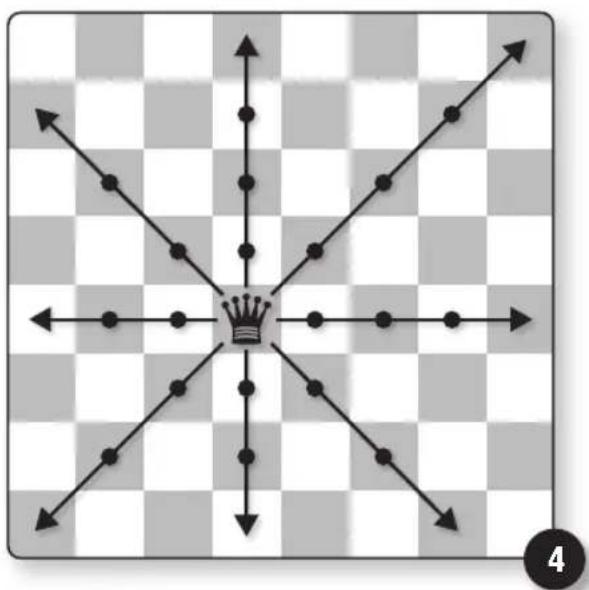
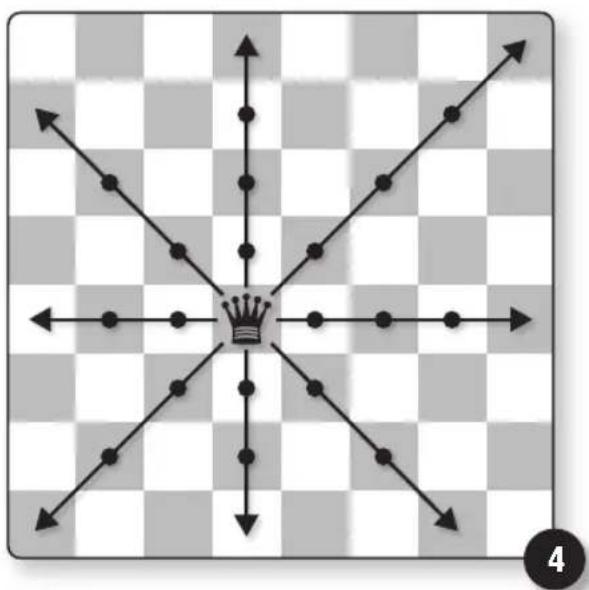
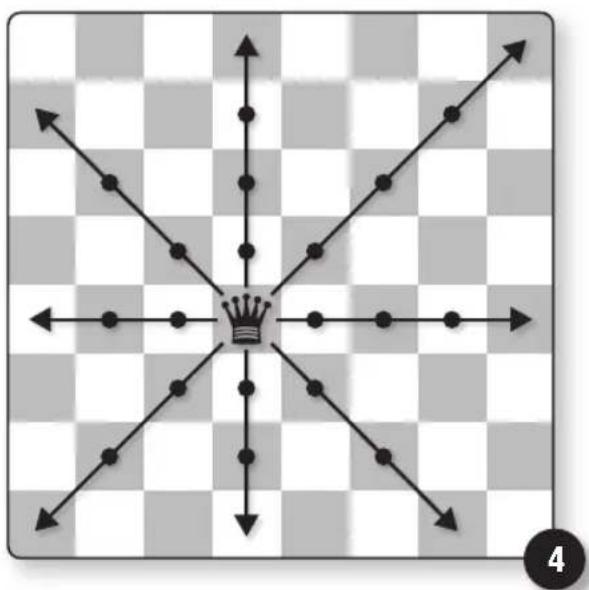
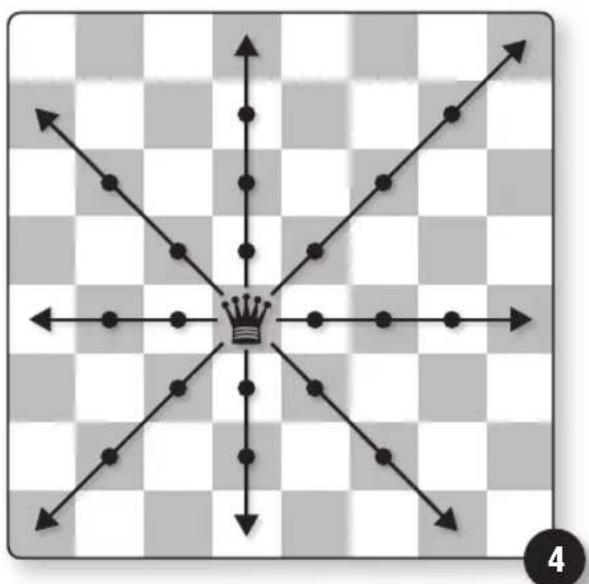
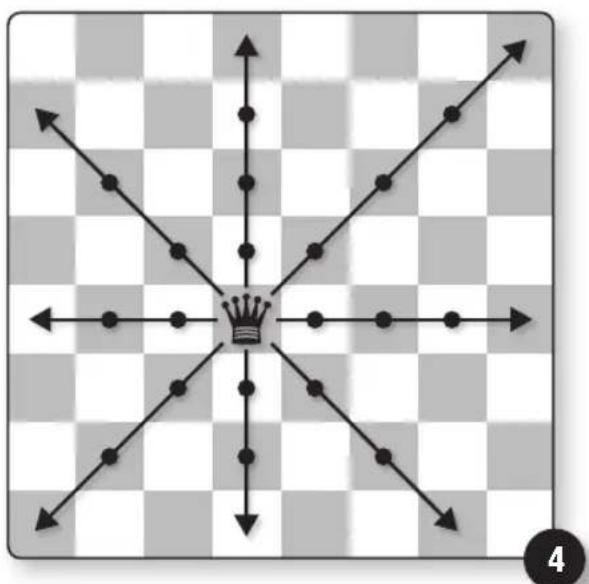
The queen is the strongest piece, since she may move in all eight directions any number of squares up to the edge of the chessboard (see figure 4). For this reason, she is superior to all other pieces with regard to freedom of movement and fighting strength.
The rook
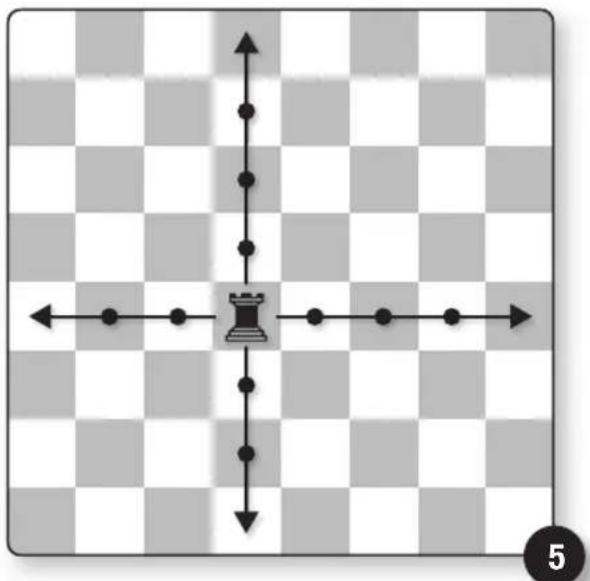
The rook moves in four directions in a straight line, horizontally or vertically, any number of squares (see figure 5). It may only attack and take opposing pieces in these straight lines.
![graph TD A["King at center"] --> B["Arrow to top-right"] A --> C["Arrow to bottom-left"] A --> D["Arrow to bottom-right"] E["King at center"] --> F["Arrow to top-left"] E --> G["Arrow to bottom-right"] E --> H["Arrow to bottom-left"] I["King at center"] --> J["Arrow to top-right"] I --> K["Arrow to…](/content/2026/04/638318/images/0fa3706face77879b84d27c52d61cc6ad39b8fa1997b991834d1889d9f030d15.jpg)
The bishop
Each player has two bishops, one of which is on a white square, and the other on a black square. The bishops may not land on a square of the opposite colour at any time during the game. The bishop moves any number of squares in a straight diagonal line in four directions (see figure 6). The bishop to the king's right is called king's bishop, while the bishop to the queen's left is called queen's bishop.
The knight
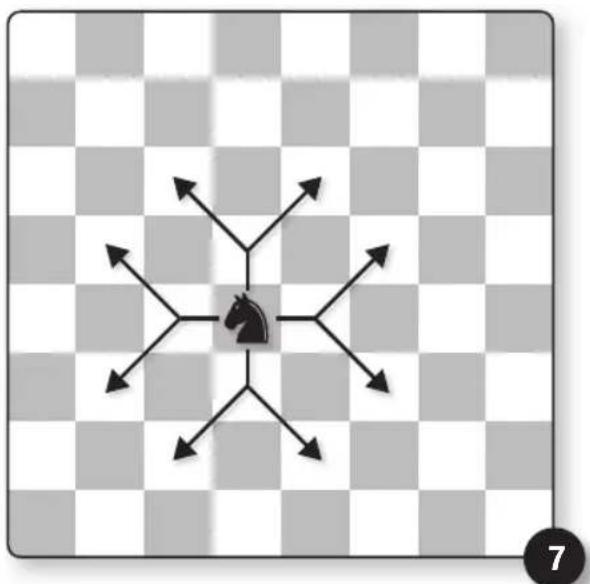
The knight is the only piece that can jump opposing pieces. The knight makes a move that consists of one step in a horizontal or vertical direction, and then one step diagonally in an outward direction. This means that the knight always ends his movement on a square of a different colour than his starting square (see figure 7). Therefore, the knight has a large sphere of activity and is very manoeuvrable.
The pawn
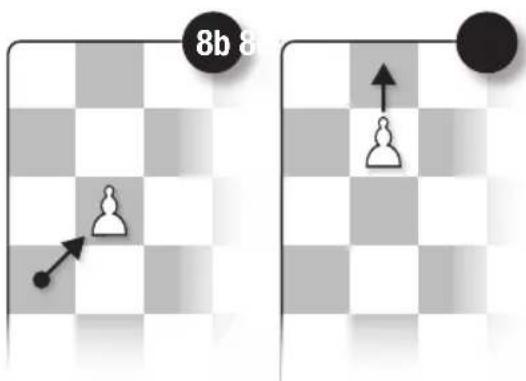
From his starting square, the pawn may move one or two squares straight ahead (see figure 8a). After its first move, it may only move one single square straight ahead. It is the only piece that may move in a single direction only. When taking opposing pieces, the pawn goes one square diagonally forward (figure 8b). When a player moves a pawn to the last row of the board, he replaces the pawn by a
8a
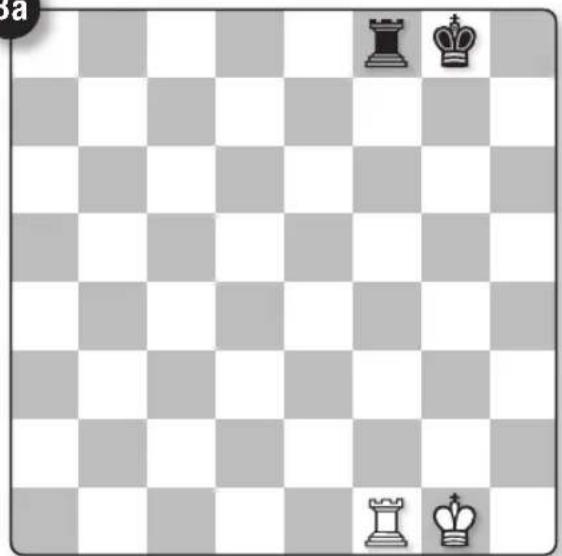
piece of his choice; this does not have to be a piece that has already been taken (see figure 8c).
Castling
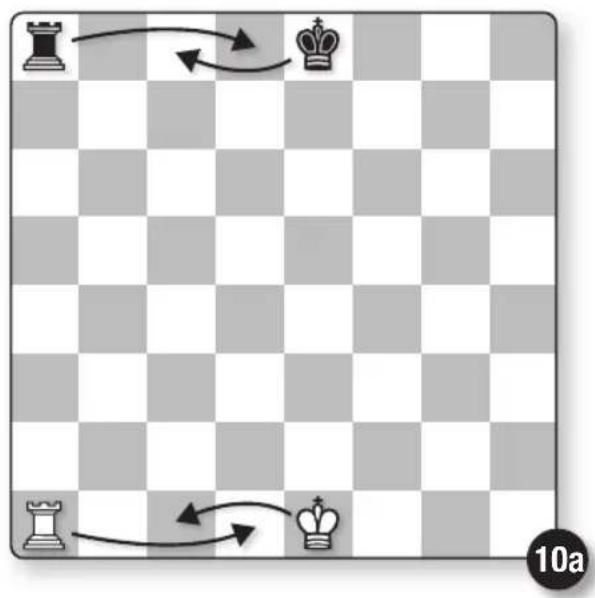
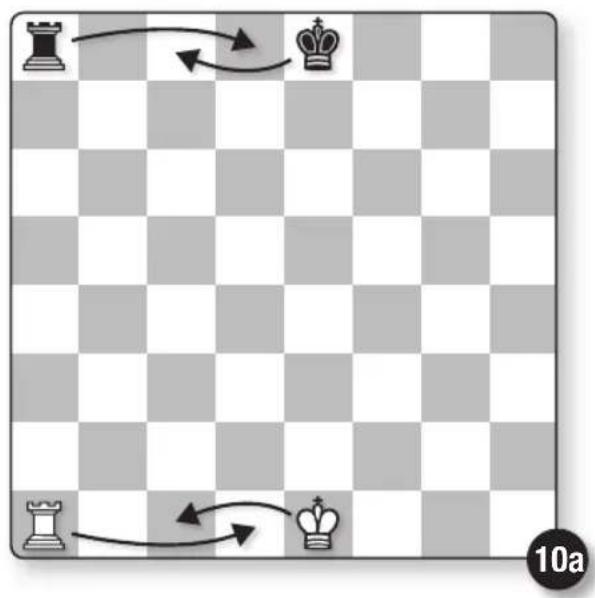
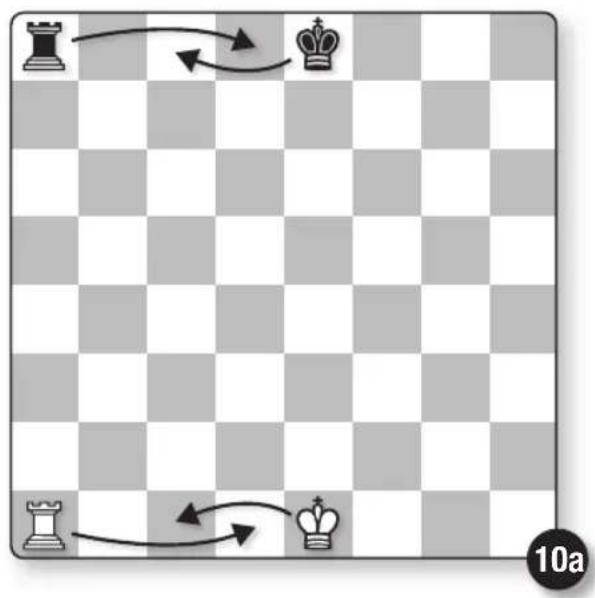
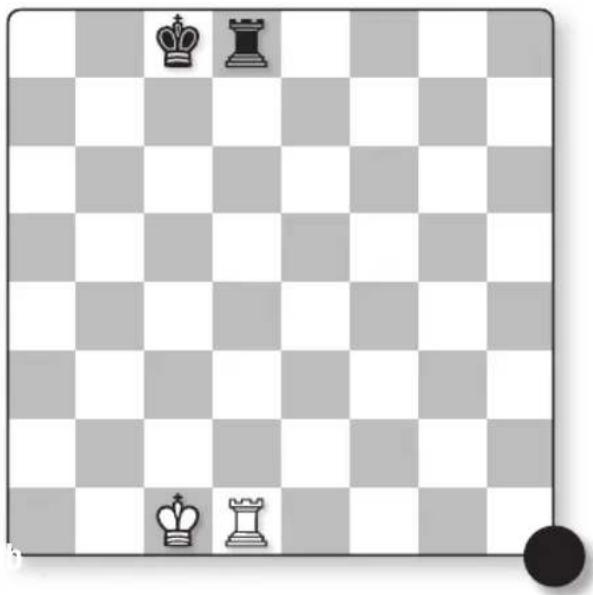
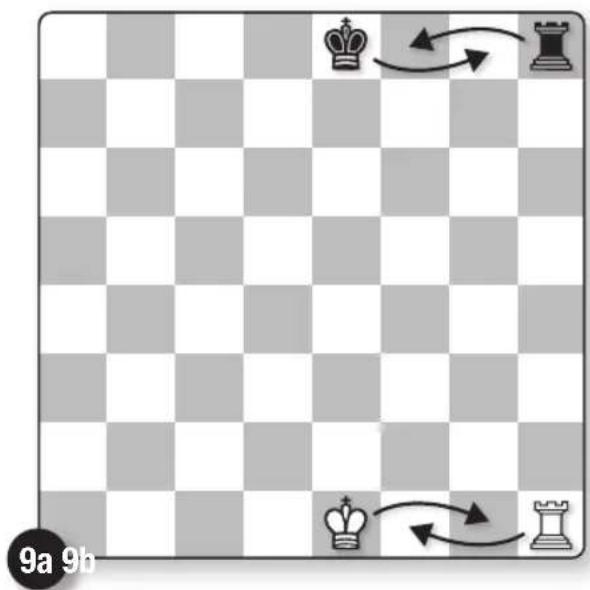
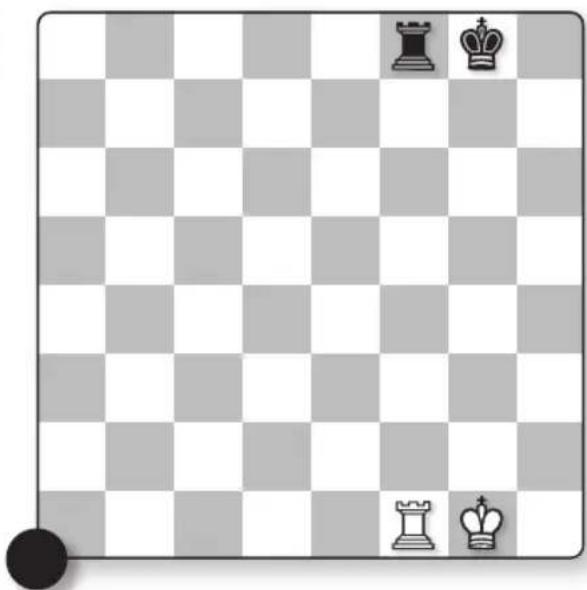
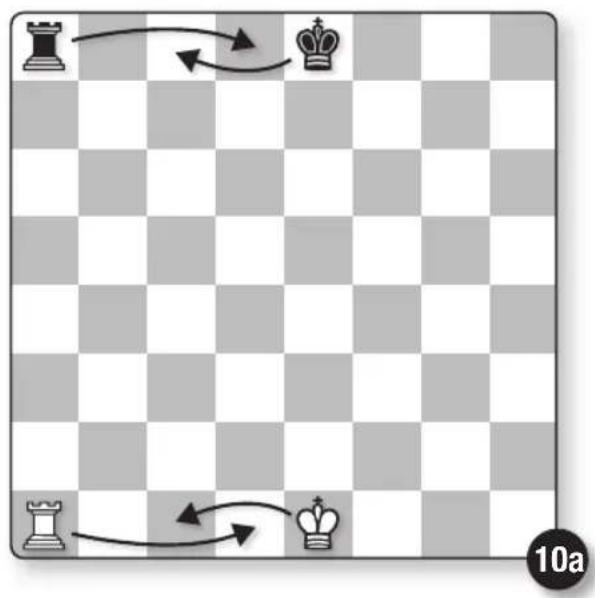
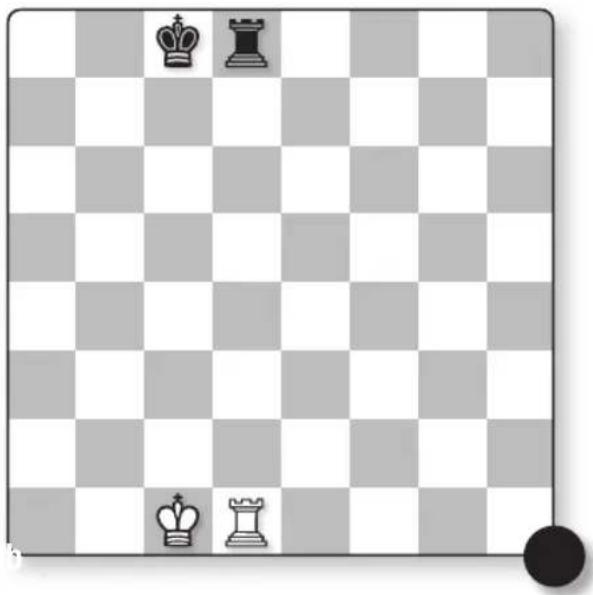
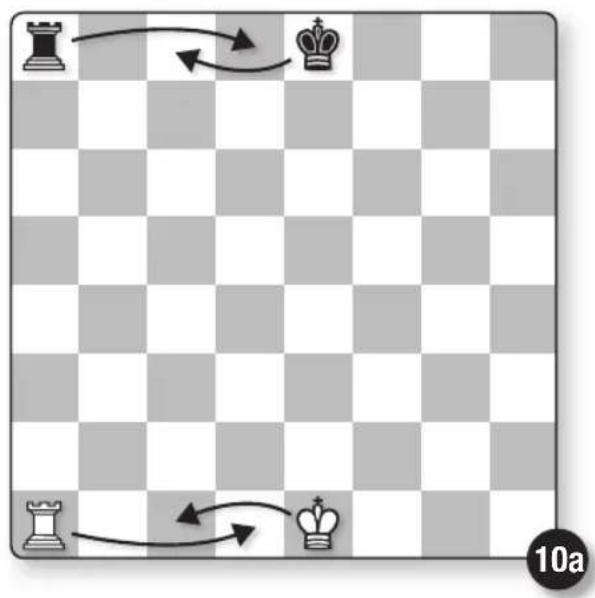
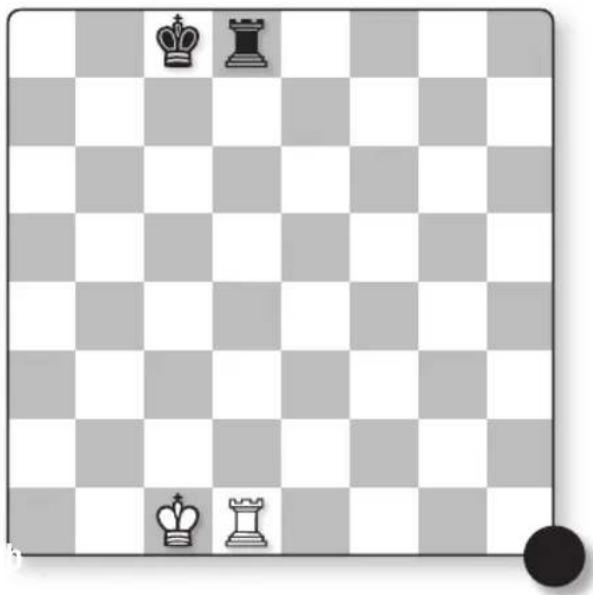
Castling is an effective double move: Two pieces (the king and a rook) can move simultaneously in order to protect the king. There is a castling king's side (see figures 9a + b) and a castling queen's side (see figures 10a + b). During castling, the rook is always led to the king that moves over the rook.
You may only execute a castling if:
a) Neither the king nor the rook has been moved in the game
b) The king is not in check
c) There is no opposing or own piece between the king and the rook
d) The king does not move over or to a square that is being attacked by an enemy piece during the castling move
Check/Mate
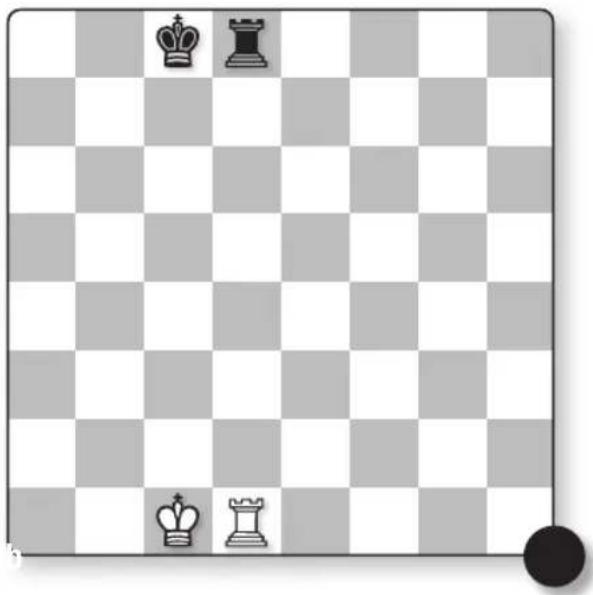
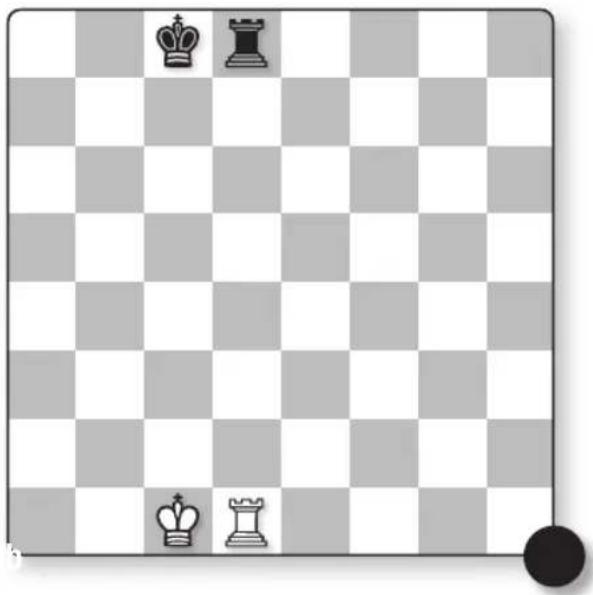
When the king of a player can be taken by a piece of the opponent, the king is in check, and the opponent has to say "Check!" Now the king must try to escape from this threat.
Players try to take the opponent's king – to checkmate him. There are always two requirements for a mate:
a) The king's square is attacked, putting him in check.
b) The player cannot make a move to save the king.
Draw
If each player only has his king or his king and another additional piece left, the result is a draw.
The following general rules and notes should be observed:
- After the first phase of the game (opening), during which the pieces reach their first new positions, follows the middle game. This is the true battle for decisive advantages through taking opposing pieces and reaching good positions in order to checkmate the king in the last phase.
- A player can take a piece of the opponent by moving one of his own pieces to the square that contains a piece of the opponent. The opponent's piece then is removed from the board.
- Early castling is important for the king's protection.
- Open squares (i.e. lines that are not crossed by pawns) should be protected by the rook, the queen, or the bishop. In this way, players can use their pieces can attack several squares and restrict their opponent's movement.
- Players should always protect their pieces by several pieces.
AJEDREZ
La reina
La torre
El alfil
El caballo
Jaque/Jaque mate


- DIE DAME
- DER TURM
- DER LÄUFER
- DER SPRINGER
- SCHACH/MATT
- LA DAME
- LA TOUR
- LES FOUS
- LE CAVALIER
- ECHEC ET MATT
- LA REGINA (O DONNA)
- LA TORRE
- L'ALFIERE
- IL CAVALLO
- SCACCO MATTO
- MOVING THE PIECES
- THE KING
- THE QUEEN
- THE ROOK
- THE BISHOP
- THE KNIGHT
- THE PAWN
- CASTLING
- YOU MAY ONLY EXECUTE A CASTLING IF
- CHECK/MATE
- DRAW
- THE FOLLOWING GENERAL RULES AND NOTES SHOULD BE OBSERVED
- AJEDREZ
- LA REINA
- EL ALFIL
- EL CABALLO
- JAQUE/JAQUE MATE
Brand : Schmidt
Model : Schach
Category : Board game