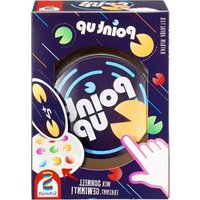
Point Up - Board game Schmidt - Free user manual and instructions
Find the device manual for free Point Up Schmidt in PDF.



| Brand | Schmidt |
| Model | Point Up |
| Product type | Board game |
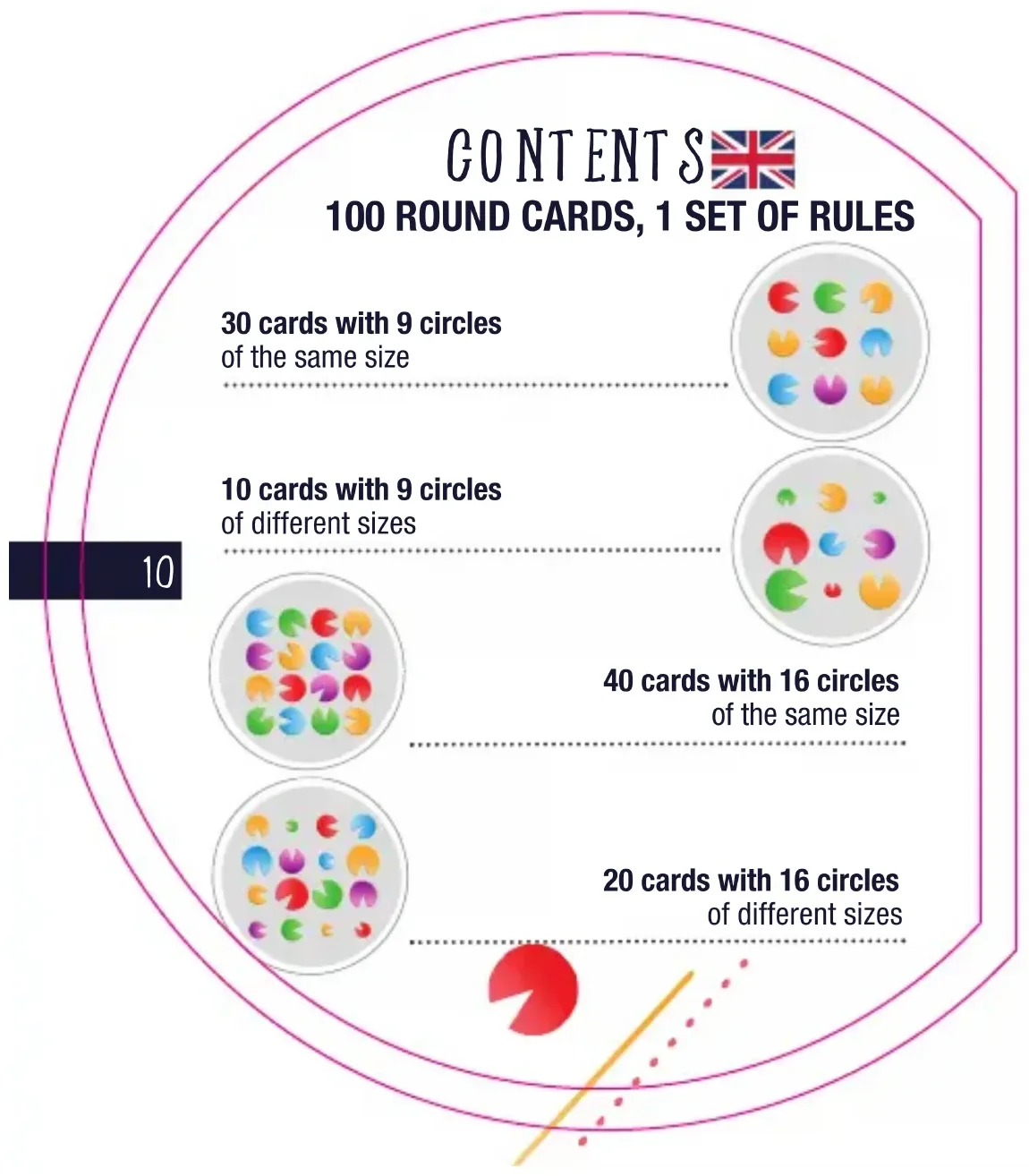
| Number of cards | 100 cards (30 cards with 9 disks same size, 10 cards with 9 disks different sizes, 40 cards with 16 disks same size, 20 cards with 16 disks different sizes) |
| Number of players | 2 to 6 players (estimate) |
| Recommended age | 8 years and up (estimate) |
| Objective of the game | Be the first to identify the disk not shown, shown twice, or the most frequent color on the flipped card |
| Game mechanism | Observation, speed, color and shape recognition |
| Game duration | Approximately 15 to 30 minutes depending on number of cards used |
| Box contents | 30 cards with 9 disks same size, 10 cards with 9 disks different sizes, 40 cards with 16 disks same size, 20 cards with 16 disks different sizes, game rules |
| Variants | Point Up with penalty (return a won card to the bottom of the stack if wrong) |
| Author | Katrin Abfalter |
| Publisher | Schmidt Spiele |
| Language of instructions | French |
Frequently Asked Questions - Point Up Schmidt
User questions about Point Up Schmidt
0 question about this device. Answer the ones you know or ask your own.
Ask a new question about this device
Download the instructions for your Board game in PDF format for free! Find your manual Point Up - Schmidt and take your electronic device back in hand. On this page are published all the documents necessary for the use of your device. Point Up by Schmidt.
USER MANUAL Point Up Schmidt
30 cards with 9 circles
of the same size
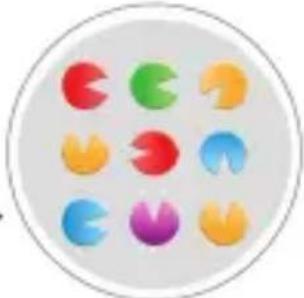
10 cards with 9 circles
of different sizes
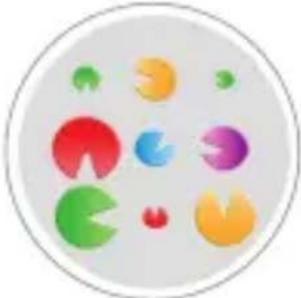
40 cards with 16 circles
of the same size
20 cards with 16 circles
of different sizes
IDEA AND AIM OF THE GAME
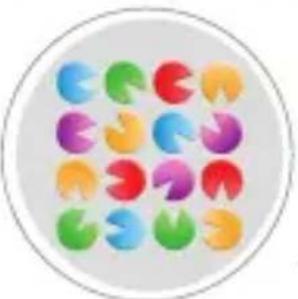
A card is turned over and all of the players must complete one of three tasks at the same time as quickly as possible. The cards show circles with an opening. These openings always point toward a different circle. On each card, there is one circle with no openings pointing toward it and one circle with two openings pointing toward it. One color also appears on each card more frequently.
The tasks are to recognize as quickly as possible which circle does not have any openings pointing toward it, which circle has two openings pointing toward it, or which color occurs more frequently. The first player to recognize this and name the correct color wins the card that has been turned over. The player with the most cards at the end of the game wins.
SETTING UP THE GAME
Use the 30 cards with 9 circles of the same size at first. Shuffle all 30 of the cards and place them in a pile in the middle of the table with the side showing the three possible tasks facing up. Now you're ready to start playing!
HOW TO PLAY
The youngest player takes the top card from the pile, turns it over, and places it next to the pile. The back of the card that is now at the top of the pile indicates which of the three tasks players must complete for the card that has been turned over.
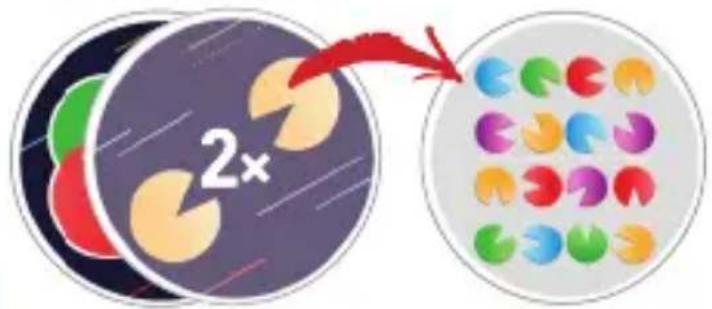


Find the circle with no openings pointing toward it.
Whoever spots the circle names the color and points at the circle.

Find the circle with two openings pointing toward it.
Whoever spots the circle names the color and points at the circle.
Find the color that appears on the card most frequently.
Whoever spots the circle names the color (red, yellow, blue, purple, or green).

Each player is only allowed one guess. If a player guesses wrong, they are not allowed to guess again until a new card is turned over. The player to correctly complete the task the fastest wins the card turned face-up and places it in front of them. They now turn the next card over, place it next to the pile, and a new round begins.
EXAMPLES:
The task is to find the circle with no openings pointing toward it. The solution is the blue circle at the top left because the openings of none of the neighboring circles point toward it.

The task is to find the circle with two openings pointing toward it. The solution is the red circle at the left center because the openings of two of the neighboring circles point toward it (the yellow circle at the bottom left and the purple circle at the top center).


The task is to find the most frequent color. The solution is red as there are four red circles on the card.

END OF THE GAME
The game ends when there is only one card left in the pile. All of the players should now count their cards. The player with the most cards wins the game.
THERE ARE MORE PLAY OPTIONS!
Have you played a few rounds now and feel ready for a new challenge? Then you can also play with the 40 cards featuring 16 circles each. These cards are a bit more diffi
cult, but the rules remain exactly the same.
If you want to take things slowly, then only add a few of the cards featuring 16 circles to the pile and shuffle them together with the cards featuring 9 circles.
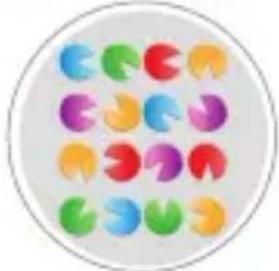
The same applies for the cards featuring circles of different sizes. These make the game even crazier and more diffi cult—the rules still remain the same though. Decide for yourself how many of these cards you wish to use.
PLAY VARIATIONS: POINT UP WITH PENALTY POINTS
Want the game to last a little longer? Then try the play variation with penalty points. Whenever a player guesses wrong, they must return one of the cards they have won to the pile. If they don't have any more cards left, then there is no further penalty. However, they cannot guess again until the next card is turned over. This is a good option for when people of different abilities are playing together. Inexperienced players play without penalty points and experienced players with penalty points.
The author and publisher would like to thank all test players and rule reviewers.
Game author: Katrin Abfalter
Editor: Matthias Karl
Design: VISID GmbH