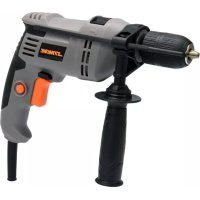
78995 - Drill Sthor - Free user manual and instructions
Find the device manual for free 78995 Sthor in PDF.



| Product type | Corded hammer drill |
| Brand | Sthor |
| Model | 78995 |
| Rated voltage | 220-240 V~ |
| Rated frequency | 50 Hz |
| Rated power | 710 W |
| No-load speed | 0-3000 min⁻¹ |
| Max drilling diameter (steel) | 13 mm |
| Weight | 2.1 kg |
| Sound pressure level | 98.06 ± 3.0 dB(A) |
| Sound power level | 109.06 ± 3.0 dB(A) |
| Insulation class | II |
| Vibration level (drilling) | 5.726 ± 1.5 m/s² |
| Vibration level (hammer drilling) | 17.116 ± 1.5 m/s² |
| Protection rating | IPX0 |
| Package contents | Drill, auxiliary handle, depth stop |
| Main functions | Drilling, hammer drilling, screwdriving/unscrewing |
| Speed control | Electronic variable speed trigger |
| Rotation direction reversal | Yes (R/L switch) |
| Trigger lock | Yes (for continuous operation) |
| Maintenance and cleaning | Clean with compressed air (≤0.3 MPa) or dry cloth; no chemicals |
| Repairability | Entrust to an authorized service center using original parts |
| Recommended safety equipment | Safety glasses, gloves, hearing protection |
Frequently Asked Questions - 78995 Sthor
User questions about 78995 Sthor
0 question about this device. Answer the ones you know or ask your own.
Ask a new question about this device
Download the instructions for your Drill in PDF format for free! Find your manual 78995 - Sthor and take your electronic device back in hand. On this page are published all the documents necessary for the use of your device. 78995 by Sthor.
USER MANUAL 78995 Sthor
natural_image
Black and white photo of a STHOR electric drill putter with handle and base (no visible text or symbols)CE
PL GB D RUS UA LT LV CZ SK H RO E F I NL GR
natural_image
Close-up of a hand using a power drill to adjust the drill bit (no text or symbols visible)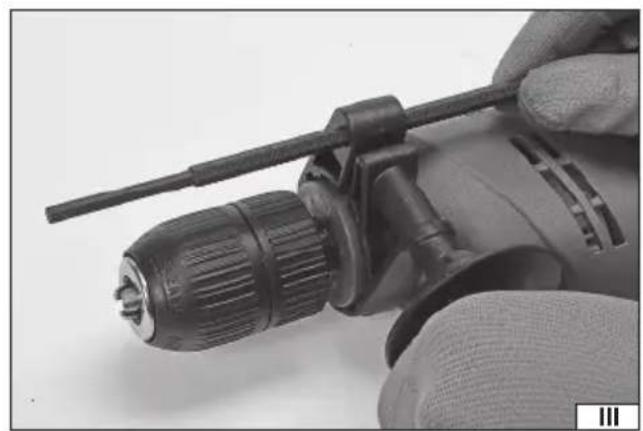
natural_image
Close-up of a hand holding a drill bit with a wooden screwdriver (no visible text or symbols)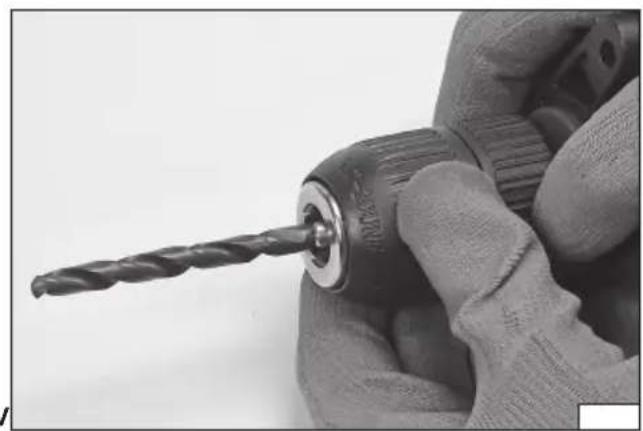
natural_image
Close-up of a hand holding a drill bit with a metal screw, no visible text or symbols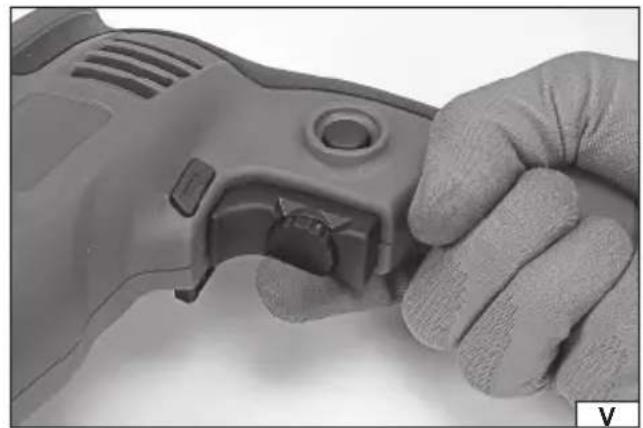
natural_image
Close-up of a gloved hand holding a handheld device with a handle (no visible text or symbols)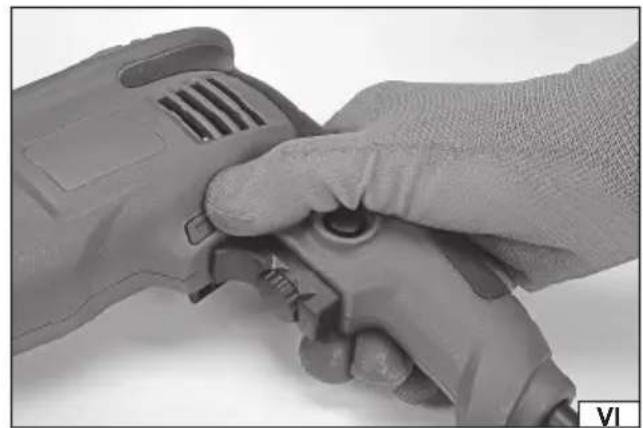
natural_image
Close-up of a hand using a power tool to adjust or install a component (no visible text or symbols)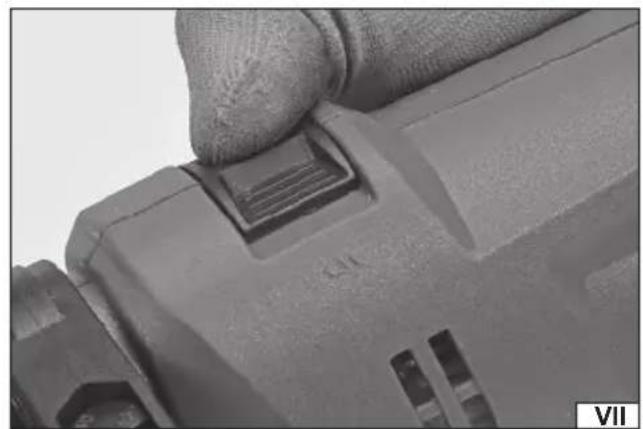
natural_image
Close-up of a hand pressing a button on a mechanical component (no visible text or symbols)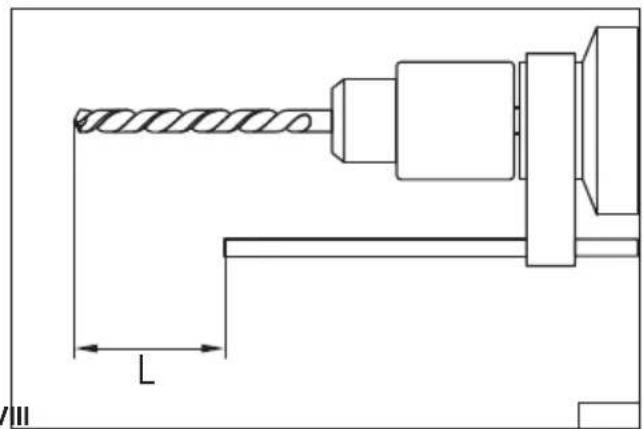
natural_image
Technical line drawing of a mechanical assembly with threaded shaft and base plate (no text or symbols)2019
Read the operating instruction
Wear protective goggles
Wear hearing protectors
Mains voltage and frequency
Maximum drilling diameter
Electronic adjustment of the rotation
Second class of insulation
Correct disposal of this product: This marking shown on the product and its literature indicates this kind of product mustn't be disposed with household wastes at the end of its working life in order to prevent possible harm to the environment or human health. Therefore the customers is invited to supply to the correct disposal, differentiating this product from other types of refusals and recycle it in responsible way, in order to re - use this components. The customer therefore is invited to contact the local supplier office for the relative information to the differentiated collection and the recycling of this type of product.
UMWELTSCHUTZ
The manual hammer drill is an ordinary electric tool, insulation Class II, which has been designed for drilling in distinct materials: metal, wood and wooden products, plastics, concrete, walls, etc. using drills adequate for the material with a cylindrical chuck. The hammer drill permits continuous adjustments of rotation of the spindle, changing of the direction of rotation, hammer drilling and drilling without hammering. It may be also used to screw and remove screws, using the bits available on the market. A correct, reliable and safe functioning of the grinder depends on its proper use, so:
Before you proceed to operate the grinder, read the manual thoroughly and keep it.
The supplier will not be held responsible for any damage resulting from the safety regulations and the recommendations indicated hereby not being observed. The tool has been designed solely for household tasks and it must not be used professionally.
ACCESSORIES
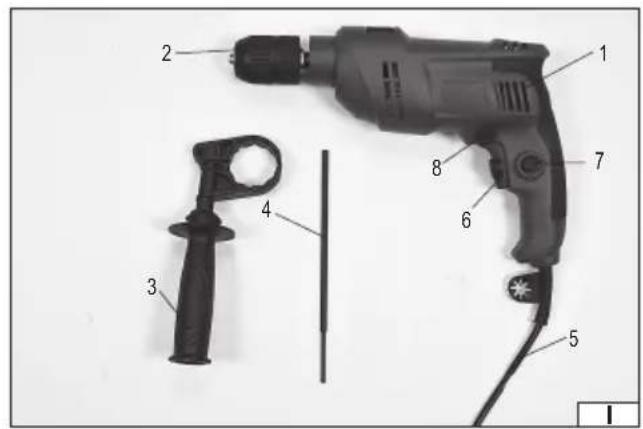
The package provided by the manufacturer should contain:
- hammer drill
- additional handle
- drilling depth limiting device
Attention! The tool is supplied without drills!
TECHNICAL PARAMETERS
| Parameter Unit of measurements Value | ||
| Catalogue number | 78995 | |
| Nominal voltage | [V~] 220 - 240 | |
| Nominal frequency | [Hz] 50 | |
| Nominal power | [W] 710 | |
| Nominal rotation | [min-1] 0 - 3000 | |
| Maximum hole diameter (steel) | [mm] 13 | |
| Maximum hole diameter (concrete) [mm] 10 | ||
| Maximum hole diameter (wood) [mm] 25 | ||
| Mass [kg] 2,1 | ||
| Level of noise | ||
| Acoustic pressure | [dB (A)] | 98,06 ± 3,0 |
| Acoustic power | [dB (A)] | 109,06 ± 3,0 |
| Class of insulation | II | |
| Level of vibration: drilling / hammer drilling | [m/s2] | 5,726 ± 1,5 / 17,116 ± 1,5 |
| Grade of protection | IPX0 |
GENERAL SAFETY CONDITIONS
NOTE! Get acquainted with all the instructions below. Failure to observe them may lead to an electric shock, fire or injuries. The notion of electric tool used in the instructions applies to all the tools which are powered with electric current, both wire tools and wireless ones.
OBSERVE THE FOLLOWING INSTRUCTIONS
Place of work
The place of work must be properly illuminated and clean. Disorder and poor illumination may be a cause of accidents. Do not work with electric tools in explosive environments, or those which contain inflammable liquids, gases or vapours. Electric tools generate sparks, which may cause a fire in case of contact with inflammable gases or vapours. Do not allow children and outsiders to the place of work. A lack of concentration may result in a loss of control over the tool.
Electric safety
The plug of the power supply cable must fit the mains socket. Do not modify the plug. Do not use any adapters whatsoever in order to adapt the plug to the socket. Unmodified plug which fits the socket reduces the risk of an electric shock.
Avoid contact with grounded surfaces, such as pipes, heaters and refrigerators. Grounding of the body increases the risk of an electric shock.
Do not expose electric tools to precipitation or humidity. Water and humidity which gets into the electric tool increases the risk of an electric shock.
GB
Do not overload the power supply cable. Do not use the power supply cable in order to carry the tool or to connect and disconnect the plug from the mains socket. Avoid contact of the power supply cable with heat, oils, sharp tools and moving elements. Damage to the power supply cable increases the risk of an electric shock.
In case work is realised outside closed areas, it is necessary to use extension cords designed for applications outside closed areas. Using a correct extension cord permits to reduce the risk of an electric shock.
If operating a power tool in a damp location is unavoidable, use a residual current device (RDC) protected supply. Use of an RCD reduces the risk of electric shock.
Personal safety
Commence work in good physical and psychological conditions. Pay attention to what you do. Do not work if you are tired or under effects of medicines or alcohol. Even a moment's inattention during work may lead to serious injuries.
Always use individual means of protection. Always wear goggles. Using individual means of protection, such as dust-masks, protective shoes, helmets and hearing protections permits to reduce the risk of serious injuries.
Avoid accidental activation of the tool. Make sure the switch is in the OFF position, before you connect the tool to the mains. Holding the tool with a finger on the switch or connecting an electric tool when the switch is in the ON position may lead to serious injuries.
Before you turn an electric tool on remove all the spanners and other tools, which have been used for adjustments. A spanner left on rotating elements of the tool may lead to serious injuries.
Keep your balance. Maintain an appropriate position. It will permit to control the electric tool in case of unpredicted situations during its operation.
Use protective clothes. Do not wear loose clothes or jewellery. Keep your hair, clothes and gloves away from moving elements of the electric tool. Loose clothes, jewellery or long hair may get caught on moving elements of the tool.
Use dust extractors or dust containers, if the tool is equipped with any. Make sure they are properly connected. Using of dust extractors permits to reduce the risk of serious injuries.
Operation of the electric tool
Do not overload the electric tool. Use a proper tool for the given purpose. A correct selection of the tool for the given work will result in a more efficient and safer work.
Do not use the electric tool if the switch is not functioning properly. A tool which may not be controlled by means of a switch is dangerous and must be repaired.
Disconnect the plug from the mains socket before any adjustment, replacement of accessories or storage of the tool. It will permit to avoid accidental activation of the electric tool.
Store the tool away from children. Do not allow untrained persons to operate the tool. An electric tool may be dangerous in hands of an untrained person.
Make sure the tool is properly maintained. Check the tool in order to detect any unfitting or loose moving elements.
Check whether the elements of the tool are not damaged. In case any damaged elements of the tool are detected, they must be repaired before the electric tool is operated. Many accidents are caused by improper maintenance of tools.
Cutting tools must be sharp and clean. Properly maintained cutting tools are easier to control during work.
Use electric tools and accessories in accordance with the aforementioned instructions. Use the tool in accordance with its purpose, taking into account the kind and conditions of work. Should the tool be used for other applications than the ones it has been designed for, the risk of a dangerous situation increases.
Repairs
The tool may be repaired only by authorised service centres, which must use solely original spare parts. It will guarantee a proper level of safety of operation of the electric tool.
ADDITIONAL SAFETY RECOMMENDATIONS
During work with the hammer drill it is required to use hearing protection, since exposure to noise may lead to hearing impairment.
Use the tool with the additional handles provided. A loss of control may lead to injuries of the operator.
While realising tasks during which the attached tool may come into contact with a hidden live electric wire hold power toll by insulated handles. If the attached tool touches a live wire, the metal elements of the power tool may cause electric shock to the operator of the power tool.
INSTALLATION OF THE ACCESSORIES
ATTENTION! Installation of the accessories must be carried out when the power supply voltage is disconnected. Remove the plug of the cord of the tool from the mains socket!
GB
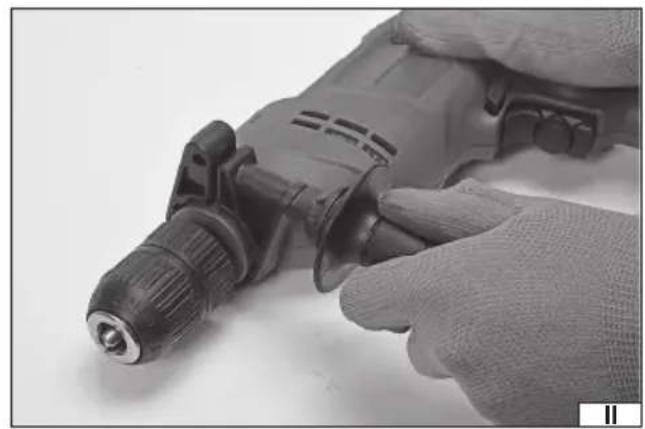
Installation of auxiliary handle (II)
Affix the clamp of drill chuck to drill body, select the chuck position in such a way as to ensure the safest work. The position of chuck should be selected in such a way, that it could be possible to fully counteract the torque directed opposite to direction of rotation of drill chuck. This torque is generated during normal operation, but the highest value is reached when the drill is chocked in the processed material. Secure the chuck position by tightening the grip handle of auxiliary chuck firmly and reliably.
Installation of drilling depth limiter (III)
Put the limiter bar through the hole in the grip handle of auxiliary chuck. The position of limiter must be secured depending on the type of installation: by tightening the grip handle of the auxiliary chuck, by tightening the knob individually or by means of the lock knob. Detailed method of locking the position of limiter is shown in the illustration.
PREPARATION FOR WORK
Before work may commence, it is necessary to make sure the enclosure and the cord with plug are not damaged. In case any damage is detected, it is prohibited to continue working.
Attention! All actions consisting in installation and replacement of the working tools, installation of guards and guides, adjustments etc. must be carried out when the power supply voltage is disconnected: Remove the plug of the cord of the tool from the mains socket!
Installation of drills in the chuck (IV)
Select a drill with roller grip proper for specific job. Insert the drill bit into the chuck and then holding the back of the chuck rotate the front part of the chuck, so that the drill is fixed in the chuck tightly and reliably.
Adjustments of rotation (V)
Drill is fitted with smooth rotation control. Control is carried out by means of a knob placed on the switch. Rotation mark in form of an arrow, „+” and „-” symbols, or similar symbols, informs to which side the know should be turned to increase or decrease the rotational speed. Rotation of the knob adjusts the range of switch movement, which translates into the value of maximum speed. Gradually pressing the switch we accelerate the rotation of motor.
Setting the direction of the rotation (VI)
Set the rotation switch in accordance with the arrows; right rotation – the arrow pointing to the front of the tool, left rotation – the arrow pointing to the back of the tool.
Attention! The direction of the rotation of the tool may be changed only if the power supply voltage is off!
Activation of the hammer function (VII)
The hammer action operation facilitates drilling in concrete, walls and hard ceramic materials (hard bricks, stones, marble). The hammer action selector must be set to hammer action indicated with a symbol of a hammer.
While drilling in other materials, the hammer action function must be deactivated, setting the selector to the drill symbol.
Preparation for work
Before work:
The processed material must be appropriately fixed, using an anvil or clamps.
Use tools which are appropriate for the task to be realised. Make sure they are sharpened and in good conditions.
Wear working clothes and sight and hearing protection.
Plug the cord to the mains.
Hold the drill with both hands by the handle and the additional handle
Adapt a position that guarantees equilibrium.
Turn the hammer drill off, pressing the switch with a finger.
Attention! In case any suspicious sounds or smell are detected the hammer drill must be immediately disconnected from the mains.
Right rotation should be used while drilling with common right turn drill. Left rotation must be used if the right turn drill is jammed in the material and in case of driving screws.
In case of driving screws into a surface, minimum rotation must be used.
Using the switch lock
It is recommended to use the switch lock in case of long drilling, e.g. in case of drilling in concrete, walls, etc. While the switch
GB
is pressed, press the lock button with your thumb and release the switch. In order to release the lock, it is sufficient to press the electric switch.
Drilling in wood
Before drilling, it is recommended to fix the material to be processed with a clamp or in an anvil, and then using a punch or a nail mark the place of drilling. Install the drill in the chuck, set the speed, connect the drill to the mains and start drilling.
In case of drilling through the material, it is recommended to place a wooden pad under the material, so that the edge of the hole at the outlet will be smooth.
In case of drilling large diameter holes, it is recommended to drill first a smaller guide hole.
Drilling in metals
It is always necessary to fix the material to be processed securely. In case of thin sheet metal, it is recommended to place a piece of wood under it, so as to avoid any deformations. Then mark the places of drilling using a punch and start drilling. Use drills for steel. In case of drilling in white cast iron, it is recommended to use drills with sintered carbide bits. While drilling larger holes, it is recommended to drill first a smaller guide hole. While drilling steel, cool the drill with machine oil. In case of drilling in aluminium, use turpentine oil or paraffin to cool the drill. In case of drilling in brass, copper or cast iron do not use any substances to cool the drill. In order to cool it, is required to remove it frequently from the material.
Drilling in ceramic materials
Drilling in hard and compact materials: concrete, hard bricks, stone, marble etc.)
Before drilling the proper hole, it is recommended to drill first a smaller guide hole with the hammer function off. The proper hole should be drilled with the hammer function on. Use drills with sintered carbide bits in good conditions.
Drilling in glaze, soft brick, plaster, etc.
Drill as described in the point above, but without hammer action.
From time to time remove the drill from the hole, in order to remove dust and debris. While drilling press the tool hard with constant strength.
Using the drill to drive or remove screws
A drill with adjustable rotation and a switch to change the direction of rotation may also be used to drive screws in and remove them. In order to do so, the following is recommended:
- use the lowest rotational speed,
- use appropriate bits.
Bits may be installed directly in the chuck, or with a special magnetic holder.
In order to remove a screw set the direction of rotation to the left (L).
Carving holes
The drill may be used to carve larger holes in wood, using special drills of fixed diameter or interchangeable bits from the saw set – jig-saws. In order to obtain smooth edges of the outlet of the hole, place a piece of wood under the material.
Using attachments
Drills with adjustable direction of rotation should not be used with attachments.
Drilling with the depth delimiter (VIII)
The delimiter can be used to facilitate the drilling of surfaces, where there are performed blind holes, particularly in concrete and wood. Determine the depth of the hole. Install the drill bit in the holder, by using a pen you should mark on the drill bit a distance, from the working drill end which is equal to the depth of the hole. set the depth delimiter so its end would cover the marked the distance „L” on the bit. Make sure, that the delimiter does not move during operation. Start drilling, at a fixed depth the delimiter forehead will rest on the surface around the hole. You should withdraw the drill bit out of the hole.
Additional remarks
During work do not exert excessive pressure on the material to be processed and do not make abrupt movements, so as not to damage the tool and the drill.
Make regular breaks during work.
Avoid overloading the tool.
The temperature of the external surfaces must not exceed 60^ C.
Once work has been fi nished, turn the drill off , unplug it from the mains and proceed to maintenance and inspection.
The declared total value of vibrations has been determined by means of a standard method and it may be used for comparative purposes. The declared total value of vibrations may be applied in the preliminary assessment of exposure.
Attention! The emission of vibrations during work with the tool may differ from the declared value, depending on the use of the tool.
GB
Attention! It is required to determine safety means to protect the operator, which are based on assessment of exposure under real operating conditions (including the whole working cycle, as for example the time when the tool is of or idling, and the time of activation).
MAINTENANCE AND OVERHAUL
ATTENTION! Before any adjustment, technical service or maintenance operations unplug the tool. Once the operations have been finished, the technical conditions of the tool must be assessed by means of external evaluation and inspection of the following elements: body and handle, conductor with a plug and deflection, functioning of the electric switch, patency of ventilation slots, sparking of brushes, noise level of functioning of bearings and gears, start-up and smoothness of operation. During the guarantee period, the user cannot dismantle the electric tools or change any sub-assemblies or elements, since it will cancel any guarantee rights. All irregularities detected at overhaul or during functioning of the tools are a signal to have the tool repaired at a service shop. Once the functioning has been concluded, the casing, ventilation slots, switches, additional handle and protections must be cleansed with a stream of air (at a pressure not exceeding 0.3 MPa), with a brush or a cloth without any chemical substances or cleaning liquids. Tools and handles must be cleansed with a clean cloth.
GERÄTEBESCHREIBUNG
PŘÍSLUŠENSTVÍ VRTÁČKY
DECLARATION OF CONFORMITY
0319/78995/EC/2019
We declare and guarantee with full responsibility that the following products:
Impact drill 220 - 240 V\~; 50 Hz; 710 W; 13 mm; item no. 78995
meet requirements of the following European Standards / Technical Specifications:
EN 60745-1:2009 + A11:2010
EN 60745-2-1:2010
EN 55014-1:2006 + A1:2009 + A2:2011
EN 55014-2:2015
EN 61000-3-2:2014
EN 61000-3-3:2013
and fulfill requirements of the following European Directives:
2006/42/EC Machinery and safety elements
2014/30/EU Electromagnetic compatibility (EMC) Directive
2011/65/EU Restriction of the Use of Certain Hazardous Substances
Serial number: concern all serials numbers of item(s) mentioned in this declaration
The last two digits of the year in which the CE marking was affixed: 17
Year of production: 2019
The person authorized to compile the technical file:
Tomasz Zych
(Place and date of issue)
DYREKTORDS.
DARIUSZ HAYEK
(Name and signature of authorized person)
TOYA S.A.



- UMWELTSCHUTZ
- ACCESSORIES
- GENERAL SAFETY CONDITIONS
- Place of work
- Electric safety
- GB
- Personal safety
- Operation of the electric tool
- Repairs
- ADDITIONAL SAFETY RECOMMENDATIONS
- INSTALLATION OF THE ACCESSORIES
- Installation of auxiliary handle (II)
- Installation of drilling depth limiter (III)
- PREPARATION FOR WORK
- Installation of drills in the chuck (IV)
- Adjustments of rotation (V)
- Setting the direction of the rotation (VI)
- Activation of the hammer function (VII)
- Using the switch lock
- Drilling in wood
- Drilling in metals
- Drilling in ceramic materials
- Carving holes
- Using attachments
- Drilling with the depth delimiter (VIII)
- Additional remarks
- MAINTENANCE AND OVERHAUL
- GERÄTEBESCHREIBUNG
- PŘÍSLUŠENSTVÍ VRTÁČKY
- DECLARATION OF CONFORMITY
Brand : Sthor
Model : 78995
Category : Drill