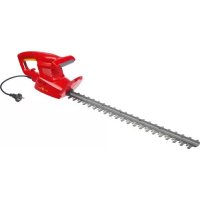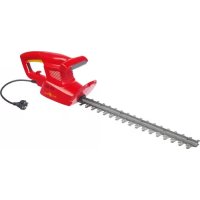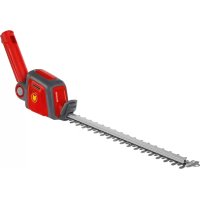
HT 40 eM - Hedge trimmers Wolf Garten - Free user manual and instructions
Find the device manual for free HT 40 eM Wolf Garten in PDF.



User questions about HT 40 eM Wolf Garten
0 question about this device. Answer the ones you know or ask your own.
Ask a new question about this device
Download the instructions for your Hedge trimmers in PDF format for free! Find your manual HT 40 eM - Wolf Garten and take your electronic device back in hand. On this page are published all the documents necessary for the use of your device. HT 40 eM by Wolf Garten.
USER MANUAL HT 40 eM Wolf Garten
natural_image
Illustration of a long-hand tool with a serrated edge and handle (no text or symbols)
Heckenschere
Hedge trimmer
Taille-haie
HT 40 eM
text_image
A ① A ② B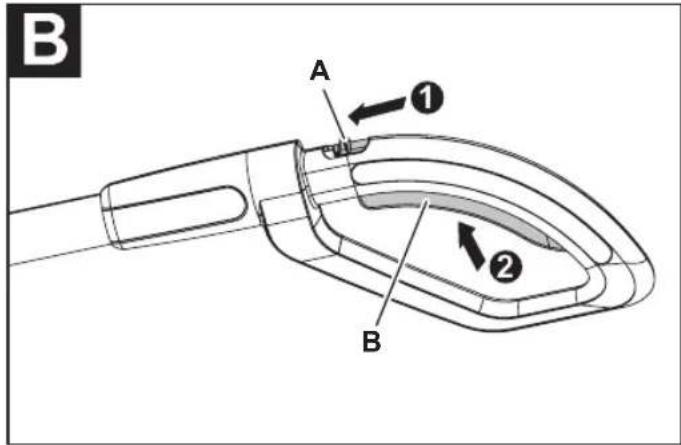
text_image
B A ① ② B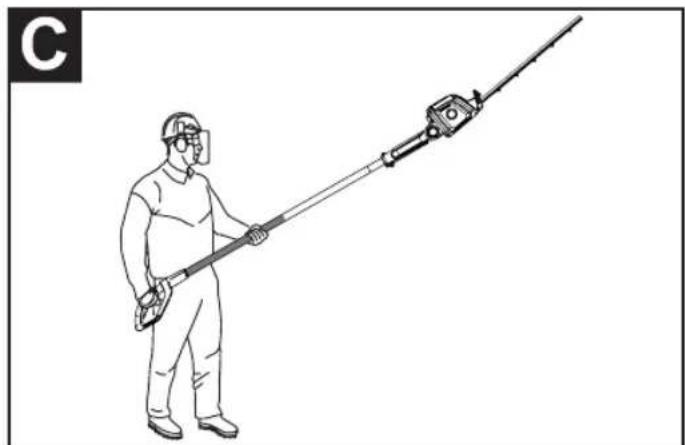
natural_image
Line drawing of a person in protective gear holding a long tool, with no visible text or symbols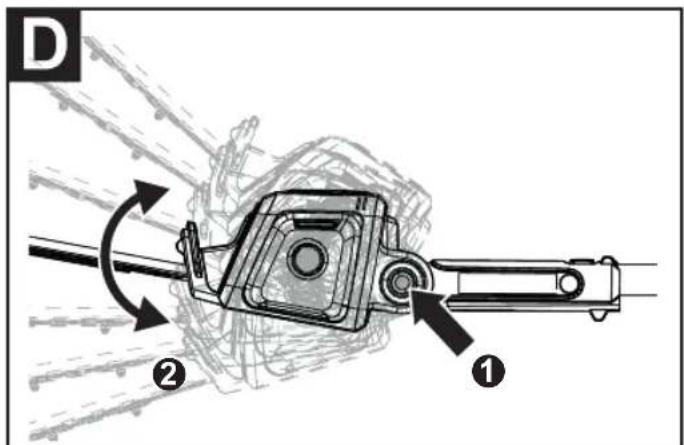
text_image
D ② ①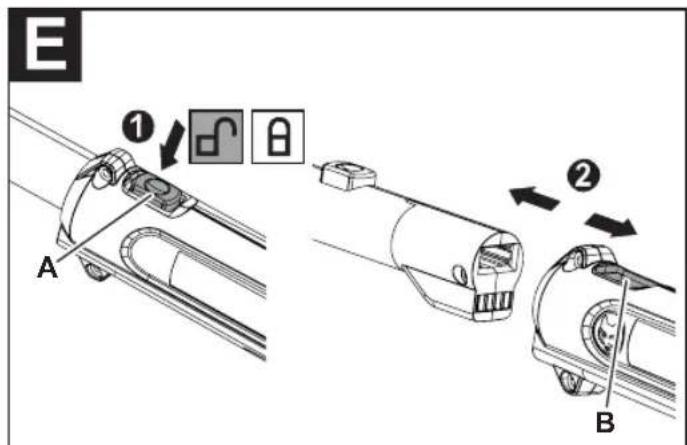
text_image
E ① A ② B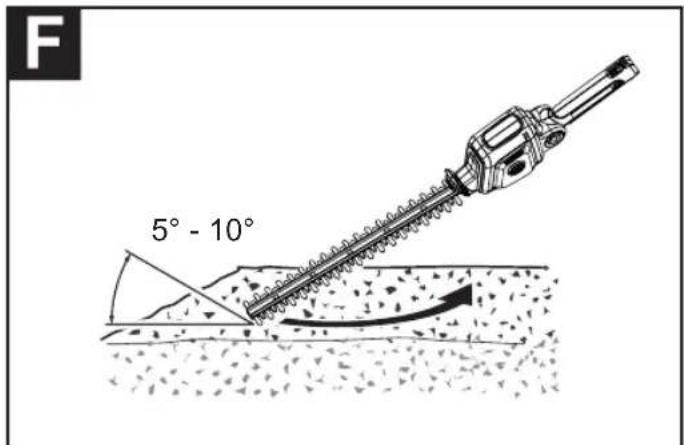
text_image
F 5° - 10°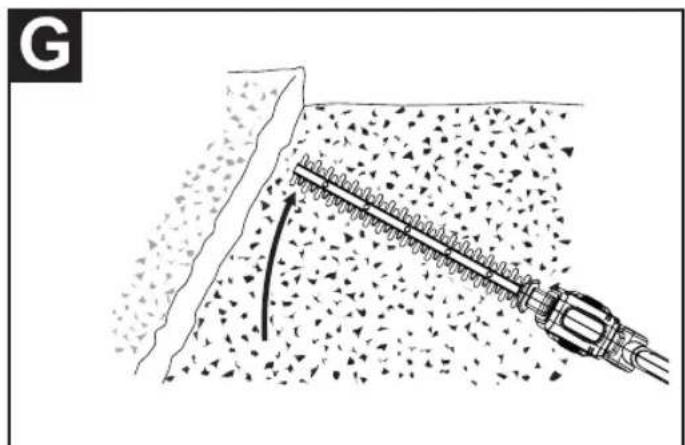
text_image
G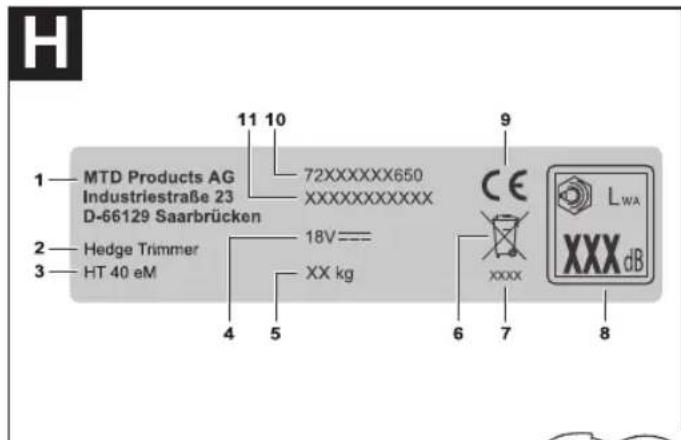
text_image
H MTD Products AG Industriestraße 23 D-66129 Saarbrücken 72XXXXXX650 XXXXXXXXX Hedge Trimmer HT 40 eM 18V= XX kg 11 10 9 CE xxxx LWA XXX dB 4 5 6 7 8
text_image
1 2 3 4 5 6 7 8 9 10
DE Deutsch 8
(Original operating instructions)
FR Français 27
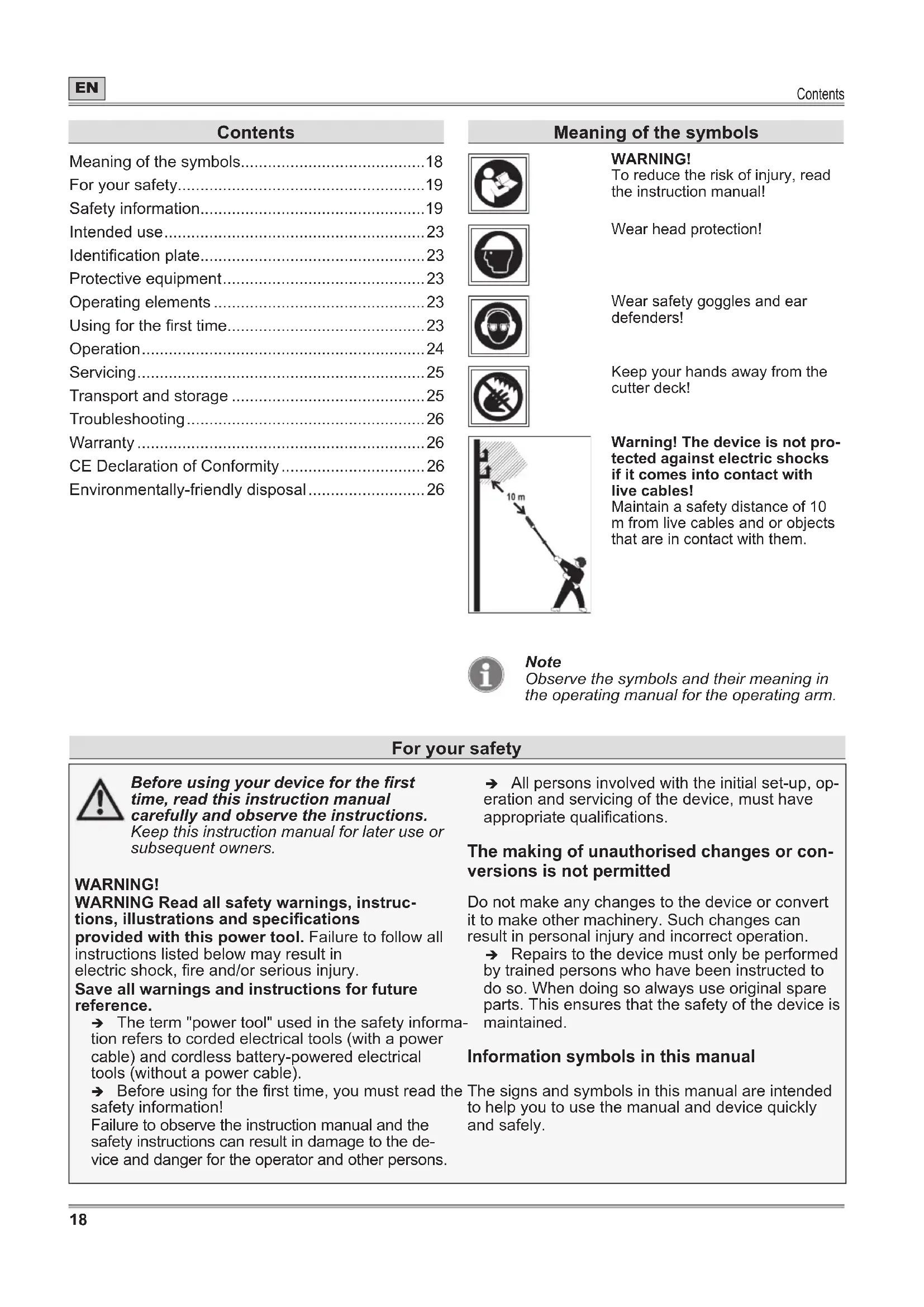
Meaning of the symbols....18
For your safety....19
Safety information....19
Intended use....23
Identification plate....23
Protective equipment....23
Operating elements 23
Using for the first time....23
Operation....24
Servicing....25
Transport and storage 25
Troubleshooting....26
Warranty 26
CE Declaration of Conformity 26
Environmentally-friendly disposal 26
Meaning of the symbols

WARNING!
To reduce the risk of injury, read the instruction manual!

Wear head protection!

Wear safety goggles and ear defenders!

Keep your hands away from the cutter deck!
text_image
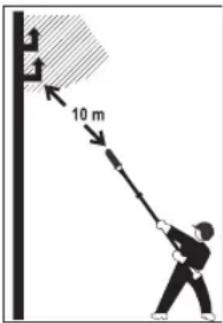
10 mWarning! The device is not protected against electric shocks if it comes into contact with live cables!
Maintain a safety distance of 10 m from live cables and or objects that are in contact with them.

Note
Observe the symbols and their meaning in the operating manual for the operating arm.
For your safety

Before using your device for the first time, read this instruction manual carefully and observe the instructions.
Keep this instruction manual for later use or subsequent owners.
WARNING!
WARNING Read all safety warnings, instructions, illustrations and specifications provided with this power tool. Failure to follow all instructions listed below may result in electric shock, fire and/or serious injury.
Save all warnings and instructions for future reference.
→ The term "power tool" used in the safety information refers to corded electrical tools (with a power cable) and cordless battery-powered electrical tools (without a power cable).
→ Before using for the first time, you must read the safety information!
Failure to observe the instruction manual and the safety instructions can result in damage to the device and danger for the operator and other persons.
→ All persons involved with the initial set-up, operation and servicing of the device, must have appropriate qualifications.
The making of unauthorised changes or conversions is not permitted
Do not make any changes to the device or convert it to make other machinery. Such changes can result in personal injury and incorrect operation.
→ Repairs to the device must only be performed by trained persons who have been instructed to do so. When doing so always use original spare parts. This ensures that the safety of the device is maintained.
Information symbols in this manual
The signs and symbols in this manual are intended to help you to use the manual and device quickly and safely.
For your safety

Note
Information to ensure the most effective and practical use of the device.
→ Action step
Prompts you to perform an action.
√ Action result
This is the result of a sequence of action steps.
[1]Item number
Item numbers are indicated in the text by square brackets [].
A Illustration label
Illustrations are numbered with letters and identified in the text.
① Step number
The defined sequence of steps is numbered and identified in the text.
Danger levels of warning information
The following danger levels are used in this instruction manual to indicate potentially dangerous situations:

DANGER!

A dangerous situation is highly likely and, if the measures are not followed, will result in severe injury and even death.

WARNING!

A dangerous situation may occur and, if the measures are not followed, will result in severe injury and even death.

CAUTION!

A dangerous situation may occur and, if the measures are not followed, will result in slight or minor injuries.
Attention!
A possibly harmful situation may occur which if not avoided will result in property damage.
Safety information content

DANGER!

Type and source of the danger!
Consequences of non-observation
➢ Measure for preventing the danger
Safety information
Work area safety
a) Keep work area clean and well lit. Cluttered or dark areas invite accidents.
b) Do not operate power tools in explosive atmospheres, such as in the presence of flammable liquids, gases or dust. Power tools create sparks which may ignite the dust or fumes.
c) Keep children and bystanders away while operating a power tool. Distractions can cause you to lose control.
Electrical safety
a) Do not expose power tools to rain or wet conditions. Water entering a power tool will increase the risk of electric shock.
Personal safety
a) Stay alert, watch what you are doing and use common sense when operating a power tool. Do not use a power tool while you are tired or under the influence of drugs, alcohol or medication. A moment of inattention while operating power tools may result in serious personal injury.
b) Use personal protective equipment. Always wear eye protection. Protective equipment such as a dust mask, non-skid safety shoes, hard hat or hearing protection used for appropriate conditions will reduce personal injuries.
c) Prevent unintentional starting. Ensure the switch is in the off-position before connecting to power source and/or battery pack, picking up or carrying the tool. Carrying power tools with your finger on the switch or energising power tools that have the switch on invites accidents.
Safety information
d) Remove any adjusting key or wrench before turning the power tool on. A wrench or a key left attached to a rotating part of the power tool may result in personal injury.
e) Do not overreach. Keep proper footing and balance at all times. This enables better control of the power tool in unexpected situations.
f) Dress properly. Do not wear loose clothing or jewellery. Keep your hair and clothing away from moving parts. Loose clothes, jewellery or long hair can be caught in moving parts.
g) Do not let familiarity gained from frequent use of tools allow you to become complacent and ignore tool safety principles. A careless action can cause severe injury within a fraction of a second.
Power tool use and care
a) Do not force the power tool. Use the correct power tool for your application. The correct power tool will do the job better and safer at the rate for which it was designed.
b) Do not use the power tool if the switch does not turn it on and off. Any power tool that cannot be controlled with the switch is dangerous and must be repaired.
c) Disconnect the plug from the power source and/or remove the battery pack, if detachable, from the power tool before making any adjustments, changing accessories, or storing power tools. Such preventive safety measures reduce the risk of starting the power tool accidentally.
d) Store idle power tools out of the reach of children and do not allow persons unfamiliar with the power tool or these instructions to operate the power tool. Power tools are dangerous in the hands of untrained users.
e) Maintain power tools and accessories. Check for misalignment or binding of moving parts, breakage of parts and any other condition that may affect the power tool's operation. If damaged, have the power tool repaired before use. Many accidents are caused by poorly maintained power tools.
f) Keep cutting tools sharp and clean. Properly maintained cutting tools with sharp cutting edges are less likely to bind and are easier to control.
g) Use the power tool, accessories and tool bits etc. in accordance with these instructions, taking into account the working conditions and the work to be performed. Use of the power tool for operations different from those intended could result in a hazardous situation.
h) Keep handles and grasping surfaces dry, clean and free from oil and grease. Slippery handles and grasping surfaces do not allow for safe handling and control of the tool in unexpected situations.
Battery tool use and care
a) Recharge only with the charger specified by the manufacturer. A charger that is suitable for one type of battery pack may create a risk of fire when used with another battery pack.
b) Use power tools only with specifically designated battery packs. Use of any other battery packs may create a risk of injury and fire.
c) When battery pack is not in use, keep it away from other metal objects, like paper clips, coins, keys, nails, screws or other small metal objects, that can make a connection from one terminal to another. Shorting the battery terminals together may cause burns or a fire.
d) Under abusive conditions, liquid may be ejected from the battery; avoid contact. If contact accidentally occurs, flush with water. If liquid contacts eyes, additionally seek medical help. Liquid ejected from the battery may cause irritation or burns.
e) Do not use a battery pack or tool that is damaged or modified. Damaged or modified batteries may exhibit unpredictable behaviour resulting in fire, explosion or risk of injury.
f) Do not expose a battery pack or tool to fire or excessive temperature. Exposure to fire or temperature above 130 °C may cause explosion.
g) Follow all charging instructions and do not charge the battery pack or tool outside the temperature range specified in the instructions. Charging improperly or at temperatures outside the specified range may damage the battery and increase the risk of fire.
Service
a) Have your power tool serviced by a qualified repair person using only identical replacement parts. This will ensure that the safety of the power tool is maintained.
b) Never service damaged battery packs. Service of battery packs should only be performed by the manufacturer or authorized service providers.
Safety information
Hedge trimmer safety warnings
Keep all parts of the body away from the blade. Do not remove cut material or hold material to be cut when blades are moving. Blades continue to move after the switch is turned off. A moment of inattention while operating the hedge trimmer may result in serious personal injury.
➢ Carry the hedge trimmer by the handle with the blade stopped and taking care not to operate any power switch. Proper carrying of the hedge trimmer will decrease the risk of inadvertent starting and resultant personal injury from the blades.
When transporting or storing the hedge trimmer, always fit the blade cover. Proper handling of the hedge trimmer will decrease the risk of personal injury from the blades.
When clearing jammed material or servicing the unit, make sure all power switches are off and the battery pack is removed or disconnected. Unexpected actuation of the hedge trimmer while clearing jammed material or servicing may result in serious personal injury.
Hold the hedge trimmer by insulated gripping surfaces only, because the blade may contact hidden wiring. Blades contacting a "live" wire may make exposed metal parts of the hedge trimmer "live" and could give the operator an electric shock.
Keep all power cords and cables away from cutting area. Power cords or cables may be hidden in hedges or bushes and can be accidentally cut by the blade.
Do not use the hedge trimmer in bad weather conditions, especially when there is a risk of lightning. This decreases the risk of being struck by lightning.
Extended-reach hedge trimmer safety warnings:
To reduce the risk of electrocution, never use the extended-reach hedge trimmer near any electrical power lines. Contact with or use near power lines may cause serious injury or electric shock resulting in death.
Always use two hands when operating the extended-reach hedge trimmer. Hold the extended-reach hedge trimmer with both hands to avoid loss of control.
➢ Always use head protection when operating the extended-reach hedge trimmer overhead. Falling debris can result in serious personal injury.
Protection of yourself and others
Do not operate the hedge trimmer when there are people (especially children) or animals in the immediate vicinity. Ensure children do not play with the hedge trimmer.
➢ Stop using the device if persons (especially children) or animals are nearby.
This device must not be used by children or persons with reduced physical, sensory or mental capabilities or with inadequate experience and knowledge. Likewise persons must be familiar with this instruction manual before using the device. The minimum age for using the device may be specified by local or national legislation.
Only switch the motor on if your feet and hands are at a safe distance from the cutting element.
Always disconnect the device from the power supply if you are leaving it unattended or removing a blockage.
Always wear sturdy shoes and long trousers as well as other appropriate personal protective equipment (safety glasses, ear defenders, safety gloves, safety helmet, etc.) when working with or on the hedge trimmer. Wearing personal protective equipment reduces the risk of injuries. Do not wear loose clothing, etc., which could be caught by the cutting tool.
Before use
Before use, make sure you are familiar with the hedge trimmer, its functions and operating elements.
Do not use any hedge trimmer whose switch is defective and which can no longer be switched on or off. It must be repaired by a qualified expert or workshop.
Never use a device with damaged or missing guards or covers. It must be repaired or replaced by a qualified expert or workshop.
Before making adjustments to the device or cleaning it, switch off the device and remove the operating arm in which the power pack is permanently installed.
Do not use a hedge trimmer with a defective or heavily worn cutting element. It must be repaired or replaced by a qualified expert or workshop.
Safety information
Tips for use
Read and observe the operating manual of the charger and operating arm.
➢ Never leave the hedge trimmer unattended during breaks and store it in a secure location.
➢ Hold the hedge trimmer parallel to the hedge when switching on, otherwise there is a risk of injury.
Also when working maintain a safe distance relative to the cutting tool.
- Wear suitable safety goggles, safety helmet and ear defenders!
Take extra care if you are walking backwards. Risk of tripping!
Switch the motor off when carrying the device to or from separate working positions.
Never bypass or manipulate switching mechanisms installed on the device (e.g. by taping the switch to the handle).
When working always ensure you are standing safely.
Always be aware of your environment and possible hazards which you may not be able to hear because of the noise of the device.
➢ Check for hidden objects in the hedge, such as wire fencing.
Hold the hedge trimmer securely with both hands.
Information about vibrations:
Vibrations can cause nerve damage and impair the blood circulation in the hands and arms.
When working in the cold, wear warm clothing and keep your hands warm and dry.
Take breaks.
If you notice that the skin of your fingers or hands goes numb, tingles, hurts or goes white, stop working with the machine and, if necessary, consult a doctor.
The specified vibration emission values:
- Were measured according to a standardised testing procedure.
- Make it possible to estimate the power tool emissions and compare these with different power tools. Dependent on the conditions of use, the state of the power tool or tools inserted for use with it, the actual vibration load may be higher or lower. When estimating the emissions, consider doing so during work pauses and phases when the tool is under reduced load. Based on the correspondingly adjusted estimated values, take protective actions, e.g. organisational actions.
After use
Switch the device off, remove the operating arm from the device and check the device for damage. Attention, danger! Cutting tool continues running!
If you need to clean or service the device, switch it off and remove the operating arm.
➢ Always wait until the cutting tool comes to a standstill.
➢ Removal of the protective equipment must only be performed with the motor stationary and the operating arm removed.
➢ Ensure that ventilation slots are free from dirt.
Do not clean the hedge trimmer using water.
➢ Always fit the protective cover after use and when not using.
General safety instructions
Spare parts must meet the requirements of the manufacturer. Therefore, use only original spare parts or those spare parts authorised by the manufacturer. When replacing spare parts, always observe the supplied fitting instructions. Remove the operating arm in which the power pack is permanently installed beforehand.
➢ Repairs must only be performed by a qualified expert or workshop. Specialist workshop addresses can be found on our website.
This hedge trimmer is intended for the care of hedges in private households. The device must not be used for purposes other than those intended because of the risk of bodily injury to the user or other persons.
Only use the power packs intended for this purpose in power tools. Use of other power packs can result in injuries and fires.
Even if all safety and operating instructions are heeded, there is always a residual risk of injury and property damage. Always be conscious of this!
Do not use the device if it is raining or there is a risk of storms.
➢ Replace all worn or damaged information signs on the device.
➢ Only use power packs/operating arms and chargers approved by the manufacturer.
The designations of the approved power packs/ operating arms and chargers are listed in the enclosed CE Declaration of Conformity.
Intended use
The hedge trimmer is intended solely for the cutting of hedges and bushes with a maximum branch thickness of 16 mm.
The hedge trimmer is not designed for commercial use and may only be used at home and in the garden.
Any other use is classed as an unintended use.
The user is liable for any damages arising from unintended use.
Incorrect/abnormal use
This hedge trimmer should not be used in public facilities, parks, sports grounds, roads etc. nor in agriculture or forestry.
Identification plate
Position
The identification plate is located on the casing of the hedge trimmer.

Note
The label has the status of a certificate. It must never be altered or obliterated.
Structure H
1 Manufacturer
2 Device group
3 Model name
4 Rated voltage, current type
5 Weight
6 Disposal note
7 Year of manufacture
8 Guaranteed sound level
9 CE label
10 Model number
11 Serial number
Protective equipment
Protective equipment
Impact protection [8]
The projecting guide rail protects you against unpleasant impacts, e.g. recoil moments of the cutting blade, if you hit a solid object (wall, floor, etc.).
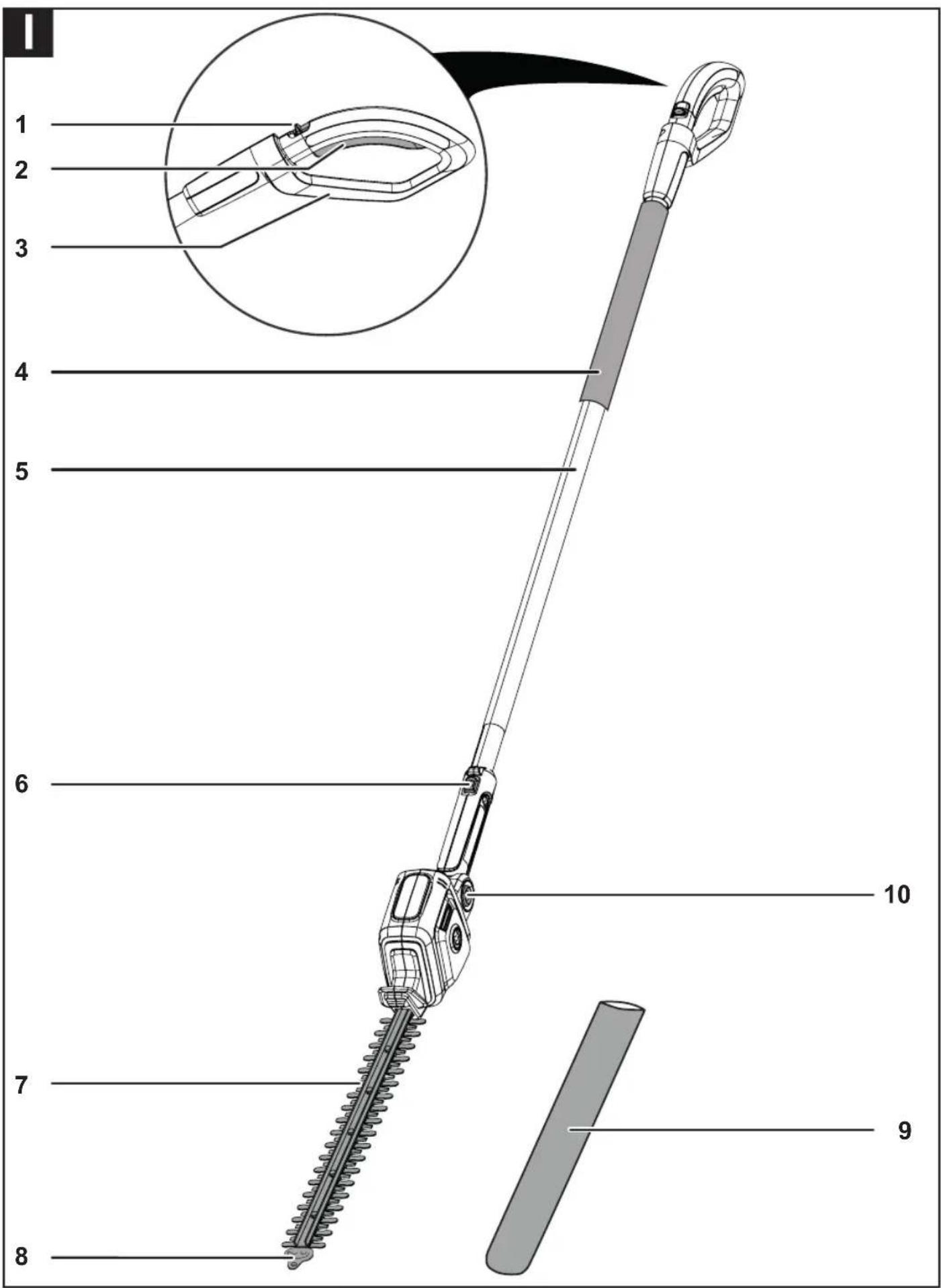
Operating elements
Operating elements
1 Lock-on switch
2 On/off switch on handle
3 Handle
4 Holding area for the hand/fastening area for the optional middle handle
5 Operating arm * (with permanently installed power pack)
6 Locking button
7 Cutting blade
8 Impact protection
9 Protective cover
10 Working angle adjustment locating button
*Necessary operating element (not supplied)
Using for the first time
Supplementary documentation

Make sure the supplied instruction manuals of the charger and operating arm are available. Please read and understand them before using the device.
Power pack charging
WARNING!

Only charge the power pack using the charger approved by the manufacturer. The designations of the approved chargers are listed in the enclosed CE Declaration of Conformity.
Attention!
The power pack is supplied partially charged. Before using the device for the first time, fully charge the power pack to ensure effective performance.
CAUTION!

The power pack is permanently installed in the operating arm.
→ The power pack must be charged in accordance with the instructions in the supplementary documentation.
Adjusting the working angle D

WARNING!

Risk of injuries due to the cutting tool.
Only adjust the device with the motor switched off and the cutting tool at a standstill.
Before any work on the device, first remove the operating arm with the permanently installed power pack.
The device can be set in any of seven different working angles. This allows you to easily reach problematic and difficult-to-access positions in the garden.
→ Press and hold the locating button
→ Set the working anze
→ Release the locating button.
√ The hedge trimmer locating button engages audibly.
Connect the hedge trimmer to the operating arm A
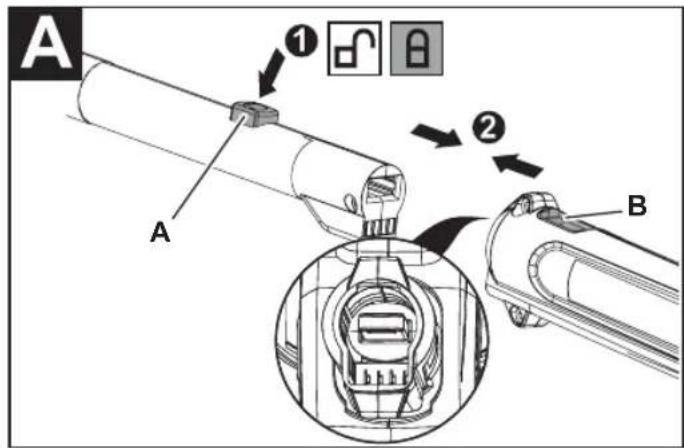
→ Press the locking button [A] on the operating arm and insert the operating arm into the locator on the hedge trimmer until the locating button [B] engages ①②.
Attention!
➢ Ensure the button is correctly engaged

Note
A middle handle is available as an optional accessory for the operating arm. You can find more information and assembly instructions in the operating manual for the operating arm.
Operation
Operating times
Please observe the times stipulated in local byelaws.
Check with your local authorities to determine if there are any operating time limitations.
Switching the device on B

WARNING!

Risk of injuries or material damage
➢ Hold the hedge trimmer in the working position as shown in figure C.
During operation, always hold on to the device with both hands. One hand holds the handle, the other hand holds the operating arm in the encased area or the optionally available middle handle.
Always ensure you are standing safely.
→ Remove the protective cover.
→ Press the lock-on switch [A] on the handle ①.
→ Simultaneously press the on/off switch [B] on the handle ②.
→ Release the lock-on switch.
√ The device operates.
Switching the device off B
→ Release the on/off switch on the handle.
√ The device is switched off.

Note
The cutting tool continues to run for a brief period after being switched off.

Note
The lock-on switch automatically returns to its initial position when you release the on/off switch.
Cutting F G
Cutting tips
- Please remember the breeding season of birds!
- The ideal shape for hedge cutting is trapezoidal, which allows enough light and air to reach all parts of the hedge.
- To promote thick growth in young hedges new shoots should only be shortened by half.
- If the hedge has already reached your desired height, now shoots can be completely removed.
- To obtain a uniform hedge height, you can tension a guide line at the desired height and then cut along this line.
| Cutting times | |
| Deciduous hedges | May/June and October (perform pruning by about 1/3 of the total height in winter) |
| Evergreen hedges | April and October |
Conifers April and October

Note
Try not to cut branches that are thicker than 16 mm in diameter. Such branches should first be cut with loppers to the level of the hedge trimmer.
Attention!
Do not cut dead branches or similar hard objects.
Otherwise the tool may be damaged.
Horizontal cut F
→ Position the cutter on the hedge at an angle between 5^ and 10^ .
→ Cut the hedge with a swinging movement.
Vertical cut G
→ Position the blade parallel to the hedge.
→ Cut the hedge with a swinging movement from low to high.
Removing the operating arm with permanently installed power pack E
→ Switching the device off.
→ Press the locking button [A] on the operating arm ①.
→ Pull the operating arm fully out of the locator of the hedge trimmer unit [B] ②.
Servicing

WARNING!

Risk of injuries or material damage.
➢ Only clean or service the device when the motor and the cutting tool are both stationary.
Before any work on the device, first remove the operating arm with the permanently installed power pack.
Do not clean the device with water.
➢ Repair and service work as well as the replacement of safety elements must be performed by a qualified expert or workshop.
- Wear safety gloves before any work on the cutting blade.
Cleaning
→ Switch the device off and wait until the cutting tool comes to a standstill before removing the operating arm.
→ Clean the hedge trimmer after every use, especially the ventilation slots, using a dry cloth or, in the event of heavy soiling, a brush.
→ Carefully clean the cutting blade after each use.
→ After use, spray the cutting blade with conditioning oil to ensure a long service life for the hedge trimmer. Where possible, use an environmentally-friendly lubricant.
→ Do not oil the hedge trimmer during use.
→ To oil the hedge trimmer, place it on its side and apply a thin oil film to the cutting blade.
→ During extended periods of hedge cutting, interrupt your work frequently to oil the hedge trimmer cutting blade.
Transport and storage

WARNING!

Risk of injuries due to the cutting tool.
Before transport or storage, switch off the device and wait until the cutting tool comes to a standstill.
Remove the operating arm before transporting or storing the device.
➢ Always fit the protective cover before transport and storage.
Transport
→ Secure the device sufficiently to prevent its unintentional slipping if you are transporting it on or in a motor vehicle.
Storage
→ Clean your device thoroughly at the end of every season.
→ Always store the device in a dry and safe location that is inaccessible to children.
→ Store the operating arm and hedge trimmer separately.
→ Store the operating arm in a cool and dry location. Recommended storage temperature approx. 0 - 23°C.
→ Keep the hedge trimmer and especially its plastic components away from brake fluids, petrol, mineral oil containing products, penetrating oils etc. They contain chemical substances that can damage, attack or destroy the plastic components of the hedge trimmer.
→ Fertilizers and other garden chemicals contain substances that may have a highly corrosive effect on the metal parts of the hedge trimmer. Therefore do not store your hedge trimmer in the vicinity of these substances.
Troubleshooting

WARNING!

Risk of injuries or material damage
In case of doubt always take your device to a specialist workshop.
Before any inspection or any work on the device, switch off the motor and remove the operating arm.
Problem Possible cause Remedy
| The device switches off. | The power pack is too hot. Allow the power pack to cool. | |
| The power pack is discharged. Charge the power pack. | ||
| The temperature of the device (electronics) is too high. | Allow the device to cool and if necessary, clean the ventilation slots | |
| Overcurrent release If this occurs again take your device to a specialist workshop. | ||
| The device will not switch on. | The power pack is discharged. Charge the power pack. | |
| Overcurrent release If this occurs again take your device to a specialist workshop. | ||
| Power pack temperature too high or too low. Allow the power pack to cool down or heat up. | ||
| The power pack is defective. Arrange for the power pack in the operating arm to be checked by a specialist workshop. | ||
| The cutting blade becomes hot. | The cutting blade is blunt. Consult a specialist workshop. | |
| There is a lot of friction because of a lack of lubrication. | Oil the cutting blade. | |
| Uneven running, severe vibration of the hedge trimmer. | The cutting blade is damaged. Consult a specialist workshop. | |
| The cutting blade fastening has come loose. Consult a specialist workshop. | ||
Warranty
The warranty conditions of our local company or importer apply in all countries. Under the terms of the warranty we will repair faults on your device free of charge, insofar as material or manufacturing defects are the cause. To make a claim under warranty please contact your seller or your nearest branch.
CE Declaration of Conformity

Further details about the device are contained on the separately enclosed CE Declaration of Conformity, which forms part of this instruction manual.
Environmentally-friendly disposal
Power tools, accessories and packaging must be disposed of via an environmentally compatible recycling chain.
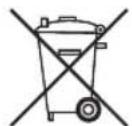
Power packs/batteries:
Do not dispose of power packs in domestic waste, by burning or throwing into water. Power packs must be collected, recycled or disposed of in an environmentally-friendly manner.
Power tool (without power packs/batteries):
Do not throw your power tool away with domestic waste! Take it to a disposal facility.
Table des matières
Iglavci April in oktober