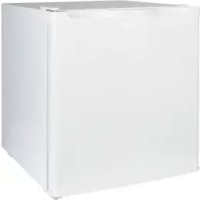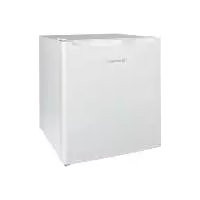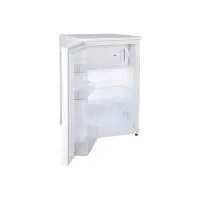
SGF 103 A1 - Freezer SILVERCREST - Free user manual and instructions
Find the device manual for free SGF 103 A1 SILVERCREST in PDF.


| Product type | Freezer |
| Brand | SilverCrest |
| Model | SGF 103 A1 |
| Dimensions (H x W x D) | 838 x 540 x 615 mm |
| Weight | 29.7 kg |
| Total capacity | 103 litres |
| Energy efficiency class | E |
| Annual energy consumption | 170 kWh |
| Power failure autonomy | 11 hours |
| Freezing capacity | 5.2 kg/24h |
| Recommended freezing temperature | -18 °C |
| Star rating | 4 |
| Refrigerant | R-600a (44 g) |
| Insulating gas | Cyclopentane |
| Climate class | T/SN (10 °C to 43 °C) |
| Defrosting | Manual |
| Noise emissions | 41 dB(A) - Class C |
| Power supply | 220-240 V, type F grounded plug |
| Main features | Adjustable thermostat (3 positions), door reversal, ice cube tray, ice scraper, 2 drawers, 2 glass shelves |
| Warranty | 3 years |
| Customer service France | +33170383158 (Mon-Fri 9am-5pm) |
| Customer service Belgium | +3222903192 (Mon-Fri 9am-5pm) |
Frequently Asked Questions - SGF 103 A1 SILVERCREST
User questions about SGF 103 A1 SILVERCREST
0 question about this device. Answer the ones you know or ask your own.
Ask a new question about this device
Download the instructions for your Freezer in PDF format for free! Find your manual SGF 103 A1 - SILVERCREST and take your electronic device back in hand. On this page are published all the documents necessary for the use of your device. SGF 103 A1 by SILVERCREST.
USER MANUAL SGF 103 A1 SILVERCREST
Operating instructions
NL BE
DIEPVRIES
Gebruksaanwijzing
PL
ZAMRAZARKA
Instrukcja obstugi
ES
CONGELADOR
Before reading, unfold the page containing the illustrations and familiarise yourself with all functions of the device.
FR BE
GB/IE Operating Instruction Page 31
In this German, German and German are the same. In this German, German and German are the same.
1.1.Information about this user manual 33
1.2. Explanation of symbols 33
2. Proper use 34
3. Safety instructions 35
3.1. General safety instructions 35
3.2. Transport 36
3.3. Installation and electrical connection 36
3.4.Use of the appliance 38
3.5. Cleaning and maintenance 38
3.6. Faults 39
3.7. Disposal 39
4. Package contents 40
5. Description of components 40
6. Technical specifications 41
6.1. Product data sheet 41
7. EU declaration of conformity 42
8. Spare parts 42
9. Information on the appliance 43
9.1. Information regarding refrigerant R-600a 43
10.Before operation 43
10.1.Reversing the door hinges 43
10.2. Fitting the spacers 47
10.3. Setting up the appliance 47
10.4. Removing and reinserting the freezer drawers/glass shelves 47
11. Operating the appliance 47
11.1. Switching off the appliance 48
11.2. Tips on saving energy 48
11.3.Deep-freezing food 48
11.4. Using ice cube trays 49
11.5.Defrosting food 49
12. Cleaning and defrosting 49
12.1.Defrosting the freezer 50
12.2. Cleaning the appliance 50
13. Measures in case of power failure 51
14. Troubleshooting 51
15. Longer periods without use 52
16. Disposal 52
17. Legal notice 53
17.1.Information on trademarks 53
18. MLAP GmbH Warranty 53
18.1. Conditions of warranty 53
18.2. Warranty period and legal claims for defects 53
18.3. Scope of warranty 53
18.4. Processing of warranty claims 54
SILVERCREST
- Service 54
19.1.Supplier/Producer/Importer 54 - Privacy statement 55
1. Introduction
1.1. Information about this user manual

Congratulations on purchasing your new appliance. You have chosen a high-quality product. The user manual is an integral part of this product. It contains important safety information and instructions for use and disposal. Before using the product, please familiarise yourself with all operating and safety instructions. Only use the product as described and for the specified applications. Keep this user manual in a safe place. If you give this product to someone else, ensure that you also hand over all the documents.
1.2. Explanation of symbols

DANGER!
Warning: risk of fatal injury!
Follow the instructions to avoid situations that will lead to fatal or serious injuries.

DANGER!
Warning: risk of electric shock!
Follow the instructions to avoid situations that will lead to fatal or serious injuries.

WARNING!
Warning: risk of possible fatal injury and/or serious irreversible injuries!
Follow the instructions to avoid situations that may lead to fatal or serious injuries.

Warning: danger due to combustible and/or highly flammable substances!

Warning: risk of explosive materials!

NOTICE!
Follow the instructions to avoid damaging the appliance!
Follow the instructions to avoid situations that may damage the appliance.

Notes regarding assembly or operation

Follow the instructions in the user manual!

AC (alternating current)
Instruction to be followed to prevent hazards
Bullet point/information on steps during operation
Instruction to be carried out

Products that feature this symbol meet the requirements of the EU directives (see section entitled "EU declaration of conformity").
SILVERCREST

Tested safety: Products that feature this symbol meet the requirements of the German Product Safety Act.

Packaging material label regarding waste separation
Label includes abbreviations (a) and numbers (b) with the following meaning: 1-7: plastics/20-22: paper and cardboard/80-98: composite materials.

Dispose of packaging in compliance with environmental regulations (see section "Disposal").

Dispose of packaging in compliance with environmental regulations (see section "Disposal").

The "Triman" symbol tells the consumer that the product can be recycled, is covered by an extended system of manufacturer's responsibility and must be sorted by material type, in France.

Dispose of the appliance in compliance with environmental regulations (see section "Disposal").

Indicates the correct upright position of the transport packaging.

The accessory is dishwasher-safe.

Symbol used in the EU to indicate materials that come into contact with food, such as packaging or appliance surfaces.
2. Proper use
This appliance is intended to be used for freezing foodstuffs. This appliance is designed for use in private households and similar household applications, such as:
Staff kitchens in shops, offices and other workplaces
- In agriculture and by guests in hotels, motels and other types of accommodation
- Bed-and-breakfast establishments
- Catering establishments and wholesale use
The manufacturer accepts no liability for damages if the appliance is used for commercial purposes or for any purpose other than freezing food.
Please note that we shall not be liable in cases of improper use:
- Do not modify the appliance without our consent and do not use any auxiliary equipment that we have not approved or supplied.
- Only use replacement parts or accessories that we have supplied or approved.
- Comply with all the information in this user manual, especially the safety instructions. Any other use is considered improper and can cause personal injury or property damage.
3. Safety instructions
IMPORTANT SAFETY INSTRUCTIONS - READ CAREFULLY AND KEEP FOR FUTURE REFERENCE!
This appliance can be used by children over the age of 8 and by persons with reduced physical, sensory or mental abilities or by those with limited experience and/or knowledge, provided that they are supervised or have been instructed in how to use the appliance safely, and have understood the associated risks.
Children must not be allowed to play with the appliance.
Children between the ages of 3 and 8 are allowed to load and remove items from refrigerating appliances.
- Cleaning and user maintenance must not be carried out by children unless they are supervised.

DANGER!
Risk of choking and suffocation!
There is a risk of choking and suffocation due to swallowing or inhaling small parts or plastic wrap.
- Keep all packaging materials used (bag, pieces of polystyrene etc.) out of reach of children.
Do not allow children to play with the packaging material. - Keep children away from the appliance inner. If the freezer door is closed, there is a risk of suffocation!
3.1. General safety instructions

WARNING!
Risk of injury!
The appliance's refrigeration system contains R-600a refrigerant. If the refrigerant escapes, there is a risk of injuries.
WARNING! Do not damage the refrigerant circuit.
If the refrigeration system has nevertheless become damaged, ventilate the room. Avoid naked flames and ignition sources. Have the appliance repaired by a qualified technician before using it again.
If refrigerant comes into contact with the skin or eyes, this can lead to injuries. If necessary, rinse the eyes with clean water and consult a doctor.
■ WARNING! Do not operate electrical appliances inside the cooling chamber that do not conform to the design recommended by the manufacturer.
- Do not use any other electrical appliances (such as ice machines) inside the refrigerating appliance unless they are approved for this purpose by the manufacturer.
Tampering with the refrigerant circuit is prohibited and invalidates the warranty.

WARNING!
Risk of fire!
There are flammable liquids in the coolant circuit and the compressor.
Note the "Fire hazard" warning signs on the back of the appliance or the compressor.
- Avoid naked flames and ignition sources when using, maintaining and disposing of the appliance.
SILVERCREST
3.2. Transport

CAUTION! Risk of injury!
The appliance is heavy. There is a risk of injury from the strain of lifting the appliance.
- Seek the assistance of at least one other person in order to move the appliance. Do not transport the appliance alone.

NOTICE! Possible material damage!
Risk of damage to the appliance if transported incorrectly
Make sure that the packaging is not damaged.
Carefully remove the packaging material and check the appliance for transport damage.
■ Never connect a damaged appliance. In the event of damage, contact the Service Centre.
Always transport the freezer in its packaging and with the transport lock.
■ Ensure that no part of the refrigerant circuit is damaged when transporting and installing the appliance.
- Where possible, always transport the appliance upright. If tilted to an angle of more than 40^ during transport, wait 3 hours before connecting it to the mains and switching it on to enable the refrigerant circuit to return to normal after transport.
- Do not place the appliance on its side or back, as this can cause oil from the compressor to enter and block the refrigerant circuit.
Do not expose the appliance to rain or spray water.
3.3. Installation and electrical connection
3.3.1. Location

NOTICE! Possible material damage!
Risk of damage to the appliance due to improper handling
Install the freezer in a dry and ventilated room. The room should be around 4m^2 so there will be sufficient air volume available if the cooling system becomes damaged.
Take the space requirements into consideration when setting up the appliance (see "10.3. Setting up the appliance" on page 47).
The appliance is suitable for climate classes T and SN (see the type plate). The cooling performance of the appliance is guaranteed at ambient temperatures from 10^ to 43^ . If temperatures deviate from this range, the appliance performance may be reduced.
Do not expose the appliance to extreme conditions. Avoid:
- high humidity or wet conditions
extremely high or low temperatures
direct sunlight - naked flames.

WARNING!
Risk of fire!
Insufficient air circulation can lead to heat accumulation.
■ WARNING! Make sure that the ventilation openings in the housing, around the appliance and in the installation niche are not blocked.
The appliance is not designed to be an integrated appliance.
To ensure adequate ventilation, a minimum clearance of 15cm to the top, 5cm to the sides and 7.5cm to the back must be observed.
- Do not install near heat sources such as hobs, radiators, underfloor heating etc. If installation near a heat source cannot be avoided, use an appropriate insulation panel or maintain the following minimum clearances to the heat source:
- from electric or gas ovens or similar: approx. 5 cm
from oil or coal-fired ovens: approx. 50 cm
- If installed next to another refrigerating appliance, a minimum distance of 2cm from the side is required.
3.3.2. Before connection

DANGER!
Risk of electric shock!
There is a risk of electric shock due to live parts.
After installing the appliance, check that the mains connection cable is not squashed or damaged.
■ Do not operate the appliance if it has been visibly damaged or the mains cable or plug is defective.
In the event of damage, contact our Service Centre.
3.3.3. Mains connection

DANGER!
Risk of electric shock!
There is a risk of electric shock due to live parts.
- Connect the appliance to a properly installed, earthed safety socket which is easily accessible and close to the place of installation. The local mains voltage must match the voltage stated in the technical specifications for the appliance.
The power socket must be easily accessible so that you can unplug the appliance from the mains quickly if necessary.
■WARNING! Ensure the mains cable is out of harm's way and will not trip people up. Do not use an extension cable.
■WARNING! Do not allow the mains cable to become trapped or damaged during installation.
■ WARNING! Do not connect portable multiple sockets or power supplies to the back of the appliance.
In order to disconnect the appliance completely from the electrical circuit, pull the mains plug out of the socket.
SILVERCREST
3.4. Use of the appliance

WARNING! Risk of explosion!
Flammable gases and liquids can cause explosions if stored in the appliance.
- Do not store any explosive materials, e.g. aerosol containers containing propellant gas, in the appliance.
■ Do not freeze any carbonated beverages. Expanding liquid can break the container. - Do not store glass or metal containers filled with liquid in the freezer compartment.

WARNING! Risk of injury/risk to health!
Improper handling of the appliance can lead to injuries.
- Do not touch the freezer compartment's frozen inner walls or frozen foodstuffs with your hands. Do not put ice cubes or ice lollies directly from the freezer into your mouth. Risk of burns resulting from the low temperatures.
Do not misuse the plinth, drawer compartments, doors etc. as a step or for support.
The appliance may not work properly (possibility of stored goods defrosting or the temperature in the freezer compartment increasing), if the appliance is exposed to temperatures that fall below the specified intended temperature range for a prolonged period of time (below 10^ ).
In case of power failure or a switched off appliance, stored foodstuffs may start to thaw or defrost completely. There is a risk of food poisoning.
If there has been a power failure, check that the food which is stored in the appliance still looks and smells safe to eat.
If there has been a power failure, dispose of any frozen food which has visibly started to thaw.
Do not refreeze food that has thawed or defrosted.
If the door is left open for a long time, this can cause the temperature inside the appliance zones to increase significantly.
Regularly clean surfaces that may come into contact with food and accessible drain systems.
In the event of disconnection, even of a temporary nature only, take the frozen food out of the appliance and keep it in sufficiently cold storage.
Ensure cleanliness and correct storage of food.
If the appliance is not going to be used for a longer period of time, pull the mains plug out of the mains socket, defrost and clean the appliance, leave the freezer door open to avoid unpleasant odours and to prevent mould from forming.
3.5. Cleaning and maintenance

DANGER! Risk of electric shock!
There is a risk of electric shock due to live parts.
Before starting any cleaning or maintenance work, pull the mains plug out of the earthed mains socket (pull on the plug, not the mains cable). If the plug is not accessible, the corresponding fuse for the mains electricity supply to the house needs to be switched off.

DANGER! RISK OF EXPLOSION AND FIRE!
An accumulation of gas can lead to explosions.
- Do not use any flammable liquids to clean the appliance or appliance parts.
Do not use de-icer sprays. They may produce explosive gases.

NOTICE! Possible material damage!
Damage to the appliance caused by improper handling
- Do not use any mechanical equipment or synthetic agents to accelerate the defrosting process, e.g. electric heaters, hot air blowers, hair-dryers or pointed or hard objects. The heat insulation and appliance interior are sensitive to scratches and heat and can melt.
- Do not operate any electrical appliances inside the appliance. Both appliances may be damaged irreparably.
Sensitive surfaces:
- Do not use any abrasive or harsh cleaning agents on the inside, door or housing of the appliance as these could damage the surfaces.
- Do not allow oil and grease to come into contact with the plastic parts and the door seal as the door seal can become porous and brittle.
- Do not use any other mechanical equipment or synthetic agents to accelerate the defrosting process, e.g. electric heaters, hot air blowers or hair-dryers or pointed or hard objects. The heat insulation and appliance interior are sensitive to scratches and heat and can melt.
3.6. Faults

WARNING! Risk of electric shock!
There is a risk of electric shock due to live parts.
Never try to open and/or repair an appliance component yourself.
If there is damage to the mains connection cable on this appliance, it must be replaced by the manufacturer, its customer service department, or another suitably qualified person. This is necessary to avoid hazards.
In the event of a fault, contact the Service Centre or another suitable professional repair workshop.
3.7. Disposal

DANGER! Risk of choking and suffocation! Risk of injury!
To avoid risks to children, proceed as follows before disposing of the appliance:
Remove the freezer door and the door seal or tape the freezer door closed.
- Leave the freezer drawers/shelves in the appliance so that no-one, for example children, can climb into the appliance.
SILVERCREST
4. Package contents

DANGER!
Risk of choking and suffocation!
There is a risk of choking and suffocation due to swallowing or inhaling small parts or plastic wrap.
- Keep the packaging material and small parts out of the reach of children.
Please check your purchase to ensure that all items are included and in perfect condition. If anything is missing or damaged, please contact us within 14 days of purchase.
The following items are supplied with your product:
Freezer, incl.
- 2 freezer compartment drawers
-2 glass shelves
-2 spacers
-1ice cube tray
-1ice scraper
5. Description of components
See Fig. A
1) Temperature control (on the back of the appliance)
2) Glass shelf, large
3) Glass shelf, small
4) Freezer door
5) Ice cube tray (similar to illustration)
6) Ice scraper
7) Appliance feet
8) Mains cable with plug (on the back of the appliance, not shown).
9) Freezer drawers
10) Freezer compartment with flap door
11) Spacer

The type plate is located in the freezer compartment at the bottom left.

Recommended food storage in the freezer compartment: Seafood (fish, prawns, shellfish), freshwater fish and meat products (recommended for 3 months, the longer the storage time, the more likely it is that the taste and nutritional value will deteriorate in quality), suitable for frozen fresh foods. Store the food in appropriate containers.
6. Technical specifications
Rated voltage: 220 - 240V
Rated frequency: 50 Hz
Rated current: 0.96 A
Refrigerant: R-600a
Refrigerant quantity: 44 g
Insulation gas: Cyclopentane
Weight: Approx. 29.7 kg
Protection class I
Storage time in case of fault 11 hours

ID 1111243635
6.1. Product data sheet
| Supplier's name or trademark: | SilverCrest® | ||
| Supplier's address: | MLAP GmbH Meitnerstr. 9 70563 Stuttgart GERMANY | ||
| Model identifier: | SGF 103 A1 | ||
| Type of refrigerating appliance: | |||
| Low-noise appliance: | No | Design type: | Free-standing |
| Wine cooler: | No | Other refrigerating apppliance: | Yes |
| General product parameters: | ||||
| Parameter | Value | Parameter | Value | |
| Overall dimen-sions (in mm) | Height | 838 | Total volume (in dm3 or l) | 103 |
| Width | 540 | |||
| Depth | 615 | |||
| EEI | 100 | Energy efficiency class | E | |
| Airborne noise emissions (in dB(A) re 1 pW) | 41 | Airborne noise emission class | C | |
| Annual energy consumption (in kWh/a)* | 170 | Climate class: | T, SN | |
| General product parameters: | |||
| Parameter Value Parameter Value | |||
| Minimum ambient temperature (in °C) for which the refrigerating appliance is suitable | 10 Maximum | ambient temperature (in °C) for which the refrigerating appliance is suitable | 43 |
| Winter mode No | |||
- kWh/year energy consumption calculated on the basis of conformity testing results over 24 hours. The actual consumption will depend on the use and location of the appliance.
| Compartment parameters: | |||||
| Compartment type Com | Compartment parameters and values | ||||
| Compartment volume (in dm3 or l) | Recommended temperature setting for optimal food storage (in °C) | Freezing capacity (in kg/24h) | Defrost type A/M** | ||
| 4-star freezer compa-nment | Yes | 103 - 18 5.2 M | |||
** Automatic defrost = A, manual defrost = M
| 4-star freezer compartment | |
| Fast freeze facility | No |
| Light source parameters: | |
| Type of light source | - |
| Energy efficiency class | - |
| Minimum duration of the warranty offered by the manufacturer: | 36 months from date of purchase |
| Additional information: | Scan the QR code shown on the energy label to download the complete product data sheet. |
7. EU declaration of conformity

EMLAP GmbH hereby declares that the product conforms to the following requirements of the European Union:
EMC Directive 2014/30/EU
Low Voltage Directive 2014/35/EU
- Ecodesign Directive 2009/125/EC
RoHS Directive 2011/65/EU.
8. Spare parts
If you would like to order spare parts, please contact us using the contact form at www.mlap.info/contact.
9. Information on the appliance
- The appliance uses refrigerant R-600a (HCFC- and CFC-free) in the refrigerant circuit.
- The refrigerant circuit has been checked for leaks. This complies with the relevant safety regulations for electrical appliances.
Energy efficiency class E
Climate class T/SN
The different climate classes are explained in the following table.
| Climate class Meaning Ambient temperature | ||
| SN Appliances for subnormal climate | +10°C to +32°C | |
| N Appliances for normal climate +16°C to +32°C | ||
| ST Appliances for subtropical climate | +16°C to +38°C | |
| T Appliances for tropical climate +16°C to +43°C | ||
9.1. Information regarding refrigerant R-600a
R-600a and cyclopentane are used as 100% HCFC-free refrigerant and insulating materials in this appliance. This helps to protect the ozone layer and reduces the so-called greenhouse effect.
These appliances can be identified by the "Refrigerant R-600a" notice on the type plate.
Ensure that the refrigerant circuit is not damaged, as small quantities of R-600a can contribute to the greenhouse effect if released.
This applies both when transporting the appliance and throughout its service life. Also ensure that you dispose of this appliance correctly according to local regulations.
10. Before operation
Unpack the appliance and remove the adhesive tape.
Use a mild cleaning agent to remove any adhesive residues.
Dispose of the expanded polystyrene padding separately from the other packaging.
Clean the inside of the appliance and the fittings with lukewarm water and mild cleaning agent and allow to dry (see section "12. Cleaning and defrosting" on page 49).
10.1. Reversing the door hinges
The freezer is supplied with a door hinged on the right-hand side. If you would like to change the opening direction of the freezer door, proceed as follows.
Required tools:
- Slotted screwdriver
Phillips screwdriver
Turn the temperature control (1) briefly past position 1 to position . You will hear a click. The appliance switches off. You will hear a click. The appliance switches off. Pull the mains plug (8) out of the mains socket.
Remove the freezer drawers (9) and the glass shelves (2 / 3) as described in the following section.
- Tilt the appliance backwards (maximum 40^ ) and place it carefully, e.g. on the edge of a chair, so that you can reach the fixing screws of the lower hinge.
SILVERCREST
Remove both appliance feet (7) by turning anti-clockwise (Fig. 1).
- Keep the freezer door (4) closed.

Fig. 1
Use a Phillips screwdriver to loosen the two screws on the lower hinge (Fig. 2).
- Loosen the two screws on the left side of the housing and reposition the screws on the right side of the housing.

Fig. 2
Use a slotted screwdriver to remove the hinge pin on the lower hinge and reposition the hinge pin in the adjacent hole (Fig. 3).

Fig. 3
- Lift the freezer door (4) slightly at the bottom and pull the freezer door off the upper hinge pin (Fig. 4).
Place the freezer door (4) to one side on a soft surface to avoid scratches and secure it against falling over.

Fig. 4
Use a Phillips screwdriver to loosen the two retaining screws on the upper hinge (Fig. 5).

Fig. 5
SILVERCREST
Use a slotted screwdriver to remove the hinge pin (Fig. 6).

Fig. 6
- Reposition the hinge pin in the opposite hole (Fig. 7) and tighten it with a slotted screwdriver.

Fig. 7
Use a Phillips screwdriver to fasten the upper hinge to the left side with the two retaining screws (Fig. 8).

Fig. 8
- Remove the blind plug on the top left-hand side of the freezer door and the hinge bushing on the right-hand side using a small slotted screwdriver.

- Insert the hinge bushing into the hole on the left-hand side. When doing so, pay attention to the guide nose.
Insert the blind plug into the hole on the right-hand side (Fig. 9).
Fig. 9
- Reposition the hinge bushing on the bottom of the freezer door to the left-hand side as well (Fig. 10).

Fig. 10
Refit the freezer door on the freezer compartment by sliding the freezer door upwards at a slight angle from below (Fig. 11). Ensure that the hinge pin of the upper hinge is seated in the hinge bushing on the top of the freezer door and that the seal is properly flush with the edge of the housing.

Fig. 11
SILVERCREST
Place the lower hinge so that the hinge pin engages with the lower door socket.
Use a Phillips screwdriver to fasten the two screws on the lower hinge.
Do not tighten the screws completely yet so that you can still align the freezer door (4). Tighten the screws firmly only when it is possible to close the freezer door (4) evenly. (Fig. 12)

Fig. 12
Reattach both appliance feet (7) by turning clockwise (Fig. 13).
Stand the appliance upright again.

Fig. 13
The opening direction of the freezer door (4) is now changed (Fig. 14).

Fig. 14

Please note: The door seal adapts to the new door hinge after a few hours.

If tilted to an angle of more than 40^ during transport, wait 3 hours before connecting it to the mains and switching it on to enable the refrigerant circuit to settle after transport.
10.2. Fitting the spacers
Fit the two spacers (11) on the cooling ribs at the back of the appliance at the height of the upper fixing plate (see arrow on the right in Fig. C).
Insert each spacer (11) in the vertical position up to the recess markedT between two cooling ribs and turn it 90^ to the horizontal position as shown. This prevents the condenser from coming into direct contact with the wall.
10.3. Setting up the appliance
Place the appliance in an appropriate location (see also section "3.3.1. Location" on page 36).
Ensure that the appliance is level, compensate for any unevenness in the floor by screwing in the appliance feet (7).
Level the freezer with a spirit level.
To fully open the freezer door (4), the room dimensions stated in figures D and E must be available.
10.4. Removing and reinserting the freezer drawers/glass shelves
To remove a freezer drawer (9) or a glass shelf (2 / 3) , open the freezer door (4) fully.
Pull out the freezer drawer (9) with both hands and remove the freezer drawer (9) from the freezer compartment at a slight angle.
To remove the large glass shelf (2), first open the freezer compartment with the flap door (10).
Lift the glass shelf (2/3) and remove it from the guide at a slight angle.
To reinsert the glass shelf (2/3), first place it in the rear guide at a slight angle and then carefully insert it in the front guide.
To reinsert a freezer drawer (9), slide the freezer drawer (9) into the appliance at a slight angle.
11. Operating the appliance
Connect the appliance to an earthed mains socket. The local mains voltage must match the voltage stated in the technical specifications for the appliance.
The temperature control setting automatically adjusts the temperature in the freezer compartment.
There is a choice of 3 settings on the temperature control:
| 1 | Lowest level of cooling (warmest) | Short-term storage of frozen products |
| 2 | Intermediate position Medium-term storage of frozen products | |
| 3 | Highest level of cooling (coldest) | Long-term storage of frozen products |
Before storing fresh foods, set the temperature control (1) to position 3.

The internal temperatures can be influenced by factors such as the installation location, ambient temperature and the number of times the door is opened. Take these factors into account when setting the temperature control.

Audible noises such as cracking, humming or gurgling are caused by the expansion and shrinkage of the components as a result of the temperature changes or by the compressor working and do not indicate a malfunction.
SILVERCREST
- Check the temperatures in the freezer compartment with a thermometer. The ideal temperature in the freezer compartment is -18^ . Once this temperature is reached, you can load it with food and set the temperature control (1) back to 2.5.
Once the appliance has been switched on for the first time, it takes approx. 24 hours for the appliance to cool down to this temperature.
11.1. Switching off the appliance
To de-energise the appliance, briefly turn the temperature control (1) past position 1 to position . You will hear a click. Then pull the mains plug (8) out of the mains socket.
Wait approx. 10 minutes before switching on the appliance again.
11.2. Tips on saving energy
In order to achieve the best possible cooling performance with low energy consumption, observe the following:
Do not position the appliance near a heat source (radiator or cooker etc.).
The location should be not too warm, dry, dust-free and well ventilated.
Ensure that air can circulate freely around the refrigerating appliance.
The energy consumption will be lowest if all freezer drawers (9) are left inside the appliance when it is in use.
- If the freezer door (4) is left open for a long time, this can cause the temperature inside the compartments of the appliance to increase significantly. Only open the door briefly when loading and removing foodstuffs. Less cold can escape if the door is left open for only a short time and therefore the appliance requires less energy.
Select the temperature setting according to how full the appliance is.
Ensure that the door seals are undamaged and that the door closes properly.
If the appliance is left empty for an extended period of time, switch it off. Defrost and clean the appliance and allow it to dry. Leave the door open to prevent mould from forming in the appliance.
11.3. Deep-freezing food

NOTICE!
Risk of damage to the appliance
Sensitive surfaces: Do not allow oil and grease to come into contact with the plastic parts and the door seal as the door seal can become porous and brittle.
- Do not allow oil or grease to come into contact with the plastic parts.
Almost all types of food are suitable for freezing, except vegetables which are eaten raw, e.g. lettuce. Only high-quality food is suitable to be frozen. Freeze food in portions for single use and do not refreeze any products that have defrosted.
- Set the temperature control (1) to position 6 hours before putting fresh food in the freezer. After putting fresh food in the freezer, set the temperature control (1) to position 2.5.
To avoid food from becoming contaminated, please observe the following instructions:
If the freezer door (4) is left open for a long time, this can cause the temperature inside the compartments of the appliance to increase significantly.
Regularly clean surfaces that may come into contact with food and accessible drain systems.
- Food to be frozen must not come into contact with food that has already been frozen. It may be necessary to reduce the quantity of food to be frozen if you intend to freeze food each day.
Do not exceed the storage times recommended by the food manufacturers. If no specification is given, food should not to be stored for more than three months.
To avoid cross-contamination, place the food in odourless, airtight, moisture-free, greaseproof and leach-resistant packaging.
-
Polythene bags and aluminium foil are the most suitable materials.
-
The food must be closely wrapped in airtight packaging.
- Do not use glass packaging as the glass may break.
Take care not to overload the freezer compartment as otherwise optimal performance cannot be guaranteed and energy consumption will increase.
- Signs of moisture or swelling of deep-freeze packaging indicates that the food has not been stored/transported correctly and may be spoiled. Check the condition of food before eating.
Fruit can be frozen in the freezer compartment and ice cubes can be made.
11.4. Using ice cube trays
Clean the ice cube tray (5) thoroughly with water and a little washing-up liquid before using for the first time.
Fill the tray with drinking water.
Place the ice cube tray (5) upright in the bottom freezer drawer (9).
As soon as the ice cubes are frozen, remove the ice cube tray (5) from the freezer drawer (9) and press the ice cubes out of the mould.
11.5. Defrosting food
Depending on the type and use, food can be defrosted in a refrigerator, in a container filled with lukewarm water, in a microwave, at room temperature or in the oven. Fruit and vegetables which are going to be cooked do not need to be defrosted.
Once defrosted, food is preferably to be eaten on the same day or stored in the refrigerator until the next day at the latest. Food must not be refrozen, even if it has not fully defrosted.
12. Cleaning and defrosting
Regularly clean surfaces that may come into contact with food.

DANGER!
Risk of electric shock!
There is a risk of electric shock from electrified parts.
Before starting any cleaning or defrosting work, make sure you briefly turn the temperature control (1) past position 1 to position. You will hear a click. The appliance switches off. Then pull the mains plug (8) out of the socket (do not pull on the cable, but on the mains plug (8)). If the plug is not accessible, the corresponding fuse for the mains electricity supply to the house needs to be switched off.
Do not touch the mains plug (8) with wet hands.

DANGER!
RISK OF EXPLOSION AND FIRE!
An accumulation of gas can lead to explosions.
- Do not use any flammable liquids to clean the appliance or appliance parts.
Do not use de-icer sprays. They may produce explosive gases.
SILVERCREST

WARNING!
Risk of injury!
Risk of burns resulting from the low temperatures.
- Do not touch the freezer compartment's frozen inner walls or frozen foodstuffs with your hands. Use a dry cloth, for example, to hold the frozen products.

NOTICE!
Possible material damage!
Damage to the appliance due to improper handling of the sensitive surfaces of the appliance.
Sensitive surfaces: Do not allow oil and grease to come into contact with the plastic parts and the door seal as the door seal can become porous and brittle.
- Never use acidic, abrasive or granular, acetic-acid-, soda- or solvent-based cleaning agents. These may damage the surfaces of your appliance.
- Do not use any other mechanical equipment or synthetic agents to accelerate the defrosting process, e.g. electric heaters, hot air blowers or hair-dryers or pointed or hard objects. The heat insulation and appliance interior are sensitive to scratches and heat and can melt.
- Do not operate any electrical appliances inside the appliance. Both appliances may be damaged irreparably.
- Set the temperature control (1) briefly past position 1 to position . You will hear a click. The appliance switches off.
Unplug the mains plug (8).
12.1. Defrosting the freezer
Thick deposits of ice on the freezer compartment surfaces reduce the efficiency of the appliance and increase the energy consumption.
Before defrosting the appliance, set the temperature control (1) to position 3 a few hours in advance. The frozen products can then be stored at room temperature for a longer period of time.

A rise in temperature of the frozen food during manual defrosting, maintenance or cleaning can shorten the storage life of the frozen products.
It is advisable to defrost the appliance at least once a year.
Take the frozen product out of the freezer compartment, wrap in a few layers of paper and possibly a blanket and store it in a cool location.
Remove the freezer drawers (9) and glass shelves (2 / 3) from the freezer compartment.
After approx. 30 minutes the coating of frost on the smooth walls can be easily removed using the ice scraper (6).
12.2. Cleaning the appliance
Clean the freezer compartment with a mild cleaning agent (e.g. washing-up liquid) and allow to dry.
Clean all fittings carefully with a mild cleaning agent (e.g. washing-up liquid). The components are dishwasher safe.

WARNING!
Risk of injury!
There is a risk of glass breakage and cut injuries.
- Do not rinse the cold glass shelves (2/3) with hot water. Stresses can lead to glass breakage. Wait until the glass shelves (2/3) have warmed up to room temperature.

To prevent mould, vinegar (cleaning vinegar, household vinegar or vinegar essence) can be added to the water for cleaning. Cleaning agents containing sand, soda and acid are not suitable.
Clean the appliance surfaces, except the door seal, with a mild cleaning agent.
Clean the door seal with clean water, wipe it off and allow to dry.
- Once or twice a year, carefully vacuum the cooling ribs on the back of the appliance with a brush nozzle to ensure optimum air circulation around the cooling compressor. When vacuuming, take care not to damage the electrical cables and capillary tubes.
Switch the appliance on again according to the corresponding section in the user manual.
13. Measures in case of power failure
Food must not be refrozen, even if it has not fully defrosted.
In case of a power failure, check the condition of food before eating (see also "3.4. Use of the appliance" on page 38).
14. Troubleshooting
Faults may occur during operation. Please use the following table to check whether you can resolve the problem yourself. All other repairs are prohibited and invalidate the warranty. Therefore, in the event of a fault, contact our Service Centre or another suitable professional repair workshop.
| Fault Cause Solution | ||
| The appliance is not working. | Power supply interrupted | Check whether the mains plug (8) is plugged in. Check whether the mains socket is live by plugging in another electrical appliance (e.g. a bedside lamp). Check the fuse. Check the mains cable (8) for damage. |
| The compressor is very rarely activated. | Check whether the ambient temperature is not below 10°C. | |
| The temperature in the freezer compartment is not low enough. | The freezer door (4) does not seal properly or is opened too often. | Arrange food so that it does not prevent the door from closing properly. Open the freezer door (4) for less time. |
SILVERCREST
| Fault Cause Solution | ||
| The temperature in the freezer compartment is not low enough. | The ambient temperature is above +43°C. | The appliance is designed for use in a temperature range from +10°C to +43°C. |
| The air circulation is insufficient. | Move the appliance away from the wall. | |
| The appliance has been set up in a location exposed to direct sun-light or next to a heat source. | Place the appliance in a different position. | |
| The appliance makes too much noise. | The appliance has not been set up properly. | Level. |
| The appliance is touching furniture or other objects. | Position the appliance as a free standing unit and ensure that it does not touch any other objects. | |
15. Longer periods without use
If the freezer is not to be used for a long time, the following activities must be carried out:
- Set the temperature control (1) briefly past position 1 to position . You will hear a click. The appliance switches off.
Unplug the mains plug (8).
Clear out the appliance.
Clean the freezer compartment and allow to dry.
Clean the freezer drawers carefully and dry them.
Leave the freezer door (4) open to avoid unpleasant odours and to prevent mould from forming.
16. Disposal

DANGER!
Risk of choking and suffocation! Risk of injury!
To avoid risks to children, proceed as follows before disposing of the appliance:
Remove the freezer door and the door seal or tape the freezer door closed.
- Leave the freezer drawers (9) and shelves in the appliance so that no-one, for example children, can climb into the appliance.

Appliance
Do not dispose of old appliances in normal household waste.
In accordance with Directive 2012/19/EU, these appliances must be disposed of correctly at the end of their service life.
This involves separating the materials in the appliances for the purpose of recycling and minimising the environmental impact.
Take old appliances to a collection point for electrical scrap or a recycling centre.
Contact your local waste disposal company or your local authority for more information on this subject.

Packaging
Your appliance has been packaged to protect it from damage in transit. Packaging materials are raw materials and can therefore be reused or recycled.
During disposal, please note that the appliance/insulation contains cyclopentane (a flammable expanded gas for insulation).
The appliance/insulation must be disposed of correctly.
17. Legal notice
Copyright © 2021
All rights reserved.
This user manual is protected by copyright.
Mechanical, electronic and any other forms of reproduction are prohibited without the written permission of the manufacturer.
Copyright is owned by the company:
MLAP GmbH
Meitnerstr. 9
70563 Stuttgart
GERMANY
17.1. Information on trademarks
SilverCrest is a registered trademark of Lidl Stiftung & Co. KG, 74167 Neckarsulm, Germany.
All other names and products are trademarks or registered trademarks of their respective owners.
18. MLAP GmbH Warranty
Dear customer,
The warranty on this product is 3 years from the date of purchase. In the event of defects in this product, you have legal rights against the product vendor. These legal rights are in no way limited by the warranty described below.
18.1. Conditions of warranty
The warranty period begins on the date of purchase. Please take care to keep the original purchase receipt. This document will serve as a proof of purchase.
If, within three years of the date of purchase of this product, any defect in material or manufacture should become evident, the product will – as we choose – be repaired free of charge or replaced. This warranty is subject to presentation, within the three-year term, of the defective product and the proof of purchase (receipt) and a brief, written description of what constitutes the defect and when it became evident.
If the defect is covered by our warranty, you will receive back the repaired product or a new replacement.
Repair or exchange of the product does not lead to a renewed warranty period.
18.2. Warranty period and legal claims for defects
The warranty period is not prolonged by the above fulfilment. This also applies for replaced and repaired parts. Any damage or defects present at the time of purchase must be notified immediately after unpacking. Repairs that are carried out after the expiration of the warranty period are subject to a charge.
18.3. Scope of warranty
The product is manufactured in accordance with strict quality guidelines and thoroughly tested before dispatch.
The warranty applies for defects in materials or manufacture. This warranty does not extend to product parts that are subject to normal wear and can therefore be regarded as wearing parts or to damage to fragile parts, e.g. switches, batteries or parts made of glass.
This warranty is void if the product has been damaged or not properly used or serviced. For proper use
SILVERCREST
of the product, exact compliance with all instructions listed in the user manual is required. It is essential to avoid procedures and use for purposes against which the user manual advises or warns.
The product is intended for private use only and not for industrial/commercial use. Improper handling and usage not in accordance with the intended purpose, use of force and any interventions that are not carried out by our authorised service centre will render the warranty null and void.
18.4. Processing of warranty claims
For speedy processing of your request, please observe the following instructions:
- For all enquiries, please keep the receipt and the article number IAN 393826_2104 to hand as proof of purchase.
- The article number is to be found on the type plate, an engraving, on the title page of your instructions (bottom left) or on an adhesive label on the rear or underside.
- If functional or other defects occur, first contact the service department named below by telephone or via our contact form.
19. Service

You can download this user manual and many other manuals, product videos and installation software from www.lidl-service.com.
Scan this QR code to be directed straight to the Lidl Service website (www.lidl-service.com) where you can open your user manual by entering the article number IAN 393826_2104.
IE Service Ireland
Hotline
+35316533859
Mon-Fri:09:00-17:00
Please use the contact form at www.mlap.info/contact
NI Service North Ireland
Hotline
+442895922074
Mon-Fri:09:00-17:00
Please use the contact form at www.mlap.info/contact
IAN393826_2104
19.1. Supplier/Producer/Importer
Please note that you cannot use the address below for returns. Please contact the Service Centre mentioned above.
MLAP GmbH
Meitnerstr. 9
70563 Stuttgart
GERMANY
20. Privacy statement
Dear Customer,
We wish to inform you that we, MLAP GmbH, Meitnerstr. 9, 70563 Stuttgart, Germany, process your personal data as a data controller.
For matters regarding data protection, we are supported by our company data protection officer who can be contacted at MLAP GmbH, Datenschutz, Meitnerstr. 9, 70563 Stuttgart, Germany, datenschutz@mlap.info. We process your data for the purpose of warranty processing and associated processes (e.g. repairs) and therefore rely on processing your data for the sales contract concluded with us. Your data will be provided to repair service providers contracted by us for the purpose of warranty processing and associated processes (e.g. repairs). We generally store your personal data for a period of three years in order to fulfil your legal warranty rights.
You have the right to be informed of the personal data concerned as well as the right to rectification, deletion, restriction of processing, the right to object to processing and the right to data portability.
In case of access and cancellation rights, restrictions apply according to paragraphs 34 and 35 of the BDSG (Federal Data Protection Act) (Art. 23 GDPR). In addition, there is a right of appeal to a competent data protection supervisory authority (Article 77 GDPR in conjunction with paragraph 19 BDSG). For MLAP, this is the Landesbeauftragte für Datenschutz und Informationsfreiheit Baden-Württemberg, Postfach 10 29 32, 70025 Stuttgart, Germany, www.baden-wuerttemberg.datenschutz.de.
The processing of your data is necessary for warranty processing: it is not possible to process the warranty without the provision of the required data.
Sommaire
1. Introduction 59
Chere cliente, cher client,
Choulostive pocrchy:
ADVARSEL! Brandfare!
Kolemdelmaengde: 44g
Isolationsgas: Cyclopentan
Vaegt: Ca. 29,7 kg
Beskyttelsesklasse
Model no.: SGF 103 A1
Version: V1.0