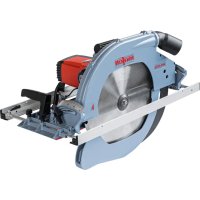
MKS 185 Ec - Saw Mafell - Free user manual and instructions
Find the device manual for free MKS 185 Ec Mafell in PDF.


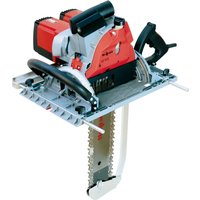
| Product type | Portable circular saw |
| Brand | Mafell |
| Model | MKS 185 Ec |
| Dimensions (L x W x H) | 460 x 720 x 496 mm |
| Weight (without cable, with parallel guide) | 15.3 kg |
| Supply voltage | 230 V AC (also available in 120 V and 240 V) |
| Mains frequency | 50 Hz (60 Hz depending on version) |
| Power consumption in continuous operation | 3000 W |
| Cutting depth | 105 - 185 mm (adjustable) |
| No-load speed | 1400 - 1800 rpm (adjustable) |
| Blade diameter max/min | 450 mm / 413 mm |
| Blade bore diameter | 30 mm |
| Extraction sleeve | Inner diameter 58 mm |
| Sound pressure level (LPA) | 103 dB(A) |
| Sound power level (LWA) | 111 dB(A) |
| Hand-arm vibration | < 2.5 m/s² |
| Main functions | Rip cut and cross cut, bevelled cut up to 60°, stepless depth adjustment, parallel guide, electric brake, movable protective guard, riving knife |
| Safety devices | Fixed upper protective guard, movable lower guard, riving knife, electric brake, safety lock, protection switch |
| Maintenance and cleaning | Regular cleaning of adjustment devices and guides; special MAFELL grease ref. 049040; storage with anti-corrosion protection |
| Spare parts and repairability | Original MAFELL spare parts available (blades, guide rails, etc.); overhaul by authorized service center |
| General information | Manufacturer: MAFELL AG, Germany; CE compliant; Protection class II |
Frequently Asked Questions - MKS 185 Ec Mafell
User questions about MKS 185 Ec Mafell
0 question about this device. Answer the ones you know or ask your own.
Ask a new question about this device
Download the instructions for your Saw in PDF format for free! Find your manual MKS 185 Ec - Mafell and take your electronic device back in hand. On this page are published all the documents necessary for the use of your device. MKS 185 Ec by Mafell.
USER MANUAL MKS 185 Ec Mafell
Please read all safety instructions and directions. Failure to comply with the safety instructions and directions can cause electric shock, fire and/or serious injuries. Please retain all safety instructions and directions for future reference.
AVERTISSEMENT
GB - EC Declaration of Conformity
We herewith confirm that the machine MKS 185 Ec complies with the EU directives quoted. The standards listed were used for design and construction. Empowered person for the configuration of the technical documents: Mafell AG
CZ - PROHLASENI O SHODE
1 Signs and symbols 18
2 Product information 18
2.1 Manufacturer's data 18
2.2 Machine identification 18
2.3 Technical data 19
2.4 Emissions 19
2.5 Scope of supply 20
2.6 Safety devices 20
2.7 Use according to intended purpose 20
2.8 Residual risks 20
3 Safety instructions 21
4 Setting/Adjustment 23
4.1 Mains connection 23
4.2 Chip extraction 23
4.3 Sawblade selection 23
4.4 Replacing the saw blade 23
4.5 Riving knife / splitter 24
5 Operation 24
5.1 Initial operation 24
5.2 Switching on and off 24
5.3 Cutting depth adjustment 24
5.4 Setting for bevel cuts 24
5.5 Sawing according to tracings 24
5.6 Sawing with parallel guide fence 25
6 Service and maintenance 25
6.1 Storage 25
7 Visual signal indication of operating condition 25
8 Troubleshooting 25
9 Optional accessories 27
10 Exploded drawing and spare parts list 27
1 Signs and symbols

This symbol is found in all places where you will find information for your safety.
Non-compliance with these instructions may result in very serious injuries.
This symbol indicates a potentially hazardous situation. If this situation is not avoided, the product or objects in its vicinity may get damaged.

This symbol indicates tips for the user and other useful information.
2 Product information
for machines with product no. 924801, 924820, 924821
2.1 Manufacturer's data
MAFELL AG, Beffendorfer Straße 4, D-78727 Oberndorf / Neckar, Phone +49 (0)7423/812-0, Fax +49 (0)7423/812-218, e-mail: mafell@mafell.de
2.2 Machine identification
All details required for machine identification are available on the attached rating plate.

Protection class II

CE symbol to document compliance with the basic safety and health requirements according to Appendix I of the Machinery Directive.
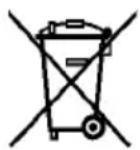
For EU countries only
Do not dispose of electric tools together with household waste material! In accordance with the European directive 2002/96/EC on waste electrical and electronic equipment and transposition into national law, obsolete electrical tools must be collected separately and recycled in an environmentally-compatible manner.

To reduce the risk of injury, please read the operating instructions.
2.3 Technical data
| Operating voltage | 230 V AC | 120 V AC | 240 V AC |
| Mains frequency | 50 Hz | 60 Hz | 60 Hz |
| Input power continuous operation | 3000 W | ||
| Power consumption continuous operation | 15,9 A | 23,5 A | 15,9 A |
| Speed during idling | 1400 - 1800 rpm | ||
| Cutting depth | 105 - 185 mm (4 1/8 – 7 ¼ in.) | ||
| Maximum cutting depth 30°/45°/60° | 160/131/93 mm (6 5/16, 5 3/16, 3 11/16 in.) | ||
| Tilting saw unit | up to 60° | ||
| Saw blade diameter max/min | 450/413 mm (17 ¼, 16 ¼ in.) | ||
| Saw blade body thickness | 2.5 mm (3/32 in.) | ||
| Tool cutting width | 4.2 mm (11/64 in.) | ||
| Saw blade mounting hole | 30 mm | ||
| Hose connector diameter | 58 mm (2 9/32 in.) | ||
| Weight without mains cable, with parallel guide fence | 15,3 kg (33.7 lbs) | ||
| Dimensions (W x L x H) | 460 x 720 x 496 mm (18 1/8 x 28 3/8 x 9 ½ in.) | ||
2.4 Emissions
The declared noise emission values have been measured in accordance with EN 62841-1 and EN 62841-2-5 and may be used for comparing the tool with another and also in a preliminary assessment of exposure.

Danger
The noise emissions during actual use of the power tool can differ from the declared values depending on the ways in which the tool is used especially what kind of workpiece is processed.
Always wear hearing protection, even when the power tool ist running idle in addition to the trigger time!
2.4.1 Noise emission specifications
Noise emission values determined according to EN 62841-1 and EN 62841-2-5:
| Sound pressure level L | \( \mathrm{{PA}} = {103}\mathrm{\;{dB}}\left( \mathrm{\;A}\right) \) |
| Uncertainty K | \( \mathrm{{PA}} = 3,0\mathrm{\;{dB}}\left( \mathrm{\;A}\right) \) |
| Sound power level L | \( \mathrm{{PA}} = {111}\mathrm{\;{dB}}\left( \mathrm{\;A}\right) \) |
| Uncertainty K | \( \mathrm{{PA}} = 3,0\mathrm{\;{dB}}\left( \mathrm{\;A}\right) \) |
The noise measurement was recorded using the saw blade included in the standard equipment.
2.4.2 Vibration specifications
The typical hand-arm vibration is less than 2.5m / s^2
2.5 Scope of supply
Portable circular saw MKS 185 Ec complete with:
1 carbide-tipped circular saw blade 450mm (17 34 in.), 20 teeth
1 riving knife / splitter (thickness 2.5mm / 3/32 in.)
1 hose connector
1 parallel guide fence
1 service tool in bracket on the machine
1 operating manual
1 folder "Safety Instructions"
2.6 Safety devices

Danger
These devices are required for the machine's safe operation and may not be removed or rendered inoperative.
Before operating the machine, check the safety devices for function and possible damage. Do not use the machine with missing or ineffective safety devices.
The machine is equipped with the following safety devices:
- Upper stationary saw guard
- Lower retractable saw guard
Large base plate - Handles
- Riving knife / splitter
- Index mechanism and electrical brake
- Hose connector
2.7 Use according to intended purpose
The portable circular saw is exclusively suitable for longitudinal and cross cutting of solid wood.
In doing so, the machine must only be used with a horizontal base plate.
This machine must not be used for plunge cuts.
Panel materials such as chip board, core board and medium density fibre board can also be processed. Use approved saw blades according to EN 847-1.
Any other use than described above is not permissible. The manufacturer cannot be held liable for any damage arising from such other use.
So as to use the machine as intended, comply with the operating, maintenance and repair instructions specified by Mafell.
2.8 Residual risks

Danger
Even if used in accordance with its intended purpose and despite conforming with the safety instructions, residual risks caused by the intended use that can lead to health consequences will always remain.
- Touching the saw blade in the vicinity of the starting aperture below the base plate.
- Touching the part of the saw blade that protrudes below the workpiece when cutting.
- Touching of turning parts from the side: saw blade, clamping flange and flange screw.
- Machine backlash if the blade gets stuck in the workpiece.
- Breakage of the saw blade and risk of the blade or pieces of the blade being hurled away.
- Touching live parts with the housing open and the mains plug not removed.
- Hearing can be impaired when working for long periods without ear protectors.
- Emission of harmful wood dusts during longer operation without extraction.
3 Safety instructions

Danger
Always observe the following safety instructions and the safety regulations applicable in the respective country of use! Please also read the safety information in the enclosed folder 070500 "Safety instructions" (according to standard 62841-1).
General instructions:
- Children and adolescents must not operate this machine. This rule does not apply to young persons receiving training and being supervised by an expert.
- Never work without the protection devices prescribed for the respective operating sequence and do not make any changes to the machine that could impair safety.
- When operating the machine outdoors, use of an earth-leakage circuit-breaker is recommended.
- Damaged cables or plugs must be immediately replaced. Replacement may only be carried out by Mafell or an authorised MAFELL service workshop in order to avoid safety hazards.
- Avoid sharp bends in the cable. Especially when transporting and storing the machine, do not wind the cable around the machine.
Do not use:
- Cracked and misshapen saw blades.
- Saw blades made of high speed steel (HSS saw blades).
- Blunt saw blades as they impose an excessive load on the motor.
- Saw blades with a base body with a thickness greater than, or a cutting width (setting) less than, the thickness of the riving knife / splitter.
- Saw blades which are not suitable for the saw blade's idling speed.
- Grinding discs
Instructions on the use of personal protective equipment:
- Always wear ear protectors during work.
- Always where a dust mark during work.
- Always wear protective goggles during work.
Instructions on operation:
Sawing method

Danger
- Keep hands away from cutting area and the blade. Keep your second hand on auxiliary handle, or motor housing. If both hands are holding the saw, they cannot be cut by the blade.
- Do not reach underneath the workpiece. The guard cannot protect you from the blade below the workpiece.
- Adjust the cutting depth to the thickness of the workpiece. Less than a full tooth of the blade teeth should be visible below the workpiece.
- Never hold the workpiece in your hands or across your leg while cutting. Secure the workpiece to a stable platform. It is important to support the work properly to minimise body exposure, blade binding, or loss of control.
- Hold the power tool by insulated gripping surfaces, when performing an operation where the cutting tool may contact hidden wiring or its own cord. Contact with a "live" wire will also make exposed metal parts of the power tool "live" and could give the operator an electric shock.
- When ripping, always use a rip fence or straight edge guide. This improves the accuracy of cut and reduces the chance of blade binding.
- Always use blades with correct size and shape (diamond versus round) of arbour holes. Blades that do not match the mounting hardware of the saw will run off-centre, causing loss of control.
- Never use damaged or incorrect blade washers or bolt. The blade washers and bolt were specially designed for your saw, for optimum performance and safety of operation.
Kickback causes and related warnings
- kickback is a sudden reaction to a pinched, jammed or misaligned saw blade, causing anuncontrolled saw to lift up and out of the workpiece toward the operator;
- When the blade is pinched or jammed tightly by the kerf closing down, the blade stalls and the motor reaction drives the unit rapidly back toward the operator;
- if the blade becomes twisted or misaligned in the cut, the teeth at the back edge of the blade can dig into the top surface of the wood causing the blade to climb out of the kerf and jump back toward the operator.
Kickback is the result of saw misuse and/or incorrect operating procedures or conditions and can be avoided by taking proper precautions as given below.
- Maintain a firm grip with both hands on the saw and position your arms to resist kickback forces. Position your body to either side of the blade, but not in line with the blade. Kickback could cause the saw to jump backwards, but kickback forces can be controlled by the operator, if proper precautions are taken.
- When blade is binding, or when interrupting a cut for any reason, release the trigger and hold the saw motionless in the material until the blade comes to a complete stop. Never attempt to remove the saw from the work or pull the saw backward while the blade is in motion or kickback may occur. Investigate and take corrective actions to eliminate the cause of blade binding.
- When restarting a saw in the workpiece, centre the saw blade in the kerf so that the saw teeth are not engaged into the material. If a saw blade binds, it may walk up or kickback from the workpiece as the saw is restarted.
- Support large panels to minimise the risk of blade pinching and kickback. Large panels tend to sag under their own weight. Supports must be placed under the panel on both sides, near the line of cut and near the edge of the panel.
-
Do not use dull or damaged blades. Unsharpened or improperly set blades produce narrow kerf causing excessive friction, blade binding and kickback.
-
Blade depth and bevel adjusting locking levers must be tight and secure before making the cut. If blade adjustment shifts while cutting, it may cause binding and kickback.
- Use extra caution when sawing into existing walls or other blind areas. The protruding blade may cut objects that can cause kickback.
Lower guard function
- Prior to every use, check whether the lower saw guard is closing properly. Do not use the saw if the lower saw guard is not freely movable and does not close immediately. Never clamp or tie down the lower saw guard in an open position. If the saw is dropped inadvertently, the lower saw guard can get bent. Open the saw guard with the pre-feed lever and ensure that it moves freely and touches neither saw blade nor other parts irrespective of the cutting angle and depth.
- Check the operation of the lower guard spring. If the guard and the spring are not operating properly, they must be serviced before use. Lower guard may operate sluggishly due to damaged parts, gummy deposits, or a build-up of debris.
- Only manually open the lower saw guard for special cuts, such as "plunge and angle cuts". Open the lower saw guard using the pre-feed lever and release the lever as soon as the saw blade has penetrated the workpiece. During all other sawing work, the lower saw guard is to operate automatically.
- Always observe that the lower guard is covering the blade before placing the saw down on bench or floor. An unprotected, coasting blade will cause the saw to walk backwards, cutting whatever is in its path. Be aware of the time it takes for the blade to stop after switch is released.
Riving knife function
- Use the appropriate saw blade for the riving knife. For the riving knife to function, the body of the blade must be thinner than the riving knife and the cutting width of the blade must be wider than the thickness of the riving knife.
-
Adjust the riving knife as described in this instruction manual. Incorrect spacing, positioning and alignment can make the riving knife ineffective in preventing kickback.
-
Always use the riving knife except when plunge cutting. The riving knife must be replaced after plunge cutting. The riving knife causes interference during plunge cutting and can create kickback.
- For the riving knife to work, it must be engaged in the workpiece. The riving knife is ineffective in preventing kickback during short cuts.
- Do not operate the saw if the riving knife is bent. Even a light interference can slow the closing rate of a guard.
Instructions on service and maintenance:
- Regularly cleaning the machine, especially the adjusting devices and guides, constitutes an important safety factor.
- Only original MAFELL spare parts and accessories may be used. Otherwise the manufacturer will not accept any warranty claims and cannot be held liable.
- Risk of injury when changing the saw blade! There is a risk of injury from touching the sharp teeth of the saw blade when changing the saw blade. Wear protective gloves. Exercise caution when changing the saw blade.
4 Setting / Adjustment
4.1 Mains connection
Prior to commissioning make sure that the mains voltage complies with the operating voltage stated on the machine's rating plate.
4.2 Chip extraction
Connect the machine to a suitable external dust extractor during all work generating a considerable amount of dust. The air velocity must be at least 20m / s (65.6 ft/sec.).
The inside diameter of hose connector 6 (Fig. 1) is 58 mm (2 9/32 in.).
4.3 Saw blade selection
Use a sharp tool to obtain a good cut quality and select a tool from the following list according to material and application:
For cuts along and across the grain in soft or hard wood:
- TCT circular saw blade 450× 4.2× 30mm (17 34 x 11/64 in. x 30 mm), 20 teeth
For cuts especially along the grain in soft or hard wood:
- TCT circular saw blade 450× 3.8× 30mm (17 34 x 5/32 in. x 30 mm), 12 teeth
For cuts especially across the grain in soft or hard wood:
- TCT circular saw blade 450× 4.5× 30mm (17 34 x 3/16 in. x 30 mm), 34 teeth
For composite materials:
- TCT circular saw blade 450× 3.4× 30mm 17% x9/64 in.x 30~mm 86 teeth, alternate tooth with chamfer
4.4 Replacing the saw blade

Danger
Pull the power plug during all service work.
Risk of injury even if the saw wire is standing still. Wear protective gloves!
Proceed as follows to replace the saw blade:
- Press the stop lever 15 (Fig. 2) to lock the saw blade.
- Place the hexagon head socket wrench that is available in a bracket on the machine into the flange screw 4 (Fig. 1) and turn it until the stop lever has engaged completely. Turn the wrench counter clockwise to release the flange screw. Remove the screw and the front clamping flange 5. After opening the retractable saw guard 1, you can now remove the saw blade by lifting it to the front and then pulling it in a downward direction.
- Before mounting the new saw blade, both clamping flanges must be checked for adhering parts and cleaned. Pay attention to the sense of rotation when inserting the saw blade. The saw blade teeth must point in the same direction as the arrow on the upper saw guard. Afterwards, mount the clamping flange, attach the flange screw and tighten it by clockwise turning. In doing so, the stop lever can be used in the same way as when the screw was released.
Do not press the locking bolt 15 (Fig.2) with the machine running! The machine may get damaged.
4.5 Riving knife / splitter

Pull the power plug during all service work.
Danger
The riving knife / splitter 2 (Fig. 1) prevents the saw blade from jamming during longitudinal cutting. The correct distance to the saw blade is shown in Fig. 3.
- For adjustment, unfasten the two cylinder-head screws 3 (Fig. 1) with the hexagon head socket wrench supplied, adjust the riving knife / splitter by moving it accordingly in its longitudinal slot and afterwards retighten the two cylinder-head screws.
5 Operation
5.1 Initial operation
Personnel entrusted to work with the machine must be made aware of the operating instructions, calling particular attention to the chapter "Safety instructions".
5.2 Switching on and off
- Switching on: First of all, unlock the switch-on lock by pressing the locking lever 8 (Fig. 4). Then, keeping the locking lever depressed, activate the gearshift lever 7.
As this is a switch without locking device, the machine will only run for as long as this gearshift lever is pressed.
The built-in electronic system provides for jerk-free acceleration when the machine is switched on and under load readjusts the speed to the fixed setting.
In addition, this electronic system adjusts the motor down in case of overload, i.e. the saw blade will stop. Switch the machine off then. Then switch the machine on again and continue sawing at a reduced feed speed.
Wlth the setting wheel 22 (Fig. 4) you can steplessly adjust the saw speed between 1400 and 1800 rpm.
- Switching off: To switch off, release the switch trigger 7. The built-in automatic brake limits the saw blade slowing time to approx. 5 s. The switch-on
lock automatically takes effect again and secures the portable circular saw against accidental switch-on.
5.3 Cutting depth adjustment
The cutting depth is continuously variable between 105 and 185mm (4 1/8 and 7 1/4 in.).
Proceed as follows to adjust it:
- First of all, release the clamping lever 10 (Fig. 5) by turning it counter clockwise.
- You can now adjust the cutting depth by turning the handle 9.
- The set depth can be read off the scale ring 21 (Fig. 5). The inscription on the gearbox case serves as indicator in this regard.
After adjusting, tighten the clamping lever again.

Always set the cutting depth approx. 2 to 5mm (5/64 to 13/64 in.) larger than the material thickness to be cut.
5.4 Setting for bevel cuts
For bevel cuts, the saw unit can be set to any angle between 0 and 60^ .
- Bring the machine into a stable position and support it such that it is possible to tilt the saw unit.
- Then release the two wing screws 16 (Fig. 2 and Fig. 4), tilt the unit to the desired angle shown on the indicator 17 (Fig. 2) on scale 18 at the segment for tilting.
- Afterwards, retighten both wing screws 16 (Fig. 2 and Fig. 4).
5.5 Sawing according to tracings
The base plate is on the inside equipped with a tracing edge that applies both to straight cuts and for all angles of inclination. This tracing edge corresponds to the saw blade's inside. For bevel cuts, the tracing can be viewed through the opening on the left-hand side of the upper saw guard (arrow, Fig. 5).
-
For sawing, hold the machine by both its handles 11 (Fig. 4) and 12 (Fig. 2) and place the front part of the base plate onto the workpiece.
-
To facilitate the first cut, the retractable saw guard 1 (Fig. 1) can be opened by pressing the lever 13 (Fig. 5) that is arranged directly next to the front handle.
When this lever is released, the saw guard closes automatically.
- Switch on the portable circular saw (see chapter 5.2) and slide the machine evenly forward in the direction of the cut.
- Once you have executed the cut, immediately switch off the saw by releasing the gearshift lever 7 (Fig. 4).
5.6 Sawing with parallel guide fence
The portable circular saw is equipped with a parallel guide fence on both sides, so that it is possible to saw on both sides of the machine parallel to an already existing edge without retooling. The cutting range on the right-hand side amounts to 140mm (5 1/2 in.) and on the left-hand side to 320mm (12 5/8 in.).
In order to adjust the cutting width, unscrew the wing screws 14 (Fig. 4) and move the guide fence accordingly. Afterwards, retighten the wing screws 14.
In addition, it is possible to turn the guide fence plate 20 (Fig. 2) of the parallel guide fence by 90^ . With that it is possible to use the guide fence surface both above and below the base plate. If a straight workpiece edge is already available and if a parallel cut is to be made to this, the guide fence plate 20 is turned down.
If there is no straight workpiece edge, the guide fence plate is turned up to carry out a straight cut.
Now the machine can be guided either along a lathe fastened on the workpiece or along the guide rail that is available as optional accessory.
6 Service and maintenance

Danger
Pull the power plug during all service work.
MAFELL machines are designed to be low in maintenance.
The ball bearings used are greased for life. When the machine has been in operation for a longer period of time, we recommend to hand the machine in at an authorised MAFELL customer service shop for inspection.
Only use our special grease, order No. 049040 (1 kg tin) for all greasing points.
6.1 Storage
Clean the machine thoroughly if the machine is not used for a longer period of time. Spray blank metal parts with a rust-proofing agent.
7 Visual signal indication of operating condition
The colour of the speed adjusting wheel indicates the machine's operating state.
As long as the machine is not overloaded in terms of output, the speed adjusting wheel permanently lights up green during operation.
If the adjusting wheel permanently lights up red, there is a defect (see the Chapter Troubleshooting).
8 Troubleshooting

Danger
Determining the causes for existing defects and eliminating these always requires increased attention and caution. Pull the mains plug beforehand!
Some of the most frequent defects and their causes are listed in the following chart. In case of other defects, please contact your dealer or the MAFELL customer service directly.
| Defect | Cause | Elimination |
| Machine cannot be switched on and the speed adjusting wheel lights up red | Overtemperature shutdown | Allow the machine to cool down |
| Overvoltage switch-off | Have power supply checked by an electrician | |
| Undervoltage switch-off | ||
| Machine cannot be switched on and the speed adjusting wheel does not light up | No mains voltage | Have power supply checked by an electrician |
| Mains fuse defective | Have fuse replaced by an electrician | |
| Machine cannot be switched on and the speed adjusting wheel lights up green | Carbon brushes worn | Take the machine to a MAFELL customer service shop |
| Machine stops during cutting and the speed adjusting wheel lights up red | Overload switch-off | Reduce feed speed |
| Overvoltage switch-off | Have power supply checked by an electrician | |
| Undervoltage switch-off | ||
| Machine stops during cutting and the speed adjusting wheel does not light up | Mains failure | Have mains-side pre-fuses checked by an electrician |
| Saw blade jams as the machine is advanced | Feed rate too fast | Reduce feed speed |
| Blunt saw blade | Release the switch immediately. Remove the machine from the workpiece and replace the saw blade | |
| Tension in the workpiece | Heightened caution during sawing, risk of backlash increases. | |
| Poor machine guidance (for example due to free-hand guidance) | Use parallel guide fence | |
| Uneven workpiece surface | Straighten the surface | |
| Saw blade vibrates in the work piece | Saw blade not correctly adjusted | Retighten saw blade |
| Work piece not fastened | Fasten work piece with clamps | |
| Saw blade stops - motor continues to turn | Saw blade not correctly fastened | Retighten saw blade |
| Burn marks on the cut surfaces | The saw blade used is unsuitable for the task or blunt | Replace saw blade |
| Chip ejection blocked | Wood is too damp | Clean chip ejection Use dry wood |
| Extended operation without extraction | Connect machine to an external extraction, e.g. portable dust extractor | |
| Lower mobile protective cover does not close or closes only slowly | Chips and pieces of wood in the bottom mobile protective cover | Remove chips and pieces of wood |
9 Optional accessories
- Guide rail, one-piece, cpl. 3 m (9,85 ft) long Order No. 200672
- Guide rail, two-piece, cpl. 3 m (9,85 ft) long Order No. 037037
- Guide rail - extension 1.5 m (4,9 ft) long Order No. 036553
-Adapters (pair) for parallel limit stop for hooking into the guide rail Order No. 037195 - Saw blade - TCT Ø 450 x 4.2 x 30 mm (17 3/4 x 11/64 in. x 30 mm), 20 Order No. 092536 teeth (longitudinal / cross cut)
- Saw blade - TCT Ø 450 x 3.8 x 30 mm (17 3/4 x 5/32 in. x 30 mm), 12 Order No. 092537 teeth (longitudinal cut)
- Saw blade - TCT Ø 450 x 4.5 x 30 mm (17 3/4 x 3/16 in. x 30 mm), 34 Order No. 092538 teeth (cross cut)
- Saw blade - TCT Ø 450 x 3.4 x 30 mm (17 3/4 x 9/64 in. x 30 mm), 86 Order No. 092534 teeth (composite materials)
- Guide rail F80, 800 mm (2,6 ft) long Order No. 204380
- Guide rail F110, 1100 mm (3,6 ft) long Order No. 204381
- Guide rail F160, 1600 mm (5,25 ft) long Order No. 204365
- Guide rail F210, 2100 mm (6,9 ft) long Order No. 204382
- Guide rail F310, 3100 mm (10,2 ft) long Order No. 204383
- Sliding bevel segment F-WA Order No. 205357
- Accessories for guide rail:
- Screw clamp F-SZ 180MM Order No. 207770
- Connecting piece F-VS Order No. 204363
- Rail bag TZ-FST1600 Order No. 095257
- Rail bag kit F80/160 with sliding bevel segment consisting of: F80 + F160 Order No. 209592 + connecting piece + sliding bevel segment + 2 screw clamps + rail bag
- Rail bag kit F160/160 consisting of: 2 × F160 + connecting piece + 2 Order No. 209591 screw clamps + rail bag
10 Exploded drawing and spare parts list
The corresponding information in respect of spare parts can be found on our homepage: www.mafell.com
Sommaire
B cIyue HeNoJIb3OBAHnHa Na3NaYeHnIO HecMOTpHa co6IIOHeHne npaBnTexHnKn 6e3oNaChOCtN BCE JKe OCTaIoTCa OCTaTOUHbIe PNCKN, Bbl3bIBaEMbIE Ha3NaYeHnEM, KOTOpbIe MOrYT pINBeCTN K IocNeDCTBnM dJr 3dOpOBb.
- npikochobehne K dNCKy Nnbl B oBnaCTn Bpe3HOrO OTBepCTn IOd PnIToi OCHOBaHn,
- PpIKoCHOBHeHne K BbICTyNaIOUeI NOd 3aROTOBKOuACTn DnCKa Nnbl npN pe3AHnn.
- Kacahne BpaaHouxscJ DeTaeN co CTOPOhbl: DnCK nIbI, 3axmHOn fNaHeu N BuHT fNaHa,
- Oτιαγa MaùnHbI npN 3axkime B 3aROTOBKe.
-
Pa3pyuheHne n BbI6poc DnCKa nnbln nn NaCTeN DnCKa nnbl.
-
Kacahne TOKonpoBODaHx DeTaJIe npN OTKpbITOM Kopnyce H He N3BNeueHHoB BnJIke nHTaHnI.
- UxydweHne cnyx npn dntteIbHO np6ote 6e3 cpeCTB 3aunTbOpraHOB cnyxa.
- BbIeJIeHHe onaCHO nJRA 3dOpOBbJ dpeBecHOI bIIN npn dIITeJIbHOJ 3KcIIpyatauN 6e3 OTCOca.
3 Yuka3aHnno TeXnke 6e3OnacHocTn

Onacho
Bcerda co6nOdaIte npNBedeHbIe
daJIee yka3aHnI NO 6e30nacHOCTn
II npABnIa TexNKn 6e30nacHOCTn,
DeiCTByUoUne B CTrpaHe, Ie
npIMHeTcra Nila!
TakKe IpoHTaIte yka3aHnI PO
TexNKe 6e30nacHOCTn B
I npINaRaEMo 6pOupe 070500
«Yka3AHnI PO TexNKe
6e30nacHOCTn» (B COOTBeTCTBmC
Tpe6OBaHnIMn CTAndapTa 62841-
1).
06uine yka3aHnna:
- 3anpeuaeTcObpaatbcS cToi MaunHoi Detam N PooCTkam. NckIoueHne COCTaBnIOT PooCTkn, paobTaIOUme IOD NaBIODeHnEM CneuaJIncTa C uebIO obyehnI.
- Hn B Koem cnyae He pa6oTaIe 6e3 3aunnpncno6JeHn, nCNoB3OBaHne KOTOpbIX npedncaHO dIg ONpeDeIeHHbIX pa6OuNX onepaui, n He n3MeHraTe B MaUNHe HUeRo, yTO MOrIIO 6bl OTpuCaTeJIbHo Cka3aTbcr Ha ee 6e3OnacHocTn.
-ПрИнСпОЛьЗOBAHиMaшIHbIВHe NOMeUeHnpeKOMeHnyeTcR ИСпОЛьЗOBaHne BыIKNIOuYaTeJЯTOka yTeUKN.
-Повпждньіе кабении влкіследует HemeДелно 3amEnTb. 3aMeHa ДолЖна Ipon3BODITbCS TOnbKO CneuAnCTamM Mafell nIIN aBTopn3OBaHHbIM cepBnCHbIM ueHTpOM Mafell BO n36exKaHne pncOB yrgO3bl DЯ 6e3OnaChoctN. - N36eraIte pe3KxN nepereu6ob Ka6eIa. Oco6eHno npn TpaHcnpTnpOBKe n XpaHeHm MaunHbI He HaMaTbIBaIte Ka6eIb BOKpyr MaunHbI.
He pa3pewaaetc nCNoIb3OBaTb:
DnCKN NJIbI C TpeUHHaMn IN3MeHNBWHneΦopMy,
- DnCKN nINbI N3 BblCOKoJIeHnpOBaHHoB 6bICTpopexyuuei cTaN (DnCKN nINbI HSS),
- 3aTyNIBUHeCRA DNCKI NINbI I3-3a CJIuKOM BbICOKO HArpy3KN Ha DBrTaTeJb,
-ДИСКИ ПИЛБI, OCHOBA KOTOPbIX TOJISe IINI SHIPINA npOPINa (pa3BOD 3y6beB) MeHbWe TOnIuINHbI packKINHnBaIOUeRO HOJa,
-ДИСКИ ПИЛБI, He ПпeДиЗИЧЕНБIе ДЯЧАСТОТБIВрашени ДИСКА ПИЛБI Ha XOJOCTOM XODY,
- ⅢJINΦOBAHbHbIe INCKN
Yka3aHnno npmHeHnO cpeCTB IuHOn 3aHTbl:
-BoBpempaobtbi BcerdaNCIOb3OBaTb 3auNTy oprahOB cnyxa.
-Bo BpempaobTbBceEda NcNoJb30BaTb npotuBObnIeBOI pecnnpaTOP.
- Pn pa6oTe Hocnte 3aunTHbIe OcKn.
Yka3aHnno 3Kcnnyatau:
PpoecpacnNnBaHna

Onachoctb
- He BtopraTecb pykamn B oBlaactb nIbln I dNcKa nIbl. BToPoR pyKoYdEpxNBaHTe DOnONHtEnbHyO pyKoTky nn KOpnyc DBnRaTeJ. Ecnn dEpxnte nIpy oBeuMn pykamn, INX HeNb3r TpaBMnPOBaTb DnCKOM nIbl.
- He npocobbBaIe pyKn no3arotOBky. 3aHTbIKoKyx He MoKET 3aHTbOT DNCKa NJIbI NOd 3arotOBKOi.
- BbIbnpaIte rIy6nHy pe3aHnB 3aBncMocTn OT TOIuINHbI 3arOTOBKn. Iod 3arOTOBKo DOnJxHO 6bITb BNDHO MeHbIe NOnHO BBICOTbl 3y6a.
- Hn B Koem clyuae He depxnte pacnnnnaemyu 3arotobky B pyke nHa Hore. 3aФNKcnpyTe 3arotobky Ha npouHOM KpenHeHH. BaXHo XopoIo 3akpeNTb 3arotobky, YTO6bl CBeCTN K MInHMMy ONaCHOCTb KOHTaTc TELOM, 3axmAHnI DnCKa NII NOTepn KOHTpOJIa.
-ДерхиTe 3ЛЕКТРОнHCTPyMeHT 3a 30ЛИрOBaHHbIe NOBepXHOCTH 3axBaTa,ecJIb BBINOJNHReTe pa6Oу,пр КOTopoH Hacadka
MOXeTNONaCTbHaCKpbITbCNIOBOKa6eJIb.
При Контakte C npobOДЯшMuн HapprJKeHne Линям MeTaJI\PuYeCKNe DeTaN 3JIeKTPoINHCTpyMeHTa TaKke HaxOДЯТСЯ ПОД HapprJKeHnEM N B pe3yIbTaTe BO3MOxH0 NopaxHeNe 3JIeKTPuYeCKM TOKOM.
- Ppn npoDOnbHom pe3aHnBcerda HcnoJb3yIte ynop nnn npraMoN
KpOMKOHa npaBnteIb.3To yIyUaet ToHocTb pe3aHn I COKpaIaET BO3MOXHOCTb 3aCtpeBaHn IA NCKa PJIbI. - Bcerda nCnoB3yIte DnCKn PnIbI npaBnIbHOro pa3Mepa N C NOxOJaUM NOcaOuHbIM OTBepCTnEM (HaNPmEp, BΦOpMe 3Be3dbI IIN KpyrIbI). DnCKN PnIbI, HEnoDxOJaUe dIJI DeTaN EIN c6OpKn PnIbI, paBoTaOT HepaBHomepHO IN BblBaIoT NOTepIO KOHTpOJI.
- Hn B Koem cnyae He hCnoJb3ynte NOBpeKdEHHbIe HNn HEnOxDxJaune NOknaadHbIe waobI NIN BNHTbl DnCKOB nJIbl.
IopKnpaHbIe Wai6bl NIN BnHTbl DnCKOB nNblcKoHCTpyuPObaHbI CneuaNaBHo DnBaWei nNbl,ONTUMaJIbHOIpON3BOJNTeJIbHOCTN INKcNlPyataUHOH0Be3OnaCHOCTn.
OToaHa, npuHbI n COOTBeTCTByIOUne yKa3aHnno TeXnke 6e3OnaCHOcTN
- Oτιαγa — 3TO BHe3aHnapeakunB pe3yntate 3aHHToro, 3auePnIooJeroC, 3actpeBaIOJero nHn HEnpaBnIbHo BbIPOBHeHHOrO DnCKa NIIbl, KOTOpBn I npIBoNDT K NOdHMaHIO HeKOHtpoJIpyeMoN nIbl, KOrda OHa DBnraetcN 3aROTOBKn B HanpaBJeHm K OnepaTopy.
- Ecnn Dnck nIbI 3aI6BaETcN nn 3aCTpReT B nocneHem npOnnne, OH 6IoKnpyETcN yCnIne DBnIatela 6bet nnny o6paTHo B HnPaBHeHN K onepaTopy.
- EcInn DnCK PnIbI nepeKpyuBaetc HnHnHe npaBnIbHO BbIpOBHeN B pa3pe3e, 3y6b8 3aDHeN KpOMKn DnCKa PnIbIMoYr 3aueNTbcra 3a DepeB8HHyIO NOBepXHOCTb, B pe3yIbTaTe Yero DnCK PnIbIBdBNrAeTcN3 pacnHa n PnJa OTCKaKNBaET Ha3aD B HnPaBLeHnn OnpaTopa.
OTdau yBnIeTc CneCTBnEM HeNpaBnIbHoro NIO OuNo6OuyHO NOJb3OBaHn IINbl. 3To MOxHo npEoTbPaTntb, PnHnB ONuCaHHbIe HIXKe IOxOJaUe MepbI 6e3OnaCHOCTN.
- Kpenko ydepxnBaHTe nny JaDOHmN, npBeda pyKn B noLoXeHne, B KOtOpom OHN cnoc6HbI BbIDepxNBaTb Cnbl OTdaH. Bcerda depxntecb c60ky dNcKa nnbl, HN B Koem clyuae He ycTaHaBnBaHTe DNCK nnbl Ha odHy NInHIO CTeLOM. PnO tDAue DnCKOBaYnla MOKeT OTCKOHTb Ha3aD, HO ONepaTOP MOKeT OBnAdETb CNLOI OTdauN, pINHAB COOTBeTCTByUoUne MEPb I ppeIOCTOPOXHOCTN.
- Ecnn Dnck Nnbl 3actpan nnn Bbl npepBaHn pa60Ty, BblKnUoynte Nnny n DepxNte ee cnoKoHOB 3aROTOBKe, NOKa Dnck Nnbl He octahOBNTc. Hn B Koem Cnyae He nbTaIaTecb N3BLeKaTb Nnny n3 aROTOBKn Nn TnHyTb ee Ha3ad, NOKa Dnck Nnbl DBNXETc n BO3MOxHa OTdau. OnpeDenite n ycTaHnTe npuHny 3actpeBaHna DnCK nnilbl.
- Ecnn Bbl XOTnTe 3anycnTb nny, HaxoJyOcB 3arotOBke, pa3MeCTne DnCK nIbI no ueHpy npOnJa n npOBepbTe, He 3actpnn 3y6bBnIbB 3arotOBke. Ecnn DnCK nIbI 3aHpyCra, OH MOxET dBnRaTbcN3 3arotOBKn nII N Bbl3BaTb OTdauy, ecnn CHOba 3anycnTb nIpy.
- OnnpaTe KpynHbIe Pnntbl, YTO6bl COKpaNTb Pnck OTdauB pe3yNbTate 3axmAm DnCKa PnJIbI. BoJbUWe PnNTbl MOrY TpOriHyTcR NOi CO6CTBeHHbIM BecOM. PnNTbl Heo6xOJMo ONnpaTb C o6eX CTOpOH, NObN3OCTN OT npOnnla, a TaKKe IIO KpaM.
-He nCnoJb3yIte TynbIX NnIOBpeXdeHHbIX DnCKOB Nnbl. INCKN INIbIC TynblIMN INHnEPpaBnJIbHO BbIPOBHeHHbIMN 3y6bMyn Bbl3bIBaIOT N3-3a CnIuKOM y3KOrO paCnIIa NOBbIeHHOe TpeHne, 3axmAHne DNCKa NnblN I OTdauY. - Paped pe3aHem 3aФнкCnpyTe HAcTpoKn rny6nHbI n yrna pe3aHn. Ecnn BO BpeM paCnIIIBaHn N3MeHnTb HAcTpoKn, DnCK IIJIbI MOKeT 3aCTpTaN BO3HnKHeT OTdaua.
- BydTe 0c06eHNO 0CTOpOxHbI npn pacnINBaHH B cyuecTByUoXn CTeHax INn Dpyrnx HeBnIMbIX yAcTkax. NorpjKeHHbI INCK Pnbl MoKet npi pacnINBaHH 3aCtprTb B CKpbITbIX ppeMTeAX N BbI3BaTb OTdauy.
ФункцянхHero 3auntHoro koxya
- Ppeq KaKdbIM NcNoJb3OBaHHeM npOBepaTe 6e3ynpeuHOCTb 3aKpbIBaHHa 3aHTHO
KoKyxa.He nCnoJb3yIte nNly,ecnHnxHn 3aunTHbI Koxyx He DBNKeTc8 6ecnpenrTCTBeHHo H He 3akpbIBaeTc npa3y. HnkOrda He 3axmMaTe N He 3akpenlnte HxHnn 3aunTHbI Koxyx B OTkpbITOM noLoXeHH. Ecn nIIa cnUaHNo ynaTe Ha non, HxHnn 3aunTHbI Koxyx MOxET NorHyTbcR. OTKpoIte 3aunTHbI Koxyx C NOMOuBp bUqara n y6eINTecb B TOM,yTO OH CBO6OHO dBiraTcN He kacaetc Hn DNCKA Pnbl, Hn dpynx Detanei npn BCEx yrrax n rnybHex pe3a.
-Поберынспаьнocьглпчиннжнero 3aunthoro koxyxа.пeped nCNoIb3ObaHneM nIbI npuynte ee texobcnyxnbHne,ecn HxHn 3aunTHbI Koxyx I npyxHa He B ndealbHom pa6oyem coCToHnn. ПobpexeHHbie DeTaN,IIINKne OTINOKeHnЯ INN HaKoJIeHne cTpyxKn CnOCOBCTByOT 3aJepxKam B pa6ote 3aunTHoro koxyxa.
- OTKpbIbAte HnXnH 3aunTHbIN KOxYx pyKoTolbKO npBbINOHeHm OC06bIX BnIOBpa3pe3OB, HApnpMep (yTaJIbBaEMbIX NyrloBbIX pa3pe3OB'). OTKpbIbAte HnXnH 3aunTHbIN KOxYxC NOMOsbIO pbUra nOTnyckaTe erO, KaK TOLbKO dNCK NIIbI Norpy3HTcB 3arOTOBky. Ppn BCex dpyrnxpa6oTAX no pacnInBaHHo HnXnH 3aunTHbIN KOxYx DoJXeH pa6oTaB abTomatueckn.
- He knaiTe nny Ha Bepctak nIIN noI, KOrda HnXHn 3aunTHbI KOxUx He 3aKpbIBaet DNCK nJIbI. HenoDaepxuBaembI pa6oTaoNIO nHEpCn DnCK nIbI DBnrae T NlNy npOTNB HnPaBnEHHra pacnHa I nIIT BCE Ha CBOEm nyTI. Co6nOJaTe npn 3Tom BpeM pa6oTbI DnCKa nIbI IO nHePcN.
BHyTpEnHn DnAmEtp OTCaCbIbAIOUeRo NaTppy6ka 6 (pnc.1) coCTaBnEeT 58 MM.
4.3 Bb6op dncka nnilbl
Дя obecneueHЯ xopoWero KauecTba pe3kn ИспОьБуЛte ocTpblI ИСТpyMeHT N BbIbIpaITe COOTBETCTByOUsI MaTePnAII I npIMeHHe HICTpyMeHTa C npVBedeHHoro Далee снСka:
pe3aHne MraKoN TBePdoN DpeBecnHbI NonepeK N BDOJIb BOLOKOH:
5.1 BbOdB 3KcNpyatauHIO
DAnHyIO INHCTpyKcIIO NO 3KcNpyaTauIN CNeDeyET DOBecTeN DO CBeDeHn BCeX JInC, KOTOpbIM NOpyuEHO ynpabLeHne MaunHO, npuem ocOboe BHImaHne CNeDeyET o6paTntb Ha pa3dEn „Ppabnna 6e3OnacHOCTn".
5.2 BkIIOueHne N BbIKIOueHne
BknIOeHne: BhaaJe pa36nOKpOBaTb 6nOKPOBky npOTNB BKnIOueHna HaxaTNem Ha pbIur 6nOKpOBKn 8 (pnc.4). 3aTeMaKTHNpOBaTb npHaKaToM pbIar 6nOKpOBKn pbIar BKnIOueHna 7.
Nockonbky OH npedctabnaret c6oB BblKIOUaTeIb 6e3 6JOKINPOBKN, MaunHa pa6oTaET JmUb Do Tex nop, NOKA 3TOT pbiur BblKIOUeHn Haxat.
BcTpoEHHa 3JIeKTpOHHa o6ecneuHbAe T npn BkIIOueHm 6e3yIapHOe yckOpHne n npn DeIcTBm HArpy3Kn yCTaHaBnBaET YAcTOTy BpaUeHn Ha yCTaHOBHeHHoe 3HaueHne.
Kpome TOrO, B Cnyuae neperpy3Kn 3TO 3JIeKTPOHHOe
obopyoBAHne ocUseCTBnAeT o6paTHyIO
perynipOBky DBNrAteTn, T.e., DNCK NIIbI OCTaETcR
HeNoDBHXhIM. 3aTeM BBIKJIOChTE MaUNHy. 3aTeM
CHOBA BKIOChTE MaUNHy I NINlTe DaJIbSe C
ymHeNbEHHo CKOpOCTbIO NOdaUn.
YcTaHOBOUHbIM KOJecOM 22 (pnc.4) MoXHo NnAbHO peryIINPOBaT bactOry BpaueHn IINbHOro nNoToHa ot 1400 do 1800 o6/MnH.
BbIKIOUeHHe:IJIa BbIKIOUeHnO tNpyCTNTe pblar BKIOUeHn7.5naoradapr BcTpoEHHomy aBTOMaTNUeCKOMy TOPMO3y Bpemr DBNXeHnno HepuINuCKa Nlblc cOKpaUaeTcdo np6bn.5c. 6JIOKIPOBKa ABTOMATNUeCKn Cpa6aTBiBaET n 6JIOKIPuyET pyHyIO DnCKOBYIO Nnny OT BKNIOUeHnno OOn6Ke.
5.3 HactpoKa rny6nHbI peaHna
Iy6nHa pe3aHn 6eCtynEHaTo perynpyetcB dnaP3OHe ot 105 do 185 MM.
ДяЗTORO Heo6xOДМо DeiCTBOBaTb CNeDyUOuM o6pa30M:
Bhaaane BbikpyTntb 3axmHoi pbiar 10 (pnc.5), Bpaazra BneBO.
Bpaua pyky 9, Tenepb moxno oTpeynpoBaTb rnybHy nponna.
HactpoehnyoIy6nHy MoXHO CHTaTb Ha JIm6e co shkoJOn 21 (pnc.5). Yka3aTeIem npn 3tOM yBnaetcmaKnpOBkaHa Kopnyce peDyKTopa.
- Посné Habстpoи К сюва 3aTЯнite 3axIMHоьpbIчаг.

Bcerda yctanabnbaIte rny6nHy pe3aHn npimepHo Ha 2-5 MM 60nbwe, cem pa3pe3aemar TOJIUNHa MaTePnAna.
Ecnn cTaHOK He neperpyxkeH C ToUKN 3peHn npOn3BOJNTeJIbHOCTN, MAXOBNK IJIa HAcTPOIN K uACTOTbl BpaueHnI NOCTOARHHO CBETNTC8EJIeHbIM BO Bpempa60TbI.
Ecn MaxOBn IJn HAcTpoN YacCTObI BpaueHn CBETnTcKpachbIM,3TO CBNDeTeJIbCTByeT OHaJIuHn HeNCnpaBHOCTN (CM. rnaBy «YcTaPHeHne HenoJaOK').
8 YcTpaHHe HEnoJaOk

Onacho
OnpeJeHne npuHc ueeCTbUoXn HeNoJaoK n x yctpaHeHne Bcerda Tpe6yOT NOBbIeHHoro BVHMaHnN oOcTOPOxHocTn. PpeBapntelbHO BbInbTe n3 p03eTKBnKy Ka6eJI nITAHnI!
Hnke nepeuicneHbI Han6oJIe yactbIe HeNoJaKn Ix npuHbI. PpN Bo3HKnHOBeHH nDpyHX HeNoJADOK oBa7aIteCb K CBOeMy NoCTabUHKy IIN HEnocpeDCTBeHH B cepBnchHyO clyXby KomnaHn MAFELL.
4.3 Vyber pilovych kotouču
| Nivo zvočnega tlaka L | PA = 103 dB (A) |
| Negotovost K | PA = 3,0 dB (A) |
| Raven zvočne moči L | PA = 111 dB (A) |
| Negotovost K | PA = 3,0 dB (A) |
Merjenje hrupa je bilo opravljeno s serijsko dobavljenim listomŽage.
2.4.2 Podatki o vibracijah
Tipicni tresljai roke so nizji od 2,5m / s^2
2.5 Obseg dobave
- AVERTISSEMENT
- GB - EC Declaration of Conformity
- CZ - PROHLASENI O SHODE
- Signs and symbols
- Product information
- Manufacturer's data
- Machine identification
- Technical data
- Emissions
- Danger
- Noise emission specifications
- Vibration specifications
- Scope of supply
- Safety devices
- Use according to intended purpose
- Residual risks
- Safety instructions
- General instructions:
- Do not use:
- Instructions on the use of personal protective equipment:
- Instructions on operation:
- Sawing method
- Kickback causes and related warnings
- Lower guard function
- Riving knife function
- Instructions on service and maintenance:
- Setting / Adjustment
- Mains connection
- Chip extraction
- Saw blade selection
- For composite materials:
- Replacing the saw blade
- Riving knife / splitter
- Operation
- Initial operation
- Switching on and off
- Cutting depth adjustment
- Setting for bevel cuts
- Sawing according to tracings
- Sawing with parallel guide fence
- Service and maintenance
- Storage
- Visual signal indication of operating condition
- Troubleshooting
- Optional accessories
- Exploded drawing and spare parts list
- Sommaire
- Yuka3aHnno TeXnke 6e3OnacHocTn
- Onacho
- 06uine yka3aHnna:
- He pa3pewaaetc nCNoIb3OBaTb:
- Yka3aHnno npmHeHnO cpeCTB IuHOn 3aHTbl:
- Yka3aHnno 3Kcnnyatau:
- PpoecpacnNnBaHna
- Onachoctb
- OToaHa, npuHbI n COOTBeTCTByIOUne yKa3aHnno TeXnke 6e3OnaCHOcTN
- ФункцянхHero 3auntHoro koxya
- Bb6op dncka nnilbl
- pe3aHne MraKoN TBePdoN DpeBecnHbI NonepeK N BDOJIb BOLOKOH:
- BbOdB 3KcNpyatauHIO
- BkIIOueHne N BbIKIOueHne
- HactpoKa rny6nHbI peaHna
- YcTpaHHe HEnoJaOk
- Vyber pilovych kotouču
- Podatki o vibracijah
- Obseg dobave
Brand : Mafell
Model : MKS 185 Ec
Category : Saw