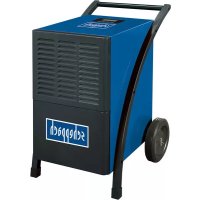
DH6000 - Humidifier SCHEPPACH - Free user manual and instructions
Find the device manual for free DH6000 SCHEPPACH in PDF.



| Product type | Condensation dehumidifier |
| Brand | Scheppach |
| Model | DH6000 |
| Nominal power | 900 W |
| Max power | 1150 W |
| Voltage | 230 V / 50 Hz |
| Current consumption | 4.5 A |
| Protection class | IP20 |
| Dehumidification capacity (30°C/80% RH) | 60 L/day |
| Maximum treated area | 70 m² |
| Air flow | 350 m³/h |
| Water tank capacity | 6 L |
| Automatic drainage | Yes |
| Refrigerant | R407C (410 g) |
| Operating temperature range | 5 °C to 35 °C |
| Adjustable humidity range | 30% to 80% |
| Digital display | Yes (humidity, hour counter, error codes) |
| Automatic defrost | Yes |
| Hour counter | Yes |
| Weight | 32 kg |
| Wheels and handle | Yes (assembly included) |
| Main functions | Humidity adjustment, fan speed, automatic shut-off when tank full, defrost |
| Maintenance and cleaning | Clean the filter monthly with hot water; empty the tank after each use |
| Safety | Motor overload protection, automatic shut-off when tank full, general safety instructions |
| Spare parts and repairability | Contact a specialist; use original parts |
| General information | Legal warranty; do not dispose with household waste (WEEE directive) |
Frequently Asked Questions - DH6000 SCHEPPACH
User questions about DH6000 SCHEPPACH
0 question about this device. Answer the ones you know or ask your own.
Ask a new question about this device
Download the instructions for your Humidifier in PDF format for free! Find your manual DH6000 - SCHEPPACH and take your electronic device back in hand. On this page are published all the documents necessary for the use of your device. DH6000 by SCHEPPACH.
USER MANUAL DH6000 SCHEPPACH
Table of contents: Page:
- Introduction 16
- Device description 16
- Scope of delivery 16
- Intended use 16
- Safety information 17
- Technical data 19
- Montage 19
- Operation 20
- Maintenance 20
- Storage 20
- Electrical Connection 20
- Transport 21
- Disposal and recycling 21
- Troubleshooting 22
15.Declaration of conformity 73 - Guarantee certificate 76
Explanation of the symbols
The use of symbols in this manual is intended to draw your attention to possible risks. The safety symbols and the explanations that accompany them must be perfectly understood. The warnings in themselves do not remove the risks and cannot replace correct actions for preventing accidents.


Read operator manual. Before any use, refer to the corresponding section in this user manual.

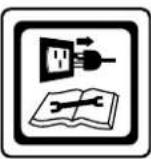
Switch off the engine before repair, maintenance and cleaning. Unplug the mains plug.

Don't expose to rain.

The product conforms to the applicable European directives.
1. Introduction
Manufacturer:
scheppach
We hope you have a lot of fun and success using your new machine.
Note:
According to the applicable product liability laws, the manufacturer of the device does not assume liability for damages to the product or damages caused by the product that occurs due to:
- improper handling,
noncompliance of the operating instructions, - repairs by third parties, not by authorized service technicians,
- installation and replacement of non-original spare parts,
non-intended use, - A breakdown of the electrical system that occurs due to the non-compliance of the electric regulations and VDE regulations 0100, DIN 57113 / VDE0113.
We recommend:
that you read through the entire operating instructions before putting the machine into operation.
These operating instructions are to assist you in getting to know your machine and utilize its proper applications. The operating instructions contain important notes on how you work with the machine safely, expertly, and economically, and how you can avoid hazards, save repair costs, reduce downtime and increase the reliability and service life of the machine. In addition to the safety requirements contained in these operating instructions, you must be careful to observe your country's applicable regulations.
The operating instructions must always be near the machine. Put them in a plastic folder to protect them from dirt and humidity. They must be read by every operator before beginning work and observed conscientiously. Only persons who have been trained in the use of the machine and have been informed of the various dangers may work with the machine. The required minimum age must be observed. In addition to the safety requirements in these operating instructions and your country's applicable regulations, you should observe the generally recognized technical rules concerning the operation of identically constructed devices.
2. Device description (Fig. 1-5)
1.DH6000
2. Air inlet
3. Cover flap
4. Support frame
5.Wheels
6. Handle
7. Display
8. Air outlet
9.Wheel acle
10. Water tank
A. De-humidifying operation
B. Level indicator
C. Automatic defrosting
D. Speed display
E. Operating hours counter
F. Humidity display
G. On/Off switch
H. Increase target
I. Decrease target humidity
J. Set speed
3. Scope of delivery
1x-DH6000
1x-Handle
2x-Wheels
1x - Manual
- Open the packaging and remove the device carefully.
- Remove the packaging material as well as the packaging and transport bracing (if available)
- Check that the delivery is complete.
- Check the device and its spare parts for possible damage caused by transportation. In the event of complaints, you must contact the distributor without delay. Claims at a later stage will not be accepted.
- If possible, store the packaging until the warranty period has expired
Attention!
The device and packaging materials are not toys! Children must not be allowed to play with plastic bags, film and small parts! There is a risk of swallowing and suffocation!
4. Intended use
The device is designed for applications operated with a 230V alternating current source.
Be sure to observe the restrictions in the safety instructions.
This air dehumidifier is only designed for indoor use to dry moist walls damage caused by water or to reduce the air humidity in confined spaces.
The intended usage also includes compliance with the operating, servicing and repair conditions prescribed by the manufacturer and following the safety instructions included in the instructions.
Follow the relevant accident prevention rules for operation and other generally recognised health and safety at work rules.
The machine is to be used only for its prescribed purpose. Any other use is deemed to be a case of misuse. The user / operator and not the manufacturer will be liable for any damage or injuries of any kind caused as a result of this.
Please note that our equipment has not been designed for use in commercial, trade or industrial applications. Our warranty will be voided if the equipment is used in commercial, trade or industrial businesses or for equivalent purposes.
Function principle
This air dehumidifier works on the basis of the condensation principle.
Room air is sucked through a refrigerating element where water vapour in the air condense as water droplets. Then, the water droplets flow into a condensation water bowl and further into the water container while the dried cold air is piped through the condenser of the device, heated and blown
again into the room. The temperature of the blown out air is approx. 2 - 5^ above the room temperature.
This increase of heat is caused by power introduced in the compressor and fan and by heat which is released by the condensation of the water vapour.
The relative humidity of air is gradually reduced thanks to continuous recirculation of the room air through the device resulting in a quick and gentle drying of the room.
Water vapours move easily and unhindered through the air. Therefore, it is essential to "seal" the room as tight as possible. That means doors and windows must kept closed and entering and leaving the room should be restricted if possible. Otherwise the drying efficiency of the device is considerably impaired.
5. Safety information
These operating instructions provide places concerning your safety which are marked with this indication:
Furthermore this manual contains other important sections which are marked with the word "ATTENTION!".
Attention!
While using the machine some safety precautions must be observed to prevent injuries and damage. Read the directions with due care. If you give the equipment to any other person, give them these operating instructions as well. We assume no liability for injuries or damages which are a results of noncompliance of this manual and its safety notes.
DANGER
Failure to follow these instructions may cause serious danger to life of danger or fatal injuries.
WARNING
Failure to follow these instructions may cause danger to life or danger of serious injuries.
CAUTION
Failure to follow these instructions may cause light to medium risk of injury.
NOTE
Failure to follow these instructions may cause danger of damage of the engine or other property values.
General Power Tool SafetyWarnings
WARNING! Read all safety warnings and all instructions. Failure to follow the warnings and instructions may result in electric shock, fire and/or serious injury.
Save all warnings and instructions for future reference.
The term "power tool" in the warnings refers to your mains operated (cored) power tool or battery-operated (cordless) power tool.
1) Work area safety
a) Keep work area clean and well lit. Cluttered or dark areas invite accidents.
b) Do not operate power tools in explosive atmospheres, such as in the presence of flammable liquids, gases or dust. Power tools create sparks which may ignite the dust or fumes.
c) Keep children and bystanders away while operating a power tool. Distractions can cause you to lose control.
2) Electrical safety
a) Power tool plugs must match the outlet. Never modify the plug in any way. Do not use any adapter plugs with earthed (grounded) power tools. Unmodified plugs and matching outlets will reduce risk of electric shock.
b) Avoid body contact with earthed or grounded surfaces, such as pipes, radiators, ranges and refrigerators. There is an increased risk of electric shock if your body is earthed or grounded.
c) Do not expose power tools to rain or wet conditions. Water entering a power tool will increase the risk of electric shock.
d) Do not abuse the cord. Never use the cord for carrying, pulling or unplugging the power tool. Keep cord away from heat, oil, sharp edges and moving parts. Damaged or entangled cords increase the risk of electric shock.
e) When operating a power tool outdoors, use an extension cord suitable for outdoor use. Use of a cord suitable for outdoor use reduces the risk of electric shock.
f) If operating a power tool in a damp location is unavoidable, use a residual current device (RCD) protected supply. Use of an RCD reduces the risk of electric shock.
3) Personal safety
a) Stay alert, watch what you are doing and use common sense when operating a power tool. Do not use a power tool while you are tired or under the influence of drugs, alcohol or medication. A moment of inattention while operating power tools may result in serious personal injury.
b) Use personal protective equipment. Always wear eye protection. Protective equipment such as dust mask, nonskid safety shoes, hard hat, or hearing protection used for appropriate conditions will reduce personal injuries.
c) Prevent unintentional starting. Ensure the switch is in the off-position before connecting to power source and/or battery pack, picking up or carrying the tool. Carrying power tools with your finger on the switch or energising power tools that have the switch on invites accidents.
d) Remove any adjusting key or wrench before turning the power tool on. A wrench or a key left attached to a rotating part of the power tool may result in personal injury.
e) Do not overreach. Keep proper footing and balance at all times. This enables better control of the power tool in unexpected situations.
f) Dress properly. Do not wear loose clothing or jewellery. Keep your hair, clothing and gloves away from moving parts. Loose clothes, jewellery or long hair can be caught in moving parts.
g) If devices are provided for the connection of dust extraction and collection facilities, ensure these are connected and properly used. Use of dust collection can reduce dust-related hazards.
4) Power tool use and care
a) Do not force the power tool. Use the correct power tool for your application. The correct power tool will do the job better and safer at the rate for which it was designed.
b) Do not use the power tool if the switch does not turn it on and off. Any power tool that cannot be controlled with the switch is dangerous and must be repaired.
c) Disconnect the plug from the power source and/or the battery pack from the power tool before making any adjustments, changing accessories, or storing power tools. Such preventive safety measures reduce the risk of starting the power tool accidentally.
d) Store idle power tools out of the reach of children and do not allow persons unfamiliar with the power tool or these instructions to operate the power tool. Power tools are dangerous in the hands of untrained users.
e) Maintain power tools. Check for misalignment or binding of moving parts, breakage of parts and any other condition that may affect the power tool's operation. If damaged, have the power tool repaired before use. Many accidents are caused by poorly maintained power tools.
f) Keep cutting tools sharp and clean. Properly maintained cutting tools with sharp cutting edges are less likely to bind and are easier to control.
g) Use the power tool, accessories and tool bits etc. in accordance with these instructions, taking into account the working conditions and the work to be performed. Use of the power tool for operations different from those intended could result in a hazardous situation.
5) Service
a) Have your power tool serviced by a qualified repair person using only identical replacement parts. This will ensure that the safety of the power tool is maintained.
ADDITIONAL SAFETY INSTRUCTIONS FOR DEHUMIDIFIER
DEHUMIDIFIER SAFETY WARNINGS
- Guard against electric danger.
- Do not touch any mechanically moving parts or hot parts. Do not remove protective covers.
- Do not use electrical equipment (including extension cables and connectors) that are faulty.
- Check whether the mains voltage matches the one on the label of the device.
- Don't pull the mains plug in order to unplug the device from the socket.
- Make sure not to damage or run over cables when moving the device.
- The socket has to be earthed and appropriately secured.
- The dehumidifier must not be covered when used. Don't put clothes or other objects on it.
- Keep foreign objects away from air inlet/outlet openings.
- Only use the dehumidifier on sturdy and even ground.
- Do not turn, tip or change the device position while it is working.
- Don't put the device close to sources of heat, like radiators, radiant heaters, etc.
- Don't use the product close to chemicals and acids. Those might damage the collection container or even the whole device.
-
Unplug the device if it is not used for a longer period or you want to clean it.
-
If you want to use permanent drainage, make sure that the hose is not banded and the water can flow through unhindered. Don't use permanent drainage when temperatures are very low and the water could freeze.
- Protect the device from splashing water.
- Only use an earthed standard socket with a 220-240V AC connection.
- This appliance can be used by children aged from 8 years and above and persons with reduced physical, sensory or mental capabilities or lack of experience and knowledge if they have been given supervision or instruction concerning use of the appliance in a safe way and understand the hazards involved. Children shall not play with the appliance. Cleaning and user maintenance shall not be made by children without supervision.
- Drain the water container before transporting the device to prevent spills.
- Unplug the device if problems like smell of burning occur while using it.
Warning! This electric tool generates an electromagnetic field during operation. This field can impair active or passive medical implants under certain conditions. In order to prevent the risk of serious or deadly injuries, we recommend that persons with medical implants consult with their physician and the manufacturer of the medical implant prior to operating the electric tool.
SAFETY INFORMATIONS SERVICE/ MAINTENANCE
- Only original parts may be used for maintenance and accessories.
- Before using, always visually inspect to see that the tools are not worn or damaged. Replace worn or damaged elements and bolts. Keep all nuts, bolts and screws tight to be sure the equipment is in safe working condition.
Service information
Please note that the following parts of this product are subject to normal or natural wear and that the following parts are therefore also required for use as consumables.
Wear parts*: Carbon brushes
- Not necessarily included in the scope of delivery!
WARNING!
Improper maintenance or ignoring/ not rectifying a problem during the operation may become a source of danger. Operate your machine only if regularly maintained. Only in this way you can assume that your device is operating safe, economical and without malfunctions.
Do not clean, maintain, setup or repair the machine whilst running. Moving parts may cause serious injuries.
Do not use fuel or other flammable solvents to clean the equipment.
Repairs must be carried out by qualified experts with appropriate knowledge about the product.
If the supply cord is damaged, it must be replaced by the manufacturer, its service agent or similarly qualified persons in order to avoid a hazard.
RESIDUAL RISKS
Even if used properly, residual risks can exist even if the relevant safety regulations are complied with due to the design determined by the intended purpose. Residual risks can be minimised if the "Safety advices" and the "Intended usage" as well as the whole of the operating instructions are observed. Observing these instructions, and taking proper care, will reduce the risk of personal injury or damage to the equipment.
- Risk from electricity when using improper electrical connections.
- Touching live parts of opened electrical components. In addition, in spite of all the precautionary measures taken, non-obvious residual risks can still exist.
6. Technical data
Model DH6000
Protection class IP20
Rated power 900 W
Max. power 1150 W
Electrical power supply 230V / 50Hz
Rated current 4,5 A
Temperature range 5^ - 35^
Humidity of air range 30% - 80%
Dehumidification performance at 60 L/d (30°C/80%)
Refrigerant R407C
Refrigerant quantity 410 g
Tank volume 6 L
Self purging N/A
Pump power N/A
Air flow rate (m3/h) 350 m³/h
Room area 70m²
Hose length N/A
Pump hight N/A
Display Yes
Weight 32 kg
Subject to technical modifications!
7. Montage
Attaching wheels and handle Fig. 2 + 3
- Attach the wheels, support feet and handle.
- Secure both sides of the support feet in the holes provided on the casing using 3 screws each.
3.Insert the handle between the support feet and screw both sides down. -
To attach the wheels, first tighten the wheel axle on the underneath of the dehumidifier..
-
Push the wheels on both sides of the axle and fix them with a cotter pin.
8. Operation
- Plug in the device. The device confirms this by a signal tone. Now the display shows the environmental moisture level.
- The level of humidification can be set from 30% (▼min.) up to 80% (▲max.). During this process dehumidification mode-key flashes.
- When you have reached the desired level wait for 5 seconds for the dehumidifier to save the value. The dehumidification mode-key stops flashing and the dehumidifier starts working. The display for environmental moisture level shows the difference.
- Before operating, place machine on a horizontal, stable surface.
- The appliance shall be installed in accordance with national wiring regulations.
- The appliance is connected by the cord of H05VV-F 3G 1.5mm² with plug.
Functions of Keys:
- On-/Off-Key (ON/OFF): Turn the device on and off.
- "Plus▲/Minus▼"-Keys: Set the desired Moisture Level. Keep pressing the plus▲- or minus▼- key (the value will run fluently towards the chosen direction) and let go when the desired value is reached.
- "WIND"-Key: Set the speed for the dehumidifier.
Automatic defrosting function
At low temperatures the device will start defrosting automatically. During this phase the cooling fan works properly but the inserted compressor switches itself off. The "Automatic Defrosting"-symbol and the "WIND"-key flash.
Collection container for water
If the collection container is completely filled, the symbol "Filling Level Indicator" will show this. In addition, there will be an acoustic signal (for 5 seconds) and the device will stop dehumidifying.
Removing the water collecting container
- Turn off the device.
- Open the enclosure door.
- Remove the container and empty is immediately.
- Re-insert the container. Make sure that the container is correctly positioned
- Close the hinged enclosure cover.
- Restart the air dehumidifier. The icon and the fault code FU should no longer be displayed. Icon and fault code are further displayed? Remove the container again and re-insert it properly
PERIOD OF PROCESSING
The Operating Hours Counter shows for how many hours the device has been in use.
Important Instructions
- The compressor turns itself on three minutes after turning on the dehumidifier.
The ideal temperature for the dehumidifier to work in is from about +5^ up to about +35^ - When the device defrosts the cooling fan works properly but the inserted compressor switches itself off.
- It is recommended to clean the filter once a month. Carefully clean it with clear warm water.
- Leave a safe distance between wall and air in- and outlets.
- Empty the collection container after each use.
- Unplug the device and attach the mains plug to the product if it is not in use over a longer period.
- Don't tilt the device more than 45^ , neither when moving nor when operating.
If the dehumidifier was tilted by accident, don't use it for a period of 12 hours.
9. Maintenance
The air dehumidifier is designed for a trouble free operation and a minimum of maintenance. All movable parts are permanently lubricated. Inside the device, there are no other parts to be maintained.
Cleaning
- Keep all safety devices, air vents and the motor housing free of dirt and dust. Wipe the equipment with a clean cloth or clean it with compressed air at low pressure.
We recommend that you clean your device after each use. - Clean the unit regularly with a damp cloth and some soft soap. Do not use cleaning agents or solvents; they may damage the plastic parts of the appliance. Make sure that no water can get inside the unit.
10. Storage
Store unused equipment in a dry, locked place out of the reach of children.
Note the following to extend the service life of your air dehumidifier and to ensure a perfect function:
-
Drain the water collecting container and dry it carefully.
-
Check the air dehumidifier for perfect condition to ensure a safe use of it after a longer period of storage.
-
Carefully cover the air dehumidifier.
11. Electrical connection
The electrical motor installed is connected and ready for operation. The connection complies with the applicable VDE and DIN provisions.
The customer's mains connection as well as the extension cable used must also comply with these regulations.
Important information
In the event of an overloading the motor will switch itself off. After a cool-down period (time varies) the motor can be switched back on again.
Damaged electrical connection cable
The insulation on electrical connection cables is often damaged.
This may have the following causes:
Passage points, where connection cables are passed through windows or doors.
- Kinks where the connection cable has been improperly fastened or routed.
- Places where the connection cables have been cut due to being driven over.
Insulation damage due to being ripped out of the wall outlet.
- Cracks due to the insulation ageing.
Such damaged electrical connection cables must not be used and are life-threatening due to the insulation damage.
Check the electrical connection cables for damage regularly. Make sure that the connection cable does not hang on the power network during the inspection. Electrical connection cables must comply with the applicable VDE and DIN provisions. Only use connection cables with the marking "H 07 RN".
The printing of the type designation on the connection cable is mandatory.
AC motor
The mains voltage must be 230V
- Extension cables up to 25m long must have a cross-section of 1.5mm^2
Connections and repairs of electrical equipment may only be carried out by an electrician.
Please provide the following information in the event of any enquiries:
- Type of current for the motor
- Machine data - type plate
- Machine data - type plate
MAINS CONNECTION
- The compressor is equipped with a mains cable with shock-proof plug. This can be connected to any 230V 50Hz shock-proof socket which is protected by a 16 A fuse.
- Before you use the machine, make sure that the mains voltage is the same as the operating voltage (see the rating plate).
- Long supply cables, extensions, cable reels etc cause a drop in voltage and can impede motor start-up.
- At low temperatures below +5^ , sluggishness may make starting difficult or impossible.
12. Transport
Always transport the air dehumidifier in upright (vertical) position to prevent compressor damages. If you have transported the air dehumidifier in another than upright position (horizontal or tilted), allow the air dehumidifier to stand in upright position for at least one hour before starting it up.#
13. Disposal and recycling
The equipment is supplied in packaging to prevent it from being damaged in transit. The raw materials in this packaging can be reused or recycled. The equipment and its accessories are made of various types of material, such as metal and plastic. Never place defective equipment in your household refuse. The equipment should be taken to a suitable collection center for proper disposal. If you do not know the whereabouts of such a collection point, you should ask in your local council offices.
Old devices must not be disposed of with household waste!
This symbol indicates that this product must not be disposed of together with domestic waste in compliance with the Directive (2012/19/EU) pertaining to waste electrical and electronic equipment (WEEE). This product must be disposed of at a designated collection point.
This can occur, for example, by handing it in at an authorised collecting point for the recycling of waste electrical and electronic equipment. Improper handling of waste equipment may have negative consequences for the environment and human health due to potentially hazardous substances that are often contained in electrical and electronic equipment.
By properly disposing of this product, you are also contributing to the effective use of natural resources. You can obtain information on collection points for waste equipment from your municipal administration, public waste disposal authority, an authorised body for the disposal of waste electrical and electronic equipment or your waste disposal company.
14. Troubleshooting
| Fault Possible cause Remedy | ||
| E1 Coil Sensor-Error Exchange the coil sensor. | ||
| E2 Moisture Sensor-Error Exchange the moisture | sensor. | |
| E3 Temperature Sensor-Error Exchange the temperature sensor. | ||
| E4 | Hot and Cold System-Error | Have the dehumidifier checked /repaired by a specialist. |
| E5 Room | Temperature too high Lower the room temperature and dehumidifier will restart automatically. | |
| ERROR | ERROR | SOLUTION |
| Dehumidifier does not work. | Device has no power.Mains plug is not plugged in prop- erly.Display shows error code FU. | Turn on the power supplyConnect the mains plug properlyEmpty the water collection container. |
| Bad Dehumidification Perfor- mance | Air in- or outlet is covered. Room is not closed. Low moisture and temperature. | Uncover Air in- and outlet.Close all doors and windows.The lower the room temperature the worse the dehumidification perfor- mance. |
| High Noise Level | Device was not put on even ground. Air in- or outlet is covered. | Position the device on even ground.Uncover Air in- and outlet.. |
| Water flows out of the device | Leakage of the water collecting con- tainer. | Check the water collecting container.Replace the water collecting con- tainer. |
Table des matieres: Page:
LOOPTIJD VAN HET APPARAAT
CE - Declaration of Conformity
Noise: measured L_WA = xx dB(A); guaranteed L_WA = xx dB(A)
P = xx KW; L/0 = cm
Notified Body:
Notified Body No.:
X 2006/42/EC
Annex IV
Notified Body:
Notified Body No.:
Certificate No.:
Standard references:
Standard references: EN60335-2-40; EN60335-1; EN62233; ZEK 01.4-08; EN55014-1; EN55014-2; EN 61000-3-2; EN61000-3-3;
This declaration of conformity is issued under the sole responsibility of the manufacturer.
The object of the declaration described above fulfils the regulations of the directive 2011/65/EU of the European Parliament and Council from 8th June 2011, on the restriction of the use of certain hazardous substances in electrical and electronic equipment.
Subject to change without notice
Documents registrar: Andreas Mayer
Günzburger Str. 69, D-89335 Ichenhausen
Garantiebedingungen
Revisions datum 20. August 2018
Apparent defects must be notified within 8 days from the receipt of the goods. Otherwise, the buyeris rights of claim due to such defects are invalidated. We guarantee for our machines in case of proper treatment for the time of the statutory warranty period from delivery in such a way that we replace any machine part free of charge which provably becomes unusable due to faulty material or defects of fabrication within such period of time. With respect to parts not
manufactured by us we only warrant insofar as we are entitled to warranty claims against the upstream suppliers. The costs for the installation of the new parts shall be borne by the buyer. The cancellation of sale or the reduction of purchase price as well as any other claims for damages shall be excluded.
Garantie FR
- Table of contents: Page:
- Explanation of the symbols
- Introduction
- Manufacturer:
- scheppach
- Note:
- We recommend:
- Device description (Fig. 1-5)
- Scope of delivery
- Attention!
- Intended use
- Function principle
- Safety information
- DANGER
- WARNING
- CAUTION
- NOTE
- General Power Tool SafetyWarnings
- 1) Work area safety
- 2) Electrical safety
- 3) Personal safety
- 4) Power tool use and care
- 5) Service
- ADDITIONAL SAFETY INSTRUCTIONS FOR DEHUMIDIFIER
- DEHUMIDIFIER SAFETY WARNINGS
- SAFETY INFORMATIONS SERVICE/ MAINTENANCE
- Service information
- WARNING!
- RESIDUAL RISKS
- Technical data
- Montage
- Operation
- Functions of Keys:
- Automatic defrosting function
- Collection container for water
- Removing the water collecting container
- PERIOD OF PROCESSING
- Important Instructions
- Maintenance
- Cleaning
- Storage
- Electrical connection
- Important information
- Damaged electrical connection cable
- AC motor
- MAINS CONNECTION
- Transport
- Disposal and recycling
- Old devices must not be disposed of with household waste!
- Troubleshooting
- Table des matieres: Page:
- LOOPTIJD VAN HET APPARAAT
- CE - Declaration of Conformity
- Standard references: EN60335-2-40; EN60335-1; EN62233; ZEK 01.4-08; EN55014-1; EN55014-2; EN 61000-3-2; EN61000-3-3;
- Garantiebedingungen
- Garantie FR
Brand : SCHEPPACH
Model : DH6000
Category : Humidifier