
SP 18VA - Sander HITACHI - Free user manual and instructions
Find the device manual for free SP 18VA HITACHI in PDF.



| Product type | Electronic sander / polisher |
| Brand | Hitachi (HiKOKI) |
| Model | SP 18VA |
| Rated power | 1250 W |
| No-load speed | 0 – 3400 min⁻¹ (variable) |
| Rated speed | 3750 min⁻¹ |
| Power supply | Mains (110-240 V~, depending on region) |
| Abrasive disc size | 180 × 22 mm |
| Weight (without cord, standard accessories) | 2.8 kg |
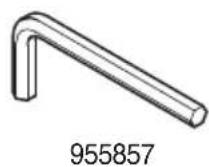
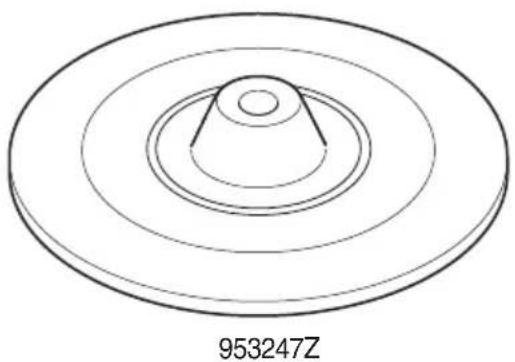
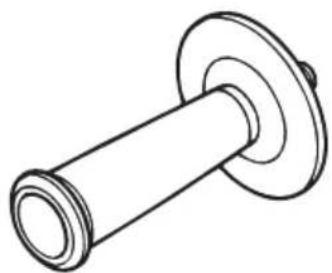
| Supplied accessories | Rubber pad, loop handle, rod key |
| Main functions | Sanding, polishing, buffing |
| Speed adjustment | Graduated dial from 1 to 6 (600 to 3400 min⁻¹) |
| Safety device | Motor protection circuit, lock pin, RCD recommended (30 mA) |
| Sound pressure level | 83 dB(A) (uncertainty K=3 dB(A)) |
| Sound power level | 94 dB(A) |
| Vibrations (polishing) | a_h,P = 5.6 m/s² (uncertainty K=2.2 m/s²) |
| Vibrations (buffing) | a_h,DS = 3.8 m/s² (uncertainty K=1.5 m/s²) |
| Maintenance | Screw inspection, carbon brush replacement, lock pin cleaning |
| Warranty | Manufacturer's warranty according to national regulations (excluding abuse) |
Frequently Asked Questions - SP 18VA HITACHI
User questions about SP 18VA HITACHI
0 question about this device. Answer the ones you know or ask your own.
Ask a new question about this device
Download the instructions for your Sander in PDF format for free! Find your manual SP 18VA - HITACHI and take your electronic device back in hand. On this page are published all the documents necessary for the use of your device. SP 18VA by HITACHI.
USER MANUAL SP 18VA HITACHI
natural_image
Line drawing of a power tool with a circular base and handle (no text or symbols)
en Handling instructions
de Bedienungsanleitung
fr Mode d'emploi
it Istruzioni per l'uso
nl Gebruiksaanwijzing
es Instrucciones de manejo
pt Instruções de uso
sv Bruksanvisning
da Brugsanvisning
no Bruksanvisning
fi Käyttöohjeet
el Οδηγίες χειρισμού

GENERAL POWER TOOL SAFETY WARNINGS

WARNING
Read all safety warnings and all instructions.
Failure to follow the warnings and instructions may result in electric shock, fi re and/or serious injury.
Save all warnings and instructions for future reference.
The term “power tool” in the warnings refers to your mains-operated (corded) power tool or battery-operated (cordless) power tool.
1) Work area safety
a) Keep work area clean and well lit. Cluttered or dark areas invite accidents
b) Do not operate power tools in explosive atmospheres, such as in the presence of fl ammable liquids, gases or dust. Power tools create sparks which may ignite the dust or fumes.
c) Keep children and bystanders away while operating a power tool. Distractions can cause you to lose control.
2) Electrical safety
a) Power tool plugs must match the outlet. Never modify the plug in any way.
Do not use any adapter plugs with earthed (grounded) power tools.
Unmodified plugs and matching outlets will reduce risk of electric shock.
b) Avoid body contact with earthed or grounded surfaces, such as pipes, radiators, ranges and refrigerators. There is an increased risk of electric shock if your body is earthed or grounded.
c) Do not expose power tools to rain or wet conditions. Water entering a power tool will increase the risk of electric shock.
d) Do not abuse the cord. Never use the cord for carrying, pulling or unplugging the power tool. Keep cord away from heat, oil, sharp edges or moving parts. Damaged or entangled cords increase the risk of electric shock.
e) When operating a power tool outdoors, use an extension cord suitable for outdoor use. Use of a cord suitable for outdoor use reduces the risk of electric shock.
f) If operating a power tool in a damp location is unavoidable, use a residual current device (RCD) protected supply. Use of an RCD reduces the risk of electric shock.
3) Personal safety
a) Stay alert, watch what you are doing and use common sense when operating a power tool. Do not use a power tool while you are tired or under the influence of drugs, alcohol or medication.
A moment of inattention while operating power tools may result in serious personal injury.
b) Use personal protective equipment. Always wear eye protection.
Protective equipment such as dust mask, non-skid safety shoes, hard hat, or hearing protection used for appropriate conditions will reduce personal injuries.
c) Prevent unintentional starting. Ensure the switch is in the off position before connecting to power source and/or battery pack, picking up or carrying the tool.
Carrying power tools with your fi nger on the switch or energising power tools that have the switch on invites accidents.
d) Remove any adjusting key or wrench before turning the power tool on.
A wrench or a key left attached to a rotating part of the power tool may result in personal injury.
e) Do not overreach. Keep proper footing and balance at all times.
This enables better control of the power tool in unexpected situations.
f) Dress properly. Do not wear loose clothing or jewellery. Keep your hair, clothing and gloves away from moving parts.
Loose clothes, jewellery or long hair can be caught in moving parts.
g) If devices are provided for the connection of dust extraction and collection facilities, ensure these are connected and properly used.
Use of dust collection can reduce dust-related hazards.
4) Power tool use and care
a) Do not force the power tool. Use the correct power tool for your application.
The correct power tool will do the job better and safer at the rate for which it was designed.
b) Do not use the power tool if the switch does not turn it on and off.
Any power tool that cannot be controlled with the switch is dangerous and must be repaired.
c) Disconnect the plug from the power source and/or the battery pack from the power tool before making any adjustments, changing accessories, or storing power tools.
Such preventive safety measures reduce the risk of starting the power tool accidentally.
d) Store idle power tools out of the reach of children and do not allow persons unfamiliar with the power tool or these instructions to operate the power tool.
Power tools are dangerous in the hands of untrained users.
e) Maintain power tools. Check for misalignment or binding of moving parts, breakage of parts and any other condition that may affect the power tool's operation.
If damaged, have the power tool repaired before use.
Many accidents are caused by poorly maintained power tools.
f) Keep cutting tools sharp and clean.
Properly maintained cutting tools with sharp cutting edges are less likely to bind and are easier to control.
g) Use the power tool, accessories and tool bits etc. in accordance with these instructions, taking into account the working conditions and the work to be performed.
Use of the power tool for operations different from those intended could result in a hazardous situation.
5) Service
a) Have your power tool serviced by a qualified repair person using only identical replacement parts.
This will ensure that the safety of the power tool is maintained.
PRECAUTION
Keep children and infi rm persons away.
When not in use, tools should be stored out of reach of children and infi rm persons.
SAFETY WARNINGS COMMON FOR SANDING OR POLISHING OPERATIONS
a) This power tool is intended to function as a sander or polisher. Read all safety warnings, instructions, illustrations and specifications provided with this power tool.
Failure to follow all instructions listed below may result in electric shock, fire and/or serious injury.
b) Operations such as grinding, wire brushing or cutting-off are not recommended to be performed with this power tool.
Operations for which the power tool was not designed may create a hazard and cause personal injury.
c) Do not use accessories which are not specifically designed and recommended by the tool manufacturer.
Just because the accessory can be attached to your power tool, it does not assure safe operation.
d) The rated speed of the accessory must be at least equal to the maximum speed marked on the power tool.
Accessories running faster than their rated speed can break and fly apart.
e) The outside diameter and the thickness of your accessory must be within the capacity rating of your power tool.
Incorrectly sized accessories cannot be adequately guarded or controlled.
f) Threaded mounting of accessories must match the grinder spindle thread. For accessories mounted by flanges, the arbour hole of accessory must fit the locating diameter of the flange.
Accessories that do not match the mounting hardware of the power tool will run out of balance, vibrate excessively and may cause loss of control.
g) Do not use a damaged accessory. Before each use inspect the accessory such as abrasive wheels for chips and cracks, backing pad for cracks, tear or excess wear, wire brush for loose or cracked wires. If power tool or accessory is dropped, inspect for damage or install an undamaged accessory. After inspecting and installing an accessory, position yourself and bystanders away from the plane of the rotating accessory and run the power tool at maximum no-load speed for one minute.
Damaged accessories will normally break apart during this test time.
h) Wear personal protective equipment. Depending on application, use face shield, safety goggles or safety glasses. As appropriate, wear dust mask, hearing protectors, gloves and workshop apron capable of stopping small abrasive or workpiece fragments.
The eye protection must be capable of stopping flying debris generated by various operations. The dust mask or respirator must be capable of filtrating particles generated by your operation. Prolonged exposure to high intensity noise may cause hearing loss.
i) Keep bystanders a safe distance away from work area. Anyone entering the work area must wear personal protective equipment.
Fragments of workpiece or of a broken accessory may fly away and cause injury beyond immediate area of operation.
j) Hold the power tool by insulated gripping surfaces only, when performing an operation where the cutting accessory may contact hidden wiring or its own cord.
Cutting accessory contacting a "live" wire may make exposed metal parts of the power tool "live" and could give the operator an electric shock.
k) Position the cord clear of the spinning accessory. If you lose control, the cord may be cut or snagged and your hand or arm may be pulled into the spinning accessory.
I) Never lay the power tool down until the accessory has come to a complete stop.
The spinning accessory may grab the surface and pull the power tool out of your control.
m) Do not run the power tool while carrying it at your side.
Accidental contact with the spinning accessory could snag your clothing, pulling the accessory into your body.
n) Regularly clean the power tool's air vents.
The motor's fan will draw the dust inside the housing and excessive accumulation of powdered metal may cause electrical hazards.
o) Do not operate the power tool near fl ammable materials. Sparks could ignite these materials.
p) Do not use accessories that require liquid coolants. Using water or other liquid coolants may result in electrocution or shock.
KICKBACK AND RELATED WARNINGS
Kickback is a sudden reaction to a pinched or snagged rotating wheel, backing pad, brush or any other accessory. Pinching or snagging causes rapid stalling of the rotating accessory which in turn causes the uncontrolled power tool to be forced in the direction opposite of the accessory's rotation at the point of the binding.
For example, if an abrasive wheel is snagged or pinched by the workpiece, the edge of the wheel that is entering into the pinch point can dig into the surface of the material causing the wheel to climb out or kick out. The wheel may either jump toward or away from the operator, depending on direction of the wheel's movement at the point of pinching.
Abrasive wheels may also break under these conditions.
Kickback is the result of power tool misuse and/or incorrect operating procedures or conditions and can be avoided by taking proper precautions as given below.
a) Maintain a fi rm grip on the power tool and position your body and arm to allow you to resist kickback forces. Always use auxiliary handle, if provided, for maximum control over kickback or torque reaction during start-up. The operator can control torque reactions or kickback forces, if proper precautions are taken.
b) Never place your hand near the rotating accessory. Accessory may kickback over your hand.
c) Do not position your body in the area where power tool will move if kickback occurs.
Kickback will propel the tool in direction opposite to the wheel's movement at the point of snagging.
d) Use special care when working corners, sharp edges etc. Avoid bouncing and snagging the accessory.
Corners, sharp edges or bouncing have a tendency to snag the rotating accessory and cause loss of control or kickback.
e) Do not attach a saw chain woodcarving blade or toothed saw blade.
Such blades create frequent kickback and loss of control.
SAFETY WARNINGS SPECIFIC FOR SANDING OPERATIONS
a) Do not use excessively oversized sanding disc paper. Follow manufacturers recommendations, when selecting sanding paper.
Larger sanding paper extending beyond the sanding pad presents a laceration hazard and may cause snagging, tearing of the disc or kickback.
SAFETY WARNINGS SPECIFIC FOR POLISHING OPERATIONS
a) Do not allow any loose portion of the polishing bonnet or its attachment strings to spin freely. Tuck away or trim any loose attachment strings.
Loose and spinning attachment strings can entangle your fingers or snag on the workpiece.
PRECAUTIONS ON USING ELECTRONIC SANDER POLISHER
- Never mount a grinding wheel and attempt to use this tool as a disc grinder.
- Always hold the body handle and side handle of the power tool firmly.
Otherwise the counterforce produced may result in inaccurate and even dangerous operation. - Ensure that sparks resulting from use do not create a hazard e.g. do not hit persons, or ignite fl ammable substances.
- Always use protective safety glasses and hearing protectors, use other personal protective equipment such as gloves, apron and helmet when necessary.
- Always use eye and ear protection.
Other personal protective equipment such as dust mask, gloves, helmet and apron should be worn when necessary.
If in doubt, wear the protective equipment. - Mounting the sanding disc and wool bonnet.
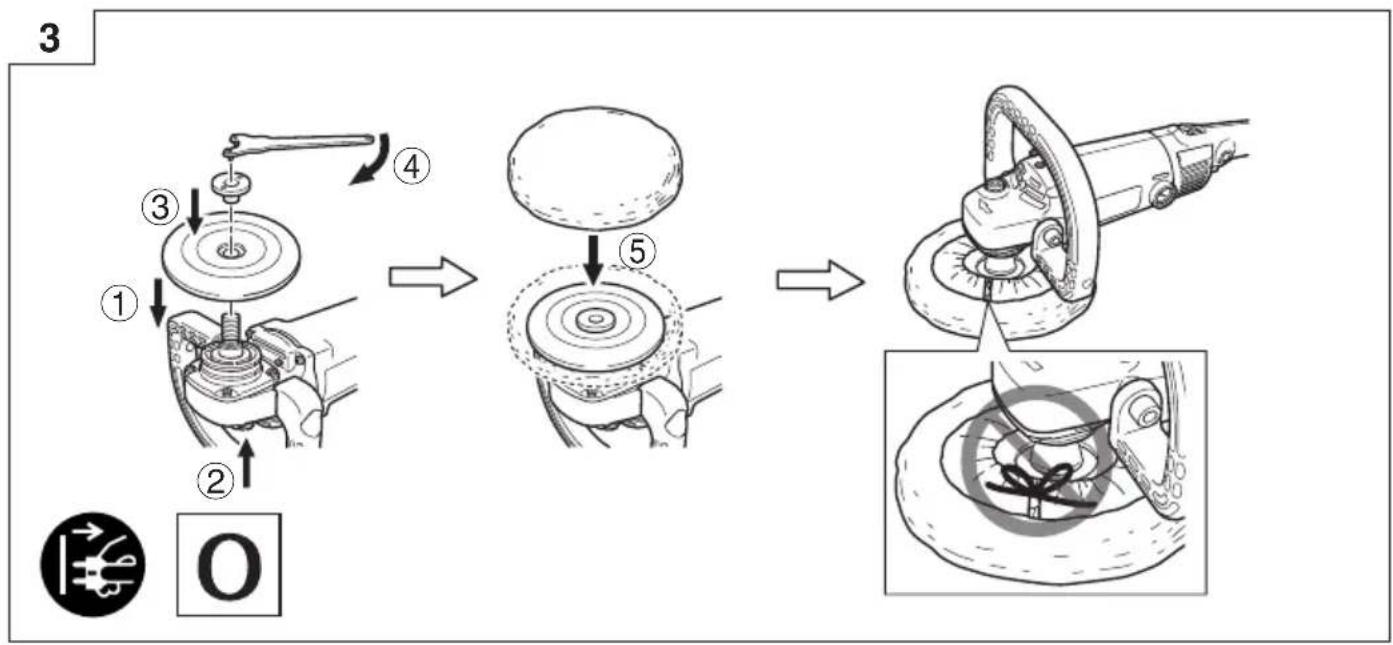
○ Improper fitting of the wool bonnet may cause vibration.
○ Use a wrench to tighten the washer nut sufficiently.
○ After releasing the lock pin, check to be sure that it has returned to its normal position. - RCD
The use of a residual current device with a rated residual current of 30 mA or less at all times is recommended.
SYMBOLS
WARNING
The following show symbols used for the machine.
Be sure that you understand their meaning before use.
| SP18VA: Electronic Sander Polisher | |
| Read all safety warnings and all instructions. | |
| Always wear eye protection. | |
| Only for EU countriesDo not dispose of electric tools together with household waste material!In observance of European Directive 2002/96/EC on waste electrical and electronic equipment and its implementation in accordance with national law, electric tools that have reached the end of their life must be collected separately and returned to an environmentally compatible recycling facility. | |
| V Rated voltage | |
| ~ | Alternating current |
| min-1 | Revolution or reciprocations per minute |
| Switching ON | |
| Switching OFF | |
| Disconnect mains plug from electrical outlet | |
| Warning | |
| Class II tool |
STANDARD ACCESSORIES
In addition to the main unit (1 unit), the package contains the accessories listed in the below.
(1) Rubber Pad ....1
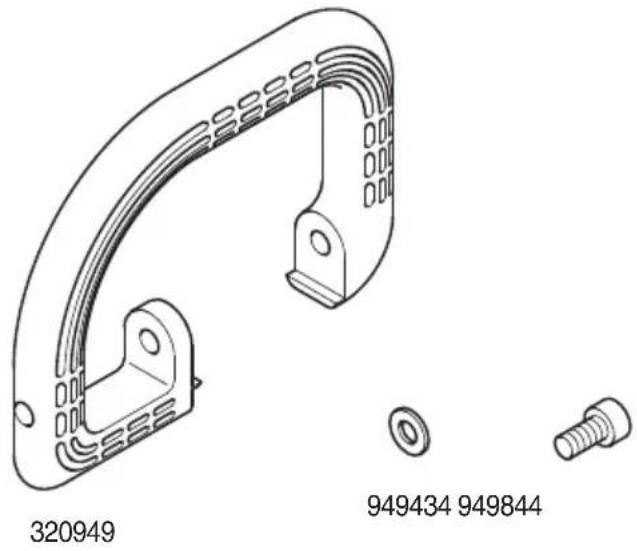
(2) Loop Handle (with bolt and washer) ....1
(3) Bar Wrench ....1
Standard accessories are subject to change without notice.
APPLICATIONS
○ Grinding metal surfaces
○ Preliminary sanding of metal surfaces before painting, rust removal, removing old paint before repainting.
○ Finishing woodwork, correcting projections of timber from joints or assemblies.
○ Preliminary sanding of wood surfaces before applying paint.
Polishing or shining painted metal surfaces, such as those of automobiles, trains, elevators, refrigerators, sewing machines, washing machines, metal appliances, etc.
○ Polishing varnished surfaces of wooden furniture, etc.
O Shining synthetic resin or ebonite products.
SPECIFICATIONS
| Voltage (by areas)* | (110 V, 120 V, 220V, 230 V, 240 V)~ |
| Power input | 1250 W* |
| No load speed | 0 – 3400 min-1 |
| Rated Speed | 3750 min-1 |
| Sanding Disc Size outer dia. × inner dia. | 180 × 22 mm |
| Weight (without cord, standard accessories) | 2.8 kg |
* Be sure to check the nameplate on product as it is subject to change by areas.
NOTE
Due to HiKOKI's continuing program of research and development, the specifications herein are subject to change without prior notice.
MOUNTING AND OPERATION
| Action Figure Page | ||
| Attachment of a loop handle 1 66 | ||
| Assembling sanding disc 2 66 | ||
| Assembling wool bonnet 3 66 | ||
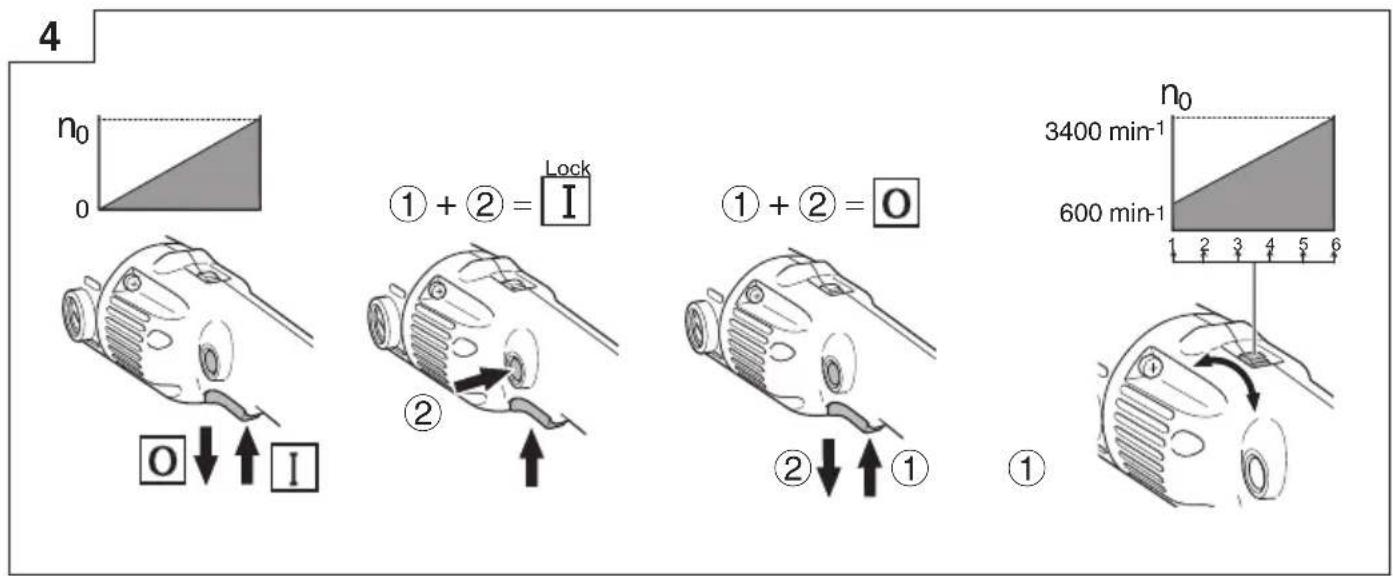
| Switch operation and variable speed operation | 4 | 66 |
| Sander operation 5 67 | ||
| Replacing carbon brush 6 67 | ||
| Selecting accessories — 68 |
Motor speed can be variable as desired by rotating the dial; it is increased by turning the dial towards "6", decreased by turning it towards "1".
Select the motor speed appropriate for the work being done. The following table gives the motor speeds corresponding to each indication on the dial scale and shows the types of work for which they are suitable.
| Dial Indication | R.P.M. Type of work |
| 1 600 | |
| 2 1100 | |
| 3 1700 | |
| 4 2300 | |
| 5 2900 | |
| 6 3400 |
CAUTION
The dial cannot be rotated further than the "6" or "1" on the scale in their respective directions.
Sander operation
(1) This unit is designed to provide sufficient polishing (sanding) power with the disc pressed lightly against the sanding/polishing surface: it is equipped with an electronic control circuit to ensure that the motor will not slow down even when loaded. There is therefore no need to press the sanding disc hard against the surface; doing so can overload the motor, subsequently causing the overload cut device to step into operation by cutting the motor's power supply.
If this should happen, cut the power switch and turn at the correct motor speed.
(2) Do not apply the entire disc surface to the surface of the material. As shown in Fig. 5, the sander should be held at an approximately 15^ to 25^ angle in relation to the material surface so that the peripheral portion of the sanding disc is offered to the material surface.
(3) Precaution immediately after finishing an operation: After turning the switch OFF, do not put the sander down until the sanding disc has come to a complete stop. This precaution will not only prevent a serious accident, but will also reduce the amount of dust and swarf sucked into the machine.
Polisher operation
(1) Curved surfaces as well as flat surfaces can be efficiently finished. Do not excessively push the polisher against the surface of the material. The weight of the polisher alone is sufficient for effective polishing. Excessive pressure will result in a poor finish and cause possible overload to the motor.
(2) Sanding disc, polishing compound or wax should be selected in accordance with the material and the desired surface finish. Maximum polishing effect will be attained by following the following method:
- Preliminary polishing with sander using a finegrain sanding disc. - Polishing with wool bonnet using polishing compound and/or wax. Apply a small quantity of compound and/or wax on material surface and polish with the wool bonnet.
CAUTION
Carefully guard against permitting the cabtyre cord to touch the wool bonnet or sanding disc during operation. If the cord touches, there is a danger that it may become entangled.
☐ Do not use the lock pin as a brake to stop the tool as this may lead to damage of the gear or detachment of the tool.
MAINTENANCE AND INSPECTION
1. Inspecting the mounting screws
Regularly inspect all mounting screws and ensure that they are properly tightened. Should any of the screws be loose, retighten them immediately. Failure to do so could result in serious hazard.
2. Inspecting the carbon brushes (Fig. 6)
The motor employs carbon brushes which are consumable parts. Since an excessively worn carbon brush can result in motor trouble, replace the carbon brushes with new ones having the same carbon brush No. ① shown in the figure when it becomes worn to or near the “wear limit” ②. In addition, always keep carbon brushes clean and ensue that they slide freely within the brush holders.
3. Replacing a carbon brush (Fig. 6)
Disassemble the brush cap with a minus-head screwdriver. The carbon brush can then be easily removed.
4. Maintenance of the motor
The motor unit winding is the very "heart" of the power tool. Exercise due care to ensure the winding does not become damaged and/or wet with oil or water.
5. Cleaning lock pin section
If the lock pin section becomes dirty, clean it at once.
CAUTION
In the operation and maintenance of power tools, the safety regulations and standards prescribed in each country must be observed.
GUARANTEE
We guarantee HiKOKI Power Tools in accordance with statutory/country specific regulation. This guarantee does not cover defects or damage due to misuse, abuse, or normal wear and tear. In case of complaint, please send the Power Tool, undismantled, with the GUARANTEE CERTIFICATE found at the end of this Handling instruction, to a HiKOKI Authorized Service Center.
IMPORTANT
Correct connection of the plug
The wires of the main lead are coloured in accordance with the following code:
Blue: — Neutral
Brown: — Live
As the colours of the wires in the main lead of this tool may not correspond with the coloured markings identifying the terminals in your plug proceed as follows:
The wire coloured blue must be connected to the terminal marked with the letter N or coloured black. The wire coloured brown must be connected to the terminal marked with the letter L or coloured red. Neither core must be connected to the earth terminal.
NOTE:
This requirement is provided according to BRITISH STANDARD 2769: 1984.
Therefore, the letter code and colour code may not be applicable to other markets except The United Kingdom.
Information concerning airborne noise and vibration
The measured values were determined according to EN60745 and declared in accordance with ISO 4871.
Measured A-weighted sound power level: 94 dB (A).
Measured A-weighted sound pressure level: 83 dB (A).
Uncertainty K: 3 dB (A).
Wear hearing protection.
Vibration total values (triax vector sum) determined according to EN60745.
Polishing:
Vibration emission value a_h , P = 5.6 m/s ^2
Uncertainty K = 2.2 m/s²
Sanding:
Vibration emission value a_h ,DS = 3.8 m/s2
Uncertainty K = 1.5 m/s²
The declared vibration total value has been measured in accordance with a standard test method and may be used for comparing one tool with another.
It may also be used in a preliminary assessment of exposure.
WARNING
☐ The vibration emission during actual use of the power tool can differ from the declared total value depending in the ways in which the tool is used.
- Identify safety measures to protect the operator that are based on an estimation of exposure in the actual conditions of use (taking account of all parts of the operating cycle such as the times when the tool is switched off and when it is running idle in addition to the trigger time).
NOTE
Due to HiKOKI's continuing program of research and development, the specifications herein are subject to change without prior notice.
VEILIGHEIDSWAARSCHUWINGEN
VOOR SCHUREN OF POLIJSTEN
VEILIGHEIDSWAARSCHUWINGEN SPECIFIEK VOOR SCHUREN
VEDLIKEHOLD OG INSPEKSJON
1. Inspisere monteringsskruene
flowchart
graph TD
    A["Step 1: Valve with Component ①"] --> B["Step 2: Screw, Step 3: Screw, Step 4: Arrow"]
    B --> C["Step 3: Wheelbase with Component ⑤"]
    C --> D["Step 4: Screw, Step 5: Arrow"]
    D --> E["Final Gear with Component ⑥"]
5

6



natural_image
Technical line drawing of a mechanical bracket with two bolt holes and a separate inset showing part numbers (no text or symbols on the main diagram)

natural_image
Technical drawing of concentric circular layers with a central conical feature, labeled 953247Z (no other text or symbols)
natural_image
Illustration of a cylindrical mechanical component with concentric grooves and a central hole, labeled 314090 below (no text or symbols on the diagram itself)
natural_image
Technical line drawing of a cylindrical mechanical part with flanged ends (no text or symbols)
| English Português | ||
| GUARANTEE CERTIFICATE1 Model No.2 Serial No.3 Date of Purchase4 Customer Name and Address5 Dealer Name and Address(Please stamp dealer name and address) | CERTIFICADO DE GARANTIA1 Número do modelo2 Número do série3 Data de compra4 Nome e morada do cliente5 Nome e morada do distribuidor(Por favor, carímbe o nome e morada do distribuidor) | |
| Deutsch Svenska | ||
| GARANTIESCHEIN1 Modell-Nr.2 Serien-Nr.3 Kaufdatum4 Name und Anschrift des Kunden5 Name und Anschrift des Händlers(Bitte mit Namen und Anschrift des Handlers abstempeln) | GARANTICERTIFIKAT1 Modellnr2 Serienr3 Inköpsdatum4 Kundens namn och adress5 Försäljarens namn och adress(Stämpla försäljarens namn och adress) | |
| Français Dansk | ||
| CERTIFICAT DE GARANTIE1 No. de modèle2 No de série3 Date d'achat4 Nom et adresse du client5 Nom et adresse du revendeur(Cachet portant le nom et l'adresse du revendeur) | GARANTIBEVIS1 Modelnummer2 Serienummer3 Købsdato4 Kundes navn og adresse5 Forhandlers navn og adresse(Indsæt stempel med forhandlers navn og adresse) | |
| Italiano Norsk | ||
| CERTIFICATO DI GARANZIA1 Modello2 N° di serie3 Data di acquisto4 Nome e indirizzo dell'acquirente5 Nome e indirizzo del rivenditore(Si prega di apporre il timbro con questi dati) | GARANTISERTIFIKAT1 Modellnr.2 Serienr.3 Kjøpsdato4 Kundens navn og adresse5 Forhandlerens navn og adresse(Vennligst stemple forhandlerens navn og adresse) | |
| Nederlands Suomi | ||
| GARANTIEBEWIJS1 Modelnummer2 Serienummer3 Datum van aankoop4 Naam en adres van de gebruiker5 Naam en adres van de handelaar(Stempel a.u.b. naam en adres vande de handelaar) | TAKUUTODISTUS1 Malli nro2 Sarja nro3 Ostopäivämäärä4 Asiakkaan nimi ja osoite5 Myyjän nimi ja osoite(Leimaa myyjän nimi ja osoite) | |
| Español | Ελληνικά | |
| CERTIFICADO DE GARANTÍA1 Número de modelo2 Número de serie3 Fecha de adquisición4 Nombre y dirección del cliente5 Nombre y dirección del distribudor(Se ruega poner el sello del distribudor con su nombre y dirección) | ΠΙΣΤΟΠΟΙΗΤΙΚΟ ΕΓΓΥΗΣΗΣ1 Αρ. Μοντέλου2 Αύξων Αρ.3 Ημερομηνία αγοράς4 ́Ονομα και διεύθυνση πελάτη5 ́Ονομα και διεύθυνση μεταπωλητή(Παρακαλούμε να χρησιμοποιηθεί σφραγίδα) | |
HiKOKI
| 1 | |
| 2 | |
| 3 | |
| 4 | |
| 5 |
Siemensring 34, 47877 willich, Germany
Tel: +49 2154 49930
Fax: +49 2154 499350
URL: http://www.hikoki-powertools.de
Hikoki Power Tools Norway AS
Kjeller Vest 7, N-2007 Kjeller, Norway
Tel: (+47) 6692 6600
Fax: (+47) 6692 6650
URL: http://www.hikoki-powertools.no
Hikoki Power Tools Netherlands B.V.
Brabanthaven 11, 3433 PJ Nieuwegein, The Netherlands
Tel: +31 30 6084040
Fax: +31 30 6067266
URL: http://www.hikoki-powertools.nl
Hikoki Power Tools Sweden AB
Rotebergsvagen 2B SE-192 78 Sollentuna, Sweden
Tel: (+46) 8 598 999 00
Fax: (+46) 8 598 999 40
URL: http://www.hikoki-powertools.se
Hikoki Power Tools (U.K.) Ltd.
Precedent Drive, Rooksley, Milton Keynes, MK 13, 8PJ, United Kingdom
Tel: +44 1908 660663
Fax: +44 1908 606642
URL: http://www.hikoki-powertools.uk
Hikoki Power Tools Denmark A/S
Lillebaeltsvej 90, 6715 Esbjerg N, Denmark
Tel: (+45) 75 14 32 00
Fax: (+45) 75 14 36 66
URL: http://www.hikoki-powertools.dk
Hikoki Power Tools France S.A.S.
Hikoki Power Tools Belgium N.V./S.A.
Koningin Astridlaan 51, B-1780 Wemmel, Belgium
Tel: +32 2 460 1720
Fax: +32 2 460 2542
URL http://www.hikoki-powertools.be
Hikoki Power Tools Italia S.p.A
Via Piave 35, 36077, Altavilla Vicentina (VI), Italy
Tel: +39 0444 548111
Fax: +39 0444 548110
URL: http://www.hikoki-powertools.it
Hikoki Power Tools Ibérica, S.A.
C/ Puigbarral, 26-28, Pol. Ind. Can Petit, 08227 Terrassa
(Barcelona), Spain
Tel: +34 93 735 6722
Fax: +34 93 735 7442
URL: http://www.hikoki-powertools.es
natural_image
Line drawing of a quill pen in an inkwell (no text or symbols)
natural_image
Line drawing of a quill pen in an inkwell (no text or symbols)
natural_image
Line drawing of a quill pen in an inkwell (no text or symbols)| English Italia ho | ||
| EC DECLARATION OF CONFORMITYWe declare under our sole responsibility that Electronic Sander Polisher, identified by type and specific identification code *1), is in conformity with all relevant requirements of the directives *2) and standards *3).Technical fi le at *4) - See below.The European Standard Manager at the representative office in Europe is authorized to compile the technical fi le.The declaration is applicable to the product affi xed CE marking. | DICHIARAZIONE DI CONFORMITÀ CEDichiariamo sotto la nostra esclusiva responsabilità che la levigatrice/ lucidatrice elettronica, identificata dal tipo e dal codice identificativo specifico *1), è conforme a tutti i requisiti delle direttive *2) e degli standard *3). Documentazione tecnica presso *4) - Vedere sotto.Il gestore delle norme europee presso l'ufficio di rappresentanza in Europa è autorizzato a compilare il fascicolo tecnico.La dichiarazione è applicabile ai prodotti cui sono applicati i marchi CE. | |
| Deutsch NederlandsEG-KONFORMITÄTSERKLÄRUNGWir erklären in alleiniger Verantwortung, dass der durch den Typ und den spezifischen Identifizierungscode *1) identifizierte Elektronische Schleifer/Polierer allen einschlägigen Bestimmungen der Richtlinien *2) und Normen *3) entspricht. Technische Unterlagen unter *4) - Siehe unten.Die Leitung der repräsentativen Behörde für europäische Normen und Richtlinien ist berechtigt, die technischen Unterlagen zusammenzustellen.Die Erklärung gilt für die an dem Produkt angebrachte CE-Kennzeichnung. | ||
| EC VERKLARING VAN CONFORMITEITWij verklaren onder onze eigen verantwoordelijkheid dat Schuur-polijstmachine met regel electronic, geidentificeerd door het type en de specifieke identificatiecode*1), voldoet aan alle relevante bepalingen van de richtlijnen*2) en normen*3). Technische documentatie bij*4) - zie onder.De Europese Normen Manager bij de vertegenwoordiging in Europa is gemachtigd om het technisch dossier samen te stellen.Deze verklaring is van toepassing op producten voorzien van de CE-markeringen. | ||
| Français EspañolDECLARATION DE CONFORMITE CNous déclarons sous notre entière responsabilité que la polisseuse/ lustreuse électronique, identifiée par le type et le code d'identification spécifique *1) est en conformité avec toutes les exigences applicables des directives *2) et des normes *3). Dossier technique en *4) - Voir ci-dessous.Le Gestionnaire des normes européennes du bureau de représentation en Europe est autorisé à constituer le dossier technique.Cette déclaration s'applique aux produits désignés CE. | ||
| DECLARACIÓN DE CONFORMIDAD DE LA CEDeclaramos bajo nuestra única responsabilidad que la Lijadora Pulidora Electrónica, identificada por tipo y por código de identificación específico *1), está en conformidad con todas las disposiciones correspondientes de las directivas *2) y de las normas *3). Documentación técnica en *4) - Ver a continuación.El Director de Normas Europeas en la oficina de representación en Europa está autorizado para elaborar el expediente técnico.La declaración se aplica al producto con marcas de la CE. | ||
| *1) SP18VA C350647S*2) 2006/42/EC, 2014/30/EU, 2011/65/EU*3) EN60745-1:2009+A11:2010EN60745-2-3:2011+A2:2013+A11:2014+A12:2014+A13:2015EN55014-1:2006+A1:2009+A2:2011EN55014-2:1997+A1:2001+A2:2008EN61000-3-2:2014EN61000-3-3:2013 | ||
| *4) Representative offi ce in EuropeHikoki Power Tools Deutschland GmbHSiemensring 34, 47877 Willich, GermanyHead offi ce in JapanKoki Holdings Co., Ltd.Shinagawa Intercity Tower A, 15-1, Konan 2-chome, Minato-ku, Tokyo, Japan | 29. 6. 2018Naoto YamashiroEuropean Standard Manager 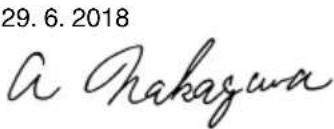 A. NakagawaCorporate Offi cer A. NakagawaCorporate Offi cer | |
| Português Norsk | ||
| DECLARAÇÃO DE CONFORMIDADE CEDeclaramos, sob nossa única e inteira responsabilidade, que Lixadeira Polidora Eletrónica, identificada por tipo e código de identificação específico *1), está em conformidade com todos os requerimentos relevantes das diretivas *2) e normas *3). Ficheiro técnico em *4)-Consulte abaixo.O Gestor de Normas Europeias no escritório de representação na Europa está autorizado a compilar o fi cheiro técnico.A declaração aplica-se aos produtos com marca CE. | EF'S ERKLÆRING OM OVERENSSTEMMELSEVi erklærer på eget ansvar at elektronisk pusse- og polermaskin, identifisert etter type og spesifikk identifikasjonskode *1), er i samsvar med alle relevante krav i direktiver *2) og standarder *3). Teknisk fil under *4) - Se nedenfor.Styreren for europeiske standarder ved representantkontoret i Europa er autorisert til å kompilere den tekniske fi len.Erklæringen gjelder for CE-merket på produktet. | |
| Svenska SuomiEG-DEKLARATION BETRÄFFANDE LIKFORMIGHETVi förklarar på eget ansvar att denna elektroniska slip/polermaskin, identifierad enligt typ och särskild identifikationskod *1), överensstämmer med alla relevanta krav i direktiven *2) och standarderna *3). Teknisk fi I enligt *4) – Se nedan.Den europeiska standardansvariga på representationskontoret i Europa är auktoriserad att sammanställa den tekniska fi len.Denna försäkran gäller för produkten med tillhörande CE-märkning. | ||
| EY-ILMOITUS YHDENMUKAISUUDESTAVakuutamme yksinomaisella vastuullamme, että sähköhiomakiillotuskone, joka identifioidaan tyypin ja erityisen tunnistuskoodin *1) perusteella, on kaikkien direktiivien *2) ja standardien *3) asiaankuuluvien vaatimusten mukainen. Tekninen tiedosto kohdassa *4) – katso alta.Eurooppalaisten standardien hallintaelin Euroopan edustustossa on valtuutettu kokoamaan teknisen tiedoston.Ilmoitus on sovellettavissa tuotteeseen kiinnitettyyn CE-merkintään. | ||
| Dansk ΕλληνικάEF-OVERENSSTEMMELSESERKLÆRINGVi erklærer os fuldstændige ansvarlige for, at den elektriske finslibepolermaskine, identificeret ved type og specifik identifikationskode *1), er i overensstemmelse med alle relevante krav i direktiverne *2) og standarderne *3). Teknisk fil i *4) – Se nedenfor.Lederen af europæiske standarder på repräsentationskontoret i Europa er bemyndiget til at kompilere den tekniske fi I.Erklæringen gælder produktet, der er mærket med CE. | ||
| ΕΚ ΔΗΛΩΣΗ ΕΝΑΡΜΟΝΙΣΜΟΥΔηλώνουμε με αποκλειστική μας ευθύνη ότι το Ηλεκτρονικό γωνιακό τριβείο, το οποίο προσδιορίζεται από τον τύπο και ειδικό αναγνωριστικό κωδικό *1), είναι σύμφωνο με όλες τις σχετικές απαιτήσεις των Οδηγιών *2) και στα σχετικά πρότυπα *3). Τεχνικό Αρχείο στο *4) – Δείτε παρακάτω.Ο Διαχειριστής Ευρωπαικών Προτύπων στο γραφείο εκπροσώπησης στην Ευρώπη είναι εξουσιοδοτημένος για τη σύνταξη του τεχνικού φακέλου.Η δήλωση ισχύει μόνο για το προϊόν που είναι τοποθετημένη σήμανση CE. | ||
| *1) SP18VA C350647S*2) 2006/42/EC, 2014/30/EU, 2011/65/EU*3) EN60745-1:2009+A11:2010EN60745-2-3:2011+A2:2013+A11:2014+A12:2014+A13:2015EN55014-1:2006+A1:2009+A2:2011EN55014-2:1997+A1:2001+A2:2008EN61000-3-2:2014EN61000-3-3:2013 | ||
| *4) Representative office in EuropeHikoki Power Tools Deutschland GmbHSiemensring 34, 47877 Willich, GermanyHead office in JapanKoki Holdings Co., Ltd.Shinagawa Intercity Tower A, 15-1, Konan 2-chome,Minato-ku, Tokyo, Japan | 29. 6. 2018Naoto YamashiroEuropean Standard Manager29. 6. 2018A NakagawaA. NakagawaCorporate Offi cer | |


- GENERAL POWER TOOL SAFETY WARNINGS
- WARNING
- 1) Work area safety
- 2) Electrical safety
- 3) Personal safety
- 4) Power tool use and care
- 5) Service
- PRECAUTION
- SAFETY WARNINGS COMMON FOR SANDING OR POLISHING OPERATIONS
- KICKBACK AND RELATED WARNINGS
- SAFETY WARNINGS SPECIFIC FOR SANDING OPERATIONS
- SAFETY WARNINGS SPECIFIC FOR POLISHING OPERATIONS
- PRECAUTIONS ON USING ELECTRONIC SANDER POLISHER
- SYMBOLS
- STANDARD ACCESSORIES
- APPLICATIONS
- NOTE
- CAUTION
- Sander operation
- Polisher operation
- MAINTENANCE AND INSPECTION
- Inspecting the mounting screws
- Inspecting the carbon brushes (Fig. 6)
- Replacing a carbon brush (Fig. 6)
- Maintenance of the motor
- Cleaning lock pin section
- GUARANTEE
- IMPORTANT
- Information concerning airborne noise and vibration
- VEILIGHEIDSWAARSCHUWINGEN
- VOOR SCHUREN OF POLIJSTEN
- VEILIGHEIDSWAARSCHUWINGEN SPECIFIEK VOOR SCHUREN
- VEDLIKEHOLD OG INSPEKSJON
- Inspisere monteringsskruene
- Hikoki Power Tools Norway AS
- Hikoki Power Tools Netherlands B.V.
- Hikoki Power Tools Sweden AB
- Hikoki Power Tools (U.K.) Ltd.
- Hikoki Power Tools Denmark A/S
- Hikoki Power Tools France S.A.S.
- Hikoki Power Tools Belgium N.V./S.A.
- Hikoki Power Tools Italia S.p.A
- Hikoki Power Tools Ibérica, S.A.
Brand : HITACHI
Model : SP 18VA
Category : Sander