
JC1008 - Wine cellar KRUPS - Free user manual and instructions
Find the device manual for free JC1008 KRUPS in PDF.
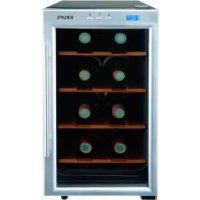



| Product Type | Service Wine Cooler |
| Brand | Krups |
| Model | JC1008 |
| Temperature Range | 8°C to 18°C |
| Display | Digital, Celsius/Fahrenheit selection |
| Interior Light | Yes, can be turned on/off |
| Bottle Capacity | Minimum 5 bottles (up to 12 bottles estimated) |
| Adjustable Feet | Yes, by rotating to level |
| Door | Glass door with handle |
| Ventilation Grille | Yes, on the sides |
| Power Supply | 220-240 V, 50/60 Hz |
| Maintenance | Clean with wrung sponge and mild detergent |
| Repairs | Interventions reserved for authorized service centers |
| Warranty | Standard manufacturer (subject to usage conditions) |
| Child Protection | Yes, the appliance should not be used by children without supervision |
| Intended Use | Domestic, storage of bottles before opening (max. 1 year) |
Frequently Asked Questions - JC1008 KRUPS
User questions about JC1008 KRUPS
0 question about this device. Answer the ones you know or ask your own.
Ask a new question about this device
Download the instructions for your Wine cellar in PDF format for free! Find your manual JC1008 - KRUPS and take your electronic device back in hand. On this page are published all the documents necessary for the use of your device. JC1008 by KRUPS.
USER MANUAL JC1008 KRUPS
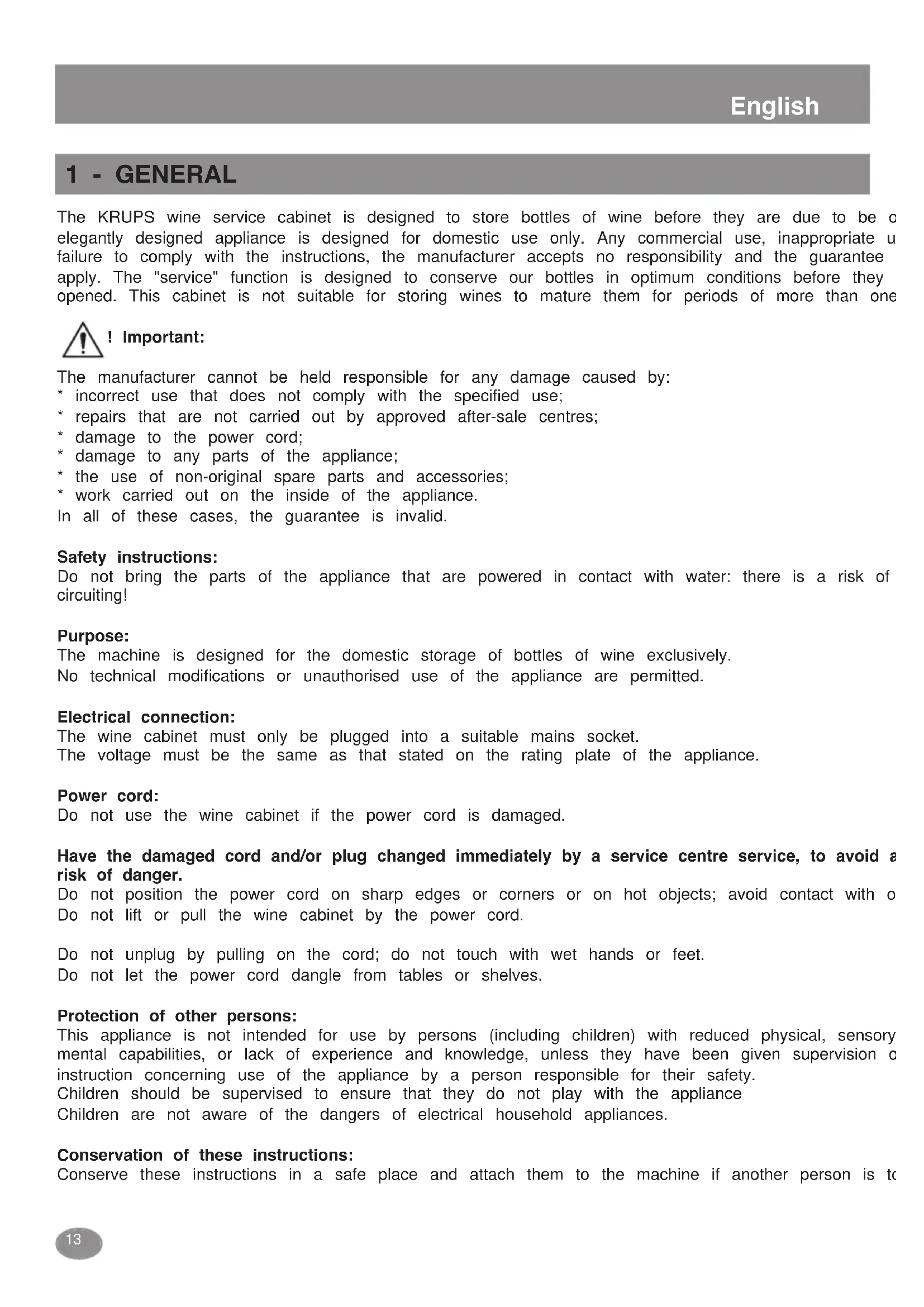
The KRUPS wine service cabinet is designed to store bottles of wine before they are due to be opened. This elegantly designed appliance is intended for domestic use only. Any commercial use, inappropriate use, or failure to comply with the instructions will void the manufacturer's responsibility and the guarantee. The "service" function is designed to conserve your bottles in optimum conditions before they are opened. This cabinet is not suitable for storing wines to mature them for periods of more than one year.

! Important:
The manufacturer cannot be held responsible for any damage caused by:
- incorrect use that does not comply with the specified use;
- repairs that are not carried out by approved after-sales centres;
- damage to the power cord;
- damage to any parts of the appliance;
- the use of non-original spare parts and accessories;
- work carried out on the inside of the appliance.
In all of these cases, the guarantee is invalid.
Safety instructions:
Do not bring the parts of the appliance that are powered into contact with water: there is a risk of short-circuiting!
Purpose:
The machine is designed for the domestic storage of bottles of wine exclusively.
No technical modifications or unauthorised use of the appliance are permitted.
Electrical connection:
The wine cabinet must only be plugged into a suitable mains socket.
The voltage must be the same as that stated on the rating plate of the appliance.
Power cord:
Do not use the wine cabinet if the power cord is damaged.
Have the damaged cord and/or plug changed immediately by a service centre, to avoid a risk of danger.
Do not position the power cord on sharp edges or corners or on hot objects; avoid contact with oil. Do not lift or pull the wine cabinet by the power cord.
Do not unplug by pulling on the cord; do not touch with wet hands or feet.
Do not let the power cord dangle from tables or shelves.
Protection of other persons:
This appliance is not intended for use by persons (including children) with reduced physical, sensory, mental capabilities, or lack of experience and knowledge, unless they have been given supervision or instruction concerning use of the appliance by a person responsible for their safety.
Children should be supervised to ensure that they do not play with the appliance.
Children are not aware of the dangers of electrical household appliances.
Conservation of these instructions:
Conserve these instructions in a safe place and attach them to the machine if another person is to
2 - DESCRIPTION
Components of the appliance
Wine service cabinet appliance
- Storage compartment
- Shelves for bottles
- Glass door
- Door handle
Control panel
- Temperature setting display
- Temperature selection buttons and
- Button for light and selecting Celsius or Fahrenheit
- Ventilation grid
- Adjustable feet
3 - INSTALLATION
Positioning the appliance:
Your service cabinet may be placed on a work top or on the floor.
Before you install your appliance, ensure that the position chosen meets the following requirements:
- Choose a position that is flat, stable, heat-resistant and level.
- Choose a position with a mains socket nearby.
- Ensure that there is a minimum distance of 10 to 15 cm around all sides of the appliance.
- Protect it from direct exposure to sunlight.
- Do not use the wine cabinet outdoors.
- Do not install the wine cabinet on very hot surfaces or close to naked flames.
Your appliance should be unplugged.
Adjusting the feet:
For best installation results, your cabinet has adjustable feet.
You can turn them to adjust their height to ensure that the appliance is stable.
Once your wine cabinet has been installed, you may plug it in.
When first switching on your appliance or after prolonged stoppage, your cabinet requires one day to reach the storage temperature.
4 - USE
Your cabinet can display the temperature in Fahrenheit or Celsius (°F / °C). To switch from one to the other, press the light button for 10 seconds.
a) Selecting the temperature
Your wine service cabinet lets you choose the most suitable storage temperature for your wine. In the section "Choosing the correct temperature" you will find a guide to help you adapt the temperature to suit the wine you have.
To adjust the temperature, press one of the "6" buttons.
The temperature selected flashes for 5 seconds then the control display shows the temperature in the compartment.
b) Lighting
Your wine service cabinet is equipped with lighting. It may be activated or deactivated by pressing the button.
Correct storage of wine
Emmanuel Delmas - a leading wine waiter - explains how to optimise your wine.
Thanks to the KRUPS wine service cabinet, you can keep your wines in optimum conditions before they are opened.
INTRODUCTION :
Did you know? Wine undergoes 3 main steps before it is opened.
1) MATURING:
Also called ageing, this is the first step for a wine. Aged, stored away from light at a temperature ideally between 10 and 14°C, the wine develops at its own pace and undergoes different phases. During this period, the ambient humidity needs to be controlled so that the cork is not damaged, which is essential for the environment.
"During its first years, the wine finds its marks, and may have dormant periods before it is awakened. After a few years, depending on its maturing potential, the wine is at its peak phase, which is the best time to taste it, as cultured by time, the wine offers all of its qualities."
2) "SERVICE" CONSERVATION:
"At its peak, the wine needs a little time before it is tasted to open out slowly. Wine is a living element that does not like brutal treatment. Therefore, the bottle needs to adjust to the temperature before it is opened so that it can release all of its qualities, its nose and its complexity."
Once your wine has "aged" and its flavours have developed, it may be taken out of its maturing or service temperature. The Krups wine cabinet permits the ideal temperature to be reached and thus spoiling all of the work of the maturing period.
3) BRING TO ROOM TEMPERATURE:
Bringing the wine to room temperature is the final step before tasting. The wine is opened so as its temperature and rapidly oxidise it, to help bring out its aromas.
"Bringing the wine to temperature allows it to open out progressively in contact with the air. Open the bottle allows the wine to reveal itself and soak in the atmosphere of the room. Its nose will develop, its structure will open out and its tannic composition start to break down. After several
hours of being "brought to temperature", the architecture of the wine will be in place, and offer a its qualities when tasted."
USING THE WINE SERVICE CABINET AND SELECTION OF THE TEMPERATURE:
Your wine service cabinet will allow you to conserve your wine optimally before tasting it. Whether to have a bottle from your own cellar to hand in your kitchen, or to store bottles bought from you for a few weeks, the KRUPS wine service cabinet will store your wine in ideal conditions.
Selecting the temperature.
Several choices of temperature are possible, depending on the wines and the number of different wine you place in your wine cabinet.
You want to store different types of wine in your service cabinet?
As when maturing wine in a cellar, you can store different types of wine in your service cabinet. A temperature of 12°C - the same as that for maturing - will allow you to conserve your wines without harming them.
You want to store a single type of wine in your service cabinet?
Here are the ideal temperatures for each type of wine:
Choosing the right temperature:
| 8°C | Traditional Champagnes, with a fresh acidic taste. Dry, crispy and fresh white wines (Muscadet, Gros plant...) |
| 9°C | Rosé wines |
| 10°C | Mellow and sweet white wines (Sauternes, Jurançon, Vendanges Tardive...) |
| 11°C | Vintage Champagnes |
| 12°C | Mature white wines, generous and good mineral flavours (Meursault, Châteauneuf du Savennières...) |
| 13°C | Prestigious Champagnes (Krug®, Bollinger, French Vieilles vignes®) |
| 14°C | Oxidative wines, generous and complex (yellow wines, veiled wines...) |
| 15°C | Supple and savoury red wines (Sancerre, Brouilly, Coteaux Champenois ...) |
| 16°C | Burgundy wines, elegant red wines, fruity and long lasting of medium-term maturation. |
| 17°C | Bordeaux wines, complex and tannic red wines |
Don't forget!
To appreciate your wine fully, here are a few tips:
DECANTERS AND DECANTING:
Decanting is pouring the wine into a decanter, so as to air it and free the molecules of the wine for maximum oxygenation.
This operation is especially used for young wines, with solidly structured with austere tannins and high acidity.
It is not for matured wines that are often fragile due to long storage in a cellar.
This is why decanting is not necessarily recommended for aged wines, that are often delicate and
Today, the glasses used for tasting have shapes that are suited to good oxygenation of the wine, detrimental to the wine to use decanters too often.
OPENING OUT:
Stand the bottle upright without opening it the night before it is to be tasted.
Open young wines (less than 10 years' old), with opulent structures up to 12 hours beforehand.
Open older wines one hour before.
This is the opening out operation.
Don't forget that the ventilation surface of a bottle of wine that has just been opened is very small; the wine will open out slowly, elegantly and correctly.
Don't hesitate to open your younger bottles well in advance.
Emmanuel Delmas, wine waiter.
About Emmanuel Delmas:
After serving in some of the most prestigious restaurants such as Guy Savoy, la Tour d'Argent, Delmas was a wine waiter in a leading Parisian restaurant (Fouquet's). He went to work in Switzerland and England before returning to Paris, working for Alain Ducasse at the Plaza Athénée and Lasserre. In addition to his work in the restaurant, Emmanuel Delmas is also a consultant on several projects (creation of wine menus, conducting wine tasting events, writing articles...) and gives lessons in oenology (oenology lessons for private individuals, business schools, professional training). Emmanuel Delmas started his blog 3 years ago, and it has become a reference with 400 pages of advice on wine-related subjects (matching food and wine, wine tasting marks, portraits of wine maps, videos...) Defending the idea that wine should be made accessible to all.
Visit his blog:
www.sommelier-vins.com
5 - CLEANING
Before cleaning the appliance, it must first be unplugged.
Do not immerse the appliance in water.
No work must be carried out on the inside of the appliance.
The compartment, shelves and outside of the wine cabinet can be cleaned using a slightly damp cloth with a mild detergent.
6 - REPAIRS / SERVICING
In the event of problems, unplug the appliance immediately.
Do not use a faulty machine.
Only Service Centres are authorised to carry out work and repairs.
The manufacturer cannot be held responsible if any work is carried out by anyone other than Service Centres, for any damage or injury to persons or equipment due to malfunctioning of the appliance.
7 - LEGAL INFORMATION
These instructions contain the information required to operate the appliance correctly, for its operational functions and correct servicing. This information and the respect of these instructions are required for correct and risk-free use, safety guidelines, for the use and servicing of the appliance. If you want to receive further information or if you have any specific problems that you feel have not been covered in sufficient depth in these instructions, please contact your local dealer or our service company. It should also be noted that the contents of these instructions are not part of a previous or existing convention, or an agreement or legal contract, and that they do not modify its substance. All of the manufacturer's obligations are based on the corresponding purchase and sales contract, which also includes the full and exclusive regulations of our guarantee. These explanations do not restrict or widen the contractual guarantee standards. The instructions contain information that is protected by copyright. No photocopies or translations of these instructions into another language must be made without the manufacturer's prior approval.
8 - ELECTRICAL OR ELECTRONIC PRODUCTS TO BE DISPOSED OF
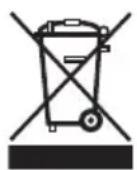
Help protect the environment!
① Your appliance contains many valuable materials that may be recycled or recovered. Take it to a local civic waste collection centre to be processed. - Appliances that are no longer functional should be prevented from being used. - The plug should be taken off and the power cord cut. - Appliances that are to be disposed of must be taken to a collection centre so as to dispose of components used in the construction of the machine. - The "TEM module" or "Peltier cell" - used to chill the wine cabinet - must be disposed of according to the standards in effect in the country where the machine is used.
9 - TROUBLESHOOTING
| PROBLEM POSSIBLE CAUSES | |
| Vibrations | * Check that your wine cabinet is stood on a stable, heat-resistant and level surface. |
| The door will not close correctly | * The surface on which the wine cabinet is stand is not flat or level. * The shelves are not positioned correctly. |
| The fan operates continuously | * This is the normal operation of the temperature regulation system. If you have set your wine cabinet to a low temperature or if the room is at more than 25 °C, the fan will operate more. * The appliance has been designed to operate continuously when the conservation temperature is low. |
| The appliance cannot be switched on | * Check the mains socket and if it is controlled by switch. * Check that it is plugged in correctly to the socket. * Check that the mains socket is powered. |
| The temperature inside does not seem correct | Check that the ventilation grids on each side of the appliance are not obstructed. Leave at least 15 cm of space free on all sides of the appliance. * The cooling system is designed to operate optimally at an ambient temperature of between 18 °C and 26 °C. * When you switch on the appliance for the first time it can take up to 24 hours to reach the program temperature. |
| There is a puddle of water underneath / around appliance | d Your wine cabinet is fitted with an automatic evaporation system. If water accumulates around o underneath the appliance, then the room where it located is too damp. Try reducing the hygrometry the room (for example using a dehumidifier) or move the wine cabinet to another room. |
| The appliance is switched on but the tempera does not drop | Check that your wine cabinet contains at least 3 5 bottles. * It can take up to 24 hours to reach the program temperature. * The control panel (and) allow you to set the temperature of the appliance to between 8 and 18 °C. Your wine cabinet can only guarantee a temperature of 18 °C less than the ambient temperature. For example, if the ambient temperature is 28°C, the appliance cannot reach temperatures of between 8°C and 10°C. * For precise temperature control, your wine cabinet must NEVER be installed in the following conditions: - in direct sunlight; - in a poorly ventilated room; - close to another appliance that gives off heat (dishwasher, refrigerator, oven); * It must not be integrated onto a wall, an alcove, cupboard or a cabinet. * Leave at least 10 to 15 cm of space free on a sides of the appliance. |
If you have any product problems or queries, please contact our Customer Relations Teams first for help and advice:
HELpline:
0845 602 1454 - UK
(01) 677 4003 - Ireland
or consult our website - www.krups.co.uk
1 - GENERAL
Using the instructions
Keep these instructions close at hand with the device, if someone other than you uses the cabinet.
2 - Description
Components of the device
You can install the wine cabinet on a stand or place it on the floor.
Before installing the cabinet, make sure the chosen location meets the following conditions:
- Choose a flat surface without any slope.
- Make sure the electrical outlet is easily accessible.
- Provide a dry space at a distance of 10-15 cm from the walls of the device.
- Install the cabinet away from direct sunlight. It is forbidden to install it in closed rooms. Do not place the cabinet on heated surfaces or near an open fire.
During preparation for work, the cabinet must be disconnected from the power supply.
Adjusting the shelves
How to store wine correctly?
Known sommeliers explain the best way to preserve wine.
Blaorapr cepbnchomy kkay mapkn KRUPS Bbl moxete oecneuHb ONTmAbhhe ycIOBnna BnHa.
INTRODUCTION
Did you know that wine goes through 3 main stages before opening?
1) MATURATION
Maturation, also called aging, is the first stage that wine must undergo. It is stored in a dark place at an optimal temperature of 10 to 14°C. It develops at a certain rhythm and goes through several stages of development. During this period, it is especially important to monitor the humidity of the surrounding air to avoid damaging the corks, which are particularly sensitive to external influences.
"During the first years, wine acquires its characteristics and goes through various stages of development. After several years, depending on the potential aging period, it reaches its 'peak'. It is at this moment that it is ready for consumption, as it helps reveal all the aromatic richness of the wine."
2) "SERVING" STORAGE
When the wine has reached its 'peak', it needs a little more time to reach its optimal serving temperature. Wine is a living organism; it does not like being handled roughly.
It is necessary to place the wine in an appropriate temperature regime to appreciate its qualities and to allow its bouquet to fully develop.
As soon as your wine has aged and its bouquet has fully formed, it should be moved from the cellar and placed at serving temperature. With the KRUPS wine cabinet, you can set the ideal temperature that will not destroy the bouquet formed during maturation.
3) DECANTING
Decanting is an important step before serving wine. You must open the bottle of wine so that it reaches the optimal temperature, and for a short period of time expose the wine to the action of oxygen, which promotes the development of aromas.
"Decanting allows the wine to fully express itself upon contact with air. When you open the bottle, the wine awakens and releases its aromas into the surrounding atmosphere. Its bouquet gradually opens up, the structure improves, and the initial harshness begins to disappear. After several hours of such decanting, the 'architecture' of the wine is fully established, and upon serving you will be able to appreciate it in all its fullness."
USING THE WINE CABINET AND CHOOSING THE TEMPERATURE
Your wine cabinet is designed for optimal preparation of wine for serving. You can keep wines from your own cellar in it so they are always at hand, or place in it wines purchased from your supplier for a few weeks. In any case, the KRUPS wine cabinet ensures ideal storage conditions for your wine.
Temperature selection.
You can set different temperature modes depending on the type of wine or the number of wines of different types that you place in your wine cabinet.
Do you want to store different types of wine in the wine cabinet?
Just as wines of different types mature in wine cellars, different wines can also be stored in the wine cabinet. The wines matured at a temperature of 12°C, so at the same temperature the wine can be stored without damage.
Do you want to store wine of a single type in the wine cabinet?
Select the ideal temperature for each type of wine:
Selecting the correct temperature:
It is forbidden to use a faulty appliance.
Any repairs must be carried out only in appropriate service centers.
In the event of repairs carried out without the participation of service center technicians, the manufacturer bears no responsibility for any damage caused to persons or property as a result of poor operation of the appliance.
7 - LEGAL INFORMATION
- This instruction contains all the necessary information for the correct operation, use of functions and maintenance of the wine cabinet.
- Studying this information and following this instruction are necessary conditions for the correct and safe operation of the appliance and for compliance with safety measures during operation and maintenance.
- If you wish to obtain additional information, in case of problems that, in your opinion, this instruction has not given sufficient attention, contact your supplier or one of our service centers.
- However, we draw your attention to the fact that this instruction is not part of any preceding or existing agreement, contract, or legal contract and cannot therefore change its essence. All obligations of the manufacturer are based on the corresponding purchase agreement, which contains a complete and exclusive description of the warranty terms. These explanations do not limit or expand the terms of the warranty agreement.
- The instruction contains data protected by copyright. Reproduction or translation of this instruction into other languages without prior permission of the manufacturer is prohibited.
8 - AT THE END OF THE SERVICE LIFE OF THE ELECTRICAL APPLIANCE
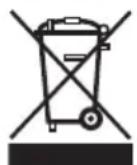
Do not forget about environmental protection!
① When manufacturing your device, materials were used that are subject to recycling. Take the device to the appropriate collection point, from where it will be sent for recycling.
- A non-working device should be handed over to a specialized collection point for disposal.
- Disconnect the device from the mains and cut the power cord. Take the device to a collection point for recycling or disposal of special parts used in its creation. The design of the built-in cabinet used a cooling unit - the so-called "module" or "element", the removal of which must be carried out in accordance with the standards in force in your country.
9 - TROUBLESHOOTING
6 - REPAIRS / MAINTENANCE
If problems occur, disconnect the cabinet immediately.

- IMPORTANT
- SAFETY INSTRUCTIONS
- PURPOSE
- ELECTRICAL CONNECTION
- POWER CORD
- PROTECTION OF OTHER PERSONS
- CONSERVATION OF THESE INSTRUCTIONS
- DESCRIPTION
- COMPONENTS OF THE APPLIANCE
- WINE SERVICE CABINET APPLIANCE
- CONTROL PANEL
- INSTALLATION
- POSITIONING THE APPLIANCE
- ADJUSTING THE FEET
- USE
- SELECTING THE TEMPERATURE
- LIGHTING
- CORRECT STORAGE OF WINE
- INTRODUCTION
- MATURING
- SERVICE" CONSERVATION
- BRING TO ROOM TEMPERATURE
- USING THE WINE SERVICE CABINET AND SELECTION OF THE TEMPERATURE
- DON'T FORGET
- DECANTERS AND DECANTING
- OPENING OUT
- ABOUT EMMANUEL DELMAS
- CLEANING
- REPAIRS / SERVICING
- LEGAL INFORMATION
- ELECTRICAL OR ELECTRONIC PRODUCTS TO BE DISPOSED OF
- HELP PROTECT THE ENVIRONMENT
- TROUBLESHOOTING
- GENERAL
- USING THE INSTRUCTIONS
- COMPONENTS OF THE DEVICE
- ADJUSTING THE SHELVES
- HOW TO STORE WINE CORRECTLY
- MATURATION
- SERVING" STORAGE
- DECANTING
- USING THE WINE CABINET AND CHOOSING THE TEMPERATURE
- AT THE END OF THE SERVICE LIFE OF THE ELECTRICAL APPLIANCE
- DO NOT FORGET ABOUT ENVIRONMENTAL PROTECTION
- REPAIRS / MAINTENANCE
Brand : KRUPS
Model : JC1008
Category : Wine cellar