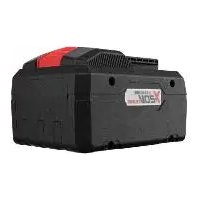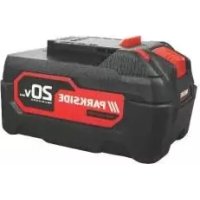
PAPP 20 B2 - Battery PARKSIDE - Free user manual and instructions
Find the device manual for free PAPP 20 B2 PARKSIDE in PDF.



User questions about PAPP 20 B2 PARKSIDE
0 question about this device. Answer the ones you know or ask your own.
Ask a new question about this device
Download the instructions for your Battery in PDF format for free! Find your manual PAPP 20 B2 - PARKSIDE and take your electronic device back in hand. On this page are published all the documents necessary for the use of your device. PAPP 20 B2 by PARKSIDE.
USER MANUAL PAPP 20 B2 PARKSIDE
text_image
PDF online www.lidl-service.comAKKU 5,0 AH / BATTERY 5.0AH/ BATTERIE 5,0 AH PAPP 20 B2
DE AT CH
AKKU 5,0 AH
Operation and Safety Notes
NL BE
ACCU 5,0 AH
GB / IE Operation and Safety Notes Page 14
AKKU 5,0 AH PAPP 20 B2
Einleitung
Intended Use....Page 15
Features Page 15
Package contents ...... Page 16
Technical data Page 16
General Safety Warnings Page 16
Extended safety guidelines...... Page 17
Use Page 18
Charging the battery pack....Page 18
Checking the battery charge level......Page 19
Maintenance and storage ...... Page 19
Cleaning Page 19
Service......Page 20
Warranty claim procedure......Seite 20
Disposal Page 21
BATTERY 5.0AH PAPP 20 B2
- Introduction
We congratulate you on the purchase of your new product. You have chosen a high quality product. The instructions for use are part of the product. They contain important information concerning safety, use and disposal. Before using the product, please familiarise yourself with all of the safety information and instructions for use. Only use the product as described and for the specified applications. If you pass the product on to anyone else, please ensure that you also pass on all the documentation with it.
Intended Use
Cordless Drilldriver 20V PABSP 20-Li A1
Cordless Sabre Saw 20V PSSAP 20-Li A1
Cordless Angle Grinder 20V PWSAP 20-Li A1
Cordless Circular Saw 20V PHKSAP 20-Li A1
Cordless Multifunction Tool 20V PAMFWP 20-Li A1
This rechargeable battery is not intended for commercial use. Any other usage of or modification to the appliance is deemed to be improper and carries a significant risk of accidents. The manufacturer accepts no responsibility for damage(s) attributable to misuse.
Features
1 Battery pack
2 Battery charge level button
3 Battery display LED
4 Fast charger (not supplied)
5 Green charge control LED
6 Red charge control LED
Package contents
1 battery
1 set of operating instructions
- Technical data
Battery: PAPP 20 B2
Type: LITHIUM ION
Rated voltage: max. 20 V —— (Direct current)
Capacity: 5.0 Ah
Cells: 10
To charge the battery pack, only use the following fast charger (not supplied).
PABSP 20-Li A1-2
PSSAP 20-Li A1-2
PWSAP 20-Li A1-2
PHKSAP 20-Li A1-2
PAMFWP 20-Li A1-2

General Safety Warnings
WARNING! Read all safety warnings and all instructions. Failure to follow the warnings and instructions may result in electric shock, fire and/or serious injury.
SAVE ALL WARNINGS AND INSTRUCTIONS FOR FUTURE REFERENCE.
a) Recharge only with the charger specified by the manufacturer. A charger that is suitable for one type of battery pack may create a risk of fire when used with another battery pack.
b) Use battery pack only with the devices specified in the chapter "Technical data". Using the battery pack in other devices may cause the risk of fire.
c) When battery pack is not in use, keep it away from other metal objects, like paper clips, coins, keys, nails, screws or other small metal objects, that can make a connection from one terminal to another. Shorting the battery terminals together may cause burns or a fire.
d) Under abusive conditions, liquid may be ejected from the battery; avoid contact. If contact accidentally occurs, flush with water. If liquid contacts eyes, additionally seek medical help. Liquid ejected from the battery may cause irritation or burns.

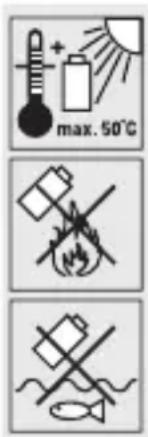
CAUTION! RISK OF EXPLOSION!
text_image
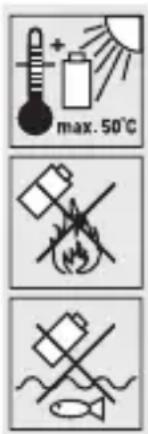
max. 50°CNever charge non-rechargeable batteries!
Protect the rechargeable battery from heat, for example from continuous exposure to sunlight, fire, water and moisture. There is a risk of explosion.
• Extended safety guidelines
- Do not use a damaged or modified battery. Damaged or modified batteries may behave unexpectedly and cause fires, explosions or pose a risk of injury.
- Do not expose a battery to fire or excessively high temperatures. Fire or temperatures in excess of 130 °C (265°F) can cause an explosion.
■ Follow all instructions regarding charging and never charge the battery or the cordless tool outside the temperature range given in the operating instructions. Incorrect charging or charging outside of the permissible temperature range can destroy the battery and increase the risk of fire.
■ The safety instructions of the compatible chargers must be observed.
Use
- Charging the battery pack
CAUTION! Always unplug the appliance before you remove the battery pack from or connect the battery pack to the charger.
Note: Never charge the battery pack if the ambient temperature is below 10 °C or above 40 °C. If a lithium-ion battery is to be stored for an extended period, the charge level should be checked regularly. The optimum charge level is between 50 % and 80 %. The storage climate should be cool and dry and the ambient temperature should be between 0 °C and 50 °C.
□ Connect the battery pack 1 to the fast charger 4 (see fig. B).
☐ Insert the power plug into the socket. While charging the red charge status LED 6 glows up.
☐ The green LED 5 light up again indicates that the charging process is completed. Battery pack 1 is ready to use.
■ Never recharge a battery pack again immediately after rapid charging. This could overcharge the battery pack, thus reducing the lifespan of the battery and charger.
☐ Switch off the charger for at least 15 minutes between successive charging sessions. Also disconnect the power plug from the mains power socket.
RED LED flashes Battery defect
Green LED flashes Battery too cold or too warm.
- Checking the battery charge level
☐ Press the battery charge level button 2 to check the status of the battery (see also fig. A). The status/remaining charge will be shown on the battery display LED 3 as follows:
- 3 red LED glow up = maximum charge
- 2 red LED glow up = medium charge
- 1 red LED glows up = low charge - charge the battery
● Maintenance and storage
If you do not intend to use the battery for an extended period, remove it from the appliance and store it in a clean, dry place out of direct sunlight.
If a lithium-ion battery is to be stored for an extended period, the charge level should be checked regularly. The optimum charge level is between 50% and 80%. The optimum storage environment is cool and dry.
- Never try to repair damaged batteries. Maintenance of batteries should only be carried out by the manufacturer or an approved customer service centre.
- Cleaning
□ Clean out dust and debris from charger vent and electrical contacts using a soft brush.
☐ Use only mild soap and a damp cloth to clean the battery pack and charger, keeping away from all electrical contacts. Certain cleaning agents and solvents are harmful to plastics and other insulated parts.
- Never use flammable or combustible solvents around battery packs, charger, or tools.
Service
- Warranty claim procedure
To ensure quick processing of your case, please observe the following instructions:
Please have the till receipt and the item number (e.g. IAN 123456) available as proof of purchase. You will find the item number on the type plate, an engraving on the front page of the instructions (bottom left), or as a sticker on the rear or bottom of the appliance.
If functional or other defects occur, please contact the service department listed either by telephone or by e-mail.
You can return a defective product to us free of charge to the service address that will be provided to you. Ensure that you enclose the proof of purchase (till receipt) and information about what the defect is and when it occurred.
GB Service Great Britain
Tel.: 0871 5000 720
(£ 0.10/Min.)
E-Mail: owim@lidl.co.uk
IE Service Ireland
Tel.: 1890 930 034
(0,08 EUR/Min., (peak)) (0,06 EUR/Min., (off peak))
E-Mail: owim@lidl.ie
IAN 289763
- Disposal

The packaging is made entirely of recyclable materials, which you may dispose of at local recycling facilities. The Green Dot is not valid for Germany.
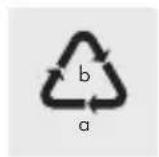
Observe the marking of the packaging materials for waste separation, which are marked with abbreviations (a) and numbers (b) with following meaning: 1–7: plastics / 20–22: paper and fibreboard / 80–98: composite materials.

The product and packaging materials are recyclable, dispose of it separately for better waste treatment. The Triman logo is valid in France only.

Contact your local refuse disposal authority for more details of how to dispose of your worn-out product.
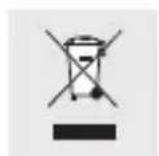
To help protect the environment, please dispose of the product properly when it has reached the end of its useful life and not in the household waste. Information on collection points and their opening hours can be obtained from your local authority.
Faulty or used batteries / rechargeable batteries must be recycled in accordance with Directive 2006/66/EC and its amendments. Please return the batteries / rechargeable batteries and / or the product to the available collection points.
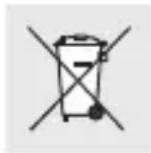
Environmental damage through incorrect disposal of the batteries / rechargeable batteries!
Batteries / rechargeable batteries may not be disposed of with the usual domestic waste. They may contain toxic heavy metals and are subject to hazardous waste treatment rules and regulations. The chemical symbols for heavy metals are as follows: Cd = cadmium, Hg = mercury, Pb = lead. That is why you should dispose of used batteries / rechargeable batteries at a local collection point.
Introduction......Page 24
BATTERIE 5,0 AH PAPP 20 B2
- Introduction
ACCU 5,0 AH PAPP 20 B2
Inleiding
WAARSCHUWING! ONTPLOFFINGSGEVAAR!
text_image
max. 50°CRODE LED knippert accu defect
Groene LED knippert accu te koud of te warm.