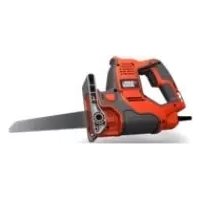
KFBES890 - Electric saw BLACK & DECKER - Free user manual and instructions
Find the device manual for free KFBES890 BLACK & DECKER in PDF.



| Product type | Electric saw |
| Brand | Black & Decker |
| Model | KFBES890 |
| Supply voltage | 230 V AC |
| Power | 430 W |
| No-load speed | 0 - 2700 min⁻¹ |
| Blade stroke | 23 mm |
| Max cutting depth in wood | 100 mm |
| Max cutting depth in steel | 3 mm |
| Max cutting depth in plastic pipes | 50 mm diameter |
| Pruning capacity | 50 mm diameter |
| Weight | 2.7 kg |
| Sound pressure level (Lₐ) | 88.5 dB(A) |
| Sound power level (L_w) | 95.5 dB(A) |
| Vibrations (jigsaw mode, wood) | 6.4 m/s² (uncertainty K=1.5 m/s²) |
| Vibrations (reciprocating mode, beams) | 8.5 m/s² (uncertainty K=1.5 m/s²) |
| Double insulation | Yes |
| Warranty | 24 months |
| Intended use | Sawing wood, metal and plastic; domestic use |
| Main functions | Speed selector, Autoselect selector, branch holder device, reversible secondary handle (saw/jigsaw) |
| Maintenance and cleaning | Clean the ventilation slots with a soft brush; clean the motor compartment with a damp cloth; do not use abrasive products |
| Safety | Double insulation; release button; stops when selector is released; hold the tool by the insulated gripping surfaces |
| Spare parts and repairability | Interchangeable blades (wood, metal); repairs by qualified personnel at an authorized Black & Decker service center |
Frequently Asked Questions - KFBES890 BLACK & DECKER
User questions about KFBES890 BLACK & DECKER
0 question about this device. Answer the ones you know or ask your own.
Ask a new question about this device
Download the instructions for your Electric saw in PDF format for free! Find your manual KFBES890 - BLACK & DECKER and take your electronic device back in hand. On this page are published all the documents necessary for the use of your device. KFBES890 by BLACK & DECKER.
USER MANUAL KFBES890 BLACK & DECKER
Your BLACK+DECKER reciprocating saw KFBES890 has been designed for sawing wood, plastics and metal. This tool is intended for consumer use only.
Safety instructions
General power tool safety warnings

Warning! Read all safety warnings and all instructions. Failure to follow the warnings and instructions listed below may result in electric shock, fire and/or serious injury.
Save all warnings and instructions for future reference. The term "power tool" in all of the warnings listed below refers to your mains operated (corded) power tool or battery operated (cordless) power tool.
1. Work area safety
a. Keep work area clean and well lit. Cluttered or dark areas invite accidents.
b. Do not operate power tools in explosive atmospheres, such as in the presence of flammable liquids, gases or dust. Power tools create sparks which may ignite the dust or fumes.
c. Keep children and bystanders away while operating a power tool. Distractions can cause you to lose control.
2. Electrical safety
a. Power tool plugs must match the outlet. Never modify the plug in any way. Do not use any adapter plugs with earthed (grounded) power tools. Unmodified plugs and matching outlets will reduce risk of electric shock.
b. Avoid body contact with earthed or grounded surfaces such as pipes, radiators, ranges and refrigerators. There is an increased risk of electric shock if your body is earthed or grounded.
c. Do not expose power tools to rain or wet conditions. Water entering a power tool will increase the risk of electric shock.
d. Do not abuse the cord. Never use the cord for carrying, pulling or unplugging the power tool. Keep cord away from heat, oil, sharp edges or moving parts. Damaged or entangled cords increase the risk of electric shock.
e. When operating a power tool outdoors, use an extension cord suitable for outdoor use. Use of a cord suitable for outdoor use reduces the risk of electric shock.
f. If operating a power tool in a damp location is unavoidable, use a residual current device (RCD) protected supply. Use of an RCD reduces the risk of electric shock.
3. Personal safety
a. Stay alert, watch what you are doing and use common sense when operating a power tool. Do not use a power tool while you are tired or under the influence of drugs, alcohol or medication. A moment of inattention while operating power tools may result in serious personal injury.
b. Use personal protective equipment. Always wear eye protection. Protective equipment such as dust mask, non-skid safety shoes, hard hat, or hearing protection used for appropriate conditions will reduce personal injuries.
c. Prevent unintentional starting. Ensure the switch is in the off-position before connecting to power source and/or battery pack, picking up or carrying the tool. Carrying power tools with your finger on the switch or energising power tools that have the switch on invites accidents.
d. Remove any adjusting key or wrench before turning the power tool on. A wrench or a key left attached to a rotating part of the power tool may result in personal injury.
e. Do not overreach. Keep proper footing and balance at all times. This enables better control of the power tool in unexpected situations.
f. Dress properly. Do not wear loose clothing or jewellery. Keep your hair, clothing and gloves away from moving parts. Loose clothes, jewellery or long hair can be caught in moving parts.
g. If devices are provided for the connection of dust extraction and collection facilities, ensure these are connected and properly used. Use of dust collection can reduce dust-related hazards.
4. Power tool use and care
a. Do not force the power tool. Use the correct power tool for your application. The correct power tool will do the job better and safer at the rate for which it was designed.
b. Do not use the power tool if the switch does not turn it on and off. Any power tool that cannot be controlled with the switch is dangerous and must be repaired.
c. Disconnect the plug from the power source and/or the battery pack from the power tool before making any adjustments, changing accessories, or storing power tools. Such preventive safety measures reduce the risk of starting the power tool accidentally.
d. Store idle power tools out of the reach of children and do not allow persons unfamiliar with the power tool or these instructions to operate the power tool. Power tools are dangerous in the hands of untrained users.
e. Maintain power tools. Check for misalignment or binding of moving parts, breakage of parts and any other condition that may affect the power tools operation. If damaged, have the power tool repaired before use. Many accidents are caused by poorly maintained power tools.
f. Keep cutting tools sharp and clean. Properly maintained cutting tools with sharp cutting edges are less likely to bind and are easier to control.
g. Use the power tool, accessories and tool bits etc. in accordance with these instructions, taking into account the working conditions and the work to be performed. Use of the power tool for operations different from those intended could result in a hazardous situation.
5. Service
a. Have your power tool serviced by a qualified repair person using only identical replacement parts. This will ensure that the safety of the power tool is maintained.
Additional power tool safety warnings

Warning! Additional safety warnings for jigsaws and reciprocating saws
Hold power tool by insulated gripping surfaces, when performing an operation where the cutting accessory may contact hidden wiring or its own cord. Cutting accessory contacting a "live" wire may make exposed metal parts of the power tool "live" and could give the operator an electric shock.
Use clamps or another practical way to secure and support the workpiece to a stable platform. Holding the work by hand or against your body leaves it unstable and may lead to loss of control.

Warning! Contact with or inhalation of dusts arising from cutting applications may endanger the health of the operator and possible bystanders. Wear a dust mask specifically designed for protection against dust and fumes and ensure that persons within or entering the work area are also protected.
Keep hands away from cutting area. Never reach underneath the work piece any reason. Do not insert fingers or thumb into the vicinity of the reciprocating blade and blade clamp. Do not stabilize the saw by gripping the shoe.
Keep blades sharp. Dull or damaged blades may cause the saw to swerve or stall under pressure. Always use the appropriate type of saw blade for the workpiece material and type of cut.
When cutting pipe or conduit, make sure that they are free from water, electrical wiring, etc.
Do not touch the workpiece or the blade immediately after operating the tool. They can become very hot.
Be aware of hidden hazards, before cutting into walls, floors or ceilings, check for the location of wiring and pipes.
The blade will continue to move after releasing the switch. Always switch the tool off and wait for the saw blade to come to a complete standstill before putting the tool down.
The intended use is described in this instruction manual. The use of any accessory or attachment or performance of any operation with this tool other than those recommended in this instruction manual may present a risk of personal injury and/or damage to property.
Pruning
Before attempting to prune a tree, ensure there are not bylaws or regulations that would prohibit or control the felling of the tree.
Be aware of the direction a branch may fall. Consider all conditions that may affect the direction of fall, including:
the length and weight of the branch to be cut
the intended direction of fall
any unusual heavy limb structure or decay
the presence of surrounding trees and obstacles,
including overhead lines
the intertwinement with other branches
the speed and direction of the wind.
Consider access to the tree limb.
Tree branches are liable to swing towards the tree trunk. In addition to the user, any bystander, building or object below the branch is at risk of being struck by the branch.
Safety of others
This appliance is not intended for use by persons (including children) with reduced physical, sensory or mental capabilities, or lack of experience and knowledge, unless they have been given supervision or instruction concerning use of the appliance by a person responsible for their safety.
Children should be supervised to ensure that they do not play with the appliance.
Residual risks.
Additional residual risks may arise when using the tool which may not be included in the enclosed safety warnings. These risks can arise from misuse, prolonged use etc.
Even with the application of the relevant safety regulations and the implementation of safety devices, certain residual risks can not be avoided. These include:
Injuries caused by touching any rotating/moving parts.
Injuries caused when changing any parts, blades or accessories.
Injuries caused by prolonged use of a tool. When using any tool for prolonged periods ensure you take regular breaks.
Impairment of hearing.
Health hazards caused by breathing dust developed when using your tool (example:- working with wood, especially oak, beech and MDF.)
Vibration
The declared vibration emission values stated in the technical data and the declaration of conformity have been measured in accordance with a standard test method provided by EN 60745 and may be used for comparing one tool with another. The declared vibration emission value may also be used in a preliminary assessment of exposure.
Warning! The vibration emission value during actual use of the power tool can differ from the declared value depending on the ways in which the tool is used. The vibration level may increase above the level stated.
When assessing vibration exposure to determine safety measures required by 2002/44/EC to protect persons regularly using power tools in employment, an estimation of vibration exposure should consider, the actual conditions of use and the way the tool is used, including taking account of all parts of the operating cycle such as the times when the tool is switched off and when it is running idle in addition to the trigger time.
Labels on tool
The following pictograms are shown on the tool along with the date code:

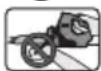
Warning! To reduce the risk of injury, the user must read the instruction manual.
Warning! Not a handle. Do not use as a handle.
Electrical safety

This tool is double insulated; therefore no earth wire is required. Always check that the power supply corresponds to the voltage on the rating plate.
- If the supply cord is damaged, it must be replaced by the manufacturer or an authorised BLACK+DECKER Service Centre in order to avoid a hazard.
Features
This tool includes some or all of the following features.
- Variable speed switch
- Lock-on button
- Autoselect switch
- Blade release button
- Shoe / Branch steady
- Blade clamp
- Main handle
- Secondary handle saw mode
- Secondary handle jig saw mode
Fig. A
- Large capacity blade
- Fine tooth wood cutting blade
- Fine tooth metal cutting blade
Assembly
Warning! Before attempting any of the following operations, make sure that the tool is switched off and unplugged and that the saw blade has stopped. Used saw blades may be hot.
Fitting and removing a saw blade
Warning! Take care when handling sharp blades. Always wear gloves when fitting a blade.
Fitting
Press in and hold the blade release button (4).
Push the blade firmly into the blade clamp (6).
Release the blade release button (4).
Make sure the blade is securely fitted by trying to remove it without depressing the blade release button (4).
Removing
Warning! The blade can become hot during use. Always wear gloves when removing a blade.
Press in and hold the blade release button (4).
Pull the blade from the blade clamp (6).
Release the blade release button (4).
Use
Warning! Let the tool work at its own pace. Do not overload. Warning! Before cutting into walls, floors or ceilings, check for the location of wiring and pipes.
Switching on and off
To switch the tool on, push the lock-off button (2) into the unlock position and press the variable speed switch (1).
To switch the tool off, release the variable speed switch (1).
Autoselect (fig. B)
The Autoselect feature allow you to set the optimum speed of the tool dependant on the material you are cutting.
Slide the Autoselect switch (3) to the top position for cutting sheet metal.
Slide the Autoselect switch (3) to the middle position for cutting plastic.
Slide the Autoselect switch (3) to the bottom position for cutting wood and metal tubing.
Sawing (fig. C)
If possible, always hold the tool with both hands using the main handle (7) and secondary handle (8).
Let the blade run freely for a few seconds before starting the cut.
Apply only a gentle pressure to the tool while performing the cut.
Pruning branches (fig. D & E)
If possible, always hold the tool with both hands using the main handle (7) and secondary handle (8).
Rotate the branch steady (5) till it clicks into place.
Let the blade run freely for a few seconds before starting the cut.
Position the saw so that the blade is above the branch and the branch steady (6) is below the branch.
Apply only a gentle pressure to the tool while performing the cut.
For proper cutting, the branch being cut should be in contact with both sides of the pruning shoe. The cut should be square to the branch, and not made at an angle. If required a rotating action could be used to further improve the speed of the pruning cut.
Warning! The branch steady (6) is not a handle and should never be used as a handle. Always hold the tool using the main handle (7) and the secondary handle (8 or 9).
Operating in jigsaw mode (fig. F)
If possible, always hold the tool with both hands using the main handle (7) and secondary handle (9).
Rotate the branch steady (5) till it clicks into place.
Fit the required blade.
Hints for optimum use
Do not exert too much pressure on the tool.
Regularly check the condition of accessories. Replace when necessary.
Sawing wood
Clamp the workpiece securely and remove all nails and metal objects.
- When splintering is to be minimised, e.g. when cutting laminates, clamp a piece of scrap wood or hardboard to both sides of the workpiece and saw through this sandwich.
Sawing metal
Be aware that sawing metal takes much more time than sawing wood.
Use a saw blade suitable for sawing metal.
When cutting thin sheet metal, clamp a piece of scrap wood to the back surface of the workpiece and cut through this sandwich.
Spread a film of oil along the intended line of cut.
Cutting branches
Cut downward and away from your body.
Make the cut close to the main branch or tree body.
Maintenance
Your BLACK+DECKER tool has been designed to operate over a long period of time with a minimum of maintenance. Continuous satisfactory operation depends upon proper tool care and regular cleaning.
Warning! Before performing any maintenance on corded/ cordless power tools:
Switch off and unplug the appliance/tool.
Or switch off and remove the battery from the appliance/ tool if the appliance/tool has a separate battery pack.
Or run the battery down completely if it is integral and then switch off.
Regularly clean the ventilation slots in your tool using a soft brush or dry cloth.
- Regularly clean the motor housing using a damp cloth. Do not use any abrasive or solvent-based cleaner. Never let any liquid get inside the tool and never immerse any part of the tool into liquid.
Mains plug replacement (U.K. & Ireland only)
If a new mains plug needs to be fitted:
Safely dispose of the old plug.
Connect the brown lead to the live terminal in the new plug.
Connect the blue lead to the neutral terminal.
Warning! No connection is to be made to the earth terminal. Follow the fitting instructions supplied with good quality plugs. Recommended fuse: 5 A.
Protecting the environment

Separate collection. Products and batteries marked with this symbol must not be disposed of with normal household waste.
Products and batteries contain materials that can be recovered or recycled reducing the demand for raw materials. Please recycle electrical products and batteries according to local provisions. Further information is available at www.2helpU.com
Technical data
| KFBES890 (Type 1) | ||
| Input voltage | Vac | 230 |
| Power input W | 430 | |
| Number of strokes | min-1 | 0 - 2700 |
| Stroke length | mm 23 | |
| Max depth of cut | ||
| Wood mm | 100 | |
| Steel mm | 3 | |
| Plastic pipe mm | ø 50 | |
| Pruning mm | ø 50 | |
| Weight kg 2.7 |
| Level of sound pressure according to EN 60745: |
| LpA (sound pressure) 88.5 dB(A), Uncertainty (K) 3 dB(A) |
| LWA (sound power) 95.5 dB(A), Uncertainty (K) 3 dB(A) |
| Vibration total values (triax vector sum) according to EN 60745: (jig saw mode) |
| Cutting boards (ah,B) 6.4 m/s2, uncertainty (K) 1.5 m/s2 |
| Cutting sheet metal (an,M) 11.6 m/s2, uncertainty (K) 1.5 m/s2 |
| Vibration total values (triax vector sum) according to EN 60745: (Reciprocating saw mode) |
| Cutting boards (ah,B) 5.9 m/s2, uncertainty (K) 1.5 m/s2 |
| Cutting sheet metal (ah,M) 8.5 m/s2, uncertainty (K) 1.5 m/s2 |
EC declaration of conformity
MACHINERY DIRECTIVE

KFBES890 - Reciprocating saw
Black & Decker declares that these products described under "technical data" are in compliance with:
2006/42/EC, EN 60745-1 +A11:2010, EN 60745-2-11:2010
These products also comply with Directive 2014/30/EU and 2011/65/EU. For more information, please contact Black & Decker at the following address or refer to the back of the manual.
The undersigned is responsible for compilation of the technical file and makes this declaration on behalf of Black & Decker.
R. Laverick
Engineering Manager
Black & Decker Europe, 210 Bath Road, Slough,
Berkshire, SL1 3YD
United Kingdom
21/06/2018
Guarantee
Black & Decker is confident of the quality of its products and offers consumers a 24 month guarantee from the date of purchase. This guarantee is in addition to and in no way prejudices your statutory rights. The guarantee is valid within the territories of the Member States of the European Union and the European Free Trade Area.
To claim on the guarantee, the claim must be in accordance with Black & Decker Terms and Conditions and you will need to submit proof of purchase to the seller or an authorised repair agent. Terms and conditions of the Black & Decker 2 year guarantee and the location of your nearest authorised repair agent can be obtained on the Internet at www.2helpU.com, or by contacting your local Black & Decker office at the address indicated in this manual.
Please visit our website www.blackanddecker.co.uk to register your new Black & Decker product and receive updates on new products and special offers.
Protecting the environment

Black & Decker Europe, 210 Bath Road, Slough,
Berkshire, SL1 3YD
United Kingdom
21/06/2018
Garantie
Black & Decker Europe, 210 Bath Road, Slough,
Berkshire, SL1 3YD
United Kingdom
21/06/2018
Garantie
Engineering Director
Black & Decker Europe, 210 Bath Road, Slough,
Berkshire, SL1 3YD, Reino Unido
24/02/2017
Garantía
Black & Decker declares that these products described under "technical data" are in compliance with:
2006/42/EC, EN 60745-1 +A11:2010, EN 60745-2-11:2010
These products also comply with Directive 2014/30/EU and
2011/65/EU. For more information, please contact Black & Decker at the following address or refer to the back of the manual.
The undersigned is responsible for compilation of the technical file and makes this declaration on behalf of Black & Decker.
R. Laverick
Engineering Manager
Black & Decker Europe, 210 Bath Road, Slough,
Berkshire, SL1 3YD
United Kingdom
21/06/2018
Garantia
Black & Decker Europe, 210 Bath Road, Slough,
Berkshire, SL1 3YD
Wielka Brytania
21/06/2018
Gwarancja
Black&Decker Europa, 210 Bath Road, Slough,
Berkshire, SL1 3YD
Regatul Unit al Marii Britannii
21/06/2018
Garantie
Black & Decker are incredere in calitatea produselor sale si le offera clientilor o garantie de 24 de luni de la data achizitiei. Aceastagarantie completeazsi nu prejudicezia in niciun fel drepturile dumneavoastrlegale.Garantia este valabila pe teritoriile Statelor Membre ale Uniunii Europene si in Zona Europeana de Comert Liber.
f. Ipn Heo6xOaHMoCTn 3KcNpyatauHN 3NeKTPOHHCTpymeHTa B MeCTax C NOBbIWeHHoB BlaXHOCTbIO NcNoJIb3yIte yCTpoIcTBO 3aunTbI OT TOKOB 3aMbIKAHNA Ha 3emII (Y30). IVcNoJIb3OBAHne Y3O cokpaaaet pnc IopaxeHn 3NeKTpUeCKM TOKOM.
3. 06ecneueHHe HndBnDyalbHoh 6e3onacHOCTN
a.Пи pa6ote c 3NeKtpOHCTpyMeHToM coXpaHnTe 6dnteJIbHOCTb, cIeINTe 3a CBOIMN DeIcTBnAMn I noJIb3yIteCb 3dPaBBIM CmblcIOM. He pa6oTaIte C 3NeKtpOHCTpyMeHToM, ecII Bbl yCTaII, haxOHTecB B COCTOHN HApKOTnueCKOrO, aIKORoIbHOr ONBHeHn IIN NOI BO3DeIeCTBnEM JekapCTBeHHbIX npenapaTob.MHyTHaI HeBHIMATEJIbHOCTb Ppi pa6ote C 3NeKtpOHCTpyMeHToM MoKET pINBECTN K cepbe3HbIM TpaBMam.
b. NcnoJb3yIte cpeCTBa HnDnBnDyaJIbHOJ 3aIITbI. Bcerda nCnoJb3yIte 3aIHTbIe OOKN. CpeCTBa 3aIITbI, TAKNE KAK npOTNbONBJEBArMaCKA, OByBc He CKOJIb3raJe IIOOWBOn, KACKA IN 3aIHTbIE HayuHNIK, NcNoJIb3yEmbIe npI pa6OTe, YMeHb7aHOT pNCK NOJIyEHnTpaBM.
c. PnIMnTe Mepbl IJI npedotBpaueHn CnyaHoro BkIIOUeHn.IpeE TEM KAK NOKJIIOHTb 3JekTPOUNHCtpymeHT K cETN n/nnn AKKyMylrTOpHO 6aTaapee, B3rTB INCTpyMeHT Nn nepeHeCTn erO Ha dpyroE MeCTo, y6eINTEcB TOM, YTO BBIKIOuAtelb HaxODNTcB NNOXKeHH N BIKI.
Ecn npn nepeHocke 3neKtpoHcTpymeHTa OH NOkNIOueH K cETn, n npn 3TOM Bau naIe HaxOJTcra Ha BblKnIOuateJe, 3TO MOKeT CTaTb PnUHHoH HeCuaCThIx CnyuaeB.
d. Y6epnte BCE peryInpoBOHbI e IIN raeHbIe KJIouH nepei BKNIOUeHnEM 3JIeKTPnOuPobAHHO nHCTpyMeHTa. KIOU, OCTaBNeHHbI Ha BpaAioUeJcra qACTN 3JIeKTPoIHCTpyMeHTa, MOKeT pNBecT N TpaBMe.
e. He nbItaTecb DoTMyTbcr DO cNtWKOM ydaJIeHHbIX NOBepxHocTei.ObyBdoJnxHa 6bITb yO6HO, YTO6bl Bbl BcERda MoIIN COxpaHrTa paBHOBecne.3TO N03BOJNT LyuWe KOHTpOnIpOBaTb 3JIeKtpnPhiUnpoBaHHbI INHCTpyMeHT B HEnpeDnDEHHbIX CNTyaunX.
f. HadeBaIte noDxOJyU OeJdy. N36eraIte Hocntb cBo6oHyU OeJdy UOBenHbIe yKpaWeHn. CJeIte 3a Tem, YTObbl BOncbl, OeJda n nepaTkn He nonaIaN IOBdNcxuIecraTeaII. Bo3MOXHO HamatbIBAHne Cbo6oHoi OeJdbI, IOBeINpHbIX N3deIIn I DnHHbIX BOLOC Ha DBNXyUmec DaTaN.
g. Pn Hauuyn yctpoocTB dny noKIOueHn o6OpyOboHn dny ydaJeHn n c6op a bInn Heo6xOmo o6ecneuTb npaBnIbHocTb nx noKIOueHn n 3cKnpyataun. NcnoJb3OBaHne yctpoCTBa dny nbIyeJaIeHn cokpaIaet pncn, CBra3AHbIe C nbIbIO.
4. 3Kcnpnyataunna 3neKtpnФuNpOBaHHORO nHCTpyMeHTa HxOD 3a Hm
a.ИЗбeraTeЧрзмерногнарузkn 3ЛЕКТРиФицюВанHOrO ИСТсчмERTа.ИспОь3уITE 3ЛЕКТПОИНСТСМERTВ COOTBETCTBnC Ha3HaueHMeM. ПраВиЛБно NOДБоPaHHbIл 3ЛЕКТПОИНСТСМERTВБИОЛHIT pa6OTу 6ОЛee 3ФФeKTHINBOи 6e3OnaCHOпri CTaHДAPTHOн Harpy3Ke.
b. He nCnoJb3yIte 3JIeKtpnФuNpOBAHHbI INHCTpyMeHT, ecII He pa6oTaET erO BblKnUoyaTeIb. JIO60I 3JIeKtpOnHCTpyMeHT, ynpaBnTb BblKnUoyEHm I BKJIIOUeHHeM KOTOpO rEBO3MOxHO, ONaCEH, I erO Heo6xoDIMO OTpeMOHTnpOBA Tb.
c. Ipeed BbINONHeHem NIO60 peYunpoBKn, 3aMeHOJ DOnONHTeJIbHbIX npncnOco6JeHn nI IN XpaHeHEm 3NEKtpnPhiuNPoBAHHOR IHCTpyMeHTa OKNIOUHTe yctpOCTBO OT CETn nI IN3BNeKnte 6aTapeo n3 ycTPOICTBa.Takne npBeHTNBbIE MepbI 6e3ONaCHOCTN COkpaAOT pNCK CnyauHOrO BKIOUHeHNA 3NEKTPnPhiuNPoBAHHOR IHCTpyMeHTa.
d. XpaHnTe 3JIeKtpnФnIupOBaHHbI INHCTpyMeHT B HeIOCTynHom IJRA DeTeM MeCTe N He NO3BOJnTe pa6OtaTb C INHCTpyMeHTOM JIOJAM, He IMeIOUIM COOTBeTCTByIOuNX HABbIKOB pa6Otbl C TaKOro poJa INHCTpyMeHTaMn.
3JIeKtpnФuNpOBAHHbI INHCTpyMeHT npEcdTabJrE TOnaCHOCTb BY pyKaX HeONbITNbIX NOJIb3OBaTeJIeI.
e. 06cnykBaHne 3NeKtpnФuPObaHHbIX HNCTpyMeHOB. IpoBepTe DnBxUneCra DeTaN Ha HecooOCHocTB NIN 3aKnHnBaHne, NOIOMky NIO KaKHe-JIb6O dpyRte ycIOBnRA, KOTOpbIE MOryT IOBnIaTB Ha 3KcNpyatauHO 3NeKtpnФuPObaHHoro HNCTpyMeHtA. B clyae o6hApuyKeHn NOBpeJdeHn, npExJe Yem npctTyNTb K 3KcNpyatauHN 3NeKtpnФuPObaHHORo INCTpyMeHtA, erO HyXHo OTPeMOHTnpOBaTB. BoIbShnHCTBO HeCchAcTHbIX clyuaEB npOnCXODIT n3-3a 3NeKtpnФuPObaHHbIX INCTpyMeHTOB, KOToPBie He O6cnykBAOTcra DOJIxHBIM O6pa3OM.
f. Heo6xOIMO coDepxKaTb peKyuIINHCTpymeHT B OcTpo 3aTOUeHHOM N UHCTOM COCTOAHM. BepoTHoCTb 3aknHBAHNA INHCTpymeHTa, 3a KOTOpBIM CneJrT DOJIxHBIM o6pa3OM N KOTOpBIM XOPOIo 3aTOUeH, 3HaHTeNbHO MeHbSe, a pa60TaTb C Hm Jere.
g.ИспоьзунTe ДаHHь 3ЛЕКТРиФицИрOBaHHь INHCTPyMeHT, a TAKXe DoIOnHITeNBbIe npHcNoCObJIeHnI HacaIKN B COOTBeTCTBnC DAHHbIM NINHCTpyKUЯMn I C yYeTOM YCJIOBnI n CneuФиkn pa6Otbl.IcNoIb3OBAHHe 3ЛЕКТПОИNCHTpymEHTa DЯ pa6Ot,IДЯ KOTOpbIX OH He npEJaHa3HaueH, MoKET npVBecTn K HeCuaCThBIM CnyaAМ.
- TexHmueckoe o6cnykBaHne
a. 06cnykBaHne 3JeKtpOnHCTpyMeHaToDOnXHO BbIOJNHaTc TOnbKO KBaIINuHnPObaHHbIM TexNHueckm nepcoHaJOM. 3To IO3BOJNT oBeCnEHTb 6e3OJaCHocTb 06cnykBaemoro 3JeKtpnHnPObaHHoHnHCTpyMeHa.
DonoHnTeIbHbIe npaBnla 6e3oNaChocTn npu pa6ote c 3neKtpnФnUPOBaHHbIM NHCTpyMeHTOM

Octopoxho! DonoHnTeNbHbIe npabuHaTexnK6e3OpacHOCTn pIn NCIOJIb3OBAHNHOxBOUHbIX IN Ca6eNBbIX NJI
Пи ВьлОЛнHeHn pa60T, KOrda ectb BepoTHocTb TOrO, YTO pexyUm INHCTpymeHT MOKet KOCHyTbCkPbIToI npOBdKn Hn CO6CTBeHHORcTeBOrKa6eJIa, DepxNte CInIOBou INHCTpyMeHT 3a H3OINPOBaHHbIe NOBepxHOCTN. EcN Bbl DepxNTecb 3a MetaIIuYeCKne DeTaIIN INHCTpyMeHTa B Cnyuae Nepepe3aHnaOJaIeOc nOd NaHpJxKeHEm npOBDA BO3MOxHn NOPaXeHne ONEpaTopa 3NeKtpnueCKM TOKOM.
NcnoJIb3yIe 3aXnMbI IIN dpyrHe yMeCTHbIE cpeIcTBA fNkcauH 3arOTOBKn Ha cTa6nJIbHOI onope.
Depkata DeTalb Ha BcuynB pykax nped co6o
Heydno H3TO MOKeT npBecTu K NTope KOHTpOJa HaNHCtpyMeHToM.

Octopoxho! KoTakn nIIN BdbixaHne nbIIN, KOtopa MoKet o6pa3ObaTbcr npI paCnIe, npEcdabTReT onacHOctb 3dOpOBbIO onepato nTex, KTO HaxoDITcR no6n3OCTN. HaedeBaIte npOTnbONblNeByo Macky, KOtopa cneuaJIbHo npEHa3HaueHa dIra 3aunTbI OT nbIIN nCnpaHIn, n OecneuBaET 3auNTy dIra IIODei, BblIOJIHHOux 3Ty pa60Tu IIN haxoDJIUXxCB 3OHe npOBeHnRApa60T.
DepeKnTe pyKn IIOaJIbWe ot 3Ohbl pa3pe3a. HNKoRda He haknoHraIteCb HaI 3aOTOBKOi. He cTAbbTe nAIBcBi OKoJIO MeCTa npoxOxJeHnI NIOITHa I KpeJIeHnI NOIOTHa. He yctaHabINBaIe TNIy, ydepXNBaIe 3a OCHOBAHHe.
Cneinte 3a TeM, YTO6bI Nnblb6blnoctpbIMn. Tyblie nINIOBpeXdeHHbIe INOJTHa MOYr IpNBeCTN K TOMy, YTO nIIa OTKIOHITc INI 3AKINHIT NOd daBJIeHNEM. Bcerda NCNoJIb3yIte Nnblc COOTBEcTByIOUe TUNa dIpa3HbIX pa6OuHex DetaneN TUNa pacnna.
Пи паснипубbl ИИн Trpyбоюва y6eNTecb B TOM, YTO B HIX He T BoIb, He npoxoNT 3JIeKTPoPBOODAka n T. n.
He TporaIte 3arotOBky n noIOTHO nIbI cpa3y nocIe TORO KAK 3akOHHTe pa60ry. OHmMOrT CnIbHo HArpeBaTbcra.
Ipepe TeM, KaK DeJaTb OTBepCTnB CTeHax, NoJAX nnI NOToJIkax, npOBepbTe MeCt a npoxOxJeHn npOBoDKn N Tpy60npoBOIOB.
Понотно npopondиаet Bpaaatbca nocne toro, kak 6ydet otnyuen cnuckoBoi BbIKnOuataIb. Bcerda BBIKHouaHTe INcTpymeNT NODOXNTE, NOKA NIIa NOHOCTBIO OCTaHOBITcA IpeEd TEM, KAK NIOXNTb INHCTpyMeNT.
ДалгБPyKOBODCTBe npINBOJrTcBnIpa6OT,ДЯКOTOpbIXnpeHa3HauEn DaHHbI INHCTpymENT.ПрIMHeHneJIIO6bIX npINHaJNeXHOCTeN INпсncO6bIeHn,a TAKKe BByINOnHHeHneJIIO6bIX ONEpaCNI NOMMO Tex,KOTOpbIe peKOMeHDoBaHbI daHHbIMpyKOBODTBOM,MOKET pINBECTN K TpaBMe.
06pe3ka DepeBbeB
IpepeBbInonHeHne 6pe3Kn DepeBa,y6eNTecb,TO 6pe3Ka n BaIka DepeBBeB He OpaHnueHa n He 3aIpeUeHa MeCTHBIM 3aKOHODaTeJIbCTBOM.
Cneinte 3a Tem, Kyda MoKet yNaCTb BeTb. YuHTbIbaIte BCE ycIOBnA, KOTOpBIE MOrN6bl NOBnIyTb Ha HappaBJIeHne NaDeHnA, HApPIMep:
DINHA INBEC CINJINBAEMOB BETB
Heo6xOIMoe HAnpaBHeHne PaHeHn
HeCTaHapTHaKpeKKa CTpykTypa BeTbN nHaJIyue THeHnEHH
HaNJUHNE NO6JIIN3OCTN DEpeBBeB INI INDpyTNX O6beKToB,
BkIIOUaJIINHIN 3JKeTpOnpoBOID
nepenJIeTeHne BETBcC npyHMn BETBmN
CKOpOCTb HAnpaBJIeHne BeTpa.
BbIbpaIte MeCTo pa60TbIOCTOPOXHO.
BETBn IMeHOT TeHdEHNIO KauaTbcB HAnpaBHeHIN K CTBOJy. Onepatop, HaxoJaIeNecr pRanom IInu, CTpoEHn N ObBeKtbl MOryt nOJIyHTb yAp ot BETBn.
Be3onacHocTb OkpykaOuixx
Данhoe yctpoCTBO He npeHa3NaHeOДЯ
NcnoJIb3OBaHnIиqAMn (BkIIOyAJeTee) C
OrpaHueHHbIMN Φn3UeCKmN, ceHCOPbIMN nIN
MeHTaJIbHbIMN BO3MOxHOCTMyn, a TAKKe IInzAmn 6e3
DOCTaTOUHOrO OnblTa n 3HaHn, ecNI TOJbKO OHn He
dEJaHT 3TORo IOd pyKOBODCTBOM IInZa IMeHOJIero
COOTBETCTByIOuMn ONbl N OTBeuaIOJIero 3a INX
6e3OnacHOCTb.
He no3BOJnIe nTm nIpaTb c daHHbIM yCTpoNCTBOM.
OCTaToUHbIe pUcKn.
IOMMToTex pNCKOB,TO yKa3aHbIB npaBnJax TexNHKNI 6e30NaChOCTN, pRi NCNoJIb3OBAHIN yCTpOInCTBa MOryt BO3HNKHyTb DOONHInTeNbHbIE OCTaTOUHbIE pNCKN.3TO MOKeT Ipon3oHTN pRi HnPabINbHOJ 3KcPiYaTauIN IIN IpoDOnJInTeJBHom NCNoJIb3OBAHIN yCTpOInCTBa N T. n. HeCMOTpr Ha CO6JIIODeHne COOTBeTCTByIOxN XHCTpyKmI NO TEXHKe 6e30NaChOCTN IN NCNoJIb3OBAHINE IpeDOxpaHInTeNbHbIX yCTpOInCTB, HEKOtOpBle OCTaTOUHbIE pNCKn HeBO3MOXHO IOINHOCTbIO NCKIIIOHTb.K HIM OTHOcTcA:
TpabMbI Bpe3yNbTaTe KacaHnBpaaJUxxCra/ DBNkUxxCra YacteI.
TpabMbI, KOtOpbIE MOryT POn30uTN B pe3yNbTaTe CMeHbI DeTaJeN, Ne3Bn uNn akceccyapOB.
Tpabbl,CBraHHbIe C npoJOnKHTeHbHbIM NcnoJIb3OBaHNEM INCTpyMeHTa. PnncNoJIb3OBaHm IIO6OTo INCTpyMeHTa B TeueHne npoJOnKHTeJIbHOr OpeNoDa BpeMeHn He 3abBaaiTe DeNaTb nepepbbl.
yxydweneneCnyxa.
yrpo3a 3doopobbO, CBA3aHHa CBbIXaHMe NbIIN, KOtopa o6pa3yeTc npu nCNoJIb3oBaHmN 3TOHnHCTpyMeHTA (HaPpMep, npu pa6ote c DepeBOM, Oco6eHNO dy6om, 6pe3oN mDΦ.)
Bn6paun
3aBHeHbIe 3HaueHnBn6paun yKa3aHHbIe B TexHueCKNX CneuΦKauJnx 3aBHeHn O COOTBeTCTBn 6blN IN3MepeHbIB COOTBeTCTBn C CTaHApTHbIM MeTODOM TcTupOBaHn EN 60745 nMOryT 6bltN cNoIb3ObaHbI dJIrcpabHeHn HhCTpymEHTOB.
3aBHeHoe 3aueHne 3MnCCn Bn6paun TaKKe MoKET NcNoJIb3OBaTbcra Pn PpeBapnteJbHO OceHke BO3dEICTBnBn Bn6paun.
OctopoxHo! 3NaueHHe 3MnCCnBn6paCnB KaKdOM KOHKpeTHOM Cnyae npmehEnra 3JKeTPOHCTpyMeHTa MOxET OTNtUHaTbCRAOT 3aBnEHHO B 3aBNCIMoCTn OT TORO, KaKM O6pa3OM NcNoB3yeTcR INHCTpyMeHT. YpOBHeB BV6paCn MOxET 6bITb BBIe 3aBnEHHO.
Pn ouenke ypOBH Bn6paun nIg ONpeJeHnCteENH 6e3onacnoctn, npedymotpeHHoro 2002/44/EC nIaHTbI IIOe, perynpHO NOJb3yUOxxCr 3JIeKTPoHnCTpyMeHtOM npna p6ote, HxKHO pINHMaTb BO BNMaHne ypOBHeB BVpaun, peaJIbHbIe ycNoBn IcNOJIb3OBaHn NcOcO6 IcNOJIb3OBaHn INCTpyMeHtA, a TAKKe YuHTbIBaTb BCE 3TaIbI cNKla pa6ToB (KOrDa IHCTpyMeHr BbIKNIOuaeTCR, KOrDa OH pa6otaet Ha XONocTOM XOdy, a TAKKe BpEm nepeKlIOueHn C oDHorO peXIMHa dpyro).
YcnoBbIe 06o3HaueHn Ha HnHCTpyMeHTe
Ha nHCTpymEnTe coepKaTcra cIeNyUoUne 3HaUKN BMeCTe C KOdom DaTbI:

Octopoxho!Bo n36ekaHne pncka noIyehn TpaBM, npouHTaTe HcTpyKuHNo npIMHeHIO.
OcToPoxHo! He pyuKa. He nCnoNb3yIte B KaueCTBe pyKn.
3NeKtpo6e30nacHocTb

Bahe 3apraHoe yctpoCTBO HMeet DboHyu
n30JIaIIO, nO3TOMy 3a3eMJIeHnR He Tpe6yeTcR.
Heo6xOIMo o6ra3aTeJIbHO y6eINtbcR, YTO
HaNPJKeHne NCTOCHNka NHTAHn COOTBeTCTByET
yKa3aHHOMy Ha nacnpTHo TaJInuKe
yCTPOCTBa.
Ecni noBpeXJdeH ka6eJIb NITaHnI, eO HxKHO 3aMeHHTb y npOn3BOJnteJIy IIN B OΦuIaJIbHOM CepBnCHOM cEHtpe BLACK+DECKER, yTO6bl n36exKaTb pncOB.
XapakTepcntKu
3TOT INHCTpymEnB KJIIOUaET B Ce6y CNEyIOUe OCO6EHNOCTN IIN HEKOTOpBie N3 HNX.
1.BbIKHouateIb c peryIaTOpOM qactOtbI BpaIeHHa
2. KhoIIka 6JIOKINPOBKN
3.ПepeKJIuOyateJIb abTomaTnueckoro Bbl6opa
4. Khonka Chytna noJIoTHa
5.Пошва/onopaДЯВETBEI
6.3axmnoIOTHa
OcToPoxHo! 3a3eMJIeHnI He Tpe6yeTc. Co6JIIOaIte HNCTpyKUnI NO yCTaHOBKe BUNOK BbICOKOr KaYeCTBa.
PekomEnDoBaHHbI npedoxpaHnteB:5A.
3aunra okpykaoue cpebl

OTdEhna yTnHn3aun. H3eHnN aKkMyIaTOPbIe 6bTapeC DaHHbIM CmBBOJOM Ha MapKnPObKe 3anpeuaeTcra yTnHn3uPoBaTb C 0bHuHM 6bITOBbIM NTXDAMN.
N3dJIINnIaKKyMnyTOpHbIe 6batapeN cOdepxaT MaTePnaIbI, KOtOpBIE MOrYT 6bITb N3BneYeHbI INI nepepa60TaHbI, CHIXKa IOTpe6HOCTb B NcXoDHom CbIpbe.
Ioxaanycta, yTuuN3npyTe 3neKtpueckne n3dennn aKkyMnyTOpHbIe 6atapEn B COOTBeTCTBm C MeCThBMn HOpMaM. DOnONHtEbnHa INΦopMaun DaOCTynHa nO aDpecy www.2helpU.com
TexHnueckne xapaKTepeNCTnKn
P. JIeBepK (R. Laverick)
MeheXep no npoun3BODCTBy
Black & Decker Europe, 210 Bath Road, Slough,
Berkshire, SL1 3YD
CoeHHeHHoe KopoJIeBCTBO
21/06/2018
Tapaantna
KoMaHnBa Black & Decker cyBepenHocbU bKaueCTBe CBoe npOdykunnpednaet KnneHTam rapaHTNO Ha 24 MecaC c MOMeHTa NOKyKn. DaHHa rapaHTNraBJIeTcI OIOJHNTeJbHOH n H N B KoE Mepe He HapabJeHa Ha yUeMLeHne Bauxx npuDnuecknx npab. TapaHTn daNCTByET Ha Teppntopn nctpaH-ycactHnuc EC n B EBponecko 30He CBO6oHDn TOPROBn.
YTo6bI NOaTb 3aBky IIO rapaHTn, 3aBka DoJnxHa COOTBcTcBOBaTb NIOxKeHnM n ycIOBnM Black & Decker; KpOme TOrO, Bam Notpe6yETcN ppeDbYBaTb npoabu y JIn ABTOPn3OBaHHOMy CneUaNCTy n peMOHTy NoTBePxJeHne NOKyn.
PYCCKN
(Перевд ориги�ьнix
HnHCTpyKu()
IonoKeHn y cNoBn 2-NeTHe rapaHTn Blck & Decker n MeCToHaxOxJdeHne 6nKaiJeRo aBTOpN3OBaHHOro cneuaJIInCTa no peMOHTy MoXHo y3HaTb Yepe3 IVHTepHET no aDpecy www.2helpU.com, Hn CBr3aBUnc b C MeCThblm npedctabntbCTBOM Black & Decker no aDpecy, yka3aHHOMy B DaHHOM pyKOBoIDCTBE.
Nocetnte haw Be6-caT www.blackanddecker.co.uk, yTo6bl 3apeHnCTpnpoBaTB CBOE HOBOE n3dJIne Black & Decker I NOnyauTb INΦOpMaUHO HOBINKax I CpeuaJIbHbIX npedIIOXeHNx.
TÜRKGE
(Original talimatlarin Ceviri)
Kullanim amaci
Black & Decker Europe, 210 Bath Road, Slough,
Berkshire, SL1 3YD
Birlesik Krallik
21/06/2018