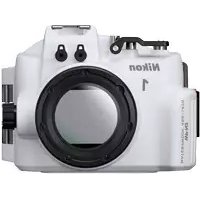
WPN3 - Other camera accessories NIKON - Free user manual and instructions
Find the device manual for free WPN3 NIKON in PDF.



| Brand | Nikon |
| Model | WP-N3 |
| Product Type | Waterproof camera housing |
| Maximum Depth | 45 m |
| Dimensions (L × H × D) | 156.4 × 115.8 × 113.0 mm (excluding protrusions) |
| Weight | Approx. 735 g (body only) |
| Operating Temperature | 0°C to 40°C |
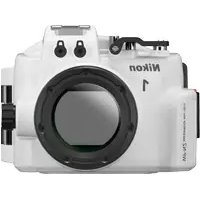
| Compatible Cameras | Nikon 1 J4 and Nikon 1 S2 |
| Compatible Lenses | 1 NIKKOR VR 10-30 mm f/3.5-5.6 PD-ZOOM and 1 NIKKOR 11-27.5 mm f/3.5-5.6 |
| Power Supply | Camera battery (not included) |
| Main Functions | Waterproof protection up to 45 m, external controls for zoom, shutter, video, optional underwater flash |
| Maintenance and Cleaning | Rinse with fresh water after use, dry in shade, do not use detergents, maintain O-ring |
| Safety | Do not dive, check waterproofing before use, do not open underwater, do not exceed 45 m |
| O-ring | Annual replacement recommended, specific silicone grease WP-G1000 |
| Included Accessories | Front cap, wrist strap, silica gel, zoom rings, O-ring remover |
| Optional Accessories | Underwater flash SB-N10, fiber optic cable SC-N10A |
| Recommended Service | Once a year by an authorized Nikon representative |
Frequently Asked Questions - WPN3 NIKON
User questions about WPN3 NIKON
0 question about this device. Answer the ones you know or ask your own.
Ask a new question about this device
Download the instructions for your Other camera accessories in PDF format for free! Find your manual WPN3 - NIKON and take your electronic device back in hand. On this page are published all the documents necessary for the use of your device. WPN3 by NIKON.
USER MANUAL WPN3 NIKON
https://reg.nikon-image.com/
力夕一木一卜
1 NIKKOR VR 10-30mm f/3.5-5.6 PD-ZOOM はは 1 NIKKOR 11-27.5mm f/3.5-5.6 to take it.
- http://www.nikon-image.com/support/repair/
Placing a Nikon 1 J4 or S2 in a WP-N3 waterproof case protects the camera from rain and snow and allows it to be used for underwater photography at depths of up to 45m (147 ft). Keep this manual where all those who use the product will read it, and be sure to read both it and the camera manual thoroughly before use.
Symbols and Conventions
To make it easier to find the information you need, the following symbols and conventions are used:

This icon marks cautions, information that should be read before use to prevent damage to the camera or waterproof case.

This icon marks notes, information that should be read before using the product.

This icon marks references to other pages in this manual.
Important: Read Before Use
Before using the waterproof case in or near water, test for leaks as described on pages 11 and 17 of this manual.
For Your Safety
Before using this product for the first time, read the safety instructions in "For Your Safety" (ii-vii).
Life-Long Learning
As part of Nikon's "Life-Long Learning" commitment to ongoing product support and education, continually-updated information is available on-line at the following sites:
For users in the U.S.A.: http://www.nikonusa.com/
- For users in Europe and Africa: http://www.europe-nikon.com/support/
- For users in Asia, Oceania, and the Middle East: http://www.nikon-asia.com/
Visit these sites to keep up-to-date with the latest product information, tips, answers to frequently-asked questions (FAQs), and general advice on digital imaging and photography. Additional information may be available from the Nikon representative in your area. For contact information, visit http://imaging.nikon.com/
YourSafety
To prevent damage to your Nikon product or injury to yourself or to others, read the following safety precautions in their entirety before using this equipment. Keep these safety instructions where all those who use the product will read them.
The consequences that could result from failure to observe the precautions listed in this section are indicated by the following symbol:

This icon marks warnings. To prevent possible injury, read all warnings before using this Nikon product.
WARNING
Do not disassemble. Failure to observe this precaution could result in injury or product malfunction. Should the product break as the result of a fall or other accident, take it to a Nikon-authorized service representative for inspection, being careful not to injure yourself on the broken parts.
Turn the camera off immediately in the event of malfunction. Should you notice smoke or an unusual smell coming from the equipment, remove the battery from the camera immediately, taking care to avoid burns. Continued operation could result in injury. After removing the battery from the camera, take the equipment to a Nikon-authorized service representative for inspection.
Do not use in the presence of flammable gas. Do not use electronic equipment in the presence of flammable gas, as this could result in explosion or fire.
Do not expose to high temperatures. Do not leave the product where it will be exposed to extremely high temperatures, such as in an enclosed automobile or in direct sunlight. Failure to observe this precaution could cause damage or fire.
Observe caution when using the flash.
- Using the flash close to your subject's eyes could cause temporary visual impairment. Particular care should be observed if photographing infants, when the flash should be no less than one meter (39 in.) from the subject.
- Do not aim the flash at the operator of a motor vehicle. Failure to observe this precaution could result in accidents.
Keep out of reach of children. Failure to observe this precaution could result in injury. In addition, note that small parts constitute a choking hazard. Should a child swallow any part of this equipment, consult a physician immediately.
Do not place the strap around the neck of an infant or child. Placing the strap around the neck of an infant or child could result in strangulation.
Do not dive while holding. To prevent injury caused by the case striking the body, do not jump or dive into water while holding the waterproof case.
Observe proper precautions when handling camera batteries. Batteries may leak or explode if improperly handled. Observe the following precautions when handling camera batteries:
- Use only batteries approved for use in the camera.
- Batteries are prone to leakage when fully discharged. Remove the camera from the case when not in use.
- Should water enter the case, remove the battery from the camera immediately.
- Keep the battery terminals dry. Failure to observe this precaution could result in injury or product malfunction.
En
Do not leave in direct sunlight. The case could focus sunlight, causing fire.
Do not use at depths in excess of 45 m (147 ft).
Failure to observe this precaution could result in leakage or other malfunction.
Keep the case watertight. Do not clean the case with a high-pressure jet. Do not open the case where it would be exposed to dust or sand, and be sure to remove any foreign objects from the O-ring and any parts of the case that are in contact with the O-ring before closing the case. Failure to observe these precautions could result in leakage.
Do not exposure to high temperatures. Do not expose the product to temperatures over 40^ (104°F). Failure to observe this precaution could cause the product to warp, resulting in leakage.
Do not cover the product during use. The build-up of heat could deform the case or cause fire.
Do not store the camera in the case. Gases released by the camera battery could build up in the case, causing explosion or fire.
Do not eat silicon grease or silica gel. These products are not edible.
Cautions
To ensure continued enjoyment of your Nikon product, observe the following precautions when storing or using the device.
Waterproofing
Observe the following precautions when using the case in or around water:
- Before use, test the case for leaks as described on pages 11 and 17 of this manual.
- The case is proof only against fresh water (such as pools, rivers, and lakes) and seawater. Do not take into hot springs or baths.
- Do not expose to depths greater than 45m (147 ft) or to rapids, waterfalls, water flowing at full force from a tap, or other water under high pressure. Failure to observe these precautions could expose the case to pressures high enough to cause damage, deformation, and water entry.
- Exposure to water will damage the camera. To prevent water entry, do not open the case with wet hands, when the case is wet, or in, on, or by the water or in locations exposed to spray, wind, sand or dust. Ensure that the camera is dry before insertion. Should the case leak, cease use immediately, dry the camera and the interior of the case, and take the camera and case to a Nikon-authorized service representative.
- Before sealing the case or when installing the O-ring, make sure that the O-ring is not twisted or out of position and examine the interior of case and the O-ring, watertight channel, and any parts of the case that are in contact with the O-ring carefully to ensure that they are free of liquid, dirt, hair, lint, dust, sand, and other foreign objects. Water and other liquids on these surfaces should be removed immediately with a soft, dry cloth. Other foreign matter should be removed with a blower, taking care to remove any small particles from the sides and corners of the watertight channel. Foreign matter on the exterior of the case can be removed with a soft, dry cloth. Do not use soap, cleansers, or other chemicals, and be sure to remove suntan oil, sunblock, bath salts, detergent, soap, organic solvents, oil, alcohol, and the like immediately.
- Do not apply stickers to the case or use sealants, anti-fog chemicals, or O-ring lubricants or silica gels not specifically designated for use with the WP-N3 [25].
- Do not leave the case for extended periods in locations that are exposed to freezing temperatures or in hot locations such as enclosed vehicles, on board boats, on the beach, in direct sunlight, or near heating equipment. Failure to observe this precaution may make the case vulnerable to water entry.
- The case is not guaranteed waterproof if struck, dropped, placed under heavy objects, or otherwise subjected to strong pressure or violent physical shocks or vibration. If the case does suffer a fall or other physical shock, take it to Nikon-authorized service personnel and have it tested to make sure that it is still waterproof. Note that a fee will be charged for this service.
- Damage due to user error is not covered under warranty.
Shock-Proofing
The waterproof case is not designed to protect the camera from blows or vibration. Do not drop the case, strike it against hard objects, throw it into the water, jump into the water holding the case, or leave the case in an area subject to extreme vibration. Failure to observe these precautions could result in damage to the camera.
Operating Environment
Note the following precautions:
- At low temperatures, the camera may not perform as expected immediately after being turned on and battery performance may drop. Keep spare batteries in a warm location and exchange as necessary.
- In cold environments, remove any snow or rain immediately. The controls may become difficult to operate if allowed to freeze.
- Prolonged contact with cold metal can damage exposed skin. Wear gloves when handling the case for extended periods at low temperatures.
-
Do not leave the case in areas exposed to high temperatures, such as inside a car, near a heater, on a beach, or in direct sunlight. Failure to observe this precaution could weaken or warp the case, resulting in damage to the camera. Sudden changes in temperature could result in condensation inside the case, which could also damage the camera. To prevent condensation:
-
When moving from one location to another that is noticeable warmer or colder, leave the camera in the case until it has reached the same temperature as its surroundings.
- Place the supplied desiccant (silica gel) in the case with the camera as directed on page 14 of this manual.
- Do not expose the case to high temperatures by leaving it on the beach or in direct sunlight before entering the water.
0-Rings
Observe the following precautions when handling O-rings:
- The O-ring requires periodic replacement. Replace the O-ring immediately if it is damaged, cracked, warped, or has lost elasticity. O-rings should be replaced at least once a year; do not use a worn O-ring or a type of O-ring not designated for use in this product.
- To prevent damage to the O-ring, use the O-ring remover when removing the ring from the case. Do not use metal objects or objects with sharp points when removing the O-ring.
- Do not use force when removing or positioning the O-ring. Excessive force may permanently stretch the ring, causing the case to leak.
- To prevent wear, use only silicon grease designated for use with this product (25). Do not use COOLPIX or NIKONOS O-ring lubricant (grease) or other types of silicon grease.
Changes in Altitude
Changing air pressure due to changes in altitude may damage case or prevent the case from opening. Observe the following precautions:
- If possible, include the case in your carry-on baggage when travelling by air. When packing the case with checked luggage, leave the case open or remove the O-ring.
- When travelling from high to low altitudes, open the case periodically to equalize the pressure.

Important!
The WP-N3 waterproof case is for use with compatible cameras only. Do not place other cam- eras in the WP-N3.
Table of Contents
For Your Safety
Introduction 1
Package Contents 1
Parts of the WP-N3 2
Using the Buckle 4
Unlatching the Case 4
Latching the Case 4
Configuration 5
Configuring the Case for the J4 5
Configuring the Case for the S2 5
The Preliminary Leak Test 11
Preparing the Lens 12
1 NIKKOR VR 10-30 mm f/3.5-5.6 PD-ZOOM Lenses. 12
1NIKKOR 11-27.5mm f/3.5-5.6 Lenses 13
Placing the Camera in the Case 14
The Final Leak Test 17
Taking Pictures 18
After Use 20
Maintenance 22
Caring for the O-Ring 22
Storage 24
Specifications 25
Accessories Available for Separate Purchase 25
Introduction
Refer to this section for the names of the supplied accessories and the parts of the waterproof case.
Package Contents
Confirm that the package contains the items listed below. Contact your retailer if anything is missing.
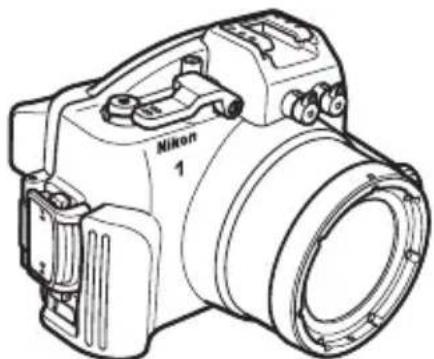
WP-N3 (with WP-O1100 O-ring in place; before use, check that O-ring is undamaged as described on page 22)
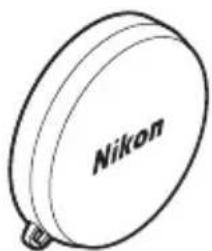
WP- C1000 front cap
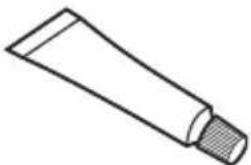
WP-G1000 silicon grease
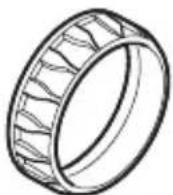
WP-ZG1020 zoom gear sleeve (for 1 NIKKOR VR 10-30mmf/3.5-5.6 PD-ZOOM lenses)
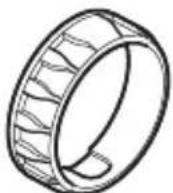
WP-ZG1010 zoom gear sleeve (for 1 NIKKOR 11-27.5mmf/3.5-5.6 lenses)
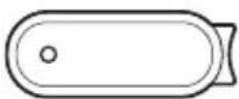
□WP-OR1000 O-ring remover
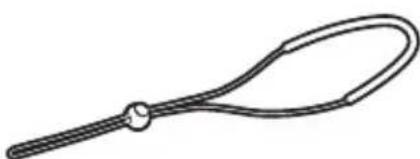
WP-AN1000 strap
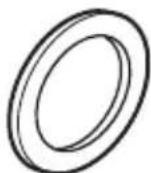
WP-IS1000 inner-reflection prevention sticker (for 1 NIKKOR VR 10-30 mm f/3.5-5.6 PD-ZOOM lenses)
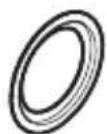
WP-IR1010 inner-reflection prevention ring (for 1 NIKKOR 11-27.5 mm f/3.5-5.6 lenses)
-
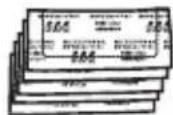
WP-S1000 silica gel desiccant (1 package of 5; reseal after opening)
-
WP-AN2000 front cap strap
- User's Manual (this manual)
□ Warranty
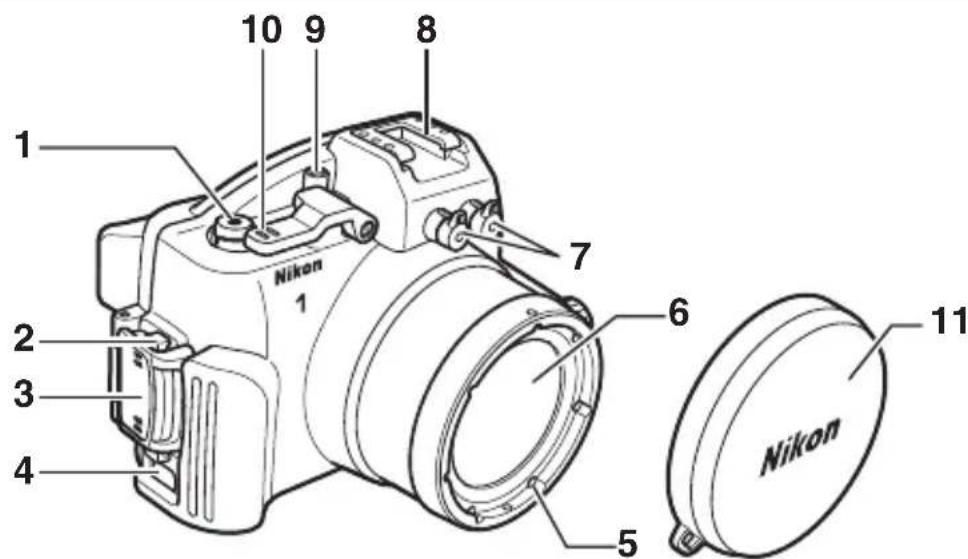
En
1 Movie-record button 18
2 Buckle release button 4
3Buckle. 4
4 Eyelet for strap 3
5 67 mm fi tter attachment thread
6 Lens window 14
- Remove when using optional SB-N10 underwater flash units.
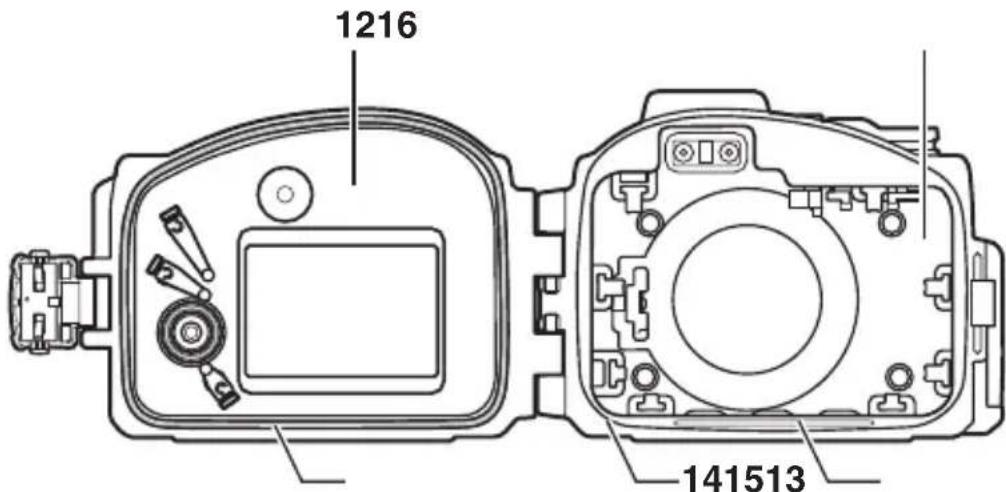
12 Rear cover 4
13 O-ring/O-ring guide 15,22,25
14 O-ring seal 15,22
Watertight channel 15,22
Front cover 4
The Accessory Shoe
The accessory shoe is used for underwater flash units and other accessories; see the documentation provided with the accessories for information on attachment and removal. Remove accessories from the accessory shoe when transporting the waterproof case on land.
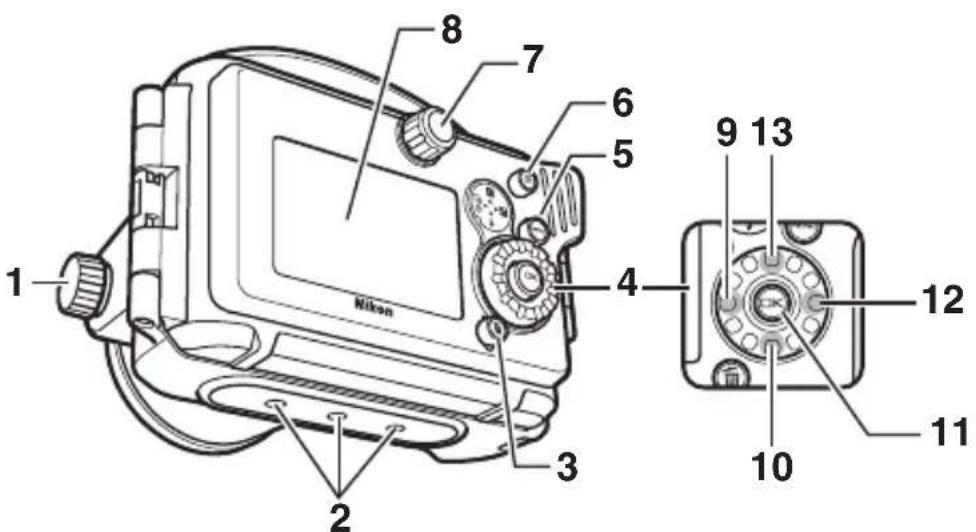
Zoom dial 15, 18
Tripod sockets
3 (delete) button
4 Multi selector
5 MENU button
6 (playback) button
Mode dial 18
- For use with J4 only
Monitor window
9 (continuous shooting/self-timer) button
10 (flash mode) button
11 (OK) button
exposure compensation) button
13 (feature) button
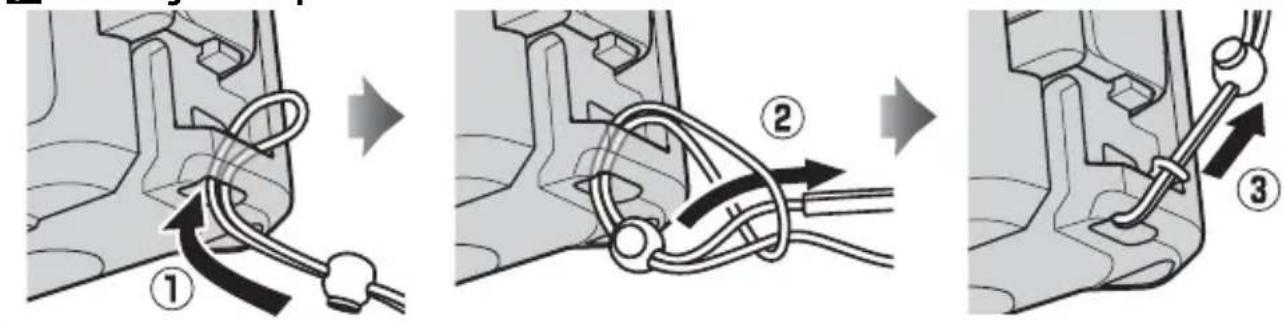
Attaching the Front Cap Strap
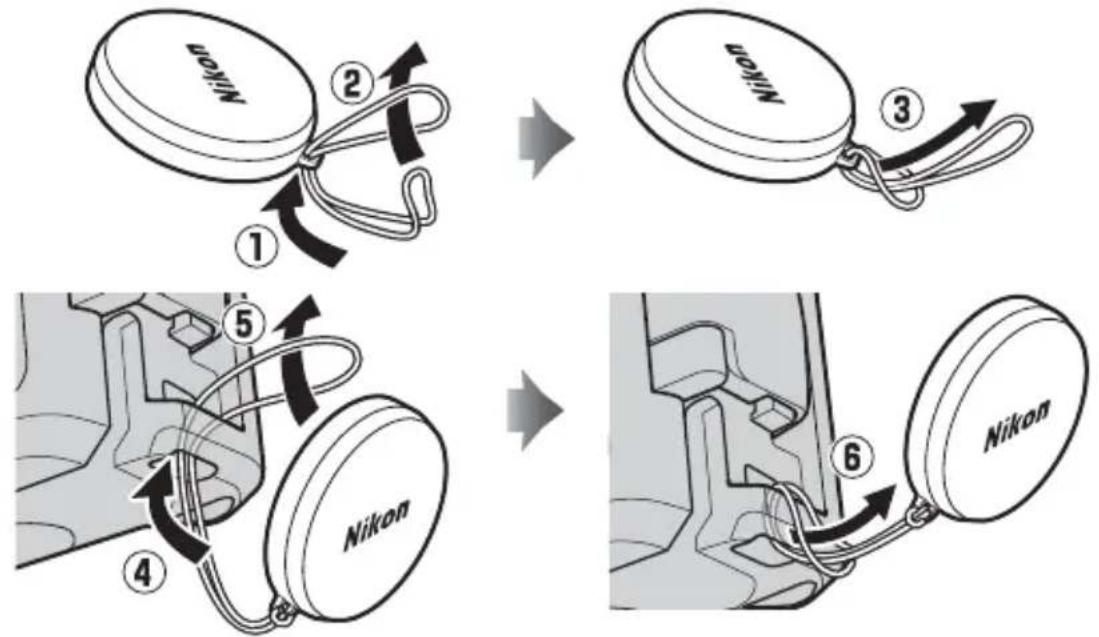
Attaching the Strap
Using the Buckle
Follow the steps below to unlatch or latch the case.
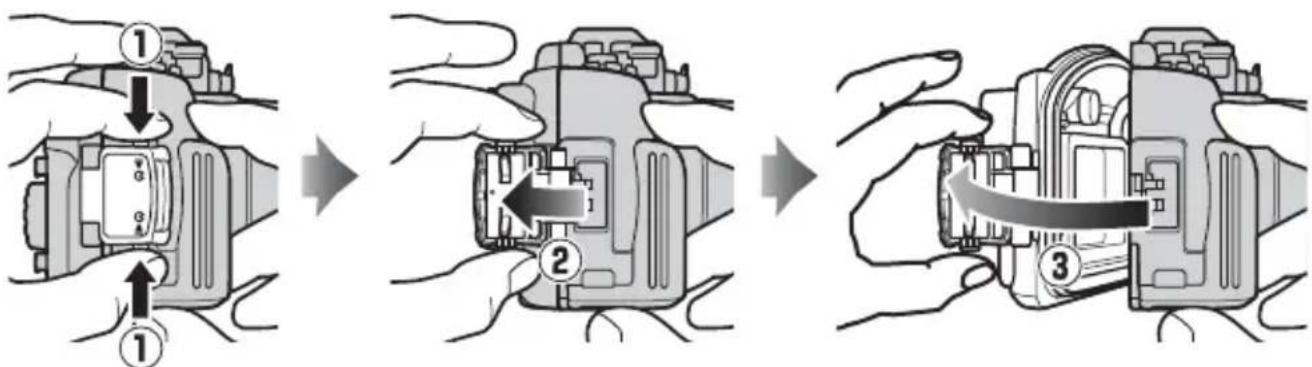
Unlatching the Case
Keeping the buckle release button pressed (①), open the buckle (②) and then open the rear cover (③).
En
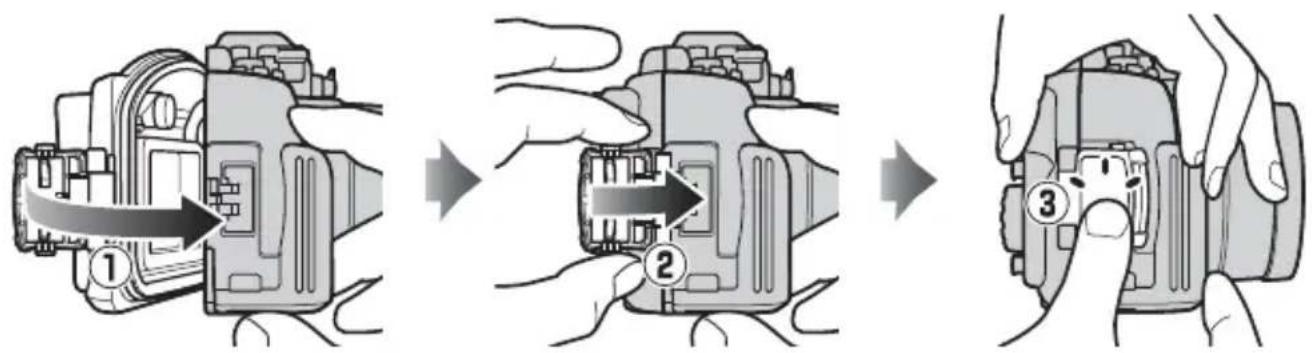
Latching the Case
Close the case (1) and flip the buckle onto the front half (2), then press the buckle closed until it clicks into place (3). Check that the case is properly sealed, that the O-ring is in place, and that no foreign objects are caught in the seal (23).
Opening the Case
Before opening the case, be sure it is completely dry and free of dirt. After using the case underwater, wash it in fresh water to remove any sand or other foreign objects and then dry it thoroughly with a soft, dry cloth. Be sure that any water, sand, or other foreign objects left on the case do not fall into the interior when the case is opened. Never operate the buckle or buckle release button underwater.
Be careful not to drop the camera when removing it from the case.
Configuration
At shipment, the case is configured for use with the J4. Removable parts allow the case to be configured for use with the S2. Be careful not to drop the parts during replacement.
Configuring the Case for the J4
The case is confi gured for use with the J4 at shipment. Do not change the configuration when using the case with the J4.
Configuring the Case for the S2
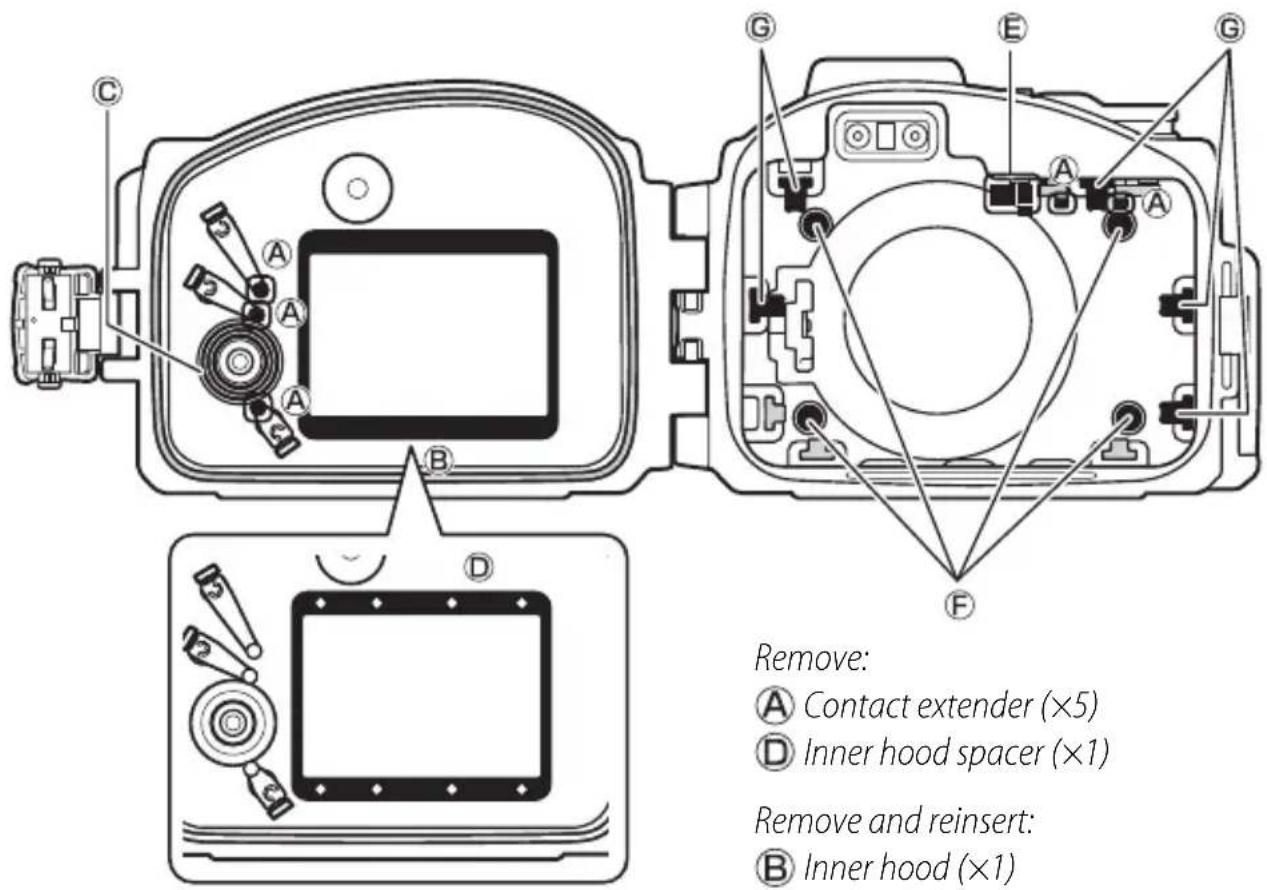
For use with the S2, configure the case as shown below.
En
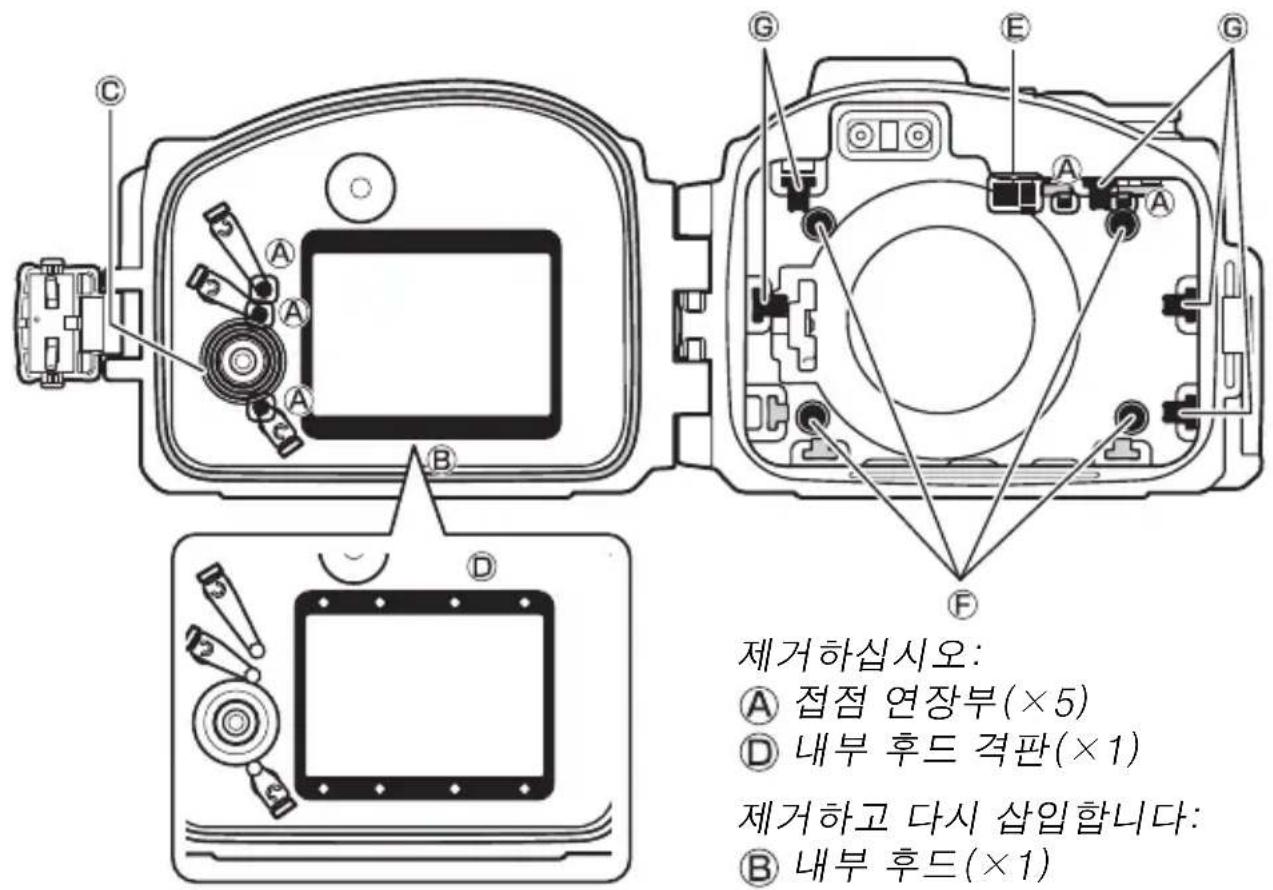
Remove:
Contact extender (× 5)
D Inner hood spacer (× 1)
Remove and reinsert:
B Inner hood (× 1)
Remove, reverse, and reinsert:
Multi selector contact (× 1)
Power switch contact (× 1)
F Front cushion (× 4)
G Side cushion (× 5)
Important!
Be sure all parts are securely installed. Failure to fully insert removable parts may result in loss or in leaks and damage to the camera. When replacing parts, choose a brightly-lit location and be careful not to hurt your fingers or damage your fingernails.
When using the case with the S2, remove the contact extenders, inner hood, and inner hood spacer, and then reinsert the inner hood.
Contact Extender (× 5)
Remove the contact extenders.

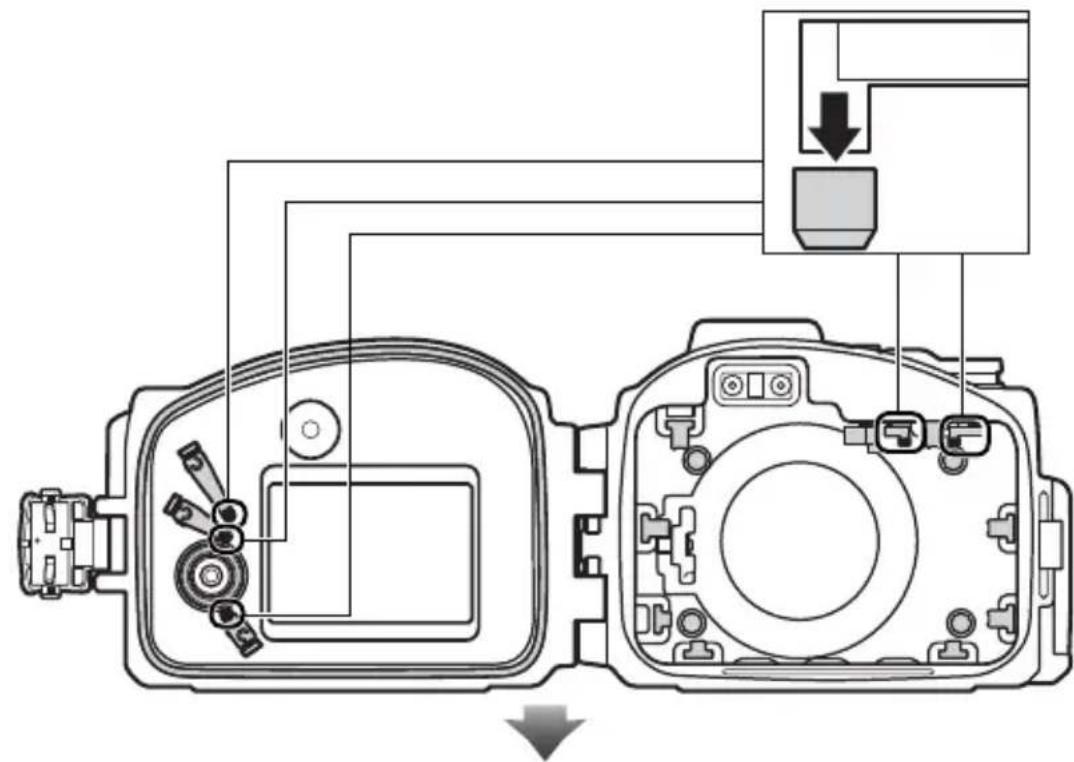
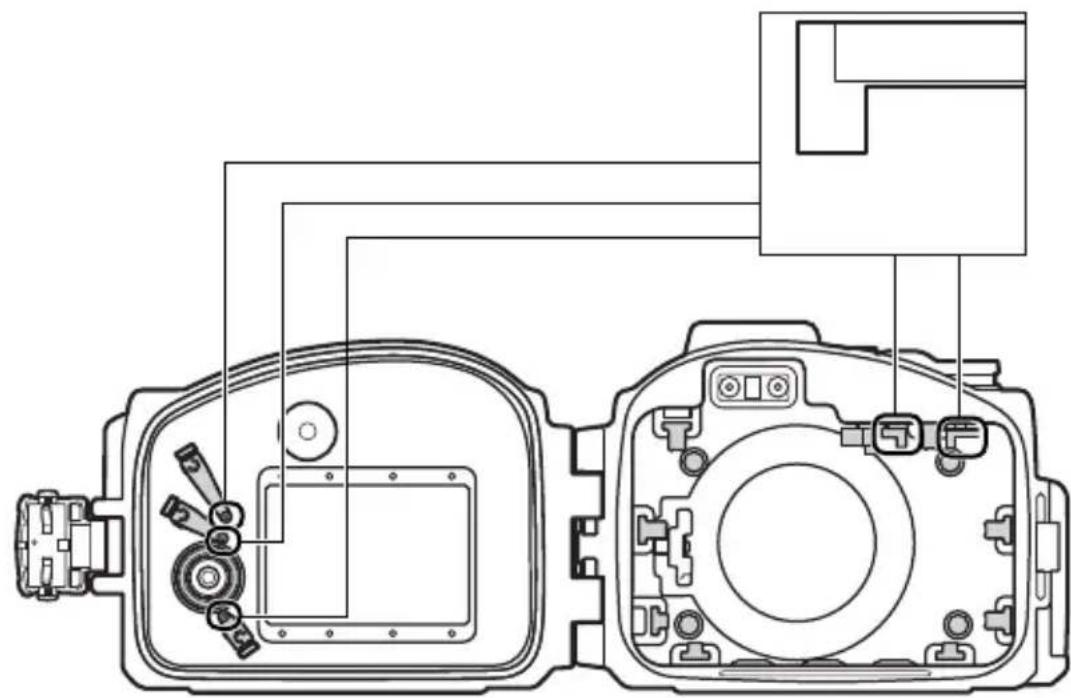
B Inner Hood (× 1) /Inner Hood Spacer (× 1)
When using the case with the S2, remove the inner hood and inner hood spacer and then reinsert the inner hood.
Inner hood spacer
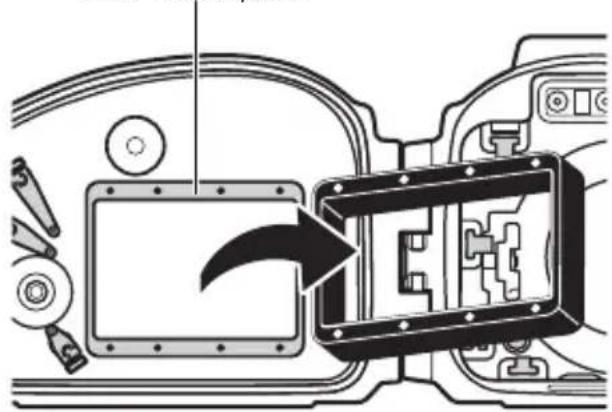
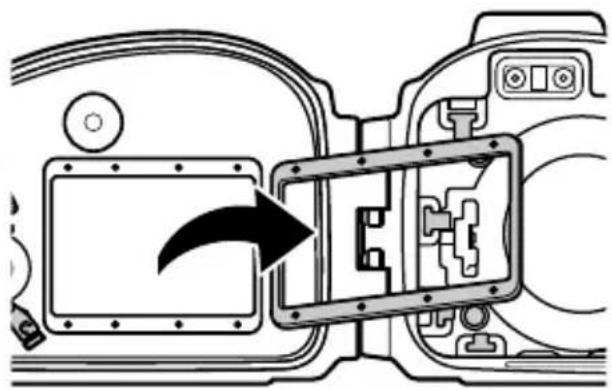

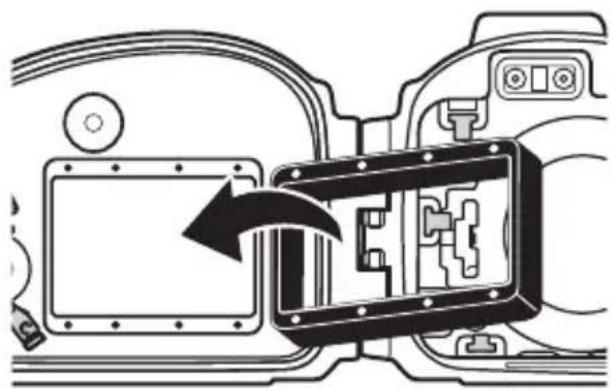
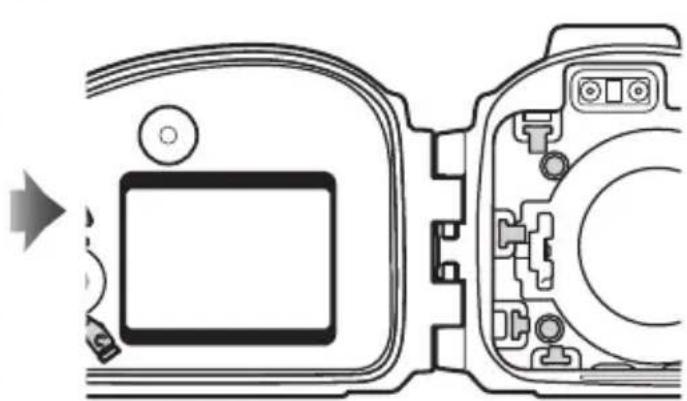
En
Important!
The contact extenders and inner hood spacer are not required when the case is used with the S2. Remove them and keep them in a safe place.
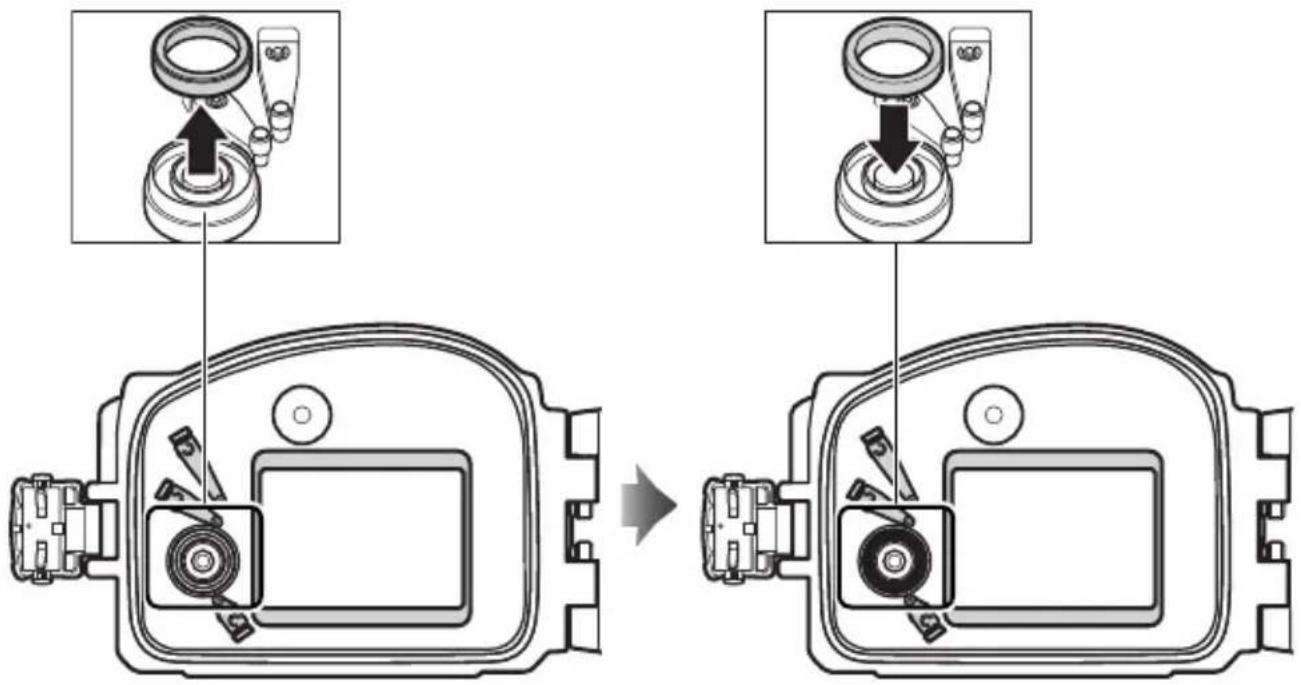
Users of the S2 will also need to remove, reverse, and reinsert the multi selector and power switch contacts and front and side cushions.
Multi Selector Contact (× 1)
Remove the contact and reinsert in the orientation shown.

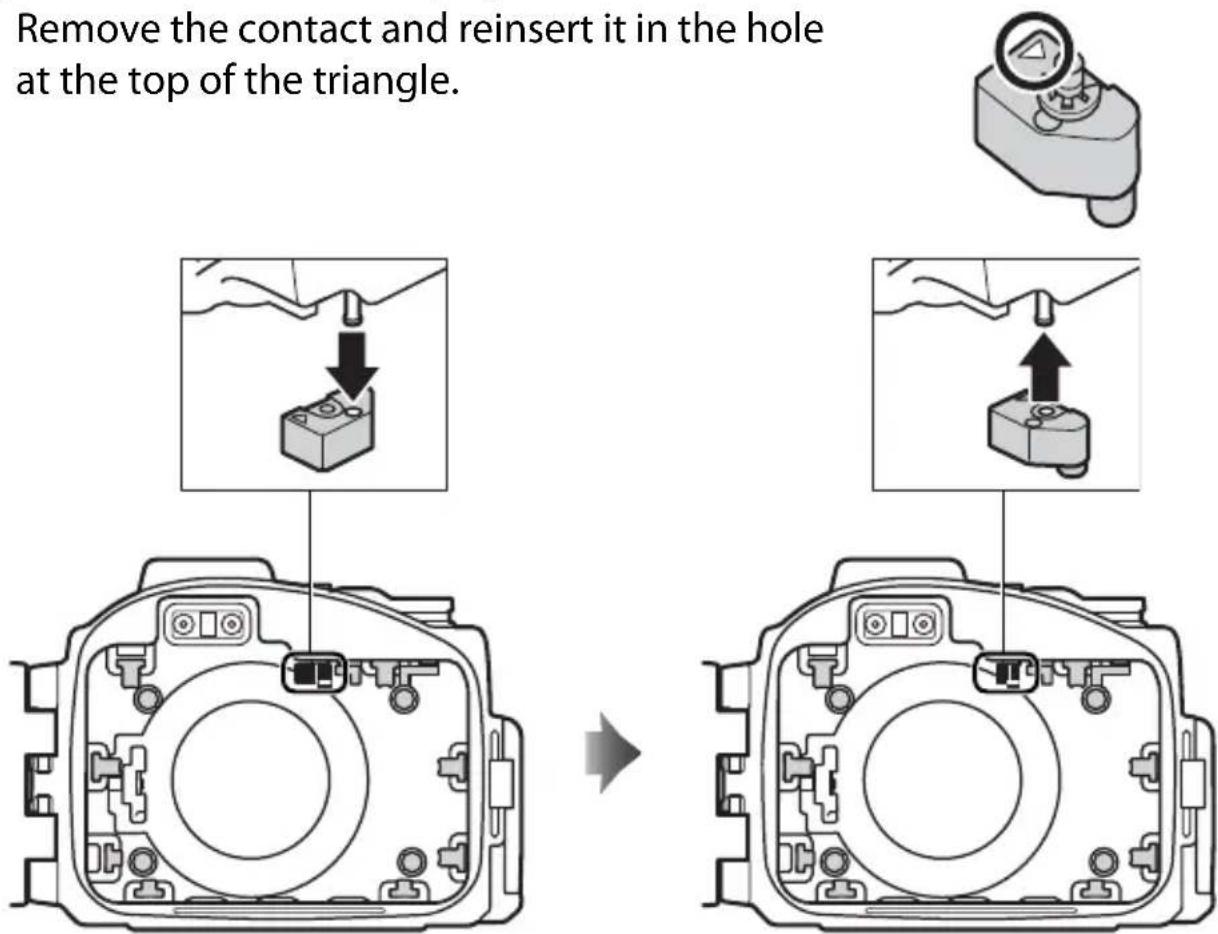
Power Switch Contact (× 1)
Remove the contact and reinsert it in the hole at the top of the triangle.

Front Cushion (×4)
Remove the cushions and reinsert them with the triangle top up.
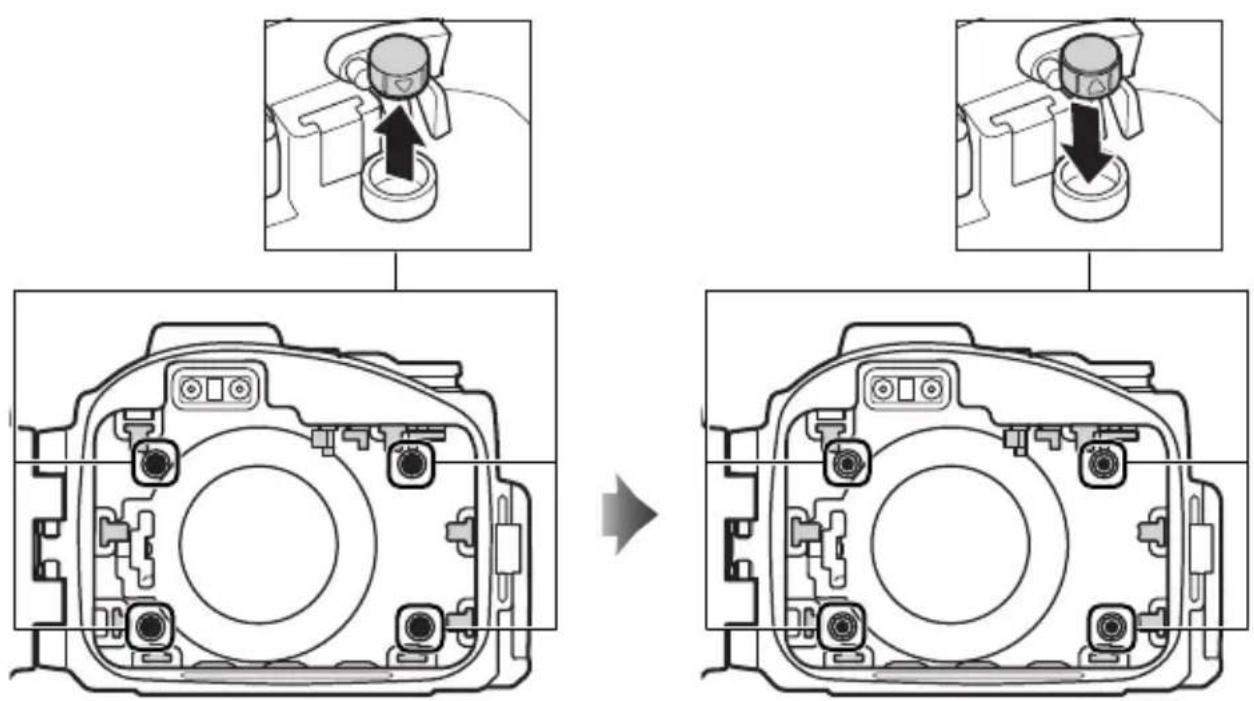
En

Side Cushion (×5)
Remove the cushions and reinsert them with the triangle top down.
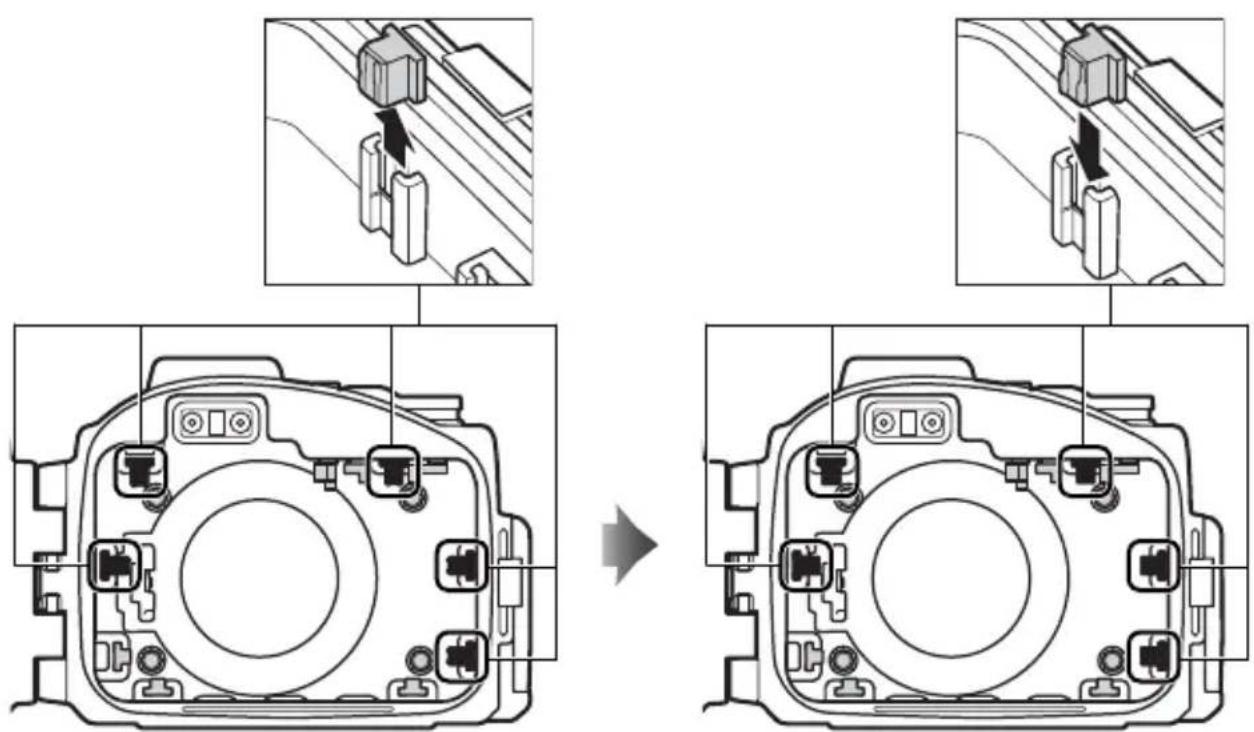
The fi gure below shows the case after it has been config gured for use with the S2.
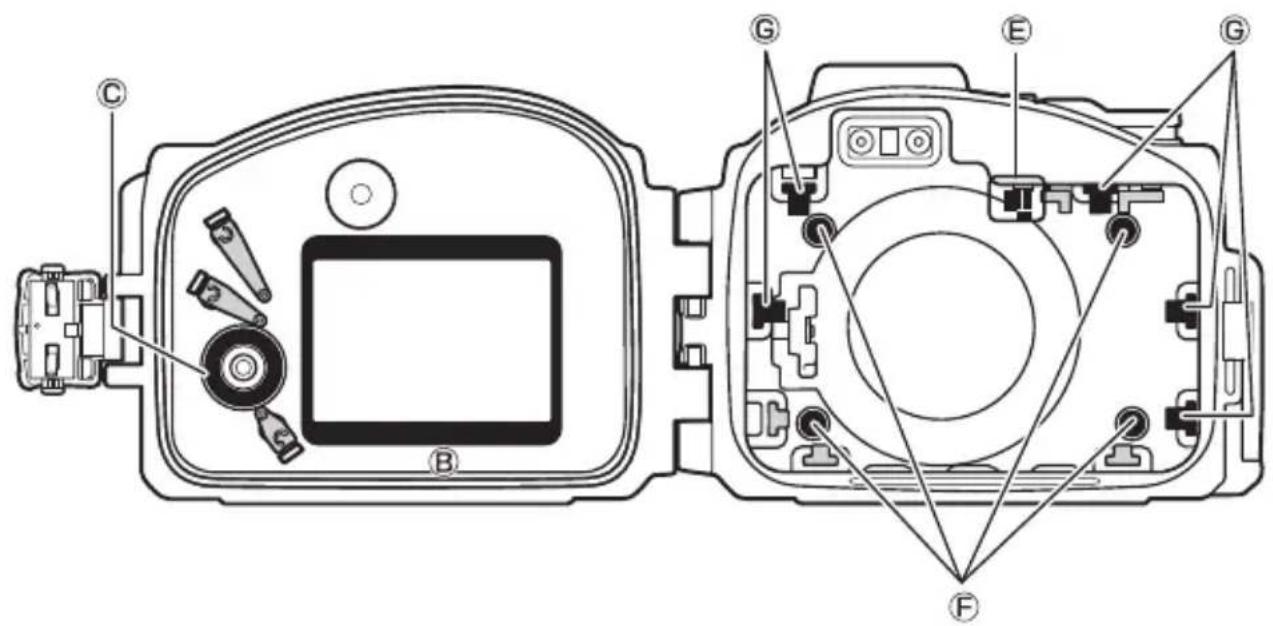
En
A Multi selector contact (× 1)
B Inner hood (× 1)
Power switch contact (× 1)
F Front cushion (× 4)
G Side cushion (× 5)
To use the case with the J4, return the parts to their original configuration.
The Preliminary Leak Test
Before placing the camera in the case, latch the case and immerse it in water to check for leaks as described below.
Important!
Before placing the camera in the case, be sure that the camera is functioning normally and that the case does not leak. Failure to check for leaks before use could result in irreparable damage to the camera. Note that leaks may result if the case is cracked or damaged. Check the case for cracking and other damage before use, and consult with a Nikon-authorized service representative in the event that any cracking or damage is found.
1 Latch and immerse the case.
Latch the case and then slowly immerse it in water, stopping if air is expelled from inside the case. Keep the case immersed for 2 or 3 seconds and check for bubbles escaping. Test the case in a shallow area at a depth of about 1m (3 ft) or in a tub or bucket. Do not use hot water, as this could exceed the operating temperature range of 0 - 40^ (32 - 104^) .
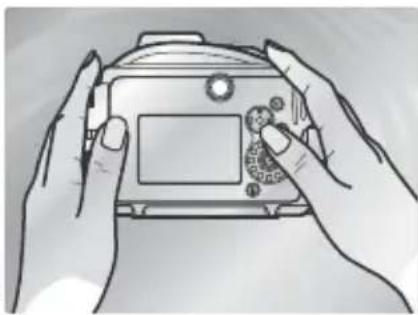

2 Test the controls.
Immerse the case and operate the controls underwater for 2 to 3 minutes, checking whether bubbles escape.
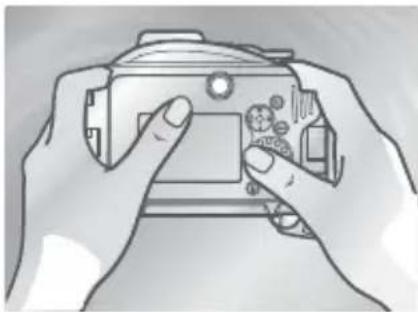
3 Check for water inside the case.
Take the case out of the water and dry it thoroughly with a soft, dry cloth, then open the case and check for water. If water has entered the case, check the O-ring (15,22-23). If the cause of the leak can not be determined, take the case to a Nikon-authorized service representative.
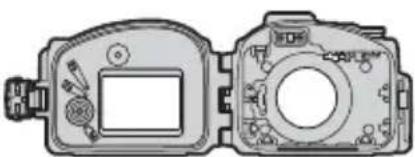
Preparing the Lens
Use a 1 NIKKOR VR 10-30 mm f/3.5-5.6 PD-ZOOM or 1 NIKKOR 11-27.5 mm f/3.5-5.6 lens. Other lenses can not be used.
1 NIKKOR VR 10-30 mm f/3.5-5.6 PD-ZOOM Lenses
Attach the WP-ZG1020 zoom gear sleeve and WP-IS1000 inner-reflection prevention sticker.
1 Attach and extend the lens.
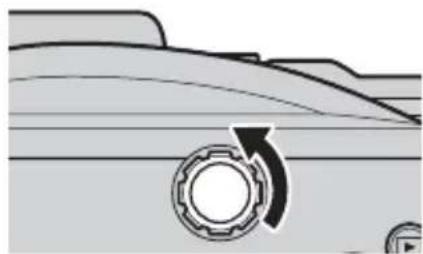
The lens extends automatically when the camera is turned on.
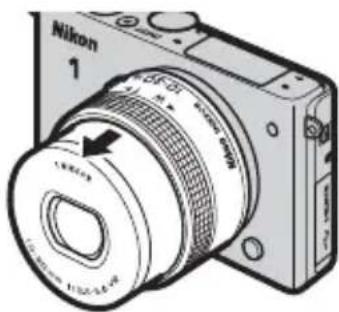
2 Attach the zoom gear sleeve.
Slide the sleeve straight onto the lens until it stops.
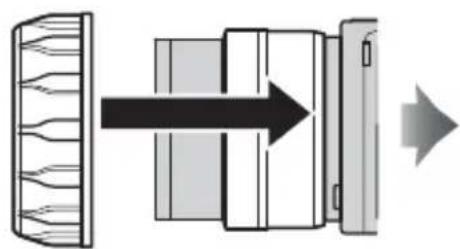
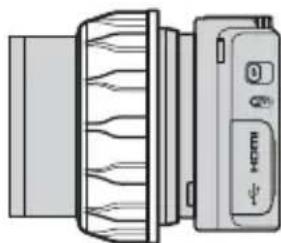
After attaching the sleeve, adjust its position so that the zoom ring rotates freely.
3 Attach the inner-reflection prevention sticker.
Affix the sticker to the front of the lens as shown (if the sticker does not adhere, clean the adhesive surface with a wipe or damp cloth). If the sticker is not attached, the lettering on the front of the lens may appear in photographs, having been reflected from the
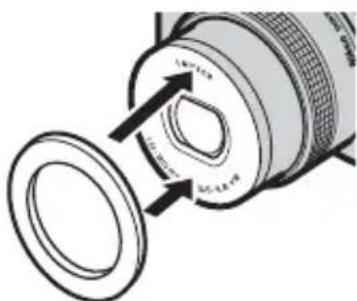
inside of the waterproof case lens window. The sticker can be reused; when it is not in use, reapply it to the original backing.
4 Turn the camera off .
The lens will retract automatically.
Attach the WP-ZG1010 zoom gear sleeve and WP-IR1010 inner-reflection prevention ring.
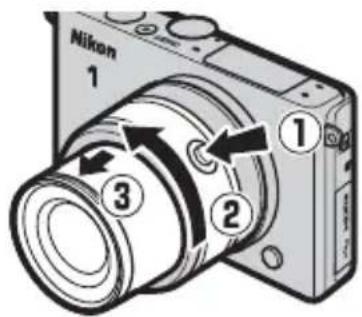
1 Attach and extend the lens.
Keeping the retractable lens barrel button pressed (1), rotate the zoom ring to extend the lens (2). Note that the camera will turn on automatically when the lens is extended; turn the camera off before proceeding to Step 2.
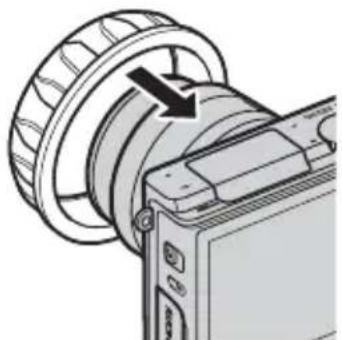
2 Attach the zoom gear sleeve.
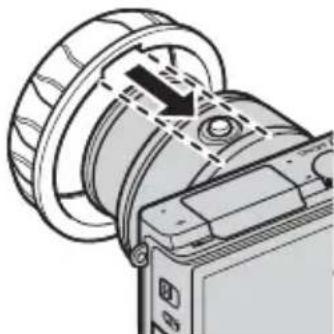
Align the slot on the inside of the sleeve with the retractable lens barrel button.
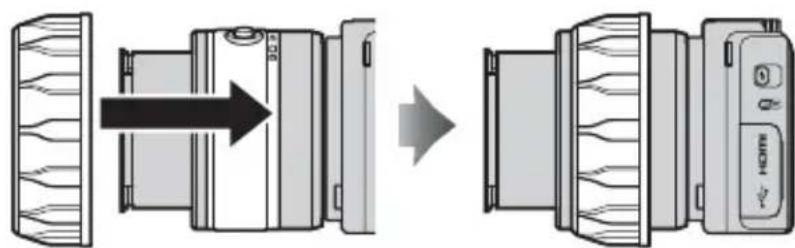
Slide the sleeve straight onto the lens until it stops.
After attaching the sleeve, adjust its position so that the zoom ring rotates freely.
3 Attach the inner-reflection prevention ring.
Attach the ring to the front of the lens as shown. If the ring is not attached, the lettering on the front of the lens may appear in photographs, having been reflected from the inside of the waterproof case lens window.

Placing the Camera in the Case
Prepare the camera for underwater photography.
1 Insert the battery and memory card. Insert a memory card and fully-charged battery.
2 Insert the camera. Center the camera in the camera guides with the lens positioned in the lens window.
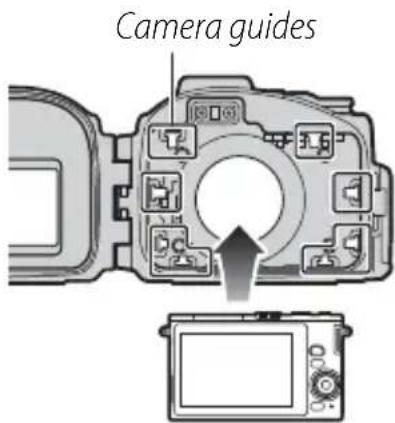
The Camera Strap
To ensure that the camera strap does not get caught in the seal and cause a leak, be sure to remove the strap before placing the camera in the case.
Underwater Flash Units
If you will be using an optional SB-N10 underwater flash unit, raise the camera's built-in flash before placing the camera in the case, as once placed in the case the flash may fail to pop up on its own.
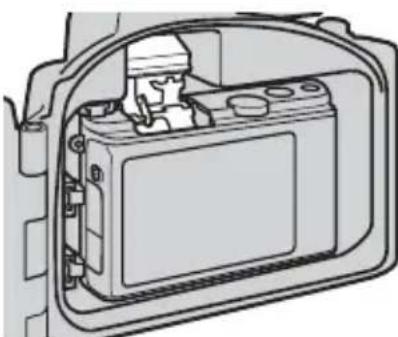
3 Insertdesiccant.
To prevent condensation from forming inside the case, insert the supplied silica gel desiccant between the bottom of the camera and the case. Slide the desiccant to the front, where it will not interfere with the case closing. Improper placement could cause the case to leak.
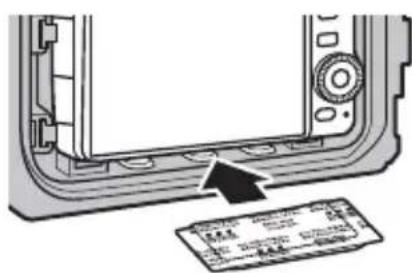
Replacing the Desiccant
Used desiccant loses its capacity to absorb moisture. We recommend replacing the desiccant each time the case is used (25).
4 Perform a final check.
Check the O-ring:
- Is it cracked or damaged? Replace it.
- Is it twisted or out of position? Reposition it.
- Remove any hair, dust, sand, and other foreign objects.
Check the built-in flash: If you are using an underwater flash unit, check that the built-in flash is raised; otherwise, be sure the flash is lowered.
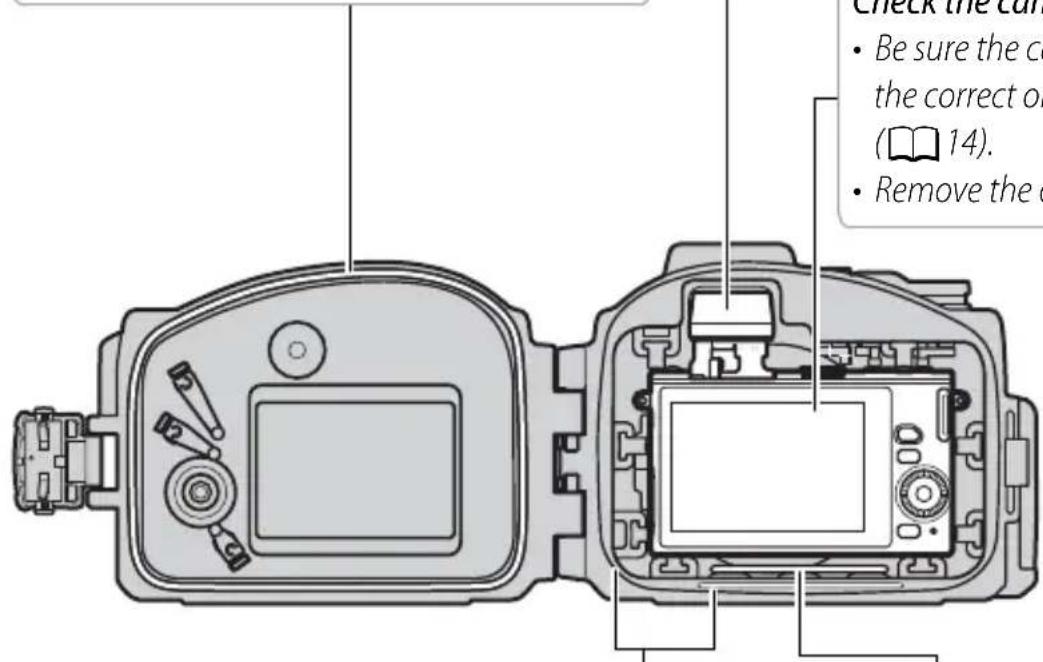
Check the camera:
- Be sure the camera is in the correct orientation (14).
- Remove the camera strap.
Check the O-ring seal and watertight channel: Remove any liquid, hair, dust, sand, and other foreign objects.
Check the desiccant: Check that the desiccant is correctly placed 14.
Check the lens:
- Does the zoom ring rotate smoothly and does it adjust zoom? If not, reposition the zoom gear sleeve.
- Confirm that the inner-reflection prevention sticker or ring is in place [12, 13].
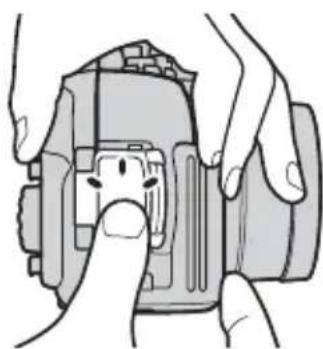
5 Close the case.
Close and latch the case.
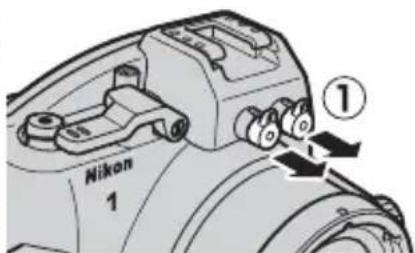
Underwater Flash Units
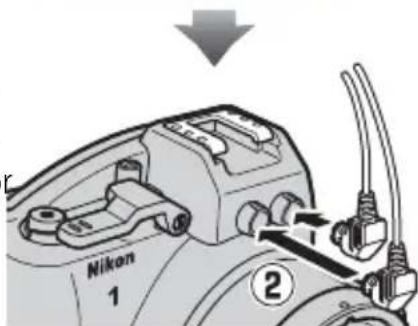
The waterproof case is equipped with 2 fi ber-optic cable sockets, permitting optional SB-N10 underwater fl ash units to be connected via optional SC-N10A underwater fi ber-optic cables and controlled by the camera's built-in flash. When using an underwater flash unit, remove either of the fi ber-optic cable socket caps (①; note that although there is no risk of leaks when the caps are removed, the caps for unused sockets should be left in place) and connect the underwater fi ber-optic cable (②). Before using the flash underwater, take a test shot and confirm that the flash is functioning normally. For more information, see the camera manual and the documentation provided with the flash unit.
En
The Final Leak Test
After inserting the camera and closing the case, perform a final check for leaks.
Important!
Before use, be sure that the camera is functioning normally and that the case does not leak. Failure to check for leaks before use could result in irreparable damage to the camera.
Immerse the case in water and check for leaks as described in "The Preliminary Leak Test" (11). After completing the test, open the case and check that the desiccant is dry and that no water has entered. If a leak is detected, immediately dry the camera and case thoroughly and check
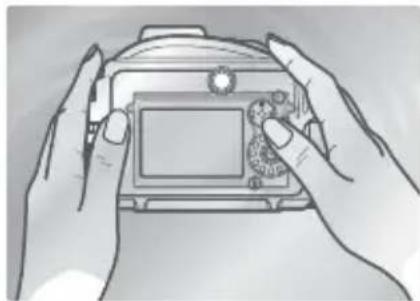
that the O-ring is intact and the case properly sealed. If the cause of the leak can not be determined, take the case to a Nikon-authorized service representative.
Taking Pictures
Follow the steps below to take pictures underwater.
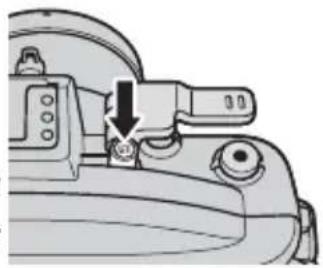
1 Turn the camera on.
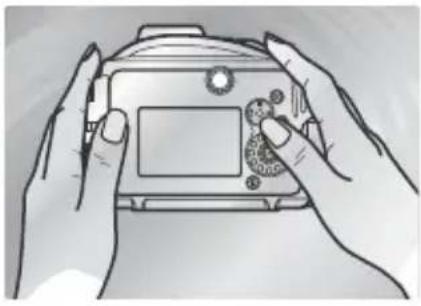
Press the power switch on the waterproof case to turn the camera on. The power lamp will light green and the monitor will turn on (to turn the camera off, press the power switch again and confirm that the monitor has turned off).
2 Choose a mode.
Rotate the mode dial to choose a mode (J4) or press the MENU button and choose a mode from the menus (S2). For more information on choosing a mode, see the camera manual.
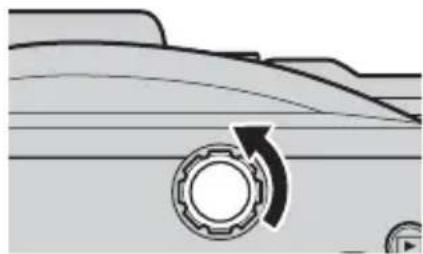
3 Frame the shot.
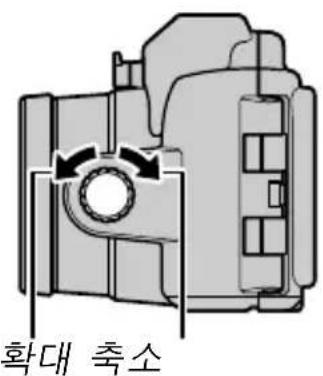
Rotate the zoom dial to zoom in or out.
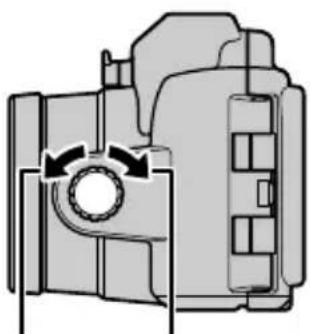
Zoom in Zoom out
4 Take the picture.
Photographs: Lightly press the shutter lever to press the camera shutter-release button halfway and focus, then press the shutter lever the rest of the way down to release the shutter and take a photograph.
Movies: Press the movie-record button to start or stop recording.
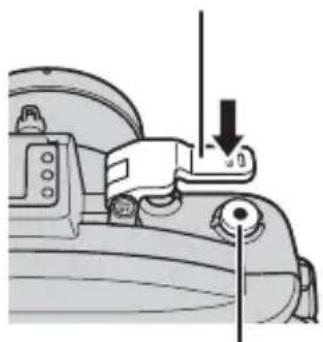
Shutter lever
Movie-record button
Underwater Photography
The best time for underwater photography is when the sun is directly overhead (note that pictures taken underwater may have a blue cast). Strong light sources may cause reflections to appear in pictures; check the monitor before shooting and change the angle if necessary. While shooting, keep your fingers and other objects away from the lens window and avoid exhausting bubbles into the frame. Place the front cap over the lens window when the camera is not in use.
The AF-assist illuminator
The AF-assist illuminator can not be used while the camera is in the waterproof case.
Auto Power Off
If no operations are performed for a set time, the monitor will turn off and the power lamp will flash. If no operations are performed for a set period after the monitor has turned off, the camera will turn off automatically. See the camera manual for more information.
After Use
Clean the case and remove the camera.
1 Wash the case.
Clean the case as soon as possible after use. Without opening the case or removing the camera, wash the case in a basin of fresh water.
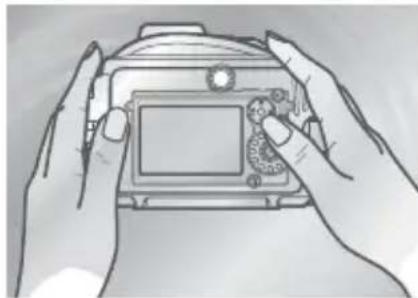
2 Wipe dry.
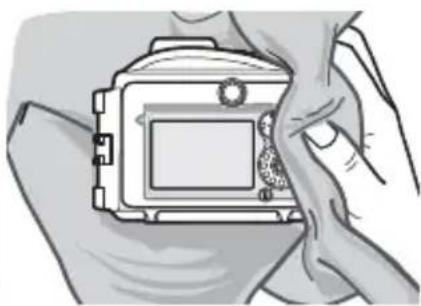
Dry the exterior of the case thoroughly with a soft, dry cloth.

Drying the Case
Be careful to remove water that may have collected in the buckle, controls, or strap eyelet.
3 Remove the camera.
Remove the camera and wipe the interior of the case with a soft, dry cloth. Do not wash the interior of the case with water.
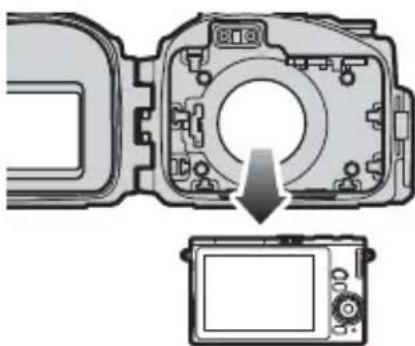

Removing the Camera
Never operate the buckle or buckle release button underwater. Before opening the case, be sure that your hands are dry and free from salt or sand; do not open the case in areas exposed to blown sand or spray. When removing the camera, be careful not to drop the device and make sure that droplets from your hair, body, or other objects do not fall into the case or onto the camera. If water does fall onto the camera or into the waterproof case, dry it immediately with a soft cloth. Be sure that your hands are dry and free from salt or sand before handling the camera or battery.
Keep the case upright; do not place the open case with the O-ring or O-ring seal face down.
4 Soak the case in fresh water.
Reseal the case and leave it in a basin of fresh water for two to three hours. Operate each of the controls a few times to remove salt. If salt drys on the controls, they may cease to function or their metal parts may rust, causing the case to leak.
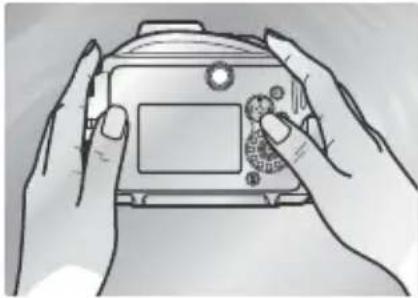
5 Wipe dry.
Dry the case thoroughly with a soft, dry cloth. Do not use a cloth to which salt has adhered.
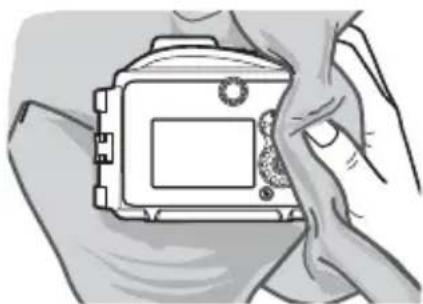
En
6 Let the case dry in the shade.
Leave the case out to dry in a shady, well-ventilated area.
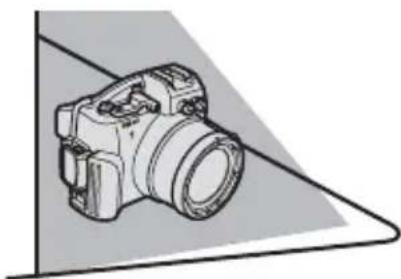
Do Not Expose to Sunlight or Heat
Do not use a hair dryer or other heat source or place the case in direct sunlight. Heat could cause the case or O-ring to deteriorate, resulting in leakage.
Cleaning the Interior of the Case
Use a blower, brush, or a damp, soft cloth to remove foreign objects from the interior of the case. Liquid can be removed with a damp, soft cloth. When using a cloth, be careful not to scratch the case; do not use unnecessary force. Do not use water, detergents, or chemical agents of any kind. Water can damage the coating on the inside of the lens window.
Maintenance
This section describes how to maintain the O-ring and waterproof case.
Caring for the O-Ring
The WP-N3 uses an O-ring to form a watertight seal. Improper handling of the O-ring can produce leaks. Check the condition of the O-ring as described below before each use, and check for the presence of foreign objects on the O-ring each time the case is opened, however briefly.
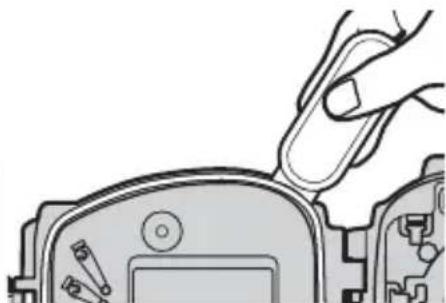
1 Remove the O-ring.
Use the O-ring remover to remove the O-ring as shown.
Do Not Use Force or Sharp Objects
The case may leak if the O-ring is forcibly stretched or damaged through the use of edged or pointed objects, including fingernails and metal tools.
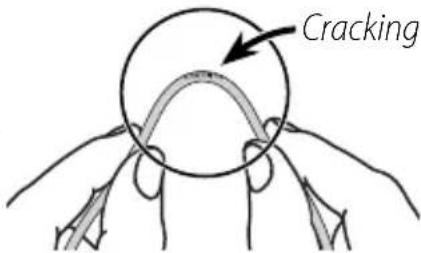
2 Inspect the O-ring.
Remove old silicon grease and other foreign objects with a soft cloth, taking care not to leave tissue or threads on the O-ring. Gently bend the O-ring to check for cracking or other damage.
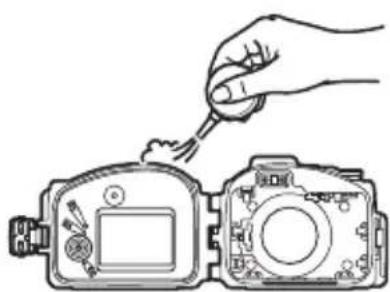
3 Inspect the O-ring guide.
Use a blower or cotton swab to remove any foreign objects from the watertight channel and all parts of the case that come into contact with the O-ring. Be sure to remove any threads left behind by the swab.
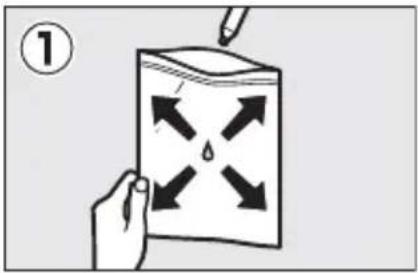
4 Grease the O-ring.
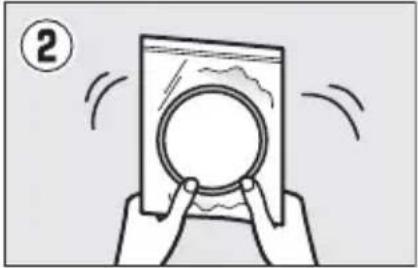
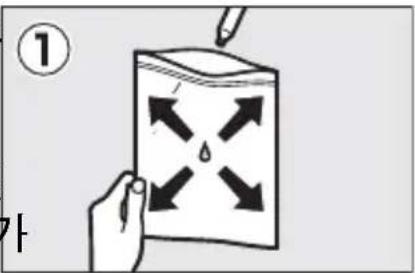
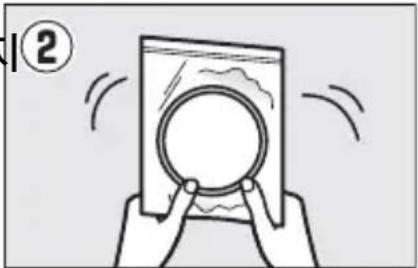
If the O-ring is not properly greased, it may crack or peel, causing leaks. Grease the ring if the surface appears dry. First, squeeze about a centimeter (half an inch) of silicon grease into a plastic bag and use your fingers to spread the grease throughout the bag (1). Next, insert the O-ring and massage the bag to coat the ring (2). Use only grease designated for use with the WP-N3. Do not apply grease using cloth or paper, as these may leave fibers on the O-ring. Note that applying too much grease may cause foreign objects to adhere more readily to the ring, preventing the case from sealing properly.

5 Replace the O-ring.
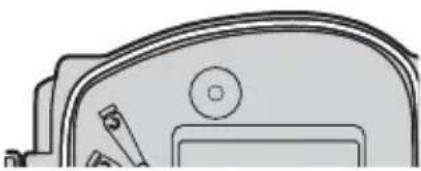
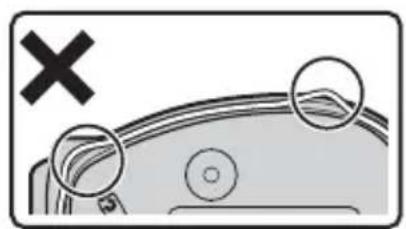
Making sure the O-ring and guide are free of foreign objects, place the O-ring so that it runs evenly at the same level all the way round the O-ring guide, without undue stretching or twisting and without protruding from the guide.

O-Rings
The O-ring requires periodic replacement. Replace the O-ring immediately if it is damaged, cracked, warped, or has lost its elasticity. O-rings should be replaced at least once a year. Use only silicon grease designated for use in this product; replacement O-rings and silicon grease can be purchased from a Nikon camera retailer or Nikon-authorized service agent. Do not use COOLPIX or NIKONOS O-ring lubricant (grease).

Cleaning
Do not use detergents or volatile chemicals such as alcohol or thinner when cleaning the case or O-ring. Failure to observe this precaution could result in damage to the case or O-ring.
Storage
Store the case in a cool, well-ventilated area, leaving the case open to prevent the O-ring deteriorating. When leaving the case unused for an extended period, remove the O-ring, remove all old silicon grease, apply fresh silicon grease, and place the O-ring in a clean plastic bag to ensure that it maintains its elasticity. Do not store the case in direct sunlight or where it will be exposed to sudden changes in temperature or high levels of humidity. Do not store the case or O-ring under other objects, close to open flames, in the vicinity of flammable items, or with naphtha or camphor moth balls.
En
Servicing
Nikon recommends that the case be serviced by a Nikon-authorized service representative at least once a year. A fee is charged for this service.
Specifications
| Maximum depth 45 m (147 ft) | |
| Camera operating temperature 0°C-40°C(+32°F-104°F) | |
| Dimensions (W × H × D) Approx. 156.4 × 115.8 × 113.0 mm (6.2 × 4.6 × 4.4 in.), excluding projections | |
| Weight Approximately 735 g (1 lb 9.9 oz), body only | |
Improvements to this product may result in unannounced changes to specific cations and external appearance. Nikon will not be held liable for damages that may result from any errors this manual may contain. Unless otherwise stated, all measurements are performed at the temperature specified by the Camera and Imaging Products Association (CIPA): 23 ± 3^ C ( 73.4 ± 5.4^ F ).
Accessories Available for Separate Purchase
Nikon offers the following options and replacement items:
- WP-ZG1020 zoom gear sleeve for 1 NIKKOR VR 10-30 mm f/3.5-5.6 PD-ZOOM lenses
- WP-ZG1010 zoom gear sleeve for 1 NIKKOR 11-27.5 mm f/3.5-5.6 lenses
- WP-IS1000 inner-reflection prevention sticker for 1 NIKKOR VR 10-30 mm f/3.5-5.6 PD-ZOOM lenses
- WP-IR1010 inner-reflection prevention ring for 1 NIKKOR 11-27.5 mm f/3.5-5.6 lenses
WP-O1100 O-ring
WP-OR1000 O-ring remover
WP-LC1000 front cap
WP-AN1000 strap
WP-AN2000 front cap strap
WP-G1000 silicon grease
WP-S1000 silica gel desiccant
- SB-N10 underwater speedlight
SC-N10A underwater fiber-optic cable
- SK-N10A underwater bracket
1 Rimuovere I'O-ring.
4 Ingrassare I'O-ring.
5 Sostituirel'O-ring.
查hJ4J4J4J4J4J4J4J4J4J4J4J4J4J4J4J4J4J4J4J4J4J4J4J4J4J4J4J4J4J4J4J4J4J4J4J4J4J4J4J4J4J4J4J4J4J4J4J4J4J4J
J4登录KIOs
情況は、デイスはJ4とJ4とJ4とJ4とJ4とJ4とJ4とJ4とJ4とJ4とJ4和J4和J4和J4和J4和J4和J4和J4和J4和J4和J4和J4和J4和J4和J4和J4和J4和J4和
S2登录KIO上
KaiS2
徒迦哈信
A
D
試行法上
B LHJF(×1)
却却却却
*
C 电话机
E
F
G

#
MND TAIJH 14, MNU HnTn nRn HnHn Hn Hn Hn Hn Hn Hn Hn Hn Hn Hn Hn Hn Hn Hn Hn Hn Hn Hn Hn Hn Hn Hn Hn Hn Hn Hn Hn Hn Hn Hn Hn Hn Hn Hn Hn Hn Hn Hn Hn Hn Hn Hn Hn Hn Hn Hn Hn Hn Hn Hn
3 連長孫子龍
囧
Kr
4 .
Keis 2-3 1JnJnJnJnJnJnJnJnJnJnJnJnJnJnJnJnJnJnJnJnJnJnJnJnJnJnJnJnJnJnJnJnJnJnJnJnJnJnJnJnJnJnJnJnJnJnJnJnJnJnJ n J.
5 迎主如能日
O LING 1.0000000000000000000000000000000000000000000000000000000000000000000000000000000000000000000000000
5 O 빼을 썸자리에다시 히合适다.
默默默默默默默默默默默默默默默默默默默默默默默默默默默默默默默默默默默默默默默默默默默默默默默默默默默默默默默默默默默默默默默默默默默默默默默默默默默默默默默默默默默默默默默默默默默默默默默默默默默默
人
朝大 45m
咔露拉 拜用 0° C-40° C
EXI(WXHxD) 156.4x115.8x113.0mm
早
No reproduction in any form of this manual, in whole or in part (except for brief quotation in critical articles or reviews), may be made without written authorization from NIKON CORPORATION.
- 力夕一木一卜
- Symbols and Conventions
- Important: Read Before Use
- For Your Safety
- Life-Long Learning
- YourSafety
- WARNING
- Observe caution when using the flash.
- En
- Cautions
- Waterproofing
- Shock-Proofing
- Operating Environment
- Note the following precautions:
- 0-Rings
- Changes in Altitude
- Important!
- Table of Contents
- Introduction
- Package Contents
- The Accessory Shoe
- O Attaching the Front Cap Strap
- O Attaching the Strap
- Using the Buckle
- Unlatching the Case
- Latching the Case
- V Opening the Case
- Configuration
- Configuring the Case for the J4
- Configuring the Case for the S2
- A Contact Extender (× 5)
- B Inner Hood (× 1) /Inner Hood Spacer (× 1)
- C Multi Selector Contact (× 1)
- E Power Switch Contact (× 1)
- Front Cushion (×4)
- Side Cushion (×5)
- The Preliminary Leak Test
- Latch and immerse the case.
- Test the controls.
- Check for water inside the case.
- Preparing the Lens
- NIKKOR VR 10-30 mm f/3.5-5.6 PD-ZOOM Lenses
- Attach and extend the lens.
- Attach the zoom gear sleeve.
- Attach the inner-reflection prevention sticker.
- Turn the camera off .
- Attach the inner-reflection prevention ring.
- Placing the Camera in the Case
- The Camera Strap
- Underwater Flash Units
- Insertdesiccant.
- Replacing the Desiccant
- Perform a final check.
- Check the O-ring:
- Check the camera:
- Check the lens:
- Close the case.
- The Final Leak Test
- Taking Pictures
- Turn the camera on.
- Choose a mode.
- Frame the shot.
- Take the picture.
- Underwater Photography
- The AF-assist illuminator
- Auto Power Off
- After Use
- Wash the case.
- Wipe dry.
- Drying the Case
- Remove the camera.
- Removing the Camera
- Soak the case in fresh water.
- Wipe dry.
- Let the case dry in the shade.
- Do Not Expose to Sunlight or Heat
- V Cleaning the Interior of the Case
- Maintenance
- Caring for the O-Ring
- Remove the O-ring.
- Do Not Use Force or Sharp Objects
- Inspect the O-ring.
- Inspect the O-ring guide.
- Grease the O-ring.
- Replace the O-ring.
- O-Rings
- Cleaning
- Storage
- Servicing
- Specifications
- Accessories Available for Separate Purchase
- Rimuovere I'O-ring.
- Ingrassare I'O-ring.
- Sostituirel'O-ring.
- J4登录KIOs
- S2登录KIO上
- #
- 連長孫子龍
- Kr
- .
- 迎主如能日
- O 빼을 썸자리에다시 히合适다.
- 人
Brand : NIKON
Model : WPN3
Category : Other camera accessories