
SAFJ3001W - Juicer SHARP - Free user manual and instructions
Find the device manual for free SAFJ3001W SHARP in PDF.


| Product Type | Slow Juicer |
| Brand | Sharp |
| Model | SAFJ3001W |
| Power Supply | 220-240 V ~ 50/60 Hz |
| Power | 150 W |
| Juice Container Capacity | 400 ml |
| Main Functions | Juicing, sauce making, frozen desserts (sorbet, ice cream), smoothies |
| Included Filters | Juice filter (fine mesh), sauce filter (coarse mesh), frozen dessert filter |
| Extraction System | Slow rotation pressing to preserve nutrients and vitamins |
| Safety | Safety lock, reset switch, automatic stop if unlocked, reverse (REV) for unclogging, overload protection |
| Care and Cleaning | Rinse under running water, brush filter, do not wash in dishwasher, do not immerse motor unit |
| Spare Parts and Repairability | No user-serviceable parts; repair by approved service center only |
| General Information | Warranty upon presentation of receipt; household use only; maximum operating time 15 min then 30 min rest |
Frequently Asked Questions - SAFJ3001W SHARP
User questions about SAFJ3001W SHARP
0 question about this device. Answer the ones you know or ask your own.
Ask a new question about this device
Download the instructions for your Juicer in PDF format for free! Find your manual SAFJ3001W - SHARP and take your electronic device back in hand. On this page are published all the documents necessary for the use of your device. SAFJ3001W by SHARP.
USER MANUAL SAFJ3001W SHARP
READ THIS USER MANUAL CAREFULLY BEFORE YOU USE THE APPLIANCE AND SAVE IT FOR FUTURE REFERENCE
Important Safeguards
When using electrical appliances, basic safety precautions should always be followed, including the below:
- To protect against fire, electric shock and injury to persons do not immerse cord, plug, or in water or other liquid.
- Unplug from outlet when not in use and before cleaning. Allow to cool before putting on or taking off parts, and before cleaning the appliance.
- Do not operate appliance with a damaged cord or plug or after the appliance malfunctions, or has been damaged in any manner. Return appliance to an authorized service facility for examination, repair or adjustment.
- The use of accessories not recommended by the appliance manufacturer as it may result in fire, electric shock or injury to persons.
- Do not use outdoors. This appliance is intended for household use only.
- Do not let cord hang over edge of table or counter, or touch hot surface.
- Do not place on or near a hot gas or electric burner, or in a heated oven.
- Do not clean the container with cleansers, steel wool pads, or other abrasive materials.
- To disconnect, turn or press any control to "Off", then remove the plug from the power socket. Always hold the plug, never pull the cord.
- Some parts of the appliance are hot when operated, so do not touch them with your hands. Use handles, buttons, or dial controls only.
- Close supervision is necessary when any appliance is used by or near children.
- Children should not play with the appliance.
- Appliances can be used by persons with reduced physical, sensory, or mental capabilities, or lack of experience and knowledge, if they have been given supervision or instruction concerning use of the appliance in a safe way and if they understand the hazards involved.
- To reduce the risk of fire or electric shock, do not attempt to disassemble the main body of the product. There are no user-serviceable parts inside. Repair should be done only by authorized service personnel.
- Switch off the appliance and disconnect from supply before changing accessories or approaching parts that move in use.
- Avoid contact with moving parts. Keep hands, hair, clothing, as well as spatulas and other utensils, away from beater, whisk or dough hooks during operation to prevent injury and / or damage to the mixer.
- Mixing flammable non-food substances can be harmful.
Electrical Cord
a) A short power-supply cord (or detachable power-supply cord) is to be provided to reduce the risk resulting from becoming entangled in or tripping over a longer cord. b) Longer detachable power-supply cords or extension cords are available and may be used if care is exercised in their use. c) If a long detachable power-supply cord or extension cord is used:
- The marked electrical rating of the detachable power-supply cord or extension cord should be at least as great as the electrical rating of the appliance.
- The longer cord should be arranged so that it will not drape over the countertop or table top where it can be pulled on by children or tripped over.
Information on Disposal for Users (private households)
1. In the European Union
Attention: If you want to dispose of this equipment, please do not use the ordinary dust bin!
Used electrical and electronic equipment must be treated separately and in accordance with legislation that requires proper treatment, recovery and recycling of used electrical and electronic equipment.
Following the implementation by member states, private households within the EU states may return their used electrical and electronic equipment to designated collection facilities free of charge*. In some countries* your local retailer may also take back your old product free of charge if you purchase a similar new one.
*Please contact your local authority for further details.
2. In other Countries outside the EU
If you wish to discard this product, please contact your local authorities and ask for the correct method of disposal. For Switzerland: Used electrical or electronic equipment can be returned
free of charge to the dealer, even if you don't purchase a new product. Further collection facilities are listed on the homepage of www.swico.ch or www.sens.ch.
Know Your Juicer
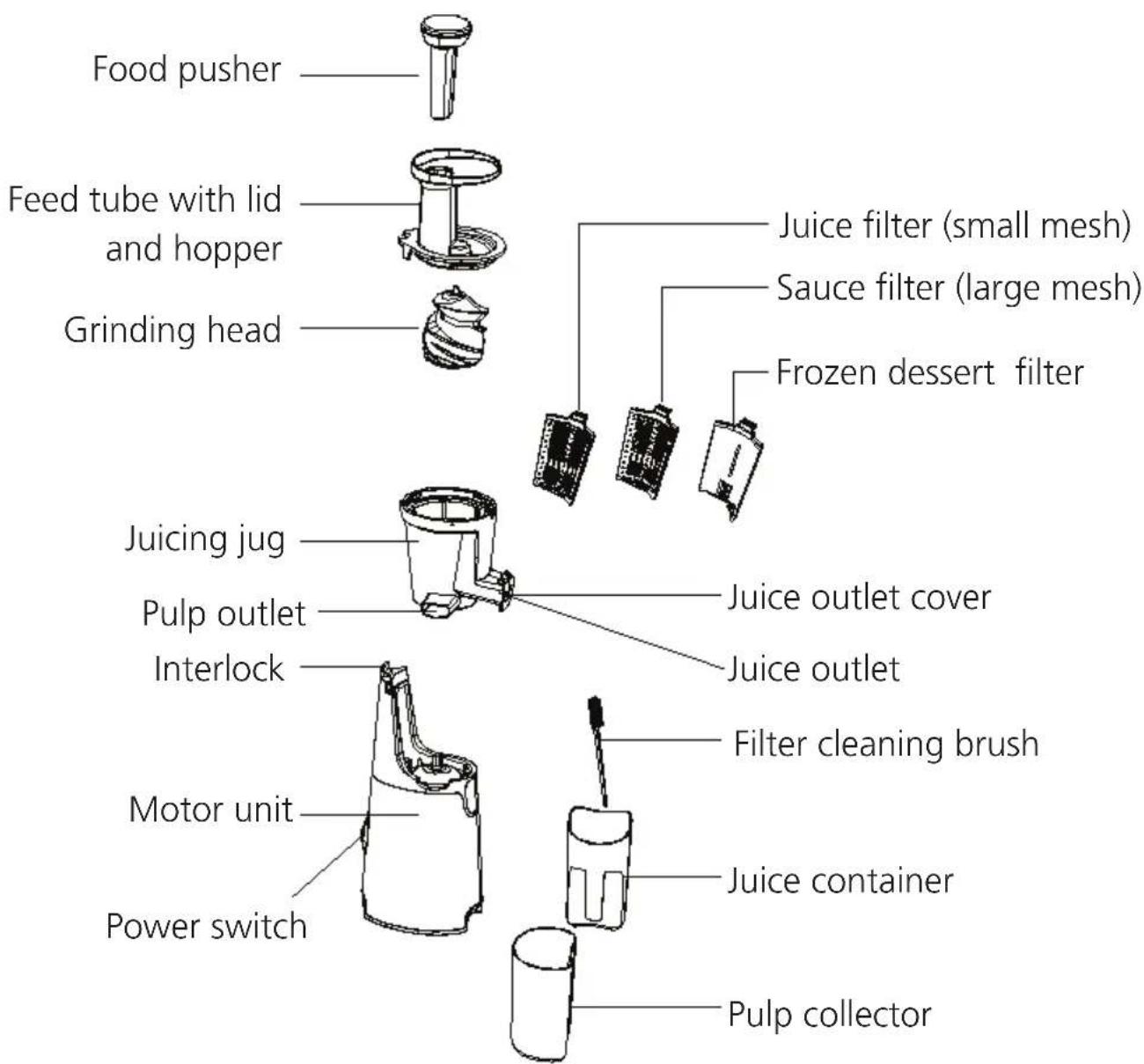
Function Description
The low speed juicing juicer is a unique system where fresh juice comes from squeezing rather than grinding. The slow juicer squeezes instead of grinding which allows the juice to maintain its pure color, natural taste, nutrients and vitamins. The juice will flow in your juice cup from the juice spout, and the pulp will be ejected from pulp ejection spout
and be collected by pulp container. When using the juicer, the pulp container and juice container must be assembled in position. The details will be described in the following:
Before First Time Use
- Remove all packaging.
- Wash all the detachable parts and accessories in warm soapy water and rinse them and dry. But never wash motor unit in water to prevent the risk of electric shock.
- To assembly see "Slow Juicer assembly".
Before assembling, make sure to unplug and switch off the slow juicer (the power switch is on the "O" position).
Notes Before Use
- Make sure to cut food into pieces no larger than 5 cm /2 inches for optimal extraction.
- Remove stones (plums, peaches, mango, apricot, cherries etc.)
- Peel off tough skins (melons, pineapples, cucumbers, potatoes etc.)
- Soft-skinned and other foods just need washing (apples, pears, carrots, radishes, lettuce, cabbage, parsley, spinach, grapes, strawberries, celery etc.)
- Don't put in the juicer frozen fruits nor ice.
- When juicing leafy greens, mix it with fruits for optimal result.
- Don't put in the juicer the vegetable of animal oil to avoid damage of the grinding head.
- Citrus fruits should be peeled and the white pith removed, otherwise the juice may taste bitter.
- Always soak sugarcane, coconut, kudzu or cereal (e.g. bean, rice) in water, prior to putting them in the juicer.
- Drop the food into the feeding tube. Don't push or force it down. The pusher provided is only to be used if food gets stuck.
- Insert food at a slow pace to allow all the pulp to be extracted. For best results, don't overfill or rush.
Product Assembly
- Assemble the juicing jar onto the base. Once the jar is placed on the base, twist it until it locks into place. The juicer will not work if the jar and lid are unlocked (see Fig. 2).
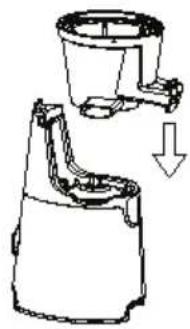
Fig. 1
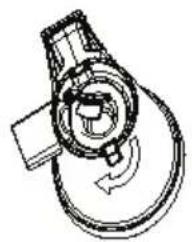
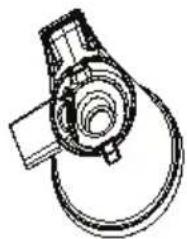
Fig. 2
- Select the required filter and fit it inside the filter holder in the juicing jar (see Fig. 3a). Once the required filter is fitted, put the grinding head inside the juicing jar (see Fig. 3b).
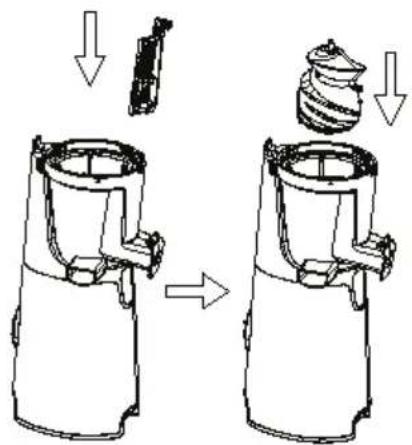
Fig. 3a Fig. 3b
NOTE: The slow juicer comes with 3 different types of filters:
- Juice filter: mainly for juice extraction.
- Sauce filter: can be used for making jam, ketchup, tomato sauce, pesto, tofu, syrup, some smoothies, etc.
- Frozen desserts filter: suitable for making sorbet, ice cream, jelly, milkshake, etc.
Note: Never use ice or deeply frozen food when preparing frozen desserts. Before pressing, the frozen food should be defrosted to a level that allows a fork to be inserted into the food. It is recommended to clean the juicer after pressing every 500g of food.
None of the filters can be exchanged with each other during operation.
- Assemble the jar lid onto the juicing jar (see Fig. 4a). First, align the arrows on the lid and jar (see Fig. 4b), then twist clockwise to align the symbols (see Fig. 4c). Make sure to lock the jar and lid by interlocking them (see Fig. 4d). The juicer won't work if unlocked and all parts are not fully aligned. The food pusher can be stored inside the jar lid (see Fig. 4e).
![graph TD A["Top Component"] --> B["Step 1"] B --> C["Step 2"] C --> D["Step 3"] D --> E["Step 4"] E --> F["Step 5"] F --> G["Bottom Component"]](/content/2026/03/465389/images/cff615c21633a9e49630348ed6c46ee5d8be650441d4c84ed11eb912536f1e2b.jpg)
- Place containers at both the juice and pulp outlets (see Fig. 5). The product is now ready to operate.
Warning: When moving the slow juicer, lift it by holding the motor unit.
DO NOT operate the juicer without the pulp and juice containers.
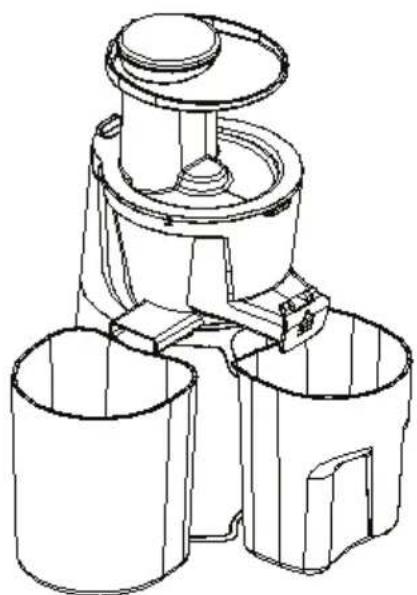
Fig.5
Using Your Juicer
- Power switch settings are:
I: Switch juicer on
0: Switch juicer off
R: Reverse rotation. Hold the button to clear clogs.
- Make sure both juice and pulp containers are placed in position.
- For best results, cut food into smaller pieces. For example, carrots should be cut into thin slices of about 15mm x 15mm before being put into the machine.
NOTE:
- Remove stones (plums, peaches, mango, apricot, cherries, etc.)
- Peel off thick skins (melons, pineapples, cucumbers, potatoes, etc.)
- Do not process coconuts, sugarcane or similar hard food, to avoid motor damage.
- It is not recommended to process hard fruit or vegetables rich in fiber and starch. Drop food into the feed tube on the juicing jar lid. Do not push or force down. Insert food at a slow pace, allowing the pulp to extract. For maximum efficiency, don't overload or rush.
Note: The food pusher should be used if food becomes stuck in the feeding tube.
- Plug in the juicer and switch to "I" position to commence juice extraction.
Caution: DO NOT switch directly from "I" to "R" nor "R" to "I" at any time during operation. If required, always switch off the juicer by switching to "O" position. Once the juicer stops working, select "I" or "R".
Caution: Do not use the juicer without food inside.
Caution: Never put your fingers or other objects into the feeding tube other than food intended for use with the slow juicer when it is working. Unplug before unblocking the feed tube.
- The slow juicer is equipped with a safety device to prevent motor damage.
If the juicer is stuck and doesn't work:
- Switch off "O" the juicer
- Reset the juicer by pressing the reset switch underneath the motor unit.
- After resetting the switch, hold the reverse "R" position
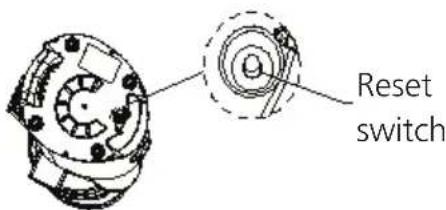
Fig.6
for a few seconds. Switch off "O" and turn on "I" again.
- If reverse "R" doesn't work, turn off the juicer "O", unplug and reassemble the juicer by following the "product assembly" instructions, plug in and turn on "I" the juicer.
- Once the juice container is full (maximum capacity 400ml) or the work is done, switch off the juicer ("0") and empty both containers before continuing to use.
Note: The maximum operation time should not exceed 15 minutes, and it is recommended to maintain a minimum of 30 minutes of rest time between two consecutive cycles.
Note: Do not insert too much food to extract at one time. During operation, once the juice container is full, you must stop the appliance and empty the residue container before the next cycle.
Note: During operation, if the interlock switch between the jar lid and the motor unit is disconnected, the motor will stop to prevent danger.
Cleaning and Maintenance
- To make disassembly and cleaning of the appliance easier, run the juicer without any load for about 30 seconds. If the jar lid is hard to detach, try turning on reverse "R" or pour some water into the feeding tube to clean it.
- Before cleaning, unplug the appliance and wait until it cools down.
- Reverse the assembly procedure to take the juicer apart.
Caution: DO NOT switch directly from "I" to "R" or from "R" to "I" at any time during operation. If required, always switch off the juicer by switching to "O" position. Once the juicer stops working, select "I" or "R".
Note: The grinding head can be easily detached from the juicing jar if you push the axis at the bottom of the juicing jar (see Fig. 7).
- Empty the residue container, then clean the jar lid, grinding head, strainer, jar, and residue container under running water. When cleaning the strainer, only need to brush the concave surface of the strainer under running water with the small cleaning brush several times, and then the whole strainer can be cleaned well.
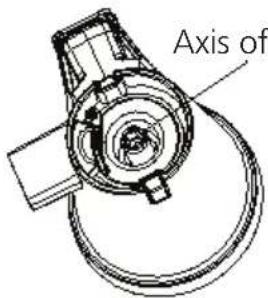
Axis of grinding head Fig.7
- Wipe the outside of the motor unit with a damp cloth. Never immerse the motor unit in water.
- Dry all parts and assemble all parts well, then store the appliance in a dry place. The juice container can be stored in the residue container.
Recipes
Spinach and Banana Juice Paprika Tomato Juice
(For 2 servings)
- Spinach....120 g (4.2 oz)
- Banana 180 g (6.4 oz) • Apple....300 g (10.6 oz)
- Lemon 20 g (0.7 oz)
(For 2 servings)
• Red Paprika.....120 g (4.2 oz) - Tomato 200 g (7.1 oz) - Banana 60 g (2.1 oz) - Lemon 10 g (0.4 oz) • Apple....200 g (7.1 oz)
Carrot and Orange Juice Carrot and Tomato Juice
(For 2 servings)
• Carrot....300 g (10.6 oz) - Banana 120 g (4.2 oz) • Orange 210 g (7.4 oz) - Lemon 10 g (0.4 oz)
(For 2 servings)
- Carrot....200 g (7.1 oz)
- Tomato 160 g (5.7 oz)
- Orange 100 g (3.5 oz)
- Lemon 30 g (1.1 oz)
Carrot and Apple Juice Blueberry and Banana Frozen Dish
(For 2 servings)
- Carrot....300 g (10.6 oz) • Apple....300 g (10.6 oz)
- Lemon 30 g (1.1 oz)
(For 2 servings)
- Blueberry 100 g (3.5 oz)
- Banana 180 g (6.4 oz)
Guarantee
Please keep your receipt as this will be required for any claims under this guarantee.
During this guaranteed period, if in the unlikely event the appliance no longer functions due to a design or manufacturing fault, please take it back to the place of purchase, with your till receipt and a copy of this guarantee.
The rights and benefits under this guarantee are additional to your statutory rights, which are not affected by this guarantee. Only Sharp Home Appliances (Europe) has the right to change these terms.
Further Terms & conditions of the warranty, please visit www.sharphomeappliances.com
Fig.1
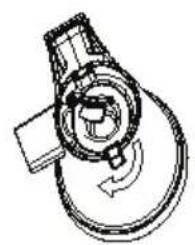
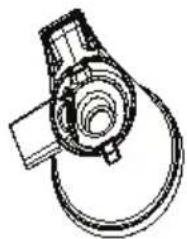
Fig.2
Fig. 3a Fig. 3b
Fig. 5
Figure 1
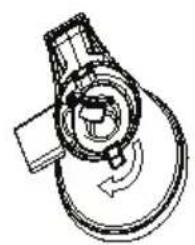
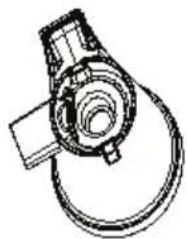
Figure 2
Figure 3a Figure 3b
Figure 4a Figure 4b Figure 4c Figure 4d Figure 4e
Figure 5
Using the juicer
Fig. 1
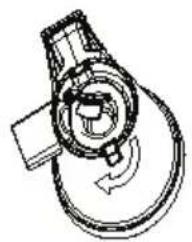
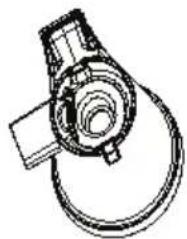
Fig. 2
Fig. 3a Fig. 3b
Fig. 5
www.sharphomeappliances.com
EN
READ THIS MANUAL CAREFULLY BEFORE USING THE APPLIANCE AND KEEP IT FOR FUTURE REFERENCE
Fig. 1
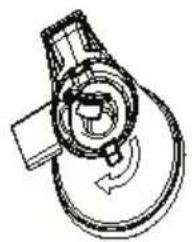
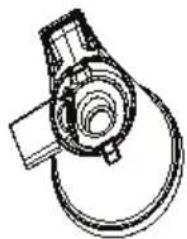
Fig.2
Fig.3a Fig.3b
Fig.5
Use the extractor
Fig. 1
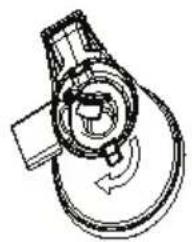
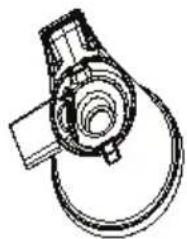
Fig. 2
Fig. 3a Fig. 3b
Fig. 5
Fig. 1
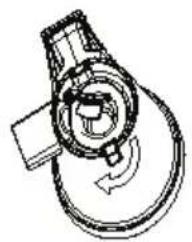
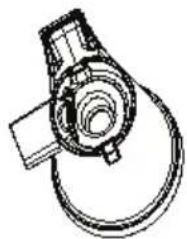
Fig.2
Fig.3a Fig.3b
Fig.4a Fig.4b Fig.4c Fig.4d Fig.4e
Fig.5
Fig. 1
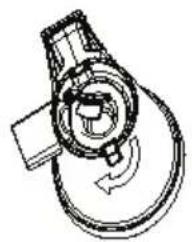
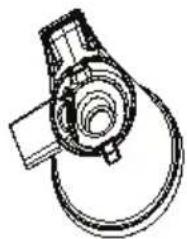
Fig.2
Fig.3a Fig.3b
NOTE: The slow juicer comes with 3 different types of filters:
Fig.5
How to use the slow juicer
- turn off the slow juicer "0"
Fig. 1
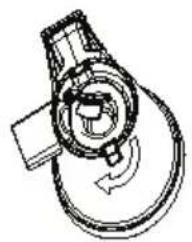
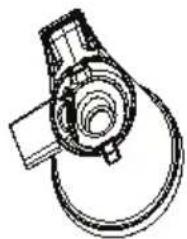
Fig. 2
- Choose the appropriate filter and place it in the filter holder in the juicer jug (see fig. 3a). When the appropriate filter is in place, place the grinding head in the juicer jug (see fig. 3b).
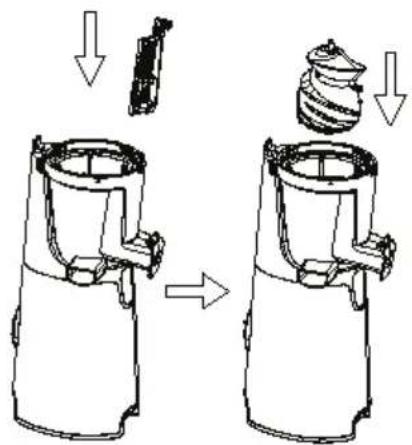
Fig.3a Fig.3b
NOTE: The slow juicer has three different filter types:
Fig.4c Fig.4d Fig.4eFig.4bFig.4a
Fig.5
Using the juicer
- Power switch settings:
I Turn on the juicer
Fig.6
Fig.1
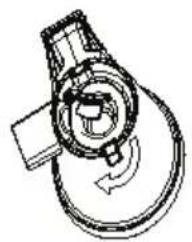
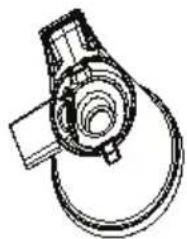
Fig.2
Fig.3a Fig.3b
Fig.5
Fig.6
Fig.1
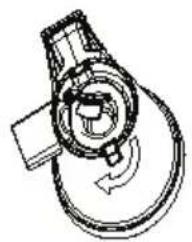
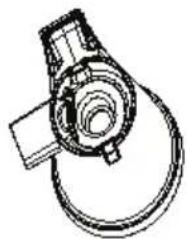
Fig.2
Fig.3a Fig.3b
NOTE: The slow juicer comes with 3 different types of filters:
Fig.5
Fig.1
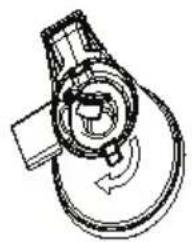
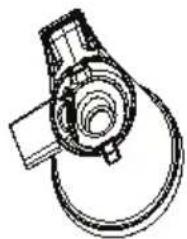
Fig.2
Fig.3a Fig.3b
Fig. 5
Juicer operation
*Microwave oven, Vacuum cleaners and SDA service only
Follow us:

Service & Support
Visit our website:
www.sharphomeappliances.com
Or contact us:


YouTube
- READ THIS USER MANUAL CAREFULLY BEFORE YOU USE THE APPLIANCE AND SAVE IT FOR FUTURE REFERENCE
- IMPORTANT SAFEGUARDS
- ELECTRICAL CORD
- INFORMATION ON DISPOSAL FOR USERS (PRIVATE HOUSEHOLDS)
- IN THE EUROPEAN UNION
- IN OTHER COUNTRIES OUTSIDE THE EU
- KNOW YOUR JUICER
- FUNCTION DESCRIPTION
- BEFORE FIRST TIME USE
- NOTES BEFORE USE
- PRODUCT ASSEMBLY
- USING YOUR JUICER
- NOTE
- CLEANING AND MAINTENANCE
- RECIPES
- SPINACH AND BANANA JUICE PAPRIKA TOMATO JUICE
- CARROT AND ORANGE JUICE CARROT AND TOMATO JUICE
- CARROT AND APPLE JUICE BLUEBERRY AND BANANA FROZEN DISH
- GUARANTEE
- USING THE JUICER
- READ THIS MANUAL CAREFULLY BEFORE USING THE APPLIANCE AND KEEP IT FOR FUTURE REFERENCE
- USE THE EXTRACTOR
- HOW TO USE THE SLOW JUICER
- JUICER OPERATION
Brand : SHARP
Model : SAFJ3001W
Category : Juicer