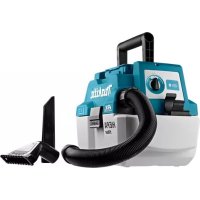
DVC750LZX1 - Cordless vacuum MAKITA - Free user manual and instructions
Find the device manual for free DVC750LZX1 MAKITA in PDF.


| Product Type | Cordless Vacuum Cleaner |
| Brand | Makita |
| Model | DVC750LZX1 |
| Dimensions (L x W x H) | 418 mm x 251 mm x 278 mm |
| Net weight (with accessories and battery) | 4.2 to 4.6 kg |
| Power source | Lithium-ion battery 18 V DC (compatible BL1815N to BL1860B) |
| Tank capacity (dust) | 7.5 L |
| Tank capacity (water) | 4.5 L |
| Max air volume (at turbine) | 2.4 m³/min |
| Max vacuum (high mode) | 67 hPa |
| Sound pressure level | 76 dB(A) (uncertainty 2.5 dB) |
| Protection degree | IPX4 |
| Dust category | L (light) |
| Applications | Dry and wet dust, commercial use |
| Main functions | Suction and blow, two power modes (normal/high), float system for wet suction |
| Maintenance and cleaning | Regular emptying of the tank, cleaning the HEPA filter/wet filter with water, drying before reuse |
| Safety | Protection against overload, overheating and complete battery discharge; automatic float shut-off |
| Spare parts and repairability | HEPA filter, wet filter, pre-filter set, hose, nozzles, battery and charger available; repair by Makita authorized service center |
| General information | Manual available in multiple languages; battery and charger sold separately; weight varies depending on accessories |
Frequently Asked Questions - DVC750LZX1 MAKITA
User questions about DVC750LZX1 MAKITA
0 question about this device. Answer the ones you know or ask your own.
Ask a new question about this device
Download the instructions for your Cordless vacuum in PDF format for free! Find your manual DVC750LZX1 - MAKITA and take your electronic device back in hand. On this page are published all the documents necessary for the use of your device. DVC750LZX1 by MAKITA.
USER MANUAL DVC750LZX1 MAKITA
| EN | Cordless Portable Vacuum Cleaner | INSTRUCTION MANUAL 6 |
| FR | Aspirateur Portable Sans Fil MANUEL D'INSTRUCTIONS 14 | |
| DE | Akku Staubsauger tragbar BETRIEBSANLEITUNG 23 | |
| IT | Aspirapolyvere portatile a battery | ISTRUZIONI PER L'USO 32 |
| NL | Draagbare accustofzuiger GEBRUIKSAANWIJZING 41 | |
| ES | Aspiradora Inalámbrica Portátil | MANUAL DE INSTRUCCIONES 50 |
| PT | Aspirador de Pó e Água a Bateria | MANUAL DE INSTRUÇões 59 |
| DA | Akku bærbar støvsuger BRUGSANVISNING 68 | |
| EL | Φορητή ηλεκτρική σκούπα με μπαταρία | ΕΓXEΙΡΙΟ OΔΗΓΙΩN 76 |
| TR | Akūlù Portatif Sūpürge KULLANMA KILAVUZU 85 | |
DVC750L
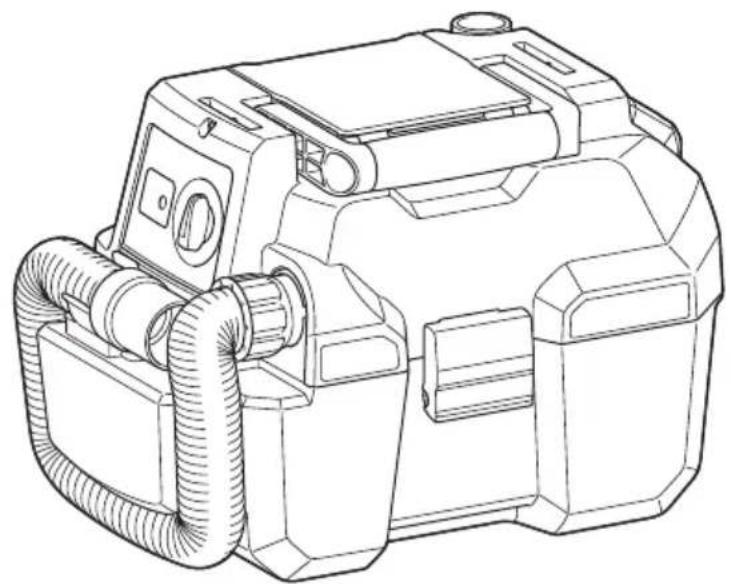
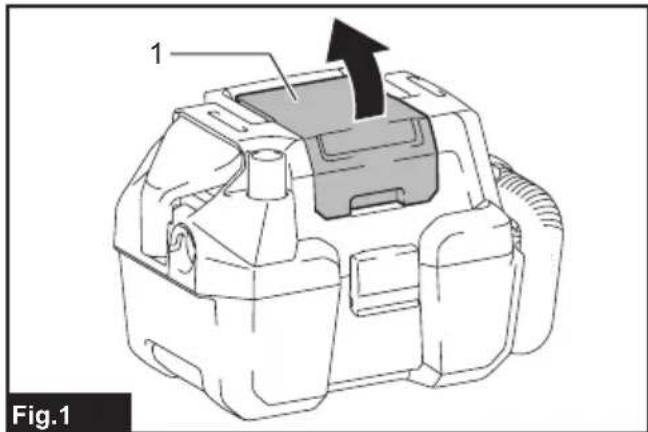
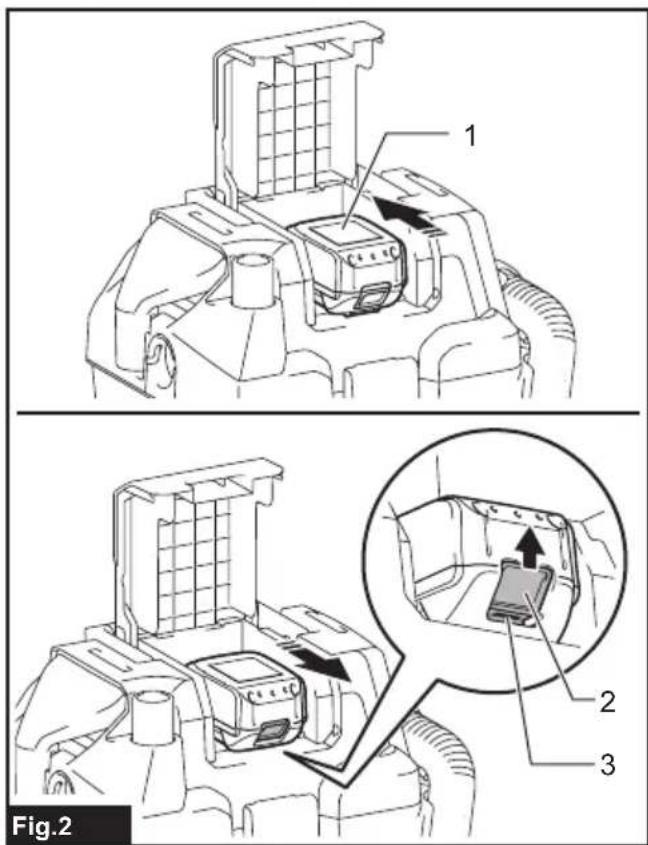
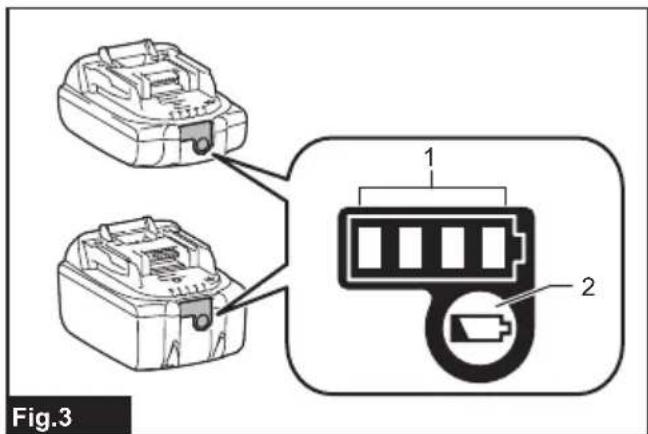
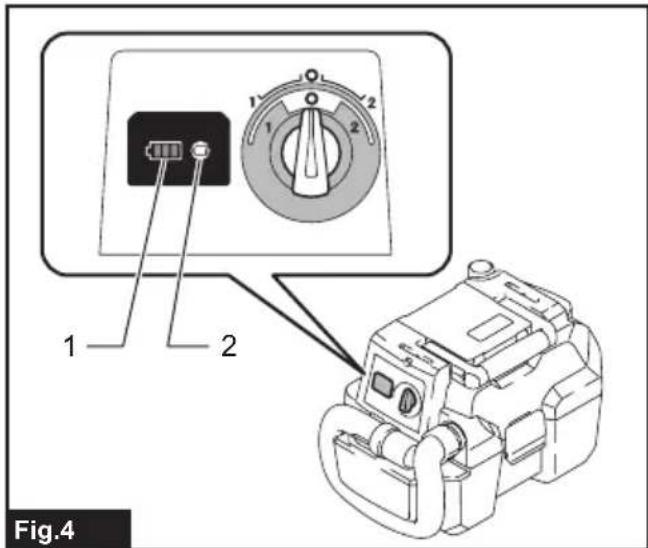
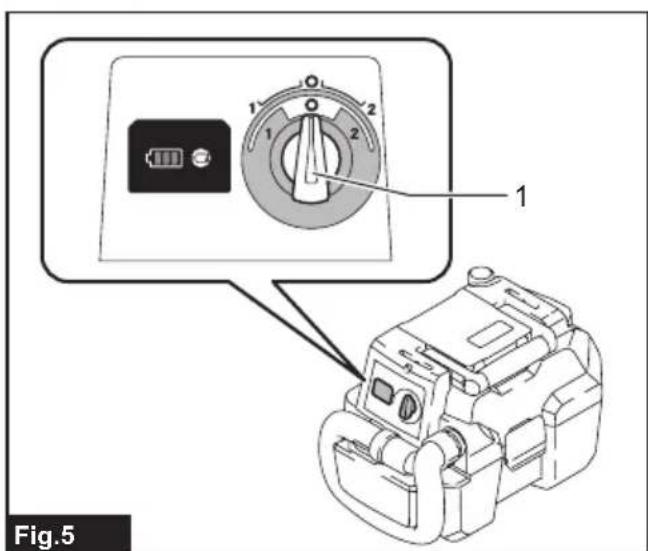
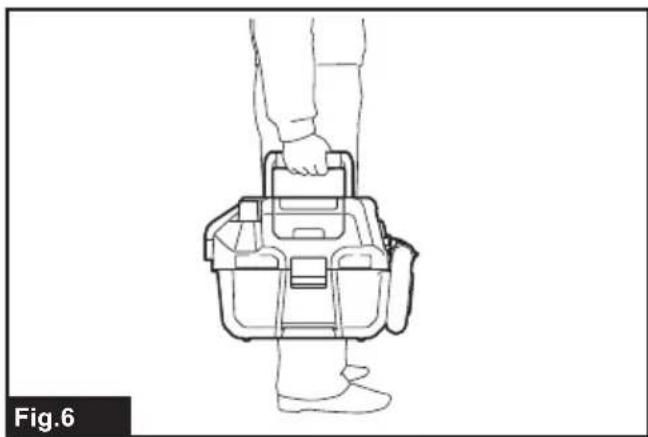
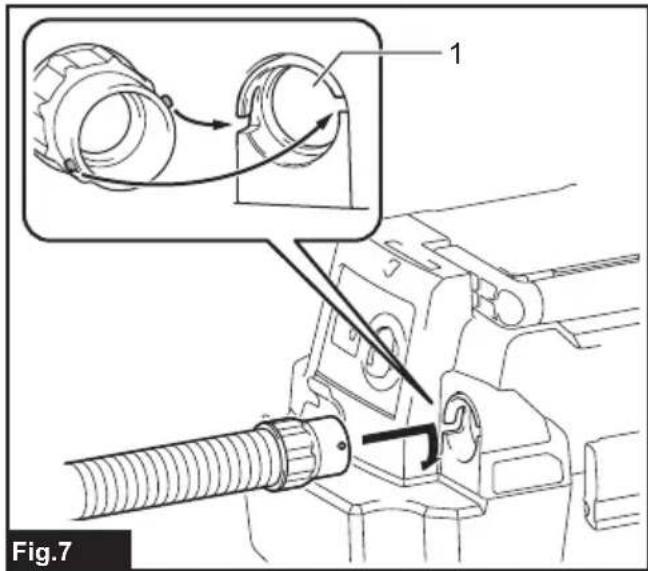
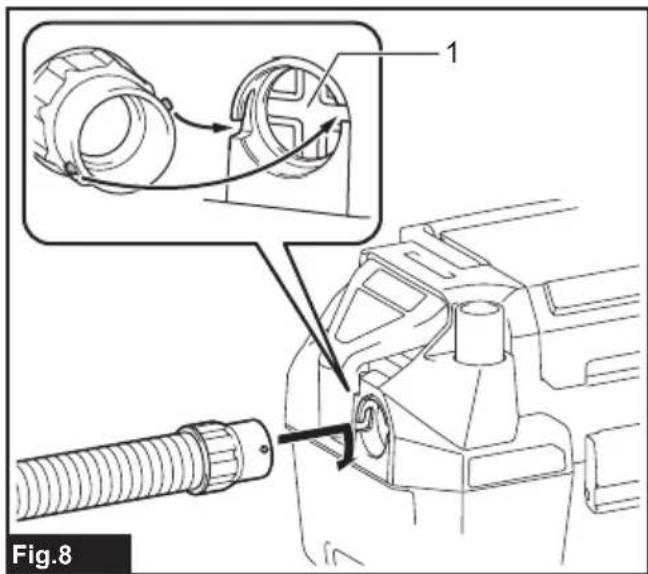

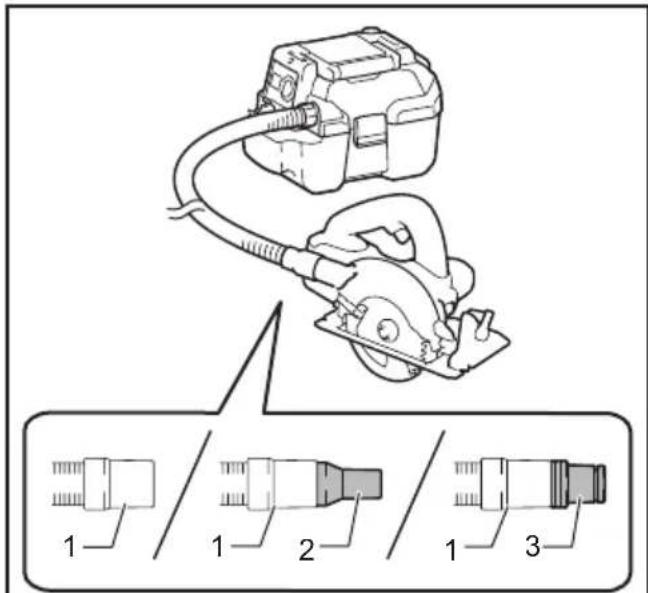
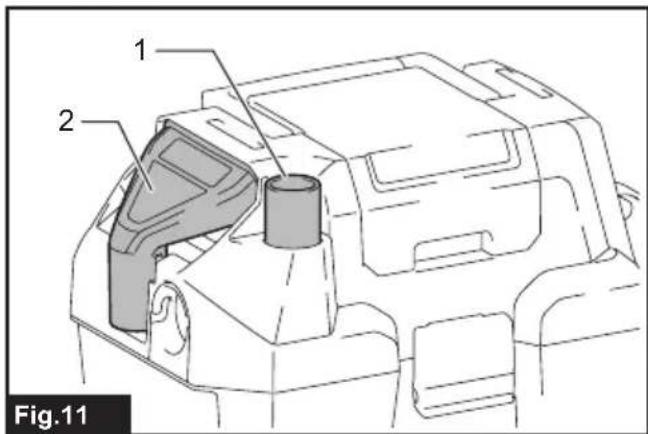
Fig.10
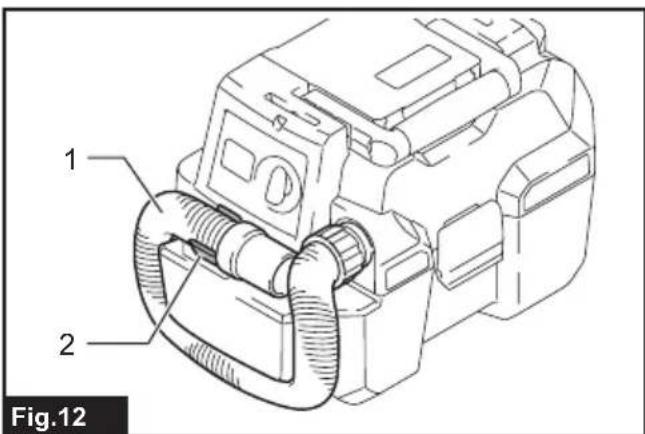
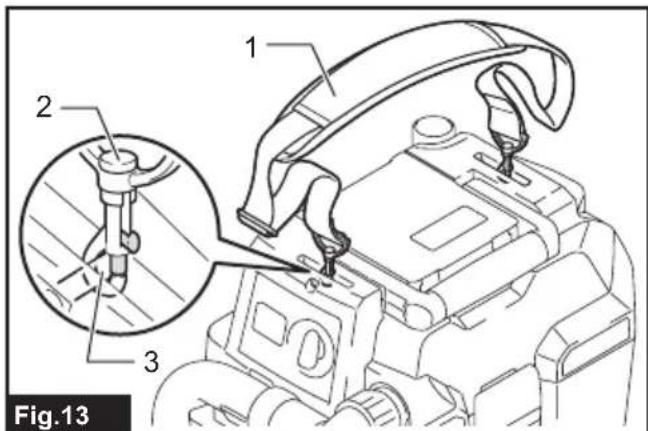
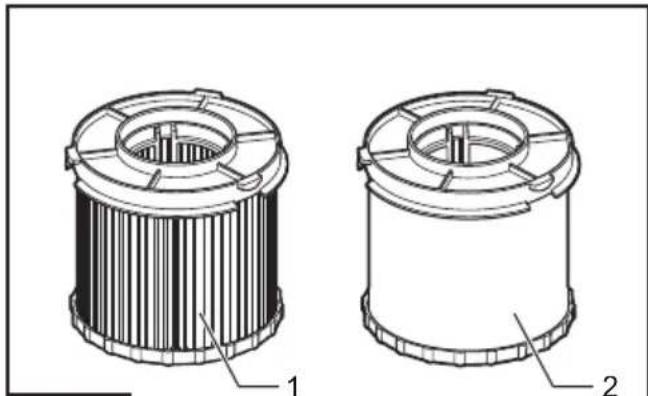
Fig.14
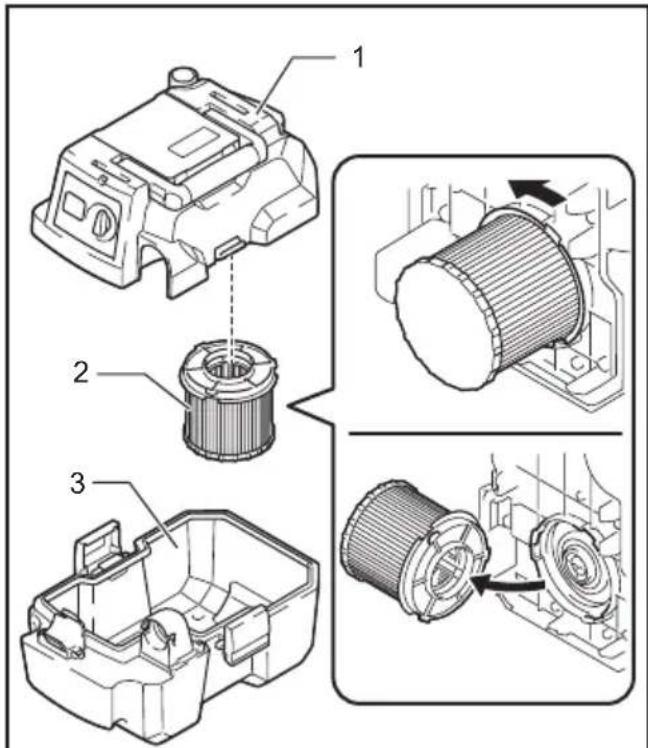
Fig.18


WARNING
- This machine is not intended for use by persons including children with reduced physical, sensory or mental capabilities, or lack of experience and knowledge.
- Children should be supervised to ensure that they do not play with the cleaner.
- See the chapter "SPECIFICATIONS" for the type reference of the battery.
- See the section "Installing or removing battery cartridge" for how to remove or install the battery.
- When disposing the battery cartridge, remove it from the tool and dispose of it in a safe place. Follow your local regulations relating to disposal of battery.
- If the tool is not used for a long period of time, the battery must be removed from the tool.
- Do not short the battery cartridge.
- See the chapter "MAINTENANCE" for the appropriate details of precautions during user maintenance.
SPECIFICATIONS
| Model: DVC750L | ||
| Maximum air volume at the end of hose | Normal (1) 1.3 m | 3/min |
| High (2) 1.6 m | 3/min | |
| Maximum air volume at turbine 2.4 m | 3/min | |
| Vacuum Normal (1) 42 hPa | ||
| High (2) 67 hPa | ||
| Nominal overpressure (when using as a blower) | Normal (1) 42 hPa | |
| High (2) 67 hPa | ||
| Recoverable capacity Dust 7.5 L | ||
| Water * 4.5 L | ||
| Dimensions (L x W x H) 418 mm x 251 mm x 278 mm | ||
| Rated voltage | D.C. 18 V | |
| Net weight | 4.2 - 4.6 kg | |
| Protection degree | IPX4 | |
- Due to our continuing program of research and development, the specifications herein are subject to change without notice.
- Specifications may differ from country to country.
- The weight includes accessories (Hose, Wide nozzle, Sash nozzle) and battery cartridge(s). The lightest and heaviest combination weight of the appliance and battery cartridge(s) are shown in the table.
- The capacity of water depends on the condition of use.
Applicable battery cartridge and charger
| Battery cartridge | BL1815N / BL1820B / BL1830B / BL1840B / BL1850B / BL1860B |
| Charger | DC18RC / DC18RD / DC18RE / DC18SD / DC18SE / DC18SF / DC18SH / DC18WC |
- Some of the battery cartridges and chargers listed above may not be available depending on your region of residence.

WARNING: Only use the battery cartridges and chargers listed above. Use of any other battery cartridges and chargers may cause injury and/or fire.
Symbols
The followings show the symbols which may be used for the equipment. Be sure that you understand their meaning before use.

Read instruction manual.

Take particular care and attention.

Warning! The cleaner may contain hazardous dust.

Dust class L (light). The cleaners are capable of picking up dust class L. Follow your country's regulations relating to dusts and to occupational health and safety.

Ni-MH Li-ion
Only for EU countries
Due to the presence of hazardous components in the equipment, waste electrical and electronic equipment, accumulators and batteries may have a negative impact on the environment and human health. Do not dispose of electrical and electronic appliances or batteries with household waste!
In accordance with the European Directive on waste electrical and electronic equipment and on accumulators and batteries and waste accumulators and batteries, as well as their adaptation to national law, waste electrical equipment, batteries and accumulators should be stored separately and delivered to a separate collection point for municipal waste, operating in accordance with the regulations on environmental protection.
This is indicated by the symbol of the crossed-out wheeled bin placed on the equipment.
Intended use
The tool is intended for collecting both wet and dry dust. The tool is suitable for commercial use, for example in hotels, schools, hospitals, factories, shops, offices and rental businesses.
Noise
The typical A-weighted noise level determined according to IEC60335-2-69:
Sound pressure level (L_pA):76 dB (A)
Uncertainty (K) : 2.5 dB (A)
The noise level under working may exceed 80 dB (A).
NOTE: The declared noise emission value(s) has been measured in accordance with a standard test method and may be used for comparing one tool with another.
NOTE: The declared noise emission value(s) may also be used in a preliminary assessment of exposure.

WARNING: Wear ear protection.
WARNING: The noise emission during actual use of the power tool can differ from the declared value(s) depending on the ways in which the tool is used especially what kind of workpiece is processed.
WARNING: Be sure to identify safety measures to protect the operator that are based on an estimation of exposure in the actual conditions of use (taking account of all parts of the operating cycle such as the times when the tool is switched off and when it is running idle in addition to the trigger time).
Vibration
The vibration total value (tri-axial vector sum) determined according to IEC60335-2-69:
Vibration emission (a_h,M):2.5m / s^2 or less Uncertainty (K): 1.5m / s^2
NOTE: The declared vibration total value(s) has been measured in accordance with a standard test method and may be used for comparing one tool with another.
NOTE: The declared vibration total value(s) may also be used in a preliminary assessment of exposure.
WARNING: The vibration emission during actual use of the power tool can differ from the declared value(s) depending on the ways in which the tool is used especially what kind of workpiece is processed.
WARNING: Be sure to identify safety measures to protect the operator that are based on an estimation of exposure in the actual conditions of use (taking account of all parts of the operating cycle such as the times when the tool is switched off and when it is running idle in addition to the trigger time).
EC Declaration of Conformity
For European countries only
The EC declaration of conformity is included as Annex A to this instruction manual.
SAFETYWARNINGS
Cordless vacuum cleaner safety warnings
WARNING:IMPORTANT!READ CAREFULLY all safety warnings and all instructions BEFORE USE. Failure to follow the warnings and instructions may result in electric shock, fire and/or serious injury
-
Before use, make sure that this cleaner must be used by people who have been adequately instructed on the use of this cleaner.
-
Before use, operators shall be provided with information, instruction and training for the use of the machine and the substances for which it is to be used, including the safe method of removal and disposal of the material collected.
- If foam/liquid comes out, switch off immediately.
- Clean the water level limiting device regularly and examine it for signs of damage.
- Always make sure that filters are correctly installed before use. Do not use the cleaner without filters in place. Replace a damaged filter immediately. It is recommended to have some spares as filters are consumable items.
- AVOID UNINTENTIONAL STARTING. Be sure switch is OFF when installing battery(ies).
- Do not attempt to pick up flammable materials, fire works, lighted cigarettes, hot ashes, hot metal chips, sharp materials such as razors, needles, broken glass or the like.
- NEVER USE THE CLEANER IN THE VICINITY OF GASOLINE, GAS, PAINT, ADHESIVES OR OTHER HIGHLY EXPLOSIVE SUBSTANCES. The switch emits sparks when turned ON and OFF. And so does the motor commutator during operation. A dangerous explosion may result.
- Never vacuum up toxic, carcinogenic, combustible or other hazardous materials such as asbestos, arsenic, barium, beryllium, lead, pesticides, or other health endangering materials.
- Always place the cleaner on a horizontal flat surface to prevent it from falling or moving unintentionally.
- Never use the cleaner outdoors in the rain.
- For Finland, this machine is not to be used outdoors at low temperature.
- Do not use close to heat sources (stoves, etc.).
- If the exhaust air is returned to the room, it is necessary to provide for an adequate air change rate in the room. Reference to National regulations is necessary.
- Do not block suction inlet/outlet/cooling vents. These vents permit cooling of the motor. Blockage should be carefully avoided otherwise the motor will burn out due to a lack of ventilation.
- Keep proper footing and balance at all times.
- Do not fold, tug or step on the hose.
- Stop the cleaner immediately if you notice poor performance or anything abnormal during operation.
- REMOVE THE BATTERY(IES). When not in use, before servicing, and when changing accessories.
- Clean and service the cleaner immediately after each use to keep it in tiptop operating condition.
-
MAINTAIN THE CLEANER WITH CARE. Keep the cleaner clean for better and safer performance. Follow instructions for changing accessories. Keep handles dry, clean, and free from oil and grease.
-
CHECK DAMAGED PARTS. Before further use of the cleaner, a guard or other part that is damaged should be carefully checked to determine that it will operate properly and perform its intended function. Check for alignment of moving parts, binding of moving parts, breakage of parts, mounting, and any other conditions that may affect its operation. A guard or other part that is damaged should be properly repaired or replaced by an authorized service center unless otherwise indicated elsewhere in this instruction manual. Have defective switches replaced by authorized service center. Don't use the cleaner if switch does not turn it on and off.
- For user servicing, the machine shall be dismantled, cleaned and serviced, as far as is reasonably practicable, without causing risk to the maintenance staff and others.
- The machine should be technically inspected by the manufacturer, or an instructed person, at least annually, consisting of, for example, inspection of filters for damage, air tightness of the machine and proper function of the control mechanism.
- When carrying out service or repair operations, all contaminated items which cannot be satisfactorily cleaned are to be disposed of; such items shall be disposed of in impervious bags in accordance with any current regulation for the disposal of such waste.
- REPLACEMENT PARTS. When servicing, use only identical replacement parts.
- When not in use, always store the cleaner indoors.
- Wet filters and the interior part of the liquid container shall be dried before storage.
- Be kind to your cleaner. Rough handling can cause breakage of even the most sturdily built cleaner.
- Do not attempt to clean the exterior or interior with benzine, thinner or cleaning chemicals. Cracks and discoloration may be caused.
- Do not use cleaner in an enclosed space where flammable, explosive or toxic vapors are given off by oil-base paint, paint-thinner, gasoline, some mothproofing substances, etc., or in areas where flammable dust is present.
- Do not operate the cleaner or any tool while under the influence of drugs or alcohol.
- As a basic rule of safety, use safety goggles or safety glasses with side shields.
- Use a dust mask in dusty work conditions.
- This machine is not intended for use by persons including children with reduced physical, sensory or mental capabilities, or lack of experience and knowledge.
- Children should be supervised to ensure that they do not play with the cleaner.
- Never handle battery(ies) and cleaner with wet hands.
- Use extreme caution when cleaning on stairs.
- Do not use the cleaner as a stool or work bench. The machine may fall down and may result in personal injury.
Battery tool use and care
- Recharge only with the charger specified by the manufacturer. A charger that is suitable for one type of battery pack may create a risk of fire when used with another battery pack.
- Use power tools only with specifically designated battery packs. Use of any other battery packs may create a risk of injury and fire.
- When battery pack is not in use, keep it away from other metal objects, like paper clips, coins, keys, nails, screws or other small metal objects, that can make a connection from one terminal to another. Shorting the battery terminals together may cause burns or a fire.
- Under abusive conditions, liquid may be ejected from the battery; avoid contact. If contact accidentally occurs, flush with water. If liquid contacts eyes, additionally seek medical help. Liquid ejected from the battery may cause irritation or burns.
- Do not use a battery pack or tool that is damaged or modified. Damaged or modified batteries may exhibit unpredictable behaviour resulting in fire, explosion or risk of injury.
- Do not expose a battery pack or tool to fire or excessive temperature. Exposure to fire or temperature above 130^ may cause explosion.
- Follow all charging instructions and do not charge the battery pack or tool outside the temperature range specified in the instructions. Charging improperly or at temperatures outside the specified range may damage the battery and increase the risk of fire.
SAVE THESE INSTRUCTIONS.
WARNING: DO NOT let comfort or familiarity with product (gained from repeated use) replace strict adherence to safety rules for the subject product. MISUSE or failure to follow the safety rules stated in this instruction manual may cause serious personal injury.
Important safety instructions for battery cartridge
- Before using battery cartridge, read all instructions and cautionary markings on (1) battery charger, (2) battery, and (3) product using battery.
- Do not disassemble or tamper with the battery cartridge. It may result in a fire, excessive heat, or explosion.
- If operating time has become excessively shorter, stop operating immediately. It may result in a risk of overheating, possible burns and even an explosion.
- If electrolyte gets into your eyes, rinse them out with clear water and seek medical attention right away. It may result in loss of your eyesight.
- Do not short the battery cartridge:
(1) Do not touch the terminals with any conductive material.
(2) Avoid storing battery cartridge in a container with other metal objects such as nails, coins, etc.
(3) Do not expose battery cartridge to water or rain.
A battery short can cause a large current flow, overheating, possible burns and even a breakdown.
- Do not store and use the tool and battery cartridge in locations where the temperature may reach or exceed 50^ (122°F).
- Do not incinerate the battery cartridge even if it is severely damaged or is completely worn out. The battery cartridge can explode in a fire.
- Do not nail, cut, crush, throw, drop the battery cartridge, or hit against a hard object to the battery cartridge. Such conduct may result in a fire, excessive heat, or explosion.
- Do not use a damaged battery.
- The contained lithium-ion batteries are subject to the Dangerous Goods Legislation requirements. For commercial transports e.g. by third parties, forwarding agents, special requirement on packaging and labeling must be observed. For preparation of the item being shipped, consulting an expert for hazardous material is required. Please also observe possibly more detailed national regulations. Tape or mask off open contacts and pack up the battery in such a manner that it cannot move around in the packaging.
- When disposing the battery cartridge, remove it from the tool and dispose of it in a safe place. Follow your local regulations relating to disposal of battery.
- Use the batteries only with the products specified by Makita. Installing the batteries to non-compliant products may result in a fire, excessive heat, explosion, or leak of electrolyte.
- If the tool is not used for a long period of time, the battery must be removed from the tool.
- During and after use, the battery cartridge may take on heat which can cause burns or low temperature burns. Pay attention to the handling of hot battery cartridges.
- Do not touch the terminal of the tool immediately after use as it may get hot enough to cause burns.
- Do not allow chips, dust, or soil stuck into the terminals, holes, and grooves of the battery cartridge. It may cause heating, catching fire, burst and malfunction of the tool or battery cartridge, resulting in burns or personal injury.
- Unless the tool supports the use near high-voltage electrical power lines, do not use the battery cartridge near high-voltage electrical power lines. It may result in a malfunction or breakdown of the tool or battery cartridge.
- Keep the battery away from children.
SAVE THESE INSTRUCTIONS.
CAUTION: Only use genuine Makita batteries. Use of non-genuine Makita batteries, or batteries that have been altered, may result in the battery bursting causing fires, personal injury and damage. It will also void the Makita warranty for the Makita tool and charger.
Tips for maintaining maximum battery life
- Charge the battery cartridge before completely discharged. Always stop tool operation and charge the battery cartridge when you notice less tool power.
- Never recharge a fully charged battery cartridge. Overcharging shortens the battery service life.
- Charge the battery cartridge with room temperature at 10^ - 40^ (50^ - 104^) . Let a hot battery cartridge cool down before charging it.
- When not using the battery cartridge, remove it from the tool or the charger.
- Charge the battery cartridge if you do not use it for a long period (more than six months).
FUNCTIONAL DESCRIPTION
CAUTION: Always be sure that the tool is switched off and the battery cartridge is removed before adjusting or checking function on the tool.
Installing or removing battery cartridge
CAUTION: Always switch off the tool before installing or removing of the battery cartridge.
CAUTION: Hold the tool and the battery cartridge firmly when installing or removing battery cartridge. Failure to hold the tool and the battery cartridge firmly may cause them to slip off your hands and result in damage to the tool and battery cartridge and a personal injury.
CAUTION: Be careful not to pinch your fingers when opening or closing the battery cover. Failure to do so may cause personal injury.
To install the battery cartridge, open the battery cover first and then insert the battery cartridge.
Fig.1: 1. Battery cover
NOTE: The battery cover is locked when you open it up to the upright position.
Align the tongue on the battery cartridge with the groove in the housing and slip it into place. Insert it all the way until it locks in place with a little click. Then close the battery cover.
To remove the battery cartridge, slide it from the tool while sliding the button on the front of the cartridge.
▶ Fig.2: 1. Battery cartridge 2. Button 3. Red indicator
CAUTION: Always install the battery cartridge fully until the red indicator cannot be seen. If not, it may accidentally fall out of the tool, causing injury to you or someone around you.
CAUTION: Do not install the battery cartridge forcibly. If the cartridge does not slide in easily, it is not being inserted correctly.
Indicating the remaining battery capacity
Only for battery cartridges with the indicator
Fig.3: 1. Indicator lamps 2. Check button
Press the check button on the battery cartridge to indicate the remaining battery capacity. The indicator lamps light up for a few seconds.
| Indicator lamps Remaining | capacity | ||
| Lighted Off | Blinking | ||
| 75% to 100% | |||
| 50% to 75% | |||
| 25% to 50% | |||
| 0% to 25% | |||
| Charge the battery. | |||
| The battery may have malfunctioned. | |||
NOTE: Depending on the conditions of use and the ambient temperature, the indication may differ slightly from the actual capacity.
NOTE: The first (far left) indicator lamp will blink when the battery protection system works.
Tool / battery protection system
The tool is equipped with a tool/battery protection system. This system automatically cuts off power to the motor to extend tool and battery life. The tool will automatically stop during operation if the tool or battery is placed under one of the following conditions.
Overload protection
When the tool is operated in a manner that causes it to draw an abnormally high current, the tool automatically stops without any indication. In this situation, turn the tool off and stop the application that caused the tool to become overloaded. Then turn the tool on to restart.
Overheat protection
When the tool is overheated, the tool stops automatically. Let the tool cool down before turning the tool on again.
Overdischarge protection
When the battery capacity becomes low, the tool stops automatically. If the product does not operate even when the switches are operated, remove the batteries from the tool and charge the batteries.
Indicating the remaining battery capacity
▶ Fig.4: 1. Battery indicator 2. Check button
Press the check button to indicate the remaining battery capacities. The remaining battery capacity is shown as the following table.
| Battery indicator status Remaining battery capacity | |
| On Off | |
| 50% to 100% | |
| 20% to 50% | |
| 0% to 20% | |
Switch action
CAUTION: Before installing the battery cartridge into the tool, always check to see that the slide switch actuates properly and returns to the "OFF" position when the rear of the slide switch is depressed.
According to your work need, you can choose two types of the suction power; normal "1" or high "2".
To start the cleaner, set the switch lever to "1" or "2" side. To turn off the cleaner, set the switch lever to "0" side.
Fig.5: 1. Switch lever
Auto-suction stop during wet suction operation
WARNING: Do not use for a long time while the float is at work. Using the cleaner with its float at work for a long time can cause overheat, resulting in the cleaner deformation. In the worst case, it may lead to smoke emission or fire.
WARNING: Do not pick up foam or soapy
liquid. Picking up foam or soapy liquid can cause foam to come out of air exit before the float works. Continuing to using in this condition may cause an electric shock and breakage of the cleaner.
The cleaner has a float mechanism that prevents water from immersing into the motor when picking up more than a certain amount of water. When the tank is full and the cleaner no longer picks up water, switch off the cleaner and empty the tank.
Carriage handle
When carrying the cleaner, carry it by holding the handle on the head. The handle is retractable at the head when not in use.
Fig.6
NOTE: When water is in the tank, switch off the cleaner and empty the tank before carrying. The water inside may leak.
ASSEMBLY
CAUTION: Always be sure that the tool is switched off and the battery cartridge is removed before carrying out any work on the tool.
CAUTION: Always wear dust mask during assembly or maintenance.
Connecting the hose
NOTICE: Never force the hose for bending or stamp it. Never move the cleaner by a hose. Forcing, stamping and pulling the hose may cause a breakage or deformation of the hose.
NOTICE: Do not pick up large wastes such as planer carvings and concrete pieces. It may cause a hose stuffing and damage.
For vacuum cleaning
Insert the hose into the suction inlet and turn it clockwise until it clicks.
Fig.7: 1. Suction inlet
For blowing
Insert the hose to blower outlet and turn it clockwise until it clicks.
Fig.8: 1. Blower outlet
NOTE: This cleaner has the suction inlet and blower outlet separately. Connect the hose to the proper port depending on your work.
Connecting the nozzle
Attach the wide nozzle, sash nozzle, or other nozzles supplied as optional accessories depending on your purpose.
To attach the nozzle, twist and insert it to the end of the hose.
Fig.9
Connecting the tool
Optional accessory
To connect the tool, connect the end of the hose to the tool's extraction outlet. Depending on the tool, you may need the optional joint 22-38 or the front cuff 24.
Fig.10: 1.Hose 2.Joint 22-38 3.Front cuff 24
NOTE: When connecting the tool, always make sure that the hose is connected to the suction inlet on the cleaner.
Storage of hose and nozzles
The hose and nozzles can be stored on the tool as illustrated.
Fig.11: 1. Sash nozzle 2. Wide nozzle
When storing the hose, loop it on the tool and fix it with the hook as illustrated.
Fig.12: 1.Hose 2.Hook
Installing the shoulder strap
Optional accessory
Attach the hooks of the shoulder strap onto the mounts of the cleaner as shown in the figure.
Fig.13: 1. Shoulder strap 2. Hook 3. Mount
OPERATION
Using as a vacuum cleaner
NOTICE: Use the HEPA filter when picking up dry dust.
NOTICE: If you continue to pick up water with the HEPA filter, the suction power may be reduced. In that case dry the HEPA filter. Use the wet filter (optional accessory) when picking up water repeatedly.
Fig.14: 1. HEPA filter 2. Wet filter
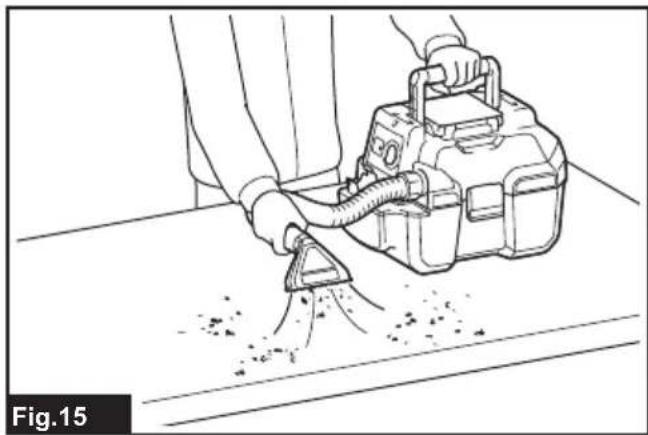
- Install the hose and nozzle onto the suction inlet and turn on the tool.
- After vacuum cleaning, empty the tank before it becomes full.
Fig.15
Using as a blower
CAUTION: Do not blow out muddy water such as pool and sand area. If foreign objects are blown into eyes, it may result in personal injury.
CAUTION: Do not operate as a blower against the wind. If foreign objects are blown into eyes, it may result in personal injury.
CAUTION: Always use protective goggles, a cap and mask while operating.
CAUTION: Never point the nozzle at anyone in the vicinity.
CAUTION: The operator or user is responsible for accidents or hazards occurring to other people or their property.
CAUTION: Do not use the tool for blowing air into objects, like rubber rafting, balls or other inflatable products. Increased motor revolution may cause dangerous fan breakage.
- Install the hose into the blower outlet.
- Point the hose tip to the object to be blown off and turn on the tool.
Fig.16
NOTE: To clean narrow space, connecting the sash nozzle to the hose makes it easy.
MAINTENANCE
CAUTION: Always be sure that the tool is switched off and the battery cartridge is removed before attempting to perform inspection or maintenance.
CAUTION: To reduce the contact to the dust, use goggles and dust mask when emptying the tank or cleaning the filter.
NOTICE: Never use gasoline, benzine, thinner, alcohol or the like. Discoloration, deformation or cracks may result.
To maintain product SAFETY and RELIABILITY, repairs, any other maintenance or adjustment should be performed by Makita Authorized or Factory Service Centers, always using Makita replacement parts.
Emptying the tank
WARNING: Always make sure that the cleaner is switched off and the battery cartridge is removed before emptying the tank. Failure to do so may cause an electric shock and serious personal injury.
CAUTION: Do not apply a great impact on the tank. A great impact may cause deformation and damage to the parts.
CAUTION: Empty the tank at least once a day although this depends on picked-up dust volume in the tank. Or, the suction force will weaken and the motor may be broken.
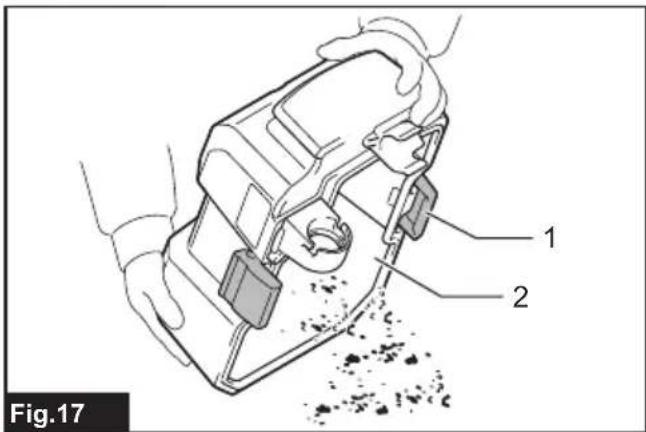
CAUTION: Do not grab the hook when emptying the tank. Grabbing the hook may cause the hook to break.
Unhook and lift up the tank cover.
Shake off the dust from the filter and then dispose of the dust from the tank.
Fig.17: 1. Hook 2. Tank
Cleaning of HEPA filter/wet filter
NOTICE: Do not rub or scratch the HEPA filter/ wet filter with hard objects such as a brush and a paddle.
Clogged HEPA filter/wet filter cause poor suction performance. Clean out the filter from time to time.
- To remove the HEPA filter/wet filter, unlock and remove the tank cover.
- Turn the HEPA filter/wet filter counterclockwise and pull out of the tank cover.
Fig.18: 1. Tank cover 2. HEPA filter 3. Tank
-
To remove dust adhering to the HEPA filter/wet filter, shake the frame bottom quickly several times. Occasionally wash the HEPA filter/wet filter in water and rinse, and if HEPA filter, dry thoroughly in the shade before use. Never wash the filter in a washing machine.
Fig.19 -
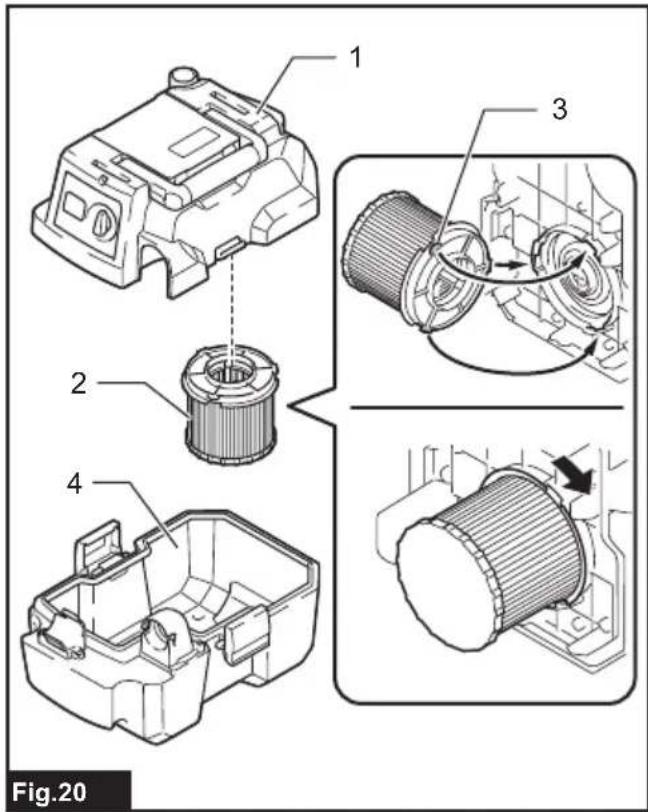
To install the HEPA filter/wet filter, place and twist it clockwise so that the securing lips are firmly locked in the tank cover.
Fig.20: 1. Tank cover 2. HEPA filter 3. Securing lip 4. Tank
- Mount the tank cover and lock it.
NOTE: The filter wear out in course of time. It is recommended to have some spares for them.
Installing prefilter set
Optional accessory
NOTE: Use the prefilter set only when picking up dry dust with HEPA filter. If you use the prefilter set for picking up water, the water suction capacity may be reduced.
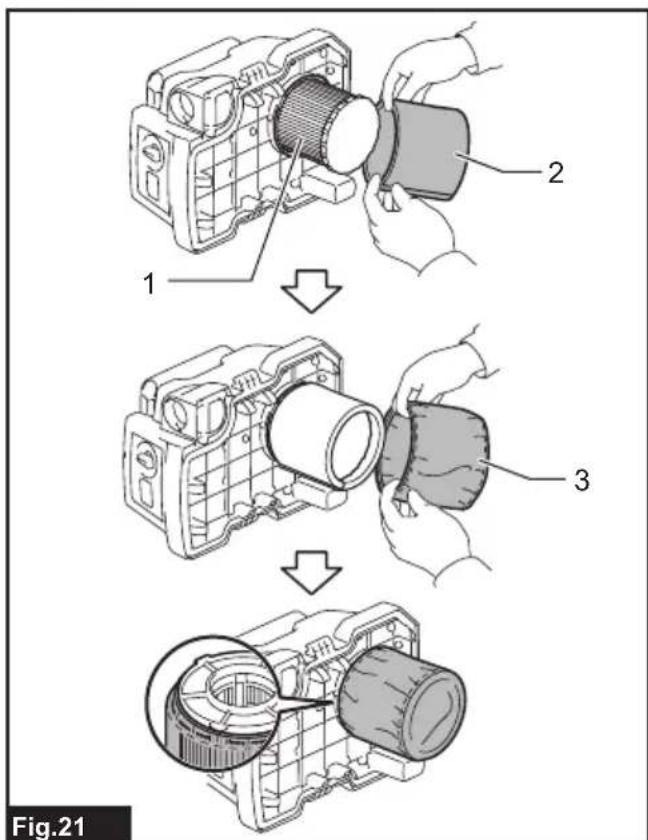
The prefilter set, consisting of the prefilter and dumper, reduces dust clogging in the HEPA filter to keep the suction power.
- Unlock and remove the tank cover.
- Set the damper on the HEPA filter and cover it with the prefilter. Be sure to hook the rubber band of the prefilter onto the lip of the HEPA filter.
Fig.21: 1. HEPA filter 2. Damper 3. Prefilter
- Mount the tank cover and lock it.
OPTIONAL ACCESSORIES
CAUTION: These accessories or attachments are recommended for use with your Makita tool specified in this manual. The use of any other accessories or attachments might present a risk of injury to persons. Only use accessory or attachment for its stated purpose.
If you need any assistance for more details regarding these accessories, ask your local Makita Service Center.
- Makita genuine battery and charger
Hose
Front cuff 24
Joint 22-38
- Corner nozzle
- Round brush
Shoulder strap
Wet filter
HEPA filter
- Prefilter set
NOTE: Some items in the list may be included in the tool package as standard accessories. They may differ from country to country.
AVENTISSEMENT
Fig.17: 1. Crochet 2. Reservoir
ACCESSIONS EN OPTION
VEILIGHEIDSWAARSCHUWINGEN
Fig.7: 1. Aanzuigopening
Voor blazen
Fig.14: 1. HEPA-filter 2. Nat filter
OPTIONELE ACCESSOIRES
Fig.7: 1. Sugeabning
For blæsning
Móvo yia xwpe ts Eupwnns
H oumuoppwong EK Tepiauavetai w
Papaptna A oTo npov yxepidio odnyiwv.
IPOEIAOIOIHSEIEA ΣΦΑΛΕΙΑΣ
PpOeIoToIoiOeIc aOpaAeiac yia tn ooptnn unxavn avappofoon
A PPOEIAOIOIH: ZHMANTIKO! DIABAE TPOKEKTIKA oAES TIG PPOEIOTIOINOEIG YIA TIV aOaAeia kai oAES TIG OBNYIECS PIN ANO TH XPHEH. H nTnpnon TwV PPOEIOTIOINoeWv KAI oBnyiw mTOpEi va kataaNcEi OE nLEKPToTTnCi, TUPkayia n/kai oBapo Tpaumatio.
- Pniv aTn Tn xpno, BepaiwOeite oTI autn n unxavn 0a xpnoiopoInoIe i anto atoia oTa otioia exouv dooei eTapkeic oOnyiec yia tn xpnoaunncns unxavics.
- Pniv Tn xpno, OTOUC xeiipotcG a dooouv nnpoopoeis, oyniecs kai ekTaiEoun yia Tn xpnoTou mnxavmuos kai twv ouoiw v tC oTIOEc 0 npoiOtoin8ei, ouTepiAubavo- evnc ts aospalooC e060ou apaipocn cai diaeocns Tou ulikou Tou uaulexkke.
- Av / , e .
- Na kaθapiζετaikα ηιαταη περιομοι Σ Σσαθμης ερού καιν Σην εξεταζετε για ενδείξεις ζημιας.
- Na πα Θι τα φιλτρα εχουν
tοποθετηθει σωστα πριν ατό τη χρήσι. Mn
xρησιροτοίειτη σκούτα χωρις τα φιλτρα
va βρισκονται σπθ θεση τους. Avικataοπότε
αμεσως ενα φιλτρο του εχει UTTOθει ζημί.
Συνισταιν εχετε μερικα avTALAAKTÍK
επεδήτα φιλτρα εῖαι avαλωσιμα avTIKEIJEVA. - NA ANOΦEYΓΕTE THN ΑOEΛΗΤΗ ΕΝΕΡΟΝΟΙΗς. Beβαιωθείτε οτό ο διακόπης εἰναι KΑΕΙΣΤΟΣ ὄταν τοῦθετείτε ην(τις) μματαρία(ες).
- Mny eTIXeipnoTe va ouaIeEte EuekTa uIiKa, TUPOTExVnpaTa, avaupeva Toiyapa, KAUTEc OTAXTEC, Zeota metaAkkia Opaouata, aixunpaavTIkeieEv aOnwS Supapakia, BApOve, OtaoEv yuaI n npopoia avtikeieva.
- MH XPHESIMOIOEITE NOTE TH MHXANH KONTA SE BENZINH, AEPIA, MNOTIA, KOANES H ANAES YPSHA EKPHKTIKEOYIEE. O 0ia-KoTTnS TAPAYeI OTIVnpeC otav EvpyoTOIEi TAI KAI ATVEpyoTOIEiTai. To iio kai o patoTtac potepkata ndiapkeia tnc aeitoupyiac. Mtopei va Tpokuye Etikivovn EkpnSn.
- Mny avappoape TOTe Toikka, kapkivoyova, kaouma n aaaa eTikovua uika, otwcauiavto, apoeviko, papiio, npuAlio, oluBdo, Evtouoktova n aaaa uika Tou aToteaouv Kivovuo yia tny uyia.
- Na toTOnoTeIe Tn avTa n OkouTn oE opioVtia EtnieBn EtniPavEla, yia va aTopeuxTei nTTwo n n eTakivnO n Tns kata AaBoos.
- Mn xpoioptoiie TOTe Tn unxavn oE EwTe- piko xwpo Otn Bpoxn.
-
Ia tn avbia, auto to mnxavma Tpentei va xpnoiotointhetai e EeWTEpiKouc Xwpuoc e Xaunn thepuokpacia.
-
Mn xpoioiopoioite Kovtα σε πnyες θερμοτητας (φουρνοι, κτλ).
- Av o aépaç éaywyng eTIOTpepei OTO dμaTIO, eivai attapaiNTo va φpovTiOe TYA TOV eTAPKn puθo aλaayng tou aepa OTO dμaTIO. Eivai attapaiNTo va avatpeEeTe OTouc ΕθviKouc kavoviouoc.
- Mny aooetra aoivmuata eioobou avappOoNc/Esobou/psiNc.AuTa avoiymuatEITIeTouv Tnu uHn Tou potep. Oa PpTei va aTOpeuxtheta POoEKTKa TO papaigo, diaopep-TkA to potep 0a kaei loyw EAAeiusn aeipouou.
- Na οτέκεοτη τάντα σταθερά και οσoppoπημενα.
- Mn διπλύνετε, μην τραβάτε και μην πατάτε τον εύκαμτιτο σωλήνα.
- AiaKoYTe aEosG Tn aeitoupyia Tns pnXavns av npatnpnoTe aevapkn anodoon n otioNTOTE aovnIOTo kata n aeitoupyia.
- BFAATE THN(TI) MNATAPIA(ES). Otav v xpnoiopoioietai, piv aTTo oepic kai otav aaiae Tgouap.
- Kaθαρίοτε και εκτέλεότε σέρβις Οη μήχανή αμέσως μετά πτο καθε χρόη γιαν διαπηρεῖται σε αρίση λεἰουργική κατασταση.
- DIATHPEITE TH MHXANH ME IPOOXH. Na διαπηρείτη μιχανή καθαρή γία την καλιτερη και ασφαλέστερη απόδοη. Na ακολουθείτε TIG οβγίες γία την αλλαγή των αξεούμαρ. Na διαπηρείτη TIG λαβές στέγνές, καθαρές, χωρίς λάδι και γράσο.
- NA EAEIXETE TA MEPH ME ZHMIA. NIV aTNO TNV TEPaIePw XpOg TnS mXavNc, 0a TpETTEI VA ELEYXE TPOOEKTiKa TUxov TPOOTATEUTIKa EApTmuata n aAa EApTmu aE zmuia va KAthetae Av 0a LEIToupyoouv Oomega Ka av 0a Tpayuatoioouv Tnv TPOOPIOEvn LEIToupyia touc. EALyE TE NTV EUOuypaMIOI ON Tuv KIVOUeWvpeWv, Tnv ELEUePn KIVOn Tuv KIVOUeWvpeWv, TO TUxov OTAOIO EApTmuATwV, TN OTEpeWon KAI OTIOEODHNTOTE aAee Sc UUVhKeC Tous μTopei va EINPeaoov Tn LEIToupyia Tou epyaLeoi. Ev a PooTA-TEUTIKo n aAlo EApTnua M E Zmuia 0a TpETTEI VA ETIOKEuaOtei n vavTKATAOtae i oWtA OE ESOIOBToNevo KevTpo ePbIc EKTOc av Dnawetai diaopetikc oTo TAPOV EYxepidio Obnyiw. OI ELATTWMATIKoi DIAKOttc TpETTEI VA AVTKaOietavTai 0E ESOIOBToNevo KevTpo ePbIc. Mn xpnoiOtioieT n mXavn av O diaKoTTnc Dev Tnv EVePyotIOei kai Dev Tnv atvepyoioie.
- TiaTc epyaies cepis aTo To xpntn, to mXavma mtopei va anouvapapooynEi, va Kaatipstei kai va ouvtnpnei, ooo eivai Euloya TTpaaktiko, xwpic va TpoknEi KivduvoC TO TpoosnKO ouvtnpnOg kai Oe aaouc.
-
To mnxavma 0a pentei va unoketai o texvikn eTIOeewpon an tov kataokeuaotn, n aTO EVTEAHEVO aToO, TouxioTov ETNOIwS, Tepiauabavovtac, ia npadEiyma, Tnv EINIEwpon Tuv piATpwv yia zmuia, TNV aepo-OTeyavotnta Tou mnxavmuatc kai tn Owatn Aetoupyia tou mnxavioou eEyxou.
-
Otav dieyayayete epyaoiec oepic n tkeunc, 6a ta paoupeva stoixei taou dev tropouv va kaapiotouv oe ikavotoiniko a npetnei va diatebouv. Auta ta stoixei npettei va diatebouv meca aiaepa- oTEc oakouaes uqwva pe otioovhntote ixovta kavovio yia tn diaeon teoiw v anroBntwv.
- ANTAAAKTIKA. KaTa To oepBic, va xPnOIOIOTIOIEITE mOvo yVnOia aVtAALAKTikca.
- NA ANOOHKEYETEHMHXANH OTAN DEN TH XPHZIMONIOIEITE. Otav xpnoiotoi- etai, n uynxavn 0a npetie va aTOnkEeTaI e EOWTEPIKO Xwpo.
- Ta uypa iAtpa kai To eOwTepiKo epos Tou doxeiou uypou npeTcIva oTEyvwoov Tpv Tnv aTOnkeuon.
- Na TPOOExETe Tn mXavn. O kAnpoc XeipI- MTOpei va TPOkAeoei To oTaoio aKoun KAI TNS TIO KAOKATAaKeuaaevns mXavns.
- Mny ETIeipnoTe v a KaapioTe To EwtepiKo nTo eWTEPIKOe BeVzivn, VepTn KaapiotiKcS Xnuikeos ouieG. MTOpei va TpokAnhouv Pwyue Kai aTOxPwpatouc.
- Mn xpnoiotoiite Tn mnxavn o KAEIOTOxwpo 0Tov onio aTeLEeUePuwovTai EuΦeKToI, EKPNTIKOI n ToSIKOi aTmoi aTIOYIEc ME BaoN to Aadi, VepTI, BeVzivn, epiEcs ouieC kata Tns OKouPiAc, KTA., n OE TEPIOXEc OTou UTRAPxE I EUΦeKtN OKovn.
- Mn xpoiopoioite auto to epyaeeio n otoio- 0nTote aallo epyaeeio uto tvv etnpieia vapKwTIkWv ouoiw n akoA.
- Ως βασικός κανονας ασφαλείας, να χρησιμο-τοιείτε γυλία σαφαλείας ἡ γυλία με πλαινά προστATEUTÍKÁ.
- Na xpnoiopoieite paKa kaTc ng os ouvkeC ME TOnAn OKovn.
- To mnxavna auto dev npoopietai yia xpion aTROAOTA, OUMTEPIAumavouevwTwv TAIOWV, ME PEIWVECSOWATIKES, aiOHTnpiec n biavontikc IKAVOTNTc, n aTOaTOPA TOU DEV exouv TEIPA KAI YWoeic.
- Ta piaiia 8a npetie va einnpouvtai va va aqaiotei otivaiouv me tn mnxavn.
- Mn xεipiεoTe TnTv(τις) μπατρία(ες) και τη σκούτα με βρεγμένα έρία.
- Na TpooeXeIδiaTepea otav kaθapiεTe OkaAotnata.
- Mn xnpoiopoieite tn nXavn yia okaipno n triyko epyaogc. H npxavn okuutna mtopei va Tcei kai va Tpokaloei TpooWTIKo Tpaupatio.
Xpnoi kai povtida mntatapiov
- Na επαναφορτιζετις μπαταρίες μόνο με το φορτισή που καθοριζεται από tov kataoκεuaση. Evac φορτισής Σου εῖαι katαλληλος για μια συγκεριμένη μπαταρία μποpei va δημιούργησει κίνδυνο πιρκayiáς ὄταν χρηαμοττοίειαι με μια àλλη μπαταρία.
-
Na xpnoiopoioieite nAektpika epyaia ma ovo e ioka kathetaipoevec mTatapiec.H xponk aaoaans pTataipac mTopvvaonuupnyoikivduo Tpaumatou n TUPKayiac.
-
Otav xpnoiopoioietai n kaetamatap iow, biatnpnoTe Tn maKpiia ato aaaa MaetalikacavtikeiEvaa, 6TWCouvdtnpes, Kepuata, kLeiDi, Kaipia, BiEcs n aaaa MkpaMaTaalikacavtikeiEvaa, e Ta oToia mTOpei va oNmuOpyntheoiuvdean toTov evav akpoEdktn otov allov.To paxukkawma Twv akpoEdkTwg mTatapiac mTOpei va Tpokaeei Eykaumata n Tupkayia.
- YTO OUVnKc KATaXpOng, MTopei va EaxoE i Uypo aTTO Nv MTatApia. Na aTOpeuyeTe Tnv ETTaepn. EAV OUMe ETAqN kTa ABOG, EKTLUVETE ME VEPo. EAV TO UyPO epTe OE ETTaPn Me Ta MAtia, AVZNTNOTE KAI IATPIK hONeia. To Uypo TOU EAYETAI ANO TNY MTatApia MTopei va Tpoka- Loei epeio n ykaumata.
- Mn xnpoiotoiite mia kaoetataatapiw n epyaio Tou exei kataoatapei n tpoontointhetai. OI KATEOtpaumevc n tpoTTOINmuTATAPIEC mTIOPEI VA TAPOUIAQOV aTPOBAAETTN oUPTEPOPa Tou exe i c aTOTAEa TUPKAYA, EKPENn kivduvo Tpaumatou.
- Mny ektheta Tnv kaeta tataiw n To epyaia oTupkayia n utepoikauynan thepokaa. H ekean otny npkayia n otn thepokaa avwTwv 130 ^ C pTopei va Tpokae- eKpnq.
- Akolouhotoe olec tic odnyie c opionc kai nvy optioe Tnv kaetaaataipwv n to epyaleio ektoc tou thepokpaiaikou eupouc Tou kaopicietai otic odnyies. H avthetaevn option n npotion oe thepokpaiec ektoc tou Kathepiou evou eupouc mtopei va tpokaolei Znui a ony uTatapia kai va aufoe i tov kivduvo Tupkayiac.
ΦYΛΑΕTE TΙΣ ΜΔΗΓΙΕΣ AYΤΕΣ.
A PPOEIAOIOIH: MHN EITIpeyete To
Bao aveo n eoikeiwo n e to npoiov (loyw
eaveiauvevns xno) va avtikataotnei tv
auotnpn tnpon twkavovw aoaaleiac tou
TAPOVTOc epyaieou. H ANGAEMENH XPHEH n
naeia va akolouhote Touc kavoce aoa
aiaac Toun biutuwovtai oTo napov Evxepio
Oonyiw MPopei va pokaloei obpap nppoos
TIKO Tpaumato.