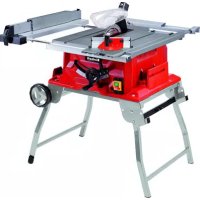
TECC 2025 UF - Electric saw EINHELL - Free user manual and instructions
Find the device manual for free TECC 2025 UF EINHELL in PDF.



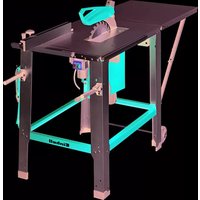
| Product type | Table saw |
| Brand | Einhell |
| Model | TECC 2025 UF |
| Rated power | S1: 1500 W / S6 20%: 2000 W |
| No-load speed | 4500 rpm |
| Saw blade | Ø 250 x Ø 30 x 2.8 mm, 48 carbide teeth |
| Table size | 645 x 530 mm |
| Table extension | 645 x 150 mm and 530 x 65 mm |
| Max cutting height | 78 mm at 90°, 53 mm at 45° |
| Height adjustment | Continuous 0-78 mm |
| Blade tilt | Continuous 0°-45° |
| Weight | Approx. 30.6 kg |
| Power supply | 220-240 V ~ 50 Hz |
| Protection class | II |
| Dust extraction connection | 36 mm |
| Main features | Adjustable parallel stop, cross stop, sliding table, blade guard, riving knife, overload switch |
| Maintenance and cleaning | Unplug before cleaning, use a damp cloth with mild soap, clean air vents and housing regularly |
| Safety | Hearing protection, safety glasses, dust mask mandatory; blade guard; push stick for small parts |
| Wear parts | V-belt, carbon brushes, table insert, push stick, saw blade |
| General information | 24-month warranty, non-professional use |
Frequently Asked Questions - TECC 2025 UF EINHELL
User questions about TECC 2025 UF EINHELL
0 question about this device. Answer the ones you know or ask your own.
Ask a new question about this device
Download the instructions for your Electric saw in PDF format for free! Find your manual TECC 2025 UF - EINHELL and take your electronic device back in hand. On this page are published all the documents necessary for the use of your device. TECC 2025 UF by EINHELL.
USER MANUAL TECC 2025 UF EINHELL
D Originalbetriebsanleitung Tischkreissage
GB Original operating instructions Bench-type circular saw
F Instructions d'origine Scie circulaire a table
Istruzioni per l'uso originali Sega circolare da banco
DK/ Original betjeningsvejledning N BordrundsaV
NL Originele handleiding Tafelcirkelzaag
E Manual de instrucciones original Sierra circular de mesa
P Manual de instruções original Serra circular de bancada
RUS OpHnHaJIbHOe pyKOBoCTBO NO 3HCnJIyatauH NcKOBaIIa CO CTOLOM
7 C E
A
8.1.7 Transport (Abb.23)
- Safety regulations
- Layout and items supplied
- Proper use
- Technical data
- Before starting the equipment
- Assembly
- Using the saw
- Operation
- Replacing the power cable
- Cleaning, maintenance and ordering of spare parts
- Disposal and recycling
- Storage
GB

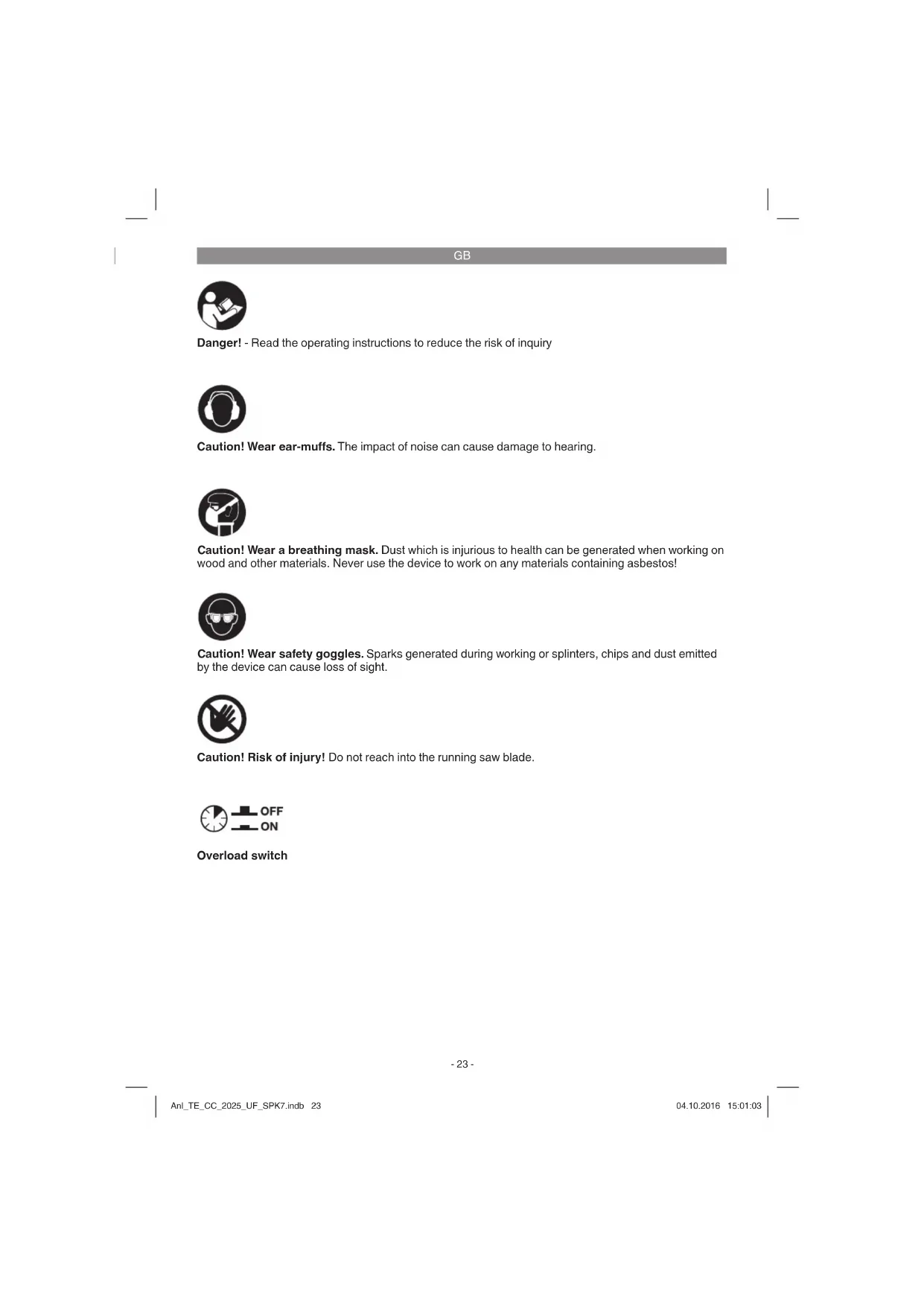
Danger! - Read the operating instructions to reduce the risk of inquiry

Caution! Wear ear-muffs. The impact of noise can cause damage to hearing.

Caution! Wear a breathing mask. Dust which is injurious to health can be generated when working on wood and other materials. Never use the device to work on any materials containing asbestos!

Caution! Wear safety goggles. Sparks generated during working or splinters, chips and dust emitted by the device can cause loss of sight.

Caution! Risk of injury! Do not reach into the running saw blade.

OFF ON
Overload switch
GB
Danger!
When using the equipment, a few safety precautions must be observed to avoid injuries and damage. Please read the complete operating instructions and safety regulations with due care. Keep this manual in a safe place, so that the information is available at all times. If you give the equipment to any other person, hand over these operating instructions and safety regulations as well. We cannot accept any liability for damage or accidents which arise due to a failure to follow these instructions and the safety instructions.
1. Safety regulations
The corresponding safety information can be found in the enclosed booklet.
Danger!
Read all safety regulations and instructions. Any errors made in following the safety regulations and instructions may result in an electric shock, fire and/or serious injury.
Keep all safety regulations and instructions in a safe place for future use.
2. Layout and items supplied
2.1 Layout (Fig. 1-3, 7-8, 11-14)
1 Sawing table
2 Saw blade guard
3 Push stick
4 Sawblade
5 Splitter
6 Table insert
7 Complete parallel stop
8 Hand whee
9 Adjusting and locking grip
10 Base frame
11 On/Off switch
12 Eccentric lever
13 Adjustable rubber foot
14 Cross stop
15 Screw
16 Extractor adapter
17 Countersunk head screw
18 Hole (splitter)
19 Fastening screw
20 Screw
21 Groove
22 Scale
23 Stop rail
24 Holder
25 Slot
26 Screw
27 Slot
28 Guide rail
29 Mounting plate
30 Splitter counter bearing
31 Wheel
32 Holder for parallel stop
33 Table width extension
34 Tool hook
35 Lever
36 Nut
37 open-ended spanners
38 open-ended spanners
39 Table extension
40 Flange
41 Overload switch
42 Cable store
43 Slide
a Screw
b Locking screw
c Lever
d Washer
e Screw
f Axle screw
g Washer
h Spacertube
i Nut
2.2 Items supplied
Please check that the article is complete as specified in the scope of delivery. If parts are missing, please contact our service center or the sales outlet where you made your purchase at the latest within 5 working days after purchasing the product and upon presentation of a valid bill of purchase. Also, refer to the warranty table in the service information at the end of the operating instructions.
- Open the packaging and take out the equipment with care.
- Remove the packaging material and any packaging and/or transportation braces (if available).
Check to see if all items are supplied. - Inspect the equipment and accessories for transport damage.
If possible, please keep the packaging until the end of the guarantee period.
Danger!
The equipment and packaging material are not toys. Do not let children play with plastic bags, foils or small parts. There is a danger of
GB
swallowing or suff ocating!
Sawblade guard
Push stick
- Parallel stop
Cross stop
- Stop rail
- Base frame
- Open-ended spanner (2x)
Table length extension
Table width extension
Wheel (2x)
- Base frame
Assembly material
- Original operating instructions
Safety information
3. Proper use
The bench-type circular saw is designed for the slitting and cross-cutting (only with the cross stop) of all types of timber commensurate with the machine's size. The equipment is not to be used for cutting any type of round wood.
The equipment is to be used only for its prescribed purpose. Any other use is deemed to be a case of misuse. The user / operator and not the manufacturer will be liable for any damage or injuries of any kind caused as a result of this.
Please note that our equipment has not been designed for use in commercial, trade or industrial applications. Our warranty will be voided if the machine is used in commercial, trade or industrial businesses or for equivalent purposes.
The equipment is to be operated only with suitable saw blades (saw blades made of HM or CV) It is prohibited to use any type of HSS saw blade and cutting-off wheel.
To use the equipment properly you must also observe the safety information, the assembly instructions and the operating instructions to be found in this manual.
All persons who use and service the equipment have to be acquainted with these operating instructions and must be informed about the equipment's potential hazards. It is also imperative to observe the accident prevention regulations in force in your area. The same applies for the general rules of health and safety at work.
The manufacturer will not be liable for any changes made to the equipment nor for any damage resulting from such changes. Even when the equipment is used as prescribed it is still impossible to eliminate certain residual risk factors. The following hazards may arise in connection with the machine's construction and design:
- Contact with the saw blade in the uncovered saw zone.
- Reaching into the running saw blade (cut injuries).
- Kick-back of workpieces and parts of workpieces.
- Saw blade fracturing.
- Catapulting of faulty carbide tips from the saw blade.
- Damage to hearing if essential ear-muffs are not used.
- Harmful emissions of wood dust when used in closed rooms.
4. Technical data
AC motor 220-240V 50Hz
Power P .S1 1500 W·S6 20% 2000 W ldling speed n. .4500 min
Carbide saw blade 250 x 30 x 2.8 mm Number of teeth 48
Table size .645 x 530 mm
Table width extension .645 x 150 mm
Table length extension .530 x 65 mm
Cutting height max. 78 mm/90° 53 mm/45°
Height adjustment. infinite 0 - 78 mm
Tilting saw blade. infinite 0^ - 45^
Extractor connection 36 mm
Weight. approx. 30.6kg
Protection class: II回
Thickness of the splitter: 2.0 mm
Operating mode S6 20% :Continuous operation with idling (cycle time 10 minutes).To ensure that the motor does not become excessively hot, it may only be operated for 20% of the cycle at the specified rating and must then be allowed to idle for 80% of the cycle.
Danger!
Sound and vibration
Sound and vibration values were measured in accordance with EN 61029.
GB
Operation
LdA sound pressure level 96,4 dB(A)
K_pA uncertainty 3 dB
LWA sound power level 109,4 dB(A)
K_WA uncertainty 3 dB
The quoted values are emission values and not necessarily reliable workplace values. Although there is a correlation between emission and immission levels it is impossible to draw any certain conclusions as to the need for additional precautions. Factors with a potential influence on the actual immission level at the workplace include the duration of impact, the type of room, and other sources of noise etc., e.g. the number of machines and other neighboring operations. Reliable workplace values may also vary from country to country. With this information the user should at least be able to make a better assessment of the dangers and risks involved.
Wear ear-muff s.
The impact of noise can cause damage to hearing.
Keep the noise emissions and vibrations to a minimum.
Only use appliances which are in perfect working order.
Service and clean the appliance regularly.
Adapt your working style to suit the appliance.
Do not overload the appliance.
- Have the appliance serviced whenever necessary.
- Switch the appliance off when it is not in use.
Caution!
Residual risks
Even if you use this electric power tool in accordance with instructions, certain residual risks cannot be rules out. The following hazards may arise in connection with the equipment's construction and layout:
- Lung damage if no suitable protective dust mask is used.
- Damage to hearing if no suitable ear protection is used.
5. Before starting the equipment
Before you connect the equipment to the mains supply make sure that the data on the rating plate are identical to the mains data.
Warning!
Always pull the power plug before making adjustments to the equipment.
- Unpack the bench-type circular saw and check it for damage which may have occurred in transit.
The machine has to be set up where it can stand firmly, e.g. on a work bench, or it must be bolted to a strong base. - All covers and safety devices have to be properly fitted before the machine is switched on.
It must be possible for the saw blade to run freely. - When working with wood that has been processed before, watch out for foreign bodies such as nails or screws etc.
Before you actuate the On/Off switch, make sure that the saw blade is correctly fitted and that the machine's moving parts run smoothly.
6. Assembly
Danger! Pull out the power plug before carrying out any maintenance, resetting or assembly work on the cutting-off machine!
6.1 Fitting the table length extension (Fig. 2a, 2b)
- Turn the bench-type circular saw around and place it on the floor or on a suitable surface so that the saw table faces down.
- Insert the table width extension (33) and the table length extension (39) in the saw table. The table width extension must be pushed in fully before it is secured.
- Secure the table length extension and the table width extension with the screws (a) against being pulled out fully. Fit the locking screws (b).
6.2 Fitting the base frame (Fig. 1, 3-5)
- Open the lock on the base frame by pressing the lever (35) inwards.
- Let the legs of the base frame latch into position again in the swung-out position.
Use the axle screws (f), washers (g), spacer sleeve (h) and nuts (i) to fasten the wheels
GB
(31) to the base frame.
Use the screws (e) and washers (d) to fasten the machine to the base frame.
- The base frame is fitted with an adjustable rubber foot (13). You can use it to compensate for small unevenness on the work surface.
6.3 Fitting and adjusting the splitter (Fig. 6a, 9)
Danger! Pull out the power plug.
- Set the blade (4) to max. cutting depth, move to 0^ position and lock in place.
Dismantle the saw blade guard (see 6.4).
Take out the table insert (see 6.5). - Undo the fastening screw (19).
- Insert the splitter between the mounting plate (29) and the splitter counter bearing (30).
The distance between the splitter and saw blade should be approx. 3-5 mm - Retighten the fastening screw and fit the table insert.
6.4 Fitting/removing the saw blade guard (Fig. 6b)
- Mount the saw blade guard on the splitter so that the screw (15) fits through the hole (18) in the splitter.
- Do not tighten the screw too far – the blade guard must be able to move freely.
To dismantle, proceed in reverse order. - Warning! The saw blade guard must always be lowered over the workpiece before you begin to cut.
6.5 Changing the table insert (Figure 7)
- To prevent increased likelihood of injury the table insert should be changed whenever it is worn or damaged.
- Remove the saw blade guard (2).
- Remove the 1 countersunk head screws (17).
Take out the worn table insert (6).
To fit the replacement table insert, proceed in reverse order.
6.6 Fitting/replacing the saw blade (Fig. 8) Warning! Pull out the power plug.
Take out the table insert (see 6.5).
- Undo the screw (36) by placing one open-ended spanner on the nut and another open-ended wrench on the outer flange (40) to apply counter-pressure.
- Turn the nut in the direction of rotation of the saw blade
- Remove the outer flange and remove the old saw blade from the shaft and the inner flange.
Clean the flanges before fitting the new saw blade.
- Fit the new saw blade by following the above instructions in reverse and then retighten it. Important! Check that the saw blade turns in the correct direction. The cutting direction of the teeth must point in the running direction, meaning forwards.
- Refit the table insert and the saw blade guard (see 6.4, 6.5)
6.7 Connection for dust extractor (Fig. 2, 10)
The machine can be connected to a dust extractor (the extractor adapter set with suction hose is not included and is available as an accessory):
- Connect the dust extractor to the extractor adapter (16).
- Also, an extraction hose can be connected to the saw blade guard. To do so, remove the cap from the saw blade guard, then fit the extraction hose.
7. Using the saw
7.1.ON/OFF switch (Fig. 1, 16)
To turn the saw on, press the green button "I". Wait for the blade to reach its maximum speed of rotation before commencing with the cut.
To turn the machine off again, press the red button "0".
The motor of this equipment is protected against overload by an overload switch (41).
If the rated current is exceeded, the overload switch (41) will shut down the equipment. Let the equipment cool down for several minutes. Press the overload switch.
Press the green button, to switch on the equipment.
7.2.Cutting depth (Fig.1)
Turn the hand crank (8) to set the blade (4) to the required cutting depth.
Turn anti-clockwise:
larger cutting depth
Turn clockwise:
smaller cutting depth
7.3. Parallel stop
GB
7.3.1. Stop height (Fig. 11-14)
The parallel stop (7) supplied with the bench-type circular saw has two different guide faces.
- For thick material you must use the stop rail (23) as shown in Fig. 12, for thin material you must use the stop rail as shown in Fig. 13.
To change over the stop rail (23) to the lower guide face you have to slacken the two knurled screws (26) in order to disconnect the stop rail (23) from the holder (24).
- Remove the two knurled screws (26) through the one slot (27) in the stop rail (23) and insert in the other slot (25).
- Remount the stop rail (23) on the holder (24).
The procedure for changing over to the high guide face is similar.
7.3.2.Cutting width (Fig.12-14)
The parallel stop (7) has to be used when making longitudinal cuts in wooden workpieces.
The parallel stop (7) can be mounted on either side of the saw table (1).
The parallel stop (7) has to be mounted in the guide rail (28) of the saw table (1).
The parallel stop (7) can be set to the required dimension with the help of the scale (22) on the guide rail (1).
- You can clamp the parallel stop in the required position by pressing the eccentric lever (12).
7.3.3. Setting the stop length (Fig. 12-14)
- The stop rail (23) can be moved in longitudinal direction in order to prevent the workpiece from becoming jammed.
- Rule of thumb: The rear end of the stop comes up against an imaginary line that begins roughly at the center of the blade and runs at an angle of 45^ to the rear.
- Set the required cutting width
- Slacken the knurled screws (26) and push the stop rail (23) forward until it touches the imaginary 45^ line.
- Retighten the knurled screws (26).
7.4.Cross stop (Figure 15)
- Slide the cross stop (14) into the groove (21) of the table.
Slacken the knurled screw (20). - Turn the cross stop (14) until the arrow points to the angle required.
Retighten the knurled screw (20).
Important!
- Do not push the stop rail (23) too far toward the blade.
The distance between the stop rail (23) and the blade (4) should be approx. 2cm
7.5. Setting the angle (Fig. 16)
- Undo the locking grip (9).
- Adjust the angle of the saw blade by pressing the hand wheel (8) towards the machine and turning it at the same time.
Lock the locking grip.
8. Operation
Warning!
After every new adjustment we recommend you to make a trial cut in order to check the new settings.
After switching on the saw, wait for the blade to reach its maximum speed of rotation before commencing with the cut.
Take extra care when starting the cut!
- Never use the equipment without the suction function.
Regularly check and clean the suction channels.
The cap on the blade guard can be removed in order to be able to connect a suction hose to the blade guard.
8.1.1 Making longitudinal cuts (Figure 17)
Longitudinal cutting (also known as slitting) is when you use the saw to cut along the grain of the wood. Press one edge of the workpiece against the parallel stop (7) while the fl at side lies on the saw table (1). The guard hood (2) must always be lowered over the workpiece.
When you make a longitudinal cut, never adopt a working position that is in line with the cutting direction.
- Set the parallel stop (7) in accordance with the workpiece height and the desired width. (See 7.3.)
- Switch on the saw.
GB
- Place your hands (with fingers closed) flat on the workpiece and push the workpiece along the parallel stop (7) and into the blade (4).
Guide at the side with your left or right hand (depending on the position of the parallel stop) only as far as the front edge of the guard hood.
Always push the workpiece through to the end of the splitter (5).
The offcut piece remains on the saw table (1) until the blade (4) is back in its position of rest. - Secure long workpieces against falling off at the end of the cut (e.g. with a roller stand etc.).
8.1.2.Cutting narrow workpieces (Fig. 18)
Be sure to use a push stick (3) when making longitudinal cuts in workpieces smaller than 120 mm in width. A push block is supplied with the saw! Replace a worn or damaged push stick immediately.
8.1.3.Cutting extremely narrow workpieces (Fig. 19)
- Be sure to use a push block when making longitudinal cuts in very narrow workpieces with a width of 30mm and less.
The low guide face of the parallel stop is best used in this case.
There is no push block supplied with the saw! (Available from your specialist dealer). Replace the push block without delay when it becomes worn.
8.1.4. Making bevel cuts (Fig. 16/20)
Bevel cuts must always be used using the parallel stop (7).
- Set the blade (4) to the desired angle. (See 7.5.)
- Set the parallel stop (7) in accordance with the workpiece width and height (see 7.3.1)
- Carry out the cut in accordance with the workpiece width (see 8.1.1., 8.1.2 and 8.1.3.)
8.1.5. Making cross cuts (Fig. 21)
- Slide the cross stop (21) into one of the grooves (21) in the table and adjust to the required angle. (See 7.4.) If you also want to tilt the blade (4), use the groove (21) which prevents your hand and the cross stop from making contact with the blade guard.
- Press the workpiece firmly against the cross stop (14).
- Switch on the saw.
GB
10. Cleaning, maintenance and ordering of spare parts
Danger!
Always pull out the mains power plug before starting any cleaning work.
10.1 Cleaning
- Keep all safety devices, air vents and the motor housing free of dirt and dust as far as possible. Wipe the equipment with a clean cloth or blow it with compressed air at low pressure.
We recommend that you clean the device immediately each time you have finished using it.
Clean the equipment regularly with a moist cloth and some soft soap. Do not use cleaning agents or solvents; these could attack the plastic parts of the equipment. Ensure that no water can seep into the device. The ingress of water into an electric tool increases the risk of an electric shock.
10.2 Carbon brushes
In case of excessive sparking, have the carbon brushes checked only by a qualifi ed electrician. Danger! The carbon brushes should not be replaced by anyone but a qualifi ed electrician.
10.3 Maintenance
There are no parts inside the equipment which require additional maintenance.
10.4 Ordering spare parts and accessories
Please provide the following information when ordering spare parts:
Type of unit
Article number of the unit
ID number of the unit
- Spare part number of the required spare part
For our latest prices and information please go to www.isc-gmbh.info

Tip! For good results we recommend high-quality accessories from www.kwb.eu welcome@kwb.eu
GB

For EU countries only
Never place any electric power tools in your household refuse.
To comply with European Directive 2012/19/EC concerning old electric and electronic equipment and its implementation in national laws, old electric power tools have to be separated from other waste and disposed of in an environment-friendly fashion, e.g. by taking to a recycling depot.
Recycling alternative to the return request:
As an alternative to returning the equipment to the manufacturer, the owner of the electrical equipment must make sure that the equipment is properly disposed of if he no longer wants to keep the equipment. The old equipment can be returned to a suitable collection point that will dispose of the equipment in accordance with the national recycling and waste disposal regulations. This does not apply to any accessories or aids without electrical components supplied with the old equipment.
The reprinting or reproduction by any other means, in whole or in part, of documentation and papers accompanying products is permitted only with the express consent of the iSC GmbH.
Subject to technical changes
- The product meets the requirements of EN 61000-3-11 and is subject to special connection conditions. This means that use of the product at any freely selectable connection point is not allowed.
- Given unfavorable conditions in the power supply the product can cause the voltage to fluctuate temporarily.
The product is intended solely for use at connection points that a) do not exceed a maximum permitted supply impedance 0.24 or b) have a continuous current-carrying capacity of the mains of at least 100 A per phase. - As the user, you are required to ensure, in consultation with your electric power company if necessary, that the connection point at which you wish to operate the product meets one of the two requirements, a) or b), named above.
GB
Service information
We have competent service partners in all countries named on the guarantee certificate whose contact details can also be found on the guarantee certificate. These partners will help you with all service requests such as repairs, spare and wearing part orders or the purchase of consumables.
Please note that the following parts of this product are subject to normal or natural wear and that the following parts are therefore also required for use as consumables.
| Category Example | |
| Wear parts* V-belt, carbon brushes, table insert, push stick | |
| Consumables* Saw blade | |
| Missing parts |
- Not necessarily included in the scope of delivery!
In the effect of defects or faults, please register the problem on the internet at www.isc-gmbh.info. Please ensure that you provide a precise description of the problem and answer the following questions in all cases:
Did the equipment work at all or was it defective from the beginning?
Did you notice anything (symptom or defect) prior to the failure?
What malfunction does the equipment have in your opinion (main symptom)?
Describe this malfunction.
GB
Warranty certificate
Dear Customer,
All of our products undergo strict quality checks to ensure that they reach you in perfect condition. In the unlikely event that your device develops a fault, please contact our service department at the address shown on this guarantee card. You can also contact us by telephone using the service number shown. Please note the following terms under which guarantee claims can be made:
- These guarantee terms apply to consumers only, i.e. natural persons intending to use this product neither for their commercial activities nor for any other self-employed activities. These warranty terms regulate additional warranty services, which the manufacturer mentioned below promises to buyers of its new products in addition to their statutory rights of guarantee. Your statutory guarantee claims are not affected by this guarantee. Our guarantee is free of charge to you.
- The warranty services cover only defects due to material or manufacturing faults on a product which you have bought from the manufacturer mentioned below and are limited to either the rectification of said defects on the product or the replacement of the product, whichever we prefer. Please note that our devices are not designed for use in commercial, trade or professional applications. A guarantee contract will not be created if the device has been used by commercial, trade or industrial business or has been exposed to similar stresses during the guarantee period.
-
The following are not covered by our guarantee:
-
Damage to the device caused by a failure to follow the assembly instructions or due to incorrect installation, a failure to follow the operating instructions (for example connecting it to an incorrect mains voltage or current type) or a failure to follow the maintenance and safety instructions or by exposing the device to abnormal environmental conditions or by lack of care and maintenance.
- Damage to the device caused by abuse or incorrect use (for example overloading the device or the use or unapproved tools or accessories), ingress of foreign bodies into the device (such as sand, stones or dust, transport damage), the use of force or damage caused by external forces (for example by dropping it).
-
Damage to the device or parts of the device caused by normal or natural wear or tear or by normal use of the device.
-
The guarantee is valid for a period of 24 months starting from the purchase date of the device. Guarantee claims should be submitted before the end of the guarantee period within two weeks of the defect being noticed. No guarantee claims will be accepted after the end of the guarantee period. The original guarantee period remains applicable to the device even if repairs are carried out or parts are replaced. In such cases, the work performed or parts fitted will not result in an extension of the guarantee period, and no new guarantee will become active for the work performed or parts fitted. This also applies if an on-site service is used.
-
To make a claim under the guarantee, please register the defective device at: www.isc-gmbh.info. Please keep your bill of purchase or other proof of purchase for the new device. Devices that are returned without proof of purchase or without a rating plate shall not be covered by the guarantee, because appropriate identification will not be possible. If the defect is covered by our guarantee, then the item in question will either be repaired immediately and returned to you or we will send you a new replacement.
Of course, we are also happy offer a chargeable repair service for any defects which are not covered by the scope of this guarantee or for units which are no longer covered. To take advantage of this service, please send the device to our service address.
Also refer to the restrictions of this warranty concerning wear parts, consumables and missing parts as set out in the service information in these operating instructions.
F
Sommaire
Chere cliente, cher client,
2. CoCTaB yCTpoIcTBA n COCTaB yNAKOBHn
2.1 Onncanhe yctpoiCTBa (pnc. 1-3, 7-8, 11-14)
1 CToI nIIbI
2 3aunTa nIbHOro noIoTHa
3ToIkaTeIb
4 NnIbHOe NOIoTHO
5 PacnOpHbI KJIIN
6 BCTaBkcaTOna
7 NapannenbHyynpBc6ope
8 Maxobnik
9 PerynipoBouHna n fikncpyuOaay pyhoTka
10IoCTaBka
11 PepeKIOHouaTeIb "BKNIOUeHO-BbIKIOUeHO"
12 ΘкцeHTprNKOBbIpyHar
13 Pe3nHOBAR HOHkA,peRyIpyEma
14 PonepeHbI ynp
15 BnHT
16 NepexoHnK dIa oTcabBaUoJero yctpoNCTBa
17 BnH T c NotaHoi rOIOBkoI
18 OTBepCTne (KlnnH)
19KpeenHbBnHT
20 BnHT
21 Na3
22山kana
23 YnopHa ⅢHa
24 Depehtelb
25 Ppope3b
26 BnHT
27 Ppope3b
28 HanpaBnaIouaIuHa
29 HpeenKaHnactHa
30 KHTponopa pacnopHoro KInHa
31 Koleco
32 DepeKaTeB nI npaannelbHoro ynopa
33 Pnncno6leHne dna paacunpeHn cToIa
34KpOKdIINHcTpymeHa
35 Pbyar
36 Tαɪka
37 Raeyhbln KIOH
38 Raeyhny KIOU
39 DOnoJIHnTeIbHaN CeKuIa CToIa
40 ΦλaHeu
41 BbiklouaTeIb neperpy3H
42 Hamotka Kaebna
43 CkOJIb3aIyI cyNnOPT
a BnHT
b CToOpHbI BnHT
C Pyhar
d PoiKlaHaJha6a
e BnHT
f BnHT OCH
g PndklaHna Waa6a
h PacnopnA rpy6ka
iTaiKa
2.2 CoCTAB KOMNJIeKTA yCTPOJCTBa
PpOBepbTe KOMNJIeKTHOcB N3dEJIIN HA OCHOBAHIN OHCAHHO OBbEMA NOCTABHN. PnIb 6bHApYHeH HEOCTaTKA KOMNOHEHTOB 6paTNTcB B NaCepBNCbH cyETP nnMma3HH, B KOtOpom Bbl npNo6pei yCTPOICTBO, He No3dHee HcB TceHne 5-Tn pa6OuX dHe nocle npNo6peHn3dEJIIN.
RUS
PpeBABINB DeIcTBtTeBHyIO KBtAHTuHIO O nOKyInke.ObpaTte BHMaHne Ha TabInuCy c yKa3aHHem rapaHTmHbIX cPOKOB B DOKUMeNTe C IHΦOpMaUeO cepBCHOM 06CJyKUBAHIN.
- OTKpoIte yIyIaKOBky N BbIHbTe OCTOpOJHO n3 yIyakOBKn yCTpOJCTBO.
- YdaJIHTe ynaKOBOuHbI MaTePnAJI, a TaKHe npNCnocO6JIeHHaIuNTbI yCTPOINCTBa npN ypaKOBbIbAHmN I TpaHCnpTIpOBeK (pIn HauHnn).
PpOBepbTe KOMJIeKTHOCTb ycTPOiCTBa. - PnpOBpeYcTPOcCTBO nPpHaNJIeKHOCTn Ha HAnuHc BO3HKnKUnx npi TpaHCnOpTnPoBKe NOBpeKdEHN.
CoxpaHnTe ynaKOBky no BO3MOxHOCTn Do nCTeueHnCpoka rapaHTnHbIX 06a3aTeIbCTB.
Onachoctb! YcTpoiCTBO H ynaHOBKa He ABJIaOTcR dETCHMM NpyuHKAMn 3anpeeHO detam HRpaTb C nlaCTHOBbIMn NaKeTAMn, PiJeKAMn M MeKHMn DeTaJAMn! Onachoctb 3aKnIOUaETcB TOM, YTO OHN MOryt nporIoTHb HnN Norh6Hyt b OT yduyba!
3aunTa nHbHoro noIOTHa
TOK-TOKaTeNb
- NapaJIeJIbHbIy ynp
- PonepeuHbIy npOp
- YnopHa uHa
Noctabka
- Raeyhny KJIIOU (2 wT.)
PncnocoBHeHneIyDInHeHn cTona
- Pnncnoc6JIeHne dIpaacupeHHra cTOna
- HoIecO (2 wT.)
Noctabka
MoHTaHHbMyMaTePnAn
OpnHaJIbHoe pyKOBoDcTBo nO 3KcIyatauIN
- Yka3aHnno TexHHke 6e3oNaCHOCTN
Bcerda BbHMaIte WTeKeP H3 po3EHN npEnDe, Yem OcyueCTBnTb HAcTpOHN yCtpoiCTBa.
PacnkyTe DCNCHOBYIO NUY CO CTOLOM IN PPOBepbTe ee Ha HAIuHne BO3MOHNbIX NOBpeXdEHNI pR TpAHCNOPTIPOBKe.
HeoXoJIMO oOecneuTb yToHBOCTb yCTpoIcTBa,TO eCb npBnHTNb erK BepCTaky nIpouHoi NpOCTaBKe.
- Pered BBODOM B KONIpyatauHIO Heo6xOdmoYcTaHOBnTB HAdJIeKaUIMM O6pa3OM BCEKpbIuKN I 3aUHTbIe IpNCnoc6JIeHnI.
HnIbHOe nIoTHO dOJIHKHO CBO6oJHO BpaaTaBcra.
Ppna pa6oTe cyhe o6pa6oTaHHoN DpeBecnHO BHNMaTeIbHo CJIeNTe 3a NocToPOHHmIM IpEaMeTAM, TaHmK KaH HApnMep, rBO3dN nn BNHTbl I T.D.
IpeKJde Yem npBecTn B deNCTBne “IpeekHIOUcATEb-BKIOUeHO”,y6eINTecB TOM,YTO NIBHOE NOJOTHO pabINbHO yCTaHOJIeHO HIODINXHbIe qactn IMeKOT CBO6OHNxOJ.
6.2 MoHTaH NoCTaBn (pnc.1,3-5)
- OTKpoIe TefHcTOp NOCTaBHN, HAnb Ha pIyar (35) no HappaBHeHIO BHN3.
HOKKINoCTaBnDOJHHbI CHOBA 3aΦHKcPOBaTbCbaBpa3IOKeHHOM POJOKeHHN. - PnKpEnTe KOleca (31) K noCDtBaKe npn NOMOu BNHTOB OCN (f), NOKNaDhBx IaN6 (g), pacnpHO BTVJKN (h) nraHn (i).
PnKpyTHTe K NOCTaBKe MaunHy npn NOMOu BNHTOB (e) NNOHlaHbIX Wa6 (d).
Iopctabka ochaetapepynpemyo pe3nHOBoOnOpOy(13).Cee nOMOuMoKHO KOMPeHcNPOBaTb MeKHe HEPOBHOCTHa pa6Oyem MeCTe.
6.3 MoNTaH n peryIIpOBb paCnOpHOro KInHa (pnc. 6a, 9)
Onachoctb!BbHytb wTekep n3 po3eTKn 3JIeKtpocetn.
HactpoTe DnI nnIbHoro nIoTHa (4) MaKc. Iy6Hy paCnIOBKn, yCTaHOBNTe erO B noLoJHeHne 0° n3aΦHKcpyTte.
-ДемоHTуРуЗaцИТу ПИльНOrO ПОЛOTHa (СM.NYHKT6.4).
N3BNEKHTe BCTABky CToJa (CM.NyHKT 6.5).
Ocna6bTe KpepeKhbI BnHT (19).
BCTaBbTe paCnOpHbI KInH MeKdY KpeEnHHo INaCTHHO (29) N KOHTpOnpoI paCnOpHoro KInHa (30).
PacCToHHe MEny paCnOpHbIM KInHom INIbHbIM NOJIoTHOM DOJIHKHO COCTaBIArTb OKOLO 3-5 MM.
- Choba 3aTAHNTE KpeENHbI BnHT n yctahOBNTe BCTABKy CToJa.
6.4 MoHTaH N demoHTaH 3auHTbI HnIbHorO nIoTHa (pnc. 6b)
YcTaHOBnTe 3aunTy nIbHOro noIoTHa Ha pacnOpHbI KInH, TaK TTo6bI BnHT (15) BOeJ B OTBepCTne pacnOpHoro KInHa (18).
He 3aTnBaIte BNHT CImuHOM CnIbHO: 3auNTa NInbHOrO NOIOTHa DOJIxHa CBO6oHDo DBrAToBcR.
-Демотань OCUшЕСТВЛЯТСВ Вобразно
носледовательhoeTи.
IpeDynpEeJdHHe! IpeD NaUaIOM paCNIOBKn Heo6xOJIMo ONyCTNb 3aunTy NlBHO NOIOTHa Ha paCNINBaEmbl MaTePnA1.
6.53aMeHa BCTABKn CToJa (pnc.7)
B Cnyae n3Hoca nnIOOBpeKdEHH BCTABKNCTOJa Heo6XODIMO 3aMeHNb ee BO n36eKaHHe NOBbIeHHORo PnCKa TpaBMATn3Ma.
- CHIMNTE 3aunty nInbHoro noIOTHa (2).
- I3BJIeKInTe BnHT C notaHOr TOLOBHOI (17).
- N3BLeKeHTE H3HOWeHHyIO BCTaBky CToJa (6).
C60pKaOcUeCTBnEeTcB ObpaTHoN nocJeOBaTeIbHOCTH.
6.6 MoHTaH N 3aMeHa NnIbHOro NoLoTHa (pnc.8)
IpeynpeKdene! BbtaunTb wTeceBn3 po3eTK
- I3BnEKeHtBe BCTaBky CToJa (CM. NyHKT 6.5).
OTKpyTnte raHy (36), yCTaHOBv OINH raeHuI KIIIOu Ha raHy IydepHXBaI HApYKnHbIΦJIaHeu (40) BTOpbIM raeHuIM KIOUOM.
-ПоворачиBaTe rAnHyВ hAnpaBLeHnIN BpaUeHnI NIIbHOrO NOLOTHa. - DEmoHTnpyTe HapyKHbI ΦlaHeu n CHIMnTe CTapoe NnIbHOe NOIOTHO BaIa N BHYTpEHHero ΦnaHa.
IpeKdyeMycTaHaBnBaTbHOBoePiNbHoe NOJIOTHO,OuHCTNTEΦlaHbI. - YcTaHOBHTe HOBOE NINbHOE NOIOTHO B O6paTHoN PocJIeDObaTEbHOCrN 3aTaNHTe erO.Yka3aHHe!YuNTbBaTe HnapBaJIeHMe DBNKHeHN NINbHO rNOtHa, HnapBaJIeHne pe3Hn 3y6BeB DoJIKHO 6blbOBpaSeHo B HnapBaJIeHN DBNKHeHN,TO eCTb BnpePe.
- ChoBa yCTaHOBtBe BCTaBHy cTOna n 3aunTy NINbHOrO NOIOTHa (Cm. nyHKtbl 6.4, 6.5)
6.7 POncoeHHeHHe yCtpoiCTBa nIOTcAcsbAHnNbIIN (pnc.2,10)
MaHnHy MoHHo npHcOeHNHTb K yCTpoNCTBy
IaI OTCacBbAHA Nbln (KOMPJIeKT
IepExoHnIKOB IaI OTCacBbAIOero YCTPOINCTBa
IbCAcBbAIOUwI WLaAnr He BXoJrT B KOMPiEKT
NoCTABKn, a PnHObpTaOTcOTdJIbHO B
KaueCTBe pInHaJeHKeCTe):
PnncoeHNHTe yctpoCTBO IOTcAbHNAIbIINPiN NOMOuCOoTBETCTBHyIOUeIero nepexodnka (16).
- DOnOHnTeIbHO MOHNO pNcOeHNHtB K 3aUHTe NJIbHOrO NOLOTHA BCacbIBaOuIN WJHaHr.ДЯЗTO rCHMnE KOJIpaHOK C3aUHTbI NJIbHOrO NOLOTHa, a 3aTEM HaDeHbTe erHO BAcCbIBaOuIN WJHaHr.
RUS
7. Pa60Ta c yctpoiCTBOM
7.1 NepeKIOUOATEIb «BKNIOUeHO BIKIOUHO» (pnc. 1,16)
HaKaab Ha 3eJeHyo KHOHky «I」,MOxHo BkJIOuNtB NIIy. IpePe HauAION MNIIEHnna HeO6XODIMBO BbIXDaTb NOKa NINbHOE NOIOTHO He DOCTRHeCBOE MaKcHMaJIbHO CKOPOCTN BpaUeHNHa.
TO6bI CHOBa BIKIOHTb NILy,HEo6xOJIMO HaKaTaHa KpaChHy KOHNky 己 _ 0 ^
Bvrgatelb 3TOO yCTPOINCTBA 3auuueH OT neperpy3KN NOCpeDCTBOM MAKcMajbHoro BblkIOUaTeIa (41).
PnnpBbIeHmHOHHaJIbHOrTOKa MaKcMaJIbHbI BbIKIOHaTeJIb (41) BBIKIOHaET yCTpOHTBO.
IIOOHNITeHECKOJIbKO MmHyT,NOKA yCTPOINCTBO HE OCTbIHET.
HaKMnTE MaKcMaJIbHbI BbIKIOHaTeJIb.
BkHIOHTe yCTpOInCTBO,HaKaB Ha 3eJeHyo KHOHNy «I
7.2Iy6Ha paacnIOBHN (pnc.1)
IytemBpaaehnmaXOBnka(8)MOHHO HAcTPOINb Heo6xOaMMyIO Iy6bHy paCnIOBKn dIynnbHO rnoTHa(4).
IpoTHYacOBcTpeKNb60lb7aRnhybHa paCnIOBKn
IIO YacobOc TpeKe: MeHbwa rnybHa paCnNIOBKn
7.3 PapanJIeJIbHbIy npOp
7.3.1 Bbicota ynopa (pnc. 11-14)
BxOJaIuN B KOMnJIeKT NocTaBn npaJIeJIbHbI yNOp (7) IMeET DBe HnPaPraJIouIue NOBepXHOCTN pa3HOJ BblCtbl.
B 3aBnCmOCTH OT ToIuHbI paCnNlBaEMo rMaTePnAHa Heo6xOdHMo HcNoJIb3OBAtB yNOpHyIO UINHy (23) B COOTBeTCTBnU C pnc.12 dJa TOnCTOrO MaTePnAHa N B COOTBeTCTBnU C pnc.13 dJa TOHKOro MaTePnAHa.
-Дляпесетановкиуноришни (23)НбОддгИЗКИУнравлгочию nobepхсOTь Heo6xOdIMO OcIa6NtB o6a BnHTa CнakatahnoH ГOLOBKO (26),ТYоБы OTdeJIITb ynpHyO shINy (23)OT dePHaTeJЯ (24).
- 13BbKeTe Oba BnHTa CHaKaTaHHoH
roBko(26)Yepe3 npope3b(27)BYnpHOH uHe (23) n CHOBA BCTaBBte Hx BdpuyIO npope3b(25).
- Choba cmoHTpyTe ynpHyU uHHy (23) Ha dePkaTeNe (24).
- PepeTaHOBbHa BbICoHyo HnpaBlaIOUyIO NOBepxHOCTb BblIOJIHHReTc aHaIIOYHbIM 6pa3OM.
7.3.2 WnpHa paCnIOBn (pnc. 12-14)
- Pn npoDolbHoi paCnnIOBHe dpBeecHHbl Tpe6yETcNpOJIb3OBaHne npaIJIeJIbHorO ynpa(7).
- PapalnienbHbI ynp (7) MOHHOMHTnPOBaTb Ha OBeHX CTOpOHAX CToJIaNIIbl (1).
- PapaJIeJIbHbI ynp (7) Heo6xOJIMOBCTaBnTb B HAppaBIAHOuO uINHy (28) CToJaIIJIbI (1).
- Pn n oou n kaibl (22) Ha hnapabJHOuei WnHE (28) MOKHO yCTaHOBHTb Heo6xOuMbI pa3Mep dIra npaJIeIbHoro ynopa (7).
NyTeMaHxKaTnEhCzEHTpNkoBOrO pblra (12)MOHHo 3aKaTb npapJIeJIbHbI ynpB HEO6XODNMOM NOIOKeHN.
7.3.3 PerynipOBKa IINHbI ynpa (pnc.12-14)
Длппгдтбаленязашеленя paCnININBaEMO MaTePnaIa MOnHc CmeuATb yOpHy OShNy (23)В npdoJIbHOM HapBaIeHIn.
OchOBHoe npabnlo:3aDHH KOHeu ynopa coPnKacaeTc C BOoBpaXaEmoI nnHnei, KOTOPa HauHnaeTc PnpMepHO B cHTpe NlNbHoro nIOToHa I npoxoNT Ha3aN pOny rJLOm 45°.
HacptpoHa Heo6xOdmMo 申nPHbI paCnIOBKn -Ocna6bTe BnHTbIC hakataHHo rOIOBHO (26) n nepeDburAte ynpHyU 0HHy (23), noka OHa He cOnpNkOCHeTc C BOo6paKaemOIHNHe, npoxOJauei noD yrJOM 45^ . -CHOBa 3aTAAHTE BnHTbIC hakataHHo rOIOBHO (26).
7.4 Ponepeuynb ynp (pnc. 15)
- PpeBnHbTe nonepuehnynp (14) B na3 (21) cTOna nNbl.
Ocna6bTe BnHT (20).
-Поворачиьайтп nonepeчньунр (14), noka ctrpenka He 6ydt yka3bIbTaHa Heo6xOIMoe 3naeHne yrla.
CHOBA 3aTnHTe BnHT (20).
RUS
BHHMaHHe!
He cBnraTe ynpHyu uHny (23) cInuKOM daJIeKO B HappaBHeHm nIbHoro noToHa.
PacctoHnHe MeJy ynpHoi uHnHO (23) nIbHbIM NOIOTHom (4) DOJIKHHO COCTaJIaTb OKOLO 2 cm.
7.5 Perynipobka yrla (pnc. 14).
Pa36IoknpyTe qncnpuyuoyy npKoHTy (9).
Otperynpyte yroHaKIOHa,HaKIMaHa MaxOBmK (8) no HappaBHeHIO K MaShne I OndHObpeMeHHo BpaJaa erO.
3a6loKpyIte pKcnpyOuIpyo kHTy.
8. Pa6ochn peKnM
PpeynpeHene!
Mby peKoMeHdEm nocLe KaKaDoHOBO pyErnpoBKn OcyIeCTBnT npObHOe NIIeHne IaTOrO, TToBbI npOBepHTb OTpyEnpOBAHNbIe BELINHbI.
Pocne BnHoueHnNbI NOOJHTe, noka He 6ydtIOCTnHyTO MAKcImaJIbHOe YNCIO 06oPoTob NnIbHoro NoIOTHa, npexKeYem BblNOJHrTa paCNIOBHy.
BydbTe BHNMaTeIbHbI npn pacnnIOBKe!
IcnoIb3yTe yctpoNCTBO TObKo BOcoetaHn C npncnoc6neHnem dIa OTCocA BO3dyxa.
- Perylaepno npoBepaTe n ouHuaTe KaHaJIbOTcOca BO3dyxa.
Kolnaok c 3auntbI nIbHOro noLoTHAMOHHO CHrTb, YTO6bl IpiCooHNHTb KnIbHOMy NOLOTHy BCacBBAOHou WlaHr.
8.1.1 BbInoJIHeHHe npOdoJIbHOI paCnIOBKn (pnc. 17)
Pn3TOM MaTePnaI paCINInBaETcB npDoJbHOM HappaBHeHH.
Onda Kpomka paCnHbAeMOro MaTePnHaI npNkMaEaTcK napaJIeJIbHomy ynopy (7), a nlocka CTopoHa OnnpaETcHa cToI nnbl1 (1).
3aunTa NlNbHoro nIoTHa (2)doJnHa bblb Bcdera onyueHa ha pacnHnBaembMATEpHnA. Pnp npoDohBn paCnIOBHe opePOT HNOrda He noHKeH HxOAnIbCBA Ha IINHn paCnIOBKn.
OtperynpyTe npaJIeIbHbI ynp (7) B COOTBETCTBn C BBICOTOn paCININBAEMOROMatepnaA. (CM.nyHKT 7.3)
BnHIOHTe nIy.
HaIOHKeTe NaOHOHa paCnINbAeMbI MaTePnaI,epKa naIbci BMeCe, INepeMeaIte paCnINbAeMbI MaTePnaI
BdOJIb npaJIeJIbHoro ynpa (7) B HappaJIeHIN NIIbHoro NOIoTHa (4).
- HanpaBraIte paCnIIBaEmbMy MaTePmaIc6OHy IeBoH nn npBoy pyKoi (B3aBNCIMoCTN OT NIOJKeHn NapaJIeJIbHOYnpa)do nepEdH KpOMKn 3aUHTHOKOKyxa.
Bcerda npotaKnBaIte paCnIINBaembl MaTePnAIO KOHca pacnOpHOrO KlnHa (5). - OTxOdbI paacnHOBKn octaIOTCra ha cTOne nHbI (1), noka nnBHOe noLoTHo (4) He 6ydt CHoBa haxoDHTBCR B Hepa6OHeM nOLOXeHNi.
PepdoxpanHTe DnHHbI paCNINBaEMbIMATEpHaIOT OnpOKnDIBaHnB KOHcpepaNIOBKn! (HanpImep, npn NOMOPOJIKOBOnOpbl N.T.D.)
8.1.2 PacnnoBHa y3Koro MaTePnAna (pnc. 18)
IpoDohna paCnIOBka MaTepeHnOB
mnpnoH MeHee 120 MM o63aTeJIbHO doJHKHa
BblONHrTcBc C NOMOuBo TOnKaTeJIra (3).
ToNKeIb He BXoINB O6bEM NOCTaBN.
O63aTeJIbHo 3aMeHNe I3HOWeHHbI nnIOBpeKdEHHb ToIKaTeJIb.
8.1.3 PacnnoBb oyeH y3KOro MaTePnAna (pnc. 19)
Дяпюдьног рациловкочевуэкnx MaTeрnaIOB WpHnOH30 MM И MeHbWe 6o3aTeNBO HcNoJIb3yIte DepeBraHHbI ToJkaTeNb.
Pn3OM CLeDyET PpeDIOeCTb 6OJIe H3KyoHnPaBIAIOU IOBepxHOcTb napaJIeIbHOro yNopa.
- DepeBHHbToJIKATENb He BXOIND B COCTaB Ha6oba! (Ero MoXHO pNIO6pCTN B COOTBeTCTBUXI CNeuaIIN3PObAHbIX MaRaIINHc).CBoEBPeMeHNo 3AmEHnTe H3HOWeHHb DepeBHHb ToJIKATENb.
8.1.4 BbINOJIHeHHe KOCOpaCnIOBHN (pnc.16/20)
Hocar pacnnoBka ob3aTeNbHO bInoNHeTcC nCNoB3OBAHNm npaIeNbHorO ynpa (7). YcTaHOBtne HxHoe 3NaueHne yHaPiNbHoro noToTHA (4).(CM.nyHKT 7.5)
OTpernyupyte npaJIeIbHbI ynp (7) B3ABNCMMOCTN OT WnRPHB I N BvICOTbl
paCNINBaEMOr MaTePnaIa (CM.NyHKT 7.3.1).
BboINHnTe paCNINOBky B COoTBETCTBN C
WnHIOp paCNINBaEMOr MaTePnaIa (CM.I. 8.1.1,8.1.2 n 8.1.3).
RUS
8.1.5 BbInoJIHeHne nonepeuHoi paCnIIOBHN (pnc.21)
- PpeBnHbTe nonepeHbI ynp (14) B Odn H3 DByx Na3OB (21) cTOna Nnbln OtperynpyHe 06XoDnMoe 3HaChEHNe Yrna. (cm.7.4). EcIn nNlbHOneNoToHo (4) DOONHInTeJbHO Tpe6yETcYCTaHOBtNb NOHaKIOHOM, HcNoJIb3yIte na3 (21), KOTOpBI nPeDoTbpATNT KOtAKT BaWei pyKn I nonepeHoro ynpa c 3aunToI nnBHorO NoTOHa.
CnIbHO npHKMITE paCNINNBAembl MaTePnA K nonepueHom ynopy (14).
BKNIOUHTe NNUy.
ДяьилпсьпacnIOBKNpeepBngarite nonepeuHbIynp(14)ИpacnINBaembl MaTePnJI B HappaBHeHm NlIbHOrO nIoTHa.
PpeynpeKdene!
Bcerda ydepKbAte HapabIeMby pacnINBaemb MaTePnaI, a He Cbo6OHyIO OTPe3aEmyU qAcTb MaTePnaIa.
Bcerda nepemeeaTe nonepeuHbY npop (14) Do noHOn paCnIOBKn MaTePnAna.
BbHIOUHTe Nnly. YdaJIaIte OTOxObl paCINIOBHN TOJbHO NOcIe OCTaHOBN NIIbHOrO NoIOTHa.
8.1.6 Pa60ta co cHOB3aM cyNnoptom (pnc.22a,22b)
8.1.6.1 Pa36IIOHINPOBHa cKoJIb3aIeO cynnopTa
ДлгИСПОЛБЗOBАнHA经CКOLьЗЯцEROcynnOPTa(43) nODHIMNITe pbHAR(c).
3aФнсчупго nonepeuHyb ynp (14)Ha nepeHem KpaO cKoIb3aJcero cyNnOpTa c nOMOsbU BnHTa (20).
8.1.6.2 PaCnHIOBbA c nOmoIbOCKoJIb3aJero CynnpTa
Otperynpyte Heo6xodmoe 3naeene yrna nocpeCTBOM nonepuHoro ynopa.
ПлOTH npINMITE paCnINIBaEMb MATEpnaI K ynpHOI WnHE (14) n MeJIeHNO nepeMeuaIte BbIDNIXHOI CTON B HAnpaBLeHN NIIbHOrO nonoTHa.
Bcerda nepemeeaTe BbDnKHOI CTOn Do NOHPO paCNIIOBKn MaTePnaIa.
BbIKIOHHTb NIIy. OnaHocTb! YdaJIte OTxOdbI paCNIIOBKN TOIbKO NOcIe OCTaHOBN NINbHOro nonOTHa.
8.1.7 TpaHcnopTnpOBbA (pnc.23)
IaTpaHCnOpTnPOBKN MoKHO nOIIHOCTbIO y6pabT noCDtABKY. B KaueCTBe aJIbTePHaTHBBI MOKHNO CLOHHT noCDtABKHa HA CTOPHe KOLeCa, aDpyrTO CTOPOH NOCDtABKn pa3IOKHTb, YTObI MaHIna MOrJa nepeDbIrA TbCrl.
9. 3aMeHa Ha6eIa CeTeBOro nHTaHH
OnachocTb!
Bo n36eKaHne onaChOtei 3aMeHy noBpeJHeHHoK aKeIe CTeBOrO nHTaHn oNcBiAeMOrO yCTpoIcTb DOJIkeH npOn3BOuITb N3rTOBHTeIb, eO cLyK6Ba cepBnCa HIN KTO-NIO Do pyroI c NOO6HOH KBaIIΦHaCuNe.
10.OuHCTKa,Texo6cLyHHBaHHe n 3aHa3 3anachbIX DeTanei
Onachoctb!
Ipeep BCempa6oTaMnIO OChTKe Heo6xoJIMOBbHyTb 1TeKep n3 po3eTKn 3JIeKTPocetN.
10.1 Ochctka
CopeKHTe 3aunTHbIe npncnocBleHnA, BENTINJUIOHNbIe IeIN IN KOPNc DIBrAteJIe CBO6OdHbIMH HACOBKO 3TO BO3MOKHO OT NblIN rP3NI. IpOTpNTe ycTPOcCTBO uCToB BEtObIOI IN PNOyTe CkATbIM BO3DyXOM ND HN3KM DaBJeHnEM.
MbpeKomeHnyem OUYIaTb yCTPOIcTBO cpa3y nocJe KaJDoRo IcNOJIb3OBAHn.
PeyIaRHO OuNuaIte yCTPOINCTBO BlaKHOB BeOoBIO C HeoJbIM KOnHcTBM HIOKOroMbIa. He IcNoJIb3yIte cpeDCTBa DIA OChTHN IIIN PACTBOI; OHMOYT NOBPeDITb NlactMaccOBble qACTn ycPoINCTBa.CleIHTe 3a TEM, YTObi BOda He IONaIa BOHyTp b yCTPOINCTBA. IOnaJaHne BOByI B aLeKTPnueCKoe yCTPOINCTBO NOBbIaAET OnaCHOCTb NoUyeHIny Udapa TOKOM.
10.2 yroIbHbIe 8ETK
PnIype3MePHOMobpa3OBaHNHcKpCdaIte
fpe3yB CneuHaN3nPOBaHHyIO MaCTpeChyIO IJI
npOBepKn yroIbHbIXeTOK.
Onachoctb!YrOJIbHbIe UeTKn pa3peWaeTc3 3aMeHbToJbKO CneUaNCTy 3JeHTpnKy.
RUS
10.3 TexobcnyKbAHne
BHTPNyCTPNOCTBAHETNHKAKNXDeTALe, HJXDAIOUXCBA TEXNHUChOM yXOe.
10.43aHa3 3anaacbix qacteH npHaadJeXHoCTeH
Pn3aKa3e 3anaChbix uacte HneO6xOIMO yKa3aTb CNeDyIOUme daHbIe:
TNYcTpOcTBA
apTNkyIbHbI HOMep yCTpOCTBa
- IndHTnHnKaUHOHHbHOMep yCtpoNCTBa
HOMep HEO6xOaMm3aNaCHoYacTn
AHTaJIbHbIe HebI INHΦopMaIHO MOXHO HaTnHa caTe www.isc-gmbh.info.

PekomeHaunl!nXopoWerope3yNbTaTapa60tblMbpeHOMeHdyEmBbICOKOHAeCTBeHHbIe npHAnLeHHoCTNkwb!www.kwb.euwelcome@kwb.eu
10.5 TpaHcnpTnpoBka
- He 06a3aTeIbHO BxOaT B 06bEm NoCTaBn!
PnObHApYHeHH DeEeKToB HnHEnCnpaBHOCTe Mbl Ipocm Bac 3aBnTb O TaHOM Cnyae B CetN INIteHa caTe www.isc-gmbh.info. ObpaTne BHIMAHHe Ha ToHoe ONHCaHHe HeNCnPpABHOCTn B IIO60m CNYae OTBeTbe Ha cLeyuune Bonpocbl:
- UcTPOIcTBO yHe pa6oTANO HNO 6bIIO HeNCpPaBHBIM C Camoro HauJa?
Bam 6pocnIOcB YTO-JIb60 B rIa3a nepeD Bo3HKnHOBeHHem HeNCnpaBHOCTN (npn3HaK nepeD HncnpaBHOCTbO)?
KaHyo HeCNpabHocTB HmeeT yCTPOiCTBO, NO BaMeMy MHeHIO (OCHOBHO npn3HaK)? OnnHTe 3Ty HeCNpabHocTB.
RUS
TapaHTnHoe CBnTeJIbCTBO
YbHaemnoknyntelbHua, yBaHaemnoknyntelb,
HnN pOdyNTbl npOxOaT TuaTeBHeHnKoHTpOJI KaeCTBa.EcIIN 3To yCtpoiCTBO BCE He 6ydet
fynHIOHOpaOBt b6zypneH, Mbl npocIM Bac opaITbcra B hauw cepBncbH no aDpecy,
yKa3aHHOMy B 3OTm rapaHTnHOM TaIOHe. Mbl taKHe oxOTHo OTBeTM Ha Baun BonpocbI NO TeLefoHy,
HomeR KOtporo npBVeDen HnKe. Pn npdeBraHennr rapaHTnHbIX Tpe6oBaHN deCTbyOT cIeDyoUne
ycNoBN.
- HactoIe npaBnla rapaHTn DeiCTbYOT NCHIOUHTeB OTOHOENN NOJb3ObaTeJe, T.e. fHnecknx niu, KOtOpBie He HamepeBaIOCTc HcNOJIb3OBAbT b HactoIeue N3dJIeN B pAmhax CBOe npocecMOHaBnOH INpyrO CamOToTERTbHOB DEaTEbHOCTn. HactoIe npaBnla rapaHTm peryIpyOT DONoJIbHeBHe yCIOBnA OKa3AHnRA rapaHTnHbX yCNYT, KOTOpBie HINKeYOMaHTbI npOn3BOIDNTeB o6ceNuBaET NOKyNaTeJIaCBOx HOBbY cTPOCTB B DONoJIHEnE K YcIOBnAR rapaHTn B COOTBeTCTBN C3aHOHOM. 3Tu rapaHTnHbIE o63aTeNbCTBa He 3aParNABoT BaHn 3aKoHNbIe rapaHTnHbIE tpe6oBaHN.HaHI rapaHTnHbIE ycUYn dJIu Bac 6ecnIaTHbl.
- RapaHTHnHbIe ycnyr paacnpocTpaHrOcTc TOLbHO HA DeEeKtBt HOBOrO yCTPOrCTBa HNKeYOMrHYTO rno3BOHTeJI, KOTOpoe Bbl pno6peJIi, C83aHHbIe c HeOCTaKOM MATEpHaJIa NIN IpnON3BOdCTBeHHbIM 6pAKOM, IN ORpAHuYBaIOcTc NOHAeMyBbOpy UcTaPehmE TaKHX DeEeKtOB uYcToPcTBa NII 3aMeHOH YcToPcTcBA.YUHTte, YTO HaHIu YcToPoiCTBa HE npDeHaaHaeHbI JN CNOJb30BaHnB I PpOMbIJIeHHbIX ZcJIAX, BpeMecLeHHOM PpON3BOdCTBE H Na IpoQeCCHOHaJIbHO OHObE. NoTOMy rapaHTHnHbI dORoBOP CHTaETC HNeIcCTBITbeHbIM, eCNy UcToPcTBO NcNoJIb30BaIOCb B TeueHeNepaHTnHOrO cPoKa H Na KcTApHB, PpOMbIJIeHHbIX npEipnPaTRnX II BpeMecJeHHom PpON3BOdCTBeA, a TAOke noDBepraLoCb CONOTABMOH HarpyKe.
-
Haa rapaHTnHa pacnpocTpaHaeTc Ha:
-
NOBpeKdEHHy yCtpoHCTBa, Bo3NHkUHe B pe3yIbTaTe HecO6JIIODeHHy pyKOBODCTBa NO MOHTaKy IIN HeNPaBnIbHO MOHTaHa, HecO6JIIODeHHy pyKOBODCTBa NO kCNpIyATAuHN (HapnpIMep, pNIOKnIOUeHHN K CTeT C HEPpaBnIbHbIM HApRJKeHHem IIN PoDM TOHa), HecO6JIIODeHHy Tpe6BaHNI KAcateJIbHo TEXHueCKOro 0cClyHbAHH N Tpe6BaHNI TexHNI 6e3OnaCHocTN, Bo3DeIcTBNa HA yCtpoHCTBO AHOAmalhBbIX YcNoBn OKpyKaIoUe Chedbl NHEoOCTaTOHOrO YXoDa I TeXHNeCHORO 0cbLyHbAHnra;
-
NOBpeKdHn yCtpoiCTBa, BO3HNkIe B pe3yIbTaTe HENpaBnIbHO rNl HEnaIeKaIeFo
ICNOJb3OBAHn (HanpIMep, neperpy3Ha yCtpoiCTBa IIN npimHeHHe He dOnyueHbIX K
HCIOJIb3OBAHn HacaDok IIN npINAHDLeXHocTe), nonaDAHH B yCtpoiCTBO nOcTOPOHHx
PpeMeTob (HanpIMep, neceKa, kAMHeN IIN bblN, NopBeXdHn pIn TpAChOpNTPOBKe),
PnpimeHeHn CINbl IIN BHEWHNX BO3DeICTBn (HapIMep, nobpeXdHn pIn naDeHn); -
NOBpeKdEHHy yCTpoHCTBA HIN YACTeY cTPOHCTBA, CB3aHHbIe C H3HOCOM B C8R3N C 3KcJIpyatauHne, O6bHbIM HIN DpyHM ECTeBHbIM H3HOCOM.
-
RapaHTHnHbI cPOK coCTaBnAET 24 MeCA, OTCyET HauHHeTcO Co Dn HOKynHycToPcTBA. RapaHTHbIe npaba Heo6xOIMO ppebBnAe Tdo nCTeueHHa Cpoka rapaHTHn B TeueHHn DBYx HeDeJIb NocE ToTO KAK 6yEt ObHApYHeHa HEnCpABHOCTb.3aBJeHHa Ha rapaHTHnHOE 0cbLHyHNBaHne NocE HeCTeueHHa Cpoka rapaHTHn He npHHMaKOTc. PeMOHT IIN 3aMeHa YcPoIcTBa HE BeET K npOJNeHHo RapaHTHnHOrO cPOKa, TaHoE pN oK3aHHn TaKoi YeClynnOTcET HOBOrO rapaHTHnHO rpoKA Ho yCTpoCTBO IIN BO3MOKHO yCTaHOBLeHHbIe DetAIJI He HAuHHeTc3 3aHOBO. 3To ycNoBE DeiCTByET TaKe npO6paueHHn B MecTHbI cepBNCbI OTdIe.
5.Длпрдьгеленя rapaHTHbIX tpe6oBaHn CO6uHTe O HeNcnpaBHOCTHa yctpoCTBa Ha caTe www.isc-gmbh.info.ПиroTOBtE KBNTauHIO O noKnyHe uIIN DpyrNe DOka3aTeJIbCTBa npHO6peTHeBAm HOBOrO yCTpoICTBa. OKa3aHne rapaHTHbIX ycIg prnMeHITelbHO K yCTpoCTBaM, HappaBHeHbIM Ha paccMOtePHe 6e COOTBeTCTByOuHx IOKa3aTeJIbCTB INI PhpMeHHoT TaJIbUHKn, NcIIIOuaTcB BnHy HeIOCTaTKa DAHbIX dIy INEHTNfHkauHn TaKHX yCTpoCTB.EcIn NaHa rapaTHHra pacnPoCTpaHReTcH A HeNcnpaBHOCTb yCTpoCTBa,Bbl HeMeJdHeHNo nOLyHTe OTpeMOHTPOBAHHOe nII HOBoe yCTpoCTBO.
Camo 6oob paayMeTcB, mbo MoHem TaHHe yctpaHnB pnp Onlnte 3aTpa HEmCnpaBHocTHyCTpoiCTBa, KOTOpBHe bXOaB To B oEbm rapaHTnHbX ycnyr n npn NCTeHenn Cpoka rapaHTn. IJN 3TOr BAm Heo6xOHaMo BblcNaTb yctpoIcTb Ho aDpeh NaeH cJyKb6 cepBnca.
YTo hacaetc 6bIcTpo3HaunBaOxxC, paXoNDhIX DetaJIe N HeDocTaOxH KOMnoHETOB, Mbl o6paaaem BHnMaHHe Ha OpaHnueHn 3ToI rapaHTn COIaCHO HΦOpMauN O cepBnCHOM 06CnyKnBaHH NaO pkoBOdCTBaNo kCNyatauN.
GB explains the following conformity according to EU directives and norms for the following product
Subject to change without notice
Archive-File/Record: NAPR012462
Documents registrar: Siegfried Roider
Wiesenweg 22, D-94405 Landau/Isar
EH 09/2016 (01)

- Transport (Abb.23)
- GB
- Danger!
- Safety regulations
- Layout and items supplied
- Layout (Fig. 1-3, 7-8, 11-14)
- Items supplied
- swallowing or suff ocating!
- Proper use
- Technical data
- Sound and vibration
- Operation
- Wear ear-muff s.
- Caution!
- Residual risks
- Before starting the equipment
- Warning!
- Assembly
- Fitting the table length extension (Fig. 2a, 2b)
- Fitting the base frame (Fig. 1, 3-5)
- Fitting and adjusting the splitter (Fig. 6a, 9)
- Danger! Pull out the power plug.
- Fitting/removing the saw blade guard (Fig. 6b)
- Changing the table insert (Figure 7)
- Fitting/replacing the saw blade (Fig. 8) Warning! Pull out the power plug.
- Connection for dust extractor (Fig. 2, 10)
- Using the saw
- 7.1.ON/OFF switch (Fig. 1, 16)
- 7.2.Cutting depth (Fig.1)
- Turn anti-clockwise:
- Turn clockwise:
- Parallel stop
- Stop height (Fig. 11-14)
- 7.3.2.Cutting width (Fig.12-14)
- Setting the stop length (Fig. 12-14)
- 7.4.Cross stop (Figure 15)
- Important!
- Setting the angle (Fig. 16)
- Operation
- Making longitudinal cuts (Figure 17)
- 8.1.2.Cutting narrow workpieces (Fig. 18)
- 8.1.3.Cutting extremely narrow workpieces (Fig. 19)
- Making bevel cuts (Fig. 16/20)
- Making cross cuts (Fig. 21)
- Cleaning, maintenance and ordering of spare parts
- Cleaning
- Carbon brushes
- Maintenance
- Ordering spare parts and accessories
- Service information
- Warranty certificate
- Dear Customer,
- F
- Sommaire
- CoCTaB yCTpoIcTBA n COCTaB yNAKOBHn
- Onncanhe yctpoiCTBa (pnc. 1-3, 7-8, 11-14)
- CoCTAB KOMNJIeKTA yCTPOJCTBa
- RUS
- Onachoctb! YcTpoiCTBO H ynaHOBKa He ABJIaOTcR dETCHMM NpyuHKAMn 3anpeeHO detam HRpaTb C nlaCTHOBbIMn NaKeTAMn, PiJeKAMn M MeKHMn DeTaJAMn! Onachoctb 3aKnIOUaETcB TOM, YTO OHN MOryt nporIoTHb HnN Norh6Hyt b OT yduyba!
- MoHTaH NoCTaBn (pnc.1,3-5)
- MoNTaH n peryIIpOBb paCnOpHOro KInHa (pnc. 6a, 9)
- MoHTaH N demoHTaH 3auHTbI HnIbHorO nIoTHa (pnc. 6b)
- 6.53aMeHa BCTABKn CToJa (pnc.7)
- MoHTaH N 3aMeHa NnIbHOro NoLoTHa (pnc.8)
- POncoeHHeHHe yCtpoiCTBa nIOTcAcsbAHnNbIIN (pnc.2,10)
- Pa60Ta c yctpoiCTBOM
- NepeKIOUOATEIb «BKNIOUeHO BIKIOUHO» (pnc. 1,16)
- 7.2Iy6Ha paacnIOBHN (pnc.1)
- PapanJIeJIbHbIy npOp
- Bbicota ynopa (pnc. 11-14)
- WnpHa paCnIOBn (pnc. 12-14)
- PerynipOBKa IINHbI ynpa (pnc.12-14)
- Ponepeuynb ynp (pnc. 15)
- BHHMaHHe!
- Perynipobka yrla (pnc. 14).
- Pa6ochn peKnM
- PpeynpeHene!
- BbInoJIHeHHe npOdoJIbHOI paCnIOBKn (pnc. 17)
- PacnnoBHa y3Koro MaTePnAna (pnc. 18)
- PacnnoBb oyeH y3KOro MaTePnAna (pnc. 19)
- BbINOJIHeHHe KOCOpaCnIOBHN (pnc.16/20)
- BbInoJIHeHne nonepeuHoi paCnIIOBHN (pnc.21)
- Pa60ta co cHOB3aM cyNnoptom (pnc.22a,22b)
- Pa36IIOHINPOBHa cKoJIb3aIeO cynnopTa
- PaCnHIOBbA c nOmoIbOCKoJIb3aJero CynnpTa
- TpaHcnopTnpOBbA (pnc.23)
- 3aMeHa Ha6eIa CeTeBOro nHTaHH
- OnachocTb!
- 10.OuHCTKa,Texo6cLyHHBaHHe n 3aHa3 3anachbIX DeTanei
- Ochctka
- yroIbHbIe 8ETK
- TexobcnyKbAHne
- 10.43aHa3 3anaacbix qacteH npHaadJeXHoCTeH
- TpaHcnpTnpoBka
- TapaHTnHoe CBnTeJIbCTBO
Brand : EINHELL
Model : TECC 2025 UF
Category : Electric saw