
GRO 12V35 Professional - Power tool BOSCH - Free user manual and instructions
Find the device manual for free GRO 12V35 Professional BOSCH in PDF.
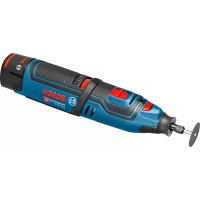



| Product type | Cordless multifunction rotary tool |
| Brand | Bosch |
| Model | GRO 12V35 Professional |
| Rated voltage | 12 V |
| Rated speed | 5000 - 35000 rpm |
| Clamping chuck diameter | 3.2 mm |
| Max. cutting disc diameter | 38 mm |
| Max. grinding wheel with shaft diameter | 22.5 mm |
| Max. wire brush diameter | 20 mm |
| Max. grinding wheel diameter | 20 mm |
| Max. drill bit diameter | 3.2 mm |
| Max. sanding accessory diameter | 80 mm |
| Weight (according to EPTA 01:2014) | 0.65 - 0.85 kg |
| Power supply | Li-Ion 12 V battery (recommended GBA 12V...) |
| Recommended charger | GAL 12... or GAX 18... |
| Recommended charging temperature | 0 °C to +35 °C |
| Operating and storage temperature | -20 °C to +50 °C |
| Main functions | Grinding, sanding, wire brushing, polishing, cutting, drilling |
| Maintenance | Clean ventilation slots regularly; keep tool clean |
| Safety | Detailed safety instructions in the manual; anti-blocking protection; spindle lock |
| Spare parts and repairability | Bosch after-sales service; spare parts available at www.bosch-pt.com |
Frequently Asked Questions - GRO 12V35 Professional BOSCH
User questions about GRO 12V35 Professional BOSCH
0 question about this device. Answer the ones you know or ask your own.
Ask a new question about this device
Download the instructions for your Power tool in PDF format for free! Find your manual GRO 12V35 Professional - BOSCH and take your electronic device back in hand. On this page are published all the documents necessary for the use of your device. GRO 12V35 Professional by BOSCH.
USER MANUAL GRO 12V35 Professional BOSCH
General Power Tool SafetyWarnings
WARNING
Read all safety warnings and all instructions. Failure to follow the
warnings and instructions may result in electric shock, fire and/or serious injury.
Save all warnings and instructions for future reference.
The term "power tool" in the warnings refers to your mains-operated (corded) power tool or battery-operated (cordless) power tool.
Work area safety
- Keep work area clean and well lit. Cluttered or dark areas invite accidents.
- Do not operate power tools in explosive atmospheres, such as in the presence of flammable liquids, gases or dust. Power tools create sparks which may ignite the dust or fumes.
- Keep children and bystanders away while operating a power tool. Distractions can cause you to lose control.
Electrical safety
Power tool plugs must match the outlet. Never modify the plug in any way. Do not use any adapter plugs with earthed (grounded) power tools. Unmodified plugs and matching outlets will reduce risk of electric shock.
- Avoid body contact with earthed or grounded surfaces, such as pipes, radiators, ranges and refrigerators. There is an increased risk of electric shock if your body is earthed or grounded.
Do not expose power tools to rain or wet conditions. Water entering a power tool will increase the risk of electric shock.
Do not abuse the cord. Never use the cord for carrying, pulling or unplugging the power tool. Keep cord away from heat, oil, sharp edges or moving parts. Damaged or entangled cords increase the risk of electric shock.
When operating a power tool outdoors, use an extension cord suitable for outdoor use. Use of a cord suitable for outdoor use reduces the risk of electric shock..
If operating a power tool in a damp location is unavoidable, use a residual current device (RCD) protected supply. Use of an RCD reduces the risk of electric shock.
Personal safety
Stay alert, watch what you are doing and use common sense when operating a power tool. Do not use a power tool while you are tired or under the influence of drugs, alcohol or medication. A moment of inattention while operating power tools may result in serious personal injury.
Use personal protective equipment. Always wear eye protection. Protective equipment such as dust mask, non-skid safety shoes, hard hat, or hearing protection used for appropriate conditions will reduce personal injuries.
Prevent unintentional starting. Ensure the switch is in the off-position before connecting to power source and/or battery pack, picking up or carrying the tool.
Carrying power tools with your finger on the switch or energising power tools that have the switch on invites accidents.
Remove any adjusting key or wrench before turning the power tool on. A wrench or a key left attached to a rotating part of the power tool may result in personal injury.
Do not overreach. Keep proper footing and balance at all times. This enables better control of the power tool in unexpected situations.
Dress properly. Do not wear loose clothing or jewellery. Keep your hair, clothing and gloves away from moving parts. Loose clothes, jewellery or long hair can be caught in moving parts.
If devices are provided for the connection of dust extraction and collection facilities, ensure these are connected and properly used. Use of dust collection can reduce dust-related hazards.
Power tool use and care
Do not force the power tool. Use the correct power tool for your application. The correct power tool will do the job better and safer at the rate for which it was designed.
Do not use the power tool if the switch does not turn it on and off. Any power tool that cannot be controlled with the switch is dangerous and must be repaired.
- Disconnect the plug from the power source and/or the battery pack from the power tool before making any adjustments, changing accessories, or storing power tools. Such preventive safety measures reduce the risk of starting the power tool accidentally.
- Store idle power tools out of the reach of children and do not allow persons unfamiliar with the power tool or these instructions to operate the power tool. Power tools are dangerous in the hands of untrained users.
- Maintain power tools. Check for misalignment or binding of moving parts, breakage of parts and any other condition that may affect the power tool's operation. If damaged, have the power tool repaired before use. Many accidents are caused by poorly maintained power tools.
- Keep cutting tools sharp and clean. Properly maintained cutting tools with sharp cutting edges are less likely to bind and are easier to control.
Use the power tool, accessories and tool bits etc. in accordance with these instructions, taking into account the working conditions and the work to be per
formed. Use of the power tool for operations different from those intended could result in a hazardous situation.
Battery tool use and care
- Recharge only with the charger specified by the manufacturer. A charger that is suitable for one type of battery pack may create a risk of fire when used with another battery pack.
Use power tools only with specifically designated battery packs. Use of any other battery packs may create a risk of injury and fire.
When battery pack is not in use, keep it away from other metal objects, like paper clips, coins, keys, nails, screws or other small metal objects, that can make a connection from one terminal to another. Shorting the battery terminals together may cause burns or a fire.
Under abusive conditions, liquid may be ejected from the battery; avoid contact. If contact accidentally occurs, flush with water. If liquid contacts eyes, additionally seek medical help. Liquid ejected from the battery may cause irritation or burns.
Service
Have your power tool serviced by a qualified repair person using only identical replacement parts. This will ensure that the safety of the power tool is maintained.
Safety instructions for all operations
Safety warnings common for grinding, sanding, wire brushing, polishing, carving or abrasive cutting-off operations
This power tool is intended to function as a grinder, sander, wire brush, polisher, carving or cut-off tool. Read all safety warnings, instructions, illustrations and specifications provided with this power tool. Failure to follow all instructions listed below may result in electric shock, fire and/or serious injury.
- Do not use accessories which are not specifically designed and recommended by the tool manufacturer. Just because the accessory can be attached to your power tool, it does not assure safe operation.
The rated speed of the grinding accessories must be at least equal to the maximum speed marked on the power tool. Grinding accessories running faster than their rated speed can break and fly apart.
The outside diameter and the thickness of your accessory must be within the capacity rating of your power tool. Incorrectly sized accessories cannot be adequately controlled.
The arbour size of wheels, sanding drums or any other accessory must properly fit the spindle or collet of the power tool. Accessories that do not match the mounting hardware of the power tool will run out of balance, vibrate excessively and may cause loss of control.
- Mandrel mounted wheels, sanding drums, cutters or other accessories must be fully inserted into the collet
or chuck. If the mandrel is insufficiently held and/or the overhang of the wheel is too long, the mounted wheel may become loose and be ejected at high velocity.
Do not use a damaged accessory. Before each use inspect the accessory such as abrasive wheels for chips and cracks, sanding drum for cracks, tear or excess wear, wire brush for loose or cracked wires. If power tool or accessory is dropped, inspect for damage or install an undamaged accessory. After inspecting and installing an accessory, position yourself and bystanders away from the plane of the rotating accessory and run the power tool at maximum no-load speed for one minute. Damaged accessories will normally break apart during this test time.
Wear personal protective equipment. Depending on application, use face shield, safety goggles or safety glasses. As appropriate, wear dust mask, hearing protectors, gloves and workshop apron capable of stopping small abrasive or workpiece fragments. The eye protection must be capable of stopping flying debris generated by various operations. The dust mask or respirator must be capable of filtrating particles generated by your operation. Prolonged exposure to high intensity noise may cause hearing loss.
- Keep bystanders a safe distance away from work area. Anyone entering the work area must wear personal protective equipment. Fragments of workpiece or of a broken accessory may fly away and cause injury beyond immediate area of operation.
Hold power tool by insulated gripping surfaces only, when performing an operation where the cutting accessory may contact hidden wiring or its own cord. Cutting accessory contacting a "live" wire may make exposed metal parts of the power tool "live" and could give the operator an electric shock.
Always hold the tool firmly in your hand(s) during the start-up. The reaction torque of the motor, as it accelerates to full speed, can cause the tool to twist.
Use clamps to support workpiece whenever practical. Never hold a small workpiece in one hand and the tool in the other hand while in use. Clamping a small workpiece allows you to use your hand(s) to control the tool. Round material such as dowel rods, pipes or tubing have a tendency to roll while being cut, and may cause the bit to bind or jump toward you.
Position the cord clear of the spinning accessory. If you lose control, the cord may be cut or snagged and your hand or arm may be pulled into the spinning accessory.
- Never lay the power tool down until the accessory has come to a complete stop. The spinning accessory may grab the surface and pull the power tool out of your control.
After changing the bits or making any adjustments, make sure the collet nut, chuck or any other adjustment devices are securely tightened. Loose adjustment devices can unexpectedly shift, causing loss of control, loose rotating components will be violently thrown.
8 | English
Do not run the power tool while carrying it at your side. Accidental contact with the spinning accessory could snag your clothing, pulling the accessory into your body.
Regularly clean the power tool's air vents. The motor's fan will draw the dust inside the housing and excessive accumulation of powdered metal may cause electrical hazards.
Do not operate the power tool near flammable materials. Sparks could ignite these materials.
Do not use accessories that require liquid coolants. Using water or other liquid coolants may result in electrocution or shock.
Kickback and related warnings
Kickback is a sudden reaction to a pinched or snagged rotating wheel, sanding band, brush or any other accessory. Pinching or snagging causes rapid stalling of the rotating accessory which in turn causes the uncontrolled power tool to be forced in the direction opposite of the accessory's rotation.
For example, if an abrasive wheel is snagged or pinched by the workpiece, the edge of the wheel that is entering into the pinch point can dig into the surface of the material causing the wheel to climb out or kick out. The wheel may either jump toward or away from the operator, depending on direction of the wheel's movement at the point of pinching. Abrasive wheels may also break under these conditions.
Kickback is the result of power tool misuse and/or incorrect operating procedures or conditions and can be avoided by taking proper precautions as given below.
- Maintain a firm grip on the power tool and position your body and arm to allow you to resist kickback forces. The operator can control kickback forces, if proper precautions are taken.
Use special care when working corners, sharp edges etc. Avoid bouncing and snagging the accessory.
Corners, sharp edges or bouncing have a tendency to snag the rotating accessory and cause loss of control or kickback.
Do not attach a toothed saw blade. Such blades create frequent kickback and loss of control.
Always feed the bit into the material in the same direction as the cutting edge is exiting from the material (which is the same direction as the chips are thrown).
Feeding the tool in the wrong direction causes the cutting edge of the bit to climb out of the work and pull the tool in the direction of this feed.
When using cut-off wheels, always have the work securely clamped. These wheels will grab if they become slightly canted in the groove, and can kickback. When a cut-off wheel grabs, the wheel itself usually breaks. When the rotary file, high-speed cutter or tungsten carbide cutter grab, it may jump from the groove and you could lose control of the tool.
Safety warnings specific for grinding and abrasive cutting-off operations
Use only wheel types that are recommended for your power tool and only for recommended applications.
For example: do not grind with the side of a cut-off wheel. Abrasive cut-off wheels are intended for peripheral grinding, side forces applied to these wheels may cause them to shatter.
For threaded abrasive cones and plugs use only undamaged wheel mandrels with an unrelieved shoulder flange that are of correct size and length. Proper mandrels will reduce the possibility of breakage.
- Do not "jam" a cut-off wheel or apply excessive pressure. Do not attempt to make an excessive depth of cut. Overstressing the wheel increases the loading and susceptibility to twisting or snagging of the wheel in the cut and the possibility of kickback or wheel breakage.
Do not position your hand in line with and behind the rotating wheel. When the wheel, at the point of operation, is moving away from your hand, the possible kickback may propel the spinning wheel and the power tool directly at you.
When wheel is pinched, snagged or when interrupting a cut for any reason, switch off the power tool and hold the power tool motionless until the wheel comes to a complete stop. Never attempt to remove the cutoff wheel from the cut while the wheel is in motion otherwise kickback may occur. Investigate and take corrective action to eliminate the cause of wheel pinching or snagging.
- Do not restart the cutting operation in the workpiece. Let the wheel reach full speed and carefully re-enter the cut. The wheel may bind, walk up or kickback if the power tool is restarted in the workpiece.
Support panels or any oversized workpiece to minimize the risk of wheel pinching and kickback. Large workpieces tend to sag under their own weight. Supports must be placed under the workpiece near the line of cut and near the edge of the workpiece on both sides of the wheel.
Use extra caution when making a "pocket cut" into existing walls or other blind areas. The protruding wheel may cut gas or water pipes, electrical wiring or objects that can cause kickback.
Safety warnings specific for wire brushing operations
Be aware that wire bristles are thrown by the brush even during ordinary operation. Do not overstress the wires by applying excessive load to the brush. The wire bristles can easily penetrate light clothing and/or skin.
- Allow brushes to run at operating speed for at least one minute before using them. During this time no one is to stand in front or in line with the brush. Loose bristles or wires will be discharged during the run-in time.
Direct the discharge of the spinning wire brush away from you. Small particles and tiny wire fragments may be
discharged at high velocity during the use of these brushes and may become imbedded in your skin.
Additional safety information
Do not touch grinding and cutting discs until they have cooled down. The discs can become very hot while working.
- Secure the workpiece. A workpiece clamped with clamping devices or in a vice is held more secure than by hand.
This power tool is not suitable for bench-mounted use. It must not be clamped into a vice or fastened to a workbench, for example.
In case of damage and improper use of the battery, vapours may be emitted. The battery can set alight or explode. Ensure the area is well ventilated and seek medical attention should you experience any adverse effects. The vapours may irritate the respiratory system.
Do not open the battery. There is a risk of short-circuiting.
The battery can be damaged by pointed objects such as nails or screwdrivers or by force applied externally. An internal short circuit may occur, causing the battery to burn, smoke, explode or overheat.
Only use the battery with products from the manufacturer. This is the only way in which you can protect the battery against dangerous overload.

Protect the battery against heat, e.g. against continuous intense sunlight, fire, dirt, water and moisture. There is a risk of explosion and short-circuiting.
Product Description and Specifications

Read all the safety and general instructions. Failure to observe the safety and general instructions may result in electric shock, fire and/or serious injury.
Please observe the illustrations at the beginning of this operating manual.
Intended Use
The power tool is intended for cutting metal and stone materials, and for grinding, sanding and polishing metal and painted surfaces without the use of water. In addition to this, the power tool is suitable for drilling in wood, soft metal, plastic and light building materials when used with the appropriate accessories.
Product Features
The numbering of the product features refers to the diagram of the power tool on the graphics page.
(1) Cutting disc
(2) Holding rod
(3) Grinding tools
(4) "PowerLight" lamp
(5) Spindle lock
(6) On/off switch
(7) Speed regulator
(8) Battery charge indicator
(9) Battery
(10) Direction-of-rotation arrow for grinding spindle
(11) Dust protection cap (for detailed work)
(12) Clamping nut
(13) Tool holder of the collet
(14) Handle (insulated gripping surface)
(15) Inner shank dimension L0
(16) Battery release button
(17) Open-ended spanner/screwdriver
(18) Shank
(19) Collet
(20) Drive spindle
(21) Dust protection cap (for working close to surfaces)
a) Accessories shown or described are not included with the product as standard. You can find the complete selection of accessories in our accessories range.
Technical Data
| Cordless multi rotary tool GRO 12V-35 | ||
| Article number | 3601 JC5 0.. | |
| Rated voltage V= 12 | ||
| Rated speed(A) | min-1 | 5000 - 35,000 |
| Collets diameter mm 3.2 | ||
| Spanner flat of collet mm 9.55 | ||
| Max. outer diameter | ||
| - Cutting disc mm 38 | ||
| - Grinding accessory mm 22.5 | ||
| - Wire brush mm 20 | ||
| - Grinding disc mm 20 | ||
| - Drill bit mm 3.2 | ||
| - Sanding accessories mm 80 | ||
| Max. inner shank dimension L0 | mm 10 | |
| Max. shank length mm 35 | ||
| Weight according to EPTA-Pro-cedure 01:2014(B) | kg | 0.65 - 0.85 |
| Recommended ambient tempera-ture during charging | °C | 0 to +35 |
| Permitted ambient temperature during operation(c) and during storage | °C | -20 to +50 |
| Recommended rechargeable batteries | GBA 12V... | |
Cordless multi rotary tool GRO 12V-35
Recommended chargers GAL 12...
GAX 18...
A) Measured at 20 - 25°C with rechargeable battery GBA 12V 2.0Ah.
B)Depends on battery in use
C) Limited performance at temperatures < 0°C
Fitting
- Remove the battery from the power tool before carrying out work on the power tool (e.g. maintenance, changing tool, etc.). The battery should also be removed for transport and storage. There is risk of injury from unintentionally pressing the on/off switch.
Charging the Battery
Use only the chargers listed in the technical data. Only these chargers are matched to the lithium-ion battery of your power tool.
Note: The battery is supplied partially charged. To ensure full battery capacity, fully charge the battery in the charger before using your power tool for the first time.
The lithium-ion battery can be charged at any time without reducing its service life. Interrupting the charging process does not damage the battery.
The lithium-ion battery is protected against deep discharge by the "Electronic Cell Protection (ECP)". When the battery is discharged, the power tool is switched off by means of a protective circuit: The application tool no longer rotates.
Do not continue to press the On/Off switch after the power tool has automatically switched off. The battery can be damaged.
Follow the instructions on correct disposal.
Removing the Battery (see figure A)
To remove the battery (9), press the release button (16) and pull the battery to the rear and out of the power tool. Do not use force to do this.
Battery charge indicator
The three green LEDs of the battery charge indicator (8) indicate the state of charge of the battery (9).
LEDs Meaning
3 × continuous green light 60 - 100%
2× continuous green light 30 - 60%
1 × continuous green light 5–30%
1 × flashing green light 0–5%
1 × continuous red light Power tool has overheated!
- Switch the power tool off and allow it to cool down completely.
1 × flashing red light Power tool has overloaded!
- Exert less pressure on the workpiece during work.
Changing the Tool
When inserting an application tool, ensure that the shank of the application tool is firmly seated in the tool holder. When the shank of the application tool is not inserted deep enough in the tool holder, the application tool can become loose again and cannot be controlled.
Do not use application tools that are worn or in otherwise less than perfect condition. Defective application tools can break, for example, causing material damage and personal injury.
Only use brand accessories for grinding, sanding, brushing, polishing, routing and cut-off grinding from the dealer for the power tool, which are approved for a speed of 35,000min-1 and which have a shank with an outside diameter of 3.2mm .
Inserting the Application Tool (see figure B)
- Press the spindle lock (5) and turn the clamping nut (12) by hand until locked.
- Press and hold the spindle lock and loosen the clamping nut (12) with the open-ended spanner (17) by turning it anticlockwise.
- Insert the dust-free application tool (e.g. holding rod (2), grinding accessory (3) or drill bit) into the tool holder (13) of the collet (19).
Note: Ensure that the shank (18) of the application tool sits in as far as possible, but at least 10mm into the collet.
- Press and hold the spindle lock (5) and tighten the application tool by turning the clamping nut (12) clockwise with the open-ended spanner (17).
Removing the application tool
- Loosen the clamping nut (12) as previously described and remove the application tool.
Fitting the Cutting Disc (see figure C)
Cutting discs reinforced with fibreglass are included in the scope of delivery. They can be used for grooving, routing and cutting metal, wood and plastic.
- Insert the holding rod (2) into the tool holder (see "Inserting the Application Tool (see figure B)", page 10).
- Press and hold the spindle lock (5) and completely unscrew the screw on the holding rod (2) using the screwdriver (17).
- Attach the cutting disc (1) to the holding rod (2) and insert and tighten the screw.
Changing the Collet (see figure D)
- Press the spindle lock (5) and turn the clamping nut (12) by hand until locked.
- Press and hold the spindle lock and loosen the clamping nut (12) with the open-ended spanner (17) by turning it anticlockwise.
- Remove the clamping nut (12) together with the collet (19).
- Insert the required collet into the drive spindle (20).
Screw the clamping nut (12) onto the drive spindle (20) and tighten it slightly by turning it clockwise with the open-ended spanner (17).
Changing the Dust Protection Cap (see figure E)
Two dust protection caps are included in the scope of delivery.
Use the dust protection cap (11) when you need a good grip for detailed work.
Use the dust protection cap (21) when you have to work close to the workpiece surface.
The dust protection cap largely prevents the penetration of dust into the tool holder during operation. When inserting the tool, make sure that the dust protection cap does not become damaged.
- Unscrew the dust protection cap used.
Screw on the new dust protection cap and tighten it.
Dust/Chip Extraction
Dust from materials such as lead-containing coatings, some wood types, minerals and metal can be harmful to one's health. Touching or breathing-in the dust can cause allergic reactions and/or lead to respiratory infections of the user or bystanders.
Certain dust, such as oak or beech dust, is considered carcinogenic, especially in connection with wood-treatment additives (chromate, wood preservative). Materials containing asbestos may only be worked by specialists.
- Provide for good ventilation of the working place.
- It is recommended to wear a P2 filter-class respirator.
Observe the relevant regulations in your country for the materials to be worked.
- Avoid dust accumulation at the workplace. Dust can easily ignite.
Operation
Starting operation
Inserting the Battery
Insert the charged battery (9) into the battery holder until it is flush and you feel it engage.
Switching On and Off
To start the power tool, slide the on/off switch (6) forwards.
To switch off the power tool, push the on/off switch (6) towards the rear.
Adjusting the Speed
The speed regulator (7) enables continuously variable adjustment of the speed of the power tool even during operation.
Speed setting Speed adjustment range
| 1 5000-8000 min | -1 |
| 2 9000-12,000 min | -1 |
Speed setting Speed adjustment range
| 3 16,000-19,000 min | -1 |
| 4 20,000-24,000 min | -1 |
| 5 24,000-28,000 min | -1 |
| 6 30,000-35,000 min | -1 |
- When working with plastics and other materials with a low melting point, use low speeds.
Perform cutting work in wood, iron or steel at high speeds. - When polishing, buffing and cleaning, work with speeds of up to max. 15,000 min -1 in order to avoid damaging the workpiece and application tool.
Practical advice
Detailed work can be carried out best if you hold the power tool as a pen between the thumb and index finger (see figure F).
For heavy work such as cutting or grinding, use the "golf grip method" (see figure G).
Move the cutting disc or grinding accessory with light pressure to achieve an optimum work result. Too much pressure will reduce the performance of the power tool and lead to faster wear of the application tool.
Ensure that grinding tools and cutting discs are protected against impact when stored.
Recommended Cutting Methods
- Board materials (see figure H)
-Rods (see figure I) - Pipes (see figure J)
Blockage Protection
The built-in blockage protection protects the motor and battery in case of a blockage. If the application tool becomes jammed in the workpiece or if too much pressure is exerted on the workpiece, the motor will stop.
- Determine the cause of the blockage and eliminate it.
Recommendations for optimal handling of the battery
Protect the battery against moisture and water.
Only store the battery only within a temperature range of -20 to 50°C . Do not leave the battery in your car in the summer, for example.
Occasionally clean the ventilation slots on the battery using a soft brush that is clean and dry.
A significantly reduced operating time after charging indicates that the battery has deteriorated and must be replaced.
Follow the instructions on correct disposal.
Maintenance and Service
Maintenance and Cleaning
- Remove the battery from the power tool before carrying out work on the power tool (e.g. maintenance,
12 | Français
changing tool, etc.). The battery should also be removed for transport and storage. There is risk of injury from unintentionally pressing the on/off switch.
To ensure safe and efficient operation, always keep the power tool and the ventilation slots clean.
Store and handle the accessories carefully.
After-Sales Service and Application Service
Our after-sales service responds to your questions concerning maintenance and repair of your product as well as spare parts. You can find explosion drawings and information on spare parts at: www.bosch-pt.com
The Bosch product use advice team will be happy to help you with any questions about our products and their accessories.
In all correspondence and spare parts orders, please always include the 10-digit article number given on the nameplate of the product.
Malaysia
Robert Bosch Sdn. Bhd.(220975-V) PT/SMY
No.8A,Jalan 13/6
46200 Petaling Jaya
Selangor
Tel.: (03) 79663194
Toll-Free: 1800 880188
Fax: (03) 79583838
E-Mail: kiathoe.chong@my.bosch.com
www.bosch-pt.com.my
You can find further service addresses at:
www.bosch-pt.com/serviceaddresses
Transport
The contained lithium-ion batteries are subject to the Dangerous Goods Legislation requirements. The batteries are suitable for road-transport by the user without further restrictions.
When shipping by third parties (e.g.: by air transport or forwarding agency), special requirements on packaging and labelling must be observed. For preparation of the item being shipped, consulting an expert for hazardous material is required.
Dispatch battery packs only when the housing is undamaged. Tape or mask off open contacts and pack up the battery in such a manner that it cannot move around in the packaging. Please also observe the possibility of more detailed national regulations.
Disposal

Power tools, rechargeable batteries, accessories and packaging should be sorted for environmental-friendly recycling.

Do not dispose of power tools and batteries/re-chargeable batteries into household waste!
Battery packs/batteries:
Li-ion:
Please observe the notes in the section on transport (see "Transport", page 12).
Français
Robert Bosch Morocco SARL
- Rue Lieutenant Mahmoud Mohamed
20300 Casablanca
Tel.: +212 5 29 31 43 27
E-Mail: sav.outillage@ma.bosch.com
www.bosch-pt.com/serviceaddresses
Transport
www.bosch-pt.com/serviceaddresses
Transporte
www.bosch-pt.com/serviceaddresses
搬运
www.bosch-pt.com/serviceaddresses
搬運
"10000000000000000000000000000000000000000000000000000000000000000000000
aannnnnnae
nannnnnnaaennnnnnae
aalwla uu uauauauauauauauauauauauauauauauauauauauauauauauauauauauauauauauauauauauauauauauauauau
aunnnnnaanrannnnnnaanrnnnnaanrnnnnaanrnnnnaanrnnnnaanrnnnnaanrnnnnaanrnnnnaanrnnnnaanrnnnnaanrnnnnaanrnnnnaanrnnnnaanrnnnnaanrnnnnaanrnnnnaanrnnnnaanrnnnnaanrnnnnaanrnnnnaanrnnnnaan
aannnnnnaeunnuu
yauuuaaunlunnuanrueauuunnauuunnnnauuuuunnnnauuuuunnnnauuuuunnnnauuuuunnnnauuuuunnnnauuuuunnnnauuuuunnnnauuuuunnnnauuuuunnnnauuuuunnnnauuuuunnnnauuuuunnnnauuuuunnnnauuuuunnnnauuuuunnnnauuuuunnnnauuuuunnn
nannnnnnaaannnnnnnnnnnnnnnnnnnnnnnnnnnnnnnnnnnnnnnnnnnnnnnnnnnnnnnnnnnnnnnnnnnnnnnnnnnnnnnnnnnnnnnnnnnnnnnnnnnnnnnnnnnnnnnnnn
auiuauulwngndunuaanwnuunnnn nnununnuuulwun uunnnnnnnn
aunnnaanannnnn ananannnnaanannn nnnnnnnnnnnnnnnnnnnnnnnnnnnnnnnnnnnnnnnnnnnnnnnnnnnnnnnnnnnnnnnnnnnnnnnnnnnnnnnnnnnnnnnnnnnnnnnnnnnnnnnnnnnnnnnnnnnnnnnnnnnnnnnnnnnnn
Wnwnnnnnae Wnannnne nnnnne nn nnnnne nnnnnnne
nlaunanrannananaanrnnnnaaennnnae nannnnnnae nannnnnnae nannnnnnae nannnnnnae nannnnnnae nannnnnnae nannnnnnae nannnnnnae nannnnnnae nannnnnnae nannnnnnae nannnnnnae nannnnnnae nannnnnnae nannnnnnae nannnnnnae nannnnnnae
A
nannanannnnnnnnnnnnnnnnnnnnnnnnnnnnnnnnnnnnnnnnnnnnnnnnnnnnnnnnnnnnnnnnnnnnnnnnnnnnnnnnnnnnnnnnnnnnnnnnnnnnnnnnnnnnnnnnnnnnnnnnnnnnnnnnnnnnnnnnnnnnnnnnnnnn
wauananaa uauunuulnuuunuunu uuuuunuunuunuunu uuuuuuuuuuuuuuuuuuuuuuuuuuuuuuuuuuuuuuuuuuuuuuuuuuuuuuuuuuuuuuuuuuuuuuuuuuuuuuuuuuuuuuuuuuuuuuuuuuuuuuuuuuuuuuuuuuuuuuuuuuuuuuuuuuuuuuuuuuuuuuuuuuuuuuuuuuuuuuuuuuuuuuuuuuuuuuuuuuuuuuuuuuuuuuuuuuuuuuuuuUU
Jnunnnnnnnnnnnnnnnnnnnnnnnnnnnnnnnnnnnnnnnnnnnnnnnnnnnnnnnnnnnnnnnnnnnnnnnnnnnnnnnnnnnnnnnnnnnnnnnnnnnnnnnnnnnnnnnnnnnnnnnnnnnnnnnnnnnnnnnnnnnnnnnnnnnnnnnnnnnnnnnnnnnnnnnnn
Jauunrnnnnaeunrnnnnae nannnnnnae
aunnnnnaeauanrnnnne aannnnnne nnnnne ane annnnnne
aunlalwlnnnaanrnnnnae
nauuunnuuue uuaaunnnnaaennn wannu uauuulwuuuunnnnnaanuunnnu uuuu / uauuauuuuuuuuuuuuuuuuuuuuuuuuuuuuuuuuuuuuuuuuuuuuuuuuuuuuuuuuuuuuuuuuuuuuuuuuuuuuuuuuuuuuuuuuuuuuuuuuuuuuuuuuuuuuuuuuuuuuuuuuuuuuuuuuuuuuuuuuuuuuuuuuuuuuuuuuuuuuuuuuuuuuuuuuuuuuuuuuuuuuuuuuuuuuuuuuuuuuuuuuuUU
40|m
1 1
1 1
nnaananaananaananaananaananaananaananaananaananaananaananaananaananaananaananaananaananaananaananaananaananaananaananaananaananaananaananaananaananaananaananaananaananaananaananaananaananaananaananaananaananaananaananaananaananaananaananaananaananaananaanaraannnnnnnnnnnnnnnnnnnnnnnnnnnnnnnnnnnnnnnnnnnnnnnnnnnnnnnnnnnnnnnnnnnnnnnnnnnnnnnnnnnnnnnnnnnnnnnnnnnnnnnnnnnnnn
1 1
nntnnnnaaannnnnne aen
1 1
1nnaaalwwnnnnaaaanennnnaa nnnnnae
alulnuuauuuaaunu uunuulnuuunu uanuunu uunuunuunuunu unuunuunu unuunuunu unuunuunu unuunuunu unuunuunu unuunuunu unuunuunu unuunuunu unuunuunu unuunuunu unuunuunu unuunuunu unuunuunu unuunuunu unuunuunu unuunuunu unuunu
nnaananaananaananaananaananaananaananaananaananaananaananaananaananaananaananaananaananaananaananaananaananaananaananaananaananaananaananaananaananaananaananaananaananaananaananaananaananaananaananaananaananaananaananaananaananaananaananaananaananaananaanaraannnnnnnnnnnnnnnnnnnnnnnnnnnnnnnnnnnnnnnnnnnnnnnnnnnnnnnnnnnnnnnnnnnnnnnnnnnnnnnnnnnnnnnnnnnnnnnnnnnnnnnnnnnnnnnnnnnn
#
Aanrnnnnaaannnnnnaaannnnnnaa
1 1 1 1 1 1 1 1 1 1 1 1 1 1 1 1 1 1 1 1 1 1 1 1 1 1 1 1 1 1 1 1 1 1 1 1 1 1 1 1 1 1 1 1 1 1 1
yauunuununununununununununununununununununununununununununununununununununununununununununununununununununununun
1
aannnnnnaanennnnnnnnnnnnnnnnnnnnnnnnnnnnnnnnnnnnnnnnnnnnnnnnnnnnnnnnnnnnnnnnnnnnnnnnnnnnnnnnnnnnnnnnnnnnnnnnnnnnnnnnnnnnnnnnnnnnnnnnnnnnnnnnnnnnnnnnnnnnnnn nn
yununnuovnuynnuovnuuynnuuuaan uanunnuu:nuuauuauuauuauuuuauuauu uunnuuauuauuauuauu uunnuuauu:nuuauuuuuuuuuuuuuuuuuuuuuuuuuuuuuuuuuuuuuuuuuuuuuuuuuuuuuuuuuuuuuuuuuuuuuuuuuuuuuuuuuuuuuuuuuuuuuuuuuuuuuuuuuuuuuuuuuuuuuuuuuuuuuuuuuuuuuuuuuuuuuuuuuuuuuuuuuuuuuuuuuuuuuuuuuuuuuuuuuuuuuuuuuuuuuuuuuuuuuuuuuUU
1 1
1 1
WnnaaalwWnWnWnWnWnWnWnWnWnWnWnWnWnWnWnWnWnWnWnWnWnWnWnWnWnWnWnWnWnWnWnWnWnWnWnWnWnWnWnWnWnWnWnWnWnWnWnWnWnWnW
aannnnnnaanennnnnnnnnnnnnnnnnnnnnnnnnnnnnnnnnnnnnnnnnnnnnnnnnnnnnnnnnnnnnnnnnnnnnnnnnnnnnnnnnnnnnnnnnnnnnnnnnnnnnnnnnnnnnnnnnnnnnnnnnnnnnnnnnnnnnnnnnnnnnnnnnnnnnnnnnnnnnnnnnnnnnnnnnnnnn nn nannnannnannnannnannnannnannnannnannnannnannnannnannnannnannnannnannnannnannnannnannnannnannnannnannnannnannnannnannnannnannnannnannnannnannnannnannnannnannnannnannnannnannnannnannnannnannnannnannnannnann
nnaananaaiaaaeauananaananaananaananaananaananaananaananaananaananaananaananaananaananaananaananaananaananaananaananaananaananaananaananaananaananaananaananaananaananaananaananaananaananaananaananaananaananaananaananaananaananaananaananaananaananaananaananaananaananaanaraannnnnnnnnnnnnnnnnnnnnnnnnnnnnnnnnnnnnnnnnnnnnnnnnnnnnnnnnnnnnnnnnnnnnnnnnnnnnnnnnnnnnnnnnnnnnnnnnnnnnnnnnn
Wnwnnnnnaeannnnnneennnnnnnnnnnnnnnnnnnnnnnnnnnnnnnnnnnnnnnnnnnnnnnnnnnnnnnnnnnnnnnnnnnnnnnnnnnnnnnnnnnnnnnnnnnnnnnnnnnnnnnnnnnnnnnnnnnnnnnnnnnnnnnnnnnnn nn n nn n nn n nn n nn n nn n nn n nn n nn n nn n nn n nn n nn n nn n nn n nn n nn n nn n nn n nn n nn n nn n nn n nn n nn n nn n nn n nn n nn n nn n nn n nn n nn n nn n nn n nn n nn n nn n nn n nn n nn n nn n nn n nn n nn n nn n nn n nn n nn n nn n nn
1
nunululilwauunnuuunnuuunuunuunuunuunuunuunuunuunuunuunuunuunuunuunuunuunuunuunuunuunuunuunuunuunuunuunuunuunuunuunuunuunuunuunuunuunuunuunuunuunuunuunuunuunuunu
nannnnnnnnnnnnnnnnnnnnnnnnnnnnnnnnnnnnnnnnnnnnnnnnnnnnnnnnnnnnnnnnnnnnnnnnnnnnnnnnnnnnnnnnnnnnnnnnnnnnnnnnnnnnnnnnnnnnnn
26
aannnnnnaanennnnnnnnnnnnnnnnnnnnnnnnnnnnnnnnnnnnnnnnnnnnnnnnnnnnnnnnnnnnnnnnnnnnnnnnnnnnnnnnnnnnnnnnnnnnnnnnnnnnnnnnnnnnnnnnnn
y
nauuuaanrnnnnaaannnnae nannnnaaennnnaaennnnaaennnnaaennnnaaennnnaaennnnaaennnnaaennnnaaennnnaaennnnaaennnnaaennnnaaennnnaaennnnaaennnnaaennnnaaennnnaaennnnaaennnnaaennnnaaennnnaaennnnaaennnnaaennnnaaennnnaaannnnnaaannnnnaaannnnnaaannnnnaaannnnnaaannnnnaaannnnnaaannnnnaaannnnnaaannnnnaaannnnnaaannnnnaaannnnnaaannnnnaaannnnnaaannnnnaaannnnnaaannnnnaaannnnnaaannnnnaaannnnnaaannnnnaaannnnnaaannnnnaaannnnnaaann
aunuununununununununununununununununununununununununununununununununununununununununununununununununununununun
mnnnnae nnnnne nee eae
aunnnaeauanuunnuunnnnanaeunnnae
ywnnnaaannnnnnaanennnnnnnnnnnnnnnnnnnnnnnnnnnnnnnnnnnnnnnnnnnnnnnnnnnnnnnnnnnnnnnnnnnnnnnnnnnnnnnnnnnnnnnnnnnnnnnnnnnnnnnnnnnnnnnnnnnnnnnnnnnnnnnnnnnn
nannnnnaaanennnnnnnnnnnnnnnnnnnnnnnnnnnnnnnnnnnnnnnnnnnnnnnnnnnnnnnnnnnnnnnnnnnnnnnnnnnnnnnnnnnnnnnnnnnnnnnnnnnnnnnnnn
nannnnnnaaannnnnnnnnnnnnnnnnnnnnnnnnnnnnnnnnnnnnnnnnnnnnnnnnnnnnnnnnnnnnnnnnnnnnnnnnnnnnnnnnnnnnnnnnnnnnnnnnnnnnnnnnnnnnnnnnnnnnnnnnnnnnnnnnnnnnnnn
ywnnnnnaaennnnnnnnnnnnnnnnnnnnnnnnnnnnnnnnnnnnnnnnnnnnnnnnnnnnnnnnnnnnnnnnnnnnnnnnnnnnnnnnnnnnnnnnnnnnnnnnnnnnnnnnnnnnnnnnnnnnnnnnnnnnnn
nnaa nnaananaananaananaananaananaananaananaananaananaananaananaananaananaananaananaananaananaananaananaananaananaananaananaananaananaananaananaananaananaananaananaananaananaananaananaananaananaananaananaananaananaananaananaananaananaananaananaananaananaananaanaraannnnnnnnnnnnnnnnnnnnnnnnnnnnnnnnnnnnnnnnnnnnnnnnnnnnnnnnnnnnnnnnnnnnnnnnnnnnnnnnnnnnnnnnnnnnnnnnnnnnnnnnnnnnnnnnnnnnnnnnnnnnnnnnnnnnnnnnnnnnnnnnnnnn
42|n
yauuulwunu uuuu uuuu uuuu uuuu uuuu uuuu uuuu uuuu uuuu uuuu uuuu uuuu uuuu uuuu uuuu uuuu uuuu uuuu uuuu uuuu uuuu uuuu uuuu uuuu uuuu uuuu uuuu uuuu uuuu uuuu uuuu uuuu uuuu uuuuu
Jnnaaannnnnnnnnnnnnnnnnnnnnnnnnnnnnnnnnnnnnnnnnnnnnnnnnnnnnnnnnnnnnnnnnnnnnnnnnnnnnnnnnnnnnnnnnnnnnnnnnnnnnnnnnnnnnnnnnnnnnnnnnnnnnnnnnnnnnnnnnnnnnnnnnnnnnnn nn
nannnnnnnnnnnnnnnnnnnnnnnnnnnnnnnnnnnnnnnnnnnnnnnnnnnnnnnnnnnnnnnnnnnnnnnnnnnnnnnnnnnnnnnnnnnnnnnnnnnnnnnnnnnnnn
Jauaannnnaaunnnnnaanennnnnnnnnnnnnnnnnnnnnnnnnnnnnnnnnnnnnnnnnnnnnnnnnnnnnnnnnnnnnnnnnnnnnnnnnnnnnnnnnnnnnnnnnnnnnnnnnnnnnnnnnnnnnnnnnnnnnnnnnnnnnnnnnnnnnnnnnnnnnnnnnnnnnnnnnnnnnnn nn nannnannnannnannnannnannnannnannnannnannnannnannnannnannnannnannnannnannnannnannnannnannnannnannnannnannnannnannnannnannnannnannnannnannnannnannnannnannnannnannnannnannnannnannnannnannnannnannnannnannnann
aannnnnnaan anananaananaananaananaananaananaananaananaananaananaananaananaananaananaananaananaananaananaananaananaananaananaananaananaananaananaananaananaananaananaananaananaananaananaananaananaananaananaananaananaananaananaananaananaananaananaananaananaananaananaan anaannnnnnnnnnnnnnnnnnnnnnnnnnnnnnnnnnnnnnnnnnnnnnnnnnnnnnnnnnnnnnnnnnnnnnnnnnnnnnnnnnnnnnnnnnnnnnnnnnnnnnnnnnnn
aannnnnnaanennnnnnnnnnnnnnnnnnnnnnnnnnnnnnnnnnnnnnnnnnnnnnnnnnnnnnnnnnnnnnnnnnnnnnnnnnnnnnnnnnnnnnnnnnnnnnnnnnnnnnnnnnnnnnnnnnnn
Jnannnnnnnnnnnnnnnnnnnnnnnnnnnnnnnnnnnnnnnnnnnnnnnnnnnnnnnnnnnnnnnnnnnnnnnnnnnnnnnnnnnnnnnnnnnnnnnnnnnnnnnnnnnnnnnnnnnnnnnnnnnnnnnnnnnnnnnnnnnnnnnnnnnnnnnnnnnnnnnnnnnnnnnnnnnn
ywnnnnnaaannnnnnnnnnnnnnnnnnnnnnnnnnnnnnnnnnnnnnnnnnnnnnnnnnnnnnnnnnnnnnnnnnnnnnnnnnnnnnnnnnnnnnnnnnnnnnnnnnnnnnnnnnnnnnnnnnnnnnnnnnnnnnnnnnnnnn
“”n"nnnnnnnnnnnnnnnnnnnnnnnnnnnnnnnnnnnnnnnnnnnnnnnnnnnnnnnnnnnnnnnnnnnnnnnnnnnnnnnnnnnnnnnnnnnnnnnnnnnnnnnnnnnnnnnnnnnnnnnnnnnnnnnnnnnnnnnnnnnnnnnnnnnnnnnnnnnn
yauuunnnnnaaannnnnnaaennnnnnaaannnnnnaaannnnnnaaannnnnnaaannnnnnaaannnnnnaaannnnnnaaannnnnnaaannnnnnaaannnnnnaaannnnnnaaannnnnnaaannnnnnaaannnnnnaaannnnnnaaannnnnnaaannnnnnaaannnnnnaaannnnnnaaannnnnnaaannnnnnaaennnnnnaaannnnnnaaannnnnnaaannnnnnaaannnnnnaaannnnnnaaannnnnnaaannnnnnaaannnnnnaaannnnnnaaannnnnnaaannnnnnaaannnnnnaaannnnnnaaannnnnnaaannnnnnaaannnnnnaaannnnnnaa ann
(8)
(9) 10
(10) ananannnnaaennnnnnnnnn
(11) wniu (aennnnnnae
(12)
(13)
(14) (wunu (wnnu)
(15)
(16)
(17)
(18)
(19) unwnuonnu
(20)
(21) nui (aunnnae
a) aunauuauuuuauuuaauu uuuuunuunu uuuuuuuuuuuuuuuuuuuuuuuuuuuuuuuuuuuuuuuuuuuuuuuuuuuuuuuuuuuuuuuuuuuuuuuuuuuuuuuuuuuuuuuuuuuuuuuuuuuuuuuuuuuuuuuuuuuuuuuuuuuuuuuuuuuuuuuuuuuuuuuuuuuuuuuuuuuuuuuuuuuuuuuuuuuuuuuuuuuuuuuUU
yantun
| THAILANDA THAILANDA THAILANDA THAILANDA THAILANDA THAILANDA THAILANDA THAILANDA THAILANDA THAILANDA THAILANDA THAILANDA THAILANDA THAILANDA THAILANDA THAILANDA THAILANDA THAILANDA THAILANDA THAILANDA THAILANDA | 3601 JC5 0.. |
| THAILANDA THAILANDA THAILANDA THAILANDA THAILANDA THAILANDA THAILANDA THAILANDA THAILANDA THAILANDA THAILANDA THAILANDA THAILANDA THAILANDA THAILANDA THAILANDA THAILANDA THAILANDA THAILANDA THAILAND A THAILANDA THAILANDA THAILANDA THAILANDA THAILANDA THAILANDA THAILANDA THAILANDA THAILANDA THAILANDA THAILANDA THAILANDA THAILANDA THAILANDA THAILANDA THAILANDA THAILANDA THAILANDA THAILANDA THAILAND A |
44|n
| ### | GRO 12V-35 |
| ### | °C 0...+35 |
| ### | °C -20...+50 |
| ### | GBA 12V... |
| ### | GAL 12... |
| GAX 18... |
A) duunmua 20-25°C GBA 12V 2.0Ah
B)
C)mnnnnaeannnne
n
aannnnnnaananaananaananaananaananaananaananaananaananaananaananaananaananaananaananaananaananaananaananaananaananaananaananaananaananaananaananaananaananaananaananaananaananaananaananaananaananaananaananaananaananaananaananaananaananaananaananaananaananaananaanara ane
7
WuWuWuWuWuWuWuWuWuWuWuWuWuWuWuWuWuWuWuWuWuWuWuWuWuWuWuWuWuWuWuWuWuWuWuWuWuWuWuWuWuWuWuWuWuWuWuWuWuWuWw
HJ17HJ17HJ17HJ17HJ17HJ17HJ17HJ17HJ17HJ17HJ17HJ17HJ17HJ17HJ17HJ17HJ17HJ17HJ17HJ17HJ17HJ17HJ17HJ17HJ17HJ1
Iuunnuuuuunnnnunununununun
uuee eee eee eee eee eee eee eee eee eee eee eee eee eee eee eee eee eee eee eee eee eee eee eee eee eee eee eee eee eee eee eee eee eee eee eee eee eee eee eee eee eee eee eee eee eee eee eee eee eee eee e ee
WnVwWnWnWnWnWnWnWnWnWnWnWnWnWnWnWnWnWnWnWnWnWnWnWnWnWnWnWnWnWnWnWnWnWnWnWnWnWnWnWnWnWnWnWnWnWnWnWnWnWnWnW
nannnnnnaa (anwunau A)
www.bosch-pt.com/serviceaddresses
#
mnnnnae nnnnne nnnnne nnnnne nnnnne nnnnne nnnnne nnnnne nnnnne nnnnne nnnnne nnnnne nnnnne nnnnne nnnnne nnnnne nnnnne nnnnne nnnnne nnnnne nnnnne nnnnne nnnnne nnnnne nnnnne nnnnne nnnnnee nnnnne nnnnne nnnnne nnnnne nnnnne nnnnne nnnnne nnnnne nnnnne nnnnne nnnnne nnnnne nnnnne nnnnne nnnnne nnnnne nnnnne nnnnne nnnnne nnnnne nnnnne nnnnne nnnnne nnnnne nnnnae
#

wovolwn wannawwn yannwnnauu wnuu uuvu
luunuun uunnaaunnaunuun

ynu!
wuaaJwa/uWuaa:
aaiy laa:
nun 47)
Bahasa Indonesia
Keselamatan personnel
Palma Tower 10th Floor
Jalan RA Kartini II-S Kaveling 6
Pondok Pinang, Kebayoran Lama
www.bosch-pt.com/serviceaddresses
Transpor
Cac canh bao phu them
Khong duoc cham vao dia mai hay dia cat truckhi cac dia nay da nguo.i Dia co the tro nen rat nong trong luc hoat dong.
Kep chat vatgia cong. Vat gia cong duoc kep bang mot thiet bi kep hay bang eto thi vu ng chac hon giu bang tay.
Dung cu dien khong phu hop cho vanh hinh. Khong duoc phep kep vao mot eto hoac gan trén mot ban may.
▶ Trong truong hop pin bi hong hay su dung sai cach, hoi nuoc co the boc ra. Pin co the chay hoac no. Hay lam cho thong thoang khi va
trong truong hop bi dau thai nhoy te chu'a tri. Ho nuc co the gay ngua he ho hap.
Khong duoc thao pin ra. Nguyen co bi chap mach.
Pin co the bj hu hai boi cac vat dung nhon hnu dinh hay tuoc-no-vit hoac boi cac tac dong luc t buen ngoai. No co the dan toi doan mach noi bo va lam pin bi chay, boc khoi, phat no hoac qua nong.
Chi su dung pin trong cac san pham cua nha san xuat. Chi bang cach nay, pin se duoc bao vé THAN nguy co qua tai.

Bao vé pin khong de bi lam nong, vi du, chong de lau dai duoi anh nang gay gat, lua, chat ban, nuoc, va su am uot. Co nguy co'no va chap mach.
www.bosch-pt.com/serviceaddresses
Vanhuyen
Pin co chu'a Li-Ion la doi tung phai tuan theo cac qui dinh cua Phap Luat ve Hang Hoa Nguyen Hiem. Nguoi su dung co the vang chuyen pin hop khoi bang duong bo ma khong can them yeu cau nao khac.
Khi duoc van chuyen thong qua ben thu ba (vd.
van chuyen bang dong hang khong hay dai ly giao
nhan), thai tuan theo cac yeu cau dac biét ve dong
goi va dan nhan. Thai tham van chuyen gia vé
hang hoa nguy hiem khi chuàn bi goiHang.
Chi gui pin hop khoi khi v o ngoai khong bi h u hong. Dán bang keo hay che kin cac diem tiep xuc h va dong goi pin hop khoi theo cach sao cho pin khong the xedich kni nam trong bao bi. Ngoai ra, xin vui long chap hanh cac qui dinh chi tiét co the duoc bo sung them cua quoc gia.
62 | Tiéng Viét
Su'thai bo

Dung cu dien, pin, phu kien va bao bi can duoc tai su dung theo quy dinh v mei truong.

Ban khong duoc ném dung cu dien vapin vao thung racgia dinh!
Pin/acute:
Li-lon:
Tuan tu nhung hong dan trong phan van chuyen (xem,Van chuyenTrang 61).
a aalaaalaaalaaalaaalaaalaaalaaalaaalaaalaaalaaalaaalaaalaaalaaalaaalaaalaaalaaalaaalaaalaaalaaalaaalaaalaaalaaalaaalaaalaaalaaalaaalaa
gJ gJgJgJgJgJgJgJgJgJgJgJgJgJgJgJgJgJgJgJgJgJgJgJgJgJgJgJgJgJgJgJgJgJgJgJgJgJ
aJl aJl aJl aJl aJl aJl aJl aJl aJl aJl aJl aJl aJl aJl aJl aJl aJl aJl aJl aJl aJl aJl aJl aJl aJl aJl aJl aJl aJl aJl aJl aJl aJl aJl a
aJgI gaaon Jy IJI Laialal Jdssu 4 aJSo! iie 8. gogj g oed Jaol daw w jao ayjse Jdo y qo J .joi
aJal aawl aacwll gwl u Jgssall gaaal acjwI go J91 Ic jJI gui li lao. aui jai sII oai Ic muiu n Jkawlaiaa wI qicwJn JcA W .Iu b
aalall lallll 1n jy k y aagaaal lwlalj 1g kawg wlaal 13 aai jkll dsswia gajlc qpsll jkssdauu u bwgglwao wuynj u 4 1 1 1 1 1 1 1 1 1 1 1 1 1 1 1 1 1 1 1 1
aJlJI aaiJI aaoag auijSJI oJI JIJI 1JJI aWU2 JIJI aalJI JJIuIg JIJIaJUJUJUJUJUJUJ UJUJUJUJUJUJU
glg gljaiwU Ulgwgl J
auiu uauu UusuU UuaUgl gbl
gl Cuuu uauo U LkU UlaU
gl/g 1s uauu uauu uu uu U.
elouu ojuu uo Ugb UJg UJg
.ogscacswduguJU
Jy dQgdoaW 2
joo joo oo ooo ooo ooo ooo ooo ooo ooo ooo ooo ooo ooo ooo ooo ooo ooo ooo ooo ooo ooo ooo ooo ooo ooo ooo ooo ooo ooo ooo ooo ooo ooo ooo ooo ooo ooo ooo ooo ooo ooo ooo ooo ooo ooo ooo ooo ooo ooo ooo ooo ooo oooo oooo oooo oooo oooo oooo oooo oooo oooo oooo oooo oooo oooo oooo oooo oooo oooo oooo oooo oooo oooo oooo oooo oooo oooo oooo oooo oooo oooo oooo oooo oooo oooo oooo oooo oooo oooo oooo oooo oooo oooo oooo oooo oooo oooo oooo oooo OOOO OOOO OOOO OOOO OOOO OOOO OOOO OOOO OOOO OOOO OOOO OOOO OOOO OOOO OOOO OOOO OOOO OOOO OOOO OOOO OOOO OOOO OOOO OOOO OOOO OOOO OOOO OOOO OOOO OOOO OOOO OOOO OOOO OOOO
.aaassll aLoal ljjjI LJg JpJd 4
aag adlg IJJU pO IaasWl AauuI LJI
sicg .adlg oJlu gI juaaL dglg gl
Jusll no gI gIe
aui j 100 1j 100 100
2 2 2 11 dui jg kll lddl bai | 2.11abjU gliu oI Lqol sWl
0ra 2 2 nJ aui jg kll oSll pOswu
.1aLsill ll JpJnJg | qd
aill 1gll gall glgs ll gall scc n!
laggi jkagg UJUu uuuu uuuu
Lg. 10 g 10000000000000000000000000000000000000000000000000000000
Lg aLiJIg pSjogsgjallssllol
Lgoldswly aiaalagall cogl y 9
pJall no jnoe gil uasssll jla
jol Egi go doa sowl ai jglal jbs
4.öslag abj gbi
A µ µg ggggail
J 1
4o1jall go baoa 15
1 10000000000000000000000000000000000000000000000000000000000000
2 8 sJl pKjll lglg jLg Jlalssw! gJgll Ljdo aJdall gabll jc
Jolalng jIagll gagll gagg g
aJedall jn Jgglg llgllg
Wl Jlglg jy wddglll llll
.1slll Iagbsbnnnslllallll alll
.1slll JpI y JIq
.1slll JIq
.1slll JIq
.1slll JIq
.1slll JIq
.1slll JIq
.1slll JIq
.1slll JIq
.1slll JIq
.1slll JIq
.1slll JIq
.1slll JIq
.1slll
Lolajgay auiySll oaiy
JlWuLgJiwIeBnBnBnBnBnBnBnBnBnBnBnBnBnBnBnBnBnBnBnBnBnBnBnBnBnBnBnBnBnBnBnBnBnBnBnBnBnBnBnBnBnBnBnBnBnBnBnBnBnBnB
.1gai 0
.1jgw lbbu lao saaaw
Lg uuuu d uuii Ijlgw gI aaiu
aJgSJJ do sall gI gssll j
Lg aaleoJI U|jduIg ayJxI doaJI
g jol alao Jd ddo
gglwjg joiw gjlg qa
aagill luuui aclgl jzll. jao
Jj j J 100000000000000000000000000000000000000000
aJg oBssuU u Ja JsuSuuu
JwI 1 JgLg
g jjll jj j j j j j j j j j j j j j j j j j j j j j j j j j j j j j j j j j j j j
yajll agla jubj aag jwll abba Lg aclcy
aIgblJzal aJIJIJI:LgGglI JyJzll.
aawll lgl oal jlae aeg aee
aLjlo aJlu
LpSdUuUuuuuaaauuauuuuuuuuuuu
joo o jssssssssssssssssssssssssssssssssssssssssssssssssssssssssssssssssssssssssssssssssss
LgI gIgIgIgIgIgIg
aJg abw aIg I Jg Iq
.
.1gJJI galJUc
gE Lbuiu,llwU jj yoo uuU Jd
4 1
jgl
山
.1oai gaoi iagg iia
auijgSs oai jy aag aajz gabw jlg
.
<dua a|1g
g 1000000000000000000000000000000000000000000
jol ksh aBgjo gJal bai jgl
J 1
jjj jjj jj jjj jjj jjj jjj jjj jjj jjj jjj jjj jjj jjj jjj jjj jjj jjj jjj jjj jjj jjj jjj jjj jjj jjj jjj jjj jjj jjj jjj jjj jjj jjj jjj jjj jjj jjj jjj jjj jjj jjj jjj jjj jjj jjj jjj jjj jjj jjj jjj jjj jjj jll
LJU aIwJI oJgJI
LgLaLw aH
.101 101
Jswll aobg.Jswll aobg Jouol yjpal
a0jIJI abwgl 0jqjabwlg
abwlgqIuIwOyPjIooJUolbai
Joo Jusuill aawlio jz ajlqSll
1
1
.0jwJgJgJgJg
dolsswlg pJal cali sic yjI gblu
g jg gglgjg jJ
0 15gSswwJU
.aaill
jJU JJJJUSSW. pSJIg
.
(1) 1/2 0.008
g l kssJg jolwJl Joo a dJL
1.5g.g.g.aJalIgall
gulalJl aljL Jj
aogjg jolal gl di aiaai gajgl
.àbáóàigawj
aJU Uauio 9 pSjoll plsswl lc jai
Jb jo pSjll ayao aiJlJI
.ugjgabagd jll0j
jol j0 pssjll aLg 1
JaaWdJooJU L
Jg jj j
jgs jai jia liu wui cua.ajgblg
jag ojls gga


1g aaiI aog
JoljI JwJg j
gubi sic 1b21 U kjI. laiaillg
g
JgdujSuldoosgds
g jg g
JUgJJI JJI 000000000000000000000000000000
Jswill J
Lullll
aai aai iolai glal aauo ao lyjgl oai
jaiuI gg jgulg uSg aJalg
Ug dallalawlgl aessllawla Jao
auiuJgSJI ossJI uji Uc oglc .lo pI saiwI
Lag aJy jSJI 0eJI qJI y JwZI
aagg uI yI aIyIgSJI oSJI Uw Lc
.1oai jaojialgbai jaoj u 1
Xg jjgs lai aab no
.aaJdoaJoo
joll joi aaiy g
dclUg jiu
Joojll laa gboJI
Jaiil aabg Jals Jaii aabg Ldaig dolss ilcmu
15j 0o jgagl aclll jol
aLg aJ sjjdoosu gI LcK
JdS JdJI Laiy auiy 1000
Joooi aoo
<ωaae>
a aal g jol jol jol bla m o
.
Jawlulslw gg jLqjjd
joo jolg gabll bjo jolly Jaiil aobg
Jolil Jc Jaaal aobg aol
gba Jluol polj
Xlll lalil g1jldllg «uabla
gogj 10-1glo a gj elSauiu
g j lalwgo g b g bll oj j
gJ gJgJgJgJgJgJgJg
auii dooo ugaa qww
JaaJIaocIaI Joo
a<swll
a<swlUguluI dui
.
JQ JOLS JSSWJNJWJIOJG
0jgJUoo
sIguluJpJnJnJnJnJn
X. dui 0jig joo ell jg g
JyjdoLg uulal aulac gba
Electronic Cell Protection (ECP)
g lo sic aug g aJl abwlg aJUgJI oJJ
.5sic 100000000000000000000000000000
LbIg Uull alno Ic buaalgl
69.11 1s uuiu 11 oaii 1abil
psjoll coliu
. 1000000000000000000000000000000000000000
(A oJgJJI jbl) pS JJI eJd
psjllwgl (16) jjjjb(9) pssjgjj
ogai paaui 2. aIyqSll oai joo calla gai
.
aaiwaiiaaljssllgao aagaii gai
oJgaaJI-1jai
oJgWjI oJgWJl jzJ 1000000000000000000000000000000000000000000
1(2020)
2(1)
3(
41,5gJgJgJgJgJ
5(jjggjjgao
61abg uwouill
7(jlgsspaia
8(psjoljwdu
9(a≤aJ1
aaii jg jg oai 10
C(0jgall jbl)gbll jg j
g6g joljglc ojsgall jugill acgoo Jaiu
oJolsswI jSog.ajl lJyolgoo
Jggbalgljraaig jiau
.1111g quallg
oJ (2) 1
"(Bogaljil)
(68 a
g,1bga(5)jJgJUJgO Jaaia
olai lai (2) 1
(17)
(2) (1)
UgU1bJpSdAeig
(Dgajlljbl) gbll jbl
goljg5)jgljgoo jc b
.oglaa Jg Lg y (12) Cwll
Jg 1jg jg jg jia
(12)Ugol
Jlac aSdaolal uSc lqjls Jda (17)
.dclwJ
gglgglg (12) dglgolg -
(19)
a a g 1g jg jg jg k g -
.(20)
(20) 13 (12)
(17) liai jol suiu lyg
clwUJLacAolj
jbjil) joll jo aLgll Lbc
(EgJgJl
jbc jc oosgall |jgill agss Jai
JLgJUaUgU
loic (11) jLJn o aIgll Ibc po saiw elSs
Jauai jus Juaai aai jaoai kai
loic (21) JgJn o aLgJl Lbc oI sawI elS
Jswll aebg baw no yjll Jaaal j
jusll jgsio juall juaLgll lbae
pucuulal.1suiuill ooiu
(BgJgJJI)JxJxJxJxJxJxJx
dgojg(5)jgljgdojgbc
a a b j p s jll alol oal 1s l w!
aag aagaaagaaagaaagaaagaaagaaagaaagaaagaaagaaagaaagaaagaaagaaagaaagaaagaaagaaagaaagaaagaaagaaagaaagaaagaaagaaagaaagaaagaaagaaagaaagaaagaaagaaagaaagaaagaaagaaagaaagaaagaaagaaagaaagaaagaaagaaagaaagaaagaaagaaagaaa
aJg JJIJI
aillg ailll
Jl JIJIyIeJIOJUeJIOJUeJIOJUeJIOJUeJIOJUeJIOJUeJIOJUeJIOJUeJIOJUeJIOJUeJIOJUeJIOJUeJIOJUeJIOJUeJIOJUeJIOJUeJIOJUeJIOJUeJIOJUeJIOJUeJIOJ UeJIJIg.
pIsswKlUJluwWg 1aJd
a aallll alw lgl aallldo sa jy
gwwj Jauall gbal aalw y, ailwog aiall
g Jauall gbaa aalll uloglaallg auasnnll
www.bosch-pt.com: gall
el sclu o laawk UJluwBosch qy
liuaio wagb bUJluoai U 151
.qlaslog
aagll lagg mlll clll g s ciai I pJ
Iulgb UJluoai UJluj sic aillg iin
Jucg
Robert Bosch Morocco SARL
gjolllg jw .53
Jusll 20300
www.bosch-pt.com/serviceaddresses
Joll
gilg kajgul guiu uugl pgsaia jau gay josaiwail gaw.ogjll slgall bguw ayuqull ngd lglal
jll 10) jI Jb jJb jc lllj pJ loic aol bguu uag (Jw dJg gJgJ I JI W JI Uo oog cJell sU Oe yloic ouab slgall Jauusio .aJlO aJdW slJall
yIaIgS uI 13! 8 pSjll jw yogai 2
Lauu I aagwssoll cwwolall aabse yag .paw
y. dI y Jy 2 w y aJl lal yag
yag n! aaleoiall ayolll aojui ojo
aui jSll o sll no jalil
auiuul 0000000000000000000000000000000000000000000000000000000000
/psllg auljgl 1sll g!aalil uall jull


:UJUJI/psJUJI
:gulUligjpoS1jo
Jai jg oosjgl 1s wjol oclj yjbl) aal,“Jai170.
J71
uU 1 uSioS gB bI buo sU
g jyjI yJ gj Jgj Jgj Jgj Jgj Jgj Jgj Jgj Jgj Jgj Jgj Jgj Jgj Jgj Jgj Jgj Jgj Jgj Jgj Jgj Jgj Jgj Jgj Jgj Jgj Jgj Jgj Jgj Jgj Jgj Jgj Jgj Jgj Jgj Jg
L
gJLd jSis gJgJgJg JgJgJgJgJgJgJgJgJgJgJgJgJgJgJgJgJgJgJgJgJgJgJgJgJgJgJgJgJgJgJgJgJgJgJgJgJgJgJgJgJgJgJgJgJgJgJgJgJgJgJg
aalgai jyj jlaas bglgo aolgdsjlgjl g .sajj s g ydu uulil qj jy j o kss s jda sis ccs oikws lgsu wls yloqim ds jyogd .wglg a g 10g gao dss gaaowcui olsws
0s s 59j11 JwJg oosu
o jy sgs 59aLgJgJl.
c u Lgoo, Jd Jg .
Jg Jg SLe Cua Jy Lw Jn B G
G y iiao gaiy dgi
Olgam I g a Jg g OlaI g
Sis k
dui Uii S cui jog ojiio ie qiaagog
sIgawuJj.6wuyuWuU 1
.5iS gJUgJUgJ Uu 1
JSLWU JI LgWuG uU 1
SLWU .JLgOuUs 1
JUcUuOuUuUuJgUuUu 1
.5iS JUuUuUuUuJUu 1
JILWGUUuUuUuJUu 1
JUuS Gua duug Ug Ug Ug Ug Ug Ug Ug Ug Ug Ug Ug Ug Ug Ug Ug Ug Ug Ug Ug Ug Ug Ug Ug Ug Ug Ug Ug Ug Ug Ug Ug Ug Ug Ug Ug Ug Ug Ug Ug Ug Ug Ug Ug Ug Ug Ug Ug Ug Ug Ug U
jI jI cai g JjJl sla Ws oLkws 5g JJJu JdS Jg J Lg JIJI SJSWJIS. iS Sds JIJI JIJI JI.
wJl
1JgW
gljglgogac gai gljldu 9 giaylgljlaol aalboI jqaslljgws
.5u 1qasllgws
1g 1s
Lgss 1s
.5iS gsi 1s
ds 1g 1s
Lg 1g (g p w) s iio qy jy
.5j Sjw (g p w) jy s jy
jda jgjlaiai Sjui y jy
4.ajdsa jjgj g
Joaill Jdaas
g l g jL s L g a g 1s J 1s i J s i i n o d jin o 1s J 1s ucl siuua dsuiu slj U qo j. igw g g
4Lw g u g≤u
Jus CwU Sso, gW uLaw wIgdsu
S1jS11
UJ UUsS G JI JI JI JJS 1u S 1u 1u 1u 1u 1u 1u 1u 1u 1u 1u 1u 1u 1u 1u 1u 1u 1u 1u 1u 1u 1u 1u 1u 1u 1u 1u 1u 1u 1u 1u 1u 1u 1u 1u
4oIaewJyJyol
jU slgdo jJljlolalwol k 1s yds olaowu bJy JLg qwio buI sL .swu wio jju bao
72|
gao lss siao slwad as suwlaasis gns jgsj 0suiuugaiu
.
.1iui gjw jI j0s .uJ 15 uJg w jI Jluu .CwU y IJlJI jI JcBIp
jglg0s w golgds jgogS JdabgJgS CwI Jg
aJgj
j j 1 o g j j s qas Jg w d L a o J j lS e g g s b u w g y k jLd
40gol
159j 154
Sj j j j oai
sis jluw ay jui as jalasejo
JuwugjIolalaiw.lsiSlaawl sijls
gjg jgogoligglgo o o sis glgo
JgWg
giI gJg oKuS jSj u
aCwIgLj mSlg Lj jSj Ml jSj dpo
ulalao g jIjI Jg dglg jg jSds
daa j1 jj1j1 59j ju
9 Gauw uW y. dLiWi Gos L, Siw dao L w
.1s o lawl jI J Egi u
.1s o laiw| 1i | sic jg w b
1
1
I slgo Uj Jlao Jd jlgdu
Lai Jiaowi, Si KabolawjI aWj
bolo
g' cio 501s pim jds Lqwi
LgSswlo .sis ubaloo lau jlaugj.l.sigua
aJSLgSlymuuUuUgLgKwLo Ujuc uGiaI
.1uJ 1jU uU Jc g Jg JJJ
GgUgUgUgUgUgUgUgUgUg
.1j1 jduuuaa ucl yilguo
aJgSjL
soslaowl jlsdo
Js CwI JSL JLa JS dS golid JjLs Sgs
aJsi dji jS Cws Jljljlg Cws
jU.0gJLsSgSdabg jwJg JlJUSSIgWJUg
/15jIg 1sIqIeIg sIg sIg .sIg oJaiw
gaozou LsiuWU Lgl UlgUg/LsiuWU
wul jSao g siguoo oJ uJ uJyol
uUjLauowcuwduSdsdoW
JlaJlalaojI
jijcwsjl jgssdjsdjgs
gwhg hLwJooLswJui
Ualeio Jalu loa sclw ly cws g si L
g0s uus Jla
jSla du wur dss sds jal. jsi
Jlg bai la ly uww g wu yg ccpw
sdo yol oJy Jauo
aow CwU JSL aabg Jd Jy Jl
JJy Uy Uy Uy Uy
poo g uU JJJy slB L k Ss
JJy G uJy Uy Uy
JUw Au Koi .is Iuu
g ujj JUs u JJy Uy Uy
g uJy Uy Uy Uy
JUW g uJy Uy Uy
JUW g uJy Uy Uy
g j 1s gl g w g jgs Jls dab g ds w d aas .di sblal Jls gglg l y pim sllg ,gwo JwI yu I g g yg
gww w y bL gosao gai I gai Jd 1
Jy w slw y jI dS wdu dw dgi
cabj jj gio g slc o slawl pKim .sigmo I pW OJg
sui j 15 sgs u w g 5g j siju o li y g a d s w uo 6g g j j uw g g wu Jals iwi
ojla sdo laowl gwsjl dsi jil wu L aodg S do y Jgl ds u
duai uS so do jL .sis JLloc
. siwlu lwsjnlis jL gwl
alaj nloj o so jL .siuU Jw
g SgS Uj. yu J gaaaw uJ uja j oiaiwl pkiu w uJ uJ uaiu uu g igw uJ uJ uJ uJ uJ uJ uJ uJ uJ uJ uJ uJ uJ uJ uJ uJ uJ uJ uJ uJ uJ uJ uJ uJ uJ uJ uJ uJ uJ uJ uJ uJ uJ uJ uJ uJ uJ uJ uJ uJ uJ uJ uJ uJ uJ uJ uJ uJ uJ uJ u
gai slalai jw
a g u g u w c sia jl
ju y plkim d aao .sui jcuu qil
.igua o1
JL aabg aayg jss .Ss Soo JLS abg
Og alwg u g oui dysi ulqdi duw g
duiws di jnlaabo JSL daob ,swo sso
.ogw auu gsi Cws dlwg ayu
Wliu juo 59 Cui Lg yj Uj
L gow juo (59) Oy Jd yu JI li .uuu
. gwiu Jx ju (59)
jglgo gsgwogla glgoaw j 1gkaowas
Aduas
.(siagaoaygaiyoljilw
uIjIjIgoswajLsawjiaoJooSjy J (usjJw) "uisleu"uiokol
Jol oIaiwI pIin
sis pss oos y wuy gaaoo
Jy Jw Jn Ws G Lg qo
pim .siguua cac d a jao g sii
Gokim .siuua gasa u daa oj S
Lc u Cwosu w Jj1 1a2 uogw as
Sis y ssuysu 1uwsu ouiu 1uji
CwI uSoo g sigw u ngy ju w j CwI
laJI .gai lau w Jj1 Ujis
9 uuwuucuocuougulw
aL 1
sJgSb9 g sbljI cLio .sJ 0laWl qil jI JLoJ. wufo oJis I JwUw Uoc
Sumuui jgjwsh
a 1234567890123456789012345678901234567890123456789012345678901234567890123456789012345678901234567890123456789
ajb0gUwUsl
JgW JwJ WdAaP 10
ds gilw jIe L wuL daa oJw Joo
Jgb gojal sljgswOswi
.ajaiol,swy Cwio
. sin uuS | J ciuW Jlaiai wio
aJgI g gWgS
. 111111111111111111111111111111111111111111
Jyduo yu
jw w jl jd aag g w jw CwJ S0000u Jlaai Jy uug u 1jgl u Ja dao s w cU .gawu law w ay w laa
LgawdSgl.
oLs s s c gto y d y J Ls la W 1 s jg i C g g g a J 1 1 J .J .J. J. J. J. J. J. J. J. J. J. J. J. J. J. J. J. J. J. J. J. J. J. J. J. J. J. J. J. J. J. J. J. J. J. J. J. J. J. J. J. J. J. J. J. J. J. J. J. J. J. J.
wg/su/1j(17)
.
(18)
LgWgauu
ωg (19)
.
jggo jgoo (20)
(5μ)jucg jS μjU dJd
(Sjgaw(Sg)S
wI yjy wI J Saa IgJgJy
Jj j 1 s g w jaoio, sS s g s Jw
∴ SΔOBC = SΔCOD + SΔBOC
.
wjg jllj calsio Jols wuJ labJ.9w
Jaiuuii iiaolao
gi Laa
| GRO 12V-35 | ### | ### |
| 3601JC50.. | ### | |
| 12 | V= | ### |
| 5000-35000 | 1min | ### |
| 3,2 | mm | ### |
| 9,55 | mm | ### |
| ### | ||
| 38 | mm | ### |
| 22,5 | mm | ### |
| 20 | mm | ### |
| 20 | mm | ### |
| 3,2 | mm | ### |
| 80 | mm | ### |
| 10 | mm | ### |
| 35 | mm | ### |
| 0,65-0,85 | kg | ### |
| 0...+35 | °C | ### |
| -20...+50 | °C | ### |
| GBA 12V... | ### |
Jg g Ugs
Ij IqiaimJg jai! Jgwi daom
jwUw
g
laimj aji jg1 gglg
.
olwjlolaiwljgo
g jgl sJ g Jl wai a jj jn j 1 j 1 j 1 j 1 j 1 j 1 j 1 j 1 j 1 j 1 j 1 j 1 j 1 j 1 j 1 j 1 j 1 j 1 j 1 j 1 j 1 j 1 j 1 j 1 j 1 j 1 j 1 j 1 j 1 j 1 j 1 j 1 j 1 j 1
olkwsjalglo
oJUgJdsOgJUJlJalIJolaw JgJdS WU Go JjJbW d bjo, gWu .wol ool
1(ωμdaw
2ouiSjSjdu
30
"PowerLigA"
jgoouiS(ja)5(
()6
CJwO SsS pAii)7
(jjw Cg jui)8
(5j)9(
okus jgoo Cg uol (10)
(11)
(与平分的角相等的角叫 直角.
jLoo ooo (12)
UgSgJ Jj1 (13)
(14)
Loojol (15)
(sjlu sJluw sljdaS (16)
#
1 1
!comega
goljgj
JolS Jj1jg jis
.
ojslj juuyjjjjoj 1
!comega diogj jg ju
-5jusJuwgJLpSio
Jlg JSc da6g (5g)
jju
c0slaowjgo jj1j1j0
jJj jPSSgB a jCaw dS
jol ojl d jj1 cawd jil.3
j0g jj1 w1 jSoo gj gj j
.
o laow l g jw sljj1l q
0uawl dS gJL JjU uuS uJSoI.
IjJlJusgulaljglgdoS JsJggs
gwhjio
sL sL oLw jLgbiio a
gj1jU jSg jSg
sJy JjL j0 aW daiu w caii ojl q
g w1 j35000 cμw
"Electronic Cell Protection (ECP)" 5uJU
- jw w 00cbla (jds yg g
J 1
jolgogogogolaglogjgb
.
jIgJlgllogilnduogola jUw
Jog g eob suls sao jsls lu
JyI CcI yIgua JuiS gJ3g
5gw 5j
jij jJ 0o jIogai bgojo Su
.45d9gj
(Ajgai dui Egi j) jilu jS a
Jg0suiS1jdoS9)LpUy jSja
caawdujgljlglgoljw


- GENERAL POWER TOOL SAFETYWARNINGS
- WARNING
- SAVE ALL WARNINGS AND INSTRUCTIONS FOR FUTURE REFERENCE
- WORK AREA SAFETY
- ELECTRICAL SAFETY
- PERSONAL SAFETY
- POWER TOOL USE AND CARE
- BATTERY TOOL USE AND CARE
- SERVICE
- SAFETY INSTRUCTIONS FOR ALL OPERATIONS
- ENGLISH
- KICKBACK AND RELATED WARNINGS
- SAFETY WARNINGS SPECIFIC FOR WIRE BRUSHING OPERATIONS
- ADDITIONAL SAFETY INFORMATION
- PRODUCT DESCRIPTION AND SPECIFICATIONS
- INTENDED USE
- PRODUCT FEATURES
- CORDLESS MULTI ROTARY TOOL GRO 12V
- FITTING
- CHARGING THE BATTERY
- REMOVING THE BATTERY (SEE FIGURE A)
- BATTERY CHARGE INDICATOR
- LEDS MEANING
- CHANGING THE TOOL
- INSERTING THE APPLICATION TOOL (SEE FIGURE B)
- REMOVING THE APPLICATION TOOL
- FITTING THE CUTTING DISC (SEE FIGURE C)
- CHANGING THE COLLET (SEE FIGURE D)
- CHANGING THE DUST PROTECTION CAP (SEE FIGURE E)
- DUST/CHIP EXTRACTION
- OPERATION
- STARTING OPERATION
- INSERTING THE BATTERY
- SWITCHING ON AND OFF
- ADJUSTING THE SPEED
- PRACTICAL ADVICE
- RECOMMENDED CUTTING METHODS
- BLOCKAGE PROTECTION
- RECOMMENDATIONS FOR OPTIMAL HANDLING OF THE BATTERY
- MAINTENANCE AND SERVICE
- MAINTENANCE AND CLEANING
- FRANÇAIS
- AFTER-SALES SERVICE AND APPLICATION SERVICE
- MALAYSIA
- YOU CAN FIND FURTHER SERVICE ADDRESSES AT
- TRANSPORT
- DISPOSAL
- BATTERY PACKS/BATTERIES
- TRANSPORTE
- 搬运
- 搬運
- AANNNNNNAE
- AANNNNNNAEUNNUU
- A
- M
- NNTNNNNAAANNNNNNE AEN
- NANNNNNAAANENNNNNNNNNNNNNNNNNNNNNNNNNNNNNNNNNNNNNNNNNNNNNNNNNNNNNNNNNNNNNNNNNNNNNNNNNNNNNNNNNNNNNNNNNNNNNNNNNNNNNNNNNN
- N
- AANNNNNNAANENNNNNNNNNNNNNNNNNNNNNNNNNNNNNNNNNNNNNNNNNNNNNNNNNNNNNNNNNNNNNNNNNNNNNNNNNNNNNNNNNNNNNNNNNNNNNNNNNNNNNNNNNNNNNNNNNNNN
- NANNNNNNAA (ANWUNAU A)
- BAHASA INDONESIA
- KESELAMATAN PERSONNEL
- TRANSPOR
- CAC CANH BAO PHU THEM
- VANHUYEN
- SU'THAI BO
- PIN/ACUTE
- G AAII AOG
- LULLLL
- OJGAAJI-1JAI
- (DGAJLLJBL) GBLL JBL
- JBJIL) JOLL JO ALGLL LBC
- A A B J P S JLL ALOL OAL 1S L W
- AJG JJIJI
- AILLG AILLL
- PISSWKLUJLUWWG 1AJD
- JOLL
- AUI JSLL O SLL NO JALIL
- WJL
- JGW
- JG G UGS
- OLWJLOLAIWLJGO
- OLKWSJALGLO
- JJU
Brand : BOSCH
Model : GRO 12V35 Professional
Category : Power tool