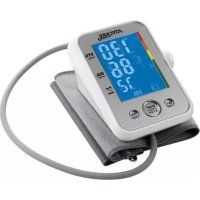
JC119M - Blood pressure monitor Joycare - Free user manual and instructions
Find the device manual for free JC119M Joycare in PDF.


| Product type | Electronic arm blood pressure monitor |
| Brand | Joycare |
| Model | JC119M (TMB-1112) |
| Measurement method | Oscillometric |
| Pressure measurement range | 40 to 230 mmHg (systolic/diastolic) |
| Pressure accuracy | ± 3 mmHg |
| Pulse accuracy | ± 5% |
| Display | LCD screen 93 x 61 mm |
| Power supply | 4 AA batteries (included) or DC 6V 1A AC adapter (not included) |
| Dimensions (device) | 140 x 120 x 70 mm |
| Weight (with batteries) | Approx. 500 g |
| Memory | 60 measurements with date and time |
| Cuff diameter | 22 to 32 cm |
| Operating conditions | +5°C to +40°C, humidity ≤ 85% |
| Storage conditions | -20°C to +60°C, humidity 10% to 93% RH |
| Auto-off | After about 1 minute of inactivity |
| Water protection | IP21 |
| Classification | Type BF applied part |
| Special functions | Arrhythmia detection, WHO classification (World Health Organization), safety stop at 300 mmHg |
| Included accessories | Cuff with tube, instruction manual, 4 AA batteries, storage case |
| Estimated service life | About 9 years (3 measurements per day) |
| Maintenance and cleaning | Clean with a soft damp cloth (water or mild detergent). Do not immerse. Do not use solvents. |
| Safety | Not suitable for children, pregnant women, people with arrhythmia. Consult a doctor for interpretation. |
| Repairability | Do not open. Contact Joycare authorized service center in case of malfunction. |
Frequently Asked Questions - JC119M Joycare
User questions about JC119M Joycare
0 question about this device. Answer the ones you know or ask your own.
Ask a new question about this device
Download the instructions for your Blood pressure monitor in PDF format for free! Find your manual JC119M - Joycare and take your electronic device back in hand. On this page are published all the documents necessary for the use of your device. JC119M by Joycare.
USER MANUAL JC119M Joycare
Guangdong Transtek Medical Electronics Co.,Ltd. - ZoneA, No.105,Dongli Road,Torch Development District,Zhongshan, 528437,Guangdong,China

MDSS - Medical Device Safety Service GmbH, Schiffgraben 41 - 30175, Hannover, Germany.
The Blood Pressure Monitor JOYCARE detects the Systolic, Diastolic, and the Pulse rate using the oscillometric method. All values are displayed on the large LCD screen. Please read carefully this entire instruction manual before use and keep it. For further questions about blood pressure and its measurement, please contact your doctor.
CAUTION
This device is intended for adult use only.
This device is intended for no-invasive measuring and monitoring of arterial blood pressure.
It is not intended for use on extremities other than the arm or for functions other than obtaining a blood pressure measurement.
Do not confuse self-monitoring with self-diagnosis. This unit allows you to monitor your blood pressure. Do not begin or end medical treatment based solely physician for treatment advice.
If you are taking medication, consult your physician to determine the most appropriate time to measure your blood pressure. Never change a prescribed medication without consulting your Physician.
When the device was used to measure patients who have common arrhythmias such as atrial or ventricular premature beats or atrial fibrillation, the best result may occur deviation. Please consult your physician about the result.
If the cuff pressure exceeds 40kPa (300 mmHg), the unit will automatically deflate. Should the cuff not deflate when pressures exceed 40 kPa (300 mmHg), detach the cuff from the armand press the START/STOP button to stop inflation.
The equipment is not AP/APG equipment and not suitable for use in the presence of a flammable anesthetic mixture with air of with oxygen or nitrous oxide.
The operator shall not touch output of batteries /adapter and the patient simultaneously.
To avoid measurement errors, please avoid the condition of strong electromagnetic field radiated interference signal or electrical fast transient/burst signal.
The user must check that the equipment functions safely and see that it is in proper working condition before being used.
This device is contraindicated for any female who may be suspected of, or is pregnant. Besides provided inaccurate readings, the affects of this device on the fetus are unknown.
Manufacturer will make available on request circuit diagrams, component parts list etc.
This unit is not suitable for continuous monitoring during medical emergencies or operations.
Otherwise, the patient's arm and fingers will become anaesthetic, swollen and even purple due to a lack of blood.
Please use the device under the environment which was provided in the user manual. Otherwise, the performance and lifetime of the device will be impacted and reduced.
During using, the patient will contact with the cuff. The materials of the cuff have been tested and found to comply with requirements of ISO 10993-
5:2009 and ISO 10993-10:2010. It will not cause any potential sensation or irritation reaction.
Please use ACCESSORIES and detachable partes specified/ authorised by MANUFACTURE.
Otherwise, it may cause damage to the unit or danger to the user/patients.
The device doesn't need to be calibrated in two years of reliable service.
Please dispose of ACCESSORIES, detachable parts, and the ME EQUIPMENT according to the local guidelines.
If you have any problems with this device, such as setting up, maintaining or using, please contact with Authorized Service Center. Don't open or repair the device by yourself.
Please report to an authorized Service Center if any unexpected operation or events occur.
Please use the soft cloth to clean the whole unit. Don't use any abrasive or volatile cleaners.
The device must be installed and put in service in compliance with the EMC information contained in this manual.
The portable and mobile radio communication devices may affect the functioning of the device
Do not use near (e.g. 1 m) a DEVICE for short wave or microwave therapy;
Do not connect the patient simultaneously to a high frequency electrosurgery device;
For all technical information please contact the Authorized Service Center JOYCARE
IMPORTANT INFORMATION BEFORE MEASURING
Blood pressure changes during the day and is also influenced by many factors such as smoking, drinking alcohol, taking drugs and physical activity. The blood pressure measurement should be performed by a doctor or a healthcare assistant who knows your medical history thoroughly. The regular use of the JOYCARE'S blood pressure meter will allow you to keep your doctor abreast of the continuing trend of your blood pressure, and therefore provide a useful tool for your health diagnosis. Ensure you wear the cuff correctly, paying particular attention to its position relative to your heart, since a position above or below it could affect the measurement. Do not move the device, body or arm and do not talk during the measurement, otherwise the readings will not be reliable. Perform the measurement while in a comfortable position, sitting, resting quietly and at ease. Never wrap the cuff around the sleeve of your jacket or shirt, otherwise the readings are not reliable. Please allow at least 3-5min between measurements to restore normal circulation. Measure the pressure always in the same arm, preferably the left one, as the pressure between arms may differ. Certain factors may affect the measurement, cause variations, and unreliable readings, including bathing, talking during the measurement, alcohol, exercise or agitated movement, large meals, sudden temperature changes, nervous tension, stress, etc... CAUTION: Do not forget: while self-measurement represents control, it does not constitute a proper diagnosis or treatment. Any unusual values should always be discussed with your doctor. Under no circumstances should you change the dosage of any medication prescribed by your doctor. This blood pressure monitor is not suitable for people with diagnosed cardiac arrhythmia. Should the user should suffer from heart problems, kidney problems, diabetes and circulatory problems, it shall be necessary to seek the doctor's advice before using the device. This device is not a toy. Keep out of reach of children. Do not leave it unattended and make sure that children do not play with it. This device shall not be used should you have any arm wounds. This device should only be used for measuring blood pressure in adults. The device contains sensitive electronic components (Microcomputer). Therefore, avoid strong electrical or electromagnetic fields in the immediate vicinity of the device (e.g. cell phones, microwave ovens). These can cause a temporary loss of measurement accuracy. To avoid possible damage to the device, always use and store it within the temperature and humidity ranges contained in the technical specifications.
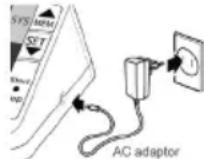
POWER SPECIFICATIONS:
4 AA batteries (test batteries are included)
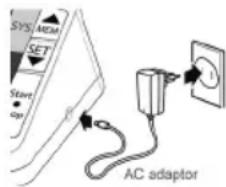
DC 6 V power adaptor (not included)
INSERTING AND REMOVING THE BATTERIES
Remove the cover on the battery compartment at the rear of the device and insert 4 new AA batteries, respecting the polarity indicated, then replace the cover. Replace the batteries when the battery symbol L_o appears on the display, and when the display starts to wane or doesn't power on. The supplied batteries are for trial use only and they may have a shorter life. If the product is not used for an extended period of time, it is advisable to remove the batteries, since a leak from the batteries can cause damage to the device.
SETTING THE DATE, TIME AND MEASUREMENT UNIT:
Before using your blood pressure monitor, you must set the date and time so that readings can be memorized with their date and time. Once the batteries have been inserted, press and hold the "SET" key for approximately 3 seconds; the year will begin to flash on the display; now press the "MEM" key to set the year, followed by "SET" to confirm; the month will start to flash, press the "MEM" key to set the month, then the "SET" key to confirm. Repeat the same sequence to set the day, hour, minute and measurement unit. Once all the settings have been set, the display shows ONE, and the device will power itself off automatically after a few seconds.
RECOMMENDATIONS FOR TAKING READINGS
5 minutes before taking a blood pressure reading, sit down, relax and remain calm. Wait at least 3 minutes between one measurement and the next. Keep your body and arm cuff still and do not speak during the reading. Avoid touching the device. Always take readings on the same arm. Uncover your arm so that it is exposed in the area in which the reading is being taken, and do not tighten the arm cuff excessively, allowing a space equivalent to the width of a finger. Take your blood pressure reading while seated in an upright position, resting your lower arm onto a table or other surface. If necessary, place something under your arm to adjust the height (e.g. a book). Relax your arm with the palm of your hand facing upwards. The arm cuff must be positioned at the same level as your heart.
Because blood pressure varies throughout the day, it is advisable to measure your blood pressure always at the same time of day, so as to be able to make a reliable comparison.
Connect the arm cuff's air tube to the main unit. Fit your arm in through the arm cuff and pull the cuff so that it is positioned around 1 or 2cm above the fold of your elbow; the air tube must be positioned in line with your little finger.
Press the START/STOP button. All of the digits on the display will appear simultaneously, then "0" will appear on the display, together with the arrow
symbol. Immediately after, the arm cuff will begin to inflate and the device will begin the blood pressure measurement. Avoid speaking or moving while taking readings. After taking a reading, the display will show the systolic and diastolic pressure, as well as the heart rate, storing them in memory automatically. The time also appear on the display, along with the symbol next to a different colour depending on the World Health Organization classification (see paragraph on "Blood pressure classification standards"). The results of the reading will appear on the measurement bar, according to the WHO classification:
OPTIMAL
NORM
HYPE (G1-G2-G3):Hypertension
In addition, in the case of an irregular heart rate, the symbol shown here will appear on the display. In these conditions, the device will take a reading anyhow, but the data obtained may not be exact; it is advisable in this case to contact your physician. This device is not suited to patients with a proven cardiac arrhythmia condition. Press the START/STOP button to switch off the device, otherwise it will power off automatically after a few seconds.
SAVING, RECALLING AND CANCELLING DATA
This device is capable of memorizing data for up to 60 readings. After each reading, the device stores in memory all data from the blood pressure measurement (Systolic pressure, Distolic pressure, heart rate, date, time and WHO classification). Press the "MEM" key to recall memorized readings. The average value of the latest three measurement results will be displayed first. To view all other memorized readings simply press the "SET" or "MEM" keys. The device can memorize 60 readings in total, after which it will progressively delete the oldest readings. (Starting from no. "60"). To delete / cancel the data stored in the memory, simply press and hold the "MEM" key for a few seconds when the device is off. The heading "dEL ALL" will appear on the display; press the "SET" key to delete all memorized data, and "dEL dOne" will appear on the display. Should you wish to give up the deletion, press "Start - Stop" button, the device will turn off. If no data is stored in the memory, press the "MEM" key, "----" will appear on the display.
BLOOD PRESSURE CLASSIFICATION STANDARDS
The World Health Organization (WHO) has set the standards for blood pressure classification, which you may find in the table below.
Note: This device is suitable for measuring blood pressure exclusively in adults. Risk factors such as diabetes, obesity, smoking etc. are not considered in these tables. This table is only indicative, these values indicate exclusively the different levels of blood pressure, and under no circumstances you should change the dosage of any medication prescribed by your doctor. For a final evaluation of your blood pressure, it is essential to seek always your doctor's advice.
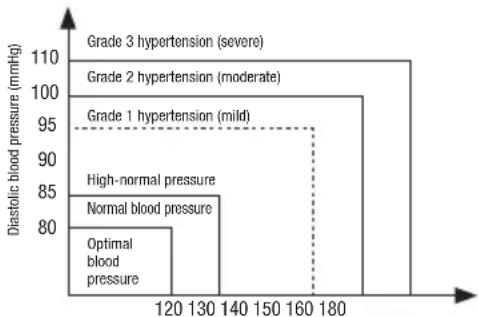
Systolic blood pressure (mmHg)
| Livello Pressione (mmHg) | Ottimale N | normale | High normal | Mild Moderate | Severe | |
| SYS < 120 120 | ~129 130~1 | 39 140~159 | 160~179 ≥ | 80 | ||
| DIA < 80 80~8 | 4 85~89 | 90~99 100 | ~109 ≥ 110 |
MAINTENANCE AND CARE OF THE DEVICE
Clean the device using a cloth dampened with water or a delicate detergent, and dry using a supple cloth. Never use aggressive detergents or sprays to clean the device. Never immerse the arm cuff or the device in water. In the eventuality the device is not used for a long period of time, it is advisable to remove the batteries, since leaked battery fluid can damage the appliance. Do not expose the device to direct sunlight. Never store the device in a humid or dusty environment.
PREVENTING MALFUNCTIONS
Do not twist the arm cuff in any way. Do not inflate the arm cuff if it hasn't been positioned around the arm beforehand. Never attempt to disassemble or modify any component/s on the device, including the arm cuff, in an attempt to repair it. In the eventuality of a malfunction, contact an authorized service centre. Avoid dropping the device, and do not expose it to any sort of shock. Always store the device away from any heat source, the sun's rays, excessive humidity, sharp objects, etc.
| Problem Situation Verify | Intervention | ||
| No power | Display will not light up. | Batteries are exhausted Replace with new batteries | |
| Batteries are inserted incorrectly. | Insert the batteries correctly | ||
| AC adaptor is inserted incorrectly. | Insert the AC adaptor tightly | ||
| Low batteries | Display is dim or show 0-10 | Batteries are low Replace with new batteries | |
| Error Message | E 1 shows The cuff is not secure. | Refasten the cuff and then measure again | |
| E 2 shows The cuff is very tight | Readjust the cuff, not too loose or too tight and then measure again. | ||
| E 3 shows The pressure of the cuff is excess. | Relax for a moment and then measure again. | ||
| Error Message | E10 or E11 shows The monitor detected motion, talking or the pulse is too poor while measuring. | Relax for a moment and then measure again | |
| E20 shows The measurement process does not detect the pulse signal. | Loosen the clothing on the arm and then measure again | ||
| E21 shows The treatment of the measurement failed. | Relax for a moment and then measure again. | ||
| EExx, shows on the display. A calibration error occurred. | Retake the measurement. If the problem persists, contact the retailer or our customer service department for further assistance. Refer to the warranty for contact information and return instructions. | ||
Should the problems persist, please contact an authorized service centre. Should the readings be excessively high or low, please seek your doctor's advice.
TECHNICAL SPECIFICATIONS
Model JC-119M (TMB-1112)
Description Arm blood pressure monitor
Method of measurement Oscillometric
Mode of operation: Continuous operation
Protection against ingress of water: IP21
Degree of protection: Type BF applied part
Measurement range Rated cuff pressure: 0mmHg - 300mmHg (0kPa-40kPa)
Measurement pressure: 40mmHg - 230mmHg (5.3kPa-30.7kPa)
Pulse value: (40-199) beat/minute
Accuracy Pressure 5^ - 40^ within ± 0.4kPa (3mmHg), pulse ± 5%
Power appliance powered by internal electric source, 4 AA batteries (included
DC 6V 1A power pack (not included)
Operating conditions from +5^ to +40^ , humidity ≤ 85%
Conditions of transport and storage from -20^ to +60^ , humidity 10% RH 93% RH
Display LCD V.A. 93x61mm
Memory 60 measurements with date and time
Product dimensions 140x120x70 mm
Product weight 353gr
Circumference of arm cuff approx. 22 32cm
Power-off automatic after around 1 minute unused
Accessories arm cuff with tube, instruction manual, 4 "AA" batteries, storage bag
Expected service life of device: about 9 years if calculated by 3 times measurement per day.
Symbols:

Type BF applied part

See the documentation attached

Date of manufacture
Warning: The Blood Pressure Monitor JOYCARE was designed to measure blood pressure exclusively in adults.

0123
JC-119M (TMB-1112) has been manufactured in compliance with the European directives 93/42ECC 0197
MADE Distributed under the brand JOYCARE, by JOYCARE S.R.L. sole partner,
IN CHINA Via Massimo D'Antona, 28 - 60033 Chiaravalle (AN) - Italy
Guangdong Transtek Medical Electronics Co.,Ltd. - Zone A,No.105,Dongli Road,Torch Development District,Zhongshan,528437,Guangdong,China

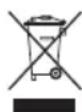
DISPOSAL The device (including its removable parts and accessories) must not be disposed of together with municipal waste at the end of its life, but in compliance with European Directive. Since it must be handled separately from household waste, either carry it to a separately-collected waste disposal centre for electrical and electronic appliances or give it back to the retailer on purchasing a new device with the same purpose. Any infringement will be severely prosecuted. The batteries used in this device must be disposed of in the special bins at the end of their life.
All the instructions and drawings are based on the latest information available at the time of going to print and may be subject to change.
| COMPLIED EUROPEAN STANDARDS LIST | |
| Risk management | ISO/EN 14971:2012 Medical devices — Application of risk management to medical devices |
| Labeling | ISO/EN 15223-1:2012 Medical devices. Symbols to be used with medical device labels, labelling and information to be supplied. General requirements |
| User manual EN 1041: 2008 Medical equipment | manufacturers to provide information |
| General Requirements for Safety | EN 60601-1: 2006 Medical electrical equipment — Part 1: General requirements for basic safety and essential Performance IEC/EN 60601-1-11: 2010 Medical electrical equipment — Part 1-11: General requirements for basic safety and essential performance -Collateral standard: Requirements for medical electrical equipment and medical electrical systems used in the home healthcare environment |
| Electromagnetic compatibility | IEC/EN 60601-1-2:2007 Medical electrical equipment -Part 1-2: General requirements for basic safety and essential performance - Collateral standard: Electromagnetic compatibility - Requirements and tests |
| Performance requirements | EN 1060-1:1995+A2:2009 Non-invasive blood pressurePart 1: General requirementsEN 1060-3:1997+A2:2009 Non-invasive blood pressure .Part 3: Supplementary requirements for electromechanical blood pressure measuring system |
| Clinical investigation | EN 1060-4: 2004 Automatic Blood Pressure Monitor overall system Interventional accuracy of the testing process |
| Usability | IEC/EN 60601-1-6: 2010 Medical electrical equipment — Part 1-6: General requirements for basic safety and essential performance - Collateral Standard: Usability IEC/EN 62366: 2007 Medical devices - Application of usability engineering to medical devices |
| Software life-cycle processes | IEC/EN 62304:2006+AC: 2008 Medical device software - Software life cycle processes |

JC-119M (TMB-1112)
MESUREUR DE PRESSION AUTOMATIQUE PAR LE BRAS
Guangdong Transtek Medical Electronics Co.,Ltd. -ZoneA,No.105,Dongli Road,Torch Development District,Zhongshan,528437,Guangdong,China

Guangdong Transtek Medical Electronics Co., Ltd. - Zone A, No.105, Dongli Road, Torch Development District, Zhongshan, 528437, Guangdong, China

Guangdong Transtek Medical Electronics Co.,Ltd. - ZoneA, No.105,Dongli Road, Torch Development District, Zhongshan, 528437, Guangdong, China

Guangdong Transtek Medical Electronics Co.,Ltd. - ZoneA, No.105, Dongli Road, Torch Development District, Zhongshan, 528437, Guangdong, China
He 6bpkaIte caMoHa6bIIOeHne cbc ca MoDnaHcOHTka. ToBa yCToPcHcTO Bn No3BOnBa Da CNeDInTe KpbBHOTo CN HaJIraHe. He 3aOnuBaIte H He cNmuIte MeMHnHcKToJeueHne, eMHCTBeHO Bb3 OCHOBa HA CTOHcTMe, n3MepeHn OT YcToPcHcTBoTo. BnHaRn Ce KOHCyTNpaIte C BaIIHJKeap.
Ako npmeate lekapCTba, koncuntpahte ce c bawna lekap, 3a da ce onpeiden haia-noxdoxoiaoto BpeMe, B KOeTo da ce n3MepBa KpbBHOto hanahe. Hkora da He ce npomehrt npedncaHte lekapCTba, be3 nbpBO da ce koncyntpaTe c bawna lekap.
Korato yctpoCTBOTo ce n3nO3Ba 3a n3MepBaHe Ha KpBbHOTo Ha naueHtnc o6u anPHTMN KaTO npEcdpHNO, KaMepHa ekCTpaCnCTONn ININ npEcdpHNO MbxJeHe, He Moke da Ce BApBa H a pe3yntATne OT nOnyueHTe n3MepBaHnTa. MonJ, KOHCynTpaueCe c BaWn Jekap, 3a pe3yntata.
Ako HanaheTo B mHaeta Ta Hbmba 40 kPa (300 MM XnBaueh CTbn6), yctpoCTBOto ABOMaTHUHO n3nyCa Bb3dyx. Korato HanaHaeTo e no-rotlmo ot 40 KPa (300 MM XnBaueh CTbn6), n3BaTe MaHeta To pKaTa HATNCHe Tcpt/ Cton, 3a da cnpTe N3MepBaHeto.
YcTpoCTBOTo He e rOHa 3a ynoTpe6a B npucbCTBneTo Ha 3aNaIIMM yNoKa CmEc C Bb3dyxa WnC KNCIOPOd mNn a30TeH OKnD.
OnepaTopbT He Tp86Ba Da ce DOpnpa eHOBPeMeHHo Ha H3XoHDoTO HanpeKeHne aAantP / 6aTePnTa H NaIeHtA.
MOnI 368BaIte yCIOBnHa CINHO eEeKTPoMaHHTHO nOJe, INTepepeeHTN M3JIbYeHN CnHAnm IIN eEeKtpuueckn 6bp3 npexoJ Wn pa3pyuBaHe, 3a da HMArpeekn npn 3MEpBaHETO.
Notpe6ntenTpr8bda npoBepn, da nnobopuyBaHeto pa60n 630naCHO m Tpr8bda ca npoBepn n3npaBHOCTTA npedynnoTpe6a.
ToBA yCTpoIcTBO e npOTMBONOKa3HO 3a XeHN, KOITo IMAT NIOO3peHnA 3a 6peMeHHOC TIN Ca 6peMeHHN. IocneDmTe OT TOBA yCTpoIcTBO Bbpxy IIOda He ca n3BecTHN.
PpOu3BOUHTeIaTpaBa Da npEoCTaBn pNn NOnCKBaHe eNeKTPmueckn cxEMn, CnMCbK C aCTn Taka HaTaTBk.
ToBa yCtpoIcTBo He e noDxOJaIO 3a HenpeKbChATo HaBIOJeHMe No BpeMe Ha onepaun, nn 6bp3a MeiunHcKa nOMou.
Korato ce n3no3Ba B TaKbA CHTyaun, PbKaTn N PpbCTnTe Ha NaueHrta Morat Da CTAHaT N OdyTu N DOpN NnABN 3aOTo NaueHrTa e NOD aheCteu, HMa Heoctn Ha KpbB Do pbuete.
IpenopbYHTENHO e aM3N03BATE yCTPOHCTBOTO, KaTTo e yKa3aHO B INHCTpyKUnTe 3a ynTpe6a. B npOTnBEH cnyaI YHKUHOHaHOCCTTa N TpaHOCCTTA Ha yCTPOHCTBOTo MoKe Da 6bDe KOMnPoMeTIpHaHa.
UpeHa OTROBAPa Ha M3NCKBaHnTa Ha ISO 10993-5:2009 n ISO 10993-10:2010.
YcTpoCTBOTo He npuHnRABa Dpa3HeNe Hn peaknHa yBCTBuTeNHOCT.
PpenopbYBaMe I3N013BaHTo Ha akcecoapnte N DBXkeuCe cayTn KaKTo e nocOeHO B pBkoBOCTBOTo/, N TaKnBA Odo6peHOT npON3BOIDTeJIa.
B npotuben cnuya moKe da HaCtbnn nobpeHa yctpoCTBOTo nn Ha naeHNTa.
Ppe3 nbpBNTe DBe rOuHH OT DeHocCTTa, yCTpOoiCTBOTo H Ce HyKdAe OT KaIINb6PnPapHe.
MoXe Ta Ce CbPKeTe C JOYCARNEIOTOpN3nPAHNIpeCTaBHTEN B CnyaH Na BB3HNKBAHe H npOBeMN, CbP3AHn C yCTPOINKTTO HAcTPOKNTE, CbxpaHEMeIO INy yNoTpe6aT My. He OTabpAHTe IIN pEmoHTnpAte Camn yCTPOINCTBOTo.
Korato ca Hanme He npedBndeH cnTuaynn, MoJ, CbpbKeTe ce c OtopnnpaH cepBn3eH eHTbp Ha JOYCARE.
PnpopbVbAme nouchBaHe Ha cenn6 K MeKa Kbpna KaTo ce 368Ra 3n013BaHTo Ha a6pa3NBn mI neTtBn BcctBa.
YcTpoCTBOTo Tp8Ba Da ce MOHTnpa N da CE nycHE B EKKnloataaB Cb0TBcTBeC EMC INHΦopMaunA,cbIbpxkaua Ce TB0Ba pkoBODCTBO.
IpeHocmmuMO6nHHKOMyHnKaUHOHH yCTPOINCTBa KaTO paNtO MoT a3acrHaT cyHKUHOHpaHETo Ha yCTPOINCTBOTO
Ha He ce n3non3Ba B 6n30ct Ha (Hanp. 1 m) ot yctpoNCTBO HA Kbcn BbHn MmKpOBoHOBa Tepanr;
He noctabraye nauehnta do yctpoCTBO C BncoKa yeToTa 3eEkeTPO Xnpyrma;
3a zanata texnuecka nHOpmaun, moJa da ce CBpxkeTe cOTOpn3napc cepBn3eH cHTbpHa JOYCARE nn HnpMaTa BHOCTen.
BAKHA INHOPMAUIA, INPEIIN DA INPCTbNITE KbM IN3MEPBAHE
KpbBHOTo HnHaIe Ha BteueHHe Ha DeHmOCBeH ToBa Ce NOBmRABa OT MHOroBpoHn PhAKTOp, Kato HApMMeP NyUeHeTo, KOHCymaunrTa Ha anKkoXoHnHnAHTKn, nPmeMaHoTo Ha NekpCTBa Hm3NueckCaT AKTbHBOCT. N3MepeHTo KPbBHO HnAingae 6n TpRbBAO da 6bTe TbIKYBAHO OT Keap mnr O MeDmHcKn pa60THNK, KoTo nO3Haba NoDp6HO Bauata aHaAMHe3a. 4pe3 noctoHHToHn 13nON3BaHe Ha anapata 3a 13MepeBaHe Ha KpbBHO HnAingae JOYCARE ue MokeTe da HnΦOPMInape TneKapra 3a noctoHHnHte THeuDHeUm Ha Baueto KpbBHO HnAingae, Kato Taka My pIepoCTABre PoneHeh HnCTpyEmT 3a DnHarOCTHnPaHae Ha Baueto
3dpaBocNBO hcbToHne. NocTabeMaHweta npabHnHO, KaTO BHMaBaTe Oc6eHo ToJ da ce HAMpa Ha HbTO Ho Cbpueto, Tb KaTO NoCTABHeTo My NoHarope MNo-HaOny bMnO MoEe Do NorpeuHNO M3MepBaHe. He MbpAite UpeJa, TaIOto MIn PkKaTa, KaTIO Hr BOpe To Bpme HA 3MepBaHETo BpOTIBEN CUYAH e B3MOxHO CTOHCTNE Da He ca NaEckHN. N3BbpUbaIte N3MEPAHHTA ByD06HO NOJoxKeHNe, DOKATO CTE cEduHN, CNOKOH NOpBe OTNychatn. HmKOr He HauBaIte MaHweta OKOLO pKaBAHa Ca KAO Hn HnyOBep, Tb KaTO OTuTeHNTe CTMOHCTMoKe Da He ca HAdekHN. MeKdy DBe N3MEPAHHTA N3AKaIte NOE-3-5 MNHTn, 3a Da Ce B3BbpHE HopMaJIHOTo KpbBoo6paueHne. BuHAR N3BbpUbaIte N3MEPAHHTA Ha edHa Nc7a Ka, noBb3MOXHOCT Ha NRABa pKa, Tb KaTO HANrAHETo MEKdy EdHaTa n Dpyrata PbKa MOKe Da ce pa3nnuAba. OaKtPone, KOTo 6hxa moRn Da nobnrrat Ha N3MEPAHETo N da DOBeDat Do Bapuane H HeDAeKHNOTHTAHNA, ca: Ako CTe CE KbNaIIMaIKo npeHn N3MEPAHETo AKO ROBPoe NO Bpeme Ha N3MEPAHBe/ ako CTe NNn ANKOXon / ako CTe N3BbpBuaII AnuceKn ynpaxKHeHn/ dbnxHeN/ oBnHno XpaHe/ TemnepaTyPhn pa3nKn/ HepBHO HAppeKeHne/ cTpec n dp.
BHIMAHHE:
He 3a6paBnIe: camOpbHOn 13MepBaHe 03HaUaba KOHTpon, a He dHaHHOa HINNeueHne. HeoWauHH CTOnIOCTbBA da 6bDat BnHaHn O cbXJdHn C nHnna Hnkeap. Pnp Hkakbn OBTOETCBa He Tp8bA Da npomeHte Do3PBOKHe N KaKBOTo n Da e IekapCTBO, npedNcAHO OT INHnna Nekap. To3n anapat 3a 13MeBahe Na KpbHbO HaHARane He e NOxOAnBa 3X Opa C yCTAHOBe CbppeHa apmTnA. Ako non3BaTeRn HA anapata cTpaDA ot CbppeHN, b6bpueHN, daBefaTHN pno6neH N npayHne B KpbOoBpaAMHeN, e HoEooHmoD a ce KOHCyttna C nekap, npdi Da n3NON3Ba anapata. ToBa YcTPOICTBO He eIrpaQAA. JpBxTe Ro daJeu OT o6cera Ha deca. He ro octabTBe 63 HAD3Op n CE norPnxTe deqata DA He CHrptarC Htro. ToBa yctpoCTBa HE Moke Za 6bDe n3NON3BaHO, aKO Bpxy PbKaTa CN IMate paHn. ToBa yctpoCTBO Tp8bA da 6bDe n3NON3BaHO cMoA 3a 13MeBaHne Ha KpbBHO t HANraHe HA Bb3pactTHn Niua.AnapatBT CBpbKa YCbCTBNTENH ENKTPOHNN KMOHENTM (MKPKOMMHTp). 3AToBA 33raBaiTE CNHNEKPTPHueCKN INN ENEKPTPOAMHRTHN NOETA B HnocpeCTBHe BA1NtO do anapata (Haip. KJIeTBuH NteF0Hn, MKKpOBbHIOBn NeKn). Te MoTAt Da IOBeaTdo BpeMeHHa HToOHCT B 13MeBaHHeTo. 3a da 136berBt B3MOXHN IbpeKDaHn Ha anapata, ToT Tp8bA da CE n3NON3Ba BxpaHBA BnHnCHO Yka3aHnrrta 3a TempePaTypa n BIAHXHOCTTA, NOCOeHN BTexNHuecknte CneuNfKAunm.
3AXPAHBAHE:
46aTePnn AA, BkIIOueHn 6aTePnn (npo6Hn)
3axpaabaio yctpoiCTBO DC 6 V (He e BkIIOyeHo)
IOCTABRHEICMRAHAHABATEPNITE
CBAIeKanaka Ha OTJeHHeTo 3a BateHn, KOe To c Hmnpa O 3aHnata Ha ypeHa nocBete 4-Te HOb Bate A, Kato CnaBATE O6JIaHaTcNOCKa HA NIOUCITE, a CNE TOBA 3aTOBepe Kanaka. CMeHete 6atePnne, kato dncnHOT NOKa3Ba CMNBora Ha 6atePnra T -dncnEET NOMbHBa MHe CE BKNUba. PpOeCTABeHn 6atePnna Ca mzo 3a PnoBHa yntOpBeA TeXHHa XHBOt MOeJa e No-KpTaBk. Ako YpeBt He ce IINON3Ba 3a npDblKnTeHEN nepNOt OBpe, Bu npopopbUbame Da N3BaDnTE BatePnte, TB KaTo EBEHTyauHIO N3TmuaHe TaEHoCT OTR XMOKe Ja NOBpeu ypeDa.
HACTPOINKA HAI DATA, YAC EDINHUNA-MRPKA:
IpeHn da n3non3BaTe yepa, e Baxho da hactponTe daTata u caca, 3a da moKeTe da zanaMetraBe pa3JmUHIne 1M3mepbaHHc bC sbOTBeTBAauTa MM daT aac. CnE kato noctabne 6atepHnte, 3aDpXte HATNCATO KOHTo "SET" 3a OKono 3cekyHnn, ToHnHATA ue 3anoHne da Mmra Meceubt, HATNCHe TKeOne MEM"MEM", 3a da HactponTe rOHNata, a cnE TOBA SET, 3a da NoTbPnDE; ue 3anoHne da mRna Meceubt, HATNCHe TKeOne MEM"MEM", 3a da HactponTe Meceua, a cnE ToBA - KOnue "SET", 3a da NotbPnDE. NIOBTOPE CTsata NOcNoBATENHOCT, 3a Da HactponTe DeH, caca, MNHTnE EHNHa-Mapka. CnE kato tce HAcTPONN BCNUKN, DnCnneert INBExJa ORe , a cnE TOBA ce NkNUOyBa ABOTMaTHUHO CnE HAKONKo CEkyHnD.
IPABWJIA 3A IN3MEPBAHE
5 MmHTn npei 13MepBaHTo ceHHe, otnycheTe cie n octaHete cnoKoHN, KaTo n3uKaBte nohe 3 MmHTn Mexdy Ibe 13MepBaHn. JpbXTe TAnOto n PbKaTa HneDmKHHn He RoOBpEt e No BpeMe Ha 13MepBaHTo, a CbUIO He OOKCbAte ypeJa. N3BpUbaIe 13MepBaHnra BnHaTu Ha eJua CBua PaKa. N3BpUbaIe 13MepBaHTo HA HenoKpIta Pka. He CTaIae npekane Ho MaHweta, OCTabe UmpinHata 3a OKOe enH pNCT. 13MepBaTe KpbHO To HnAraHe, DOKato CTc CeHnau CnPABeH Top. NOpPte DoonHata qac Ha PkRa BpXy Mca IIN npyra paHbNoBpXHOt. AKe e Heo6xOIMO, NOJooTe peMeT nO PbKaTA, 3a da perynnPbAte BnCOunHATA (HanpMpe KnHa). OTnyche Pe kPaTc oBbPHTa HArope dJAH. MaHueTb TpBa0a Da 6bJe nocABHe HMBTO Ha CbuTeOp. Ta KaTO KpbHOTo HnAraHe Bapnpa B TeueHHe Na DeH, Bu CbBeTBame Da fo 13MepBaTe BnHarE B eInu CbUq Yac, 3a da IMate HnEeKHa OCHOBA 3a CboNctBaK.
KAK DA IPIEMHETE KbM 3MEPBAHE HA KpBbHOTO HAJIFAHE
CbBpKteMapkya 3a Bb3dYx Ha MaHweta KbM rnaBhOto yctpoCTBO. PbXheTe pBkata np3e MaHweta n ro n3dbpnaIte, DOKato ro no3uioHnpate Ha OKo 1-2 CMnAD CBtBkAHa NaKbT, a MaKyUb TpBaBA da 6BeNoctABc HynopeDHO ha Nau-MaknK npbCT h paBkata. HATncHete 6yToHa START/STOP, BCmKn UcPpHa Ha dNcNne Ce 3bEkeDa t EHNbOpemHeo, a CnE ToBa DNcNneT NOKa3Ba "0" u cMMBoHa NTcPekKa, Kato BeHara cne TOba MaHwetB t ZanOpBa da ce HauyBa u YpeDb t 3anoBa I3MePbaHoTo No BpeMa HzMepBaHoTo He roBopete He He cBnKeTe. CnE npKlnOuBaHe Ha I3MePbaHoTo, ypeDb t NOKa3Ba BCmKn
OTeHTH daHH (CnTOHn HAIraHe, nactoHn HAIraHe n CbpeHy uApu), KaTo m 3aamTaBA abTomTuHO. OcBeH ToBa, Ha dncner ce N3BexKa, aCbT KaKTo n CMBObl [BmTe npaparphi"CTaHaptn 3a KnaCnKauHa KaPbBHO tHaIraHe"). Pe3yTAITE OT M3MepBaHTo 6bDaT N3BeHn Taka B NeHTaHa N3MepBaHe, Cnped KnaCnKauHa HA WHO (CBetOBHata 3dpabHa opraH3aun):
OPTIMAL::OnTnMaHNo
NORM: HopmaHIO KpbBHO HanaRaHe
HYPE(G1-G2-G3):xnepeToHn
OcBEN TOBA, aKo CbpeHnAT pTbM e HepaHomepeH, Ha nCnner 1e MHa CbOTBeTHNAT CMBON. PnTe3u yCIOBIA ypeBt N3BbpBaN3MEpBaHTo, HO OTteHnTE daHH BMA MORn Da He ca ToHN, B TaKbB cnyaBn npenopbYBaMe da ce KOHCytnpate C Baunn nnueh nekap. To3n ypeH e noDxOpaI 3a Imuca C yTaHOBeHa CbPeHa apTMn
HaTNCHTe KOnTuTe START/STOP, 3a Da n3KInouHte UpeBa, B npOtnBEN CUYaY ToI ue Ce n3KInouH aTOMaTHNO CnE d HAKONKO cekyHd.
3A1A3BAHE,IM3BINKBAHE ANHYIINAPEHA DAHHN
TOB aYcTPOHCTBO E B cbCTOHN He da 3a anametn daHHn 3a do 60 yeTeHn. Cne I BCRAKO YEHe, yCtPOCTBOTo 1e CbXPAHBA B nAMETTA qnaTATA HNFOPMaHn 3a
3MepBaHTo HA KpBbHO TnAHLraHae (CCHTONUHO HAIraHae, dHaCTOnuHNO HAIraHae, cPdEHTA TceTOTA, DaTAta, Yca NkAChFNaKAAHnTA H 3O). HATmCTHe "MEM" 3a da 3BnKAte 3anaMeHTHe NOKa3AHn. CpeHnTa CTIOHOT opeZyIaTnTE Ha noCeHNITE TpN 3MEpaBHn 1e 6DaT a NO4aHHn NbPBN. 3a da BNInTe BCMNUOCTAHAnOMNHETeYehnEMeTSE"SET" hNEM"6yTOHn. YcTPOCTBOTo MOKe Da3anamEt 60 YeTHENa Kato IJNo, Cne KoTo NOctEHNO
1e 3TPNE Hau-CTAPHe NOKa3AHn. (KaTo ce 3anoHne OT HmOp e 60"). 3a da 3TPneTe / anyInpate DAHHn, CbXpaHEh B nAMETTA, pOcTO HATcHNe T aDJIpbKHe
"MEM"6yToHa 3a HAKoNKe Cekyni, Korato yCtPOCTBOTo e N3KnOyeHo. 3arNaBHeTo "DEL ALL"(m3TPBaHe H BAChn) ue Ce NOBn Ha DcNnner; HATcHete bTytoHa SET" 3a da 3TPneTe BCAuKN 3anaMeHTHe DaHHn, uDELL DONE" (m3TPBaHeTo N3BbpHeo) ue cnoBn Ha DcNnner. B cnuyai, Ye nCKate da ce otKkAEte ot
3tpBaHeTo, HATNCHE6yToH "Start - Stop", yCtPOCTBOTo 1e ce mKKnouH. Ako Hma CBxpaHeH daHHn B naMeTTA, HATncHete "MEM"6yToHa,"----"ue ce noBn
Ha dnnnne.
CTAHDAPTN3A KJIACNUKKAUHA KPbBHOTO HAJIAGAHE
CBeTOBHaT3zpaBnA OprAHn3aun (WHO) eYTBpDnla CTahdaptn 3a KnaCmKnKaun Ha KpbBHOTo HnraHHe, KOINTcneBbAT No-dolny B TaBnucata.
3a6eNekka: ypeBt e NIOxOJIu 3a N3MEpBaHe Ha KpbBHO HAIraHe OTe CpaHa Ha Bb3paCTHNIu. PnCKOBn fakTopn Kato Dma8et, NaHOpMeHo TeroNo, THIOHOpyUe He N dp. He Ca B3eTN BnpEDBn D npEETabeHIne TaONu. Ta3n TaONu e CaMO HINKmKATBnA, NOcOeHIne CTOnHOCTNOkA3BaT CaMo pa3LNHMte HnBa Ha KpbBHO HAIraHe N npH NkAKBn OBcToaTeNCTBa He 6nBa Da ce pomeHReT DO3NPbOKBHe HA KaBoto N da e NekapCTBO, npEINcaHO t BAwniNueh nekap. 3a OKOHauTeHn A OueHKe Ha BaWeto KpbBHO HAIraHe, BuHar n e ot OCHOBHO 3NaueHne Da Ce KOHCynTpate cNekap.
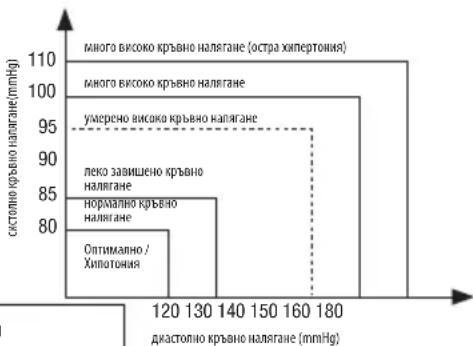
| Стени налагае (mmHg) | ХИПО- ОПТИМАЛно /ХИПОТΗ | Нормално КрьВно налагае | хинертоная | |||
| G1 G2 | G3 | |||||
| SYS < 120 120 | ~129 130~1 | 139 140~159 | 160~179 ≥ | 80 | ||
| DIA < 80 80~84 | 85~89 90~ | 99 100~109 | ≥ 110 | |||
IIOIAPbJKKA INFPIKKA 3A YPEDA
MoKeTe da noUcHbATE ypea c HablaKHeHa Kbpna c BODa mN C deNkateH noUcHbA pnpapaT, kaTo nOcyuWte c MeKa Kpna. HnKora He n3non3BaIte arpeCIBHN noUcHbAun npapataH cnpeIOBE 3a noUcHbA he ypea. HnKora He notanJme MaHueTA mYpea BB BoJa. Ako ypeBt He ce m3no13Ba 3a npDblxHtENeH nepoD OT BPEM, Bn npOpelpVABMa da h3BaUnite balePntMe, TbN KaTO eBHTyAJIHO n3TuAne Ha TeyHOCT OT TIX MoKE da nobpein ypea. He n3lanraute ypea ha dupeKTTH CbhyeBn lyh. HnKora He noctabTne ypea Ha MOKPN iPaauHH MeCTA.
KAK DA N35BΓBATE HENPABUNHO ΦYNKUOHPAHE
He n3BnBaIte MaHweTa IIO HnKaKbB HaunH.
He naYbai Me mHaeta, aKo npEn ToBa He e 6n HABNT OKIO PbKaTa. HmKora He ce ONTBAite da pa3rno6Bate nIN BnOIM3MeHATE KOIT NO KOMIOHENT HaypeDa, BKIOHTENHO mHaMeTAta, B ONTN Da rONPabTe. BcnyaH HENpABMnHO FOHKUIOHHPaCe CE CbBPKeTe COTOPNImpaH TeXHmecKeCepBn3.
I36raBaeTae na 3nyckate ypea da nana Hne ro n3naarate Ha HnKakBn yapn. BnHaHn ocTabrae yepea daJeu OT n3toHNn Ha TOnnHa,OT OTHueBn NbH,OT BlaxkHOCT,OT pexeepnpdmetm npdo6Hn.
BHHMaHHe: AnapaTb 3a H3MepBaHe Ha KpbBHO HnAraHa He Joycare e npoektnpaH 3a H3MepBaHe Ha KpbBHO To HnAraHa cMo npH B3pactHnIMua.
CE 0123
JC-119M (TMB-1112) e npoh3BcEHN Cb0tBcTBnC eBpOeNKeHte DnpeKTHnB 93/42EC
MADE BHeceNo pa3npoctpaHbHaC mCapkata JOYCARE,OT JOYCARE S.R.L. eHNCTBcBdpyHK IN CHINA Via Massimo D'Antona, 28-60033 Chiaravalle (AN)-Italy

Guangdong Transtek Medical Electronics Co.,Ltd. - Zone A,No.105,Dongli Road,Torch Development District,Zhongshan,528437,Guangdong,China
EC REP
5^ 40^,
Guangdong Transtek Medical Electronics Co.,Ltd. - Zone A, No.105 ,Dongli Road, Torch Development District, Zhongshan, 528437, Guangdong, China

Guangdong Transtek Medical Electronics Co.,Ltd. - ZoneA, No.105, Dongli Road, Torch Development District, Zhongshan, 528437, Guangdong, China

Guidance and manufacture's declaration - electromagnetic emissions for all EQUIPMENT and SYSTEMS
| Guidance and manufacture's declaration - electromagnetic emission | ||
| The JC-119M (TMB-1112) is intended for use in the electromagnetic environment specified below. The customer of the user of the JC-119M (TMB-1112) assure that it is used in such and environment | ||
| Emission test Compliance Electromagnetic environment - guidance | ||
| RF emissions C ISPR 11 Group 1 | The JC-119M (TMB-1112) uses RF energy only for its internal function. Therefore, its RF emissions are very low and are not likely to cause any interference in nearby electronic equipment. | |
| RF emission CISPR 11 Class B | The JC-119M (TMB-1112) is suitable for use in all establishments other than domestic and those directly connected to the public low-voltage power supply network that supplies buildings used for domestic purposes. | |
| Harmonic emissions IEC 61000-3-2 Not applicable | ||
| Voltage fluctuations/ flicker emissions IEC 61000-3-3 Not applicable | ||