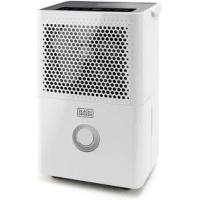
BXDH12E - Humidifier BLACK & DECKER - Free user manual and instructions
Find the device manual for free BXDH12E BLACK & DECKER in PDF.



| Product Type | Dehumidifier |
| Brand | BLACK+DECKER |
| Model | BXDH12E |
| Refrigerant | R290 (52 g) |
| Power Supply | 220-240 V ~ 50 Hz |
| Timer | 1 to 24 hours |
| Humidity Control | 30% to 80% in 5% increments |
| Operating Modes | Automatic, Clothing Dry |
| Fan Speed | High and Low |
| Internal Drying | Yes (1 hour duration) |
| Water Tank | Removable with lid |
| Continuous Drain | Yes (hose supplied, inner Ø 9 mm) |
| Air Filter | Washable (clean every 2 weeks) |
| Carrying Handle | Yes |
| Wheels | No (only on BXDH20E) |
| Child Lock | No |
| Warranty | Compliant with applicable legislation |
| Certifications | CE (Low Voltage, EMC, RoHS, Ecodesign directives) |
Frequently Asked Questions - BXDH12E BLACK & DECKER
User questions about BXDH12E BLACK & DECKER
0 question about this device. Answer the ones you know or ask your own.
Ask a new question about this device
Download the instructions for your Humidifier in PDF format for free! Find your manual BXDH12E - BLACK & DECKER and take your electronic device back in hand. On this page are published all the documents necessary for the use of your device. BXDH12E by BLACK & DECKER.
USER MANUAL BXDH12E BLACK & DECKER
Many thanks for choosing to purchase a BLACK+DECKER brand product.
Thanks to its technology, design and operation and the fact that it exceeds the strictest quality standards, a fully satisfactory use and long product life can be assured.

Please do not install or use your dehumidifier before you have carefully read
this manual. Please keep this instructions manual for an eventual product warranty and for future reference.
WARNING
Do not use means to accelerate the defrosting process or to clean, other than those recommended by the manufacturer.
The appliance shall be stored in a room without continuously operating ignition sources (for example: open flames, an operating gas appliance or an operating electric heater.
Do not pierce or burn.
Be aware the refrigerants may not contain an odour.
Appliance shall be installed, operated and stored in a room with a floor area larger than 4m^2
WARNING
Specific information regarding appliances R290 refrigerant gas.
Thoroughly read all of the warnings.
When defrosting and cleaning the appliance, do not use any tools other than those recommended by the manufacturing company.
The appliance must be placed in an area without any continuously sources of ignition (for example: open flames, gas or electrical appliances in operation).
Do not puncture and do not burn.
This appliance contains 52g of R290 refrigerant gas.
R290 is a refrigerant gas that complies with the European directives on the environment. Do not puncture any part of the refrigerant circuit.
If the appliance is installed, operated or stored in a nonventilated area, the room must be designed to prevent to the accumulation of refrigerant leaks resulting in a risk of fire or explosion due to ignition of the refrigerant caused by electric heaters, stoves, or other sources of ignition.
The appliance must be stored in such a way as to prevent mechanical failure.
Individuals who operate or work on the refrigerant circuit must have the appropriate certification issued by an accredited organization that ensures competence in handling refrigerants according to a specific evaluation recognized by associations in the industry.
Repairs must be performed based on the recommendation from the manufacturing company. Maintenance and
repairs that require the assistance of other qualified personnel must be performed under the supervision of an individual specified in the use of flammable refrigerants.
SAFETY ADVICE AND WARNINGS
This appliance may be used by children aged 8 years and over and persons with reduced physical, sensory or mental capabilities or lack of experience and knowledge, if they have been given appropriate supervision or training in the use of the appliance in a safe and Understand the dangers involved.
This appliance is not a toy. Children should be supervised to ensure that they do not play with the appliance.
Do not allow children to perform cleaning and maintenance without supervision.
Install the appliance in accordance with national wiring regulations.
Leave a space of 50~cm between walls or other obstacles and the appliance. Do not cover or obstruct the sides of the appliance, leaving at least 50~cm space around the appliance.
The product requires adequate ventilation in order to function properly.
If the mains connection is damaged, it must be replaced. Take the appliance to an authorized service center. Do not attempt to disassemble or repair it yourself as it may be dangerous.
This appliance is intended for household use only, not for professional or industrial use.
Before connecting the appliance, check that the voltage indicated on the nameplate matches the voltage on the rating plate.
Connect the appliance to a power socket that supports at least 10 amps.
The appliance plug must match the electrical socket of the socket. Never modify the plug. Do not use plug adapters.
Do not force the connecting cable. Never use the power cord to lift, carry or unplug the appliance.
Do not wrap the power cord around the appliance.
Check that the power cord is not pinched or bent.
Do not allow the connecting cord to hang or touch the hot surfaces of the appliance.
Check the condition of the electrical connection cable. Damaged or entangled cables increase the risk of electric shock.
- It is recommended as an additional protection in the electrical installation that feeds the device, the use of a differential current device with a maximum sensitivity of 30mA . Consult with an installer.
Do not touch the plug with wet hands.
Do not use the appliance with the damaged power cord or plug.
If any of the enclosures of the appliance breaks, immediately switch off the appliance to avoid the possibility of electric shock.
Do not use the appliance if it has fallen, if there are visible signs of damage, or if there is a leak.
Use the appliance in a well-ventilated area.
If the appliance is used in the same room with other gas or fuel appliances, it must be well ventilated.
Do not place the appliance in direct sunlight.
Place the appliance on a horizontal, flat, stable surface away from sources of heat and possible splashing water.
Do not use or store the appliance outdoors.
Do not expose the appliance to rain or moisture. Water entering the appliance will increase the risk of electric shock.
WARNING: Do not use the appliance near water.
Do not force the connecting cable. Never use the power cord to lift, carry or unplug the appliance. Keep the device away from heat sources and sharp edges.
USE AND CARE:
After each use, completely unplug the power cable from the power supply.
Do not use the appliance if its start / stop device does not work. Do not remove the legs from the appliance. Do not move the appliance while it is in use.
Use the handles to take or transport the appliance.
Do not turn the appliance over while it is in use or connected to the mains.
Unplug the power supply from the mains when not in use and before performing any cleaning operations.
Keep this appliance out of the reach of children and / or persons with reduced physical, sensory or mental abilities or who are unfamiliar with its use.
Do not expose the appliance to extreme temperatures. Keep the device in a dry, dustfree place protected from direct sunlight. Never leave the appliance unattended. It will also save energy and prolong the life of the device.
Any improper use, or in disagreement with the instructions for use, can be dangerous, voiding the manufacturer's warranty and liability.
Remove and empty the water tank before moving the appliance. Water spill could damage interal parts of this dehumidifier.
Use the handle with the assistance of the casters to take or transport the appliance in order to avoid injuries and facilitate the transportation.
^ (Only for the BXDH20E model) To ensure the proper functioning of the air purifying system, the HEPA filter must be replaced approximately every 2000h of use. You can contact our Technical Assistance Service to purchase new HEPA filters.
SERVICE
Make sure that the appliance is serviced only by specialist personnel, and that only original spare parts or accessories are used to replace existing parts/ accessories.
Any improper use, or in disagreement with the instructions for use, can be dangerous, voiding the manufacturer's warranty and liability.
DESCRIPTION
A Handle
B Control Panel
C Front Panel
D Back Panel
E Water Tank Cover
F Water Tank Handle
G Water Tank
H Casters
I Filter Frame
J Drainage Outlet
K Power Cord Storage Column
L *HEPA 13 Filter
M Drainage Hose
*Only available for the BXDH20E model
If the model of your appliance does not have the accessories described above, they can also be bought separately from the Technical Assistance Service.
CONTROL PANEL
1 Timer
2 Inside drying
3 Air speed
4 Full tank
5 LED display
6 Humidity control
7 Mode /Clothes drying
8 ON/OFF
Installation
Be sure to remove all packaging material from inside the appliance.
^* (Only for the BXDH20E model) Remove the filter frame. Open the plastic bag containing the HEPA filter and place it in the filter space. Place the filter frame back. Make sure it is locked in the right position.
It is recommended to insert pads or damping rubber sheets, etc. under this dehumidifier to reduce vibration, noise and possible sinking of woodflors or carpets.
INSTRUCTIONS FOR USE
BEFORE USE:
Make sure that all products' packaging has been removed.
Some parts of the appliance have been lightly greased. Consequently, the first time the appliance is used a light smoke may be detected. After a short time, this smoke will disappear.
To eliminate the smell given off by the appliance when used for the first time, it is recommended to have it on at full power for 2 hours in a well-ventilated room.
USE:
Extend the cable completely before plugging in.
Plug the appliance into the mains.
Turn the appliance on, by using the on/off button.
Select the desired function.
MODE:
Press the mode button (7) to select auto mode or clothes drying mode.
In auto mode, the appliance will run until the set humidity % is reached. The default humidity % is 50% . For more details, see the HUMIDITY SETTING FUNCTION section.
The clothes drying function, allows to reduce the time of drying clothes by reducing the humidity. To see more details about this mode, see the COTHES DRYING FUNCTION section.
The pilot light above indicates which mode is selected.
TIMER FUNCTION:
Press the timer button (1) to initiate this function.
The LED display screen (4) will show the time that is selected.
Adjust the desired time by pressing the button as many times as hours desired (1-24h). Every press adjusts one hour.
- Once you reach the desired time, stop pressing the button. After five seconds, the set time is confirmed.
The pilot light above will turn on.
To cancel the timer setup, press twice continuously after confirming the time.
INSIDE DRYING FUNCTION:
Press the inside drying button (2) to initiate this function.
The pilot light above will turn on.
This function dries the inside of the appliance to prevent mold in the interior. This procedure lasts approximately 1 hour.
The dehumidifier starts at high air speed and releases air continuously for 30 minutes. Then it turns to low speed for approximately 20 more minutes.
To cancel this function, press the button again.
Activate this function before storing the dehumidifier to prevent mould inside the appliance.
HUMIDITY SETTING FUNCTION:
Note that this function is only available with the "auto mode".
Press the humidity setting button (6) to initiate this function.
Once you press the button, a humidity percentage will be displayed.
- Every time you press the button the humidity % will increase by 5% until reaching the maximum of 80%, and then it will go back to 30%.
- Once you have reached the desired humidity % , stop pressing the button. The appliance will run until the room's humidity reaches 5% lower than the one chosen. The compressor will stop but the fan will keep running at the set speed.
The LED display screen will show the humidity % selected.
CLOTHES DRYING FUNCTION:
Press the mode button (7) to select this function. The pilot light above indicates the mode selected.
This function activates the compressor no matter the humidity in the room. This allows clothes to dry quicker.
To cancel this function, press the button again to switch to auto mode.
FAN SPEED:
Select the desired fan speed (high or low) by pressing the fan button (3).
The pilot light will indicate which speed is selected.
*CHILD LOCK (ONLY FOR THE BXDH20E):
Long press the mode button (7) for at least three seconds to activate this setting.
All the keys in the control panel will be disabled.
To unlock the control panel, repeat the process for turning it on.
DRAINAGE (WATER TANK):
When the water tank is full, the full tank icon (4) will start flashing. The appliance also emits a buzzing sound to alert the user.
When the water tank is full, the compressor and the fan will stop running.
Proceed to remove the water tank. Place one hand on each side of the depression areas to gently remove the water tank.
Remove the water tank cover* and pour the water out.
Proceed to put the cover on the water tank again and place the tank back into the appliance to restart the dehumidifier.
DRAINAGE (CONTINUOUS DRAINAGE):
If you do not want to empty the water tank every time it gets full, you can connect the drainage pipe provided (inner diameter 9mm) to the drainage outlet (J) to drain the water continuously.
To install the pipe, locate the drain outlet, unscrew the drain cover and pull out the plug. Proceed to connect the 9mm drainage pipe to the outlet.
- The low end of the water pipe must be more than 10cm lower than the height of the water outlet.
The end of the pipe cannot remain in water. It is highly recommended to install it on a place that allows the water to drain constantly.
The water pipe must be kept smooth, otherwise the water may not be drained properly.
Refer to the Fig. 1 below for clarifications on the use of continuous drainage.
ONCE THE APPLIANCE HAS BEEN USED:
Stop the appliance by pressing button on/off (8)
Unplug the appliance from the mains.
Collect the cable by using the power cord storage column (K).
Clean the appliance.
CARRY HANDLE AND CASTERS*:
This appliance has a handle on the upper part of the body (A), which facilitates comfortable transportation.
^* (Only for the BXDH20E model) There are four casters (H) to facilitate the transportation of the appliance and avoid injuries.
CLEANING
Disconnect the appliance from the mains and allow it to cool before undertaking any cleaning task.
Clean the electrical equipment and the mains connection with a damp cloth and dry. DO NOT IMMERSE IN WATER OR ANY OTHER LIQUID.
Clean the equipment with a damp cloth with a few drops of washing-up liquid and then dry.
Do not use solvents, or products with an acid or base pH such as bleach, or abrasive products, for cleaning the appliance.
Do not let water or any other liquid get into the air vents to avoid damage to the inner parts of the appliance.
Never submerge the appliance in water or any other liquid or place it under running water.
If the appliance is not in good condition of cleanliness, its surface may degrade and inexorably affect the duration of the appliance's useful life and could become unsafe to use.
Then dry all parts before its assembly and storage.
Cleaning the air filter:
Clean the air filters every 2 weeks. If the air filter is blocked with dust, its effectiveness will be reduced.
Washing the air filters by submerging them carefully in warm water with a neutral detergent, rinse them off and let them dry completely in a shady place.
Install the filters carefully after having them cleaned.
^* (Only for the BXDH20E model) To ensure the proper functioning of the air purifying system, the HEPA filter must be replaced approximately every 2000h of use. You can contact our Technical Assistance Service to purchase new HEPA filters.
ANOMALIES AND REPAIR
If any anomaly is detected, check the following table:
| Anomalies | Cause | Solution |
| The dehumidifier does not run. | Does power plug fall? | Insert power plug into socket. |
| Is the water tank full of water or placed at incorrect position? | Drain water from the water tank, and then install the water tank again. | |
| The ambient temperature is lower than 5°C or higher than 32°C. | Normal phenomenon. The appliance does not run in these condi- tions for safety resons. | |
| The dehumidification function is not effective. | Is the room temperature or humidity too low? | Under dry conditions the dehumidification ability will reduce. |
| Are the air outlet and inlet blocked? | Clean up the objects blocking the air outlet and inlet. | |
| Air is not blown out. | Is the air filter blocked? | Clean the air filter following the previously recommended method. |
| Noise is abnormal during operation. | Is the dehumidifier placed improperly so that it is inclined or unstable? | Please place the dehumidifier in smooth place. |
| Is the air filter blocked? | Clean the air filter following the previously recommended method. | |
| There is a "tittering" sound. | It is the sound of the refrigerant flowing, which is a normal pheno- menon. | |
| Water leaks. | Connection of drainage pipe becomes loose | Fasten drainage pipe. |
| Drainage system is blocked | Remove obstacles and straighten out water pipe. | |
| Frosting occurs. | The ambient temperature is low, and it is in the state waiting for defrost. | It is a normal phenomenon, and the dehumidifier has the automatic defrosting function. |
| If you cannot find a solution in the table, please contact the Technical Assistance Service. | ||

The appliance contains flammable refrigerant.
For eu versions of the product and / Or if applicable in your country: ecology and recyclability of the product
The materials that constitute the packaging of this apparatus, are integrated in a system of collection, classification and recycling of the same. If you want to dispose of them, you can use the appropriate public containers for each type of material.
- The product is exempt from concentrations of substances which may be considered harmful to the environment.
This symbol means that if you want to dispose of the product, after the end of its life, you must deposit it by the appropriate means at the disposal of an authorized waste manager for the selective collection of Waste Electrical and Electronic Equipment (WEEE).
WARRANTY AND TECHNICAL ASSISTANCE
This product enjoys the recognition and protection of the legal guarantee in accordance with current legislation.
To enforce your rights or interests you must go to any of our official technical assistance services. You can find the closest one by accessing the following web link: http://www.2helpu.com/ You can also request related information, by contacting us (see the last page of the manual). You can download this instruction manual and its updates at http://www.2helpu.com/
INSTRUCTIONS FOR REPAIRING APPLIANCES CONTAINING R290 GENERAL INSTRUCTIONS
Checks to the area
Prior to beginning work on systems containing flammable refrigerants, safety checks are necessary to ensure that the risk of ignition is minimised. For repair to the refrigerating system, the following precautions shall be complied with prior to conducting work on the system.
Work procedure
Work shall be undertaken under a controlled procedure so as to minimise the risk of a flammable gas or vapour being present while the work is being performed.
General work area
All maintenance staff and others working in the local area shall be instructed on the nature of work being carried out. Work in confined spaces shall be avoided. The area around the workspace shall be sectioned off. Ensure that the conditions within the area have been made safe by control of flammable material.
Checking for presence of refrigerant
The area shall be checked with an appropriate refrigerant detector prior to and during work, to ensure the technician is aware of potentially flammable atmospheres. Ensure that the leak tection equipment being used is suitable for use with flammable refrigerants, i.e. nonsparking, adequately sealed or intrinsically safe.
Presence of fire extinguisher
If any hot work is to be conducted on the refrigeration equipment or any associated parts, appropriate fire extinguishing equipment shall be available to hand. Have a dry powder or CO 2 fire extinguisher adjacent to the charging area.
No ignition sources
No person carrying out work in relation to a refrigeration system which involves exposing any pipe work that contains or has contained flammable refrigerant shall use any sources of ignition in such a manner that it may lead to the risk of fire or explosion. All possible ignition sources, including igarette smoking, should be kept sufficiently far away from the site of installation, repairing, removing and disposal, during which flammable refrigerant can possibly be released to the surrounding space. Prior to work taking place, the area around the equipment is to be surveyed to make sure that there are no flammable hazards or ignition risks. "No Smoking" signs shall be displayed.
Ventilated area
Ensure that the area is in the open or that it is adequately ventilated before breaking into the system or conducting any hot work. A degree of ventilation shall continue during the period that the work is carried out. The ventilation should safely disperse any released refrigerant and preferably expel it externally into the atmosphere.
Checks to the refrigeration equipment
Where electrical components are being changed, they shall be fit for the purpose and to the correct specification. At all times the manufacturer's maintenance and service guidelines shall be followed. If in doubt consult the manufacturer's technical department for assistance. The following checks shall be applied to installations using flammable refrigerants: the charge size is in accordance with the room size within which the refrigerant containing parts are installed; the ventilation machinery and outlets are operating adequately and are not obstructed; if an indirect refrigerating circuit is being used, the secondary circuit shall be checked for the presence of refrigerant; marking to the equipment continues to be visible and legible. Markings and signs that are illegible shall be corrected; refrigeration pipe or components are installed in a position where they are unlikely to be exposed to any substance which may corrode refrigerant containing components, unless the components are constructed of materials which are inherently resistant to being corroded or are suitably protected against being so corroded.
Checks to electrical devices
Repair and maintenance to electrical components shall include initial safety checks and component inspection procedures. If a fault exists that could compromise safety, then no electrical supply shall be connected to the circuit until it is satisfactorily dealt with. If the fault cannot be corrected immediately but it is necessary to continue operation, an adequate temporary solution shall be used. This shall be reported to the owner of the equipment so all parties are advised.
Initial safety checks shall include: that capacitors are discharged: this shall be done in a safe manner to avoid possibility of sparking; that there no live electrical components and wiring are exposed while charging, recovering or purging the system; that there is continuity of earth bonding.
REPAIRS TO SEATED COMPONENTS
During repairs to sealed components, all electrical supplies shall be disconnected from the equipment being worked upon prior to any removal of sealed covers, etc. If it is absolutely necessary to have an electrical supply to equipment during servicing, then a permanently operating form of leak detection shall be located at the most critical point to warn of a potentially hazardous situation.
Particular attention shall be paid to the following to ensure that by working on electrical components, the casing is not altered in such a way that the level of protection is affected.
This shall include damage to cables, excessive number of connections, terminals not made to original specification, damage to seals, incorrect fitting of glands, etc. Ensure that apparatus is mounted securely. Ensure that seals or sealing materials have not degraded such that they no longer serve the purpose of preventing the ingress of flammable atmospheres. Replacement parts shall be in accordance with the manufacturer's specifications.
NOTE The use of silicon sealant may inhibit the effectiveness of some types of leak detection equipment. Intrinsically safe components do not have to be isolated prior to working on them.
REPAIR TO INTRINSICALLY SAFE COMPO- NENTS
Do not apply any permanent inductive or capacitance loads to the circuit without ensuring that this will not exceed the permissible voltage and current permitted for the equipment in use. Intrinsically safe components are the only types that can be worked on while live in the presence of a flammable atmosphere. The test apparatus shall be at the correct rating. Replace com- ponents only with parts specified by the manufacturer. Other parts may result in the ignition of refrigerant in the atmosphere from a leak.
CABLING
Check that cabling will not be subject to wear, corrosion, excessive pressure, vibration, sharp edges or any other adverse environmental effects. The check shall also take into account the effects of aging or continual vibration from sources such as compressors or fans.
DETECTION OF FLAMMABLE REFRIGE- RANTS
Under no circumstances shall potential sources of ignition be used in the searching for or detection of refrigerant leaks. A halide torch (or any other detector using a naked flame) shall not be used.
LEAK DETECTION METHODS
The following leak detection methods are deemed acceptable for systems containing flammable refrigerants. Electronic leak detectors shall be used to detect flammable refrigerants, but the sensitivity may not be adequate, or may need recalibration. (Detection equipment shall be calibrated in a refrigerant-free area.) Ensure that the detector is not a potential source of ignition and is suitable for the refrigerant used. Leak detection equipment shall be set at a percentage of the LFL of the refrigerant and shall be calibrated to the refrigerant employed and the appropriate percentage of gas (25% maximum) is confirmed. Leak detection fluids are suitable for use with most refrigerants but the use of detergents containing chlorine shall be avoided as the chlorine may react with the refrigerant and corrode the copper pipework. If a leak is suspected, all naked flames shall be removed/ extinguished. If a leakage of refrigerant is found which requires brazing, all of the refrigerant shall be recovered from the system, or isolated (by means of shut off valves) in a part of the system remote from the leak. Oxygen free nitrogen (OFN) shall then be purged through the system both before and during the brazing process.
REMOVAL AND EVACUATION
- When breaking into the refrigerant circuit to make repairs – or for any other purpose – conventional procedures shall be used. However, it is important that best practice is followed since flammability is a consideration. The following procedure shall be adhered to: remove refrigerant; purge the circuit with inert gas; evacuate; purge again with inert gas; open the circuit by cutting
or brazing. The refrigerant charge shall be recovered into the correct recovery cylinders. The system shall be "flushed" with OFN to render the unit safe. This process may need to be repeated several times. Compressed air or oxygen shall not be used for this task. Flushing shall be achieved by breaking the vacuum in the system with OFN and continuing to fill until the working pressure is achieved, then venting to atmosphere, and finally pulling down to a vacuum. This process shall be repeated until no refrigerant is within the system. When the final OFN charge is used, the system shall be vented down to atmospheric pressure to enable work to take place. This operation is absolutely vital if brazing operations on the pipework are to take place.
Ensure that the outlet for the vacuum pump is not close to any ignition sources and there is ventilation available.
CHARGING PROCEDURES
In addition to conventional charging procedures, the following requirements shall be followed.
Ensure that contamination of different refrigerants does not occur when using charging equipment. Hoses or lines shall be as short as possible to minimise the amount of refrigerant contained in them.
Cylinders shall be kept upright.
Ensure that the refrigeration system is earthed prior to charging the system with refrigerant.
Label the system when charging is complete (if not already).
Extreme care shall be taken not to overfill the refrigeration system.
Prior to recharging the system, it shall be pressure tested with OFN. The system shall be leak tested on completion of charging but prior to commissioning. A follow up leak test shall be carried out prior to leaving the site.
DECOMMISSIONING
Before carrying out this procedure, it is essential that the technician is completely familiar with the equipment and all its detail. It is recommended good practice that all refrigerants are recovered safely. Prior to the task being carried out, an oil and refrigerant sample shall
be taken in case analysis is required prior to reuse of reclaimed refrigerant. It is essential that electrical power is available before the task is commenced.
a) Become familiar with the equipment and its operation.
b) Isolate system electrically.
c) Before attempting the procedure ensure that: mechanical handling equipment is available, if required, for handling refrigerant cylinders; all personal protective equipment is available and being used correctly; the recovery process is supervised at all times by a competent person; recovery equipment and cylinders conform to the appropriate standards.
d) Pump down refrigerant system, if possible.
e) If a vacuum is not possible, make a manifold so that refrigerant can be removed from various parts of the system.
f) Make sure that cylinder is situated on the scales before recovery takes place.
g) Start the recovery machine and operate in accordance with manufacturer's instructions.
h) Do not overfill cylinders. (No more than 80% volume liquid charge).
i) Do not exceed the maximum working pressure of the cylinder, even temporarily.
j) When the cylinders have been filled correctly and the process completed, make sure that the cylinders and the equipment are removed from site promptly and all isolation
valves on the equipment are closed off.
k) Recovered refrigerant shall not be charged into another refrigeration system unless it has been cleaned and checked.
LABELLING
Equipment shall be labelled stating that it has been decommissioned and emptied of refrigerant. The label shall be dated and signed.
Ensure that there are labels on the equipment stating the equipment contains flammable refrigerant.
RECOVERY
When removing refrigerant from a system, either for servicing or decommissioning, it is recommended good practice that all refrigerants are removed safely. When transferring refrigerant into cylinders, ensure that only appropriate refrigerant recovery cylinders are employed. Ensure that the correct number of cylinders for holding the total system charge are available. All cylinders to be used are designated for the recovered refrigerant and labelled for that refrigerant (i.e. special cylinders for the recovery of refrigerant). Cylinders shall be complete with pressure relief valve and associated shutoff valves in good working order. Empty recovery cylinders are evacuated and, if possible, cooled before recovery occurs.
The recovery equipment shall be in good working order with a set of instructions concerning the equipment that is at hand and shall be suitable for the recovery of flammable refrigerants. In addition, a set of calibrated weighing scales shall be available and in good working order. Hoses shall be complete with leakfree disconnect couplings and in good condition. Before using the recovery machine, check that it is in satisfactory working order, has been properly maintained and that any associated electrical components are sealed to prevent ignition in the event of a refrigerant release. Consult manufacturer if in doubt.
- The recovered refrigerant shall be returned to the refrigerant supplier in the correct recovery cylinder, and the relevant Waste Transfer Note arranged. Do not mix refrigerants in recovery units and especially not in cylinders. If compressors or compressor oils are to be removed, ensure that they have been evacuated to an acceptable level to make certain that flammable refrigerant does not remain within the lubricant. The evacuation process shall be carried out prior to returning the compressor to the suppliers. Only electric heating to the compressor body shall be employed to accelerate this process. When oil is drained from a system, it shall be carried out safely.
Competence of service personnel General
Special training additional to usual refrigerating equipment repair procedures is required when equipment with flammable refrigerants is affected.
In many countries, this training is carried out by national training organisations that are accredited to teach the relevant national competency standards that may be set in legislation.
The achieved competence should be documented by a certificate.
Training
The training should include the substance of the following:
Information about the explosion potential of flammable refrigerants to show that flammables may be dangerous when handled without care.
Information about potential ignition sources, especially those that are not obvious, such as lighters, light switches, vacuum cleaners, electric heaters.
Information about the different safety concepts:
- Unventilated – (see Clause GG.2) Safety of the appliance does not depend on ventilation of the housing. Switching off the appliance or opening of the housing has no significant effect on the safety. Nevertheless, it is possible that leaking refrigerant may accumulate inside the enclosure and flammable atmosphere will be released when the enclosure is opened.
Ventilated enclosure - (see Clause GG.4) Safety of the appliance depends on ventilation of the housing. Switching off the appliance or opening of the enclosure has a significant effect on the safety. Care should be taken to ensure a sufficient ventilation before.
Ventilated room - (see Clause GG.5) Safety of the appliance depends on the ventilation of the room. Switching off the appliance or opening of the housing has no significant effect on the safety. The ventilation of the room shall not be switched off during repair procedures.
Information about the concept of sealed components and sealed enclosures according to IEC 6007915:2010.
Information about the correct working procedures:
Commissioning
Ensure that the floor area is sufficient for the refrigerant charge or that the ventilation duct is assembled in a correct manner.
Connect the pipes and carry out a leak test before charging with refrigerant.
Check safety equipment before putting into service.
Maintenance
Portable equipment shall be repaired outside or in a workshop specially equipped for servicing units with flammable refrigerants.
Ensure sufficient ventilation at the repair place.
Be aware that malfunction of the equipment may be caused by refrigerant loss and a refrigerant leak is possible.
Discharge capacitors in a way that won't cause any spark. The standard procedure to short circuit the capacitor terminals usually creates sparks.
Reassemble sealed enclosures accurately. If seals are worn, replace them.
Check safety equipment before putting into service.
Repair
Portable equipment shall be repaired outside or in a workshop specially equipped for servicing units with flammable refrigerants.
Ensure sufficient ventilation at the repair place.
Be aware that malfunction of the equipment may be caused by refrigerant loss and a refrigerant leak is possible.
Discharge capacitors in a way that won't cause any spark.
When brazing is required, the following procedures shall be carried out in the right order:
Remove the refrigerant. If the recovery is not required by national regulations, drain
- the refrigerant to the outside. Take care that the drained refrigerant will not cause any danger. In doubt, one person should guard the outlet. Take special care that drained refrigerant will not float back into the building.
Evacuate the refrigerant circuit.
Purge the refrigerant circuit with nitrogen for 5 min.
Evacuate again.
Remove parts to be replaced by cutting, not by flame.
Purge the braze point with nitrogen during the brazing procedure.
Carry out a leak test before charging with refrigerant.
Reassemble sealed enclosures accurately. If seals are worn, replace them.
Check safety equipment before putting into service.
Decommissioning
If the safety is affected when the equipment is putted out of service, the refrigerant charge shall be removed before decommissioning.
Ensure sufficient ventilation at the equipment location.
Be aware that malfunction of the equipment may be caused by refrigerant loss and a refrigerant leak is possible.
Discharge capacitors in a way that won't cause any spark.
Remove the refrigerant. If the recovery is not required by national regulations, drain the refrigerant to the outside. Take care that the drained refrigerant will not cause any danger. In doubt, one person should guard the outlet.
Take special care that drained refrigerant will not float back into the building.
Evacuate the refrigerant circuit.
Purge the refrigerant circuit with nitrogen for 5 min.
Evacuate again.
Fill with nitrogen up to atmospheric pressure.
Put a label on the equipment that the refrigerant is removed.
Disposal
Ensure sufficient ventilation at the working place.
Remove the refrigerant. If the recovery is not required by national regulations, drain the refrigerant to the outside. Take care that the drained refrigerant will not cause any danger. In doubt, one person should guard the outlet.
Take special care that drained refrigerant will not float back into the building.
Evacuate the refrigerant circuit.
Purge the refrigerant circuit with nitrogen for 5 min.
Evacuate again.
Cut out the compressor and drain the oil.
Transportation, marking and storage for units that employ flammable refrigerants
This appliance complies with Directive 2014/35/EU on Low Voltage, Directive 2014/30/EU on Electromagnetic Compatibility, Directive 2011/65/EU on the restrictions of the use of certain hazardous substances in electrical and electronic equipment and Directive 2009/125/EC on the ecodesign requirements for energy-related products.
DÉSHUMIDIFICATEUR
BXDH12E
BXDH20E
Cher Client,
WATERAFVOER (WATERRESERVOIR)
WATERAFVOER (CONTINU)
ΣTPAΓΓI∑H (ΔIAPK'HΣTPAΓΓI∑H)
H oukeun TPOOpeEi TNDuvatoTn OuvdeoNtou XOpnyouEvou oWlva ((EoWTEPIKn 9 mm) OTNv Edoo Tn sTpayyIOns (J) yia diapkn otpayyIOn.
↑ Ia TnV EykataaTaN TOU OwIvA, EVOTNIATE NTV EGO OTPayYION, EBiDOWTe TO KALUMa KAI BYALTE TOKATTAKI. LUVDEOTE TOWANoTV EGOO.
To katw akpo tou owlhva trpentei va eivai toulaxiotov 10 cm tio katw aT ov eo do Tou vepou.
To akpo tou dev o e i va napaivei oto vepo. Iperte i va ykathetaatai o e epoc TPO ETITPETEIN diapkn OTpayyion Tou vepou.
O s TpETE1 va TapaueVEI TEVTWUEVO SUVEXEA, TPOKEIeVou VA OTPaYYiCetai TO VEPo OTIWCS TpETE1.
↑ Ia Tepioootepe Tnnpoopope yia tn biapkn Otpayyion, ouuBoualeute ity aokouthen Eikova. Fig. 1
ApoouolokknpwOe i npn nsc ouokeunc:
MEOOIO ANIXNETYΣH Σ AIAPPOQN
O I akoloueç meofoi avixveouns diappoov Thepwovtai aoBekcTc yia ta ouatnata Tou nepieoxuv eukaeTca uktika eoA. PpTei va xpnoiotiouovtai nAektpoviko
avivveutc diappowv yia nvyvuaeVeuon eupkctwv uuktkw vmoov, aalna
euaoanaa utopei va unv iai kataaannn h topei va atatei etavaodiakpibwn. (H ouakeun avixveuanc npetteva utokeiitra odiakpiown oe ia teripoxn xwpic
yukktko 0eoo).Beaiomegaite otio avixveutnc dev ouviotar thavn nyh avapkecnkai otivai kataaannoc yia to uuktko 1oaoiou potoitai. H ouakeun avixveuonts
diappowv tpoaaopuczetai oEv aTOOTo tou LFL tou uuktko 1oou kai utokeiitai
diakipwOn 1o To uuktko 1oao va exei xpniouTOIOIe, alla ka EITIEbaWvtai To katalanlo TPOAOTo Tou aepiou (peioTo Tou 25%). Ta uypaivxveuanc
diappowv evbckuvvua xnpoioutoiovuaTOnTv IAEIOUmpia Tu wuktkiw v 1oawv, omu cpttei va atopoeuyetai nxpnanatoppuVTIKWtu PEPXOVU Xwio,
ETIDOn To xwio pTOPeVA AVTDPaee 1e To uuktko Upyo Ka VdAβpwEoi Touc
xalkivous aywous. Av utapxei UTMOVA iia appon, oec oi yuvcf φOyEc tpETe i
vekleiuov / aBnoouv. Av suavantne tet appon uuktko 1oau Tou attaire
suynkolnn Ev thepwo, oIo To uuktko 1oepTo pTei va avaktnthei Atto To soutnma n
va atoouwtheta (me Baalbioc dikakntnc po) 0e Ea Tu nua Tou ootnmuotc, jakpiadto nn diappooh.
To aπλλγμενο Εουγόνου ἀωτ (OFN) πρέτεινα καθαρίζεται διαμεσου τοῦ συστήματος πριν κατα τη διαρκεία της διαδικασίας της συγκόλησας εν θερμώ.
AΦAIPEΣH KAI EKKENΩΣH
Otav diaKOTeI to Kukwua Tou yuktiKou mou okeTIO nVETIAKEUN nYia OTOIOHNTote alno loyo, TpeTEI VA xnpoiMToIOuVTa OUMBAtIEc DIAIDKAOIEC. BéBaia, eivai anuavTKo va akolouBoVTa o kalutepc duvatec pIpaKTIEc ETEIDn avapLejIoNTa eivai evvdoEvo. PteTEI VA tneiTaN aKOLouN thiaIDkAria: diAbean Tou yuktKou mou, kaBapioGOS Tou kukLWpatoc me uyevec aepio: ek veou KaBapiaOc me euyevc aepio: aoiyua Tou kukLWpatoc KoovTAC to n oukyoAuwTAC to. H option Tou yuktKou mou BAAVKTBEI OTUC OWOTOC KUIVDPouC avaktnans. To ouotnma «KaBapicTei» ME OFN wote n novda v eivai aaoaInc. Autn n diaIDkAica mOpoe i Xpeiaotei v EtavaanpFepie apketec fopec. Dev TPetee I xnpoiMTOeITAI via autov TOKOT NIOeVOc aepac n Ouyo. H EkTLauon TPetee I vEtITEuxBIdokTIOVtas TO keV OTO aoutnja UOF KN ai OTN ouvexia YeiicovTaeXpeiVA EITIEUXeN TnePeyaIac, metaekLuetN atnu AtOOPaipa KAI TElka TEPiOICETAI OTO keV. Autn N diaIDkAica EITAVAubavetai xePoiVA nu NTUAPxIyukTIKO eEOA OTO aoutnna. OTV axnpoiMTOeITAI T neTik npoTOn Tou OFN to ouotnma TpeTEI VA atopopotCTeTAl OTNV atoopaipikn AtOOPaipa WOTEVA EITITPTETAI N DEVEpyeaTOW EPyaaiwv. Autn N diaIDkAica Eivai amolutwc avaykaia AVPOEeITAI VA VIVOV DIAIDkAocieSuykOAnGc EV themuO tous aywouc BEBaiweite OTI n EeOooTNC avtlaic keVou DEpioketai KovTa OE kantoia nny avapAEng KAI OTI UTTAPExdiEeioosEeapiaOc.
△IAIKA∑IAΦOPTI∑H∑
INHCTPYKUNIPO TEXHNIKE B30NACHOCTN
Данhoe устюг STBO может И спользоватся DeТьмИ CTapше 8 ЛeT, ЛицамС орранчehнblIMN ФизочимN, ceHCOPHBIM NЛN yMCTBEHнblIMN BO3MOЖHOCTЯМN, a Таду Лицам, He obладJOUIMN COOTBETCTBYUOUM ONbITOM NЛN 3HaHnYIMN, TOnbKO ПОД писмOTpOM NЛN NOcLE ПROBEDEHIN HNCTpyKTAJa NO БeЗОПACHOMY ИСПOLьзOBAHи YSTpoIcTBa N C ПОНMuHmE CB7aHHbIX C Hm ONaCHOCTeI.
Пибор Не явсятca ngryшков.
Heo6xOIMO CJIeINb 3a JeTbMn, YTObI OHn He IrgpAnC Hm.
He nO3B0JnTe DeTm BbIIOJIHrTb YnCTKy I TexHnueckoe 6cnyKuBaHne npIbopa 6e3 npncMoTpa B3pOcNbIX.
YcTaHOBInTe npi6Op B COOTBeTCTBm C HaCIOHaJIbHbIMn IpaBnIaMn DnI 3JIeKToPOyCTaHOBOK.
Octabte npoctpaHCTBO B 50 cm mexdy cTehamn i dpymnn ppeMetamn n npnbopom. He naKpbBaHTe n He 3aRpaJdaIte bokOBbIe cTOpOHbI npnbopa, Bcerda octabJra npoctpaHCTBO He meHee 50 cm BOKpyr npnbopa.
Длгправильно paбовы прибopa Heo6xOДma COOTBETCTBYUSSЯ BEHTINЯЦЯ NOMESEHnia.
(Перевор OT opигиньнoiинстуки) He Довужается Истпьзоваты Злковпбор с поврахдени IM StHypom ПИТаня.ОТhecnte пббор в abTOpN3OBaHHbI СерВиСнbl Icentp. He nbiTaIteCb CamOCTOЯтIELBO peMOHTIpOBaTb ZlEVKpONpIP60P — 3TO MOKET 6bITb OnaCHO.
ΘTOT npi6op npedHa3NaueH TOIbKO dIy DomaHero, a He npoPecCNoHaJIbHOrO nIIN IpOMbIeHHoro INcNoJIb3OBaHnA.
Перед подюченим пибopa убдпесь,чTo Hанряжени,уka3aанhoe на паснортой 3ТиКETke, COOTBETCTByeHанряжению на 3abODСКОД 3ТиКETke.
Пождочаные пиборк сетевий розтке, которя пассунта на тOK не мени 10 A.
Bvnka npnbopa doJnKha cooTbeTcBOBaT pa3bemy 3IeKtpuecko po3eTKn. Hn B KOem clyae He doynycaetcpepeJIbBaT BuIKy. He nCnoJIb3yIte TaKKe IcNoJIb3OBA Tb nepeXoDHNKn dJa PO3eTKn.
He TAHHTe 1Hyp nHTaHnHa. He DONYUcAeTcN cNoJIb3OBaTb 1hUp nITaHnA, qTO6bl NOHNMaTb INI nepeHocNTb 3NeKTPoPnp6Op, BbIHMaTb BNkY n3 pO3eTKn, nOTaHyB 3a 1hyp.
He NaKpyuNbaIte cTeBoi ShHyp Ha npn6op.
6eDntecb, yto sHyp pInTaHnHa He 3aUemEn HnH He nOHTyT.
HeDonyckaetC,TO6bI cTeBOI uHyp CBeuBnAICr INI KacANc TropaHx Chtei npmbopa; IpoBepbTe coCToHme CETeBO Ra6eI. IIOpeXdHbI INI 3anyTaHbI uHyp MoKET 6bITb PnUHoi NOPaxEHN3NeKTPnuCeKM TOKOM.
B KaueCTBe DOnONHITeNbHO 3aunTbI, peKOMEnHyETcR, B npoceCE 3JIeKtpuecko yCTAHOBKn, KOTOPA ObecneuHaBt NITAHHe yCtpoiCTBa, IcNOJIbOBAtB dΦpeHnauNbHYo TOKOBYHO 3aunTy C MaKcMmaHbHO YyBCTNBHO 30 MA. IpokOHcyNbTnpuyTeCB c yCTAHOBUHKOM.
He npikacaiTecb K BnIke BnaXhblm pykam.
He nCnOJIb3yIte npIb6Op c NOBpeXDeHHbIM UHypOM NITaHm INIIN BUNKOJ.
Ecnn kakaanboo cactb Kopnyca npinbopa BbiIa n3 cTPO, HMeJeHNO BbIKIOHTe npinbop BO n36ekhanne nopaxehnna 3JIeKTPuecKIM TOKOM.
HeOnyckaetc HcnoIb3ObaTb np6Op nocne naedHna non,ecnHa HEM IMeOTcBvIMMbte CneblIOBpeXdHn ININ poteUka.
VcnoJIb3yIte npi60 TOIbKO B XOPOIo npoBETpBaEMOM NOMEeHIN.
念 Ecnnpn60pncnoj3yctcB ODHOM nOMEuHm C dpyHMn raoBbIMn INTOJINBbIMN yCTPOJCTBaMn, TO NOMEUHNE NOJXHO XOPoIO npOBETPbABtCB.
He noDBeprainpB6op BO3dECTBnIO npraBbIX cOnHeuHbIX Lyuei.
Помесятente рпбору на горионтабию, плockсю и устонью поberхонь вдали OT NGTOUHKNOB TEPILA ИЗБERAITE KOHTAKTA рпбора с ВОДО.
HeOnyckaetcIcnOpb30BaTbIINxpaHITb3IeKtpPnB6OpHaOTKpbItOM Bo3dyxe;
He noDBepraTe npBop BO3eIcTBIO DoJxI INI Blanr. EcnB nB np6b npnonaTe BOa, 3TO MOXET CtAtpnHNO npapKeHHa 3JIeKTPnueckm TOKOM;
BHIMAHHE! He donyckaetcncnojboBat npnbop BoJne BObl.
He TAHnTe 5Hyp nHTaHnHa. He DOnyUcKaeTcN cNoIb3ObAt bHyp nHTaHnA, qTO6bl NOHMAtb INI nepeHocntb 3NeKTPoPnp6Op, BbIHMaTb BNkY n3 pO3ETKn, NOTARHyB 3a 5Hyp. DepxhTe np6Op BdAn OT nCTOCHNKOB TeIIa n OCTpbIx KpOMOK dpyrnx npedmetOB.
INCIOJIb3OBAHNEI YXOD
Пелед Кадын И спльзоваим Рлнocью OTKПочite Ka6eJIb NITaHЯ OT NICTOCHKA NITAHЯ.
He nCnoJb3yIte npn6op,ecnn MexaHn3M 3aynca / octaHOBKn He pa6oTaet. He yBnpaIte onOpHbIe HoxKn npn6opba. He nepemEuaIte npn6op BO BpEma IcNoJIb3OBAHn; IcNoJIb3yIte pyuKn dIrapeHoCKn I tpaHcnpTIpOBKn npn6op.
He nepebopaunBaite npn6op,ecn OH nCnoB3yETcNnnpKnHuehK cetm.
OTKIyauTe 6nok nITaHnO rCETn, KOrda npNbOp He NcNoJIb3yETc, n IpePeBbIOJHHeHem KaKxNbO onepaun no OChTKe np60pa.
XpaHnTE npBOp BHe DocraeMoCTn Detet n/InI NmC O rpaHnueHHbIMnФn3NueCKMn, CEHCOPbIMn INI yMCTBeHHbIMN BO3MOxHOCTaMn, a TAKKe TEX, KTO He 3NaKOM C npBaBnAMn ETo NCIOJIb3OBAHnI.
He noDBeprai Te np6Op BnHnIO BbICOKIX TempeaIpy. XpaHITe np6Op B cyXOM, 3aunuHemHom O T bIIN uCJNeUHbIX IyueM MeCe; HNKOrda He octabnIte np6Op 6e3 npncmOtpa. 3To TaKke C3KOHOMT 3HeprnIO n IpOdINT cPCK nyk6bl np6Opa.
Пелед Tem, каспелемаць пибор, Вьнты и onopoxнite pezeрыар дя вовь. Ectnвога ИЗ pezeрыара падет на пибор, 3TO может NOВpeДТь BHTpeHHneЧастсocуштеля.
UcnoIb3yIte pyky c KJIeCkamn * IJN B3TNA HIN TpaHcnOpTIpOBKn npIbopa, YTO6bl N36ekaTb kakx-Ni60 TpaBM N O6JIeHTb cam IpOceCC TpaHcnOpTIpOBKn.
*TolboKIOIINMOJIINBXDH20E)YTO6bI OecneuHT npabInbHyO pa6Oy CnCTEmbl OUcTKBO3dyxa,ΦNbTpHEPA Heo6xOIMMo 3aMeHb TpImepHo uee3KaXdbie 2000 YacOB NcOJb3ObaHna. Bb MoKeTe CBra3bC hAWei Cnyk6o TeHXueckoi nOndepKKn IIN pNIOBpeTeHn HObIX ΦNbTPOB HEPA.
06cJyKbAHne
IIO6oe HnnpabunbHoe nCnObn3OBaHne npnbopa nn HecoRJIacne C nHCTpyKUJIMn 3KcIpyatauMn MoKeT 6bITb ONaChbIM, aHHyNpOBaTB rapaHTNO OTBeTCTBeHHOCtB npOn3BOJNTeJIa.
6eDInTeCb, YTO CEPBNC OTPMOHTNPOBaH TOJbKO CNEUaJIIN3NPOBaHHbIM NepCOHaIOM INcNOJb3yOTcR ToJbKO 3aJIaCTn INJN AKCECCyApbl OpINHaJIb DnI 3aMeHbI 3aJuaCTei/AkCECCyapOB cyueteByIOzMI.
ОпИСАНVE
A Puyka
B PanaHb ynpabHeHHa
C IpepeHpaHaHeB
D 3aHnaHeB
E *KpbIuKa dIpa pe3epByapa c BOIOJ
F *PyuKa dIype3epByapa c BDOI
G Pe3epByap c Bdoi
H KoJecnKu
I Pamka qinbtpa
J DpehaXHbI BbIXOd
K KojonHnDaIpaHnIaHypa nItaHnI
L ФильтгHEPA13
M DpehaxHoe OTeBepctne
(*)ИмeeTcTToJIbKO B MoJoEN BXDH20E
EcnB KOMPNEKTE C BaSeI MOeJIbI He NoCTABJIaTc HUxHbIe BAm HAcAkn, INX MoXHO pInoBpEcTe OToelbHo Upe3 Cnyk6y TeXnHuCeCKo NOpdePkKn.
PanaJIb ynpabJIeHnIa
1 TaMep
2 BnytpenHya cyuKa
3 CkopoocTb nToKa Bo3dyxa
4 POnHbpe3epByap
5 LED-ducnnnei
6 KoHTpOJIb BnAaXHoCTn
7 PeKIM/CuIka6JIbIa
8 ON/OFF
YCTaHOBka
Y6eIaTeB TOM, YTO Bbl BbHIn BCE ynaKOBoUhIbe MaTePnAbI n3 np6Opa.
*TolboKIOIgMOeJIIN BXDH20E) CnHmITEpaMky fNtbpTa. OTKpoTe INaCTIKOBBI MeWOK, coepkaunf nIbTp HEPA u YcTaHOBITE erO BOTCEK dIy fNtbpTa. YcTaHOBITE pAMKy fNtbpTa ha MeToC. Y6eIntecB, yTO oHa 3akpeJIeHa DoJXhIM 6oPazOM.
Pekomehdyetc yctaHOBntb noyuweKn nn amOptn3aunOHhpe pe3nHOBbie npoklaidKn, nnn mnoo6Hoe, noD daHbM ocUHTeMeI dny MeHbWeHn B6paCm, uym n BO3MOxHOrO npocdaHnA depeBAAHbIX nOOB nn KOBpOBbIX NOKptTNI.
HCTPYKUNIPO 3KCIJYATAUIN
Ipeed nCIOB3OBAHnEM:
Y6eIITecB TOM, YTO Bbl IOJIHOCTbIO paCnakOBaII npIbOp.
Hekotoptbyeactn npmbopa moryt 6byt cnerka cma3aHbl. BcneCTBne 3T0R, BO Bpemr nepBoro npimmeHnna npmbopa moKet nOaBntbCnHe6oJbwoi DbIM. Pocne Hekotoporo BpeMeHN, dbln pnekpatNTc.
PnnpBOM BkHOnen Hn np6op BbIeJeT 3anax. PekomEnyTeC BKNIOHTb ero Ha nonHyMoNHOCTb Ha 2 yaca B XopoWo npOBETpBaemO KOMHaTe.
IcnoIb3OBAHHe:
PoiHocTbO pa3MOTaIe shyyp do TORO, KaK BCTaBtB ero B po3eTKy.
PIoKJIIOUHTe npIbOp K JNeKTPOcTeM.
BKnHouHTe npi6op, nCnOJIb3yK HONkY on/off (8).
BbIbepeHTeKeJemaembi peXIM
PEKIM:
Haxmte KhoNkIy peXnMa (7), YTO6bI Bb6paTb abTomatueckn peXnM nI IN peXnMCyKKn OJekDbI.
B A bTOMaTnueckom pexime np6op 6yet pa6oTaB do Tex nop, noka He 6ydet DOCTnHyta 3aDaHna BLnXHOCTb BO3Dyxa (%). BLnXHOCTb BO3Dyxa NO yMOJuaHncoCTabIeT 50%.Дяплуеня дорнiteьнйиnpOmaun CM.pa3dEe «HACTPOKAФYHKUNBILAXHOCTNBO3DyXA»
ΦункясушибьпяпobоггетсokратВьрмсушибьязчснжehньлжхости.Дя пolyоненя доролнтеловинфорmaци,сm.pa3дeн«ФУHKЛИСУSHAОDEKDbI»
KOHTPOJIbHbI INHINKATOp CBepxY yKa3b1BaET, KaOK peXm 6bl BbIpaH.
ФУHKLДТАМЕРА:
Haxmnte KhoNky TaMepa (1), To6bl AKTINBnPoBaTb 3Ty dyHKUHO.
3kpahLED-dncnne84) nokaxetBb6paHHoe Bpemr.
HactpoTe JeknaeMoE BpeM, Haxmam KhoNkY cToNko pa3, cOtNko COOTBeTcByet HyxHOMy BpeMeHn (1-24 Yaca). C KaKdbIm Haxmom npi6abJraTcOdMHac.
Korda dinncnei OTO6pa3N JKeJaemoe BpeM, nepeCTaHbTe HaxmMatb KhoNky. Ype3 nTb cekyhd 3aadaHHO BpEe MnoDTBepDNTcR.
3aropntcBepxHnHnDnKaTOp.
ΜιπΑ OTMéHbI HacTpOiKn TaɪMepa, NocIe NODTBePxJDeHnBpeMeHn DbaXdbI HaxMnte KHOJIky.
ФУHKЛЯВHHTPEHHEСUДК:
Haxmnte KhoNky BHyTreHneH cyuKn (2), yTo6bI aKTHBnPoBaTb 3Ty fHyHKnHO.
3aropntcBepxHnHnDnKaTOp.
3TaФункцясуинВутpenHHIOчacьпрбoga,чTOБIпpeDToBpAITb NOЯВленeплесенBHyTPnпрбoga.3Ta npOceUpaДNTTcPnMpEro1vac.
OcyuHnteIb 3anyCkaetcHa BbICOKo CkOPOCTn HnpepeBIBHO BbIyCKaET Bo3dyx TeueHHe 30 MNHT. 3aTeM npi6Op NaHET pa60TaTb Ha Hn3Koik CkOPOCTn OKONO 20 MNHYT.
HTO OTMeHtB3TyFHyHKUHNO,HakMITEHaTJxKHOHKyEepepa3.
AkTNBpUyTe 3Ty cyHKIIO nepeT TEM, KAK NOMeCTNTb ocUHTeJIb Ha xpaHene, TTo6bI npedOTbPaTtB NOBHeNIE PJIeCEHN BHyTpN pIn6opa.
HACTPOIKAФУHKUINBJIAXKHOCTNBO3ДУXA:
06paTHTe BHMMaHHe, YTO 3Ta yHKUa IocTyHa TOJIbKO B «aBTOMaTHueCKOM peKIMe».
Haxmnte KhoIky HaCTpOKn BnAkhHOCTN Bo3dyxa (6), YTO6bl AKTNBnPoBaTb 3Ty
Послес нахатnia Кноки OTOбра3NTС Рpoцент ВlaжноCTи BO3dyaXa.
Kaxdbi pa3, KOrda bbl haxmaete KhoNky, % BnaxhOCTn Bo3dyxa 6ydet yBeHnubatcra Ha 5%, noka He doCTnHET MAKCmyma 80%, a 3aTeM BepHetc r 30 %.
KaTToJIbKO BbI DoCTnHete XeJIaEMORO % BlaXHoCTN Bo3Dyxa, nepeCTaHbTe HaxmAtb KhoNk. Pnp6op 6yDet pa60TaTb DoTex nop, noka BlaXHoCTb Bo3Dyxa B KomHate He cTAHET Ha 5 % HnKe, Yem 3aJaHHoe 3HaueHne. KomPecCOp OCTaHOBITcA, HO BeHTINrAToP npoJOLnT p60TaTb Ha 3aDaHHo CKoPocTn.
3kpahLED-dncipnIe nokajet Bb16paHnoe 3naueHne BlaJXHO 03dyxa (%)
ФУHKUЯ CUYKIN ODEJDbI:
Haxmte KhoNky pexnma (7), yTo6bI akTNBnpoBaT b3Ty cyHKLIO. KoHTPOBbHbI INHdkatop cBepxy ykaxet, kaoi peXm 6bl BblbpaH.
3aФункиаakTNBpyetKOMPpeccopHe3aBcHMOOTbnaXHOCTNBO3dyxa B nOmeueHH.3aФункиЯno3BOJNTOdExDe6bICTpeeBbICOXHYtB.
HTO6bI OTMeHnTb 3Ty fHKuHNO, HaxMNTe Ha TY ke KhoNky eue pa3 dIpeKeKIOUeHnB aBTOMaTHueCKn peKM.
CKOPOCTb BEHTNIJRATOPA:
BbIepeHte HxKHyCKOpocTb BeHTnIaTopa (BbICkyIO nn Hn3kyO) C NOMOuBo KHOJIKNBeHTnIaTopa (3).
KOnTpOJIbHn IINdIkaTOp cBepx yKaJxET, KaKoi pexKIM 6bl BbIbaPah.
3AùNTA OT DETÉN *(TOLbKO DIIJ MODEJI BXDH20E):
Haxmte n yapedxmbaTe KhoNkpy pexmna (7) KaMnHmMyo TprcKyHdbi, YTObI aKTHBnPoBaTb 3Ty HacToPoiKy.
Bce KnaBnH na naneyn npabneHn8 6dyt OTKnIOueHbI.
Ipa3boknpobKn paHeJIy npaBHeHn noBTOpIte daHHbI npOceC.
ДЕРЕХАНСЦЕТМА (PE3EPBYAP ДЛЯ BОДы):
KOrda pe3epByap dIЯ BOIbI 3aONHeH, 3aOHK pONHb pe3epByap (4) HauHET MInrA Tb. YcTpoiCTBO TAKKe I3dAcT 3ByKOBoI CnHAn Ipy ONOBeueHnIOJIb3OBaTeJIa.
Korda pe3epByap IJRA BODI NOJIOH, KOMNpeccop N BENTINATOP OCTaHOBtCA.
Bam 6ydtet HxkyHIOBnuepe3epByap c BOIo. IIOJoxnte pyKHa yIyrNbEneHIN B pe3epByape, haxOJaUeCeC O6oHX CTOpOH dTOrTO, qTo6bl AkkypaTHO N3Bnuepe3epByap dIra BObl.
CHIMITE KpbIshky pe3epByapa nIy BObln BbJIeNeTe BOy.
UCTaHOBITE KpbIbIKy pe3epByapa IINRA BOJIb HA MecTo IO NOCTaBNTbTe pe3epByap BNYTp bnp60p, YTObI cHObA BKIOHTb OCUWNTenb.
ДPEHAXKHAR CNTCTEMA (HEПPEPbIBHAR ДPEHAXKHAR CNTCTEMA)
EcInn Bbl He XOTnTE onOpOxHbpe3epByap nIa BObl KaXbl pa3, KOrda OH cTaNET NOINbIM, CYUeCTBYET BO3MOXHOCTb NOKIIIOHTb NOCTABNMeMyo BMeCTe C npi6bOPOM dpehaxHyTOpy6y (BHyTPeHHn DnAmEtp 9 MM) K CInBHOmy OTBepCTNo (J) dIpa obecneueHHe HnppepbIBHoro CnBa BObl.
Дя устовский trpybl onpeleinte mectonolokhenra clnbHoro OTBepctnaHa npibope,otkpytnte cInbHyto 3aIpyuKy u BbTaunite ee.CoednHite9-Minimmetpohyo dpehakHyto trpy6c BbIXOHBIM OTBepctmem.
HnHexn KOHeC BOOpOBoHOI Tpy6bl DoJxH Hen HaxOHTbc8 BoJee Yem Ha 10 cm HnKe BbICOTbBbINyCKHOrO OTBepCTnI.
KoHeu TpybI He MoKet OCTaBaTcB R BOe. HAcToTeJIbHO peKOMeHdyETcR yCTaHabJIINBaTbe ee Tam, Ie BOa MoKet NOCTOHaHHO CTeKaTb.
BoDopOBoHnA trpy6doJxHa 6bIb paarnaKeHa, nHaue BOa He 6yDet cInBaTbcra doJXhBIM o6pa30M.
06paTntecbK pncyHky Hmke dIpa3brcHeHH OTHOCHTeJIbHO HAcTPOIKn HennpepbIBHOrO dpEhaxa. Fig.1
Iocne nCnoB3ObaHn np6opa:
OctaHOBnTe npH6Op, HaxKab KhoNkY (8) BkI./BbIKN.
OTKIIOHHTe npHbOp OT cETM.
3akpynteKa6ebI,MCnoJIb3yraKoIoHnyIJaXpaHEnHaUHpyaIHTaHn(A).
Ounchnte npn6op.
YHCTKA
OToeDInHte np6op ot cTe nOcne nCnOJIb3OBAHnA, YTO6bl OH OCTbl nepeD OCHCTKOI.
0uHCTnTE BaxHO TKAHbO 3JIeKTPoPnB6Op n 3JIeKTPnuEckn COeINHTe, a 3aTEM npocywnr. HE IIOPTpyKAITE B BOY INIIN HNYIO KINKOCTb.
OUnCTnTe npBOp, nCOnJIb3yBnJaxHyTO TkaHb N HeckOJIbKO KaIeJIb YInCTaUe JNkDkoCTn, N BbITpTne erO hAcYxo.
HeOnyckaeTcHcNoJIb3OBA Tb pactBOpnteI INI IpoDyKtbl Ha OCHOBKe KICIObl INI C BvICOKM yPoBHeM pH, HapnMpE, OT6eINBaTeNb, a TaKke abpa3nBhle YnCTaune BeueceTa.
He IONYCKaIte IonoIaIaHnB BHyTp bYepe3 OTBepCTnI pyPOXoKdHnB 03Dyxa BObI nIIN HIOJ KxNkOcTn, YTO6bI He NOBpeIITb BHyTpEHnE YaCTn.
He nomeuatae 3neKtpnpn6p B bOyD uIN INHyo KJIKoCTb, a TaKKe NOI cTpyIO B0bl.
Ecni npi6bop He 6ydt CoepkataBcB YnCTOM COCTOHN,ero nobepxHOCTb MOKET 6bIb NOBpexKeHa, cPOK CnyXbI COKpaueH INI DaJke erO nCnONb3OBaHne CTaHET He6e3OpacbIM.
3aTeM npocuWHTe Bce cactn neped c60pKoN.
OuHCTnTe Bo3DyIshHy fNJIbTp:
OuHsaiTe pfNtBtpb Bo3DyxaKaJdIe 2 HeJeI N EcIn Bo3DyHbI NtBtp 3a6nKIOpOBaH nbIbHo,ero 3fFfKeTbHcOtB nOH3ntCra.
OuHuaTe BO3DyHbIe pInIbTpbI, nOpy3nB INX OCTOpOxHO B TENyIO BDOY C HeITpaJIbHbIM MOIOUIM CpeCDTBOM, IpOMOte INX I DaIte PONHOCTbIO BbICOXHyTb B TEHNCTOM MecTe.
Pioce OueNCTKn, aKkypaTHO yctAHOBITE qInIbTpbl Ha MeCTO.
^*(T_Onbko ДЯ модел BXDH20E)Чтбь ообсесипл раьиную pa6otу сnteMbOчstkn BO3dya,фььт REHA Heo6xodmo 3aemehyрmpemepno uepe3 kaxdIbe2000 yacob Испальзовая.Бы можete CB8a3b8c7caHSe Cnyk60 TeXnueckoiNoDdprkKДЯ пибретеня HOBVix ФььтpoB HEPA
HeicnpabHoctn npemOH
念 EcnKakoi-Ni6oN3KOMnHOHTOBHe pa6otaet DOJXHbIM o6pa3OM,obpatntecb K cnedyuie Ta6nue:
Pnibop codepknt IeKBOOCnIaMeHNoIeCe XlaIaReHTbI
ДЛЯ КС BEPCNII ПОДУКТА N / ИЛИ ECЛI ПIPUMEHIMOВBAШЕI CTPAHE:
3KoJIOrnIyBTOpHNoE NcNoIb3OBaHne
MatepnaIbI,ncnoIb3ObaHbIeIpyyauKbN3TOrO yCTPOJcTBa,IHTERpnpoBaHbI BcNCTemy c6opA,KnaccuΦnkaUINyTuInMa3auINOTXoOB.EcINBbIXoTne N36aBnTbcr OT HNX,BblDolJXhHiNCnoIb3ObaTb COOTBeTcTBYUcNE OSeJeOCTyHbIe KOHTeHepbl IJIaKaXdOrO TINa MatepinaIa.
Bm3dJIINHETBeIeCTB KOnHcHTpaIaJx,KOTOpbIE CHTaIOCTCBpeHbIMn DIIg OkpykaOoSe cpebl.
3TOT CIMBOI O3HauaET, YTO, ECIN BbXoHTe N36abNTbC8O T pOdykTA no nCTeEHm ERO cPoka ClyKbB, Bbl DoJHKbI nepeDaTB ERO COOTBeTcBYUcIM o6pazOM BpacopraKeHne yNoHOMOeHHO MHeJxepa No bIbOpOHMOy cbOp yOtXOBd 3NeKtpueeCKoro N3NeKtpoHNO 6obpyoBaHnA (WEEE).
TAPAHTIA IN TEXHUNECKA NOIDEPXKA
3OT npOdyKT 3aunuHep OOpUNueCKoR rapaHTne B COOTBETCTBn C DeIeCTBYUcIM 3aKHOJATEbCTBOM. YTObI o6ceNtB co6JIIOHe NBeAUXnpAB ININ HTepeCob, Bbl DOnJHKbl 6paTntBCra B IIObYIO n3 HaIXN OFpUmaJIbHbIX Cnyk6No TExNHueCKo NODepXKE KInENTOB. Bbl MoKeTe HAIITN 6JINKaJInne I3 CEHTPOB, PpOJaNo cNeDyUSeH Be6-CbIInke: http://www.2helpu.com/ Bbl TaKke MoKeTe 3aPocNTb COOTBETCTBYUOyIO INHopMaUHIO, CB8aBUnncb C HAMN (CM. NocJeDHIIO CTpaHnCy pyKOBODCTBa). Bbl MoKeTe cKaaTaB 3To pKOBODCTBO IN OBHOBJIeHnK HEmy No aDpecy http://www.2helpu.com/
INHCTPYKLIII NO PEMOHTY AKCECCYAPOB, COIDEPXKAIIIX R290
OBUHIE INHCTPYKLIIN
Heo6xOIma npOBepka Ipeep naJalom pa60bI naCtEmAMM, coOpjkaUIMn IeKBOcPnAmHeNIOuIeCE XnaIaReHTbI, Heo6xOIma npOBepk 6eOnaChOCTn, YTO6bl MInHMn3nPOBaT bnc KBOcPnAmHeHn. Ipn peMOHTa OxJaXdaHOSe CNTEmbl nepe npOBeDeHnem pa60B T CNTeMe DOJIKNbI CO6IIOdaTbc CneJeYIOme MEPb npedocToPOKHOCTn.
Pabouay npoceypa
PaobotI npOBoJraTcC CObHDoEHnEM KOHTpOInpyEmIO pOeUpybl, YTObI CBCTN K MHNMy pNC BOCPiMaHeHnRA3a INI napa, IPOIN3BOJaUNxCs BO Bpempa60tI.
067a pábóyá 30ha
BeCb 6cbNyKbAiooHn nepcoHn n npyHne pa6oTHnKn, pa6oTaIOuHne Ha TeppInTopm,doJXHb 6bTb npOnHcTpyKTHpOBOaHb O xapaKepe BblOnHemBx pa60. CneJeYet m36eRaTpa60Tb B 3amKHyTbIX npocTpanCTbax.ObNaCTb BOKpyr pa6oHero Mecta doJXHa 6bItb oropoxHe. Y6eDntecb, yTO yCIOBnB 30He 6eOanChb, KOHTPOINpya HAnuHne BOCnIaMeHNeIOoERc MaTePnAna.
METOdbIOBHPUKEHINYTEHEK
CneIyUoIe cnOc6bI obHApUxHEny yTeuKn CHTAOTc npIeMImDnIg CnCTeM, coepJauXN BOCIIaMeHJeIOUeCe XnaIadareHtI. 3NeKToPONHbIe DeTeKTOpbl yTeuKn DOnJIKbI NCNoJIb3OBaTcBdI NIOBxOpaHxNcXcX naJaIaeHrTO, HO IN YUvBCTBntEJIbHOCTb MOKeT bIt HEDOCTaTOHoi, ININ MoKeT nOte6oBaTcBx IO NobTpHa KaIb6pOBA. (O6OpUdoBaHne IIOB xOpaHxHEny yTeuKn DoJIxHO bIt OTKaJIb6pOBAHO B MeCTe, He coepJauSe MxaJaIaeHtA.) Y6eInTeCb, YTO DEeTOKPHe ABJIaTcR NOTEuHNbHM ITOCHYNOM BOCIIaMeHEny IN ONDXoYNT DnI INCOJIb3yMoEro XlaJaIaeHtA. O6OpUdoBaHne IIOB xOpaHxHEny yTeuKn DOJIxHO YCTaHABINBaTcBn B PPOeHTax OT LFL XlaJaIaeHtA n DOJIxHO 6bIt OTKaJIb6pOBAHO DnI INCOJIb3yMoEro XlaJaIaeHtA, a TAKKe DOnJIeKHe 6bIt NODTBepKDeH COOTBETCTByUOUsi NPOeHT rasa (MAKcIMyM 25%). KInkocTn DnI ONpeIeHENy yTeuKn NDOxOarIT DnI BOJIbShnCTBa XlaJaIaeHrTO, HO cNEyET N3Beratb NcNOJb3OBAHNa DEePTREHo, coepJauNXxNpOp, NCKoJIky XnpOp MOKeT BoITN B peAKUIO C XNaJaIaeHrOM n Pa3BeCTb MedIhfe Tpy6b. EcnN NpO3peBaTeCyr yTeuKa, BCE NcTOUHMI ONKbITOro PIAMaEHn DOJIXKHi BbIT YcTpaHEHb / NoraIeHb. EcnN ObapUxKHe yTeuKa XlaJaIaeHtA, KOtopa Tpe6yeT naIKn, BeCb XlaJaIaeHr DOnJIeKHe N3BNeueH IN3 CnCTeMbl NIN N3OINpOBAH (C NOMIoB ToCEHHIX KJIanaHO) B OTAIDenHHoT O TYeKn ChACTN CnCTeMbl. CnCTema DOnJIxHa 6bIT OOnuIeHa 6BeKNCIOPODaHm A3OTom (OFN), Do n B pnocece naKN.
CHYTNEI OUNCTKA
Pn npOnHKHOBeHn B KOHTyp XnadaReHt DnI npObeHeHn peMOHTa IINI pIIO6bIX dpyrIX uei Hxho CneoBoAt bOchHybIM npoeDpyam. Ondako Hxho COBIOdaTb OCTOpOXHOCTb, NocKOBkypehIeT O BOCnAmHeMeBix ObekTx. DoJXHa 6bITb COBIODAHcNeDyUOaJ npOeDya: CnITb XnadaREH; npOdyTB KOTpHn HIEPTHbIM ra3OM; npOCHNTb; CHOBA npOdyTb HIEPTHbIM ra3OM; OTKpbITb CEbNyTEM pe3KN IINI naIK. 3AnpRAVBKa XnadaREH T OJNXHa OcyueCTBnTcB C COOTBEcTBYIOUe ZIINIHDbI dNPEKynepaun. CnCTema DOJNXHa 6bITb «OChUEHa C nOMOsbIO FQN, YTO6bI yCTPOCTBO CTANO6EONaChbIM. 3TOT npOceCC MOKeT nOTpe6oBaTcB NOBTOPIB HECKOJIbKO pa3.CxatBIOB3dyNII MCILOPOd He DOJNXHb INCIOB3OaBcT DnI 3ToI cENI. PpOMlbKb DOJNXHa 6bITb DOCTHyta nyTEM pa3pyuHEHn BAKyyMa B CSCTeM C nOMOsbIO OFN nZanOIHeHmDo Tex nop, nOKA He 6byET DoCTIrHyTO paOooye DabJeHme, a 3aTeM OCyueCTBnEH Bbl6poc B aTMocCpepy I, HAKoHeu, DOCTInHT BVakym. 3TOT npOceCC DOJNXeH BbTOpeH do Tex nop, nOKA B CSCTeM He 6byET XnadaREHa. KOrda IcNOIb3yETcNocJeHN IIIAPAD OFN, CSCTema DOJNXHa 6bITb CSpoHeHa do aTMocCpeHoro DabNeHn, YTO6bI IOzBOInb npOBOInb pa60bI. 3Ta opeaunia abcoIoTHo Heo6XoDIma pn npObeHn naiKn Ha TpyboNPoBoJe.
艷 _ ~ 6 ~ eHNTecb, TTO BbIXoIgBakyUMHO HacocA He HaxOHTcB Bn3N IcToHNKOB BOCJIaMeHeHn, IMeTcB BeHTnIaIaI.
ПОЛЕДУРА 3APЯДКИ
B Donolne Hne K obhHbIM npoedypam 3apKn doJxHbI c6nOdaTbcra CneDyouane Tpe6oBaHna.
艷 _ 一 6eIntecb,HTo npn IcnoIb3ObaHnn 3apIHO ro 6opbyObaHn. He npOnCxOaNT 3aPra3HeHnXnaIaTeHToB. IIpaHn INI npOBoDa dONKhbl 6bItk KaK MoKHO KOpOe, TTObIMNHmN3InPOBaTb KOJIueCTBO XnaIaTeHtA, CoepKaJUeOcR B HIX.
LJIINHDbI DOJIXHbI HAXOINTBcR B BEPTKAbbHOM NIOJOKeHHN.
Пелед заряdkои сисмьсnomoцью xладarentа убдntecb,чTo cStema oxlaжденязамлесн.
Пометътессему,кога заряда заBERSHAнa(ecnonaонe Heбылэ заBERSHAнa).
MAPKINPOBKA
Heo6xOIMO npoBbTb ype3bIaHnyo octopoxhoctb, YTObI He nepeonJHTb cnCTemy OXJIaXdEHH.
Pered nepeesaprakcikom cnctemb, ee hyxho npotectnpoBaT noD daBneHem c OFN. Cnctema doJnxHa 6bTb npotectnpoBaHa ha yteky no3aBePeHm 3apRdKn,do BBOda B 3KcPiyaatauio. Pered TeM, kak nokHytb yactok, cneyet npobectn tect Ha tegmetnuHOCTb.
BbIBOJ N3 3KcPJIYATAUIN
HEN3INPABHOCTN IN PEMOHT
B Cnyaay, Ye 3a6eJekTe HjaKaBa HpeJHocT, MoJa KOHCyIITpaIte Ce Cbc CneJHaTaTabuca:
| Немправносту | Прочина | Разшени на поблима |
| Урémonгт не是可以. | Да не сдд пода сеньель? | Вараяше сеньке в сеньке ручески ko��к. |
| Да не сдд пода сеньеьога да сълени пою nochим? | Изpenashete bo'data ot bo'dnna peeshboap ng noctabete о'tHOBO. | |
| Окалнatable temпегатура e no-hicka ot 5 °C по-bixoka ot 32 °C. | Това e hopmaHnoялени. Урémonгт не可以о по сьобразеня за сиурhoect. | |
| Оьевлажнаванeto не усмен. | Да по Оковна тампегатура по-bixcka ot 3a Вьадух дa са пекално посяк? | Стонобостта зд поеблajхнаване hamаляв в сухи усмен. |
| Да не сдд по вбдьт 3a Вьадух дa са зарыстenv? | Остpanеite пеляствашиte позmetITE OT ИЗХODA И ВIXODA 3a Вьадух. | |
| Вьадухт не是可以. | Да не сдд по сьадьстenv Вьадушни Фильтр? | Почистete Фильтра, сдд Bavки поздшниу указаня. |
| Нессантыншим по в徕м на是可以. | Да не сдд по Ровлажнait们лд постaven Hectabilngo? | Пocstavenе obesblaxнителя на поразвени място. |
| Да не сдд по сьадьстenv Вьадушни Фильтр? | Почистete Фильтра, сдд Bavки поздшниу указаня. | |
| Чува сөүй karлө кмх. | Това e teeuaцата охладытпа түност и e随意 ec'techestvo. | |
| Вodni teчobe. | Разхлабени сөүхдане Кын Вodату. | Зakpenete дрени рашялma mapkч. |
| Дренината сисема e садьстenv. | пренинete садьствашиte поздени и nizравete mapkya. | |
| Пожава се скрж. | Tempeparatypа tse релkanеho поска и се Ичakba ржимьт на размрадявае. | Това e hopmaHnoялени. Ибеталжнитялт разпалera с Фуннця за abTomatчно размрадявае. |
| Ако не оtm pinefte решени на поблимite, Изlogenень в tabлцата, моля сөүхete ce сөс сүхбота заTekнчесka помоц. | ||

YpeBt CbIbPka 3aapanm Xlaanien areHT.
3a pa3HOBnIDHOCHTe B EC Ha TOBa n3dJIe N/INB cIyua, npJIOxIM 3a BaWata cTpaHa:
Ona3BaHe Ha OKoJIHaTcpeJa n peuKnIpaHe Ha n3dJIeMeTO.
MatepnaJIte,OT KONTO n3pa6oTeHa onaKOBkata Ha To3n eNeKTPOpye Da BKJIHcHEn B CNTema 3a T8XHOTo Cb6puane,KnacnФuIpaHe nPeuKnIpaHe.AKOKeJAEte Da ce OCBo6OJIte OT T8X,IN3PON3BaIte ObSeCTBeHIne KOHTeHepn,piNIODeHN 3a BCEKN OTdJeHn BVn MatepnaI. B IN3DeJIneTo HMa NaHmUH NOKUENTpaUNn HBeUeCTBa, KONTO MORAT Da bBdAt ONpeDELeHn KaT OBeHN 3a OKONHATA Cpeda.
To3n CmBBoI O3NaUaBa, Ye aKO JeKnaeTe Da ce OCBO6OuITE ot UpeDa cIeI N3TInaHe Na EKCnIPOatauONHHrT My JxNBoT Tp8Ba Da ro IppeJaTe I NOxOJaH NaHn HaΦPma 3a IppeAboTKa Ha OTpaJbCn, OTopnsIpuHa 3a pa3dEnHO Cb6paHne Ha OTHoCHO OTpaJbCn OT eNeKTpnuecko N eNeKtpOHNO obOpyDbaHe (OEEO).
TAPAHLIIY IN TEXHINUECKA IOMOI
HactoIyIaTIpOdykTIma3aKOnHb rapaHcNua, B cToBtCTBne C deiCTBaIoTO 3aKHOdaTeJICTBO.3a Da ynpaxKnHe npabTa cn Ha notpe6nte CneBa da Ce haoChte KbM hkoJ OT Haunite OTOpn3uPaHn cepBn3n. Hai-6lin3kn Do BaC cepBn3 MoKeTe da OTKpnEte Ha cneHnna JInHK: http://www.2helpu.com/. CbUto Taka, MoKeTe da Notbpcnte INHOpMaunie, CbP3BaMn ce C hac (BxKTe Ha nocJeHaTata CtpAnuHa HapbUnka). HapbUnka C yka3aHn N herOBITE ocBbpeMeHraBaHn MoKeTe da CBaInTe Ha cneDnna http://www.2helpu.com/
YKA3AHNIA 3A IIOPIPABKA HA Be3 3aanaJIteIeH INI3TOUHNI EJEKTPOYPEIN, CbIbPXAUN R290 ObUN YKA3AHNIA
KoHTpONHn DeHocTHn B pOcTpaHCTBTO, KbTeTo e NoctabHea CnCTemata C ceI rapaHTnpaHe Ha MNHMmaIe H pCK OT 3anaIbAbe, npei Da 3anoHete pa6ota CbC nCTEmn, CbDbpKaaU 3anaJIIMN OXlaIITe N CE I3NCBa I3BbPbSAHeto Ha KOHTpONHn DeHocTHn. 3a nonpaBA Ka HA OXlaIITeHa T CnCTema, npei INBbPbSAHne Ha DeHocTHn B HeA CNEBa DA Ce npeI npMeMat CneIHnTE npeIOxpaHntEN MePKn.
Haun Ha pa6ota
C ueBckDaHe Do MmHmym Ha pncs oT HauNHyTeo Ha 3anaIaMn r3 nn npapa, pa6oTa Ta CneBa Da ce N3BbPwBa npri KOHTpOIpaHa npoeDypa.
ENGINEERING AND TECHNOLOGY FOR LIFE, S.L.
Avda. Barcelona s/n
Oliana, 25790, Spain
