
EXPLOIT TOP - Range hood FALMEC - Free user manual and instructions
Find the device manual for free EXPLOIT TOP FALMEC in PDF.



| Brand | FALMEC |
| Model | EXPLOIT TOP |
| Category | Range hood |
| Installation type | Wall-mounted |
| Material | Steel with anti-fingerprint treatment (Fasteel) |
| Minimum distance from cooking surface | ≥ 65 cm (for gas cooktop, adjustable according to standards) |
| Number of speeds | 3 + 1 intensive speed (depending on version) |
| Timer function | Yes, automatic shut-off after 15 minutes |
| Metal filter saturation alarm | Yes, after 30 hours of use (steady red light) |
| Lighting | High-efficiency LED spots |
| Anti-grease metal filters | Washable (soaking in boiling water or dishwasher at 55°C max) |
| Activated carbon filters | Replace every 3-4 months (not washable) |
| Evacuation mode | External (extracting) or recirculation (filtering) |
| Control panel | Electronic with buttons |
| Power supply | Mains (see rating plate inside the hood) |
Frequently Asked Questions - EXPLOIT TOP FALMEC
User questions about EXPLOIT TOP FALMEC
0 question about this device. Answer the ones you know or ask your own.
Ask a new question about this device
Download the instructions for your Range hood in PDF format for free! Find your manual EXPLOIT TOP - FALMEC and take your electronic device back in hand. On this page are published all the documents necessary for the use of your device. EXPLOIT TOP by FALMEC.
USER MANUAL EXPLOIT TOP FALMEC
INSTRUCTIONS BOOKLET
GEBRAUCHSANWEISUNG
MODE D'EMPLOI
Installation operations are to be carried out by skilled and qualified installers in accordance with the instructions in this booklet and in compliance with the regulations in force.
- Before installing the hood, check the integrity and function of each part. Should anomalies be noted, do not proceed with installation and contact the Dealer.
- Do NOT install the hood if an aesthetic defect has been detected. Put it back into its original package and contact the dealer. No claim can be made for aesthetic defects once the hood has been installed.
- During installation, always use personal protective equipment (e.g. accident-prevention shoes) and adopt prudent and proper conduct.
- The fixing kit (screws, plugs, and brackets) supplied with the hood can only be used on masonry walls: should it be necessary to install the hood onto walls in a different material, assess other fixing systems keeping the wall resistance and weight of the hood in mind (indicated on page 2).
- Keep in mind that installations with different types of fixing systems from those supplied, or which are not compliant, can cause electrical and mechanical seal danger.
- Do not modify the electrical, mechanical and functional structure of the equipment.
- Do the install the hood outdoors and do not expose it to atmospheric agents (rain, wind, etc.).
ELECTRICAL SAFETY

The electrical system to which the hood is to be connected must be according to standard and compulsorily supplied with earthed connection in compliance with safety regulations in the country of use. It must also comply with European standards regarding radio antistatic properties.
- Before installing the hood, check that the electrical mains power supply corresponds with what is reported on the identification plate located inside the hood.
- The socket used to connect the installed equipment to the electrical power supply must be within reach: if this is not possible, install a mains switch in an accessible position in order to disconnect the hood when required.
- Any changes to the electrical system required to install the hood must be carried out by a qualified electrician.
- The maximum length of the flue fixing screws (supplied by the manufacturer) must be 10mm . Use of non-compliant screws with these instructions can lead to danger of an electrical nature.
- It is dangerous to change, or try to change, the features of this equipment. Do not try to solve the problem yourself in the event of equipment malfunction, but contact the Dealer or an authorised Servicing Department for repairs.
- When installing the hood, disconnect the equipment by removing the plug or switching off the main switch.
FUMES DISCHARGE SAFETY
- Do not connect the equipment to discharge pipes of fumes produced from combustion (for example boilers, fireplaces, etc.)
Before installing the hood, ensure that all standards in force regarding discharge of air out of the room have been complied with.
USERWARNINGS
GENERAL WARNINGS

These warnings have been drawn up for your personal safety and those of others. You are therefore kindly asked to read the booklet carefully in its entirety before installing and using the equipment or carrying out cleaning operations.
The Manufacturer declines all responsibility for any damage caused directly, or indirectly, to persons, things and pets as a consequence of failing to comply with the safety warnings indicated in this booklet.
It is imperative that this instructions booklet is kept together with the equipment for any future consultation. If the equipment is sold or transferred to another person, make sure that the booklet is also supplied so that the new user can be made aware of the hood's operation and relative warnings.
- Installation operations are to be carried out by a skilled and qualified installer in accordance with the instructions in this booklet and in compliance with the regulations in force.
DO NOT use the hood if the power supply cable or other components are damaged. Disconnect the hood from the electrical power supply and contact the Dealer or an authorised Servicing Department for repairs. Insist on original spare parts. Do not personally try to carry out repairs or replacements. Interventions carried out by incompetent and unauthorised persons can cause damage, even serious, to things and/or persons not covered by the Manufacturer's warranty.
- Do not modify the electrical, mechanical and functional structure of the equipment. Any changes to the electrical system required to install the hood must be carried out by a qualified electrician.
INTENDED USE
- The equipment is solely intended to be used to extract fumes generated from cooking food in non-professional domestic kitchens: any other use is improper, can cause damage to persons, things and pets and exempts the Manufacturer from any liability.
- The equipment can be used by children above the age of 8 and by persons with reduced physical, sensory and mental abilities, or with no experience or knowledge, as long as they do so under supervision or after having received relative instructions regarding safe use of the equipment and understanding of the dangers connected to it. Children are not to play with the equipment. Cleaning and maintenance operations intended for the user must not be carried out by children without supervision.
USE AND CLEANING WARNINGS
-
Before cleaning or carrying out maintenance operations, disconnect the equipment by removing the plug or switching off the main switch.
-
Do not use the hood with wet hands or bare feet.
- Always check that all electrical parts (lights, extractor fan) are off when the equipment is not used.
- The maximum overall weight of any objects placed or hung (if applicable) on the hood must not exceed 1.5Kg .
- Check the deep-fryers during use: Overheated oil can catch fire.
- Do not light naked flames under the hood.
- Do not flambe foods under the hood.
- Never use the hood without the metal anti-grease filters: in this case, grease and dirt will deposit in the equipment and compromise its operation.
- Accessible parts of the hood can be hot if used together with cooking appliances.
- Do not carry out any cleaning operations when parts of the hood are still hot.
- There can be a risk of fire if cleaning is not carried out according to the methods and products indicated in this booklet.
- Disconnect the main switch when the equipment is not used for long periods of time.
If other appliances that use gas or other fuels are being used at the same time (boiler, stove, fireplaces, etc.), make sure the room where the fumes are extracted is well-ventilated, in compliance with the current regulations.
WARNING IN CASE OF MALFUNCTION
DO NOT use the hood if the power supply cable or other components are damaged. Disconnect the hood from the electrical power supply and contact the Dealer or an authorised Servicing Department for repairs. Insist on original spare parts. Do not personally try to carry out repairs or replacements. Interventions carried out by incompetent and unauthorised persons can cause damage, even serious, to things and/or persons not covered by the Manufacturer's warranty.
The manufacturer reserves the right to make changes to the equipment at any time and without prior notice. Printing, translation and reproduction, even partial, of this manual are bound by the Manufacturer's authorisation.
Technical information, graphic representations and specifications in this manual are for information purposes and cannot be divulged.
This manual is written in Italian. The Manufacturer is not responsible for any transcription or translation errors.
INSTALLATION (only intended for personnel qualified to install the hood)

Before installing the hood, carefully read Chap. "Safety instructions and warnings" on page 14.
TECHNICAL FEATURES
The technical specifications are reported on the identification plate located inside the hood.
POSITIONING
The minimum distance between the highest part of the equipment for cooking and the lowest part of the hood is indicated in Fig. A on page 4.
Generally, when the hood is placed on gas cookers, this distance must be at least 65~cm (25.6"). However, according to an interpretation of standard EN60335-2-31 dated 11-07-2002 of TC61 (sub-clause 7.12.1 meeting 15 agenda item 10.11), the minimum distance between the cooker and lower part of the hood can be reduced to the reported quota.
Should the instructions for the gas cooker specify a greater distance, take this into consideration.
Do not install the hood outdoors and do not expose it to atmospheric agents (rain, wind, etc.).
ELECTRICAL CONNECTION (only intended for personnel qualified to install the hood)

Disconnect the equipment from electrical mains power supply before carrying out any operations on the hood.
Make sure that the wires inside the hood are not disconnected or cut. Should this occur, contact your nearest Servicing Department. Refer to qualified personnel for electrical connections.
Connection must be carried out in compliance with the provisions of law in force.
Before connecting the equipment to the electrical mains power supply, check that:
- voltage supply corresponds with what is reported on the identification plate located inside the hood;
- the electrical system is compliant and can withstand the load of the equipment (refer to the technical specifications on the identification plate located inside the hood);
- once connected, the plug and cable do not come into contact with hot parts having temperatures that exceed 70^
- the power supply system is effectively and properly connected to earth in compliance with regulations in force.
- the socket outlet to connect the installed equipment is within reach.
Some types of equipment can be equipped with a cable without a plug; in this case, the type of plug to use is a "standardised" one, keeping in mind that the yellow-green wire must be used for earthing, the blue wire must be used for neutral, and the brown wire must be used for the phase.
The power supply cable must be assembled with a plug suitable for the load and connected to an adequate safety plug.
If the fixed equipment is not provided with a power supply cable and plug, or any other device that ensures disconnection from the electrical mains, with an opening gap of the contacts that enables total disconnection in overvoltage category III conditions, said disconnection devices must be provided in the mains power supply in compliance with installation regulations.
The yellow/green earth cable must not be cut off by the switch.
The Manufacturer declines all responsibility for failure to comply with the safety regulations.
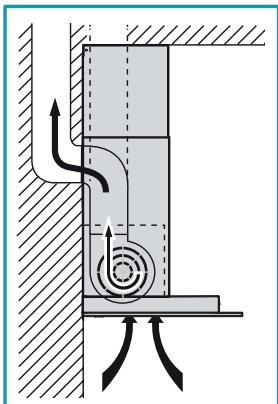
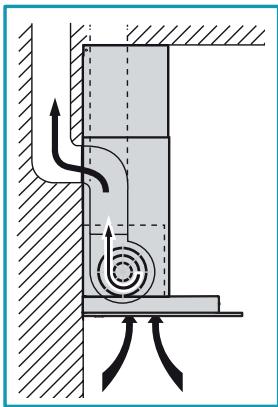
EXTERNAL EXHAUST HOOD VERSION (SUCTION)
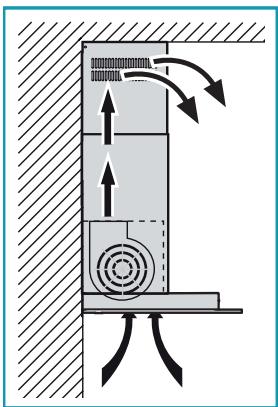
In this version, the kitchen fumes and vapours are conveyed outside through an exhaust pipe.
The air outlet fitting that extends from the upper part of the hood must be connected with the pipe that conducts the fumes and vapours to an external output.
Do not connect the equipment to discharge pipes of fumes produced from combustion (for example boilers, fireplaces, etc) and you are to comply with the regulations in force regarding external air discharge.
The fumes outlet pipe must have:
-
a diameter not less than that of the hood fitting;
-
a slight slope downwards (drop) in the horizontal sections to prevent any formation of condensation from flowing back to the hood;
-
the minimum required number of bends;
-
minimum required length (long pipes with various bends can reduce suction performance of the hood and trigger vibrations of the check valve).
If the fumes outlet pipe passes through cold environments such as attics, etc., it is possible that water condensation forms due to sudden changes in temperature. In this case, you are required to insulate the pipes.
The hood supplied with an 800m^3 /h motor is equipped with a check valve whose function is to prevent external air exchange when the hood is not operating: refer to the instructions on page 4 for assembly.
When the kitchen hood is used simultaneously with other appliances that use gas or other fuels, the room must have sufficient ventilation, in accordance with regulations in force.

The active carbon filters in this version are to be removed. Refer to the instructions on page 6 for removal.
Deviation for Germany: when the kitchen hood is used at the same time as appliances that are powered by energy other than electricity, the negative pressure in the room must not exceed 4 Pa (4 x 10⁻⁵ bar).
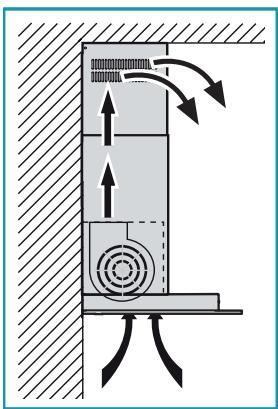
HOOD VERSION WITH INTERNAL RECIRCULATION (FILTERING)
In this model, air passes through the active carbon filters to be purified and is then recycled into the kitchen environment.

Check that the active carbon filters are assembled onto the hood, if not, install them as indicated in the instructions on page 6.
If the hood is set up with a filtering version, the check valve must not be assembled: remove it if it is on the air outlet fitting of the motor (carry out operations described in the instructions on page 4 in reverse order).
ASSEMBLY INSTRUCTIONS (only intended for personnel qualified to assemble the hood)
Phase A page 4
- Place the support bar (S) on the installation wall at a height (H) from the cooker indicated in the figure (Fig. ①).
- Use a spirit level to check the horizontal alignment and draw 2 marks at each end of the support bar, this is where the holes will be drilled (Fig. ② - ③).
- Drill the holes, insert 2 expansion plugs (Ø 8mm) and fasten the bar with the relative screws (V1) (Fig. ④).

The fixing kit (screws, plugs, and brackets) supplied with the hood can only be used on masonry walls: should it be necessary to install the hood onto walls in a different material, assess other fixing systems keeping the wall resistance and weight of the hood in mind (indicated on page 2).
Phase B page 4
- Hook the hood onto the support bar (Fig. ①).
- Adjust the alignment of the hood by using the fixing screws (Fig. ②). The upper screw (B) adjusts the distance from the wall, the lower one (C) adjusts vertical scrolling.
- To prevent the hood from falling due to a pressure below, fasten it to the wall with expansion plugs and relative screws (V2) using the appropriate holes on the back of the hood (Fig. ③).
Phase C and D page 4
EXTERNAL EXHAUST HOOD VERSION (SUCTION)
If you wish, install the check valve (M) as indicated in figure C.
- Connect the air outlet connection of the hood to the external discharge with a suitable pipe.
HOOD VERSION WITH INTERNAL RECYCULATION (FILTERING)
- Check that the active carbon filters are assembled onto the hood, if not, install them as indicated in the instructions on page 6.
If installed, remove the check valve assembled on the hood air outlet fitting (carry out the instructions described on page 4 in reverse order).
Phase E page 5
-
Insert the extension (H) in the chimney (G) (Fig. ①) and fasten the assembly to the body of the hood using screws (V3)(Fig. ②).
-
With external exhaust (suction) versions, it is possible to insert extension (H) with the slots facing downwards so that they are not visible when the installation height allows it.
Phase F page 5
- Slide the extension (H) until it is positioned at the desired height (Fig. ①).
- Following what is indicated in Fig. ②, draw a line on the wall that will be used to position the bracket (L) correctly.
- Place the bracket (L) on the wall by following the line drawn on it. With a spirit level, check the horizontal alignment and mark the 2 drilling points at the ends (Fig. ③).
- Drill the holes, insert 2 expansion plugs (Ø 6mm) and fasten the bracket (L) with the relative screws (V4) (Fig. ④).
- Tighten the extension (H) to the bracket (L) using screws (V5) (Fig. ⑤).
Electrically power the hood in accordance with regulations in force.
OPERATION
WHEN SHOULD THE HOOD BE SWITCHED ON AND OFF?
Switch on the hood at least one minute before starting to cook: this enhances the airflow to convey fumes and vapours towards the suction surface. After cooking, leave the hood operating until complete extraction of all vapours and odours. If required, by means of the Timer function, it is possible to set hood auto switch-off after 15 minutes of operation.
WHICH SPEED IS TO BE SELECTED?
The first speed is a low consumption energy-saving way of keeping the air clean, the second speed is used in normal conditions, and the third speed is used when there are strong odours and vapours.
WHEN SHOULD THE FILTERS BE WASHED OR REPLACED?
The hood is assembled with two different types of filters: metal ones (washable) and active carbon ones (non-washable). The former must be cleaned every 30 hours of use (the fixed red light indicates that they need to be washed), the latter are to be replaced every 3-4 months, depending on the use of the hood. For further information, please read the chapter regarding "Maintenance" on page 18.
USE OF ELECTRONIC PUSH BUTTON CONTROL PANEL

| Timer/Filters alarm Pressing the key with the motor active at any speed activates the Timer function: this function determines the auto switch-off of the hood after 15 minutes of operation. Activation of the function is signalled by a RED flashing light. With the Timer function active, the hood can still be switched off by the user at any time by pressing the key: the function will be automatically disabled and the RED light will turn off. Should the speed be changed with the Timer function active, the latter will be automatically disabled. On the other hand, ignition of the fixed RED light indicates a grease filter alarm: this alarm notifies that it is time to wash the metal anti-grease filters (the alarm is triggered after approximately 30 hours of use). After cleaning the filters, disable the alarm and reset the counters by keeping the key pressed for 3 seconds. To disassemble and assemble the anti-grease metal filters, refer to the instructions on drawing H on page 6. | |
| Mode button (ON/OFF) Pressing the key switches on (or off) the hood motor: it starts at the previously selected speed prior to switching it off (desired speed function). Should you wish to use a different speed, set if by using the + and - keys. | |
| + | Button + By pressing the key, the motor speed increases. Speeds 1, 2 and 3 are displayed by the number of LEDs switched on, excluding the light and timer LEDs. The + key in the version with 4 speeds has an intermittent light: the 4th speed or intensity is timed and after approximately 7 minutes the motor automatically switches to 3rd speed. |
| - | Button - By pressing the key, the motor speed reduces. Speeds 1, 2 and 3 are displayed by the number of LEDs switched on, excluding the light and timer LEDs. |
| Light button ON: light on (lit button) OFF: light off |
LIGHTING
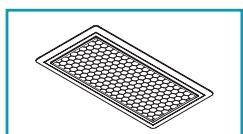
The range hood is equipped with high efficiency, low consumption LED spotlights with extremely long duration under normal use conditions.
Should the LED spotlight need to be replaced, proceed as shown in the figure L on page 6.

Before cleaning or carrying out maintenance operations, disconnect the equipment by removing the plug or switching off the main switch.
Regular maintenance guarantees proper operation and good performance over time.
Special attention is to be paid to the metal anti-grease filters and active carbon filters. In fact, frequent cleaning of the filters and their supports ensures that no grease is accumulated on the hood, which is dangerous and can cause fires.
EXTERNAL CLEANING
You are advised to clean the external surfaces of the hood at least once every 15 days to prevent oily substances and grease from sticking to them. Cleaning the hood, which is made of anti-fingerprint treated material (Fasteel), is to be carried out by only using water and neutral soap and a soft cloth. Finish off cleaning by rinsing well and drying with soft cloths.

Do not use too much water next to the push button control panel and lighting devices in order to prevent humidity from reaching electronic parts.
You must not use detergents containing abrasive, acid or corrosive substances or abrasive cloths: a direct consequence of not using with these warnings will result in irreversible deterioration of the hood's surface.
The Manufacturer declines all responsibility for failure to comply with these instructions.

It is possible to remove the external suction panel completely in order to facilitate its cleaning (refer to the instructions on page 6).
CLEANING OF INTERNAL PARTS

It is forbidden to clean electrical parts, or parts related to the motor inside the hood, with liquids or solvents.
Do not use abrasive products. All these operations are to be carried out after having disconnected the equipment from the electrical mains power supply.
METAL ANTI-GREASE FILTERS
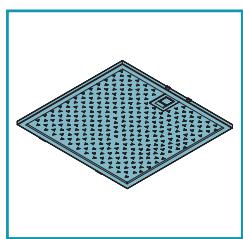
The metal anti-grease filters are there to contain suspended grease particles: deposited on the filters, these feed on any flames released when cooking, generate unpleasant odours, and compromise the passage of air, thus reducing suction performance of the hood.
For this reason, it is advised to frequently wash the metal filters (at least once a month) leaving them to soak in boiling water and dish washing liquid for 1 hour, taking care not to bend them. Do not use corrosive, acid or alkaline detergents. Rinse them well and wait for them to be completely dry before reassembling them.
Washing in a dishwasher is permitted, however, it may cause the filter material to darken: to reduce the possibility of this problem from happening, use low-temperature washes (55°C max.).

Open the external suction panel to remove the metal anti-grease filters (refer to the instructions on page 6), then operate the handle (refer to the instructions on page 6). Carry out operations in reverse order to insert them.
ACTIVE CARBON FILTERS
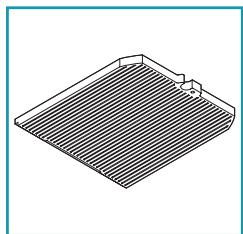
Active carbon filters have the function of retaining odours in the air flow passing through them. The air, purified by running many times through the filter, is recirculated into the kitchen.
Active carbon filters cannot be washed and are to be immediately replaced every 3-4 months (depending on the frequency of use of the hood).
Dispos of the active carbon filters in compliance with the regulations in force in the country of use.

To replace the active carbon filters, open the external suction panel (refer to the instructions on page 6), remove the metal anti-grease filters (refer to the instructions on page 6) and follow the instructions on page 6.

DISPOSAL AFTER END OF USEFUL LIFE
This symbol on products and/or in accompanying documents means that electrical and electronic products used must not be disposed of with general domestic waste. For personal treatment, recovery and recycling, you are kindly asked to take these products to designated waste collection points where they will be accepted freely. Alternatively, in other countries, it is possible to take products back to the local dealer and purchase a new similar product. Proper disposal of these products contributes to saving valuable resources and avoid potential negative effects on personal health and the environment, which may be caused by inappropriate disposal of waste. You are kindly asked to contact your local authorities for further information regarding the designated waste collection points nearest to you. Penalties for improper disposal of such waste can be applied in compliance with national regulations.
INFORMATION REGARDING DISPOSAL IN EU COUNTRIES
The EU Directive with regard to WEEE has been implemented differently by each nation, therefore, should you wish to dispose of this equipment, we advise you to contact the local authorities or the dealer to ask for the correct method of disposal.
INFORMATION REGARDING DISPOSAL IN OTHER NON-EU COUNTRIES.
This symbol is only valid in the European Union: if you wish to dispose of this product in other countries, we advise you to contact your local authorities or dealer to ask for the proper method of disposal.
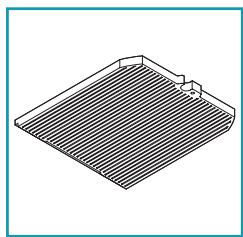
FILTRES AU CHARBON ACTIF
MEPbI I PEPIOCTOPOXHOCTNДЯ YCTAHOBUKNKA
TEXHIMKA B3OIIANTCHOCTM

UcTaHOBky DoJXhbl BbInOJIHnTb KBaIINΦmIuPObAHhble ONbIHbIe UcTaHOBzIKN B COOTBeTCTBnC yKa3aHnA Mn HAcTOIeRpyKOBoDCTBa n DeiCTByIOUMN HopMaTINBbIMM Tpe6oBAHnAMn.
- Празду РимсгУнь К установке Вьляжки, Heo6xodmo y6eintbca R ceiocthoctn n IcnpabHoctn Bcex ee qacheT.При O6hapykeHHn HapyuHn He pncstynatb K uystahOBKe, a o6paTntbca K dIcTpni6bIoTepy.
- Pπu obhaphyehn n deΦeKTOB BHeuHero Bua, HE yctaHabnBaTb BtIaKky; yloXHTbe E BxcOHy oYaNKOBy N o6paTntbc K dNCTp6bIOTepy. I0 3aBePseHn yctahOBKn BtIaKKn He npHHMaIOCT pTeH3nn no deΦeKtAm BHeuHero Bua.
BoBpemyCtahOBKn CnEuyET Bcerda NOnb3OBAbTcBc rpeCTBaMm INNDbNByaJbHOb 3aUntb (HaNPmep, 3aUnTHaA o6yBb) n pOraBnTb OCTOpOXHOCTb n OCMOTnTeNbHOCTb.
Kpeexhblkomptb (Bnhtbl,IO6eIy nCKo6bl),noctablaembl Bmectc BbItXKO,NCN0lb3yETCAckluytEnbHO HA KpNIuHbIX cTeHX:piNe HeOxOIMOCnY cTa-HOBHTB bItXky HCTeHX N3 dpyTnx MATEpnaIOB, CNEyET pINrAIBTO BV BHIMAHne DpyTm KpeexHbIe CNCTEmbl CUYOTOM PPOUHOCTn CTeHbI YBa3aHO Ha cTp.2).
CneJyT uHTbAtb, UTO yCTaHOBk C nCIOJIb3OBAHnEM KpeIeXhblx CNTeM OTIIuHbIX OTIOCTaBJIeMbIX IN He COOTBeTCTByIOUx H3HaueHInO, MOKeT IprNBecTN K ONaCHOCTN 3JIeKTPnueCKoTO xapakTePA mEXaHnueCKo HnadeXHOCtN.
He BHOcNtB 3JNEKTpuYeCKne, MEXaHnueCKne N OyHKUOnHaNbHbIe N3MeHeHnB I np6Op. - He yctaHabnBaTb BtTgKBy HBe NOpMeUeHm I B MeCTax, rIe OHa IIOBepraIac b6 bI Bo3NeICTBnO aTMOcpehBbIX AblneHm (IOnJb, BetePrtN T,I.)
3JIeKTPnueCKA B3OITACHOCTb

3Jektpocnctema, KKTOpOIOKJIIOUaETcBAITJRAKdONJHsCOOTBeTCTBOBAtbDeICTBYUOMHOPMIMOB3aTeIbHOONJHs6bIT3aEMNeHaBCOTBeTCTBUNC Tpe6oBaHnMIHOPM, DeICTByIOuX BCTPaeEKCpNyaTauN; OHa TaKxdeONJHsCOOTBeTCTBOBAtb Tpe6oBaHnMIEBPonecknx HOpM NIpOTNBONOMEXOBMbYCTPOINCTBAM.
Y6eHntbca, YTO HAprrjKeHHe N B 3JIeKtpocEt COOTBETCTByET Yka3AHOMy Ha 3aBOJcKOI tabnUke, KOtOpAra HaxOJNTCBA BYTuPb BHTAAKK.
P03eTKa, mCpOJIb3yEmaI dIy IIOcOeINHeHnK cETn 3JeNkTPOInTuHnA, dONJHa 6bItb NcKoOCTynH npu yCTaHOBHeHOM o6OpUOBaHN. EcJN 3TO HeBO3MOxHO, TO HeO6XoIMo npedymOTpeTB BDOCTyHOM MecTe rnaHBi BbIKIOUATEJI bIg OTKIOUeHnB bITJxKn pRn BO3HKNHOBeHN TaKO HeO6XoIMOCtN.
JIIO6bIe MOINΦKauZIM 3JIeKTPOCINCTeMbI DJIY CTAHOBKN BITJXKIN D0JIeKHeB BIIOJINHTB TOJIbKO KBAJIINΦUINPOBAHHB 3JIeKTPNK.
Makcimabna DnHa BnHa Ta nKpeJIeHnBbTgKKn (NocTAbIeTc npOn3BODnteMe) 10 MM. NcTIOb3OBaHne BnHTOB, He COOTBeCTByUxnx HAcTozmm INHCTpyKzma, MOXET npINBecTI K ONaCHOCTN 3JIeKTpUeCKOxo XapAKTepa.
ONaCHO MeHbI bIbTaBcMeHbT XapakTePncIKs TOro np6opBa. B clyae HeNCpabHOCTn pnp6opBa He CnyeJyT bIbTaBc camOCTaTeJIbHO yCTpaHITb HeNCpabHOCTb,Heo6XoIMMo CB3a3BcC dNCTprb6bTOpeom IIN ABTOPI3OBaHHbIM CEHTPOM TEXHueCKO NIOdEPRKKDN Iraero peMOHa.
Bo Bpemy yctahOBKn BbTJxKn CJIeYJeT OTKJIQUHTb PnI6Op, DoCTAB BNILKy I3 PO3ETKN IIN BOCTONb3OBAWbICB IaBbIM BbIKIOUaTeNeM.
BE3OJNACHOCTbOTBODAIbIMOB
- He nodkluyaTb annapaT K dIbIMOTBOdAm IJN OTBDA dbIMOB, NOUYeHHbIX B pe3yIbTaTe CROPAHNA (KOTIOB, KAMINOB IN T.D.)
IpeyctahOBKO BITJckn CJIeYET yBcHbC, YTO CoJIIOJeHb BCE Tpe6OBAHNa IeCTByUoNix HOPM IO BBIOy BO3Dyxa 3I pTeJIbI NOMESeHIN.
MEPBI I PNEIOCTOPOXHOCTN IJIY NIOJIb3OBATEJIa
MEpbI PPEIOCTOPOXKHOCTN ObUcEYO XAPAKTEPA

3Tm Mepbl PneoocopxHocn CoCTabIeHbI dIy BaIe I6e3ONaChocn, a TaKxe IJy 6e3ONaChocn dpyuX Iu, PO3OMy IpocIM BACNX BHNMaTeJIbHO IpOueCTb nepeed kcnplayataune annapata.
I3rotOBHTelb He Hecet NHKAKO OTBCTBEHHOCTn 3a yuepe6, prrmo nn KOCBeHHbl, HaHecEHHbl IIOJAM, mMyeCTBy nIN DOMaunm JxIBOTbIM NO npuHHe HecobJeHnnpedncaHn, yka3aHHbx B HactoAeM pyKOBODCTBE.
OueHb Baxho, TTo6bl daHnoe pykoBodCTBO c nHcTpyKunm xpaHnocb Bmte C o6OpyobAHm E nIPOneJyooero noJIb3OBaHm npHeo6xOIMocTN. B cnyae npodaKn IIN nepeaAn apapata dpyromy nuCy, y6eNTbc, 70 pepeaetc TaKke n pykoBodCTBO, TTo6bl HOBBI NOIb3OBaTeNb MOR O3HaKOMITbcra C fYHKUHOHpobAHm BbITAKKn N COOTBeTCTByOUMM PpeDnpexDeHmM.
II IyctahOBky doJxHbI BblOpHtB KBaIIuNcPiPoBaHHbIe ONbTHbIe yCTaHOUsIKN B COOTBeTCTBn C yKa3aHnA Mn HAcToIeO pyKOBoDCTBa N DeiCTByIOUIMn HopMaTINBhIMn Tpe6oBAHnMn.
- Ecnn cnloobn ka6enb nI npdyne detanl noBpeJeHb, to HEJIb3R nCnoB3oBaTb BtJxKy. OTcoeHNHTB BtJxKy OT cTeN 3neKTPONTAHn I o6paTbCR K nICTPn- 6bKTEpy nIN B aTbOp3OBAHHn CEHTp TexHmecckn PNOepkNn Iaee ee peMOHTa. Tpe6oBaTb oprHnHaJIbHbte 3aNPactn. He nbITATcra camocToTeHBn ZameHtB detalnn nI IN OtpemOHtnPOBaTb np6op. Pa60tbn, BblONHeHHbe HekOMNeTeHTbIM NIOdbMn IIN HeKBaIIuΦuPoBaHbIM nepCOHaON, MOYt HaHeCTu yUep6, B TOM uCIne, cepe3hN, mMyueCTBy n/llnn liuam, Ha KOTOpBX He paACnPoCTpaHReTcRA paoTHN n3ROTOBtEJIa.
He BVOCNTb 3eKTPUeCKNE, MEXAHUNeCKNE INyHKUHOHaNbHbIe IN3MeHEHnB Ipr6Op. IIO6bIe MOINaKaUIn 3eKTPoCnCTeMbI DnY UCTAHOBKn BblTJXKN DOnJIKeH BblIOJIHTb TOnbKO KBaIIINuPBOaHbN 3eKTPNK.
HA3HAUYEHNE
- Pnp60 npndhaaehncklouhtbno dny BbtaKmOB, 6p3yUxncs pnp npiroTOBHeHn nHnHa KxHx 6bTOBO Ha3HaeHn, He npoececoHaJIbHbIX KxHx. JIO6e dpYoe npmeHne, OTNIHoe OT 3T0r, ABJETcR HeOpyCTnMbIM, OHO MOKeT HHeCTN yIep6 IIOJAM, IMyIeCTBy I DomAunHm XINBOTbIM, IN CHImaET C N3ROBtTeJI BCAkyIO TBETCTBEHHoCTb.
- Pππb6pom MOrγT Μπβ3OBaTbCσd Eπη He MπaIe 8-Mn IeTHero Bo3paCTa, liOι N cσρaHηνEHNbIM ΦN3UeCKMIM, yMCTBeHHbIM N lIe CεHcOpbHM Bo3MOXHOCTM, HEONtBtHe Nlne H o6NaIouiue Heo6xOДmMbIM 3HaHЯMn IIOu, pπu YcIobMn IIOu, npu YcIobMn YTO HaxoJITc T OOD pπuCmOTpOM N IIOu NocE CpeLuaJIbHoro O6yUeHn PO 6e3OaIacHOMY NcIOLb3OBAHIN OYCTPOICTBa N OOC3HaHnI CB8a3AHbIX C eTm N OaIacHOCTe. DeTe H dOJIKHe IIGpTa B c πp6opom. Ouyctky n Texo6cljuxBaHme, BblIoiHaeMbe IOnlb3OBaTeIeM, He dOJIKHe OcyIeCTBlaTb deTn 6e3 pπicmOTpa.
MEpbI IPEIOCTOPOXHOCTN IIO 3KcPIJIYATAUIN OUYCTKE
Ipeed BbInOpHeHem IIO6oI OnepaunI NO YnCTke IIN TeXo6cnyxuBaHHIO OTCoEHNHTb aNpapT O TNeKTPOnHTaHHy, BbHyB BnIKy I3 pO3eTKN IIN C NOMOsbIO rnaBHOrO BbIKNoUcTeJIa.
He npikacatbck BbItjKke MOKpbimnykamn Hne Iolb3ObaTbcae i, cTc6OcNkom.
Korla npibop He nCIOJb3yETc, BcERda npobepaIte, UTO BCE 3JIeKtpueckne KCMIOHENTb (CBET, aCNIpaTOp) BbKJIIOUeHb.
- 06xuBec ppeMeTob, pa3MeueHhbx iNn IIOBeUeHhbx K bItTgKke (rTe 3o IpeyCMOTpeHO) He dOnJKe HpeBbIaTa 1,5Kr.
- NaIIOaTb 3a 0pntIOHpNlauMBO BpEMr IcNOJIb3OBAHNr:pa3OgpeTOe MaCIO MoKET BOcPiMaHEHtBCr.
Hepa3xiratbOTKpbITOrOgHnIOBbITXKKoI.
- He rotobitb niiuHa OTKpbTOM OTHe NIO BbTTKkoI.
Hikorla He nolb30abcba BtJgKo 6e3 MetaJIInuecknx XnpoBbx fNlbTPOB;B 3OM Cnyae Xnp 3arpaHe HnOceLaOT B pIbnope,otPicaTeblHO BInra Ha ero pa60Tu.
IOCTyHbIe Yaactn BbITaKm MOrTy HArpeBaTcPnI NcNoJIb3OBAHmBMeCTe C BApOuHbIMn PnP6OpamN.
He ouhiatab bbytaky, Korga eee actn ehe octblin.
Ecln OuchTka BbIOnJIHReTcH He B COOTBETCTBmN C cNoC06aMn I C nCIOJIb3OBAHHeM CpeDCTB, YkA3aAHHbIX B HAcTOruXH INHCTpyKUHX, BO3MOKeH pNCK IOxapA.
Korda BbTgXkHe HcNpOb3yETcB TeueHne dInTeIbHOrpePnoDA BpeMeHn, Heo6xOJIMOBbIKIOuHTb TJIaBHbBbIKIOUaTeIb.

Bcnyae odnoBpeHHo nCIOJIb3OBAHnI pyrIINy UCTpoICTB (KOTII, neUKN, KaMHNbI IN.T.I), paOBaTOUxIH Ha ra3y IINIpyROM TOJINBE, ppeyCMOTpeT b COOTBETCTBYUOHy BOHTNIJIaIIO NOMeIeHnI, B KOTOPOM IPOIN3BOIDTCRA BCaCbIBAHne DbIMOB, COGNALCHO DEICTBYUOUM HOpMaTHNBHM Tpe6OBAHnAM.
IPENDYIPREXDEHINB CJIUYAE HENCIPRAPBHOCTN
- Ecnn cnloobn ka6enb nI npdyne detanl noBpeJeHb, to HEJIb3R nCnoB3oBaTb BtJRAKy. OTcoeHNHTB BtJRAKy OT cTeN 3NEKTPOniTAHn I o6paTntCB K INCTPN6bIOtepy nIIN B aBTOPI3OBAHHn CEHTP texHmecckn pndepkKn nIe ee peMOHTa. Tpe6oBaTb opriHnAHLbHe 3aIpactn. He nbITaTc caMoCToTeHB 3aMeHb t Detalnn OtpemOHToPOBaTb np6Op. Pa60Tb, BblONHHeHbe HekOMNETHbIM NIObMn IINI HeKBaIIuΦuIPOBaHHbIM nepcoHaIOM, Mory T hAHeCTn yUeep6, B TOM uICNe, cepBe3hN, IMyueCTBy n/IIIN IIzam, Ha KOTopbIX He paNpOCTpaHReTcra rapAHTHn 13ROTOBtEJIa.
I3ROBtBbOCTaBn83coBnPpABoBHOCMbIMMeHHeBnPpBOpBIOHOOMeHT6ePpeBaRtBHorO ppeynpKHeHn. PueaT, nepeBoN BocPOn3BeHne, B Tom CnCte YactuHoe, HAcToJcero pykoBDCTBa, BO3MOXhToLbKO TOnkBO NcSe IOnUyeHn PpeBaRtBHo HorO pa3peHn 13ROBtTeJI.
TexnueckanHOpmaLna, rpaunecneI3o6paKaeHnI CNEuNfKaaUN, npBHeENbIe BHaCTOJIeM pyKOBoDCTBe, YBJIPOTC opIEHTnpBOUHbIMN I He NpJLeXaT pa3IJaWeHIO.
PykoBODCTBO COCTABNEHO HA tAJIbAHCKOM A3Ibke, I3rTOOBITEH He HecET OTBETCTBEHHOCTN 3a BO3MOXHbE ONeTuK NIN OwIN6Kn NepeBoJa.
YCTAHOBKA (pa3dien, npedna3nueHHb Toblko dny KBaIIuHpOBaHHoro nepcoHaIa, 3aHmaoUeOra yctaHOKo BbyTJKK)

Ipejde cem pncTynab K montaKy bblTakKn, cJeNyet BnHMaTeNbHO npOeCTb rI. "Texnka 6e3oNaChOcTu MepbI npedoctopoxhoCTM" Ha ctp. 34.
TEXHNUECKNEXAPAKTEPNUKNI
TexHHueckne daHhble 3JIeKTPoPnB6opba npBBeHeHb Ha 3aBOIDCKHX TablIcKak, KOtOpbIe HaxOJaTc BHYtpu BHTAaKK.
I03NIZIOHINPOBAHNE
MnHmAbhoe paCCToHHe mExdy camo BbICOKO qactbIO npN6opa dI pyrirotOBLeHn IiSs n camo Hn3KO qactbIO KxOHHO BbITJXKN yKa3aHO Ha pnc. AHa cTp. 4.
O6bUHNO, KOrda KuyOHnHa BtJRAKka yCTaHaBnBaTc HAD rA3OBbIM O6OpyOBaHmE, 3To pAcSToHne DoJIKHO 6bTb He MeHee 65 cm (25,6"). Tem He MeHee, Ha OCHOBaHm ToIKNBOAHn HOpMb EN60335-2-31 ot 11-07-2002 co cTOpOnb TC61 (noIpyHKT 7.12.1 3acei.15 NobecKa IyHKT 10.11), MInHMaJIbHOe pacSToHne MeJxBapOuHO nIOBepXHOctbU n HIXHe YacStbIO BtJAKN MOJET 6bITb COKpaUeHO do yKa3aHHo OTMeTKN.
EcnBpykoOCTBeKra3OBoI pInTe yka3aHO 60JIbWee paCtOAHne,TO 3TO HyKHO yUHTbBA Tb.
He yctahablnBaBbIyKBy Hne nomeeHn N B MeCTax, rte OHa nOBepranac 6bI Bo3dEChTBIO aTMochepHbX ABHeHn (doJb, Bete pN.1)
ПОДКЛЮЕНЕ K CETИ NGLEKTPONITAHNIA (pa3dien, npedna3NaueHbI TOnbKO dIy KBaIIuΦiUpoBaHOrO nepcoHana, 3aHMaIoUeOcI NOkLIOHe-NHEM)

Ipeed npoBeHnem HIO6bIX ONEpaun Ha BbITJXke CJIeYET OTKIIouHTb pIn6Op OT cTeI 3NeKTponTtAHn.
IpoBepbTe, UTo He 6bln OTOeINHeHb IInnepepe3aHb 3JIeKtpoPBOda BHTpN BuTJCKn; B Cnyae O6hApyeHnE 3TORO, 6paTntbC B 6nKaun CepBnC HbI cHTp. 3JIeKtpuYeCKoe NODKNUChEnE D0JKNHO BbIOnHrTcB KBAInfNtPOBaHbIM nepcoHaON.
IopknloyenoeoJxnoOocjueCTbIbTcBcC o6bnJeHnem Tpe6oBaHn deiCTbyUoero 3aKHOdaTeJIbCTBa.
Ipeid noKJIoueHnem annapata K 3JIeKtpocTe, npOBepbTe, To:
- HapprjxheHn EJekTPOcETN COOTBCTByeY uka3aHHOMy Ha 3aOBcKO TbJIuKHe, KOTOPa HaxOINTCB BYtPN BItIaKKi;
Cetb 3eKTPoITaHn COOTBETCTBYET Tpe6OBaHm DeIcTBUOxH HOpM I MOKeT BbIepXINBaTb HaPpy3Ky, Co3DaBaEMyIO npi6Opom (CM. TexHnueckne XapaKTepNCTKn Ha Ta6NIuKe, paCNOJooHEHH BHTpN BtTAAKKn);
Nocne noCoeHHeNnBvIaKu Ka6eJIb He cOpriKaacAOCTc C rOpaHmU cAteM, TempepaTpa KOTobx npBeBlaaet 70°C
CNTema 3JNEKTPoINITAHmOCHaUeHa NcPbaBbIM 3a3EmJIeHnEM, B COOTBeTCTBm C DeICTByIOUmmm CTaHApTaMM; - P03eTka, IcIcIbIyemAЯ ДЯ ПОДcoeIINHeHЯ K cETи ΝIeKIpOITaHЯ JERKIoDcTyHa npri yctaHOBJIeHOM npri6ope.
HeKOTOpBte TnTbI pI6OBOP MOyT 6bITb OCAUeHb KabeIeM 63 BvIKN; B'ETOM CUYae BvIka DOnJIHa 6bITb "CTaHApTINpOBAHHO" TnIa, yuHTbBa YTO JxJEtTo-3eJIeHbI IpoBOd IOnJxHcONl0b3OBAtCBa DnI 3aEMLNEHn, CInH IIPOBOD IOnJIeH NcONl0b3OBAtCBa DnI HeItpaIIa, A KOPUNHEBb IPOBOD IOnJIeH NpOKJIIOVAhCBa KΦa3E.
UctahOBtHa KaebI NITaHn IIOXOJyU BnIKy, COOTBcTbYIOJyU HArpy3Ke, INIOKJIIOHTb e K COTBcTbYIOJUe BnIKe 6e3OJaCHoCTM.
Ha ctaioohapom annapaate, He ochaieHHOM kaebemn nTahmN INIKO, INI npyHM yctpoCTBOM, ocepeHBAIOUIM OTceehne O TcETN 3eKtPOHTAHN C paccToHMe pa3Mbikan KOTAKTOB, KOtOpe IO3BOJAE TOLHOE OTceehne B yCLOBHX N36bItoHOro HAnpJxHeN KaTeOpN III, 3TN OTCeKaIOUne yctpoCTBa DOnjXbIbI ppeYCMOTpeHb I CetNI 3eKeTPOPTAHNA, B COOTBEcTBmN C yCTaHOBOUYbIMn PpaBNAMM.
JéITo/3eJIeHbI nIPOB OIa3eMIIeHnI He IOnJIKeH OTKJIIOuA tBcAOTCEKaIOUIM BbIKJIIOuAteJIeM.
I3ROTOBNTeH He HecET HNKAKO OTBETCTBENHOCTN B CNYaue HeCOb6JIOpEnHn npabIN 6e3oNaCHOCTM.
KXYOHHAB BbITJXKA B BEPCNIC BbIBODOM HAPYKU (BCACbIBAIOJIAR)
B30I Bercn KxohHbIe Dmbi n napb BbOaTcyepe3 BTaHnBaUoN Bo3DyooTBoH npayk.
BoDyXooTBOOnHbI NpTpy6O, BblCTypaIOuIcBepxHa BbTIaKke, DJIJIeHb6ItbI IOIoCoEINHeN K DbIMoOTBOyD, BbIOBraIeMy DbIMbI NpAbI HApNyK.
He noJcoeHnHb annapat K dbIOoTbOa dm nI OTbOa dbIOB, nIOnyueHHbX B pe3yIbTaTe IpoceCa crotapHnA (KOTNOB, KaMHOB n T.D.) n O63aTeJIbHO co6JIIOaTb DeIcTBHyUcHne HOpMb I IO TBODY dbIOB HApJyJy.
Tpy6a BbIXOda bIMOBbIX ra3OB dOJIXHa IMeTb CNeIyUOUIne xapaKTePncTNIK:
-ДиamETp, He MeHHe 德naiMetpa NaTpby6Ka BbITaKKn;
-ЛетКИн haKLOH BnI3 (спУС) capitalized in 1960.
-MINHIMaJIbHOE HEO6XOДMIOE KOJInueCTBO INI6OB;
- Heo6xOIMMA MmHIMMaJIbHaJa DnHa (DINHHB Tpy6OpBooD C 60JIbSiIM KOnIyEcTBOM N3rN6OB MOKeT COKpaTITb BCacbIAKUO YO CnOCo6HOCTb BtJRAKKN IN CnPOBOuropoBaT Bn6paCIn O6paTHOrO KlanAna).
EcnI Tpy6oPBOOJ OTOBDA bIMOB npoxoHIT uepe3 HeotanIIBaemble nomeeHnra, TaKne KaK cepaunbIe NmoeHnna T.I.N., To BO3MOxHO 6pa30BaHHe KOHcHcata no npuHHe TEMepaTpyHOro nepenada. B 3tOM cnyae Heo6xoDIMO npedycmOpTeb 130JIaIIO Tpy6oPBOOJa.
BbIyKnn C DnIgatelem 800 M³/ч NOCTaBIAHOTcB KOMIIeKe T c ObpaTHbIM KlaIaHOM, CnykaUIM dIy IpeIoTbpaUeHIN BO3dYxoo6MeHa npi Hepa6oTaIOSeB bYtAJIke. MoHTax OINcaH B INCHTpkyUIN Ha cTp.4.
B TOM cnyae, ecn kuxohna BbTjAaKc HcNoIb3yETcO OHOBpeMeHNO C dpymN pnp6opMn, pa6oTaUqMN Ha rae NIN dpYROM TOINBE, To nomeuHne, rde ONH haoTATc, doJHKHO 0b7aTb DoCTaTOHHO BENTIIauee, B COOTBETCTBN C deNCTBYUQIM 3aKHOdaTeNBCTBOM.

B30I BercnHoe6xOIOIMO CHTb 9IbTpblcAkTINBnPOBaHNbIM yIeIe; INCHTne OINCAHO B INCTpyKUINX H a CTp.6.
Ipu odnoBpeMeHHou pa6ome 8 nomueu kxohHou bmykku u dpyzux npubop08, pa6omakuux Ha ucmouhke 3hepuu, omluHOM om 3neKpmo3Hepuu, ompuamelbHoe daJIeHue bHymu npomeu Hne doJnHO npeBbAmb 4 Pa (4 x 10⁻⁵ ap).
BbITXKA B BEPCN C BHYTPHENE PELINPKYJLCAUEI (FNILBTPUOJA)
B 30T Bercn B03Dy Ira eO OuchTkn NocTynae Tpee3 fNlbTpbc AakTNbIPOBaHbHm UgIeM INBOb NIOaTeCBA K KyxHIO.

y6eHbTcB, cyo fNtBtpbl C aKTINBnPOBaHHbIM yTlE M cMOHTnpOBaHbI Ha BbITJXKE, B nPoTINBHOM cNcyae yCTaHOBnTB uX, KaK OINCAHO B HCTpyKUHN HA CTp. 6.
EcnBbTjKnaIIOJrTOBHeNaIdIyIbnTpUioSeBepnTo,ToObpaHbKnAnaHaYeUcTaHABINBaETc.EmoHTnOpBaTbero,eCN OHyCTaHOBHe Na nATpy6Ke BbXODa BO3Dyxa DnIRatela (BbInONHtB b ObaTHOMnopAKe DeiCTBnA,OnmCAHbIe B INCHTpYkLnx Ha cTp.4).
NHCTPYKUNI NO MOHTAXY (pa3dei, npedha3nueHHb TOLko dIg KBAJIuHpOBOAHHO nepcoHana, 3aHmHaUeOcra YctahOBKO BtTJXKN)
3tanActp.4
- PpInIOKHTb K cTeHe KpeNexKHyU peiKy (S) Ha BbICote (H) OT BapOChOH nobEPxHocTn, yKa3aHHoHa pncyHke (pnc. ①).
-Поверпь ториоHTаььНовсп пооженя рeйки рпни поомоши пузьрково уpoвня и OTMетит ha концх орони рeйки 2tocкдя вылл�еня OTbercent (pnc.② - ③). - PioocBepnntb OTBepCTna, BCTaBnTb B Hnx 2 DIO6eNa 0 8 MM nPnKpeNtB peKy COOTBeTCTByOuMN BinTaMn (V1) (pnc. ④).

KpeJeknB KOMPNEKT (BHTbI, IIO6eIa N CKO6bI), NOCTABLMAEbIM BMeCTc C BtAaKoN, INOJIb3yTeCA NCKIOUHTeBHO Ha KIPINuHbIX CTeHax: pni He06xOnMOCTN YCTaHOBNTb BtAaKky Ha CTeHax m3 npTnx MaTePnaIOB, CNeDyET PpHArTb BO BHImaHne DpyTMM KpeJekhBte CNTeM CBYeTOM PPOUHOCTn CTeHbI N BeCa BtAaKKN (yKa3a-Ho HA cTp. 2).
3tan B ctp.4
Пиценты Витякky К кpenжхон рейke(pnc.①).
BbpoBnTb BbTTkKy B cTPO rOTo rOpI30HTaJIbHOM nIOJoxeHm npN nMOUcBnTOB Ha depXaTeJx (Pnc. ②). BepxHn BnHT (B) perynpyet pacctoHne OT cTeHb, a HnKnn BnHT (C) peynpyet BEpTKaJIbHOe CMeueHne.
Bo 36eHae OTeJIeHnBbTJxKn IO pIuHHe DaBHeHn CHN3y, npKpeINb e K CTHe DIOBeJIaMn I COOTBeCTByIOUIMM BInHTaMn (V2), MCNoJIb3yra COOTBeCTByIOUIIe OTBepCTna, HaxoJaIeCeHa 3aDnei CTOpOHe BbITJxKn (pnc. ③).
3tanbl C uD ctp.4
KXYOHHAB BbITRAKKA B BEPCN C BbIBODOM HAPYKU (BCACbIBAOJIAR)
- Пожеланно можно установъ образнь Кларан (М) кak пokаазано на рисунке C
CoedHnHTb bixHOH BO3DyHbI NaTPy6OK BbITXKc HapyKbIM BbIOOM pRi NIOOMUIN NOxOJueero Tpy6OpBOoA.
BbITRAKBA BEPCUNCBHYTPEHNEIPEULPKUJIACEIEN(ΦNILBTPYIOUJA)
Ybndtcb, YTO 0nbltpbC aKTNIBPOBAHHbIM yflem CMOHTNPOBAHbHa Hb BbTjRkE, B pOTINBOM CJIyuea YEcTAHOBVITb IX, KaK OINCAHO INHCTpyKUHM Ha CTP.6.
-Демонитюваьобразьн Кларан, ecn OH yctaHOBJIeH Ha BbIXOДHOM BO3dUHOM NaTPy6Ke BbITJxKIN (BblIOJIHNTb B Oбразьн ПОРЯДКЕ DeICTBIA, ONIcaHHbE B INHCTpyKUHXHa CTp.4).
3tanE crp.5
BCTaBtIb yIiINHITeIb (H) B IblMOxOg (G) (pnc. ①) I npIKpeTIb eTo K KopTcy BItjAekn BInHTamn (V3) (pnc. ②).
Bcnyae Bepcn C bblOdom Hapy (BcAcblaioa) MOxHO BCTaBnTb yDmHNTel (H) C OTBePctnMn Bn3y,HTo6bIuX He 6blIO BnHO,ecNI 3TO N03BOJAre T Bicota YctaHOBNK.
3ranF ctp.5
BbIaHTb ydINHITeB (H) Do octnkeHHeo6xoIMOB BbICOTb (pnc. ①).
Cneyua yka3aHnmaH na pnc. ② ,Haueptntb Ha cTeHe JInHIO, cnJyKaauyio dI npabunbHO rONo3uOnHOPOBaHAncKo6bL(L).
- PnIOKHTb K cTeH eCKOby (L) H aTMeueHHo IINHH, nPoBepInb Trop30HTaBHOCTb pIu NOMOUI yPOBHN IOTMENb MeCTc CBePJIeHNA DByX OTBepCTNI PO KOHcAM (pNc. ③).
- PioocBepnTb OTBepCTna, BCTaBnTB B HmX 2 IIO6eIa 0 6 MM N 3aΦNkCupOBaTb CKOby (L) COOTBETCTBYUOIMM BVHTAMN (V4) (pnc. ④).
-Пикртуть ВИNTами (V5)Удлпнштел (H)КСКобe (L)(pnc.⑤).
Iopatb 3eKtpoHHTaHHe Ha BbITJCKy C co6JIIOHeHMe DeIcTBUOxH HOpM.
ФУHKЛИО"HNOBOAHNE
KORDA BKNIOUATb N BbIKIOUATb BbITJKKU?
BbTjKky cIeNyET BkIIOuTaB XOTb 3a MHyTu Do HauJa TpNiTOBLeHnri NIIu. 3To CIOOC6CTByet ObpzOBaHHIO NOTOKA Bo3dyXa IJN HApBaNHeHn DbMa n npa K BCsBaIOUe NIOBepxHOCTn. IIO 3abpeHm NiPiTOBHeHnri NIIu CneNyET OCTaBtB BkIIOueHHo BbTIaKcY Do NIOHn Acnnpaunn BceX napOB n 3anaxOB. Ppi HeO6xoIMocTn, ppi NOMOUn FyHKun Taimepa MoJHO YCTaHOBTb ABTomAtuueckoe BbIKIOueHne BbTIaKKn IO NCTeHEnn 15 MInyT fynKUOnHPOBaHnI.
KAKYIO BblbPATb CKOPOCTb?
NepBaCKoPoCTbNCIOJIb3yETcTdIaIIOJIePjaHnIaHcBtMBO3DyxA C Hn3Km 3HeprOOnTe6JIeHnE, BTOpaCKoPoCTb NCIOJIb3yETcB O6blHyX yCIOBnX, a TpeTbCKoPoCTbNCIOJIb3yETcPnHaJIuHm CNIbHx 3aNaXOB N BoJbUoro KOLNeCTBa napOB.
KOGDAMbITbNJINMEHATbФЛьТРbl?
Ha bttjke yctahOBHeBbI DBA TnTnfa 0nIbTpoB: MetaJIInueckne (MOUIOeC) INI 0nIbTpbc AKTINBPOBaHbIM UYIeM (HE MOIOUIeC). IepBbI TnI 0nIbTPOB CNEyET MItb KaJdbie 3O acob pa60tI (Hemraioi KpaChbIKCBET O3Haayet, YTO NopA INMbT), BTOPO TnI 0nIbTPOB CNEyET MEHrTB PnI6NlNTelbHO KaJdbie 3-4 MeCAuBa B 3aBNCIMOCTN OT INTeHCNBHOCTIN NCIOJIb3OBAHNA BITAKKNI. IOnONIIHTeBHNa HfOpMaunipNBedeHa B IT. "Texo6cnykBaHne" Ha ctp. 38.
ПОЛБЗОВАНЕ ӨЛЕКТРО"HΟД ПАHEЛьЮ UYPABLEHЯ

ALGEMENE WAARSCHUWINGEN
