OX6778FR - Multicooker MOULINEX - Free user manual and instructions
Find the device manual for free OX6778FR MOULINEX in PDF.



User questions about OX6778FR MOULINEX
0 question about this device. Answer the ones you know or ask your own.
Ask a new question about this device
Download the instructions for your Multicooker in PDF format for free! Find your manual OX6778FR - MOULINEX and take your electronic device back in hand. On this page are published all the documents necessary for the use of your device. OX6778FR by MOULINEX.
USER MANUAL OX6778FR MOULINEX
Ref. NC00028108 • 04/2012
JPM & Associates · marketing-design-communication
Moulinex®
uno xl electronic
FR
EN
DE
NL
IT
ES
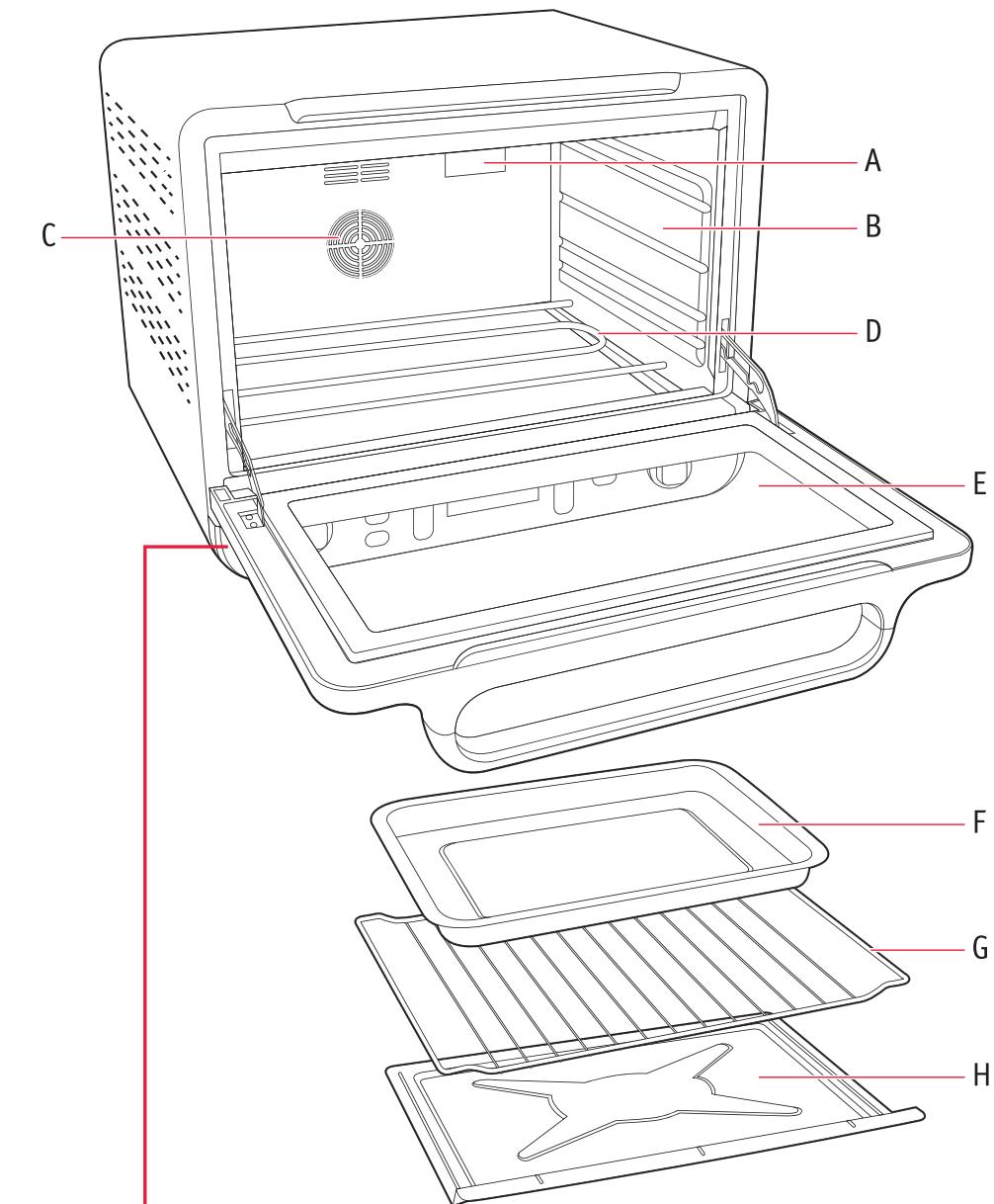
FR DESCRIPTION
A Interior light
B Non-stick walls
C Convection fan
D Element
E Double glass door
F Non-stick oven tray
G Reversible shelf
H Crumb tray
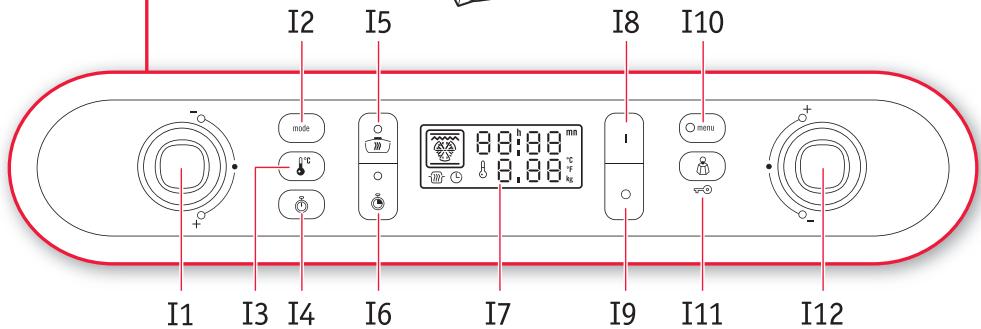
I Control panel
11 Left rotating knob
12 Manual mode selector
13 Oven temperature selector
14 Cooking time selector
15 Keep warm
16 Delayed start
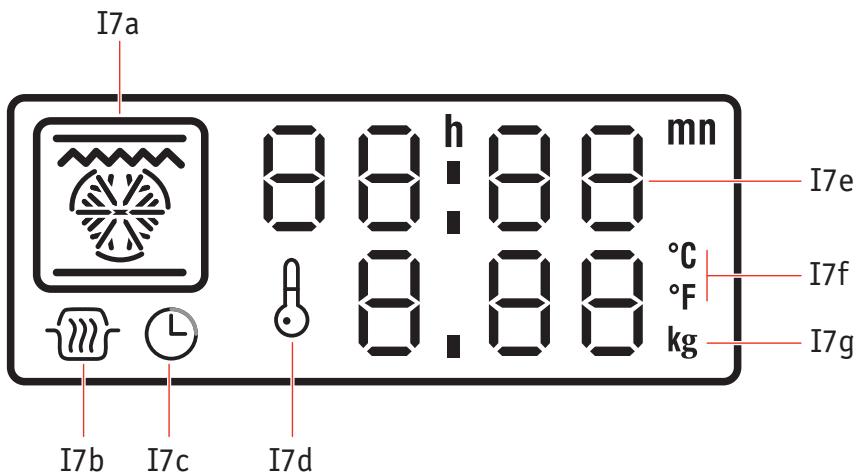
17 LCD screen
17a Program
17b Keep warm
17c Delayed start
17d Temperature
17e Time display
17f Temperature unit
17g Weight
18 Start cooking
19 Stop/change during cooking
I10 Automatic menu selection
I11 Food weight selection/child safety
112 Right rotating knob
DE BESCHREIBUNG
Unpacking 16
Installation 16
Slide-in crumb tray 16
Shelf position 16
Setting the time 17
First use while empty 17
AUTOMATIC MODE
Using the programmed menus 18
Description of programmed menus 19
MANUAL MODE
Description of manuals menus 20
Using the manuals menus 20
Cooking table : manual mode 21
CHANGE DURING COOKING 22
STOPPING COOKING 22
DELAYED START 22
KEEP WARM 23
LOCKING CONTROL PANEL 23
GENERAL REMARKS 23
TROUBLESHOOTING GUIDE 23
CLEANING AND CARE 24
WHAT NOT TO DO 24
DE
INHALTSVERZEICHNIS
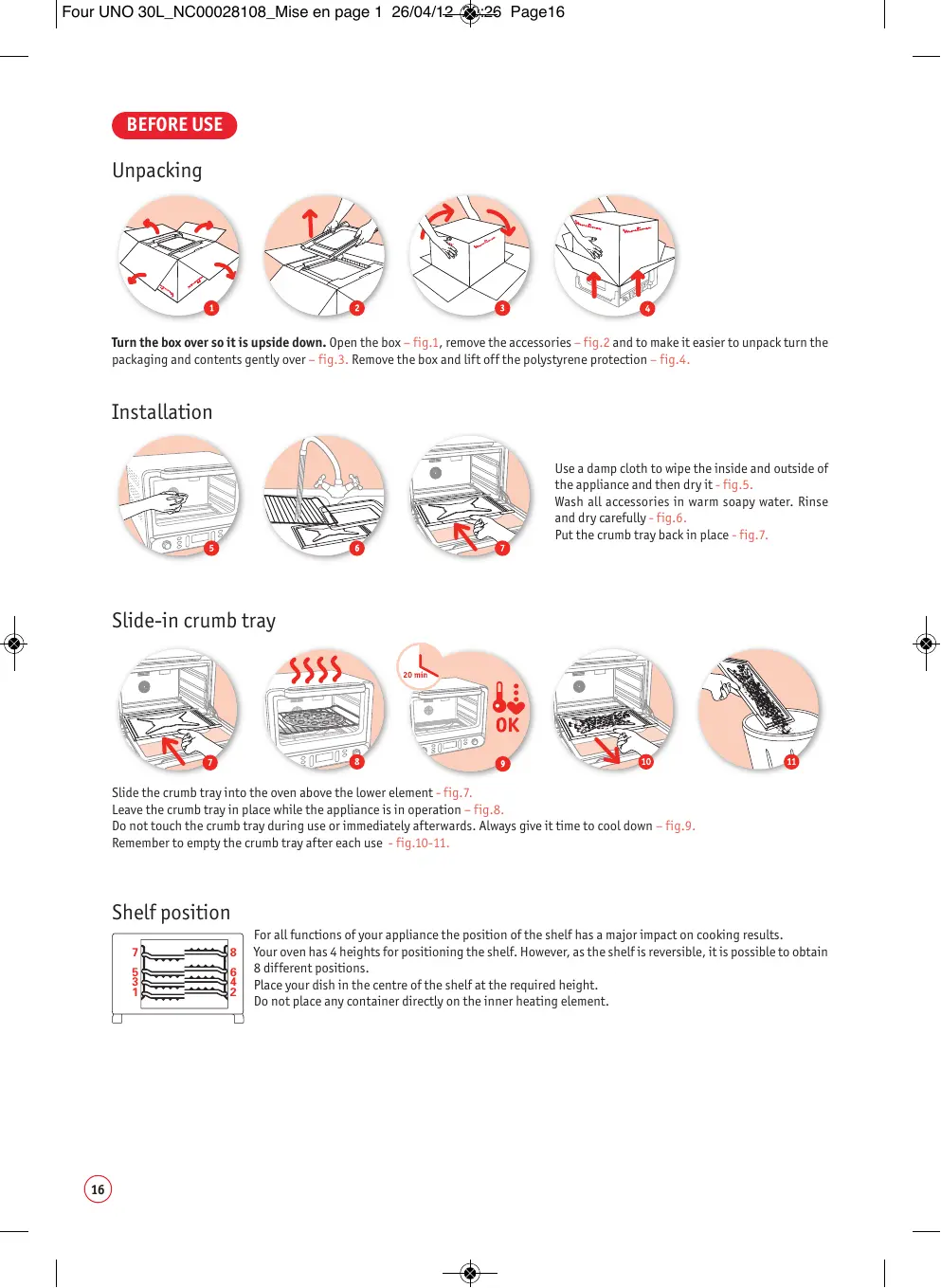
Turn the box over so it is upside down. Open the box - fig.1, remove the accessories - fig.2 and to make it easier to unpack turn the packaging and contents gently over - fig.3. Remove the box and lift off the polystyrene protection - fig.4.
Installation
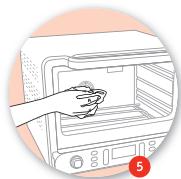
Use a damp cloth to wipe the inside and outside of the appliance and then dry it - fig.5.
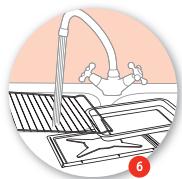
Wash all accessories in warm soapy water. Rinse and dry carefully - fig.6.
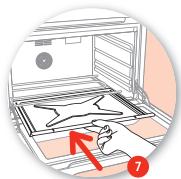
Put the crumb tray back in place - fig.7.
Slide-in crumb tray
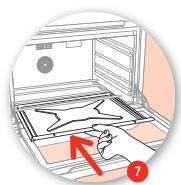
Slide the crumb tray into the oven above the lower element - fig.7.
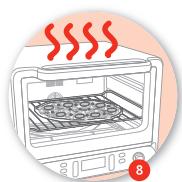
Leave the crumb tray in place while the appliance is in operation - fig.8.
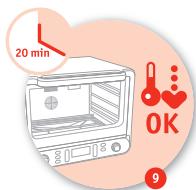
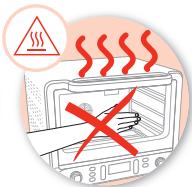
Do not touch the crumb tray during use or immediately afterwards. Always give it time to cool down - fig.9.
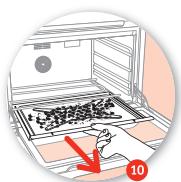
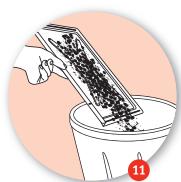
Remember to empty the crumb tray after each use - fig.10-11.
Shelf position
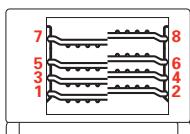
For all functions of your appliance the position of the shelf has a major impact on cooking results.
Your oven has 4 heights for positioning the shelf. However, as the shelf is reversible, it is possible to obtain 8 different positions.
Place your dish in the centre of the shelf at the required height.
Do not place any container directly on the inner heating element.
Setting the time
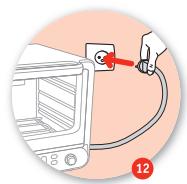
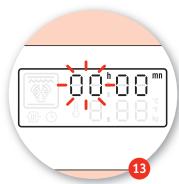
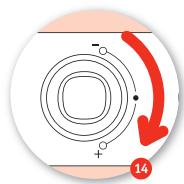
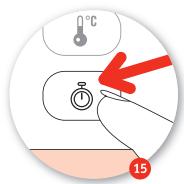
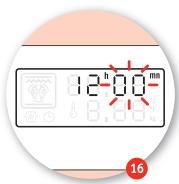

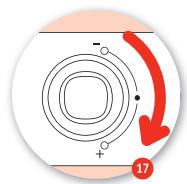
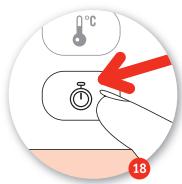
After plugging in the oven - fig.12, the digital display automatically shows the time as "00:00" with the hours flashing - fig.13. Set the hour using the left rotating knob - fig.14. Validate by pressing the clock button - fig.15. The minutes will then flash automatically - fig.16. Set the minutes using the left rotating knob - fig.17. Validate by pressing the clock button again - fig.18.
To change the time press and hold the clock button for a few seconds.
WARNING! Do not confuse the clock button and the delayed start button .
First use while empty
Before first use the oven must be operated while empty for 20 minutes to remove any possible manufacturing residue.
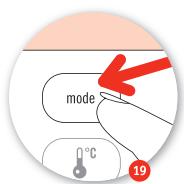
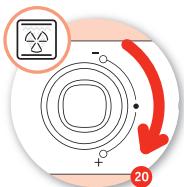

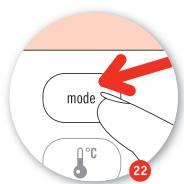
The oven is now plugged in and the time has been set. Press "mode" - fig.19. Select "convection" cooking mode using the left rotating knob - fig.20. The "convection" logo should appear on the LCD screen - fig.21. Validate by pressing "mode" again - fig.22.
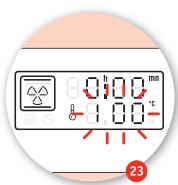
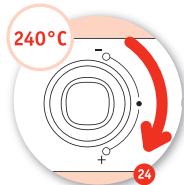
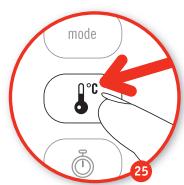
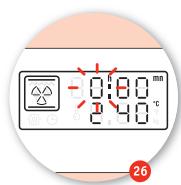
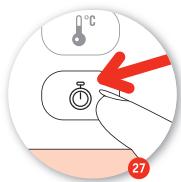
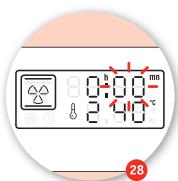

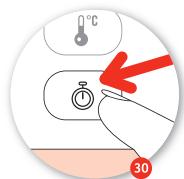
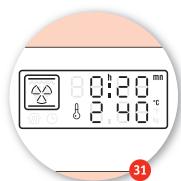
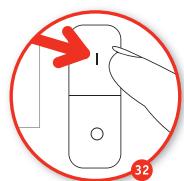
The temperature flashes - fig.23. Select the temperature: 240^ using the left rotating knob - fig.24. Validate by pressing "temperature" - fig.25. The hours will flash - fig.26. Leave the hours at 0. Validate by pressing the clock button - fig.27. The minutes will flash - fig.28. Set the minutes: 20 minutes using the left rotating knob - fig.29. Validate by pressing the clock button again - fig.30 - fig.31. Press once to stop cooking - fig.32.
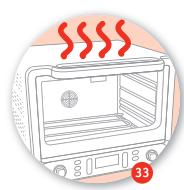
On first use, some smoke may escape from the oven - fig.33. This is normal and will gradually disappear with use.
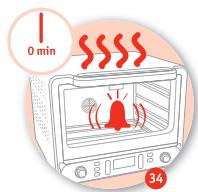
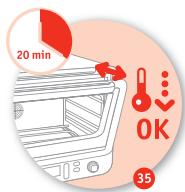
After 20 minutes the oven will beep and then stop automatically - fig.34. Leave the appliance to cool - fig.35.
AUTOMATIC MODE
Using the programmed menus
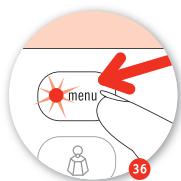
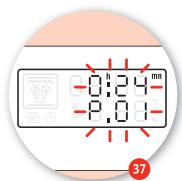
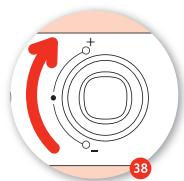
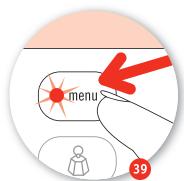
The oven is plugged in and the time set. Press "menu" - fig.36. The menu and the cooking time will flash - fig.37. Select your menu using the right rotating knob - fig.38. Press "menu" again to validate - fig.39.
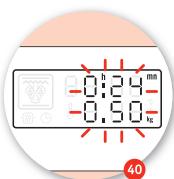
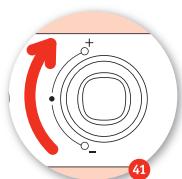

The weight will flash - fig.40. Select the weight (see table describing the automatic menu modes) using the right rotating knob - fig.41 and validate by pressing the "weight" button - fig.42. The cooking time is automatically displayed according to the validated weight.
To program a delayed start or keep warm mode see the appropriate chapters.
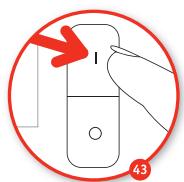
Press once to start cooking - fig.43.
The cooking chart is for information purposes. Depending on your tastes, cooking can be continued in manual mode.
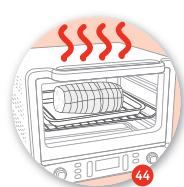
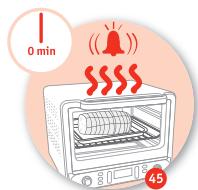
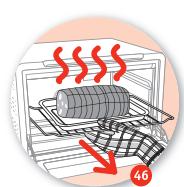
At the end of cooking the oven will beep and stop automatically - fig.44-45-46.
Description of programmed menus*
| Weight (Kg) | 0.5 | 0.6 | 0.7 | 0.8 | 0.9 | 1.0 | 1.1 | 1.2 | 1.3 | 1.4 | 1.5 | 1.6 | 1.7 | 1.8 | 1.9 | 2.0 | 2.1 | 2.2 | 2.3 | 2.4 | 2.5 | |||||
| N° | Program | Mode | Shelf height | T°C | Selection | Time in minutes | ||||||||||||||||||||
| P01 | Beef - rare | 5 | 220 | 0.5 to 2.5 kg | 24 | 27 | 30 | 33 | 37 | 40 | 43 | 46 | 49 | 52 | 54 | 57 | 60 | 62 | 65 | 67 | 70 | 72 | 75 | 77 | 79 | |
| P02 | Beef - medium | 5 | 180 | 0.5 to 2.5 kg | 40 | 42 | 44 | 47 | 49 | 52 | 54 | 57 | 59 | 61 | 64 | 66 | 69 | 71 | 73 | 76 | 78 | 81 | 83 | 86 | 88 | |
| P03 | Veal | 3 | 180 | 0.5 to 2.5 kg | 57 | 62 | 67 | 72 | 77 | 81 | 86 | 90 | 94 | 99 | 103 | 107 | 110 | 114 | 118 | 121 | 125 | 128 | 131 | 134 | 137 | |
| P04 | Pork | 4 | 180 | 0.5 to 2.5 kg | 79 | 84 | 89 | 94 | 98 | 102 | 106 | 109 | 112 | 115 | 117 | 119 | 121 | 123 | 124 | 125 | 126 | 126 | 126 | 126 | 125 | |
| P05 | Poultry | 4 | 200 | 0.5 to 2.5 kg | 39 | 44 | 48 | 52 | 56 | 60 | 64 | 67 | 70 | 73 | 76 | 79 | 81 | 84 | 86 | 88 | 90 | 91 | 93 | 94 | 95 | |
| P06 | Lamb | 2 | 180 | 0.5 to 2.5 kg | 64 | 69 | 74 | 79 | 84 | 88 | 92 | 96 | 100 | 103 | 107 | 107 | 113 | 115 | 118 | 120 | 122 | 124 | 125 | 127 | 128 | |
| P07 | Fish - large | 2 | 200 | 0.5 to 2.5 kg | 27 | 28 | 29 | 30 | 32 | 33 | 35 | 36 | 38 | 40 | 42 | 44 | 46 | 49 | 51 | 54 | 57 | 60 | 63 | 66 | 69 | |
| P08 | Fish - small | 4 | 190 | 0.5 to 2.5 kg | 26 | 27 | 28 | 28 | 29 | 30 | 31 | 32 | 33 | 34 | 35 | 36 | 38 | 39 | 41 | 42 | 44 | 45 | 47 | 48 | 50 | |
| P09 | Frozen chips | 6 | 220 | 0.5 kg | 33 | |||||||||||||||||||||
| P10 | Chicken nuggets | 4 | 210 | 0.5 to 0.8 kg | 29 | 30 | 37 | 43 | ||||||||||||||||||

| \( N^o \) | Program | Mode | Shelf height | Cooking | C1 | C2 | C3 | |||||||||||||||||||
| T°C | Size | Time in minutes | ||||||||||||||||||||||||
| P11 | Frozen pizza | 5 | 210 | C1 = SmallC2 = MediumC3 = Large | 13 | 20 | 26 | |||||||||||||||||||
| P12 | Fresh pizza | 3 | 210 | C1 = SmallC2 = MediumC3 = Large | 12 | 14 | 23 | |||||||||||||||||||
| P13 | Pies | 5 or 4 | 240 | C1 = SmallC2 = MediumC3 = Large | 30 | 33 | 39 | |||||||||||||||||||
| P14 | Gratinated dishes | 4 | 220 | C1 = SmallC2 = MediumC3 = Large | 45 | 51 | 83 | |||||||||||||||||||
| P15 | Cookies | 5 | 180 | 1 setting | 15 | |||||||||||||||||||||
| P16 | Brownie | 3 | 200 | C1 = SmallC2 = MediumC3 = Large | 16 | 34 | 40 | |||||||||||||||||||
- Menu P01 to P08 allow you to select the weight of your food from 0.5 to 2.5kg .
- Menu P10 allows you to select between 0.5 and 0.8kg of chicken nuggets.
- Menu P11 to P14 and P16 offer 3 selections: C1 = Small, C2 = Medium and C3 = L
NOTE! There is only one selection possible for menus P09 and P15.
- The cooking chart is for information purposes only and is not to be taken as a reference.
MANUAL MODE
Description of manuals menus

Natural convection (or conventional oven): Natural convection (or conventional oven): the heat is generated by the oven's upper and lower elements. This traditional cooking mode is suitable for cooking meat, fish and puddings.

Grill (upper element): the heat is generated by the oven's upper element. This can be used for traditional grilling/barbecuing and also to brown dishes.

Defrost: this special function operates the fan at the rear of the oven in order to reduce the defrosting time of the ingredients that you put in your oven, without any risk of them being cooked. The temperature cannot be changed in defrost mode.

Fan oven: the heat is generated then blown around by a fan located at the rear of the oven which guarantees exceptionally even cooking anywhere in the oven. The blowing around of the air allows your food to be cooked evenly.
For conventional, grill and convection modes, the temperature can be set at between 100^ and 240^ .
Using the manuals menus
The oven is plugged in and the time set.
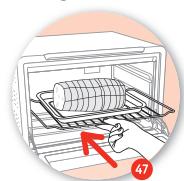
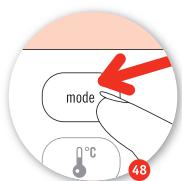
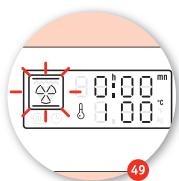
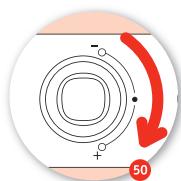
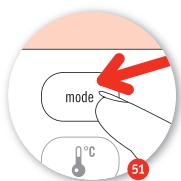
Place the shelf at the required height. Place the tray with the food in the oven - fig.47 and close the door. Press "mode" - fig.48. The cooking mode will flash - fig.49. Select the cooking mode using the left rotating knob - fig.50. Validate by pressing "mode" again - fig.51.
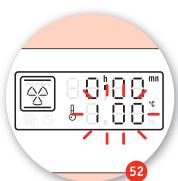
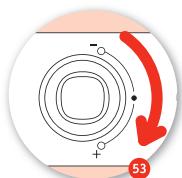
The temperature will flash - fig.52. Select the temperature using the left rotating knob - fig.53.
PLEASE NOTE: the temperature cannot be changed in defrost mode.
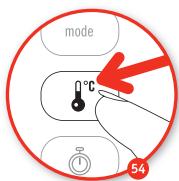
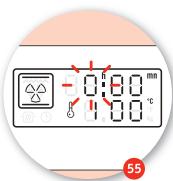
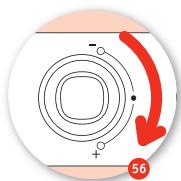
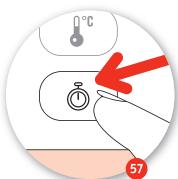
Validate by pressing "temperature" - fig.54. The cooking time will flash - fig.55: set the time by turning the left rotating knob - fig.56, validate by pressing the clock button - fig.57.
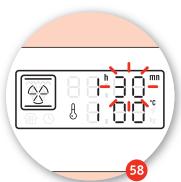
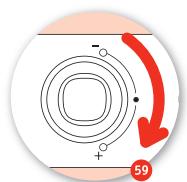
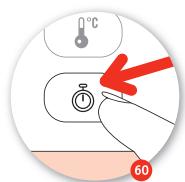

The minutes will flash - fig.58. Set the minutes by turning the left rotating knob - fig.59, validate by pressing the clock button again - fig.60. The maximum cooking time is 3h59.
To program a delayed start or keep warm mode see the appropriate chapters.
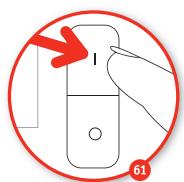
Press once to start cooking - fig.61.
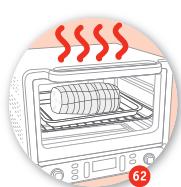
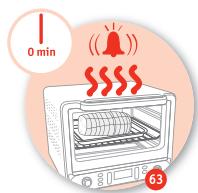
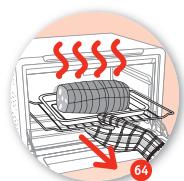
At the end of the cooking time, the oven will beep and stop automatically - fig.62-63-64.
Cooking table : manual mode*
| Program | Mode | Level | Preheat | T°C | Time |
| Pie | □ | 4 | 0 | 233°C | 37 min |
| Fruit cake | □ | 3 | 10 | 185°C | 45 min |
| Quiche | □ | 4 | 0 | 233°C | 37 min |
| Clafoutis | □ | 4 | 10 | 193°C | 45 min |
| Sponge cake | □ | 4 | 10 | 185°C | 23 min |
| □ | 4 | 10 | 185°C | 25 min | |
| Roast pork (1 kg) | □ | 5 | 0 | 193°C | 1 h 20 min |
- The cooking chart is for information purposes only and is not to be taken as a reference.
CHANGE DURING COOKING
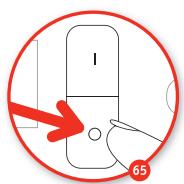
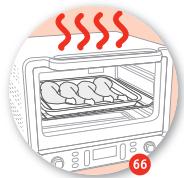
Press once - fig.65. Change your program (cooking mode, temperature and/or cooking time), press once to validate and start cooking again - fig.66.
STOPPING COOKING
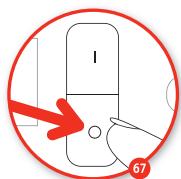
To stop cooking, press and hold until the appliance switches to standby mode - fig.67.
DELAYED START
The delayed start function allows you to program the start of cooking from 5 minutes to 24 hours later.
WARNING! Do not confuse the delayed start button and the clock button .
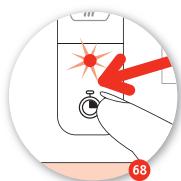
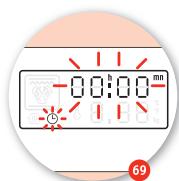
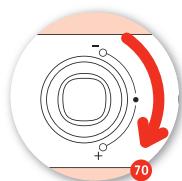
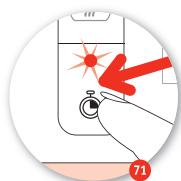
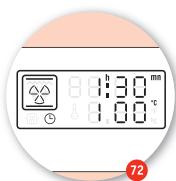
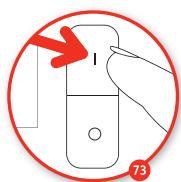
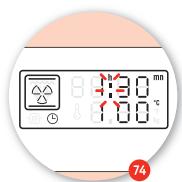
The cooking mode, time and temperature have already been set using manual mode or the programmed menu mode (see appropriate chapters on programming). Press the "delayed start" button - fig.68. The "delayed start" pictogram and the clock will flash - fig.69. Set the cooking start time using the left rotating knob - fig.70. Validate by pressing the "delayed start" button again - fig.71. The "delayed start" pictogram will then appear on the screen. This means that the delayed start program has been entered correctly - fig.72. Press once to start cooking - fig.73. When the timer has started, the two points separating the hours and minutes will flash - fig.74. This display
allows you to be sure that the program has started.
PLEASE NOTE! When a delayed start has begun it is normal for the oven light not to come on until cooking starts.
KEEP WARM
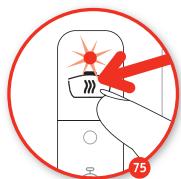
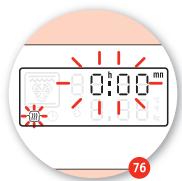
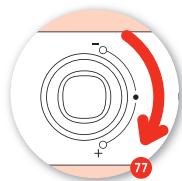
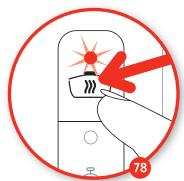
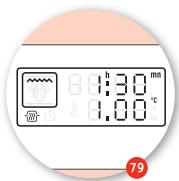

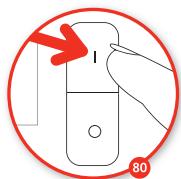
The cooking parameters have been set. Press the "keep warm" button - fig.75. The "keep warm" pictogram and the clock will flash - fig.76. RSet the required time for keeping the oven warm using the left rotating knob - fig.77. Validate by pressing the "keep warm" button again - fig.78 - fig.79. Press 1 once to start cooking - fig.80. At the end of cooking, the oven will automatically switch to "keep warm" mode.
N.B. The two delayed start and keep warm functions can be combined.
N.B. It is possible to set the keep warm function while cooking is in progress (see chapter on changes during cooking).
PLEASE NOTE! Keep warm mode cannot be used with defrost mode.
LOCKING CONTROL PANEL
This safety feature prevents any change to the cooking settings by children under 8 years of age who should not use this appliance unless continuous supervision by a responsible adult is given.
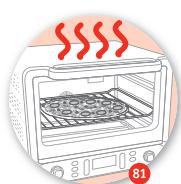
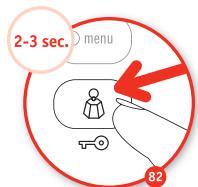
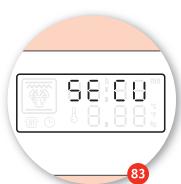
After starting cooking - fig.81, press and hold the weight button - fig.82. SECU will then appear on the screen - fig.83 and will disappear after a few seconds. The control panel is now locked.
To unlock the control panel, press and hold the weight button again. SECU will be displayed on the screen and will disappear after a few seconds. The control panel is now unlocked.
PLEASE NOTE! When the control panel locking is activated, the button is still accessible but the control panel remains locked. To access the other keys, unlock the control panel.
GENERAL REMARKS
PLEASE NOTE! If no action is carried out for 30 seconds the oven automatically goes into standby mode.
TROUBLESHOOTING GUIDE
| ERROR CODE | CAUSES | SOLUTIONS |
| ERR1 | Faulty temperature probe | Consult an After-Sales Service Centre |
| ERR2 | Electrical problem | Consult an After-Sales Service Centre |
| ERR3, ERR4 | Temperature regulation problem | Consult an After-Sales Service Centre |
CLEANING AND CARE
Do not allow grease to build up on the appliance.
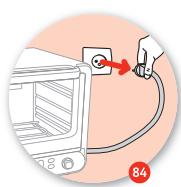
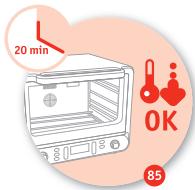

Before any maintenance, cleaning or storage unplug the appliance and allow it to cool down - fig.84-85.
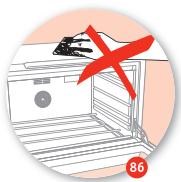
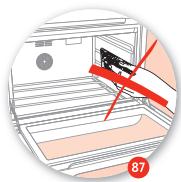
Do not use any harsh cleaning products (especially oven cleaning products and metal or abrasive scouring pads) - fig.86-87.
To clean the outside of the appliance simply wipe over with a sponge - fig.88.
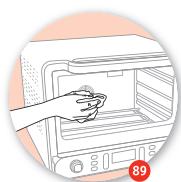
Clean the door, non-stick or lacquered surfaces and the glass components with a damp sponge dipped in a gentle soap solution – fig.89.
Do not use cleaning products intended for metal (for stainless steel, copper, etc.).
Your oven has non-stick walls which can easily be cleaned with soapy water.
All accessories can be cleaned with soapy water.
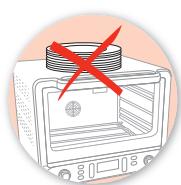
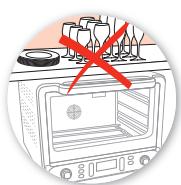
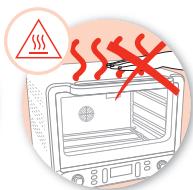
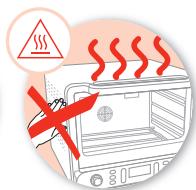
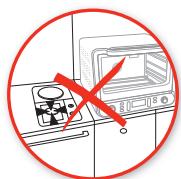
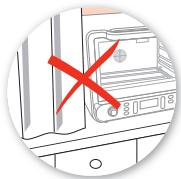
WHAT NOT TO DO


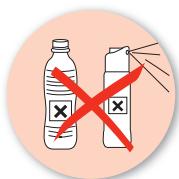
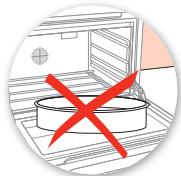
NOTES