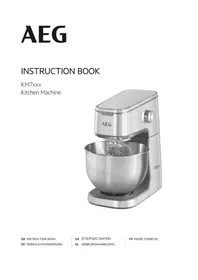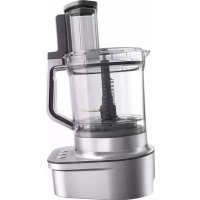
KM5-1-VBP - Food Processor AEG - Free user manual and instructions
Find the device manual for free KM5-1-VBP AEG in PDF.



| Product type | Food processor |
| Brand | AEG |
| Model | KM5-1-VBP |
| Power supply | Electric (mains) |
| Speeds | 6 speeds + pulse mode (P) |
| Maximum dough capacity (dough hook) | 1.62 kg (bread dough, 75% hydration) |
| Maximum dough capacity (beater) | 2 kg sponge cake dough (10 eggs) |
| Maximum cream capacity (whisk) | 600 g cream |
| Bowl material | Stainless steel |
| Included accessories | Flat beater, dough hook, whisk, splash guard lid |
| Optional accessory | Salad maker (slicer, grater) |
| Cleaning | Bowl and tools dishwasher-safe; housing cleanable with damp cloth |
| Safety | Do not immerse the housing; do not use with boiling liquids (>90°C); do not operate without bowl in place |
| Maximum continuous use time for thick mixtures | 10 minutes, then 20 minutes cooling |
| Intended use | Household use and similar applications (offices, hotels, etc.) |
| Food contact conditions | Not suitable for highly acidic or salty foods; contact limited to 24h for non-refrigerated foods |
| Spare parts | Accessories available on the AEG website |
| Repairability | AEG after-sales service for power cord replacement and repairs |
| General information | User manual available online, 48 pages |
Frequently Asked Questions - KM5-1-VBP AEG
User questions about KM5-1-VBP AEG
0 question about this device. Answer the ones you know or ask your own.
Ask a new question about this device
Download the instructions for your Food Processor in PDF format for free! Find your manual KM5-1-VBP - AEG and take your electronic device back in hand. On this page are published all the documents necessary for the use of your device. KM5-1-VBP by AEG.
USER MANUAL KM5-1-VBP AEG
natural_image
Line drawing of a kitchen mixer with control panel and side-mounted fan (no text or symbols)KM5-1-VBP
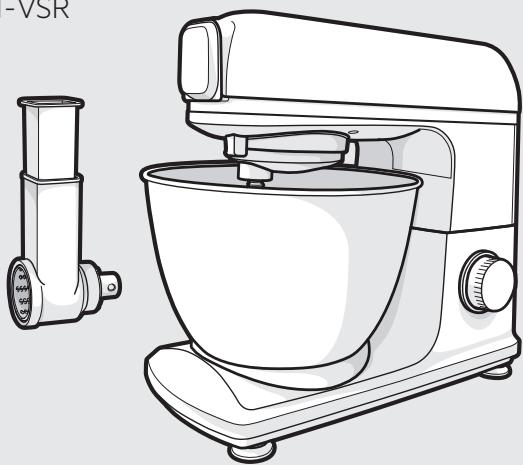
KM5-1-VSR
natural_image
Line drawing of a kitchen mixer with side view (no text or symbols)BG РЪКОВОДСТВО ЗА ПОТРЕБИТЕЛЯ
NL GEBRUIKERSHANDLEIDING
EN INSTRUCTION BOOK
FR NOTICE D'UTILISATION
natural_image
Line drawing of a curved mechanical component with a base and top part, no text or symbols present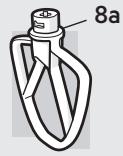
natural_image
Simple line drawing of a hook-shaped mechanical component with a central hub and labeled part '8b' (no text or symbols beyond label)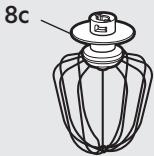
natural_image
Line drawing of a mechanical component with a labeled part '8c' (no text or symbols on the diagram itself)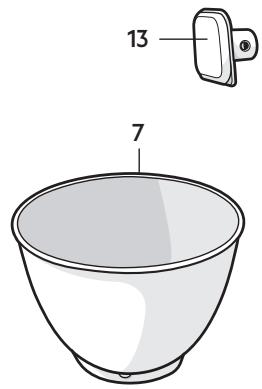
text_image
13 7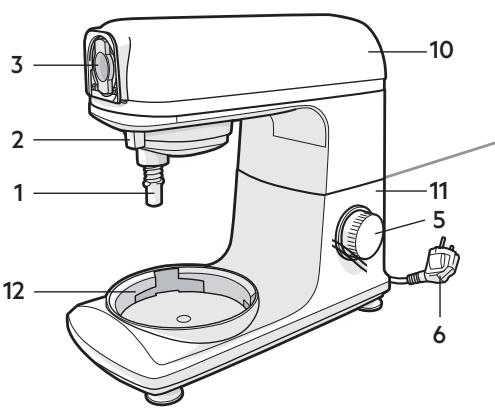
text_image
1 2 3 10 11 5 6 12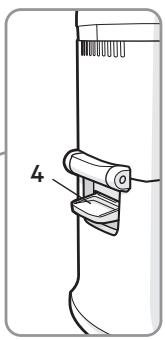
natural_image
Diagram of a mechanical device with a labeled component (4), showing no text or symbols beyond the number 4.*
text_image
B1 B2 B3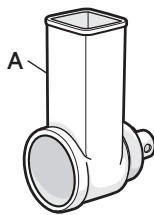
natural_image
Technical line drawing of a mechanical pipe fitting with labeled component A (no text or symbols beyond label)natural_image
Illustration of various kitchen utensils including a drain, filter, and bowl (no text or labels)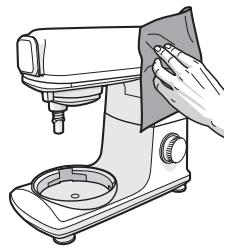
natural_image
Line drawing of a hand cleaning a kitchen machine with a cloth (no text or symbols) | Max speed 6 |  | 3-10 eggs100-600g |  | Max speed 2 |  | DAYNO ITARR (good)70% 0.13-0.92kg 0.23-1.62kg57% 0.175-1.05kg 0.29-1.74kg40% 0.25-0.75kg 0.4-1.2kg | |
 | Max speed 4 |  | 1-10 eggs0.2-2kg |  | Max speed 4 |  |  Vegetables Vegetables | |
| DASHI |  Hard cheese Hard cheese |
3
natural_image
Line drawing of a kitchen mixer with control panel and side arm (no text or symbols)4
natural_image
Illustration of a kitchen appliance with an arrow pointing to a mounted shelf (no text or symbols)▶
natural_image
Illustration of a kitchen mixer with a speech bubble saying 'click' (no text or symbols on the main diagram)▶
text_image
Diagram showing a hand using a tool to mark a defect or warning symbol, with an 'X' mark and warning triangle.5
natural_image
Illustration of a robotic mixer with a curved arm and directional arrow (no text or symbols)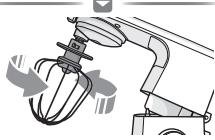
natural_image
Mechanical assembly diagram showing a rotating arm and lever mechanism (no text or symbols)6
natural_image
Illustration of a kitchen mixer blending liquid into a bowl using a stand mixer (no text or symbols)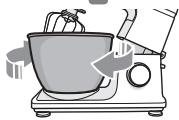
natural_image
Illustration of a kitchen appliance with a bowl and fan (no text or symbols)7
natural_image
Diagram of a mechanical device with an upward arrow and a base, no text or symbols present▶
natural_image
Illustration of a kitchen mixer blending into a bowl with a click button (no text or symbols on the main diagram)8
natural_image
Illustration of a plug inserted into an electrical socket with a cable, showing a force direction (no text or symbols)9
natural_image
Illustration of a kitchen mixer with food icons (soda, bread, sugar, oven) and a tray, no text or symbols present.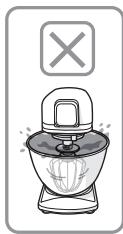
natural_image
Illustration of a cooking pot with a baking pan and a crossed-out 'X' symbol (no text or labels)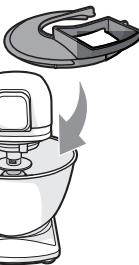
natural_image
Illustration of a kitchen mixer with a lid and fan, showing a rotating handle (no text or symbols)▶
natural_image
Illustration of a kitchen mixer with food containers and a cooking pan (no text or symbols)10
text_image
1~6!

▶

▶
natural_image
Line drawing of a kitchen mixer with a stand mixer (no text or symbols)
natural_image
Line drawing of a kitchen mixer with a thermometer indicator (no text or symbols on the main diagram)▶


text_image
11 OK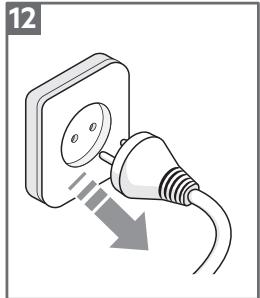
natural_image
Illustration of a plug with a bulb and cable, showing a downward arrow indicating a process or insertion (no text or symbols present)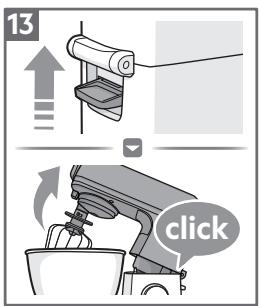
text_image
13 click
text_image
14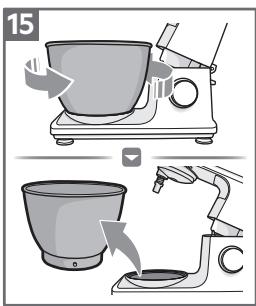
text_image
15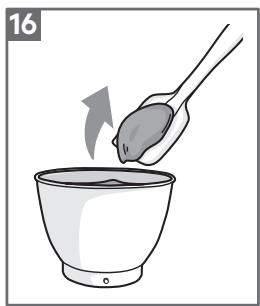
natural_image
Illustration of a spoon lifting a bowl with an arrow indicating motion (no text or symbols)Salad Maker
flowchart
graph TD
    A["Cut blade with 6000 units"] --> B["Warning: The blades and inserts are very sharp!"]
    B --> C["Control panel with 1 unit and 2 units"]
    C --> D["Assembly of a brush into a motor"]
    D --> E["Assembly of a washing machine with a bowl and fan"]
    E --> F["Assembly of a plug into a charger"]
    F --> G["Assembly of a plug into a plug outlet"]
    G --> H["Assembly of a brush into a blender"]
    H --> I["Assembly of a blender into a blender with a speedometer set to 1~4"]
CLEANING AND CARE
natural_image
Illustration of a plug inserted into a socket with a cable, showing a downward arrow (no text or symbols)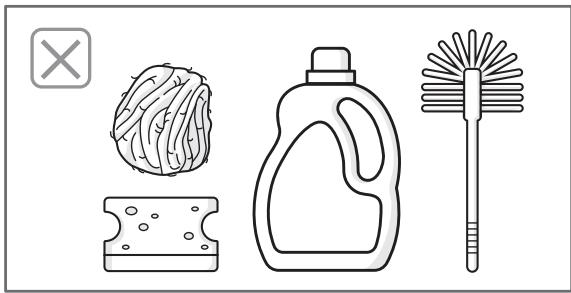
natural_image
Illustration of cleaning items including a cabbage, cheese, a spray bottle, and a broom (no text or symbols)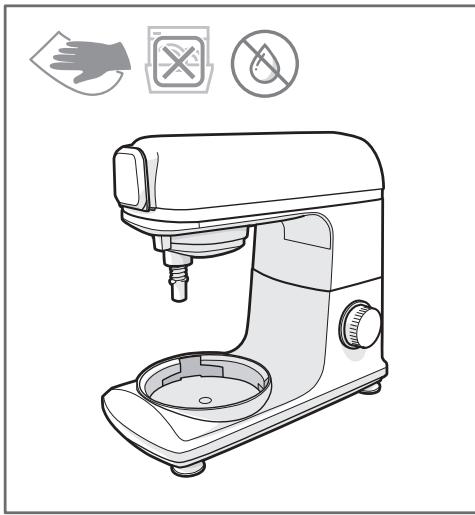
natural_image
Line drawing of a modern kitchen mixer with hand and no-smoking icons (no text or symbols on the device itself)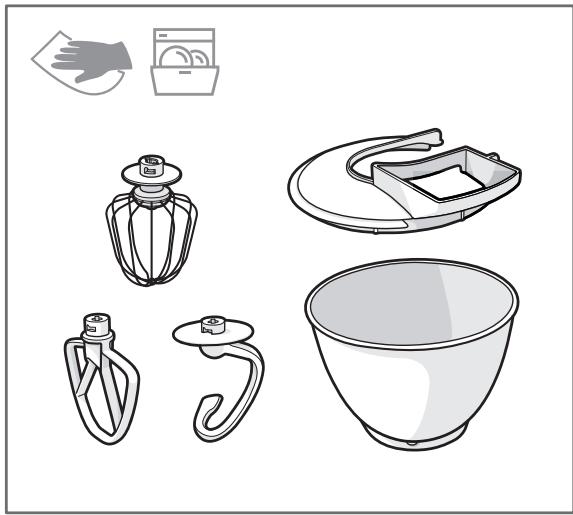
natural_image
Illustration of kitchen utensils including a hand, cleaning fan, spray bottle, and bowl (no text or symbols)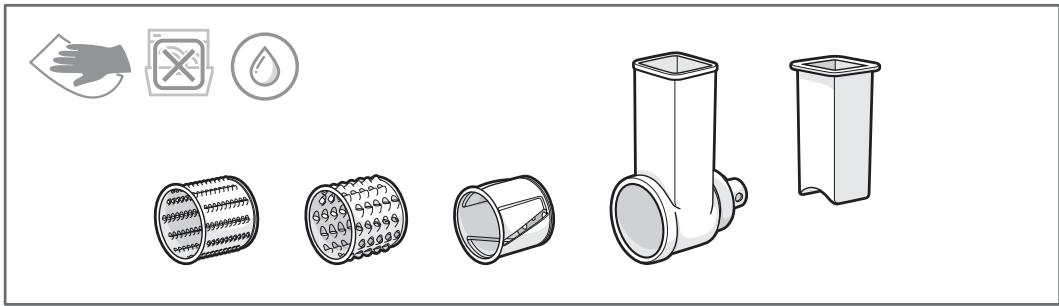
natural_image
Illustration of various household appliances including a hand, switch, water drop, cylindrical bins, and a trash can (no text or symbols present)Read the following instruction carefully before using the appliance for the first time.
- Appliances can be used by persons with reduced physical, sensory or mental capabilities or lack of experience and knowledge if they have been given supervision or instruction concerning use of the appliance in a safe way and if they understand the hazards involved. Children shall not play with the appliance.
- Always disconnect the appliance from the supply if it is left unattended and before assembling, disassembling or cleaning.
• This appliance shall not be used by children. Keep the appliance and its cord out of reach of children. - If the supply cord is damaged, it must be replaced by the manufacturer, its service agent or similarly qualified persons in order to avoid a hazard.
• This appliance is intended to be used in household and similar applications such as:
– staff kitchen areas in shops, offices and other working environments; - farm houses;
– by clients in hotels, motels and other residential type environments; - bed and breakfast type environments.
- Switch off the appliance and disconnect from supply before changing accessories/attachments or approaching parts that move in use.
• Always place the appliance on a flat level surface.
• Appliance is for indoor and domestic use only. - Do not leave this product out of your sight when it is running.
• Never process boiling liquids (max 90°C). - Do not use this application to stir paint. It may cause an explosion.
- Do not let cord hang over edge of table or counter over hot surfaces.
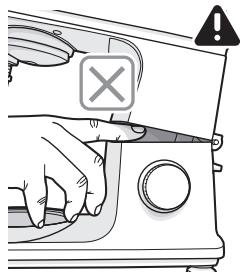
- Keep fingers and hands away from areas between housing and tilted motor head to prevent injury.
- Never operate appliance with the attachments ON unless the mixing bowl is in place and motor head (10) is down.
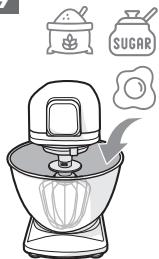
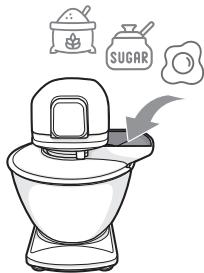
- Do not overfill the machine to avoid spillover and motor overloaded. Use the splash guard to protect against liquid mixtures. Ingredients can be added directly to the bowl via the feed hole of splash guard.
- With heavy mixtures (example: bread dough), do not operate the machine for more than 10 minutes continuously. Allow it to cool down for a further 20 minutes before continuing.
• Never immerse the appliance body, cord or plug in water or any other liquid. - Do not use abrasive cleaners, scouring pads or abrasive detergents while cleaning the appliance.
- While using attachments, always use the pusher supplied. Never put your fingers or utensils in the feed chute.
DISPOSAL
This symbol on the product or on its packaging indicates that the product may not be treated as household waste. To recycle your product, please take it to an official collection point or to an AEG service center that can remove and recycle the battery and electric parts in a safe and professional way. Follow your country's rules for the separate collection of electrical products and rechargeable batteries.
AEG reserves the right to change products, information and specifications without notice.
COMPONENT (picture page '2')
| 1 | Attachment shaft | 8a | Flat Beater |
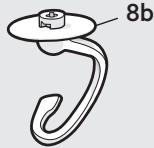
| 2 | Front attachment hub release button | 8b | Dough hook |
| 3 | Front attachment hub | 8c | Whisk |
| 4 | Release Lever | 9 | Splash guard |
| 5 | Speed control knob | 10 | Motor head (tiltable) |
| 6 | Power Cord | 11 | Housing |
| 7 | Stainless steel mixing bowl | 12 | Bowl cramping plate |
| 13 | Front attachment hub cover |
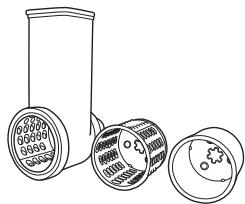
Salad maker\*
A Salad maker housing
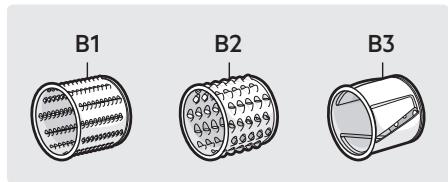
B1 Medium slicer
B2 Coarse slicer
B3 Shredder
C Salad maker pusher
* Available in certain models only. Also Available for sale on brand website.
HOW TO USE (picture page '2-5')
1 Cleaning - Make sure that you clean bowl and tools before use.
2 Usage of tools and capacity.
Main tools
| Speeds | Tools | Type of Mixture | Min Capacity | Max Capacity | |
| Max2 | Dough hook | Heavy mixtures of dough (e.g. bread, pizza or pastry dough) | 75% hydration | 130g flour or 230g dough | 0.92kg flour or 1.62kg dough |
| 57% hydration | 175g flour or 290g dough | 1.05kg flour or 1.74kg dough | |||
| 40% hydration | 250g flour or 400g dough | 0.75kg flour or 1.2kg dough | |||
| Max4 | Beater | Medium - heavy mixtures (e.g. crepes or sponge mixture) | 1egg or 200g dough | 10 eggs or 2kg dough | |
| Max6 | Whisk | Light mixtures (e.g. cream, egg white, blancmange) | 3eggs or 100g cream | 10 eggs or 600g cream | |
| Pulse | Whisk | Interval (e.g. for mixing under sponge, egg white) | |||
Hydration percentage means the weight proportion of water relative to the flour used in the dough recipe.
Example: if a dough recipe uses 400 gr of water and 1,000 gr of flour, means it has 40% hydration.
Attachments
| Speeds | Tools | Type of Food |
| Max 4 | Salad maker | Vegetables (carrot, cucumber, pumpkin, etc.) |
| Hard cheese (cheddar, gouda, etc.) |
Notes: Do not use high-fiber food (such as ginger, leek, etc) as it can't be processed.
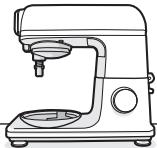
3 Place the appliance on a flat surface.
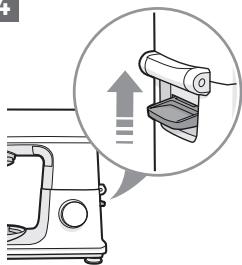
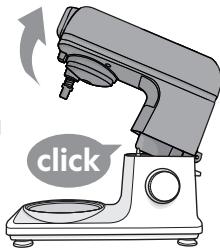
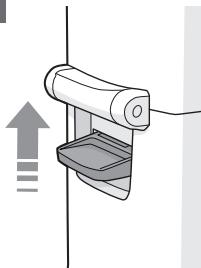
4 Tilt the motor head up until it locks by pressing the release lever (4) upwards.
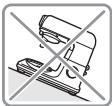
WARNING! Keep fingers and hands away from areas between housing (11) and tilted motor head (10).
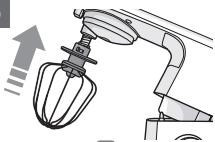
5 Place desired tool (Whisk, dough hook or beater) by pushing it up on the attachment shaft and turn it counterclockwise until the pin is locked into position.
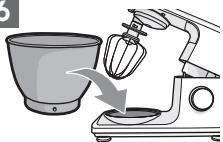
6 Place the mixing bowl (7) into the bowl cramping plate (12) by turning it clockwise to lock into position.
WARNING! Never operate appliance with the attachments ON unless the mixing bowl (7) is in place and motor head (10) is down.
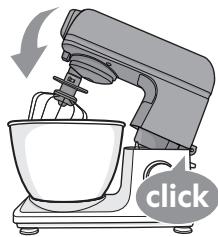
7 Tilt the motor head down until it locks by pressing the release lever (4) upwards.
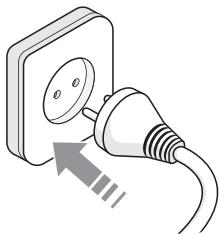
8 Plug into mains.
9 Fill in your ingredients to process.
WARNING! Do not overfill the machine to avoid spillover and motor overloaded. Use the splash guard to protect against liquid mixtures. Ingredients can be added directly to the bowl via the feed hole of splash guard.
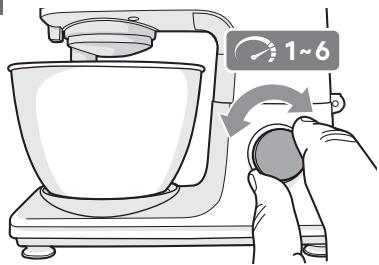
10 Turn the speed control knob from 0 to desired speed (between 1-6, corresponding to the tools and mixture).
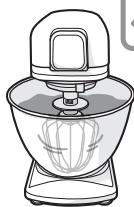
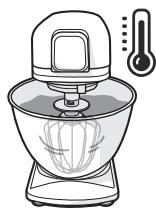
WARNING! With heavy mixtures (example: bread dough), do not operate the machine for more than 10 minutes continuously. Allow it to cool down for a further 20 minutes before continuing.
PRO Tips: While mixing dough, in order to avoid flour splash, keep the appliance at setting 1 for 60 seconds, then turn to desired speed.
PRO Tips: For pulse operation (kneading at short intervals), turn and hold the knob to "P" position to your desired timing. When the knob is released it returns automatically to the "0" position.
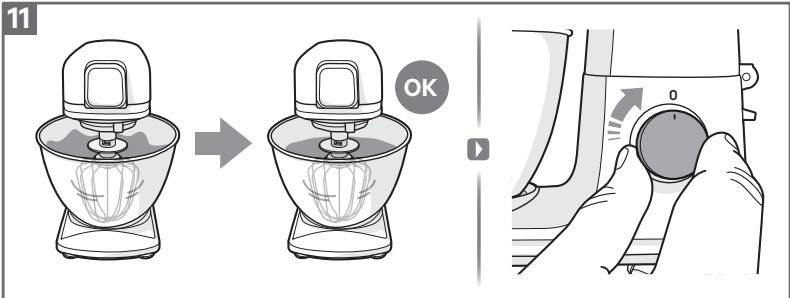
11 After mixing completes, turn the knob back to 0.
12 Unplug the appliance.
13 Tilt the motor head up until it locks by pressing the release lever (4) upwards.
14 Remove the tool from attachment shaft by turning it clockwise and pull off.
15 Remove the mixing bowl from the bowl cramping plate by turning it counterclockwise.
16 Take out the mixture from the mixing bowl.
PRO Tips: Mixture can be taken out with the help of spatula.
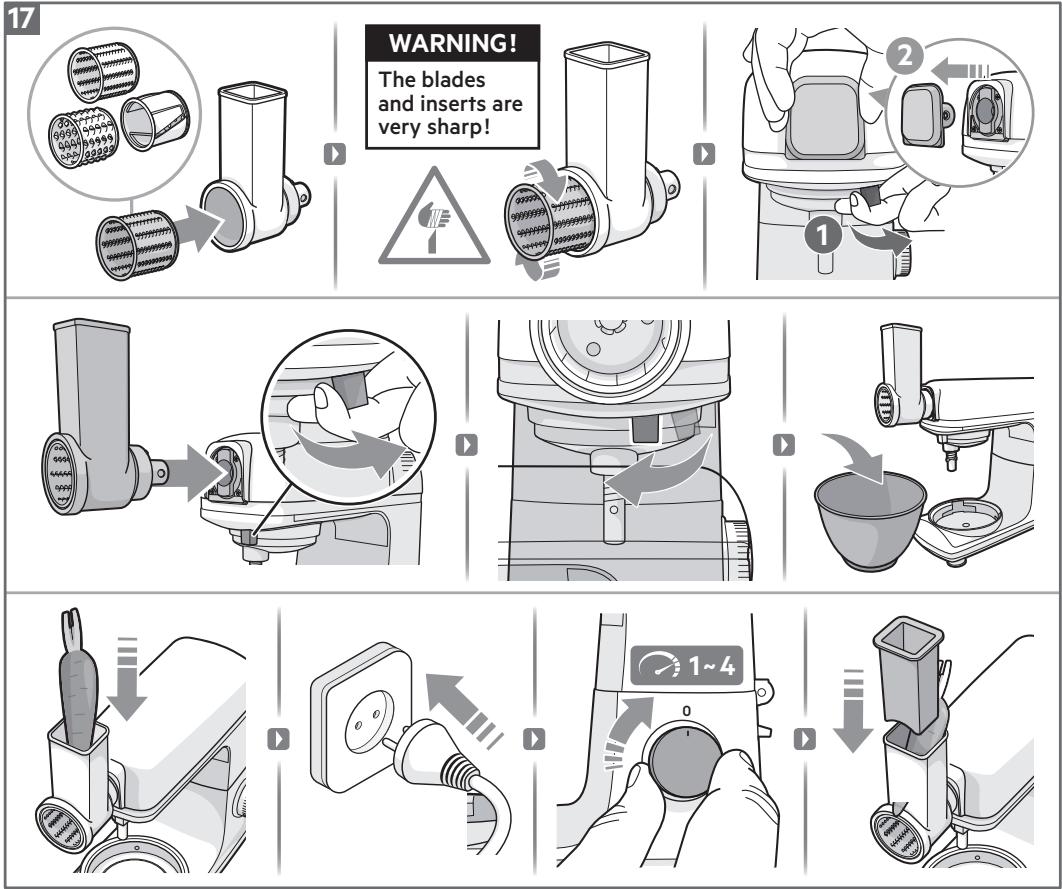
17 HOW TO USE THE SALAD MAKER*
- Choose your slicer/shredder (B) and insert it into the salad maker housing (A) by turning it clockwise. Make sure the attachment is fully inserted.
WARNING! The blades and inserts are very sharp!
- Push the attachment hub release button (2) to the right and remove the attachment hub cover. Fit the assembled salad maker in the front attachment hub (3) using the attachment hub release button (2). The attachment hub release button (2) will click into position once the salad maker is securely attached.
- Place a mixing bowl (7) or other container under the attachment to collect the result.
- Cut the food into a size that fits the feed chute. Plug in the appliance and turn the speed selector to desired speed.
- Feed the food into the feed chute by using the pusher (C).
- Push the attachment hub release button (2) to the right and remove the attachment hub cover. Fit the assembled salad maker in the front attachment hub (3) using the attachment hub release button (2). The attachment hub release button (2) will click into position once the salad maker is securely attached. - Place a mixing bowl (7) or other container under the attachment to collect the result. - Cut the food into a size that fits the feed chute. Plug in the appliance and turn the speed selector to desired speed. - Feed the food into the feed chute by using the pusher (C).
WARNING! Do not put your fingers or other utensils in the feed chute.
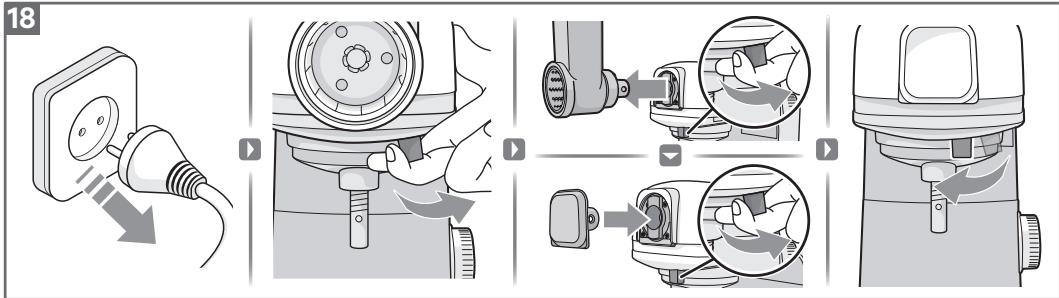
18 When finished using your attachment, turn off the appliance and unplug it.
Place back the front attachment hub cover (13) using the attachment hub release button (2).
CLEANING AND CARE (picture page '5')
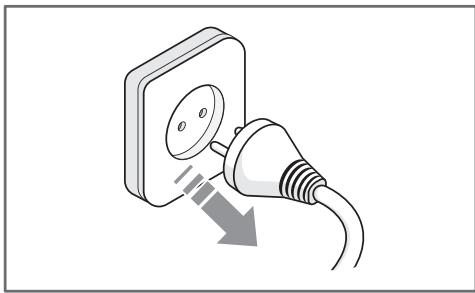
Always unplug the appliance before cleaning
1 Motor Housing. Never immerse the housing with motor in water! Clean the motor housing only with a damp cloth.
Do not use abrasive cleaners, scouring pads or abrasive detergents while cleaning the appliance.
2 Mixing Bowl, Mixing Tools (dough hook, whisk, beater), and splash guard are dishwasher safe.
If washing by hand, don't use wire brush, steel wool or bleach to avoid rust.
3 Salad maker* attachments should only be washed by hand in warm soapy water.
* Available in certain models only. Also Available for sale on brand website.
TROUBLESHOOTING
| PROBLEM | POSSIBLE CAUSE | SOLUTION |
| The motor slows down or stops during operation. | Amount of dough may exceed maximum capacity. | Unplug and remove half and process in two batches, wait for 20 minutes to cool down motor then restart machine. |
| Dough sticks onto the side or bottom of bowl. | Dough is too wet. | Add more flour, until dough cleans the side or bottom of the bowl. |
| The motor does not work. | The appliance is not connected to the mains. | Make sure to plug in the appliance before operation. |
| Motor head doesn't properly lock in position. | Make sure motor head locks in downward position. | |
| The appliance vibrates/moves during operation. | The rubber feet are wet. | Make sure the rubber feet at the bottom of the unit are clean and dry. |
| It is normal for heavy loads (e.g heavy dough, cheese). | Remove half and process in two batches. | |
| Appliance operates at higher speed than suggested. | Lower down the speed to the recommended speed setting (available on 'How to use' section). | |
| Mixture splashes. | The splashguard is not at proper position. | Make sure the splashguard is fitted at the right position. |
| Appliance operates at higher setting. | Lower down the speed. | |
| Ingredient or flour stick at the bottom or side of bowl and not properly mixed. | Tool can't reach the bowl bottom or side. | Add liquid first before dry ingredient, increase speed or use spatula to help incorporate the dough to the tool. |
CONSIGNES DE SÉCURITÉ
natural_image
Line drawing of a cleaning tool setup including a rectangular basin, a cylindrical tube, and a fan blade (no text or symbols)Meat grinder
Ref : AMGM01
PNC : 900168897/8
natural_image
Line drawing of a jar with three circular containers, no text or symbols presentSalad Maker
Ref : ASMM01
PNC:900168898/6
text_image
AEGBluetooth Kitchen Scale
Ref : ABKS1
PNC:900923154/0