
DTS 400 REQ-PLUS - Delta sander FESTOOL - Free user manual and instructions
Find the device manual for free DTS 400 REQ-PLUS FESTOOL in PDF.



| Product Type | Delta sander |
| Brand | Festool |
| Model | DTS 400 REQ-PLUS |
| Power consumption | 620 W |
| Rotational speed | 6300 rpm |
| Working strokes | 12600 rpm |
| Sanding stroke | 5.0 mm |
| Sanding pad | 115 x 221 mm |
| Weight (without cable) | 3 kg |
| Protection class | II (double insulation) |
| Sound pressure level | 80 dB(A) |
| Sound power level | 91 dB(A) |
| Vibration emission value (main handle) | 3.5 m/s² |
| Vibration emission value (additional handle) | 4.5 m/s² |
| Suction connection diameter | 27 mm |
| Abrasive attachment system | Stickfix (self-adhesive) and clamping |
| Intended use | Wood, plastic, metal, stone, paint, filler |
| Automatic carbon brush shut-off | Yes |
| Warranty | 24 months (EU) |
| Included accessories | Additional handle, clamping key (depending on version) |
Frequently Asked Questions - DTS 400 REQ-PLUS FESTOOL
User questions about DTS 400 REQ-PLUS FESTOOL
0 question about this device. Answer the ones you know or ask your own.
Ask a new question about this device
Download the instructions for your Delta sander in PDF format for free! Find your manual DTS 400 REQ-PLUS - FESTOOL and take your electronic device back in hand. On this page are published all the documents necessary for the use of your device. DTS 400 REQ-PLUS by FESTOOL.
USER MANUAL DTS 400 REQ-PLUS FESTOOL
| Technical data | RS 100 CQ |
| Power | 620 W |
| Speed | 6300 rpm |
| Working strokes | 12600 rpm |
| Sanding stroke | 5.0 mm |
| Sanding shoe | 115 x 221 mm |
| Weight (excluding cable) | 3.1 kg |
| Degree of protection | ☐/II |
The specified illustrations can be found at the beginning of the operating instructions.
Symbols

Warning of general danger

Wear a dust mask!

Wear protective goggles!

Read the Operating Instructions/Notes!

Wear ear protection!
1 Intended use
As specified, the machines are designed for sand- ing wood, plastic, metal, stone, composite materi- als, paint/varnish, filler and similar materials. Materials containing asbestos must not be processed.
For reasons of electrical safety the machine must not be damp nor operated in a humid environment. The machine may only be used for dry sanding.

The user is liable for damage and injury resulting from incorrect usage!
2 Safety instructions
2.1 General Safety
WARNING! Read all safety warnings and all instructions. Failure to follow the warnings and instructions may result in electric shock, fire and/or serious injury.
Save all warnings and instructions for future reference.
The term „power tool" in the warnings refers to your mains-operated (corded) power tool or battery-operated (cordless) power tool.
2.2 Tool-specific safety rules

Always wear protective goggles because of possible dangers when sanding.
- The manufacturer's handling and processing instructions must be observed without fail if explosive or self-igniting dusts are likely to occur during sanding.
- Harmful/toxic dusts can occur during your work (e.g. lead-containing paint, some types of wood and metal). Contact with these dusts, especially inhaling them, can represent a hazard for operating personnel or persons in the vicinity. Comply with the safety regulations that apply in your country. Connect the electric power tool to a suitable extraction system.

To protect your health, wear a P2 protective mask.
2.3 Noise and vibration information
The typical values determined in accordance with EN 60745 are:
$$ \text {S o u n d - p r e s s u r e l e v e l} \quad 8 0 \mathrm {d B (A)} $$
$$ \text {S o u n d - p o w e r l e v e l} \quad 9 1 \mathrm {d B (A)} $$
$$ \text {M e a s u r i n g} \quad K = 3 \mathrm {d B} $$

Wear ear protection!
Overall vibration levels (vector sum for three directions) measured in accordance with EN 60745:
$$ V i b r a t i o n e m i s s i o n l e v e l $$
$$ (3 \text {d i r e c t i o n s}) \quad a _ {h} = 3. 5 \mathrm {m} / \mathrm {s} ^ {2} $$
$$ \text {A d d i t i o n a l h a l l e} \quad a _ {h} = 4, 5 m / s ^ {2} $$
$$ \text {U n c e r t a i n t y} \quad K = 2, 0 \mathrm {m} / \mathrm {s} ^ {2} $$
The emission values specified (vibration, noise) were measured in accordance with the test conditions stipulated in EN 60745 and are intended for machine comparisons. They are also used for making preliminary estimates regarding vibration and noise loads during operation. The emission values specified refer to the main applications for which the power tool is used.
If the electric power tool is used for other applications, with other tools or is not maintained sufficiently prior to operation, however, the vibration and noise load may be higher when the tool is used. Take into account any machine idling times and downtimes to estimate these values more accurately for a specified time period. This may significantly reduce the load during the machine operating period.
3 Power supply and start-up

The mains voltage must correspond to the specification on the rating plate.
Switch (1.1) serves as an On/Off switch ( I = 0n / 0 = 0ff ). It may be latched with the locking knob on the side (3.1) for continuous operation. Pressing the switch again releases the lock.

Always switch the machine off before connecting or disconnecting the mains lead!
See Fig. 4 for connection and disconnection of the power cable.
4 Machine settings

Always remove the power supply plug from the socket before carrying out any work on the machine.
4.1 Dust extraction

Always connect the machine to a dust extractor. Dust extractors prevent large accumulations of dust in the air in the working environment and dirt collecting at the workplace.
You can connect a Festool extractor with an extractor hose diameter of 27mm to the extractor connector (1.2).
Sanding dust is extracted through the extraction channels in the sanding pad directly to the material removal point.
Opening the bypass (2.1/2.2) to allow air to enter prevents the machine from sticking to flat surfaces when processing workpieces. The further you open the bypass, the more air is drawn in.
4.2 Attaching sanding material

Always use original Festool sanding materials!
Stickfix abrasives
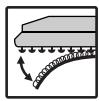
The appropriate Stickfix sanding paper and Stickfix sanding felt can be fastened quickly and easily onto the Stickfix sand-ing pad.
The self-adhesive sanding material is simply pressed onto the sanding base and held safely in place by the Stickfix sanding base velcro surface. After use, the StickFix sandpaper is simply pulled off.
Abrasives to clamp

Festool offers perforated abrasives to clamp.
Unperforated abrasives can be perforated with the „Lochfix“ (accessory).
- Before affixing any abrasives, attach a Stickfix abrasive sheet to the sanding pad first so that the adhesive coating on the Stickfix sanding pad is not damaged.
- Secure an abrasive sheet in place using the two clamping devices (1.3/1.4). Press the levers to release the clamping devices.

Once clamped in position, make sure the abrasive paper is taut and sits flat on the sanding pad.
4.3 Auxiliary handle
The auxiliary handle (1.5) can be attached for tasks where the front edge of the sanding pad sands up to edges.
5 Instructions on application
Never overload the tool by using too much pressure! The best sanding results are achieved when applying moderate pressure. The sanding performance and quality depend mainly on the choice of the right sanding material.
Metalworking

The following precautions are to be taken when processing metals for safety reasons:
- Pre-connect a residual current circuit-breaker (FI, PRCD).
- Connect the machine to a suitable dust extractor.
- Clean tool regularly of dust accumulations in the motor housing.

Wear protective goggles.
6 Accessories
Use only original Festool accessories and Festool consumable material designed for this machine because these system components are designed specifically for the machine. Using accessories and consumable material from other suppliers will most likely affect the quality of your working results and limit any warranty claims. Machine wear or your own personal workload may increase
depending on the application. Protect yourself and your machine, and preserve your warranty claims by always using original Festool accessories and Festool consumable material!
The order numbers of the accessories and tools can be found in the Festool catalogue or on the Internet under "www.festool.com".
7 Maintenance and care

Always remove the power supply plug from the socket before carrying out any work on the machine.
The cool air openings in the motor casing must always be kept clean and unobstructed to ensure air circulation.
All maintenance and repair work which requires the motor casing to be opened may only be carried out by an authorised service centre.
The tool is fitted with special motor brushes with an automatic cut-out. When the brushes become worn the power supply is shut off automatically and the tool comes to a standstill.
8 Disposal
Do not throw the power tool in your household waste! Dispose of machines, accessories and packaging at an environmentally-responsible recycling centre. Observe the valid national regulations.
EU only: European Directive 2002/96/EC stipulate that used electric power tools must be collected separately and disposed of at an environmentally responsible recycling centre.
9 Warranty
For our tools, we give warranty for material and production defects in accordance with the locally applicable legal provisions, but in any case for at
least 12 months. Within the EU member states, the warranty period is 24 months (verification through invoice or delivery note). Damage caused by, in particular, natural wear, overloading, incorrect handling, or damage caused by the operator, or damage caused through use of the equipment contrary that specified in the Operating Instructions, or damage which was known at the time of purchase, is not covered by the warranty. Furthermore, damage caused by the use of non-original accessories and consumable materials (e.g. sanding pads) is also excluded. Complaints can only be recognised if the tool is returned while still assembled to the supplier or an authorised Festool Customer Service workshop. Keep the Operating Instructions, Safety Instructions, Spare Parts List and purchase receipt in a safe place. Otherwise the respective, current warranty conditions of the manufacturer shall apply.
Note
Due to continuous research and development work, we reserve the right to make changes to the technical content of this documentation.
REACH for Festool products, their accessories and consumables
REACH is a European Chemical Directive that came into effect in 2007. As "downstream users" and product manufacturers, we are aware of our duty to provide our customers with information. We have set up the following website to keep you updated with all the latest news and provide you with information on all the materials used in our existing products: www.festool.com/reach
Ponceuse vibrante
Varning for allman risk!
CobIoJaTe pyKoBOdCTBO nO 3KcJIpyaTa- cnn/InHCTpyKcinn!

Pa60TaIe B 3aunTHbIX OUYkX.

Hocntb 3aunty opraHOB cnyxa!

1 PpimHeHne no Ha3NaYeHnIO
HnctpymEnT cKoHcTpynpoBAn IJI npo-phiecnOHaJIbHOrO npimHeHnI.
2 Yka3aHnI IO TexHnke 6e3OanchoCTn
2.1 06üne yka3aHnno 6e3oNaChocTn
BHIMAHNE!Прочтite Bce yka3aHnno no texhike 6e3oNaChocTn n peKOMeHdaCnN.
OuH6Kn npn co6JIouDeHn npNBeJeHHbIX yKa3aHn I peKoMeHndaI MOryT npNBecTN K nopaxHeHIO 3JIeKTPnueckm TOKOM, NOXApY, N/INN Bbl3BaTb TJxKeJIbIe TpaBMbl.
CoxpaHraIe BCE yKa3aHnI NO TexHnke 6e30NaChOCTn I PyKoBoODCTBa IIO 3KcPlyatauIN B KaueCTBe cnpabOCHOro MaTepnaJa.
IcnoJb3OBAHHoe B HactoIux IHCTpyKzIyx Iyka3aHnX IOHrTne «JIeKTPoIHCTpymeHT» paCnpoctpaHReTcHa 3JIeKTPoIHCTpymeHT C nITaHnEMOT cETn (co shypom nITAHnY OT 3JIeKTPocetn) nHa aKKymjIaTOPhIy 3JIeKTPoIHCTpymeHT (6e3 shhypom nITaHnY OT 3JIeKTPocetn).
2.2 CneuΦnueckne npaBnla texHnKn 6e3oNaChocTn
I33a onacHOCTeK, KOToPbIe MOrT B03HNK-HyTu BO BpeMa 7nΦOBaHnA, Heo6XoDmO NOCToRHHO HocNTU 3aUHTbIe OUYK.
- Ecni Bo Bpemr IJnOBoHnI o6pa3yeTcB3pbl-BoOpacHa IINI cAmOBocPna-MeHЯUoJaCra NbluC,To Heo6xOdImo co6JIouaTc yKa3aHnI Po 6pb60TeKe n3r0TOBvTeI MaTePnIa.
-BoBpemra60tbl MoKeT 6pa30BbIbTaBcB BpeHnA JJIa 3DOpOBb/TOKcnHnA Nblb (HaNP. OT CBNHeCocepJkaUeO nOKpbITn, HeKOTopbIX nopod DepeBa mMetanIOB). KOnTakT c TakoN PbIbU O IIN ee BDbixAHne npedCTabJIeT CO6o OnacHocTB JJIpa60taUeero DaHHbIM INHCTpyMeHTOM IIN DJIa OKpyKaIOuXn IIOJeN. Co6JIoDAaTe JeIcSTByUOuNE B BaSeI cTpaHe npabnla TexnKn 6e3OpacHoCTn. POnCoEduHЯIte 3JIeKTPoIHcTpyMeHT K COOTBeTCTByUOuEmy UcTPOIcTBY DJIa YdaJIeHnA PbIIn.
IorpeuHocTb K=2,0 m/c²
Yka3aHHbIe 3NaueHnra yPoBnra Wyma/Bn6paunn I3-MepenbIB COOTBEcTBn CycIOBmN NcblTaHnI NO EN 60745 n clykata ncpabHeHn HnCTpyMeHTOB.3TN 3NaueHn moXHo TaKKe IcNoB3oBaTb dJa npedBapntelbHO OeHKn WymoBOu IN Bn6paunHOHn HaPyr3Kn BO BpeM pa6Otbl. Yka3aHHbIe 3NaueHn yPoBnra Wyma/Bn6paunn OTo6paKaIo T OCHOBhble oBlaactn npimHeHn 3JeKTPoINHCTpyMeHTa. Pnp IcNoB3oBAHn 3JeKTPoINHCTpyMeHTa B Dpyrnx ZeJax, C dpyrrnn CMeHNbIMn (pa6OuIMN) INCTpyMeHTAMn INB CInyae INx HeyIOBJIeTBOPntelbHOro 6CnyKBaHn, WymOBaN IN Bn6paunOHna Harpz3KN MOrTy 3NaUteJBHo BO3pactaTb Ha npotJxehn BCero cpoKa 3KcnlyaTaun. Dlan ToCHNO OeHKn Harpyz3OK B TeueHne Yka3aHHoro cpoKA 3KcnlyaTaun Heo6xoJIMo TAckxe Co6JIoDaTb npINBOIMbIe B HactoJsem pykoBoDCTBe 3NaueHn BpeMeHn pa6OtbI Ha XoJocTOM XOdy IN BpeMeHn IpocTOr. 3TO nO-MoKet 3NaUteJBHo UMeHbUITb Harpz3KBy TEueHne BCEco cpoKa 3KcnlyaTaun 3JeKTPoINHCTpyMeHTa.
3 ΘleKtpnueckoe npdklouche H BBOB 3KcnpyaTaunio

HaŋpЯЖeHne B cetnДоЛЖHo COOTBeTCTBOBaTb 3HaueHnYm, yKa3aHHbIM Ha 3aBODCKoI Ta6JIuYe MaUHHbl.
BbIKIouateIb (1.1) clyknt IJIy BKIOUeHnI/Bbl- KIOUeHnI (I = B) ./0=BbIKJl.].PpN dIITeIbHOI pa6Ote erO moXHO 3aΦIKCnpoBaTb 6OKOBKnOH-KoI (3.1).PpN IOBTOPH HaxaTIN BbIKIOUaTeJI npocxOAnT oCB6OxJeHne ΦNKcAtopa.

Ipeep npncoeiHHeHem nIINOTcoeHNHeHnEM cTeBOrO Ka6eJRA BcERda BbIKIOuaiTe MaunHy!
CoeHHeHne n otcoeHHeHne IHHn cTeBOro nHTAHn - cm. pnc. 4.
4 HactpoJka MaunHbI

Ipeed hauaIOM IIO6o pa60tbc Maun-HoB BceTda BbIHMaIte 7TeNceIb n3 po3eTK!
4.1 OTCacbIBaHne IbJIIN

Bcerda nodklouaTe MaunHy K BbITJKe. OtcabBaHne nbI npenTCTByet 3aqr3HeHnO pa6oey aTMocΦepbl N 3a- rpr3HeHnO Ha pa6ooyem MecTe.
K NaTpy6ky (1.2) MoxHo NODKJIouHTb BbITaXHoe yCTpoiCTBO Festool c BCacbIBaIOUm WJaAHROM dIaMeTpOM 27 MM.
Bo3nkaioa npn pa6ote nbIb oTcacbBaetcyepe3 BbITJXHbIe KaHaJIb I WJNΦNoOwBe He-nocpeIcTBehHO Ha MeCTe WJNΦOBAHn.
YTo6bI npEoTbpaTntb npncacbIbAHne MaunHKn npn 6pb60Te poBbIX nobepxHocTe, chepe3 6aIIpIcHbIe OTBepCTn (2.1/2.2) noDCacbIBaETcH HeIOCTaIOUm BO3dUx. Yem IInpe OTKpbITbI 6aI- nacHbIe OTBepCTn, tem 6OJbUe BO3dUx naCacbIBaETcR.
4.2 3aKpenIeHneIshnΦOBaIbHoroMaTepeHaJa

IcnoJb3yIeToJIbKOOpnHaJIbHbI Festool ⅢnΦOBaJIbHbIMaTePnaI.
A6pa3NBbI MaTePnaI Stickfix
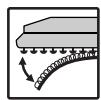
Ha ⅢnΦnoOwBe Stickfix Ierko n 6bIcTpo 3aKpePnlaIOTc IoXoJaIe ⅢnΦJIncTbI n3 ⅢnΦOBaJbHOb 6yMaI n IIN TkaHn Stickfix.
CamaKneuIeNecaIINoBaIbHbIe MaTePnAJIbI npocTo npNKlaIbIbAIOCTc K IJInONoDOWBe n npouHo cXBaTbIbAIOCTc Ha IJInOHTapeNke Stickfix 6laoradapcneuaIbHOMy NOKpbITnHO.
Iocne nCnoJb3OBAHnA uINΦOBaJIbHbIe JNCTbl Stickfix cHmAmOTcra OueHb npocTo.
A6pa3NBbI MaTePnaJ IЯ 3aXnMa
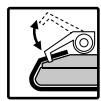
Festool npedlaeraet shnphiNCTbIC oTBePcTnaMn dIaJ3aKIma. OTBepCTnB shnphiJInctax 6e3 OTBePcTn moXHo npOJeLaTbC pOMoUblo „Lochfix" (OcHacTka).
-ПередзakpenlenemшлнфлncTaЗakpenITEHa shlnoPOnOswBe shnIh6yMaryStickfix,HTo6bI He nobpeiNbФИKcnpuOuYIOpIKlaJky shlnΦNo- doWBbStickfix.
- 3akpeiTe 7nn6bymary c nmoouo oboux 3aJxMhbx npncnoc6bneHn (1.3/1.4).3axmhbie npncnoc6bneHn OTKpbBaOTcA C nmoouco0OTBETCTBYUOuX pbIyAxKOB.

Iocne 3axmama JnH6ymara dOJxHa 6bITb XopoWo HataHyTa NdoJxHa IIOHTHO npInIeRaTb K JnnnnooWe.
- Symbols
- Intended use
- Safety instructions
- General Safety
- Save all warnings and instructions for future reference.
- Tool-specific safety rules
- Noise and vibration information
- Power supply and start-up
- Machine settings
- Dust extraction
- Attaching sanding material
- Stickfix abrasives
- Abrasives to clamp
- Auxiliary handle
- Instructions on application
- Metalworking
- Accessories
- Maintenance and care
- Disposal
- Warranty
- Note
- REACH for Festool products, their accessories and consumables
- PpimHeHne no Ha3NaYeHnIO
- Yka3aHnI IO TexHnke 6e3OanchoCTn
- 06üne yka3aHnno 6e3oNaChocTn
- BHIMAHNE!Прочтite Bce yka3aHnno no texhike 6e3oNaChocTn n peKOMeHdaCnN.
- CoxpaHraIe BCE yKa3aHnI NO TexHnke 6e30NaChOCTn I PyKoBoODCTBa IIO 3KcPlyatauIN B KaueCTBe cnpabOCHOro MaTepnaJa.
- CneuΦnueckne npaBnla texHnKn 6e3oNaChocTn
- ΘleKtpnueckoe npdklouche H BBOB 3KcnpyaTaunio
- HactpoJka MaunHbI
- OTCacbIBaHne IbJIIN
- 3aKpenIeHneIshnΦOBaIbHoroMaTepeHaJa
- A6pa3NBbI MaTePnaI Stickfix
- A6pa3NBbI MaTePnaJ IЯ 3aXnMa
Brand : FESTOOL
Model : DTS 400 REQ-PLUS
Category : Delta sander