
BRIGGS & STRATTON 98900 - Generator BRIGGS & STRATTON - Free user manual and instructions
Find the device manual for free BRIGGS & STRATTON 98900 BRIGGS & STRATTON in PDF.



| Product Type | Generator |
| Brand | BRIGGS & STRATTON |
| Model | 98900 |
| Engine Type | Briggs & Stratton 90000/100000 series, 4-stroke |
| Displacement | 148 cc (model 90000) or 158 cc (model 100000) |
| Fuel | Unleaded gasoline (87 RON min, 10% ethanol max) |
| Engine Oil Capacity | 0.54 - 0.59 L |
| Starting | Recoil starter (kickback) |
| Ignition System | Spark plug (gap 0.76 mm) |
| Air Filter | Foam element, cleanable and reusable |
| Governor | Throttle control (if equipped) |
| Engine Stop | Emergency stop lever on handle |
| Exhaust | Muffler with spark arrestor (depending on version) |
| Maintenance - Oil Change | Every 50 hours or once a year |
| Maintenance - Air Filter | Clean every 25 hours, replace annually |
| Maintenance - Spark Plug | Replace annually, torque 20 Nm |
| Safety | Flashback protection, quick stop |
| Common Replacement Parts | Air filter (698369), Spark plug (802592/5095), SAE 30 oil (100005) |
| Dimensions (L x W x H) | Not provided |
| Weight | Not provided |
Frequently Asked Questions - BRIGGS & STRATTON 98900 BRIGGS & STRATTON
User questions about BRIGGS & STRATTON 98900 BRIGGS & STRATTON
0 question about this device. Answer the ones you know or ask your own.
Ask a new question about this device
Download the instructions for your Generator in PDF format for free! Find your manual BRIGGS & STRATTON 98900 - BRIGGS & STRATTON and take your electronic device back in hand. On this page are published all the documents necessary for the use of your device. BRIGGS & STRATTON 98900 by BRIGGS & STRATTON.
USER MANUAL BRIGGS & STRATTON 98900 BRIGGS & STRATTON
Briggs & Stratton is a registered trademark of Briggs & Stratton Corporation
© 2009 Briggs & Stratton Corporation,
Milwaukee, WI, USA. All rights reserved.
Form No. 277038EST C
General Information
For replacement parts or technical assistance, record below the engine model, type, and code numbers along with the date of purchase. These numbers are located on your engine (see the Features and Controls page).
Date of purchase:
MM/DD/YYYY
Engine model:
Model:
Type:
Code:
Engine Power Rating Information
The gross power rating for individual gas engine models is labeled in accordance with SAE (Society of Automotive Engineers) code J1940 (Small Engine Power & Torque Rating Procedure), and rating performance has been obtained and corrected in accordance with SAE J1995 (Revision 2002-05). Torque values are derived at 3060 RPM; horsepower values are derived at 3600 RPM. Actual gross engine power will be lower and is affected by, among other things, ambient operating conditions and engine-to-engine variability. Given both the wide array of products on which engines are placed and the variety of environmental issues applicable to operating the equipment, the gas engine will not develop the rated gross power when used in a given piece of power equipment (actual "on-site" or net power). This difference is due to a variety of factors including, but not limited to, accessories (air cleaner, exhaust, charging, cooling, carburetor, fuel pump, etc.), application limitations, ambient operating conditions (temperature, humidity, altitude), and engine-to-engine variability. Due to manufacturing and capacity limitations, Briggs & Stratton may substitute an engine of higher rated power for this Series engine.
Operator Safety
SAFETY AND CONTROL SYMBOLS

Fire

Moving Parts

Oil

Toxic Fumes

Slow

Fast

Stop

Explosion

Shock

Fuel

Choke

On Off

Fuel Shutoff

Kickback

Wear Eye
Protection

Hazardous
Chemical

Read Manual

1
Hot Surface

Frostbite
The safety alert symbol is used to identify safety information about hazards that can result in personal injury. A signal word (DANGER, WARNING, or CAUTION) is used with the alert symbol to indicate the likelihood and the potential severity of injury. In addition, a hazard symbol may be used to represent the type of hazard.

DANGER indicates a hazard which, if not avoided, will result in death or serious injury.

WARNING indicates a hazard which, if not avoided, could result in death or serious injury.

CAUTION indicates a hazard which, if not avoided, could result in minor or moderate injury.
NOTICE indicates a situation that could result in damage to the product.

WARNING
Certain components in this product and its related accessories contain chemicals known to the State of California to cause cancer, birth defects, or other reproductive harm. Wash hands after handling.

WARNING
The engine exhaust from this product contains chemicals known to the State of California to cause cancer, birth defects, or other reproductive harm.

WARNING
Briggs & Stratton does not approve or authorize the use of these engines on 3-wheel All Terrain Vehicles (ATVs), motor bikes, fun/recreational go-karts, aircraft products, or vehicles intended for use in competitive events. Use of these engines in such applications could result in property damage, serious injury (including paralysis), or even death.
NOTICE: This engine was shipped from Briggs & Stratton without oil. Before you start the engine, make sure you add oil according to the instructions in this manual. If you start the engine without oil, it will be damaged beyond repair and will not be covered under warranty.

WARNING
Gasoline and its vapors are extremely flammable and explosive.
Fire or explosion can cause severe burns or death.
When Adding Fuel
- Turn engine off and let engine cool at least 2 minutes before removing the fuel cap.
- Fill fuel tank outdoors or in well-ventilated area.
- Do not overfill fuel tank. To allow for expansion of the gasoline, do not fill above the bottom of the fuel tank neck.
- Keep gasoline away from sparks, open flames, pilot lights, heat, and other ignition sources.
- Check fuel lines, tank, cap, and fittings frequently for cracks or leaks. Replace if necessary
If fuel spills, wait until it evaporates before starting engine.
When Starting Engine
- Ensure that spark plug, muffler, fuel cap and air cleaner (if equipped) are in place and secured.
- Do not crank engine with spark plug removed.
- If engine floods, set choke (if equipped) to OPEN/RUN position, move throttle (if equipped) to FAST position and crank until engine starts.
When Operating Equipment
- Do not tip engine or equipment at angle which causes gasoline to spill.
- Do not choke the carburetor to stop engine.
- Never start or run the engine with the air cleaner assembly (if equipped) or the air filter (if equipped) removed.
When Changing Oil
- If you drain the oil from the top oil fill tube, the fuel tank must be empty or fuel can leak out and result in a fire or explosion.
When Transporting Equipment
When Storing Gasoline Or Equipment With Fuel In Tank
- Transport with fuel tank EMPTY or with fuel shut-off valve OFF.
- Store away from furnaces, stoves, water heaters or other appliances that have pilot light or other ignition source because they can ignite gasoline vapors.

WARNING

Starting engine creates sparking.
Sparking can ignite nearby flammable gases.
Explosion and fire could result.
If there is natural or LP gas leakage in area, do not start engine.
- Do not use pressurized starting fluids because vapors are flammable.

WARNING
Engines give off carbon monoxide, an odorless, colorless, poison gas.
Breathing carbon monoxide can cause nausea, fainting or death.
- Start and run engine outdoors.
- Do not start or run engine in enclosed area, even if doors or windows are open.
Rapid retraction of starter cord (kickback) will pull hand and arm toward engine faster than you can let go.
Broken bones, fractures, bruises or sprains could result.
- When starting engine, pull the starter cord slowly until resistance is felt and then pull rapidly to avoid kickback.
- Remove all external equipment/engine loads before starting engine.
- Direct-coupled equipment components such as, but not limited to, blades, impellers, pulleys, sprockets, etc., must be securely attached.

WARNING

Rotating parts can contact or entangle hands, feet, hair, clothing, or accessories.
Traumatic amputation or severe laceration can result.
- Operate equipment with guards in place.
- Keep hands and feet away from rotating parts.
- Tie up long hair and remove jewelry.
- Do not wear loose-fitting clothing, dangling drawstrings or items that could become caught.

WARNING

Running engines produce heat. Engine parts, especially muffler, become extremely hot.
Severe thermal burns can occur on contact.
Combustible debris, such as leaves, grass, brush, etc. can catch fire.
- Allow muffler, engine cylinder and fins to cool before touching.
- Remove accumulated debris from muffler area and cylinder area.
- It is a violation of California Public Resource Code, Section 4442, to use or operate the engine on any forest-covered, brush-covered, or grass-covered land unless the exhaust system is equipped with a spark arrester, as defined in Section 4442, maintained in effective working order. Other states or federal jurisdictions may have similar laws. Contact the original equipment manufacturer, retailer, or dealer to obtain a spark arrester designed for the exhaust system installed on this engine.
Unintentional sparking can result in fire or electric shock.
Unintentional start-up can result in entanglement, traumatic amputation, or laceration.
Fire hazard

Before performing adjustments or repairs:
- Disconnect the spark plug wire and keep it away from the spark plug.
- Disconnect battery at negative terminal (only engines with electric start.)
Use only correct tools. - Do not tamper with governor spring, links or other parts to increase engine speed.
- Replacement parts must be the same and installed in the same position as the original parts.
- Do not strike the flywheel with a hammer or hard object because the flywheel may later shatter during operation.
When testing for spark:
Use approved spark plug tester.
- Do not check for spark with spark plug removed.
Features and Controls
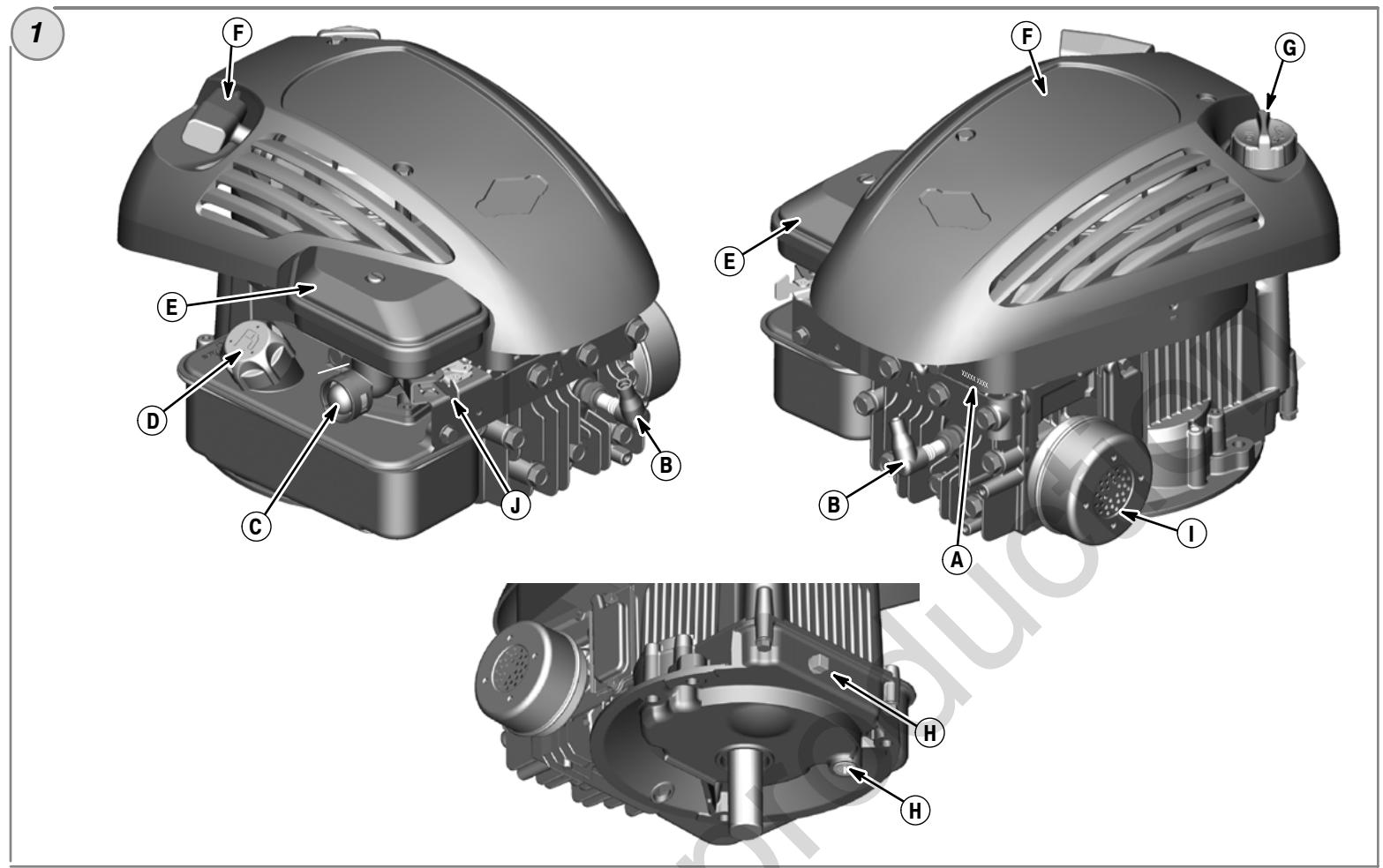
Compare the illustration 1 with your engine to familiarize yourself with the location of various features and controls.
A. Engine Identification
Model Type Code
B. Spark Plug
C. Primer
D. Fuel Tank and Cap
E. Air Cleaner
F. Starter Cord Handle
G. Dipstick
H. Oil Drain Plug
I. Muffler
Muffler Guard (if equipped)
Spark Arrester (if equipped)
J. Throttle Control (if equipped)
Operation
Oil capacity (see the Specifications section)
Oil Recommendations
We recommend the use of Briggs & Stratton Warranty Certified oils for best performance. Other high-quality detergent oils are acceptable if classified for service SF, SG, SH, SJ or higher. Do not use special additives.
Outdoor temperatures determine the proper oil viscosity for the engine. Use the chart to select the best viscosity for the outdoor temperature range expected.
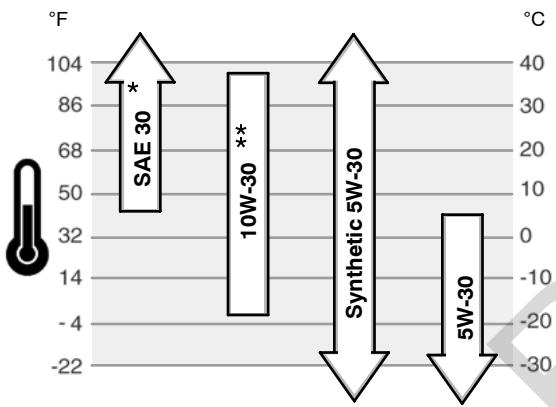
* Below 40^ (4^) the use of SAE 30 will result in hard starting.
** Above 80^ ( 27^ ) the use of 10W-30 may cause increased oil consumption. Check oil level more frequently.
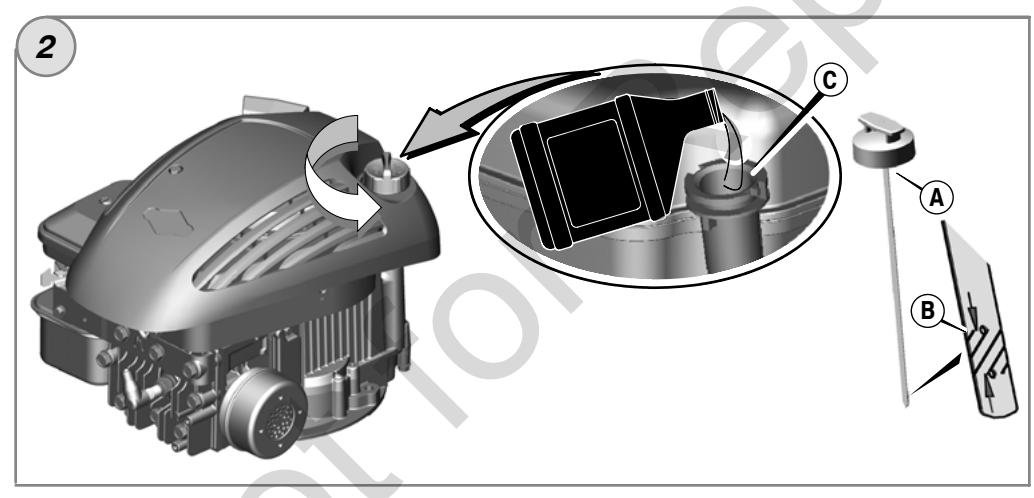
How To Check/Add Oil - Figure 2
Before adding or checking the oil
- Place engine level.
Clean the oil fill area of any debris. - Remove the dipstick (A) and wipe with a clean cloth (Figure 2).
- Insert and tighten the dipstick.
- Remove the dipstick and check the oil level. It should be at the top of the full indicator (B) on the dipstick.
- If low, add oil slowly into the engine oil fill (C). Do not overfill. After adding oil, wait one minute and then recheck the oil level.
- Replace and tighten the dipstick.
Fuel Recommendations
Fuel must meet these requirements:
- Clean, fresh, unleaded gasoline
A minimum of 87 octane/87 AKI (91 RON). High altitude use, see below.
Gasoline with up to 10% ethanol (gasohol) or up to 15% MTBE (methyl tertiary butyl ether) is acceptable.
CAUTION: Do not use unapproved gasolines, such as E85. Do not mix oil in gasoline or modify the engine to run on alternate fuels. This will damage the engine components and void the engine warranty.
To protect the fuel system from gum formation, mix a fuel stabilizer into the fuel. See
Storage. All fuel is not the same. If starting or performance problems occur, change fuel providers or change brands. This engine is certified to operate on gasoline. The emissions control system for this engine is EM (Engine Modifications).
High Altitude
At altitudes over 5,000 feet (1524 meters), a minimum 85 octane/85 AKI (89 RON) gasoline is acceptable. To remain emissions compliant, high altitude adjustment is required. Operation without this adjustment will cause decreased performance, increased fuel consumption, and increased emissions. See a Briggs & Stratton Authorized Dealer for high altitude adjustment information.
Operation of the engine at altitudes below 2,500 feet (762 meters) with the high altitude kit is not recommended.
How To Add Fuel - Figure


WARNING
Gasoline and its vapors are extremely flammable and explosive. Fire or explosion can cause severe burns or death.
When Adding Fuel
- Turn engine off and let engine cool at least 2 minutes before removing the fuel cap.
- Fill fuel tank outdoors or in well-ventilated area.
- Do not overfill fuel tank. To allow for expansion of the gasoline, do not fill above the bottom of the fuel tank neck.
- Keep gasoline away from sparks, open flames, pilot lights, heat, and other ignition sources.
-
Check fuel lines, tank, cap, and fittings frequently for cracks or leaks. Replace if necessary
If fuel spills, wait until it evaporates before starting engine. -
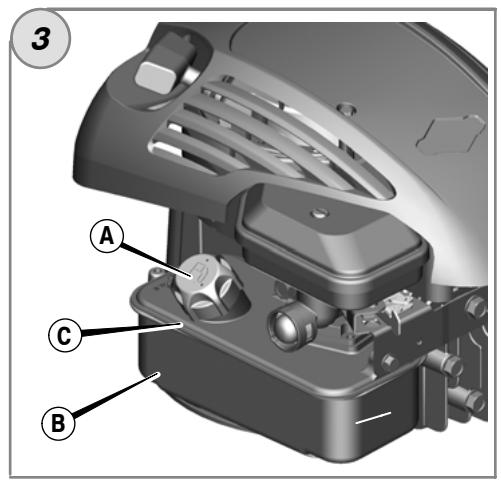
Clean the fuel cap area of dirt and debris. Remove the fuel cap (A, Figure 3).
- Fill the fuel tank (B) with gasoline. To allow for expansion of the gasoline, do not fill above the bottom of the fuel tank neck (C).
- Reinstall the fuel cap.
How To Start The Engine - Figure


WARNING

Rapid retraction of starter cord (kickback) will pull hand and arm toward engine faster than you can let go.
Broken bones, fractures, bruises or sprains could result.
- When starting engine, pull the starter cord slowly until resistance is felt and then pull rapidly to avoid kickback.

WARNING
When Starting Engine
- Ensure that spark plug, muffler, fuel cap and air cleaner (if equipped) are in place and secured.
- Do not crank engine with spark plug removed.
- If engine floods, set choke (if equipped) to OPEN/RUN position, move throttle (if equipped) to FAST position and crank until engine starts.

WARNING

Engines give off carbon monoxide, an odorless, colorless, poison gas. Breathing carbon monoxide can cause nausea, fainting or death.
- Start and run engine outdoors.
- Do not start or run engine in enclosed area, even if doors or windows are open.
NOTICE: This engine was shipped from Briggs & Stratton without oil. Before you start the engine, make sure you add oil according to the instructions in this manual. If you start the engine without oil, it will be damaged beyond repair and will not be covered under warranty.
Note: Equipment may have remote controls. See the equipment manual for location and operation of remote controls.
- Check the engine oil. See the How To Check/Add Oil section.
-
Make sure equipment drive controls, if equipped, are disengaged.
-
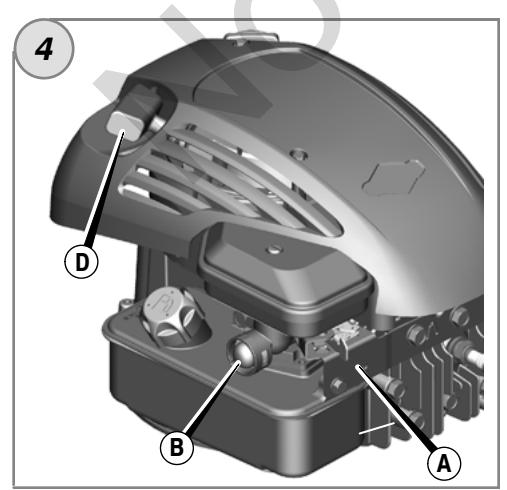
Move the throttle control (A, Figure 4), if equipped, to the fast

position.
Operate the engine in the fast position.
- When starting a new engine for the first time, firmly push the red primer (B) five times. Then for all future starts, push the primer three times (Figure 4).
Note: If engine runs out of fuel or has been stored for an extended period of time, it may be necessary to prime 5 times.
Note: Priming is usually unnecessary when restarting a warm engine.
Note: If you push the primer too many times, excessive fuel will flood the engine and it will be difficult to start.
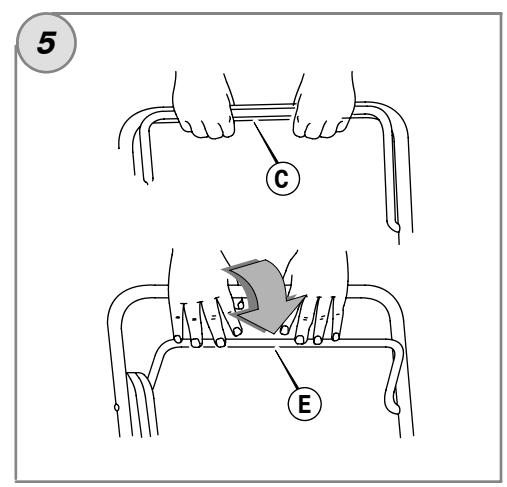
- If the product is equipped with an engine stop lever (C), hold the engine stop lever against the handle (Figure 5).
- Firmly hold the starter cord handle (D). Pull the starter cord handle slowly until resistance is felt, then pull rapidly (Figure 4).
Note: If the engine does not start after repeated attempts, repeat Steps 4, 5, and 6. If it still does not start, go to BRIGGSandSTRATTON.COM or call 1-800-233-3723 (in USA).

WARNING: Rapid retraction of the starter cord (kickback) will pull your
hand and arm toward the engine faster than you can let go. Broken bones, fractures, bruises or sprains could result. When starting engine, pull the starter cord slowly until resistance is felt and then pull rapidly to avoid kickback.
How To Stop The Engine - Figure 5
Release the engine stop lever (E). See Figure 5.
or
Engine with Throttle Control: Move the throttle control (A, Figure 4) to the stop position.
Maintenance
Use only original equipment replacement parts. Other parts may not perform as well, may damage the unit, and may result in injury. In addition, use of other parts may void your warranty.
We recommend that you see any Briggs & Stratton Authorized Dealer for all maintenance and service of the engine and engine parts.
NOTICE: All the components used to build this engine must remain in place for proper operation.
Emissions Control
Maintenance, replacement, or repair of the emissions control devices and systems may be performed by any non-road engine repair establishment or individual.
However, to obtain "no charge" emissions control service, the work must be performed by a factory authorized dealer. See the Emissions Warranty.

WARNING
Unintentional sparking can result in fire or electric shock.
Unintentional start-up can result in entanglement, traumatic amputation, or laceration.
Fire hazard

Before performing adjustments or repairs:
- Disconnect the spark plug wire and keep it away from the spark plug.
- Disconnect battery at negative terminal (only engines with electric start.)
Use only correct tools. - Do not tamper with governor spring, links or other parts to increase engine speed.
- Replacement parts must be the same and installed in the same position as the original parts.
- Do not strike the flywheel with a hammer or hard object because the flywheel may later shatter during operation.
When testing for spark:
Use approved spark plug tester.
- Do not check for spark with spark plug removed.
Maintenance Chart
First 5 Hours
Change Oil
Every 8 Hours or Daily
- Check engine oil level
Clean area around muffler and controls
Every 25 Hours or Annually
- Clean air filter *
Every 50 Hours or Annually
- Change engine oil
- Check muffler and spark arrester
Annually
- Replace air filter
-
Replace spark plug
Clean air cooling system * -
In dusty conditions or when airborne debris is present, clean more often.
Carburetor Adjustment
Never make adjustments to the carburetor. The carburetor was set at the factory to operate efficiently under most conditions. However, if adjustments are required, see any Briggs & Stratton Authorized Dealer for service.
NOTICE: The manufacturer of the equipment on which this engine is installed specifies the top speed at which the engine will be operated. Do not exceed this speed.
How To Replace The Spark Plug - Figure 6
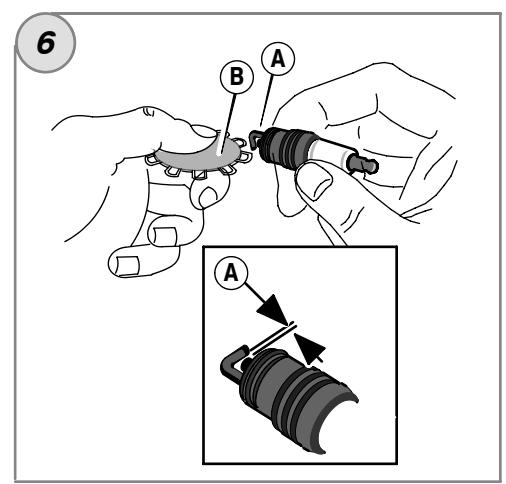
Check the gap (A, Figure 6) with a wire gauge (B). If necessary, reset the gap. Install and tighten the spark plug to the recommended torque. For gap setting or torque, see the Specifications section.
Note: In some areas, local law requires using a resistor spark plug to suppress ignition signals. If this engine was originally equipped with a resistor spark plug, use the same type for replacement.
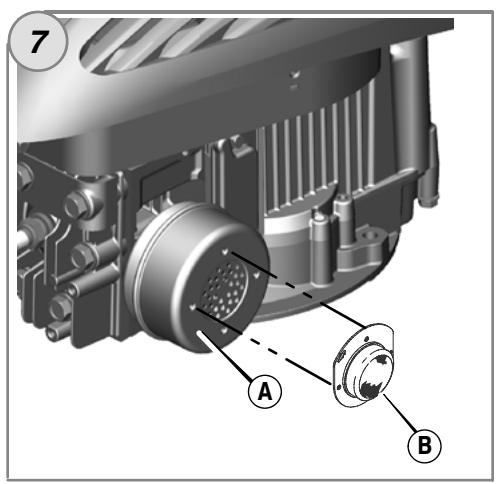
Inspect Muffler And Spark Arrester - Figure 7

WARNING

Running engines produce heat. Engine parts, especially muffler, become extremely hot.
Severe thermal burns can occur on contact.
Combustible debris, such as leaves, grass, brush, etc. can catch fire.
- Allow muffler, engine cylinder and fins to cool before touching.
- Remove accumulated debris from muffler area and cylinder area.
- It is a violation of California Public Resource Code, Section 4442, to use or operate the engine on any forest-covered, brush-covered, or grass-covered land unless the exhaust system is equipped with a spark arrester, as defined in Section 4442, maintained in effective working order. Other states or federal jurisdictions may have similar laws. Contact the original equipment manufacturer, retailer, or dealer to obtain a spark arrester designed for the exhaust system installed on this engine.
Inspect the muffler (A, Figure 7) for cracks, corrosion, or other damage. Remove the spark arrester (B), if equipped, and inspect for damage or carbon blockage. If replacement parts are required, make sure to use only original equipment replacement parts.

WARNING: Replacement parts must be the same and installed in the
same position as the original parts or fire could result.
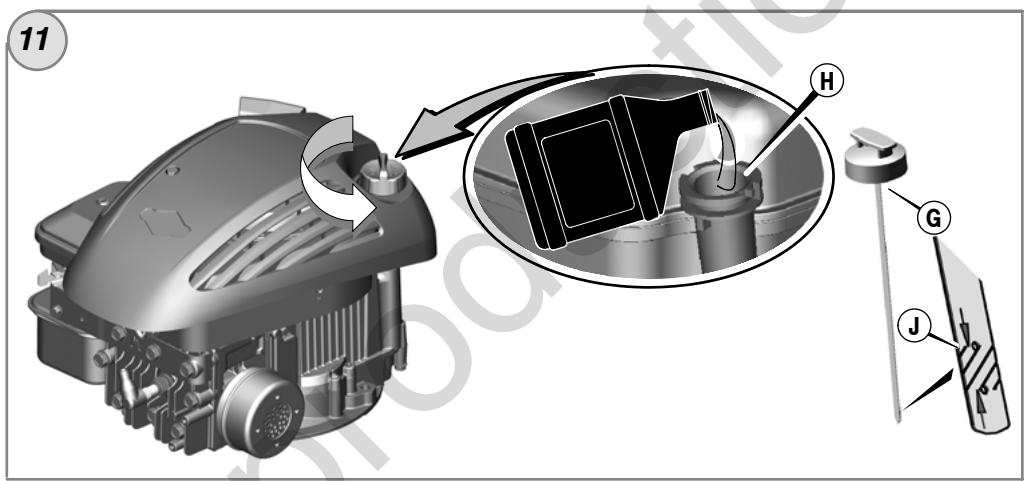
How To Change The Oil - Figure 8 9 10 11

WARNING
Gasoline and its vapors are extremely flammable and explosive.
Fire or explosion can cause severe burns or death.
- If you drain the oil from the top oil fill tube, the fuel tank must be empty or fuel can leak out and result in a fire or explosion.
Used oil is a hazardous waste product and must be disposed of properly. Do not discard with household waste. Check with your local authorities, service center, or dealer for safe disposal/recycling facilities.
Remove Oil
You can drain the oil from the bottom drain hole, side drain hole, or from the top oil fill tube.
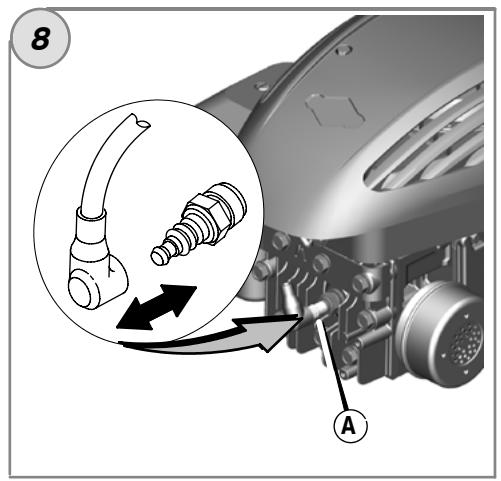
- With engine off but still warm, disconnect the spark plug wire (A) and keep it away from the spark plug (Figure 8).
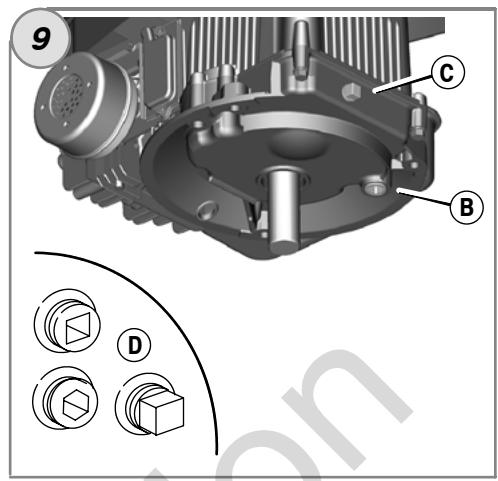
- The engine is equipped with a bottom drain (B, Figure 9) and/or a side drain (C). Remove the oil drain plug. Drain the oil into an approved container. Note: Any of the oil drain plugs (D) shown may be installed in the engine.
- After the oil has drained, install and tighten the oil drain plug.
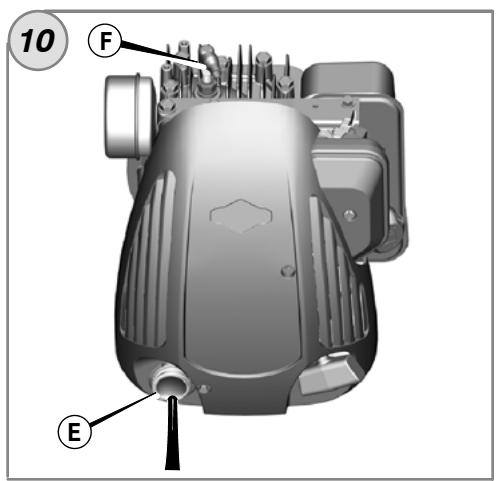
- If you drain the oil from the top oil fill tube (E), keep the spark plug end of the engine (F) up (Figure 10). Drain the oil into an approved container.

WARNING: If you drain the oil from the top oil fill tube, the fuel tank must be dry or fuel can leak out and result in a fire or explosion. To empty the fuel tank, engine until it stops from lack of fuel.
Add Oil
- Place engine level.
Clean the oil fill area of any debris.
See the Specifications section for oil capacity.
1. Remove the dipstick (G) and wipe with a clean cloth (Figure 11).
2. Pour the oil slowly into the engine oil fill (H). Do not overfill. After adding oil, wait one minute and then check the oil level.
3. Install and tighten the dipstick.
4. Remove the dipstick and check the oil level. It should be at the top of the full indicator (J) on the dipstick.
5. Install and tighten the dipstick.
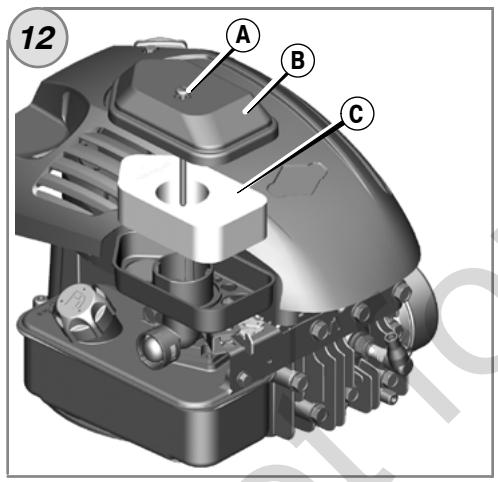
How To Service The Air Filter - Figure 12

WARNING
Gasoline and its vapors are extremely flammable and explosive. Fire or explosion can cause severe burns or death.
- Never start or run the engine with the air cleaner assembly or the air filter removed.
NOTICE: Do not use pressurized air or solvents to clean the filter. Pressurized air can damage the filter and solvents will dissolve the filter.
- Remove the screw (A) from the top of the air filter assembly (B). See Figure 12.
- To prevent debris from falling into the carburetor, carefully remove the air filter assembly.
- Remove the foam element (C) from the air filter base.
- Wash the foam element in liquid detergent and water. Squeeze dry the foam element in a clean cloth.
- Saturate the foam element with clean engine oil. To remove the excess engine oil, squeeze the foam element in a clean cloth.
- Install the foam element into the air filter base.
- Install the air filter assembly onto the carburetor and secure with screw.
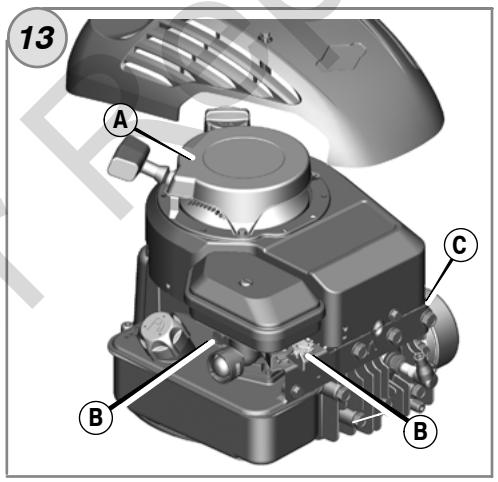
Clean Air Cooling System - Figure 13

WARNING

Running engines produce heat. Engine parts, especially muffler, become extremely hot.
Severe thermal burns can occur on contact.
Combustible debris, such as leaves, grass, brush, etc. can catch fire.
- Allow muffler, engine cylinder and fins to cool before touching.
- Remove accumulated debris from muffler area and cylinder area.
NOTICE: Do not use water to clean the engine. Water could contaminate the fuel system. Use a brush or dry cloth to clean the engine.
This is an air cooled engine. Dirt or debris can restrict air flow and cause the engine to overheat, resulting in poor performance and reduced engine life.
Use a brush or dry cloth to remove debris from the finger guard (A). Keep linkage, springs and controls (B) clean. Keep the area around and behind the muffler (C) free of any combustible debris (Figure 13).
Storage

WARNING
Gasoline and its vapors are extremely flammable and explosive. Fire or explosion can cause severe burns or death.
When Storing Gasoline Or Equipment With Fuel In Tank
- Store away from furnaces, stoves, water heaters or other appliances that have pilot lights or other ignition sources because they can ignite gasoline vapors.
Fuel System
Fuel can become stale when stored over 30 days. Stale fuel causes acid and gum deposits to form in the fuel system or on essential carburetor parts. To keep fuel fresh, use Briggs & Stratton FRESH START® fuel stabilizer, available as a liquid additive or a drip concentrate cartridge.
There is no need to drain gasoline from the engine if a fuel stabilizer is added according to instructions. Run the engine for 2 minutes to circulate the stabilizer throughout the fuel system. The engine and fuel can then be stored up to 24 months.
If gasoline in the engine has not been treated with a fuel stabilizer, it must be drained into an approved container. Run the engine until it stops from lack of fuel. The use of a fuel stabilizer in the storage container is recommended to maintain freshness.
Engine Oil
While the engine is still warm, change the engine oil.
Troubleshooting
Need assistance? Go to BRIGGSandSTRATTON.COM or call 1-800-233-3723.
Specifications
Engine Specifications
| Model | 90000 |
| Displacement | 9.02 ci (148 cc) |
| Bore | 2.562 in (65.08 mm) |
| Stroke | 1.750 in (44.45 mm) |
| Oil Capacity | 18 - 20 oz (0.54 - 0.59 L) |
Engine Specifications
| Model | 100000 |
| Displacement | 9.67 ci (158 cc) |
| Bore | 2.562 in (65.08 mm) |
| Stroke | 1.875 in (47.65 mm) |
| Oil Capacity | 18 - 20 oz (0.54 - 0.59 L) |
Tune-up Specifications *
| Model | 90000, 100000 |
| Spark Plug Gap | 0.030 in (0.76 mm) |
| Spark Plug Torque | 180 lb-in (20 Nm) |
| Armature Air Gap | 0.006 - 0.010 in (0.15 - 0.25 mm) |
| Intake Valve Clearance | 0.005 - 0.007 in (0.13 - 0.18 mm) |
| Exhaust Valve Clearance | 0.007 - 0.009 in (0.18 - 0.23 mm) |
- Engine power will decrease 3.5% for each 1,000 feet (300 meters) above sea level and 1% for each 10^ F( 5.6^ C) above 77^ F( 25^ C) . The engine will operate satisfactorily at an angle up to 15^ . Refer to the equipment operator's manual for safe allowable operating limits on slopes.
Common Service Parts
| Service Part | Part Number |
| Flat Air Filter | 698369 |
| Oil - SAE 30 | 100005 |
| Fuel Additive | 5041, 5058 |
| Resistor Spark Plug | 802592, 5095 |
| Long Life Platinum Spark Plug | 5062 |
| Spark Plug Wrench | 89838, 5023 |
| Spark Tester | 19368 |
We recommend that you see any Briggs & Stratton Authorized Dealer for all maintenance and service of the engine and engine parts. Use only genuine Briggs & Stratton parts.
LIMITED WARRANTY
Brigs & Stratton Corporation will repair or replace, free of charge, any part(s) of the engine that is defective in material or workmanship or both. Transportation charges on product submitted for repair or replacement under this warranty must be borne by purchaser. This warranty is effective for and is subject to the time periods and conditions stated below. For warranty service, find the nearest Authorized Service Dealer in our dealer locator map at BRIGGSandSTRATTON.COM, or by calling 1-800-233-3723, or as listed in the 'Yellow Pages'.
There is no other expressed warranty. Implied warranties, including those of merchantability and fitness for a particular purpose, are limited to one year from purchase, or to the extent permitted by law and all implied warranties are excluded. Liability for incidental or consequential damages are excluded to the extent exclusion is permitted by law. Some states or countries do not allow limitations on how long an implied warranty lasts, and some states or countries do not allow the exclusion or limitation of incidental or consequential damages, so the above limitation and exclusion may not apply to you. This warranty gives you specific legal rights and you may also have other rights which vary from state to state and country to country.
STANDARD WARRANTY TERMS ▲
| Brand/Product Type | Consumer Use | Commercial Use |
| VanguardTM | 2 years | 2 years |
| Extended Life SeriesTM; I/C®, IntekTM I/C®, IntekTM Pro; Professional SeriesTM with Dura-BoreTM Cast Iron Sleeve; 850 SeriesTM with Dura-BoreTM Cast Iron Sleeve; Snow Series MAXTM with Dura-BoreTM Cast Iron Sleeve | 2 years | 1 year |
| All Other Briggs & Stratton Engines | 2 years | 90 days |
- These are our standard warranty terms, but occasionally there may be additional warranty coverage that was not determined at time of publication. For a listing of current warranty terms for your engine, go to BRIGGSandSTRATTON.COM or contact your Authorized Briggs & Stratton Service Dealer.
Engines used on Home Standby Generator applications are warranted under consumer use only. This warranty does not apply to engines on equipment used for prime power in place of a utility. Engines used in competitive racing or on commercial or rental tracks are not warranted.
The warranty period begins on the date of purchase by the first retail consumer or commercial end user, and continues for the period of time stated in the table above. "Consumer use" means personal residential household use by a retail consumer. "Commercial use" means all other uses, including use for commercial, income producing or rental purposes. Once an engine has experienced commercial use, it shall thereafter be considered as a commercial use engine for purposes of this warranty.
No warranty registration is necessary to obtain warranty on Briggs & Stratton Products. Save your proof of purchase receipt. If you do not provide proof of the initial purchase date at the time warranty service is requested, the manufacturing date of the product will be used to determine the warranty period.
About Your Warranty
Briggs & Stratton welcomes warranty repair and apologizes to you for being inconvenienceed. Any Authorized Service Dealer may perform warranty repairs. Most warranty repairs are handled routinely, but sometimes requests for warranty service may not be appropriate.
If a customer differs with the decision of the Service Dealer, an investigation will be made to determine whether the warranty applies. Ask the Service Dealer to submit all supporting facts to his Distributor or the Factory for review. If the Distributor or the Factory decides that the claim is justified, the customer will be fully reimbursed for those items that are defective. To avoid misunderstanding which might occur between the customer and the Dealer, listed below are some of the causes of engine failure that the warranty does not cover.
Normal wear: Engines, like all mechanical devices, need periodic parts service and replacement to perform well. Warranty will not cover repair when normal use has exhausted the life of a part or an engine. Warranty would not apply if engine damage occurred because of misuse, lack of routine maintenance, shipping, handling, warehousing or improper installation. Similarly, warranty is void if the serial number of the engine has been removed or the engine has been altered or modified.
Improper maintenance: The life of an engine depends upon the conditions under which it operates, and the care it receives. Some applications, such as tillers, pumps and rotary mowers, are very often used in dusty or dirty conditions, which can cause what appears to be premature wear. Such wear, when caused by dirt, dust, spark plug cleaning grit, or other abrasive material that has entered the engine because of improper maintenance, is not covered by warranty.
This warranty covers engine related defective material and/or workmanship only, and not replacement or refund of the equipment to which the engine may be mounted. Nor does the warranty extend to repairs required because of:
1 Problems caused by parts that are not original Briggs & Stratton parts.
2 Equipment controls or installations that prevent starting, cause unsatisfactory engine performance, or shorten engine life. (Contact equipment manufacturer.)
3 Leaking carburetors, clogged fuel pipes, sticking valves, or other damage, caused by using contaminated or stale fuel.
4 Parts which are scored or broken because an engine was operated with insufficient or contaminated lubricating oil, or an incorrect grade of lubricating oil (check and refill when necessary, and change at recommended intervals). OIL GARD may not shut down running engine. Engine damage may occur if oil level is not properly maintained.
5 Repair or adjustment of associated parts or assemblies such as clutches, transmissions, remote controls, etc., which are not manufactured by Briggs & Stratton.
6 Damage or wear to parts caused by dirt, which entered the engine because of improper air cleaner maintenance, re-assembly, or use of a non-original air cleaner element or cartridge. At recommended intervals, clean and/or replace the filter as stated in the Operator's Manual.
7 Parts damaged by over-speeding, or overheating caused by grass, debris, or dirt, which plugs or clogs the cooling fins, or flywheel area, or damage caused by operating the engine in a confined area without sufficient ventilation. Clean engine debris at recommended intervals as stated in the Operator's Manual.
8 Engine or equipment parts broken by excessive vibration caused by a loose engine mounting, loose cutter blades, unbalanced blades or loose or unbalanced impellers, improper attachment of equipment to engine crankshaft, over-speeding or other abuse in operation.
9 A bent or broken crankshaft, caused by striking a solid object with the cutter blade of a rotary lawn mower, or excessive v-belt tightness.
10 Routine tune-up or adjustment of the engine.
11 Engine or engine component failure, i.e., combustion chamber, valves, valve seats, valve guides, or burned starter motor windings, caused by the use of alternate fuels such as, liquified petroleum, natural gas, altered gasolines, etc.
Warranty service is available only through authorized service dealers by Briggs & Stratton Corporation. Locate your nearest Authorized Service Dealer in our dealer locator map on BRIGGSandSTRATTON.COM or by calling 1-800-233-3723, or as listed in the 'Yellow Pages'.
California, U.S. EPA, and Briggs & Stratton Corporation Emissions Control Warranty Statement Your Warranty Rights And Obligations
The California Air Resources Board, U.S. EPA, and Briggs & Stratton (B&S) are pleased to explain the emissions control system warranty on your Model Year 2008 and later engine/equipment. In California, new small off-road engines must be designed, built, and equipped to meet the State's stringent anti-smog standards. B&S must warrant the emissions control system on your engine/equipment for the periods of time listed below provided there has been no abuse, neglect, or improper maintenance of your small off-road engine.
Your emissions control system may include parts such as the carburetor or fuel injection system, fuel tank, ignition system, and catalytic converter. Also included may be hoses, belts, connectors, sensors, and other emissions-related assemblies.
Where a warrantable condition exists, B&S will repair your engine/equipment at no cost to you including diagnosis, parts, and labor.
Manufacturer's Warranty Coverage:
Small off-road engines are warranted for two years. If any emissions-related part on your engine/equipment is defective, the part will be repaired or replaced by B&S.
Owner's Warranty Responsibilities:
- As the small engine/equipment owner, you are responsible for the performance of the required maintenance listed in your owner's manual. B&S recommends that you retain all receipts covering maintenance on your engine/equipment, but B&S cannot deny warranty solely for the lack of receipts or your failure to ensure the performance of all scheduled maintenance.
- As the engine/equipment owner, you should however be aware that B&S may deny you warranty coverage if your engine/equipment or a part has failed due to abuse, neglect, improper maintenance, or unapproved modifications.
- You are responsible for presenting your engine/equipment to a B&S distribution center, servicing dealer, or other equivalent entity, as applicable, as soon as a problem exists. The warranty repairs should be completed in a reasonable amount of time, not to exceed 30 days. If you have any questions regarding your warranty rights and responsibilities, you should contact B&S at (414) 259-5262.
Briggs & Stratton Emissions Control Warranty Provisions
The following are specific provisions relative to your Emissions Control Warranty Coverage. It is in addition to the B&S engine warranty for non-regulated engines found in the Operator's Manual.
- Warranted Emissions Parts
Coverage under this warranty extends only to the parts listed below (the emissions control systems parts) to the extent these parts were present on the engine purchased.
a. Fuel Metering System
Cold start enrichment system (soft choke)
- Carburetor and internal parts
Fuel pump
Fuel line, fuel line fittings, clamps
Fuel tank, cap and tether
- Carbon canister
b. Air Induction System
Air cleaner
Intake manifold
- Purge and vent line
c. Ignition System
- Spark plug(s)
- Magneto ignition system
d. Catalyst System
Catalytic converter
- Exhaust manifold
Air injection system or pulse valve
e. Miscellaneous Items Used in Above Systems
Vacuum, temperature, position, time sensitive valves and switches
- Connectors and assemblies
- Length of Coverage
For a period of two years from date of original purchase, B&S warrants to the original purchaser and each subsequent purchaser that the engine is designed, built, and equipped so as to conform with all applicable regulations adopted by the Air Resources Board; that it is free from defects in material and workmanship that could cause the failure of a warranted part; and that it is identical in all material respects to the engine described in the manufacturer's application for certification. The warranty period begins on the date the engine is originally purchased.
The warranty on emissions-related parts is as follows:
- Any warranted part that is not scheduled for replacement as required maintenance in the owner's manual supplied, is warranted for the warranty period stated above. If any such part fails during the period of warranty coverage, the part will be repaired or replaced by B&S at no charge to the owner. Any such part repaired or replaced under the warranty will be warranted for the remaining warranty period.
- Any warranted part that is scheduled only for regular inspection in the owner's manual supplied, is warranted for the warranty period stated above. Any such part repaired or replaced under warranty will be warranted for the remaining warranty period.
- Any warranted part that is scheduled for replacement as required maintenance in the owner's manual supplied, is warranted for the period of time prior to the first scheduled replacement point for that part. If the part fails prior to the first scheduled replacement, the part will be repaired or replaced by B&S at no charge to the owner. Any such part repaired or replaced under warranty will be warranted for the remainder of the period prior to the first scheduled replacement point for the part.
-
Add on or modified parts that are not exempted by the Air Resources Board may not be used. The use of any non exempted add on or modified parts by the owner will be grounds for disallowing a warranty claim. The manufacturer will not be liable to warrant failures of warranted parts caused by the use of a non exempted add on or modified part.
-
Consequential Coverage
Coverage shall extend to the failure of any engine components caused by the failure of any warranted emissions parts.
- Claims and Coverage Exclusions
Warranty claims shall be filed according to the provisions of the B&S engine warranty policy. Warranty coverage does not apply to failures of emissions parts that are not original equipment B&S parts or to parts that fail due to abuse, neglect, or improper maintenance as set forth in the B&S engine warranty policy. B&S is not liable for warranty coverage of failures of emissions parts caused by the use of add-on or modified parts.
Look For Relevant Emissions Durability Period and Air Index Information On Your Engine Emissions Label
Engines that are certified to meet the California Air Resources Board (CARB) Emissions Standard must display information regarding the Emissions Durability Period and the Air Index. Briggs & Stratton makes this information available to the consumer on our emissions labels. The engine emissions label will indicate certification information.
The Emissions Durability Period describes the number of hours of actual running time for which the engine is certified to be emissions compliant, assuming proper maintenance in accordance with the Operating & Maintenance Instructions. The following categories are used:
Moderate:
Engine is certified to be emissions compliant for 125 hours of actual engine running time. Intermediate:
Engine is certified to be emissions compliant for 250 hours of actual engine running time. Extended:
Engine is certified to be emissions compliant for 500 hours of actual engine running time. For example, a typical walk-behind lawn mower is used 20 to 25 hours per year.
Therefore, the Emissions Durability Period of an engine with an intermediate rating would equate to 10 to 12 years.
Briggs & Stratton engines are certified to meet the United States Environmental Protection Agency (USEPA) Phase 2 emissions standards. For Phase 2 certified engines, the Emissions Compliance Period referred to on the Emissions Compliance label indicates the number of operating hours for which the engine has been shown to meet Federal emissions requirements.
For engines less than 225 cc displacement.
Category C = 125 hours, Category B = 250 hours, Category A = 500 hours
For engines of 225 cc or more displacement.
Category C = 250 hours , Category B = 500 hours , Category A = 1000 hours
Osha mHΦopMaζη
3a pe3epBHN qactn IIN TExHuecka nMOOZ 3aNNiTe OTdOny MoDena Ha DbVraTeN, TIna H KOIOBITE HOMepa C dATata HA KynyBaHeTo MY. TeuH omepa CEHAMPAT BBypxy DnBtIeBA N. (HaNPabete cnpabka Ha cTpaHncaTa c pazdeI EneMeHTN UnpabLeHn).
Data Ha KynyBaHe:
MM/DD/TTT
Model ha dBiratela:
MoeJ:
Tun:
KoIa:
HΦopMaζη 3a HOMnHaJIHaT a MoIHOCT Ha DbIraTeJIHTe
TbHnata MOUHOCCT Bbpyx OTdennhte MoDenIb6hen3HOBn DVBrAteN e Ot6en3aHaB CbOBTCTBNE cBc 3daednna O TSA (DpyjckctBO h uHJXHEepnTe ot ABTOMObnHATA pOMmIhEnoCt n TpaHcnpota) PpaBNHnHATA mEOHNHeTa MOpHocHT n BbPTaunMOMeHT Ha mALKn DBrAteN), a HOMHaJIHATA mM OUsHOCT b NOUYeha N KOpHrnapa B CbOBTCTBNE c BercnA t Ha PpaBNHnka 3a TExMHcECKA EKcIIOaTuaN J1940 (MeTOmJa 3a onpeDeIe HA HOMHaHnHATA MOUHcCT n BbPTaunMOMeHT Ha mALKn DBrAteN), a HOMHaJIHATA mM OUsHOCT b NOUYeha N KOpHrnapa B CbOBTCTBNE c BercnA t Ha PpaBNHnka 3a TExMHcECKA EKcIIOaTuaN J1995 Ha SAE (PeDAkUnsOT 2002-05 r). CToHOCHT He BA bBpTauN MOMeHT Ca I3BeJeN npri 3060 06/MHN; CToHOCHT He MA OUsHOCT Ta -Pn 3600 06/MHN. DeIcTBNTeHATA PbLNa HOuHCT Ha DBrAteNITE qe 6bJe NO-HMCKa n Ce BnIRe, MeJdy dpyroTO, OT OKONHATA cpeDa, B KOHO TO ObopyDbAHeto CE ekCNLOaTHPA n To xapAKTEPNCTKne HA BCEKN OT dJeEN DBrAteN. Ppi INPOKHn A HOB pO T MaSHn, BbPyx KOnTO ce NoCTABT DBrAteNITE n Ppa PAHOOObPa3NeTO HA EKONORHNTE N3NCKBAHn, B KOHO TO ObopyDbAHeto PabOTi, 6EH3MHOIBAT DBrAteNl HMA da pa3BHe Ykazahata OT npOI3BOJNTeN IblNA MOUHOCT, KOrATO e MOHTpan HA daDEHo EhePruHNO BOPOyBaHE (DeIcTBNTeHATA MOUHOCT "Ha oBeKTa" IINI eFekTMBHATA MOUHOCT). Ta3n pa3ZnkaCe dtbJnx Ha roJAM bpoI phakTopi, BKIOUHTeNHO Ha AKCECoAPte NkBM DVBrAteN (Bb3dUweh fniITbp, acnyux, CImTeMa 3a 3apeXJaDe, CINCTEMA 3a OXIAJDAne, KAp6bypatop, ropIBHA NOMna n T. H.), Ha xapAKTEPHNT ORpaHUNENH 3a I3NON3BaHETO My, Ha yCNOBnTA B OKONHATA cpeDa, B KOHO To DBrAteNl PAboti (TemNPepAtya, BlaxxHOCT, NaDMOPCA BINOCHNA), Ha pa3NJYnTA BvB BCEK ONdien DBrAteN. IpaDNpIexTHOLOUNHn I pOON3BOCTBEHN ORpaHNHeHH FpUmATA Briggs & Stratton MoKege Da ZAMeCTNs DAdeHN DBrAteN C no-BnCOKA HOMHaJIH MaOuHOCT C DVBrAteN ot Te3e cepin.
Texnka 3a 6e3onacnoct ha onepaTopa
CIMBOJIN 3A BE3ONACHOCT IN YNPPABJIEHNE

Orheonacho

DvNxKeu Ce yactn

Macno

OTPOBHN
ra30Be

Бьрзи
obopotn

БаВи
obopotn

Cron

B3pmboOnaCHO

Onachoc3a nopaXeHnA
OT eNeKtpnueckn TOK

TopnBO

Cmyka

Bkn. N3kn.

PpekpatBahe
abaHeTo Ha rOpnBO

PpoyeTe PbKOBdCTBOTo

ObpaTeH yap

Ja ce hocrt
Pnpda3Hn OHJNA

OnachoctOT on3M3P53BaHe
IpeDyPpeDInTeHnRT CmBON 3a OnaCHOCT OpeDela PpeDoXpaHnTeHa INΦOPMaJN 3a PNCKOBe, KOITMO MOrT Da DObEaT DO HapAHBaHE Na IepCOHAna. CnHaHnMnPaUa 3a Mya (OPTACHO, PPEUYTPEXKDEHNE uHn BHIMAHIE) ce noctabra 3aeIDNo C ppeDyPpeDInTeHn CmBON, 3a Da NOCOH BepoTHOCTTA nNOTEHuaHnTa cepNO3HOCT Ha HapaHBAHeTO. DoJIbHNTEHNO, EeIN CmBON 3a ONaCHOCT MoKe da NOKa3Ba BVda HA ONaCHOCTA.

ONACHO nocuBa OnaCHOCT, KOTo, aKO He 6bIe n36erHaTa, ue doBeDe Do cMbpt Nn cepno3Ho HapaHraBaHe.

IPEDyPEXKDEHNE NOOCYBa ONaCHOCT, KOrTO, aKO He 6bJe n36erHata, MOKe da DOBeDe IO CMbPT NJI IN CepNo3HO HapaHBAHe.

BHIMAHNE NOOCOVA ONaCHOCT, KOrTo, aKO He 6bJe N36eHata, MoXe da DOBeDe Do MaNka HIn CpeHa CTenEH Ha HapaHBAhe.
PNEyPExHHeN NocOyBa CHTyaUa, KOrTo 6n MorJa da DoBeDe
IIO NOBpeKdAne Ha npOdyKta.

PNEyPPEKDEHNE
HЯКОN O T CbCTaBHNTE ELEMEHTN Ha TO3N IpoDyKT N CBp3aHNTe C THX npINcNOOJIeHnA CbIbPxAt XMHUCh N BSeCTBa, IN3EcTHN B UcTata KAnIpOpHnRA KATo IpnuHInTe Hn pAk, YbpeDa HA HOBOPoHEnTe INn Dpyr yBpeDn Ha penPOyDKTNBHATA cnOC6HOCT. Cne Pa6Ota C THX, INMnBaIte PbIcete cN.

PNEyPPEXDEHNE
H3ropeIe r3oBe OTE oTo3n DvIaTeR eBbPxKAT XmMHeCck CbeDInHeHH, H3BeCTHn Ha 7aTa KaIinfOpHn KaTO npuHnHTeN n a paY, BpEeJdAHH npaXdaHe, INI dpyrUyBpeXdHaHH, Cb5bp3aH cPenpoDyKTMBHOCTT.

PNEyPPEKDEHNE
KopnpaBn Briggs & Stratton He oOobpBa n He no3BoJbA n3no3BaHTo Ha Te3n DBVrataN Bbpxy BcBdxOAn h3 K0JIeNa, MOTouKNeTn, YBecenIteHN KOnuKn/kaTnH, JTeaTeHN anapatn HnTpaCnOpTHn CpeDCTBa 3a yuaCTne B cbTe3aTeHN MeponpnaTn. N3no3BaHTo Ha Te3n DBrarateHN Ha TaKInBa MauHH MoKeJa DoDBeDe Do MaTePnAnH nEti, CepNo3Hn HapaHbHaHn (BKJIOUHTeHNO napaln3a) n dopo nDo cmbpt.
PNEpyPExKHeHne:HaCToAunrT DnuratEn Ce doctabn OTr Briggs & Stratton 6e3 macNo. Pnep Da cTAPtnate DeBniratEnCe yEpeTe, ye CTe HaneNm BAC No Hcero cnpoe INtCTpykUnTe ToBa pKobOdCTBO.AKO rO cTAPtnate 6e3 macNo,ToJe ce nobPeDn,6e3 da 6BeBb3MOxHO da ce peMoHTnpu n 6e3 NOKpNTHeOT rapaunrtta.

PNEyPEXKDEHNE

BcH3nHbT N HEROBNTe napn ca n3KKnOHTeHNO orHeonacn N 36yXJIbN.
Ioxkap IIN B3pNB MOraT Da npuHnT cepNo3Hn ObrapHHN IIN CmbpT.
PndoJnBaHeHa ropuBO
- ɪəʌŋʌŋʌŋʌŋʌŋʌŋʌŋʌŋʌŋʌŋʌŋʌŋʌŋʌŋʌŋʌŋʌŋʌŋʌŋʌŋʌŋʌŋʌŋʌŋʌŋʌŋʌŋʌŋʌŋʌŋʌŋʌŋʌŋʌŋʌŋʌŋʌŋʌŋʌŋʌŋʌŋʌŋʌŋʌŋʌŋʌŋʌŋʌŋʌŋʌŋʌ
- Пьн electe pe3epboapa 3a ropno ha OTkpnto nB do6pe BENTnnpaH omeuehenie.
He npenbIbnaiTe pe3epBoapara 3a ropnBO.3a da no3Bolnte pa3wippeHne Ha 6eHNiHa, He IIhHTe Hnd dONHata OCHOBa HrbpNOBHATA 3a HnIMBaHe Ha ropnBO.
-ДрьжтебенидалачOTИСКР,OTКРNTПЯмьц,CИнгалнлamnn, TOnnHaHnIpyrN3anaJIteJIHnN3TOUHnU. - PpOBePbAaTe YeCTo rOpBONpOBoDnTe, pe3epBoapa, KaNaqKaTa n CbeHHeHnraTa 3a nyKHaTnHn nn TeOBe. 3aMeHeTe n, aKe oHeo6xOdmo.
- Ako ronpnboto ce pa3nee, n3yaKaaiTe dokato To ce n3napn, npedn da cTaptnPate Dbratela.
Pn CTapTnpaHe Ha DmRaTeJIa
- Vépepe Cé, He 3aapanenHata Cbeu, Uymo3arLywnTei, Kanaykata Ha peepboapa 3a ronpBO n Bb3dyuHnI ΦnTbp (ako Ima TaKnBa) ca ha MRCTOC nI c o6E02ACEH.
He pa3BbptaTe DnIraTeN C n3BaIeHa 3anaIteJIHa CBeU. - Ako dBiratetaTce 3a,dabn, noctabete Cmykaa (aKO Ima TaKbB) Ha nO3uHNA OPEN/RUN, npDnBte pHaata r3 (aKO Ima TAKaba) Ha no3uHNA FAST n pa3bbpTaIne, dokato DbratetaTCTapTnpa.
Ppi pa6oteua maaHna
He haklaHnTe DnIaTeIeNIM MaunHaTa NOd bIbI, KOITO BOIN DO pa3nBaHe Ha 6eH3nHa.
He 3anyuBaiTe kAmepaTa Ha Kap6bypatop, 3a Da cnpeTe Dniratena.
HnKora He CTaprtpaIte n He pa6oTeT c Dbrnate Tnp OTCpAeH KOMPNeKT Ha B3dyuHH pAnIbTp (aKO IMA TaKbB) IIN npi OTCTpaHEn B3dyuH e AnIbTp (aKO IMA TaKbB).
Pn CmHa Ha MacNoto
- AkO n3TOUbATE macnOTo OT roPHTa 3a TbJIHeHc MacNo, pe3epBoaApBt 3a roPbIO TpRbBa da bIbe Ipa3eH, INI To MOKe Da IOTeYe I da prNCHNI NOXAP II NIK EKCNIO3IN.
PnTpaHcNtOpTnpaHe Ha MaunHaTa
- TpahncnpTnpaTe c PPA3EH pe3epBoap, nIc KpaH 3a noJaBaHe ha roPnBO Ha no3nU OFF.
Korato cKaJaIpaTe 6eH3mH mIbn o6OpyDbaHe c rOpnBO b pe3epBoapa
CnAaIpaIte Tne AneOy TE NneIe, NneKu, BODoHarpeBATEnn IInI pyrIn eJeKTpueckn npIbOpN, KOTo IMat CnHaJIHa JAmMaI NaIpyr3aJIaNTeJen H3TOUcHKn, 3aIoTO TE MoRt Da Bb3PnAmEHOHT Be3HNOBTe Napi.

PNEyPPEKDEHNE
IyckaHToHaDburatEnCb3daBaNCKpeHe.
UckpeheTo MoKe Da Bb3PnAmEH HAMnpaunTe ce HaOKoI0 3anaJIIMn ra3OBe.
Toba moXe da doBeDe do ekCnNo3nI noXap.
- Ako Ima n3TnueHa Na npnpOeH nIIN BTeUHe rA3 npOnaH B NOMEeHneTo, He cTApTnpaTe DBrAteJIa.
He n3noI3BaIte roPbBa 3a hauJIHo 3anaJIbAhe noI hauIraHae, 3aOTo napITE mC a 3anaJInteHH.

NPEyPPEXDEHNE
Дигателп'te n3nyckat BbyrlepoDeH OKnC, KoTo e OtpoBeH ra3, 6e3 MInPnc N CbRT.
BdIshBaHTo ha BbInerpoDeH OKc MOKe da npuChnHa radeHe, pnpaDbK HJI CMbPT.
- CtaptnaIte n pa6oTe c DbVraTeJI HaBbH.
He cnapaTe n He pa6oTeTe C DnIraTeJI B 3aTbOpEn OmeJeHne, dopu npO TbOpEn Brpatn nn Inp03OpU.

PNEyPPEKDEHNE
Kak ce HanaBa Macno - Fmrypa 3

PNEyPEXKDEHNE

Béh3nHbT N HEROBNTe napi ca n3KJIQUHTeJH0 orHeonacn N 136yXnBn.
PnDOniBaHe Ha roPnBO
-ИЗклочeteДигателЯноctabeteДа ce oxlaди haM-maKo 2 MmHyTN,педида CBalnte KanaykaTаHa pe3epBoapa 3a roPBO.
-Пьн electe pe3eepboapa 3a ropuBO ha OTkpnto nIn B do6pe BeHTnInpaH oNOMEseHne.
- He npentbIbIaIe pe3epBoaape 3a roPInBO. 3a da no3BOnIte pa3uHpeHne Ha 6eH3nHa, He nJIHeTe Hnd doJHata OCHOba Ha TbpNoBnHaTa 3a haJIbMahe Ha roPInBO.
- Dpbjxte 6eH3nHa daJIeU OT Ickpn,OTKpTN IJaMbIcN, CInHaJIHn IaMnI, TOnJIHaHn I dpyrN 3anaJIteJIHn n3ToCHnI.
- PpOBePbAaTe YeCTo rOpBONpOBoNDte, pe3epBOapa, KaNaKaTa n CbeDHeHnTa 3a pyKHaTnHn NII TeOBe. 3aMeHeTe rN, aKO e Heo6xOdmo.
Ako ronpBoto ce pa3nee, n3yaKaaiTe dokaTo To ce n3napn, npedn da cTaptnape DbIrataTeJ.
1.Почистете пострданьо OKОLO каланкata Ha pe3eрвараза 3a roрпво OT МьсOTИ И наclONВаньИ.Сыале Каланкata (A,Фгура 3).
2. HanbJIHHe pe3eepBoapa 3a roPnBO (B) c 6eHN. 3a da no3boJInTe pa3uHpeHne Ha 6eHNHa, He nIbHeTe Hd oJHATA OCHOBa Ha TbprOBnHaTa 3a haJIbAne Ha roPnBO (C).
3. NocTabete 6bpaTHo KanaaKaTa.
Kak ce cTaptnpa DnurataTeJH - Fmrypa 4 5

PNEyPEXKDEHNE

Bb30TO npnterHHe Ha nycKOBoTo BbXe (O6pateH yap) npIbPnBa pKaTa KbM dBHrAteTlno-6b3o, OTKONKO Bne MOxTe Da aOTdpNHTe.
ToBa MoXe Da npUHn CcUneH N KOCTn, FpaKtypN, KOHTy3nn HABXBaHn.
- Ппстаране Ндгатели,ИЗТERTETE BHMATELEHOBbJxetoHa pLHnA CTapTeP,ДOKATO yCETIte CbIpOTNBLENHe,СаclED TOBAДрblHETe pr3KO,3aда ИбсERHTe OБрathNу yapd.

PNEyPEXKDEHNE

BéH3nHbT N HEROBNTe napi ca n3KnIOuHTeJIHO orHeONaChN n 136yXnBn.
Iopkap IIN B3pNB MOraT Da npuHnT cepNo3Hn ObrapnHn IIN CmbpT.
Pn cTaptnpahe Ha dBnraTeNa
- YbepeTe Ce, He 3anaHntHeTa CBeU, UyMOnaRlyuWntEn, KanaUcKaTHa Ha pe3epBoapra 3a roPnBO n Bb3dyuHnH aNTbP (ako Ima TaKnBa) ca Ha MRCTOTO cn N ca O6E3ONAcEHN.
He pa3BbptaTe DnIraTeJI C n3BaIeHa 3aIaJIteJIHa CBeI. - Ako DBVIRATENAT CE 3a,dabn, NOCTabeTe CMykaHa (aKO IMa TAKbB) Ha N03uHNA OPEN/RUN, npdVBWtepe bHaTa r3 (aKO Ima TAKaba) Ha N03uHNA FAST n pa3bBytaIe, DOkATO DBVIRATEN T cTApTIPA.


PNEyPEXKDEHNE
Дигагелпгунскат Вьглерodeн Okис, Коюе отравен ra3, 6e3 Мирис ИцВТ.
BdmbaHTo Ha BbIpeoDeH Okc MoKe da npuHH raJeHe, npnadk nn Cmpt.
- CtaptnpaTne npaBOTeC dBnraTeJI NaBbH.
He cnapaTe n He pa6oTeTe C Dniratela B 3aTbOpEn oMeueHne, dopu npn OTBOpEn BpaTu nn npOzOpun.
PNEyPEXKDEHNE: HactoHnT DnBnATEe CE doCTaB OTR Briggs & Stratton 6e3 macNo. PpeN da cTaptnate DnBnATEe CE yBepTe, Ye cTe hAnen Macno B Hero cnopei nHCTpykUnTE B TOBA pBkoBOdCTBO. Ako ro cTaptnate 6e3 macNo, Toi uca ce NOBpeN 6e3 da 6bDe bB3MOxHO da CE peMoHTnpa n rapaHcNtA rHaMa da NOKpNbA ueTata.
3a6beJek: CbOpbXeHnTo M0Ke Da NIma yCtpoiCTBa 3a DnCTAHUHOHNOynpaBNeHne. HanpaBeTe cnpBaKbA B PkOBoDCTBOTo 3a paOtaOTHOCHO pa3NOJOxEHnTo I paObTaTc A CytPOnCTBaTA 3a DmCTAHUHOH OynpaBHeNHe.
- Поберете macIoTO B DBIrataTeH. HanpaBete cnpaBa K aK ce npobepraBa/HaJIbBa MacNo.
- YBepeTe ce, ye npaBJIeHnIra Ta h CbOpBXeHHeT O, aKo IMa TaKInBa, ca N3KnIOUeHn.
3.Ппемсгетe рьнота ra3(A,Фигра4),akmo mta takaba,ha no3nua 3a
6bprn 6o0pOtn. Pa6oTeTe c Dbratetna Ha no3nua 3a 6bprn 6o0pOtn.
KaTO CMeHRABaHInTe I Da CE MOHTnPaT B CbSbTa TIO3nIg KaKTo OPuRHaJIHInTe TAKIN, POpA,IOnaCHOCT OT Bb3NkBAHe Ha NoXap.
Kak ce cmeHЯBa macnoto - Fmrgpa


PNEyPPEKDEHNE
BéH3nHbT N HEROBnTe napu ca n3KlouHTeJHo orHeoNaChN n36yXnBn.
Iopxap NnB3pNB MoaT Da npuHrT cepno3Hn obrapHHN nIIN Cmpt.
MTOOHTAE MACNOTO OT rOpHATA Tp6a 3a IIbIHeHE C MACNO, IBOAPB7 3a ROpBO Tp8Ba DA b6be npa3e, INI TO MOKe JI NOTEE INOUPIN NPOKAP INI EKCIIIO3N.
OtpabotnIto macno e onaee otnaIbueH npodyKT n Tpmba da ce cknaInpa no noXoJauHn. He ng3XbBpnnTe C domaknHcKNTe otnaIbU. IpoBepTe CBMeCTHO c obuHcknte Bnactn, 3a ocbNyBa uChtbp n 3npeCTABnTEN Ha IHCTaLauH 3a beO3onacHo denOHnPae/peuKnIpaHe na OtpabotnIto macNo.
I3TOUeTe OToPA6OTNIOTo MaCNo
Moxete Da n30HTe MacNoTo Ipe3 OTBpa 3a n3TOBaHe Ha dbHOTo, Ipe3 CTpaHnUHnO TBpO 3a n3TOBaHe IINI Ipe3 rOpHaT a Tpb6 3a HAnBaHe Ha MacNO.
1.ПииИЗКЛЮЧЕН,нОВСЕОБЕТОЛДВИRAТЕЛ,OTKAЧЕТКAZБЕЛHA3ANAJIHTENHATA CBeU(A)игоДрьЖTEHa pa3CTOЯнHe OT CBEUta (ФИтура 8).
2.Дигателт Имдьнен OTbop 3a m3TOBaHe(B,ФИгура 9) n/nin ctpaHueH OTbop 3a m3TOBaHe(C).CbaNeTe np6kaTa 3a m3TOBaHa HA MacnOTo.I3TOHeTe ro B noDxODaI KOHTeHep.
3a6eJka: BcKa O T nokazahnte npo6Kn 3a u3TOUbaHe Ha macnoto (D) moKe da 6bJe MOHTnpaHa Ha DBIrataJIa.
- CneI kaTo macNoTo e n3ToeHO, NoCTaBeTe u 3aTeHete npo6KaTa.
- Ako n3TObATE macNTo Ipe3 roHaTa Tpb6a 3a haNIMBaHe Ha MacNo (E), npbXkTe cTpaHATA na DBnIraTeNa CbC CbeuTa (F) Harope (FInrpya 10). N3TOte Ro B pNOxDOHQUKOTeHep.

PENyPExKHeHNE: AOKI3TOBATE MacNOTO OTROpe,
pe3epBoaopbT 3a roPbIg TpR6Ba da 6bIe npa3eH nIto Ie noteYe mOKeJa npuynHn nojap nIe ekCnlo3na. 3a da nInpa3nHte pe3epBoapa, octabete Dbratena Da paBOTn do CnPnAne, nopauDn nInpcaHa roPBO.
HaHbHe Ha MacNo
Pa3noJoxkTe XOpN3oHTaJIHO DnBraTeJIa.
- Почисту място OKО NO OTbopa 3a Налвае на MacNo OT BCnKN OTJOMKn.
Hampabete cnpabka B pa3dien Texnueckn daHHN OTHOCHO BMECTMOCCTTA 3a macnoto.
- CbaIeTe HbONOKa3aTeJIa 3a MacNoTo (G) n ro n36bPwTe c NCT PnAT(Phrpya 11).
- HaneIe BHnMaTeJIHO MaNTo Ipe3 OTbOpa 3a IIbJIHeHe (H). He npenbIbaIte. CneIaHInBaHe Ha MacNo, n3uKaJaTe eHa MmHyTa n Ipocne nApOBepe T HMBOTO MY.
- MoHTpaIte n 3aTeHHeTe HbONoka3aTeJa.
- CbaleTe HNBONOKa3aTeJIa I npOBepTe HNBOTo Ha MaCnOTo.To Tp8Ba Da 6bJe DO Hau-BvOCKJr 3HaK 3a HauJIbAe (J) Ha HNBONOKa3aTeJIa.
- MoHTnpaIte n 3aTERHETe HbONOKa3aTeJrA.
Kak da ce 6cbnykBa Bb3dywnnHnФnIITbp - FnIpya 12

PNEyPPEKDEHNE
HnKora He cnapaIte Hne pa60TeTc Cdbiratena npO tctpaHen KOMPNEKT Ha b3duHNHa mntb.
PNEyPENXDEHHe: He n3nON3BaIte CbCTeH Bb3dYx NIN pa3TbOpNTeN, 3a da noCHBATE qHITbpa. CbCTeHNr Bb3dYx MOKe da NOBpeDn FInlTbpA, a pa3TbOPNTeNTo ra p3TbAPrt.
- Cbane Ta (A) ot ropHaTa CTpaHa Ha KOMnEeKaTa Ha Bb3dUshnA φnntBp (B). BuxTe Φnrypa 12.
- BHIMATEJIHO CBAJIYIte fHITbPHN KOMNIJEKT, 3a Da npeIObPaTne nonaJaHe Ha OTJOMKIN B KAp6bypatopa.
- CbaneTe DuyHappeHHe nEmeHT (C) OT OCHOBaTa Ha Bb3DyHnHa qmIITbp.
4.ИЗМИЛТЕ ДУнанрения селемпВ Teуен noчиствацnpenapat И ВОДА.ИЗСТСКАЛТе Гdo cyхоВЧИС ПЛТ. - Hacntete duHanpehenen enemcT C uNCTo macno 3a Dniratena. 3a da OTCTpaHNTe n3JInHOTo macno, n3CTnCKaHTe eIemehTa B uNCT PnAT.
- MoHTnpaIte dyHappehenen enemEt B OCHoBaTa Ha Bb3dyuHnФmTbp.
- MoTnpaIte qinlTBpHnKOMPJIeK TBpXy Kap6bypaTopa n ro oBe3onaceTe c 6oNT.
Kak ce nouchta oXlaIaIteJIHaTa cIcTeMa - Fnrupa


IPEdynPEXKDEHNE

Pa6oTeuHte DnBraTeJIn OTdEnrT tonnHa. YactHe Ha DnBraTeJInTe,
ocOBeHO wymo3arLywnteJr, CTaBt N3KlIOHTeJHo ropeuN.
PpI dOnnp MoKe da nOlyuHTe cepNo3HO u3rapAHe.

TOpMNTe OTnadbU, KATO JnCTa, TpeBn, XpactaIak N npyrn, Morat da ce 3anaJrT.
OCTaBeTe 7yM03aIyrNITeIa, CINHDbpaHa DnBraTeIa n pe6paTa da ce OXlaIaT, Ppei Da rN DOKOCbATE.
- Otctpahe Heatpynahnte OTJOMKNOOKOLO Wymo3aJywnTeJI NcJINHdbpa.
PNEyPEXKDEHHe: He n3nON3BaIte BOa, 3a da NOcHTBaTe dBirataTEn. BOaTa MOKe da 3ambpcn rOpNBHaTate cNCTema. N3nON3BaIte YeTKa IIN cyx IpiAT, 3a da ro NoCHNTe.
ToBa e DmBraTeI c B3dUyH OXnAaDaHe. HeNcTOnTnHe I HAcNOrBAHnRA T MaRat da OrpHaHcT b3dyuHnI NOTOK I Da pMnHHT nPeprBaHETo My, KOEt BOiDo HAMAnRaBaHa N oKo3aTeIne I npOdbJxNtEJIHoCTTA H aXjBOTa MY.
Pries jjungiant varikli
Pries jjungiant variklj

Bozduynahar 3aclonka

Bkn. Bbikn.

BbikloueHIOdaun TOnnBa

Ondaça

HaneBaIte 3aunTHbIe OcKn

OnachbIe XmMueCheKne BeseCTBa

ykoBCTBO

Topyra NOBepxHocTb

06mopoxeHne

Пгедурдпеловий 3нak Испьзуетсд Дд обозачени Информалл o6 onaChbix CITyaLIMK, KOTOBYEМТРИБЕСТКТРавм.СЗТИМЗАКOM INCNoB3yETcR cnHnIbHoe cnoBO (ONACHO, ПгEDYПЕХДЕHINE NIOCTOPOXKH), yka3bIaOоше на Берог�тHoCTи NOTEHuaJIbHyTOJxEeTb TpAByM.ВДОЛПНЕHeme, CMBOL ONaCHOCTMOKeT IСПОЛБ3OBaTcSДДУ Yka3aHIN BIVDA ONaCHOCTN.

ONACHO yka3bIbaeT ha ONACHYIO CNTyaUIO, KOTOPa, ecn ee He n36ekatb, npBedeT K cmeptelHomy hXoHy nn cepbeHO TpaMe.

PNEyPEXKHeHNe yka3bIbaET Ha onaChyIO cnTuayuHO, KOtOpAra, ecJn ee He n36eKaTb, MoXeT npNBecTN K CMeptEnbHomU nCXOy MIn cepBe3HO TpaBme.

OCTOPOXHO yka3bIbaeT ha onaChyIO cnTyauciIO, KOtopa ecJIe He n36eKATb, MoKET npNBecTeN K TpaBMe cpeDHeN TAgKeCTn NII JERKOI TpaBMe.
BHIMAHNE yKa3bIbAeT Na CNTYaAUIO, KOTOPaM MoKTe npNBecT N nobpeJdeHIO n3dEIN.

PNEyPEXKDEHNE
HeKOTOpbIe KOMNoHEnTbI daHHoro yCTpoiCTBa n CONyTCTByUOuNne npHaJaLNeXHoCTn MOryt CoepXaTB BeueCTBa, pN3HaHbIe LItaTOM KaINpOPhNk KaK BeueCTBa, KOtOpBcE MOrY Bb3BaTbAp k n PnBBeCTN K HapuyEnHO pENPoDyKTbHOB qHyHKmM MoIte pyKn noCle OcbauEHn C TaKUm N KomNoHEnTAm.

PNEyYPKDEHNE
BbIXIONHbIe r3aI bIuratEnI cOdePkT XIMMHeCKN PPOyKtI, KOTOpBHe, NO daHHbIM Wtata KaINΦopHnA, BbI3BaIOT pAK, DeΦeKTo I HOBOPXdEHbIX mIn nHbte HauSyHnepeNpOdyKTHBnO hYHKm.

PNEyPPEKDEHNE
KoMnAHHa Briggs & Stratton He oO6p8eT n He pa3peWaaet NcNoIb3ObaHne daHHbIX DVBirateneH na TxpKoneChbIX Be3dExoHax, MOTOuKnIax, npORYUO'HHbIX/pa3BLeKaeTbeNbIX KaPTnHraX, Bo3DyUHbIX CyDnAX IIN ABTomOboJnAX, PpeHa3NaHeeHHbIX nIcNOJIb3OBAHnB C BOPeBHOBaHnx. VcNoIb3OBAHnE HauHX DVBirateneB DaHHbIX cJeLAX MOKeT npINBeCTN K nOpue mMyuSeCTBa, CepBe3bHm TpaBMaM (BkNIOua NapalN) IIN dJaXe K CMeptelbHomYNCxOy.
BHMMAHNE:ДанньдвгагеловoctabnetyCOMpanhae Briggs& Stratton 6e3 Macna.петед з苹усковдвгагела,обзатelьноЗалуte Macno cornaCHO nHTpyKUHm hactoIgpo rykoBODCTBa.EcIn Bb 3aNyctnte Dvrgatelb 6e3 Macna, TO dbrarTefb 6ydet HOBOCtAHOBIMO NOBpexdE,и 3TO TcnyaH He 6ydet nOKpbivatcbra rapaHTne.

PNEyYPKXDEHNE
BeH3nH ero napbI ype3BbIaHaHO orHeONaChbI n B3pbIBOOnaChbI. BocnAmHeHHe HnB 3bpIB MOrYT npNBecTn K CnJbHbIM OXORAM nn CmeptelbHomy NcXody.
Pn do6ablen TOnJIbBa
- PpexJe Yem OTKpbIb KpbIbKy TOnIIINBHO 6aKa, BbIKIOUHTe DnIRaTeIb I daIte Emy OCTbIb TB TeueHne, PO MeHbWeMpe, 2 MNHyT.
3anonHnIte TOpINbHbI 6aOk, IIOHO ATKpbITOM BO3dyXe, IIOBO Xopoio npOBetpBaem0 3OHe.
He donyckaTe nepenonHnHnTOnnnBHoro 6aka. IpnDonnyeHnpaCnpeHn6h3nHa, He 3aNoHNrTe BbIe HxKHeJtacTN TropNOHbTOnnnBHorO 6aka.
B6n3n6eH3nHa n B 30He eRo nCnapeHn He DoJNHO 6bIb NCKpeHHo,OTKpbItoro PnAmehn, rOpEnok, HArpeBaTeNe i Dpyrnx IcTOHnKOBBOcPnAmehn.
Pergyarpno npovepra Te TOnnBONpOBoD,6ak,KpbIuKU nФtunHn HaHaJIuHne TpeuHH uYteueK.Pnp Heo6xoDMocTn,BblOnHInTe 3aMeHy.
B cnyuae npolnBa tonnBa,doxndtecbeero noJHoro nCnapeHna,npexde yem 3anyctntb Dnuratelb.
Pn3aynyckeDbnratae
- Y6dntecb,чTO C6e7a 3axgrrnna,flyunentb,KpbIka TOnPnBHO 6aka n Bo3dyuHbI qInbTp (ecJIy yCTaHOBnEH) HaxoJrTcH a CBONX MecTx n NaDeXHo 3aKpenNeHbI.
He npOBepaIte NCKpy C BbHyTOI CBeueI 3axnHaHIA.
B cnlyae nepenbba tonniba B kapbiopatope dbrateta, yctahobnte Bo3dyuhyo 3acNOHcy (ecnn taKOBaI NMeETc) B noLOXeHme OPEN/RUN (OTkpyta/Pa60Ta), nepemectne IpocceIbHyO 3acNOHcy (ecnn taKOBa IMeETc) B noLOXeHne FAST (5bictpo) n 3abOJnte dbrateta, noka OH He 3anyCTNTc.
Pn3Kcnnyataun o6opydoBaHn
He haknohnyte Dniratelb nIn o6pOyOBaHne Ha yroI, npN KOtOpOM MOKET npOnTbc8 bEHN.
He nepemeeaTe pIurB O3dyuHoi 3acnoHKn B 3akpyToe nOLOXeHne dIROCTaHOBA DnIRatEn.
HnKOrJa He 3aynckai Te NcKcnnyaTpyTe DnVrgateIb 6e3 yCTaHOBNeHORO y3na BO3dyXooCHNTeJIe (ecnnyUCTAHOBHe) nII BO3duHoro FOINbTPa (ecnnyUCTAHOBHe).
Pn 3ameHe macla
EcnBbCnBaeteMacnoepe3BepxHmMacnoHaJIbHOI Napy6ok, TOnnIMbHb6akD0JXeHbItbONOpoxHeHINTOTNIMBO HAHTETBbITEKaTb, CTO pInBeDeT KIOXApy INIbN B3PbIy.
O6pa3oBaHne NcKpbI MoKET BbI3BaTb BOCJIaMeHeHne roIoux ra3OB.
3To MoKTe npBecTn K B3pbIbY nNoXapy.
He 3anyckaTe Dniratentb B Tom MecTe, rIe npocxodnt yteka npnpoHoro nIN CxKxHOrO ra3a.
He nCnoB3yIe npckOBbIe XnDkoCTn B a3pO3oNbHOn ynpaKOBKe, TaK KaKnx napbl orHeONaChbl.

PPEUYPPEXDEHNE
BbIXlonHbIe ra3bl coOpKgat OKncb yrIepoDa - 6ecuBeTHbI n He HmEHOU 3aNaXa IdoOBtBu ra3.
BbixAHne OKnC yrIepoJa (yrapHorO ra3a) MoXeT Bbl3BaTb pBOTy, notepIO co3HaHnN nn CmepTb.
3anyskaite n 3knpyaTpyte Dnrgatelb BHe NOMEeHna.
He 3anyckaaiTe Dniratelb B NOMEeHIN daxe npu OTKpbItbIX OKhAX nDbepx.

PPEyPExEHE
TPOE BTRMBAHNE UHpya CTAPTepa (OtDAHa) MOXET pNITRAHYt b / K DnBraTeIIO 6bIcTpee, Yem Bbl yCneete OtnyctIb pyHykU Hpya. MOXET pNBrEeNT K nepenOMAM, yuNbAm NINP cPaTxAKHeHN.
- Pnp 3ayncke DnBraTeTn, NotHnTe ChauJa 3a pyChy uHypoBOrO CTapTePa MDoJIeHNO, a 3aTeM, KOrJa NoYbCTByeTE CoPOTnBHeHne, NotHnTe 6bIcTPO, T06BoI N36EkaTb OTdAn.
-ПередзагбомДвигател,СншпесВCEВHEHNEHarpy3KNHa 6060pudobahne/Двигател.
HeNoCpeDCTBENHO NOcOeINHEnHHbIe 3JIeMeHTbl O6OpyDoBaHnI, HAnpIMep, JIe3BnI, KpbJIbUaTKn, IuKbbl, 3Be3JDOuKN I T.N., HO He ORpaHmUHBaCb IMN, DIOJXbHb 6bItb HAdExo 3aKpenHbIe.

PNEyYPKDEHNE

BpaaiooiecA detaH MoryT BOHTN B KOHTAKT C pyKaMn,Horamn, BonoCaMn,OeXdoN eE aKCEccyapAmn Nn 3axBaTmNb NX. 30 MoKt npBeCTN K TpaBMatueckO amnytaun Nn TAnrKeJbIM pBAHbIM paAM.
He 3KcPnyatpyyTe o6OpuyoBaHne 6e3 yCTaHOBJIeHHbIX 3aUHTbIX npncnOco6JeHn.
He np6njkaite pykn HnK Bpaazaoumca Detanam.
IoB83bBaIte DInHHbIe BOIOcbl CHIMaTe IOBeINpHbIe N3DeJIa.
He hocnte Cbo6oHy oOexy, 6oTaoUmeca Hhypkn nI npdeMetbI, KOtOpbie MOrY 6bIb 3axBaueHb DmKxuMnCra dTeJAMn.

PNEyPPEKDEHNE

Bo Bpempa6o8bI DnBnateJIi BbIeJHOT TEnIO. JEtaiN DnBnateJIa, B Ooc6eHNcTn rnyuHTenb, cTaHOBATc OueHb rOpAmm.
PpIKoCHOBEHne K Hm MoXeT PpNBecTu K CnJbHbIM OXOrAm.
Bocnnaemremy Mycop, Hapmep Jnctb, TpaBa, XBopoc T. n., Moryr 3aropetbcra.
JaTe rIywnTeIIO, cIINHpy npe6pam cIINHnpa ocTbItb, npexJeem doTpaNBAtBcAdo HIX.
OHTNE 30HY BOKpy rIyWnteIa IuINHpa OT CKONBweroCBOCPnAmEHemoro MYcopa.
IcnoIb3ObaHnne nI IKcNpyataaIgDbrAteIHa JIO6oTeppntOpnn, pOKpbTOn IeLcOM, KcyCTAPNIKOM nIITpAB0i, 6e3 yCTaHOBNeHHORO nCKporacInteHa NcCTMe BbIXONHbIX Ra3OB, ABJNEcTA HApUeHNmE 3aKOHa KAnIpopnHn6 O6ObSeCTBeHNbIXpeCypCaX, cTa8442. COrnaHo CtTaBn 4442 nckporacInteBdoJxHn HaxOdHTbCBApaOChem COCTOHH. Dpytne WtAByI INI PfeepaJIbHbIe IOpNCdIKuIMMOrY IMeTb CXOdHbe 3aKOhbl. ObpatInTEc K npO3BOJNTHeIOOprINHbHO O6OpyDOBaHnry, npOdaBu nn dIinype I npiNo6PteHnE NcKporACInteN, pPeHNa3HaueHHoro dI bXIIIOHO CNCTEMbl, YCTAHOBNEHHo HA 3TOM DBrNATeNE.

PNEyPEXKDEHNE
CnyaHoe 6bOBAHne NCKpbMOKET npBecT K NOXAPy IINI nopaxHeHIO 3NeKtpnueckm TOKOM.

CnyaHbIy3anyckMOKET npBBeCTN K 3axBaTbIbAHMo, TpaBMaTHueCKoAMnTyauNi pa3nUHbIX cAteTe NTea nII K o6p3aBOHmIO pBaHbIX paH.

Pnck BO3HnKHOBHeHn NOXapa
Ipeed BbINOJIHeHem peryInpOBOK nI npemOnTa:
OTcoeINHnTe npOBd CBeH 3aXnraHn ydaHte erO OT CBeH.
- OToeMHInTe OTPuataTeNbHbBbIBoAaKKyMnyToppa (ToIbKO dIraDbIrateneC 3JIeKTOpOCTapTEPOM).
- IcnoIb3yIte TOnIbKO noIOxOJaIuIe INHCTpyMeHTbl.
He MeHnTe HaCTpoiKy npKmHbI, TAR nnnnHbIX DeTanee peryIaTopa dnyyBeJIuHnHaCtObI BpaueHnBaI dBIRaTeJIa.
3aIacHbIyactnIOJXKbI6bITNDEHTNUHbIMN yCTaHaBnBaTbCra Ha To Xe camOe MeCTO, YTO INepBOHaunbHbIe DetaJI.
He yadapIte no maxobky moJOTKOM nIN TBepdbIM npEmdetom, T.K. maxobk MOKET no3Ke pa3OpBaTbCBA BO BpEma 3KcPnyatauun DnBiratJIe.
Pnp npOBepKe cncTeMbI 3aXnraHnA:
IcnoJb3yIte pa3peuHHH TeCTep CNTeMb 3aXnraHNA.
He npOBepRte NCKpy C BbHyToi CBeOy 3axnraHna.
y3nbI dBnraTeJI n opraHbI ynpabJeHna
CpaBHNte pncyHOK CO CBOOM DnBraTeIeM, YTObI O3HaKOMITbc C paacnoJIOXeHHeM paJIINuHbIX y3IOB DnBraTeIeN opraHOB ynpaBHeHIn.
A.ИДENTINФКИАМОННОЕобОЗHAЧЕНUEДВИГАТЕЛМоДьТиNКoД
B. Cbeca 3axnraHn
C. Праимер
D. TOnnBHyb6aQOK KpbIiKa
E.Bo3dyuHbHΦnJbTp
F. Puyka shypoboro cTaptepa
G. Lüyn ypOBHa MaCJa
H. Побka синього OTBepctna macna
I. rnyuHTeB OrpaxdHne rnyuHTeTn (ecn yctahOBHeHO) NckporacNTb (ecn yctAHOBHeN)
J. YnpabBHeHne DpOcCenEM (ecn yCTaHOBNeHO)
3Kcπlyaataza
KoJnueCTBO macna (cmOTpnte pa3dien TexHnueckne daHhbie)
PekomeHdaaunno nncnOJb3ObaHnIO MacJa
Mby peKOMeHdyem IcNoJIb3ObA Tb pa3peWHeBle KOMmaHne Briggs & Stratton Macna
dIra DocTnxEHN HauLyuHxN 3KcNlPyATAuONHbX XapakTePrcNTk. DpyrIe
BbICOKoKaCTeBHeBle DeTePrEHTbIe MaCnI dOnyckaOTcB TOM Cnyae, ecN OHI
KlaccnDfUncPoBaHb KaF For Service SF, SG, SH, SJ" nIi BbIe. 3anpeaetc
IcNoJIb3OBAHne CneUaIIhBbIX Do6Abok.
TemnepaTpya HApyXHORO BO3Dxa OnpeJeAeT NaIeJExaUy BO3KoCTb MOTOPHO Mmacla. BocNoIb3yTeB TabIeMd nnBbIbOOPo COTBETCTByIOeB 3KoCTn DnO XkIaEMOrO IHTpeBpAa TEMnpaTpyb HApyXHORO BO3Dxa.
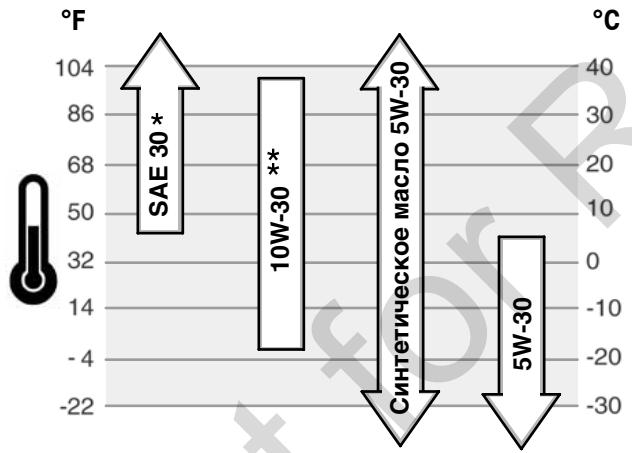
- IcnoIb3OBAHne Macna SAE 30 npn Tempepa typax Hxke 40^ (4^) npuBeTeK 3aTpduHHeHOMy 3aNycky DInrataTn.
** IcnoIb3ObaHne Macna 10W-30 npI TeMnepaTpyax BblIe 80^ (27^) npBBeTe K noBbIeHNOMy nOtepeJEnIO Macna. YaIe npOBepaIte ypOBeHb Macna.
Kak npoBepntb ypoBeHb Macna/DoIHTb MacNo - Pnc. ②
Ipeed doablenem nn npobepko ypOBHa macna
- YctaHOBInTe DnIgATEInb B Trop3OHTaIbHoe NIOJoxHeHne.
OuHCTHe 3OnHy MaCIO3aJIbHOrO OTBepCTnO TIO6o Mycopa. - Bbtaunte uyn dny n3mepenhy ypOBnMa macna (A) n o6oTpne ero YnCTOn TpnoKo (Pnc. 2).
- BCTaBtE 3aTAHnTe UyI IaI NImpeHnY yObHa Macna.
3.ИЗБЕКТЕУПИnpОВЕРТЕурOBeHMaCna.OHdoJIXe COOTBETCTBOBaTb BepxHNeчAcTNINDInKaTOpa3anONHeHn(B)HaUyne. -
Ecni ypOBeHb HnHex, MeDJIeHHO 3aIIMBaIte MacNo Upe3 MaCIOHaJIINBHyU roPOnOBHc (C). He npenonJHne. PioSe OdoJIbKn MAcNa IpoDoXdTe Ondy MmHTy u 3aTEM CHOBA npOBebpTe ypOBeHb Macna.
-
BctabbTe 6batho n 3aTAHnTe 7yU nn I3MepeHna yPOBHa macna.
PekomeHdaunnoNCnOJb3OBAHIO TOnJIInBa
TOnJIINBO DOJIJXHO COOTBETCTBOBaTb CJeIyOuMn Tpe6oBaHnAM:
- YnctbI, CBexn, He3TnIpOBaHHbI 6eH3nH.
- Мнимальhoe oktaнобoe чсно 87/87 AKI (91 RON = nccneobateNBCKoe OKtaHOBoeчсно). Прп равOTE набоьшов bICOTe над урOBHem MOPR, CMOTPITe yka3aHHИ NHIXe.
-Ду新股аетсббнIH cOdeprkaHnEMdo 10%3taHOLa (6eH3ocnnpTa) nI IN do 15%MTBE(TpeTnHybMeTnIb6yTnIOBbIeФиp).
BHMMAHVE: He donyckaetcnaonl3obahnne hepa3peuHHO 6eH3nHa, HAnpImep, E8E. He donyckaetcnpmeuBnabHnne Macna B 6eH3nH, nIIMoDMfMaCINaBmBvuratene Ia npObToHa aIbTePahNBeHbX BNdx TOnJIbA. 3TO MOKeT NOBPeDNTb KOMNOHEHTb DInarotBn anHyIpOBaTb rapaHTIO Ha DBruratelb.
Длгязшты тОплив"HОн ССТЕМБI OT OБраЗовень 6EH3иНовОй CMONь, CмшаiteТсаБИнЗATOPТОПЛВАС TОПЛВOM.Cm.XpaHHeN.КakdoeToTOLINBOOTNIIaETCDApyOTDPyA.Plrn BO3нИKHOBENH INPObSmE C3anyCKOM IIN 3KcNJIyATAuONHbIMXapAKTEpICNTKAMN,ПOMeHNeTоNCTabUKNaT OTOI INI NOMeHNeTМAPky TOnJIBA.DANHbDBrATIEL cepTNФИ\POBOHДЯ pAObTb C6EH3HOM.CSCTema KOHTPONJ3MnCCmДлдДанHORO DBrAteJIЯ -3TO CSCTema EM (MOdINФИкauNДBnRAteJIЯ).
IcnoB3ObaHne Ha 60JbWOn Bbcote Ha ypOBhem Mop
- YnctKa BO3DyUHOrO fIJIbTpa
KaKDbie 50 yacob pa6oTbI nn exKeRoDHO
3aMeHa MOTOPHOro Macna
- IpoBepkaIyunTeNnNCKpOynOBuTEn
ExkeroaHo
3aMeHa BO3dUshoro qnbTpa
3aMeHa CBeu 3axnraHn
OuICTKa CnCTeMbI BO3dUshoro OXnaJckDeneHra
- B ycnoBnax CunbHoi 3aIbIeHHoCTn nn HauNHy B Bo3dyXe qactyek copa, OuCTKy cIeDyET BbIOnIHrTb 6OJIee qACTO.
PerynipoBka Kap6oPaTopa
HnKorda He BbInonHnIte perynipOBKn Ha Kap6iopatope. Kap6iopatop npedBapntelbHO tOpeynpoBaN ha 3a0de-n3r0ToBnTe Ie n daepektnBno pa6Ot bI na6bIshnCTBa ycNobN 3cknnyaatauOn. Ondako, eCNI noTpe6yeTcR peYnpoBKa, To o6paauTceb, noXayntca, K IIObOMy yONHOMOeHHOMy dInepy OT kOMNaHn Briggs & Stratton dI npOBeDHeN TeXnHecKOrO 6cJyXmBAHN.
BHMMAHNE: IstotOBtEnb o6OpydoBaHnHa, Ha KOTOPOM yCTaHOBHeN DBrAteNB, onpeDelaet MaKcMAmJIbHyI paOoHu CKOpocTb DBrAteJIe. He donyckaTe nepeBbIeHeN 3ToI CCKOpCTI.
Kak 3aMeHnTb CBeUy 3aXnurAHHa - Pnc. 6
3aMeHnIe CBeUy 3aXnHnA HxEKeOJHO. PIOBepbTe 3a3Op (A, Pnc. 6) c NOMoIbH npOBOnOuHoro KAnIb6pa (B). Prn Heo6xoDMnOCTn, yCTAHOBtE 3a3Op. UCTAHOBtne 3aTHaHnTe CBeUy 3axHnAgnC pKcOMeHNDoBAHHbM MOMEHOT 3aTAAKKN. KAcatEnbHo yCTAHOBKn 3a3OPa UNI MOMEHTa 3aTAXKN CMOTnPte pa3dJe TexNHueckNe daHHble.
IpnmeaHHe: B heKOTopbIX paOHOx MeCTHbE 3aKoHbI Tpe6yIOT NcONlb3ObaHnraPe3iCTOPHO CBEu 3aXIGAraHn DnI NOdABNeHn POMEx OT cRTHAOB 3aXIGAraHn. ECnHa DaHHom dBiratene 6blna n3HaayalbHo yCTaHOBHe PAe3iCTOpHnCBEa3aXIGAraHn, TO IJIr 3aMeHbI Heo6xoDmIO NcONlb3ObaTcBEuy 3aXIGAraHn TORO XeTtNa.
PnoBepbTe rIyunTeJb nNckpoynobTeJb - Pnc.


PNEyYNPEXKDEHNE

Bo BpempaobtIbBnraTeHn BblJeHrHOT TEnIIO. Detann DnBraTeHn, B Oc0eBHeHOCTn IyUnHTenB, CTAHOBTC OYeHb TOpAHHM. PnIKoCHOBeHne K HMM MOKET NpNBECTN K CNJbHbIM OXORAM. BoCnIaMeHReMbI Mycop, HApNmuEe JnCTbY, TpaBa, XBOPoCT nT.I., MOrYT 3aROpETbCra.
Даite rIyIuIeJIIO,UININHpy upepaM UININHpa OCTbITb,npexde YEM dOtpaINBaTbCra Do HIX.
OuCTnTe 30Hy BOKpy rIyWnteIa I cIINHpa OT CKONNBweroC8 BOCnIaMeHReMoMycopa.
- IcnoIb3OBaHne nIe KcNlnyatauJdBnIaTeTnHa JIO6oI TeppITOpnn, NOKpbIToI JeCOM, KcyCTAPNIKOM nIITpAOB, 6e3 YCTaHOBNeHHORO INCKPoraCtINHe na CTMepe BxIHONbIX Ra3OB, JABIIETcHApUHEHem 3aKOHa KJIInΦopHnO 6 o6IeCTBeHNbIX pecypCaX, cTaIb 4442. COrnaCHO CStbN 4442 INCKPoraCtINb DOnJKeH haxOHTbcra B paBOeHcm COcTOrHn. DpyrIe WtATbI nIe PdePaJIbHbIE IOpNCdIKUIM MOrYT IMeTb CXOJIbHe 3aKObIb. O6paTIteC k Ipn03BDoNTJeOpINHaJIbHO 06OpyDobAHn, IPOaBaUY nIeINePy dnnPiNo6PeTeHn INckPoraCtIne, PpeDA3NaehHO rDn BxJIOnHO CnCTEmbl, YCTaHOBNeHHOI Ha 3OTm DnBnATeJNe.
Поберайтглштель (A, Puc. 7) на оtcytCTBne TpeunH, koppo3m nIn npdpynX noBpeKdEN. CHMNTE NCKPOYNOtIELB (B), ecnTAKOB IMeETcR, nPpOBeTpHe naOTCYCTBNE n3HOCA nIa3kyOpnyCaxJe. Ecnn NotpebyOtca3naChbYe cAteN, To o6Ra3TeLbHO nCnOJIb3yUte TOJbKO oprrnHbHbIe 3anaChbYe cAteN o6opdyObaHNr.

PENyPExkHeHc: 3aNaChbIe cAchTn DoJXhbl 6bItb
IeHTNCHbIMN UcTaHnABnBaTbCn HA TO Xe CamOE MeCTO, YTO INepBOHaJaNbHbIE DeTAlN, B IpOTNBHom CnUyae, MOKeT BO3NHKHYb NOxap.
Kak BbINOHNtB 3aMeHy MacJa - Pnc.


PNEyYPEXKDEHNE
BeH3nN I ero napbI ype3BbIaMHO orHeONaChbI N B3pbIBOOnaChbI. BocPnAmeHeHne HIn B3pbIB MOrYT npNBecTn K CnJbHbIM OXORAM HIn CMeptelbHomy IcXody.
EcnblcnaeMaNoceBepxHmMacnoHaMHBOnATpy6ok, TOnJIbHBn6akDOnJKeHbItbONOpOxHEnIINTOJIbNOBaHcHETBbITEKaTb, CTo pInBeDeT KIOXApy INIIN B3PbIy.
BHIMAHHE: Otpaobotahnhoe MacNo ppeCTabIeT c6oBOnpachbI npOpyKT nOJxHO 6bIty tyninuropoBaHO HaJIeJXaUm CnOc6OBM. BByINCHTE MecTOHAXOXDeHne NyHKTOB 6e3OanChO ytniHa3auN/NOBtOPH Nopepa6OTKn y MeCThBIX BnAteTe, B cepBnCHOM ueHTE nnY dInepa.
CINB macna
Bb moxete cntb macno uepe3 hnxhee dpehaxhoe OTBepCTne, 6OKOBoe dpehaxhoe OTBepCTne nIy uepe3 bepxHm maclohaJIINBHO natpy60K.
1.Пи ВьКИнЧЕНСМ,НОЕSUТENOMДВИRATENEOTCOEДИNTe ПЮВОДСBEU3axKINARHIA(A)ИОТБЕДITEEROBCTOPOHYOTCEEHN3axKINARHIA(PnC.8).
2.ДИВагаелбоборудованнхнимсИВьимОТБерстпeM(B,Pиc.9)И/ИЛБ6OKOBIM CINVBHMOTBEpCtHm(C).OTBepHnTe npO6ky CInBa MacJa.CIeYTe MacNo B COOTBETCTBYIOUYO EMKoCTb.
ПИмMuEчAne:ЛIO6aN3 NOKa3aHbIxHa pncuHKeMacIoCnIBhIxnpO6ok(D) MOxET 6blTb yCTaHOBIIHeA B Dbraratene.
- После тoro, кak macno 6ydet cHTo, yCTaHOBnTe n 3aTHNite np6ky OTbepctna CInBa Macna.
- EcIn Bbl CInBaTe MacNo Yepe3 BepxHIOO MacNoHaINbHyIO ropnOBHy (E), DePknTe OTOpy HN BAtraTeMa CBeHo 3aXkRanHn (F) BBepx (Pnc.10). CneIeMacIO B COOTBETCTByUOyEMKOCtB.

PNEUYPEXKDEHNE: EcnBbCnBaTe MacNo Hepe3 BepxHO
MACNOHAHBIHYOROPOBHy,TOIINBHybIb6aKdoJIXeHb6bITbONOPOXHeHII IN TOIINBOHaHTETBtEKAbT,YTO npIBeTeKIOXApUyNII B3PbIb.YIIN OIOPOXHeHNIPOBHOrO6aKa DaIteDnIRatEnIO npopabotbDo NOIHOPO paXoDA TOnJIbA.
Dobabntb MacNo
- YctaHOBtTe Dnrgatb B rOpu3OHTaHoe nIOJoxHeIe.
OuHCTnTE 30HY macNo3aJIbHOrO OTBepCTnAOT JIO6oMycopa. - CMOTPnTE pa3dEeTI TexHuecKne xapaKTepnCTNk OTHOCHTeIbHO KONUeCTBa Macna.
- BbIaIteIeIyI nIJIzI3mepEnH yPoBnMa cna (G) n o6oTpIe erO YnCTOn TpAnOpKo (Pnc. 11).
- Мдениху Зелова Росторгий (H). He nepenonnai Te. Посл долькma Macna поождпс OndHy mHHTy 3aTe mpoBepbte ypoBeHb Macna.
- Bctabte n 3aTnHTe uyn IINrN3MepeHn yPOBn Macna.
4.ИЗВЕКИТЕУПИnpОВЕРТЕурOBЕнБ macla.OHdoJIXe COOTBETCTBOBaT b BepxHNeчAcTN INDnKaTOpa 3aONJIHeHn(J)HaUyne. - BCTaBbTe n 3aTaNHTe yuŋ dnyn i3MepeHn yPOBHa macna.
Kak BbIIOJIHnITb TexHnueckoe 06cIyJXnBaHne BO3dUshoro cnIbTpa-Pnc. 12

PNEyPPEKDEHNE
BeH3nH eero npabI ype3BbIaHaNo OReHoNaChbI n B3pbIBOOnaChbI. BocnAmeneHHe mIn B3pbIB MOrYT npNBecTn K CnIbHbIM OxOram mIn CmeptelbHomy NcxOdy.
HikorHa He 3aynckai Te Hne 3Knnyatnpyte DnrgateB6e3 yctahOBHeHHoro y3na Bo3dyXooCHNTeTner NnBo3dyHoro qnlbTpa.
BHIMAHME: He nCnOb3yTe CxTaB bO3dY uN paCTBOpHTe N IaI YcTKn QfIbTpA. CxTaB bO3dY MoKET NOBPeDITb fIbTp, a pACTBOpHTe MOrTy erO pACTBOpITb.
- OTBepHnTe BnHT (A) B BepXHeu qactn y3na BO3duHoro fmbtpa (B). Cm.Pnc. 12.
- TtO6bI NCKJIQUHITb nonaJaHHe Mycopa BHyTpB Kap6OpaTopa, octopoXHO CHIMaIte y3eI BO3dUshoro fNJIbTpa.
- BbIbTe npoIoHObBn 3JIeMeHT (C) n3 OCHOBaHn BO3dUHOrO fInbTpa.
- IpomOHTe npoIHOBbI 3JEMeHT BOIOB B BOIE C JxuKIM MOIOUM CpeICTBOM. OTOXMITE DCyxa npoIHOBbI 3JEMeHT B UcTOn TpIOnKe.
- Порпотайтей поюловьй симент моторьм macnom. Дя удени. Лишень Macл отохмпей поюловьй симент в чichtоу Травочke.
- Bctabte npoJHObBi 3JEMeHT BOCHOBaHHe BO3dyuHoro fNtBtpa.
- YctaHOBNTe y3en BOzduHOrO qInbTaHa hKap6IopaTOp n 3akpenTe ero BnHTOM.
OuHCTka CnCTeMbI BO3dUshoro OXJaXdEHHa-Pnc. 13

PPEyYPPEXKDEHNE

B O Brpe maobtbl Dnntatne BbldenlOIT TnelIO. Detanu Dnntatne, BOCo6eHNOCTN IywnTeNB, CTaHOBTcR OueHb TOpAHHM. PpIKoCHOBHeH K HMM MOKET PNDECTK CNlbHbIM OXOrAM.

BocnnaMeHReMbmyCOp,HaPmep JncTb,TpaBa,XbopoCT n.T.I. Mory3 3aropetcb.
Даite rIyIuIeJIIO,UININHpy upe6pam UININHpa OCTbITb,npexKe YEM DToPArNBA TbCA DO HIX.
OuCTnTe 30Hy BOKpy rIyUHTeTnI NcINHdpa OT CKONBweroCBOCPnAmEHemOro Mycopa.
BHMHAHNE: He donyckaetcnaonb3oBaTb Body dny OunchTk n Dbratene. Boa moKTe nonacBt B tonnBHyO cIeTeMy Iocnbl3ynte tky n nn Cyxu TpRkny dny OunchTk n DbratEna.
3TOT dBiratentb ImMeet BO3dyuhyo CnCTemy OXnaJdeHn. rpa3b nIc cop MOKET BOCPENRTCTBOBATb NOTOKY BO3dya x cTaTB npuHNO nepeRpeBa dBiratTeI, 4TO npBVEdet K yUdHEnIO pa6OHyx xaapKeptNCIK nCokpaueHIO Cpoka cnjk6bl DbratTeN.
NcnoIb3yIte 9eTky nIIN cyxUo TpAnKy dIy ydaIeHnra copa B 3OHe yctpoIcTaBa
3aunBtI naIbceB (A). OChCTIte CcIeJIeHne, npYxHbIu npraHbI ynpaBHeHn (B).
OchuaIte 3OHy bOKpyr nO3aIin rnyuWTeJIa (C) ot IIObOro ropioJero Mycopa (Pnc.
13).
Ppi xpaheHH 6eH3nHa nIIObOpydoBaHnC TOnJIINBOM B 6ake
Bo 166eJahme BOCnIaMeHHeNna napo 6b3nHa xpaHnTe erO bdaIOn OT KOTIOB, neeH, BOHOarpeBaTeJe N pOoXu npu6OpB, B KOTOpbIX MCNoJIbSyETcROpeKJa IN mIOH nCTOCHNK BOCnIaMeHHeNIA.
TOnnBHaR CnCTema
ToPnIBO MoXET cTaTb HecBExKIM, ecNIO OHO xpaHHTc8 60nee 30 dHei. HecBexKeet ToPnIBO Bbl3bIAeT Obpa3OBaHne KcNtOThbIX N CMoJNtHbIX OTJLOXeHNI B ToPnIBHO CNTeMe INI HA BaXhBIX DeTalIX Kap6OpaTopa. YTObI CoXpAHntb ToPnIBO CBEXHM, nCOnpJIb3yIte CTaBnIa3Op TOnPiBa FRESH STARTOT KOMnAHNI Briggs & Stratton, npEJaRaMBI B vIne XnIKo PnIcAKn INI KApTpIaXa C KOHcETpRpoBaHHO KnIKoCTbIO N C KaJIeBHNuei.
He Tpe6yETcCnBAtb 6eH3nH 13 TOINBH0N CNTEmbI DnBtAeTEn,ecn
CTaBnInsATOP TOINBMa DO6abJIeTcR cOrNaCHO HcTpyKuIM. DaIte DnBtAEtnIO
npo6aToTB B TeueHne 2 MHyT AnI pUKNyIu NDOabKNe ToTnBnHYO CNTEmY.
Pocne 3TOr ODBtAEtn b TOnBnBO MOyr XpaHntCB Do 24 MecHeB.
Ecn 6eHn H e 6bln 6bpa60Tah c NOMOuBIO CTa6uNIm3atopA TOIINBA,TO 6eHnH dnJxHb 6blr bnt M3 DBNATeR B NOXoDyUO KANCTpy. DaIte DBNrAteJIIO np6aTb,POK aH He OCTaHOBNTcN 13-3a OTCYtCTBNA TOINIBa.PekomeHdyETcN CNOJb3OBAHMe CTA6HIMATOPA TOINIBa B KAHNCTpe dAn XpAHENH c CEJIbO COxPAHEnI erO CBExeCTn.
MOTOPHOE MACNO
3aemeHnTe MOTOPHOe MacNo, KOrJa DnBraTeIb eIe TEnJIb.
YcTpaHHe HEnCnPaBHOCTe
Heo6xoJnma nOmoB? IocTeNte, noXaynyIcTa, Web-caT: BRIGGSandSTRATTON.COM nIIN NO3BOHIne IO TelefoHy: 1-800-233-3723.
TexHnueckne daHHbIe
Texnueckne daHHbIe no DBrVaTeNIO
- General Information
- Engine Power Rating Information
- Operator Safety
- SAFETY AND CONTROL SYMBOLS
- WARNING
- When Adding Fuel
- When Starting Engine
- When Operating Equipment
- When Changing Oil
- When Transporting Equipment
- When Storing Gasoline Or Equipment With Fuel In Tank
- Before performing adjustments or repairs:
- When testing for spark:
- Features and Controls
- Model Type Code
- Operation
- Oil Recommendations
- How To Check/Add Oil - Figure 2
- Before adding or checking the oil
- Fuel Recommendations
- Fuel must meet these requirements:
- High Altitude
- How To Add Fuel - Figure
- How To Start The Engine - Figure
- How To Stop The Engine - Figure 5
- Maintenance
- Emissions Control
- Maintenance Chart
- First 5 Hours
- Every 8 Hours or Daily
- Every 25 Hours or Annually
- Every 50 Hours or Annually
- Annually
- Carburetor Adjustment
- How To Replace The Spark Plug - Figure 6
- Inspect Muffler And Spark Arrester - Figure 7
- How To Change The Oil - Figure 8 9 10 11
- Remove Oil
- Add Oil
- How To Service The Air Filter - Figure 12
- Clean Air Cooling System - Figure 13
- Storage
- Fuel System
- Engine Oil
- Troubleshooting
- Specifications
- LIMITED WARRANTY
- About Your Warranty
- California, U.S. EPA, and Briggs & Stratton Corporation Emissions Control Warranty Statement Your Warranty Rights And Obligations
- Manufacturer's Warranty Coverage:
- Owner's Warranty Responsibilities:
- Briggs & Stratton Emissions Control Warranty Provisions
- Look For Relevant Emissions Durability Period and Air Index Information On Your Engine Emissions Label
- Osha mHΦopMaζη
- Data Ha KynyBaHe:
- Model ha dBiratela:
- HΦopMaζη 3a HOMnHaJIHaT a MoIHOCT Ha DbIraTeJIHTe
- Texnka 3a 6e3onacnoct ha onepaTopa
- CIMBOJIN 3A BE3ONACHOCT IN YNPPABJIEHNE
- PNEyPPEKDEHNE
- PNEyPPEXDEHNE
- PNEyPEXKDEHNE
- PndoJnBaHeHa ropuBO
- Pn CTapTnpaHe Ha DmRaTeJIa
- Ppi pa6oteua maaHna
- Pn CmHa Ha MacNoto
- PnTpaHcNtOpTnpaHe Ha MaunHaTa
- Korato cKaJaIpaTe 6eH3mH mIbn o6OpyDbaHe c rOpnBO b pe3epBoapa
- NPEyPPEXDEHNE
- Kak ce HanaBa Macno - Fmrypa 3
- PnDOniBaHe Ha roPnBO
- Kak ce cTaptnpa DnurataTeJH - Fmrypa 4 5
- Pn cTaptnpahe Ha dBnraTeNa
- Kak ce cmeHЯBa macnoto - Fmrgpa
- I3TOUeTe OToPA6OTNIOTo MaCNo
- HaHbHe Ha MacNo
- Kak da ce 6cbnykBa Bb3dywnnHnФnIITbp - FnIpya 12
- Kak ce nouchta oXlaIaIteJIHaTa cIcTeMa - Fnrupa
- IPEdynPEXKDEHNE
- Pries jjungiant varikli
- Pries jjungiant variklj
- PNEyYPKDEHNE
- PNEyYPKXDEHNE
- Pn do6ablen TOnJIbBa
- Pn3aynyckeDbnratae
- Pn3Kcnnyataun o6opydoBaHn
- Pn 3ameHe macla
- PPEUYPPEXDEHNE
- PPEyPExEHE
- Ipeed BbINOJIHeHem peryInpOBOK nI npemOnTa:
- Pnp npOBepKe cncTeMbI 3aXnraHnA:
- y3nbI dBnraTeJI n opraHbI ynpabJeHna
- 3Kcπlyaataza
- PekomeHdaaunno nncnOJb3ObaHnIO MacJa
- Kak npoBepntb ypoBeHb Macna/DoIHTb MacNo - Pnc. ②
- Ipeed doablenem nn npobepko ypOBHa macna
- PekomeHdaunnoNCnOJb3OBAHIO TOnJIInBa
- TOnJIINBO DOJIJXHO COOTBETCTBOBaTb CJeIyOuMn Tpe6oBaHnAM:
- IcnoB3ObaHne Ha 60JbWOn Bbcote Ha ypOBhem Mop
- KaKDbie 50 yacob pa6oTbI nn exKeRoDHO
- ExkeroaHo
- PerynipoBka Kap6oPaTopa
- Kak 3aMeHnTb CBeUy 3aXnurAHHa - Pnc. 6
- PnoBepbTe rIyunTeJb nNckpoynobTeJb - Pnc.
- PNEyYNPEXKDEHNE
- Kak BbINOHNtB 3aMeHy MacJa - Pnc.
- PNEyYPEXKDEHNE
- CINB macna
- Dobabntb MacNo
- Kak BbIIOJIHnITb TexHnueckoe 06cIyJXnBaHne BO3dUshoro cnIbTpa-Pnc. 12
- OuHCTka CnCTeMbI BO3dUshoro OXJaXdEHHa-Pnc. 13
- PPEyYPPEXKDEHNE
- Ppi xpaheHH 6eH3nHa nIIObOpydoBaHnC TOnJIINBOM B 6ake
- TOnnBHaR CnCTema
- MOTOPHOE MACNO
- YcTpaHHe HEnCnPaBHOCTe
- TexHnueckne daHHbIe
Brand : BRIGGS & STRATTON
Model : BRIGGS & STRATTON 98900
Category : Generator