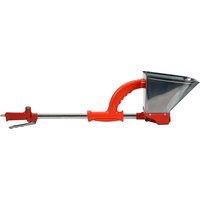
YT-54400 - Paint gun Yato - Free user manual and instructions
Find the device manual for free YT-54400 Yato in PDF.


| Product type | Pneumatic mortar sprayer |
| Brand | Yato |
| Model | YT-54400 |
| Dimensions (L x W x H) | 860 x 220 x 220 mm |
| Weight | 2.0 kg |
| Power source | Compressed air (pneumatic) |
| Recommended operating pressure | 0.4 – 0.8 MPa |
| Maximum operating pressure | 0.8 MPa |
| Required air flow | 350 – 400 L/min |
| Air connection diameter | 6.3 mm (1/4") |
| Inner diameter of air hose | 10 – 14 mm |
| Container capacity | 4.75 L |
| Nozzle diameter | 17.5 mm |
| Maximum grain diameter | 6 mm |
| Sound pressure level | 93.6 ± 2.5 dB(A) |
| Sound power level | 104.6 ± 2.5 dB(A) |
| Vibration | < 2.5 m/s² |
| Materials used | Water-based mortars only |
| Maintenance and cleaning | Clean with water after each use, lubricate with SAE 10 oil |
| Safety | Wear goggles, gloves, hearing protection; do not direct at people |
| Spare parts and repairability | Parts list available on manufacturer's website |
| General information | Use for plastering, mortar, slurry on large surfaces |
Frequently Asked Questions - YT-54400 Yato
User questions about YT-54400 Yato
0 question about this device. Answer the ones you know or ask your own.
Ask a new question about this device
Download the instructions for your Paint gun in PDF format for free! Find your manual YT-54400 - Yato and take your electronic device back in hand. On this page are published all the documents necessary for the use of your device. YT-54400 by Yato.
USER MANUAL YT-54400 Yato
PL DE RU UA LT LV CZ SK HU RO ES FR IT NL GR
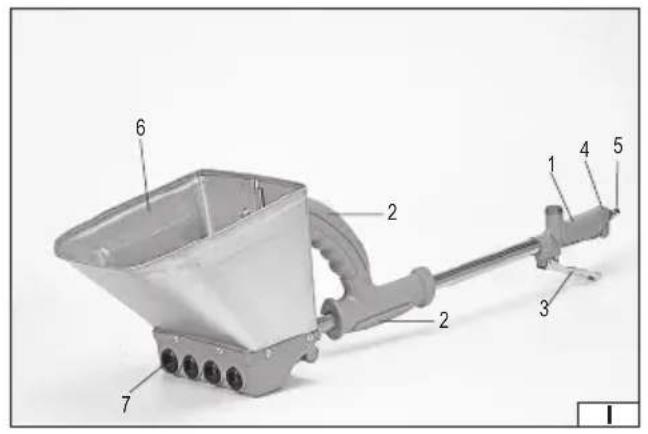
- handle
- additional handle
- ON/OFF switch
- air inlet
- air inlet connector
- tank
- outlet
- nozzle
DE
Read the operating instruction
Wear protective goggles
Schutzbrille tragen
Wear hearing protectors
Gehörschutz tragen
PRODUCT CHARACTERISTICS
The pneumatic plastering machine allows fast, efficient and easy application of plaster, mortar or mud to large surfaces. Proper use of the plastering machine can ensure better results in less time than performing similar work using traditional methods. Proper, reliable and safe operation of the tool depends on appropriate use, that is why you should
Read and keep the entire manual before the first use of the tool.
The supplier shall not be held liable for any damage or injury resulting from improper use of the tool, failure to observe the safety regulations and recommendations of this manual. Use of the tool for purposes other than those for which it was intended shall cause the loss of the user's rights to the warranty, as well as under inconsistencies with the agreement.
ACCESSORIES
The tool is equipped with a connector to connect to the pneumatic system.
TECHNICAL DATA
| Parameter Unit Value | ||
| Catalogue No. YT-54400 | ||
| Weight [kg] 2,0 | ||
| Dimensions (L x W x H) [mm] 860 x 220 x 220 | ||
| Diameter of air connector (PT) [mm / ”] 6.3 / 1/4 | ||
| Diameter of air supply hose (internal) [mm] 10 – 14 | ||
| Tank capacity | [l] | 4.75 |
| Nozzle diameter | [mm] | 17.5 |
| Maximum diameter of sand grains | [mm] | 6 |
| Maximum work pressure | [MPa] | 0.8 |
| Recommended operating pressure | [MPa] | 0.4 – 0.8 |
| Required air flow | [l/min.] | 350 - 400 |
| Sound pressure (EN 14462) | [dB(A)] | 93.6 ± 2.5 |
| Sound power (EN 14462) | [dB(A)] | 104.6 ± 2.5 |
| Vibration | [m/s2] | < 2.5 |
GENERAL SAFETY CONDITIONS
WARNING! When operating a pneumatic tool, it is recommended that you always observe basic safety principles, including those listed below, in order to reduce the risk of fire, electric shock and injury.
Please read and keep the entirety of this instruction manual before using the tool.
WARNING! Read all of the following instructions. Failure to do so may result in electric shock, fire, or personal injury. The term "pneumatic tool" used in these instructions refers to all tools operating by means of a compressed air stream at the correct pressure.
PLEASE OBSERVE THE FOLLOWING INSTRUCTIONS
General safety conditions
Due to multiple hazards, read and understand the safety instructions before starting installation, operation, repair, maintenance and alteration of accessories or when working in the vicinity of a pneumatic tool. Failure to do so may result in serious injury. Pneumatic tools may only be installed, adjusted and assembled by qualified and trained personnel. Do not modify the pneumatic tool. Modifications can reduce efficiency and safety, and increase the risk for the tool operator. Do not throw away the safety instructions, they should be handed over to the tool operator. Do not use the pneumatic tool if it is damaged. The tool must be periodically inspected for the visibility of information on the rating plate. The employer/user should contact the manufacturer to replace the rating plate whenever necessary.
Hazards connected with material atomisation
Never point the tool outlet towards people - coating materials or compressed air can cause body trauma or other injuries. Injection of lubricant can cause necrosis or even loss of limb. In case of injection, seek medical attention immediately.
It is forbidden to use any other gases instead of compressed air. Never use oxygen or other flammable gases to power the tool. The use of gases other than compressed air can lead to serious injury, cause fire or explosion.
EN
Effective ventilation should be provided at the workplace. Lack of effective ventilation may result in health hazards, cause fire or explosion. Use the tool away from heat sources and fire as this may damage the tool or impair its operation.
Observe the general safety principles when working with spraying materials. Wear suitable personal protective equipment such as goggles, masks and gloves. There is a risk of absorption of spraying agent or preservative particles during work or when performing maintenance activities, caused by:
- insufficient natural or forced ventilation,
- improper atomising pressure,
- insufficient optimisation of spraying parameters to reduce contamination,
- the wrong distance between the tool nozzle and the spraying agent application place, the distance must be selected according to the type of the spraying agent used,
- absorption of solvent vapours or other hazardous substances,
- improper use, e.g. use of an improper spraying agent.
High-pressure compressed air supply may cause the tool to recoil in the direction opposite to that of the spraying agent ejection.
Special care should be taken as jet forces can, under certain conditions, cause multiple injuries.
It is recommended to try the tool out before beginning work. It is recommended that persons working with the tool are properly trained. This will signifi cantly increase work safety.
Observe the instructions of the spraying material manufacturer and use them in accordance with the presented principles for personal, fire and environmental protection. Failure to follow the instructions of the spraying material manufacturer can lead to serious injury. In order to determine compatibility with the spraying materials used, a list of materials used for the construction of the tool will be available on request.
When working with the use of compressed air, energy is stored in the entire system. Care must be taken when working and during breaks in order to avoid the risk connected with the stored compressed air energy.
Due to the possibility of electrostatic charge build-up, measurements should be taken to ensure whether the tool needs to be grounded, or whether a surface dissipating electrostatic charges and/or compressed air system is necessary. It is required that the measurement and installation of such system is carried out by personnel with appropriate qualifications.
Never point the spray jet at a source of heat or fire, as this may cause fire.
Hazards connected with work
Using the tool can expose the operator's hands to hazards such as crushing, impact, cutting, abrasion and heat. Wear suitable gloves to protect your hands. The operator and the maintenance personnel should be physically able to cope with the quantity, weight and power of the tool. Hold the tool correctly. Keep your feet in balance and in a safe position. The pressure on the start and stop device should be released in the event of a power failure. Use only the lubricants recommended by the manufacturer. Avoid direct contact with the tool during and after work, as it can be hot. Protective goggles must be worn, and we recommend wearing suitable gloves and protective clothing.
Hazards connected with repetitive movements
When using a pneumatic tool for work entailing repetitive movements, the operator is exposed to the discomfort of hands, arms, shoulders, neck or other parts of the body. When using a pneumatic tool, the operator should take a comfortable posture to ensure the feet are correctly positioned, and avoid strange or unbalanced postures. The operator should change the posture over a long period of time to avoid discomfort and fatigue. If the operator experiences symptoms such as persistent or repeated discomfort, pain, pulsating pain, tingling, numbness, burning or stiffness, they should should not ignore them, inform the employer and consult a physician.
Hazards connected with the workplace
Slips, stumbles and falls are the main causes of injury. Beware of slippery surfaces caused by using the tool, as well as tripping hazards caused by the air system. Proceed with caution in an unfamiliar environment. Hidden hazards may exist, such as electricity or other utility lines. The pneumatic tool is not intended for use in potentially explosive zones and is not insulated from contact with electricity. Make sure that there are no electric cables, gas pipes, etc. which could pose a risk in the case of damage with the tool.
Fumes and dust hazards
Dust and fumes from pneumatic tools can cause ill health (e.g. cancer, congenital malformations, asthma and/or dermatitis), it is necessary to: assess the risks and implement appropriate control measures with regard to these risks. The risk assessment shall include the impact of the dust generated by the tool and the possibility of existing dust disruption. The air outlet shall be so directed as to minimise the disruption of dust in a dusty environment. Where dust or fumes are generated, priority should be given to controlling them at the source of the emission. All integrated functions and accessories for collecting, extracting or reducing dust or fumes should be properly operated and maintained according to the manufacturer's recommendations. Use respiratory protection in accordance with the employer's instructions and in accordance with hygiene and safety requirements. The operation and maintenance of the pneumatic tool must be carried out in accordance with the instructions in the instructions manual in order to minimise the emission of fumes and dust. Select, maintain and replace tools to be inserted in accordance with the instructions in order to prevent the increase of fumes and dust.
EN
Noise hazard
Exposure to high levels of noise can cause permanent and irreversible hearing loss and other problems such as tinnitus (ringing, buzzing, whistling or humming in ears). A risk assessment and the implementation of appropriate control measures for these hazards are necessary. Appropriate controls to reduce the risk may include measures such as silencing materials to prevent the workpiece from "ringing". Use hearing protection in accordance with the employer's instructions and in accordance with hygiene and safety requirements. The operation and maintenance of the pneumatic tool must be carried out in accordance with the instructions in the manual in order to avoid an unnecessary increase in noise levels. If the pneumatic tool has a silencer, always make sure that it is installed correctly when using the tool. Select, maintain and replace worn inserted tools in accordance with the instructions in the manual. This will help avoid an unnecessary increase in noise.
Vibration hazard
Vibration exposure may result permanent damage to the nerves and the blood circulation in the hands and the arms.
Wear warm clothes when working at low temperatures and keep the hands warm and dry. If numbness, tingling, pain or bleaching occurs in your fingers or hands, stop using the pneumatic tool, then inform your employer and consult your doctor. The operation and maintenance of the pneumatic tool must be carried out in accordance with the instructions in the manual in order to avoid an unnecessary increase in vibration levels. Do not hold the tool with your free hand, this increases the exposure to vibrations. Maintain a light and sure grip on the power tool and mind the reaction forces from processing with the power tool. The risk of vibration is higher the higher is the force of your grip on the power tool. Hold the additional handles in a central position and avoid pressure on the handle until the tool stops.
Additional safety instructions for pneumatic tools
Pressurised air can cause serious injury:
- always disconnect the air supply, release the air pressure from the hose and disconnect the tool from the air supply when not in use, before changing accessories or carrying out repairs;
- never point the air stream at yourself or anyone else.
Hitting with the hose can cause serious injury. Always check for damaged or loose hoses and connectors. Direct cold air away from hands.
Never leave the assembled pneumatic system unattended by a person authorised to operate it. Keep children away from the assembled pneumatic system.
When connecting the tool to the compressed air system, consider the space required for the hose to avoid damaging the hose or connectors.
Whenever universal screwed connections (dog connections) are used, safety pins and safety connectors must be used to prevent damage to the connections between the hoses and between the hose and the tool. Do not exceed the maximum air pressure specified for the tool.
Never carry the tool holding it by the hose.
TOOL OPERATION
Warning! Before each use of the tool, make sure that no parts of the pneumatic system are damaged. If you notice damage, immediately replace the components with new, undamaged ones. Dry the condensed moisture inside the tool, compressor and hose before each use of the pneumatic system.
Preparing for operation
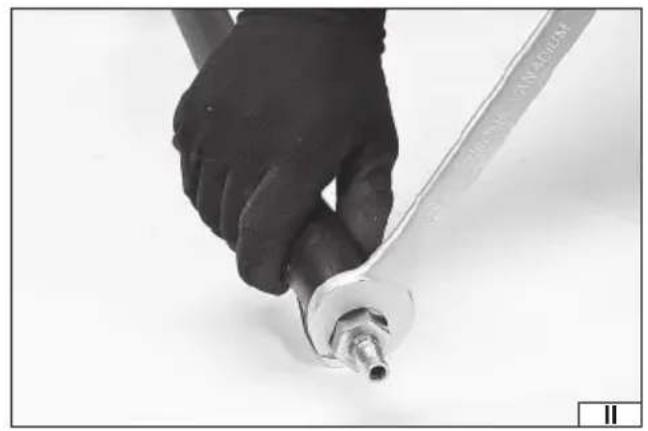
If the tool air inlet is not factory-fitted with a compressed air connector, screw it in using the wrench (II). If a leaking connection is detected, a PTFE sealing tape must be used and wound over the tool's air intake thread before screwing the connector on.
Without connecting the tool to a compressed air source, check the operation of the switch to ensure that it can be pressed in without obstruction and that when released returns quickly and automatically to its original position.
Connecting the tool to the pneumatic system
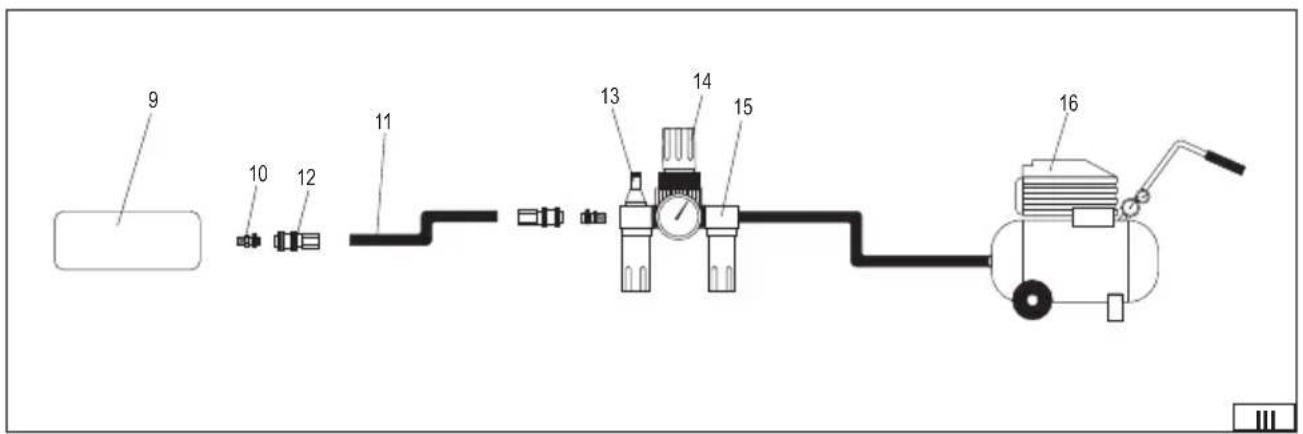
Make sure that the compressed air source generates the correct working pressure and provides the required airflow. If the supply air pressure is too high, a pressure reducer with a safety valve must be used. The pneumatic tool must be fed through the filter and lubricator system. This will ensure that the air is both clean and moistened with oil. Check the condition of the filter and lubricator before each use and clean the filter if necessary or make up for oil shortage in the lubricator. This will ensure the correct operation of the tool and extend its service life. Before connecting the tool to the compressed air supply, adjust the system so that the system pressure does not exceed the maximum pressure shown on the tool's rating plate.
The figure (III) shows the recommended manner of connecting the tool to the pneumatic system. This will ensure the most efficient use of the tool and also prolong the tool's service life.
Wear personal protective equipment: eye protection, protective gloves, work clothing and full working shoes with non-slip soles. Make sure that the on/off switch is not pressed and connect the tool to the power supply. Grasp the main and additional handles
EN
with both hands. Adopt a position which prevents the tool from recoiling. Point the nozzle outlet at a safe place, press and hold the switch. Check that the tool does not generate excessive noise or vibration. If you notice any signs of malfunction, stop using the tool immediately. Disconnect the tool from the compressed air supply and rectify the fault before continuing with the work.
Plastering
Use water-based masonry mortars. It is forbidden to use mortars based on flammable solvents, petrol, alcohol, etc. Spraying such substances may cause fire. Do not spray powders, granules. Do not use the plastering machine as a sanding tool.
Prepare a container with plaster mortar. The mortar density should not be too low, so that it does not spill through the outlet openings when placed in the tool tank. It should be noted that the diameter of solid elements in the mortar should not exceed the diameter listed in the table with technical data - parameter: "Maximum diameter of sand grains".
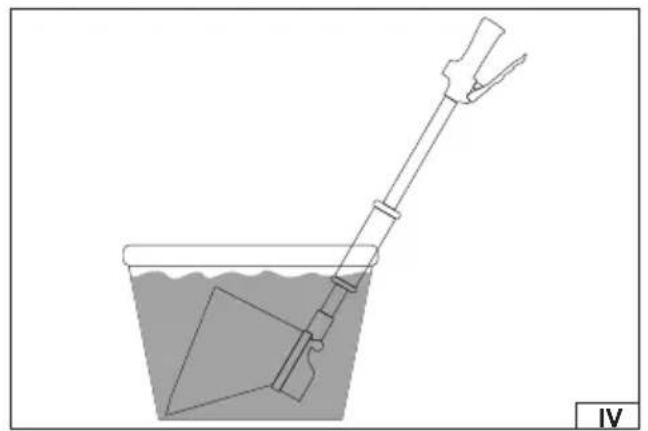
Prepare a container, e.g. a bucket or construction tub of such size that the whole tool container will fit in it. Fill the container with water. Place the tool tank and nozzles in this container so that the mortar residue in the tank does not set during short breaks. The mortar and water container must be placed close to the work area, but must not interfere with the work or present a risk of tripping.
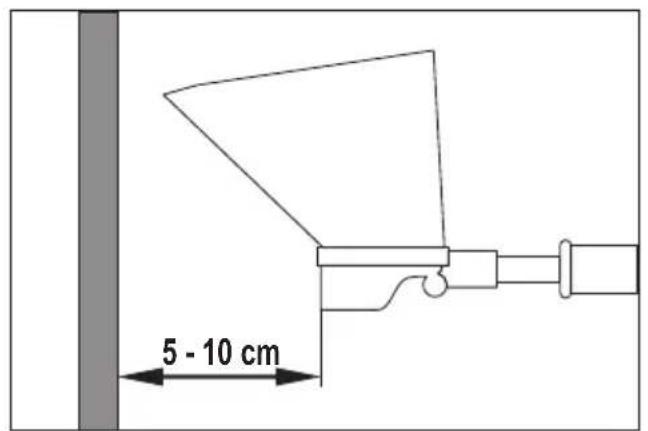
Place the tool flat on the ground, fill the tool tank with plaster mortar. Connect the tool to the compressed air supply. Lift with both hands, adopt a balanced posture which will ensure countering the recoil. Apply the tool to the plastered surface so that the openings in the tank are no further than 5 - 10 cm from the surface to be plastered (IV). Press the power switch and start plastering.
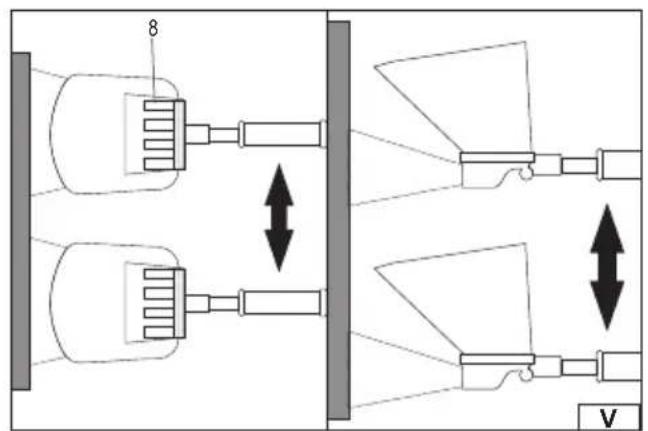
While plastering, constantly move the tool to avoid uneven covering with the plaster. Move the tool in a steady motion at a constant speed. Move the plastering machine in such a manner that the outlets of the mortar are at a constant distance from the plastered surface and parallel to it (V).
Should plastering require the tool to be tilted, e.g. when plastering a ceiling or wall which is not perpendicular to the ground, be careful not to spill the mortar from the tool tank. In this case, do not fill the tank completely.
The work results depend on the pressure of the compressed air, the density of the mortar and the distance between the nozzles and the plastered surface. It is recommended to carry out a plastering test before starting the proper work in order to adjust the above parameters to the desired effect of the work.
If, during operation, one of the outlets or one of the nozzles becomes blocked, the operation must be stopped. Disconnect the tool from the compressed air source, remove the mortar from the tool tank, and then proceed with unclogging the nozzle or opening according to the instructions in the "Tool maintenance" section.
During short breaks in work, disconnect the tool from the compressed air supply, remove the mortar residue from the tank, and then place the tool in the water tank so that it completely covers the tank and the nozzles (VI). Never immerse the tool completely. The mortar can also harden under water, so do not store the tool too long in this manner.
When the work is finished, disconnect the tool from the compressed air supply, remove the mortar residue from the tank, and proceed with maintenance.
Tool maintenance
Warning! Each time before beginning maintenance, make sure that the tool has been disconnected from the compressed air system.
Warning! The tool maintenance should be carried out immediately after each use. Hardened mortar residues will be impossible to remove and will damage the tool.
Warning! Never use petrol, solvent, or any other flammable liquid to clean the tool. Vapours may ignite, causing the explosion of the tool and serious injury. The solvents used to clean the tool holder and the body may soften the seals. Thoroughly dry the tool before starting work.
Empty the tool tank from the mortar residue and then rinse thoroughly with water.
Immerse the tank with nozzles in a water tank or a special water-based liquid for removing plaster mortar, connect the tool to the compressed air supply and press the switch to remove any residual plaster mortar from the nozzles and outlet openings.
Clean the tank with a water jet with a pressure of not more than 0.3 MPa, a soft paintbrush or brush, and then dry.
Before each use, inject a small amount of preservative (e.g. WD-40) through the air inlet. Connect the tool to the pneumatic system and run it for approx. 30 seconds. This will allow the preservative to be spread inside the tool and will clean it. Disconnect the tool from the power supply. Insert a small amount of SAE 10 viscosity oil into the tool via the air inlet opening and the openings designed for that purpose. The use of SAE 10 oil is recommended for the maintenance of pneumatic tools. Connect the tool to the power source and run it briefly.
Caution! WD-40 cannot be used as a proper lubricating oil.
Wipe off any excess oil which may have escaped through the outlet openings. The oil left can damage the tool seals.
Clean the housing, the handles, all switches and guards with compressed air (with a maximum pressure of 0.3 MPa), a paintbrush or a dry cloth. Do not use any chemicals or cleaners. Clean the cutter and the handles with a clean dry cloth.
EN
Spare parts
The spare parts list is available on the manufacturer's website in the product data sheet.
Handling worn pneumatic tools
Used tools are recyclable materials - they cannot be thrown into household waste containers as they contain substances dangerous to human health and the environment! Please actively help us in using the natural resources responsibly and protecting the environment by handing over the used tool to a used tool storage point. In order to reduce the amount of disposed waste, it is necessary to reuse or recycle it in another form.
GERÄTEBESCHREIBUNG
CARACTÉRISTIQUES DU PRODUIT
DECLARATION OF CONFORMITY
0625/YT-54400/EC/2025
We declare and guarantee with full responsibility that the following products:
Plaster / stucco spray gun; 0,8 MPa; 4,75 l; item no. YT-54400
meet requirements of the following European Standards / Technical Specifications:
EN 1953:2013
EN ISO 12100:2010
and fulfill requirements of the following European Directives:
2006/42/EC Machinery and safety elements
Serial number: concern all serials numbers of item(s) mentioned in this declaration
The person authorized to compile the technical file:
Agnieszka Rędziak
(Place and date of issue)
V-CE PREZES ZARZADU
JAN SZMIDT
(Name and signature of authorized person)
TOYA S.A.

- DE
- PRODUCT CHARACTERISTICS
- ACCESSORIES
- GENERAL SAFETY CONDITIONS
- HAZARDS CONNECTED WITH MATERIAL ATOMISATION
- EN
- HAZARDS CONNECTED WITH WORK
- HAZARDS CONNECTED WITH REPETITIVE MOVEMENTS
- HAZARDS CONNECTED WITH THE WORKPLACE
- FUMES AND DUST HAZARDS
- NOISE HAZARD
- VIBRATION HAZARD
- ADDITIONAL SAFETY INSTRUCTIONS FOR PNEUMATIC TOOLS
- TOOL OPERATION
- PREPARING FOR OPERATION
- CONNECTING THE TOOL TO THE PNEUMATIC SYSTEM
- PLASTERING
- TOOL MAINTENANCE
- SPARE PARTS
- HANDLING WORN PNEUMATIC TOOLS
- GERÄTEBESCHREIBUNG
- CARACTÉRISTIQUES DU PRODUIT
- DECLARATION OF CONFORMITY
Brand : Yato
Model : YT-54400
Category : Paint gun