81101 - Screwdriver VOREL - Free user manual and instructions
Find the device manual for free 81101 VOREL in PDF.


User questions about 81101 VOREL
0 question about this device. Answer the ones you know or ask your own.
Ask a new question about this device
Download the instructions for your Screwdriver in PDF format for free! Find your manual 81101 - VOREL and take your electronic device back in hand. On this page are published all the documents necessary for the use of your device. 81101 by VOREL.
USER MANUAL 81101 VOREL
PL KLUCZ PNEUMATYCZNY
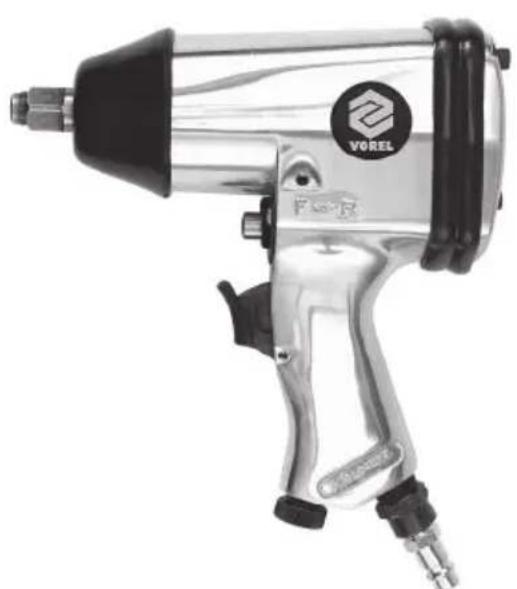
EN PNEUMATIC WRENCH
DE DRUCKLUFT-SCHLUSSEL
RU THEBMATNUECKNI KJIIOU
UA INHEBMATNUHNI KJIIOU
LT PNEUMATINIS VERZLIASUKIS
LV PNEIMATISKA ATSLEGA
CZ PNEUMATICKYUTAHOVÁK
SK PNEUMATICKY UTAHOVÁK
HU PNEUMATIKUS KULCS
RO CHEIE PNEUMATICA
ES LLAVE NEUMATICA
FR CLÉ PNEUMATIQUE
PL EN DE
- wlot powietrza
- złuczka wlotugowietra
- spust
- przelacznik kierunku obrotów
- zabierak
- regulacja cisznienia
- dodatkowy otwor do smarowania
- narzedzie
- gniazdo weza
10.waz - złączka węza
- smarownica
- reduktor
- f l t r
-
kompresor
-
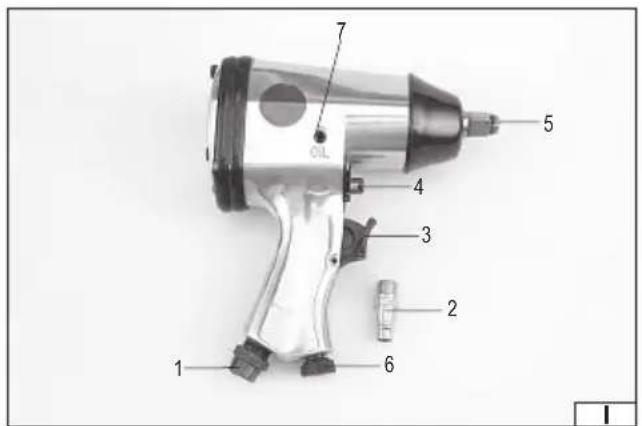
air inlet
- air inlet connector
- trigger
- turning rotation switch
- collector
- adjustment of pressure
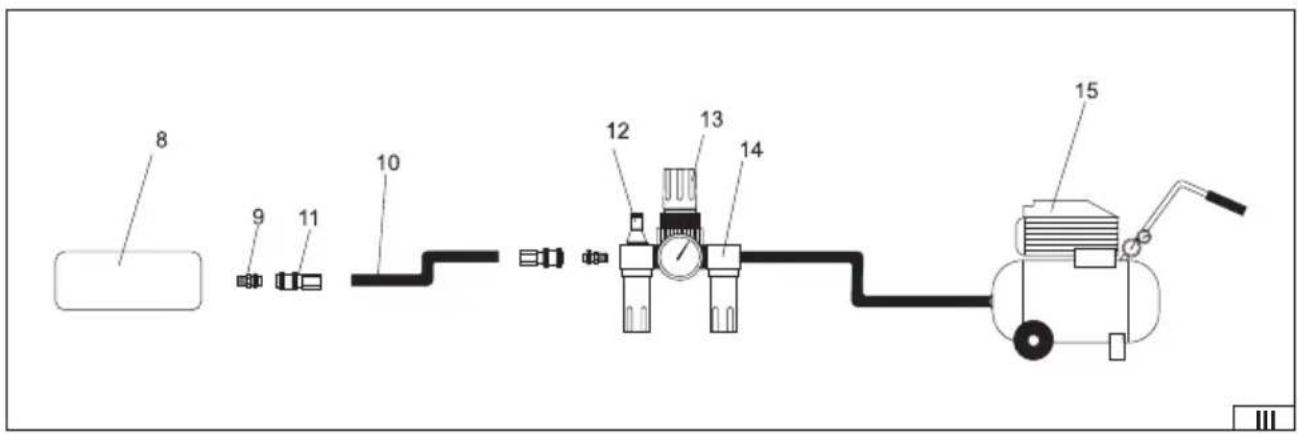
- tool
- additional oil point
- hose socket
- hose
- hose connector
- greaser
- reducer
- filter
-
compressor
-
Luftteinlauf
- Luftteinlaufnippel
- Schalter
- Drehrrichtungsschalter
- Mitnehmer
- Druckeinstellung
- Zusätzliche Offnung zum Olen
- Werkzeug
- Schlauchsitz
- Schlauch
- Schlauchnippel
- Oler
- Druckminderer
14.Filter - Kompressor
RU UA LT
1.BXoHHe Bo3DyUHHe OTeBpcTne
2. coeHnHTenb
3. BBKIIIOUaTeNb
4. peBepCnBnI nepeKIOuChaTeNb
5. noBODOK
6. perylnipobka daBneHnra
7. DONJHHTenbHoe OTBepCTne dnn CMA3KN
8. yctpOCTBO
9. Hezdo WlaHra
10. sunahr
11.coedHHTeJbIaHa
12. MacNeHka
13. peDyKTop
14.ФИNBTP
15. Komnpcecop
1.BxidHn nobITpyHn OTBip
2.3eDnhyBaay
3.BIMMKAU
4. peBepCnBnHn nepemKau
5. xomytuk
6. perynobHH TCKy
7.ДОДАТКOBМ OTBIPДЯЗмUуВанн
<|im_start|>assistant
8. pnctpi
9. rhi3do wlaHra
10. wnaH
11.3dhybawunahra
12. macnHaHka
13. peyuTOp
14. φinbtp
15. komnpecop
- oro jejimas
- orj ejiimo atvamzdis
- paleidimo spaustukas
- sukimosi krypties perjungiklis
- veleno galvute
- slegio regulavimas
- papildoma tepimo anga
- Jrankis
- Žarnos lizdas
- Žama
- Žaros mova
- tepaline
- reduktorius
- fi Itras
- kompresorius
LV CZ SK
- gaisa pievads
- qaisa pievada savienoiums
- laidene
- apgriezenu virziana parsledzews
- pavada
- spiediena regulacija
- papildu ieellosanas caurums
- ierice
- vada ligzda
- vads
- vada savienojums
- ellosanas instruments
- reduktors
- fi | trs
-
kompresors
-
vstup vd Duchu
- spojka vtupu vzduchu
- spoušt
- prepinaac smeru otacek
5.unasec - regulace tlaku
- pomocny mazaci otvor
- nastroj
- zásuvka hadice
- hadice
- spojka hadice
- olejovač
- redukcnf ventil
- filtr
-
kompresor
-
vstup vduchu
- spojka vstupu vzduchu
- spust
- prepinač smeru otáčok
5.unasac - regulácia tlaku
- pomocny mazaci otvor
- nastroj
- hadicová zásuyka
- hadica
- hadicová spoika
- olejovac
- redukny ventil
- filter
- kompresor
HU RO ES
- levego bemenet
- a levegobemenet csatlakozoja
- szelep
- forgásirany valto
- forgoçcsap
- nyomásszabályzo
- kiegesztó furat a keneshez
- szerszám
- tomlofogado csatlakozó
- tomló
- tomlc satalkozója
- zsirzo
- nyomáscsökkentó
14.szuro -
kompresszor
-
orificiul intrarii aerului
- mufa intrarii aerului
3.tragaciul - comutatorul schimbbarii dirctiei de rotire
- antrenor
- ajustarea presiunii
- orificiu suplimentar de ungere
- scula ajutatoare
- socul tubuli
10.tub - mufa tubului
- gresor
- reduktor
- filtru
-
compressor
-
entrada de aire
- conector de la entrada de aire
- gatillo
- interruptor de la direccion de giro
- conductor
- regulación de la presión
- agujero adiconal para la lubricacion
- herramienta
- entrada de la manquera
- manguera
- conector de la manquera
- lubricador
- reductor
- filtro
- compressor
FR
Read the operating instruction
Wear protective goggles
Tnib30BaTbC3aunTHbIMnOyKaMn
KopnctyTecb 3axnCHMn OKnyrapm
Vartok apsauginius akinius
Jalieto dro'sihas brilles
Pouzivej ochranné bryle
Použivaj ochranné okuliare
Wear hearing protectors
Ponb3oBaTbcra CpeDCTBAMN 3aunHb cnyxa
KopncTyntecb 3acobamn 3axncty cnyx
Vartoti ausines klausai apsaugoti
Jalieto dzirdes drośibas lidzeklu
Pouzivej chranièe slachu
Nominals griezes atrums
Jmenovite otáčky
Menovite otacky
Nevleges fordulatszam
Viteza de rotire nominale
Pneumatic wrench is a tool that is powered with a stream of compressed air at appropriate pressure. Wrenches installed on a collector make screwing down and unscrewing possible, particularly where a high turning moment is required. Correct, reliable and safe functioning of the tool depends on correct operation, therefore:
Before operation of the tool can be commenced, the whole manual must be read and kept.
The supplier cannot be held responsible for any damages or injuries which are caused by using the tool in a manner that does not correspond to its purpose, not observing safety regulations or the recommendations of the present instructions. Using the tool in a manner that does not correspond to its purpose also cancels the guarantee.
EQUIPMENT
The pneumatic wrench is equipped with a connector that facilitates its connection to the pneumatic system.
| Equipment Size 81100 81101 | |||
| 81100 xx | |||
| Connector to hose 1/4" (6,3 mm) x x | |||
| Socket wrench | 9 | x | |
| 10 | x | ||
| 11 | x | ||
| 13 | x | ||
| 14 | x | ||
| 17 | x | ||
| 19 | x | ||
| 22 | x | ||
| 24 | x | ||
| 27 | x | ||
| Extension bar 1/2" / 12,5 mm; 125 mm x | |||
| Hex wrench 4mm x | |||
| Mini oiler x |
TECHNICAL DATA
| Parameter | Measurement unit | Value |
| Catalogue number | 81100 | |
| Length | [mm] | 205 |
| Weight | [kg] | 2,2 |
| Diameter of the air connection (PT) | [° / mm] | 1/4 / 6,3 |
| Inside diameter of the air supply hose | [° / mm] | 3/8 / 10 |
| Rotations | [min-1] | 7000 |
| Maximum turning moment | [Nm] | 340 |
| Size of the collector | [° / mm] | 1/2 / 12,5 |
| Maximum working pressure | [MPa] | 0,63 |
| Required air flow (at 0.63 MPa) | [l/min] | 226 |
| Acoustic pressure (EN ISO 15744:2008) | [dB(A)] | 95,0 ± 3,0 |
| Acoustic power (EN ISO 15744:2008) | [dB(A)] | 106,0 ± 3,0 |
| Vibrations (EN ISO 8662-7:1997) | [m/s2] | 9,1 ± 1,5 |
GENERAL SAFETY CONDITIONS
WARNING! During operation of a pneumatic tool, it is recommended to always observe the basic safety regulations including those mentioned below, in order to diminish the risk of fire, electric shock and injury.
Before operation of the tool can be commenced, the whole manual must be read and kept.
ATTENTION! Read all the instructions mentioned below. If they are not observed, there is a risk of electric shock, fire or injury. The notion of "pneumatic tool" that is used in the instructions refers to all tools that are powered with a stream of compressed air at appropriate pressure.
OBSERVE THE FOLLOWING INSTRUCTIONS
General safety rules
For multiple hazards, read and understand the safety instructions before installing, operating, repairing, maintaining, changing accessories on, or working near the assembly power tool for threaded fasteners. Failure to do so can result in serious bodily injury. Only qualified and trained operators should install, adjust or use the assembly power tool for threaded fasteners. Do not modify this assembly power tool for threaded fasteners. Modifications can reduce the effectiveness of safety measures and increase the risks to the operator. Do not discard the safety instructions; give them to the operator. Do not use the assembly power tool for threaded fasteners if it has been damaged. Tools shall be inspected periodically to verify that the ratings and markings required by this part of ISO 11148 are legibly marked on the tool. The employer/user shall contact the manufacturer to obtain replacement marking labels when necessary.
Projectile hazards
Failure of the workpiece, of accessories or even of the inserted tool itself can generate high-velocity projectiles. Always wear impact-resistant eye protection during the operation of the assembly power tool for threaded fasteners. The grade of protection required should be assessed for each use. Ensure that the workpiece is securely fixed.
Entanglement hazards
Entanglement hazards can result in choking, scalp ing and/or lacerations if loose clothing, personal jewellery, neckware, hair or gloves are not kept away from the tool and accessories. Gloves can become entangled with the rotating drive, causing severed or broken fingers. Rotating drive sockets and drive extensions can easily entangle rubber-coated or metal-reinforced gloves. Do not wear loose-fitting gloves or gloves with cut or frayed fingers. Never hold the drive, socket or drive extension. Keep hands away from rotating drives.
Operating hazards
The use of the tool can expose the operator's hands to hazards including crushing, impacts, cuts and abrasions and heat. Wear suitable gloves to protect hands. Operators and maintenance personnel shall be physically able to handle the bulk, weight and power of the tool. Hold the tool correctly; be ready to counteract normal or sudden movements and have both hands available. Maintain a balanced body position and secure footing. In cases where the means to absorb the reaction torque are requested, it is recommended to use a suspension arm whenever possible. If that is not possible, side handles are recommended for straightcase and pistol-grip tools. Reaction bars are recommended for angle nutrunners. In any case, it is recommended to use a means to absorb the reaction torque above 4Nm for straight tools, above 10Nm for pistol-grip tools, and above 60Nm for angle nutrunners. Release the start-and-stop device in the case of an interruption of the energy supply. Use only lubricants recommended by the manufacturer. Fingers can be crushed in open-ended crow-foot nutrunners. Do not use in confined spaces and beware of crushing hands between tool and workpiece, especially when unscrewing.
Repetitive motions hazards
When using a power tool for, the operator can experience discomfort in the hands, arms, shoulders, neck, or other parts of the body. While using an assembly power tool for threaded fasteners, the operator should adopt a comfortable posture whilst maintaining secure footing and avoiding awkward or off-balanced postures. The operator should change posture during extended tasks, which can help avoid discomfort and fatigue. If the operator experiences symptoms such as persistent or recurring discomfort, pain, throbbing, aching, tingling, numbness, burning sensations or stiffness, these warning signs should not be ignored. The operator should tell the employer and consult a qualified health professional.
Accessory hazards
Disconnect the assembly power tool for threaded fasteners from the energy supply before changing the inserted tool or accessory. Do not touch sockets or accessories during impacting, as this increases the risk of cuts, burns or vibration injuries. Use only sizes and types of accessories and consumables that are recommended by the assembly power tool for threaded fasteners manufacturer. Use only impact-wrench-rated sockets in good condition, as poor condition or hand sockets and accessories used with impact wrenches can shatter and become a projectile.
Workplace hazards
Slips, trips and falls are major causes of workplace injury. Be aware of slippery surfaces caused by the use of the tool and also of trip hazards caused by the air line or hydraulic hose. Proceed with care in unfamiliar surroundings. Hidden hazards, such as electricity or other utility lines, can exist. The assembly power tool for threaded fasteners is not intended for use in potentially explosive atmospheres and is not insulated against coming into contact with electric power. Make sure there are no electrical cables, gas pipes, etc., that can cause a hazard if damaged by use of the tool. Dust and fume hazards Dust and fumes generated when using assembly power tools for threaded fasteners can cause ill health (for example, cancer, birth defects, asthma and/or dermatitis); risk assessment and implementation of appropriate controls for these hazards are essential. Risk assessment should include dust created by the use of the tool and the potential for disturbing existing dust. Direct the exhaust
EN
so as to minimize disturbance of dust in a dust-filled environment. Where dust or fumes are created, the priority shall be to control them at the point of emission. All integral features or accessories for the collection, extraction or suppression of airborne dust or fumes should be correctly used and maintained in accordance with the manufacturer's instructions. Use respiratory protection in accordance with employer's instructions and as required by occupational health and safety regulations.
Noise hazards
Unprotected exposure to high noise levels can cause permanent, disabling, hearing loss and other problems, such as tinnitus (ringing, buzzing, whistling or humming in the ears). Risk assessment and implementation of appropriate controls for these hazards are essential. Appropriate controls to reduce the risk may include actions such as damping materials to prevent workpieces from "ringing". Use hearing protection in accordance with employer's instructions and as required by occupational health and safety regulations. Operate and maintain the assembly power tool for threaded fasteners as recommended in the instruction handbook, to prevent an unnecessary increase in noise levels. If the assembly power tool for threaded fasteners has a silencer, always ensure it is in place and in good working order when the assembly power tool for threaded fasteners is operating. Select, maintain and replace the consumable/inserted tool as recommended in the instruction handbook, to prevent an unnecessary increase in noise.
Vibration hazards
Exposure to vibration can cause disabling damage to the nerves and blood supply of the hands and arms. Keep the hands away from the nutrunner sockets. Wear warm clothing when working in cold conditions and keep your hands warm and dry. If you experience numbness, tingling, pain or whitening of the skin in your fingers or hands, stop using the assembly power tool for threaded fasteners, tell your employer and consult a physician. Operate and maintain the assembly power tool for threaded fasteners as recommended in the instruction handbook, to prevent an unnecessary increase in vibration levels. Do not use worn or ill-fitting sockets or extensions, as this is likely to cause a substantial increase in vibration. Select, maintain and replace the consumable/ inserted tool as recommended in the instruction handbook, to prevent an unnecessary increase in vibration levels. Sleeve fittings should be used where practicable. Support the weight of the tool in a stand, tensioner or balancer, if possible. Hold the tool with a light but safe grip, taking account of the required hand reaction forces, because the risk from vibration is generally greater when the grip force is higher.
Additional safety instructions for pneumatic power tools
The following additional warnings (or equivalent) shall be given with all pneumatic assembly power tools for threaded fasteners. Air under pressure can cause severe injury:
-
always shut off air supply, drain hose of air pressure and disconnect tool from air supply when not in use, before changing accessories or when making repairs;
-
never direct air at yourself or anyone else.
Whipping hoses can cause severe injury. Always check for damaged or loose hoses and fittings. Cold air shall be directed away from the hands. Do not use quick-disconnect couplings at tool inlet for impact and air-hydraulic impulse wrenches. Use hardened steel (or material with comparable shock resistance) threaded hose fittings. Whenever universal twist couplings (claw couplings) are used, lock pins shall be installed and whipcheck safety cables shall be used to safeguard against possible hose-to-tool and hose-and-hose connection failure. Do not exceed the maximum air pressure stated on the tool. For torque-control and continuous-rotation tools, the air pressure has a safety critical effect on performance. Therefore, requirements for length and diameter of the hose shall be specified. Never carry an air tool by the hose.
CONDITIONS OF OPERATION
Make sure the source of compressed air may create appropriate working pressure and guarantee the required flow of the air. If the pressure of the air is too high, use a reduced with a safety valve. The pneumatic tool must be powered through a filter and a greaser. It will guarantee simultaneously cleanliness and lubrication of the air with oil. The state of the filter and the greaser must be checked before each use and, if necessary, the filter must be cleaned or the oil supplied in the greaser. It will guarantee proper operation of the tool and will prolong its durability.
It is necessary to correctly adapt the reaction stick to a given task.
In the case additional holders or supporting stands are used; make sure the tool has been correctly fixed.
Adopt a correct position that will allow you to react to normal or unexpected movements of the tool that may be caused by the turning moment.
Do not keep hands or other parts of the body within the range of the reaction stick - it may lead to serious injuries.
Wrenches and other inserted tools must be adapted to work with pneumatic tools. The inserted tools must be in good working order and must be cleaned and not damaged. Their size must fit the dimensions of the collector. It is prohibited to modify the sockets of the wrenches or the collector.
Before each use of the tool, make sure that no element of the pneumatic system is damaged. If there are any damaged elements,
EN
they should be immediately replaced with new, faultless elements of the system.
Before each use of the pneumatic system, dry the humidity that condensates inside the tool, the compressor and the dusts.
Connection of the tool to the pneumatic system
The drawing shows the recommended manner of connection of the tool to the pneumatic system. The presented connection guarantees the most effective operation of the tool and will prolong its durability.
Place a couple of drops of oil (of viscosity SAE 10) to the air inlet.
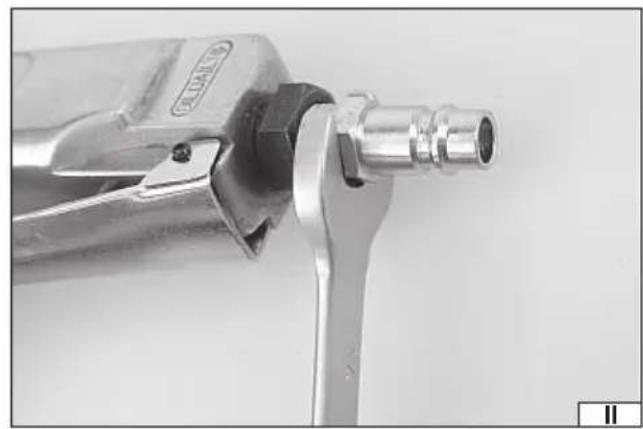
Into the thread of the air inlet, turn strongly an appropriate terminal that makes it possible to connect an air supply hose. (II)
Install an appropriate terminal on the collector of the tool. During work with pneumatic tools, use solely the equipment approved for work with percussive tools.
Adjust a correct direction of rotation. ^ F " indicates clockwise rotation, ^ R " - anticlockwise rotation.
Where it is possible, adjust the pressure (turning moment).
Connect the tool to the pneumatic system using a hose of internal diameter 3/8 . Make sure the resistance of the hose is at least 1.38MPa. (III)
Work with thimble percussive wrenches
Before screwing with a wrench starts, place the screw or the nut on the thread manually (at least two turns).
Make sure the size of the wrench is correct for the screwed element. A wrong size may be a cause of damage to the wrench, the screw or the nut.
Unscrewing and tightening
Adjust the pressure in the pneumatic system so as it does not exceed the maximum value for the given tool.
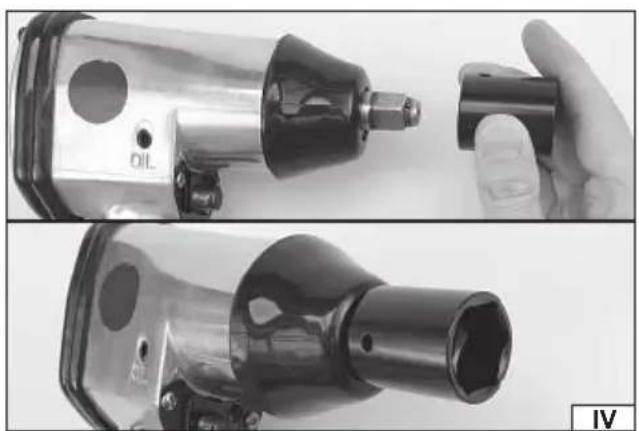
Set up the appropriate direction of rotation for the tool (F - tightening, R - unscrewing), and the appropriate turning moment. (V) Install an appropriate thimble wrench on the collector of the tool. (IV)
Connect the key to the pneumatic system.
Place the key with the thimble installed on the element to be unscrewed or tightened.
Gradually release the trigger of the tool.
Once the work has been concluded, dismantle the pneumatic system and perform appropriate maintenance of the tool.
MAINTENANCE
Never use gasoline, solvents or another inflammable liquid to clean the tool. The fumes may ignite causing an explosion of the tool and serious injuries.
Solvents used to clean the tool holder and the body of the tool may soften the tightening of the machine. Dry thoroughly the tool before you start working with it.
If any irregularities in the functioning of the tool are detected, it must be immediately disconnected from the pneumatic system.
All elements of the pneumatic system must be protected from dirt.
Dirt in the pneumatic system may damage the tool and other elements of the pneumatic system.
Maintenance of the tool before every use
Disconnect the tool from the pneumatic system.
Before each use of the tool, place a small amount of maintenance liquid (e.g. WD-40) through the air inlet.
Connect the tool to the pneumatic system and start it for approximately 30 seconds. It will allow spreading the maintenance liquid inside the tool and cleaning it.
Disconnect the tool from the pneumatic system again.
Place a small amount of SAE 10 oil inside the tool through the air inlet and other appropriate holes. It is recommended to use SAE 10 oil whose purpose is maintenance of pneumatic tools. Connect the tool and start it for a while.
Attention! WD-40 cannot be used as appropriate lubricating oil.
Wipe out the excess of oil that comes out through the outlets. If the oil is left, it may damage the tightening of the tool.
Other maintenance actions
Before each use of the tool, make sure there are no signs of damage on the tool. Collectors, tool holders and spindles must be kept clean.
Every six months, or every 100 hours of operation, send the tool for revision which must be realized by qualified personnel in the repair shop. If the tool was used without the recommended air supply system, increase the frequency of overhauls of the tool.
Defects
Stop operation of the tool immediately if any defect in its functioning has been detected. Work with a damaged tool may be a cause of injuries. All repair and replacement of the elements of the tool must be performed by qualified personnel in an authorized repair shop.
EN
| Defect | Possible solution |
| The rotation of the tool is too slow or it is impossible to start the tool | Introduce a small amount of WD-40 through the air inlet. Start the tool for a couple of seconds. It is possible that the blades adhere to the rotor. Start the tool for approximately 30 seconds. Lubricate to tool with a small amount of oil. Attention! Excessive amount of oil may cause a drop in the power of the tool. In such a case, clean the power transmission. |
| The tool starts but then slows down | The compressor does not provide an appropriate flow of the air. The tool starts with the air collected in the tank of the compressor. While the tank is being emptied, the compressor cannot follow up refilling the tank. Connect the tool to a more effi cient compressor. |
| Insuffi cient power | Make sure the inside diameter of the installed hoses is not lower than 3/8". Check the regulator of pressure - pressure must be set at the maximum value. Make sure the tool is properly cleaned and lubricated. If there are no results, send the tool for repair. |
Once the functioning has been concluded, the casing, ventilation slots, switches, additional handle and protections must be cleansed with a stream of air (at a pressure not exceeding 0.3MPa ), with a brush or a cloth without any chemical substances or cleaning liquids. Tools and handles must be cleansed with a clean cloth.
Worn tools are recyclable waste – it is prohibited to dispose of them throwing them away along with domestic waste, since the tools contain substances that are harmful for people and the environment! We ask for your active assistance in economic management of natural resources and protection of the natural environment by sending the tools to a worn tools disposal point. In order to reduce the quantity of waste that is disposed if, it is necessary to recycle them.
MERKMALE DES WERKZEUGES
OnachOCTN, BbI3BaHHBie WymOM
Bo3deICTBne 7yMa BbICOKO rOyOBH 6e3 HaJIeKaUe 3aunTb MoKet CtaTb PnUnHOn IocToHHo H HeobpaTMOM NOtePn Cnyxa, a TAKKe dpyrNx pO6Nm, taNX KAK, yM B ywx (3BOH, kyykXaHHe, CBNC NIN rYdeHne). Heo6xOJIMO OueHNTb PnCKN IN BHeDPNTb COOTBETCTBYUOHN cpeCTBA KOHTPOJRA HAD daHHbIMN fakTopAMN. COOTBETCTBYUOHN KOHTPOJc C zEJIbO CHIXeHn RnCKa MOKET BKNIOuATb NCNOB3OBAHNE DEMnnpuyuOxM MaTePnaIIOB, npeDTBpaUaOuXn "3BOH" o6paBaIBaEMOro npeDMeTa. NcNoB3OBaTB cpeCTBA 3aunTb Cnyxa CJeDyET B COOTBETCTBN C IHCTpyKzmaN pa60TaTeN IN COOTBETCTBN C Tpe6oBANm IO TnIeNe H 6e3ONACHOCTN. 3KcIIpyatauN INTexHueCKoe 6ClyXuBaHne INHEBMATNUeCKORO INCTpyMeHaT A DOLKHBOCyEcTBLrBCa B COOTBETCTBN C IHCTpyKzmaN IO 3KcIIpyatauN - 3TO IO3BOITN IN36ExKaTb HEHyXHO YBeINueHn UPOBH YAema. Ecn INHEBMATNUeCKN INHCTpyMeHT OCHAeH INyWnteM, BCERda Heo6xOJIMO y6eINbC4, UTO BO BPem INCNOB3OBAHN INHCTpyMeHtA OH yCTaHOBEn npabInbHO. BblpAb, 06cLyXuBaTb IN3HOWeHHbIe CMeHhIe pa6OHe INHCTpyMeHrTb CledyET corNaCHO INHCTpyKznn NO 3KcNPyatauN. 3TO IO3BOITN IN36ExKaTb HEHyXHO YBeINueHn 7yMa.
Onachoctn, Bb3BaHHbIe Bn6paunm
Bn6paunmoepnt npnbectn K Heo6paTMOMy NOBpeKJeHNO HepBOB N KPOBOCh6KeHn KnCTeN pyk. Pykn CneJyET depkaTb Ha COOTBeCTByUoem pacctOaHmN OT nATpoHa dpelN. Heo6xoJIMO TeIIO ODeBaTcB O BpEm pa60tB xOJIoHy IOrOdy, IN pyn DoJIKbIb 6blT bTeIIbIMn u cyxMn. B clyueae OHemeHn, NOKaJIbBAHn, 60nn nn npn no6eHn KOnn Ha naIbuaX n pykax, Heo6xoJIMO npekpatntb pa60taB C INHEBMATNUeCKHM INCTpyMeHTOM, COo6uNTb pa60TaTeJIIO N O6paTbC K BpaCy. Co1IOeHne Yka3AHN INCTpyKUnn PO kCNPIyatauIN BO BpEm NCNOB3OBAHN I TEXNHueCKTO OBcmYKBNAHN INHCTpyMeHTA No3BOJNT N36ExKaTHb HEHyXHO YBeIuHHeHn yPoBH Bn6paUNn. He NCNoIb3OBaTb N3HOWeHHbIX NII NINO XnpNaCoBAAHbIX HacaDOK, NOCONbky 3TO MOKET npNBcTN K 3NaHTeJIbHOMy YBeINuHNe I yOBH BA6paUNn. BblpaTb, ObcnyKbAtb N 3AmEHTb N3HOWeHHbIe CMeHHbIe paOOhne INCTpyMeHTbl CneDuET cOrnaHO INCTpyKUnn NO EKnNpyatauIN. 3TO No3BOJNT N36ExKaTHb HEHyXHO YBeIuHHeHn Bn6paUNn. P Bo3MOKHOCTM MoHTaX CneDuET BblnoHrB C NCNOB3OBaHnEM 3aUHTbX ekpaHOB. ECNI 3TO BO3MOKHO, INCTpyMeHT CneDuET NOdEpxHBc NOMOsbIO CTOnIKN, HATJKNTEJIY NII BanaHCupa. INCTpyMeHT Heo6xoJIMO depKAtb JERKO, HO NaEXHO, YUYtBIAIBa BO3MOXHbIE CNbIpeAKUn, NocOJIbKy ONaCHOCTb, BblBaHHaBnBn6pauneN, KAK npabInLO, BO3pactaet np60bnwem ycInn 3axkIma.
IOnJIHHTeBHeIe HNCTpyKcIIO No 6e3OJaCHOCHTIg ITHEBMaTueCeCKNX HNCTpyMeHTOB
CzatbI B03dyx MoKeT npNBecT N Cepbe3HbIM TpaBMam:
- Bcerda OTKIOHcybnoaBo3yxa, CTpaBnT daBHeHne Bo3dyxa n3 IHaHra nOTcoEHNHTb HCTpyMeH T NOaHn BO3dyxa, ecn: INCHtpmEnr He NCNOB3yETcA, nepe3aMeHO npHaIeXHOCTeN NIN BO Bpem BblONHeHn peMOHTbIX pa60t;
- HNKoRda He HaprabnTb CtpyU BO3dyxa Ha Ce6a UINIpyrnx IIOdei.
Udap shaHrom MoKet npBecTn K cepBe3hIM TpaBMam. Bcerda Heo6xOIMO npOBepaTb shaHa n CoeINHeHna Ha npEIMet HauHnue NOBpeJHn, a TaKKe He ocNa6beHJI n OHn. He cNeDuYt HApabNtB ha pyKn cTpyu XOnoHoro BO3dyxa. He NCNoIb30BaTb 6bICTPopa3BeMHBie CoeINHeHna Ha BXode YdapHbIX N Bo3yUHoo-RnpaBnuecknx INCTpyMeHTOB. IVcNoIb30BaTb pe3b6obBle coeINHeHna 3 zakaneHHo CTan (mN MaTePnana C ananorHNO pOChOteHo). KaXdb pa3, KorDa nCnoIb3yOTcY hNBepcaIbHbIe BnHTOBBie CoeINHeHna (WNTpTOBBie coeINHeHna), Heo6xOIMO npImeHraTb cTepxHN n COeINHnTei, npedoxpaHIOUIne OT Bo3MOxHbIX NOBpeJHn CoeINHeHn Mekdy WLaHramn, a TaKke MeKdy WLaHrOM n INCTpyMeHTOM. He npebblaYkazAAHHOR dIy INCTpyMeHTA MaKcImaJIbHO rDabNeHry BO3dyxa. DabLeHne BO3dyxa IMeET KpTNueckoe 3HaueHne IJI 6eONachOCTn HnREt Ha npO3BOJntBHeCTB CnCTemax C perynypEmB BpaAioUmm MOMeHTOM, a TaKke INCTpyMeHTOB C NoCTOAHbIM O6OpotAm. B 3tOM cnUyae, DoJXhBI 6bITb coXpaHeHbI Tpe6OBaHnR K dInHe n DmaMeTpU wlaHROB. Kateropnuho 3anpeSeHO nepenocHTB INCTpyMeHT, depJa erO 3a Wlnar.
3KCNYATAUHOHHbI YE CNOBnA
Heo6xodnmo y6eHtbcraB TOM, yTO nCTOCHNK KOMnPecCnpoBaHHoro BO3dyxa oEcneuNbaet Tpe6yeMo pa6ouee daBneHne i COOTBETCTbYIOUee TeueHne BO3dyxa. B cnyae upe3mepHoro dABNeHnRA BO3dyxa NITAHN CNEyET BOCNOJb3OBaTcR peDyKTopom C ppeOxoPahntelhblm KlanahOM. IHeBMATNUeCKOE yCTPOINCTBO DONXHO NITATCBc C NCNOJb3OBaHNEM CNTEmbl fIINbTpA u MacNEHK. 3To o6eCneHT UNCOTy u ONDOBPeMeHHO yBnaXHHeHne BO3dyxa MACOM. CoCTOHNHE fIINbTpA u MacNEHKn Heo6xODnmo npOBepaTb nepek kaxdbIM NyckOM u B cnyae notpe6HoCTN OUCHNTb fIINbTp INN do6aBHT MaCLa B MACNEHKy. 3To o6eCneHT HADNEKAUYIO EKCnVAtauHIO YCTPOINCTBA u NOBICNT erO JKNByEcTb.
Heo6xOIMO npaBnIbHO npncIOcO6ntb peakTINBHyO wTaHry K daHHOMy BnID pa6Otbl.
B cnyuae npimmeHnna DOnonHnteNbHbIX pykoTOK nnn onOpHbIX cToek CJIeNyet y6eINTbcra B TOM, TTO INHCTpyMeHT npabNtboHo n HadeKHO 3akpenneH.
Heo6xOIMO npHnTb COOTBETCTBEHHyIO No3y, o6eCneHbAioSyI npOTNbOeIcTBnE HopMaJIbHbIM IIN HeoXnDaHHbIM DnIXKeHNrM yCTPOJCTBa, Bbl3BaHHbIM MOMHTOM BpaUeHnI.
3anpeaaetcAepKaTb pyuN nDpyrue qactn Tena B 30He DeiCTBn peakTNBHOI wTaHn, 3TO rpo3NT cepbe3HbIMN TeNeChbIMN NOpeKdHnMn.
PpIMHeMbIe TopObIe KInOuH N DpyHne IHCTpyMeHTbl DoJXHbI 6bITb aadTnIPOBaHHbIMN K pa6oTe C nHEBMaTHueCKMm UcTpoiCTBaMn. BcTabJIeMbIe INCTpyMeHTbl DOJXHbI 6bITb YnCTbIMN, IcnpaBbIMN N 6e3 NOBpeKdEHN, a INx pa3Mep - COBnaDaTb c pa3Mepom NOBoka. 3anpeUaetc npedeJIbBaT bHe3da KInOeuH INI NOBoka.
ПОЛБ3OBAHNE YCTPOICTBOM
IpeepKaKdbm NyckOM yCtpoNCTBa CNeDyET y6eHntbC B TOM, YTO He NOBpeDnJcH N OINH 3JeMeHT NHEBMaTNUeCKO CNCTEmbl. EcnnOBapxHeNIOBpeXdHn, CNeDyET HemeDJIeHHO 3aMeHNTb HncnPabHBbIE 3JeMeHTb CNCTEmbl HOBBIM.
Ipeed KaKdbim npImHeHemn HeBMATnuecko CnCTeMb CIeNyET JIKBnDnpoBaTb KOHdeHCnpOBaHHyO BJIary BHyTpN yCTpOCTBa, KOMPecccopa n IJNAHROB.
Iodkniouheue ycmpoucmea K rHeBmuaueckou cucmeMe
Ha pncyHke n3o6paXeH peKomeHDoBaHHb cnOCo 6 noKJIHOeHn yCTpoiCTBa K IHeBMaTHueCKO cnCTeMe. Yka3aHHb cnOCo6 oBeCneuBaet HAnbolee 40fKeTINBHOe NOIb3oBAHne yCTpoiCTBOM INOBIIwaeT erO XNByEcTB.
BBeTn HeckoIbKO kaneIb MaCJa B3KocTn SAE 10 uepe3 BxOdHoe Bo3dyuHoe OTBepCTne.
Kpe3b6e BxOJHOro BO3dyuHOro OTBepCTnHaJeXHO npIKpyTntb COOTBeTCTBeHHyU HacaKy, o6ecneuBaIOUyU noIKNUoyeHne 7naHra noaun Bo3duxa. (II)
YCTaHOBT COOTBETCTBeHHyO HacaIky Ha NOBoIke yCTpoIcTBA. Bo Bpempa60bI c nHeBMATnueckmU yCTpoIcTBAMN PONb3OBaTBCr NCKIOHTeBHO OChauHEm, PpeHa3NaYeHHbIM dIra pa60tbc ydapHBIMyCTpoIcTBAMN.
Bb6paTbTre6yemoe HnnpabJIeHne BpaUeHn. BykBa F 6o3Naaet 6opOToI NO yacOBn CTpeJIke, 6yKBA R - o6OpOToI npOTNB YacOBn CTpeJIKN.
Tam, rTe 3TO BO3MOXHO, OTpeYnIPOBaTb DaBHeHne (MomeHT BpaueHn).
IopKIOHTb yCTPOINCTBO K INHeBMATNUeCKO CNCTeMe, NOJb3yrcb IJIaHROM BHyTppeHrero dnaMeTpa 3/8 / 10". Y6eIITbcB TOM, TTO pOuHocTB IJIaHra paBa HmHmym 1,38MPa. (III)
3aBcTn yCTpOHTBO Ha HeckoJIbKO cekyH, YTO6bl y6eITbCBA TOM, YTO OHO He N3daET HNKaKIX NOdo3pTeIbHbIX 3ByKOB IN He Bn6pnpuyet.
Ponb3oBaHue ydapHbIMu mOpuO6bIMU kNIOyAmU
Ipeen TEm, KaK Hauatb 3aKpyuBaTb 6oTT NIN rAky KIOHcEM, CneDyET BpyHyO HABNHTb 6oTT NIN rAky Ha pe3b6y (MHNIMyMDBa o6opota).
Y6eIITbcraB TOM, YTO pa3Mep TOPcOBOrO KJIIOUca COBnAaET C 3akpyuHbAembIM INN OTkpyuHbAembIM 3neMeHTOM. HecOBnaJeHne pa3MepOB MOKeT Bbl3BaTb NOLmKy KaK KJIIOUa, TaK II 6oJIa ININ rAIKN.
Bb6paTb Tpe6yemoe HnnpaBneHne BpaueHnIHCTpyMeHTa (F-3akpyuHaHne, R-OTkpyuHaHne), a TaKke Tpe6yembl MOMeHT bpaueHnI.
YcTaHOBtB Ha NOBKe yCTPoIeCTBa COOTBeTCTBeHHbI TOpOBoBII KJIou. (IV)
IopKJIIOHTb KJIIOU K INeBMaTnueckoC nCTeMe corJacho CnOcoby.
HaTeb KInoC yCTaHOBHeHNo HacaKoH NaOkpyuHbEmbl NIN 3aKpyuHbEmbl 3IeMeHT.
IocTeHHeHo HaxImaTb Ha BbIKJIOuYateB yCTPOIcTBa.
Iocne 3aBepueHnpa60bpa3o6paTb HEBMaTHueckyU CNTeMy n pOBeCTN KOHcpeBaunu yCTPOINCTBA.
KOHCEPBALIY
3anpeaetc noJIb3OBaTbC8 6eH3nHOM, pactBOpTeNem nIIN dpyroT roptOHe JxuKocTbIO BO BpEm OunCTKN yctpoiCTBa. IcapapeHHMOY TBOCNPiMaHEHTbcra, Bbl3bBAB B3pbIB YcTPOiCTBa N cepbe3hble TeNEChble NOBpeXDeHH.
Pactbopnten, npmmeHemble BO BpeM OucnKn NaTPOHa yCTpoNCTBa N KOpnyca, MoryT Bbi3BaTb yxuDHeHne ynIOTHeH. B C8aN C 3TNM CNEdyET CTapaTeNbHO pOcuyuTb yCTpoNCTBO nepeH HauJOM pa60tbl.
Ecnn OhapykeHb KaKne-Jin6o nepe60 B pa6ote yCTpoiCTBa, cNeNyET HeMeIeHHO OTKJIIOHTb yCTpoiCTBO OT NHeBMaTHueCKO cnCTembl.
Bce 3IeMeHTb IINEBMaTNUeCKO CNCTeMbI DOJIKNbI 6bITb 3aUIIuEHHbIMN O T 3arp3HeHn. 3arp3HeHn, IPOHnKaIOUne B INHEMaTNUeCKyO CNCTeMy, MOrY BbI3BaTb NIOLOMKy YcTpoNCTBa N dpyNX 3IeMeHTOB INEBMaTNUeCKO CNCTeMbI.
KoHcepeaun ycmpoucme nped kaxdbim nyckom
OTKJIIOHTb yCTPOINCTBO OT INHEBMATNHECKO CNCTEMbl.
Ipeed kajdbim nyckom cneyet BBecTN He6oJbHoe KOJIueCTBO MOIOUe JxNkoCTn (HaNP., WD-40) uepe3 BxoOHOe BO3dyHoe OTBepCTne.
IopKIOHTb yCTPOINCTBO K INHEBMATNueCKO CnCTeMe N 3aBecTn npMepHO Ha 30 ckyHd. BnaOapra 3tOMy MOUaJxNkoCTb pa3oJETcBHYTPN yCTPOINCTBa N OCHNTI erO.
CHOBAOTKJIIOHTb yCTpoINCTBO OT INHEBMATNueCKO CnCTeMbI.
He6oIbHoe KOInuecTBo Macna SAE 10 BBecTN BHTpb ycTpoiCTBa uepe3 BXOJHOe BO3DyUHoe OTBepCTne n OTBepCTn, npedHa3NaueHHbe IINr EToIeJI. PeKomeHdyTeC TOnb3ObaTcR MaCLOM SAE 10, npEJaHa3NaueHHbIM IINr KOHePBAuINn INHeBMaTIuecknx yCTpoiCTB. POKIOHHTb ycTPOiCTBO n 3aBeCTn erO Ha KpaTkoE Bpem.
BHMaHHe! 3anpeaaetcnoIb3oBaTbcraWD-40kakMacIOM,npedHa3HaueHHbIMdIg Cma3Kn.
BbItepeTb MacNo, KOTOpoe npOHKnIO uee3 BbIXoHbIe OTBepCTnA. OcTaBwEecr MaCNO MoKET IOBpeNTb yNlOTHeHne ycTPOINCTBA.
Ipoue paobomblIO KOHcepeauuu
Ipeed KaKdbim npImeHneM yCTpOINCTBa npoBepNTb, HeT Nn Ha yCTpOINCTBe BNIMbIX CNEOB NIO6bIX NOBpeXdHNI. NOBOKN, NaTPOHbI NnHNDeEN CInEyET COEPKAtB YNCTOTe.
Yepe3 kaxdbix 6 MecaeB nnn 100 yacob pa6oTb cneyuET OTdaTb ycTPOICTBO Ha oCMOTp KBAHnΦuropOBaHOMy nepcoHany peMOHTHO MaTePcKOJ. EcnI yCtPOICTBO NcNoJIb3OBAIOCb 6e3 npIMHeHn peKOMeHIOBaHOH OINCTEMbl NOaHn BO3dyXa, TO cNeDuY TByeNmHTb YAcToTy OCMOTPOB ycTPOICTBa.
YcmpaHHeHne noBpeKdeHu
Heo6xOIMO npepBaTb pa60ty yctpoCTBOM cpa3y ke nocne toro, kak 6blIO o6hApyeHO JIO6OE NOpeXeHne. IOnI3OBaHne HeICnPaBBhim yCTPOINCTBOM MOKET Bb3BaTb TeNEChbE IOpeXeHnB. BcayeCKne peMOHTb INN 3ameHbI 3JIeMeHTOB yCTPOINCTBA DOJIXe HPOBOInTB KBaIIINΦuNPoBAHHb INepCOHaI yNOHOMOeHHOPEMOHTHO INPeINpIyrA.
XAPAKTEPNUCTNKA IPIPUCTPOIO
IHeBMATUHNN KIOU - npNCtpi 3 XKNBHeHHM CTPyMeHem KOMnpecObaHoro NOBITpNi D BiIDNOBIDHM TnCKOM. 3a DonomorHO TopueBHX KIOUIB, Aki HADRAIObC HsXOMYTNK, MOXHa 3akpyuByatn Ta BiIDkpyuByatn 6oNTN, OcObIMBO TAm, De notpiBHN BnCOKNI MOMENT oEBpTAHN. Ipcntpi He npNCtOCOBaHm DO 6e3nepePBHOi pOBoTI. PekomeHDoBaHn peKM - npaI npOTrrom 5 XBUNIH, Notim nepeBa 30 XBUNIH, uo6 npNCtpi 3MiR BuCTnHyTu. IpaBUNbHa, 6e3BIMOBHa Ta 6e3NeHn npaI npNCtpo1 3aJIeKHTB Bd npABUNbHOi EKCNPyatauii, y 3B3ky 3 YIM:
Ipeep noaTkom po60tn npncpoem Heo6xidno DeTaIbHO O3HaonMnTcna 3 iHctpykciio Ta 36epertn ii.
IocTaybHnK He BiDnOiJaac 3a WKOy Ta TineChi YWKOJxHeHn, HAnecHi B peYnbTaTi KOpNCTyBaHH npNCtPoem BCynepeu Ioro np3HaueHHIO, HeoTpMaHnH npaBnTexHnK 6e3neKn Ta Bka3iBok 3 daHOI IHcTpykci. KopNCTyBaHH npNCtPoem BCynepeu Ioro np3HaueHHIO BnKNkAc TAKoK BTPaTy rapaHTiMHnx npab KopNCTyBaHa 3 ORJMy Ha nopUWeHHraPaHTiHOro DorOBOpy.
OCHAUH
KOPNUCTYBAHHI PNUCTPOEM
Ipeep KOxHIM NycOM npncTpoHO Heo6xIDHO nepeKoHaTcR y TOMy, 00 He NoWKoDKeHm Hi OINH eNEMeTTHEBMATNUHOI CNTeMn. RaKIO BKNPTO NOWKoDKeHH, cnId HeraHNO 3aMIHTN HecnPabHI eNEMeHTN CNTeMn HOBIMN.
Ipeed KoxHIM NyckOM NHeBMaTnUHO iCCTeMn Heo6xIDHO No3bTyNCra BONr, 00 KOHDeHCyETbcra BCEpeDNI npncTpO, KOMnpecopa Ta 7uNaHrib.
3aBecTn npncpti Ha KJIbka CekyH Ta TnepeKoHaTncr y TOMy, 00 Bn He BnDae HiaKnx NIO3pIInx 3BykIB Ta He Bi6pyE.
DECLARATION OF CONFORMITY
0125/81100/EC/2025
We declare and guarantee with full responsibility that the following products:
Pneumatic wrench; 0,63 MPa; 340 Nm; 7000 min ^-1 ; item no. 81100, 81101
meet requirements of the following European Standards / Technical Specifications:
EN ISO 11148-6:2012
and fulfill requirements of the following European Directives:
2006/42/EC Machinery and safety elements
Serial number: concern all serials numbers of item(s) mentioned in this declaration
The person authorized to compile the technical file:
Agnieszka Redziak
TOYA S.A., ul. Soltsyowsicka 13 - 15, 51-168 Wroclaw, Polska
DECLARATIE DE CONFORMITATE
0125/81100/EC/2025