
BOSS200A - Sander Vevor - Free user manual and instructions
Find the device manual for free BOSS200A Vevor in PDF.
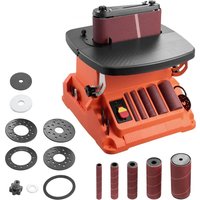


| Product Type | Combined spindle and belt sander |
| Power Supply | Mains 230 V~50 Hz |
| Table Tilt | 0° to 45° with stops at 15°, 22.5°, 30° |
| Sanding Drum Diameters | 19, 26, 38, 51 mm |
| Fine Sanding Sleeve Diameter | 13 mm |
| Grit of Supplied Sleeves | 80 |
| Included Accessories | 4 rubber sanding drums with 80 grit sleeve, 1 sanding sleeve 80 grit (13 mm), 1 belt sander unit with 80 grit abrasive belt, 5 bench inserts, workpiece stop, open-end wrenches, screws, nuts, fan wheel |
| Safety | Mandatory use of safety glasses, dust mask, and hearing protection. Disconnect before any adjustment or accessory change. Do not wear gloves. |
| Maintenance | Regular cleaning with vacuum cleaner and soft cloth. Do not use solvents. Bearings are permanently lubricated, no additional lubrication required. |
| Repairability | Repair by a qualified technician only. Use only identical replacement parts. |
| Manufacturer | Shanghaiuxinmuyeyouxiangonsi |
| Importer (Australia) | SIHAO PTY LTD |
| Importer (United States) | Sanven Technology Ltd |
Frequently Asked Questions - BOSS200A Vevor
User questions about BOSS200A Vevor
0 question about this device. Answer the ones you know or ask your own.
Ask a new question about this device
Download the instructions for your Sander in PDF format for free! Find your manual BOSS200A - Vevor and take your electronic device back in hand. On this page are published all the documents necessary for the use of your device. BOSS200A by Vevor.
USER MANUAL BOSS200A Vevor
Affordable. Reliable. Home Improvement.
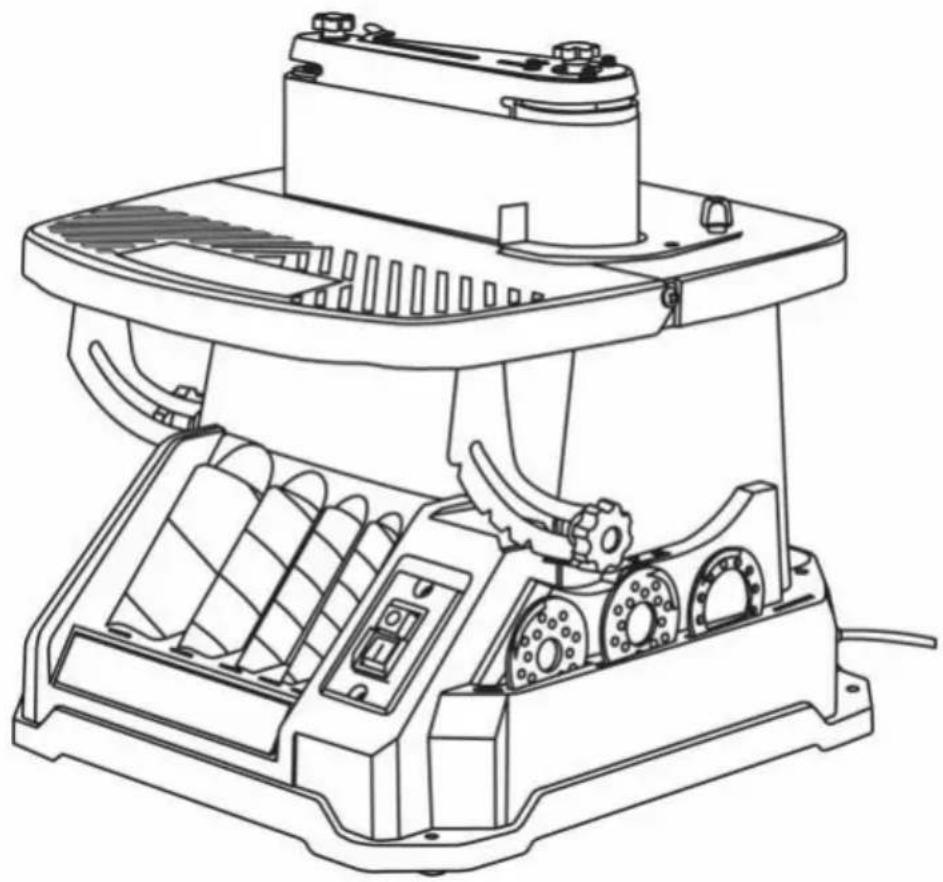
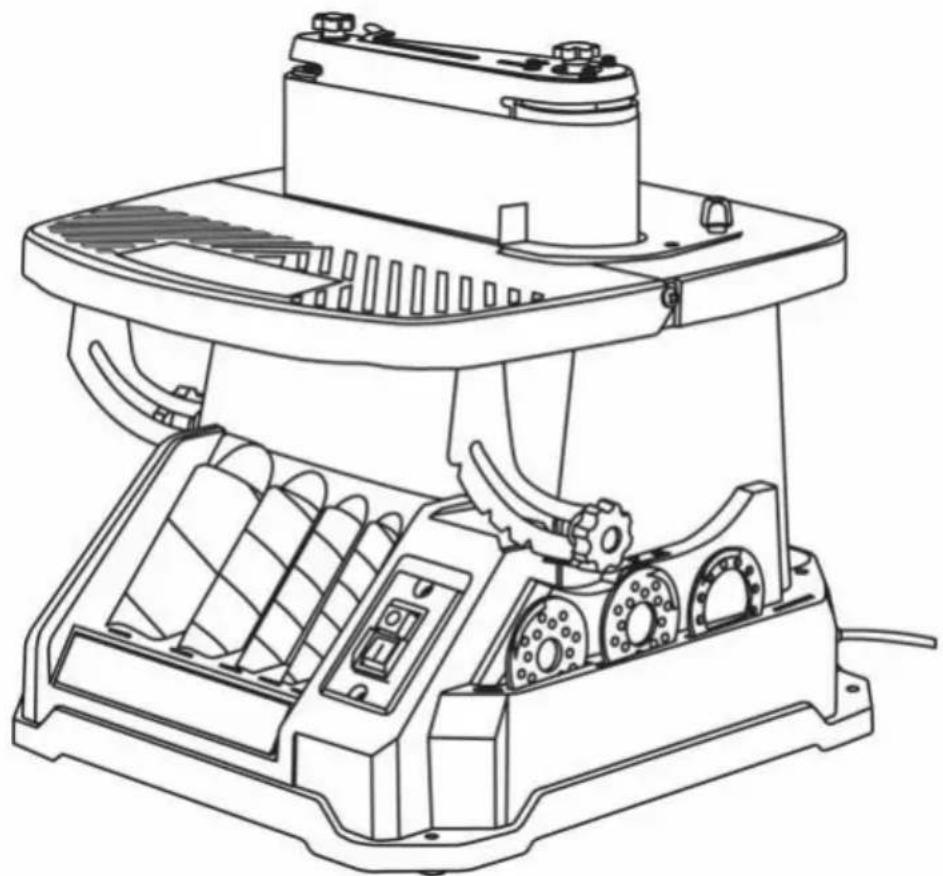
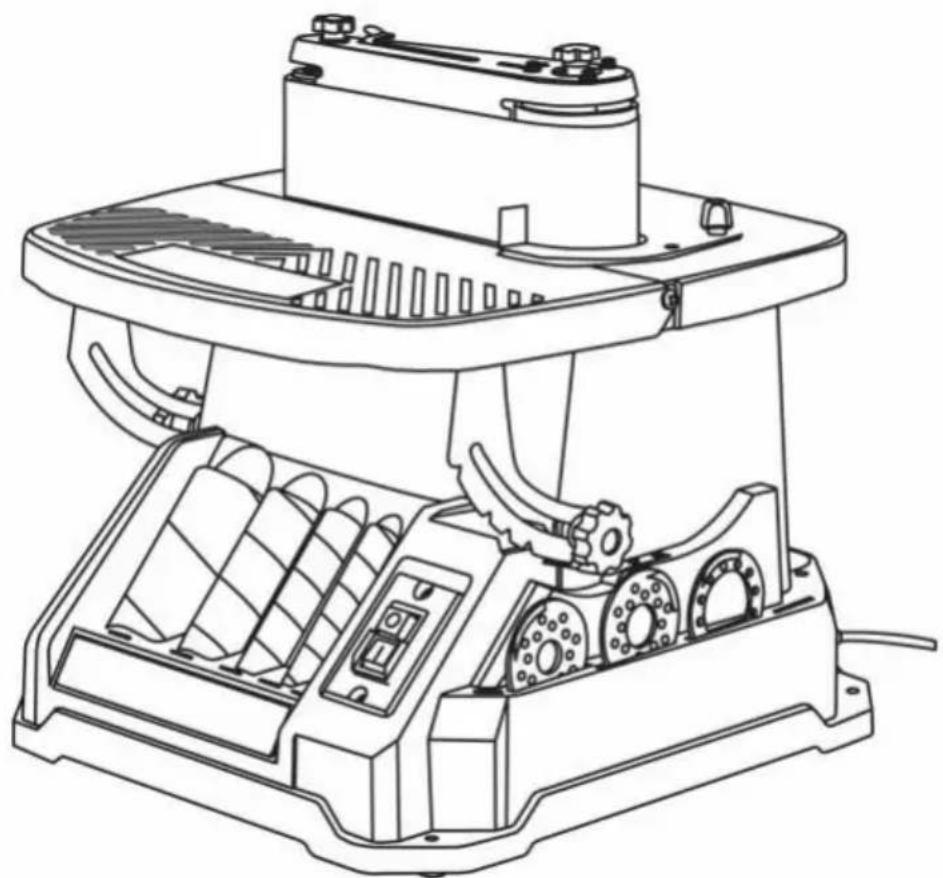
SPINDLE SANDER
MODEL: BOSS200A
MODEL: BOSS200A
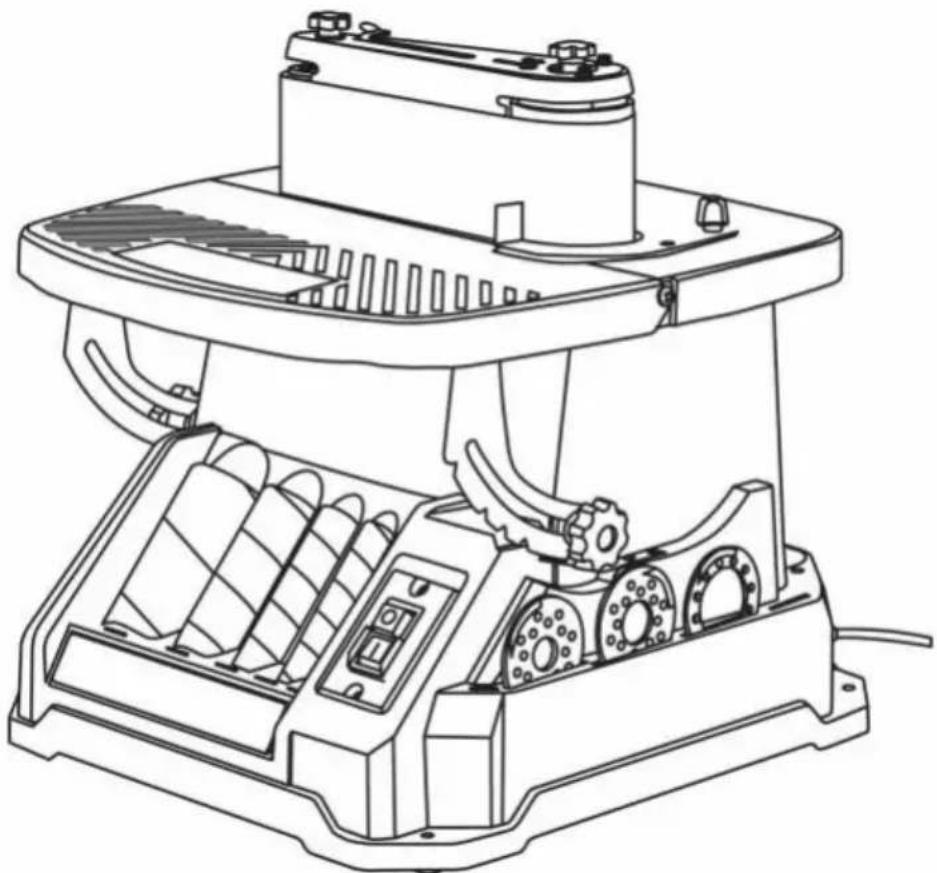
This is the original instruction. Please read all manual instructions carefully before operating. VEVOR reserves a clear interpretation of our user manual. The appearance of the product shall be subject to the product you received. Please forgive us that we won't inform you again if there are any technology or software updates on our product.
| Warning-To reduce the risk of injury, user must read inst manual carefully. | |
| This symbol, placed before a safety comment, indicates a precaution, warning, or danger. Ignoring this warning may an accident. To reduce the risk of injury, fire, or electro please always follow the recommendation shown below. | |
| CORRECT DISPOSAL This product is subject to the provision of european Direc 2012/19/EU. The symbol showing a wheelie bin crossed th indicates that the product requires separate refuse collection the European Union. This applies to the product and all accessories marked with this symbol. Products marked as may not be discarded with normal domestic waste, but m taken to acollection point for recycling electrical and elec devices. | |
| Warning- Be sure to wear eye protectors when using this | |
| Warning- Be sure to wear ear protectors when using this | |
| Warning- Be sure to wear dust masks when using this p | |
| Warning- Disconnect mains plug from electrical outlet |
SPECIFICATIONS
| Power | AC110-120V, 60 Hz, 450W S1 | AC230V, 50 Hz, 450W S1 |
| No Load Speed | 2400RPM ±5% | 2000RPM ±5% |
| Oscillations | 58 OPM | |
| Spindle Size | 1/2" | |
| Sanding Sleeve Sizes | 1/2", 3/4", 1", 1-1/2", 2" | |
| Maximum Workpiece Height | 3-6/7" | |
| Weight | 37.5 Pounds (17Kg) | |
SAFETY GUIDELINES

WARNING!
Read all safety warnings and all instructions. Failure to follow the warnings and instructions may result in electric shock, fire and/or serious injury.
SAFETY GUIDELINES - DEFINITIONS
WORK AREA SAFETY
- Keep work area clean and well lit. Cluttered or dark areas invite accidents.
- Do not operate power tools in explosive atmospheres, such as in the presence of flammable liquids, gases or dust. Power tools create sparks which may ignite the dust or fumes.
- Keep children and bystanders away while operating a power tool. Distractions can cause you to lose control.
ELECTRICAL SAFETY
- Power tool plugs must match the outlet. Never modify the plug in any way. Do not use any adapter plugs with earthed (grounded) power tools. Unmodified plugs and matching outlets will reduce risk of electric shock.
- Avoid body contact with earthed or grounded surfaces such as pipes, radiators, ranges and refrigerators. There is an increased risk of electric shock if your body is earthed or grounded.
- Do not expose power tools to rain or wet conditions. Water entering a power tool will increase the risk of electric shock.
- Do not abuse the cord. Never use the cord for carrying, pulling or unplugging the power tool. Keep cord away from heat, oil, sharp edges or moving parts. Damaged or entangled cords increase the risk of electric shock.
- When operating a power tool outdoors, use an extension cord suitable for outdoor use. Use of a cord suitable for outdoor use reduces the risk of electric shock.
- If operating a power tool in a damp location is unavoidable, use a ground fault circuit interrupter (GFCI) protected supply. Use of a GFCI reduces the risk of electric shock.
PERSONAL SAFETY
- Stay alert, watch what you are doing and use common sense when operating a power tool. Do not use a power tool while you are tired or under the influence of drugs, alcohol or medication. A moment of inattention while operating power tools may result in serious personal injury.
- Use personal protective equipment. Always wear eye protection. Protective equipment such as a respiratory mask, non-skid safety shoes and hearing protection used for appropriate conditions will reduce the risk of personal injury.
- Prevent unintentional starting. Ensure the switch is in the off-position before connecting to power source and/or battery pack, picking up or carrying the tool. Carrying power tools with your finger on the switch or energizing power tools that have the switch on invites accidents.
- Remove any adjusting key or wrench before turning the power tool on. A wrench or a key left attached to a rotating part of the power tool may result in personal injury.
- Do not overreach. Keep proper footing and balance at all times. This enables better control of the power tool in unexpected situations.
- Dress properly. Do not wear loose clothing or jewelry. Keep your hair and clothing away from moving parts. Loose clothes, jewelry or long hair can be caught in moving parts.
- If devices are provided for the connection of dust extraction and collection facilities, ensure these are connected and properly used. Use of a dust collection can reduce dust-related hazards.
POWER TOOL USE AND CARE
- Do not force the power tool. Use the correct power tool for your application. The correct power tool will do the job better and safer at the rate for which it was designed.
- Do not use the power tool if the switch does not turn it on and off. Any power tool that cannot be controlled with the switch is dangerous and must be repaired.
- Disconnect the plug from the power source and/or the battery pack from the power tool before making any adjustments, changing accessories, or storing power tools. Such preventive safety measures reduce the risk of starting the power tool accidentally.
- Store idle power tools out of the reach of children and do not allow persons unfamiliar with the power tool or these instructions to operate the power tool. Power tools are dangerous in the hands of untrained users.
- Maintain power tools. Check for misalignment or binding of moving parts, breakage of parts and any other condition that may affect the power tool's operation. If damaged, have the power tool repaired before use. Many accidents are caused by poorly maintained power tools.
- Keep cutting tools sharp and clean. Properly maintained cutting tools with sharp cutting edges are less likely to bind and are easier to control.
- Use the power tool, accessories and tool bits, etc., in accordance with these instructions, taking into account the working conditions and the work to be performed. Use of the power tool for operations different from those intended could result in a hazardous situation.
- Use clamps to secure your workpiece to a stable surface. Holding a
workpiece by hand or using your body to support it may lead to loss of control. 9. KEEP GUARDS IN PLACE and in working order.
SERVICE
- Have your power tool serviced by a qualified repair person using only identical replacement parts. This will ensure that the safety of the power tool is maintained.
CALIFORNIA PROPOSITION 65 WARNING
Some dust created by power sanding, sawing, grinding, drilling, and other construction activities may contain chemicals, including lead, known to the State of California to cause cancer, birth defects, or other reproductive harm. Wash hands after handling. Some examples of these chemicals are:
- Lead from lead-based paints.
- Crystalline silica from bricks, cement, and other masonry products.
- Arsenic and chromium from chemically treated lumber.
Your risk from these exposures varies depending on how often you do this type of work. To reduce your exposure to these chemicals, work in a well-ventilated area and use approved safety equipment such as dust masks specially designed to filter microscopic particles.
SPINDLE SANDER SAFETY

WARNING!
Do not operate the power tool until you have read and understood the following instructions and the warning labels.
- TOOL PURPOSE. This sander is designed to sand wood or wood-like products only. Sanding or grinding other materials could result in fire, injury, or damage to the workpiece. Using the machine for any other purpose for which it is not designed may result in serious injuries, machine damage, and voiding of the warranty.
- MACHINE MOUNTING. For operation safety, the sander must be securely mounted onto a flat and stable surface or stand.
- PERSONAL SAFETY
- Always wear ANSI Z87.1-approved glasses with side shields, hearing protection, and a dust mask.
- Do not wear loose clothing or jewelry, as they might get drawn in by the machine. Tie back long hair.
- DO NOT wear gloves while operating this machine.
- ELECTRIC CORDS. Keep cords away from heat, oil, sharp edges, and moving parts of the tool. Have an electrician replace or repair damaged or worn cords immediately.
- TOOL & ACCESSORIES INSPECTION. Before operation, check the tool and accessories for any damage or missing parts. Do not use the tool if any parts are missing or damaged. Make sure all adjustments are correct and all connections are tight. Keep all guards in place.
6. SANDING ACCESSORIES
- Do not use sanding sleeves or drums that are damaged, torn, or loose. Replace worn or damaged sanding sleeves before operation.
- Always unplug the unit before making adjustments or changing sandpaper, rubber drums, or throat plates.
- Always use the throat plate that matches the diameter of the drum to minimize the gap between the drum and the throat plate opening; this will reduce the risk of personal injury.
7. WORKPIECE REQUIREMENTS
- Only use workpieces sturdy enough to withstand the force of the sanding spindle.
- Inspect the workpiece for imperfections, nails, staples, etc. before sanding. Never sand stock that has questionable imperfections or embedded foreign objects.
- When sanding a large workpiece, provide additional support. Do not sand with the workpiece unsupported.
- Sand only one workpiece at a time.
- PREVENTING ACCIDENTAL STARTING. Make sure the power switch is in the OFF position prior to plugging in the machine. Always make sure the power is in the OFF position and the machine is unplugged when doing any cleaning, assembly, setup operations, or when not in use.
- Do not operate this tool until it is completely assembled and installed according to the instructions.
Remove scrap pieces and other objects from the table and sanding sleeve before turning ON the sander.
- Remove scrap pieces and other objects from the table and sanding sleeve before turning ON the sander.
11. FEEDING THE WORKPIECE
- Allow the spindle to reach full speed before feeding the workpiece. Do not turn the machine while the sanding sleeve is contacting the workpiece.
- Be aware of the direction of the spindle's rotation (counterclockwise). Only feed the workpiece against the rotation of the spindle.
- Firmly hold the workpiece and lightly ease it against the spindle. Do not force or jam a workpiece into the sanding surface.
- Do not touch moving pieces. Keep hands away from the drum during operation. If cleaning is necessary, use a brush to remove sawdust and chips instead of hands.
- Never perform layout, assembly, or set-up work on the table while the sander is operating.
- After turning off the sander, wait until the spindle comes to a complete stop before touching the workpiece.
- Always turn off and unplug the machine before cleaning, making adjustments, or changing attachments. Accidental start-ups may occur if the tool is plugged in during an accessory change or adjustment.
- CLEANING. Never use solvents to clean plastic parts. Solvents could dissolve or otherwise damage the material. Use only a soft damp cloth to clean plastic parts.
- REPLACEMENTS. Should any component of your sander be missing, damaged, or fail in any way, shut off the switch and remove the plug from the power outlet. Replace the missing, damaged, or failed parts using only identical replacement parts before resuming operation.
These safety instructions can't possibly warn of every scenario that may arise with this tool, so always make sure to stay alert and use common sense during operation.
ELECTRICAL SAFETY
- POLARIZED PLUGS. To reduce the risk of electric shock, this equipment has a polarized plug (one blade is wider than the other). This plug will fit in a power outlet only one way. If the plug does not fit fully in the outlet, reverse the plug. If it still does not fit, contact a qualified electrician to install a proper outlet. Do not modify the machine plug or the extension cord in any way.
- GROUND FAULT CIRCUIT INTERRUPTER PROTECTION (GFCI) should be provided on the circuit or outlet used for this power tool to reduce the risk of electric shock.
- SERVICE AND REPAIR. To avoid danger, electrical appliances must only be repaired by a qualified service technician using original replacement parts.
GUIDELINES AND RECOMMENDATIONS FOR EXTENSION CORDS
When using an extension cord, be sure to use one heavy enough to carry the current your product will draw. An undersized cord will cause a drop in line voltage, resulting in loss of power and overheating. The table below shows the correct size to be used according to cord length and ampere rating. When in doubt, use a heavier cord. The smaller the gauge number, the heavier the cord.
| AMPERAGE | REQUIRED GAUGE FOR EXTENSION CORDS | |||
| 25 ft. | 50 ft. | 100 ft. | 150 ft. | |
| 4A | 18 gauge | 16 gauge | 16 gauge | 14 gauge |
- EXAMINE EXTENSION CORD BEFORE USE. Make sure your extension cord is properly wired and in good condition. Always replace a damaged extension cord or have it repaired by a qualified person before using it.
- DO NOT ABUSE EXTENSION CORD. Do not pull on the cord to disconnect from the receptacle; always disconnect by pulling on the plug. Disconnect the extension cord from the receptacle before disconnecting the product from the extension cord. Protect your extension cords from sharp objects, excessive heat, and damp or wet areas.
- USE A SEPARATE ELECTRICAL CIRCUIT FOR YOUR TOOL. This circuit must not be less than a 12-gauge wire and should be protected with a 15A time-delayed fuse.
Before connecting the motor to the power line, make sure the switch is in the OFF position and the electric current is rated the same as the current stamped on the motor nameplate. Running at a lower voltage will damage the motor.
PACKAGE CONTENTS
Before using the spindle sander, you must configure the machine by installing the appropriate sanding drum, sanding sleeve, throat plate, and spindle washer for your operation. Check your packing list against the diagram below. If any parts are damaged or missing, please contact our customer service.
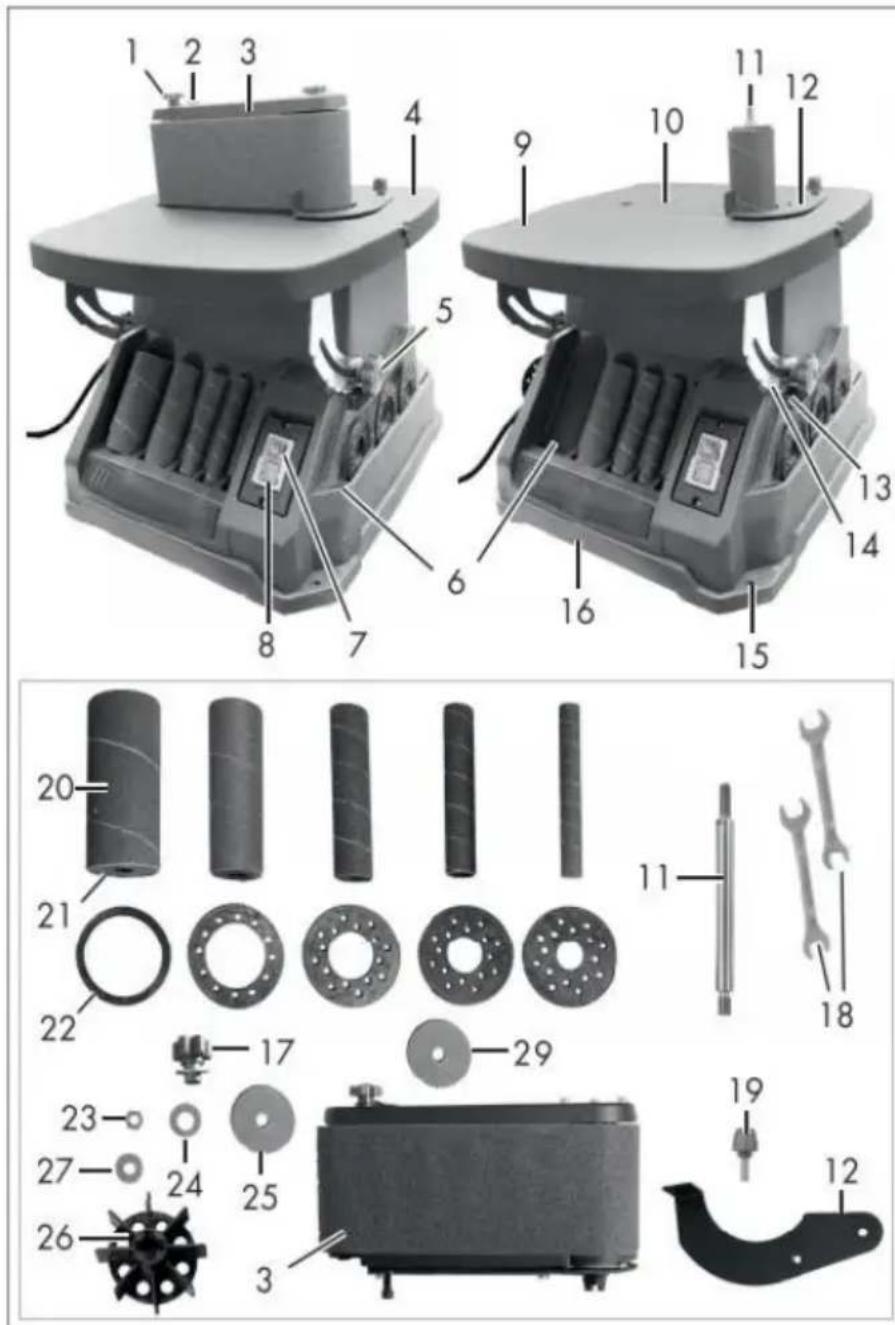
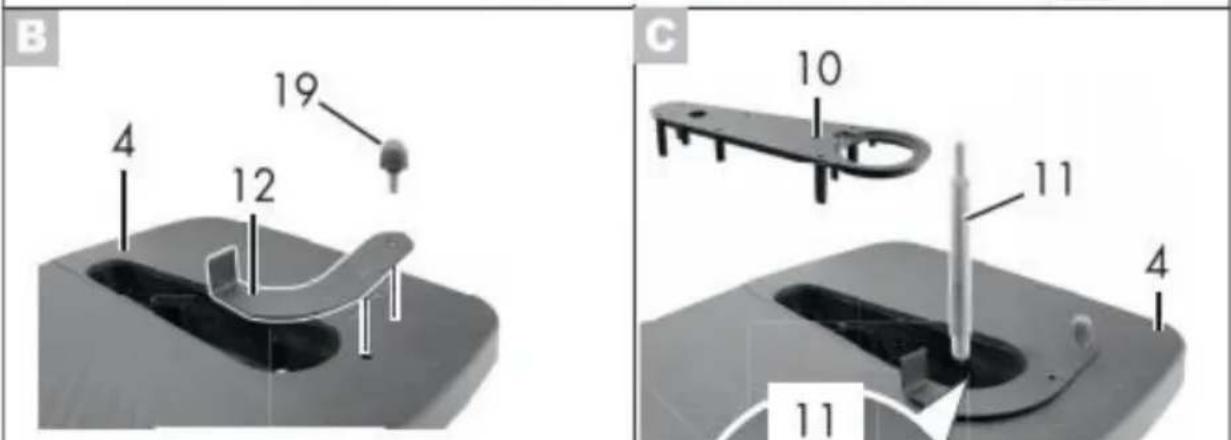
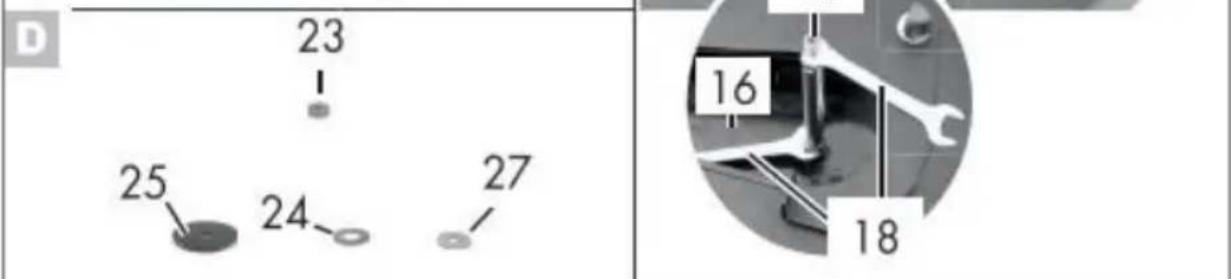
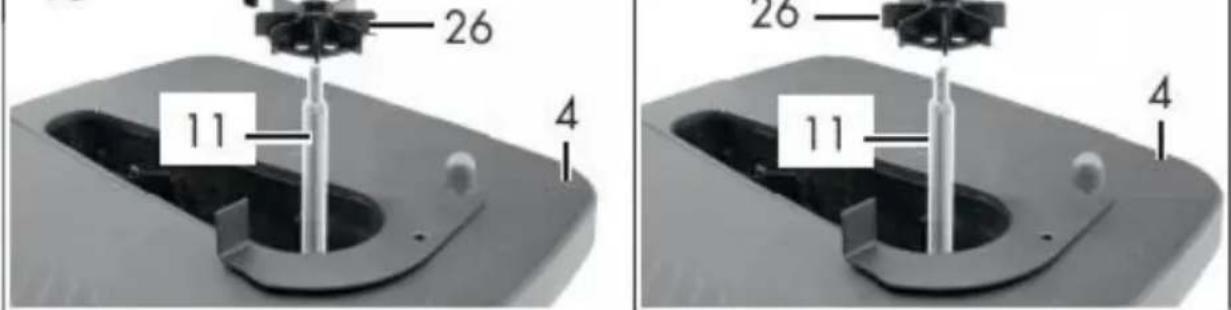
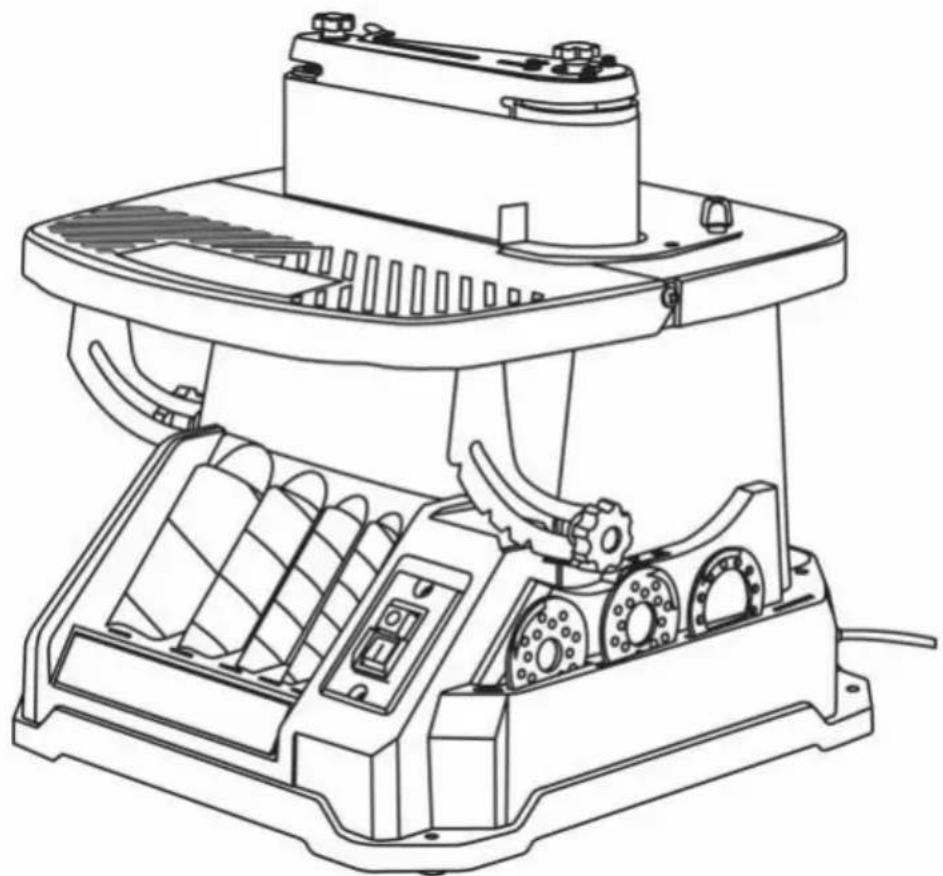
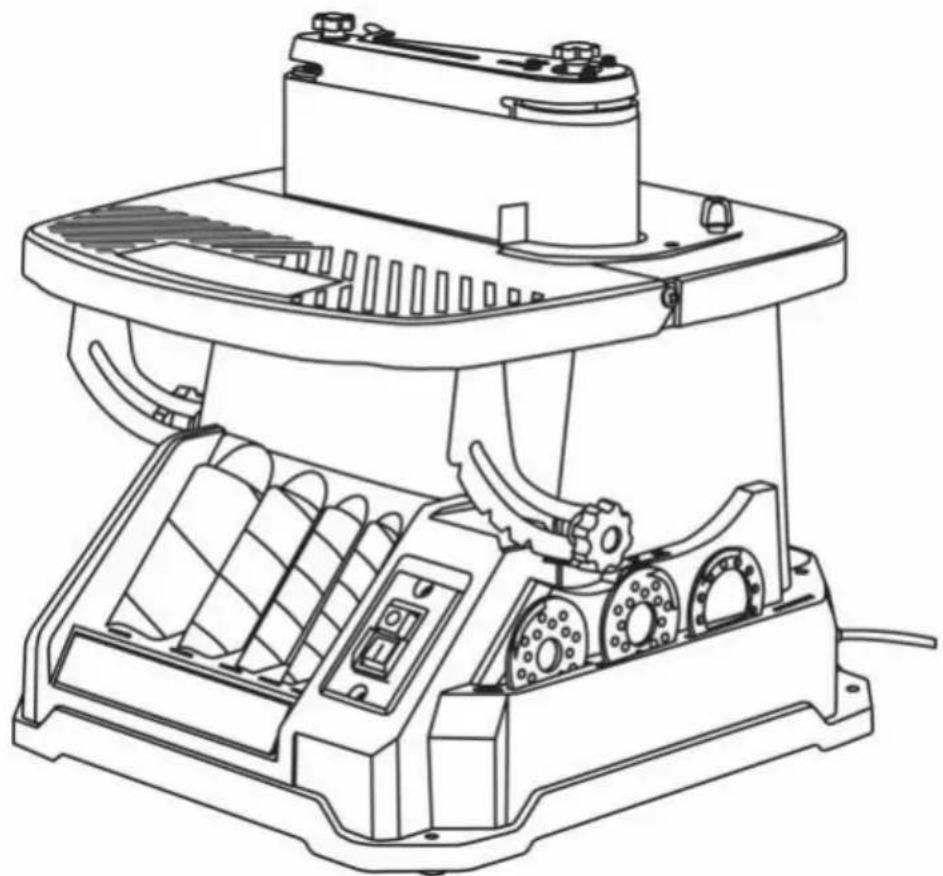
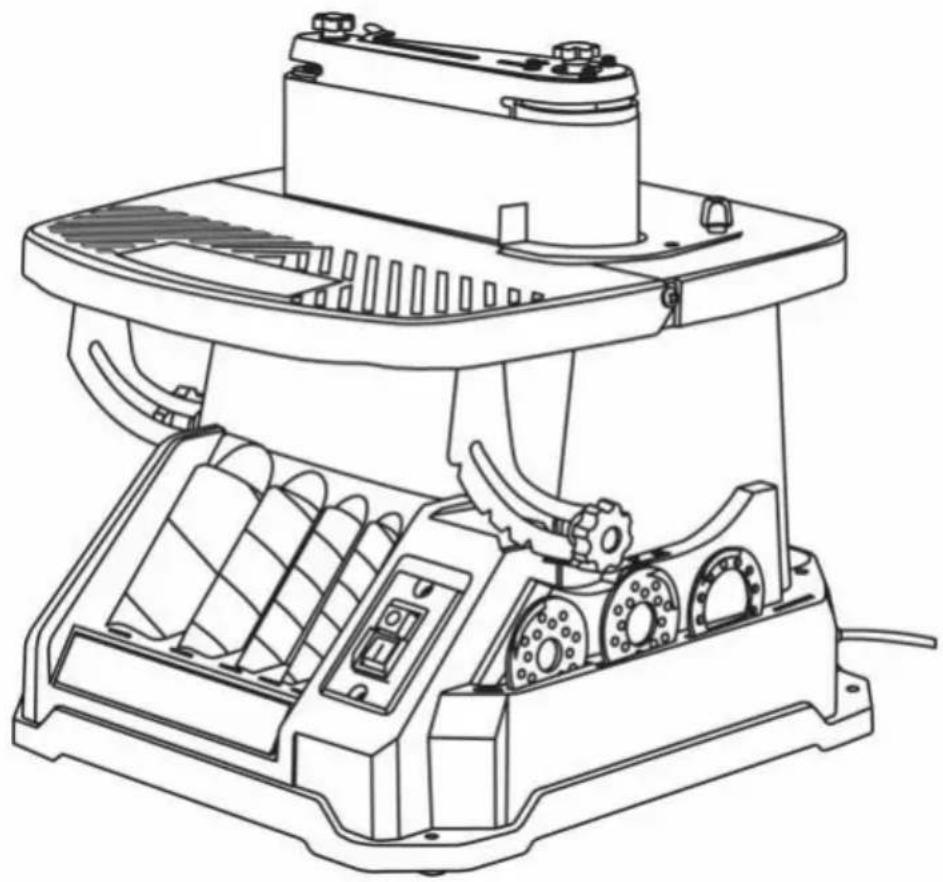
1 Adjusting screw (belt run) 2 Sanding belt lever 3 Belt sander unit 4 Workbench 5 Star grip nut (Angle adjustment, workbench) 6 Storage 7 Off switch 8 On switch 9 Swivelling workbench 10 Bench insert 11 Spindle 12 Workpiece stop 13 Small lever (angle adjustment) 14 Angle scale 15 Drill hole 16 Device housing 17 Star grip nut (belt sander unit), with washer 18 Open-end spanner 19 Screw 20 Sanding sleeve 21 Sanding roller 22 Bench insert 23 Nut 24 Washer 25 Washer 26 Fan wheel 27 Washer 28 Suction connector 27 Washer
Unpack the device and check for completeness:
1x Spindle sander 4x Rubberised sanding rollers with sanding sleeve (grit 80), size 19/26/38/51 1x Sanding sleeve (grit 80), size 13 mm
1x Belt sander unit with sanding belt (grit 80) 1x Workpiece stop 5x Bench inserts 1x Bench insert (already inserted) 4x Washer 1x Nut 1x Screw 1x Fan wheel 1x Spindle 1x Star grip nut with washer 2x Open-end spanner 1x Instruction Manual
OPERATING INSTRUCTIONS

WARNING!
Do not plug in or turn on the tool until it is fully assembled according to the instructions.
Failure to follow the safety instructions may result in serious personal injury. Refer to the packing list diagram on page 8 to ensure that you are using the sizes of throat plates, drums, and washers for each respective sanding sleeve. Ensure the workpiece can be properly supported and to minimize clearance, use the throat plate that matches the drum and sleeve that you'll be working with. Size of the throat plate is marked on the plate's surface.
NOTE: The smallest size sanding sleeve does not include a drum. It goes on onto the bare spindle.
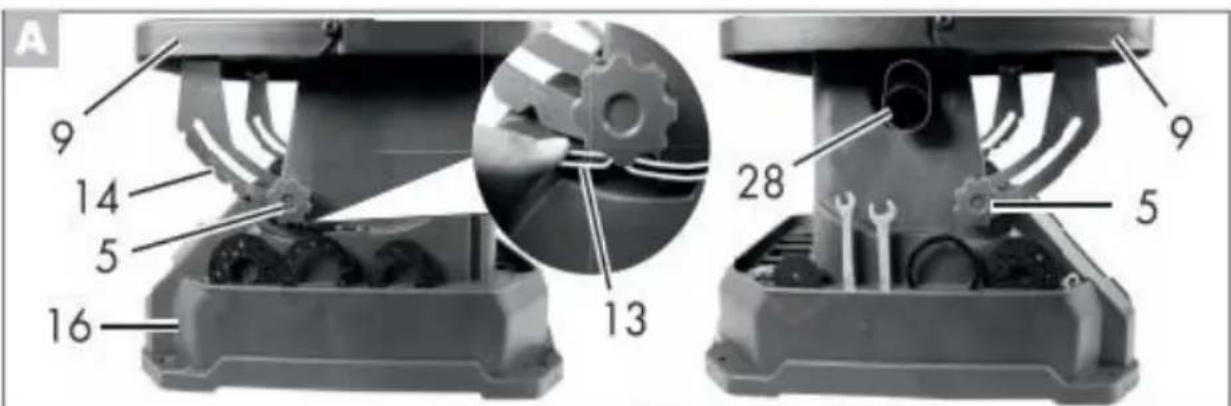

A: Adjusting the swivelling workbench
The swivelling workbench (9) can be tilted variably up to 45°. For easy change, one of the adjustable fixed angle grids can be selected (0° / 15° / 22.5° / 30° / 45°). Setting up the swivelling workbench
- Loosen the two star grip nuts (5) on the left and right of the device.
- Adjust the swivelling workbench (9) to the desired angle.
The angle scale (14) on the device is used for orientation. 3. Tighten the two star grip nuts (5) on the left and right of the device. Docking the swivelling workbench
- Loosen the two star grip nuts (5) on the left and right of the device.
- Press the small lever (13) below the star grip nuts (5) on the right of the device.
- With the other hand, grasp the swiveling workbench (9) and turn it over the direction of the device housing (16).
- Tighten the two star grip nuts (5) on the left and right of the device.
B: Mounting the workpiece stop
- Place the workpiece stop (12) on the workbench (4).
- Fix the workpiece stop (12) in the outer hole with the screw (19).
C: Initial assembly
Remove the bench insert (10) from the workbench (4).
- Fix the spindle (11) in the device using the two open-ended spanners (18). AF 13 to hold the shaft coming out of the device housing (16).
AF 10 for tightening the spindle (11).
Depending on the desired use, continue with "Use as spindle sander" or "Use belt sander".
D: Use as spindle sander
- Place the bench insert (10) in the workbench (4).
- Place the fan wheel (26) with the flat side down on the spindle (11). Check that it is firmly in place.
You might have to turn the fan wheel (26) a little manually so that it is seated correctly.
- Select the appropriate bench insert (22) for the sanding roller (21).
The size specifications of the bench insert and the sanding roller must correspond. The sizes of the bench inserts can be read on each bench insert. The sizes of the sanding rollers are indicated under the matching storage (6) on the device.
Place the matching bench insert (22) in the recess of the bench insert (10).
- Place the sanding roller (21) on the spindle (11).
Screw the nut (23) using the open-ended spanner (18) (AF 13) hand-tight onto the spindle (11).
Removal is carried out in reverse order.
E: Use as belt sander
- If necessary, remove the bench insert (10) from the workbench (4).
- Place the fan wheel (26) with the flat side down on the spindle (11). Check that it is firmly in place.
You might have to turn the fan wheel (26) a little manually so that it is seated correctly.
- Attach the belt sander unit (3) onto the spindle (11).
Check that it is firmly in place.
You might have to turn the spindle (11) a little manually so that the belt sander unit (3) is seated correctly. Moving the sanding belt here moves the spindle (11). If the upper end of the spindle ends just below the end of the belt sander unit, it is seated correctly.
- Fix the belt sander unit (3) using the star grip nut with washer (17). Removal is carried out in reverse order.
- Make sure that the machine has been assembled, and all accessories have been properly installed according to the instructions on the previous page.
- Plug in and turn ON the sander. Let it reach full speed.
- Maintain a firm grip with both hands on the workpiece for maximum control. Slowly guide the workpiece against the rotation of the spindle.
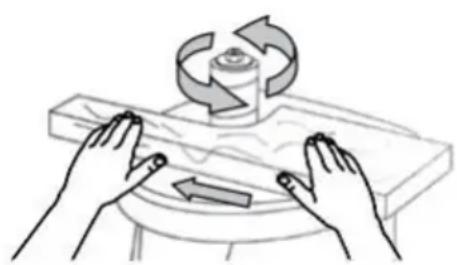
NOTE: The spindle rotates in a counterclockwise direction. Guide the workpiece from the right to left. If you guide the workpiece in the opposite direction, then the spinning sanding sleeve will tend to throw or bounce the workpiece away from the sanding sleeve, possibly resulting in injuries.
- Maintain downward pressure on the workpiece against the table, gently work it along the sanding sleeve until the desired curve has been created. Do not force the workpiece against the sanding sleeve.
- When you are finished, turn OFF the sander and wait for the spindle to come to a complete stop.
- Remove the safety key and unplug the machine from the outlet. Follow the maintenance instructions on the next page to clean and maintain your sander.
MAINTENANCE

WARNING!
To avoid accidents, turn OFF and unplug the tool from the electrical outlet before cleaning, adjusting, or performing any maintenance or lubrication work.

WARNING!
Any attempt to repair or replace electrical parts on this tool may be hazardous. Servicing of the tool must be performed by a qualified technician. When servicing, use only identical replacement parts. Use of other parts may be hazardous or induce product failure.
ROUTINE INSPECTION
Before each use, inspect the general condition of the tool. If any of these conditions exist, do not use until parts are replaced or the tool is properly repaired.
Check for:
- Loose hardware or improper mounting,
- Misalignment or binding of moving parts, damaged cord/electrical wiring,
- Cracked or broken parts, and
- Any other condition that may affect its safe operation.
CLEANING & STORAGE
- After every operation, use a vacuum to remove dust and chips from the surfaces, motor housing, and work area. Keep the ventilation openings free from dust and debris to prevent the motor from overheating.
- Wipe the tool surfaces clean with a soft cloth or brush. Make sure water does not get into the tool.
- Periodically, remove the throat plate and lower spindle washer and remove dust accumulation in the throat plate area.
CAUTION: Most plastics are susceptible to damage from various types of commercial solvents. Do not use any solvents or cleaning products that could damage the plastic parts.
Some of these include but are not limited to: gasoline, carbon tetrachloride, chlorinated cleaning solvents, and household detergents that contain ammonia. Store the tool in a clean and dry place away from the reach of children. Store sanding accessories away from extremely hot/dry temperatures. Do not bend or fold the sanding sleeves.
LUBRICATION
All ball bearings are sealed and permanently lubricated. No further lubrication is required.
PRODUCT DISPOSAL
Used power tools should not be disposed of together with household waste. The product contains electronic components that should be recycled. Please take the product to your local recycling facility for responsible disposal and to minimize environmental impact.
TROUBLESHOOTING GUIDE
WARNING!
To avoid injury from an accidental start, turn the switch OFF and always remove the plug from the power source before making any adjustments.
| PROBLEM | PROBLEM CAUSE | SUGGESTED CORRECTIVE ACTION |
| Sander does not turn on | 1、Power cord or extension cord damaged or not proper plugged in.2、Safety key is removed from power switch.3、Defective power switch, defective motor or wiring, sh circuit or loose connections.4、Circuit breaker is tripped.5、Worn carbon brushes. | 1、Check the power cord, extension cord, power plug and the power outlet. Make sure the tool is properly plugged in. Do use the if any cord is damaged.2、Insert the safety key into the power switch.3、Stop using the tool and co customer service.Repairs must be done by a qualified technician.4、Push circuit breaker to reset.5、Replace carbon brushes. |
| Motor overheats. | 1、Motor overloaded.2、Extension cord too long an insufficient gauge.3、Dust collection not being used. | 1、Reduce load on motor - re pressure on the workpiece being sanded.2、Utilize an extension cord of appropriate gauge and length of plug tool directly into outlet.3、Use dust collection. |
| Sanding grains easily rub off. | 1、Sanding sleeve has been stored in an incorrect environment.2、Sanding sleeve has been damaged or folded | 1、Store sanding accessories away from extremely hot/dry temperatures.2、Store sanding accessories flat-not bent or folded. |
| Deep sand ing grooves or scars in workpiece. | 1、Sanding sleeve grit is too coarse for the desired finish2、Workpiece sanded across the grain.3、Too much sanding force.4、Workpiece held still again sanding surface for too long | 1、Use a finer-grit sand ing accessory.2、Sand with the grain of the 3、Reduce pressure on workpiece while sand ing.4、Keep workpiece moving while sand ing on the sand ing sleeve. |
Manufacturer: Shanghaiuxinmuyeyouxianggsi
Address: Shuangchenglu 803nong11hao1602A-1609shi, baoshanqu, shanghai 200000 CN.
Imported to AUS: SIHAO PTY LTD. 1 ROKEVA STREETEASTWOOD NSW 2122 Australia
Imported to USA: Sanven Technology Ltd. Suite 250, 9166 Anaheim Place, Rancho Cucamonga, CA 91730
| UK | REP |
YH CONSULTING LIMITED. C/O YH Consultin Limited Office 147, Centurion House, London Road, Staines-upon-Thames, Surrey, TW18 4A
| EC | REP |
Affordable. Reliable. Home Improvement.
SPINDLE SANDER
MODEL: BOSS200A
MODEL: BOSS200A
TROUBLESHOOTING GUIDE
WARNING!
Place, Rancho Cucamonga, CA 91730

YH CONSULTING LIMITED. C/O YH Consultin
Limited Office 147, Centurion House, London
Road, Staines-upon-Thames, Surrey, TW18 4A
E-CrossStu GmbH
Mainzer Landstr.69,
60329 Frankfurt am Main.

VEVOR
Affordable. Reliable. Home Improvement.
SPINDLE SANDER
MODEL: BOSS200A
MODEL: BOSS200A
TROUBLESHOOTING GUIDE
WARNING!
YH CONSULTING LIMITED. C/O YH Consultin Limited Office 147, Centurion House, London Road, Staines-upon-Thames, Surrey, TW18 4A

Affordable. Reliable. Home Improvement.
LEVIGATRICE A
MANDREL
MODEL: BOSS200A
MODEL: BOSS200A
6. SANDING ACCESSORIES
TROUBLESHOOTING GUIDE
WARNING!
YH CONSULTING LIMITED. C/O YH Consultin Limited Office 147, Centurion House, London Road, Staines-upon-Thames, Surrey, TW18 4A
| EC | REP |
Affordable. Reliable. Home Improvement.
SPINDLE SANDER
MODEL: BOSS200A
MODEL: BOSS200A
TROUBLESHOOTING GUIDE
WARNING!
YH CONSULTING LIMITED. C/O YH Consultin Limited Office 147, Centurion House, London Road, Staines-upon-Thames, Surrey, TW18 4A
| EC | REP |
Affordable. Reliable. Home Improvement.
WORKPLACE SAFETY
TROUBLESHOOTING GUIDE
WARNING!
YH CONSULTING LIMITED. C/O YH Consulting Limited Office 147, Centurion House, London Road, Staines-upon-Thames, Surrey, TW18 4A
| EC | REP |
Affordable. Reliable. Home Improvement.
SPINDLE SANDER
E
MODEL: BOSS200A
MODEL: BOSS200A
CALIFORNIA PROPOSITION 65 WARNING
TROUBLESHOOTING GUIDE
WARNING!
YH CONSULTING LIMITED. C/O YH Consulting
Limited Office 147, Centurion House, London
Road, Staines-upon-Thames, Surrey, TW18 4A

E-CrossStu GmbH
Mainzer Landstr.69,
60329 Frankfurt am Main.

VEVOR
Affordable. Reliable. Home Improvement.
SPINDELSLIPMASKIN
MODELL: BOSS200A
MODELL: BOSS200A
TROUBLESHOOTING GUIDE
WARNING!
YH CONSULTING LIMITED. C/O YH Consultin Limited Office 147, Centurion House, London Road, Staines-upon-Thames, Surrey, TW18 4A
| EC | REP |
- SPINDLE SANDER
- MODEL: BOSS200A
- SPECIFICATIONS
- SAFETY GUIDELINES
- WARNING
- SAFETY GUIDELINES - DEFINITIONS
- WORK AREA SAFETY
- ELECTRICAL SAFETY
- PERSONAL SAFETY
- POWER TOOL USE AND CARE
- SERVICE
- CALIFORNIA PROPOSITION 65 WARNING
- SPINDLE SANDER SAFETY
- SANDING ACCESSORIES
- WORKPIECE REQUIREMENTS
- FEEDING THE WORKPIECE
- GUIDELINES AND RECOMMENDATIONS FOR EXTENSION CORDS
- PACKAGE CONTENTS
- OPERATING INSTRUCTIONS
- A: ADJUSTING THE SWIVELLING WORKBENCH
- B: MOUNTING THE WORKPIECE STOP
- C: INITIAL ASSEMBLY
- D: USE AS SPINDLE SANDER
- E: USE AS BELT SANDER
- MAINTENANCE
- ROUTINE INSPECTION
- CHECK FOR
- CLEANING & STORAGE
- LUBRICATION
- PRODUCT DISPOSAL
- TROUBLESHOOTING GUIDE
- VEVOR
- WORKPLACE SAFETY
- E
- SPINDELSLIPMASKIN
- MODELL: BOSS200A
Brand : Vevor
Model : BOSS200A
Category : Sander