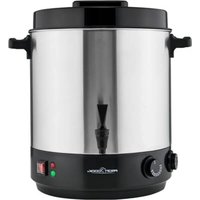
PC-EKA 1283 - Food cooker PROFICOOK - Free user manual and instructions
Find the device manual for free PC-EKA 1283 PROFICOOK in PDF.


User questions about PC-EKA 1283 PROFICOOK
0 question about this device. Answer the ones you know or ask your own.
Ask a new question about this device
Download the instructions for your Food cooker in PDF format for free! Find your manual PC-EKA 1283 - PROFICOOK and take your electronic device back in hand. On this page are published all the documents necessary for the use of your device. PC-EKA 1283 by PROFICOOK.
USER MANUAL PC-EKA 1283 PROFICOOK
natural_image
Exterior view of a modern stainless steel coffee maker with black lid and control buttons (no visible text or symbols)Einkochautomat PC-EKA 1283
Be sure to read the separately enclosed safety instructions first.
Instruction Manual
Thank you for choosing our product. We hope you will enjoy using the appliance.
Read the instruction manual and the separately enclosed safety instructions very carefully before using this appliance. Keep these documents, including the warranty certificate, receipt and, if possible, the box with the inner packaging in a safe place. If you pass the appliance on to a third party, always include all the relevant documents.
Symbols in this Instruction Manual
Important information for your safety is specially marked. It is essential to comply with these instructions in order to avoid accidents and prevent damage to the appliance:

WARNING:
This warns you of dangers to your health and indicates possible injury risks.

CAUTION:
This refers to possible hazards to the appliance or other objects.
Content
Overview of the Components....3
Unpacking the Appliance....10
Overview of the Components / Scope of Delivery......10
Warnings for the Use of the Appliance ....10
Notes for Use....11
Location....11
Preparation....11
Electrical Connection 11
Switching the Appliance On/Off 11
Timer Control....11
Heating Indicator Light 11
Overheating Protection....11
Tips for Preserving 11
Preparing the Preserves 11
Preparing the Jars and Closures 11
Preserving 12
After Preserving 12
Preserving Table 12
Operation 12
Preserving 12
Heating and Keeping Warm....13
Interrupting / Ending Operation....13
Cleaning and Maintenance....13
Drain Tap....13
Descaling....14
Storage....14
Troubleshooting....14
Technical Data....15
Disposal 15
Meaning of the "Dustbin" Symbol 15
Unpacking the Appliance
- Remove the appliance from its packaging.
- Remove all packaging material, such as foils, filling material, cable ties and cardboard packaging.
- Check the scope of delivery for completeness.
-
If the contents of the packaging are incomplete or if damage can be detected, do not operate the appliance. Return it to the dealer immediately.
-
There may still be dust or production residues on the appliance. We recommend that you clean the appliance as described under "Cleaning and Maintenance".
Overview of the Components / Scope of Delivery
1 Lid handle
2 Lid
3 Carrying handle
4 Container
5 Drain tap (removable)
6 Heating indicator light (red)
7 Power switch ON/OFF
8 Keep warm indicator light (green)
9 RESET button (underside of appliance)
10 Temperature control knob
11 Timer control knob
Without Illustration
1×Insertgrate
Warnings for the Use of the Appliance
WARNING:
- Do not move or touch the appliance when it is in operation.
- The housing becomes hot during operation, do not touch it. Allow the appliance to cool down before cleaning and putting away.
- Be careful when opening the lid, very hot vapour can escape from the container.
- Only hold the lid by the handle.
- Note the high weight of the appliance when fully filled.

CAUTION:
- Never operate the appliance dry or without contents, otherwise the appliance and the coating will be damaged.
• Overload! Do not use a multiple socket as this appliance is too powerful.
Notes for Use
Location
- Place the appliance on a level surface that is resistant to moisture and heat. Make sure that the appliance is placed on a surface that can support the appliance and its contents.
- For sensitive surfaces, place a heat-resistant plate underneath.
- During and after use, make sure that the power cord does not come into contact with the hot surface of the appliance.
Preparation
- For hygienic reasons, the appliance should be boiled with approx. 5 litres of water at the highest temperature setting for approx. 5 minutes before first use. Then drain the water from the container.
- After boiling, rinse with clear water and drain the water again.
- Clean the lid thoroughly with warm water and a mild detergent. Rinse the lid with clear water and then dry it thoroughly with a soft cloth.
Electrical Connection
Check whether the mains voltage you want to use matches that of the appliance. You will find the information on the type plate.
Switching the Appliance On/Off
- Switch the appliance on with the power switch. Turn the timer control knob to the ON position or select the desired time. Turn the temperature control knob to the desired temperature. The appliance starts to heat up.
- Depending on the ambient temperature and the contents of the container, there may be deviations between the set temperature and the actual temperature.
- To switch off the appliance, set the power switch to the OFF position. Turn the temperature control knob to the °C symbol and the timer control knob to the OFF position.
Timer Control Knob
$$ \mathbf {O F F} = \text { Switched off } $$
$$ \mathbf {O N} = \text { Continuous operation } $$
$$ 2 0 - 1 2 0 = \text { Infinitely adjustable time in minutes } $$
Heating Indicator Light
- The heating indicator light illuminates during heating.
- Once the set temperature has been reached, the heating indicator light goes out. The boiling time begins. The time for heating up does not count.
- The heating indicator light switches on and off during operation. This is normal and points to the fact that the temperature is being thermostatically controlled and maintained.
Overheating Protection

CAUTION:
If there is too little water in the appliance, the built-in overheating protection is activated. The appliance switches off automatically as soon as it gets too hot.
- Set the power switch to the OFF position. Disconnect the mains plug from the socket and allow the appliance to cool down.
- Press the RESET button on the bottom of the appliance to reactivate the thermostat.
- To use the appliance again, insert the mains plug into the socket. Set the power switch back to the ON position.
- Set the desired temperature on the temperature control.
- The appliance will now work properly again.
Tips for Preserving
Cleanliness during preparation is paramount for reasons of shelf life.
Fruit and vegetables should be of good quality, fresh and ripe.
You can find out how and in what different ways you can preserve fruit and vegetables in your recipes.
Preparing the Preserves
Wash fruit and vegetables well, unchopped, and drain.
- Green beans and peas are more durable if they are blanched before preserving.
Preparing the Jars and Closures
- Clean the jars, lids and closures with hot rinsing water. Rinse with clear water and leave everything to drain on a clean cloth.
- Check the jars for adhering residues and damage.
- Leave the closures in clear water until you are ready to use them. Do not use porous, damaged or overstretched rubber rings.
- Fill the jars to 2 cm below the rim. For porridge-like preserves (e.g. apple sauce), leave 3 – 4 cm of space up to the rim. For all types of sausages, only fill the jars 34 full.
- Close the jars tightly with screw caps, clamps or clips.
Preserving
WARNING: Glass breakage!
Do not place cold glasses in hot water, but preheat them.
• Make sure that the temperature of the water and the temperature of the jars are approximately the same when inserting them.
- You can boil 14 jars at a time in your preserving cooker if you use the "Weck round rim jars 100" and the corresponding clamps.
- The highest jar must be surrounded by approx. 34 of the water. With double occupancy, the bottom layer is thus flooded.
- Only operate the appliance with the lid on.
- The boiling times shall not be undercut. If in doubt, use higher values.
After Preserving
The same water can be used for several successive preserving times.
WARNING: Risk of Burns! The jars are hot.
Once the preserving process is complete, carefully remove the jars, place them on a cloth and cover them with a cloth.
- Leave the clamps on the jars until they have cooled completely.
• We recommend labelling the jars with the date and contents once they have cooled.
• Preserves are best kept cool, dry and in the dark.
Preserving Table
The following table shows the thermostat setting to be set in degrees Celsius (°C) and boiling time in minutes (min). The times given are only guidelines. They may vary depending on the size of the jars.
| Foodstuff °C min | ||
| Fruits | ||
| Apples (hard) 85 40 | ||
| Apples (soft) 85 30 | ||
| Applesauce 90 30 | ||
| Apricots 85 30 | ||
| Pears (hard) 90 80 | ||
| Pears (soft) 90 30 | ||
| Dates | 90 30 | |
| Strawberries 80 25 | ||
| Blueberries | 90 25 | |
| Raspberries | 80 30 | |
| Foodstuff °C min | ||
| Fruits | ||
| Currants | 90 25 | |
| Cherries (sweet or sour) | 80 30 | |
| Mirabelle plums | 85 30 | |
| Peaches | 85 30 | |
| Plums (damsons) | 95 30 | |
| Rhubarb | 95 30 | |
| Gooseberries (unripe) | 80 30 | |
| Vegetables | ||
| Cauliflower | 100 (MAX) | 90 |
| Beans 100 (MAX) 120 | ||
| Peas | 100 (MAX) | 120 |
| Cucumbers 85 30 | ||
| Carrots | 100 (MAX) | 90 |
| Celeriac | 100 (MAX) | 110 |
| Kohlrabi | 100 (MAX) | 95 |
| Pumpkin | 90 30 | |
| Mushrooms | 100 (MAX) | 110 |
| Beetroot 100 (MAX) 110 | ||
| Asparagus | 100 (MAX) | 120 |
| Spinach | 100 (MAX) | 110 |
| Tomatoes | 90 30 | |
| Meat/processed meat | ||
| Pieces of roast (precooked) | 100 (MAX) | 85 |
| Pieces of roast (raw) | 100 (MAX) | 120 |
| Poultry (rare) | 100 (MAX) | 75 |
| Goulash (rare) | 100 (MAX) | 75 |
| Cutlets (rare) | 100 (MAX) | 60 |
| Venison (rare) | 100 (MAX) | 65 |
| Sausage mixture | 100 (MAX) | 110 |
Operation
Preserving
CAUTION:
- Never operate the appliance dry or without contents!
-
Do not fill the appliance beyond the maximum fill level marked on the inside of the container.
-
Place the insert grate in the container.
- Ensure that the drain tap is closed and that the drain tap seals are fitted correctly. Fill the appliance with at least 7 litres of water.
-
Place the prepared jars on the shelf in the container.
-
Place the lid on the appliance.
- Insert the mains plug into the socket.
- Set the temperature and timer according to the preserving table.
Heating and Keeping Warm
This appliance is equipped with a removable drain tap for filling thin liquids.
- Remove the insert rack before filling with drinks.
- Ensure that the sealing rings on the drain tap are seated correctly. Fill the appliance with liquid. Observe the markings.
- Select the desired temperature.
- To drain liquid, pull up or press down the drain tap and hold until the cup or container is full. When the dispensing process is complete, release the drain tap; it closes automatically. For continuous pouring, press the drain tap all the way up to lock it; as soon as a small
resistance is overcome, the drain tap remains in the open position.
- Due to the system, a residual amount of liquid remains in the container. This amount can be reduced slightly by carefully tipping the container forwards to empty it.
Interrupting/Ending Operation
- Set the power switch and the timer control knob to the OFF position and the temperature control knob to the °C symbol.
- ⚠️ WARNING: Risk of burns!
- Be particularly careful when removing the lid.
- The housing becomes hot during operation. Do not touch it.
- Allow the appliance to cool down and empty the container with the drain tap.
- Pull the mains plug out of the socket.
Cleaning and Maintenance

WARNING:
- Always switch off the appliance before cleaning and disconnect the mains plug from the socket. Wait until the appliance has cooled down.
- Never immerse the appliance in water or other liquids.
- The appliance must not be cleaned by a water jet.
- Never use flammable cleaning agents (spirits, etc.) for cleaning, as there is an increased risk of fire or explosion when the appliance is put back into operation.
- Clean the appliance after each use.

CAUTION:
- Do not use a wire brush or other abrasive objects.
- Do not use harsh or abrasive cleaning agents.
- Clean the surface of the appliance with a damp cloth. Mild cleaning agents can be used for heavier soiling. Do not use aggressive cleaning agents or sprays.
- Wash the inside of the container thoroughly. Rinse with clear water.
-
Only use a soft cloth and never use any kind of coarse cleaner that could scratch the appliance.
-
Do not use steel wool for cleaning. Parts may come loose from the steel wool, deposit in the drain tap and damage the sealing surfaces.
- Make sure that the appliance has been properly cleaned before storing it in a dry place.
Drain Tap
The tap mechanism must be cleaned every week after use.
-
Unscrew the nut inside the container and remove the drain tap and the sealing rings.
-
Unscrew the upper part of the tap, remove the silicone cone and clean the individual parts in warm water with a mild detergent. Rinse with clear water.
-
Clean the inside of the drain tap with a small bottle brush. Never push the brush into the assembled drain tap as it would puncture the silicone cone.
-
Allow the drain tap to dry completely.
- Insert the silicone cone and screw the upper part of the tap back on.
- Fit the drain tap with the sealing rings in the container and tighten it with the nut. Ensure that the sealing rings are seated correctly.
Descaling
- The intervals between descaling depend on the hardness of the water and the frequency of use.
- If the water contains limescale, a layer of limescale builds up in the container and especially on the base of the container, which can affect the heating power of the appliance.
- Only use commercially available descaling agents based on citric acid for descaling. Dose as indicated on the packaging or the instruction leaflet.
- After descaling, boil fresh water several times to remove residues. Do not use this water for consumption!
Storage
- Clean the appliance as described and allow it to dry completely.
- We recommend storing the appliance in its original packaging if you do not intend to use it for a longer period of time.
• Always store the appliance out of the reach of children in a well-ventilated and dry place.
Troubleshooting
| Problem Possible Cause Remedy | ||
| The appliance cannot be switched on. | The appliance has no power supply. | Check the power socket with another appliance. |
| Insert the mains plug correctly. | ||
| Check the house fuse. | ||
| The appliance is defective. | Contact our service or a specialist. | |
| After operation without or with too little liquid, the appliance has not yet cooled down sufficiently. | Top up with liquid if necessary. | |
| Allow the appliance to cool down for 15 minutes. | ||
| Press the RESET button to reactivate the thermostat. | ||
| The appliance switches off before cooking. | The inside of the appliance is heavily calcified or the electrical circuit of the socket is overloaded. | Descale the appliance as described. |
| Check the mains connection. | ||
Technical Data
Model: PC-EKA 1283
Power supply: 220 - 240 V\~, 50 / 60 Hz
Power consumption: 2100 W
Protection class:....I
Filling capacity: max. 26 litres
Net weight: .... approx. 5.1 kg
The right to make technical and design modifications in the course of continuous product development remains reserved.
This appliance has been tested according to all applicable, current CE directives and built according to the latest safety regulations.
Disposal
Meaning of the "Dustbin" Symbol
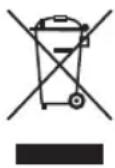
Protect our environment: do not dispose of electrical equipment in the domestic waste.
Please return any electrical equipment that you will no longer use to the collection points provided for their disposal.
This helps avoid the potential effects of incorrect disposal on the environment and human health.
This will contribute to the recycling and other forms of re-utilisation of electrical and electronic equipment.
Information concerning where the equipment can be disposed of can be obtained from your local authority. Your dealer and contractual partner is also obliged to take back the old appliance free of charge.
BELANGRIJK:
$$ \mathbf {O N} = \text { Continue working } $$
WAARSCHUWING: Verbrandingsgevaar!
CTC Clatronic Sp. z o.o
Ul. Brzeska 1
45-960 Opole