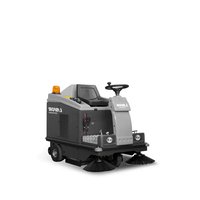
SWL R1000 - Sweeper Lavor - Free user manual and instructions
Find the device manual for free SWL R1000 Lavor in PDF.


| Product type | Sweeper |
| Brand | Lavor |
| Model | SWL R1000 |
| Power source | Battery (ET version) or petrol (ST version) |
| Dimensions (L × W × H) | 1430 × 910 × 1140 mm |
| Weight (without battery) | Electric version: 260 kg Petrol version: 300 kg |
| Working width | Central brush: 700 mm With one side brush: 920 mm With two side brushes: 1150 mm |
| Maximum forward speed | Electric version: 1.72 m/s Petrol version: 2.13 m/s |
| Maximum cleaning power | Electric version: 6200 m²/h Petrol version: 7700 m²/h |
| Maximum climbable slope | Electric version: 12% (20% with upgraded power unit) Petrol version: 14% |
| Collection bin capacity | 62 L |
| Filter surface area | 6 m² (6 cartridge filters) |
| Sound level (guaranteed) | Electric version: LwA 91 dB(A) Petrol version: LwA 99 dB(A) |
| Safety | Automatic stop if operator leaves seat or if hood is open; parking brake; side protections |
| Routine maintenance | Cleaning and replacement of filters, brushes (central and side) and dust flaps; engine oil change (petrol version) |
| Spare parts available | Central and side brushes, cartridge filters, flaps, belts, batteries, charger |
| General information | Manual available in multiple languages (FR, EN, DE, ES, IT, etc.); 12-month warranty; professional use |
Frequently Asked Questions - SWL R1000 Lavor
User questions about SWL R1000 Lavor
0 question about this device. Answer the ones you know or ask your own.
Ask a new question about this device
Download the instructions for your Sweeper in PDF format for free! Find your manual SWL R1000 - Lavor and take your electronic device back in hand. On this page are published all the documents necessary for the use of your device. SWL R1000 by Lavor.
USER MANUAL SWL R1000 Lavor
INSTRUCTIONS AND OPERATING MANUAL Sweeper
MANUEL D'INSTRUCTION Motobalayeuse
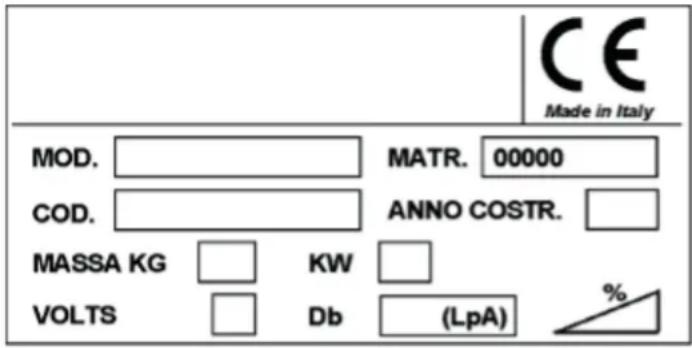
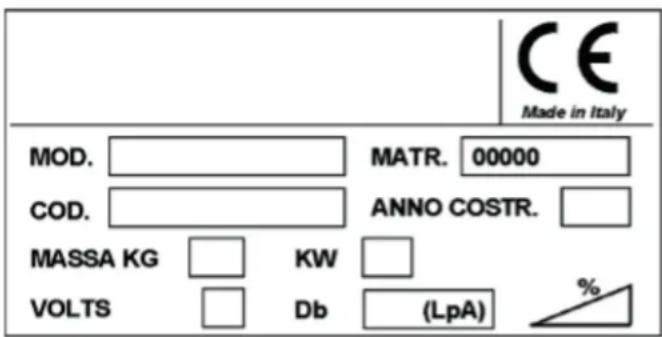
Technical data plate
MANUALE USO E MANUTENZIONE MOTOSCOPA
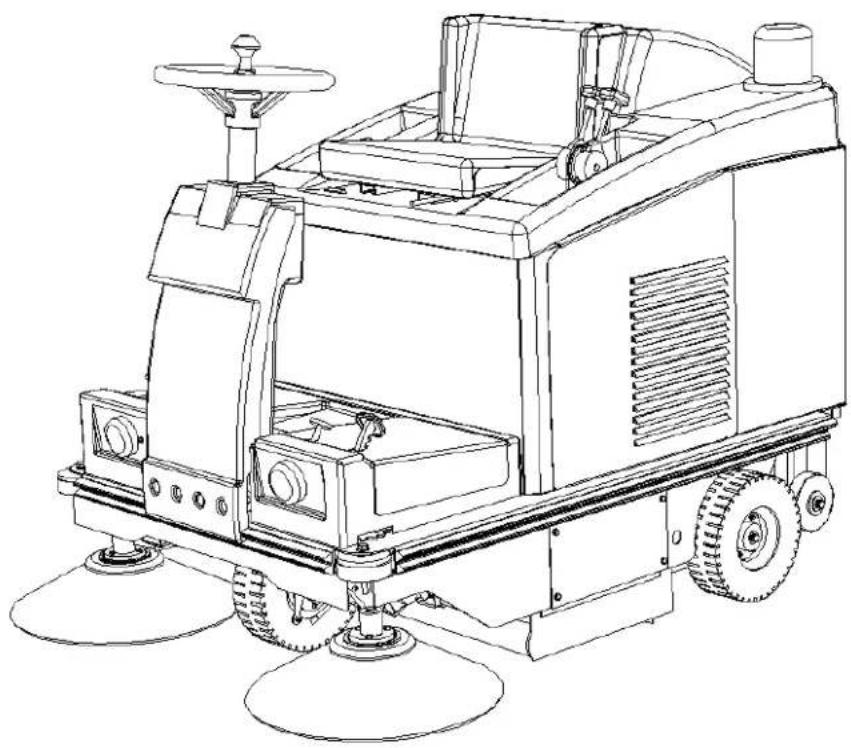
Mod. SWL R1000 ET / SW R 6200 BT / CSW R792BT
Mod. SWL R1000 ET BIN-UP / SW R 6200 BT LIFT / CSW R792BT PLUS
Mod. SWL R1000 ST / SW R 8300 SC / CSW R792G
Mod. SWL R1000 ST BIN-UP / SW R 8300 LIFT / CSW R792G PLUS
index . pag.
RISCHI RESIDUI NON ELIMINABILI

INSTRUCTIONS AND OPERATING MANUAL
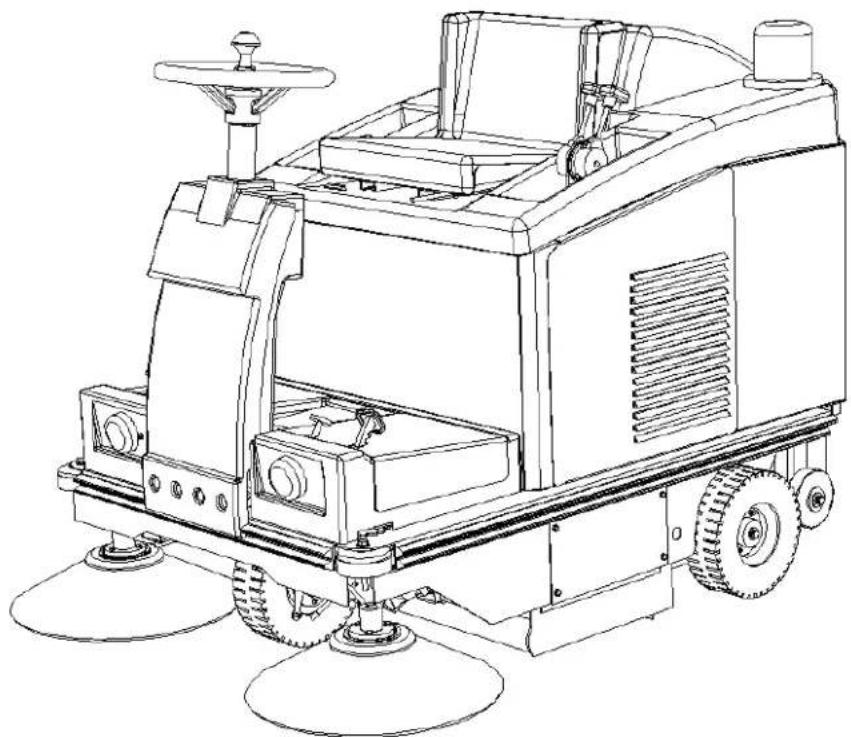
Mod. SWL R1000 ET / SW R 6200 BT / CSW R792BT
Mod. SWL R1000 ET BIN-UP / SW R 6200 BT LIFT / CSW R792BT PLUS
Mod. SWL R1000 ST / SW R 8300 SC / CSW R792G
Mod. SWL R1000 ST BIN-UP / SW R 8300 LIFT / CSW R792G PLUS
index page
CHAPTER 1 - GENERAL INFORMATIONs 24
CHAPTER 2 - PURPOSES / INTENDED USE 24
CHAPTER 3 - PREPARATION (UNPACKING) 24
CHAPTER 4 - ACCEPTABLE ENVIRONMENTAL CONDITIONS 26
CHAPTER 5 - INTENDED AND FORBIDDEN USE. 26
CHARTER 6 - TECHNICAL CHARACTERISTICS AND NOISE LEVEL 27
CHAPTER 7 - DESCRIPTION OF MACHINE 27
CHAPTER 8 - OPERATOR WORK STATION EMERGENCY STOP 33
CHAPTER 9 - SAFETY REGULATIONS 33
CHAPTER 10 - CHECKS BEFORE START UP 34
CAPITOLO 11 - STARTING AND STOPPING 35
CAPITOLO 12-CORRECT USE AND ADVICES 36
CHAPTER 13 - ROUTINE MAINTENANCE 36
CHAPTER 14 - EXTRAORDINARY MAINTENANCE 39
CHAPTER 15 - PUTTING OUT OF USE 39
CHAPTER 16 - DISMANTLING/DEMOLITION. 39
CHAPTER 17 - EMERGENCY SITUATIONS 39
CHAPTER 18 - TROUBLESHOOTING 40

ATTENTION: READ THIS INSTRUCTIONS MANUAL CAREFULLY BEFORE USING THE MACHINE
THE MANUFACTURER DISCLAIMS ALL LIABILITY FOR DAMAGE TO THINGS AND / OR INJURY TO PERSONS RESULTING FROM FAILURE TO COMPLY WITH THE INSTRUCTIONS IN THIS MANUAL AND FROM INCORRECT AND / OR IMPROPER MACHINE USE.
ALL THE EQUIPMENT NEEDED FOR PERSONAL PROTECTION (GLOVES, MASKS, WHITE-LENS GLASSES, KEYS, TOOLS, ETC.) MUST BE PROVIDED BY THE USER.
FOR EASIER READING, REFER TO THE INDEX PAGE.
ALWAYS KEEP THIS MANUAL HANDY FOR QUICK REFERENCE (IN CASE OF LOSS, ASK YOUR DEALER FOR ANOTHER COPY)
THE MANUFACTURER RESERVES THE RIGHT TO MAKE CHANGES OR UPGRADE ITS MACHINES, WITHOUT ANY OBLIGATION TO UPGRADE PREVIOUSLY-SOLD MACHINES.
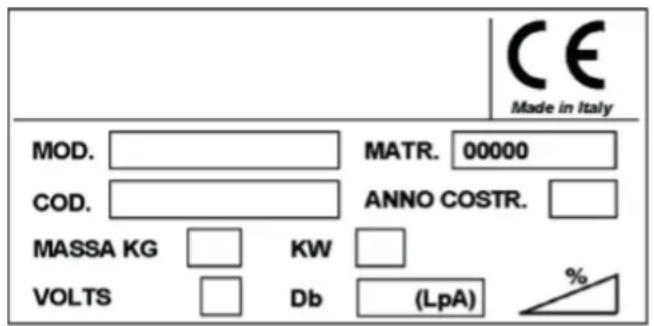
ALL SWEEPERS CONFORM TO EEC STANDARDS AND ARE LABELLED:
CHAPTER 2 - PURPOSES / INTENDED USE
The manufacturer is pleased to count you among the many owners of SWL R1000 ET/SW R 6200 BT - SWL R1000 ST/SW R 8300 SC series.
By keeping to the following instructions, we feel sure you will fully appreciate its' work options.
This instruction manual is provided to notify and define as clearly as possible the purposes and intended use which the machine was built and to enable you to use it in total safety. It also contains a list of minor operations for keeping the machine in good and safe working order. These operations can be easily performed by anyone.
For extraordinary maintenance jobs, always employ skilled personnel.
- The manual also contains details of hazards and outstanding risks, i.e., all those risks that cannot be eliminated, with specific instructions for each single case. You will also find details of acceptable and unacceptable machine use, how to run the machine, technical details and performance limits, how to use and service the machine, details concerning decommissioning, dismantling and demolition.
CHAPTER 3 - PREPARATION (UNPACKING)
After removing the outer packaging, remove the machine from the pallet; this operation can be done in two ways:
A) Take a hook and 4 tie-rods of suitable lifting capacity for the weight of the machine (shown on the CE
plate). Lift the motor bonnet and secure the four eyebolts or hooks in the threaded housings (the lifting hooks are inside the collection bin Part. B FIG. 1 together with the side brushes and instruction manuals); secure all four straps to their respective lifting hooks Part. A Fig. 1 and with the aid of a fork lift truck or bridge crane (suitable for weight of the machine), lift this off the pallet and rest it on the floor very slowly.

ATTENTION:
MACHINE CAN ONLY BE LIFTED WHEN ALL FOUR STRAPS HAVE BEEN SECURED TO THEIR RESPECTIVE EYEBOILTS (M10 EYEBOILTS).
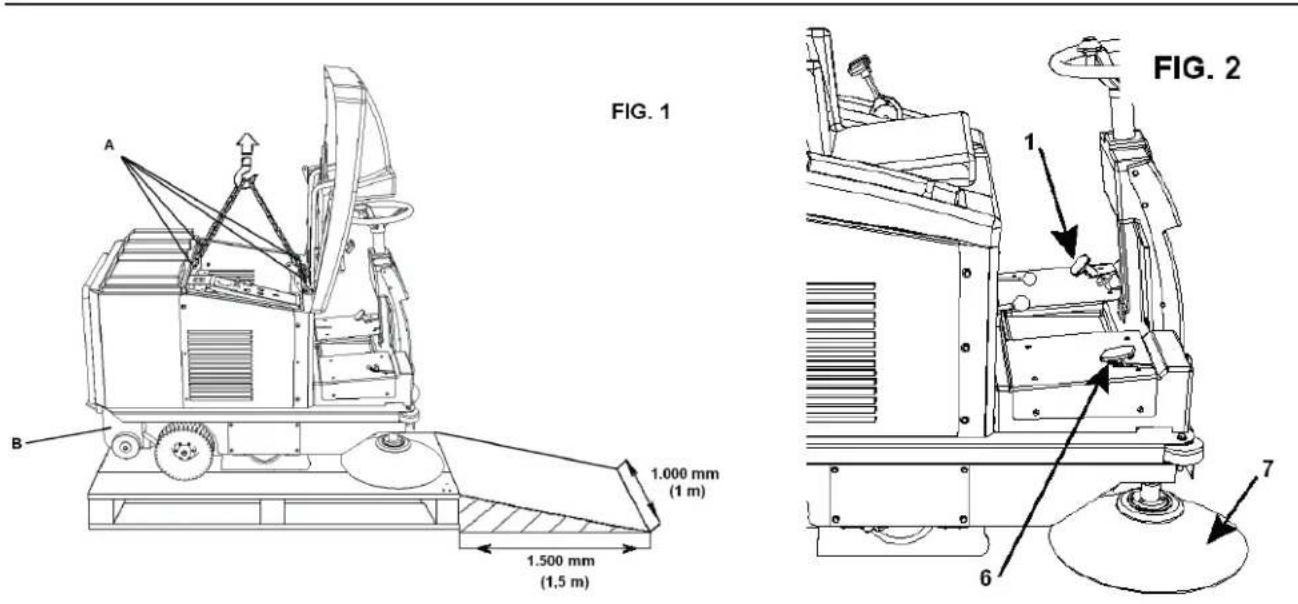
B) Position a sloping surface (having a load-bearing capacity suitable for the weight of the machine) close up to the narrow side of the pallet. This must be at least 1.5 m long (so as not to damage the rubber dust seals) and 1 m wide. Remove the pieces of wood around the wheels and release the parking brake Part. 1 Fig. 2, pressing this so as to release the retention lever. At this point, simply push the machine onto the chute. This operation must be performed without anyone in front of the machine and on a large flat surface. At the end of the unpacking operation, remove and keep the eyebolts and fit the right side brush Part. 7 Fig. 2 and, If necessary, the left side brush as shown in page 13.
IMPORTANT: All the materials remaining after the unpacking operation must be carefully disposed of by the user, following applicable regulations.

ATTENTION:
BE SURE THAT THE MACHINE PROTECTION DEVICES ARE IN GOOD CONDITION AND PROPERLY FITTED. IN THE EVENT OF FAULTS OR MISSING PARTS, DO NOT START UP THE MACHINE AND NOTIFY THE DEALER OR MANUFACTURER

Consult the enclosed engine instruction booklet, however:
Minimum operating temperature: - 10^ (14°F)
Maximum operating temperature: +38^ (+100.4^)
IMPORTANT: DO NOT USE OR LEAVE PARKED WITH TEMPERATURES ABOVE +40^ C. (+104^ F).
CHAPTER 5 - INTENDED AND FORBIDDEN USE
INTENDED USE:
The sweepers have been built to clean the residues left by machining operations, dust, dirt in general, from all flat, hard and not excessively uneven surfaces like: concrete, asphalt, stoneware, ceramic, wood, metal, marble, rubber or plastic covering, both rusticated and smooth, synthetic or short-pile carpeting, in open or closed premises.
FORBIDDEN USE:
The SWL R1000 ET/SW R 6200 BT sweepers cannot be used on gradients over 12% with standard swithcboard. They can reach a 20% gradants with increased switchboards.
The SWL R1000 ST/SW R 8300 SC sweepers cannot be used on gradients over 14%
× The SWL R1000 ST/SW R 8300 SC series with internal combustion engines cannot be used inside for they could produce carbon monoxide (an oudorless but lethal gas)
They cannot be used in explosive or infl ammable environments.
They cannot be used on uneven, gritty or very rough surfaces.
They cannot pick up oils, poisons and chemical materials in general, (for use in chemical plants, apply for specific authorisation from the dealer or manufacturer).
They cannot be used on town or country roads. They cannot circulate on public roads.
They cannot be used in premises where the lighting is bad, as they are not equipped with their own lighting system.
They cannot be towed in any way, either on private premises or on public roads or premises.
They cannot be used to brush snow or to wash or grease surfaces in general, either wet or very damp.
They cannot operate in the presence of stringy materials as this is incompatible with brush rotation.
They cannot be used to rest things on or as raised platforms for things and persons.
× Never allow people within machine operating range.
Do not make any changes to the machines unless authorised to do so by the manufacturer.
CHARTER 6 - TECHNICAL CHARACTERISTICS AND NOISE LEVEL
| TECHNICAL FEATURES M.U. | SWL R1000 ET SW R 6200 BT | SWL R1000 ST SW R 8300 SC | |
| POWER // BATTERY PETROL ENGINE | |||
| CENTRAL BRUSH WIDTH mm 700 700 | |||
| CENTRAL BRUSH WIDTH+1 RIGHT SIDE BRUSH mm 9 | 20 920 | ||
| CENTRAL BRUSH WIDTH+2 RIGHT AND LEFT SIDE BRUSHES | mm 1 | 150 1.150 | |
| MAX SPEED m/s 1,72 2,13 | |||
| REVERSE MAX SPEED m/s 0,88 0,5 | |||
| MAX CLEANING CAPACITY (WITH 2 SIDE BRUSHES) | mq/h | 6.200 | 7.700 |
| MAX SLOPE | % 12 | (20) | 14 |
| TRACTION | // | BACK WHEELS | FRONT WHEELS |
| TRANSMISSION | // | ELECTRIC | OLEODYNAMIC |
| MAX. SPEED TURNING RADIUS | mm | 1.450 | 1.450 |
| FILTERING SURFACE (6 FILTERS) | mq | 6 | 6 |
| CONTAINER CAPACITY | L | 62 | 62 |
| MAX LENGTH CONTAINER | mm 1 | 430 1.430 | |
| MAX WIDTH | mm 9 | 10 910 | |
| HEIGHT | mm 1 | 140 1.140 | |
| WEIGHT (BATTERIES NOT INCLUDED) | Kg | 260 300 | |
| Acoustic pressure LpA | dB(A) | 76 - K=1,5 | 84 - K=1,5 |
| Acoustic power measured LwA | dB(A) | 90 - K=1,5 | 97 - K=1,5 |
| Acoustic power granted LwA | dB(A) | 91 | 99 |
| Vibrations, on steering wheel | m/s² | 1,92- K=0,81 | 3,74- K=1,15 |
| Vibrations, on seat | m/s² | 0,65 - K=0,32 | 0,71 - K=0,18 |
Values according to standard: EN 60335-2-72

(only for internal combustion engine) Use the following personal protection equipment (PPE): Wear protective ear muffs..
CHAPTER 7 - DESCRIPTION OF MACHINE
SAFETY PROTECTION DEVICES:
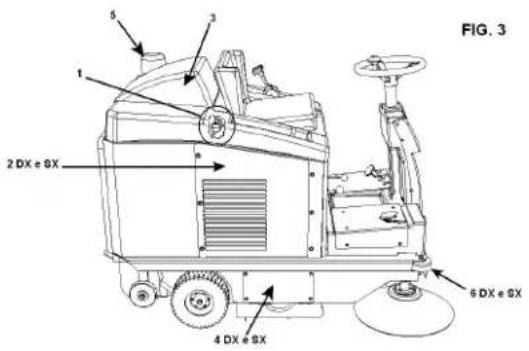
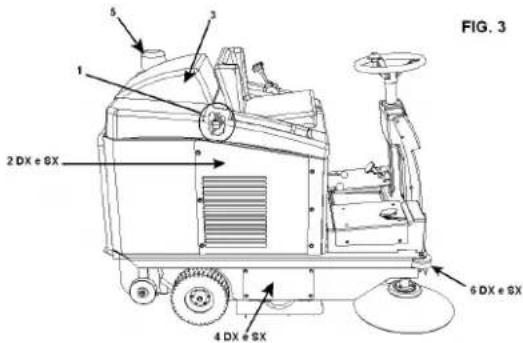
Fig. 3 shows the safety protections, which must be carefully fitted and in good working condition.
The machine cannot be used with one or more safety protections devices missing or damaged. The description of the protection devices and relevant order codes are shown below:
PART.
DESCRIPTION
1 Driving seat safety switch
2 Right and left side panel
3 Motor bonnet
4 Central brush protection plate: Right and Left
5 Reverse indicator light
6 Front angular wheel
SIDE BRUSH:
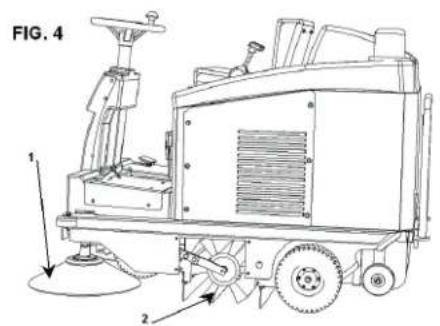
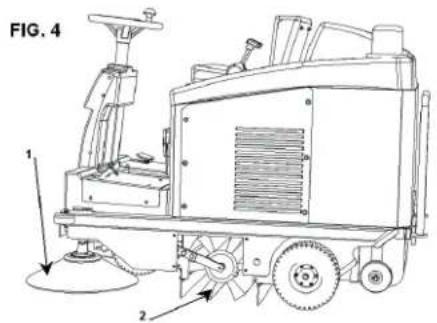
The side brush, Part. 1 Fig. 4, acts as a dust and waste conveyor. Its purpose is to clean edges, corners and profiles. After cleaning, this must be disengaged (raised) to prevent raising dust and because the cleaning effect of the side brush is inferior to that of the central brush. A left side brush is also available as an optional feature.
CENTRAL BRUSH:
The central brush Part. 2 Fig. 4 is the main machine component for loading the dust and waste into the collection bin. It is available in various degrees of hardness and bristle types, depending on the type of material to be collected up and on the type of floor. It is height adjustable in case of wear (See Chapter 13).
IMPORTANT: do not pick up cords, wires, packaging straps, sticks, etc., longer than 25 cm as these could wrap around the centre and side brushes and damage them.
FILTER SYSTEM:
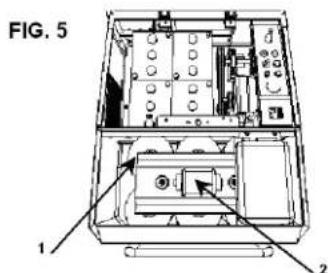
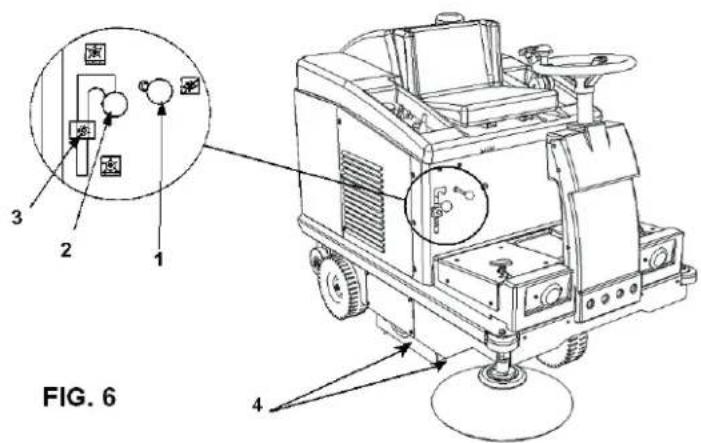
During operation, the filter system ensures that the machine does not raise dust in the surrounding areas. It consists of six cartridge filters Part. 1 Fig. 5. The filter system can be disengaged by pulling knob Part. 1, seen in Fig. 6.
IMPORTANT: Disengage the filter system when passing with the machine over wet or very damp areas to prevent dampening and therefore deteriorating the paper filters.
DUST SEALS:
See Part. 4 Fig. 6. These seals surround the central brush and are very important for ensuring good machine operation, making possible as they do the suction effect. Frequently check to make sure they are in good condition.
COLLECTION BIN:
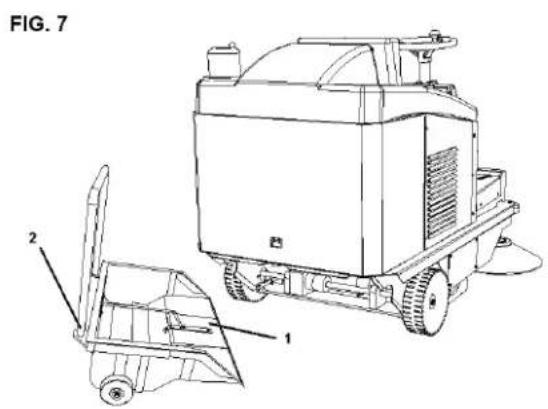
The container or collection bin Part. 1 Fig. 7, made of resistant plastic, holds all the material picked up by the central brush and the filter dust. It can be easily removed thanks to a wheeled frame Part. 2 Fig. 7.
IMPORTANT: container emptying must always be done with the motor shut off. Wear gloves and possibly a face mask to protect the airways from dust (always present in this operation).
DESCRIPTION PF THE MANUAL CONTROLS For Both Models
Battery Version.
FLAP-LIFT PEDAL:
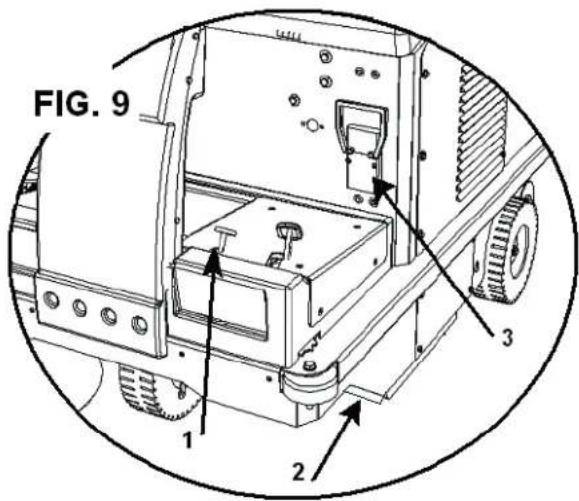
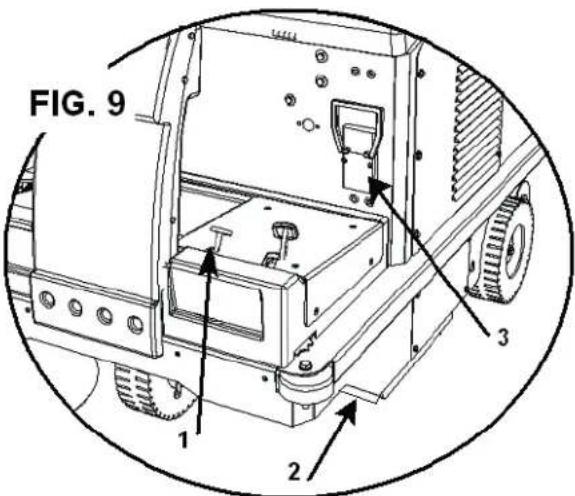
By pressing the flap-lift pedal Part. 1 Fig. 9, the front seal Part. 2 Fig. 9 lifts up for picking up a large objects. Suitable for collecting leaves, cigarette packets, etc.
BRAKE PEDAL:
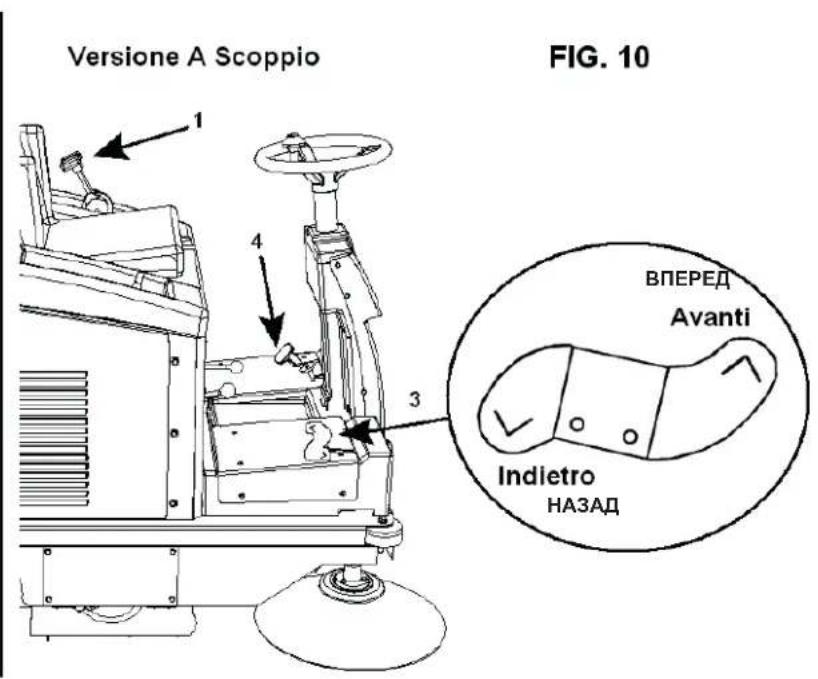
By pressing this pedal Part. 1 Fig. 10, the machine slows down and stops (until the pedal is released).
PARKING BRAKE:
To leave the machine in parking position, proceed as follows: press the brake pedal with the left foot and then insert the stop tooth with the right foot by pressing lever. To release the parking brake, simply press the pedal Part. 4 Fig. 10 again.
FORWARD AND REVERSE PEDAL: (only for battery version)
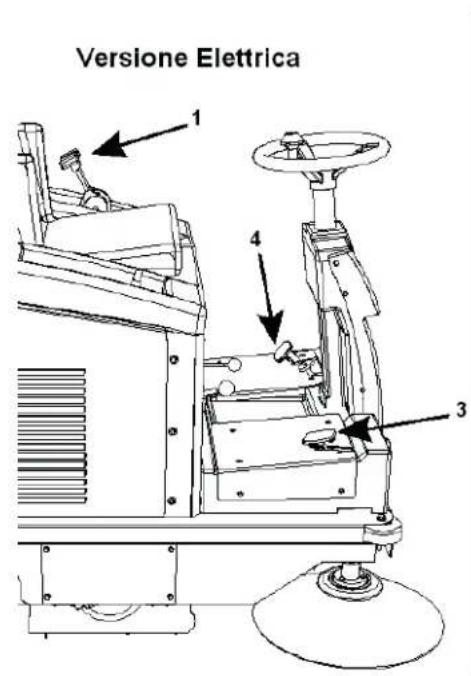
Part. 3 Fig. 10. This pedal has two functions depending on the position of the operation switch Part. 1 of switchboard: when the switch is in forward position, the machine moves forward when the pedal is pressed. When switch is positioned in reverse, the machine reverses. For safety reasons, the reverse speed of the machine is very low. When the switch is in central position, the machine moves neither forward nor in reverse.
FORWARD AND REVERSE PEDAL: (only for internal combustion engine)
Part. 3 Fig. 10. This pedal has two functions depending on the position. By pressing the right side (with arrow pointing UP) the machine goes forward while by pressing the left side (with arrow pointing DOWN) the machine withdraws. For safety reasons, the reverse speed of the machine is very low.
SIDE BRUSH ENGAGEMENT LEVER: (for all models)
The engagement lever Part. 1 Fig. 10 makes it possible to lower the brush from the driving seat. Remember that the side brush must only be used for cleaning edges, profiles and corners and that it continues to rotate when the machine motor is rotating. To lower and then activate the side brush push forward lever Part. 1 fig. 10; to disconnect the side brush bring back the lever in the initial position by pulling it back.

ATTENTION:
EVER TOUCH THE SIDE BRUSH WITH YOUR HANDS AND NEVER PICK UP THREADED MATERIALS.
SUCTION OFF KNOB: For all models.
Fitted to both models Part. 1 Fig. 6. When this knob is pulled outwards, suction is disengaged. Disengage the suction every time the filters need shaking or when passing over damp areas (with the motor on).
CENTRE BRUSH ENGAGEMENT LEVER: For all models.
This lever Part. 2 Fig. 6 makes it possible to engage and disengage the centre brush. By sliding the lever down along the slot, the work position is lowered, while when the lever is slid upwards and inserted in the notch, the centre brush is disengaged.
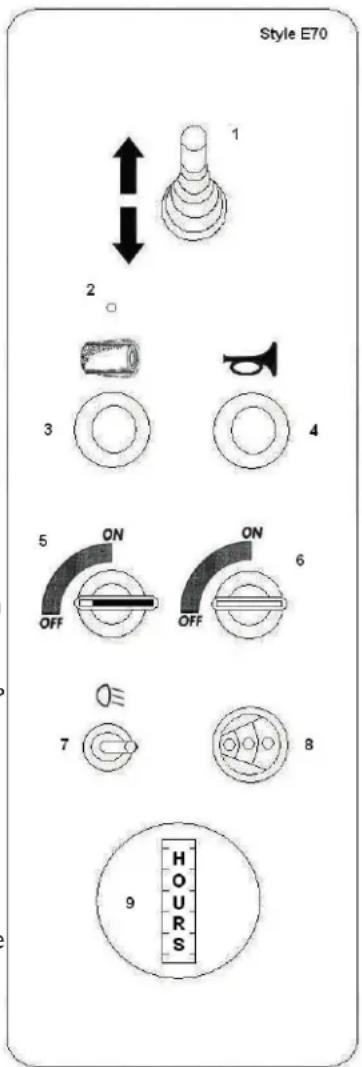
STANDARD FEATURES SWL R1000 ET/SW R 6200 BT
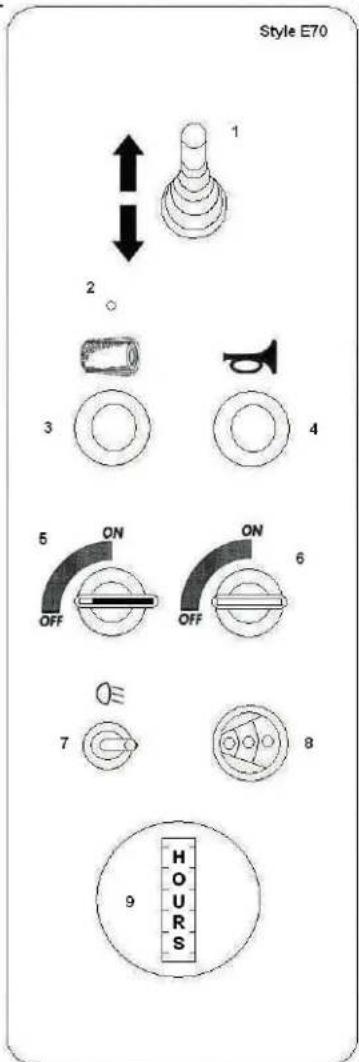
1) Gear switch
2) Electric switchboard check led
3) Filter Buzzer Button
4) Acoustic Indicator Button
5)Brushes motor switch
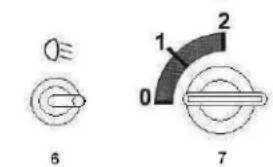
6) Ignition key
7) Working light switch (optional)
8) Charge indicator
9) Hour counter
GEAR SWITCH :
Part. 1 The purpose of the gear switch lever is to move the machine forward or reverse. When the switch is in forward position (arrow pointing up) by pressing the pedal Part. 3 Fig. 10 the machine moves forward. When the switch lever is in reverse position (arrow pointing down) by pressing the pedal the machine moves reverse. For safety reasons, the reverse speed is very low. If the switch is left in central position, the machine
moves neither forward nor in reverse.
ELECTRIC SWITCHBOARD CHECK LED:
Part. 2 This red led must be always switched on during functioning. If this led should flash at regular intervals there could be technical problems within the machine. In this case you are advised to immediately contact assistance to check the motorsweeper.
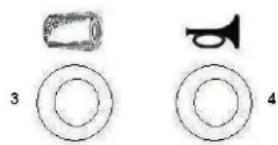
FILTER BUZZER BUTTON:
Part. 3 This buzzer cleans the suction filters through a motor-vibrator Part. 2 Fig. 5; it must be pressed at least 6 / 7 times for 8 / 10 seconds each (operation to be performed before starting work, before emptying the bin and with the motor off); to perform this operation with motor running, close the suction by pulling the knob Part. 1 Fig. 6.
ACOUSTIC INDICATOR BUTTON:
Part. 4 By pressing this button the acoustic indicator switches on.
BRUSHES MOTOR SWITCH:
Part. 5 By actioning this switch either central and side brushes are activated.
IGNITION KEY :
Part. 6 It activates the switchboard and in particular the movement potentiometer. It is therefore possible to move the machine without have it working.
WORKING LIGHT SWITCH: Optional
Part. 7. It activates the adjustable working light.
CHARGE INDICATOR:
Part. 8 It indicates the charge level of batteries and it's represented by three coloured lights (red, yellow and green); by turning on the ignition key Part. 6 they switch on in the following order: red-yellow-green; wait until green light is on before forwarding or reversing. If red light should switch on batteries need recharging.

IT IS RECOMMENDED NOT TO WAIT UNTIL THE RED LIGHT TURNS ON TO PROCEED WITH
RECHARGING OF BATTERIES BUT TO PROCEED WITH THE OPERATION AS SOON AS YELLOW LIGHT SWITCHES ON.
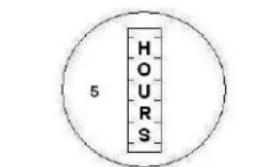
HOURCOUNTER:
Part. 9 Makes it visible the number of hours worked by the machine.
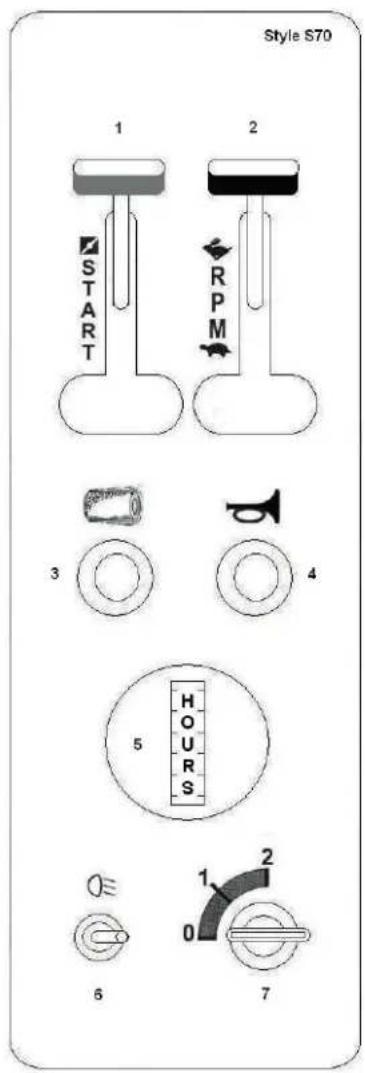
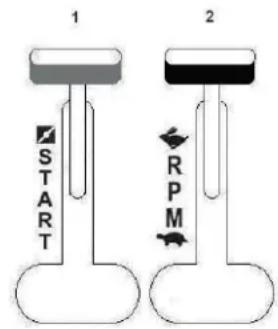
1) Start lever
2) Accelerator lever
3) Filter buzzer button
4) Acoustic indicator button
5) Hourcounter
6) Working light switch (optional)
7) Ignition key
START LEVER:
Part. 1 It is needed for "cold" ignition of the machine. It is positioned in "up" position. After the ignition it must be slowly brought back.
ACCELERATOR LEVER:
Part. 2 It controls the number of motor's rotations.
FILTER BUZZER BUTTON:
Part. 3 This buzzer cleans the suction filters through a motor-vibrator Part. 2 Fig. 5; it must be pressed at least 6 / 7 times for 8 / 10 seconds each (operation to be performed before starting work, before emptying the bin and with the motor off); to perform this operation with motor running, close the suction by pulling the knob
Part. 1 Fig. 6.
ACOUSTIC INDICATOR BUTTON:
Part. 4 By pressing this button the acoustic indicator switches on
HOURCOUNTER:
Part. 5 Makes it visible the number of hours worked by the machine.
WORKING LIGHT SWITCH: Optional
Part. 6 It activates the adjustable working light.
IGNITION KEY:
Part. 7 It activates the switchboard and in particular the movement potentiometer. It is therefore possible to move the machine without have it working
CHAPTER 8 - OPERATOR WORK STATION EMERGENCY STOP
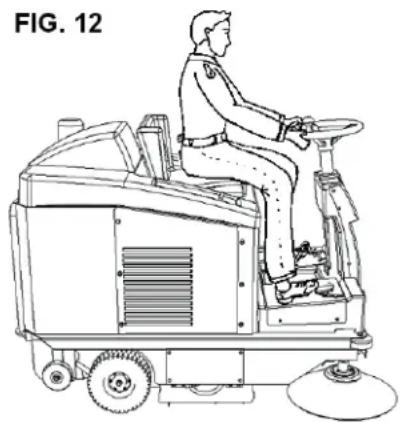
FIG. 12
WORKSTATION:
The work station is shown in Fig. 12.
IMPORTANT: For safety reasons, the machine switches off automatically if the operator moves from the driving seat or if the motor bonnet part. 3 fig. 3 is raised or is not completely closed.
EMERGENCY STOP: (Only for battery version)
Using the left hand, grip the connector handle Part. 3 Fig. 9, pull this upwards and out and press the brake pedal Part. 4 Fig. 10 hard; power will be interrupted and motors will stop immediately.
EMERGENCY STOP: (Only for petrol version)
Release the forwarding pedal and press the brake pedal Part. 4 Fig. 10, switch off the machine by turning off the key on the switchboard (anticlockwise) Part. 7
CHAPTER 9 - SAFETY REGULATIONS
OUTSTANDING RISKS WHICH CANNOT BE ELIMINATED

DEFINITION: These are risks which, for various reasons, cannot be eliminated. Please find some indications on how operating in total safety.
- Risk of injury to the hands and eyes if the machine is used without all the safety protections properly fitted and in good working condition.
- Risk of injury to hands by touching the side brush or central brush for any reason during rotation. The brushes must only be touched with the motor switched off and wearing protective gloves to avoid being pricked or cut in the event of sharp objects caught up between the bristles.
- Risk of inhalation of harmful substances and hands injuries in emptying the container (bin) without using protective gloves and a face mask.
- Risk of not controlling the machine if this is used on different gradients than those indicated in chapter 5
- Risk of explosion or fire if refuelling with engine switched on or with engine switched off but not yet cold.
- Risk of heavy burn by operating maintenance with engine switched on or with engine switched off but not yet cold.
GENERAL RISKS FOR BATTERIES
- Before charging the batteries, make sure the premises are well-ventilated or perform charging operations in premises set aside specifically for the purpose.
- Do not smoke, do not move near to the batteries with open flames, do not use grinding or welding machines; do not cause sparks near the batteries
- Do not take current samples from the batteries using pliers, sockets and provisional contacts.
- Make sure all connections (cable terminals, sockets, plugs, etc.) are always well tight and in good conditions
- Do not rest metal tools on the batteries.
- Keep the batteries clean and dry, if possible using antistatic cloths.
- Top up with distilled water every time the level of the electrolyte falls to 5 - 10mm from the splash guards.
- Avoid overcharging and keep battery temperature below 45 - 50^ C.
- Maintain any centralised topping-up systems in good working order and service regularly.
- Risk of electric shocks and short circuits; for safety's sake, before performing any maintenance or repairing on the batteries (or on the machine), remove the +/- terminals from the battery poles.
- Risk of explosions during charging; this can occur when recharging with an unsuitable battery charger (depending on battery Amperes)
- During battery recharging operations, or whenever the battery charger plug is inserted, the machine must never be switched on or moved (even manually)
CHAPTER 10 - CHECKS BEFORE START UP
SWL R1000 ET/SW R 6200 BT
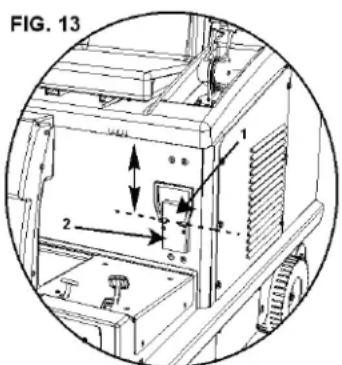
1 - Check the level of the battery solution and if necessary top up with distilled water.
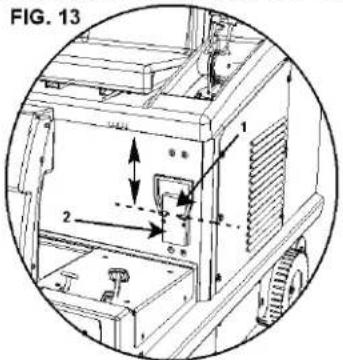
2 - Make sure the connector Part. 1 Fig. 13 is well inserted in the socket Part. 2 Fig. 13.
SWL R1000 ST/SW R 8300 SC

Read carefully the Engine User Manual attached to this machine booklet and follow some simple
instructions:
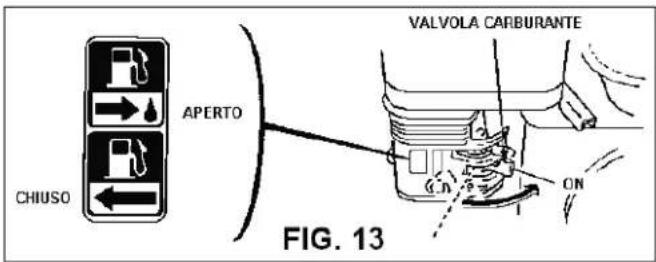
Internal Combustion Version
- Check the level of oil in the engine and top up, if low, wearing protection gloves ( possibly nitrile gloves with cotton inside) the oil sump (from 5,5 hp-3,75 kw) contains about 5hg of oil. The recommended oil for temperate climate is 10w-30.To protect engine a particular device stops the engine by switching on if oil is absent or not enough; it is therefore necessary checking the oil level very often.
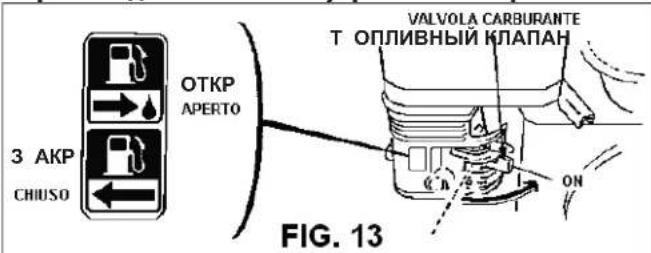
- Refuel with switched off and cold engine only; Unlead petrol is strongly advised.

ATTENTION:
KEEP FUEL OUT OF CHILDREN'S REACH, IN A DRY AND AIRY PLACE, FAR FROM HEAT SOURCES
IMPORTANT: Fuel tank must be fit for the purpose and well cleaned. This will grant you a good and long lasting of the petrol engine filter. Please use a tank suitable to use up fuel in max 2/3 months in order to have fresh fuel all the time.
CAPITOLO 11 - STARTING AND STOPPING
ATTENTION Pleases
BEFORE PROCEEDING MAKE SURE YOU HAVE READ ALL PREVIOUS CHAPTERS.
SWL R1000 ET/SW R 6200 BT
IMPORTANT: To start the machine, first of all sit in the driver's seat. If the operator is not sat, or if he/she stands up during start up, the machine will stop.
STARTUP:
- Turn the key Part. 6 of switchboard clockwise
- Turn the switch Part. 5 of switchboard to start the engine, the rotation of brushes and to activate suction.
The machine is in working position with the central brush lowered and suction engaged.
FORWARD MOVEMENT:
- Position the switch Part. 1 of switchboard forwards and press the forward pedal with the foot Part. 6 Fig. 2.
REVERSE MOVEMENT:
- Position the switch Part. 1 of switchboard backwards and press the backward pedal with your foot Part. 6 Fig. 2
NEUTRAL:
- With the switch Part. 1 of switchboard in central position the machine is in neutral.
STOP:
- Turn the switch Part. 5 of switchboard anticlockwise
- Turn the key Part. 6 of switchboard anticlockwise.
SWL R1000 ST/SWR 8300 SC
STARTING:
-
Disconnect the brake Part. 4 Fig. 10.
-
Put the lever "START" in position "Switch off" Part. 1 of the switchboard
- Move the acceleration lever Part. 2 of switchboard in position "MAX" (represented by a hare).
- Turn the key Part. 7 of switchboard in position 1 and then in position AV
- As soon as the engine starts bring the Start lever back, slowly, and regulate the number of rotations ("RPM"); it's better to warm up the engine for some minutes at slow running before starting.
IMPORTANT: For warm starting of the engine use the same procedure
STOPPING:
- Turn anticlockwise the key Part. 7 of switchboard.
ATTENTION: IF THE ENGINE DOESN'T START AT FIRST TRY, REPEAT THE SEQUENCE AT TIME BREAKS OF 10/15 SECS. DON'T PERSIST IN STARTINGS FOR MORE THAN 5/6 SECS.
CAPITOLO 12 - CORRECT USE AND ADVICES
IMPORTANT: Before starting work, make sure there are no strings, plastic or metal wires or long strips of cloth, sticks, power leads, etc. on the floor as theY are hazardous and could damage the dust seals and brushes. These must be removed before starting work with the machine.
- Be very careful when driving over rails, door runners, ets. These can cause damage to dust seals. Drive over them very slowly.
- Avoid driving over puddles of water. In the presence of damp surfaces, close the suction by means of knob Part. 1 Fig. 6 located to the right of the operator, alongside the central brush start lever.
- In the presence of large or lightweight objects (leaves, cigarette boxes etc.) lift the front flap by pressing the flap-lift pedal with the heel of your left foot Part. 1 Fig. 9.
- If the surface to be cleaned is very dirty in terms of quantity and quality of the material or dust to be picked up, first of all go over the area "roughly" without paying too much attention to the result. Then with a clean bin and the filters well shaken, go over it again. This way, the desired effect will be achieved.
- Subsequently, if the machine is used regularly and properly, such "rough" cleaning will no longer be required.
- The side brush must only be used for cleaning edges, profiles, corners, etc. It must be raised (disengaged) immediately after use so it does not lift up dust and also because results achieved with the side brush engaged are always inferior to those obtained with the central brush alone.
- For good results, empty the container regularly and keep the filters clean, shaking them with the tools provided.
CHAPTER 13 - ROUTINE MAINTENANCE

ATTENTION: ALL OPERATIONS MUST BE PERFORMED WITH COLD AND SWITCHED OFF ENGINE.
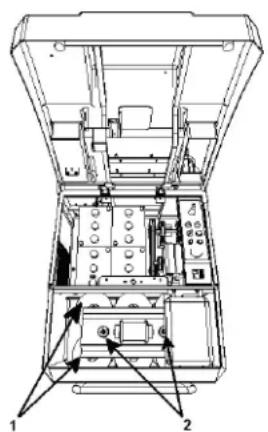
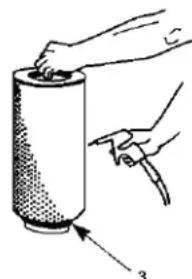
FIG. 14
CLEANING THE DUST FILTERS:
Every 40 / 70 working hours or whenever necessary, check the dust filters Part. 1 Fig. 14. Remove them from housing, loosen the filter-pressing blocks Part. 2 Fig. 14 and clean the filters by, first of all, banging them on the floor (not violently), keeping the perforated side towards the floor. For more thorough cleaning, use a compressed-air gun and blow from outside towards the inside, as shown in figure 14. When refitting the filters, always remember to replace the black seal Part. 3 Fig. 14 on the bottom of the filter.
Make sure that the filters are always in good condition and, whenever necessary, replace them.
DUST SEALS:
Every 40 / 70 working hours, check the condition of the dust seals Part. 1 (movable) and Part. 2 (3 fixed seals) Fig. 15 surrounding the central brush Part. 2 Fig. 4. Whenever necessary, replace these.
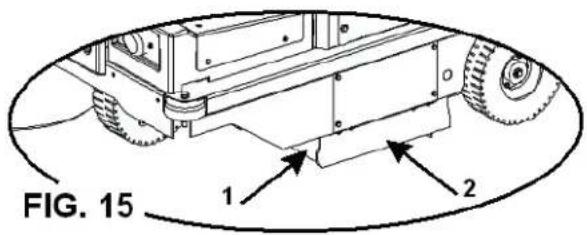
IMPORTANT: By replacing the seals make sure the side seals (the shortest one on the right and on the left, in total 2) are raised off the ground of about 2mm .
CENTRAL BRUSH:
Part. 2 Fig. 4. Every 50 / 80 working hours, or whenever necessary, check the condition of the central brush, especially if you have picked up pieces of string, wire, etc.
To remove such items from the brush:
-
Remove the bin Part. 2 Fig. 7.
-
Kneel down and inspect the central brush under the machine. Wearing gloves and a face mask to protect the airways, remove any pieces of string or wire wrapped around the central brush. The 4 hooks (eyebolts) provided can also be used to raise the machine (see Fig. 1) and perform this operation. Take care not to stand underneath the machine.
ADJUSTMENTS AND REPLACEMENTS
CENTRAL BRUSH ADJUSTMENTS:
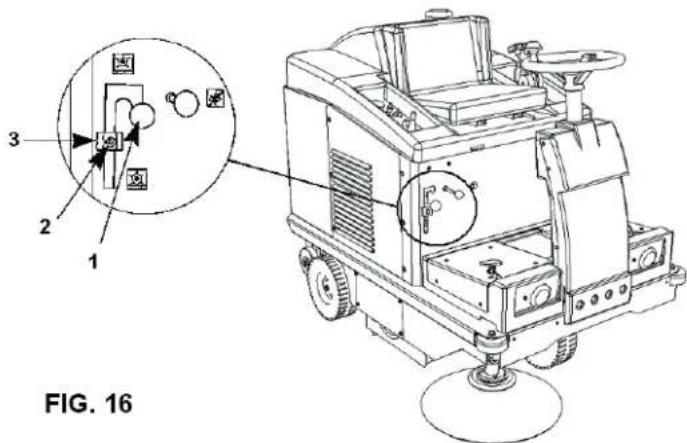
If the machine starts cleaning in a faulty manner or leaves dirt around, it will have to be adjusted and lowered as followed:
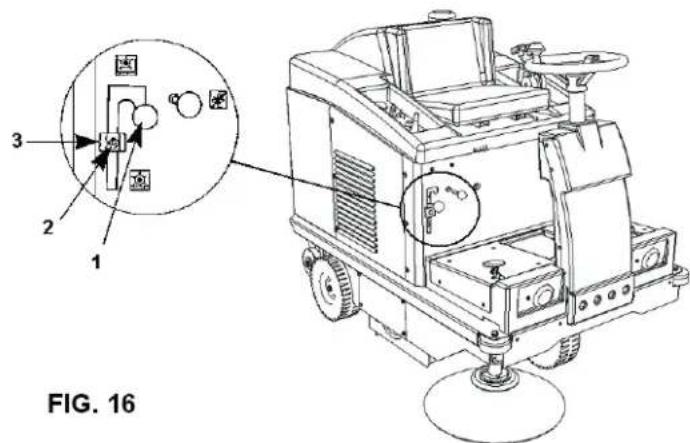
- Position lever Part. 1 Fig. 16 so that the central brush is raised.
- Loosen screw Part. 2 Fig. 16.
- Lower the adjuster Part. 3 Fig. 16 by 3/4 ~mm or by the desired distance.
- Secure the adjuster by tightening screw Part. 2 Fig. 16
- Position lever Part. 1 fig. 16 above the adjuster Part. 3 fig. 16.
The central brush can be adjusted until the adjuster Part. 3 fig. 16 reaches the end of stroke; after this, the brush must be replaced.
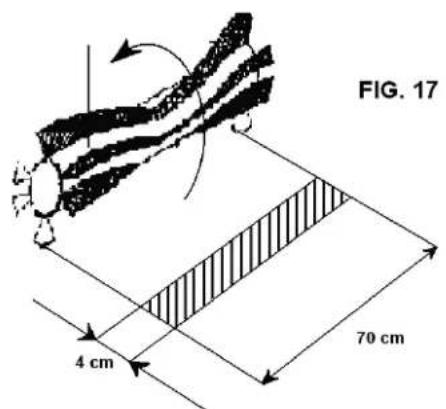
IMPORTANT: To ensure the central brush is correctly adjusted, measure its "Track" as follows:
- After adjustments, start the machine up and, and without moving either forwards or backwards, leave it standing in the same place for at least 10 / 15 sec. with the central brush lowered.
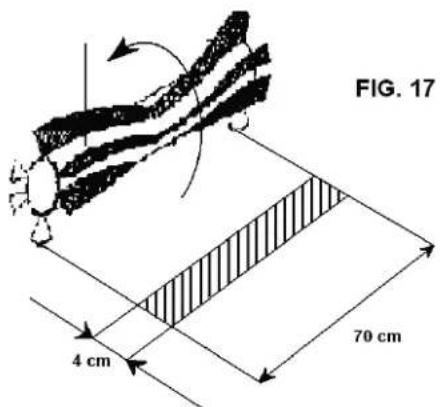
- Turn off the engine, raise the central brush and move the machine forwards manually until the mark left on the floor by the rotation of central brush is visible, as shown in Fig. 17.
IMPORTANT: The width of the track must not be under 4 cm.
SIDE BRUSH ADJUSTMENTS:
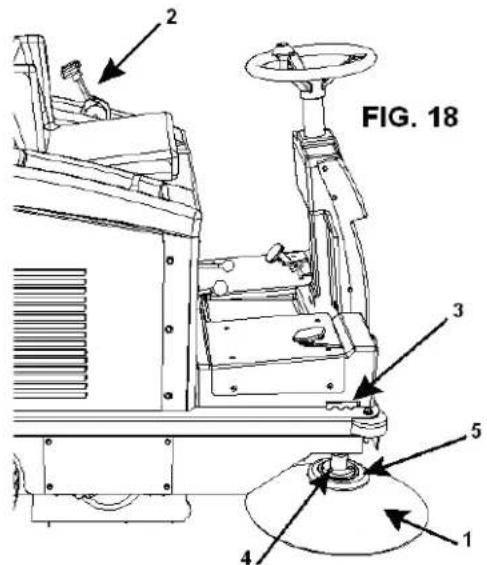
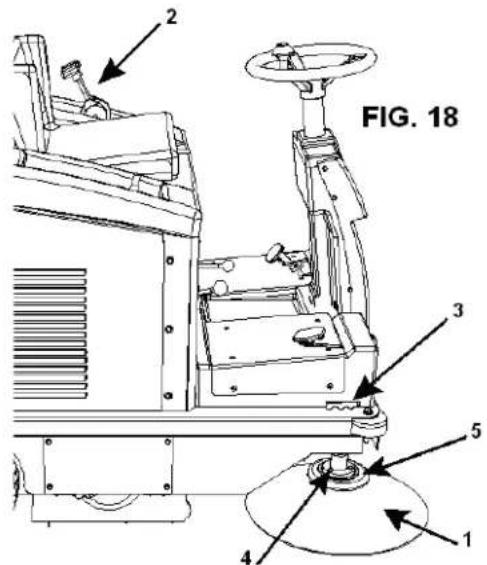
When the side brush Part. 1 Fig. 18 is no longer able to convey dirt to the central brush, the height of the side brush will have to be adjusted as follows:
- Keeping the side brush raised turn anticlockwise the register Part. 3 fig. 8.

IMPORTANT: This operation must be performed with the engine switched off.
ION BIN:
Every 50 / 60 working hours or whenever necessary, wash the collection bin Part. 1 Fig. 7 using warm water and, if necessary, common detergent. This will prevent any bacteria build-up (wear rubber gloves).
GENERAL RULESTo ensure a good machine functioning and life-span, keep both the outer bodywork and the inside of the machine, under the bonnets, clean by using jets of compressed air (perform this operation with the engine off and cold).
REPLACEMENTS
REPLACING THE CENTRAL BRUSH:
This operation must be performed wearing gloves and a face mask to protect the airways. Use 10 / 13 / 17 mm spanners and make sure the engine is off and cold.
- Remove the left panel (left to the driving seat) Part. 4 (Left) Fig. 3, by loosening the retention screws.
- Remove the 3 bolts on Part. 7 and 9 of Table 1.
- Remove the screws securing the left panel Part. 13 Tab. 1 to which the side seal is also fastened.
- Pull out the central brush Part. 15 Tab. 1 and proceed to replace this being careful to ensure the brush bristles are in the right direction as shown in Fig. 17. Ensure the drive notches of the two brushes supports Part. 4 and 24 (see Tab. 1) are inserted in the brush housing Part. 15 Tab. 1.
- To end assembly, repeat the operations in the reverse order.
- Adjust the height of the new brush (see "CENTRAL BRUSH ADJUSTMENT" paragraph).
REPLACING THE SIDE BRUSH:
This operation must be performed with the engine off and wearing gloves, using two 10 mm spanners.
- Unscrew the three bolts Part. 4 Fig. 18 to detach the side brush Part. 1 Fig. 18 from the plastic flange Part. 5 Fig. 18.
- Replace the worn brush and screw up the bolts Part. 4 Fig. 18 to the flange Part. 5 Fig. 18.

ATTENTION: When checking or replacing the motor oil, always wear protectives gloves, if possible made of nitrile with cotton lining; Do not discard the used oil into the environment as this is a pollution hazard.

- Dispose of the used oil through legally prescribed channels Carefully read the attached motor or function booklet and always:
1 - Check the level of the oil every 5 work hours.
2 - First oil change after 5 work hours. The sump contains about 5hg of oil. The oil recommended for temperature climates is 10W-30 multigrade for petrol engines. If the machine is operating outside the temperature zone, determine the right oil by referring to the motor booklet. When changing oil, use the special oil drain pipe.
3 - Subsequent oil changes every 40/50 work hours.
4 - Clean the motor air cartridge every 25 hours or before if necessary. Replace if necessary (see motor booklet).
IMPORTANT: The motor of the sweeper feature an OIL-ALERT system. This prevents motor start up in the absence or if the oil level is low.
CHAPTER 14 - EXTRAORDINARY MAINTENANCE

ATTENTION: Extraordinary maintenances are all those not mentioned in this manual. They must therefore be_performed by specialised after-sales personnel (see manual cover).
CHAPTER 15 - PUTTING OUT OF USE
SWL R1000 ET/SW R 6200 BT
Remove the batteries from their housing and keep them in a dry and well-ventilated palce. To ensure a long lasting of unused batteries charge them and eventually top up with distilled water every 30/40 days
Clean the dust filters and the bin. if necessary wash the bin as in instructions in "Collection bin" paragraph
SWL R1000 ST/SW R 8300 SC
- Leaving the machine switched on use up all the petrol in the tank;
- Clean the machine (with cold and switched off engine); Clean the dust filters and the bin; If necessary wash the bin as in instructions in "Collection bin" paragraph.
CHAPTER 16 - DISMANTLING/DEMOLITION

ATTENTION: Dismantling and demolition are a customer's responsibility. These operations must be performed in accordance with applicable regulations, handing the entire machine or its components to companies specialised in such services.
CHAPTER 17 - EMERGENCY SITUATIONS
In the event of any emergency situations such as, for instance: the machine has accidentally been driven over power cables and these have wrapped around the central brush or side brush, or an unusual noise is heard coming from inside the machine or engine, hot materials, inflammable liquids, chemical materials in general, poisons etc. have been picked up ETC:
PROCEED AS FOLLOWS:
1) Disengage the traction
2) Hardly press the brake pedal
3) Switch off the engine by the key on the dashboard or simply by leaving the driving seat as the safety micro switch under the seat will automatically turn the engine off.
4) After picking up the above materials, remove the container (bin) part. 1 and 2 fig. 7 and clean it, wearing gloves and mask to protect the airways. Follow the instructions in the "collection bin" paragraph.
CHAPTER 18 - TROUBLESHOOTING
Two basic faults can effect: the machine raises dust during use, or leaves dirt on the floor; causes could be many but if the machine is carefully operated and routine maintenance is properly carried out, such faults will not occur.
| FAULT CAUSE REMEDY | ||
| The machine raises dust Suction | lever is in OFF position(pulled out) | Turn to ON position (pushed in) |
| Filters blocked | Clean them by "shaking" them using the provided tools and if necessary take them off and clean thoroughly | |
| Filters damaged | Replace | |
| Filters badly fitted | Fit with the seal provided and make sure they are well inserted and uniformly well-secured | |
| Side seals damaged | Replace | |
| The machine leaves dirt on the floor | The central brush is not well set or is worn | Ad just the central brush and check the "track" |
| Wires, strings etc. have been picked up | Remove them | |
| Side seals damaged | Replace | |
| Collection bin full | Empty | |
| The machine battery is not performing properly. The machine is slow and does not clean well | Battery flat or not completely charged | Check the level of the electrolyte and proceed with complete new charge cycle |
| The battery charter is not that recommended or is not enough | Use a proper battery charger | |
| The internal combustion engine doesn't start | Oil level too low or not at maximum. | Top up |
| Micro-seat not activated. | Check | |
MANUEL D'INSTRUCTION POUR MOTOBALAYEUSE
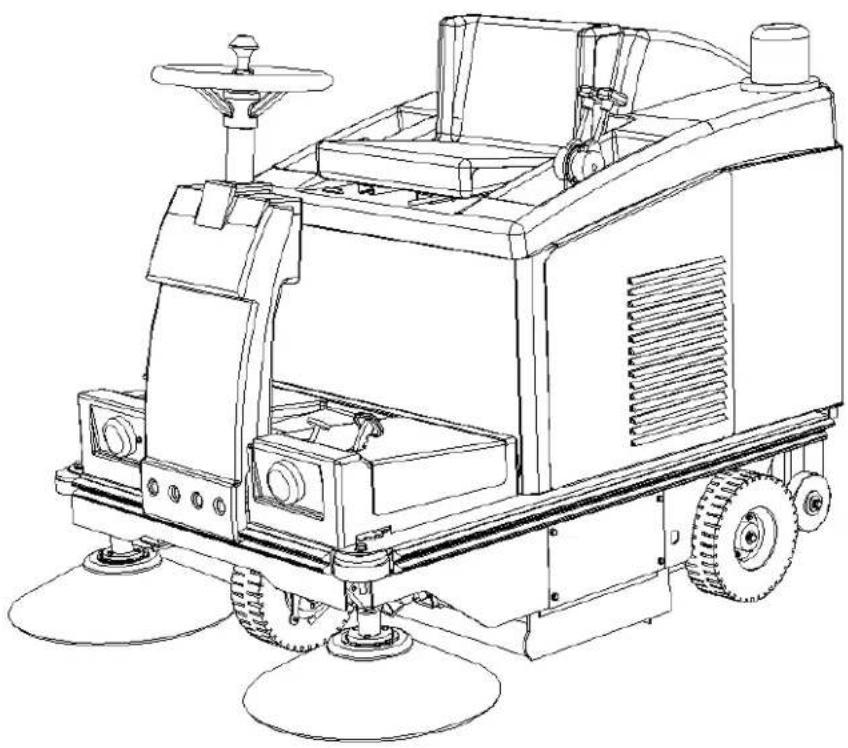
Mod. SWL R1000 ET / SW R 6200 BT / CSW R792BT
Mod. SWL R1000 ET BIN-UP / SW R 6200 BT LIFT / CSW R792BT PLUS
Mod. SWL R1000 ST / SW R 8300 SC / CSW R792G
Mod. SWL R1000 ST BIN-UP / SW R 8300 LIFT / CSW R792G PLUS
index page
CHAPITRE 1 - REGLE GENERALE 43
CHAPITRE 2 - DESTINATION DE LA MACHINE 43
CHAPITRE 3 - PREPARATION (DEBALLAGE DE LA MACHINE). 44
CHAPITRE 4 - CONDITIONS AMBIANTES ACCEPTEES. 45
CHAPITRE 5 - CONDITIONS D'UTILISATION PERMISES ET NON ACCEPTES. 45
CHAPITRE 6 - CHARACTERISTIQUES TECHNIQUES ET NIVEAUX SONORES. 46
CHAPITRE 7 - DESCRIPTION DE LA MACHINE 46
CHAPITRE 8 - POSTE DE TRAVAIL DE L'OPERATEUR ET ARRET D'URGENCE 51
CHAPITRE 9 - NORMES DE SECURITE 52
CHAPITRE 10-CONTROLES PRECEDANT LA MISE EN MARCHE 53
CHAPITRE 11 - MISE EN MARCHE ET ARRET 54
CHAPITRE 12 - UTILISATION CORRECTE ET CONSEILS 55
CHAPITRE 13-ENTRETIEN ABITUEL 55
CHAPITRE 14-ENTRETIEN SPECIAL 59
CHAPITRE 15 - MISE HORS D'USAGE. 59
CHAPITRE 16 - DEMANTELEMENT / DEMOLITION 59
CHAPITRE 17 - SITUATION D'UREGENCE 59
CHAPITRE 18 - DEFAULT / CAUSES / REMEDES 59
CHAPITRE 19 - GARANTIE. 60

D'EFFECTUER LA MISE EN MARCHE DE LA MACHINE, IL EST INDISPENSABLE D'AVOIR LU TOUT LE MANUEL.
LE FABRICANT DECLINE TOUTE RESPONSABILITE POUR LES EVENTUELS DOMMAGES ET/OU LESIONS PROVOQUEES AUX PERSONNES RESULTANT DU NON RESPECT DES NORMES INDIQUEES DANS CE MANUEL OU BIEN D'UNE UTILISATION IRREGULIERE OU IMPROPRE DE LA MACHINE.
TOUS LES INSTRUMENTS POUR LA PROTECTION PERSONELLE DE L'OPERATUR, EXPLICITEMENT INDIQUES DANS CE DOCUMENT (GANTS, MASQUES, LUNETTES, ETC.), SONT A CHARGE DE L'UTILISATEUR.
LES TERMES ANTERIEUR, POSTERIEUR, GAUCHE ET DROIT REPORTES DANS CETTE PUBLICATION SE REFERENT TOUJOURS A LA POSITION DE CONDUITE OCCUPEE PAR L'OPERATEUR.
POUR ASSURER AUX ORGANES DE LA MACHINE UNE DUREE MAXIMALE, IL EST NECESSAIRE DE SUIVRE LES ISTRUCTIONS CONTENUES DANS CE CAHIER ET D'UTILISER LES PIECES DE RECHANGES ORIGINALES.
LES DONNEES CONTENUES DANS CE DOCUMENT PEUVENT ETRE SUSCEPTIBLES DE VARIATION PARCE QUE LE CONSTRUCTEUR SE RESERVE LE DROIT D'APPORTER, A N'IMPORTE QUEL MOMENT, DES MODIFICATIONS FINALISEES A L'AMELIORATION DE LA MACHINE.
TOUTES LES MOTOBALAYEUSES SONT CONFORMES AUX NORMES CEE ET POSSEDENT LES ETIQUETTES REQUISES:
CHAPITRE 2 - DESTINATION DE LA MACHINE
UTILISATIONS PERMISES:
▶PEDALE SOULEVE-FLAP:
LED DIAGNOSTICO CENTRALITA ELECTRICA:
WAZNE: PO ZAMONTOWANIU USCZELEK, UPEWNIC SIE ABY TE BOCZNE(PRAWA I LEWA)
KROTSZE SZT.2 BYLY UNIESIONE OK. 2mm NAD PODLOZEM.
SZCZOTKA CENTRALNA:
PUNKT 2- RYS. 4. CO 50/80 GODZIN PRACY W RAZIE POTRZEBY SPRAWDZIC STAN SZCZOTKI CENTRALNEJ. SZCZEGOLNIE KIEDY MOGA BYC WKRECONE W NIA LINKI, SZNUREK ITD. PRZY ICH USUWANIU POWINNO SIE:
WYJAc POJEMNIK PUNKT 2-RYS.7
PO CZYM ZAJRZEc POD MASZYNE W CELU KONTROLI SZCZOTKI UZYWAJAC REKAWIC I MASECZIK OCHRONNEJ OCZYSCIC JA Z EWENTUALNYCH ZANIECZYSZCZEN(SZNURKOW,LINEK)WKRECONYCH PODCZAS PRACY. MOZNA UKRYC 4 HAKOW(NA WYPOSAZENIU) DO PODNIESIENIA MASZYNY(PATRZ - RYS.1) PO CZYM OCZYSCIC SZCZOTKE ZACHOWUJAC SZCZEGOLNA OSTROZNOSC(NIE PRZEBYWAC BEZPOSREDNIO POD ZAWIESZONA MASZYNA).
REGULACJE
REGULACJE SZCZOTKI CENTRALNEJ:
W PRZYPADKU NIEWYDAJNEGO SPRZATANIA(WIDZAC, ZE MASZYNA POZOSTAWIA NIECZYSTOSc)TRZEBA JA WYREGULOWAC, OBNIZAJAC W NASTEPUJACY SPOSOB;
USTAWIC DZWIGNIE(PUNKT 1- RYS.16)W POZYCJI SZCZOTKA CENTR.-W GORZE
ZWOLNIC SRUBE(PUNKT 2-RYS.16).
- OBNIZYC REGULATOR(PUNKT 3- RYS.16) O 3 / 4 mm LUB O WYMAGANA ODLEGLOSC.
ZABLOKOWAC REGULATOR ZACISKAJAC UPRZEDNIO ZWOLNIONA SRUBE(PUNKT 2-EYS.16)
USTAWIC DZWIGNIE NAD REGULATOREM (PUNKT 3 -RYS. 16).
MOZLIWE JEST USTAWIERIE SZCZ. CENTR. DOPOKI REGULATOR(PUNKT 3-RYS 16) NIE DOJDZIE DO KONCA, W TYM PRZYPADKU SZCZOTKE NALEZY WYMIENIC.
IWAZNE: ABY SIE UPEWNIC, ZE SZCZOTKA CENTRALNA JEST ODPOWIEDNIO USTAWIONA ZMIERZYC JEJ 'SLAD' W NASTEPUJACY SPOSOB:
PO WYREGULOWANIU WŁACZYC MASZYNE NA POSTOJU PRZEZ OKOLO 10/15 SEK. Z OPUSZCZONA SZCZ, CENTR..
NASTEPNIE WYLACZYC SILNIK, PODNIESC SZCZ. CENTR. PO CZYM PRZESUNAC RECZNIE MASZYNE OD
MOMENTU AZ ŚLAD SZCZOTKI NA POW.BEDZIE WIDOCZNY, JAK WIDAĆ NA RYS. 17.
WAZNE: SZEROKOSC SLADU POZOSTAWIONY PRZEZ SZCZOTKNE NOE BYC WIEKSZY NIZ 4 cm.
▶REGULACJA SZCZOTKI BOCZNEJ:
W PRZYPADKU KIEDY BOCZNA SZCZOTKA PUNKT 1- RYS. 18 NIE ZBIERA JUZ NIECZYSTOSCI NIE KIERUJE ICH W KIERUNKU SZCZOTKI CENTRALNEJ, KONIECZNA JEST JEJ REGULACJA PRZY UNIESIONEJ BOCZNEJ SZCZOTCE KRECIMY REGULATOREM W KIERUNKU PRZECIWNYM DO RUCHU ZEGARA(PUNKT 2- RYS. 18)

CZYNNOSC WYKONYWAC PRZY WYLACZONYM SILNIKU
▶POJEMNIK ZBIORCZY:
CO 50/60 GODZIN PRACY LUB KIEDY JEST KONIIECZE UMYC POJEMNIK ZBIORCZY(PUNKT 1 - RYS.7) CIEPLA WODA LUB ZWYKLYM PLYNEM DO ZMYWANIA ABY UNIKNAC WYTWARZANIA SIE JAKICHKOLWIEK BAKTERII(UZYWAC REKAWIC GUMOWYCH)
NORMY GENERALNE: ABY UNIKNAC JAKICHKOLWIEK USZKODZEN, KTORE SPOWODOWALBY ZLE DZIALENIE MASZYNY, CZYCIMY CALA MASZYNE ZEWNETRZNIE I WEWNETRZNIE, NAJLEPIEJ UZYWAC SPREZONEGO POWIETRZA(CZYNNOSC WYKONYWAC PRZY WYLACZONYM,ZIMNYM SILNIKU).
WYMIANY
WYMIANA SZCZOTKI CENTRALNEJ:
(CZYNNOSC WYKONYWAC KONIECZNIE W REKAWICACH OCHRONNYCH,MASCE OCHRANIAJACEJ DROGI ODDECHOWE, KLUCZE 10/13/17 mm PRZY WYŁACZONYM,ZIMNYM SILNIKU)
1-ZDJAC LEWA OSLONE(W POBLIZU FOTELIKA)PUNKT 4 LEWY- RYS.3,ODKRECAJAC SRUBY.
2-ODKRECIC TRZY SRUBY(PUNKT 195 W TABELI 1);
3 - ODKRECIC SRUBY BLOKUJACE LEWA SCIANKE(PUNKT 6- TABELA 1) DO KTOREJ PRZYMOCOWANA JEST ROWNIEZ USZCZELKA BOCZNA .
4 - SCIAGNAC SZCZOTK E CENTRALNA(PUNKT 113- TABELA 1) PO CZYM ZALOZY C NOWA ZWRACAJ AC UWAGE NA ZLOZENIE WLOSIA(PATRZ RYS.17)ORAZ NA PROWADNICE DWOCH WSPORNIKOW SZCZOTKI- PUNKT 128 I 64(TABLICA 1) W MIEJSCU UMIESZCENIA SZCZOTKI CENTRALNEJ PUNKT 113-TABELA 1
6 - ABY ZAKONCZYC MONTAZ POWTORZYC CZYNNOSCI W ODWROTNEJ KOLEJNOSCI.
7 - WYREGULOWAC POLOZENIE NOWEJ SZCZOTKI(PATRZ"REGUL." SZCZ. CENTRALNEJ)
WYMIANA SZCZOTKI BOCZNEJ:
CZYNNOSC WYKONAC PRZY WYŁACZONYM SILNIKU I UZYWAJAC REKAWIC OCHRONNYCH I DWA KLUCZE 10.
1- ODKRECIC 3 SRUBY(PUNKT 4-RYS.18) W CELU ZDJECIA SZCZOTKI BOCZNEJ(PUNKT 1-RYS.18) Z PLASTIKOWEGO KONTENERA(PUNKT 5-RYS.18)
2- WYMIENIC ZUZYTA SZCZOTKÉ NA NOWA, ZAKRECAJAC SRUBY(PUNKT 4-RYS.18) DO KOLNIERZA(PUNKT 5-RYS.18).
DOTYCZY MODELU SWL R1000 ST/SW R 8300 SC

PODCZAS KONTROLI OLEJU W SILNIKU WYMAGANE JEST POSIADANIE REKAWIC PRZYSTOSOWANYCH DO TEGO TYPU CZYNNOSCIB(AWEŁNIANO-NITRYLOWE)NIE WYLEWAC ZUZYTEGO OLEJU GDZIEKOLWIEK PONIEWAZ JEST TRUJACY. ODSTAWIC DO PUNKTÓW DO TEGO PRZYSTOSOWANYCH.

CZYTAC UWAZNIE INSTRUKCJE OBSLUGI SILNIKA, POMIMO WSZYSTKO:
WAZNE: SILNIKI STYLE S70 WYPOSAZONE SA W SYSTEM OIL-ALERT KTORY BLOKUJE WLACZENIE SILNIKA W PRZYPADKU BRAKU NISKIEGO POZIOM OLEJU.
1) SPRAWDZAC POZIOM OLEJU PO 5 GODZ.PRACY.
2) PIERWSZA WYMIANA OLEJU PO 5 GODZ. PRACY, MISKA OLEJOWA ZAWIERA 5I OLEJU, OLEJ ZALECANY DO SUROWYCH KLIMATOW 10 W-30 WIELOSTOPNIOWY DO SILNIKOW BENZYNOWYCH. NATOMIAST W KLIKACIE LAGODNYM UZYWAC OLEJE-KONSULTUJAC INSTRUKCJE OBSLUGI SILNIKA. DO WYMIANY OLEJU UZYWAC RURE DO TEGO PRZYSTOSOWANA(NA WYPOSAZENIU).
3) WYMIANA OLEJU CO 40/50 GODZIN PRACY.
4) OczyszczANIE FILTRU POWIETRZA CO 25 GODZIN PRACY LUB W PRZYPADKACH KOLEJNOSCI

KONSERWACJE SPECJALNE TO WSZYSTKIE TE, KTORE NIE ZOSTA LY ZAWARTE W TEJ KSIAZECZE(INSTRUKCJI)POWINNY BYC WYKONYWANE PRZEZ OBSLUGE WYSPECJALIZOWANA(SERWIS) (PATRZ NA OKladke INSTRUKCJI).
BCEI DA DEPKNTE DAHHOE PYKOBODTBO NOI PYKON (B CNYAe YTEPN OBPATNTECb K CBOEMY IPEDCTABNTELIO 3A DPYTNM 3K3EMNIAPOM)
KOMIIAHNA COXPAHRET 3A CO60I IPABO BHOCNTb N3MEHENN IIN YCOBEPUHEHCTBOBAHNA B CBOI MAUNHbI BE3 O6r3ATEJIbCTB IO MODEPHN3AUHN IPEBAPNTJbHO PEALIN3OBAHHbIX MAUNH.
BCE NODMETAJIbHbIE MAUINHbI OT KOMNAHUN COOTBETCTBYIOT CTAHAPTAM E3C N OTMEUHbI CLEYIOUeN MAPKINPOBKOJ:
ГЛABA 2 - HA3HAUEHNE /ИСПОЛБ3OBAHNE NO HA3HAUEHNIO
KoMaHnra pada npNBetCTBOBaTb Bac cpei MHOroUncIeHHbIX BnaIeJIbueB NOmTaJIbHbIX MaunH cepu SWL R1000 ET/SW R 6200 BT - SWL R1000 ST/SW R 8300 SC.
Co6nHHe cIeDyUxN HCTpyKuIN PO3BOInT Bam Nolb3OBaTbcra BcEMN yHKunMm MaunHbI 6e3 KaKnx-1n60 npo6Jem.
- UeIb daHoro pyKOoDCTBa - KaK MoXHO ueTue 6O3HaunTB Ha3HauEHe, Ia KOTOPo DaHHa MaunHa 6bla cKOHCTpyuPoBaHa, YTO6bl DaTb BO3MOxHOCTb NOlb3OBaTc DaHHbIM N3DeJIeM C MaKcImaJbHo 6e30nachOCTb. 3Decb TaKKe CoepKHTc NepeYeHb He6OJbux X Oepaun, BInOpHeHne KOToPbIX NOMOXET Bam NODepKINBaTb MaUnHy B INCpabHom COCTOHN. 3Tu DeIcTBn JERKO MOrTy 6blb BInOnHeHblIO6bIM NOL3OBaTeIeM.
IyBbIOJIHeHnpa60T no BHeJIaHObOMy texHueckOMy o6cnyKbAHIO Bcerda npu6eraTe K IOMOUs KBaINΦuIPoBAHHoro nepcoHana.
PykoBOCTBO TAKKe coDepxKHT INHOpMaUIO 6O onaChocTEx N OCTaToCHbIX PnCKax, T.e. TaKHX PnCKax, KOTopbIX HeBO3MOXHO 136EkaTb, C HCTpyKUmaN No KaKdOMy KOHKpeTHOMy CnyAio. Bbl TAKKe HauTe INHOpMaUIO O pa3peuHHom N Hepa3peuHHom NCNoIb3OBAHHM MaunHbI, O TOM, KaK pa6oTaTb C MaunHoJ, TexHueckne DaHHbIe I npedeJIbHbIe TexHueckne XapakTePcNTKn, KaK nCNoJIb3OBA Tb MaunHy I npoBoUInTb TexHueckoe ObcIyXnBaHne, INHOpMaUIO NO BBIOBy 3 EKCnIyatauIN, DEMONTAXY uYtINn3aUIN.
PA3PEUHEHHOE NcNoJIb3OBAHNE:
IoMtaHna MaunHa npEHa3NaHe Ha y6OpKn OTxOIOB, OCTaBUnXcN Oocne MexaHuecko 6b0Kn, nbIn, o6eero 3aqr3HeHn C NIObix NIOCKnx, TBepdbx IN UMepeHHO uepoxOBaTbx IOBepxHOCTe, TAKNX KAK 6eTOH, acFaJIbT, KaMeHb, KepAMnKa, DepeBO, MetaII, MpaMOp, pe3INHObIe INI INIACTIKOBbie NOKpbITnA, IJaADKne, uepoxOBaTbe, CINTETUeCKne INI INHbIE KOBoBbIe NOKpbITnB BOTKpbITbIX INI 3aKpbITbIX NOMeEHnX.
HEPA3PEUENHOE NcNoJIb3OBAHNE:
3anpeaetcnsOJIb30BaTbIOJMeTaIbHbI MaunHbI SWL R1000 ET/SW R 6200 BT co cTAHaapTHo naHeIbU ynpabLeHnHa NoBepXHOCTx C yKIOHOM 6Oone 18%.MaunHbICycOBepseHCTBOBaHHo naHeIbMOrYT nCNOJIb30BaTbCpNyKIOHe do 20%
3anpeaaetca nCnoBb30BaTb noMaTeaHbIe MaunHbI SWL R1000 ST/SW R 8300 SC Ha NOBepxHOCTx C yKIOHOM 6OJIee 16%
Maunhbcepn SWL R1000 ST/SW R 8300 SC, OchaeeHHbIe DInraTeIeM BHyTpHHeRo cropaHna, He MoryT nCNOJb3OBAbCS BHyTPn NOMEueHn, TaK KaK OHN BBJeIaT MOHOKCNd yRlepoda (6ecuBcHTbI OTpaBlaIOUnn ra3)
3aPpeaaeTcNcOJIb3OBaTbMaHnHbI BO B3pbIBOONaCHO HIN NOXapooNaCHO cpeJe.
3anpeaaetcnaonb3oBaTbMaunHbHa HepOBHO,necaHO nn oueh rpy60 noBepxhoCTn.
3anpeaetcnaonb30BaTb MaunHbI y6opKn Macen, TOKCnHyBx BeueCTB XmMkaTOB B CELOM (ecn npednoIaraeTcra nCnoB3oBaTb MaunHy Ha XmMueeCKOM npednpnTn, Heo6XoMnO 3apocntb oc6oe pa3peweHne ot npon3BOndTeJI nn NoCTabuNka).
3anpeaetcncnohbaTbMaunHbHa roopcknx npocelouhbx doporax. 3anpeeHo nepemeene Maunn no doporam o6uero nolb3OBAHn.
3anpeaetcnaonb3oBaTbMaunHbI npn nIOXOMOCBeueHn,TAK KaON He o6OpydoBaHb CBOe co6CTBENHO CNCTEMO OCBeueHn.
3anpeaetc6yKcnpOBkaMaunKaKm-lno6o6pa30,KaKaHaacTHouTeppuToPn,TakN B 06eCTBeHHbIX NOMEeHnX NoDoporam 6oeroNoIb3OBAHn.
3anpeaetcnaonlb30BaTb MaunHbI dny y6opkn Chera nn MbITbBnaxhbx 3arpa3HeHHbx NOBepxHOCTe.
3anpeaetcnaonb3oBaTbMaunHy dny y6opKn HnteBnHbIX MaTePnaNoB, TAK KAK MaTePnaI TaKoIΦOpMbIO MOKET HAOTaTbcra Ha CEHTpaNbHyIO MexAHueckyIO BpaAioUyIOc UeTKy.
3anpeaetcncnoBb0BaT MaunHb Iy XpaHeHn PpeMeTOB, a TaKx e B KaueCTBe OnopHOI NOBepxHOCTn Dn npcoHa n 06bekTOB.
HnKOrda He dOnyckaTe IIOdeB 3OHy pa6OtbMaunHbI.
He BHOCHTe B MaunHy HnKaKnx MoHnKauu, ecn y Bac Het COOTBeTCTByIOoero pa3peHnra OT npOn3BONDTeJIa.
| TEXHNUCHECKNE XAPAKTEPRICTKIN ED. | SWL R1000 ET SW R 6200 BT | SWL R1000 ST SW R 8300 SC | |
| Источник пітань//БATAPEЯ БEHЗИНовый | ДВИГАЕЛь | ||
| ШИРINAЦHTРаль"HОД"шETКММ 700 700 | |||
| ШИРINAЦHTРаль"HОД"шETК+1 ПРABAWБOKOBAW"шETKA | ММ 92 | 20 920 | |
| ШИРINAЦHTРаль"HОД"шETК+2 ДBEБOKOBbIX"шETК(ПРABAWИЛЕВА) | ММ 11 | 50 1150 | |
| MAKSCIMALbHAWСКОPOCTb M/c 1,72 2,13 | |||
| MAKSCIMALbHAWСКОPOCTb 3ADHE罗XODA M/c 0,88 0,5 | |||
| MAKSCIMALbHAWЧИSTЯŞАСПОСБHOCHTB(C 2 BOKOBblIMN"шETKAMN) | M²/4 | 6200 | 7.700 |
| MAKSCIMALbHAWУКLOH | % | 12 (20) | 18 (20) |
| ТягА | // | 3АДнE KOЛЕСA | ПЕPEDHIVKOJIЕСA |
| ТРАСМИССИ | // | 3ЛЕКТПUCEСКА | ГИДРавличESСКА |
| MAKSCIMALbHAWРADIUSC NOBOPOTA | ММ | 1450 1450 | |
| ПОВЕХHOCTbФИльТROВАнHA(6ФИльТРВ) | M² | 6 | 6 |
| EMKOCTb KONTENHEPA | Л | 62 | 62 |
| MAKSCIMALbHAWДПИHA KONTENHEPA | ММ 14 | 30 1430 | |
| MAKSCIMALbHAWШIPINA | ММ 91 | 0 910 | |
| ВыICOTА | ММ 11 | 40 1140 | |
| ВEC(BE3 BATAPEN) | КR 260 | 300 | |
| Уровень звуковою давелени LpA | ДБ(A) | 76 - K=1,5 | 84 - K=1,5 |
| Акystеска Измерenvа мошиость LWA | ДБ(A) | 90 - K=1,5 | 97 - K=1,5 |
| Акystеска мошиостьPrepoctableno LWA | ДБ(A) | 91 | 99 |
| Вибрацnia,пөрөдүаөмBLEпөлбзоватello,на рүлевом кolese | m/s² | 1,92 - K=0,81 | 3,74 - K=1,15 |
| Вибрацnia,пөрөдүаөмBLEпөлбзоватello,на сиданbe | m/s² | 0,65 - K=0,32 | 0,71 - K=0,18 |
3NaueHH, onpeJeHbIe corJaacHO OTHopMbI: EN 60335-2-72

(BEPCN A, C DBNATATELEM) NcnoIb3oBaTb cJeDyOuIe cpeCTBa HnDbNduaIbHOH 3auNTbI (DPI): Hocnte 3aunTHbIe HayhHK..
ГLABA 7 - ONICAHNE MAUIHbI
3AUHTbIE PNCIOCOJEHNA:
Ha Pnc. 3 n3o6paKeHb 3aunTHbI npncnOc6JeHn, KOToBle dOnKbI 6bTb HndJeaum 06pa3OM yCTaHOBJIb HaxOHTbc B NcnpabHom COCTOHN. 3anpeaaetc IcnoIb3ObaTb MaunHy, ecn OdHo nn 6Oone 3aunTHbIX npncnOc6JeHn OTCYCTBYOT nn NobpeXeHbI. Cnncok 3aunTHbIX npncnOc6JeHn C COOTBeTCTByUuHmHomepaMn Dnla 3aka3a CM. Hnke:
DETAJIb
HANMEHOBAHNE
1 ABapnHbI BbIKIOuATEy MeCTa OpeTaOpa
2 1paBra n IeBa 6okobIe naHeJI
3 Kanot dBnrgateJra
4 3aunTHnA nlaCTnHa ceHTpaIbHoN 5eTKn: npBaar I neBaar
5 CBeTOBOn HnDnKAtOp 3aHrero XoDa
6 Ipeepnne KOnHueckoe 3y6uatoe KoIeco
BOKOBAR LETKA:
Бokobая Шета (Деталь 1, Рс. 4) DeiCTByET KAK TpaHcnpTeР ДЯ nbIи Mycopa. OHa npedHa3NaYeHa ДЯ OUHCTKN KpaEB, yrIOB n npOphiNeI. NocYE y6OpKn ee Heo6xOaMIO OCBO6OaNTb (NoHraTb), YTO6bl OHa He NOdHMana NBIL B BO3dyX, TAK KAK 3ΦΦeKT OT pa60tBI 6OKOBoi ΜeTKI CHnKaET ΕΦΦeKT pa60tBI ΚEHpAIBHO. B KaueCTBe DOONHHTeBHorO npCnOCo6JIeHnB bI MoKete TaKke npno6peCTN neByIO 6OKOBYIO ŠeTKY.
LCHTPAJIbHAR LETKA:
UeHTpaIbHna 1eTka (TeIaIb 2, Pnc.4) ABJIeTcOCHOBhIM KOMNoHEHtOM MaunHb IIN3aXBaTa n NepemEeHnN PbInu Mycopa B KOHTeHep.B HAIuHNmIEOTc 1eTKn pa3HO CTeneHJ XeCTKocTN C pa3HbIM TINOM 1eTHHbI, B 3aBucMOCtN OT TnNa OTXoIOB IN TnNa NOBepxHocTN, IINy6opKn KOTOpn npednonaraetc nCnoIb30BaTb MaunHy. B cnyuae n3Hoca BBICOTy 1eTKn MoKHo perynipobatb (Cm.Γnaby 13).
BAKHO: He nCnoIb3yIte MaunHy dIy y6OpKn fpaarmeHTOB BepeBOK, npoBOIOB, ynaKOBOHybIX pemHei, naIOK n T.d. dIHHoH 6OJee 25 cm, taK kaK daHHbI MaTePnA I MoXeT HAMOTaTBcH a ceHTpaJIbHyIO n 60KOBblE ueTKN n BbI3BaTb nx NobpeXdHHe.
CNCTEMAΦNJIbTPAUH:
CnCTema fHbtpaun Cnyknt IJn npedotBpaueHnaIbnHeHn OkpykaOe Cpebl BO BpeMa 60tmb Maunb. OHa CoCToNT n3 WecTn fHbTpOB CO BCTABHbIMn fHbTpYIOUMN 3JeMeHTAMn (Teanb 1, Pnc.5). CnCTemy fHbtpaun MoXHO OTKnIOuHTb, NotAHyB 3a pyky (Teanb 1, Pnc.6).
BAXHO: Pn nepeBxHcHn No BlaXHbIM NOBepXHocTm OTKIOuayte cnCTeMy fNtpaun, B npOTNBOM cIyae 6ymaxhble fNlbtpbl HAMOKHYT, YTO npNBedet K nx npexkdeBpeMeHHOM y3HOCy.
NBJE3AUHTHOE YNLOTHEHNE:
Cm. Detalb 4, Pnc. 6. Dahnoe yIIOtheHne OKpykaet ueHTpaIbHyIO ueTKy N BblonHreT KpaIHe BaXkyo fYHKUIO npu pa6ote MaunHbI, o6ecneuBaa 300eK T BCaCbBaHn. PeryIpHO npOBepaTe PbIe3aunTHoe yIIOtheHne, YTO6bI y6eITbcra, 1TO OHO HAXOITcR B INCpABHom COCTOAHN.
KOHTENHEPДЛМYCOPA:
KoHTeHepIy Mycopa (Teanb 1, Pnc.7), n3roTOBnE H3 npOuHoro nnactka u ydepXnBaET BeCb MaTePnA, c6paHbI OCHOBHO ueTko I nbIb, NOCTynaIOUO OT fNtbp. BlaRopap paMe Ha Konecax, KOHTeHep NERKO CHrTB (Teanb 2, Pnc.7).
BAKHO: OnopoxHnTe KOHTeHep ToIbKO npN BbIKIOueHHOM DBrHrataTe. Npeed 3TNM Heo6xHMO HadeBaTb nepaATKn I daXe Macky, yTO6bl 3auNTtB Baun IerKne OT nbIn (KOTOPaBcERda npncytCTByET BO Bpem DaHHoI onepaun).
ONICAHNE PUYHORO YNPABJEHNA (nra o6enx mojele)
NEAJIb IJIy IODbEMA 3ACJHOHOK:
Ipn HaukataH Ha neaJIb dIy noIbema 3acIOHOK (Detalb 1, Pnc.9),nepeJHee ynIoTHenHe (Detalb 2, Pnc.9) noHNMeTcra, o6ecneuN IpoCTpaHCTBO dJI c6opa KpynhbIX obBeKTOB. NcnoJIb3yETcra dJI y6OpKn IInCTbeB, naueK n3-NOd CNrApet n T.d.
ПЕДАЛБ TOPMO3A:
При Нжатин Ha Neдалb Topmo3a (Детаь 1, Pnc. 10) Maшину Замедлгхд и OCTAHOBITcR (ДeИCTBnE npodlonkaetcR, noka Neдалb Haxata).
CTOARHOUHbI TOPMO3:
YTo6bI npnnapKOBaTb MaunHy, BbINOJHrTe CNeDyUOuNe DeJeCTBna: HaxMnte Ha neaJIb TOpMO3a Jbeo HorO, a 3aTeM yCTaHOBIne CTOnOpHbIn 3y6e, HaxBaH Ha pbUar npaBoH HorO. YTo6bI CHaTb MaunHy CO CToaHOuHOro TOpMO3a, nPoCTo HaxMnte Ha neaJIb (Detalb 4, Pnc. 10) eue pa3.
IeAJIb 3ADHErO IN IEPEDHrO XODA: (ToIbKO dJa BepCn, pa6oTaIOuei ot 6aTapeu)
TeTb3, Pnc.10.DaHna neaB Bblonnre TBe cyHKuN, B 3aBnCmocn OT noLoXeHnnepeKIOUaTeIaNepeDau (TeTb 1) Ha naHeIy npabLeHn: KOrda nepeKIOUaTeIb HaxoITcB NoLOXeHn nepeHero XOJa, MaunHa npn HaxaTn NeaIb DBrXeTCBnepeI. Korda nepeKIOUaTeIb HaxoITcB NoLOXeHn 3aHrOxoJa, MaunHa DBrXeTCB Ha3aI. N3co6paXeHn 6e3oNaChOCtckOpocb DBrXeHn MaunHbI 3aHIM XODOM ABLAETcOueHb Hn3kO. Korda nepeKIOUaTeIb 3aHMaet ceHTpAlbHoe nOIOxHne, MaunHa He MoXeTDbVaTcB Hn nepeHNm, Hn 3aHIM XODOM.
NEAJIb 3ADHErO IN NEPEHrO XODA: (ToIbKO dJa BepCnn, pa6oTaoue oT DBnraTeJ)
Talb 3, Pnc.10. Dannn aBbINHReT DBe FyHKcN, B 3aBNCMOCTN OT NIOXKeHNA. Pn HaxaTN Ha npabyU qactb neaII (Korda cTepeIka yKa3bIbaet BBEPX) MaunHa dBnxKeTcBnepei, B TO Bpem KAK npn HaxaTN Ha neByIO qactb (Korda cTepeIka yKa3bIbaet BHN3), MaunHa dBnxKeTcHa3aI. Nco6paJxHm 6e3onachocTn CKoOCTb DnNxKeHna MaunHbI 3aDHm XODOM RBLRETC OeyH Hn3KOi.
PbIaR BKJIIOUeHnB OKOBOB UETKN: (Ara Bcex MoJeNei)
Pbivar BKIOUeHn 60KOBOn 5eTKN (Detalb 1, Pnc. 10) DeIaeT Bo3MOXHbIM ONyCTNTb 5eTKY, HaxOJaCb Ha cndeHbe OepaTopa. IomHInTe, yTO 60KOBa J 5eTKa DOJXHa NCNOB3OBaTcR TOJIbKO dIry ONUCTKN KpaEB, npoHneN u YrIOB u yTO OHa 6yET npoDOnjKaTb BpauTaBCR, NOKA pa6OtaET DBrAteNB. UTo6bl OnyCTNTb, a 3aTeM BKIOuHTb 60KOByIO 5eTKY, HaxMnTe Ha pbIur ot ce6ra (Detalb 1, Pnc.
10);TTO6bI NOHrTB 6OKOBYIO UeTKy, BepHIne pbHar B INCXoHoe NOJIOKeHne, NotraHyB erO Ha3a.

BHIMAHNE:
TDA HE DOTPARNAITECB DO BOKOBU IETKU PYKAMN HHE NCIOJIb3YNTE EE JIA C6OPKN HHTEBNHO MATEPNAJA.
PYUKAOTKJIIOUEHNA BCACbIBAHNIA:ДЯ BCex moJeIeN.
UcTaHOBLeHa Ha o6eHX MoEJx (TeTalb 1, Pnc. 6).
Korda pyka BbITaHTa, yHKun BCacBHaHn OTKIOueHa. OTKIOUaTe yHKUNO BCacBHaHn KaKdb pa3, KOrda HeoXoIMO BCTpAXHyTb FNbTpbl Nn np NepeceHm BlaxKbIX NOBepxHOCTe (CBKIOUeHHbIM DnurateJeM).
PbUAR BKJIIOUOHEHNA UENTPAJbHOH UETKN:ДЯ BCex MoJeIeN. DaHHbI pyUar (TeaB 2, Pnc.6) DeJaET BO3MOXHBIM BKIOUOHeHne N OTKJIIOUeHne UeHTpaJIbHOH UeTKn.ПрпперemeHnn PbUra BHN3 UeTka ONyCKaETcR, B TO BpEmKa KAc ecInперemeCTNTb PbUar BBepx n 3akpeNTb B BbiEMKe, UeHTpaJIbHaJ uTeTKa OTKJIIOUaETCra.
3JIeKTPUeCKA BEPCNA
BECNRA,C dBVΓATEJIEM
1) NepeKJIouaTeIb nepeDaun
2) CBeToaHNoDhBn HNdkKaTOp COCToAHN 3NeKtpnuecko naHeH ynpabJeHn
3) KhoNka ouNCTkn fNbTpOB
4) Khonka akycntnueckoro nHdkaTopa
5)IpeekIOuateIb DBHrataTeIaTeK
6) KIIOU 3aXnraHna
7)IpeeknHouateIb pa6oeryo ocBeeHnA (doonHHTeIbHO)
8)Индкатор зapая
9) CuetnK MToOaCoB
NEPEKJIIOYATEJIb NEPEDAUY:
Deta1.PbUar nepeKIOueHnnepaCnykNTIaBnxKeHnMaunHb BnepeuHa3ad.Korga nepeKIOUoateBb HaxOHTcBNoIOxHnnepeHoro xOa (CTpeKka yKa3bBAeT BBepx),MaunHa npn HaxaTn NeaA (Tean 3, Pnc.10) DnXeTcBnepei.Korda pbUar nepeKIOUeHn HaxOHTcB NoIOxHeHn 3aHrero XoJa (CTpeKka yKa3bBAeT BnH3) npn HaxaTn NeaAaMaunHa DnXeTcHa3aJ.N3 coo6paxeHn 6eONacHOCTn CKOpocb DnXeHnMaunHb3aHNm XoDMyBIAETcOyeHb Hn3KO.J KOrda nepeKIOUaTeB 3aHmaeT cEHTpaNBoe NOIOxHne, MaunHa He MoXeT DnIRatbcn Hn nepeHNm, HN 3aHNm XoDM.
CBETOINOHbI INHINKATOP COCTOHHN 3NEKTPNUECKOINAHENYUNPABLEHNA
Detalb 2. Dahnbl KpaCHbl CBeToOnOHy INHdkatop Bcerda DOJXeH 6bTb BKIOUeyn NO BpeM pa60tbl MaunHbl. Ecnn HndkaTOp Mnaet uepe3 paBHbIe INHTepBaIbI BpeMeHN, 3TO CNrHaUN3npyET O BO3HNKHOBEHN TexHnuecknx npo6Iem c MaunHOB. B 3Tom cnYae peKomeHnyETcHemeJeHHO 6paTntbcra 3a NOMOuBO, YTO6bl npOBepNTb COCTOHNne NOmTaJIbHO MauINHbl.
KHONKA OYNCTKI ΦNJIbTPOB:
Deta 3. DnHna KhoNka oecneuBaet OuncTy BCaCbIbAoUxN ΦnltpoB npn NOMOUs yCTPOcTBA dJa BCTPaxNBHaHg (Deta 2, Pnc.5); HauMnte KhoNky He MeHee 6 / 7 pa3, ydepxNBaee KaKdbi pa3 8 / 10 cekyHd (DaHHa onepaunrdoJXHa npoBoNTbcra nepeD HauaLom pa60tbl, nepeOnopoxHeHem 6yHKepa, CBbIKluyeHHbIM dBiratLeM); dJa BbINONHeHnra DaHHo onepaunn ppi pa60TaIoUeM dBiratene OTKnIOHTe FyHKUIO BCaCbIBAHn, NotaHyB 3a pyKy (Deta 1, Pnc.6).
KHONKA AKYCTNUECKOTO INHIDNKATOPA:
Deta 4. HaxaTneH Ma 3Ty KhoNky BKnOuaeTcAkyCTnueckn INHdNkATOp.
NEPEKIOUATEJIb DBNATEJIa SETOK:
Deta 5. DaaHHbI nepeKJIIOuateJIb CnyKNT dIe BKNIOUeHnI cEHTPaIbHOI N 6OKOBx IcETOK.
KJIIOU 3AXKINAHNIA:
Deta6. BkIIOaET naHeB ynpabLeHnry n, B uactHOCTn, noTeHcNoMeTp dBHXeHnra. TaKIM 06pa3OM 6e3 KIIOy a DBNXeHne MaunHbI HeBO3MOxHo.
NEPEKIOYATEJIb PABOUERO OCBEUENH:doONHHTeJbHo
Detal 7. BkIIOaET peryInpyeOe pa6oee ocbeueHne.
NHANKATOP3APRA:
Detanb 8. Yka3bIbaeT ypoBeHb 3apraJa 6aTapei, o6o3Haay erO TpeM pa3nHybIMu CBetamn (KpaChbIM, XeJIbIM n 3eJeHbIM); npn Nobopote KInOua 3axnraHna (Detanb 6) OHN 3arOpAOTcB CLeNyIOUeM nopRdKe: KpaChbIN- KeJtBu-3eJeHbIN; nepeh HauANOM DnHexHnnepeDHM INN 3aHMM XoDM DoXkntTeCb, KOrDa NHdkaTop 3arOpNTcR 3eJeHbIM cBeTom. Ecnn HndnKaTOp CBETITcR KpaChbIM, Heo6xOIMO 3apraINTb 6aTaapeio.

PEKOMEHyETc3APXKATb BATAPEIO KOrDA 3AOPAETcK JEJIbCBET.
CHETYMKOTOYACOB:
Detal 9. OTo6paXaet KOInueCTBO YaCoB pa60TbMaunHbl.
CTAHДAPTHbIE OPGAHyI YYPABJIeHnI SWL R1000 ST/SW R 8300 SC
1)NyckoBoB pyuar
2) Pbyar akcepepatopa
3) Khonka ouncTk n nbTpoB
4) Khonka akyctneckoro mHdkKaTopa
5) cHTNK MOTOOACOB
6) NepeKlouatelb pa6oeryo ocBeeHnna (doonHHTeJbHo)
7) Knou 3axnraHHN
NYCKOBOI PyUaI:
Aetab1. Heo6xoDnM nIg «XoJOnHoro» 3anycka dBnraTeJI. HaxoNTcB nOIOKeHn «BBePx». Nocne 3aNycca erO Heo6xoDmO octopoxHo BepHyTb B npexKHee nOIOKeHne.
PbIaKAKCEJIEPATOPA:
Deta 2. UnpaBnaTe TcaToToBpaUeHn ABnraTeJIa.
KHONKA OUNCTKI ΦNJIbTPOB:
Detalb3.DaHHa KhoNka oBcneuHbaET ouhCTky BCacbibaOux
fNbTPOB npn nOMoUy cTPOBJCTBa BCTPxAIBaHNA (Detalb2,Pnc.
5); HaxMnte KhoNky He MeHee 6/7 pa3,ydepXNBaa ee KaKdbi
pa38/10cekynd (daHHa onepauun DoJxHa npOBODtbcra neped
Haayanom pa60bl,pepd onopoxHeHnem 6yHKepa,C BbIKIOueHHbIM
Dburatene);IbnolHeHna daHHo onepauun npn pa60taioeM
Dburatene,OTKnIOuynte cyHKUIO BCacbIBAHn,NOTHYB 3a pyky
Detalb1,Pnc.6).
KHONKA AKYCTNUECKOTO INHDMKATOPA:
- HaxaHem Ha 3Ty KhoNky BkIoUaETcAkyCTnueckn INHnKaTOp
CHTYHK MOTOYACOB:
Aetab 5. OTo6paKaet KOINueCTBO yacOB pa60TbMaunHbl.
IPEKJIIOYATEJb PA6OYE0 OCBELEHNr:OnoHTeBHO
TeaB 6. Bknoaet perynnpyemoe paoboe ocbeueHne.
KJIIOU 3AXKINRAHNA:
DetaB 7. BkIIOaEt nAHeJIynpaBHeHnI N, B cactHOCTn, NOTeHcNOMeTp DbIXKeHnI. TaKIM o6pa30M, 6e3 KIOUHa DbIXKeHne MaunHbI HeBO3MOxHOb.
ГЛABA 8 - PAБОУЕ MECTO ONEPATOPA ABAPИнHAЯ OCTAHOBKA
PA60EE MECTO:
Pa6ooye MeTo oIepaTopa n3o6paXeHo Ha Pnc. 12.
BAXKHO: N3 coo6paXeHn 6e3onacHocTn Maunhbl ABTomatueckn OTKnIOyaeTc KaJdbi pa3, KOrda onepaTop BCTaET CO CBOero MecTa nn KOrda KanOT DBrIrataTe (DeTalb 3, Pnc. 3) NOdHrt nn HEnlnotHO 3akpbIt.
ABAPINHAR OCTAHOBKA: (ToIbko IJRA Bepcn, pa6oTaIOe ot 6aTapeu)
Jebon pykO BO3bMntecb 3a pyky KOHKeToppa (Teanb 3, Pnc. 9), NotHnTe ee BBepx n KhapyKn i C cnIo Haxmnte Ha neJaB TopMo3a (Teanb 4, Pnc. 10); NoDaay a NHTAHn npekpataTcra, n DnRaTeIb HeMeDJIeHHO OCTaHOBTTCra.
ABAPINHAR OCTAHOBKA: (ToIbKO dIg 6eH3nHOBov BepCnn)
Ötnyctnte peaJIb DnIXKeHnpeepHm XoOm HaxMnte Ha neaJIb TOpMo3a (TeaJIb 4, Pnc.
Style S70
10),
BbIKHouTe MaunHy, NOBepHyB KIOUHa naHeJynpaBneHnra (npOTNB YacOBo CTpeKN) (Eetanb 7).
ГЛABA 9 - HOPMbI И ПРABиJA TEXнКИ Б3ОПАCHOCTN
OCTATOUHbIE PNCKN, KOTOPbIE HEBO3MOXHOYCTPAHNTb

ONPEDELEHNE: 3To pncn, KOtOpbIe, no pa3nnuHbIM npnuHHam, He MoryT 6bItb ycTpahHebl. B cenzx 6e3onacnoctn npoc6ba o3HaKoMUTbcra C yka3aHnMa, npnbedeHHbIMn HnXke.
Pnck TpaBmbl KNTeI pyK nTna3 npu nCNOJIb3OBAHm MaunHbI 6e3 HAdJexaUIM o6pa3OM yCTaHOBJEHbIX nNCpabHBbIX 3auNTbIX npucnoCo6JeHH.
PnCK TpaBMbl KInTey pK OT KOHTaKTA C 60KOBOI NII CEHTpaJIbHOI UeTKO B VO BpeM BAueHna. PnPKacatbca K UeTKam MOxHO TOIbKO B NEpTuATkX I TOIbKO TOrda, KOrDa MaunHa OCTaHOBJeHa, BO n36exahne yKOJOB IN Ope3OB, PnUnHeHHbIX OCTpbIMn DparMeHTAm, OCTaBUnmncB UeTKax.
PnCK BbIXAHNBApeHbIX BeueCTB n TpaBM KnCTe pyK npn onopoxkHeHH KOHTeHepa (6yHkepa) 6e3 3aunTHbIX nepyATOK n IInceBOB MaCKn.
PnCK notepn KOHTpOJIHaMaunHOI npn pa6oTe Ha NOBepxHocTcX C yKIOHOm 60Jee yKa3aHHoro B rnaBe 5.
Pnck B3pbBa nn Bo3ropaHn npn 3anpaBKe DnurTaTeIaTOJINBOM, eCnn 3anpaBka npOn3BoDntc npn pa6oTaOuem nn He do KOHua ocTbIBwem DnurTaTeIe.
PnCK nOlyeHn CnIbHbIX OXoROB npn npoBeHnn KaKnx-1n6o onepaun c pa6oTaoum nn He do KOHua OCTbIBuM DnBraTeJEM.

ONPEDELEHNE: JIA MOJEN I BUNIATEIIO TAKKE IHCTPYKUNIO K I BUNIATEIIO, IJIABA HOPMbI IN IPNABNIA TEXHNK N E3ONACHOCTN
OBUINE PNCKN IPN PABOTE C BATAPEEN
- Ipeqn Hauanom onepaunn no 3apjke 6atapeu y6eintecb, yTO B nomeeHHN XopoWaeBENTnlaen, nbo 3apjkaTe 6atapeo B nomeeHnn, cneuaIbHO npedHa3haeHHOM dnaaHHbx ceJe.
He Kypnte n depknte 6aTapeo BdaIOn OTKpbIToro INaMeHn, He noJIb3yItecb IInIOBaJIbHbIM CTAHKOM, CBapOuHbIM annapaTOM B6JIm3N 6aTapei; He donyckaIte nonaHaHa 6aTapeo NcKp
HnkOrda He nCnoJb3yIe KJIeU, TnCKn Ipyrue HmnpOBuN3uPObaHHbIe KOHTaKTbI, YTO6blBOcNoJb3ObaTbcra Tokom ot 6atapen. - Y6eHNTecb, YTO BCE COeHNHeHn (KJIeMMbl, BUNKN, pa3beMbI n T.D.) XopoOIO NOOrHaHbI HaxoJATcB INCpPaBHOM COCTOHN.
He KnaIaIte Ha 6aTapeHo MetaIInuYeCKne HNCTpyMeHTbl.
-Держпгбатарючс�нисухо,NOBO3MOXHOCHTNcnoJb3yTeaHTNCTaTnueCKYTOKahb. - ПониВODиTe Do3anpaBky DnCTHINIpOBaHHo BDOi, KaK TOnbKO ypoBeHb 3NeKTpOInTa ynaTe Ha 5-10 MM HnKe OTMeTkn.
- 136eaiTe n36bIToHOn 3apAkn 6aTapeu n noDaePxAaBte Tempeatypy 6aTapeu Hnke 45 - 50^
- Пдержьавтse сHTpaJIIN3OBaHHYcIeMy 3aIpaBKn B IcnpaBHom COCTOAHn n peRyJIpyHO npOBoJTeTexHueckoe obClyKbBaHne.
Pnck npaxhen 3neKtpnueckm Tokom nIIN KopoTko 3ambikHna; B ueJx 6eOanchoctn nepeBbInonHeHem KaNX-Jn6o onepaun no texhueckomy o6cnykubAHIO nn peMOHTy 6atapen (nnMaunHb),OTcoEHNHTe Klemmbi +/ - OTnOLUCOB 6atapen.
PnCK B3pbBa BO BpMa 3apAKn; MoKet 6bITb Bb3BaH HenoXoAunm TINOM 3apAHorO yCTPOIcTBA (3aBNCt OT BoJbT-ampeHOn XapaKTepnCTNkn 6atapeu)
HnKOrda He BkIouaIte Hne npemeMaTe MaunHy (daKe BpyHyIO) BO BpeMa no3apAkn 6aTapei, a TaKke npn noKnIooHHom pa3beMe 3apAnHO yCTpoNCTBa.
SWL R1000 ET/SW R 6200 BT
Bercn,pa6oTaUo7aO T 6aTapeN
1 - PpOBepbTe yPOBEnb pactbopa B 6aTapee n DoneiTe dNCTnJIInpoBaHHyIO BOy B Cnyuae Heo6xOdMoctn.
2 - y6eHntecb, qTO KOHHeKTop (Tea1b 1, Pnc. 13) npaBnIbHo ycTaHO B pa3beM (Tea1b 2, Pnc. 13).
SWL R1000 ST/SW R 8300 SC

BnMaTeIbHo npOuHTaIe IHCtpyKcHIO NOb3OBaTeJI K DBrAteJIIO BXoJyU B KOMnJIeKT NoCTaBKn, n CneDyIe HeCKoJIbKIM pOcTbIM Yka3AHm:
BepncaDnBnraTeJeM BHyTppeHrero cropaHna
1 - Поверьт eуровь Мась в дыгател и понидпite Do3anpaBky, ecn ypoBeHb H3Kk (pin 30m Heo6xOIMNo HaTeB 3aunTHbIe nepuATkn; NO BO3MOxHOCTN HHTPNIOBbIe C XIONKOBo NODKJaKDco). IodOn Kaptepa DBrataTЯ (OT 5,5 n.c.-3,75 kBt) coepjnt OKoLo 5hg macla. PekomeHyemoe macno dlya ymepeHHoro KImata - 10w-30. B ueJax 3aunTBi DBrataTeI cneuaJIbHoe yCTpOietBO octaHOBIT MOTOP, ecn MacNo OTCyTCTByET IIIN erho HeoocTaTOUHO; TAKIM o6pa3OM, ypoBeHь Macna Heo6xOIMo Поверьт bKak MoXHo Yauie.
2 - Ipn3BODInTe 3aPbAky TOnbKO npN BbIKJIOeHHOM N OCTbIBwEM DBNrAteJe; B KaueCTBe TOnJIINBa peKoMeHdyETc8eHN, He coedePkaun CBNHca.

BHIMAHNE: DEPKNTE TONJIINBO CYXOM, XOPOWIO NPOBETPNBAEMOM IN HEDOCTUHNOM DIAI DETEEN MECTE BDAJN OT NCTOUHNIKOB TENLA
BAKHO: TOnJIbHbI 6a KdoJKeH COOTBcTCTBOBaTb Ha3HaueHnIO 6bITb XopoWIO OUnHeHHbIM. 3To 06ecneHT npoDOLXHTeJIbHyIO 6ecnepe6OHyIO pa6OTy fHbTpA 6EH3NHOBO rBuRaTeJI. Ppocb6a HcNoJIb3OBA Tb EMKoCTb TaKOrO 06bema, YTO6bl N3pacXoOBA Tb TOnJIbHO He 6OJee qem 3a 2/3 MecaUa, YTO6bl RopUoyee Bcerda OCTabALOC bCEkHM.

POKAJYIyCTA, BHIMAHNE:
TPOUEyPOU YBENTECb, YTO Bbl O3HAKOMNINcB CO BCEMN
PNEUECTBYIOUMN TLABAMN.
SWL R1000 ET/SW R 6200 BT
BAKHO: 7to6b3aynctnb MaunHy, npexde Bcero Heo6xOIMO 3aHrTb MecTo onepaTopa. Ecnn OepaTop He 6ydt HaxoDntbcra Ha CBOem MecTe nnBCTaHET BO BpeMa 3anycka, MaunHa OCTahOBHTCra.
3ANYCK:
- ПовернITE Кюч (Деталб 6) на панени управленья по чавоь стрелke
- NobeprHne nepeKluOaTeIb (Deta5) Ha naHeIy npabJeHna, UTO6bI 3aNyCTnTb DnraTeIb, BKIOHTb BpaueHne IeTOK n FyHKUIO BCacBHaHna.
Maunha B pa6oem noIooKeHH, c onyueHHo CEHTpaBHOJ ueTKoN BKIOueHHO fYHKcneBcAcbBaHn.
BAKHO: WnpnHa cna He doJxHa 6bItb MeHee 4 cm.
PEYUNPOBKA BOKOBOU 5ETKN:
Korda 6okobaa 8eKa (Deta1b 1, Pnc.18) 6onee He B coctoHn npepaBt nbIb Ha ceHTpabHyu 8eTKy,
BbICOTy 6okOBaON 8eTKn CneDeYET OTperpyInpoBaT CneDyUOUM 06pa3OM:
-Держа 60KOByU ΜeTKy B NOdHrTom COCTOHyN, NOBepHnTe peryJrTOp (DetaB 3, Pnc.8) npOTNB YacBOBc CTpeKN.
BAXKHO: DaHHyIO onepaunIO Heo6xOgmo npoBOuNTb C BbIKNoeHHbIM DnurTaTeJeM.
KOHTENHEPДЛМYCOPA:
Yepe3 KaKdbie 50 / 60 yacob pa6oTbI n6o no Mepe Heo6xOuMocTn npombAaTe KOHTeHep dMycopa (Detalb 1, Pnc.7) TeIIOB BOIO, npn Heo6xOuMocTn, C do6abJeHHem o6bUHO rMOUeOcreCTBa. 3TO no3BOJNT npedOTbPaTb CKONJIHeNe 6aKtepn (HaedeHbTe pe3HOBbIe nepaATkn).

OBUINE IPNABNJA
Yto6bI o6ecneuHTb 6ecnepe6oHoe yHKUHOHPOBaHne MaunHbI n npOdoJXHTeIbHbI cPOK cnyx6bl, codepKNTe KOpNc MaunHbI ChapyXn H3HyTpN, NOd KpbIiKAMn, B YnCTOTE, NcnoJIb3yra Ctpyo CkaToro BO3dyxa (BbINOJIHnTe daHHy OnpaunIO npn BBIKIOueHHOM n OCTbIBwem dBnrateNe).
3AMEHA
3AMEHA LECTPAJIbHOI UETKN:
Danhyo onepaunHO Heo6xOJMo BbInOnHrB B nepuTkax N IInceBoM Macke n3aunTbI DbIXaTeNbHbIX nyTei. Ncnoj3yIte raeyhble KIOUHn Ha 10 / 13 / 17 MM n y6eHTecb, YTO dBnraTeB bIKIOUeH n ycneI OCTblTb.
- Chmnte IeByIO naneB (no OTHoWeHIO K cndeHbIO oepaTopa) (TeAIB 4 (cneBa) Pnc. 3), ocna6NB
- 13BnKeKHe 3 60JTa n3 DeTanee 7 n 9 Ta6nucbl 1.
- ⅢBileKeIte BnHbI, ydepXnBaIOuIe IeByIO nAHeJIb (DetaIb 13, Ta6.1), K KOtOpoi TAKKe KpennTc8 6okOBoe ynpOTHeHne.
- BbIyHInTe ueHTpaBHyU 5eTKy (DeTaNb 15, Ta6. 1) n npNCTynaIte K 3ameHe, npn 3Tom 5eTINHa DOJXHa CMOTpeTB H yXHOM HAnpabLeHH, KaK NOKa3aHO Ha Pnc. 17. IpocneIte, UTO6bl 3y6bHa OCHOBAHN 5eTKN (DeTaNb 4 n 24) (CM. Ta6. 1) BOwln B KOpnyc 5eTKN (DeTaNb 15, Ta61).
5.ДЯЗавшениоаразип NOBTOPte Bce DeiCTBnB ObpaTHOM nopAKe. - Otperynpyte BbICOTy HOBIO ueTKN (CM. NaparpaФ «PErIINPOBKA CEHTPAJIbHOH IETKN»).
3AMEHA BOKOBOI UETKN:
DaHHyO onepaunHO Heo6xOIMo npOBaNTb B nepuATkax, C BBKJIoueHHbIM DnBraTeIeM, npn NOMOu raeHoro KInOua Ha 10 MM.
- OTBHTNTe TpN 60Ia (TeIb 4, Pnc. 18), YTO6bl OTDeHITb 6OKOBYIO UeTKy (TeIaNb 1, Pnc. 18) O T INaCTIKOBOrO fHaHua (TeIaNb 5, Pnc. 18).
- 3aMeHnTe n3HoWeHHyU uETky N npBnHTnTe 6oNTbI (Deta 4, Pnc. 18) K fnaHcy (Deta 5, Pnc. 18).
SWL R1000 ST/SW R 8300 SC

BHIMAHHE: Pnp npOBepKe nHn 3ameHe MOTOPHO macna Bcerda HadeBaTe 3aunTHbIe nepuATKn, NO BO3MOxHOCtN, HHTPNIOBbIe C XIONKOBbIM NOKpbITNeM; He yTNIIN3pYnte OTPa6OtaHHoe MacNo B OKpykaUoIyU cpey, TAK KAK OHO YBJIeTc3aqr3HIOzIM BeueCTBOM.
Ytuln3npyte otpa6oTaHHoe macno no cneuaNbHbIM kaHaIam, npedycmOTpeHHbIM 3aKOHoDaTeNbCTBOM.

BHHMaTeIbHo IpoUHTaIe IpnlaeraMyIO HnCTpyKcHIO K DBrIaTeJIIO N Bcerda BblOnHraTe CneDyIoUne DeiCTBnI:
1- NObepaTe ypoBHeMa Macna cepe3 KaKdbie 5 acob pa60TbI.
2-Первую замену Macna Heo6xOIMmo npOn3BODnTb uepe3 5 cacob pa60tbl. Kaptep coideprknt OKANO 5 hg macna.Macno, pekomehdyemoe dIy ymepeHHoro KImMaTa - 10W- 30,MHOroueJeBoe,ДЯ 6eH3NHOBbIX dBurateteJe.EcIn MaunHa pa60taet 3a npeJenAmu Yka3aHHoro TempepatypHoro dIana3OHa,BbIbepnte HxKhI TnM macna,ObpaTNBUnCb K INCTpyKUIN DIA DBuratela.PnI 3aMeHe Macna IcNoIb3yTe CneuaJIbHyIO Tpy6ky dIra cnYcka macna.
3-BnoclecdTbn 3aMeHy macna Heo6xoDIMO npOn3BODHType3 KaKdbie 40/50 yacob pa60TbI.
4 - OuHaaTe BO3dyWbI ΦNtBtp DnBraTeIeYpeE3 KaJdbIe 25 YacOB pa6Oblnn 60nee KopoTkn HHTepBaI. Pp HEO6xOIMOCtn npOn3BeDInTe 3aMeHy (cm. nHCTpyKcUHO K DBraTeIIO).
BAXHO: DBnraTeIb noMetaIbHoi MaunHbIO Chauen CnCTemoi OIL-ALERT. DaHHa CNCTema npenTCTByet 3anycky DBnraTeIg npo TcYtCTBnn HIN HN3KOM ypOBHe macna.
BNNMAHNE: BHeJIaHOoe TexHnueckoe 6cnyXnBaHne - 3To IIO6bIe Onpaun, He ynomaytble B HactoJsem pyKOBOdCTBe. TaKne onepaun DoJXHbI BInOnHrTbcr CneuaJIbHo 06yueHHbIM nepcoHaIOM no nocJe npOdaXHomy 6cnyXnBaHnO (cm. 06JoxKy pyKOBOdCTBa).
ГЛABA 15 - БыбODиЗКСПЛУАTUEN
SWL R1000 ET/SW R 6200 BT
- I3BleKeIte 6aTaapeIO n3 OTceKa n NomeCTnte Ha xpaHeHne B npoxlaHOM, XopoIo npoBeTpBaemom NOMEeHNn. 6aTaapeIO, daXe cCNI OHa He NCNoB3yETcA, Heo6xOdmo 3apXaTb KaKdbie 30 - 40 dHeN
OuHCTnTe nbIeBbIe fNbTpbl n 6yHkep. Pn Hneo6xOUMocTn npOMoIte 6yHkep B COOTBeTCTBnC yka3aHnA mnparpaΦ «KoHTeHep dIra Mycopa».
SWL R1000 ST/SW R 8300 SC
OCTaBbTe MaunHy cpa60TaUmm DnIraTeJeM, yTO6 n3pacxoObaTb BeCb 6eH3nH B 6ake;
OuHCTnTe MaunHy (npn BbIKNoeHHOM n OcTBIBWeM dBuratene); OuchTe nbIeBbIe 6yHkep; Pn HEOxOIMOCn IpomOtte 6yHkep B COOTBeTCTBnC yka3aHnMa nparpaFa «KoHTeHep dna Mycopa».
ГЛABA 16 -ДЕMOHTAXK /УтПИЗАЦЯ

BHIMAHNE:
OTBETCTBEHHOCTb 3a DEMOHTaN y TnIN3aCNUo BO3JaRaEcTcHa 3aKa3UHKa. DaHHbIe ONEpaCNI DOJXHBi BblIOJIHrTbcra B COOTBeTCTBUN C npIMeHMbIMn HOpMaMn, MaunHa N ee KOMNoHEThbl IODIeKaat NepeDaue KOMNaHnM, CneuNaIIN3npyUOUMcR B daHHoN 06naCTn.
ΓLABA 17 - ABAPINHbIE CNTYAUHN
B IIO60I abapnHOn cHTyaun, HApnMep, eCIn Ba7a MaunHa clyuahno nepeexana npoBod noD HanpJxehem, HaxOJaunsc Ha NoJy, KOTOpbH Hamotanc Ha OCHOBHy oN 6OKobyU qETky, N6o ecIn Bblwnte NOCTOPOHHe Wymbl BHyTpMaunHbI Nn DBnAteJr, N6o ecIn BHytpb MaunHbI clyuaHNo nnonpaHn packaJIeHHbIe MaTePnaJIbI Nn TropOChne XnKocTn, XmHKaTbI B CELOM, JADONBtble BeueCTBa n T.d.:
BAM CJIeIyET:
1) OTKHouHTb TAY
2) CnIbHO HaxKaTb Ha nEJaNb TOPMo3a
3) 3arnyntb DnBraTeIb, nobepHyB KIOH NaHa naHeJynpaBHeHH nH npocTo octabNB MecTO ONEpaTopa, NO3BOINB MKNpOBoKJIIOUaTeJIIO NOd CnDEHbEM ABTomatNueckn OCTAHOBNTb DnBraTeIb.
4) EcIn BHyTpB MaunHbI nonaII BbiWepeuNcHbIe MaTePnAJIbI, CHMNTe KOHTeHep (6yHKeP) (dTaIb 1 n 2, pnc. 7) n npOuNCTHe erO, HadeB npEdbapntelbHo nepuatKn I niueByo Macky, YTO6bl 3aunTtB dbIXaTeJbHbIe nyTu. CneDyIte yka3aHnAm naparpaFa «KoHTeHep dIra Mycopa».
Introduction: to unloading, you must insert the parking brake, get out of the sweeper without turning off the ignition key (Part. 1 Fig. 2), release the hooks (Part. G Fig. 1).
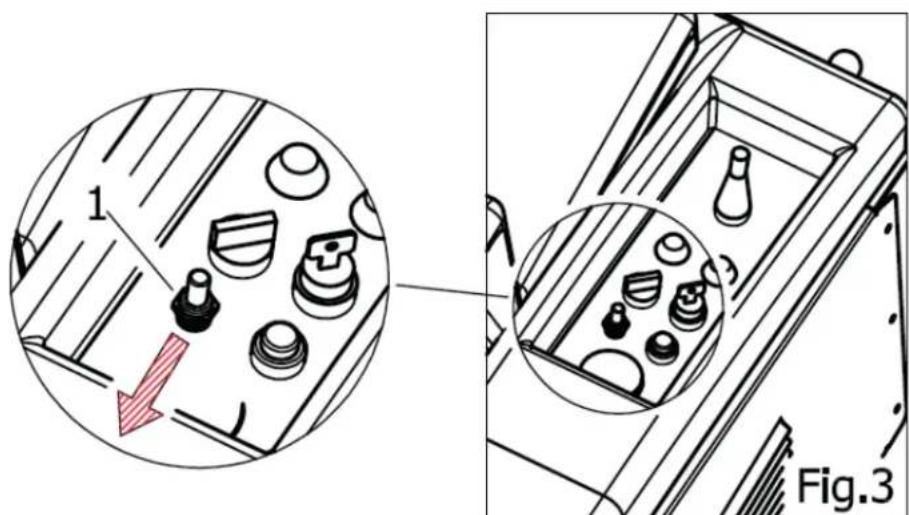
To start the lifting of the container, put the switch Part. 1 Fig. 3 back.

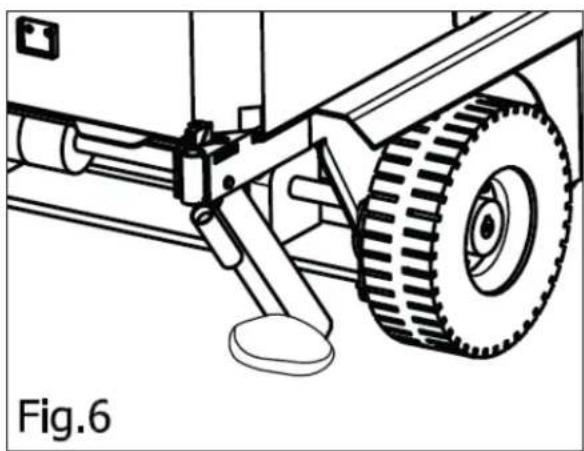
IMPORTANT: be careful that nothing prevents the complete release of the two supporting legs of the machine (Fig. 6), or the lifting of the container will stop.
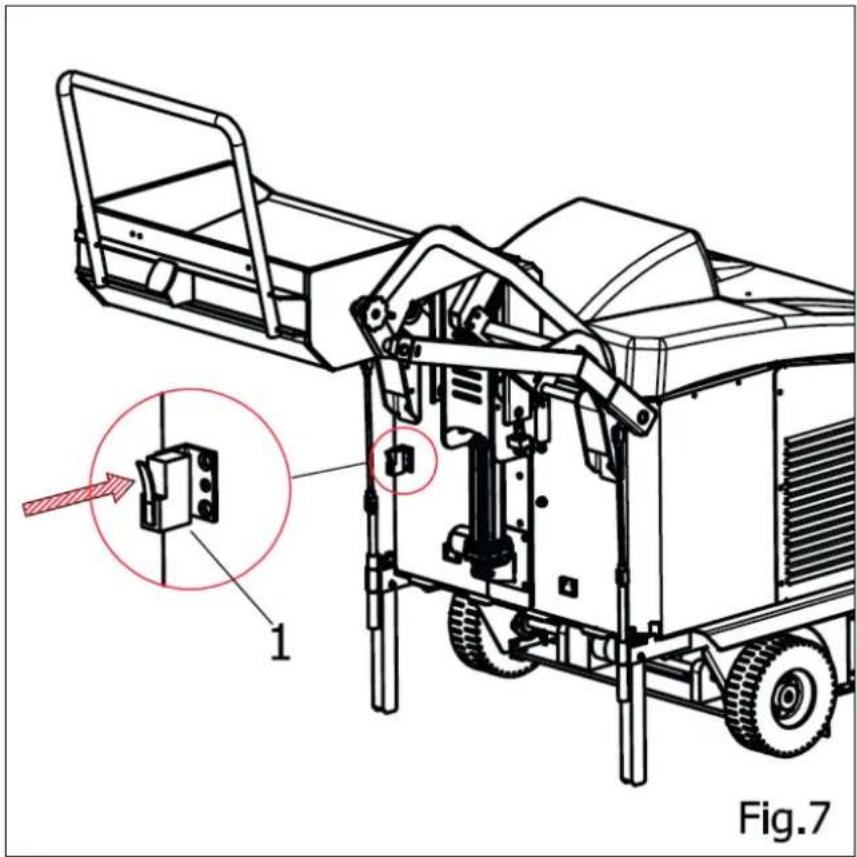
IMPORTANT: if the sweeper is switched off or if it was a power failure, to restart the unloading of the container you have to start the sweeper and misfire the safety switch Part. 1 Fig. 7.
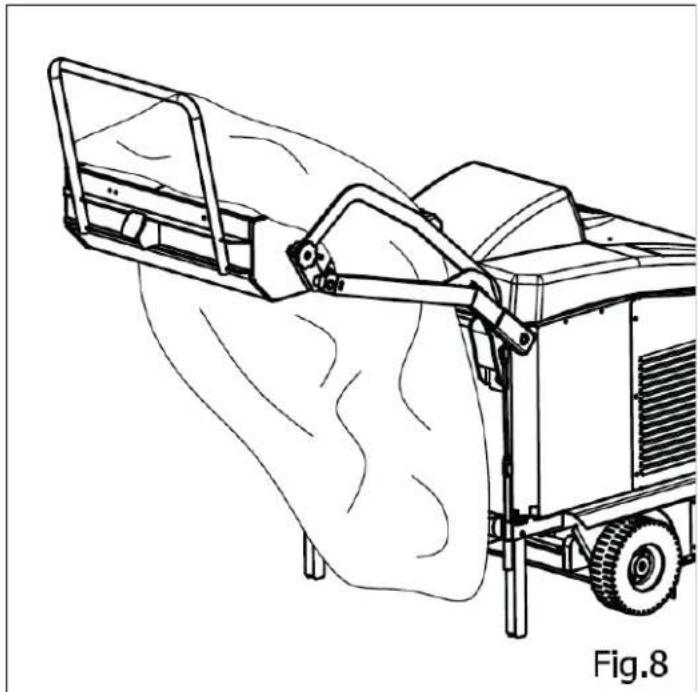
Reached the desired height of the container (max 110 cm), you can wrap it with a big bag for waste.
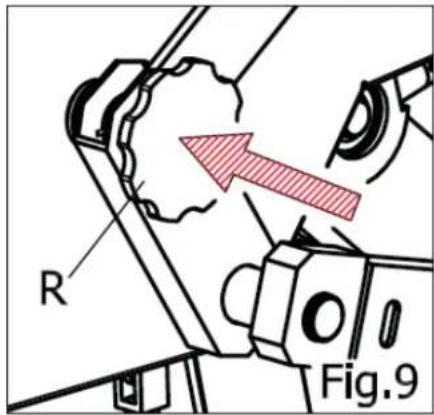
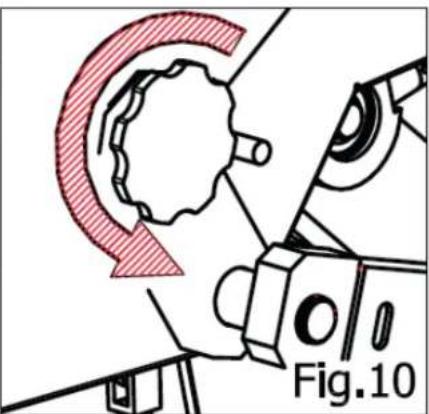
Sequence of emptying of the dust container. Always keep with an hand the handle of the dust container.

Push the knob (Part. R Fig. 9) down and turn counter-clockwise with one hand keeping the handle of the container also.
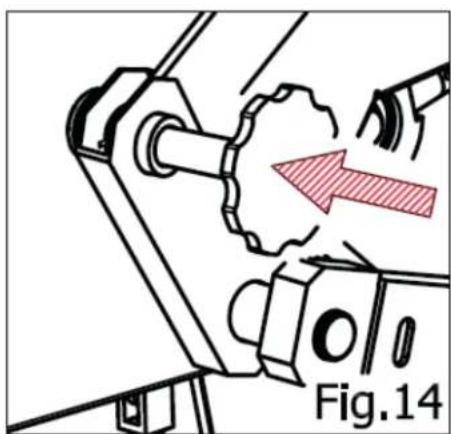
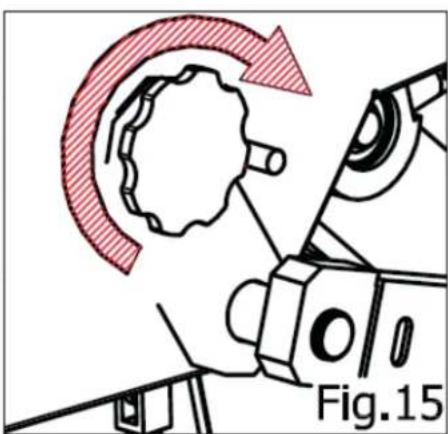
it again (Figg. 14, 15).
Now release the dust container by turning the knob (Figg. 9, 10, 11), empty the container into the bag (Fig. 12), put it back removing the bag and turn the knob to lock
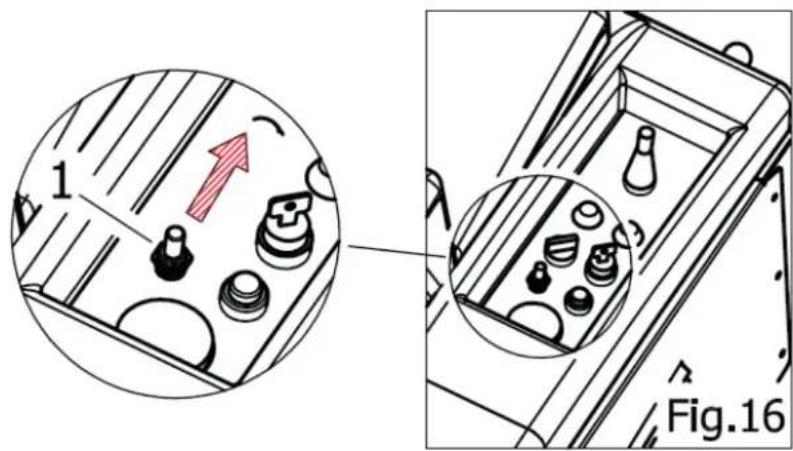
To start the descent of the dust container, pull the lever forward Part. 1 Fig. 16.
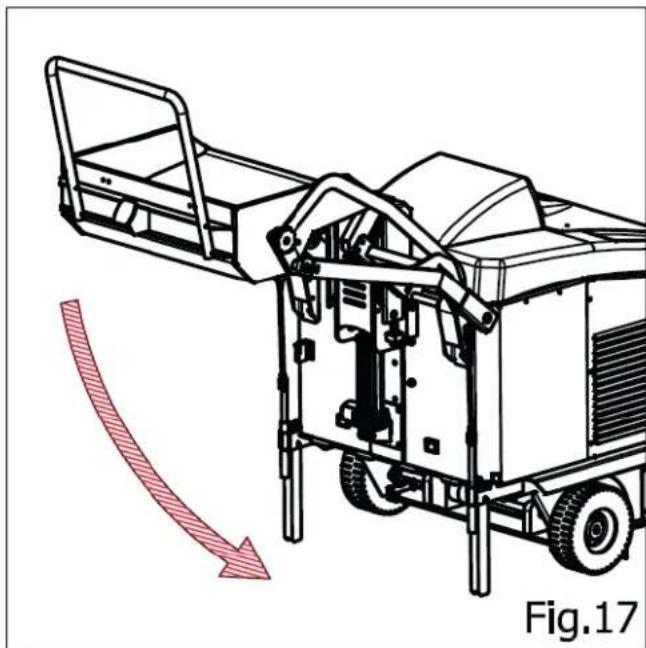
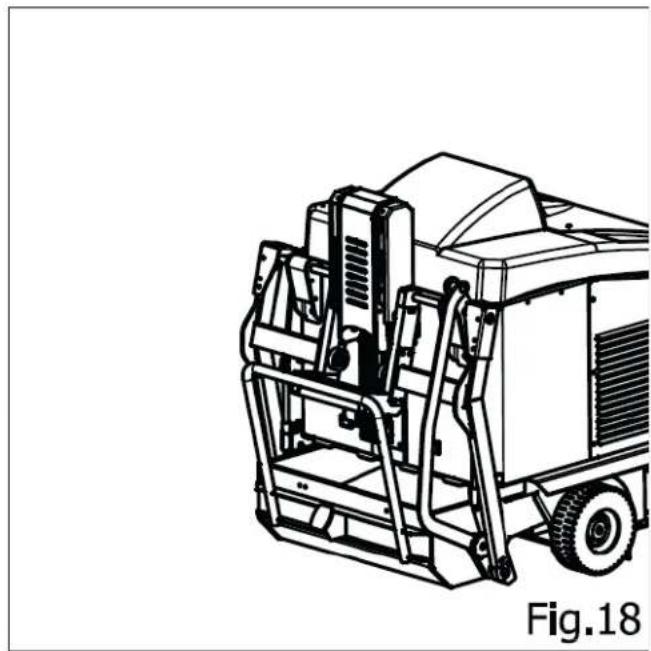
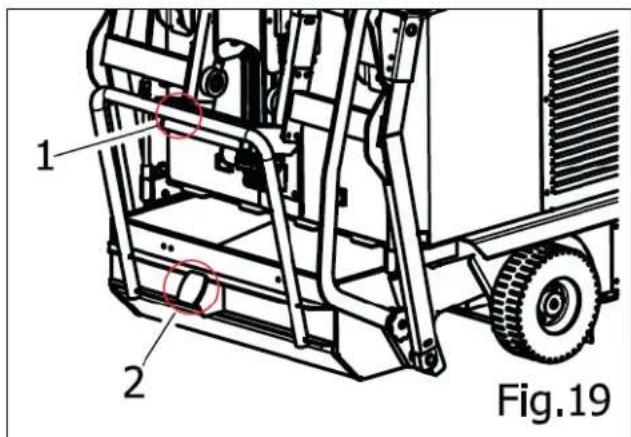
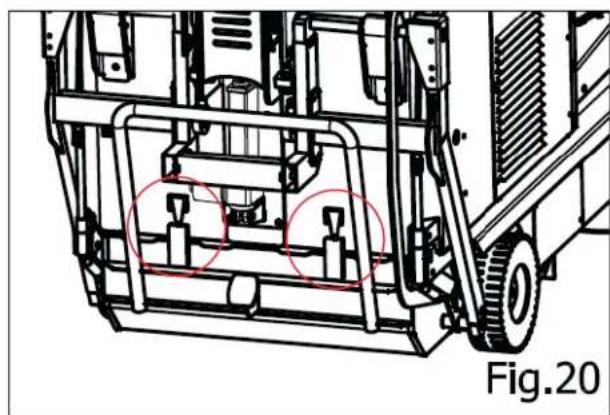
When the cylinder has finished its run, take the dust container's handle (Part. 1 Fig. 19) with an hand and push with one foot on the pedal (Part. 2 Fig. 19). When the container arrives at the bottom, close the two hooks (Fig. 20).
- MANUALE USO E MANUTENZIONE MOTOSCOPA
- RISCHI RESIDUI NON ELIMINABILI
- INSTRUCTIONS AND OPERATING MANUAL
- CHAPTER 2 - PURPOSES / INTENDED USE
- CHAPTER 3 - PREPARATION (UNPACKING)
- CHAPTER 5 - INTENDED AND FORBIDDEN USE
- INTENDED USE:
- FORBIDDEN USE:
- CHAPTER 7 - DESCRIPTION OF MACHINE
- SAFETY PROTECTION DEVICES:
- PART.
- DESCRIPTION
- SIDE BRUSH:
- CENTRAL BRUSH:
- FILTER SYSTEM:
- DUST SEALS:
- COLLECTION BIN:
- DESCRIPTION PF THE MANUAL CONTROLS For Both Models
- FLAP-LIFT PEDAL:
- BRAKE PEDAL:
- PARKING BRAKE:
- FORWARD AND REVERSE PEDAL: (only for battery version)
- FORWARD AND REVERSE PEDAL: (only for internal combustion engine)
- SIDE BRUSH ENGAGEMENT LEVER: (for all models)
- STANDARD FEATURES SWL R1000 ET/SW R 6200 BT
- GEAR SWITCH :
- ELECTRIC SWITCHBOARD CHECK LED:
- FILTER BUZZER BUTTON:
- ACOUSTIC INDICATOR BUTTON:
- BRUSHES MOTOR SWITCH:
- IGNITION KEY :
- CHARGE INDICATOR:
- HOURCOUNTER:
- START LEVER:
- ACCELERATOR LEVER:
- Part. 1 Fig. 6.
- IGNITION KEY:
- CHAPTER 8 - OPERATOR WORK STATION EMERGENCY STOP
- WORKSTATION:
- EMERGENCY STOP: (Only for battery version)
- EMERGENCY STOP: (Only for petrol version)
- CHAPTER 9 - SAFETY REGULATIONS
- OUTSTANDING RISKS WHICH CANNOT BE ELIMINATED
- GENERAL RISKS FOR BATTERIES
- CHAPTER 10 - CHECKS BEFORE START UP
- SWL R1000 ET/SW R 6200 BT
- SWL R1000 ST/SW R 8300 SC
- ATTENTION:
- CAPITOLO 11 - STARTING AND STOPPING
- ATTENTION Pleases
- STARTUP:
- FORWARD MOVEMENT:
- REVERSE MOVEMENT:
- NEUTRAL:
- STOP:
- SWL R1000 ST/SWR 8300 SC
- STARTING:
- IMPORTANT: For warm starting of the engine use the same procedure
- STOPPING:
- CAPITOLO 12 - CORRECT USE AND ADVICES
- CHAPTER 13 - ROUTINE MAINTENANCE
- ATTENTION: ALL OPERATIONS MUST BE PERFORMED WITH COLD AND SWITCHED OFF ENGINE.
- CLEANING THE DUST FILTERS:
- ADJUSTMENTS AND REPLACEMENTS
- CENTRAL BRUSH ADJUSTMENTS:
- SIDE BRUSH ADJUSTMENTS:
- ION BIN:
- REPLACEMENTS
- REPLACING THE CENTRAL BRUSH:
- REPLACING THE SIDE BRUSH:
- CHAPTER 14 - EXTRAORDINARY MAINTENANCE
- CHAPTER 15 - PUTTING OUT OF USE
- CHAPTER 16 - DISMANTLING/DEMOLITION
- CHAPTER 17 - EMERGENCY SITUATIONS
- CHAPTER 18 - TROUBLESHOOTING
- MANUEL D'INSTRUCTION POUR MOTOBALAYEUSE
- D'EFFECTUER LA MISE EN MARCHE DE LA MACHINE, IL EST INDISPENSABLE D'AVOIR LU TOUT LE MANUEL.
- CHAPITRE 2 - DESTINATION DE LA MACHINE
- UTILISATIONS PERMISES:
- ▶PEDALE SOULEVE-FLAP:
- LED DIAGNOSTICO CENTRALITA ELECTRICA:
- SZCZOTKA CENTRALNA:
- REGULACJE
- REGULACJE SZCZOTKI CENTRALNEJ:
- ▶REGULACJA SZCZOTKI BOCZNEJ:
- CZYNNOSC WYKONYWAC PRZY WYLACZONYM SILNIKU
- ▶POJEMNIK ZBIORCZY:
- WYMIANY
- WYMIANA SZCZOTKI CENTRALNEJ:
- WYMIANA SZCZOTKI BOCZNEJ:
- ГЛABA 2 - HA3HAUEHNE /ИСПОЛБ3OBAHNE NO HA3HAUEHNIO
- PA3PEUHEHHOE NcNoJIb3OBAHNE:
- HEPA3PEUENHOE NcNoJIb3OBAHNE:
- ГLABA 7 - ONICAHNE MAUIHbI
- 3AUHTbIE PNCIOCOJEHNA:
- DETAJIb
- HANMEHOBAHNE
- BOKOBAR LETKA:
- LCHTPAJIbHAR LETKA:
- CNCTEMAΦNJIbTPAUH:
- NBJE3AUHTHOE YNLOTHEHNE:
- KOHTENHEPДЛМYCOPA:
- NEAJIb IJIy IODbEMA 3ACJHOHOK:
- ПЕДАЛБ TOPMO3A:
- CTOARHOUHbI TOPMO3:
- IeAJIb 3ADHErO IN IEPEDHrO XODA: (ToIbKO dJa BepCn, pa6oTaIOuei ot 6aTapeu)
- NEAJIb 3ADHErO IN NEPEHrO XODA: (ToIbKO dJa BepCnn, pa6oTaoue oT DBnraTeJ)
- PbIaR BKJIIOUeHnB OKOBOB UETKN: (Ara Bcex MoJeNei)
- BHIMAHNE:
- NEPEKJIIOYATEJIb NEPEDAUY:
- CBETOINOHbI INHINKATOP COCTOHHN 3NEKTPNUECKOINAHENYUNPABLEHNA
- KHONKA OYNCTKI ΦNJIbTPOB:
- KHONKA AKYCTNUECKOTO INHIDNKATOPA:
- NEPEKIOUATEJIb DBNATEJIa SETOK:
- KJIIOU 3AXKINAHNIA:
- NEPEKIOYATEJIb PABOUERO OCBEUENH:doONHHTeJbHo
- NHANKATOP3APRA:
- CTAHДAPTHbIE OPGAHyI YYPABJIeHnI SWL R1000 ST/SW R 8300 SC
- NYCKOBOI PyUaI:
- PbIaKAKCEJIEPATOPA:
- KHONKA OUNCTKI ΦNJIbTPOB:
- KHONKA AKYCTNUECKOTO INHDMKATOPA:
- CHTYHK MOTOYACOB:
- KJIIOU 3AXKINRAHNA:
- ГЛABA 8 - PAБОУЕ MECTO ONEPATOPA ABAPИнHAЯ OCTAHOBKA
- PA60EE MECTO:
- ГЛABA 9 - HOPMbI И ПРABиJA TEXнКИ Б3ОПАCHOCTN
- OCTATOUHbIE PNCKN, KOTOPbIE HEBO3MOXHOYCTPAHNTb
- OBUINE PNCKN IPN PABOTE C BATAPEEN
- Bercn,pa6oTaUo7aO T 6aTapeN
- BepncaDnBnraTeJeM BHyTppeHrero cropaHna
- BHIMAHNE: DEPKNTE TONJIINBO CYXOM, XOPOWIO NPOBETPNBAEMOM IN HEDOCTUHNOM DIAI DETEEN MECTE BDAJN OT NCTOUHNIKOB TENLA
- 3ANYCK:
- PEYUNPOBKA BOKOBOU 5ETKN:
- OBUINE IPNABNJA
- 3AMEHA
- 3AMEHA LECTPAJIbHOI UETKN:
- 3AMEHA BOKOBOI UETKN:
- ГЛABA 15 - БыбODиЗКСПЛУАTUEN
- ГЛABA 16 -ДЕMOHTAXK /УтПИЗАЦЯ
- ΓLABA 17 - ABAPINHbIE CNTYAUHN
- BAM CJIeIyET:
Brand : Lavor
Model : SWL R1000
Category : Sweeper