RCFZ-255 - Freezer Royal Catering - Free user manual and instructions
Find the device manual for free RCFZ-255 Royal Catering in PDF.
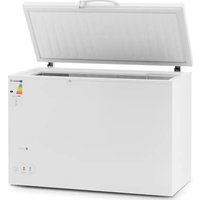


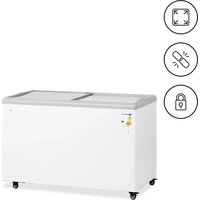
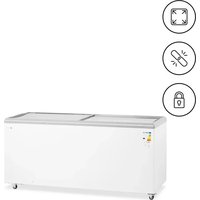
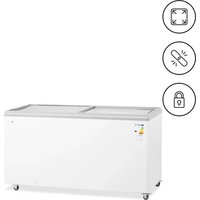
| Product type | Chest freezer |
| Brand | Royal Catering |
| Model | RCFZ-255 |
| Dimensions (W x D x H) | 1164 x 560 x 840 mm |
| Weight | 43.5 kg |
| Capacity | 242 liters |
| Freezing capacity | 15 kg/24h |
| Temperature range | -25 °C to -18 °C |
| Climate class | SN/T (ambient temperature from 10 °C to 38 °C) |
| Power supply | 230 V ~ 50 Hz |
| Rated power | 61 W |
| Rated current | 0.53 A |
| Energy consumption | 0.64 kWh/24h |
| Annual consumption | 267 kWh/year |
| Energy efficiency class | F |
| Refrigerant | R600a (65 g) |
| Insulating material | Cyclopentane |
| Noise level | 42 dB |
| Protection class | I |
| Main material | Stainless steel (estimated) |
| Included accessories | 1 basket, locking key |
| Functions | Freezing and preserving food, temperature adjustment, operation indicators |
| Maintenance and cleaning | Manual defrosting, clean with mild non-abrasive products, do not immerse |
| Safety | Key lock, grounding, overcurrent protection |
| Spare parts and repairability | Repairs by authorized service only, original parts recommended |
| General information | Professional and domestic use, vertical transport, do not tilt more than 45° |
Frequently Asked Questions - RCFZ-255 Royal Catering
User questions about RCFZ-255 Royal Catering
0 question about this device. Answer the ones you know or ask your own.
Ask a new question about this device
Download the instructions for your Freezer in PDF format for free! Find your manual RCFZ-255 - Royal Catering and take your electronic device back in hand. On this page are published all the documents necessary for the use of your device. RCFZ-255 by Royal Catering.
USER MANUAL RCFZ-255 Royal Catering
| DE | Produktname: | GEFRIERTRUHE |
| EN | Product name: | CHEST FREEZER |
| PL | Nazwa produktu: | ZAMRAŻARKA SKRZYNIOWA |
| CZ | Název výrobku | MRAZICÍ PULT |
| FR | Nom du produit: | RÉFRIGÉRATEUR |
| IT | Nome del prodotto: | CONGELATORE A POZZETTO |
| ES | Nombre del producto: | CONGELADOR |
| HU | Termék neve | FAGYASZTÓLÁDA |
| DA | Produktnavn | KUMMEFRYSER |
| DE | Modell: | |
| EN | Product model: | RCFZ-650 |
| PL | Model produktu: | RCFZ-550 |
| CZ | Model výrobku | RCFZ-450 |
| FR | Modèle: | RCFZ-350 |
| IT | Modello: | RCFZ-255 |
| ES | Modelo: | RCFZ-205 |
| HU | Modell | RCFZ-155 |
| RCFZ-105 | ||
| DA | Model | |
| DE | Hersteller | expondo Polska sp. z o.o. sp. k. |
| EN | Manufacturer | |
| PL | Producent | |
| CZ | Výrobce | |
| FR | Fabricant | |
| IT | Produttore | |
| ES | Fabricante | |
| HU | Termelő | |
| DA | Producent | |
| DE | Anschrift des Herstellers | ul. Nowy Kisielin – Innowacyjna 7, 66-002 Zielona Góra | Poland, EU |
| EN | Manufacturer Address | |
| PL | Adres producenta | |
| CZ | Adresa výrobce | |
| FR | Adresse du fabricant | |
| IT | Indirizzo del produttore | |
| ES | Dirección del fabricante | |
| HU | A gyártó címe | |
| DA | Producentens adresse |
Technical data
| Parameter description | Parameter value | |||
| Product name | Chest freezer | |||
| Model | RCFZ-650 | RCFZ-550 | RCFZ-450 | RCFZ-350 |
| Supply voltage [VAC] / Frequency [Hz] | 230/50 | |||
| Rated power [W] | 252 | 95 | 93 | 63 |
| Rated current [A] | 0.7 | 0.7 | 0.6 | 0.74 |
| Protection class | I | |||
| Energy consumption [kWh/24h] | 1.01 | 0.81 | 0.79 | 0.74 |
| Energy rating | F | |||
| Climate class | T | |||
| AEC (Annual Energy Consumption) [kWh/year] | 382 | 297 | 290 | 271 |
| Refrigerant | R600a/110g | R600a/100g | R600a/90g | R600a/80g |
| Insulation | Cyclopentane | |||
| Temperature range [°C] | -25 to -18 | |||
| Capacity [L] | 537 | 439 | 354 | |
| Freezing efficiency [kg/24h] | 30 | 28 | 22 | 13 |
| Rack / shelves | 2 racks | 1 rack | ||
| Lid lock | Yes | |||
| Noise [dB] | 48 | |||
| Dimensions (Width x Depth x Height) (mm) | 1810x755x840 | 1530x755x840 | 1270x755x840 | 1030x755x840 |
| Weight (kg) | 82 | 75 | 59 | 54 |
| Model | RCFZ-255 | RCFZ-205 | RCFZ-155 | RCFZ-105 |
| Supply voltage [VAC] / Frequency [Hz] | 230/50 | |||
| Rated power [W] | 61 | 72 | 51 | 63 |
| Rated current [A] | 0.53 | 0.33 | 0.25 | 0.25 |
| Protection class | I | |||
| Energy consumption [kWh/24h] | 0.64 | 0.63 | 0.62 | 0.54 |
| Energy rating | F | |||
| Climate class | SN/T | |||
| AEC (Annual Energy Consumption) [kWh/year] | 267 | 247 | 225 | 197 |
| Refrigerant | R600a/65g | R600a/65g | R600a/54g | R600a/50 |
| Insulation | Cyclopentane | |||
| Temperature range [°C] | -25 to -18 | |||
| Capacity [L] | 242 | 142 | 94 | |
| Freezing efficiency [kg/24h] | 15 12 9 5 | |||
| Rack / shelves | 1 rack | |||
| Lid lock | Yes | |||
| Noise [dB] | 42 | |||
| Dimensions (Width x Depth x Height) (mm) | 1164x560x840 | 960x560x840 | 771x560x840 | 580x560x840 |
| Weight (kg) | 43.5 | 38.5 | 34.5 | 30.5 |
1. General overview
This manual is intended to assist you in safe and reliable use. The product is designed and manufactured strictly according to technical specifications using the latest technology and components, and maintaining the highest quality standards.
READ THE MANUAL CAREFULLY AND UNDERSTAND IT BEFORE USE.
To ensure long and reliable operation of the product, operate and maintain it correctly and strictly in compliance with this manual. The technical data and specifications in this manual are up-to-date. The manufacturer reserves the right to modifications for the purpose of quality improvement. Considering the technological progress and the feasibility of noise reduction, the product is designed and built so that risks resulting from noise emissions are minimised as far as possible.
Explanation of symbols
| CE | The product meets the requirements of relevant safety standards. |
 | Read the manual before use. |
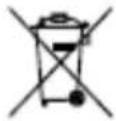 | Recyclable product. |
 | CAUTION! or WARNING! or REMEMBER! indicates a specific instruction (general warning sign). |
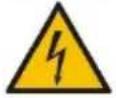 | CAUTION! Risk of electric shock! |
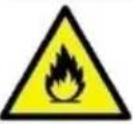 | CAUTION! Risk of fire – flammable materials! |
 | For indoor use only. |
The original version of the manual is in German language. Other language versions are translations from German.
2. Operating safety

CAUTION! Read all safety warnings and all instructions. Failure to follow the warnings and instructions may result in electric shock, fire and/or serious injury or death.
The term “appliance” or “product” in the warnings and instructions refers to the chest drawer.
2.1. Electrical safety
a) The appliance power cord plug must fit into the mains outlet. Do not modify the plug in any way. Original power cord plugs and matching mains outlets reduce the risk of electric shock. b) Avoid touching earthed objects, like piping, radiators, heaters, and refrigerators. There is an increased risk of electric shock if your body is earthed and touching the appliance exposed to direct rain, a wet floor or while operating in a humid environment. If water penetrates into the appliance, there is an increased risk of damage to the appliance and electric shock. c) Do not touch the appliance with wet or moist hands. d) Do not use the power cord in any unintended way. Never use it to carry the appliance or to unplug it from the mains outlet. Keep the power cord away from sources of heat, oil, sharp edges or moving parts. Damaged or tangled cords increase the risk of electric shock. e) If you cannot avoid using the appliance in a wet environment, use a residual current device (RCD) to connect the appliance to electrical mains. Using an RCD reduces the risk of electric shock.
f) Do not use the appliance if the power cord is damaged or shows evidence of wear. Have a damaged power cord replaced by a qualified electrician or the manufacturer's technical service. g) To avoid electric shock, do not immerse the power cable, its plug or the appliance itself in water or other liquid. Do not use the appliance on wet surfaces. h) Do not use the appliance in highly humid rooms or in a direct vicinity to tanks/reservoirs/vessels with water!
2.2. Workplace safety
a) Do not use the appliance in areas with explosion hazards, for example in the presence of flammable liquids, gases, or dust. b) If the appliance is damaged or malfunctions, turn it off immediately and report the incident to authorized personnel. c) If you are unsure whether the appliance is working correctly, contact the manufacturer's technical service. d) Repairs to the appliance may only be carried out by the manufacturer's service. Do not attempt to repair the product yourself! e) In the event of ignition or fire, use only dry powder or CO2 extinguishers to suppress the fire if the appliance is live with electrical voltage. f) Keep this manual for future reference. If the product is handed over to a third party, include this user manual. g) Keep packaging components and small installation parts out of the reach of children.
2.3. Personal safety
a) The product is not intended for use by individuals (including children) with reduced physical, sensory, or mental capabilities, or lack of experience and/or knowledge, unless they are supervised by a person responsible for their safety or have received instructions from that person on how to operate the product. b) To prevent accidental operation, ensure the power switch is OFF before connecting the appliance to the mains power supply. c) The appliance is not a toy. Children must be supervised to ensure they do not play with it.
2.4. Safe use of the product
a) Do not use the appliance if the temperature dial does not function properly (does not switch on or off). Appliances that cannot be controlled with their power switches are dangerous, must not be operated, and must be repaired. b) Unplug the appliance from the mains before adjustment, cleaning, or maintenance. This safety precaution reduces the risk of accidental operation. c) Keep unused appliances out of the reach of children and anyone unfamiliar with the appliance or this manual. Appliances are dangerous in the hands of inexperienced users. d) Keep the appliance in good working order. Before each use, check for generally evident damage and damage to any of the moving parts (inspect for cracks in parts and components or any other condition that may affect the safe operation of the product). If damaged, have the product repaired before use. e) The appliance shall be repaired and maintained by qualified personnel using original spare parts only. This will ensure safe operation of the product. f) To ensure the designed operational integrity of the product, do not remove the factory-installed covers or loosen any bolts. g) When transporting and handling the appliance from storage to the place of use, follow the health and safety regulations for manual handling that apply in the country of operation of the appliance. h) Clean the appliance regularly to prevent permanent deposits of dirt. i) The appliance is not a toy. Cleaning and maintenance shall not be performed by children without adult supervision. j) Never attempt to tamper with the appliance to change its parameters or structure. k) Keep the appliance away from sources of fire and heat. l) Do not cover the vents of the appliance! m) Do not keep any heavy, toxic, or corrosive objects in the appliance. n) Do not tilt the appliance by more than 45 degrees to avoid refrigerant compressor failure. o) CAUTION! Do not use any electrical appliances or machines to speed up defrosting. p) CAUTION! Handle the refrigerant cycle component with extreme caution to prevent damage. q) CAUTION! Do not use any electrical appliances inside of the food storage compartment. r) CAUTION! The structure of this appliance houses flammable thermal insulating gases. At the end of its service life, the appliance must be handed over to a specialised disposal service. s) CAUTION! The power cord plug of the appliance shall be connected to a mains outlet the location of which is easily accessible for quick disconnection. t) Do not keep any substances which are potential explosion hazards like cans with compressed flammable gases, inside of this appliance.
u) Do not place the appliance near open flames, electric stoves/heaters, or coal stoves/boilers. Never place the appliance in direct sunlight, as exposure to heat may reduce the cooling capacity, increasing electricity consumption. v) This appliance shall be connected directly to a mains outlet without any intermediate multi-outlet adapters. w) Do not place any dishes with liquids prone to freezing in the freezer. x) Place in the freezer only containers and dishes suitable for low-temperature storage.

CAUTION! Although the appliance has been designed to be safe and has been provided with adequate safeguards, and despite the use of additional safety measures, there is still a low residual risk of accident or injury during its operation. Caution and common sense are advised when using the product.
3. Rules of use
This appliance is intended for freezing and long-term cold storage of food products.
The user is responsible for any damage caused by non-intended use.
3.1. Appliance overview
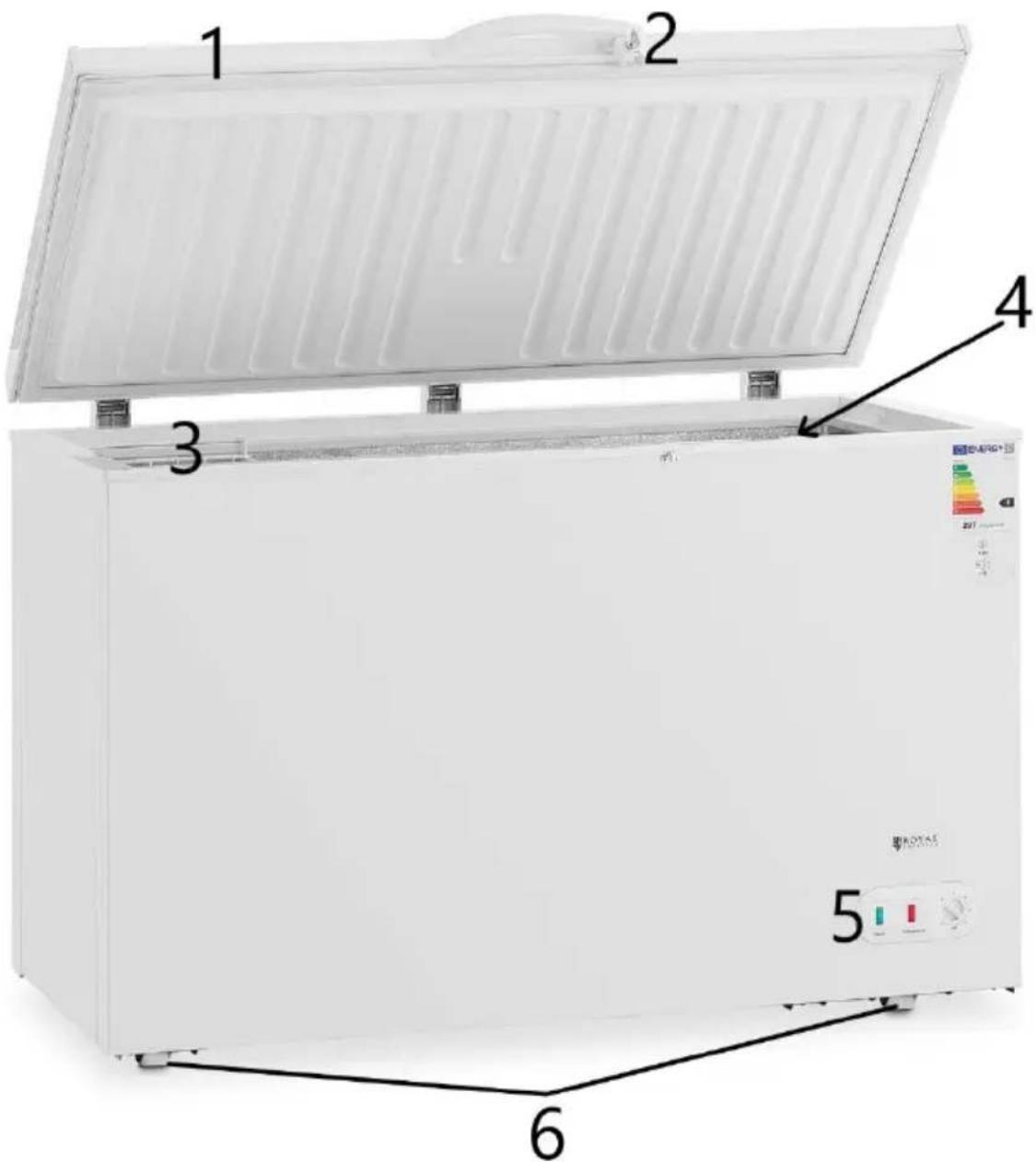
- Lid
- Handle with lock
- Rack
- Refrigerated compartment
- Control panel
- Wheels
Control panel overview
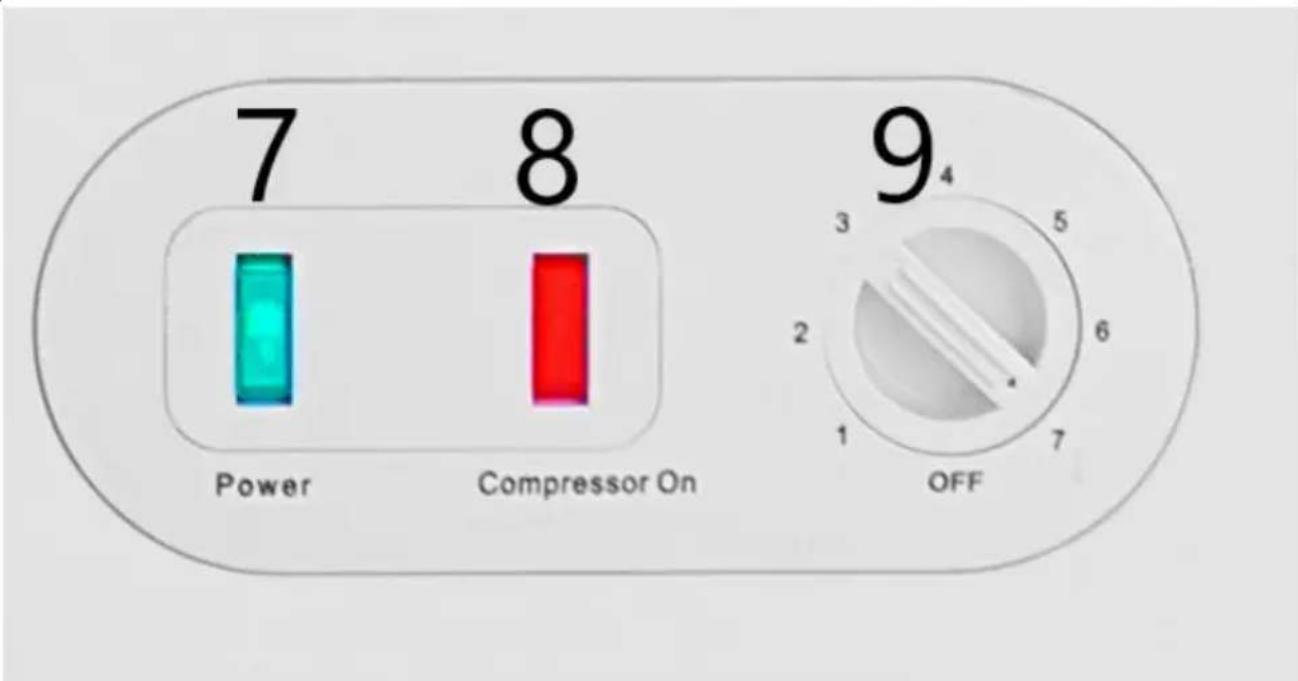
- Power light indicator
- Compressor run light indicator
- Cooling temperature dial
3.2. Preparations for operation
POSITIONING THE APPLIANCE
The maximum ambient temperature and relative humidity limits not to be exceeded are +40°C and 85% RH, respectively. Position the appliance where good air circulation is ensured. Maintain a minimum clearance of 10 cm from all sides of the appliance. Keep the appliance away from any hot surfaces. Always operate the appliance on a level, firm, clean, fireproof, and dry surface which will withstand the weight of the appliance and its contents. Keep the appliance out of the reach of children and individuals with reduced mental, sensory and intellectual capacities. Position the device in such a way that the power supply plug can be reached at any time. Make sure that the mains power ratings match the data on the rating plate!
Poor ventilation from insufficient clearance around the appliance may reduce the cooling performance and the service life of the compressor.
Before the first use, remove all accessories and wash them clean along with the entire appliance. Before turning the appliance for the first time, leave it upright for at least 3 h after putting in place for the refrigerant charge to become stable.
3.3. Operating the appliance
- Make sure that the temperature dial is set to OFF. Plug the power cord of the appliance into a mains outlet with PE pin.
Caution! Incorrect connection of the appliance to mains power may result in injury.
- If the appliance is started for the first time, set the temperature dial to maximum, denoted by "7", and leave the appliance to cool down inside before placing any food to be frozen.
- The temperature control range is a conventional scale from "1" to "7". "7" means the maximum cooling performance (the lowest attainable internal temperature). The optimum temperature dial setting is "4" for freezing. The temperature setting may vary with:
- ambient temperature ● the size/quantity of food stored in the appliance
- how often the appliance compartment is opened
- The red indicator (8) comes on when the compressor is running. The green indicator (7) comes on when the appliance is plugged into the mains. Setting the temperature dial to OFF stops the compressor; it will not isolate the mains voltage from the appliance.
- Once the appliance reaches its set temperature, you can place food products which are frozen already or to be frozen in the appliance.
- If the appliance is isolated from the mains voltage, there is a power outage, or a similar anomaly occurs, wait 3-5 minutes before restarting the appliance to avoid damaging the compressor.
- The appliance features a key lock (the key is included) which can be used to secure it from opening.
- Turn off the appliance by setting the temperature dial to OFF and unplug the power cord from the mains.
GUIDELINES FOR APPLIANCE OPERATION
• Freezing fresh food:
- Place fresh food in a packaging/container in the freezer. Fresh food should not directly touch any product already frozen or the latter may thaw and their storage life can be reduced. It is recommended to place fresh food near a wall or the bottom of the freezer, as these locations reach the lowest temperature.
- If a considerable volume of fresh food is placed in the freezer to be frozen, increase the cooling performance of the appliance for 4-6 h; next, restore the preferred temperature of freezing.
- After 24 hours, reposition the freshly frozen food to make place for freezing more fresh food in the future.
- If frozen food is placed in the freezer, make sure it has not thawed already. Refreezing of some products may result in food poisoning after consumption.
- Do not place any warm/hot liquids or food in the appliance; all food products to be put into the appliance must be covered/in closed containers.
- Never fill the freezer up to the casing edge which meets the lid. Always keep clearance between the top of the frozen load and the lid.
- It is best to keep food and beverages in hermetically sealed containers. To ensure correct air circulation inside the appliance, it is best to arrange the products with spaces between them.
- It is recommended to reduce the cooling performance in the summer and increase it in the winter (this depends on the ambient temperature).
- Keep all food following the applicable principles of its long-term storage and best-before dates.
- Do not open the lid too often or leave it open/ajar for a long time; otherwise, the consumption of electricity increases and may result in appliance failure.
• Always keep the lid closed when not in use.
- Do not use any screwdrivers or other metal tools to remove the layers of ice forming on the inner walls during operation.
- If the appliance is not to be used for a long time, unplug the appliance from the mains, clean the appliance, and leave the lid ajar to prevent mouldy, bad smell inside.
- Always handle/transport the appliance upright and held by its base or rolling on its wheels.
DEFROSTING
The freezer requires defrosting two times a year or whenever the layer of ice on the interior walls grows about 7 mm thick. The icing of the interior walls reduces the efficiency of the appliance.
Do not use any metal implements to scrape the ice off the appliance.
Caution! Never attempt to use any electrical appliances (e.g. hair dryers) or open flames (e.g. candles) to defrost the freezer. Otherwise the plastic internal parts can melt, and the released vapours ignite from electrical sparks or flame.
Defrosting procedure:
- Make sure to unplug the power cord from the mains.
- Collect the water coming from the defrosting process into e.g. a plastic bowl or another suitable, leakproof container.
- Proceed with the following steps only when your hands are dry to avoid injury from low temperature (it is best to wear gloves).
- Remove all frozen products and make sure that any water melting from them will not cause any hazard or damage. It is recommended to put them into a sealed container and protect against defrosting, e.g. by placing in a refrigerator or a cool place.
- If necessary, you can accelerate defrosting by placing a container filled with warm water in the freezer (do not use boiling or hot water!).
- Wait for the ice inside to melt away; the water from defrosting can be collected using a sponge.
- Before operating the appliance again, clean its interior.
- Close the lid/door and reconnect the appliance to the mains.
- Set the optimum cooling performance.
- Place the products to be frozen in the appliance.
- After 4-6 hours, set the cooling performance suitable for the load in the freezer.
3.4. Cleaning and maintenance
a) Before cleaning and when the appliance is not in use, unplug it from the mains. b) Use non-corrosive agents for cleaning the surfaces only. c) Only mild cleaning agents intended for surfaces in contact with food shall be used to clean the appliance. d) After each cleaning, dry all components well before the appliance is used again. e) Store the appliance in a dry and cool place, protected from moisture and direct sunlight. f) Do not spray the appliance with a stream of water and do not immerse it in water. g) Ensure that water will not enter through the ventilation ports in the housing. h) Clean the ventilation ports with a brush and compressed air. i) Regularly inspect the appliance for technical defects and damage. j) Do not clean with any sharp and/or metal implements (e.g. a wire brush or a metal scraper) as these may damage the surface of the appliance. k) Do not clean the appliance with acidic substances, medical products, thinners, fuel, oil or other chemicals as they may damage it.
I) Systematically defrost the appliance to remove the icing from its walls.
DISPOSAL OF WASTE APPLIANCES
At the end of its service life, this product must not be disposed of with mixed household waste; return it to a collector/recycler of waste electrical and electronic equipment. This is shown by the symbol placed on the product, the user manual or the packaging. The materials used in the appliance can be reused according to their classification identifications. By reuse, recycling or applying other forms of use of waste appliances, you make a significant contribution to the protection of our environment.
Local administration will provide you with the information about the nearest disposal locations for the appliance.
TROUBLESHOOTING
| Problem | Possible reason and remedy |
| Flowing/bubbling liquid sound from the freezer | This sound is caused by the flow of the refrigerant through the cooling system of the appliance. It is normal. |
| Noise | The freezer is not positioned well. Level out the appliance or move it to a different place. |
| The compressor did not start for a long time, but the freezer compartment is cold. | It is normal and typical of good thermal insulation of the appliance. |
Technical specifications
- Power indicator
- Compressor operation indicator
- Cooling temperature adjustment knob
For the disposal of the device, please consider and act according to the national and local rules and regulations.
CONTACT
expondo Polska sp. z o.o. sp. k.
- TECHNICAL DATA
- GENERAL OVERVIEW
- READ THE MANUAL CAREFULLY AND UNDERSTAND IT BEFORE USE
- OPERATING SAFETY
- ELECTRICAL SAFETY
- WORKPLACE SAFETY
- PERSONAL SAFETY
- SAFE USE OF THE PRODUCT
- RULES OF USE
- APPLIANCE OVERVIEW
- PREPARATIONS FOR OPERATION
- POSITIONING THE APPLIANCE
- OPERATING THE APPLIANCE
- GUIDELINES FOR APPLIANCE OPERATION
- DEFROSTING
- DEFROSTING PROCEDURE
- CLEANING AND MAINTENANCE
- DISPOSAL OF WASTE APPLIANCES
- CONTACT
Brand : Royal Catering
Model : RCFZ-255
Category : Freezer