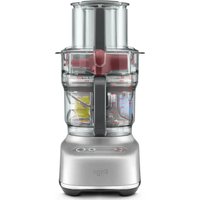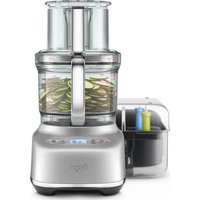
the Kitchen Wizz 16 SFP810 - Food Processor SAGE - Free user manual and instructions
Find the device manual for free the Kitchen Wizz 16 SFP810 SAGE in PDF.


| Product Type | Multifunction Food Processor |
| Brand | Sage |
| Model | the Kitchen Wizz 16 SFP810 |
| Dimensions (L x D x H) | Approx. 25 x 25 x 40 cm |
| Weight | Approx. 6.5 kg |
| Power Supply | 220-240 V ~ 50/60 Hz |
| Power | Induction motor, power not specified (estimated 1000 W) |
| Main Bowl Capacity | Approx. 3 L (max fill level indicated) |
| Mini Bowl | Yes, for small quantities |
| Feed Chute | Extra-large, 14 cm diameter |
| Included Accessories | Quad Blade™, dough blade, mini blade, adjustable slicing disc (0.3-8 mm), French fry disc, reversible shredding disc, shaft, pushers (large, medium, small), spatula, cleaning brush, storage box |
| Main Functions | Chop, mix, knead, slice, grate, cut French fries, emulsify |
| Timer | Countdown up to 20 minutes, LED display |
| Controls | Power, Play/Pause, Pulse, timer adjustment |
| Bowl Material | BPA-free plastic |
| Safety | Bowl, lid, and large pusher locking; overload protection; automatic stop if large pusher is removed |
| Care and Cleaning | Bowl, lid, and accessories dishwasher safe (top rack) or hand wash; motor base wipe with damp cloth |
| Non-slip Feet | Yes, rubber |
| Color | Not specified (generally black/metal) |
| Warranty | 2-year limited (parts), 30-year limited (motor) |
| General Information | For household use only; 160-page manual; customer service available in Europe |
Frequently Asked Questions - the Kitchen Wizz 16 SFP810 SAGE
User questions about the Kitchen Wizz 16 SFP810 SAGE
0 question about this device. Answer the ones you know or ask your own.
Ask a new question about this device
Download the instructions for your Food Processor in PDF format for free! Find your manual the Kitchen Wizz 16 SFP810 - SAGE and take your electronic device back in hand. On this page are published all the documents necessary for the use of your device. the Kitchen Wizz 16 SFP810 by SAGE.
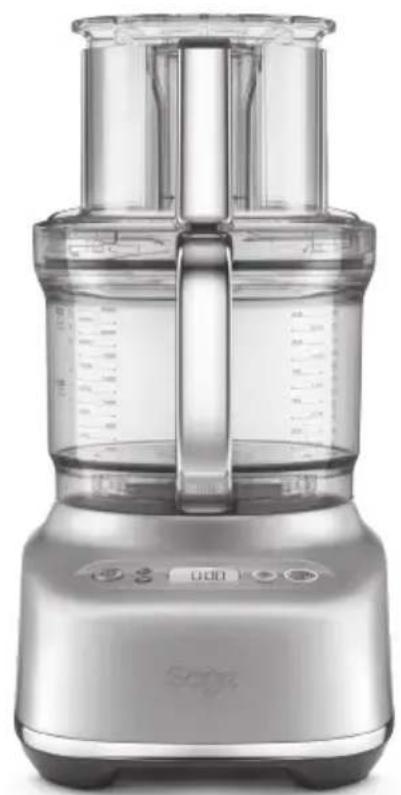
USER MANUAL the Kitchen Wizz 16 SFP810 SAGE
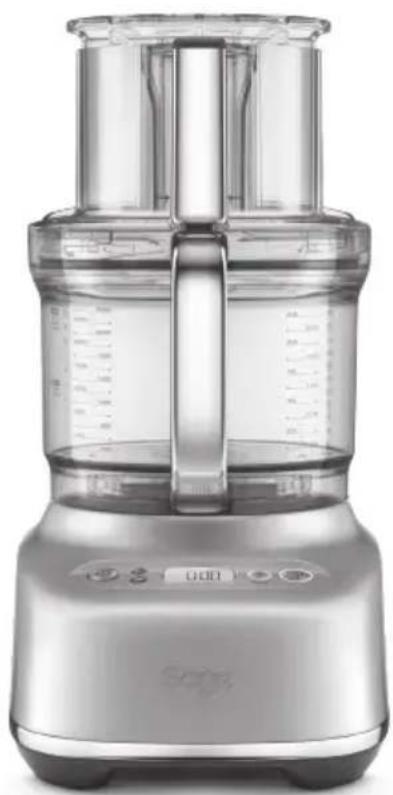
the Kitchen Wizz™ 16
SFP810
natural_image
Modern kitchen blender with clear glass control panel and digital display (no visible text or symbols)ENUSER GUIDE
FRGUIDE UTILISATEUR
ITMANUALE UTENTE
PTMANUAL DO UTILIZADOR
DEHANDBUCH
NLHANDLEIDING
ESGUÍA DEL USUARIO
PLINSTRUKCJA OBSŁUGI

Contents
2 Sage Recommends Safety First
6 Components
8 Assembly
11 Functions
13 Tips
15 Care & Cleaning
16 Troubleshooting
18 Guarantee
SAGE RECOMMENDS SAFETY FIRST
At Sage we are very safety conscious. We design and manufacture consumer products with the safety of you, our valued customer, foremost in mind. In addition we ask that you exercise a degree of care when using any electrical appliance and adhere to the following precautions.
READ ALL INSTRUCTIONS BEFORE USE AND SAVE FOR FUTURE REFERENCE
- A downloadable version of this document is also available at sageappliances.com
- Blades, cutting disc, and dicing blade are sharp. Handle them carefully.
- Remove and safely discard any packaging materials and promotional labels before using the appliance for the first time.
- To eliminate a choking hazard for young children, remove and safely discard the protective cover fitted to the power plug of this appliance.
- To protect against electrical shock, do not immerse the power cord, power plug or motor base in water or any other liquid.
- Do not place the appliance near the edge of a countertop or table during operation. Ensure the surface is level, clean and free of water. Vibration during operation may cause the appliance to move during use.
- Do not place the appliance on or near a hot gas or electric burner, or where it could touch any other source of heat.
- Do not use on a sink.
• Always make sure the food processor is completely
assembled before operating. The appliance will not operate unless properly assembled.
- Ensure the appliance ⏻ is switched OFF, and unplugged from the power outlet before attaching any accessories, including any blades or discs.
- Handle the food processor and attachments with care. Blades and discs are razor-sharp and should be kept out of reach from children.
• Always secure the processing bowl onto the motor base before attaching the blades or discs. - Do not allow the power cord to hang over the edge of a table or counter, touch hot surfaces or become knotted. Unwind the power cord fully before use.
- Keep hands as well as spatulas and other utensils away from moving blades or discs while processing food, to prevent the possibility of severe personal injury or damage to the food processor. A plastic spatula may be used, but only when the food processor is stopped.
- Ensure the appliance motor is off and unplug the power cord from the outlet before removing the lid from the processing bowl.
-
Avoid contact with moving parts. Never push food down by hand when slicing or shredding. Always use pusher.
-
Do not fill the processing bowl above the marked maximum fill line for each type of the ingredients. Failing to follow this instruction may cause product malfunction, product damage or personal injury due to damage to the cover or bowl.
- Never store any blade or disc on motor shaft. To reduce the risk of injury, never place cutting blade or discs on the shaft without first putting bowl properly in place. Store blades and discs, as you would sharp knives, out of reach of children.
- Be sure lid is securely locked in place before operating food processor.
- Never try to override or tamper with lid interlock mechanism.
- Always remove the plug from the power outlet if the appliance is not in use, before attempting to move the appliance, before cleaning, disassembling, assembling and when storing the appliance.
- Some stiff mixtures, such as dough, may cause the processing blade to rotate more slowly than normal. If this happens, do not process for longer than 1 minute.
-
Do not process hot or boiling liquids – allow to cool to room temperature before placing into the processing bowl.
-
Do not move appliance while in operation.
- Do not place any part of the food processor in a microwave oven.
• Always add drier or thicker ingredients to the processing bowl prior to adding fluids. - Never remove the lid while the appliance is operating. Always use the POWER or PAUSE buttons to stop the machine before lid removal.
- Care should be taken when removing the food from the processing bowl by ensuring the motor and blade / disc has completely stopped before disassembling. Ensure the POWER button has been pressed to switch the motor off and unplug the power cord from the power outlet before removing the lid from the processing bowl. The processing bowl should then be unlocked from the motor body and the blade / disc should be carefully removed before attempting to remove the processed food.
- Do not use harsh abrasive, caustic cleaners or oven cleaners when cleaning the appliance.
-
Strictly follow the care and cleaning instructions described in this book.
-
To avoid possible malfunction of bowl switch, never store the food processor with pusher assembly in locked position.
- This appliance is for household use only. Do not use the appliance for anything other than its intended purpose as described in this book. Do not use outdoors. Do not use in moving vehicles or boats.
- The use of attachments not sold or recommended by Sage may cause fire, electric shock or injury.
- Do not leave the appliance unattended when in use.
- Ensure the motor and blade / disc have completely stopped before disassembling. Ensure the POWER button has been pressed to switch the motor off and unplug the power cord from the power outlet when not in use, if left unattended and before assembling, cleaning or storing.
-
The appliance can be used by children aged 8 or older and persons with reduced physical, sensory or mental capabilities or a lack of experience and knowledge, only if they have been given supervision or instruction concerning use of the appliance in a safe way and understand the hazards involved.
-
Close supervision is necessary when any appliance is used near children.
• Children should be supervised to ensure that they do not play with the appliance. - Regularly inspect the power cord, power plug and actual appliance for any damage. Do not operate if damaged in any way or after the appliance malfunctions. Immediately cease use of the appliance and visit sageappliances.com or call Sage Service Centre for examination, repair or adjustment.
- For any maintenance other than cleaning, visit sageappliances.com or call Sage Service Centre.
-
If the power outlet is a standard 2-prong wall outlet, it is your personal responsibility and obligation to have it replaced with a properly grounded 3-prong wall outlet.
-
Do not, under any circumstances, cut or remove the third (ground) prong from the power cord or use an adapter.
- Consult a qualified electrician if instructions are not completely understood, or if doubt exists as to whether the appliance is properly grounded.
SHORT CORD INSTRUCTIONS
Your Sage appliance is fitted with a short power supply cord to reduce personal injury or property damage resulting from pulling, tripping or becoming entangled with a longer cord. If an extension cord is used, (1) the marked electrical rating of the cord set or extension cord should be at least as great as the electrical rating of the appliance, (2) the cord should be arranged so that it will not drape over the countertop or table-top where it can be pulled on by children or tripped over unintentionally and (3) the extension cord must include a 3-prong grounding plug.
FOR HOUSEHOLD USE ONLY SAVE THESE INSTRUCTIONS

Components
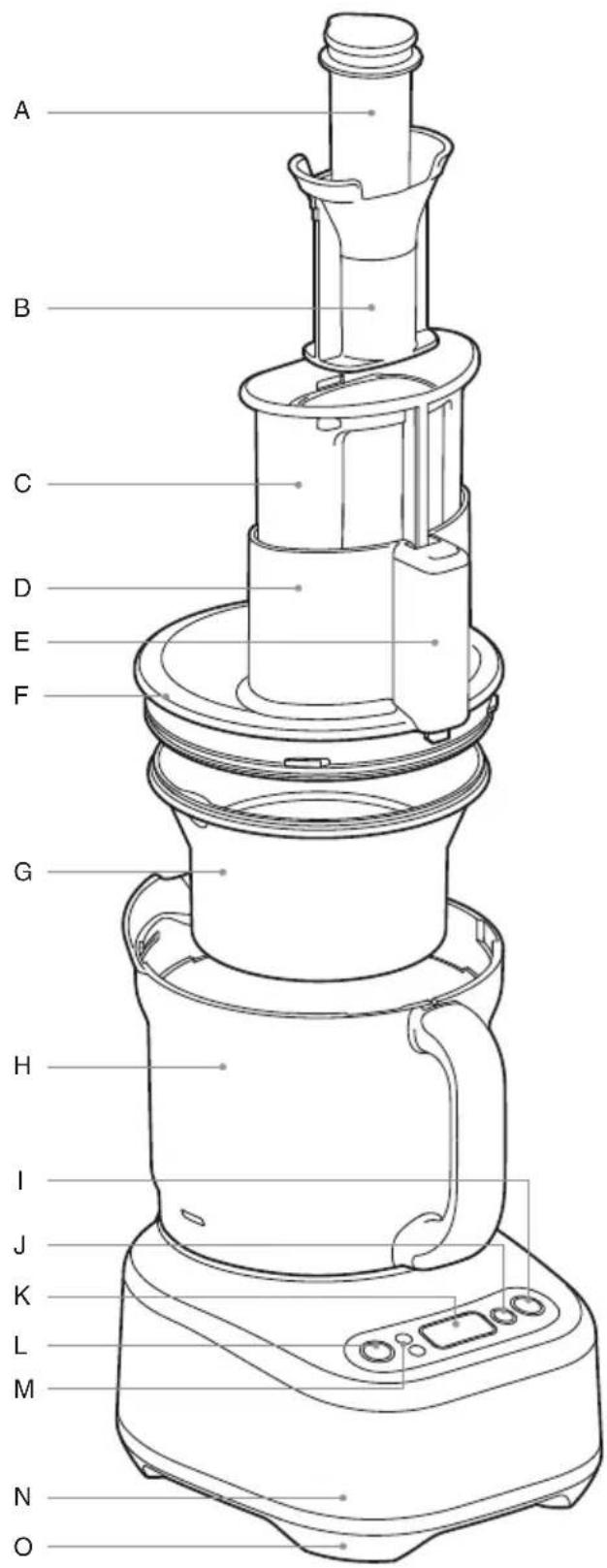
A. Small food pusher
For improved processing control of smaller ingredients. It also doubles as a measuring cup. The food processor will run continually whether the small pusher is in or out.
B. Medium pusher
The food processor will run continually whether the medium pusher is in or out.
C. Large food pusher
For pushing food down the feed chute. The food processor will not start unless the large pusher is correctly in place.
D. Extra wide 14 cm chute
For larger ingredients.
E. Feed chute safety system
Prevents the motor from operating unless the bowl and lid are correctly locked in position, and large feed pusher is inserted.
F. Processing Lid with silicone seal
Locks onto the processing bowl.
G. Mini bowl with silicone seal
H. Main bowl with handle
The bowl locks onto the motor base.
I. PLAY | PAUSE button
Press to start and pause operation of the motor.
J. PULSE button
Press down and hold briefly for short bursts of power. The motor will automatically stop after the PULSE button has been released.
K. Screen display
Displays the timer.
L. POWER button
M. Count up & count down timer
Used to set desired time required for processing. Can count up or down, stopping the processor once the time is reached in count down mode.
N. Powerful induction motor base
Induction motor with safety braking system.
O. Non-skid rubber feet
For added safety and stability.
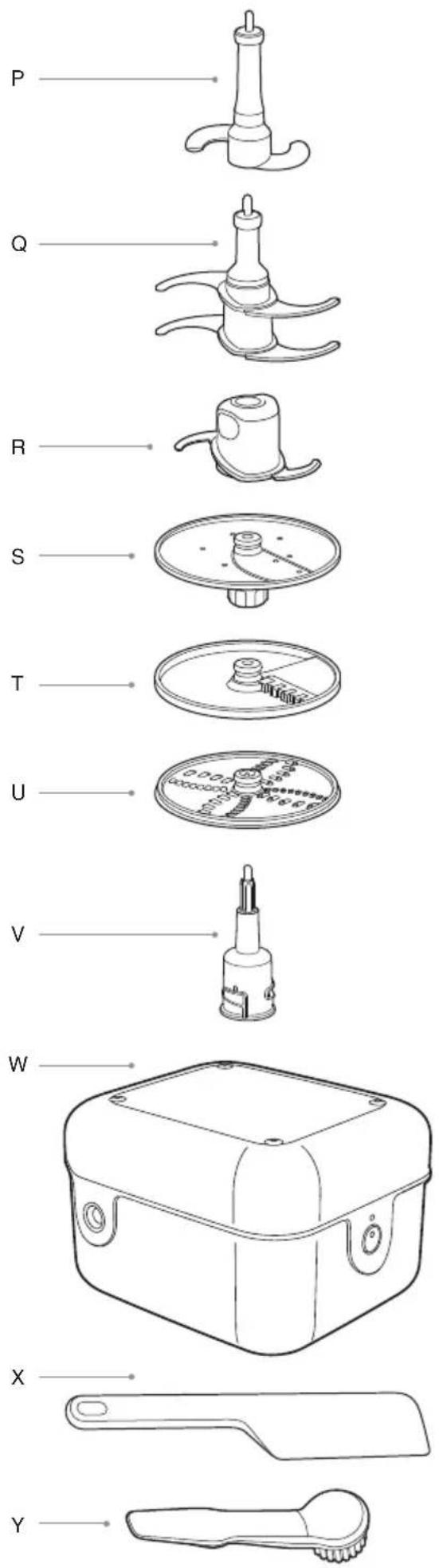
P. Dough blade
Soft material blade for kneading dough.
Q. Quad® Blade™
Swift action for chopping, mixing, and blending a variety of ingredients.
R. Mini processing blade
Attach to the spindle and use this blade for small quantities with the mini bowl for chopping, mixing and blending a variety of ingredients.
S. Adjustable slicer
Use this disc for slicing ingredients. Able to slice from 0.3 mm – 8.0 mm thick.
T. French fries disc
Use this disc to cut ingredients into French fry shape.
U. Reversible shredder
Use one side of this disc for fine shredding and the other side for coarse shredding.
V. Spindle
Attaches to both the main and mini bowl. For use in conjunction with the mini blade when in mini bowl and all discs.
W. Storage box
To store all accessories.
X. Plastic spatula
To scrape ingredients from the sides of bowls (both the main and mini bowls).
Y. Cleaning brush
To aid with cleaning bowls, blades, discs and other attachments.

Assembly
BEFORE FIRST USE
- Before using your food processor for the first time, remove any packaging material and promotional labels. Ensure the POWER button is OFF and the food processor is unplugged.
- Be careful when handling the blades and discs as they are extremely sharp.
- Wash the processing bowl, processing lid and all attachments in warm soapy water with a soft cloth. Rinse and dry thoroughly. All attachments except the geared spindle may be washed in the dishwasher.
- When first using your food processor, you may notice an odor coming from the motor. This is normal and will dissipate with use.
• Always use the food processor on a dry, level work surface.
ASSEMBLY
Motor Base and Bowl
- Position the processing bowl onto the motor base with the handle in line with the ALIGN HANDLE graphic on the motor base.
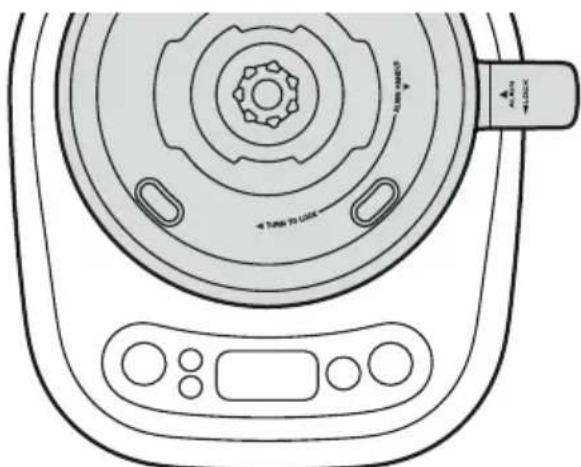
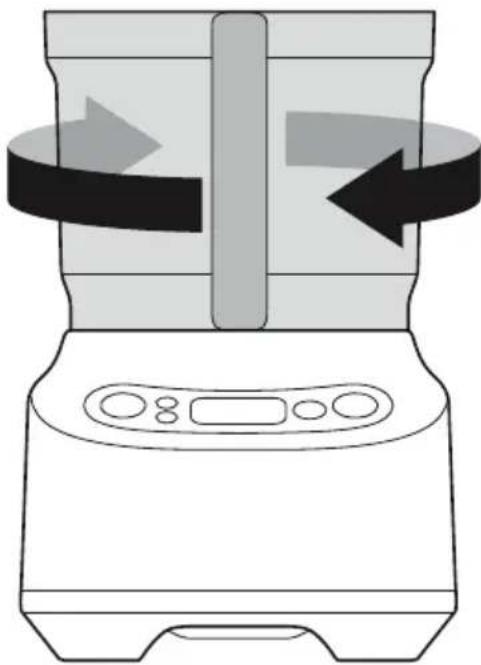
- Turn the bowl clockwise until the handle locks to the front. The processing bowl should now be securely locked into position. The food processor will not operate unless the bowl is locked into position correctly.
natural_image
Illustration of a kitchen blender with directional arrows indicating rotation (no text or symbols)Spindles and Discs
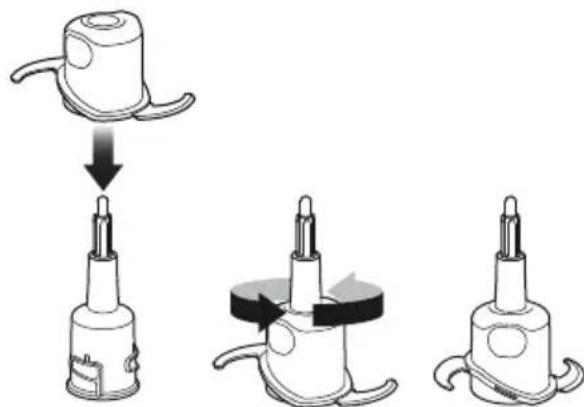
- Before placing the lid onto the processing bowl, insert the spindle onto the centre of the processing bowl. Then carefully attach a disc accessory onto the metal tip of the spindle and secure it in place.
- A spindle is required when using the following discs: adjustable slicer, French fries cutter and reversible shredder.
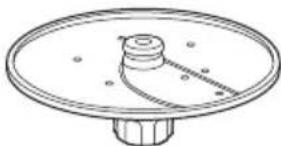
natural_image
Technical line drawing of a mechanical component with a central hub and flange (no text or symbols)Adjustable slicer
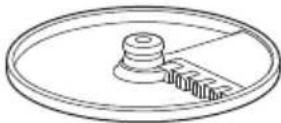
French fries cutter
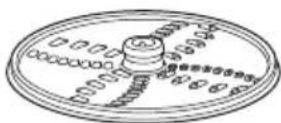
Reversible shredder
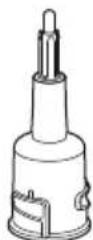
Spindle
Mini Processing Bowl
natural_image
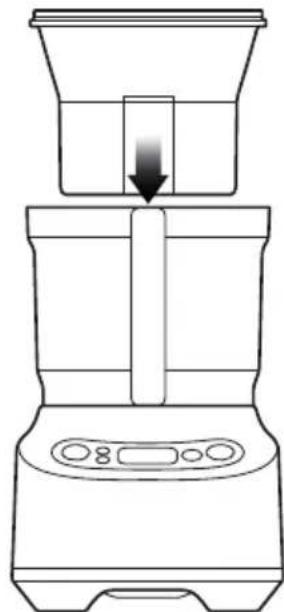
Line drawing of a blender with a downward arrow indicating compression or cooling process (no text or symbols)The mini processing bowl fits inside the main bowl.
Use the spindle with the mini-bowl.
The mini-blade and disc accessories can be used with the spindle. Please note that the mini blade cannot be used in the main processing bowl and the Quad® Blade™ cannot be used in the mini-bowl.
Lid
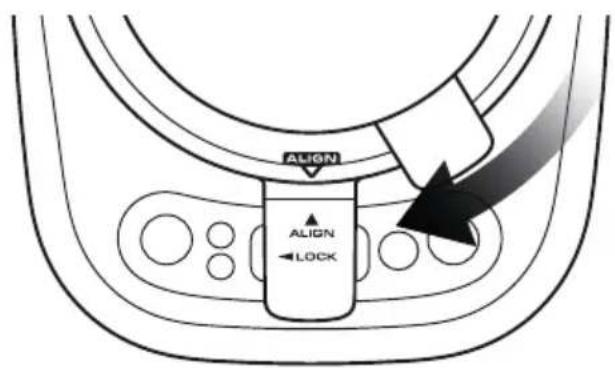
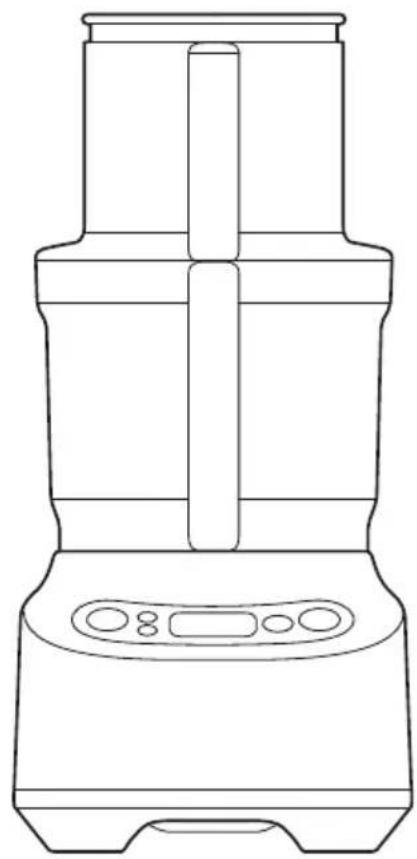
Place lid onto the processing bowl so that the ALIGN I LOCK graphics on the lid and handle align. To LOCK the lid, hold the chute and turn clockwise so that the handle parts align. Locking the lid correctly will engage the interlocking safety catch on the handle, and when the large pusher is in position, it will allow the motor to run.
natural_image
Line drawing of a kitchen blender with control panel and side buttons (no text or symbols)
Functions
OPERATION
Getting started
The food processor will only operate when the processing bowl, lid and large pusher are correctly assembled. This engages the safety interlock, and allows the motor to run.
The chute has a CHUTE FILL MAX graphic to indicate the maximum volume of food that can be placed in the chute for the pusher to activate the safety locking catch.
Control Panel


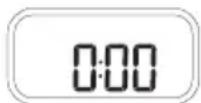


When the machine is connected to the power, and the POWER button is pressed; the buttons and screen will illuminate and the food processor will be ready to operate. Pressing the POWER button at this stage will turn the unit off.
Pressing the PLAY I PAUSE button will start the motor to run continuously, and the timer will count up to show processing time. Note that the motor is only able to operate when the bowl, lid and large pusher are assembled correctly.
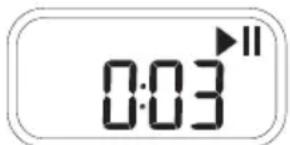
Press PLAY | PAUSE again while processing and the motor will stop. The timer will stop and both the pause icon and PLAY | PAUSE button will flash. Press PLAY | PAUSE to continue processing or press POWER to return to standby.
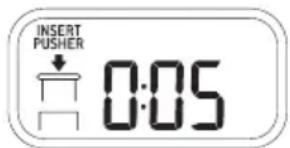
Removing the large pusher during processing will stop the motor. The timer will stop, the INSERT PUSHER icon will be displayed and the PLAY | PAUSE button will flash. Ingredients can be added into the lid chute, and when the large pusher is re-inserted, the unit will continue to process.
Pressing the PULSE button will cause the motor to operate only while the button is held down. Sequential presses will cause the timer to count up the collective processing time. This momentary operation is ideal for foods that need sudden bursts of power to encourage ingredients to move or be integrated, or with food types that only require processing for short periods.
Use a combination of the PULSE and PLAY | PAUSE buttons for more control when processing ingredients.
Timer
During operation the timer will count-up from zero to display the accumulated processing time. Continuous operation will stop if the timer reaches 20 minutes (19:59) and the unit will return to standby mode.
To control the processing duration – press the up or down arrows to set the timer for any recipe that requires a specific length of time the ingredients should be processed. Each single press will adjust by 5 seconds, holding the button will adjust in 10 second increments. The TIMER icon will be displayed on the screen.
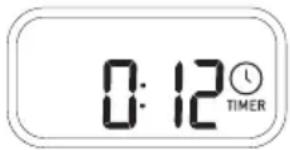
Press PLAY | PAUSE to initiate processing and the unit will operate as the displayed time counts down. The motor will run continuously until the timer reaches zero. Removing the large pusher or using the pause function will not affect the set time during processing. Pressing POWER or PULSE buttons during operation will clear the timer and return to standby.
After Processing
Wait until the blades or discs have stopped moving before unlocking the lid. Ensure that the unit has been turned off using the POWER button and unplug at the power outlet before handling the blades.
When removing the blades or discs, lift the part by carefully gripping the plastic hub area in the center.
Overload Protection System
The food processor has an overload protection system to prevent damage to the motor – this will cause the food processor to go into standby mode and the OVERLOAD PROTECTION icon will flash.
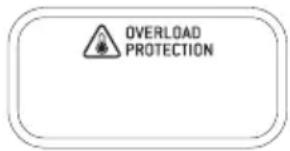
Unplug the food processor and allow to cool for 30 minutes.
If the blades or discs stall while processing, immediately stop the machine, then unplug from the power outlet before clearing the wedge ingredients. If this happens more than once, the bowl may be overloaded. Try processing in smaller batches.
Tips listed below are suggestions only. For more detailed instructions, refer to specific recipes provided online at sageappliances.com
ACCESSORY ACTION TYPES OF INGREDIENTS / DISHES TIPS
| Quad® BladeTM Chop • Raw fruits and vegetables• Raw or cooked meats and fish• Fresh herbs• Breadcrumbs• Nuts• Dried fruits | • Trim and cut food, if necessary, into 2.5cm cubes before processing. | ||
| Mince / Ground Meat | • Raw and cooked proteins | • Trim and cut food into 2.5 cm cubes before processing.• For best results, freeze meat for 30 minutes.• Trim excess fats and sinew. | |
| Puree / Blend | • Cooked fruit and vegetables | • Allow food to cool before pureeing or blending. | |
| Mix • Sauces | • Batters• Pesto• Compound butters | • For batters, use PULSE button until mixed evenly. Do not over process. | |
| Dough Blade | Knead | • Bread and pizza doughs | • Add liquid through small feed chute whilst the motor is running to incorporate.• Recommended maximum flour capacity is 750 g. |
| Adjustable Slicer Disc | Slice • Raw foods and vegetables• Salamis and deli meats | • Place ingredients vertically on the left side of appropriate sized feed chute to minimize tilting.• For deli meats like salami or pepperoni, trim one end and process one at a time. | |
| Reversible Shredding Disc | Coarse & Fine Shred | • Cheeses• Fruits and vegetables such as apples, potatoes, and cabbage | • For best results, freeze softer cheeses for 45 minutes before grating. NOTE Grating soft white cheeses such as fresh mozzarella is not recommended.• Remove the rind from hard cheeses before grating. |
| French Fries Disc | French Fry Cut | • Potatoes• Sweet Potato• Carrots | • Lay ingredients horizontally in large feed chute to maximize length.• For potatoes and softer produce, use the large feed chute to maximize length; however, for best results on harder, fibrous produce, use the medium chute for more control. |

IMPORTANT NOTES
For optimal results, position food in the chute and use the pusher to push food with light downward force prior to starting the food processor.
Always use the small or medium size feed chute for processing hard produce like pumpkin and sweet potato. Feeding hard produce through the large feed chute could cause damage to the discs.
Smaller Ingredients
For long thin foods such as carrots, cucumbers, zucchini, etc., use the small or medium feed chute. This will avoid the ingredient from tipping over, during slicing.
Larger Ingredients
The wide feed chute is 14 cm wide and can fit ingredients up to this size. The food should fit snugly so it is supported in an upright position in the chute, but not so tight that it could prevent the food from moving down the chute. Ensure not to overfill the chute, as the pusher will not activate the interlock safety catch if the chute is too full. Do not fill over the MAX indicator.
Pressure
When processing, never force the food down the chute as this can damage the discs. Apply light, even pressure for soft foods such as tomatoes and bananas. Apply medium, even pressure for firmer foods such as potatoes, cheese, deli meats and apples.
Mini Bowl
The mini processing bowl is used inside the main processing bowl. It is for better control when processing small quantities of food, or herbs. Alternatively, the 'Adjustable Slicing', Shredding or French Fries discs can be used on the spindle to process smaller quantities into the mini bowl.

Care & Cleaning
Remove the power cord from the power outlet after use for safety reasons.
Processing bowl and lid
Due to the interlock components, we do not recommend immersing the bowl in water for long periods.
To keep your bowl and lid clean, and to avoid food drying on, follow these steps as soon as possible after use:
- Rinse most of the ingredients off the bowl and lid.
- Hand wash in clean warm, soapy water using a mild liquid detergent and non-abrasive sponge.
- The processing bowl and lid may occasionally be washed in the dishwasher (top shelf only), however washing in the dishwasher is not recommended on a regular basis, as prolonged exposure to harsh detergents, hot water and pressure will damage and shorten the life of the plastic and the interlock components.

WARNING
Oils in citrus rind can damage the material of your food processor bowl if being exposed to it for a longer period. Always clean your processing bowl immediately after processing citrus rind.
Blades and discs
- Blades and discs are razor sharp, do not touch. Always use a spatula or brush to remove food or when cleaning blades.
- Spindle, blades and discs can be washed in the dishwasher.
Food Pushers
All parts in the pusher stack can be placed in the dishwasher (top rack).
Motor base
To clean the motor base, wipe with a soft, damp cloth then dry thoroughly. Wipe any excess food particles from the power cord.
Cleaning agents
Do not use abrasive scouring pads or cleansers on either the motor base or the jug, as they may scratch the surface. Use only warm soapy water with a soft cloth.
Stubborn food stains and odors
Strong smelling foods such as garlic, fish and some vegetables such as carrots may leave an odor or stain the bowl or lid.
To remove, pour warm soapy water and fill to the MAX LIQUID mark. Set aside to soak for 5 minutes, without immersing the whole bowl. Then wash with a mild detergent and warm water, rinse and dry thoroughly. Store the bowl with the lid off.
Storage
Place the large food pusher (with medium and small pushers inserted) into the feed chute for storage.
Store your food processor upright, with the bowl and lid resting in position, but not locked. Locking the bowl and lid can put unnecessary strain on the safety interlock.
All accessories should be kept in the storage container and out of the reach of children to avoid accidental cuts. It is not recommended to store the discs in a drawer with other utensils.
Do not place anything else on top of your food processor during storage.
PROBLEM EASY SOLUTION
| Food is unevenly processed | Ingredients should be cut evenly into 2.5 cm pieces before processing.Ingredients should be processed in batches to avoid overloading. |
| Slices are slanted or uneven | Place evenly cut food into the feed chute.Apply even pressure on the pusher. |
| Food falls over in the feed chute | The large feed chute must be packed full for best results.If processing smaller quantities, place items to the far left in the feed chute,or use a smaller feed chute, depending on the food size. |
| Unevenly cut french fries | Always clear any blocked potato before processing more potatoes. |
| Some food remains on top of the disc after processing | It is normal for small pieces to remain after processing. |
| Motor slows down when kneading dough | Amount of dough must not exceed maximum recommended quantity on the recipe.Remove half and process in two batches.Dough may be too dry. If motor speeds up, continue processing.If not, add more water, 1 tablespoon at a time until the motor speeds up.Process until dough cleans the side of the processing bowl. |
| Dough doesn't clear inside of the processing bowl | Amount of dough may exceed food processor maximum capacity.Remove half and process in two batches.Dough may be too dry. |
| Dough nub forms on top of dough blade and dough does not become uniformly kneaded | Stop machine, carefully remove dough, divide it into 3 pieces and redistribute them evenly in the processing bowl. |
| Dough feels tough after kneading | Divide dough into 2 or 3 pieces and redistribute evenly in processing bowl.Process 10 seconds or until uniformly soft and pliable. Allowing dough to rest allows the gluten strands to relax and become more pliable. |
| Dough is too dry | While machine is running, add water through the small feed chute,1 tablespoon at a time until dough clears the inside of the processing bowl. |
| Dough is too wet | While machine is running, add flour through the small feed chute,1 tablespoon at a time until dough clears the inside of the processing bowl. |
| The motor does not start | There is a safety interlock switch to prevent the motor from starting if it is not properly assembled. Make sure the processing bowl and lid are securely locked into position.The food content in the feed chute should be below the maximum fill line.If the motor still will not start, check the power cord and power outlet. |
| The food processor shuts off during operation | The lid may have become unlocked; check to make sure it is securely in position.If the motor overloads, the 'OVERLOAD PROTECTION' icon in the screen will start to flash. Switch off by pressing the POWER button and unplug the power cord.Allow the food processor to cool for 30 minutes before resuming. |
PROBLEM EASY SOLUTION
| The motor slowed down during operation | This is normal as some heavier loads (e.g. slicing / shredding cheese) may require the motor to work harder. Reposition the food in the feed chute and cut the food into smaller sizes and process using a smaller pusher and continue processing.The maximum load capacity may have been exceeded.Remove some of the ingredients and continue processing. |
| The food processor vibrates / moves during processing | Make sure the rubber feet at the bottom of the unit are clean and dry.Also make sure that the maximum load capacity is not being exceeded.This is normal as some heavier loads may require the motor to work harder.Turn the unit off and clear any ingredients that may be caught on the disc, before continuing.If this occurs while mixing dough – then turn unit off and redistribute the dough mixture more evenly around the bowl before continuing.Process hard and fibrous foods such as carrots, through the medium or small chute. |
| INSERT PUSHER flashing | Make sure that food does not exceed the max line in the food chute.If pusher is fully inserted and this warning flashes on the screen, check that the bowl and lid are assembled correctly. Bowl handle should be facing the front of the unit. |

Guarantee
2 YEAR LIMITED GUARANTEE AND 30 YEAR LIMITED MOTOR GUARANTEE
Sage Appliances guarantees this product for domestic use in specified territories for 2 years for all parts of the product and 30 years for the product's motor from the date of purchase against defects caused by faulty workmanship and materials. During this guarantee period Sage Appliances will repair, replace, or refund any defective product (at the sole discretion of Sage Appliances).
All legal warranty rights under applicable national legislation will be respected and will not be impaired by our guarantee. For full terms and conditions on the guarantee, as well as instructions on how to make a claim, please visit sageappliances.com
the Kitchen Wizz™ 16
SFP810
natural_image
Modern kitchen blender with clear glass control panel and digital display (no visible text or symbols)DEHANDBUCH
Sage®

Inhalt
P. Teigkneter
Q. Quad® Blade™ (Quad-Messer)
natural_image
Line drawing of a kitchen blender with scroll arrows indicating rotation (no text or symbols)natural_image
Technical line drawing of a mechanical component with a central hub and flange (no text or symbols)Verstellbarer Hobel
natural_image
Line drawing of a blender with a downward arrow indicating compression or cooling process (no text or symbols)natural_image
Line drawing of a kitchen blender with control panel and side buttons (no text or symbols)
Funktionen
BEDIENUNG
Erste Schritte
natural_image
Modern kitchen brush tool with clear glass casing and digital display (no visible text or symbols)FRGUIDE UTILISATEUR
Sage®

Table des matières
INSTRUCTIONS RELATIVES AU CORDON COURT
A. Petit poussoir
P. Lame à pétrir
natural_image
Line drawing of a kitchen blender with directional arrows indicating rotation (no text or symbols)Axes et disques
natural_image
Technical line drawing of a mechanical component with a central hub and flange (no text or symbols)natural_image
Line drawing of a blender with a downward arrow indicating compression or cooling process (no text or symbols)natural_image
Line drawing of a kitchen blender with control panel and side buttons (no text or symbols)
Fonctions
FONCTIONNEMENT
Commencer
natural_image
Exterior view of a modern kitchen blender with digital display and control buttons (no visible text or symbols)NLHANDLEIDING
Sage®

Inhoud
P. Deegmes
natural_image
Illustration of a kitchen blender with directional arrows indicating rotation (no text or symbols)Assen en schijven
natural_image
Technical line drawing of a mechanical component with a central hub and flange (no text or symbols)natural_image
Line drawing of a blender with a downward arrow indicating compression or cooling process (no text or symbols)natural_image
Line drawing of a kitchen blender with control panel and side buttons (no text or symbols)
Functions
BEDIENING
Aan de slag
natural_image
Modern kitchen blender with clear glass control panel and digital display (no visible text or symbols)ITMANUALE UTENTE
Sage®

Sommario
P. Lama impastatrice
natural_image
Line drawing of a kitchen blender with scroll arrows indicating rotation (no text or symbols)Alberini e dischi
natural_image
Technical line drawing of a mechanical component with a central hub and flange (no text or symbols)natural_image
Line drawing of a blender with a downward arrow indicating compression or cooling process (no text or symbols)natural_image
Line drawing of a kitchen blender with control panel and side-mounted buttons (no text or symbols)
Funzioni
FUNZIONAMENTO
Guida introduttiva
natural_image
Modern kitchen blender with clear glass control panel and digital display (no visible text or symbols)ESGUÍA DEL USUARIO
Sage®

Índice

Datos técnicos
220-230 V \~ 50 Hz 900 W
P. Cuchilla amasadora
natural_image
Line drawing of a kitchen blender with directional arrows indicating rotation (no text or symbols)Ejes y discos
natural_image
Technical line drawing of a mechanical component with a central hub and flange (no text or symbols)Rebanador ajustable
natural_image
Line drawing of a blender with a downward arrow indicating compression or cooling process (no text or symbols)natural_image
Line drawing of a kitchen blender with control panel and side legs (no text or symbols)
Funciones
FUNCIONAMIENTO
Cómo empezar
natural_image
Modern kitchen blender with clear glass and silver casing (no visible text or symbols)PTMANUAL DO UTILIZADOR
Sage®

Índice
H. Taça principal com pega
P. Lâmina de massa
natural_image
Diagram of a blender with directional arrows indicating rotation and control buttons (no text or symbols)Eixos e discos
natural_image
Technical line drawing of a mechanical component with a central hub and flange (no text or symbols)natural_image
Line drawing of a blender with a downward arrow indicating compression or cooling process (no text or symbols)natural_image
Line drawing of a kitchen blender with control panel and side legs (no text or symbols)
Funções
FUNCIONAMENTO
Introdução
natural_image
Modern kitchen blender with clear glass control panel and digital display (no visible text or symbols)PLINSTRUKCJA OBSŁUGI
Sage®

Spis treści
A. Mały popychacz
natural_image
Diagram of a kitchen blender with directional arrows indicating rotation (no text or symbols)natural_image
Technical line drawing of a mechanical component with a central cylindrical shaft and flange (no text or symbols)natural_image
Line drawing of a blender with a downward arrow indicating compression or cooling process (no text or symbols)natural_image
Line drawing of a kitchen blender with control panel and side buttons (no text or symbols)
Funkcje
OBSŁUGA
Pierwsze kroki
BRG Appliances Limited
86–90 Paul Street, London, EC2A 4NE, United Kingdom
Freephone (UK Landline): 0808 178 1650
Mobile Calls (National Rate): 0333 0142 970
DEU
Sage Appliances France SAS
www.sageappliances.com
Registered in England & Wales No. 8223512
Registered in Germany No. HRB 81309 (AG Düsseldorf)
Registered in France No. 879 449 866 RCS
EN Due to continued product improvement, the products illustrated or photographed in this document may vary slightly from the actual product.