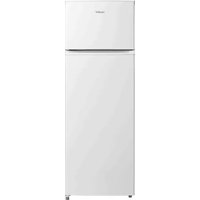
RCT323WH2 - Fridge COMFEE - Free user manual and instructions
Find the device manual for free RCT323WH2 COMFEE in PDF.


| Brand | Comfee |
| Model | RCT323WH2 |
| Product type | Refrigerator with freezer compartment |
| Dimensions (W x H x D) | 550 x 1590 x 550 mm |
| Climate class | SN, N, ST, T |
| Power supply voltage | 220-240 V ~ 50 Hz |
| Refrigerant | R-600a (flammable) |
| Estimated total capacity | 230 L (indicative) |
| Freezer | 4-star compartment (***)* |
| Temperature adjustment | Electronic with LED display |
| Special modes | Super freeze, super cool, standby |
| Defrost | Manual |
| Door reversal | Possible |
| Leveling feet | Yes, adjustable |
| Interior lighting | LED lamp (replacement by professional) |
| Maintenance | Cleaning with baking soda, no solvents |
| Spare parts available | Yes (thermostats, sensors, etc. – 7 to 10 years) |
| Warranty | See seller's terms |
Frequently Asked Questions - RCT323WH2 COMFEE
User questions about RCT323WH2 COMFEE
0 question about this device. Answer the ones you know or ask your own.
Ask a new question about this device
Download the instructions for your Fridge in PDF format for free! Find your manual RCT323WH2 - COMFEE and take your electronic device back in hand. On this page are published all the documents necessary for the use of your device. RCT323WH2 by COMFEE.
USER MANUAL RCT323WH2 COMFEE
natural_image
Simple line drawing of a two-tier refrigerator (no text or symbols)RCT323WH2
Warning:
Before using this product, please read this manual carefully and keep it for future reference.
The design and specifications are subject to change without prior notice for product improvement. Consult with your dealer or manufacturer for details.
CONTENTS
SAFETY INSTRUCTIONS......EN-01
DISPOSAL AND RECYCLING......EN-08
PRODUCT OVERVIEW......EN-09
PRODUCT INSTALLATION......EN-10
OPERATION INSTRUCTIONS......EN-17
CLEANING AND MAINTENANCE ...... EN-21
TROUBLESHOOTING EN-23
APPENDIX EN-25
SAFETY INSTRUCTIONS
Intended use
Before switching on the appliance for the first time read the following safety hints!
This appliance is intended to be used in household and similar applications such as staff kitchen areas in shops, offices and other working environments; farm houses and by clients in hotels, motels and other residential type environments; bed and breakfast type environments; catering and similar non-retail applications. If the appliance is used commercially or for purposes other than cooling food, please note that the manufacturer cannot accept any liability for any damage.
Modifications or alterations to the unit are not permitted for safety reasons.
Explanation of symbols
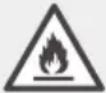 | DangerThis symbol indicates that there are dangers to the life and health of persons due to extremely flammable gas. |
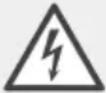 | Warning of electrical voltageThis symbol indicates that there is a danger to life and health of persons due to voltage. |
 | WarningThe signal word indicates a hazard with a medium level of risk which, if not avoided, may result in death or serious injury. |
 | CautionThe signal word indicates a hazard with a low degree of risk which, if not avoided, may result in minor or moderate injury. |
 | AttentionThe signal word indicates important information (e.g. damage to property), but not danger. |
 | Observe instructionsThis symbol indicates that a service technician should only operate and maintain this appliance in accordance with the operating instructions. |
Read these operating instructions carefully and attentively before using/commissioning the unit and keep them in the immediate vicinity of the installation site or unit for later use!
This symbol alerts you to flammable materials that can ignite and cause a fire if you do not take care.
- Refrigerant and cyclopentane foaming material used for the appliance are flammable. Therefore, when the appliance is scrapped, it shall be kept away from any fire source and be recovered by a special recovering company with corresponding qualification other than be disposed by combustion, so as to prevent damage to the environment or any other harm.

WARNING
- The necessity that, for doors or lids fitted with locks and keys, the keys be kept out of the reach of children and not in the vicinity of the refrigerating appliance, in order to prevent children from beinglocked inside.
- Keep ventilation openings, in the appliance enclosure or in the built-in structure, clear of obstruction.
- Do not use mechanical devices or other means to accelerate the defrosting process, other than those recommended by the manufacturer.
- Do not damage the refrigerant circuit.
- Do not use electrical appliances inside the food storage compartments of the appliance, unless they are of the type recommended by the manufacturer.
- Please dispose of the product in accordance with local regulations as it contains flammable propellant gas and refrigerant.
- To avoid a hazard due to instability of the appliance, it must be fixed in accordance with the instructions.
- For a freestanding appliance: this refrigerating appliance is not intended to be used as a built-in appliance.

WARNING Electrical safety
Incorrect electrical installation or excessive mains voltage can lead to electric shocks!
- Only connect your fridge-freezer to a properly installed earthed socket if the mains voltage of the socket corresponds to the specification on the rating label*.
- Do not use extension cords or ungrounded (two-pin) adapters.
- Make sure that all electrical cables outside the appliance are protected from damage (e.g. by animals or sharp edges). When positioning the appliance, ensure the supply cord is not trapped or
- damaged.
- Do not locate multiple portable socket outlets or portable power supplies at the rear of the appliance.
- Improper power supply may result in fire or electric shocks.
- Avoid electrical overload. Disconnect the mains plug from the mains socket before carrying out care, maintenance and repair work on the unit.
- Switch off the unit and disconnect the mains plug from the mains socket when you are not using the unit.
- If the supply cord is damaged, it must be replaced by the manufacturer, its service agent or similarly qualified persons in order to avoid a hazard.
- If the products are equipped with LEDs, do not remove the lighting cover and LED yourself. Any replacement or maintenance of the LED lamps is intended to be made by the manufacturer, its service agent or similar qualified person.
This product is not recommended for use with sockets or main switch with the A/GFCI function, otherwise it may cause false tripping.
-
It's not pose a safety risk when tripped.
-
If tripping persists, it is recommended to replace the sockets or main switch without a/gfci function.

WARNING Electrical safety
- Children should be supervised to ensure that they do not play with the appliance.
- Destroy carton, plastic bags, and any exterior wrapping material immediately after the product is unpacked.
• Children should never use these items to play. Cartons covered with rugs, bedspreads, plastic sheets or stretch wrap may become airtight chambers, and can quickly cause suffocation. - Remove all staples from the carton. Staples can cause severe cuts, and destroy finishes if they come in contact with other appliances or furniture.
Risk of child entrapment. Before you throw away your old refrigerator or freezer:
• Take off the doors.
- Leave the shelves in place so that children may not easily climb inside.

CAUTION Risk of injury and damage!
- Never put frozen food in your mouth immediately after taking it out of the freezer.
- Avoid prolonged skin contact with frozen food, ice and the pipes in the freezer compartment.
- Do not store explosive substances such as aerosol cans with a flammable propellant in this appliance. Also do not place flammable products near the product.
- Do not store beer, drinks or other liquids in bottles or tightly closed containers in the freezer compartment!

CAUTION Risk of injury and damage!
Failure to comply with the safety information and instructions may result in injury.
- This appliance can be used by children aged from 8 years and above and persons with reduced physical, sensory or mental capabilities or lack of experience and knowledge if they have been given supervision or instruction concerning use of the appliance in a safe way and understand the hazards involved. Children shall not play with the appliance. Cleaning and user maintenance shall not be made by children without supervision.
• Children aged from 3 to 8 years are allowed to load and unload refrigerating appliances.

WARNING
- Check the compressor label on the rear of the appliance or the rating label inside the fridge to see which refrigerant is used for your appliance. When this product contains flammable gas (Refrigerant R-600a), contact your local authority in regard to safe disposal of this product.
- When transporting and setting up the unit, make sure that no parts of the refrigerant circuit are damaged.
- To prevent the formation of a flammable gas-air mixture in the event of a leak in the refrigerant circuit, the installation room must have a minimum size of 1 ~m^3 per 8 ~g of refrigerant according to standard EN378. The amount of refrigerant in your product can be found on the type plate.
If the refrigerant circuit is damaged:
- Avoid open flames and sources of ignition at all costs.
- Ventilate the room in which the appliance is located thoroughly.

CAUTION
To avoid contamination of food, please respect the following instructions:
- Opening the door for long periods can cause a significant increase of the temperature in the compartments of the appliance.
- Clean regularly surfaces that can come in contact with food and accessible drainage systems.
- Clean water tanks if they have not been used for 48h; flush the water system connected to a water supply if water has not been drawn for 5 days. (Note1)(*)
- Store raw meat and fish in suitable containers in the refrigerator, so that it is not in contact with or drip onto other food.
- Two-star frozen-food compartments are suitable for storing pre-frozen food, storing or making ice-cream and making ice cubes. (Note 2)(*)
- 1-star, 2-star and 3-star compartments are not suitable for the freezing of fresh food. (note 3)(*)
- For appliances without a 4-star compartment: this refrigerating appliance is not suitable for freezing foodstuffs. (note 4)(*)
- If the refrigerating appliance is left empty for long periods, switch off, defrost, clean, dry, and leave the door open to prevent mould developing within the appliance.
- WARNING: Fill with potable water only. (Suitable for Water Dispenser)(*)
- WARNING: Connect to potable water supply only. (Suitable for ice making nmachine)(*)

ATTENTION
(*): This feature varies depending on the model purchased.
Note 1,2,3,4: Please confirm whether it is applicable according to your product compartment type.

CAUTION
- The appliance is not suitable for the storage and cooling of medicines, blood plasma, laboratory preparations or similar substances and products underlying the Medical Device Directive 2007/47/EC.
- Plastic parts that come into contact with oils/acids (animal or vegetable) over a long period of time or frequently age more quickly and can crack or break.
- When replacing the interior lighting of the product, always unplug the product - otherwise there is a risk of electric shock.
- If the replacement of the interior lighting is too complicated for you, contact your service representative.
Before The First Use
The packaging must be undamaged. Check the device for transport damage.
Do not connect a damaged device under any circumstances. In case of damage, please contact the supplier.
Remove transport cover
The unit and parts of the interior are protected for transport. You can remove all adhesive tapes on the right and left side of the device door as well as any adhesive residues with cleaning solvent. Remove all adhesive tapes and packaging parts from the interior of the device as well.
After transport, the device should stand for 12 hours to allow the coolant to collect in the compressor. Non-observance could damage the compressor and thus lead to failure of the device.

CAUTION Risk of damage!
Set up device
- The ambient temperature affects the power consumption and proper functioning of the device. Therefore, the device should be placed in a well-ventilated and dry room with an ambient temperature corresponding to the climate class for which the device is designed.
- Do not place the device outdoors (e.g. balcony, terrace, garden shed, etc.).
Do not use sharp knives or pointed objects when opening the device. Please observe the notes when setting up: "Tips for energy saving"
Remove the device doors
- If the unit does not fit through the apartment door, the unit doors can be unscrewed.

ATTENTION
The unscrewing of the unit doors may only be carried out by the customer service.

CAUTION
Disconnect the appliance from the power supply before cleaning.
- Dust behind the product and on the floor must be cleaned to improve the cooling effect and energy saving.
- Check the door gasket regularly to make sure there is no debris. Clean the door gasket with a soft cloth dampened with soapy water or diluted detergent.
- The interior of the product should be cleaned regularly to avoid odors.
- Please turn off the power before cleaning the interior, remove all foods, drinks, shelves, drawers, etc.
- Use a soft cloth or sponge to clean the inside of the product, with two tablespoons of baking soda and a quart of warm water. Then rinse with water and wipe clean. After cleaning, open the door and let it dry naturally before turning on the power.
- For areas that are difficult to clean inside the product (such as narrow places, gaps or corners), we recommend to wipe them regularly with a soft rag, soft brush, etc. and when necessary, with some tools (such as thin sticks) to ensure no contaminants or bacterial accumulation in these areas.
- Do not use soap, detergent, scrub powder, spray cleaner, etc., as these may cause odors inside the product or contaminat food.
- Clean the door tray, shelves and drawers with a soft cloth dampened with soapy water or diluted detergent. Dry with a soft cloth or dry naturally.
- Wipe the outer surface of the product with a soft cloth dampened with soapy water, detergent, etc., and then wipe dry.
- Do not use hard brushes, scouring pads, wire brushes, abrasives (such as toothpaste), organic solvents (such as alcohol, acetone, banana oil, etc.), boiling water, acid or alkaline items, which may damage the fridge surface and interior. Boiling water and organic solvents such as benzene may deform or damage plastic parts.
- Do not rinse directly with water or other liquids during cleaning to avoid short circuit or affect electrical insulation after immersion.
DISPOSAL AND RECYCLING
Important instructions for environment
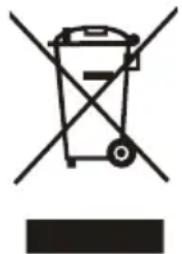
Compliance with the WEEE Directive and Disposing of the Waster Product: This product complies with EU WEEE Directive (2012/19/EU). This product bears a classification symbol for waster electrical and electronic equipment (WEEE).
This symbol indicates that this product shall not be disposed with other household wastes at the end of its service life. Used device must be returned to official collection point for recycling of electrical electronic devices. To find these collection systems please contact to your local authorities or retailer where the product was purchased. Each household performs important role in recovering and recycling of old appliance. Appropriate disposal of used
natural_image
Symbol of a waste bin with no text or labels, crossed by diagonal lines and a solid rectangle below (no text or symbols present)appliance helps prevent potential negative consequences for the environment and human health.
Compliance with RoHS Directive
The product you have purchased complies with EU RoHS Directive (2011/65/EU). It does not contain harmful and prohibited materials specified in the Directive.
Package information
Packaging materials of the product are manufactured from recyclable materials in accordance with our National Environment Regulations. Do not dispose of the packaging materials together with the domestic or other wastes. Take them to the packaging material collection points designated by the local authorities.

PRODUCT OVERVIEW
Names of components
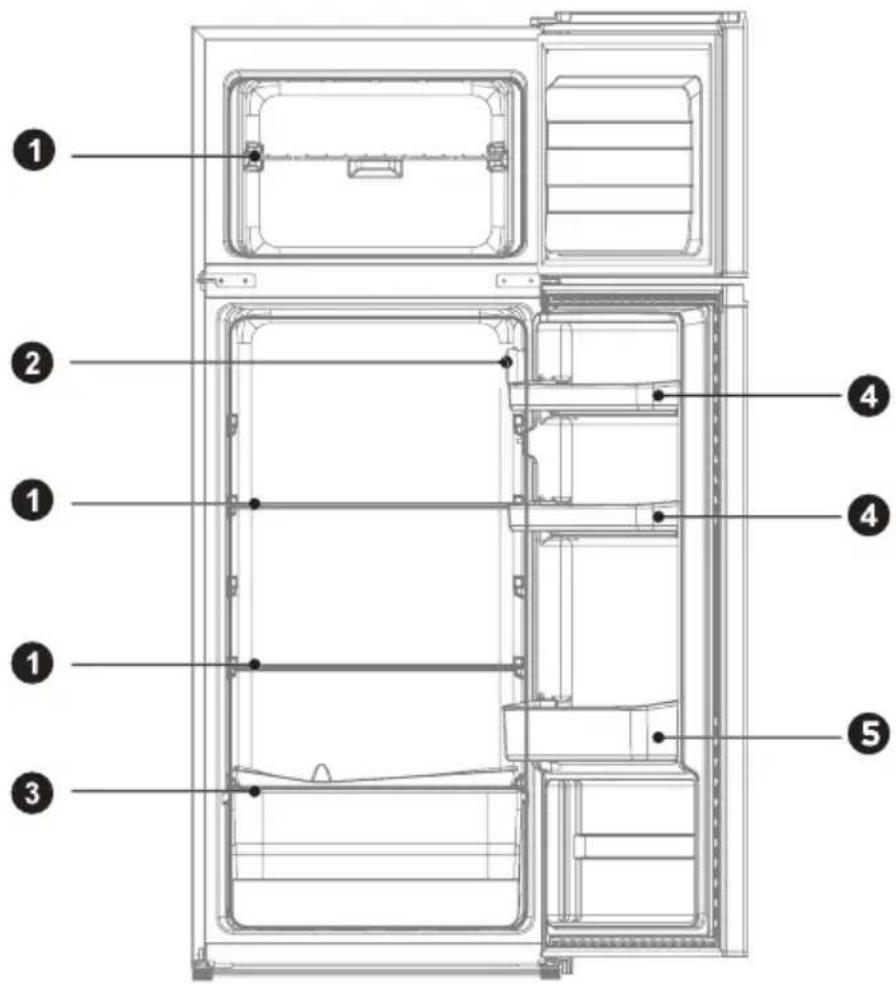
1 Shelf
4 Small door tray
2 Temperature control
5 Big door tray
3 Fruits and vegetables box

ATTENTION
The picture above is only for reference. The actual configuration will depend on the physical product or statement by the distributor.
PRODUCT INSTALLATION
Install Instruction
For refrigerating appliances with climate class
- Depending on the climate class, This refrigerating appliance is intended to be used at ambient temperatures range as specified following table.
- The climate class can be found on the rating plate. The product may not operate properly at temperatures outside of the specific range.
- You can find the climate class on the product label.
Effective temperature range
- The product is designed to operate normally in the temperature range specified by its class rating.
| Class Symbol | Ambient temperature range °C | ||
| IEC 62552 (ISO 15502) ISO 8561 | |||
| Extended temperate SN + 10 to + 32 + 10 to + 32 | |||
| Temperate N + 16 to + 32 + 16 to + 32 | |||
| Subtropical ST + 16 to + 38 + 18 to + 38 | |||
| Tropical T + 16 to + 43 + 18 to + 43 | |||
Dimensions and Clearances
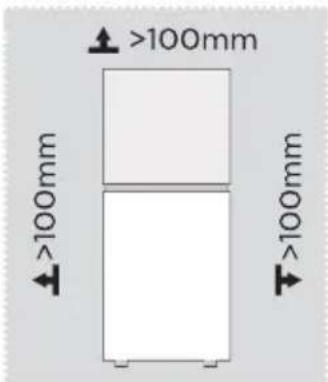
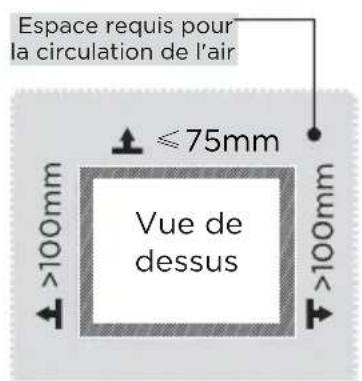
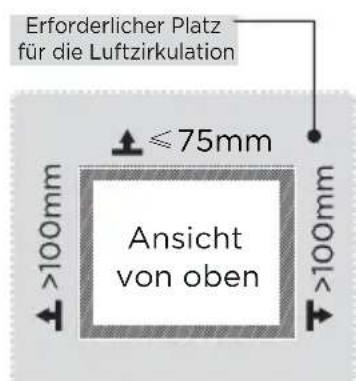
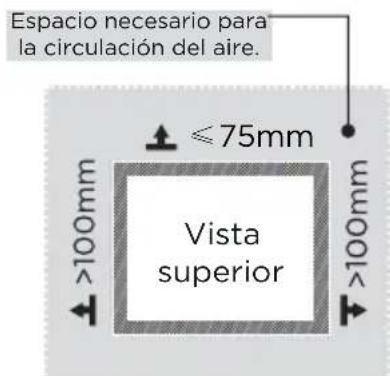
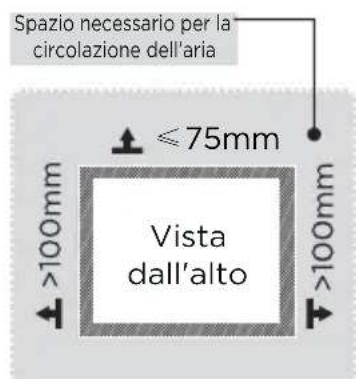
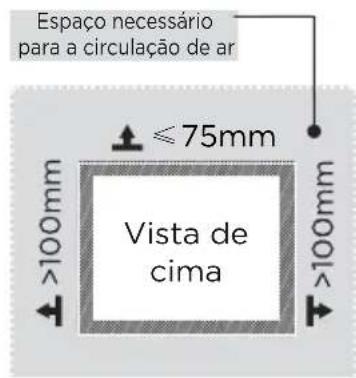
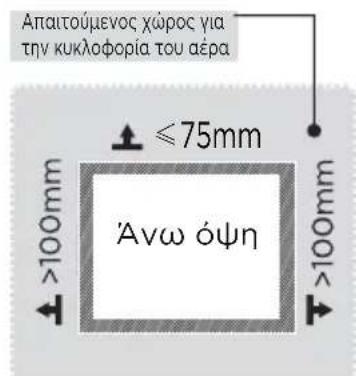
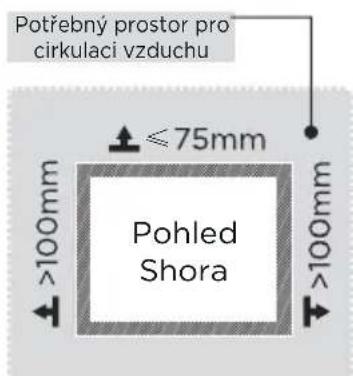
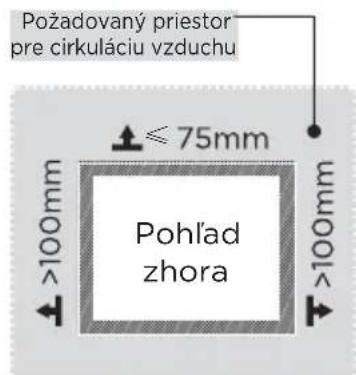
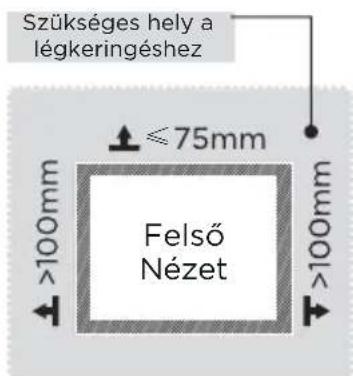
- Too small of a distance from adjacent items may result in the degradation of freezing capability and increased electricity costs. the refrigerator both sides should be placed against the wall with a free distance more than 100mm, and the refrigerator back against the wall distance not more than 75 mm.
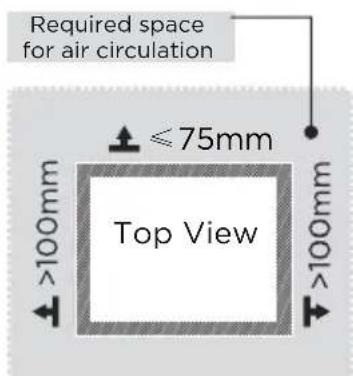

ATTENTION
The picture above is only for reference. The actual configuration will depend on the physical product or statement by the distributor.
Space requirement diagram (when the door is open and when the door is closed)
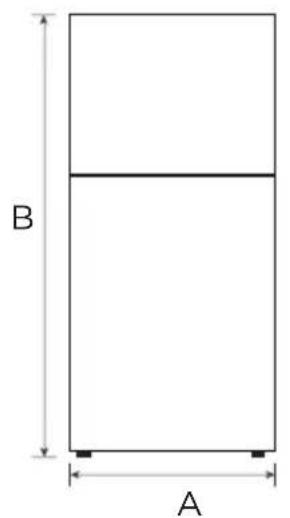
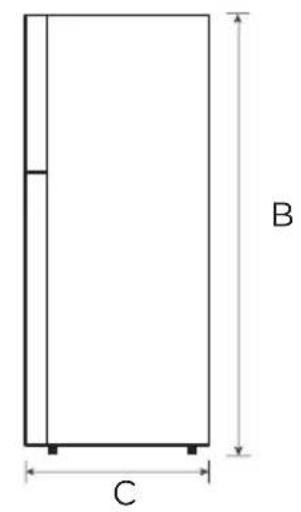
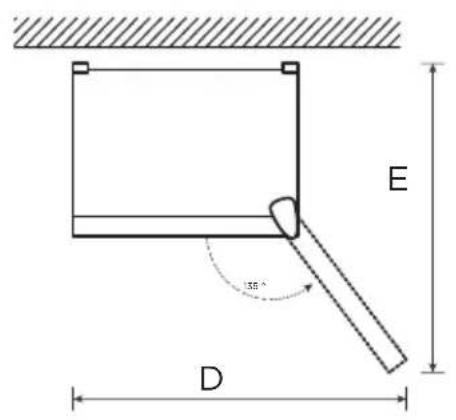
| Width Overall Height Depth | Width doors open 135° | Depth doors open 135° | ||
| A B C D E | ||||
| 550 1590 | 550 902 1052 | |||
Notice: All dimensions in mm
Doors reversal
Based on the location where you plan to use your refrigerator, you may find it more convenient to reverse the position of the door.

CAUTION
CAUTION: To avoid injury to yourself or your property, we recommend that someone assist you during the door reversal process.
Preparing to reverse the door position
You will need: A standard screwdriver, a Phillips screwdriver.
- Make sure that your refrigerator is unplugged and empty.
- Have someone available to assist you in the process.
- Keep all of the parts you remove to reuse them later.
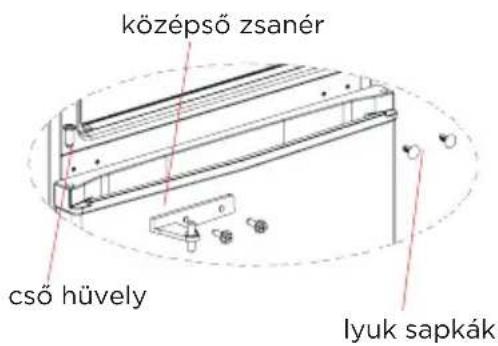
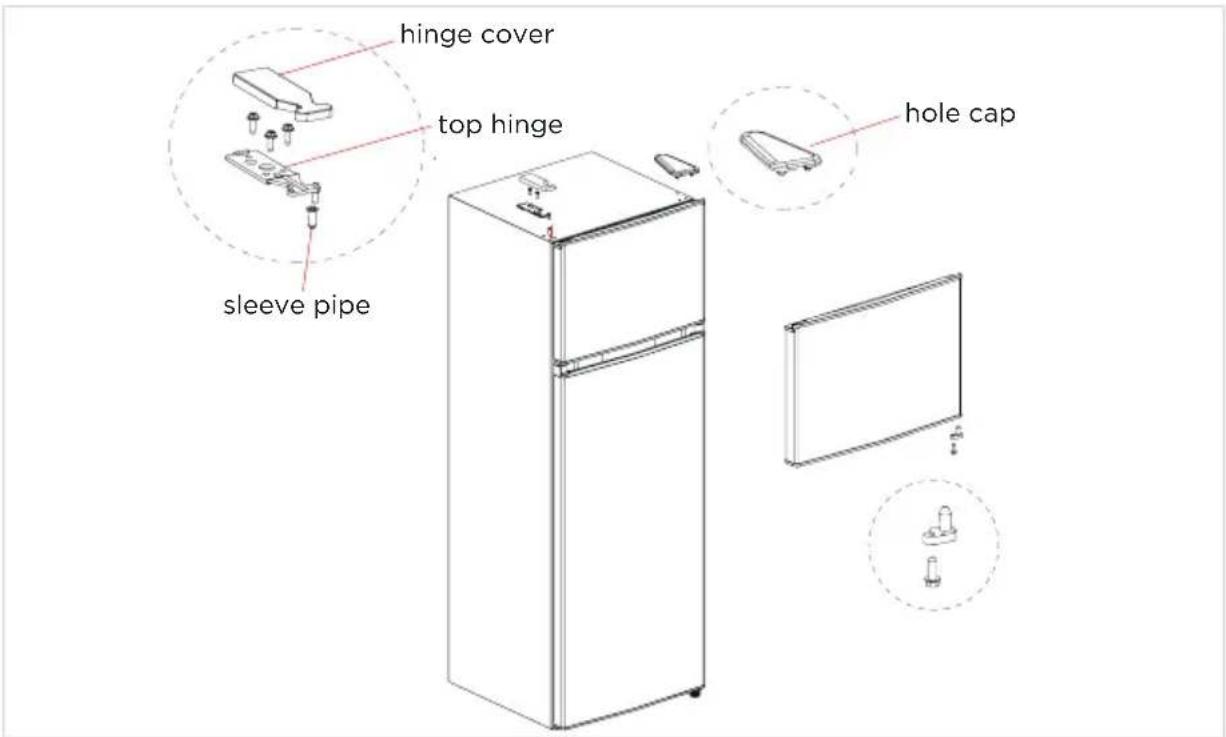
Parts already mounted on the door (as shipped):
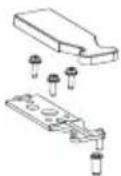
Top hinge assembly
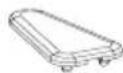
Hole cover
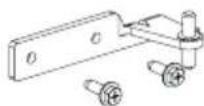
middle hinge
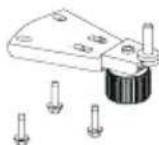
bottom hinge

adjustable foot
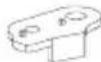

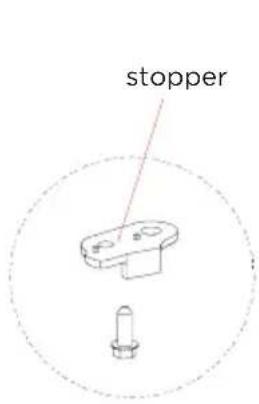
stopper
- Power off the refrigerator, and remove all objects from the door trays.
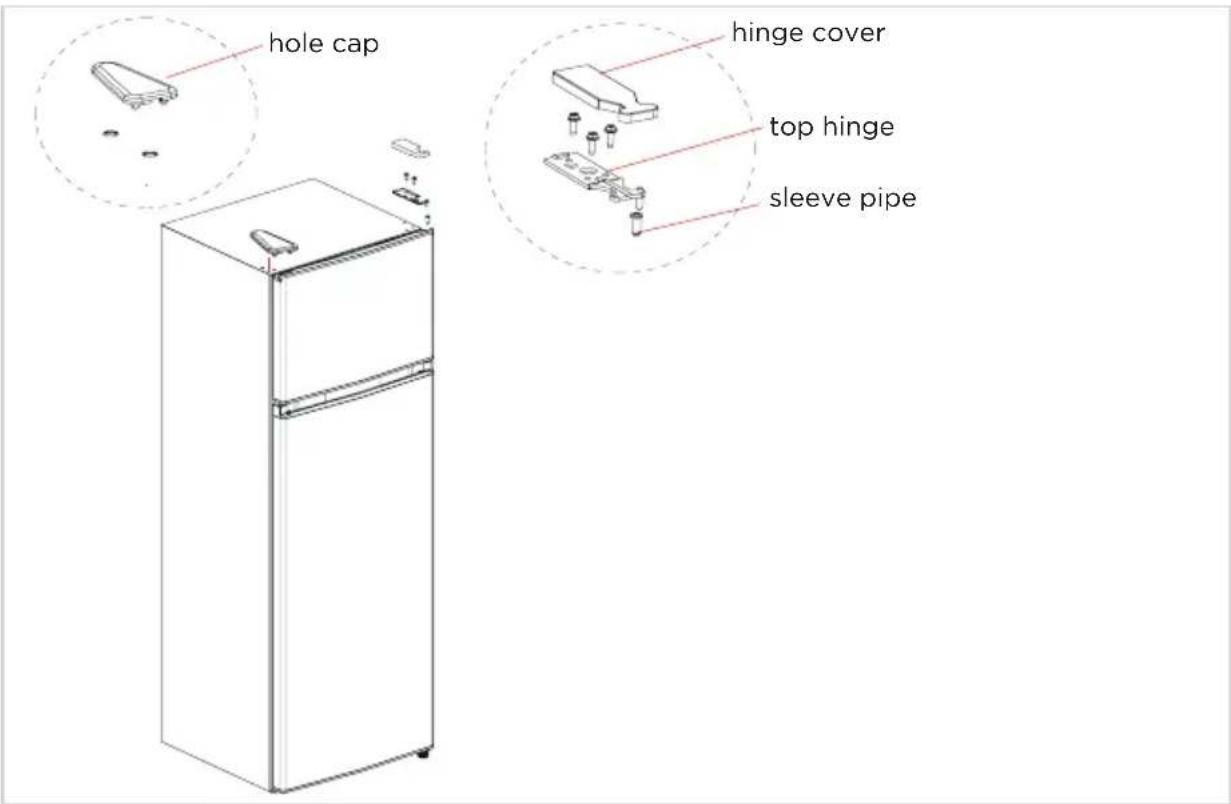
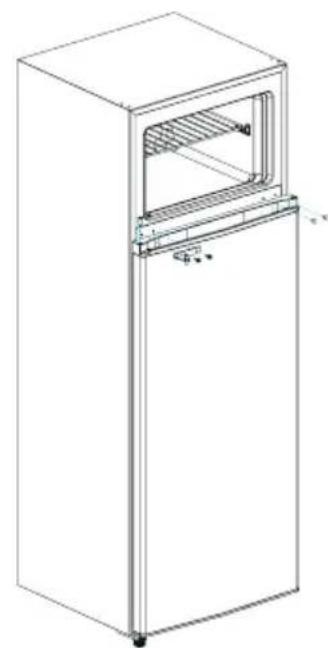
• Take off top hinge cover, top hinge ,the sleeve pipe of freezer door and hole cap on the other side.
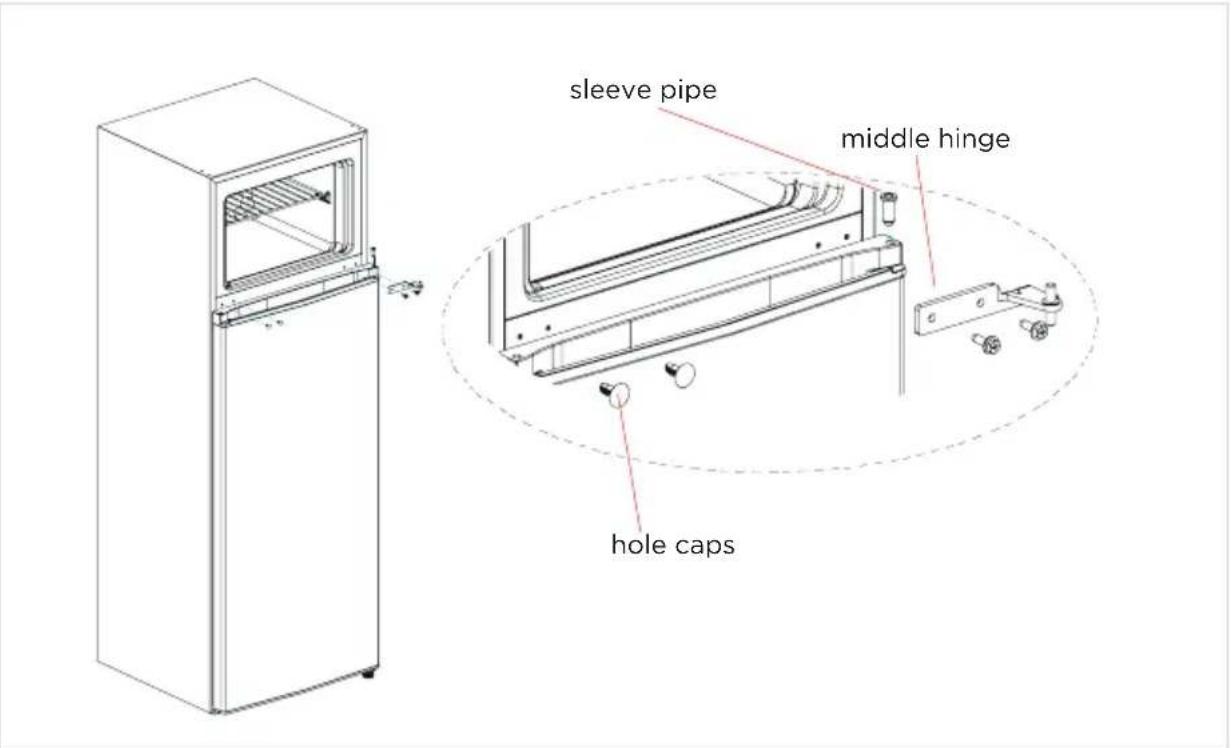
• Take off freezer chamber door, middle hinge and the sleeve pipe of refrigerating door and hole caps on the other side.
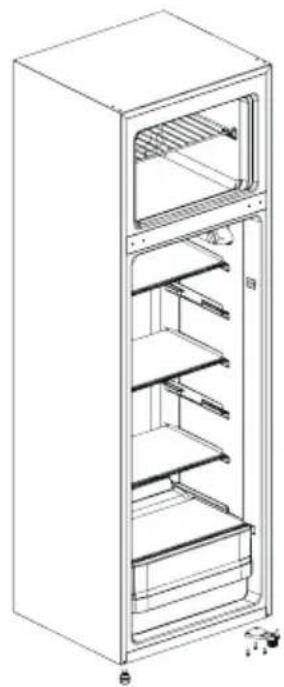
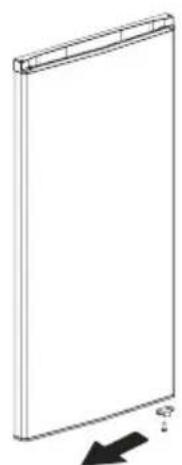
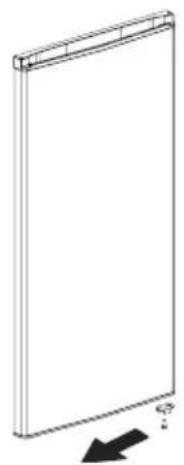
- Remove the refrigerating door remove the bottom hinge and adjustable foot on the other side.
- Assemble the bottom hinge assembly and adjustable foot on other side.
natural_image
Line drawing of a tall refrigerator with multiple shelves and top door (no text or symbols)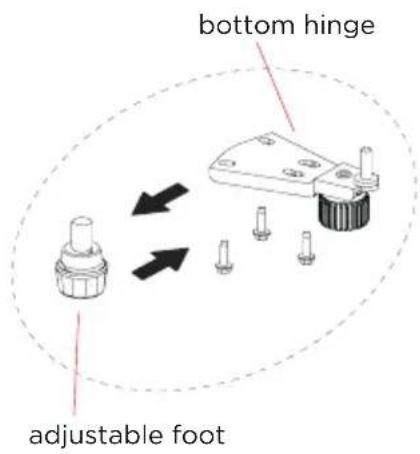
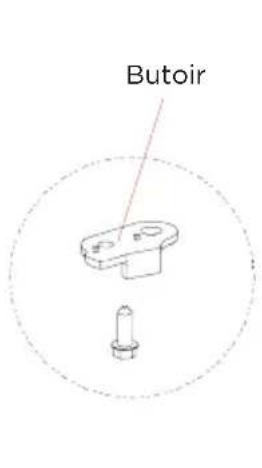
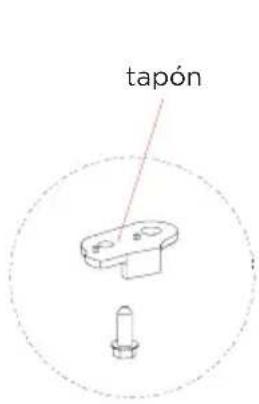
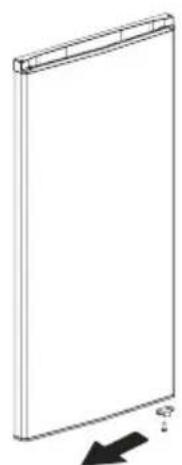
- Assemble the stopper of the refrigerating door on the other side.
- Put the refrigerating door on bottom hinge, assemble the middle hinge, hole caps and the sleeve pipe of refrigerating door.
natural_image
Line drawing of a single refrigerator with open door and side panel (no text or symbols)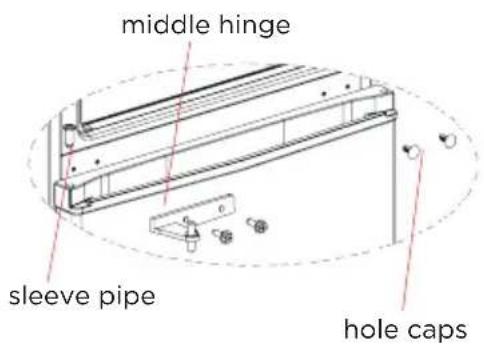
natural_image
Simple line drawing of a rectangular panel or holder with a black arrow pointing downward (no text or symbols)- Assemble the stopper of the freezer door on the other side.
- Put the freezer door on the middle hinge, assemble the top hinge, the top hinge cover assemble the sleeve pipe of the freezer door and hole cap on the other side.

ATTENTION
The picture above is only for reference. The actual configuration will depend on the physical product or statement by the distributor.
Leveling feet
To avoid vibration, the unit must be leveled.
If required, adjust the leveling screws to compensate for the uneven floor.
The front should be slightly higher than the rear to aid in door closing.
Leveling screws can be turned easily by tipping the cabinet slightly.
Turn the leveling screws counterclockwise to raise the unit, clockwise to lower it.
Connecting the appliance
After installing the appliance, connect the power plug into a socket outlet.

ATTENTION
After connecting the power supply cord (or plug) to the outlet, wait 2 or 3 hours before you put food into the appliance. If you add food before the appliance has cooled completely, your food may spoil.
Connecting the appliance
- Do not place the appliance near cookers, radiators or other heat sources. If the ambient temperature is high, the compressor will run more frequently and for longer, resulting in increased energy consumption.
- Ensure that there is sufficient ventilation at the base of the appliance, on the sides of the appliance and at the back of the appliance. Never cover ventilation openings.
- Please also observe the spacing dimensions in the chapter „Installation“.
- The arrangement of drawers, shelves and racks as shown in the illustration offers the most efficient use of energy and should therefore be retained as far as possible. All drawers and shelves should remain in the appliance to keep the temperature stable and save energy.
- To obtain a larger storage space (e.g. for large refrigerated/frozen goods), the middle drawers can be removed. The top and bottom drawers and shelves should be removed last if necessary.
- An evenly filled refrigerator/freezer compartment contributes to optimal energy use. Therefore, avoid empty or half-empty compartments.
- Allow warm food to cool before placing it in the refrigerator/freezer. Food that has already cooled down increases energy efficiency.
- Allow frozen food to defrost in the refrigerator. The coldness of the frozen food reduces the energy consumption in the refrigerator compartment and thus increases the energy efficiency.
- Open the door only as briefly as necessary to minimise cold loss. Opening the door briefly and closing it properly reduces energy consumption.
- The door seals of your appliance must be perfectly intact so that the doors close properly and energy consumption is not increased unnecessarily.
OPERATION INSTRUCTIONS
Control panel
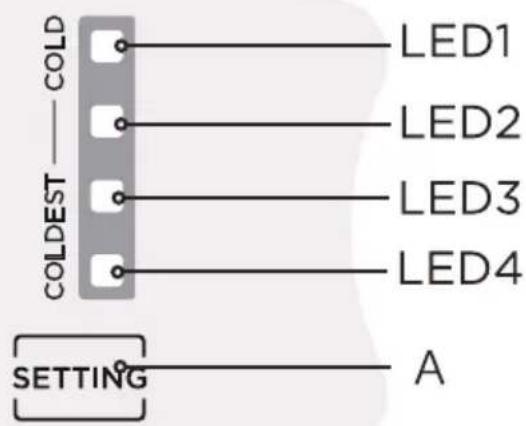
| Display Button | |||
| 1 | LED 1 | A | Temperature setting of refrigerator compartment |
| 2 | LED 2 | ||
| 3 | LED 3 | ||
| 4 | LED 4 | ||
Display
- Once initially powered on, all LED lights turn on for 2 seconds, and then the refrigerator runs at the default setting (LED3 light is on).
- In case of no failures, it shows the actual temperature setting of refrigerator.
• In case of a failure, the corresponding LED blinks. - The fault code display will disappear after 30min. if you need to re-display the fault code, please disconnect the power supply and then power it back on.
Fault Code Fault Description
LED1/LED3 flashing Ambient temperature sensor fault
LED1/LED2/ LED4flashing Refrigerating defrost sensor fault

ATTENTION
The actual control panel may differ from model to model.
Temperature setting
• Each time the temperature setting button A is pressed once, the temperature setting changes one time. After the temperature setting has been completed, the refrigerator will run according to the set value after 30s.
The shift regulation is:

flowchart
graph LR
    A["LED1"] --> B["LED2"]
    B --> C["LED3"]
    C --> D["LED4"]
    D --> E["→"]
    E --> F["→"]
    F --> G["..."]
    G --> H["..."]
Super freeze mode
- Long press temperature setting button for 6s, it will enter Super freeze mode after 30s, and LED3 and LED4 turn on at the same time.
• After running for 40 hours at Super freeze mode or the setting button is pressed, it will quit the Super freeze mode, then go back to the previous setting. - It is suggested to turn on super freeze mode for 12 hours before placing large amount of frozen food in freezer compartment at one time.
Super cool mode
- Long press temperature setting button for 3s, it will enter Super cool mode after 30s, and LED1 and LED2 turn on at the same time.
• After running for 6 hours at Super cool mode or the setting button is pressed, it will quit the Super cool mode, then go back to the previous setting.
Standby mode
- Press and hold the setting button for 10s, all LEDs on the control panel will turn off, and the Standby mode will be activated after 30 seconds. Once in standby mode, press the setting button again to turn on all LEDs and exit the mode.
- The Refrigerator stops working and lamp turns off automatically in the stanby mode.
ATTENTION
The Super freeze function is designed to maintain the nutritional value of the food in the freezer. It can freeze the food in the shortest time. If a large amount of food is frozen at one time, it is recommended that the user turn on the Super freeze function and put the food in. At this time, the freezing speed of the freezer compartment is increased, which can quickly freeze the food, effectively lock the nutrition of the food, and facilitate storage.
Tips on storing food
Freezer compartment
- The freezer is designated for the storage of food frozen at very low temperature, long-term storage of frozen food, and for the production of ice.
- Only use the shelves in the door of the freezer to store frozen food, not for storing hot food designated for freezing.
- Do not put fresh and frozen food next to each other. The frozen food may thaw.
- When freezing fresh food (such as meat, fish or chopped meat), cut them into parts that can be used at the same time.
- Storing frozen food: instructions are usually stated on the packages, which must be followed. If there is no information on the packaging, food should not be stored for longer than three months from the date of purchase.
- When purchasing frozen food, make sure that it was frozen at a suitable temperature and that the packaging is not damaged.
- Frozen food should be kept in suitable packages to retain the quality and should be returned to the freezer compartment as soon as possible.
- If a package of frozen food shows moisture or abnormal bulging, it is probable that it was stored at the wrong temperature and the content is spoiled.
- The storage period for frozen food depends on the room temperature, the thermostat setting, the frequency of opening the door of the freezer, the type of food and the time of transporting the product from the shop to the household. Always follow the instructions printed on the packaging and never exceed the maximum storage time stated on the package.
Cooling compartment
- To reduce moisture and subsequent ice build-up, never put liquid into the refrigerator in unsealed containers. Frost tends to concentrate in the coolest parts of the evaporator. Storing uncovered liquids results in a more frequent need for defrosting.
- Never put warm foods in the refrigerator. These should first cool down at room temperature and then be placed so as to ensure adequate air circulation in the refrigerator.
- Foods or food containers should not touch the back wall of the refrigerator because they could freeze to the wall. Do not keep regularly opening the door of the refrigerator.
- Meat and clean fi sh (packed in a package or plastic foil) can be placed in the refrigerator, which can be used in 1-2 days.
- Fruit and vegetables without packaging can be placed in the part designated for fresh fruit and vegetables.

ATTENTION
The optimal temperature setting of each compartment depends on the ambient temperature. Above optimal temperature is based on the ambient temperature of 25 °C .
| Order | Compartments TYPE | Target storage temp. [°C] | Appropriate food |
| 1 Fridge +2 | ≤x ≤+8 | Eggs, cooked food, packaged food, fruits and vegetables, dairy products, cakes, drinks and other foods are not suitable for freezing. | |
| 2 (***)*-Freezer | x ≤ -18 | Seafood (fish, shrimp, shellfish), freshwater aquatic products and meat products (recommended for 3 months, the longer the storage time, the worse the taste and nutrition), suitable for frozen fresh food. | |
| 3 ***-Freezer | x ≤ -18 | Seafood (fish, shrimp, shellfish), freshwater aquatic products and meat products (recommended for 3 months, the longer the storage time, the worse the taste and nutrition), suitable for frozen fresh food. | |
| 4 **-Freezer | x ≤ -12 | Seafood (fish, shrimp, shellfish), freshwater aquatic products and meat products (recommended for 3 months, the longer the storage time, the worse the taste and nutrition), suitable for frozen fresh food. | |
| 5 *-Freezer | x ≤ -6 | Seafood (fish, shrimp, shellfish), freshwater aquatic products and meat products (recommended for 3 months, the longer the storage time, the worse the taste and nutrition), suitable for frozen fresh food. | |
| 6 0-star -6 | ≤x ≤ 0 | Fresh pork, beef, fish, chicken, some packaged processed foods, etc. (Recommended to eat within the same day, preferably no more than 3 days).Partially encapsulated processed foods (non-freezable foods). | |
| 7 Chill -2 | ≤x ≤+3 | Fresh/ frozen pork, beef, chicken, freshwater aquatic products, etc. (7 days below 0°C and above 0°C is recommended for consumption within that day, preferably no more than 2 days). Seafood (less than 0 for 15 days, it is not recommended to store above 0°C. | |
| 8 Fresh food 0 | ≤x ≤+4 | Fresh pork, beef, fish, chicken, cooked food, etc.(Recommended to eat within the same day, preferably no more than 3 days) | |
| 9 Wine +5 | ≤x ≤+20 | Red wine, white wine, sparkling wine, etc. | |

ATTENTION
Please store different foods according to the compartments or target storage temperature of your purchased.
CLEANING AND MAINTENANCE
Defrost
• Power off the refrigerator.
- Remove the food from the refrigerator and place it properly to prevent food from melting.
- Clear the drain pipe (to use soft materials to prevent damage to the liner), Prepare the water containers for defrosting. (pay attention to clean the compressor compartment water draining tray, Ovoding overflow to the ground).
- You can also use the appropriate amount of hot water to speed up the defrost, with a dry towel to dry the water after defrosting.
- You can also use the appropriate amount of hot water to speed up the defrost, with a dry towel to dry the water after defrosting.
• After defrosting, put back the foods in cabinet, and power on the refrigerator.
Stop using
Power failure:
In case of power failure, even if it is in summer, foods inside the appliance can be kept for several hours; during the power failure, the times of door opening shall be reduced, and no more fresh food shall be put into the appliance.
Long-time nonuse:
The appliance shall be unplugged and then cleaned; then the doors are left open to prevent odor.
Moving:
Before the refrigerator is moved, take all objects inside out, fix the glass partitions, vegetable holder, freezing chamber drawers and etc. with tape, and tighten the leveling feet; close the doors and seal them with tape. During moving, the appliance shall not be laid upside down or horizontally, or be vibrated; the inclination during movement shall be no more than 45^ .

CAUTION
The appliance shall run continuously once it is started. Generally, the operation of the appliance shall not be interrupted; otherwise the service life may be impaired.
Foods can be preserved for a couple of hours even in summer in case of power failure; it is recommended to reduce the frequency of opening door.
Cleaning of door tray
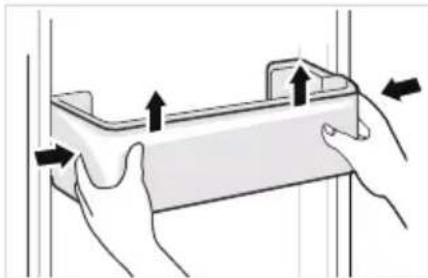
- According to the direction arrow in the figure below, use both hands to squeeze the tray, and push it upward, then you can take it out.
• After washing the tray having been taken out, you can adjust its installing height in accordance with your requirement.
natural_image
Illustration of hands holding a rectangular object with arrows indicating movement or force (no text or symbols)Cleaning of glass shelf
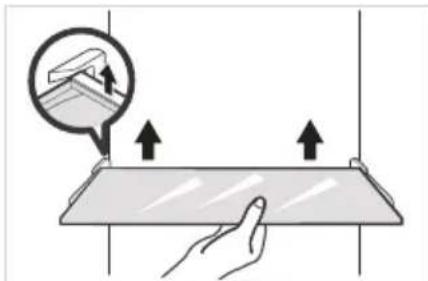
- As the innermost part of the refrigerator liner where contacting the shelves has a backstop, you shall raise the shelves upward, then you can be able to take it out.
- Adjust or clean the shelves according to your requirement.
natural_image
Illustration of a hand holding a flat surface with upward arrows indicating movement or force, and a magnified inset showing a folded material (no text or symbols)Cleaning the Fruits and vegetables box
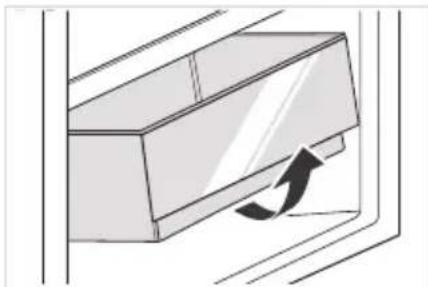
- Remove the contents of the Fruits and vegetables box. Hold the handle of the drawer and pull it out completely until it stops.
- Lift the drawer up and remove it by pulling it out.
natural_image
Diagram of a door handle with an arrow indicating clockwise motion (no text or symbols)
ATTENTION
Soft towels or sponge dipped in water and non-corrosive neutral detergents are suggested for cleaning. The freezer of shall be finally cleaned with clean water and dry cloth. Open the door for natural drying before the power is turned on. Do not use hard brushes, clean steel balls, wire brushes, abrasives, such as toothpastes, organic solvents (such as alcohol, acetone, banana oil, etc.), boiling water, acid or alkaline items clean refrigerator considering that this may damage the fridge surface and interior.
TROUBLESHOOTING
The following simple issues can be handled by the user. Please call the after-sale service department if the issues are not solved.
| Problem Possible reason | |
| Failed operation | ·Check whether the appliance is connected to power or whether the plug is in well contact |
| ·Check whether the voltage is too low | |
| ·Check whether there is a power failure or partial circuits have tripped | |
| Odor | ·Odorous foods shall be tightly wrapped |
| ·Check whether there is any rotten food | |
| ·Clean the inside of the refrigerator | |
| Long-time operation of the compressor | ·Long operation of the refrigerator is normal in summer |
| ·when the ambient temperature is high It is not suggestible having too much food in the appliance at the same time | |
| ·Food shall get cool before being put into the appliance | |
| ·The doors are opened too frequently | |
| Light fails to get lit | ·Check whether the refrigerator is connected to power supply and whether the illuminating light is damaged |
| ·Have the light replaced by a specialist | |
| Door can not be properly closed | ·The door is stuck by food packages Too much food is placed |
| ·The refrigerator is tiltedr. | |
| Loud noises | ·Check whether the floor is level and whether the refrigerator is placed stably |
| ·Check whether accessories are placed at proper locations | |
| Door seal fails to be tight | Remove foreign matters on the door seal |
| Heat the door seal and then cool it for restoration (or blow it with an electrical drier or use a hot towel for heating) | |
| Water pan overflows | There is too much food in the chamber or food stored contains too much water, resulting in heavy defrosting |
| The doors are not closed properly, resulting in frosting due to entry of air and increased water due to defrosting | |
| Hot housing | Heat dissipation of the built-in condenser via the housing, which is normal When housing becomes hot due to high ambient temperature, storage of too much food or shutdown of the compressor is shut down, provide sound ventilation to facilitate heat dissipation |
| Surface condensation | Condensation on the exterior surface and door seals of the refrigerator is normal when the ambient humidity is too high. Just wipe the condensate with a clean towel. |
| Abnormal noise | Buzz: The compressor may produce buzzes during operation, and the buzzes are loud particularly upon start or stop. This is normal. |
| Creak: Refrigerant flowing inside of the appliance may produce creak, which is normal. | |
APPENDIX
Special for new European standard
The ordered parts in the following table can be acquired from Service provider channel
| Ordered part Provided by Minimum time required for Provision | ||
| Thermostats | Professional maintenance personnel | At least 7 years after the last model is launched on the market |
| Temperature sensors | Professional maintenance personnel | At least 7 years after the last model is launched on the market |
| Printed circuit boards | Professional maintenance personnel | At least 7 years after the last model is launched on the market |
| Light sources | Professional maintenance personnel | At least 7 years after the last model is launched on the market |
| Door handles | Professional repairers and final users | At least 7 years after the last model is launched on the market |
| Door hinges | Professional repairers and final users | At least 7 years after the last model is launched on the market |
| Trays | Professional repairers and final users | At least 7 years after the last model is launched on the market |
| Baskets | Professional repairers and final users | At least 7 years after the last model is launched on the market |
| Door gaskets | Professional repairers and final users | At least 10 years after the last model is launched on the market |
Dear customer
- If you want to return or replace the product, please contact the store where you buy.
(Remember to bring the purchase invoice)
- If your product breaks down which needs to repair, please contact after-sales service provider.

ATTENTION
The model information in the product database, as well as the model identifier, can be obtained througha weblink scanned by a QR code, if any, on the energy efficiency label of the product.
For more information about the energy efficiency of the appliance, visit https://ec.europa.eu and search using the model name.
The model name can be found on the rating label of the appliance.
Coldest zone in the refrigerator
OPTIONAL: OK-temperature indicator
- The OK-temperature indicator can be used to determine temperatures below +4^ . Gradually reduce the temperature if the sign does not indicate "OK".
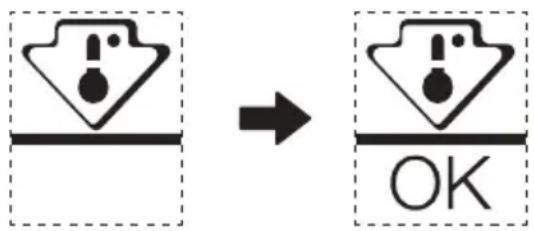
- To ensure the temperature in this area, do not change the positioning of the shelf. Inforced air refrigerators (equipped with a fan or No Frost models), the symbol of the coldest zone is not represented because the temperature inside is homogeneous.
Temperature indicator setting
- To help you set your refrigerator well, it is equipped with a temperature indicator that will monitor the average temperature in the coldest zone.
- WARNING: This indicator is intended to work only with your refrigerator, do not use it in another refrigerator (in fact, the coldest zone is not the same), or for any other use.
Checking the temperature in the coldest zone
- With the temperature indicator, you can check regularly that the temperature of the coldest zone is correct. Indeed, the internal temperature of the refrigerator depends on several factors such as the ambient temperature of the room, the amount of food stored and the frequency of door opening. Take these factors into consideration when setting the device.
- When the indicator shows « OK », this means that your thermostat is well adjusted and the internal temperature correct.
- If the indicator of temperature turns WHITE, this means that the temperature is too high; in this case, increase the refrigerator temperature control setting and wait for 12 hours before performing a new visual inspection of the indicator. When fresh food has been introduced or the door has been left open, it is possible for the indicator of temperature to turn WHITE after a while.
TABLE DES MATIÈRES
CONSIGNES DE SÉCURITÉ....FR-01
ÉLIMINATION ET RECYCLAGE....FR-08
GÉNÉRALITÉS DU PRODUIT....FR-09
INSTALLATION DU PRODUIT ...... FR-10
INSTRUCTIONS D'OPÉRATION....FR-17
NETTOYAGE ET ENTRETIEN....FR-21
DÉPANNAGE.... FR-23
ANNEXE ...... FR-25
CONSIGNES DE SÉCURITÉ
Utilisation prévue
natural_image
Symbol of a recycling bin with no text or numbers present1 Étagère
INSTALLATION DU PRODUIT
natural_image
Line drawing of a tall refrigerator with multiple shelves and top door (no text or symbols)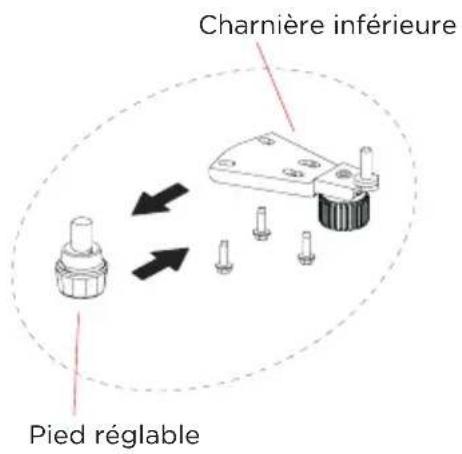
natural_image
Line drawing of a single refrigerator with open door and side panel (no text or symbols)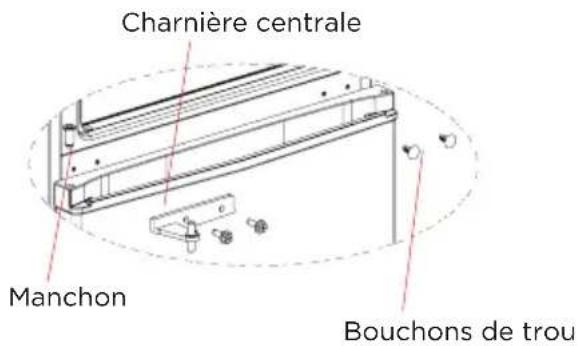
natural_image
Simple line drawing of a rectangular panel or shelf with a black arrow pointing downward (no text or symbols)Mode super congélation
natural_image
Illustration of hands holding a rectangular object with arrows indicating movement or force (no text or symbols)natural_image
Illustration of a hand holding a flat surface with arrows indicating upward motion, no text or symbols presentnatural_image
Diagram of a door handle with an arrow indicating clockwise motion (no text or symbols)
ATTENTION
PRODUKTÜBERSICHT .....DE-09
PRODUKTINSTALLATION ...... DE-10
natural_image
Symbol of a waste bin with crossed lines indicating no waste, and a solid black rectangle below (no text or labels)1 Regal
4 Kleines Türfach
2 Temperaturregelung
5 Großes Türfach
natural_image
Line drawing of a tall refrigerator with multiple shelves and top door (no text or symbols)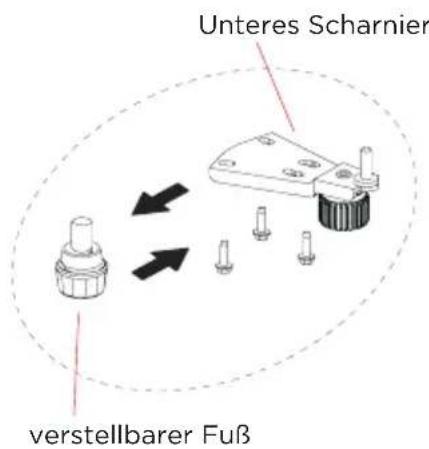
natural_image
Line drawing of a single refrigerator with open door and side panel (no text or symbols)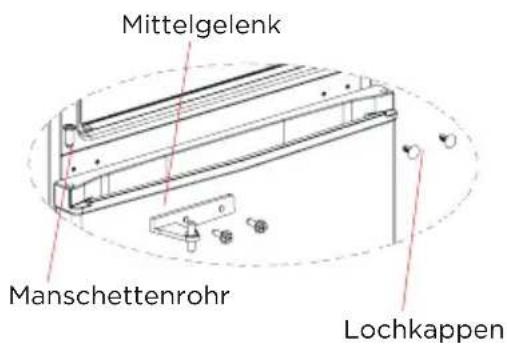
natural_image
Simple line drawing of a rectangular panel with a downward arrow indicating compression or dislocation (no text or symbols)natural_image
Illustration of hands holding a rectangular object with arrows indicating movement or force (no text or symbols)natural_image
Illustration of a hand holding a flat surface with arrows indicating upward motion, no text or symbols presentnatural_image
Diagram of a door handle with an arrow indicating clockwise motion (no text or symbols)ACHTUNG
natural_image
Symbol of a waste bin with crossed lines indicating no waste, and a solid black rectangle below (no text or labels)1 Estante
natural_image
Line drawing of a tall refrigerator with multiple shelves and top door (no text or symbols)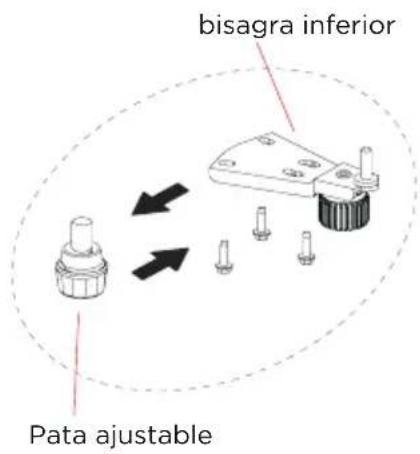
natural_image
Line drawing of a single refrigerator with open door and side panel (no text or symbols)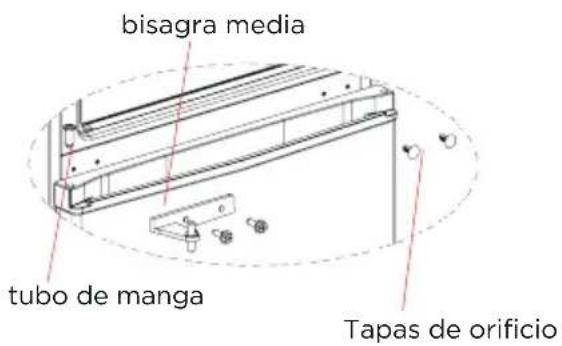
natural_image
Simple line drawing of a rectangular panel or holder with a black arrow pointing downward (no text or symbols)natural_image
Illustration of hands holding a rectangular object with arrows indicating movement or force (no text or symbols)natural_image
Illustration of a hand holding a flat surface with arrows indicating upward motion, no text or symbols presentnatural_image
Diagram of a door handle with an arrow indicating clockwise motion (no text or symbols)
ATENCIÓN
natural_image
Symbol of a trash bin with no text or numbers present1 Scaffale
natural_image
Line drawing of a tall refrigerator with multiple shelves and top door (no text or symbols)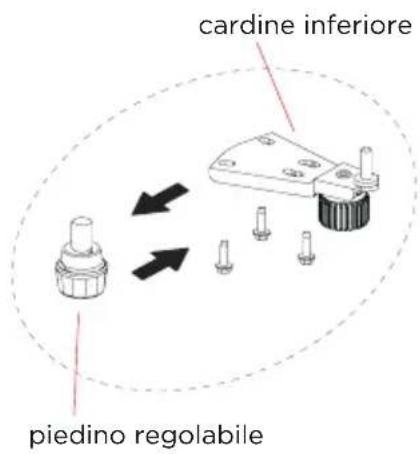
natural_image
Line drawing of a single refrigerator with open door and side panel (no text or symbols)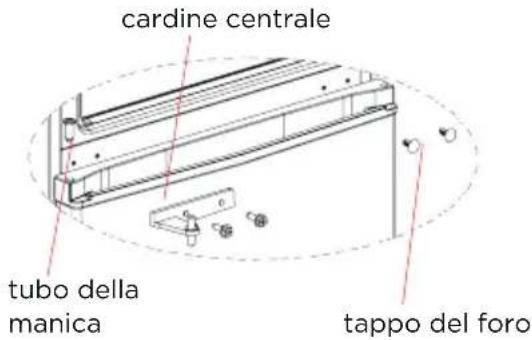
natural_image
Simple line drawing of a rectangular panel or panel with a black arrow pointing downward (no text or symbols)natural_image
Illustration of hands holding a rectangular object with arrows indicating movement or force (no text or symbols)natural_image
Illustration of a hand holding a flat surface with upward arrows indicating movement or force, and a magnified inset showing a folded paper or sheet (no text or symbols)natural_image
Diagram of a door handle with an arrow indicating clockwise motion (no text or symbols)ATTENZIONE
natural_image
Symbol of a trash bin with no text or labels, crossed by diagonal lines and a solid rectangle below (no text or symbols present)1 Prateleira
natural_image
Line drawing of a tall refrigerator with multiple shelves and top door (no text or symbols)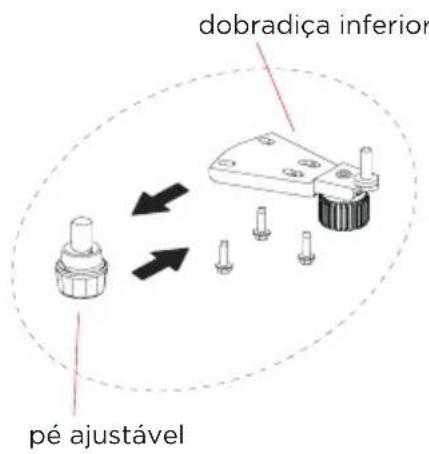
natural_image
Line drawing of a single refrigerator with open door and side panel (no text or symbols)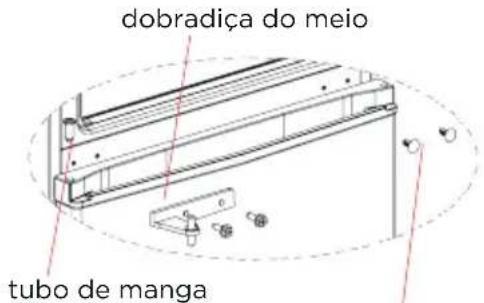
natural_image
Illustration of hands holding a rectangular object with arrows indicating movement or force (no text or symbols)Limpeza de prateleiras de vidro
natural_image
Illustration of a hand holding a flat surface with arrows indicating upward motion, no text or symbols presentnatural_image
Diagram of a door handle with an arrow indicating clockwise motion (no text or symbols)ATENÇÃO
natural_image
Symbol of a trash bin with crossed lines indicating no waste or restriction, and a solid black rectangle below (no text or labels)1 Páphi
natural_image
Line drawing of a refrigerator with multiple shelves and top door (no text or symbols)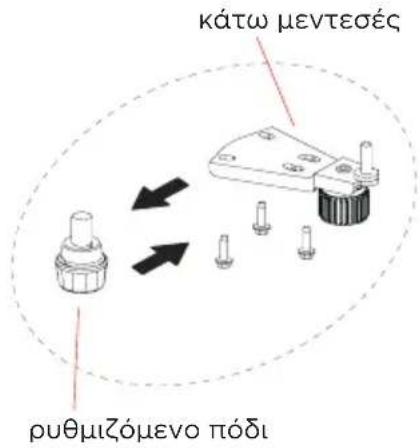
natural_image
Line drawing of a single refrigerator with open door and side panel (no text or symbols)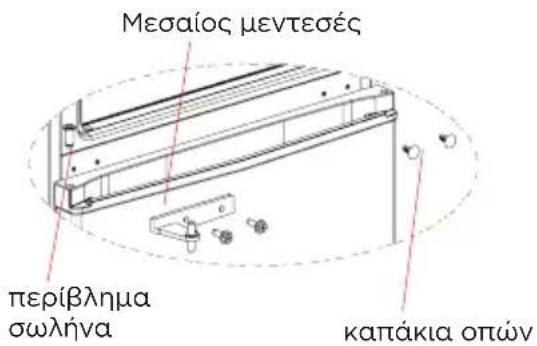
natural_image
Simple line drawing of a rectangular panel with a black arrow pointing downward (no text or symbols)natural_image
Illustration of hands holding a rectangular object with arrows indicating force or movement (no text or symbols)natural_image
Illustration of a hand interacting with a flatbed surface, showing upward arrows and a magnified inset of a device (no text or symbols)natural_image
Diagram of a door handle with an arrow indicating clockwise motion (no text or symbols)
ΣΗΜΕΙΩΣΗ
LIKVIDACE A RECYKLACE CZ-08
PŘEHLED PRODUKTŮ CZ-09
INSTALACE VÝROBKU CZ-10
PROVOZNÍ POKYNY....CZ-17
ČIŠTĚNÍ A ÚDRŽBA.... CZ-21
ODSTRAŇOVÁNÍ PROBLÉMŮ CZ-23
PŘÍLOHA CZ-25
BEZPEČNOSTNÍ INSTRUKCE
Zamýšlené použití
LIKVIDACE A RECYKLACE
natural_image
Symbol of a waste bin with no text or labels, including a crossed-out box and a solid black rectangle below (no text or symbols present)1 Police
natural_image
Line drawing of a tall refrigerator with multiple shelves and top door (no text or symbols)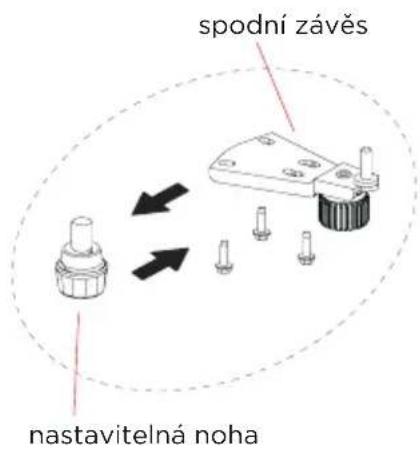
natural_image
Line drawing of a single refrigerator with open door and side panel (no text or symbols)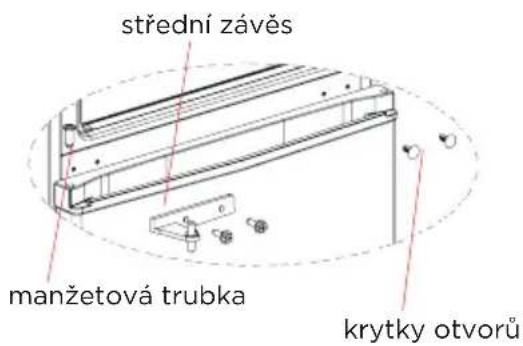
natural_image
Simple line drawing of a rectangular panel or holder with a black arrow pointing downward (no text or symbols)natural_image
Illustration of hands holding a rectangular object with arrows indicating movement or force (no text or symbols)natural_image
Illustration of a hand holding a flat surface with arrows indicating upward motion, no text or symbols presentnatural_image
Diagram of a door handle with an arrow indicating clockwise motion (no text or symbols)POZORNOST
natural_image
Symbol of a trash bin with crossed lines indicating no waste or restriction, and a solid black rectangle below (no text or labels)Súlad so smernicou RoHS
1 Polička
4 Malá priehradka na dvere
2 Ovládanie teploty
POZORNOST
natural_image
Line drawing of a tall refrigerator with multiple shelves and top door (no text or symbols)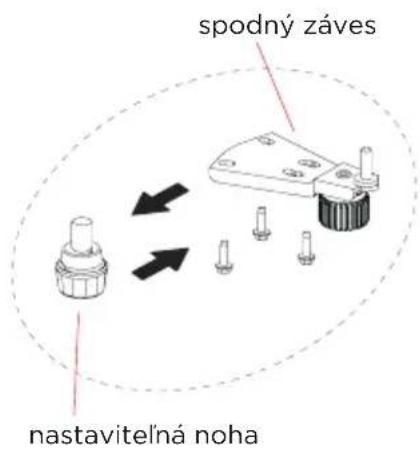
natural_image
Line drawing of a single refrigerator with open door and side panel (no text or symbols)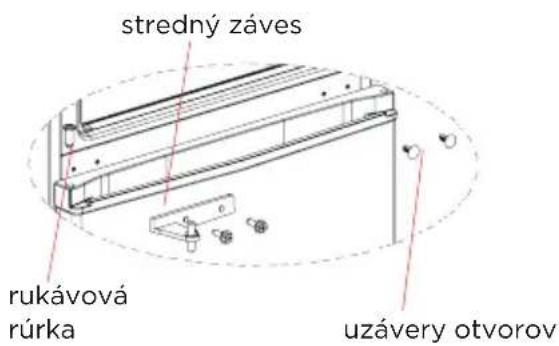
natural_image
Simple line drawing of a rectangular panel or shelf with a black arrow pointing downward (no text or symbols)natural_image
Illustration of hands holding a rectangular object with arrows indicating movement or force (no text or symbols)natural_image
Illustration of a hand holding a flat surface with arrows indicating upward motion, no text or symbols presentČistenie boxu na ovocie a zeleninu
natural_image
Diagram of a door handle with an arrow indicating clockwise motion (no text or symbols)POZORNOST
natural_image
Symbol of a trash bin with crossed lines indicating no waste or restriction, and a solid black rectangle below (no text or labels)1 Polc
4 Kis ajtótálca
natural_image
Line drawing of a tall refrigerator with multiple shelves and top door (no text or symbols)
natural_image
Line drawing of a single refrigerator with open lid and side door (no text or symbols)