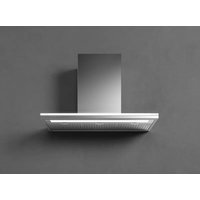
Lumen NRS - Basket FALMEC - Free user manual and instructions
Find the device manual for free Lumen NRS FALMEC in PDF.


| Product Type | Cooker Hood |
| Brand | Falmec |
| Model | Lumen NRS |
| Installation Type | Wall or ceiling |
| Power Supply | 220-240 V |
| Number of Motor Speeds | 4 speeds (speed 4 timed) |
| Lighting | High efficiency LED, adjustable intensity and color temperature (2700 K - 5600 K) |
| Filters | Washable metal grease filters (optional: charcoal/zeolite filters for recirculation) |
| Control | Touch electronic (+, -, light, timer buttons) |
| Remote Control | Optional, frequency 433.92 MHz, range 5 m |
| Timer Function | Automatic motor shutdown after 15 minutes |
| Filter Maintenance Alarm | Fixed LED after 30 hours of use |
| Minimum Distance Above Gas Hob | 65 cm (reducible according to mounting instructions) |
| Exhaust Type | External (extracting) or internal recirculation (filtering) |
| Non-Return Flap | Installed as standard for motors ≥ 800 m³/h |
| Material | Brushed stainless steel |
| Metal Filter Maintenance | Wash every month (or after 30 h) with hot water or in dishwasher (max 60 °C) |
| Surface Maintenance | Clean every 15 days with soft cloth and mild detergent |
| Safety | Installation by qualified professional, mandatory grounding, disconnect before cleaning |
| End of Life Disposal | WEEE, do not dispose with household waste, follow local regulations |
Frequently Asked Questions - Lumen NRS FALMEC
User questions about Lumen NRS FALMEC
0 question about this device. Answer the ones you know or ask your own.
Ask a new question about this device
Download the instructions for your Basket in PDF format for free! Find your manual Lumen NRS - FALMEC and take your electronic device back in hand. On this page are published all the documents necessary for the use of your device. Lumen NRS by FALMEC.
USER MANUAL Lumen NRS FALMEC
INSTRUCTIONS BOOKLET
LIBRETTO ISTRUZIONI
DA - Mal for installation.
EN - Measurements for installation.
DA-INSTALLATION I LOFT
SV-MONTERINGITAK
FI - ASENNUS KATTOON
NO-INSTALLLASJON P A TAK
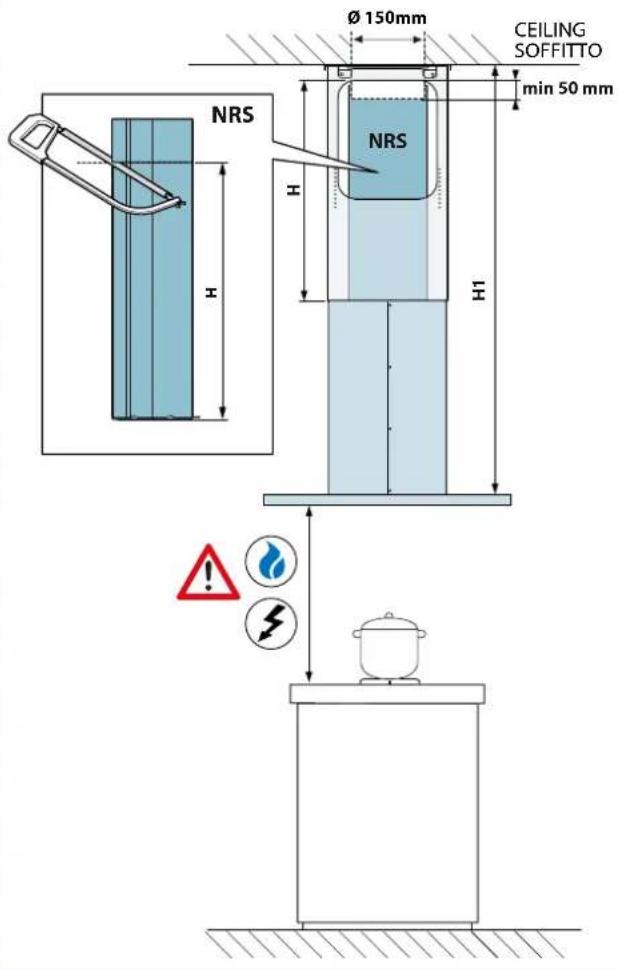
Installation operations are to be carried out by skilled and qualified installers in accordance with the instructions in this booklet and in compliance with the regulations in force.
DO NOT use the hood if the power supply cable or other components are damaged: disconnect the hood from the electrical power supply and contact the Dealer or an authorised Servicing Dealer for repairs.
Do not modify the electrical, mechanical or functional structure of the equipment.
Do not personally try to carry out repairs or replacements. Interventions carried out by incompetent and unauthorised persons can cause serious damage to the unit or physical and personal harm, not covered by the Manufacturer's warranty.
WARNING FOR THE INSTALLER
TECHNICAL SAFETY
Before installing the hood, check the integrity and function of each part. Should anomalies be noted, do not proceed with installation and contact the Dealer.
Do NOT install the hood if an aesthetic (or cosmetic) defect has been detected. Put it back into its original package and contact the dealer.
No claim can be made for aesthetic (or cosmetic) defects once it has been installed.
During installation, always use personal protective equipment (e.g.: Safety shoes) and adopt prudent and proper conduct.
The installation kit (screws and plugs) supplied with the hood is only to be used on masonry walls: in case of installation on walls of a different material, assess other installation options keeping in mind the type of wall surface and the weight of the hood (indicated on page 2).
Keep in mind that installations with different types of fastening systems from those supplied, or which are not compliant, can cause electrical and mechanical seal danger.
Do not install the hood outdoors and do not expose it to atmospheric elements (rain, wind, etc.).
ELECTRICAL SAFETY
The electrical system to which the hood is to be connected must be in accordance with local standards and supplied with earthed connection in compliance with safety regulations in the country of use. It must also comply with European standards regarding radio antistatic properties.
Before installing the hood, check that the electrical mains power supply corresponds with what is reported on the identification plate located inside the hood. The socket used to connect the installed equipment to the electrical power supply must be within reach: otherwise, install a mains switch to disconnect the hood when required.
Any changes to the electrical system must be carried out by a qualified electrician.
The maximum length of the flue fastening screws (supplied by the manufacturer) must be 13mm . Use of non-compliant screws with these instructions can lead to danger of an electrical nature.
Do not try to solve the problem yourself in the event of equipment malfunction, but contact the Dealer or an authorised Servicing Department for repairs.
When installing the hood, disconnect the equipment by removing the plug or switching off the main switch.
FUMES DISCHARGE SAFETY
Do no connect the equipment to discharge pipes of fumes produced from combustion (for example boilers, fireplaces, etc.).
Before installing the hood, ensure that all standards in force regarding discharge of air out of the room have been complied with.
Deviation for Australia and New Zeland: Range hoods and other cooking fume extractors may adversely affect the safe operation of appliances burning gas or other fuels (including those in other rooms) due to back flow of combustion gases. These gases can potentially result in carbon monoxide poisoning. After installation of a range hood or other cooking fume extractor, the operation of flued gas appliances should be tested by a competent person to ensure that back flow of combustion gases does not occur. (AS/NZS 60335.2.31:2013/A4:2020).
USERWARNINGS
These warnings have been drawn up for your personal safety and those of others. You are therefore kindly asked to read the booklet carefully in its entirety before using the or cleaning the equipment.
The Manufacturer declines all responsibility for any damage caused directly, or indirectly, to persons, things and pets as a consequence of failing to comply with the safety warnings indicated in this booklet.
It is imperative that this instructions booklet is kept together with the equipment for any future consultation.
If the equipment is sold or transferred to another person, make sure that the booklet is also supplied so that the new user can be made aware of the hood's operation and relative warnings.
After the stainless steel hood has been installed, it will need to be cleaned to remove any residues remaining from the protection adhesive as well as any grease and oil stains which, if not removed, can cause irreversible damage to the hood surface. To properly clean the unit, the manufacturer recommends using the supplied moist wipes, which are also available sold separately.
Insist on original spare parts.
INTENDED USE
The equipment is solely intended to be used to extract fumes generated from cooking food in non-professional domestic kitchens: any other use is improper. Improper use can cause damage to persons, things, pets and exempts the Manufacturer from any liability.
The equipment can be used by children over the age of 8 and by persons with reduced physical, sensory and mental abilities, or with no experience or knowledge, as long as they do so under supervision or after having received relative instructions regarding safe use of the equipment and understanding of the dangers connected to it.
Children are not to play with the equipment. Cleaning and maintenance by the user must not be carried out by children without supervision.
USE AND CLEANING WARNINGS
Before cleaning or carrying out maintenance operations, disconnect the equipment by removing the plug or switching off the main switch.
Do not use the hood with wet hands or bare feet.
Always check that all electrical parts (lights, extractor fan) are off when the equipment is not being used.
The maximum overall weight of any objects placed or hung (if applicable) on the hood must not exceed 1.5Kg .
Always supervise the cooking process during the use of deep-fryers: Overheated oil can catch fire.
Do not leave open, unattended flames under the hood.
Do not prepare food over an open flame under the hood.
Never use the hood without the metal anti-grease filters: in this case, grease and dirt will deposit in the equipment and compromise its operation.
Accessible parts of the hood can be hot when used at the same time as the cooking appliances.
Do not carry out any cleaning operations when parts of the hood are still hot.
There can be a risk of fire if cleaning is not carried out according to the instructions and products indicated in this booklet.
Disconnect the main switch when the equipment is not used for long periods of time.
If other appliances that use gas or other fuels are being used at the same time (boiler, stove, fireplaces, etc.), make sure the room where the fumes are discharged is well-ventilated, in compliance with the local regulations.
INSTALLATION
only intended for qualified personnel

Before installing the hood, carefully read the chapter 'SAFETY INSTRUCTIONS AND WARNING'S.
TECHNICAL FEATURES
The technical specifications are exhibited on the labels located inside the hood.
POSITIONING
The minimum distance between the highest part of the cooking equipment and the lowest part of the hood is indicated in the installation instructions.
Generally, when the hood is placed over gas cookers, the distance must be at least 65~cm (25.6"). However, according to standard EN60335-2-31, the minimum distance between the cooker and lower part of the hood can be reduced to the quota reported in the installation instructions.
Should the instructions for the gas cooker specify a greater distance, this must be taken into consideration.
Do not install the hood outdoors and do not expose it to outdoor environment (rain, wind, etc.).
ELECTRICAL CONNECTION
(only intended for qualified personnel)

Disconnect the equipment from electrical mains power supply before carrying out any operations on the hood.
Ensure that the wires inside the hood are not disconnected or cut:
in the event of damage, contact your nearest Servicing Department.
Refer to qualified personnel for electrical connections.
Connection must be carried out in compliance with the provisions of law in force.
Before connecting the hood to the electrical mains power supply, check that:
- voltage supply corresponds with what is reported on the data plate located inside the hood;
- the electrical system is compliant and can withstand the load (see the technical specifications located inside the hood);
- the power supply plug and cable do not come into contact with temperatures exceeding 70^ C ;
- the power supply system is effectively and properly connected to earth in compliance with regulations in force;
- the socket used to connect the hood is within reach. In case of:
- devices fitted with cables without a plug: the type of plug to use is a "standardised" one. The wires must be connected as follows: yellow-green for earthing, blue for neutral and brown for the phase. The plug must be connected to an adequate safety socket.
- fixed equipment not provided with a power supply cable and plug, or any other device that ensures disconnection from the electrical mains, with an opening gap of the contacts that enables total disconnection in overvoltage category III conditions.
Said disconnection devices must be provided in the mains power supply in compliance with installation regulations.
The yellow/green earth cable must not be cut off by the switch.
The Manufacturer declines all responsibility for failure to comply with the safety regulations.
FUMES DISCHARGE
EXTERNAL EXHAUST HOOD (SUCTION)
In this version the fumes and vapours are discharged outside through the exhaust pipe.
To this end, the hood outlet fitting must be connected via a pipe, to an external output.
The outlet pipe must have:
- a diameter not less than that of the hood fitting.
- a slight slope downwards (drop) in the horizontal sections to prevent condensation from flowing back into the motor.
the minimum required number of bends.
the minimum required length to avoid vibrations and reduce the suction performance of the hood.
You are required to insulate the pipes if it passes through cold environments. In the presence of motors with 800m^-3/h or higher, a check valve is present to prevent external air flowing back.
Deviation for Germany:
when the kitchen hood is used at the same time as appliances that are powered by energy other than electricity, the negative pressure in the room must not exceed 4 Pa (4 x 10⁻⁵ bar).
HOOD WITH INTERNAL RECIRCULATION (FILTERING)

In this model, air passes through the carbon and zeolite filters (optional) to be purified and is then recycled into the environment.
Ensure that the zeolite filters are assembled into the hood, if not, install them as indicated in the assembly instructions.

In this version the check valve must not be assembled: remove it if it is on the air outlet fitting of the motor.
ASSEMBLY INSTRUCTIONS
only intended for personnel qualified

The hood can be installed in various configurations. The generic assembly steps apply to all installations; for each case, follow the specific steps provided for the required installation.
OPERATION
WHEN TO TURN ON THE HOOD?
Switch on the hood at least one minute before starting to cook to direct fumes and vapours towards the suction surface.
After cooking, leave the hood operating until complete extraction of all vapours and odours. By means of the Timer function, it is possible to set auto switch-off function which will allow the hood to turn off automatically after 15 minutes of operation.
WHICH SPEED IS TO BE SELECTED?
1st speed: maintains the circulation of clean air with low electricity consumption.
2nd speed: normal conditions of use.
3rd speed: presence of strong odours and vapours.
4th speed: rapid disposal of odours and vapours.
With a view to reducing environmental impact, it is suggested to always set the minimum speed suitable for the required suction level.
WHEN SHOULD THE FILTERS BE WASHED OR REPLACED?
The metal filters must be cleaned every 30 hours of operation.
For further details see the "MAINTENANCE" chap.
ELECTRONIC PUSHBUTTON PANEL (LUMEN NRS)
| Motor ON/OFF | |
| + Increase speed from 1 to 4 Speed 4 is only active for a few minutes, then speed 3 activates. | The speeds are indicated by the LEDs on the keys: + + - Speed 1 + + - Speed 2 + + - Speed 3 + + - Speed 4 (+ " LED flashing") |
| - Reduce speed from 4 to 1 | |
| Light on/off | |
| + TIMER (LED flashing) Auto switch-off after 15 min. The function deactivates (LED off) if: - The TIMER key (↑) pressed again. - The ON/OFF key (↓) pressed. | |
| FILTER ALARM (LED steady on with (↑)off) Anti-grease filter maintenance after approximately 30 hours of op- eration. Press (↑)the meter for 3 seconds to reset. | |
ELECTRONIC PUSHBUTTON PANEL (PLANE NRS)
| Motor ON/OFF Motor OFF Long impulse: change light tone from 2700K to 5600K | ||
| + | Increase speed from 1 to 4 Speed 4 is only active for a few minutes, then speed 3 activates. | The speeds are indicated by the LEDs on the keys: + + - Speed 1 + + - Speed 2 + + - Speed 3 + + - Speed 4 (+ "LED flashing") |
| - | Reduce speed from 4 to 1 | |
| Light on/off Short impulse: turn light on and off Long impulse: adjust intensity | ||
| TIMER (LED flashing) Auto switch-off after 15 min. The function deactivates (LED off) if: - The TIMER key ( ) as pressed again. - The ON/OFF key ( ) pressed. | ||
TOUCH PUSHBUTTON PANEL (LUMINA NRS)
| ON/OFF (Blue led steady on) Motor on/off and Speed 1 Motor OFF Long impulse: change light tone from 2700K to 5600K | |
| = | Speed 2 activation |
| = | Speed 3 activation |
| = | Speed 4 is only active for a few minutes, then speed 3 activates. |
| = | Light on/off Short impulse: turn light on and off Long impulse: adjust intensity |
| = | TIMER (LED flashing) Auto switch-off after 15 min. The function deactivates (LED off) if: - The motor turns off (key = - The speed is changed. |

If the pushbutton panel is completely inactive, before contacting the Technical assistance service, disconnect power temporarily to the appliance (about 5^ ), possibly by acting on the main swi
tch, to restore normal operation.
If this measure has no effect, contact the Technical assistance service.
USING THE RADIO CONTROL (optional) (PLANE NRS; LUMEN NRS)

WARNING!
Place the hood away from sources of electromagnetic waves (e.g. microwave ovens), which could interfere with the radio control in the hood electronics.
The maximum operating distance is 5 metres, that may vary according to the presence of electromagnetic interferences.
Radio control operated at 433.92MHz.
The radio control consists of two parts:
-
the receiver built into the hood;
-
the transmitter shown here in the figure.
| DESCRIPTION OF TRANSMITTING COMMANDS | |
| UP Motor switch-on and speed increase from 1 to 4. Speed 4 is only active for a few minutes. | |
| DOWN Speed decrease and motor switch-off. | |
| Light on/off Short impulse: turn light on and off Long impulse: adjust intensity | |
| TIMER ON: The motor automatically switches off after 15 min. The function is automatically disabled if the motor is switched off (key) | |
| Command transmission active | |
ACTIVATION PROCEDURE
Before using the radio control, follow the procedure below on the hood pushbutton panel:
Press LIGHT ( ) and TIMER ( ) simultaneously until all LEDs start flashing.
- Release the two keys and press LIGHT ( ) again until all LEDs are lit up.
- Release LIGHT ( ) Now the receiver is active.
This procedure is also used to deactivate the receiver.
RADIO CONTROL CODE CHANGE
If there is electromagnetic interference or more than one radio control in the vicinity, a new code can be generated using the following procedure:
1) - CREATE A NEW CODE
The procedure is to be carried out on the radio control.
Press LIGHT

Press DOWN On the radio control: saving is confirmed by three brief flashes of the display. The new code cancels and replaces the previous default code.
2)-ASSOCIATION OF RADIO CONTROL TO THE HOOD VIA PUSHBUTTON PANEL
press TIMER on the hood pushbutton panel for 2 seconds; the LED lights up.
press any key on the radio control within 5 seconds.
RESTORING DEFAULT CODE
the procedure is to be carried out if the hood is disposed of, sold or transferred.
Press UP and DOWN simultaneously on the radio control for more than 5 seconds: reset is confirmed by three brief flashes of the display.
- Proceed with associating the hood and the radio control, as described in point 2.
MAINTENANCE

Before cleaning or carrying out maintenance operations, disconnect the equipment by removing the plug or switching off the main switch.
Do not use detergents containing abrasive, acidic or corrosive substances or abrasive cloths.
Regular maintenance guarantees proper operation and performance over time. Special attention is to be paid to the metal anti-grease filters: frequent cleaning of the filters and their supports ensures that no flammable grease is accumulated.
CLEANING OF EXTERNAL SURFACES
You are advised to clean the external surfaces of the hood at least once every 15 days to prevent oily substances and grease from sticking to them. To clean the brushed stainless steel hood, the Manufacturer recommends using "Magic Steel" wipes.
Alternatively and for all the other types of surfaces, it can be cleaned using a damp cloth, slightly moistened with mild, liquid detergent.
Complete cleaning by rinsing well and drying with soft cloths.

Do not use too much moisture or water around the push button control panel and lighting devices in order to prevent humidity from reaching electronic parts.
The glass panels can only be cleaned with specific, non-corrosive or non-abras- sive detergents using a soft cloth.
The Manufacturer declines all responsibility for failure to comply with these instructions.
CLEANING OF INTERNAL SURFACES

Do not clean electrical parts, or parts related to the motor inside the hood, with liquids or solvents.
For the internal metal parts, see the previous paragraph.
METAL ANTI-GREASE FILTERS
It is advised to frequently wash the metal filters (at least once a month) leaving them to soak in boiling water and cleaning solution for 1 hour, taking care not to bend them.
Do not use corrosive, acid or alkaline detergents.
Rinse them well and wait for them to be completely dry before reassembling them.
Washing in a dishwasher is permitted, however, it may cause the filter material to darken: to reduce this, use washes at low temperatures (60°C max.) without detergent.
To extract and insert the metal anti-grease filters see the assembly instructions.
CARBON AND ZEOLITE FILTERS (OPTIONAL)
For the service life and regeneration of filters, refer to the specific instructions supplied with their packaging.
Wait until the filter cools before reassembling it.
LIGHTING
The range hood is equipped with high efficiency, low consumption LED lighting with extremely long duration under normal use conditions.
In case of failure, contact the Dealer or an authorised Servicing Department for repairs.
DISPOSAL AFTER END OF USEFUL LIFE

The crossed-out trash or refuse bin symbol on the appliance means that the product is WEEE, i.e. "Waste electrical and electronic equipment", accordingly it must not be disposed of with regular unsort
ed waste (i.e. with "mixed household waste"), but it must be disposed of separately so that it can undergo specific processing for its re-use, or a specific treatment, to remove and safely dispose of any substances that may be harmful to the environment and remove the raw materials that can be recycled. Proper disposal of these products contributes to saving valuable resources and avoid potential negative effects on personal health and the environment, which may be caused by inappropriate disposal of waste.
You are kindly asked to contact your local authorities for further information regarding the designated waste collection points nearest to you. Penalties for improper disposal of such waste can be applied in compliance with national regulations.
INFORMATION ON DISPOSAL IN EUROPEAN UNION COUNTRIES
The EU WEEE Directive was implemented differently in each country, accordingly, if you wish to dispose of this appliance we suggest contacting your local authorities or dealer to find out what the correct method of disposal is.
INFORMATION ON DISPOSAL IN NON-EUROPEAN UNION COUNTRIES
The crossed-out trash or refuse bin symbol is only valid in the European Union: if you wish to dispose of this appliance in other countries, we suggest contacting your local authorities or dealer to find out what the correct method of disposal is.

WARNING!
The Manufacturer reserves the right to make changes to the equipment at any time and without prior notice. Printing, translation and reproduction, even partial, of this manual are bound by the Manufacturer's authorisation.
Technical information, graphic representations and specifications in this manual are for information purposes and cannot be divulged.
This manual is written in Italian. The Manufacturer is not responsible for any transcription or translation errors.
FILTRES AU CHARBON-ZÉOLITE (EN OPTION)
CneNyET yuHTbIBaTb, YTO yCTaHOBka C NcNoIb3OBAHnE m KpeNEXKbIX CNTeM OTNIuHbIX OT NOCTaBnEMeBX INI He COOTBeTCTByIOxN Ha3HaueHnIO, MOKeT pINBeCTN K ONaCHOCTN 3JIeKTPnueCKORo XapaKTePa IN MeXaHnueCKOHaJExKHOCTN.
He yctaHaBnBaTb BbITJk Ky BHe NOMeHn IN MeCTax, Ie OHa NOpBepranacb 6bl BO3JeNCTBnIO aTMOC-epHbIX AByIeHn (doXdb, BeTeP n T.d.).
3NEKTPUeCKA B3OJACHOCTb

3NeKTPocnCTema, K KOtOpoi NOJKNIOuaeTcBbITXkKa, DOnXHa COOTBeTCTBOBaTb DeIcTBYIOuHUM HopMaM N DOxHa 6bItb 3a3EmJeHa B CoTCTBUN C Tpe6oBaHmN HOpM, DeIcTBYIOux Bte EKcnnyataun; OHa TaKKe DOnXHa COOTBeTCTb Tpe6oBaHm eBpOneiCKnx HOpM No IpOTnHexOBbIM yCTPOINCTBaM.
Y6eINTbC,HTO HAnpJKeHHe B 3NeKTPocETn COOTBeCTByeT yKa3aHHOMy Ha 3aBOdCKoT TaBnUke, KOTopar HxOJTcR BHyTpN BbITaXkN.
Po3eTka, nCNoJb3yEma JnI NOcOeHHeHnK Cetn 3NeKtponntAHn, DOnkHa 6bItb JeKoDoCTynHa npN yctahOBHeHOM o6OpUOBaHN. B IpOTNBom cnyae Heo6xOdmo PpeDyCMOTpeTb B DCtYnHOM Me- tTe rAIBhB bIKIOuATEnb IIN OTKIOUeHnBaITJKKn PpN BO3HKnHOBeHn TaKo Heo6xOIMOCTn.
IIO6bIe N3MeHHeN3JIeKTPoCnCTeMbI DOnJKeH BblONJIHrTb TOJIbKO KBaIIuΦNIuPObaHHbI 3JIeKTPnK.
MaKcImaIbHaJaIINHa BnHTa IJI KpeJIeHnBbITJKN (IOCTaBnaTeCnPON3BOIDNTeNem) COCTaBnReT 13 MM. NcNoJIb3OBaHHe BNTOB, He COOTBeTCTByIOUnx HaCTOaUM INHCTpyKUaM, MoXeT npINBECTN K ONaCHOCTN 3JIeKTPuYeCKOrO XapaKTepa.
B cnyae HencnpaBHOCTn np60pa He cne dyet nbTaTbcaMoCToTeNbHO yCTpaHHTb HeNCnpaBHOCTb, Heo6xOIMMO CB3aTbCn C nCTpn6biOTepom nn ABTOPIN3OBaHHbIM ceHTpOM TexHNueckOn noDepKKn IJRAero pEMOHTA.

Bo Bpemy yctaHOBKn BbITJxKn CneJeYET OTKNIOuHTb np6Op,doCTab BNky n3 po3eTKn nnNb30BaBwncrnaBHBIM BbIKIOuAteMeM.
BE3OPIACHOCTb OTBODA DbIMOB

He nodkluoya bannapat K dbIMOOTBOdAm IJRA OTBOda DbIMOB, NONYeHHbIX B pe3yIbTaTe CROPAHNA (KOTNOB, KAMNHOB v T.D.).
IpeyctahOBKO BbITJxKn CNeDyET y6eNTbcra, YTO CO6JIIOJeHb BCE Tpe6oBaHn IeNCTByUOuNX HOpM N0 BBBOy BO3dyxa 3a npedeNbl NOMeueHn.
I3meHHe IJRA ABCTpAHHN HOB0 3eHaHIN: KxOHHbIE BbITgKNI DpyrNe yCTpoiCTBa NO ydaJIeHNIO KxOHHbIX NcnapeHn MOyT OTpuCaTeNbHO cKa3aTbCra Ha 6eONaChOH pa6ote np6oBopOB, pa6oTaIOuNX Ha rae INn Dpyrom TOInBE (B TOM YncLe B dpyrNX KOMHaTAX), IN-3a O6paTHORO NOTOKa Ra3OO6pa3HbIX npOdyKTob CROPAHN. 3TN RA3OO6pa3HbIe npOdyKtB1 CROPAHN MOYrnpVBecTI KOTpaBNeHNIO yrapHBIM ra3OM. Pocne ycTAHOBKN KxOHHO BbITgKNN INn DpyrOro yCTPOIcTBa NO ydaJIeHNIO KxOHHbIX NcnapeHn pa6Ota Ra3OBbIX np6oBOPC OTBOOM npOdyKTOB CROPAHN B DblMOXOD JOnkHa 6bITb npObepeHa KOMNETEHbIM JIncOM INn TOTO, UTObl y6eINtCB BOTcyTCTBnN ObPAthoro NOTOKa Ra3OO6pa3HbIX npOdyKTOB CROPAHN. (AS/NZS 60335.2.31:2013/A4:2020).
MEPbI PPEIOCTOPOXHOCTN IJI YIOJIb3OBATEJIa

3TN Mepbl PpeOocpOxHOCn COCTaBnE HbI DnBaWe 6e3oNaChOCTn, a TaKKe Ipn 6e3oNaChOCTn Dpynx nUc, NOrTomy npoAac ux BHNMaTeNbHO npOueCt b Nepek KCaunne nn OunchKo npu6opa.
I3rOToBnteIb He HecET HnKaKoN OTBeTCTBeHHOCTN 3a yUep6, npAOM Nn KocBehHbI, HaHeCehHbI IIOJAM, IMyUeCTBy Nn DomaunHM JKNBOTHbIM NO pPunHe HecO6JIOpEHNr PpeDnucHnYkA3aHHbIX BHaCTOJaEM pyKOBOdCTBe.
Baxkho, yTo6bI daHHoe pyKOBOcTBO c HnCTpyKcunm XpaHIOscB BMeCT c O6OpyObaHNem dnnPocNeJyUoJero 06paueHnK HeMy npn Heo6xoDIMOCtN.
B cnyuae npoajn nnn nepeaun annapata dpyromy nnu, ybeintbcra, yTO nepeaetcra TaKke n pykoBDCTBO, YTObI HOBBI NOJIb3OBaTeJIb MOR O3HaKOMNTcbC CfYHKUHOHPOBaHNEM BbITAAKKN IN COOTBECTBYUIMNnpedynpexkdeHnMI.
Iocne yctahOBKn BbITaKKn H/Ke CTaJI, Heo6xoDIMO OuHCTNtB eE OT OCTaTKOB KJIe 3aunTHoro NOKpbTNI BO3MOXhblx NATEH Macna IIN CMA3KN. EcNI He ydaNTb IN, OHN MOYr HENOppaBIMO NOBpeiNTb NOBepxHOCTb BbITaKKn. DnA 3TOJ ONepaUN N3ROTOBNTeJI peKOMeHdyET NOLb3OBaTbCn CaΦetkAMN I3 KOMPNEKTa NOCTaBKN, KOToPbIe TaKKe IMeIOTcB IIpoJaXe.
Tpe6oBaTb opuHnHaBhBte 3aNactn.
HA3HAUHHE
Pnp60p npedha3Haen NcknOuHTeBHO nIyBbTgKn DbIMOB, 6pb3ayoUnxC npn npiroTOBHeHn Niun B domaunx ycnoBnx, He B npoccecoHaBho CpeJe. IIO6oe dpyroepnpimeHenE, OTnueHoe ot3toro, RbIeTcra HeOnyCTmblM, OHO MoKeT HaHeCTn uZeep JIOdAM, mMyEcTBv N DOMaunHm XNBOThbIM, IN CHUMaET C N3ROTOBtTeRA BCkyo OTBeTCTBEHHOCTb.
Pn6opom MoryT NOIb3OBAbC8 DeTn He MnaDlwe 8-Mn IeTheRo BO3pacta, IIOi C OrpaHnueHHbIMN N3NueCKIMN, YMCTBeHHbIMN IIN CEHCOPHbIMN BO3MOXHOCTAMN, HEONbITbIe IIN He O6NaJIoUne He-06XODMbIMN 3HaHnAIMN IIOi, PnYcNOBIMN, YTO HxOJaTcN IOI npICMOTpOM IIN NocNe CneuNaJIbHOrO 06yHeNIO 6e3OAnCHOMY NCNoIb3OBaHnIO UcTPOINCTBa NOC3HaHnR CBa3aHHbIX C ATm ONaCHOCTeN.
IeTn He dOJXHbIrpaTb C npnbOpom.OunCTky I TeXo6cnyxHBaHHe, BblONHReMbIe NOLb3OBaTeIem, He DOnXHbOCUyecTBnTb DeTn 6e3 npncmOTpa.
MEPbI IPEIOCTOPOXHOCTN 3KcIIyATAUIN OUYCTKE
NO

Ipeed BbINOJIHeHnEM IIO6oIonepaunno nuctke nnTexO6cnyXuBaHnIO OTCoeHNHTb annapaT OT 3NEKTPoNTaHn, BblHyB BUNKy N3
P03eTKNJIN C NOMOsbIO rnaBHoro BbIKNoaTeJIa.
He npukacatbca K BbITaKke MOKpbIMn pykamn He NOIb3OBaTbcrae,CTO86OCNkOM.
Korda np60p He nCnOJb3yETc, Bcerda npOBepaTe, UTO BCE 3JIeKTpnueckne KOMNoHEtbl (CBet, acnpaTOp) BbIKIOUeHbl.
O6uN BEc npedMeTob,pa3MeueHHbIX uIN NOBWeHHbIX K BbITJxKke (rDe 3TO npedyCMOTpeHo) He dONJXe NpeBbIaTb 1,5 Kr.
Ha6JIIOdaTb 3a φpNTOpHnUaMn BO BpEmI NCNoB3O-BaHn: pa3oRpeTOe MaCIO MOKeT BOCnIaMeHnTbCra.
He pa3xiratb OTKpbTbI OROHb NOB BbITAKKO.
He roTOBnTb NnUy Ha OTKpbITOM OrHe NOI BbITAAKKoH. HNkoRda He NoIb3OBA TbCBs BbITAAKKoB 6e3 MeTaJIINueCKNX KInpoYnabNnBaIOuXn XnIbTpOB; B 3Tom Clyuae KInp I 3aPra3HeHn OcEDAOT B npiNope, OTPncaTeNbHO BnnaHa erO pa6Oty.
IocTyHbIe YactN BbITaXKn MOrY T HArpeBaTbcr npu IcNoJIb3OBAHmN BMeCTe C BapOuHbIMn npu6Opamn.
He ounatab bblr kky, korga ee qactne eue He octbln. Ecnn ounctka BblnohreTc H Be CootBeTCTBn CO Cnocobamn n CnCNoIb3OBaHmE CpeIcTB,yKa3aHHbIX B HaCTOaunx INCHtpKunx, BO3MOXeH PNCK nojapa.
Korda BbTAAKa He NcNoB3yeTCa B TeueHne dNITeNb-Horo nepnoa BpeMeHn, Heo6XoIMO BbIKIOUHTb TnaBHbI BbIKIOuAteJIb.

B cnyuae OndHOBpeMeHHoro nCNoIb3ObaHnA pyrnx yctpoiCTB (KOTbl, neuKN, Kamnbl N T.n.), pa6oTaIOxN Ha ra3y nnpyrom TonnBe, npedycmotpeTb COOTBeCTByIOuyo BEHTn
JIaIIO NOMEUeHnB, B KOTOpOM Ipon3BoDHTCBAcBiBaHne DbIMOB, COrJaCHO DeNCTByIOuIM HOpMaTHNBbIM Tpe6oBaHnM.
YCTAHOBKA
pa3dI npedHa3Haen ToIbKO KbaIIHmippoBaHHOMy nepcoHaNy

Ipejde Yem npctynaTb K MOHTaKy BbITAAKKN, CJIeDyET BHIMATEbHo npoeCTb r. "TEXHnKA 5E3OINACHOCTN M MEPbl IPEIOCTOPOXKHOCTN".
TEXHNUECKNEXAPAKTEPNCNTUKN
TexHueckne daHHbte AEKtpnpnbopa npBaeHeHa 3nKetkax, KOtOpbe HaXOJATCA BHTPN BITRAKKN.
ПОЗИЦИНОВОВАНЕ
MnHmMaIbHoe pacCToHaHe Meky da Camo Bblcokoi qactbpo np60pa Ia npiroTOBHeHnPiuN i camo Hn3Koi qactbO KYXOHHO BblrKaKN yka3aHO B nHCTpyKUHX NO MOHTaxy.
ObHuHO, KOrJa KxOHHAB BtAaKa yCTaHaBnBaETc Hau Ta3OBu BapOCHo NOBepXHOCTbO, 3TO pACTOHNE DOnKHO BbTb HE MeHee 65 cm (25,6°).Te He MeHee, Ha OCHOBaHN HOpMb EN60335-2-31, MInMaHbOE pAcToHne MeJy BAPoOH NoBepXHOCTbIO HnKHeN HabToB bTaTbKOMeT bBbTb KOpaJeHO DO OTmEKY, Yka3AHHO B INCTpyKUAX IO MOHTaxy.
EcnB pykoBOCTBE K r3oBOI nITE yka3aHO 60nbuee paCCTOHHe, To aTO HyKHO yHTbBaTb.
HcTahabnbaTb BbTTKky BHe NOMeueHn N MeCTax, rde OHa noDBepranacb 6bl Bo3neCTBnO ATMOCphiPbHX ABNEHN (NOJkb, Betepe nT.1).
3JEKTPNUECKOE NOIDKJIOUOHEHNE
(pa3dien npedha3naueh Tolbko KbaianuФицюванHomy nepcoHany)

Ipepe npoBeHnem HIObIX Oepaun Ha BbITXKe CneyET OTKJIouHTb np60pOT cTeu 3NeKTPOnTuHa.
PpOBepe, TTO BHTPNBbTTKHN HET OTOeDHHHbIX NIN NOpBaHHbIX PpOBoDOb:
B npotnbHOM cnuyae, obaPntecb B 6nkaaunyUo cnjx6by texnuecko nndepkkn.
3NeKtpnueckoe noDKnIOuHHeNe DOJXHO BbINOHHTBCa KBaIIMNUPOBAHHBm NepcoHaONM.
IopKnIOUeHne OoJIKHO OcUeCTBnTbCra Cco6NIOHeHem Tpe6ObaHm DeiCTByIoJero 3aKoHOaTeNbCTBa.
Pepn noKIOUeHm BbTAAKK K 3JNEKTPOCETn, npOBepTe, HTO:
HapnpeHe B anektpocetcooBtctByeYka3aHHomy Ha 3abOcko Ta6JINHKE, KOTOPAR HAXONTCBHYTPD BITAKK;
CTB3NEKPTONNTAHN COOTBECTCYBTETpeBOBAHMM DnCTBYOUNX HOPM MOKET BbIepKMBaTB HaPy3KY (CM.TexNHueckne XapakTePncTNI K BYHTN BbITRAKK)
BUNIKA N Ka6eNb 3neKPToPntaHn He DoJXHB KoHTaKTPoBaTc TemHepeAtypaMn Cbbie 70°C;
CNCTema 3IeKTPoINHTAHNA OCHaUHe HAVCIPABHbM 3aEBMeHHEM B COOTBETCTBNN CJeNTByKUWM CTaHdaptAMN;
pa3bEm,HCNOB3OBaHHbI DnA COeMHHeH,NERKo DOCTyNEH NOCE yCTaHO8
B cnyuae:
PnboCk6aBem63paBema:ncnoBcybmypaBemdoJKeHbTB "HOPMAH3XPOBAHHORo"TINIA.PpOBOJaDIOJIHb6bTBcoEJIHeHbIcNHyIOUMOBpa3OM:KEnTO-3eNEHbDN43aEMnEHn,CHNHN4NeHHTpani NKOpVHReBnDnPa3b. PaBemdoJHXeBbTnpOCoEInHKnOxDnAipue 3auTHOHpo3eTE.
ΦKcnpoBaHHn np6op 6e3 CNOBOrKa6en n pa3bema mNpyrorO yctpoaCTBa, o6ecneuBAIOUero BO3MOXHOCTb OTOeHNHEHn OT cTeN CpaCCTOHNEM MEXy pa3OMKHytBM KOHTAKTAM, o6ecneuBAIOHM NOnHoe pa3beHNHeHm BUCOBHXI KaterOpn nepeHaipxKeHn.
3Tn pa3bEHNHtEnBHe ly cTPOaCTBa dnKHBb 6bIb npEnyCMTopeHb B ceTN 3NEKTponNTAHN B COOTBETCTBN C npabunam yCTaHOBKn.
KENTO-3eHbN NPOBOD 3a3eMHeH He OJKeH OTKIOVAbC8 OTEcKaUIM BIKIOYATenEM.
HrTOBnTeIb He HecET HnKaKoI OTBeTCTBeHHocTN B Cnyae HecO6NIOJeHN npaBn6e30NaHcOtn.
BbIBOД bIMOB
KXYOHHAR BbITRAKKA C BbIBODOM HAPYKU (BCACbIBAOIIAR)
B30T BepCm Dmy nnapb bboDcra cepe 3 TARnBaounn Bo3dyooTOB HApKy.
IaT0IeHN BxOHOH NAtpy6K BtAKKn DIOJIKeH 6bIb CoEINHeN NocpeCTBOM Tpy6bl C HApYKhbIM BxOdom.
BbXOHaH TaY6a DOnKHa HMeTb:
-ДИАМЕТР He MeHeeДИАМETpa nATpy6Ka BbITAKKn.
- JERKNI HAKTONBHN3 (nadeHme) TROP3OHTaJIbHbIX yHaCTKO8 BO N36eKaHMe no-nadAHN KOHDEHCATA B DBYATeIb.
MHMMaJIbHoe KOINueCTBO Heo6xOIMbIX INrNOB.
MHNMaBHO BO3MOKHyIO DmHBy BO 36eKaHHe BVopaunn COKpaueHHBCauchBaOoWeI CTOCOBHOCTN BbTAXKN.
HeoOIOHOIIOIOBAtb Tpy6y,ecn OHa npoxoHT uepe3 xonoHbe noMeueHH.
Bo 36exahne Bo3pa Ta 32yxa ChapykMmeeTc6 opaTHbKnanaH,yTaHOBHeHH npn HauuHn DnIarateJe Ha 800M/4 nn 6oine.
OmcynnneHua dna FepMaHu
npu oohopemehno paobme nomeeenu kxyhoou bmyk u npu bopob, pabomaiux Ho ucmnohue 3hepuo, omnuHOM om 3neKpmo3hepuo, ompuamelbhoe daaeneue bHympu nomueen He doxKn npeebuam4 Pa (4 x10-56ap).
- npneMHNK CnHAnOB, yCTaHOBneHHbI BHyTpN BblTAAKK;
-NepeDaTnK CnHAnOB, NOKa3aHHbI Ha PucyHKe HNXe.
Hnna npoueypa donkkha BbInonHATbcB Cnyae nepeda HbTTKKN Dpyromy Bnaedby.
OJHOOBpeMeHHo HaxKaTb KnaBnHnCTpeRnBBEPX n BHIN3 yNtTa nCTaHnOHnHOynpabHeHn6 bonee Yem Ha 5 cekyHnO6 ycneuHOM BocCTaHOBHeHN 3aBOckOro Kda IIOITBePkDaet bHcptoe TpexkparHoe MrrHaHne dCnNE.
TepeB BInonHnTb npocdypno yCTaHOBHeHIO CB3N MeKdy nYbTOM DTHUHOHOrO ynpabneHn H BYAaKo, OINCAHHy BnyHKe 2.
TEXO6CJnyKUBAHNE

Ipeep BbINONHeHem IIO60Ionepaunno NcCTKe nIeTexoCnyKBAHnIO OTCOeHNHTb annapat OT 3NeKTPOnNTAHy, BByHBBNIky n3 PO3ETKNI C NOMOsbIO rnaBHORo BIKHOATETIA.
HnB3nCnONb3OBaTb MOOuue CpeCTBa, CoepKaunue a6pa3NBhIe, KcNtHbIe Nnn KoppoNHBle BeueCTBa, a TaKke TKAHb C JecTKoN NOBepxHOCTbIO.
IOCTOHHHbIyXoDITexo6cmyKmbHHe rapaHTnpaBnHoe fyHKUHOHPOBaHHe N00fKeTMBHOCTb.
Oc06oe BHMHnne cneyepoBtHa MetaNNueckne XnpoynabnBaIOune pntbpy, TaK KAppeynapHaOnCTKa PnltpOB rapaHTpye OTCYCTBNE JERKO BOCIIAMEHEMBX XPOBbx CKONJIHNI.
OuHCTKA HAPyKbIX IOBEPXHOCTE
PekomeHyetyo HpyKHyIO NOBepxHocTb BtTRKK KAK MHHyMkKaXdIe 1DHe BO36EKAHIE ee NOBpeKHeHn IOI BO3JeCTBHE MACINHBIX JINJN POBOBHX BeIECTB. IIN OYCTKN BtTRKNN IIN NOIPOBaHHOH EHPKaBeOIIe CTAN IN NtROTOBHTe peKomeHyetyI NsBzBaCbCaIpeKAM "MagicSteel".
B Kaayctae anbtepeaTMBb a TaKxpe nbcex octaBbIX nobepxHOcte BnTAKKMOHO HcIOIbOBAb TbAaXHyo TKaHb, CMoOeHHyIO HeITpaJIbHbIM KINMI MOIOUIM CPeDCTOBM.
3aBepuNTb OHTy TuaTeHbHM ONONACKMaHEm HAcYxo BbTepeTb MAnKoBETOsbHO.

He nCnONb3OBaTb CnIMKOM MHORO BODI PRAOM C naHEnbO ynpabJIeHHN NOCBETNTbHbIMN PnIP6OpAMN BO IV36ExAHne NO npaHnB BlaH Na 3NEKTPOHHBe DetAnu.
OCTKa CTEKJIHbIX NaHEeB BbONHETC TOnbKO C NcONb3OBaHM E CneIaHbIX He Koppo3IOHHIX IIN ABp3AIBbIX MOIOUX CpeCTB IN MArKO BetoII. HrTOBtEnb He HecET OTBeCTBEHHOCn pN HecobIOJeHN daHHBX HCTpykU.
OCHNTKA BHYTPEHHNX NOBEPXHOCTEIN

3anpeaaetca nCTNTb 3nKTPnueckne KOMNHOHTbI IINu qactn IBnraTeBnYTpBbITJKKNCNcNOb3OBaHNEM XnIKOCTe INpactbopntene.
OuNTKa BHyTpEHnX MetaNNuecknx Hacteon OINcHbB npebblny- 1em naparpae.
METAJIINYECKNE KINPOYJNABJNAIOUNEΦNJbTPbI
PekomeHcyetcaqto MBtB MetaJIINueckne fNbtp(BHe Mehee pa3a B MeCra) 3amaunbaix npn6bnntenbHO B TeueHne 1 caca BOeHb rpoaeB OBe co CpeCTBOMIIMBtBIOcYb,CTaparCB He Cm6aTb fNbTpbl.
He MCnonb3oBaTb Koppo3noHHbe, KmCNoTHBe Nn 1eNoHHBe MOIOUe cpeCTBa.
TtataeHbOnoCHyTB NdoKaTaBcR, NOKa OHN NonHOCTbO BbCOxHyT, npexKeJe yem yctaHaBnBaTb Hx Ha MeCtO.
Pa3pe7aetcMbTBfNbTbBnocyDmOeHouMaHInHe,Ho3ToMOKeTnpNBecTNKNOTEMHEHMOATEpHAna fNbTPOB.HTobbymEhBHTBtINNOCEIeCTBn,NCIOJIb3OBaTbMOeHbIePOrpAMMbCHN3KOITempeIpyo(MAKCMYM60°C)
6e3 nCNoJIb3OBaHHaMOUxN CpeCTB.
N3BNEHHe N yCTaHOBka MeTaIINuecknx XmPoynabINBaIOUXX FmblTPO8 ONI- Caha B INCTpyKuNX NO yCTaHOBKe.
HHOPMAUOBYTNIN3AUINBCTPAHXBEPONECKOTCOIO3A
JnpektaBa Ebponeckoro Co03a 06 3nKtpnoHbix nKeptnuecknx np6bopa (RAEE) B kaxdoi n3 cTpaH npHHATA no pa3HOmy, noTOMy npXeNAHN yTNIN-3npoBaTb HactoIuN pnp6op cobetyem o6paTbC K MeCTbM BNACTR M IN NINCTPN6bIoTepe 3a HOpMaueJe O npabInbHOy TYNIM3aUN.
INHOPMAUOBYTNJIN3AUINBCTPAHAX3A INPEENAMNBPOIENCKOFO COK3A
3NaI nepeepKHyTO MycOpHOrO 6aKa JeCTBnTeEN ToIbKO B CtpaHax Ebponeckoro CoIO3a. Pn JekanHm yTmNtpoBaTb HAcToAun np16op B pyrnx cTaPAHx, COBeTyem ObpatTbc K MeCTbM BlaCTM Nn Nn nctp6biTepy 3a IN- fopMauee O npabuHbHOyTmnauaH.

BHIMAHHEI
I3ROTOBtIELOCTABTRE3aCobOpPABOBHOCHTbNMeHEHBNpBOpBIO60 MoHETBe3npDBapTeBHLHO npDynpExHeH.NeHaTb,nepeBOI BOCponBedeHNE,B TOMHCNE qACTHHe,HAcTOUERo pyKOBOCTBa,BO3MOKHBToIbKO NOcNE NOUYEHIN PEPBAPTeBHLHO pApeHHeHNI3ROTOBtIEL
Texnueckn HOpmaunrnpaune H06paekn n Cneuoknau, npBeDHeB E HAcToIeM pykoBDCTBe, RnIOrC opneHTnpoBOHbIMn He NpNeKat paarnseHHIO.
PykoBOOCTBO COCTABHEHO HA HTAIBHCKOM A3bke, NIOOTOBNTBHe HecetOTBeTCTeHHOCTH 3a BO3MOXHbIe ONEaTK MNN OUN6KNepeBa.
WSKAZÖWKI DOTYCZACE BEZPIECZENSTWA ORAZ OSTRZEŽENIA
FILTRY WEGLOWE I ZEOLITOWE (OPCJONALNE)
VEILIGHEIDSINSTRUCTIES EN WAARSCHUWINGEN

AFZUIGKAP MET AFVOER NAAR BUITEN
no interior do exaustor:
EMHAETTE MED INTERN RECIRKULATION (FILTRERENDE)

I denote version, passerer luften genenn zeolitefilters (i tilvalg) for at blive renset og recirculereres derefter tilbage i kaskkenet.
HVORNAR SKAL EMHAETTEN TANDES?
TEKNISET OMNAISUUDET

- WARNING FOR THE INSTALLER
- TECHNICAL SAFETY
- ELECTRICAL SAFETY
- FUMES DISCHARGE SAFETY
- USERWARNINGS
- INTENDED USE
- USE AND CLEANING WARNINGS
- INSTALLATION
- TECHNICAL FEATURES
- POSITIONING
- ELECTRICAL CONNECTION
- FUMES DISCHARGE
- EXTERNAL EXHAUST HOOD (SUCTION)
- HOOD WITH INTERNAL RECIRCULATION (FILTERING)
- ASSEMBLY INSTRUCTIONS
- OPERATION
- WHEN TO TURN ON THE HOOD?
- WHICH SPEED IS TO BE SELECTED?
- WHEN SHOULD THE FILTERS BE WASHED OR REPLACED?
- ELECTRONIC PUSHBUTTON PANEL (LUMEN NRS)
- ELECTRONIC PUSHBUTTON PANEL (PLANE NRS)
- TOUCH PUSHBUTTON PANEL (LUMINA NRS)
- USING THE RADIO CONTROL (optional) (PLANE NRS; LUMEN NRS)
- ACTIVATION PROCEDURE
- RADIO CONTROL CODE CHANGE
- 1) - CREATE A NEW CODE
- 2)-ASSOCIATION OF RADIO CONTROL TO THE HOOD VIA PUSHBUTTON PANEL
- RESTORING DEFAULT CODE
- MAINTENANCE
- CLEANING OF EXTERNAL SURFACES
- CLEANING OF INTERNAL SURFACES
- METAL ANTI-GREASE FILTERS
- CARBON AND ZEOLITE FILTERS (OPTIONAL)
- LIGHTING
- DISPOSAL AFTER END OF USEFUL LIFE
- INFORMATION ON DISPOSAL IN EUROPEAN UNION COUNTRIES
- INFORMATION ON DISPOSAL IN NON-EUROPEAN UNION COUNTRIES
- WARNING!
- FILTRES AU CHARBON-ZÉOLITE (EN OPTION)
- 3NEKTPUeCKA B3OJACHOCTb
- BE3OPIACHOCTb OTBODA DbIMOB
- HA3HAUHHE
- YCTAHOBKA
- TEXHNUECKNEXAPAKTEPNCNTUKN
- ПОЗИЦИНОВОВАНЕ
- 3JEKTPNUECKOE NOIDKJIOUOHEHNE
- B cnyuae:
- BbIBOД bIMOB
- KXYOHHAR BbITRAKKA C BbIBODOM HAPYKU (BCACbIBAOIIAR)
- BbXOHaH TaY6a DOnKHa HMeTb:
- OmcynnneHua dna FepMaHu
- TEXO6CJnyKUBAHNE
- OuHCTKA HAPyKbIX IOBEPXHOCTE
- OCHNTKA BHYTPEHHNX NOBEPXHOCTEIN
- METAJIINYECKNE KINPOYJNABJNAIOUNEΦNJbTPbI
- 6e3 nCNoJIb3OBaHHaMOUxN CpeCTB.
- HHOPMAUOBYTNIN3AUINBCTPAHXBEPONECKOTCOIO3A
- INHOPMAUOBYTNJIN3AUINBCTPAHAX3A INPEENAMNBPOIENCKOFO COK3A
- BHIMAHHEI
- WSKAZÖWKI DOTYCZACE BEZPIECZENSTWA ORAZ OSTRZEŽENIA
- FILTRY WEGLOWE I ZEOLITOWE (OPCJONALNE)
- VEILIGHEIDSINSTRUCTIES EN WAARSCHUWINGEN
- AFZUIGKAP MET AFVOER NAAR BUITEN
- EMHAETTE MED INTERN RECIRKULATION (FILTRERENDE)
- HVORNAR SKAL EMHAETTEN TANDES?
- TEKNISET OMNAISUUDET
Brand : FALMEC
Model : Lumen NRS
Category : Basket