
WG350E.9 - Saw WORX - Free user manual and instructions
Find the device manual for free WG350E.9 WORX in PDF.


| Product type | Cordless chainsaw |
| Brand | Worx |
| Model | WG350E.9 |
| Rated voltage | 18 V (max 20 V) |
| Battery type | Li-ion 20 V, 4.0 Ah (recommended WA3644) |
| Guide bar length | 30 cm |
| Cutting speed | 10 m/s |
| Oil tank capacity | 140 ml |
| Chain pitch | 0.95 cm (3/8" LP) |
| Number of drive links | 45 |
| Chain gauge | 1.1 mm (0.043") |
| Weight (tool only) | 3.23 kg |
| Sound pressure level (LpA) | 92.7 dB(A) (K=3 dB) |
| Sound power level (LwA) | 100.7 dB(A) (K=1.27 dB) |
| Vibration (emission value) | 2.88 m/s² (K=1.5 m/s²) |
| Main functions | Cross-cutting, limbing, felling |
| Chain brake | Yes (kickback protection) |
| Automatic lubrication | Yes (oil tank) |
| Replacement chain | ES90X (3/8LP .043 45E) / WA0145 |
| Replacement bar | ES124SDEA041 / WA0154 |
| Recommended charger | WA3880 (2.0 A) |
| Regular maintenance | Rail cleaning, chain sharpening, tension check, oil drain |
| Environmental protection | Battery and appliance recycling at specialized center |
Frequently Asked Questions - WG350E.9 WORX
User questions about WG350E.9 WORX
0 question about this device. Answer the ones you know or ask your own.
Ask a new question about this device
Download the instructions for your Saw in PDF format for free! Find your manual WG350E.9 - WORX and take your electronic device back in hand. On this page are published all the documents necessary for the use of your device. WG350E.9 by WORX.
USER MANUAL WG350E.9 WORX
1. SAFETY INSTRUCTIONS PRODUCT SAFETY GENERAL POWER TOOL SAFETY WARNINGS

WARNING Read all safety warnings, instructions, illustrations and specifications provided with this power tool. Failure to
follow all instructions listed below may result in electric shock, fire and/or serious injury.
Save all warnings and instructions for future reference.
The term "power tool" in the warnings refers to your mains-operated (corded) power tool or battery-operated (cordless) power tool.
1. WORK AREA SAFETY
a) Keep work area clean and well lit. Cluttered or dark areas invite accidents.
b) Do not operate power tools in explosive atmospheres, such as in the presence of flammable liquids, gases or dust. Power tools create sparks which may ignite the dust or fumes.
c) Keep children and bystanders away while operating a power tool. Distractions can cause you to lose control.
2. ELECTRICAL SAFETY
a) Power tool plugs must match the outlet. Never modify the plug in any way. Do not use any adapter plugs with earthed (grounded) power tools. Unmodified plugs and matching outlets will reduce risk of electric shock.
b) Avoid body contact with earthed or grounded surfaces, such as pipes, radiators, ranges and refrigerators. There is an increased risk of electric shock if your body is earthed or grounded.
c) Do not expose power tools to rain or wet conditions. Water entering a power tool will increase the risk of electric shock.
d) Do not abuse the cord. Never use the cord for carrying, pulling or unplugging the power tool. Keep cord away from heat, oil, sharp edges or moving parts. Damaged or entangled cords increase the risk of electric shock.
e) When operating a power tool outdoors, use an extension cord suitable for outdoor use. Use of a cord suitable for outdoor use reduces the risk of electric shock.
f) If operating a power tool in a damp location is unavoidable, use a residual current device (RCD) protected supply. Use of an RCD reduces the risk of electric shock.
3. PERSONAL SAFETY
a) Stay alert, watch what you are doing and use common sense when operating a power tool. Do not use a power tool while you are tired or under the influence of drugs, alcohol or medication. A moment of inattention while operating power tools may result in serious personal injury.
b) Use personal protective equipment. Always wear eye protection. Protective equipment such as dust mask, non-skid safety shoes, hard hat, or hearing protection used for appropriate conditions will reduce personal injuries.
c) Prevent unintentional starting. Ensure the switch is in the off-position before connecting to power source and/or battery pack, picking up or carrying the tool. Carrying power tools with your finger on the switch or energising power tools that have the switch on invites accidents.
d) Remove any adjusting key or wrench before turning the power tool on. A wrench or a key left attached to a rotating part of the power tool may result in personal injury.
e) Do not overreach. Keep proper footing and balance at all times. This enables better control of the power tool in unexpected situations.
f) Dress properly. Do not wear loose clothing or jewellery. Keep your hair, clothing and gloves away from moving parts. Loose clothes, jewellery or long hair can be caught in moving parts.
g) If devices are provided for the connection of dust extraction and collection facilities, ensure these are connected and properly used. Use of dust collection can reduce dust-related hazards.
h) Do not let familiarity gained from frequent use of tools allow you to become complacent and ignore tool safety principles. A careless action can cause severe injury within a fraction of a second.
4) Power tool use and care
a) Do not force the power tool. Use the correct power tool for your application. The correct power tool will do the job better and safer at the
rate for which it was designed.
b) Do not use the power tool if the switch does not turn it on and off. Any power tool that cannot be controlled with the switch is dangerous and must be repaired.
c) Disconnect the plug from the power source and/ or remove the battery pack, if detachable, from the power tool before making any adjustments, changing accessories, or storing power tools. Such preventive safety measures reduce the risk of starting the power tool accidentally.
d) Store idle power tools out of the reach of children and do not allow persons unfamiliar with the power tool or these instructions to operate the power tool. Power tools are dangerous in the hands of untrained users.
e) Maintain power tools and accessories. Check for misalignment or binding of moving parts, breakage of parts and any other condition that may affect the power tool's operation. If damaged, have the power tool repaired before use. Many accidents are caused by poorly maintained power tools.
f) Keep cutting tools sharp and clean. Properly maintained cutting tools with sharp cutting edges are less likely to bind and are easier to control.
g) Use the power tool, accessories and tool bits etc. in accordance with these instructions, taking into account the working conditions and the work to be performed. Use of the power tool for operations different from those intended could result in a hazardous situation.
h) Keep handles and grasping surfaces dry, clean and free from oil and grease. Slippery handles and grasping surfaces do not allow for safe handling and control of the tool in unexpected situations.
5) Battery tool use and care
a) Recharge only with the charger specified by the manufacturer. A charger that is suitable for one type of battery pack may create a risk of fire when used with another battery pack.
b) Use power tools only with specifically designated battery packs. Use of any other battery packs may create a risk of injury and fire.
c) When battery pack is not in use, keep it away from other metal objects, like paper clips, coins, keys, nails, screws or other small metal objects, that can make a connection from one terminal to another. Shorting the battery terminals together may cause burns or a fire.
d) Under abusive conditions, liquid may be ejected from the battery; avoid contact. If contact accidentally occurs, flush with water. If liquid contacts eyes, additionally seek medical help. Liquid ejected from the battery may cause irritation or burns.
e) Do not use a battery pack or tool that is damaged or modified. Damaged or modified batteries may exhibit unpredictable behaviour resulting in fire, explosion or risk of injury.
f) Do not expose a battery pack or tool to fire or excessive temperature Exposure to fire or temperature above 130^ may cause explosion.
g) Follow all charging instructions and do not charge the battery pack or tool outside the temperature range specified in the instructions. Charging improperly or at temperatures outside the specified range may damage the battery and increase the risk of fire.
- SERVICE
a) Have your power tool serviced by a qualified repair person using only identical replacement parts. This will ensure that the safety of the power tool is maintained.
b) Never service damaged battery packs. Service of battery packs should only be performed by the manufacturer or authorized service providers.
1) General chain saw safety warnings:
a) Keep all parts of the body away from the saw chain when the chain saw is operating. Before you start the chain saw, make sure the saw chain is not contacting anything. A moment of inattention while operating chain saws may cause entanglement of your clothing or body with the saw chain.
b) Always hold the chain saw with your right hand on the rear handle and your left hand on the front handle. Holding the chain saw with a reversed hand configuration increases the risk of personal injury and should never be done.
c) Hold the chain saw by insulated gripping surfaces only, because the saw chain may contact hidden wiring. Saw chains contacting a "live" wire may make exposed metal parts of the chain saw "live" and could give the operator an electric shock.
d) Wear safety glasses protection. Further protective equipment for hearing, head, hands, legs and feet is recommended. Adequate protective clothing will reduce personal injury by flying debris or accidental contact with the saw chain.
e) Do not operate a chain saw in a tree, on a ladder, from a rooftop, or any unstable support. Operation of a chain saw in this manner could result in serious personal injury.
f) Always keep proper footing and operate the chain saw only when standing on fixed, secure and level surface. Slippery or unstable surfaces may cause a loss of balance or control of the chain saw.
g) When cutting a limb that is under tension, be
alert for spring back. When the tension in the wood fibres is released, the spring loaded limb may strike the operator and/or throw the chain saw out of control.
h) Use extreme caution when cutting brush and saplings. The slender material may catch the saw chain and be whipped toward you or pull you off balance.
i) Carry the chain saw by the front handle with the chain saw switched off and away from your body. When transporting or storing the chain saw, always fit the guide bar cover. Proper handling of the chain saw will reduce the likelihood of accidental contact with the moving saw chain.
j) Follow instructions for lubricating, chain tensioning and changing the bar and chain. Improperly tensioned or lubricated chain may either break or increase the chance for kickback.
k) Cut wood only. Do not use chain saw for purposes not intended. For example: do not use chain saw for cutting metal, plastic, masonry or non-wood building materials. Use of the chain saw for operations different than intended could result in a hazardous situation.
I) Do not attempt to fell a tree until you have an understanding of the risks and how to avoid them. Serious injury could occur to the operator or bystanders while felling a tree.
m) Follow all instructions when clearing jammed material, storing or servicing the chain saw. Make sure the switch is off and the battery pack is removed. Unexpected actuation of the chain saw while clearing jammed material or servicing may result in serious personal injury.
n) Recommendation that the first-time user should, as a minimum, practise cutting logs on a saw-horse or cradle.
o) Recommendation to have sharpening and maintenance of the saw chain performed by authorised service centres.
2) Causes and operator prevention of kickback:
Kickback may occur when the nose or tip of the guide bar touches an object, or when the wood closes in and pinches the saw chain in the cut. Tip contact in some cases may cause a sudden reverse reaction, kicking the guide bar up and back towards the operator.
Pinching the saw chain along the top of the guide bar may push the guide bar rapidly back towards the operator.
Either of these reactions may cause you to lose control of the saw which could result in serious personal injury. Do not rely exclusively upon the safety devices built into your saw. As a chain saw user, you should take several steps to keep your cutting jobs free from accident or injury.
Kickback is the result of chain saw misuse and/or incorrect operating procedures or conditions and can be avoided by taking proper precautions as given below:
a) Maintain a firm grip, with thumbs and fingers encircling the chain saw handles, with both hands on the saw and position your body and arm to allow you to resist kickback forces. Kickback forces can be controlled by the operator, if proper precautions are taken. Do not let go of the chain saw.
b) Do not overreach and do not cut above shoulder height. This helps prevent unintended tip contact and enables better control of the chain saw in unexpected situations.
c) Only use replacement bars and chains specified by the manufacturer. Incorrect replacement guide bars and saw chains may cause chain breakage and/or kickback.
d) Follow the manufacturer's sharpening and maintenance instructions for the saw chain. Decreasing the depth gauge height can lead to increased kickback.
Residual risks
Even with the intended use of the appliance there is always a residual risk, which can not prevented.
According to the type and construction of the appliance the following potential hazards might apply:
- Contact with exposed saw teeth of the saw chain (cutting hazards)
- Access to the rotating saw chain (cutting hazards)
- Unforeseen, abrupt movement of the guide bar (cutting hazards)
- Flung out of parts from the saw chain (Cutting / injection hazards)
- Flung out of parts of the work piece
- Skin contact with the oil
- Loss of hearing, if no required ear protection used during work
SAFETY WARNINGS FOR BATTERY PACK
a) Do not dismantle, open or shred cells or battery pack.
b) Do not short-circuit a battery pack. Do not store battery packs haphazardly in a box or drawer where they may short-circuit each other or be short-circuited by conductive materials. When battery pack is not in use, keep it away from other metal objects, like paper clips, coins, keys, nails, screws or other small metal objects, that can make a
connection from one terminal to another. Shorting the battery terminals together may cause burns or a fire.
c) Do not expose battery pack to heat or fire. Avoid storage in direct sunlight.
d) Do not subject battery pack to mechanical shock.
e) In the event of battery leaking, do not allow the liquid to come into contact with the skin or eyes. If contact has been made, wash the affected area with copious amounts of water and seek medical advice.
f) Keep battery pack clean and dry.
g) Wipe the battery pack terminals with a clean dry cloth if they become dirty.
h) Battery pack needs to be charged before use. Always refer to this instruction and use the correct charging procedure.
i) Do not maintain battery pack on charge when not in use.
j) After extended periods of storage, it may be necessary to charge and discharge the battery pack several times to obtain maximum performance.
k) Recharge only with the charger specified by Worx. Do not use any charger other than that specifically provided for use with the equipment.
1) Do not use any battery pack which is not designed for use with the equipment.
m) Keep battery pack out of the reach of children.
n) Retain the original product literature for future reference.
o) Remove the battery from the equipment when not in use.
p) Dispose of properly.
q) Do not mix cells of different manufacture, capacity, size or type within a device.
r) Keep the battery away from microwaves and high pressure.
s) Warning! Do not use non-rechargeable batteries.
SAVE THESE INSTRUCTIONS
Instructions concerning the proper techniques for basic felling, limbing, and cross-cutting
1. Felling a tree
When bucking and felling operations are being performed by two or more persons at the same time, the felling operations should be separated from the bucking operation by a distance of at least twice the height of the tree being felled. Trees should not be felled in a manner that would endanger any person, strike any utility line or cause any property damage. If the tree does make contact with any utility line, the company should be notified immediately.
The Chainsaw operator should keep on the uphill side of the terrain as the tree is likely to roll or slide downhill after it is felled.
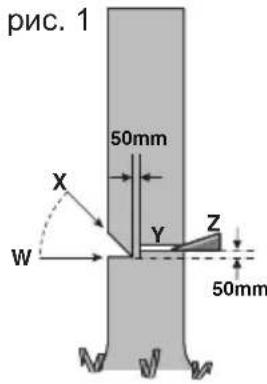
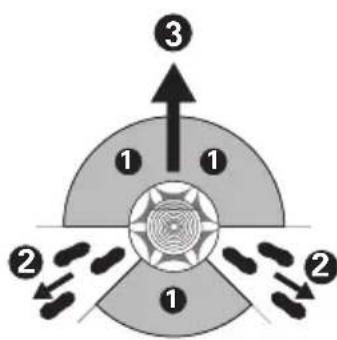
An escape path should be planned and cleared as necessary before cuts are started. The escape path should extend back and diagonally to the rear of the expected line of fall as illustrated in Figure 1. Before felling is started, consider the natural lean of the tree, the location of larger branches and the wind direction to judge which way the tree will fall. Remove dirt, stones, loose bark, nails, staples and wire from the tree.
2. Notching undercut
Make the notch 1/3 the diameter of the tree, perpendicular to the direction of falls as illustrated in Figure 1. Make the lower horizontal notching cut (W) first. This will help to avoid pinching either the saw chain or the guide bar when the second notch (X) is being made.
3. Felling back cut
Make the felling back cut (Y) at least 50mm higher than the horizontal notching cut as illustrated in Figure 1. Keep the felling back cut parallel to the horizontal notching cut. Make the felling back cut so enough wood is left to act as a hinge. The hinge wood keeps the tree from twisting and falling in the wrong direction. Do not cut through the hinge. As the felling gets close to the hinge, the tree should begin to fall. If there is any chance that the tree may not fall in desired direction or it may rock back and bind the saw chain, stop cutting before the felling back cut is complete and use wedges of wood, plastic or aluminium (Z) to open the cut and drop the tree along the desired line of fall ( ). ③ When the tree begins to fall remove the Chainsaw from the cut, stop the motor, put the Chainsaw down, then use the retreat path planned ( ). Be alert for overhead limbs falling and watch your footing. (See Figure 1)
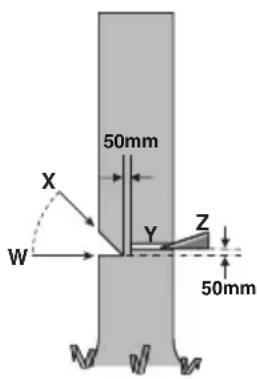
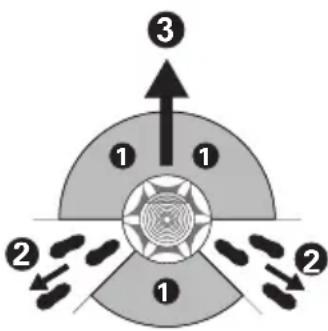
Figure 1
4. Limbing a tree
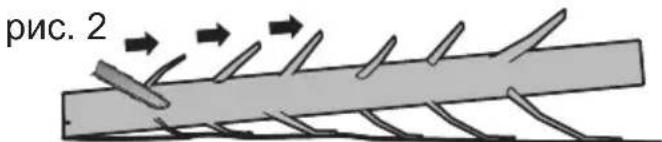
Limbing is removing the branches from a fallen tree. When limbs leave larger lower limbs to support the log off the ground. Remove the small limbs in one cut as illustrated in Figure 2. Branches under tension should be cut from the bottom up to avoid binding the Chainsaw.
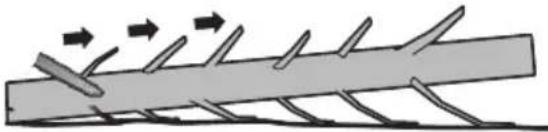
Figure 2
5. Bucking a log
Bucking is cutting a log into lengths. It is important to make sure your footing is firm and your weight is evenly distributed on both feet. When possible, the log should be raised and supported by the use of limbs, logs or chocks. Follow the simple directions for easy cutting.
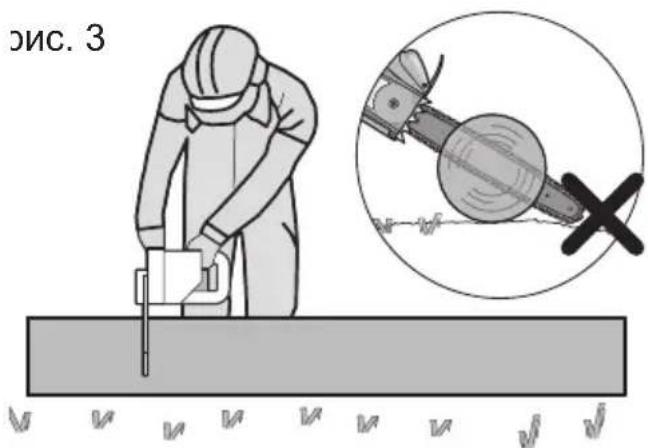
When the log is supported along its entire length as illustrated in Figure 3, it is cut from the top (overbuck), avoid contacting ground as this will greatly reduce the chain sharpness.
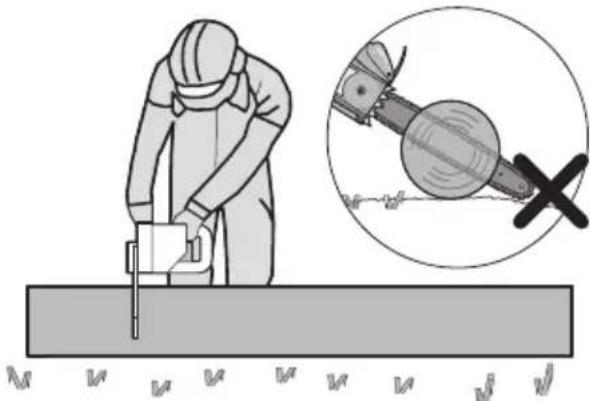
Figure 3
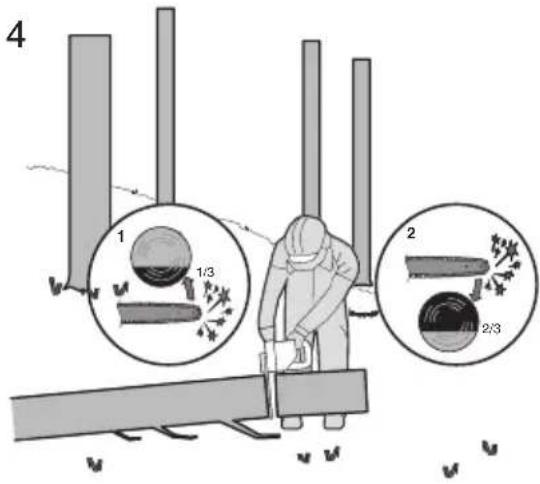
When the log is supported on one end, as illustrated in Figure 4, cut 1/3 the diameter from the underside (underbuck) (1). Then make the finished cut by overbucking (2) to meet the first cut.
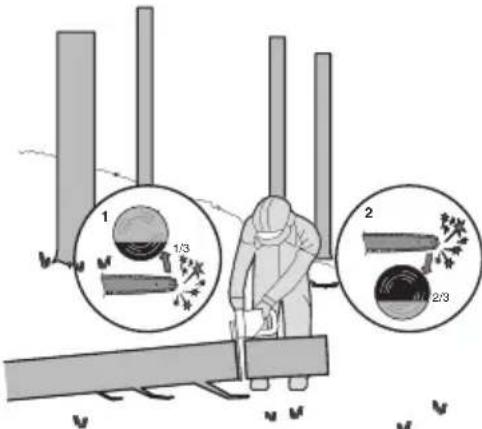
Figure 4
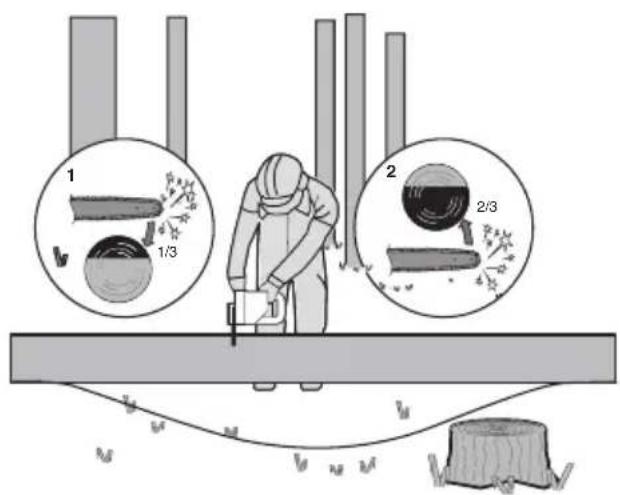
When the log is supported on both ends, as illustrated in Figure 5, cut 1/3 the diameter from the top (overbuck) (1). Then make the finished cut by undercutting (2) the lower 2/3 to meet the first cut.
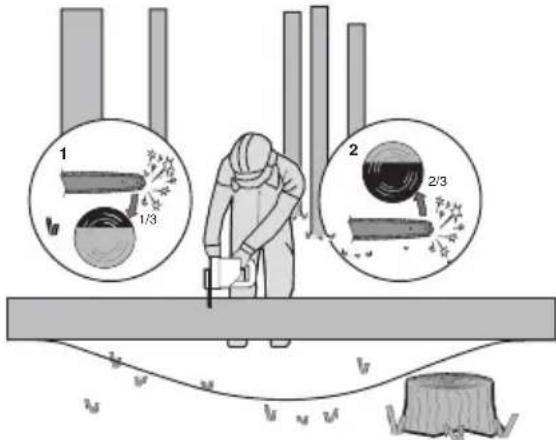
Figure 5
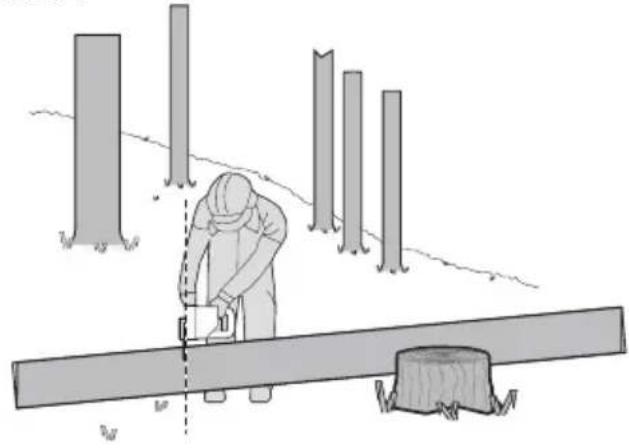
When bucking on a slope always stand on the uphill side of the log, as illustrated in Figure 6. When "cutting through", to maintain complete control release the cutting pressure near the end of the cut without relaxing your grip on the Chainsaw handles. Don't let the chain contact the ground. After completing the cut, wait for the saw chain to stop before you move the Chainsaw. Always stop the motor before moving from tree to tree.
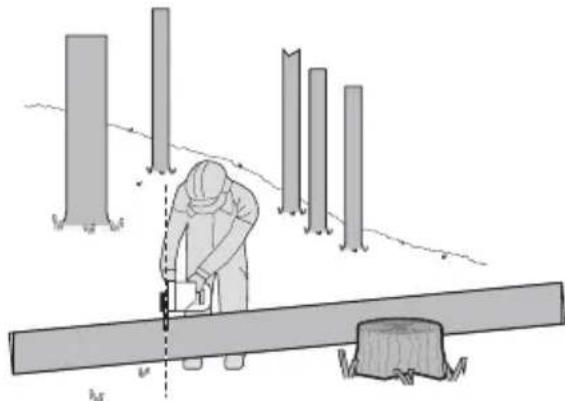
Figure 6
SYMBOLS
| To reduce the risk of injury, user must read instruction manual | |
| WARNING |
20V 30cm Cordless BL ChainSaw EN
| Wear ear protection |
| Wear eye protection |
| Wear dust mask |
| Always use chain saw two-handed |
| Beware of chain saw kickback and avoid contact with bar tip |
| Do not expose to rain |
| Wear head protection |
| Wear protective gloves |
| Wear protective footwear |
| Waste electrical products must not be disposed of with household waste. Please recycle where facilities exist. Check with your local authorities or retailer for recycling advice. |
| Li-Ion This product has been marked with a symbol relating to 'separate collection' for all battery packs and battery pack. It will then be recycled or dismantled in order to reduce the impact on the environment. Battery packs can be hazardous for the environment and for human health since they contain hazardous substances. |
| Do not burn |
| Batteries may enter water cycle if disposed improperly, which can be hazardous for ecosystem. Do not dispose of waste batteries as unsorted municipal waste. | |
| 6 | Unlock |
| 7 | Lock |
2. COMPONENT LIST
| 1. REAR HANDLE |
| 2. ON/OFF TRIGGER |
| 3. FRONT HANDLE |
| 4. CHAIN BRAKE (HAND-GUARD) |
| 5. CHAIN |
| 6. GUIDE BAR |
| 7. CHAIN TENSIONING KNOB |
| 8. CHAIN COVER |
| 9. BATTERY PACK* |
| 10. REAR HAND GUARD |
| 11. BATTERY PACK RELEASE BUTTON* |
| 12. LOCK-OUT BUTTON |
| 13. OIL LEVEL WINDOW |
| 14. OIL FILLER CAP |
| 15. BUCKING SPIKES |
| 16. BAR & CHAIN SHEATH |
| 17. DRIVE SPROCKET |
| 18. BAR LOCATING TABS |
| 19. CHAIN DIRECTION SYMBOL |
| 20. FASTENING BAR HOLE |
| 21. BAR PAD |
| 22. OIL OUTLET |
| 23. BAR TENSIONING PLATE (SEE FIG. A2) |
- Not all the accessories illustrated or described are included in standard delivery.
3. TECHNICAL DATA
Type WG350E WG350E.X (3 - designation of machinery, representative of battery operated chain saw)
| WG350E WG350E.X ** | |
| Voltage 20 V Max *** == | |
| Bar length 30 cm | |
| Chain speed 10 m/s | |
| Oil tank capacity | 140 ml |
| Chain pitch 0.95 cm | |
| Number of chain drive links | 45 |
| Chain gauge 1.1 mm | |
| Replacement chain | ES90X(3/8LP.043 45E)/WA0145 |
| Replacement bar | ES124SDEA041/WA0154 |
| Machine weight (bare tool) | 3.23 kg |
X=1-999, A-Z, M1-M9 there are only used for different customers, there are no safe relevant changes between these models
*** Voltage measured without workload. Initial battery voltage reaches maximum of 20 volts. Nominal voltage is 18 volts.
SUGGESTED BATTERIES AND CHARGERS
| Category | Type Capacity | |
| 20V Battery WA36 | 44 4.0 Ah | |
| 20V Charger WA3 | 880 2.0 A | |
We recommend that you purchase your accessories from the same store that sold you the tool. Refer to the accessory packaging for further details. Store personnel can assist you and offer advice
NOISE INFORMATION
A weighted sound pressure L_pA = 92.7dB(A)
| KpA=3.0 dB(A) | |
| A weighted sound power | LwA=100.7 dB(A) |
| KwA=1.27 dB(A) | |
| Wear ear protection | |
VIBRATION INFORMATION
| Vibration total values (triax vector sum) determined according to EN 62841: | |
| Vibration emission value ah = 2.88 m/s2 | Uncertainty K = 1.5 m/s2 |
The declared vibration total value and the declared noise emission value have been measured in accordance with a standard test method and may be used for comparing one tool with another.
The declared vibration total value and the declared noise emission value may also be used in a preliminary assessment of exposure.

WARNING: The vibration and noise emissions during actual use of the power tool can differ
from the declared value depending on the ways in which the tool is used especially what kind of workpiece is processed dependant on the following examples and other variations on how the tool is used:
How the tool is used and the materials being cut or drilled.
The tool being in good condition and well maintained. The use of the correct accessory for the tool and ensuring it is sharp and in good condition.
The tightness of the grip on the handles and if any anti vibration and noise accessories are used.
And the tool is being used as intended by its design and these instructions.
This tool may cause hand-arm vibration syndrome if its use is not adequately managed.

WARNING: To be accurate, an estimation of exposure level in the actual conditions of use
should also take account of all parts of the operating cycle such as the times when the tool is switched off and when it is running idle but not actually doing the job. This may significantly reduce the exposure level over the total working period.
Helping to minimise your vibration and noise exposure risk.
Always use sharp chisels, drills and blades.
Maintain this tool in accordance with these instructions and keep well lubricated (where appropriate).
If the tool is to be used regularly then invest in anti vibration and noise accessories.
Plan your work schedule to spread any high vibration tool use across a number of days.
4. INTENDED USE
The chainsaw is intended for sawing of trees, tree trunks, branches, wooden beams, planks, etc. Cuts can be sawed with or across the grain. This product is not suitable for sawing mineral materials.
ASSEMBLY
WARNING! Do not install the battery pack before it has been completely assembled. Always use gloves when handling the chain.
CHAIN AND GUIDE BAR ASSEMBLY
- Unpack all parts carefully. Remove the chain cover by turning the chain tensioning knob in a counter-clockwise direction. (See Fig. A1)
- Place the chainsaw on a solid, level surface.
- Use only genuine Worx chains or those recommended for guide bar.
- Slide the chain in the slot around the guide bar. Ensure the chain is in correct running direction by comparing it to the chain icon on the guide bar, or referring to the chain direction symbol found on the saw body. Ensure the bar tensioning plate is facing outward. (See Fig. A2)
- Fit the chain onto the drive sprocket, so that the fastening bar hole and the two bar locating tabs on the bar pad fit into the keyway of the opening on the guide bar. (See Fig. B1, B2)
- Assure all parts are seated properly and hold chain and guide bar in a level position. Make sure the drive links are fully seated in the drive sprocket (See Fig. C1), avoiding a kink as shown in Fig. C2. If kink occurs, pick up on the chain at the guide bar just ahead of the kink and then pull the kink out.
NOTE: Chain should rotate freely and be free of kinks.
- Fit the chain cover and tighten the chain cover by turning the chain tensioning knob clockwise until it is tight. (See Fig. D)
- The chain will stretch while cutting and lose proper tension. When the chain becomes loose, completely unscrew the chain tensioning knob or turn the knob around three (3) full turns in a counter-clockwise direction, then retighten the chain tensioning knob to properly reset the chain tension by repeating Steps 6-7 listed above.

WARNING: The chain is not yet tensioned. Tensioning the chain applies as described
under "TENSIONING CHAIN". The chain now needs to be inspected to make sure it is properly tensioned.
TENSIONING CHAIN (See Fig. E1, E2)
NOTE: New saw chains will stretch. Check the chain tension frequently when first used and tighten when the chain becomes loose around the guide bar.

WARNING:
- Removing the battery pack before adjusting saw chain tension.
- Cutting edges on chain are sharp. Use protective gloves when handling chain.
-
Maintain proper chain tension always. A loose chain will increase the risk of kickback. A loose chain may jump out of guide bar groove. This may injure operator and damage chain. A loose chain will cause chain, bar, and sprocket to wear rapidly.
-
Place the chainsaw on any suitable flat surface.
- Turn the chain tensioning knob clockwise until it is hand tight.
NOTE: The tension is automatically increased while the chain tensioning knob is being turned in a clockwise direction. The built-in ratchet mechanism prevents the chain tension from loosening.
- Tilt the saw forward (See E1) where the guide bar tip is pushed in an downward direction. This will remove slack from the chain.
- Fully tighten the chain tensioning knob by turning it clockwise.
- Double check the tension set by the automatic chain tensioning knob. The correct chain tension is reached when the chain can be raised approx. half the drivelink depth from the guide bar in the center. This should be done by using one hand to raise the chain against the weight of the machine. (See Fig. E2)
NOTE: The chain is properly tensioned when it can be lifted off of the guide bar and the drivelink is within the rail of the guide bar.
NOTE: The chain will stretch while cutting and lose proper tension. When the chain becomes loose, completely unscrew the chain tensioning knob or turn the knob around three full turns in a counter-clockwise direction, then retighten the chain tensioning knob to properly reset the chain tension by repeating steps 1-4 listed above.
LUBRICATION (SEE FIG. F)
IMPORTANT: The chainsaw is not filled with oil. It is essential to fill with oil before use. Never operate the chainsaw without chain oil or at an empty oil tank level, as this will result in extensive damage to the product.
NOTE: Chain life and cutting capacity depend on optimum lubrication. Therefore, the chain is automatically oiled during operation.
FILLING OIL TANK:

WARNING: Removing the battery pack before filling the oil tank.
- Set chainsaw on any suitable surface with oil filler cap facing upward.
- Clean area around the oil filler cap with cloth and unscrew the cap by turning it counter clockwise.
- Add bar and chain oil until tank is full.
- Avoid dirt or debris entering oil tank, refit oil filler cap and tighten by turning clockwise until hand tight.
IMPORTANT: To allow venting of the oil tank, small breather channels are provided between the oil filler cap and the strainer, to prevent leakage, and ensure machine is left in a horizontal position when not in use.
It is important to use bar and chain lubricant (not provided) that is formulated to perform over a wide temperature range with no dilution required. This can be found at the location where you purchased this saw or your local hardware store. Do not use dirty, used or otherwise contaminated oils. Damage may occur to the bar or chain. Use of non approved oil will void the warranty.
Do not swallow. If swallowed, call a physician immediately. Keep out of reach of children. Store away from heat or open flame.
CHECKING THE AUTOMATIC OILER
Proper functioning of the automatic oiler can be checked by running the chainsaw and pointing the tip of the guide chain bar towards a piece of cardboard or paper on the ground. If an increasing oil pattern develops on the cardboard, the automatic oiler is operating fine. If there is no oil pattern, despite a full oil reservoir, contact WorxNitro customer service agent or WorxNitro approved service agent.

CAUTION: Do not touch the ground with the chain. Ensure safety clearance of 40cm.
5. OPERATION
WARNING! The charger and battery pack are specially designed to work together so do not attempt to use any other devices. Never insert or allow metallic objects into your charger or battery pack connections because of an electrical failure and hazard will occur.
NOTE: Your battery pack is shipped UNCHARGED and you must charge once before use.
The battery charger supplied is matched to the Li-ion battery installed in the machine. Do not use another
battery charger.
2. CHECKING THE BATTERY CHARGE-LEVEL (See Fig. G)
The battery level can be known from the battery indicator light by pressing the button beside the lights.
Note: Fig. G only applies for the battery pack with battery indicator light.
3. CHARGING YOUR BATTERY PACK (See Fig. H)
The Li-ion battery is protected against deep discharging. When the battery is empty, the machine is switched off by means of a protective circuit. The battery must be fully charged before the first use. In a warm environment or after heavy use, the battery pack may become too hot to permit charging. Allow time for the battery to cool down before recharging.
Note: Always fully charge the battery. More details can be found in charger's manual.
4. TO REMOVE OR INSTALL BATTERY PACK (See Fig. I)
Depress the battery pack release button to remove the battery pack from your tool. After recharging, insert the battery pack into the battery port. A simple push and slight pressure will be sufficient until a click is heard. Check to see if the battery is fully secured.
Note: When removing the battery pack, hold it firmly to avoid dropping and injury.
5. SWITCHING ON AND OFF (SEE FIG. J)
ATTENTION: Check the battery packs before using your cordless tool. Only use the battery pack listed in the accessories section.
For switching on the tool, press the lock-out button, then fully press the on/off trigger and hold in this position. The lock-out button can now be released. For switching off, release the on/off trigger.
NOTE: The chain brake must be activated in order for the saw to be switched on.
6. CHAIN BRAKE (SEE FIG. K)
The chain brake is a safety mechanism activated through the front hand guard, when kickback occurs. Chain stops immediately.
The following function check should be carried out at regular intervals. Pull the front hand guard towards the operator (position 1 to deactivate chain brake. To activate the chain brake, push front hand guard forwards position
NOTE: If the saw is unable to start, even though it is assembled properly and working with a fully charged battery pack, then you should check if the chain brake is in the correct position (position 1)
7.CUTTING
Important: Is the oil tank filled? Check the oil level window prior to starting and regularly during operation (See Fig. L). Refill oil when oil level is low. A full oil tank will last approx. 12 minutes of cutting depending on sawing intensity and stops.
Check recent replaced chain tension about every 10 minutes during operation.
(1) Installing the battery pack into the machine.
(2) Make sure section of log to be cut is not laying on the ground. This will keep the chain from touching the ground as it cuts through the log. Touching the ground while the chain is moving is dangerous and will dull the chain.
(3) Use both hands to grip saw. Always use left hand to grip front handle and right hand to grip rear handle. Use a firm grip. Thumbs and fingers must wrap around saw handles. (See Fig. M)
(4) Make sure your footing is firm. Keep feet-shoulder width apart. Distribute your weight evenly on both feet.
(5) When ready to make a cut, push the lock-out button completely in with the right thumb and squeeze the trigger. This will turn saw on. Releasing the trigger will turn the saw off. Make sure the saw is running at full speed before starting a cut.
(6) When starting a cut, slowly place moving chain against the wood. The wood should be as close to the saw body as possible. Hold saw firmly in place to avoid possible bouncing or skating (sideways movement) of saw.
(7) Guide the saw using light pressure and do not put excessive force on the saw, letting the saw do its work. The motor will overload and can burn out. It will do the job better and safer at the rate for which it was intended.
(8) Remove the saw from a cut with the saw running at full speed. Stop the saw by releasing the on/off trigger. Make sure the chain has stopped before setting the saw down.
(9) Keep practicing on scrap logs in a secure working area until you are comfortable, using a fluid motion and a steady cutting rate.
Kickback Safety Devices On This Saw
This saw has a low-kickback chain and reduced kickback guide bar. Both items reduce the chance of kickback. However, kickback can still occur with this saw.
The following steps will reduce the risk of kickback.
- Use both hands to grip saw while saw is running. Use firm grip. Thumbs and fingers must wrap around saw handles.
- Keep all safety items in place on saw. Make sure they work properly.
- Do not overreach or cut above shoulder height.
-
Keep solid footing and balance at all times.
-
Stand slightly to the left side of saw. This keeps your body from being in direct line with chain.
- Do not let guide bar nose touch anything when chain is moving.
- Never try cutting through two logs at same time. Only cut one log at a time.
- Do not bury the guide bar nose or try plunge cut (boring into wood using guide bar nose).
- Watch for shifting of wood or other forces that may pinch chain.
- Use extreme caution when reentering a previous cut.
Use only the low-kickback chain and guide bar that were supplied with this chainsaw or recommended. - Never use a dull or loose chain. Keep chain sharp with proper tension.
How to use saw safely
- Use the chainsaw only with secure footing.
- Hold the chainsaw at the right-hand side of your body (See Fig. N).
- The chain must be running at full speed before it makes contact with the wood.
- Use the bucking spikes to secure the saw onto the wood before starting to cut.
- Use the bucking spikes as a leverage point while cutting. (See Fig. 0)
- Do not operate the chainsaw with arms fully extended, attempt to saw areas which are difficult to reach, or stand on a ladder while sawing (See Fig. P).
Never use the chainsaw above shoulder height
CUTTING WOOD UNDER TENSION (SEE FIG. Q)
WARNING: When cutting a limb that is under tension, use extreme caution. Be alert for wood springing back. When wood tension is released, limb could spring back and strike operator causing severe injury or death.
When sawing logs supported on both ends, start the cut from above(Y) about 1/3 of the diameter into the log (overbuck) and then finish the cut (Z) from below, in order to avoid contact of the chainsaw with the ground. When sawing logs supported on only one end, start the cut from below (Y) about 1/3 of the diameter into the log (underbuck) and finish the cut from above (Z) in order to avoid log splitting or jamming of the chainsaw.
6. MAINTENANCE
Follow maintenance instructions in this manual. Proper cleaning of saw and chain and guide bar maintenance can reduce chances of kickback. Inspect and maintain saw after each use. This will increase the service life of your saw.
Note: Even with proper sharpening, risk of kickback
can increase with each sharpening.
MAINTENANCE AND STORAGE OF Chainsaw
1. Remove the battery pack
- When not in use
Before moving from one place to another
Before servicing - Before changing accessories or attachments, such as saw chain and guard
2. Inspect chainsaw before and after each use.
Check saw closely if guard or other part has been damaged. Check for any damage that may affect operator safety or operation of saw. Check for alignment or binding of moving parts. Check for broken or damaged parts. Do not use chainsaw if damage affects safety or operation. Have damage repaired by authorized service center. To locate an authorized service center, visit www.worx.com.
3. Maintain chainsaw with care.
- Never expose saw to rain or direct moisture.
- Keep chain sharp, clean, and lubricated for better and safer performance.
- Follow steps outlined in this manual to sharpen chain.
- Keep handles dry, clean, and free of oil and grease.
- Keep all screws and nuts tight.
- Keep battery pack from heat, oil, and sharp edges.
4. When servicing, use only identical replacement parts.
5. When not in use, always store chainsaw
- in a high or locked place, out of children's reach
- in a dry place
with bar and chain cover in place
Bar Maintenance
To maximize bar life, the following bar maintenance is recommended.
The bar rails that carry the chain should be cleaned before storing the tool or if the bar or chain appear to be dirty.
The rails should be cleaned every time the chain is removed.
To clean the Bar rails:
- Remove chain cover and bar and chain. (see section ASSEMBLY)
- Using a wire brush, screwdriver or similar tool, clear the residue from the inner groove of the bar.
- Make sure to clean oil passages thoroughly
Conditions which require chain and guide bar maintenance:
- Saw cuts to one side or at an angle.
- Saw has to be forced through the cut.
- Inadequate supply of oil to the bar and chain.
Check the condition of the guide bar each time the
chain is sharpened. A worn guide bar will damage the chain and make cutting difficult.
After each use, remove the battery pack, clean all sawdust from the guide bar and sprocket hole.
When rail top is uneven, use a flat file to restore square edges and sides.
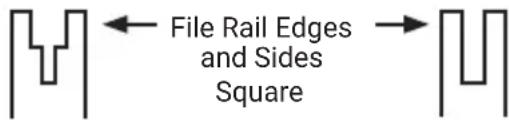
Worn Groove Correct Groove
Replace the guide bar when the groove is worn, the guide bar is bent or cracked, or when excess heating or burring of the rails occurs. If replacement is necessary, use only the guide bar specified for your saw in the repair parts list or on the decal located on the chain saw.
Replacing Bar & Chain
Replace chain when cutters are too worn to sharpen or when chain stops. Only use replacement chain noted in this manual.
Inspect guide bar before sharpening chain. A worn or damaged guide bar is unsafe. A worn or damaged guide bar will damage chain. It will also make cutting harder.
Fit the bar tensioning plate tab into the new bar by tightening the screw clockwise. The tab protrusion (a) must be fitted into the bar hole. (See Fig. R)
SHARPENING SAW CHAIN
WARNING: Remove the battery pack before servicing. Severe injury or death could occur from electrical shock or body contact with moving chain.
Cutting edges on chain are sharp. Use protective gloves when handling chain.
Keep chain sharp. Your saw will cut faster and more safely. A dull chain will cause undue sprocket, guide bar, chain, and motor wear. If you must force chain into wood and cutting creates only sawdust with few large chips, chain is dull.
LUBRICATE SPROCKET
WARNING: Wear heavy duty gloves when performing any maintenance or service to this tool. Always remove the battery pack before performing any service or maintenance on this tool.
NOTE: It is not necessary to remove the chain or bar when lubricating the guide bar sprocket.
- Clean the bar and sprocket
- Using a grease gun, insert the tip of the gun into the lubrication hole and inject grease until it appears at the outside edge of the sprocket tip (See Fig. S).
- To rotate the sprocket pull the chain by hand until
7. TROUBLESHOOTING
The following table gives checks and actions that you can perform if your machine does not operate correctly. If these do not identify/remedy the problem, contact your service agent.

WARNING: Switch off and remove the battery pack before investigating fault.
| Symptom Possible Cause Remedy | ||
| Chainsaw fails to operate | Low battery charge. Charge the ba ttery pack. | |
| Chain brake not in the proper position. | Check to see if the chain brake is in position 0 Refer to CHAIN BRAKE for details. | |
| Chainsaw operates intermittently | Over heating | Place the machine in a cool, ventilated place to cool it down |
| Applying too much pressure while cutting. | Applying relatively less pressure while cutting | |
| Loose connection. | Contact service agent Internal wiring defectie | |
| On/off trigger defective. | ||
| Dry chain | No oil in reservoir Refill oil | |
| Vent in oil filler cap clogged Clean | cap | |
| Oil passage clogged Clean oil passag e outlet | ||
| Oil leakage during storage Residuall | al oil | Drain the oil after useRest machine in a horizontal position when not in use.Rest machine on absorbing cloth while in storage |
| Kickback brake/Run down brake | Brake does not stop chain Contact | service agent |
| Chain/chain bar over-heats | No oil in reservoir Refill oil | |
| Vent in oil filler cap clogged Clean | cap | |
| Oil passage clogged Clean oil passag e outlet | ||
| Chain is over tensioned Adjust chan in tension | ||
| Dull chain Sharpen chain or replace | ||
| Chainsaw rips, vibrates, does not saw properly | Chain tension too loose Adjust chan in tension | |
| Dull chain Sharpen chain or replace | ||
| Chain worn out Replace chain | ||
| Chain teeth are facing in the wrong direction | Reassemble with chain in correct direction | |
FOR BATTERY TOOLS
The ambient temperature range for the use and storage of tool and battery is 0^ - 45^ (32 F-113 F). The recommended ambient temperature range for the charging system during charging is 0^ - 40^ (32 F-104 F).
Details regarding safe disposal of used batteries
At the end of the life of the appliance, remove the battery pack safely before disposing of the appliance. Do not throw batteries away or throw them in the normal trash can. Also do not dispose of the battery with the machine. Remove the used battery pack from the appliance and dispose of it at the nearest or convenient dedicated recycling facility. If in doubt, consult your local environmental protection department. Batteries may enter water cycle if disposed improperly, which can be hazardous for ecosystem. Do not dispose of waste batteries as assorted municipal waste.
ENVIRONMENTAL PROTECTION
Waste electrical products must not be disposed of with household waste. Please recycle where facilities exist. Check with your local authorities or retailer for recycling advice.
8. DECLARATION OF CONFORMITY
We,
Positec Germany GmbH
Postfach 32 02 16, 50796 Cologne, Germany
On behalf of Positec declare that the product
Description Battery-powered chainsaw
Type WG350E WG350E.X (3 - designation of
machinery, representative of chainsaw)
Function Cutting wood
Complies with the following Directives:
2006/42/EC
2014/30/EU
2011/65/EU&(EU)2015/863
2000/14/EC amended by 2005/88/EC
The notified body involved
2000/14/EC amended by 2005/88/EC:
-
Conformity Assessment Procedure as per Annex V
-
Measured Sound Power Level 100.7 dB(A)
-
Declared Guaranteed Sound Power Level 102 dB(A)
Standards conform to
EN 62841-1, EN 62841-4-1, EN ISO 3744, EN IEC
55014-1, EN IEC 55014-2, EN IEC 63000
The person authorized to compile the technical file,
Name: Marcel Filz
Address: Positec Germany GmbH
Postfach 32 02 16, 50796 Cologne, Germany

2023/11/30
Allen Ding
Deputy Chief Engineer, Testing & Certification
Positec Technology (China) Co., Ltd.
18, Dongwang Road, Suzhou Industrial
Park, Jiangsu 215123, P. R. China
INHALTSVERZEICHNIS
18, Dongwang Road, Suzhou Industrial
Park, Jiangsu 215123, P. R. China
TABLE DES MATIÈRES
- CONSIGNES DE SECURITÉ
- LIST DES COMPOSANTS
- DONNÉES TECHNIQUES
- UTILISATION PRÉVUE
- FONCTIONNEMENT
- ENTRETIEN
- GUIDE DE DÉPANNAGE
- DECLARATION DE CONFORMITE
1. CONSIGNES DE SECURITE SECURITE DU PRODUIT AVERTISSEMENTS DE SECURITE GENÉRAUX POUR L'OUTIL ÉLECTRIQUE
INFORMATIONS RELATIVES AU BRUIT
INFORMATIONS RELATIVE AUX VIBRATIONS
18, Dongwang Road, Suzhou Industrial
Park, Jiangsu 215123, P. R. China
18, Dongwang Road, Suzhou Industrial
Park, Jiangsu 215123, P. R. China
TABLA DE CONTENIDOS
- LAS INSTRUCCIONES DE SEGURIDAD
- LISTA DE COMPONENTES
- CHARACTERISTICAS TECNICAS
- UTILIZACION REGLAMENTARIA
- FUNCIONAMENTO
- MANTENIMIENTO
- INVESTIGACION DE AVERIAS
- DECLARACION DE CONFORMIDAD
No实用性: No, but it's a good idea.
ASERRADO DE MADERA EN TENSION (VER FIG. Q)
18, Dongwang Road, Suzhou Industrial
Park, Jiangsu 215123, P. R. China
INDICE
- INSTRUÇOES DE SEGURANÇA
- LISTA DE COMPONENTES
- DADOS TECNICOS
- UTILIZACAO CONFORME AS DISPOSICOES
- FUNCIONAMENTO
- MANUTENÇAO
- LOCALIZACAO DE ERROS
- DECLARACAO DE CONFORMIDADE
1. INSTRUÇões DE SEGURANÇA SIKKERHEDSVJELED-NINGER GENERELLE ADVARSLER I FORBINDELS MED MASK-INVÄRKTØJ
18, Dongwang Road, Suzhou Industrial
Park, Jiangsu 215123, P. R. China
INHOUDSOPGAVE
- VEILIGHEIDSINSTRUCTIES
- ONDERDELENLIJST
- TECHNISCHE GEGEVENS
- BEOOGD GEBRUIK
- BEDIENING
- ONDERHOUD
7 PROBLEM OPLOSSEN - CONFORMITEITVERKLARING
1. VEILIGHEIDSINSTRUCTIES PRODUCTVEILIGHEID ALGEMENE VEILIGHEIDSWAARSCHUWINGEN VOOR VERMOGENSMACHINE
WAARSCHUWING: Voor de
18, Dongwang Road, Suzhou Industrial
Park, Jiangsu 215123, P. R. China
INDHOLDSFORTEGNELSE
- SIKKERHEDSINSTRUKTIONER
- KOMPONENTLISTE
- TEKNISKE DATA
- BEREGNET ANVENDELS
- BETJENINGSVEJLEDNING
- VEDLIGEHOLDELS
- FEJLFINDING
- KONFORMITETSERKLÄERING
1. SIKKERHEDSINSTRUKTIONER SIKKERHEDSVEJLED-NINGER GENERELLE ADVARSLER I FORBINDELS MED MASK-INVÅRKTØJ
Slip taend/sluk-knappen for at slukkesaven.
BEMARK: Kædebremsen skal vare aktiveret, for at saven kan taendes.
6. KAEDEBREMSE (Se Fig. K)
18, Dongwang Road, Suzhou Industrial
Park, Jiangsu 215123, P. R. China
INNHOILDSFORTEGNESE
- SIKKERHETSINSTRUKSJONER
- DELELISTE
- TEKNISKE DATA
- MULIG BRUK
- ANVENDELS
- VEDLIKEHOLD
- FEILSØKING
- SAMSVARSERKLÄERING
1. SIKKERHETSINSTRUKS-JONER SIKKERHETSANVISNINGER GENERELLE SIKKERHETS-ADVARSLER FOR ELEK-TROVERKTØY
STRAMMING AV SAGKJEDET (SE FIGUR E1, E2)
18, Dongwang Road, Suzhou Industrial
Park, Jiangsu 215123, P. R. China
INNEHÄLLSFÖRTECKNING
- SÄKERHETSINSTRUKTIONER
- KOMPONENTER
- TEKNISKA DATA
4.ÄNDAMALSENLG ANVÄNDNING - DRIFT
- UNDERHÄLL
- FELSÖKNING
- DEKLARATION OM ÖVERENSSTÄMMELSE
1. SÄKERHETSINSTRUKTIONER
PRODUKTSÄKERHET
GENERELLA SÄKERHETSVARNINGAR FÖR ELVERKTYG

SPÄNNING AV SÄGKEDJA (SE FIGUR E1, E2)
OBS: When removing the battery pack, hold it firmly to avoid dropping and injury.
5. IN-OCH URKOPPLING (SE FIGUR J)

18, Dongwang Road, Suzhou Industrial
Park, Jiangsu 215123, P. R. China
SPIS TRESCI
- INSTRUKCJE BEZPIECZENSTWA
- LISTAKOMPONENTOW
- DANE TECHNICZNE
- UZYCIE ZGODNE Z PRZEZNACZENIEM
- DZIALANIE
- KONSERWACJA
- ROZWIAZYWANIE PROBLEMOW
- DEKLARACJA ZGODNOSCI
1. INSTRUKCJE BEZPIECZENSTWA BEZPIECZENSTWO PRODUKTU OGOLNE OSTRZEŽENIA DOTYCZYCE BEZPIECZENSTWA PODCZAS PRACY Z ELEKTRONARZEDZIAMI
Uwaga: Switch off and remove the battery pack before investigating fault.
18, Dongwang Road, Suzhou Industrial
Park, Jiangsu 215123, P. R. China
ΠΙΝΑΚΑΣ ΠΕΡΙEXΟΜΕΝ
- O△HΓIEZ AΣΦAΛEIAZ
- ΑΙΣΤΑ ΣΥΣΤΑΤΙΚΟΝ
- TEXNIKEZ IAHPOΦOPIE
- IPOBAAENOMENXPHSEH
- AEITOYPΓIA
- EPRAZIEZ SYNTHPHESH
- ANTIMETΩΠΙΣ ΠPOBAΗΜΑΝ
8 H H YMMOP H
1. OΔHΓΕΣ AΣΦΑΛΕΙΑΣ
7. EPRAIA ME TO AAYOPIPO
18, Dongwang Road, Suzhou Industrial
Park, Jiangsu 215123, P. R. China
TARTALOMJEGYZÉK
- BIZTONSÁGI UTASITÁSK
- AZ ALKATRESZEK LISTAJA
- MUSZAKI ADATOK
- RENDELTÉS
- HASZNÁLATI UTASÍTÁSK
- KARBANTARTÁS
- HIBAELHÁRITÁS
- MEGFELELOSEGI NYILATKOZAT
1. BIZTONSÁGI UTASÍTÁ-SOK BIZTONSÁGOS TERMÉKHASNZALAT ELEKTROMOS KÉZISZ-ERSZÁMOK BIZTONSÁGOS HASNZALATÁVAL KAPCSOLATOS ÁLTALÁNOS FIGYELMEZTETÉSEK
18, Dongwang Road, Suzhou Industrial
Park, Jiangsu 215123, P. R. China
CUPRINS
- INSTRUCTION DE SIGURANTA
- LISTÄ DE COMPONENTE
- DATE TEHNICE
- DESTINATION DE UTILIZARE
- FUNCTIONAREA
- INTRETTINERE
- DEPANAREA
- DECLARATIE DE CONFORMITATE
1. INSTRUCTIUNI DE SIGURANTA
SECURITATEA PRODUSU-LUI
AVERTISMENTE GENERALE DE SIGURANTA PENTRU UNELTE ELECTRICE

AVERTISMENT Citi toate atentionarile de siguranta si parcurgeti toate instruunile, ilustratiile si specificaile ataate acesti
2023/11/30
Allen Ding
Adjunct Inginer sef, Testare si certificare
Positec Technology (China) Co., Ltd.
18, Dongwang Road, Suzhou Industrial
Park, Jiangsu 215123, P. R. China
OBSAH
- BEZPECNOSTNI INSTRUKCE
- SEZNAM SOUCASTI
- TECHNICKÉ UDAJE
- UČEL POUZITÍ
- POUZITI
- UDRZBA
- ODSTRANOVÁNÍ PROBLEM
- PROHLÁSENÍ O SHODE
1. BEZPECNOSTNI IN-STRUKCE BEZPECNOST VYROBKAU OBECNA BEZPECNOSTNI UPOZORNÉNI PRO ELEKTRICKÉ NASTROJE
TYTO POKNY USCHOVEJTE
TIETO POKNY USCHOVAJTE
Pokyny tykajuce sa spravnje techniky pre bezné stinanie, odstranovanie konarov a priečne rezy 1. Stinanie stromov
18, Dongwang Road, Suzhou Industrial
Park, Jiangsu 215123, P. R. China
KAZALO
- VARNOSTNA NAVODILA
- SESTAVNI DELI
- TEHNIÇNI PODATKI
- NAMEN UPORABE
- DELOVANJE
6.VZDRZEVENJE - ODPRAVLJANJE NAPAK
- IZJAVA O SKLADNOSTI
1. VARNOSTNA NAVODILA VARNOST IZDELKA SPLOŠNA VARNOSTNA NAVODILA ZA ELEKTRICNA ORODJA
18, Dongwang Road, Suzhou Industrial
Park, Jiangsu 215123, P. R. China
OΓJIABJIΕΗΝΕ
- INHCTPYKUNI NO B3OJACHOCTN
- ΠΕΡΕΥΕΗν KΟΜΝΟΗΝΤΟB
- TEXHnueCKNE DAHHbIE
- IPEyCMOTPEHHOE NcNoJIb3OBAHNE
5.PABOTA - TEXHUNCHECKOE OBCJNYXINBAHNE
- TABILUCA YCTPAHEHNEHNCNPAHBHOCTEIN
8.ДЕКЛAPALUNCOOTBETCTBNA
1.ИHCTPYKUNIPO BE30PACHOCTN BE30PACHOCTb N3DEJIINRA OBUNE IPPEIOCTEPEXJENI PO TEXHNIKE B30PACHOCTN IPN PABOTE C 3JIEKTPOHHCTPYMEHTOM

IPEDOCTEPEXHEHNE BHMMTeJIbHO 03HaKOMbTEcB CO BCEM
PpeDynpeKdEHNMAHn NO TexNHke 6e30NaChocTN, HNCTpyKcIyAMn, pncyHKamn n CneuΦnKaζIyAMn, npnilaraembIMn K 3TOMy 3NeKTponHCTpyMeHTy.
HeBbIOnHHe BCex HxKeepuBeDeHHbIX
HnCTpyKcN IN peKOMeHaaM MoXeT npVBecTN K
NoPaXeHNIO 3NeKTPnuEckm TOKOM, NOXapy N/INn
cepBe3HbIM TpaBMam.
COXPAHNTE BCE INHCTPYKUIN I PEPDOCTEPEXKEHNA JIA DAJIbHEIWEERO NCIOJIb30BAHNA.
TepMN "3JektpoHCTpyMeHT" B
IpeDynpexJeHHx OTHOCNTcK BaWeMy
3JektpoHCTpyMeHTy C NtTaHnEm OT CeTu (UHyp)
NII K 3JektpoHCTpyMeHTy C 6aTapeiHbIM
NITaHnEM (6ecnpoBODHO).
1) 6E3OПАСHОCTь PAБОЧЕй 3Онbli
a)ДеркнTe pa6oyu 3OHy chToH n XopoWo OcBeueHHo. 3arpOMoxJdeHHbI eNII 3aTeMHeHHbIe 3OHbI npedpaCnOlaRaIOT K HeCuaCTHbIM Cnyaam.
b) He nCnoJb3yIe 3JIeKTPoMHCTpyMeHTbI BO B3pbIOONaChbIX CpeJax, HAnpIMep, B npNCyTCTBn JERKOBOCIIaMeHraUxxCg KnDkoCTe, Ra3OB NIN PbIJN.
3NeKtpoHnCTpyMeHTbI CO3aIOT NCKpbl, KOtOpbIE MOryT BOCnJaMaEHnTb Iblb INN
napbl.
c) DepeKHTeTeH n npoxkHex B cTOpOHe BO BpeMpa6oTbI C 3NeKTponHcTpymeHTOM. OTBneKaIOUne fakTopbIMORYnPnVBecTH K NOTepe KOHTPOJHaNnHCTpyMeHTOM.
2) 3JIEKTP06E30NACHOCTb
a) BnKn c 3JektpOnHcTpymeHTOM DOJXhbl COOTBeTCTBOBaTb p03eTke. HnkOrda He n3MeHnTe wTenceIb KaKHM-1n6o 06pa3om. 3apeuaeTcra HCNoJIb3OBA Tb IIO6bIe nepexOHNKn C 3a3eMHeHHbIMN 3JekTPOnHcTpymeHTAmn. He MoDnΦnUPOBaHhbE BnIKn U COOTBeTCTByUoUne po3eTKu YMeHbwaOT pNCK NopakHeHna 3JekTpUueckm TOKOM.
b) 36eraTe KOHTaKTA TeHa C 3a3eMJIeHHbIMN NOBepxHocTAMn, TaKMM KaK Tpy6bl, paHaTopbl, NHTbI XOLOHbHNk. CyueCTByeT NOBIIeHHbI pCK nopaxHeHn 3JIeKTpUeCKm TOKOM, eCIn BaIe TeNo 3a3eMNEHO.
c) He noDBepraTe 3JIeKTPoHHCTpymeHT BO3dEICTBHIO DOXJIA HIN BnAaXHOCTN.BoJa, IOnpaIouaB 3JIeKTPoHHCTpymeHT, NOBbICNT pUCK NopaxHeHna 3JIeKTPuueckm TOKOM.
d) 3anpeaetc npmehTb hyp He no Ha3naeHIO. HkOrda He nCnoB3yIte Whyp IJInepeHoCKn, BbITraHBaHHaNn OToCoEduHeHHa 3KeKTPoHNCTpyMeHTa. DePxHtTe wHyp BdAJIOn OT TeNla, MacJa, ocTpbIX KpaEB NII DnBHXXcYacTeH. NobpeKDeHHbIe NNI 3anyTaHHbIe WHypbl NOBbIiAOT pNCK nopaxHeHHa 3KeKTPuYeCKM TOKOM.
e)Пи pa6Ote c элкtpoHnHcTpymeHTOM Ha OTkpblTom BO3dYxe HcNoIb3yITe ydInHnTeJIb,прдha3HaueHHbIДЯ NcNoIb3OBAHnHa OTkpblTom BO3dYxe.ИснOLb3ObaHnE shypa,poIxOJaIeOДЯИСNoIb3OBAHnHa OTkpblTom BO3dYxe,CHNJaET pNCK IopaJKeHnA 3JIeKTPuYeCKIM TOKOM
f) EcIn pa60Ta 3JKeKTpOHcTpymeHTa BO BnaXHOM MeTe HEn36ExHa, NcNoIb3yIte yCTpoIcTBO 3aUHTHOrO OTKIOUChEHH. IcnoIb3oBaHne Y3O cHnKaeT pNCK npaKeHHaJIeKTpUcEckm TOKOM.
3) LIMHAR BE30NACHOCTb
a) BybTe BHIMaTeIbHbI, cIeIte 3a TeM, YTO Bbl DeIaeTe, I NOIb3yItecB 3IpaBbIM CmblcIOM npu pa6Ote C 3JIeKTPoHHCTpymeHtOM. He nCNoIb3yIte 3JIeKTPoHHCTpymeHT BO BpeM yCTaIOCTn HIN POJ BO3dEICTBHeM HApKOTIKOB, ANKOROJ NIN MeDNIKAMeHToB. HeBHIMaTeIbHOCTb npu pa6Ote 3JIeKTPoHHCTpymeHTa MOXeT npNUBeCTN K cepbe3HO TpaBMe.
b) NcnoIb3yIte cpeIcTba HnDnBnDyalbHoi 3aunTbI. Bcerda HaedeBaIte 3auNTbIe ouKn. 3aunTHoe o6OpUOBAHne, TaKoe KaK nbIe3aunTHaMaCKa, HeckoJIb3raJzA 3aunTHaOyBb, KaCKu IIN 3auNTa Cnyxa, NCIOJIb3yeMbIe dJa COOTBeTCTByIoX yCIOBn, yMeHbWAT PNUCK BO3HnKHOBEHn TpaBMbl.
c)ПpeIoTbpaueHne HnpeDHaMepeHHoro 3anycka.пepeiodKIOUeHem K nCTOuHky nHTaHnI N / nIIN 6aTapeHOMy 6LOKY y6eINTecb, qTO nepeKIOUaTeIb hXODNTcB NOJIOKeHn "BbIKIOUeHO". IpeHoc 3JIeKTPoIHcTpymEHTOB C nJIbCeM Ha BbIKIOUaTeIe nIII 3apJaKa BKIOUeHHbIX 3JIeKTPoIHcTpymEHTOB pNIBoDHT K HeCyaCTHbIM CJIyuaM.
d) IpepeBkIIOUeHHeM 3NeKTpOHnCTpyMeHTa y6epnte IIO6bIe NocToPOHHne RaeyHbIe KIOuN. KIOU, npIKpeJIeHHbI K BpaAuaOuecra YAcTH 3NeKTpOHnCTpyMeHTa, MOKeT cTaTb pNUnHO TpaBMbl.
e) He HakoHryTecb. NocToHHo CoXpaHnTe paBHObecne. 3To nO3BOnJe TlyUwe KOHTpONIpOBaTb 3JIeKTPoHNCTpyMeHT B HeOxNdaHHbIX CNTyuaIrx.
f) OeBaTecb DOJXHbIM 06pa3OM. He HaeBaTe Cbo6oHyIO OeKdy NnN yKpaWeHn. Depxnte BOIOcbI, OeKdy N nepaTKn BdaNNOT DBNXUxxCra YacTei. Cbo6oHaOJeKDa, IOBENHPbIE N3dEIny NnN DnHHBe BOIOcbI MOrY 6bITb 3auePHeHbI DBNXUmmcRA YaCTaMn.
g) EcIn ycTpoCtBa 06OpyOBOHaBb CoeMHHeHnem Ia YdaJIeHnI NbIN N NOkNIOUeHn KOnJIeKToPob, Y6eINTeCb, YTO TaKoe 06OpyOBOaHne NOkNIOUeHO NcNoJb3YeTCa DOJXHBIM 06pa3OM. NcNoJIb3OBaHne NbJIeYNaBnBaTeJe MoKeT UMeHbWHTb ONaCHOCTb, CBa3aHHyO C NbJIbIa
h) He no3B0JnTe onbIy, noIyuEHOMy npu qactom nCNoJIb3OBAHmN IHCTpyMeHTOB, paccla6ntbcaI mHrOpHPOBaTb npHcIpbI 6e3onacHO pa6oTBc c HnCTpyMeHTaMn. HeocTopoXHoe DeIcTBne MOKeT npNBecTu K cepBe3HO TpaBMe B TeueHHe dON CeKHyDbl.
4) NCUOJIb3OBAHNE 3JEKTPOHHCTPYMEHTA UYXOD 3A HNM
a) 3anpeuaetc H36bIToUHO 3arpykaTb 3neKtpoHHCTpymeH. NcnoJb3yIte PdoXoJaun 3neKtpoHHCTpymeHT dna BaWe pa60tbl. IpaBnIbHo nOIO6paHHbIu 3neKtpoHHCTpymeHT cdeNaet pa60Ty, Jnra KOTOpOn OH 6bl pa3pa60TaH, Lyuwe n 6e3onacHee.
b) He nCnoIb3yIe 3JeKTpOuHcTpymeHT, ecn BblKIIouaTeJIb He pa6oTaet. JIO60i
3NeKTPoHnCTpyMeHT, KOTOpbI He MoKeT ynpaBJIaTBcA NOMOUsIO NepeKJIHOuTaTeJIa, ONaceH n DOJXeH 6bITb OTpeMOHTnPOBaH.
c)Перд ВьINOLHeHem JIO6bIXperylnpOBOK, 3aMeHOn npMHAdJIeXHoCTe Nm XpaHeHem 3IeKTPoHHCTpyMeHTa OTcoeDnHTe WTeKeP OT nCToUHnKa NITaHnN / Nn AkkymJrTOpHO 6aTapeN OT 3IeKTPoHHCTpyMeHTa.Takne npedynpeiNTeNbHbIe Mepbl6e30NaCHOCTu yMeHbShaOT pNCK CnyauHOro 3aNycka 3IeKTPoHHCTpyMeHTa.
d) XpaHnTe 3NeKtpOnHCTpyMeHTbIB HeOCTynHom IJr JeTei MeTe H He N03BOJIaIte JInzam, He3HaKOMbIM C 3NeKtpOnHCTpyMeHTom MnC 3ToHnCTpyKcnei, pa6oTaTb C Hm. HnCTpyMeHTbI ONaChbIB pyKaX Heo6yHeHHbIX NOB3OBaTeJe.
e) 06cnykBaIte 3NeKtpOHCTpyMeHTbI. IpoBepTe HecooCHocTb DBNkUxHxCyacte, noIOMky Detalei NIO6bie dpyrHe COCTOHHK, KOTOpBIE MOYr NOBJIHrTa Ha pa60Ty 3NeKtpOHCTpyMeHTa. B Cnyae NOBpeJKeHnO TpEMOHTHyPeITe 3NeKtpOHCTpyMeHT nepeI NCNoIb30BAHNem. MHorne HeCuaCTHbIe CNYaH CB3aHbI C NIOXUM O6cnykBaHNEM 3NeKtpOHCTpyMeHTOB.
f)ПодерхиBaTe 3aToOун�СТОТу pexyuxn HNCTpyMeHToB.ПpaBnIbHo O6cnyxNBaeMbie pexyuue INCHTpymeHTbIC OCTpbIMn pexyuUMKpOMKaMn IerYe KOHTPOIpoBaTb, n CHNXaETCBePOrTHOCt bX DeOpMaUN.
g) NcnoJIb3yIte 3eKTPoHHCTpyMeHT, npHaJIeJXHOCTn I T. D. B COOTBeTCTBm C 3TNMM HNCTpyKUHMAH, C yUYETOM YCIOBm BbINOHReMoI pa60TbI. NcNoJIb3OBAHHe 3eKTPoHHCTpyMeHTa IJRA ONEpaU, OTIIuAIOUxxCra OT IpEJaHa3HaueHHO IcNoJIb3OBAHnA, MOKeT PpNBecTe K ONaCHOI CNTyaU.
h) CneIte, YTO6bI pyKN 3aXBaTHbIe NOBepXHOCTN 6bIJN cyXIMN, YNCtBIMN N CBO6ObHbIMN OT CMa3OCHORo Macna N KOHCnCTeHTHOcMA3Kn. CKoJIb3Kne NaIOHN N 3axBaTHbIe NOBepXHOCTN He N03BOJrT 6e3OJaCHO ObaaTaBCra C INHCTpyMeHTOM N KOHTpOJIpaPoBaTbe rO B HEnpeDnDeHHbIX CNTya4nX.
5) NcIIOJIb3OBAHNE IN O6CJIYXKNBAHNE AKKUMJYTOPHbIX NHCTPYMEHTOB
a)ДяЗардкнИсплььутToЛькоЗардhoe yctpoicTBO,yka3aHHoe H3ROTOBHTeIem. 3apdHoe yCTpoiCTBO,KOTOpoe nOxOHT JЯ OJHO TnA aKKyMylrTOPOB,MOKET npedCTaBnTb ONaCHOCTb BO3rOpaHnI npu NcNoJIb3OBAHnC dpyrUm TUNOM aKKyMylrTOPOB.
b) IcnoIb3yIte 3neKtpOnHCTpyMeHTbI TOIbKO CO CNEuHaJIbHO npeHa3HaueHHbIMN aKKymJrTOpAMn. IcnoIb3ObaHne IIO6oro dpyrOTo TnPa aKKymJrTOpOB MoKeT cTaTb npUHHo TpaBM nNoKapa.
c) KOrda aKKymyIaTOp He nCnoJIb3YeTeC, XpaHnTe erO noJaIbWe ot dpyrnx MeTaalnuecknx npedMeTOB, HApnpMep, CKpeNOK, MOHeT, KIOUeH, TBO3JeH, BNHTOB NnDpyrnx He6oJbUnx MeTaalnuecknx npedMeTOB, KOTopbIe MOrYT pNBecTH K 3aMbIkaHHIO KJIeMM. 3aMbIkaHHe KJIeMM aKKymyIaToPa MoKet CTAb PtNHyHO JOKOrOB NnNoKapa.
d) B He6laoropnTbIX ycNoBnx n3 aKKymyIaTOPa MOxET BblTeKaTb XNkOcTb; n36eraIte KOHTaKTA C 3TOJ XNkOcTbIO. EcIn KOHTaKT BCE JepOn3oWeJ, IpomOITe noCTpaJaABwee MeTo BOIo. EcIn XNkOcTb nonaB rIa3a, HemeJeHNO 06paTHTecb 3a MeMHnHCKoN NOMouCbIO. XNkOcTb, BblTEKwAra N3 aKKymyIaTOPa, MOxET Bbl3BaTb pa3IpaXeHne IIN OXKOrn.
e) He nCnoB3yIte aKKymJIaTOp nHn HnCTpyMeHT B Cnyuae nx nobpeKdEHHn Hn N3MeHeHH. NOBpeKdEHbIe nn H3MeHeHHbIe aKKymJIaTOpbl MOrY BeCTn Ce6n HenpeDcKa3yeMo, yTO MoKeT cTaTb npuHoi NoXapa, B3pbIbA nNn ONaCHOCTu NOnyuHn TpaBMbl.
f) He noDBepraTe aKKyMnyTOp HnHCTpyMeHT Bo3DeIcTBIO ORHa HnH36bIToOH TeMnpaTypbl.Bo3DeIcTBueOrHr HnT MeMnpaTypbl BblSe 130°C MoKetCTaTb npuHHOB B3pbIBa.
g) BbINOHnIeBc HNcTpkyu nno 3apAKe n He 3apJXaIte aKKyMylrTop mnn HNcTpymeHT BHe npedIOB dnaNa3oHa TempepaTpy, Yka3aHHbIX B NHCtpyckuax. HenpaBnIbHa 3apJDKa nn 3apJDKa npu TeMnpaTpyax, KOToPbIE BbIXOJrT 3a npdeJIbI yKa3aHNO r dnaNa3oHa, MOKeT NOBpeINt b aKKyMylrTop n yBeJInuITb ONaCHOCTb NOkapa.
6) OBCJNYKMBAHNE
a) 06cnykBaIe CBoH NHCtpymeHT ToIbko c NOMOuBIO KBaHnΦuNpOBaHHOrO CneuaHCTa No peMOHTy, HcNoJb3yra TOIbKO NDeHTNuHbIe 3aNaChbIe YacTH. 3To 06ecpeHT PoIDepKahHe 6e3OpaCHocTn 3JIeKTPoNHCTpyMeHTa.
b) HnKOrda He 06cIyXnBaIe NOBpeXdEHHbIe aKKymyIaTOpbl. 06cIyXnBaHne aKKymyIaTOpOB IOnJXHO BbIOnJIHaTbcra TOnbKO n3rTOBHTeIe Mnn aBTOpN3OBAHHbIMn cepBnCHbIMn npoBaIepaMn.
1)06nne npedynpekdeHne o co6IIOeHHN
TEXHKN 6e3oNaChocTn npn pa6oTe c cenHOI NIOI:
a) DepeKHTecb noaIbwe ot DnBxUeiencaenn pa6oTaIOuSei nIbI. Ipeep 3anyckom nIbI o6aTeIbHO y6eITecb B OTCyTCTBHN KOHTAKTaNbHOI cKAMN-JIo6o npedMeTaMn. IOTepra BHMaHna Ha KOpOTKoe MRHOBeHne BO Bpemr pa6oTbIC eENHOI NIOJ MOKeT pINBeCTN K 3axBaTy OJeKDbI NJI KaKOn- JNoO qACTn TeNa NlBHOI cEbnIO.
b) Bcerda depKHTe cenHyIO nHny npaBoi pyko 3a 3aHIOIpyKOATky, a IeBOI pyKO-3a nepeHIO. ydepKaHne cENHOI nJIbIB npyrom pa6OeM nOJKeHNn pyk pe3KO IOBbIaet ONaCHocTb TpaBMnpOBaHHN INo3TOMy HeONyCTmO.
c) 063aTeNbHo DepeKHTe 3NeKTpOHCTpyMeHT TObKO 3a H0NPOBaHHbIe pyuKN, NocKOJIbKy NNbHaue NcB MoKeT 3aDeTb cKpbityo 3NeKTponpoBOdKy.KoHTaKT PnHbHOu C HaxOJaUeNCr PoN HaPraJKeHNem PpOBdKO J MOKeT 3apXKaTb MeTaNNueCKne Yactu 3NeKTPOHCTpyMeHTa INnpBOIDtB K yApy 3NeKTpUeCKM TOKOM.
d) O63aTeIbHo HaNBeBaTte 3aunTHbIe OUKn I CpeIcTBa 3aunTbI opraHOB clyxa. PekomeHdyeTc TaKKe NcNoIb3oBaTb CpeIcTBa HNDNBHyaJIbHOH 3aunTbI dJa rOIOBbl,pyKnHor. PoXoJuaJra 3aunTHaJr OExJa N O6yBb CHNJaet ONaCHOCTb TpaBMnPOBaHn BblTeAIOUIMM CTpyKKamn N pRi CnyauHOM KOHTaKTe C DnBXKyueCn PInlbHOu CeNbIO.
e) He 3KcnpnyaTnpyIte ueHnyo nIy, haxOJaCb Ha depeBe,Ha IecTHnue,Ha KpbIwe Hn Ha IIO6o HeyctOnuBoi Onope.Pa6ota UeHNo nnio Ha depeBe CBra3aHa C BbICOKo ONaCHOCTbIO TpaBMnPOBaHn.
f) Bcerda cneIte 3a npabnblhoN CTOKo N nCnoIb3yIe TcHny NmLy TOIbKO pN CToKe Ha npouHOM, 6e3onachom H POBHom rpynte. CkOJIb3KOE uN HeCTa6NlBHOe OCHOBaHne, HAp., Ha JeCTHnCe, MOKeT npNBecTu K Notepe paBHOBecu N, KaK cNeIcTBNe, K NOTepe KOHTpOJa HAd ZcEHNoI NIOIoN.
g)Прнобpe3aHnHAnpЯЖeHHbIX BeTBei 063aTeIbHo CHTaIteCb C B03MOxHOCtBIO nX HeoXmHaHHOrO OTnpyXmHBAHH.Пр n BbICBO6OXKeHn MExaHnueCKOrO HapЯЖeHn ДрЕВecHbIX BOLOKOH BbIPrMIAHOuNecr HApЯЖeHbIe BETKMOrT NOnaCTb B pa6ToAIOUero I/INn npVBecTu K Notepe KOHTpOJI NaI ueHON INNoI.
h) BydTe Oc06eHHO OCTOpOXHbI npn 06pe3aHmN NOpecka H MoOndbIX DepeBbeB. ToKNI Cpe3aEmbIM MaTePnaI, 3axBaueHHbI NJIbHOU cEpbIO, MOKeT HaHeCTN HeoXnDaHHbI ydAp INI BbIECTN I3 COCTOHNpaBHOBecnA.
i) IpehenocTe cenHyIO nIy ToIbKO B BbIKIOUeHHOM COCTOHN, DePka ee 3a nepeHIOIO pyKoTky TaK, YTO6bl nIIbHaon ceNB BCERda CMOtpeNa B CTOpOHy OT BaWero KOpnya TeLa. Pn TpaHCnOpTHOpBKe nIN XpaHEN NcENHOI INbI BCERda HAnEBAHTe Ha Hee 3aunTHbI KoxyX. BHImaTeNbHOe 6paueHne C cENHOI nIIOI pe3KO CNHXKaET BepoAHTHOCTb ClyauHOro KOHTaTa C DBNXuieCnIBHOI cENbIO.
j) TuaTeJIbHO BbINOJIHJaTe BCE yKa3aHmno Cma3Ke HHaTJXeHHIO CEIN N CBOEBPemEHNO 3aMeHnTe PpHaIeXHoCTN. HenpaBnIbHO IIn HeIOCTaTOUHO XOpOio HaTAYta IIn HecMa3aHHa UeIb CyIeCTBeHHo NOBbIaet ONaCHOCTb NOABLeHnRA PbIBKOB IIn OTaUn NHCTpyMeHTa.
k) IcnoIb3yIte nHCTpyMeHT ToIbKO dIpaCnIIKn DpeBecInbI. He IcnoIb3yIte cENHyIO NLIy DJI BbINOLHeHHaPa6OT, He npEpyCMOTpeHHbIX B INHCTpyKcNl No 3KcNlyatauNN. PpIMeP: He IcnoIb3yIte cENHyIO NLIy DJI paCnIIKn PIACTMaCC, KaMeHHo KJIaDKN HNI HeDpeBecHBIX CTPONTeNbHbIX MaTePhaIOB. PpIMeHeHne CEHNHO IIblI DJI BbINOLHeHHaPa6OT He IIO pRmOMy Ha3HaueHNO MOKeT PpINBeCTNu K Qpe3BbUaHNo ONaCHbIM CITYaCuHM.
I) He nbItaTecb NOBaHITb DepeBo Do Tex nop, NOKa He OueHHTe BCE pNCKn H He HaNdTe CnocO6blnx N36ExKaTb. Pnp BaNke DepeBa ONepaTOP NII NOCTOPOHHe JNuCa MOryT NOnyuHTb cepBe3HbIe TpaBMbl.
m) Pn ouhctke 3actpBwero MaTePnana, XpaHenn nnO6CnyXnBaHnn CenHOn nNblcneDyIe Bcem HcTpyKzma. Y6eHTecb, TTo BbIKIOuAtel BBIKIOUey, aAKyMylrTopHa 6aTaper demoHTnpoBaHa. HeoxndaHHoe cpaabaIBaHne CENHO nnblp npu OuncTke 3actpBwero MaTePnana nnO6CnyXnBaHnn MOKe T pNBecTN K cepbe3HbIM TpaBMam.
n) HauhnaoueMy noIb3oBaTeJIPOpeKOMeHdyeTc, KaK MHHMym, nonpaKTNUOBAtbcR BaPcNJIke 6peBEN HaKO3Jax NII NOdCTaBKe.
o) PekomehnyeTcBbINOnHrTb 3aToCy N TexHnueckoe 06cIyXnBaHne nIbHOI cENB aBTOpN3OBAHHbIX cepBnchbIX ueHTpax.
2)ПичнblI N BO3MOxHOCtB NCKJIIOueHnO TdaH NIIbl:
OTdau MoKeT Bo3HnKHyTb npN KOHTaKTe ocTpna HappaBraIOUeI uINhblc KaKIM-Jn6o PpeMeTom nI npu n3rNo6 dePBeBecuHbl, npNuBOJaM K 3axaTHIO NIIbHOJ cEN B IpONJIe.
PnKacAHne OcTpN 1nnHb K NoCTOpOHHeMy
PpeMety MoKeT npNBecTN B pAe Cnyaeb K
HeOxNdaHHOMy HnPaBNeHHOMy Ha3aD OTCKOKy,
PnKOTOPOM HAnpaBIAHOUa YINHa OTKNbIBaETc BBePx HAnpaBHeHIn OpeaTopa.
3aKaTne BepxHrO KpaHa npBaJIIOUeI uINbI NnBHOu CEHN MOKeT pNBeCTN K 6bICTpOMy OTCKOKU uINbIB H aHnpaBLeHn ONEpAToPA. KaKdAra Takaay peakcua MoKeT pNBeCTN K nOTpe KoHTPOHa HAD NIIOn I TgXeLoI TpaBMe. He nolaraTeCb ToIbKO Ha BCtpoEHhIE B nIIe npEdoxpaHITeNBHbIe YcTPOiCTBa oEceNeHn 6e3oNaChOCTN. POnb3OBaTeHN cENHOI nIIbl DOJXHbI pInHATB BCE BO3MOXHbIE Mepbl npedocTopoXHOCHTn DnIy oEcecneHn 6e3oNaChOH pa60TbI.
PnKoWet ABLaETcCneCTBnEM OwH6OuHOro
Hn HnepaBnIbHoro NcNoIb3OBAHHa
3NeKtpOnHCTpyMeHTa. NocJeDHee MOxHO
PpeODTbpATNTb NOxOJaUMM MepaMn
PpeOCTOPOXHOCTN, ONNCaHHbIMn DaJee:
a) Kpenko Dejknte Nnly DBym pyKaMn, npn 3TOM NaIbCuI DOJXHbI XOPOIO OXBtBtBpyKoRTKn CEHNo IINbI. 3aHMaIte TaKoe noLOXeHne H BcERda Dejknte pyKn TaK, 4TO6bl npn Heo6xOdMocTH HaJeXHo npOTNbOCToRb CnIam OTdaqN. Pn npnHrTNI HAdLeKaunx Mep npeoctopoxHOCTN OepaTOP MOKeT COBlaadaTb C yCNIIraMn OTdaqN. HnkOrDa He BbInyckaIte n3 pyk BKJIoueHHyIO cENHyIO NNly.
b)ИЗбeraite HENPUNOДнБIX DЯ pa60TbI NOLOXeHn KOpNyCa N He NINITe Ha ypOBHe Bblse nIeU.3TO I03BOJNT NCKJIQUHTb ClyuahHbIe PnKacAHN OCTPnA SHHbIK OKpykaUoHm PpeMeTaM N OBeCneHT NuyuHn KOHTPOB 3a CEHNOH NINLOB B HeNpeDbNiDeHHbIX CNTyaCInx.
c) Bcerda nCnoB3yIe ToIbKO npEINHCAHbIe H3ROTOBHTeEM 3aNacHbIe WHNbI IN NJIbHbIe cenn. IcnoB3OBAHne HnpiroDhIX WInH IN NIIbHbIX cenei MoKeT pNBeCTN K pa3pbIBaM cenn nn OTdaue.
d) BbINOJIHnIe yka3aHmN 3rOToBnTeJI npn 3aTOUKe N BbINOJIHHeHH TeXHnueCKORO 06cJyKnBaHH nIIbHOJ cENN.CINlKOM Hn3KO yCTaHOBJIeHHbIe OpaHnHTeJI rIy6nHbI IOBblAIO T BO3MOxHOCtB OTdauN.
OctaToUHbIe pNcKn
JaXe npn npednonaraemom nCnoIb3ObaHnn np6opa Bcerda cyuaceCTBye OCTaToHbI pNCK, KOtOpBn HeIb3n npedeTbpaNTb. B COOTBeTCTBn C TnIOM N KOHcTpKUnei np6opa MOry TB03HnKHyTb CNeDyIOUne IOTeHuaNbHbIe OnaCHOCTN:
-KoHTaKT C OTKpbITbIMN 3y6bMa NINJIbHOJ UeNN (ONaCHOCTn pe3Kn)
-DocTyn K BpaaHoueieny NInbHoNcen
(onachoctn pe3kn)
-HeoxnDaHoe,pe3Koe DBrXeHne HappaBraIOUeI nnAHN (OnaCHOt pe3Kn)
-BbIeT YacTeH n3 NnJIbHOJ cENI (ONaCHOCHT pe3KN / INHeKcU)
- BbInTe YacteH 366pa6aTbIbAemOJ DeTaJI
-KoHTaKT KOKU C MacJLOM
- ItoTepe cnUxa npn HeNpaBnIbHOM nCNoJIb3OBAHn 3aIuNTbl dJa yWei BO BpeM pa60Tbl.
ПРавILA TEXHNUKINBE30PACHOCTNДЯAKKUMYJATOPHOI BATAPEN
a) He donyckaetca pa36npaTb, BCKpbIBaTb, H3MeJIbUaTb 3IeMeHTbl NHTaHn aKKymJrTopHyIO 6aTapeIO.
b) He donyckaetcnaKopoTko 3ambikatb 3JIeMeHtbl nHTaHnHa aKKymyIaTOp. He donyckaetc6ecnpaOuHO xpaHnTb 3JIeMeHtbl nHTaHnHa aKKymyIaTOp B Kopo6Ke Hn RaNke, rDe OH MOryt 3aMKHyTb dpyr dpyra Hn MOryt 6bITb 3aMKHyTb dpyrMM MeTaAIIueCKMn npEdMeTamn. Ecln aKKymyIaTOpHnA 6aTapeH He nCNoJb3yeTc, depXHTe ee noJaNbwe OT MetaJIInuecknx IpEaMeTOB, TaKx KaK 3aXIMbl, MoHeTb, rBO3dN, BnHTbl N IpOChne MetaJIInueckne IpEaMeTb He6oJbUoro pa3Mepa, KOToPbIE MOryT CoeINHtB KJIeMMbl dpyr c dpyrom. KopOTKoe 3aMbIkaHne KJIeMM 6aTapeH MoKet cTaTb pRUnHO JOKOROB NnnoKapa.
c) He donyckaetcnoBepraTb
aKKymyIaTopHyIO 6aTapeIO BO3deIcTBIO
BbICOKNx TemnepaTyp NIN PIIaMeHN.
H3eRaIte XpaHeHHaKKymyIaTopHO
6aTapEN B MecTax, NOBepXeHHbIX
BO3deIcTBIO npAmoro CoJIHeuHOrO CBeTa.
d) He donyckaetcnoDbepraTb aKKymyIaTopHyIO 6aTapeIO MExaHnueckm ydaapam
e) B cnyuae npoTeKN aKKyMnyTOpHoi 6aTapei, He donyckaIte KOHTaKTa 3NeKTpOInTa c KoxeN nH rna3amn. B cnyuae TaKOrO KOHTaKTa Heo6XoIMMo npOMbITb NopaxHeHHbI yAcTOK 06HbHbIM KOINueCTBOM BOdBi N O6paTNTbCra 3a MednucnHcKo NOMoUbIO.
f) AkkymnyTopHyio 6aTaapeHne06xOIMO COepeKaTb B uHcTOTe H cyXoCTn.
g) B cnlyae 3arpnaHeHnKoHTaKTOB aKKymyIaTOPHO6aTapen Hx Heo6XoDIMO
npotepeb uHcToI cyXoTKaHbIO.
h) AkkyMaTOpHyO 6aTapeIO Heo6xOIMMo 3apXaTb nepeI nCNoIb30BaHnEM. Bcerda cJeDyIe DaHHoI INCTpyKuIN IcNoIb3yIte npaBnIbHbI INOPAIOK 3apJkN.
i) He donyckaetc octabTb aKKymyIaTOP Ha 3apAHHOM ycTpoIcTBe, eCIN OH He nCNoIb3yeTc.
j) Nocne npoDOnKHTeIbHOrO xpaHeHnMa MoKeT noTppe60BaTbcra HeckOJIbKO pa3 3apAaNTb H pa3pAaNTb aKKyMynrTopHyIO 6aTaapeIO JIA DOCTNXKeHnMaKcHMaJIbHOJ 3ΦΦeKTNBHOCTN ee pa6oTbl.
k)ИспользуITEToько3apдныe yctpoиCTBa,yka3aHHbIe Worx.He donyckaeTcЯ nCNoJIb30BaTb KaKHe-Jn6o 3apДнbie yctpoиCTBa,3a NCKJIIOUeHHeM CneuMaIbHo ppeHa3HaueHHbIX DЯДaHHOrO 06OpydoBaHn.
I) He donyckaetcnaNoB30BaTb KaKne- nn6o aKKymyIaTOPhbie 6aTapen, He npedHa3NaueHHbIe IJa NcNoJb3ObaHnca DaHHbIM 06OpdyObaHnem.
m) XpaHnTe aKKymyIaTOpHyIO 6aTapeIO B MeCTax, HeNoCTynhIx dIra deTei.
n) CneDyET coxpaHHTb opHrHHaIbHyIO DOkymeHTaUIO Ha n3dJeNHe dJIg 6yduJero NCIOJIb3OBAHHJ.
o) NIO BO3MOXHOCTH n3BNeKaIte aKKymyIaTOpHyIO 6aTaPeIO u3 H3dJIIn, ecn OHa He nCNoJb3yeTc.
p) YTNIN3npyIte aKKyMnyIaTOpHyIO 6aTapeIO DOJXHBIM 06pa3OM.
q) He nCnOJb3yIte c yCTpoIcTBOM 3JIeMeHTbl pa3HOrO IpOIN3BOIDCTBa, EMKOCTN, pa3Mepa nn TUNa.
r)ДерхиTe 6aTapeIO noaIbSe OT MKNPOBONHOBbIX NeueH N BbICOKOR DaBHeHn.
s) PnpdynpexkdeHne! He nCnoB3yIte HeaKKymyIaTOpHbIe 6aTapeiKn.
COXPAHNTE 3TUYHCTPYKNUO
Yka3aHn, kacaOuNeC npaBnIbHbIX MeToIOB Bblpy6Kn, 6pe3Kn cybeB n nonepueHoi paCNIOBKn
1. BǎnKa āpeBbēB
Ecnn BaIka n pacnIIka DepeBbe npOn3BOUITcra OJHOBPemEHNO DByMRA 60Jee pa6OTNkAmr,TO MExdy pa6OuMMn, pOn3BOJaIzMMn BaKy n pacnILky, DOLXHO BbIDepxNBaTbcra pacCToHHe, paBHoe MNHMMy UyBOeHHo BbICote CnINIBaEMbIX DepeBbeB. IpnBaIke DepeBBeB BHIMATEJIbHO CLEdnte 3a TeM, YTObl dpyrne IInca He NoDBeprAInCb OnaCHOCTN, He NOBpeKDaIINCb
NITaIOUe 3JIeKTPnueCKNe IPOBOJKN H He BO3HnKaJa BO3MOXHOCTb HaHeceHMaTePnaJIbHOrO yIep6a. EcIN CNIIIBaEMOE DepeBO BCTyNTB KOHTAKT C 3JIeKTPnueCKo IPOBOJKO, TO HEmeJInHNO 3BecTNTe 06 3TOM 3HEproOHa6kaHOuee PpeINpIyrne.
Pn BbINOHeHH pa60t Ha cKIOHax OepaTop cENHO nnbldoJXeH Bcerda HaxOHTbcra BblIe CnINIBaemoro depeBa, NCKoJIbky CnIIeHHOe DepeBO BepoTHeE Bcero 6ydt CKaTbIBaTcR NN COCKaJIb3bIBaTb NO CKIOHy BHN3.
Ipeed BaKoJ DepeBa JOnKeH 6bItb 3aPnHaHpoBaH NyTb OTXoJa I npn Heo6xoJIMocTn CneJyET NOrTOBnTb NOCBO6OuNTb erO. PyTb OTxOJa DOJIKeH BECTN B CTOpOHy IN BBepx OT OxUdaEMoJ LInHn PAnEHHa DepeBbeB. (Cm.pnc.1)
Ipeed nobankoidepeBa cneyuET npHnTb BO BHNMaHne erO eCTeCTBeHHbI HaKIOH, noIOXeHne erO caMbIX KpyNbIX BeTBe N HApPaBHeHne BeTpA, YTO6bl IpaBnIbHO OueHHTb BO3MOxHoe HAppaBHeHne erO naDeHn.
C DepeBa cneDyET npedBapnteHbHO ydaNtB rpy3b, KaMHn,OTCTaBsuO Kopy, rBO3d, MeTaJIuYeCKNe CKO6bl I npoBOJOky.
2.ПрпзБeДтЕЗачКу
IpoINInTe NOI pIyMbIM yIOM CO CTOpOHbI NaJeHnIepeBa 3aIIIN BERO CTBOJe HA rIy6uHy, paBHyIO 1/3DnaMeTpA CTBOJa. BHaayane BblONHInTe HIXHNrOpi3oHTaJIbHbI 3aIIIN. 3TO IO3BOJNT N36ExKaTb3aXaTHN INlbHOI CEEN INI HApPaBIAIOUeI WInHbIINIbI pRn BblONHeHH BTOPOrO 3aIINa. (Cm. pnc. 1).
3. BbINOJIHeHIM IOBAIOUHOrO 3aIIJIA
Ipon3BeDnTe NOBaIOHyb 3aHIN MHNmym 50 MM Bblie ropn3OHTaIbHoro 3aHIna. NOBaIOHyb 3aHIn CLeNyET BblNOJHrTb NapaJIeJIbHO rOpN3OHTaIbHOMy 3aHIny. IpnNlnte NOBaIOHyb 3aHIn TOnbKO TaK rIy6oK, YTO6bI OCTaJACB BepTKaJIbHAR dpeBeChar nepMbUka, KOTOPa MOJla 6bl ClyKNTb WapHropom. 3Ta nepMbUka DOJXHa PpeDTBpaTITb BO3MOxHOCt b NobopoTa DepeBa n ero NaedHn B HnPaBnHOM HanpaBHeHH. He nepENJIuBaIte 3Tu nepEmbyky. (CM. pnc.1)
Ppi np6bnxhennoBaIooHoro 3aIIaK nepembyke
depeBo HauHaet BaIITbcra. EcnI cTaHET BnDHO, yTO
depeBO MoKeT yNaCTb B HexKeJaeMOM HaPaBHeHH
IIIN DaXe HaKIOHNTcRaHa3ad N 3aKaTb NJIbHyO
Cenb, npeBnTe BblIOJIHeHne NOBaIOUHO rO 3aIIaN
NCIOB3yIte dIg OTKpbITn 3aIIaN OOKOHATeNBHO
NOBAKN DepeBa B XeJAEom HapBaJIeHH KInHbYn3
depeBa,PiactMaCCbI IIN aIOMHNIA.
Ecnn DepeBO NaHT naDaTb, ydaJIte ceHnyo nnLy n3
3aIIa, BblKnOChITE n OTLOXHTe ee B CTOPHY, NOKINbT
Onachy0 3Ohy No 3anlaHnpOBAHHompyTN OTXoJa.
CJeIte 3a yNaBbIMN BHN3 BETBAMN He 3aHHTecb O HIX.
4. YdaJIeHne BETBei
IOnyUdaneHnEM BetBnIOpa3yMeBaetcNx CnINbAHne CyXe NOBaENHOrO DepeBa PpN ydaenHn BetBei BHaue OCTaBbTe Ha MeCTe camble Kpynhbie I3 HIX, KOtOpbe HnPaBHeHb BnH3 N Ha KOtOpbe ONIPAeTcNOBaJIeHHoe DepeBO. YdaJIte MehJHne BetKN ODHm 3aHInOM, KAK 3TO NOKa3aHO Ha pNCyHKe. BetKN, HaxoJauneCnOd HapRjKeHNEm, DOJXHbI OTNNIBaTbcr CHN3y BBepx, YTO6bl NCKJIOuHTb BO3MOXHOCTb 3aKaTHra NIIbHOu CEHN. (CM.pnc.2)
5. Pa3pe3aHne CTB0la DepeBa Ha Yaactn
Iod 3TtM NOHMaEcra pacnINbAHne CTBOJa
NobaleHHoro DepeBa n DInHe Ha qactn. CJeDInTe
3a 6e3OpaCHOCTbHO CTOnKn I paBHomepHbIM
pacnpedeJIeHem Beca TeHa oBe Hor. Ecln 3TO
BO3MOxHo, CJeDyET CO3DaTb ONOpY dJa CTBoJa DepeBa
C NOMOuB BoTBe, 6aNoK Nn KInhBeB. BblonHnTe
IpoCTbIe yKa3aHnI dJa IeKOro pacnINbAHnI.
Ecnn CTBOJndepeBa 6ydt paBHOMepHo yIoxKeH NO Bcei dInHe, NaHnTe paCnNkCy CBepx.y. (Cm. pnc.3)
AkkymyIaTOpHa 6ecuTeOuaH a nnna, 30 cm, 20 B RU
EcnntboJepeBa JexnHa ODHOM KOHc, npoHnIte BhaaJIe 1/3 dnaMeTpca CTBOJa C HxKHei CTOpOHbI, a 3aTeM npoHnIte OCTaTOK CBepxHaID MeCTOM HxKHeRo 3aHnla. (Cm. pnc.4)
pnc.4
Ecnn CTBOJ DepeBa JIeXnT Ha 06OHX KOHcX, IpOnnInTe BHaJaJIe 1/3 DnAmEtPa CTBOJa C BepxHei CTOpOHbI, a 3aTeM npOnnInTe 2/3 Chn3y Ha MeCe TbePxHero 3aHnJa. (Cm. pnc. 5)
pnc.5
Pn BbINHeHH paCnIOuHbIX pa6oHa cKIOHe cToIe BcERda BbIe CTBOJa DepeBa.ДЯ COxpaHEnaNoHOrO KOHTpOJI BO BPeMRA «PpONINBAHnra? UMeHbIaIe B KOnUe npONIIa npJXIMHOe ycNIne, He Ocna6JIa KpeNOCTb 3axBATA pyKOJTOK ueHoi nIIbl. BHMaTeNbHO CNeIte 3a TeM, YTObI bNlbHaj CEb H Kacanacb 3emNI. IocNe 3aBepWeHH paCnIIa nepey dAJIeHNEM CEHHOI NIIbl DOxDNTEcb NOHoi OCTaHOBKn NIIbHOI cEN. BcerDa BBIKIOuayIe DBrAteJIb CEHoi NIIbl npn nepexode OT OJHO rDepeBa K dpyromy. (CM. pnc.6)
pnc.6
YCIOBHbIE O603HAUHIN
3. TEXHnueCKNE DAHHbIE
Tin WG350E WG350E.X (3-06o3haeHne MaunHHoro 6opydoBaHna, 6eh30nblb)
3JIeKTPoHHCTpyMeHTa MOxET OTJNUaTbCRAOT 3aRbLeHHOrO 3HaueHnB 3aBNCmMOCTN OT TOrO, KaK IHCTpyMeHT NcNoJIb3YeTcR:
Kak nCnoB3yeTcHnCTpyMeHT, n KaKne MaTePnaIbI NOBBePraOTcpe3Ke IJIIN CBePJIeHNIO. XopoOoee coCToRHaNc HnCTpyMeHTa n erO xopoOoee 06cIyKuBaHHe.
IcnoJIb3OBAHne npaBnIbHoro akceccyapa Iny INHCTpyMeHTa n OececneueHne erO OCTpoTbI N XopoWero COCToHnI.
Kpenocb ydepkaHn pykOaTOK nncno3oBaHne aHTNB6paUOnHHbx akceccyapOB.
IcnoIb3yeTcIINHCTpyMeHT B COOTBeTCTBn Cero npedHa3HaueHHem N 3TNIM INHCTpyKUJRM.
3TOT HNCTpyMeHT MoXeT Bbl3BaTb TpeMop pyK npn erO HenpaBnBHom NcNoIb30BaHnn.

IPEIOCTEPEXKEHNE:YTo6bl 6bITb TOnHO, OueHka yPoBnBa BO3dJeCTBnBa BpeaIbHbIX
ycIOBnIx NcNoIb3OBAHn DOnJXHa TaKKe
yUHTbIBaTb BCE qACTn pa6Oyeo cIKNa, TaKne KaK
BpeM, KOrda INHCTpyMeHT BbIKIooHeN KOrda
OH pa6OtaeT Ha XOIOCTOM XOdy N He BbINOJIHReT
pa6Oty. 3TO MOKeT 3HaUnTeJbHO CHN3NTb yPOBeHb
BO3DeIcTBn4 3a BeCb pa6Ouyn nepNOd.
POMORAETMNHNMn3npoBaTb pNCK BO3HnKHOBeHHa TpeMopa pyK.
BCErIa nCnoJb3yIe ocTpblpe3uI, CBePna I peKyuNe dNcKn.
06cnyknaIte 3TOTnHCTpyMeHT B COOTBeTCTBnC 3TNMI INHCTpyKUJMAH N XOPOWOCma3bIbaITe (npn Heo6xOdmoCTn)
Pn peryIaHOM nCNoJIb3OBAHm nHCTpyMeHTa npno6peTne aHTNBn6paCUNOHhble akceccyapbl. PnaHpyTe Baaw pa6ouHn rpaΦNK TaK, TTo6bl
pacnpedeIbncnoIb3OBAHne HhCTpyMeHTa C Han60JIbWe Bn6paUne Ha HeCKoJIbKO DHei.
4. ПРИМЕHENE NOHA3HAUeyHIO
LcHnHa nIa npEHa3NaueHa dIpaacnINBaHnA
depeBbeB,CTBOJIOB DepeBbeB,BETOK,DepeBraHHbIX
6aIok,DOcOK nT.D.PacnIM MoXHO DeLaTb
BdOJIb nNONePek.3TO n3DeJIne He IPOxOJNT dJIpaacnINBaHnMaHEpaJIbHbIX MaTePnaIOB.
C6OPKA

OCTOPOXHO! He yctahabInBaTe
6aTapeHbI 6nok do nonHoro 3aBepWeHn
c6opkn.
Bcerda nCnoIb3yIe nepaTkn npn pa6oTe c ceIbIO.
MOHTAX LENN NINNJbHOH SHHHbl
- Octopokxho pacnakyte BCE qactn. Chmnte Koxyx cei, NOBepHyb pyky peylnpOBKn HaTaeHn nnIbHOI ceni npOTNB yacBOB CTpeKN. (CMOTpuTe pnc.A1)
- ПложиTe 6eH3OПИУ Na poBHyIO, yCToIuNByIO NOBepxHOCTbIO.
- NcnoIb3yIte TOnbKO opuHnHaJIbHbIe cenN WorxNITRO nIi ciEN, peKOMeHDoBaHHbIe IJr nnBHOI WIHbI.
- BCTaBbTe cenb B na3 BOKpyr HappaBJIHOUeI uHHbl. Y6eHITecb, yTO cENb HaxoDNTcB B npaBnIbHOM HAppaBJIeHIn DBNXeHnA, CpaBHNB erO co 3HauchKOM cENn Ha HappaBJIIOUe IuHHe, nIN IOCMOTpeB Ha 3NaOH K HAppaBJIeHn cENn Ha CTaHKe PIIbI. Y6eHITecb, yTO NaHEJb HataXeHn IuHHbl O6paueHa hapyKy. (CMOTpntepnc.A2)
- YcTaHOBnTe cenb Ha BeDyUyO 3Be3DoUky TaK, yTO6bl OTBepCTne KpeNexHOn IpaHKn N DBa fIKCnpyUoXn BbICTyna Ha Onope NIIbHOJ WnHbI BOJIN B yCTaHOBOUHbI Na3 OTBepCTnA WnHbI. (CMOTpnte pnc. B1, B2).
- Y6eIITecb, yTO BCE DeTaJIy uCTaHOBLeHbI npaBnIbHo, n UyepKINBaIte cIeNb I HaNPaBIAIOUyIO UHNy B TOpN3OHTaIBHom NOLOKeHH. Y6eIITecb, yTO pNIBoIDHbI 3BeHbI NOLHOCTbIO BCTaBNeHbI B 3Be3IOUcKy npNBoDa (CMOTpIne pnc. C1), 6e3 n3r6a, KaK nOKa3aHO Ha pnc. C2. EcII N03HnKaET n3r6, BO3BMITE cENb HA NaPpaBIAIOUe IuHe nepei n3r6OM I NOTAHNTe yTO6bl BblPOBHTb erO.
PIMMEAHHE: Lcnb dOnKHa cB06oHOBpaatabcn H3rN6OB He dOnKHO 6bITb.
- YctahOBnte Koxyx cenn n 3aTAHnTe, NOBepHyB
pyky perylnpoBkn HaTaeHn nnbHOI ceni no yacoboi cTepeKe Do ynpa. (CMOTpne pnc. D)
8. ΚεNB 6yIDet pactrHnBaTbCBO BpEmpa60TbI nNOTepaEPETnpaBnBHOe HATXKeHne.KoDa HAATAKpyTInTe pykCypeRyINPOBKn HATXKeHnny NHBOn CEIN INN NOBepHNTe pykCy Ha TPN (3) ONHbIX O6OpTa B HApRaBHeHN npOTNB YACOBON CTpeKN, 3aTEM 3aTaNTE pykCy peRyINPOBKn HATXKeHnny NlbHOJ CEIN YTO6bl npaBnBHO yCTaHOBNb HATXKeHne CEIN, NOBtOpNB 7-7, nepeuNCleHHbIe BblIe.
OCTOPOXHO! LcENb eue He HaTaNyTa. HataxKeHne cenn npOn3BODnTCaK onncAo B pa3dene «HaTaeKeHne cenn». Tenepb HxHNO npOBepMTb cenb, YTO6bl y6eINrCb4YTo HAxKeHne cenn ycTaHO bNHe ppaBnIbHo.
HATXHEHNE LEN (cmoTpuTe pnc. E1, E2)
IPMUEAHNE: HoBbie nIbHbIe cen6byuT
pactaHbTaBcI. NocToaHNO npOBepaTe HaTaeHne
ZePi npi nepbOM nCIOb3ObaHn 3aTaNBaIte,
KoIda ZeIb pactaHbAeTcB Okpyr HappaBnaIoUeJ
WHbI.

OCTOPOXHO!
I3BLeueHne 6aTapeHoro 6Loka nepepepyuHPOBko HaTaeKeHHaNbHOJ cENH.
Pexyuune Kpomkn Ha cenn ocTpbie. NcnoIb3yIte 3aunTHbIe nepaTkN KOrda 6epTe cenb.
Bcerda noIdepKbAaTe npabHbHoe HaTaeHne cen. Ocna6leHHa cenb yBeJIuHBAe tPnck OTaay. Ocna6leHHa cenb MoXKe T BbInactb N3 Na3a HAnpaBIAOuei ShnHbI. 3TO MOKeT pNBecTH K HaneceHHIO NobpeXdEHn pa6oemy n NobpeXdEHNO cENN. Ocna6leHHa cenb npnbEdet K 6bICTpOMy H3HOcy cEN, ShnHbI N 3Be3doQKn.
OCTOPOXHO! 3apdHoe yctpoCTBO n 6aTaapeHbI 6LOK CneuaJIbHO pa3pa6oTaHbI Dnra COBMeCTHO pa6oTbI, NO3OMy He nbITaeTecb IcNoIb30BaTb KaKne-Im6o DpyrNe ycToiCTBa. HIKOrDa He BCTaBnTe MeTaIIuYeCKHe PpeMToB I 3apdHoe yCTpoCTBO nNt CoeINHeHna 6aTaapeHoro 6Loka N3-3a BO3HNKHOBeHnRA PNCKOB IN ONaCHOCTN CB83aHHbIX C 3JIeKTPnueCTBOM.
PIMMEUHNE: BauchapeiHbI 6Jok pa3pJKeH, nepei nCIOJIb3OBAHHeM Heo6XODMO 3apAINb OdnH pa3.
3apraHoe yCTPOcTBO KOTOPoe nDeT B KOMnJIeKTe, COOTBETCTByET NOHHO-JNTNeBOI 6aTaapee, ycTaHOBHeHHoB Y cTPOcTBe. He nCnoJIb3yInTe
dpyroe 3apndnoe yctpoCTBO.
2.IPOBEPKA YPOBH3APRABA BATAPEI (cmotpntepc.G)
YpoBeHb 3apraJa 6aTapeM MoXHo y3HaTb nO INDnKaTOPHOJ lampe 6aTapeN, HaxKaTneM HaKHOKNy pIOM C IaMNoI.
PIMMEYAHNE: PucyHOK G npimHeTcra Tolbko dIaTapeu co CBeTOBbIM INdNkATOpom 3apJa 6aTapeu.
3. 3APJDKA BAJIERO BATAPEHHO RO BLOKA (cmotpntepnC.H)
IOnHNo-lntneBaaTapea3aunueHaOT rny6oko pa3pndKn. KOrda aKKymyIaTOp pa3pJKeH,ycTroPcTBO OTKJIHOaETcC NOMObU OeNn 3aunTbI. KaJdAa 6aTapea DOJXHa 6bITbONHOCTbIO 3apJKeHa nepeI nepBbIM NCNoIb3OBaHHeM.
Ipnpa6oTeBtennoCpeNnNoCne HHTeHCNBHO NcNoJb3OBAHn,6aTapeM MoKET CTaTb CInuKOM TOpueyI dJa 3apJKn. DaIte 6aTapee OCTbITb nepeD 3apJKn.
PIMMEUHNE: Bcerda nolnoctbIO 3apxkaTe aKKymyIaTOp. IOnoHnTeIbHyIO INΦOpMauHO MOxHO HauTN B pyKOBODCTBe K 3aprAnHomy yCTPOINCTBy.
4. YTO6bI N3BJIeYb NIN NOCTABNTb BATAPEHbIM BLOK (cMoTpNTpe pnc.1)
HaKMnTe KHOKNy pa36NoKOpOBKn aKKymJrToPA nI3BLeKInTe aKKymJrToP n3 IHCTpyMeHTa. IocNe 3apAkn BcTaBbTe aKKymJrToP B rHe3do nIaKKymJrToPa. DocTaTOH npocTOro HaxatnI He60nbWOrO daBJIeHnIO cNbIiIMoR OeJIuKa. Y6eINTEcb, yTO aKKymJrToP 3aΦNKcnpOBaH.
PIMMEUHNE: Pnp n3Bleuehen 6aTapeHoro 6loka depKHTe ero Kpenko, TTo6bln36eXaTb naDeHn N TpaBM.
5.BKJIIOUOHEHNE N BbIKJIIOUOHEHNE (cmoTpnte pnc. J)
BHHMaHHe: PpOBepbTe 6aTapeHbI 6JOK nepeH NaHaJOM HcNoJIb3OBAHnA aKKymyTATopHOrO yCTpoHCTBa. HcNoJIb3yIeToJbKO 6aTapeHbI 6JOK yKa3aHHbI B nepeUHe KOMJIeKTyIOuNX.
Дя BкIOUOeHnIHCtpymeHTa HaKMITE KHOKNy pa36LOKIpOBKn, a 3aTeM NOJIHOCTbIO HaKMITE KypKObBm BbIKNoHaTeNb U ydePknBaIte erO B 3TOM noLoXeHn. TeNepb MOxHOb OTnyCTNTb KHOKNy pa36LOKIpOBKn.
Дя ВьКIOUчEHЯ OTNyCTNTe KypKOBbl BbIKJIQUaTeJIb.
EcnBepx peKn HepOBHbI, NcNoJIb3yIte PIOCKN HAINJIbHNK, YTO6bl BOCCTaHOBNTb KBaDpaTHbIe Kpar n CTOpOHbl.
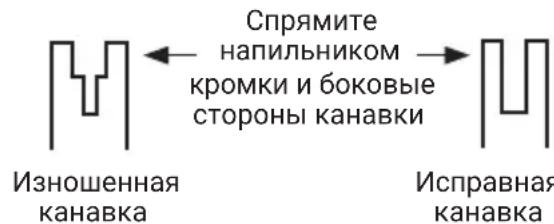
3aMeHnTe HaPablaHOuyo 5HHy KOrDa n3bI
n3HOWeHbI,ecn l 5Ha NOrHyTa IIN TpeChyJa,
KOrDa npOncXoDNT nepeRpeB INN NOBnIOCTc
3a3y6pInHbI Ha peKax. Pn HEO6xOIMOCtN
3aMeHbI,NCNoJIb3yIe ToIbKO HaPapBnIOUHe
5HHbI,yKa3aHHbIE B CnICKe DeTaleN dJI
peMOHTa DnBaSei NIIbI IIN Ha NaKLeiKaX,
pacnoJIOXeHHbIX Ha 6eH30nJIe.
3aMeHa 1nHbI n ceiN
3aMeHnTe 9eNb,ecN 3y6b8cNtHKOM N3HOWeHbI, YTO6bl INMOXHO 6blIO 3aToUHTb,INJIKoTgA 9eNb OCTaHaBnIBaE7c. IcNoJIb3yIte TOnbKO 9eNb dJIa 3aMeHbI pEINOJKeHHyIO B DaHHO INHCTpyKcUN. OcMOTpIte HAnpaBnIAOuSyIO shHy nepeD Tem Ka3 aToUHTb 9eNb. IN3HOWeHHa INJINOBpeKdEHHag HAnpaBnIOuaa WnHa He6e3OpacHa. IN3HOWeHHa INI NOBpeKdEHHag HAnpaBnIAOu7a WnHa npNBEdET K NOBpeKdEHNO 9eNi. TaKke OHa 3aTpYdnIT pe3Ky.
BcTaBbTe yuKn KpeNexHo naneHn uHHb I HOByIO uHHy, 3aTayHB BVHT no YacOBoC TpeJIke. BcTaBbTe BbcTybl Ha naHeJn (a) B na3bl uHHbl. (CMOTpnte pnc.R)
3ATOYKA NJIbHOI LEPIN

OCTOPOXHO! BbIKIOHTe H3BJIeKNTe 6aTapeHbI 6JOK npeD nccJeIOBaHHem HnCnpaBHOCTN.
2000/14/EC n3MeHeH 2005/88/EC
YBeDOMJIeHHbI OpraH, BOBJeEHbI
2000/14/EC 3MeHeHa 2005/88/EC:
-Процура оцehко COOTBeTCTBnB B COOTBeTCTBnC
PpIIOxKeHne V
3aMeCTeIb IaBHorO INXKeHepa,
TeCTnPOBaHne n cepTnΦnKaζnA
Positec Technology (China) Co., Ltd.
18, Dongwang Road, Suzhou Industrial
Park, Jiangsu 215123, P. R. China
EAC
Hmnprep:OOO KBT 3Kcnept
Adep: Pocn, MockBa, 119607, npocneK MmUpynHckn, dom 31, Kopnyc 7, nomeueHne 40/2
Tepeon: +7 (495) 107-02-72
3NeKtpoHnHa noUta kvt@kvtservice.su
CTpana npo3BODCTBa: KHP
I3roToBnTeJIb: IOn3nteK TexHoloJxN (KHP) Ko., IITd.
Ampc:Homep 18,OnBaHr Poyd,CyXoY INDaCTPnAn NapK,3aHcy,KHP
Cpok cnyx6bI n3dennr: 6 neT
Cpok rapaHTn: 2 roda
Data npon3BODCTBa n3dEJnA: yKa3aHa Ha n3dEJIiN
YnolHOMOeHHoe Iuio dIy npHrtna ppeTeH3n: OOO «IO3NTEK-EBPA3nra
Ampec: Poccncka Phedepaunr, 117342, r. MockBa, yI. ByTnepoBa, d. 17, 3Taxk 3 Kom 67
Telefoh cepBnchoi cnyk6bl 000 «I03NTEK-EBPA3NIA»:+7(495)136-83-96
3NeKtpoHHa noTuTa service.ru@positecgroup.com
WORXNITRO
www.worx.com
Copyright © 2023, Positec. All Rights Reserved.
AR01740701