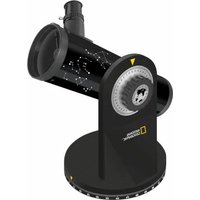
9015000 - Telescope National Geographic - Free user manual and instructions
Find the device manual for free 9015000 National Geographic in PDF.


| Brand | National Geographic |
| Model | 9015000 |
| Product type | Telescope |
| Focal length of the objective | 350 mm |
| Mount | Altazimuth (altitude and azimuth) |
| Included eyepieces | 20 mm (18x) and 6 mm (58x) |
| Barlow lens | 2x (doubles magnification) |
| Moon filter | Included |
| Smartphone adapter | Included, with suction cup mount |
| Astronomy software | Included (download) |
| Compass | Integrated |
| Dimensions | Not specified in the manual |
| Weight | Not specified in the manual |
| Power supply | None (optical instrument) |
| Usage | Stable surface, manual orientation |
| Lens cleaning | Soft lint-free cloth, glasses cleaner if necessary |
| Mirror cleaning | Blower or soft brush, do not touch |
| Safety | Never look directly at the sun, risk of blindness |
| Protection | Store with dust caps, avoid humidity |
| Repairability | Contact the retailer for defects |
| Warranty | 2 years, extension possible via registration |
| Observable objects | Moon, Orion Nebula (M42), Ring Nebula (M57), Dumbbell Nebula (M27) |
Frequently Asked Questions - 9015000 National Geographic
User questions about 9015000 National Geographic
0 question about this device. Answer the ones you know or ask your own.
Ask a new question about this device
Download the instructions for your Telescope in PDF format for free! Find your manual 9015000 - National Geographic and take your electronic device back in hand. On this page are published all the documents necessary for the use of your device. 9015000 by National Geographic.
USER MANUAL 9015000 National Geographic
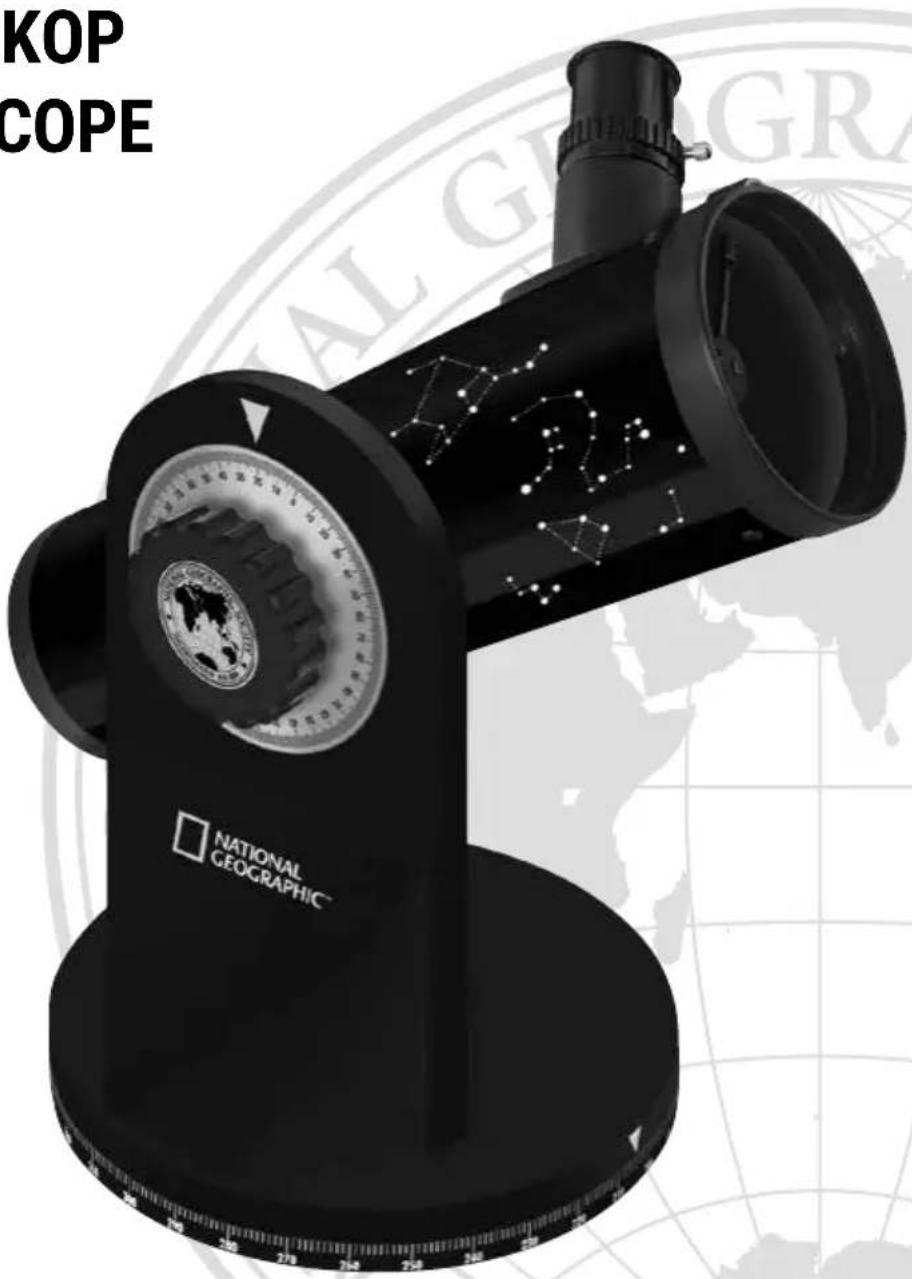
KOMPAKT-TELESKOP COMPACT TELESCOPE 76/350
EN Operating instructions
FR Mode d'emploi
NL Handleiding
natural_image
Simple line drawing of a person using a telescope (no text or symbols)SOFTWARE DOWNLOAD:
EN Operating Instructions....7
Durchmesser: 3.476 km
Risk of bodily injury!
Never use this device to look directly at the sun or in the direct proximity of the sun. This will result in a risk of blindness.
- Children should only use the device under adult supervision. Keep packaging material, like plastic bags and rubber bands, out of the reach of children, as they pose a choking hazard.
- Never subject the device, especially the optics, to direct sunlight. The concentration of light can cause fires or burns.
- Do not disassemble the device. In the event of a defect, please contact your dealer. The dealer will contact the Service Centre and can send the device in to be repaired, if necessary.
- Do not expose the device to high temperatures.

Privacy protection!
This device is intended only for private use. Please heed the privacy of other people. Do not use it to look into apartments, for example.
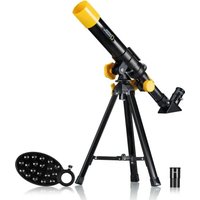
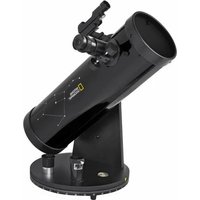
Your telescope consists of these parts:
- Focus wheel
- Telescope (Telescope tube)
- Compass
- Alt-azimuth mount
- Azimuth scale
- Scale with 90° steps
- Height adjustment wheel
Additional equipment:
- Two Eyepieces (6 mm, 20 mm)
- Barlow lens 2X
- Moon filter
- Smartphone holder
- Software
Please look for a suitable location to set up your telescope before you begin. Use a stable surface like a table or countertop.
Pointing your telescope
Azimuthal mounting means that you can move your telescope up and down, left and right.
With the height adjustment wheel (7) and the turnable azimuth mount, you can point the telescope at any object you want. Use the wheel (7) to tilt the telescope up and down. By using the azimuth mount like a turntable you can pan the telescope to the left and to the right.
Which eyepiece is right?
It is important that you always choose an eyepiece with the highest focal width for the beginning of your observation. Afterwards, you can gradually move to eyepieces with smaller focal widths. The focal width is indicated in millimeters, and it is written on each eyepiece. In general, the larger the focal width of an eyepiece, the smaller the magnification. There is a simple formula for calculating the magnification:
Focal width of the telescope tube / Focal width of the eyepiece
= Magnification
The magnification is also depends on the focal width of the telescope tube. The telescope has a focal length of 350 mm. From this formula, we see that if you use an eyepiece with a focal width of 20 mm, you will get the following magnification:
350 mm / 20 mm = 18X magnification
The table below shows some common magnifications.
| Telescope tube focal width | Focal width of eyepiece Magnification | Magnification with | 2x Barlow lens |
| 350 mm 20 mm 18X 35X | |||
| 350 mm 6 mm 58X 117X |
Smartphone holder
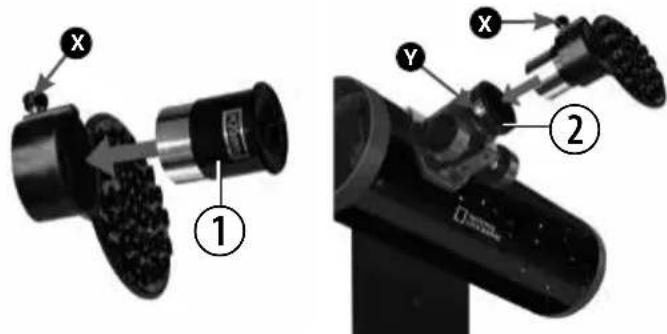
Insert the eyepiece (1) into the smartphone holder and tighten the screw (X) to the bracket firmly. Then set the smartphone holder with the eyepiece into the eyepiece connection (2) and tighten the clamping screws (Y) by hand firmly. Now start your smartphone camera app and press your smartphone on the plate. Make sure that it is properly secured. The camera should rest just above the eyepiece. Place the smartphone exactly over the eyepiece, so that the image is exactly centered on your display. It may be necessary to use the zoom function to
fill out the whole screen of your smartphone. The suction cups must be dry, clean and free from all kinds of dust and dirt. We assume no responsibility for dropped and broken smartphones due to incorrect handling.
Astronomy Software Download
- Clean the eyepieces and lenses only with a soft, lint-free cloth, like a microfibre cloth. Do not apply excess pressure to the cloth to avoid scratching the lenses.
- To remove more stubborn dirt, moisten the cleaning cloth with an eyeglass-cleaning solution, and wipe the lenses gently.
- Protect the device from dust and moisture. After use, particularly in high humidity, let the device acclimatize for a short period of time, so that the residual moisture can dissipate before storing. Remove the dust cover and store it in the included bag during use.
- To remove dust on the mirrors, use a fine brush or air blower (from your local camera shop or optician). Don't touch any mirror surface with your fingers – they may damage the coating.

DISPOSAL
- Dispose of the packaging materials properly, according to their type, such as paper or cardboard. Contact your local waste-disposal service or environmental authority for information on the proper disposal.
- Please take the current legal regulations into account when disposing of your device. You can get more information on the proper disposal from your local waste-disposal service or environmental authority.
Telescope ABC:
What do the following terms mean?
Barlow Lens:
The Barlow lens was named after its inventor, Peter Barlow, a British mathematician and physicist who lived from 1776–1862. The lens can be used to increase the focal width of a telescope. Depending on the type of lens, it is possible to double or even to triple the focal width. As a result, the magnification can also be increased. Also, see Eyepiece.
Focal width:
Everything that magnifies an object via an optic (lens) has a certain focal width. The focal width is the length of the path the light travels from the surface of the lens to its focal point. The focal point is also referred to as the focus. In focus, the image is clear. In the case of a telescope, the focal widths of the telescope tube and the eyepieces are combined.
Lens:
The lens bends the light which falls on it in such a way that the light creates a clear image at the focal point, after it has traveled a certain distance (focal width).
Eyepiece:
An eyepiece is a viewing system comprised of one or more lenses. The eyepiece magnifies the clear image generated at the focal point of a lens.
There is a simple formula for calculating magnification:
Focal width of the telescope tube / Focal width of the eyepiece
= Magnification
In a telescope, the magnification depends on both the focal width of the telescope tube and the focal width of the eyepiece.
Magnification:
The magnification corresponds to the difference between observation with the naked eye and observation through a magnification apparatus (e.g. a telescope). Observation with the naked eye is considered single, or 1x magnification. Accordingly, if a telescope has a magnification of 30X, then an object viewed through the telescope will appear 30 times larger than it would with the naked eye. Also see Eyepiece.
Useful accessories can be found at www.bresser.de
Possible objects for observation:
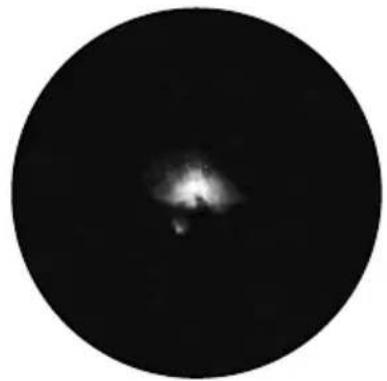
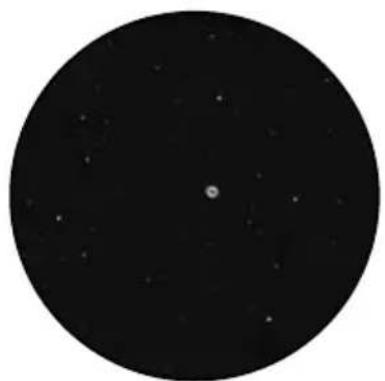
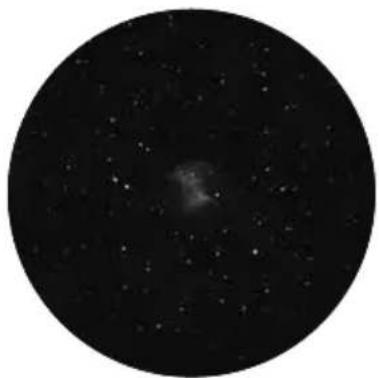
We have compiled and explained a number of very interesting celestial bodies and star clusters for you. On the accompanying images at the end of the instruction manual, you can see how objects will appear in good viewing conditions through your telescope using the eyepieces that came with it.
The Moon
The moon is the Earth's only natural satellite.
Diameter: 3,476 km
Distance: approx. 384,400 km from Earth
The moon has been known to humans since prehistoric times. It is the second brightest object in the sky (after the sun). Because the moon circles the Earth once per month, the angle between the Earth, the moon and the sun is constantly changing; one sees this change in the phases of the moon. The time between two consecutive new moon phases is about 29.5 days (709 hours).
Orion Nebula (M 42)
M 42 in the Orion constellation
Distance: 1,344 light years from Earth
With a distance of about 1,344 light years from the Earth, the Orion Nebula (Messier 42, abbreviation: M 42) is the brightest diffuse nebula in the sky it is visible with the naked eye and a rewarding object for telescopes in all sizes, from the smallest field glass to the largest earthbound observatories and the Hubble Space Telescope.
When talking about Orion, we're actually referring to the main part of a much larger cloud of hydrogen gas and dust, which spreads out over the half of the Orion constellation. The expanse of this enormous cloud stretches several hundred light years.
Ring Nebula in Lyra constellation (M 57)
M 57 in the Lyra constellation
Distance: 2,412 light years from Earth
The famous Ring Nebula (M 57) in the constellation of Lyra is often viewed as the prototype of a planetary nebula; it is one of the magnificent features of the Northern Hemisphere's summer sky. Recent studies have shown that it is probably comprised of a ring (torus) of brightly shining material that surrounds the central star (only visible with larger telescopes), and not of a gas structure in the form of a sphere or an ellipse.
If you were to look at the Ring Nebula from the side, it would look like the Dumbbell Nebula (M27). With this object, we're looking directly at the pole of the nebula.
Dumbbell Nebula in the Vulpecula (Fox) constellation (M 27)
M 27 in the Fox constellation
Distance: 1,360 light years from Earth
The Dumbbell Nebula (M 27) in the Fox constellation was the first planetary nebula ever discovered. On 12 July 1764, Charles Messier discovered this new and fascinating class of objects. We see this object almost directly from its equatorial plane. If you could see the Dumbbell Nebula from one of its poles, it would probably reveal that it's in the shape of a ring, and we would see something very similar to what we know from the Ring Nebula (M 57). In reasonably good weather, we can see this object well even at small magnifications.
Warranty and Service
The regular guarantee period is 2 years and begins on the day of purchase. To benefit from an extended voluntary guarantee period as stated on the gift box, registration on our website is required. You can consult the full guarantee terms as well as information on extending the guarantee period and details of our services at www.bresser.de/warranty_terms.

BESCHERMING van privacy!
natural_image
Black-and-white circular image of the Moon showing its full moon against a dark sky (no text or symbols)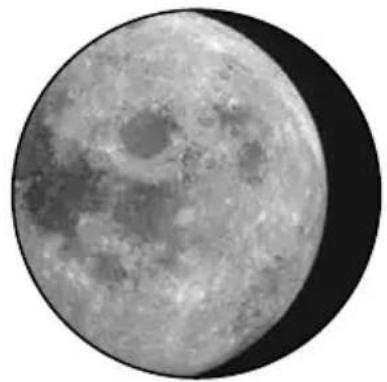
natural_image
Close-up grayscale image of the Moon's surface showing craters and maria (no text or symbols)Orion Nebula (M 42)
natural_image
Circular black-and-white astronomical image showing a bright central object against a dark background, resembling a star or nebula (no text or symbols)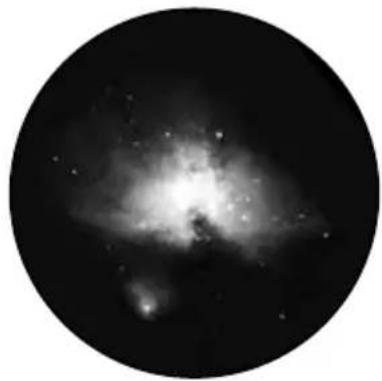
natural_image
Black-and-white astronomical image of a spiral galaxy with bright core and surrounding stars (no text or symbols)Ring Nebula in Lyra constellation (M 57)
natural_image
Circular black image with a central bright spot and scattered white dots against a dark background (no text or symbols)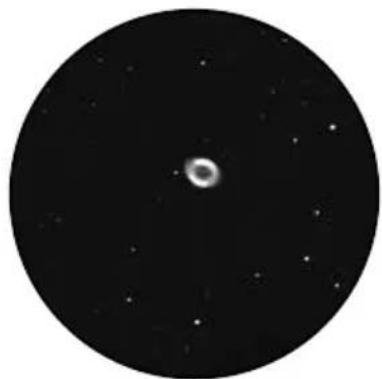
natural_image
Circular astronomical image showing a bright central object surrounded by scattered stars against a dark background (no text or symbols)Dumbbell Nebula in the Vulpecula (Fox) constellation (M 27)
natural_image
Circular black-and-white astronomical image showing a diffuse nebula against a starry background (no text or symbols)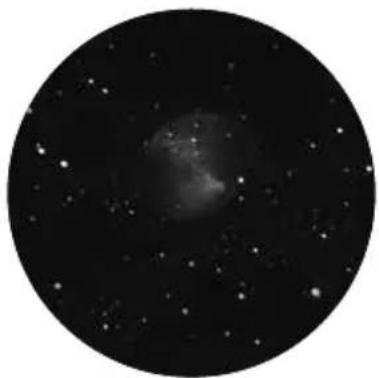
natural_image
Circular black-and-white astronomical image showing a diffuse nebula or galaxy against a starry background (no text or symbols)KOMPAKT-TELESKOP COMPACT TELESCOPE 76/350

National Geographic supports vital work in conservation, research, exploration, and education.
Visit our website: www.nationalgeographic.com
© 2018 National Geographic Partners LLC. All rights reserved. NATIONAL GEOGRAPHIC and Yellow Border Design are trademarks of the National Geographic Society, used under license.

BRESSER®
Bresser GmbH

- KOMPAKT-TELESKOP COMPACT TELESCOPE 76/350
- Risk of bodily injury!
- Privacy protection!
- Your telescope consists of these parts:
- Additional equipment:
- Pointing your telescope
- Which eyepiece is right?
- Smartphone holder
- Astronomy Software Download
- DISPOSAL
- Telescope ABC:
- Barlow Lens:
- Focal width:
- Lens:
- Eyepiece:
- There is a simple formula for calculating magnification:
- Magnification:
- Possible objects for observation:
- The Moon
- Orion Nebula (M 42)
- Ring Nebula in Lyra constellation (M 57)
- Dumbbell Nebula in the Vulpecula (Fox) constellation (M 27)
- Warranty and Service
- BESCHERMING van privacy!
- BRESSER®
Brand : National Geographic
Model : 9015000
Category : Telescope