
KG161.9 - String Trimmer KRESS - Free user manual and instructions
Find the device manual for free KG161.9 KRESS in PDF.



| Brand | Kress |
| Model | KG161.9 |
| Product type | Cordless grass trimmer |
| Intended use | Cutting tall grass and weeds, sloping areas |
| Power supply | Lithium-ion battery 60 V (nominal voltage 54 V) |
| Recommended charger | KA3712 (3.0 A) |
| Recommended battery | KA3001 (2.5 Ah) |
| No-load speed | 5600 rpm |
| Cutting diameter | 41 cm (16 inches) |
| Line diameter | 2.4 mm (0.095 inch) |
| Line length (dual exit) | 6 m (20 ft) |
| Weight (tool only) | 3.12 kg (6.88 lbs) |
| Sound pressure level LpA | 78.7 dB(A), KpA=3 dB(A) |
| Sound power level LwA | 93.1 dB(A), KwA=1.48 dB(A) |
| Main functions | Variable speed (ECO mode), line feeding system by bump head, safety lock |
| Maintenance | Clean with damp cloth and neutral detergent; soak cutting line in water to reduce wear; remove battery after use |
| Safety | Debris guard, switch lock, projection protection, safety distance 15 m, PPE required (goggles, hearing protection, gloves, shoes) |
| Spare parts and repairability | Spool, cutting line 2.4 mm, cutting head, protective cover; repair by authorized professional |
| Storage | Dry and secure place, out of reach of children, battery removed |
| Transport | Hold by center of shaft, horizontal position; in vehicle, avoid tipping |
| Environmental protection | Do not dispose with household waste; recycling at specialized center |
| Warranty / Compliance | Compliant with directives 2006/42/EC, 2014/30/EU, 2011/65/EU |
Frequently Asked Questions - KG161.9 KRESS
User questions about KG161.9 KRESS
0 question about this device. Answer the ones you know or ask your own.
Ask a new question about this device
Download the instructions for your String Trimmer in PDF format for free! Find your manual KG161.9 - KRESS and take your electronic device back in hand. On this page are published all the documents necessary for the use of your device. KG161.9 by KRESS.
USER MANUAL KG161.9 KRESS
Introduction. 2
Component List. 3
Product Safety. 4
Assembly & Operation. 8
Maintenance. 10
Transporting. 12
Storage 12
Cleansing. 12
Troubleshooting 13
Technical Data. 14
Environmental Protection. 15
Declaration of Conformity 15
INTRODUCTION
Dear Customer,
Thank you for buying this Kress product. We are dedicated to developing high quality products to meet your landscaping requirements.
The Kress brand is synonymous with premium quality service. Over the years of your product's life, if you have any questions or concerns about your product, please contact your location of purchase or our Customer Service Team for assistance.
We are confident you will enjoy working with your Kress product for years to come.
INTENDED USE
This machine is intended for cutting grass and high weeds that cannot be reached with a lawn mower. This machine is also used on areas with slopes not conducive to mowing.
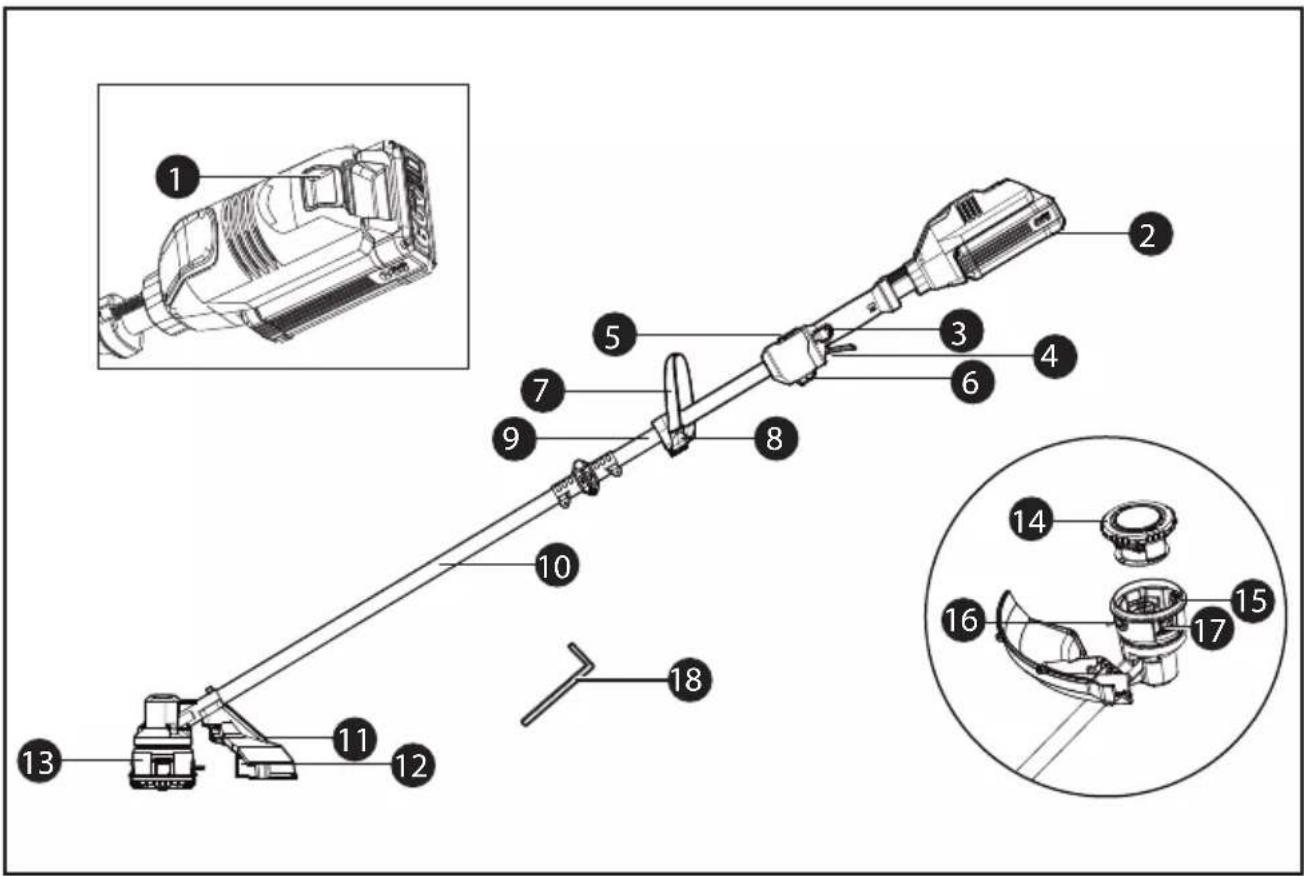
COMPONENT LIST
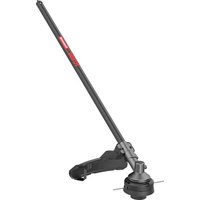
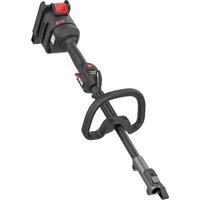
- BATTERY RELEASE
- BATTERY PACK*
- TRIGGER SWITCH LOCK-OUT
- THROTTLE TRIGGER
- ECO BUTTON
- SHOULDER STRAP MOUNT
- FRONT HANDLE
- LOCKING KNOB
- UPPER SHAFT
- LOWER SHAFT
- DEBRIS GUARD
- LINE CUTTER
- TRIMMER HEAD
- SPOOL CAP
- SPOOL
- EYELET
- CAP RELEASE LATCH
- HEX KEY *
PRODUCT SAFETY GENERAL OUTDOOR POWER EQUIPMENT SAFETY WARNINGS
WARNING:Read all safety warnings, instructions, illustrations and specifications provided with this outdoor power equipment. Failure to follow all instructions listed below may result in electric shock, fire and/or serious injury.
Save all warnings and instructions for future reference.
The term "outdoor power equipment" in the warnings refers to your mains-operated (corded) outdoor power equipment or battery-operated (cordless) outdoor power equipment.
1. Work area safety
a) Keep work area clean and well lit. Cluttered or dark areas invite accidents.
b) Do not operate outdoor power equipments in explosive atmospheres, such as in the presence of flammable liquids, gases or dust. Outdoor power equipments create sparks which may ignite the dust or fumes.
c) Keep children and bystanders away while operating a outdoor power equipment. Distractions can cause you to lose control.
2. Electrical safety
a) Outdoor power equipment plugs must match the outlet. Never modify the plug in any way. Do not use any adapter plugs with earthed (grounded) outdoor power equipments. Unmodified plugs and matching outlets will reduce risk of electric shock.
b) Avoid body contact with earthed or grounded surfaces, such as pipes, radiators, ranges and refrigerators. There is an increased risk of electric shock if your body is earthed or grounded.
c) Do not expose outdoor power equipments to rain or wet conditions. Water entering a outdoor power equipment will increase the risk of electric shock.
d) Do not abuse the cord. Never use the cord for carrying, pulling or unplugging the outdoor power equipment. Keep cord away from heat, oil, sharp edges or moving parts. Damaged or entangled cords increase the risk of electric shock.
e) When operating a outdoor power equipment outdoors, use an extension cord suitable for outdoor use. Use of a cord suitable for outdoor use reduces the risk of electric shock.
f) If operating a outdoor power equipment in a damp location is unavoidable, use a residual current device (RCD) protected supply. Use of
an RCD reduces the risk of electric shock.
3. Personal safety
a) Stay alert, watch what you are doing and use common sense when operating a outdoor power equipment. Do not use an outdoor power equipment while you are tired or under the influence of drugs, alcohol or medication. A moment of inattention while operating outdoor power equipments may result in serious personal injury.
b) Use personal protective equipment. Always wear eye protection. Protective equipment such as dust mask, heavy or sturdy safety shoes, hard hat, or hearing protection used for appropriate conditions will reduce personal injuries.
c) Prevent unintentional starting. Ensure the switch is in the off-position before connecting to power source and/or battery pack, picking up or carrying the tool. Carrying outdoor power equipments with your finger on the switch or energising outdoor power equipments that have the switch on invites accidents.
d) Remove any adjusting key or wrench before turning the outdoor power equipment on. A wrench or a key left attached to a rotating part of the outdoor power equipment may result in personal injury.
e) Do not overreach. Keep proper footing and balance at all times. This enables better control of the outdoor power equipment in unexpected situations.
f) Dress properly. Do not wear loose clothing or jewellery. Keep your hair, clothing and gloves away from moving parts. Loose clothes, jewellery or long hair can be caught in moving parts.
g) If devices are provided for the connection of dust extraction and collection facilities, ensure these are connected and properly used. Use of dust collection can reduce dust-related hazards.
h) Do not let familiarity gained from frequent use of tools allow you to become complacent and ignore tool safety principles. A careless action can cause severe injury within a fraction of a second.
4. Outdoor Power Equipment use and care
a) Do not force the outdoor power equipment. Use the correct outdoor power equipment for your application. The correct outdoor power equipment will do the job better and safer at the rate for which it was designed.
b) Do not use the outdoor power equipment if the switch does not turn it on and off. Any outdoor power equipment that cannot be controlled with the switch is dangerous and must be repaired.
c) Disconnect the plug from the power source and/or the battery pack from the outdoor power equipment before making any adjustments, changing accessories, or storing
outdoor power equipments. Such preventive safety measures reduce the risk of starting the outdoor power equipment accidentally.
d) Store idle outdoor power equipments out of the reach of children and do not allow persons unfamiliar with the outdoor power equipment or these instructions to operate the outdoor power equipment. Outdoor power equipments are dangerous in the hands of untrained users.
e) Maintain outdoor power equipments. Check for misalignment or binding of moving parts, breakage of parts and any other condition that may affect the outdoor power equipment's operation. If damaged, have the outdoor power equipment repaired before use. Many accidents are caused by poorly maintained outdoor power equipments.
f) Keep cutting tools sharp and clean. Properly maintained cutting tools with sharp cutting edges are less likely to bind and are easier to control.
g) Use the outdoor power equipment, accessories and tool bits etc. in accordance with these instructions, taking into account the working conditions and the work to be performed. Use of the outdoor power equipment for operations different from those intended could result in a hazardous situation.
h) Keep handles and grasping surfaces dry, clean and free from oil and grease. Slippery handles and grasping surfaces do not allow for safe handling and control of the tool in unexpected situations.
5. Battery tool use and care
a) Recharge only with the charger specified by the manufacturer. A charger that is suitable for one type of battery pack may create a risk of fire when used with another battery pack.
b) Use outdoor power equipments only with specifically designated battery packs. Use of any other battery packs may create a risk of injury and fire.
c) When battery pack is not in use, keep it away from other metal objects, like paper clips, coins, keys, nails, screws or other small metal objects, that can make a connection from one terminal to another. Shorting the battery terminals together may cause burns or a fire.
d) Under abusive conditions, liquid may be ejected from the battery; avoid contact. If contact accidentally occurs, flush with water. If liquid contacts eyes, additionally seek medical help. Liquid ejected from the battery may cause irritation or burns.
e) Do not use a battery pack or tool that is damaged or modified. Damaged or modified batteries may exhibit unpredictable behaviour resulting in fire, explosion or risk of injury.
f) Do not expose a battery pack or tool to fire or excessive temperature. Exposure to fire or temperature above 130^ may cause explosion.
g) Follow all charging instructions and do not charge the battery pack or tool outside the temperature range specified in the
instructions. Charging improperly or at temperatures outside the specified range may damage the battery and increase the risk of fire.
6. Service
a) Have your outdoor power equipment serviced by a qualified repair person using only identical replacement parts. This will ensure that the safety of the outdoor power equipment is maintained.
b) Never service damaged battery packs. Service of battery packs should only be performed by the manufacturer or authorized service providers.
GRASS TRIMMER SAFETY WARNINGS
a) Do not use the machine in bad weather conditions, especially when there is a risk of lightning. This decreases the risk of being struck by lightning.
b) Thoroughly inspect the area for wildlife where the machine is to be used. Wildlife may be injured by the machine during operation.
c) Thoroughly inspect the area where the machine is to be used and remove all stones, sticks, wires, bones, and other foreign objects. Thrown objects can cause personal injury.
d) Before using the machine, always visually inspect to see that the cutter or blade and the cutter or blade assembly are not damaged. Damaged parts increase the risk of injury.
e) Follow instructions for changing accessories. Improperly tightened blade securing nuts or bolts may either damage the blade or result in it becoming detached.
f) The rated rotational speed of the blade must be at least equal to the maximum rotational speed marked on the machine. Blades running faster than their rated rotational speed can break and fly apart.
g) Wear eye, ear, head and hand protection. Adequate protective equipment will reduce personal injury by flying debris or accidental contact with the cutting line or blade.
h) While operating the machine, always wear safety footwear. Do not operate the machine when barefoot or wearing open sandals. This reduces the chance of injury to the feet from contact with a moving cutter, line or blade.
i) While operating the machine, always wear long trousers. Exposed skin increases the likelihood of injury from thrown objects.
j) Keep bystanders away while operating the machine. Thrown debris can result in serious personal injury.
k) Always use two hands when operating the machine. Holding the machine with both hands will avoid loss of control.
I) Hold the machine by the insulated gripping surfaces only, because the cutting line or blade may contact hidden wiring. Cutting line
or blades contacting a "live" wire may make exposed metal parts of the machine "live" and could give the operator an electric shock.
m) Always keep proper footing and operate the machine only when standing on the ground. Slippery or unstable surfaces may cause a loss of balance or control of the machine.
n) Do not operate the machine on excessively steep slopes. This reduces the risk of loss of control, slipping and falling which may result in personal injury.
o) When working on slopes, always be sure of your footing, always work across the face of slopes, never up or down and exercise extreme caution when changing direction. This reduces the risk of loss of control, slipping and falling which may result in personal injury.
p) Keep all parts of the body away from the cutter, line or blade when the machine is operating. Before you start the machine, make sure the cutter, line or blade is not contacting anything. A moment of inattention while operating the machine may result in injury to yourself or others.
q) Do not operate the machine above waist height. This helps prevent unintended cutter or blade contact and enables better control of the machine in unexpected situations.
r) When cutting brush or saplings that are under tension, be alert for spring back. When the tension in the wood fibres is released, the brush or sapling may strike the operator and/or throw the machine out of control.
s) Use extreme caution when cutting brush and saplings. The slender material may catch the blade and be whipped toward you or pull you off balance.
t) Maintain control of the machine and do not touch cutters, lines or blades and other hazardous moving parts while they are still in motion. This reduces the risk of injury from moving parts.
u) Carry the machine with the machine switched off and away from your body. Proper handling of the machine will reduce the likelihood of accidental contact with a moving cutter, line or blade.
v) When transporting or storing the machine, always fit the cover on metal blades. Proper handling of the machine will reduce the likelihood of accidental contact with the blade.
w) Only use replacement cutters, lines, cutting heads and blades specified by the manufacturer. Incorrect replacement parts may increase the risk of breakage and injury.
x) When clearing jammed material or servicing the machine, make sure the switch is off and the battery pack is removed. Unexpected starting of the machine while clearing jammed material or servicing may result in serious personal injury.
SAFETY WARNINGS FOR BATTERY PACK
a) Do not dismantle, open or shred cells or battery pack.
b) Do not short-circuit a battery pack. Do not store battery packs haphazardly in a box or drawer where they may short-circuit each other or be short-circuited by conductive materials. When battery pack is not in use, keep it away from other metal objects, like paper clips, coins, keys, nails, screws or other small metal objects, that can make a connection from one terminal to another. Shorting the battery terminals together may cause burns or a fire.
c) Do not expose battery pack to heat or fire. Avoid storage in direct sunlight.
d) Do not subject battery pack to mechanical shock.
e) In the event of battery leaking, do not allow the liquid to come into contact with the skin or eyes. If contact has been made, wash the affected area with copious amounts of water and seek medical advice.
f) Keep battery pack clean and dry.
g) Wipe the battery pack terminals with a clean dry cloth if they become dirty.
h) Battery pack needs to be charged before use. Always refer to this instruction and use the correct charging procedure.
i) Do not maintain battery pack on charge when not in use.
j) After extended periods of storage, it may be necessary to charge and discharge the battery pack several times to obtain maximum performance.
k) Recharge only with the charger specified by Kress. Do not use any charger other than that specifically provided for use with the equipment.
I) Do not use any battery pack which is not designed for use with the equipment.
m) Keep battery pack out of the reach of children.
n) Retain the original product literature for future reference.
o) Remove the battery from the equipment when not in use.
p) Dispose of properly.
q) Do not use battery packs of different manufacture, size or type.
r) Keep the battery away from microwaves and high pressure.
SYMBOLS
| To reduce the risk of injury, user must read instruction manual | |
| Wear eye protection | |
| Wear ear protection | |
| 15m (50ft) | WARNING - The distance between the machine and bystanders shall be at least 15 m (50 ft)" |
| WARNING - Beware of thrown objects | |
| Do not use metal blades | |
| WARNING - Disconnect battery before maintenance | |
| Waste electrical products must not be disposed of with household waste. Please recycle where facilities exist. Check with your local authorities or retailer for recycling advice. | |
| Do not burn |
| Li-Ion Li-Ion | Li-Ion battery This product has been marked with a symbol relating to 'separate collection' for all battery packs and battery pack. It will then be recycled or dismantled in order to reduce the impact on the environment. Battery packs can be hazardous for the environment and for human health since they contain hazardous substances. |
| Batteries may enter water cycle if disposed improperly, which can be hazardous for ecosystem. Do not dispose of waste batteries as unsorted municipal waste. | |
| Wear protective gloves | |
| High speed. | |
| Low speed | |
| Make sure the battery is removed prior to changing accessories. | |
| Trimming | |
| Do not expose to rain |
NOTE: Before using the tool, read the instruction book carefully.
WARNING:To reduce the risk of injury from thrown objects or contact with the cutting attachment, never operate the trimmer without a properly mounted debris guard. Keep bystanders at least 50 ft. (15 m) away.
BEFORE OPERATION:
Assembling the shaft (See Fig. A)
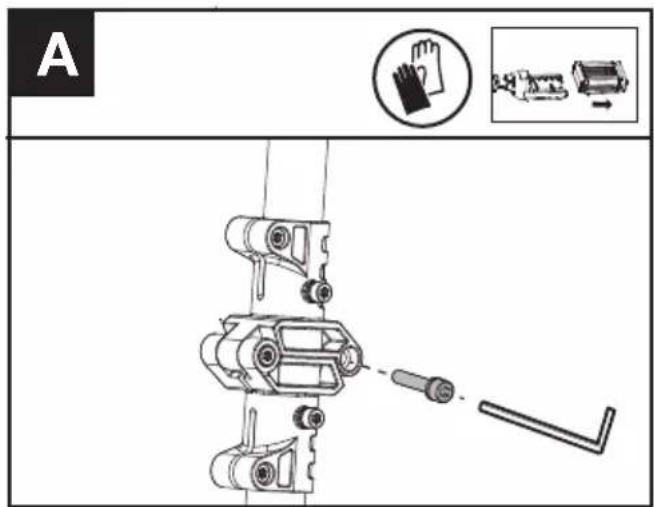
Lock the shaft into fully extended position with the bolt and nut.
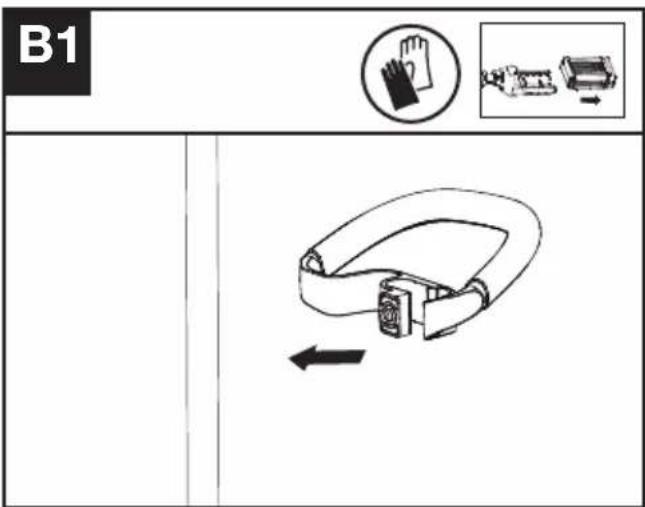
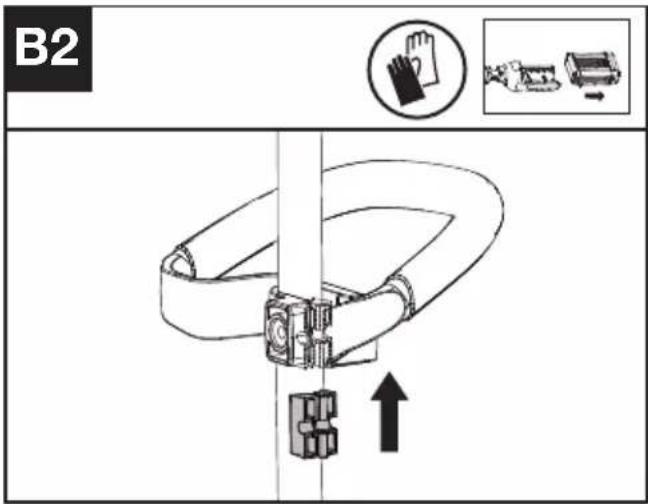
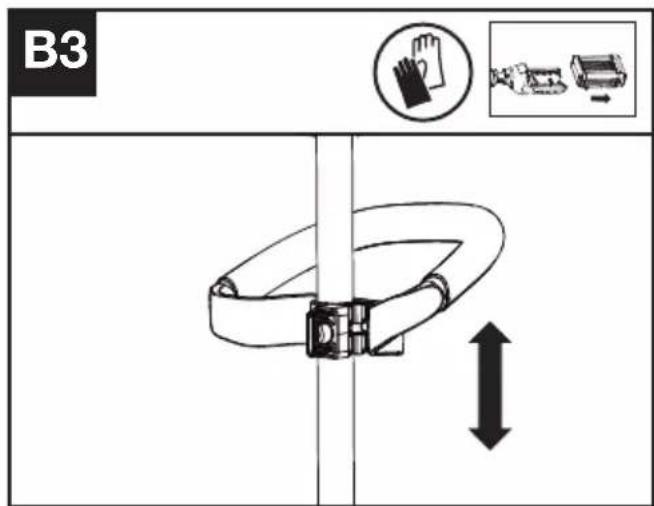
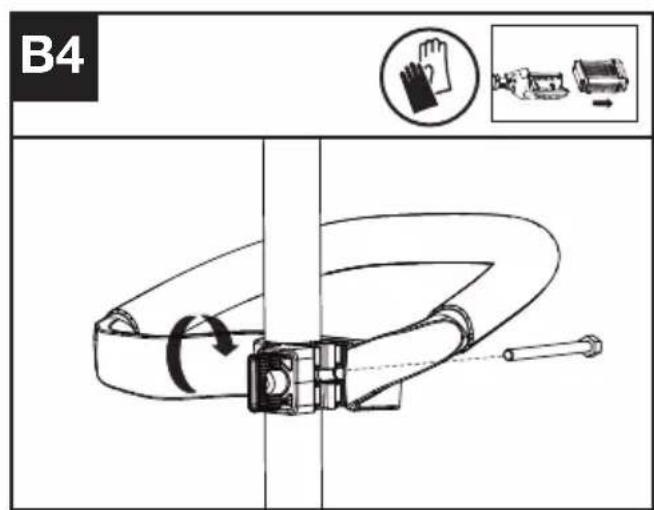
Assembling the front handle (See Fig. B1, B2, B3, B4)
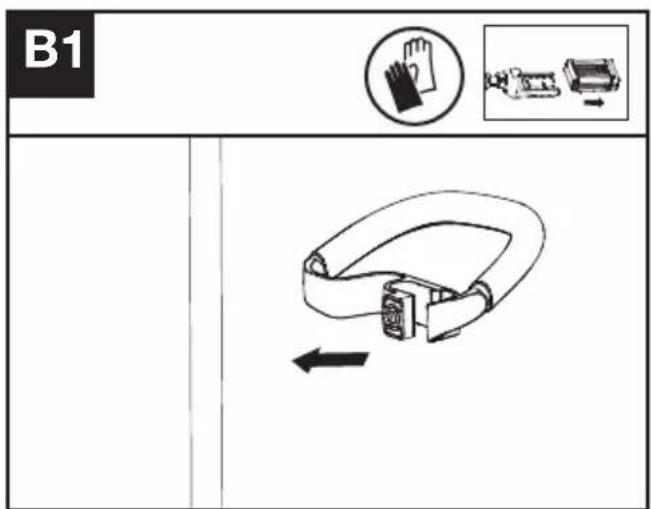
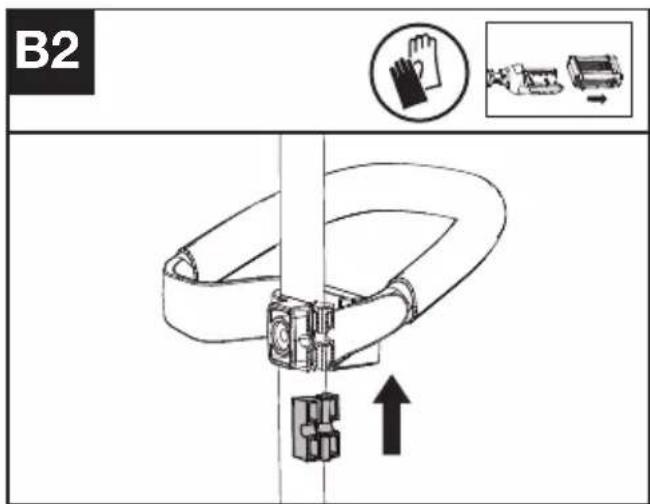
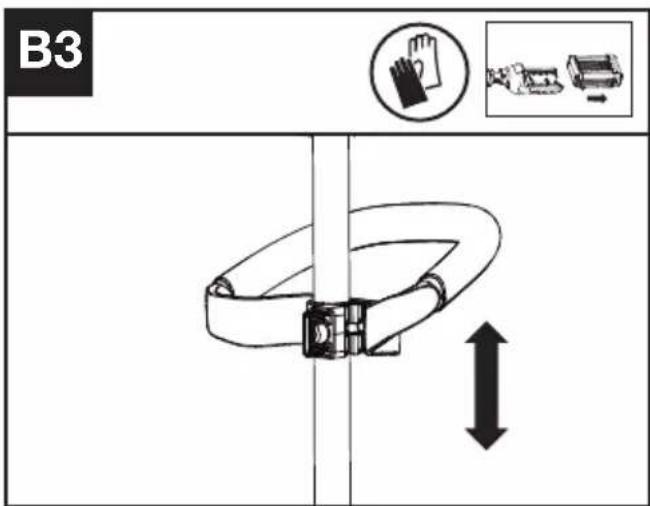
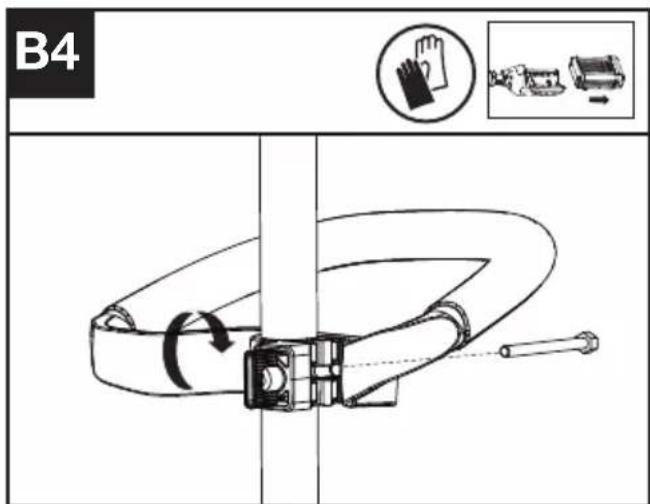
- Attach the Front Handle and lower clamp on the shaft.
2.Put the bolt through the holes.
3.Tighten the Front Handle.
WARNING: Adjust the front handle between the soft sleeve and the clamp so as to make sure your front arm is straight when using the trimmer. (See Fig. B3)
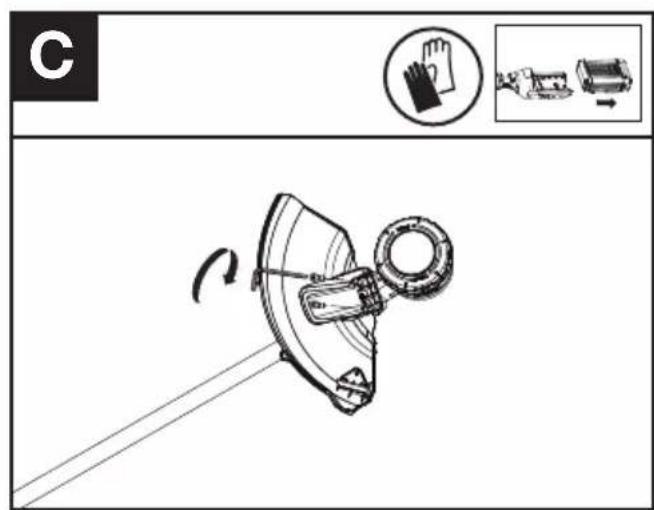
Assembling the Debris Guard (See Fig. C)
Secure the Debris Guard onto the trimmer head with the 2 bolts and hex key provided.
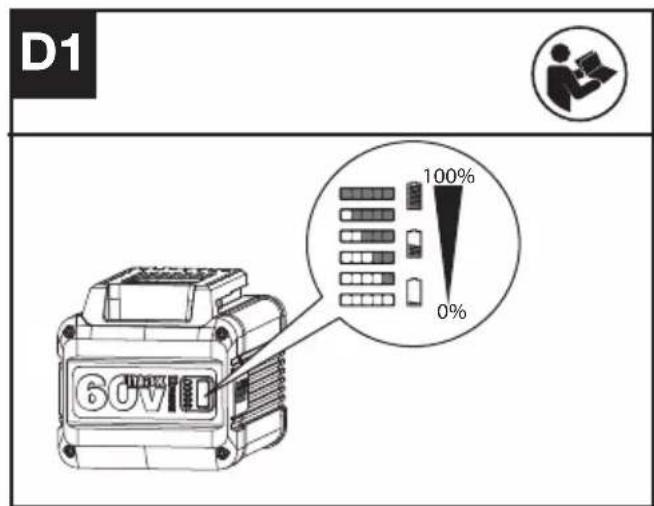
Checking the battery charge condition (See Fig. D1)
| Remarks | LED-light | Battery condition |
| Five green lights are illuminated. | 70% ≤ Power level≤100% | |
| Four green lights are illuminated. | 50% ≤ Power level< 69% | |
| Three green lights are illuminated. | 35% ≤ Power level< 49% |
| Two green lights are illuminated. | 20% ≤ Power level < 34% | |
| One green light is illuminated. | 10% ≤ Power level < 19% | |
| No light is illuminated. | Power level < 10% |
NOTE: Fig. D1 only applies for the battery pack with battery indicator light.
The battery level can be known from the battery indicator light by pressing the button beside the lights. Before starting or after use, press the button beside the power indicator light on the battery pack to check the battery capacity.
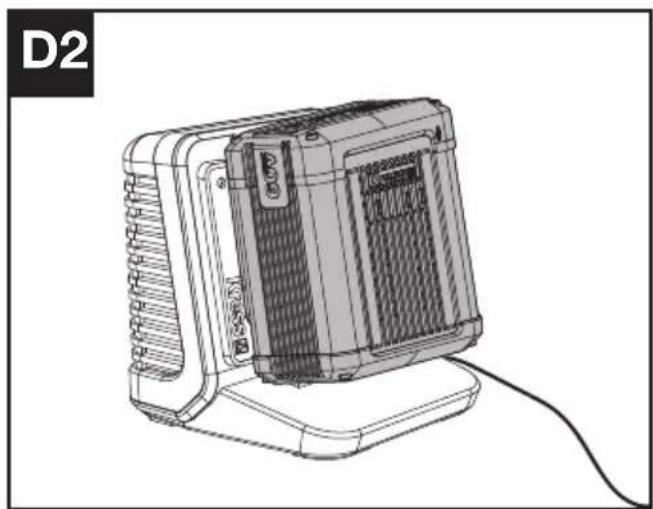
Charging the battery pack (See Fig. D2)
- Your battery pack is partly charged and needs to be fully charged before first use.
- More details can be found in charger's manual.
WARNING! The charger and battery pack are specially designed to work together, do not attempt to use any other devices. Never insert or allow metallic objects into your charger or battery pack connections because of an electrical failure and hazard will occur.
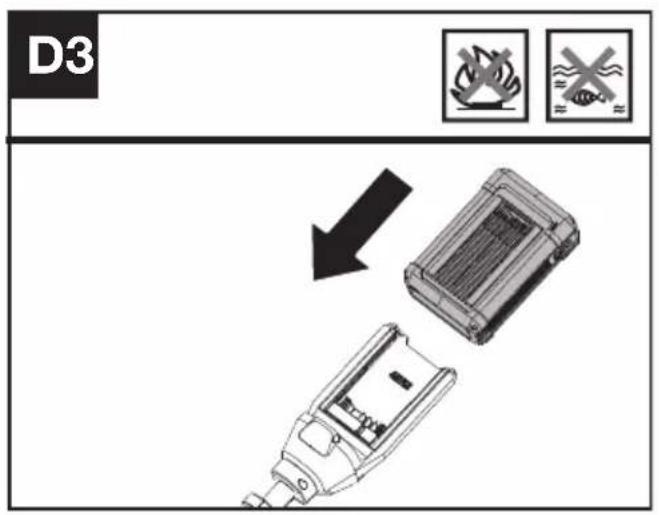
Installing & removing the battery pack (See Fig. D3)
1.Slide the battery pack into the battery compartment until you hear a click.
2. Press the battery release to release battery pack from your tool.
Note: After recharging, insert the battery pack into tool's battery port. A simple push and slight pressure will be sufficient.

OPERATION:
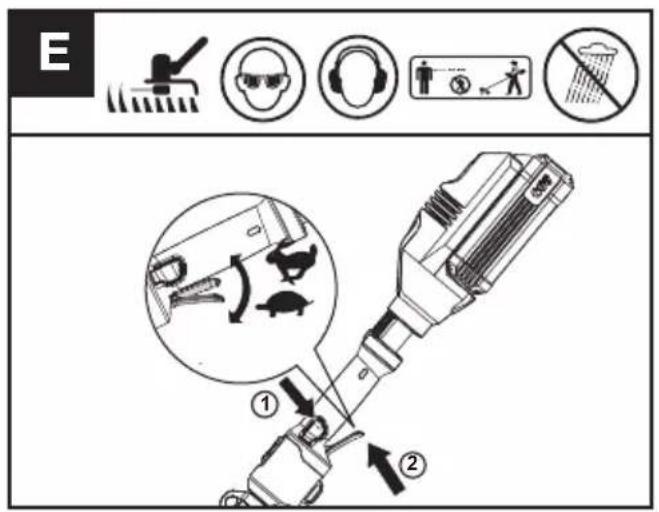
Starting/Stopping the trimmer (See Fig. E)
Press the Operator Presence Switch first, then press the switch trigger to start the machine.
WARNING: The cutting head continues to rotate after the trimmer has been switched off; wait until it has completely stopped then lay down the tool.
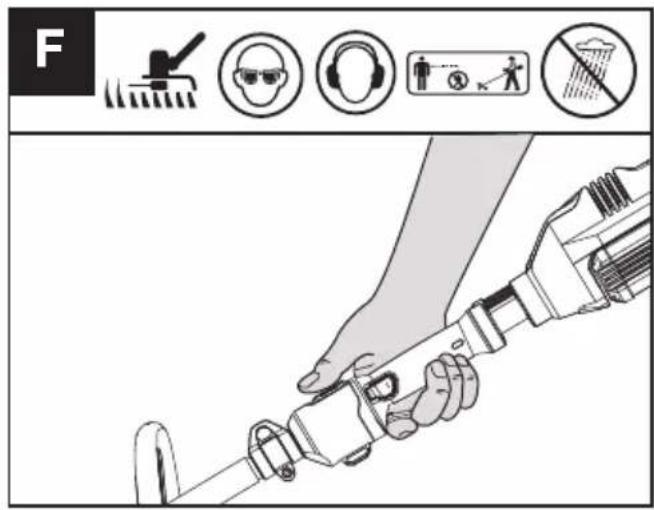
ECO Speed (See Fig. F, G)
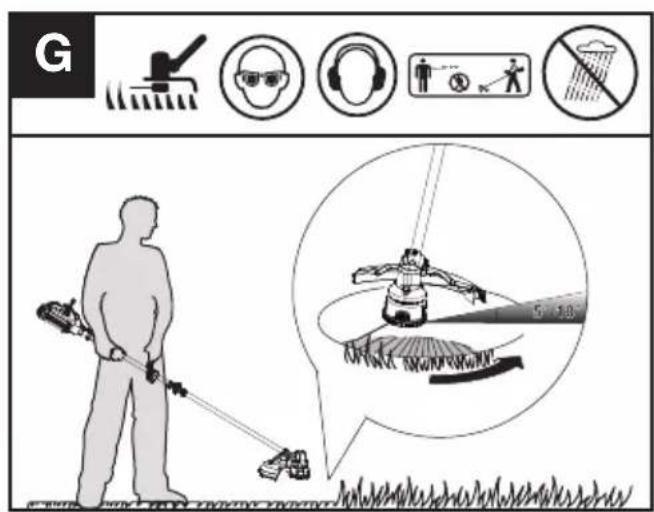
For longer run times and trimming in delicate areas, press the ECO button prior to depressing the throttle trigger. The trimmer will operate at a lower rpm.
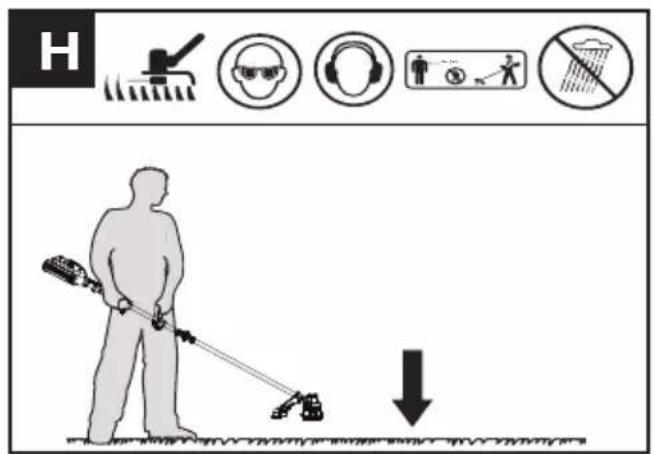
Bump-head feed system (See Fig. H)
The trimmer is equipped with a bump-head system. Just bump the trimmer head while the machine is running, new line will feed out.
Cutting Tips
- Move the trimmer from left to right across the area to be cut; it is less effective when moving from right to left.
- Use the tip of the cutting line to do trimming; do not force the trimmer head into uncut grass.
- Wire and picket fences may cause extra cutting line wear and breakage. Stone and brick walls, curbs, and wood may wear cutting line rapidly.
- Avoid trees and shrubs. Tree bark, wood moldings, siding, and fence posts can easily be damaged by the cutting line.
MAINTENANCE

WARNING! Always remove the battery pack from your trimmer after use.
Always check the product prior to being used for any damage.
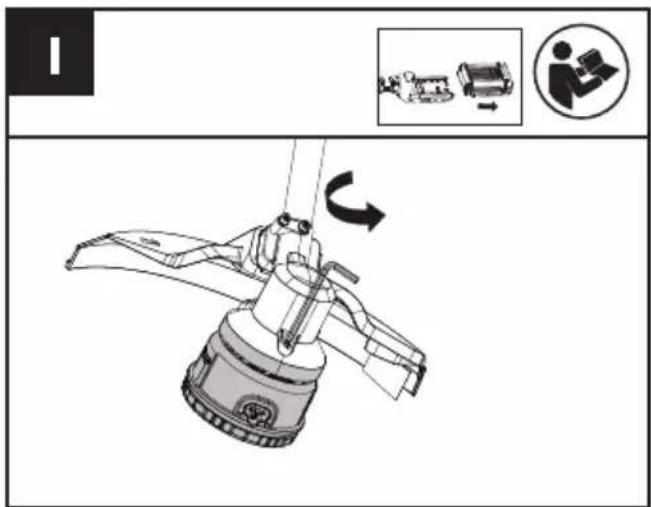
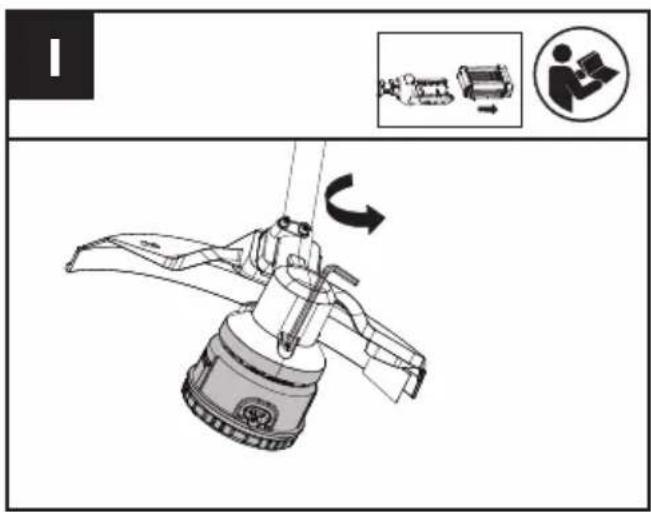
Replacing the trimmer head (See Fig. I)

Warning:Use of wire or metal-reinforced line is not authorized and could be
extremely dangerous. Use only the cutting line recommended in this manual, in combination with the recommended debris guard.

Warning:A damaged or loose cutting attachment head may vibrate, crack,
or come off the trimmer, which may result in serious or fatal injury or property damage. Make sure the trimmer head are properly and securely tightened and in good condition before starting work.
- Insert the hex key into the hole and rotate the trimmer head until it stops in a locked position.
- Then, rotate clockwise to remove it, and counterclockwise to assemble it.
Winding the line (See Fig. J1, J2)
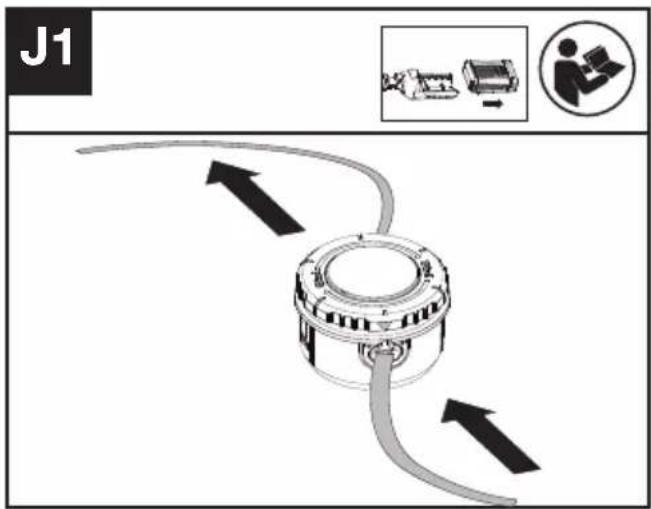
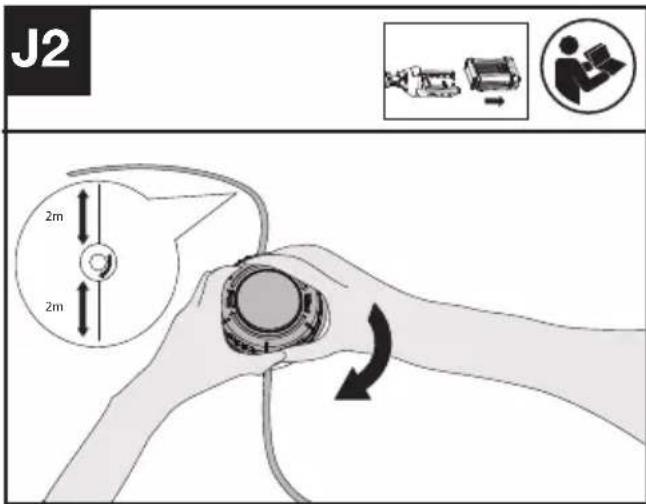
- Insert the replacement line (13 ft or 4 meters) through the eyelet and feed it through the other side.
- Ensure both ends of the line extending out of the trimmer head are the same length. Approximately 6ft or 2 meters on each side of the trimmer head, cut lengths even if necessary.
- Turn the dial clockwise to wind the line inside the spool until about 19cm remains on either side.
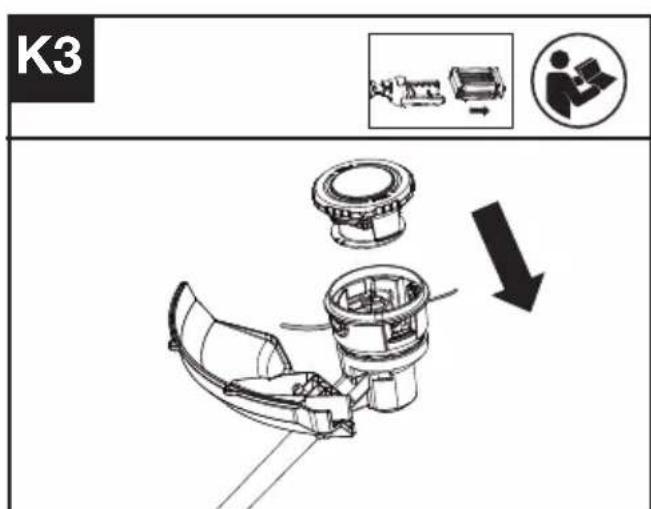
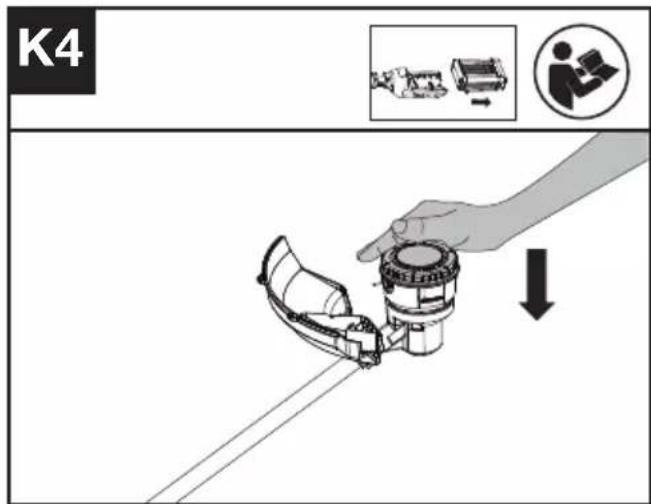
Replace the spool (See Fig. K1, K2, K3, K4)

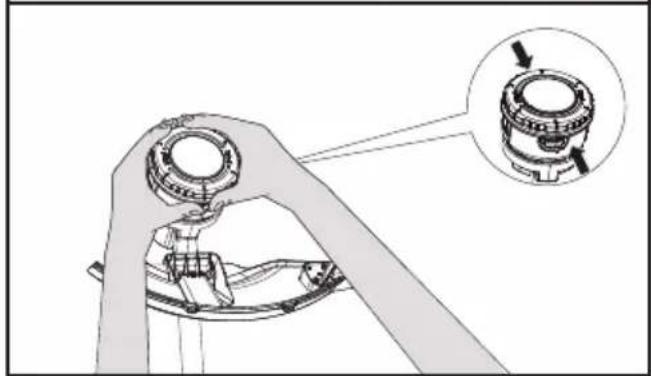

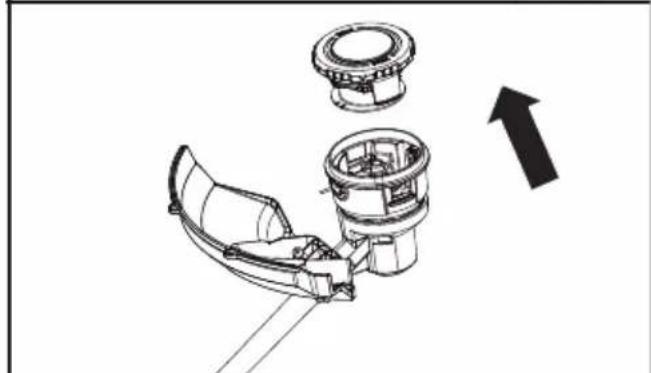

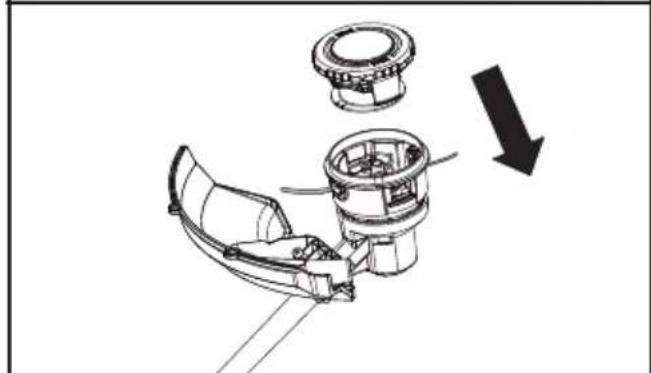
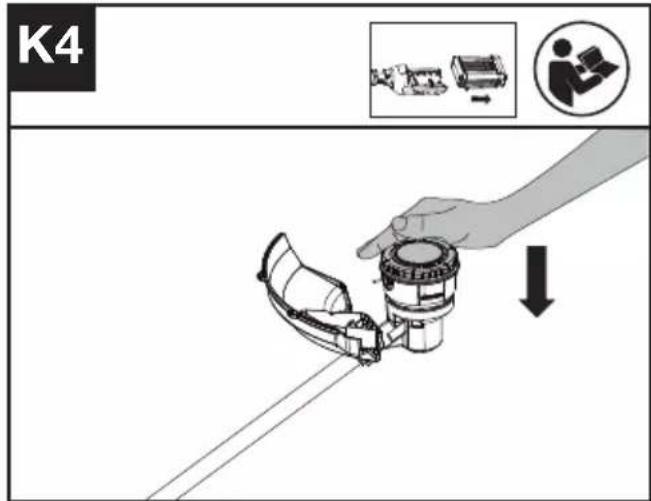
- Take off the cap and remove the old spool.
- Put the empty spool in and place on the cap to wind new line in.
Trimmer Line Maintenance
Periodically soak you package of string trimmer line in a bucket of water for a day or two to reduce line breakage, wear and line welding. (twice per season)
FOR BATTERY TOOLS
The ambient temperature range for the use and storage of tool and battery is 0^ - 45^ (32^ - 113^) . The recommended ambient temperature range for the charging system during charging is 0^ - 40^ (32^ - 104^) .
TRANSPORTING
- When transporting your trimmer by hand, hold the middle of shaft to make sure that your machine is parallel to the ground.
- When transporting your trimmer in a vehicle, secure and position it to prevent damage.
STORING
- Remove the battery pack from the trimmer before storage.
- Store the trimmer in a dry and secure place that is inaccessible to children and other unauthorized people.
CLEANING
- Do not use aggressive detergents or solvents. Clean the machine after use with a moist cloth dipped in mild detergent.
- Keep the socket free of foreign matters, and clean with a soft and dry brush or cloth.
- Do not spray water onto the motor and electrical components.
- Do not use a pressure washer to clean your machine.
TROUBLESHOOTING
The following table gives problems and actions that you can perform if your machine does not operate correctly.

Warning: Switch the machine off and remove the battery prior to any troubleshooting.
| Problems Possible Causes Corrective Action | ||
| Trimmer fails to operate. | 1. Battery discharged. 2. Battery too hot/cold. 3. Motor issue 4. Internal wiring of machine damaged. | 1. Recharge battery; also see the content in charger manual. 2. Allow to cool/warm. 3. Contact Service Agent. 4. Contact Service Agent. |
| Trimmer runs intermittently | 1. Motor issue 2. Battery not fully charged. 3. On/Off switch defective. | 1. Contact Service Agent. 2. Recharge battery. 3. Contact Service Agent. |
| Excessive vibrations/noise. | 1. Machine defective. 2. Line spool is not wound properly. | 1. Contact Service Agent. 2. Rewind the line. |
| Cutting time per battery charge too short. | 1. Battery charge is low or was not charged fully. 2. Battery defective. | 1. Fully charge battery; also see the content in charger manual. 2. Replace the battery. |
| Machine does not cut. | 1. Line broken. 2. Battery not fully charged. 3. Motor issue 4. Grass entangled around cutting head. 5. The line is tangled on the spool. | 1. Replace the line. 2. Recharge battery; also see the content in charger manual. 3. Assure your unit is not in ECO mode. 4. Remove grass. 5. Wind all the line in manually, open the spool cap, remove the line from the spool and rewind. |
| Continuous lighting of the battery charge indicator without the battery being charged. | 1. Battery not (properly) inserted. 2. Battery contacts contaminated. 3. Battery defective. | 1. Properly insert battery into battery charger. 2. Clean the battery contacts or replace the battery. 3. Replace the battery. |
| Battery charge indicator does not light up. | 1. Plug of battery charger not plugged in (properly). 2. Socket outlet, main cable or battery charger defective. | 1. Insert mains plug (fully) into the socket outlet. 2. Check the charger and battery in a different outlet. Having the battery charger checked by an authorized after-sales service agent. |
EN
TECHNICAL DATA
Type Designation: KG161 KG161.X (1-designation of machinery, representative of Cordless Grass Trimmer)
| KG161 KG161.X ** | |
| Voltage 60 V | ---Max. *** |
| Capitalize Load & Speed 5600 /min | |
| Cutting Diameter 41cm (16") | |
| Line Diameter Recommended 2.4 mm (0.095") line | |
| Capitalize Length | Recommended 6 m (20 ft) (Dual-Exit) |
| Machine weight (bare tool) 3.12 kg (6.88 lbs) |
** X=1-999,A-Z,M1-M9 they are only used for different customers, there are no safe relevant changes between these models.
*** Voltage measured without workload. Initial battery voltage reaches maximum of 60 volts. Nominal voltage is 54 volts.
SUGGESTED BATTERIES AND CHARGERS
EN
| Category | Type Capacity | |
| 60V Battery KA3001 2.5 | Ah | |
| 60V Charger KA3712 3.0 | A |
We recommend that you purchase your accessories listed in the above list from the same location that sold you the lawn trimmer. Refer to the accessory packaging for further details. Store personnel can assist you and offer advice.
NOISE INFORMATION
| A weighted sound pressure L | pA = 78.7dB(A) |
| KpA | 3dB(A) |
| A weighted sound power L | wA = 93.1dB(A) |
| KwA | 1.48dB(A) |
| Wear ear protection |
VIBRATION INFORMATION
Typical weighted vibration 2,32m / s^2 Uncertainty K = 1,5m / s^2

WARNING: The vibration emission value during actual use of the power tool can differ from the
declared value depending on the ways in which the tool is used dependant on the following examples and other variations on how the tool is used
How the tool is used and the materials being cut or drilled.
How the tool is used and the materials being cut or drilled.
The tool being in good condition and well maintained Using the correct accessory for the tool and ensuring it is sharp and in good condition.
The tightness of the grip on the handles and if any anti vibration accessories are used.
And the tool is being used as intended by its design and these instructions.
This tool may cause hand-arm vibration syndrome if its use is not adequately managed.

WARNING: To be accurate, an estimation of exposure level in the actual conditions of use
should also take account of all parts of the operating cycle such as the times when the tool is switched off and when it is running idle but not actually doing the job. This may significantly reduce the exposure level over the total working period.
Helping to minimise your vibration exposure risk. ALWAYS use sharp chisels, drills and blades
Maintain this tool in accordance with these instructions and keep well lubricated (where appropriate)
If the tool is to be used regularly then invest in anti vibration accessories.
Avoid using tools in temperatures of 10^ or less Plan your work schedule to spread any high vibration tool use across a number of days.
ENVIRONMENTAL PROTECTION

Waste electrical products must not be disposed
of with household waste. Please recycle where facilities exist. Check with your local authorities or retailer for recycling advice.
DECLARATION OF CONFORMITY
We,
Positec Germany GmbH
Postfach 32 02 16, 50796 Cologne, Germany
On behalf of Positec declare that the product, Description Cordless Brushless Grass Trim (carbon fiber)
Type KG161 KG161.X (1-designation of machinery, representative of Cordless Grass Trimmer)
Function cutting grass and similar soft vegetation and for trimming grass edges
Complies with the following Directives:
2006/42/EC, 2014/30/EU, 2011/65/
EU&(EU)2015/863, 2000/14/EC amended by 2005/88/EC
2000/14/EC amended by 2005/88/EC:
-
Conformity Assessment Procedure as per Annex VI
-
Measured Sound Power Level 93.1 dB (A)
-
Declared Guaranteed Sound Power Level 96 dB (A)
The notified body involved
Standards conform to
EN 62841-1, FprEN IEC
62841-4-4:2020+FprAA:2021-02, EN 62233, EN ISO
3744, EN IEC 55014-1, EN IEC 55014-2
The person authorized to compile the technical file, Name Marcel Filz
Address Positec Germany GmbH
Postfach 32 02 16, 50796 Cologne, Germany

2022/10/08
Allen Ding
Deputy Chief Engineer, Testing & Certification
Positec Technology (China) Co., Ltd
18, Dongwang Road, Suzhou Industrial
Park, Jiangsu 215123, P. R. China
INHALTSVERZEICHNIS
INFORMATIONS RELATIVES AU BRUIT
INFORMATIONS RELATIVES AUX VIBRATIONS
Valeur de vibration mesurée 2.32m / s^2 Incertitude K = 1.5m / s^2
2000/14/EC amendeepar 2005/88/EC:
18, Dongwang Road, Suzhou Industrial
Park, Jiangsu 215123, P. R. China
INDICE
18, Dongwang Road, Suzhou Industrial
Park, Jiangsu 215123, P. R. China
ÍNDICE
18, Dongwang Road, Suzhou Industrial Park, Jiangsu 215123, P. R. China
INHOUDSOPGAVE
PRODUCTVEILIGHEID ALGEMENE VEILIGHEIDSWAARSCHUWINGEN VOOR VERMOGENSMACHINE
VEILIGHEIDSWAARSCHUWINGEN VOOR
DE GRASTRIMMER
Monteer de hulphandgreep (Zie Afb. B1, B2, B3, B4)
Type Designation: KG161 KG161.X (1-designation of machinery, representative of Cordless Grass Trimmer)
2022/10/08
Allen Ding
Vicechef; Ingeniør, Test & Certificering
Positec Technology (China) Co., Ltd
18, Dongwang Road, Suzhou Industrial
Park, Jiangsu 215123, P. R. China
COIDEPJKAHNE
BVeJeHne. 100
CnncokKomnoHeHOB. 101
TexHnK 6e3OpacHoCTn. 102
C6opka npa6ota. 107
Texnueckoe 06cnyxnbHne. 110
IepemeueHne 111
Xpanenie 111
YnCTka. 111
BbIaBHeHne N UcTpaHHe HEnCnpaBHOcte 112
XapakTepeuCTnKu 113
OxpaHa Okpykaioe Cpebl. 114
ДeКларачиСоOTВЕТСВИ. 114
BBEDEHNE
Ybaxaemblnokyntelb!
O3HaKoMbTeCb C HNCTpykUyMM
IppedocTepeXeHnMaN noTexHnKe
6e3onachoctn. HeBbIOJIHeHne BCEX
HnKeepBedeHHbIX INCtpyKcI INpeKoMeHaIcIM MOKeT npBecTI KnopaxKeHNIO 3JIeKtpUeCKM TOKOM, NOXApY I cepBe3HbIM TpaBMam.
CoxpaHnte Bce npedocTepeKeHHnI
HNCtpyKcNn dJaDaJIbHeIwero noJb3OBAHHa.
B daJIbHeIeM TepMH "3NeKTPoHCTpymeHT"
NCIOJIb3yETcKa Kd IaPa6ToAIOUero OT cTeN (IpOBOHO)
3NeKTPoHCTpymeHTa, TaK I dIra 3NeKTPoHCTpymeHTa,
pa6OtaIOUero OT aKKMyIITopa (BeCnpoBOHO).
1. B3ONACHOCTb HA PABOYEM MECTE
a) Coepknte pa6ooye MeTo B YnCTote M XopoOo OCBeUeHHbIM. 3arpoMoxJdeHHbIe I NIOX OCBeUeHHbIe 3OHbl CnOCo6CTByIOT BO3HNIKHOBEHIO HeCHaCTHbIX CnyaEB.
b) He pa6oTaIe c nHCTpyMeHTOM BO B3pbIBOONaCHOH aTMocpepe, B npHCyTcTBHN BOCIIaMeHReMbIX KNDKOCTe, Ra3OB HIN IIIN. Bo3NkaIOUne npi pa6ote 3JIeKTPoIHnCTpyMeHTa NCKpbI MOrY T pNBeCTN K BOCIIaMeHeHHIO rOpOHyX BeLlEcTB.
c) Pn pa6oTe c HNCTpyMeHToM Detn N NOCTOPOHHe DOJXHBi HaXOHTbcra Ha 6e3onachom pacctOAHnn. OTBneHne BHIMaHHa MOKeT pNBecTn K nOtepe BamKoHTpOJIa.
2. 3NEKTP06E30NACHOCTb
a) 109eBbIe BnIKn 3JektpOHcTpymeHOBdoXhBI COOTBETCTBOBaTb pO3eTKaM. HkOrda HkOM 6pa3oM He n3MeHnTe coedHHteJIbHyIO BnIKy. PpN 3a3emHeHHbIX 3JektpOHcTpymeHTax He nCNoB3yIte Hnkaknx NepexoDHNKOB. Hen3MeHeHHbIE BnIKN I COOTBETCTByOuJe PO3eTKn CHnKaIOT PNCK nopaxKeHn 3JekTpOTOKOM.
b) 36eraTe cHn3Hueckoro KOHTaTa C 3a3eMJIeHHbIMN NOBepXHOCTaM, TaKMM, KaK Tpy6bl, paNaTOpbl, NNTbl XOJODINbHNKn. PnCK nopaKeHn 3JeKTPoTOKOM NOBbIaetcA, ecIn BaIe TeIO ByET 3a3eMJIeHo.
c) He noDBeBraIte 3JIeKTPoHHCTpyMeHTbI BO3DeHCTBnIO DOXJa NJIH BbICOKO BnaxHOCTN. IOnaDaHne BOJbIB 3JIeKTPoHHCTpyMeHT NOBbIaet ONaCHOCTb NopaxHeHr 3JIeKTPOTOKOM.
d)Правильнообрашиапесь c
элекtpokабем. Нкordа He
нсюьзуITE kaбелдя порehockn
элекtpоннсчрм enta, a takke He ТанHTe
3a ka6eJIb ДЯ ВьКluоевни n3 po3etkn.
Держnte ka6eJIb Ha 6e3onacHom
pacctOraHnOT nCtOuHnKOB TeNla, MacJa,
ocTpblx KpOMOK n DBNXUxXcraЧтě.
ПовржdeHHbIe ИИЗ 3anyTahHbIe Ka6eJI n nobblsAOT
PnCK NopaxKeHn 3JIeKtpoTOKOM.
e)Пи pa6oTe c 3JIeKtpOnHCTpyMeHTOM BHe NOMeueHn NcNoIb3yIte ydInHHTeJIH, KOtOpBle IpeHa3HaueHbI dIЯ pa6Otbl Ha OTKpbITOM BO3dyXe. 3TO CHINKaET pNCK npopaxHn 3JIeKtpOTOKOM.
f)Пи Испобзованьн 3лкгронстумета BO ВлжнOM NOMEшени erо Heo6хдимо NOДКЛIOЧАБ K 3лкгрocetN chepe3 yctpoiCTBO 3auntHOrO OTKJIIOUeHHN (Y30). Испобзованье Y3O chINkaeT puCK nopaxkeHHN 3лкгрOTOKOM.
3. JIuHAR B630NACHOCTb
a)БydTe BHNMaTeJIbHbI: CneIte 3a Tem, yTO Bbl DeIaeTe, n pyKOBoDCTByIteCb 3dpaBbIM CmblcIOM, pa6OtaC 3NeKTPoHHCTpyMeHTom. He nCnOJIb3yIte 3NeKTPoHHCTpyMeHT, ecII Bbl yCTaJIH NN HaxoIHTecb NOd BO3deIeCTBHeM CNbHOeIeCTByIOUxxCpeICTB, aIKOROIa NN MeDNKaMeHTOB. IOTepra BHImaHna DaJke Ha KOpOTKoe MTHOBeHne npi pa6Ote c 3NeKTPoHHCTpyMeHTom MOKeT pNVBecTI K cepBe3HbIM TpaBMam.
b) NcnoJb3yIte HnHnBnDyAaNbHbIe CpeIcTBA 3aunTbI. Bcerda naeBaTe CpeIcTBA 3aunTbI rna3. Takaie cpeIcTBA 3aunTbI, KaK pecnnpaTop, HeckoJIb3raJa 3aunTHaR oSyBb, Kacka nIIu 3aunTHbIe HayUHNKIn, NcNoJIb3yUOuineCer B COOTBETCTByIOuIX yCIOBnIX, CHNXAIOT PnCK IOnJuEHHaTPaBM.
c)ПpeoTbpaaIte clyaHbI 3anyck 3NeKtpOHCTpyMeHTa.Y6eNTecb,TO BbIKJIouaTeIb HaxOHTC8 B NIOJoxEHnn "BbIKJIoueHO" nepei noKIIoueHEm K 3NeKtpocetn / nIIN aKKymyIaTOPHO 6aTaPeN, c6OpKoI INI nepeHOCOM 3NeKtpOHCTpyMeHTa. IpeHOCKa IHCTpyMeHTa C NaIbIeM Ha KHOJIke IyCKa INI BVKJIoueHne B CeTb 3NeKtpOHCTpyMeHTa CBKNIOUeHHbIM BbIKJIouaTeIeM CNOCo6CTByET HeCuaCTHOMy cLYuHO.
d) YdaJIaIe BCE peryInpOBOHbIe npncnoc6JIeHn Hnn raeHbIe KIOUH nepeD BKJIOueHHeM 3JIeKTPoHCTpyMeHTa. OctabJIeHHbIe Ha BpaIauOuIXcR DeTajx 3JIeKTPoHnCTpyMeHTa, OHN MOrY TpNbEcTI K TpaBMe
e) He nepehanpraTecb. NocToHNo 3aHMaIte yCToUHBOe NOJIOXeHne I NOdEpxBaIte paBHOBeCne. 3TO N03BOJrET NyUHe KOHTPOJInpOBAt bJeKTPoIHCTpyMeHT B HEnpeDvIeHHbIX CITyaUxR.
f) OdeBaIeTcB HApIeXaUHm 06pa3OM. He HapeBaIte CBo6OHyIO OeKdy IIN yKpaWeHn. DePKeHTe BOLOCbI, OeKdy IN nepuATKn Ha paCCToAHN OT DBNKyuXxCy acten. CBo6OHyIO OeKdy, YkpaWeHn IIN IINHHbIe BOLOCbl MOKET 3aTAYtB B DBNKyuNEcra Yactn.
g) NcnoJb3yIte npedymOTpeHHbIe cpeCTBa n yctpoIcTBA dIa c6opa n ydaJIeHn Iblnn, ecIn nHCTpyMeHT OCHaueH TAKOBbIMN. NcnoJb3OBAHIE TAKIX CpeCTB MOXET CHN3ITb ONaCHOCTN, CB3AHHbIe C nbIbIO.
h) He no3BOJnIte oCBeDomJeHHoCTn, nonyuHHoB B pe3yNbTaTe qactoro
NcnoJb3OBAHn HNCTpyMeHTOB, 3aCTaBtB Bac paccJa6ntbCn NrHOpnpoBaTb PnHHuNbI TeXnKn 6e3OnacHOCTn Pn pa6ote c HNCTpyMeHToM. HeocTopoxKHe DeiCTBVE MOKeT PrnBeCTN K cepbe3HbIM TpaBMam B TeueHne IOnI CEkyHdbI.
6. CEPBNUCHOE OBCJNYKBAHNE
a) PemOHr 3neKTPoHnCTpyMeHTa DOJXeH BbINOJIrTaBcR KBaIINΦuNpOBAHHbIM NepcoHaJOM C NcNoJIb3OBAHNEM TOnbKO OpRrHaJIbHbIX 3aNaChbIX YacTeH. 3TO rapaHTnpyET 6e30NaCHOCTb ERO NcNoJIb3OBAHnI.
b) HnKoIa He O6cnyXuBaIte NOBpeXeHHe bIe aKKymyIaTOpbl. ObcnyXuBaHne aKKymyIaTOpHbIX 6atapei DOnxHOb BbINOJIHrTbcra TOLbKO npOu3BOJNTeJIem NIIu ABTOpN3OBaHHbIMN nocTaBUnkAm CepBnCHbIX ycIyr.
3aMeHa roIobKn TpHMMepa (Cm.Pnc.1)

BHHMaHHe! 3aIpeuaetc nCnoJb3OBaTb npoBoJolOuHbIe IIN apMnPoBaHHbIe
MeTaNOM JINHH, TaK KaK Hx npHmHeHne CB3aHO C BbICOKHM yPOBHEM ONaCHOCTN. NcNoJIb3yIte TOnbKO JeCKN, peKOMeHDoBaHHbIE B 3ToM pyKOBODCTBe, BMeCTe C yKa3aHHbIMN 3aUHTbIMN KoxyXamn.

BHMaHHe! NObpeXdeHHa Hn HnepoHo 3aKpenJIeHHa rOJOBka TpHMMepa MoXeT
Bn6pnpoBaTb,packOJOTbcra,pa3pyuHTbcra HIN BblJETeTb n3 Tpmmepa u CTaTb npHnHO TjXeIOn TpaMbbl, BnIOTh Do CmepTeNbHOrO HcxOJa nn HaHeCTn yUepe6 mMyuecTeBy. Jo NaHaJa pa60tby 6eDntecb, YTO rOJOBKa Tpmmepa npabHbHO n HaJeXHo 3aKpenJIeHa,a TaKxHe HaxODNTCB XOPOWEM COCTOHN.
-
BCTABbTe IeCTnIgPAHbI KJIIOU B OTBEPCTNE IN IOBEPHNTE IIOJOBKY TPIMMEPA, IOKA OHA HE OCTAHOBNTcB 3ABJIOKINPOBAHHOM NIOJOXEHIN.
-
3ATEM IOBEPHNTE NO YACOBON CTPEJIKE, YTO6BI CHrTb ERO, IN POTINB YACOBON CTPEJKN, YTO6BI CO6PATb.
HamoTKa IeCKn TpHMmepa (CM.Pnc.J1J2)

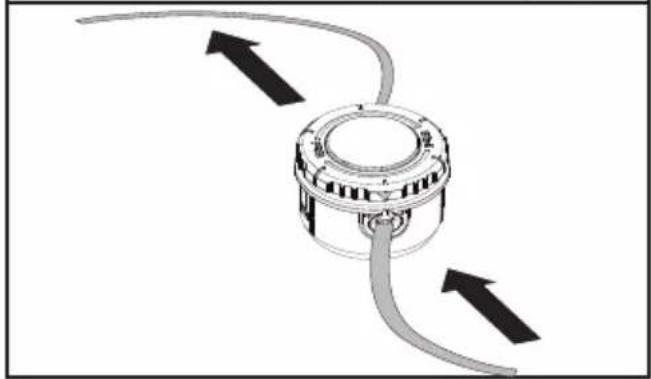

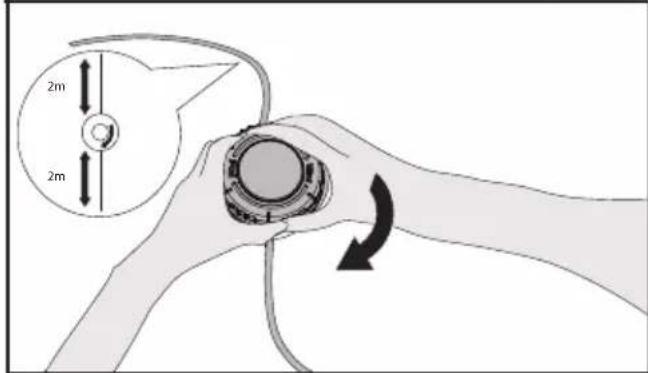
BcTaBbTe Iecky 3aMeHbI uepez yuKo I npOnyCTnTe ee uepe3 dpyryo cToPOHy. Y6eDInTecb, qTo o6a KOHua IeCKn paBHbI Ha KaXdOM KOHce rONOBKn TpIMMepa (PekomeHdyetc2 M), 3aTeM o6peXbTe Iecky. NObepHnTe uKaany nO yacBOBc CTpeNKe, UTObHaMoTaTb Iecky Ha 6apabH, noka He OCTaHeTc8 OKo10 19 cm C o6exxCToPOH.
3aMeHa KaTyUkN (CM.Pnc.K1,K2,K3,K4)
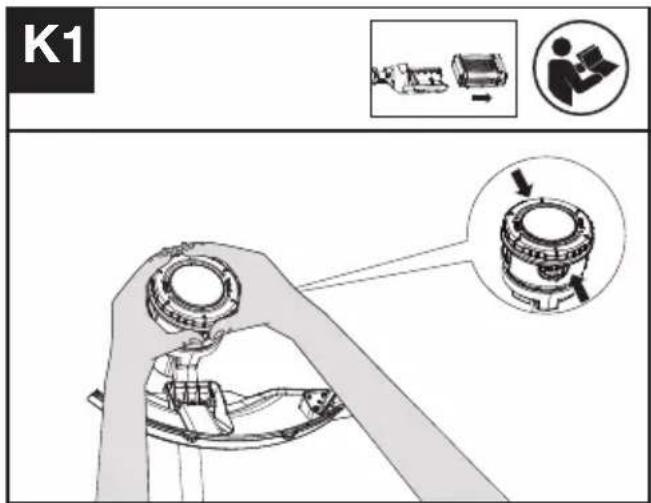
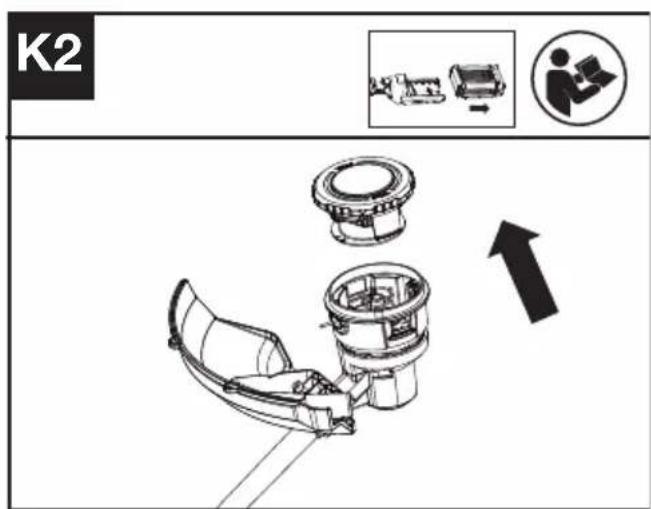
- Chmnte KpbIuKy u n3BJIeKInTe CTapyIO KaTyUKy.
- BcTaBbTe NcyTyIO KaTyUkY TaK uYcTaHOBnte KpbIuKy IJI HAOTKn HOBoJ NeCKN.
06cnykBaHne leckn
IepnoDnueckn (Ba pa3a B ce30H) 3aMaunBaIte KaTuKc C necko IJIr TpMMepa B Bepe BoDbHa DeHb INI DBA IJIr CHNKeHra BepoTHOCTn pa3pbIBa, H3HOca n cnaKn neckn
PEKOMEHДYEMbIE AKKUMyJIaTOpbl N 3APJdHbIE YCTPOIcTBA
He cIeJeT yTnIn3HPOBaTb C bItOBbIMNOTxOaMNI. OHn DOnXhbl 6bITb DoCTaBNeHbIB MeCTHbI CEHTp yTnIN3aUIN dJa HaJnExaSei nepepaBoTKn..
18, Dongwang Road, Suzhou Industrial
Park, Jiangsu 215123, P. R. China
INNEHÄLLSFORTECKNING
Introduktion. 115
Komponenter. 116
Sakerhetsvarningar 117
Montering & Hantering 121
Underhäll. 124
Transport. 125
Förvaring. 125
Rengoring. 125
Felsökning. 125
Specificationer 126
Miljöskydd 127
Deklaration om overensstammelse 127
INTRODUKTION
Bästa kund,

- INTRODUCTION
- INTENDED USE
- COMPONENT LIST
- PRODUCT SAFETY GENERAL OUTDOOR POWER EQUIPMENT SAFETY WARNINGS
- Save all warnings and instructions for future reference.
- Work area safety
- Electrical safety
- Personal safety
- Outdoor Power Equipment use and care
- Battery tool use and care
- Service
- GRASS TRIMMER SAFETY WARNINGS
- SAFETY WARNINGS FOR BATTERY PACK
- BEFORE OPERATION:
- OPERATION:
- Cutting Tips
- MAINTENANCE
- Replacing the trimmer head (See Fig. I)
- Winding the line (See Fig. J1, J2)
- Trimmer Line Maintenance
- FOR BATTERY TOOLS
- TRANSPORTING
- STORING
- CLEANING
- TROUBLESHOOTING
- TECHNICAL DATA
- SUGGESTED BATTERIES AND CHARGERS
- NOISE INFORMATION
- VIBRATION INFORMATION
- ENVIRONMENTAL PROTECTION
- DECLARATION OF CONFORMITY
- INHALTSVERZEICHNIS
- INFORMATIONS RELATIVES AU BRUIT
- INFORMATIONS RELATIVES AUX VIBRATIONS
- INDICE
- ÍNDICE
- INHOUDSOPGAVE
- PRODUCTVEILIGHEID ALGEMENE VEILIGHEIDSWAARSCHUWINGEN VOOR VERMOGENSMACHINE
- VEILIGHEIDSWAARSCHUWINGEN VOOR
- DE GRASTRIMMER
- COIDEPJKAHNE
- BBEDEHNE
- CoxpaHnte Bce npedocTepeKeHHnI
- HNCtpyKcNn dJaDaJIbHeIwero noJb3OBAHHa.
- B3ONACHOCTb HA PABOYEM MECTE
- 3NEKTP06E30NACHOCTb
- JIuHAR B630NACHOCTb
- CEPBNUCHOE OBCJNYKBAHNE
- 3aMeHa roIobKn TpHMMepa (Cm.Pnc.1)
- HamoTKa IeCKn TpHMmepa (CM.Pnc.J1J2)
- 3aMeHa KaTyUkN (CM.Pnc.K1,K2,K3,K4)
- 06cnykBaHne leckn
- PEKOMEHДYEMbIE AKKUMyJIaTOpbl N 3APJdHbIE YCTPOIcTBA
- INNEHÄLLSFORTECKNING
- INTRODUKTION
Brand : KRESS
Model : KG161.9
Category : String Trimmer