NEA - Stroller Kindercraft - Free user manual and instructions
Find the device manual for free NEA Kindercraft in PDF.



| Product type | Combined stroller (carrycot + convertible seat) |
| Brand | Kindercraft |
| Model | NEA |
| Use | From birth to 4 years (up to 22 kg) |
| Maximum child weight (carrycot) | 9 kg |
| Maximum child weight (seat) | 22 kg |
| Maximum basket load | 5 kg |
| Maximum cup holder load | 0.5 kg |
| Number of backrest recline positions | 4 positions (reclined, semi-reclined, upright) |
| Handle adjustment | 4 height positions |
| Footrest adjustment | 3 positions |
| Front wheels | Swivel with lock for straight-line travel |
| Brake | Parking brake by foot |
| Safety harness | 5-point, height-adjustable |
| Canopy | Extensible, with visor and ventilation panel |
| Car seat compatibility | Yes, via adapters (Kinderkraft, Kiddy, Maxi Cosi, Cybex, BeSafe, Nuna) |
| Cover material | Machine washable (follow care instructions) |
| Care | Hand or machine wash at 30°C; do not tumble dry; do not iron |
| Warranty | 24 months (extendable up to 120 months) |
| Included accessories | Rain cover, mosquito net, cup holder, car seat adapters |
Frequently Asked Questions - NEA Kindercraft
User questions about NEA Kindercraft
0 question about this device. Answer the ones you know or ask your own.
Ask a new question about this device
Download the instructions for your Stroller in PDF format for free! Find your manual NEA - Kindercraft and take your electronic device back in hand. On this page are published all the documents necessary for the use of your device. NEA by Kindercraft.
USER MANUAL NEA Kindercraft
Available only in selected countries Details on kinderkraft.com

kinderkraft.com

/kinderkraftofficial

kinderkraft

@kinderkraftofficial
(AR) عربة أطفال
(CS) Kočárek
(DE) Buggy
(EN) Stroller
(ES) Silla de paseo
(FR) Pousette
(HU) Babakocsi
(IT) Passeggino
دليل الاستخدام
NÁVOD K OBSLUZE
BEDIENUNGSANLEITUNG
USER MANUAL
MANUAL DE USARIO
GUIDE D'UTILISATION
HASZNÁLATI UTASÍTÁS
ISTRUZIONI PER UTENTE
(NL) Kinderwagen
(PL) Wózek
(PT) Carrinho de bebé
(RO) Cărucior
MANUAL DE INSTRUÇÕES
MANUAL DE UTILIZARE
6.
10.
7.
11.
14.
15.
16.
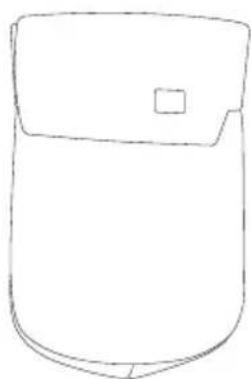
17.
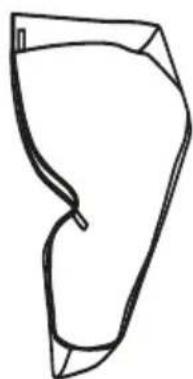
18.
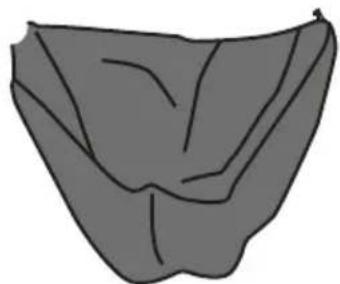
19.
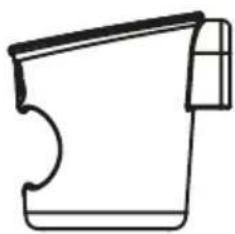
A.
B.
D.
C.
E.
F.
V
G.
H.
Y.
AA.
Z.
BB.
CC.
DD.
EE.
FF.
GG.
II.
HH.
JJ.
KK.
LL.
MM.
NN.
AR
XI DEMONTÁŽ POTAHU NA SEDADLO
Thank you for purchasing a Kinderkraft product. Our products have been designed for your child's safety and comfort. The buggy is an ideal solution for those who value quality, modernity and functionality. Please read the manual carefully and follow its recommendations.
IMPORTANT - READ CAREFULLY AND KEEP FOR FUTURE REFERENCE.
Safety and care notes
WARNING!
- Never leave the child unattended.
- Ensure that all the locking devices are engaged before use.
- To avoid injury ensure that the child is kept away when unfolding and folding this product.
- Do not let the child play with this product.
- Check that the pram body or seat unit or car seat attachment devices are correctly engaged before use.
- This product is not suitable for running or skating.
- The product is intended for children from 0 months old to 22kg or 4 years whichever come first.
- The product is designed to transport one child at a time.
• The maximum basket load is 5 kg. - Any load attached to the handle and/or on the back of the backrest and/or on the sides of the vehicle will affect the stability of the vehicle.
• Maximum weight of a bag attached to the adjustable handle is 2 kg. - The maximum load carried in the cup holder must never exceed 0,5 kg.
• Maximum load in the trinket pocket 0.25 kg. - Lift the front suspension when going up a curb or step.
- The brakes should be locked when the child is placed in or taken out of the buggy.
- Use only parts and accessories supplied or recommended by the manufacturer. Do not use other parts or accessories.
- Do not place the product near open flame or other heat sources.
- Do not use with an additional platform.
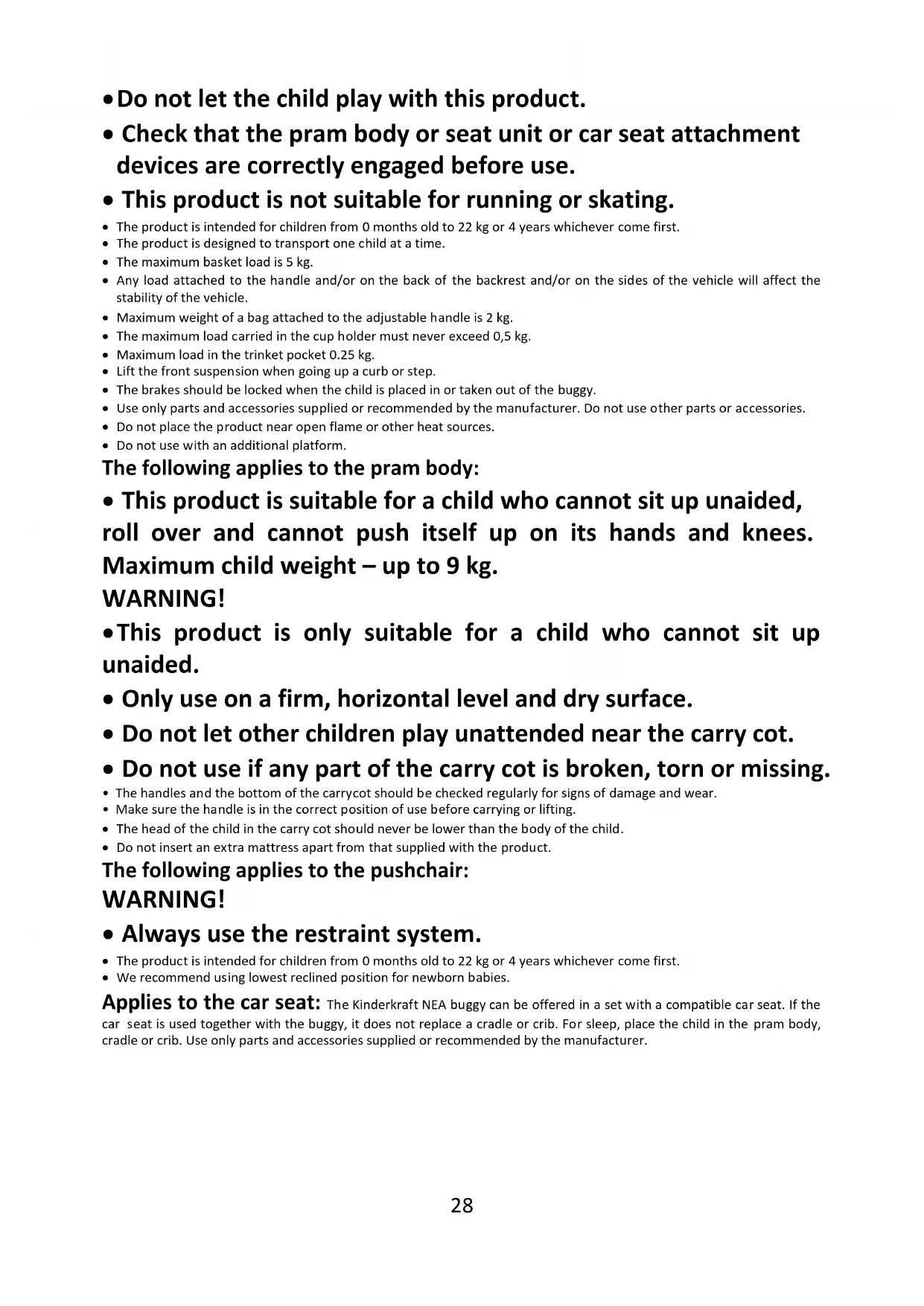
The following applies to the pram body:
- This product is suitable for a child who cannot sit up unaided, roll over and cannot push itself up on its hands and knees. Maximum child weight – up to 9 kg.
WARNING!
- This product is only suitable for a child who cannot sit up unaided.
- Only use on a firm, horizontal level and dry surface.
- Do not let other children play unattended near the carry cot.
-
Do not use if any part of the carry cot is broken, torn or missing.
-
The handles and the bottom of the carrycot should be checked regularly for signs of damage and wear.
- Make sure the handle is in the correct position of use before carrying or lifting.
- The head of the child in the carry cot should never be lower than the body of the child.
- Do not insert an extra mattress apart from that supplied with the product.
The following applies to the pushchair:
WARNING!
- Always use the restraint system.
- The product is intended for children from 0 months old to 22kg or 4 years whichever come first.
- We recommend using lowest reclined position for newborn babies.
Applies to the car seat: The Kinderkraft NEA buggy can be offered in a set with a compatible car seat. If the car seat is used together with the buggy, it does not replace a cradle or crib. For sleep, place the child in the pram body, cradle or crib. Use only parts and accessories supplied or recommended by the manufacturer.
I STROLLER PARTS
- Frame with basket (2)
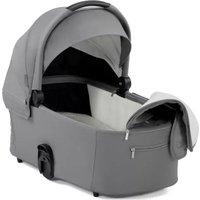
- Pram body
- Leg cover
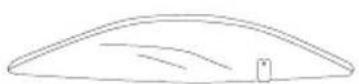
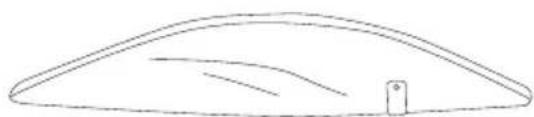
- Additional panel for canopy (pram body)
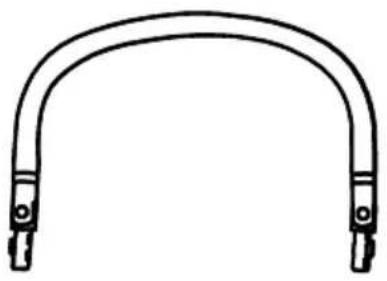
- Armbar
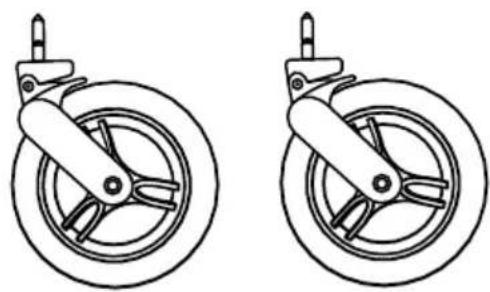
- Front wheel x2
- Transparent rain cover
-
Cup holder
-
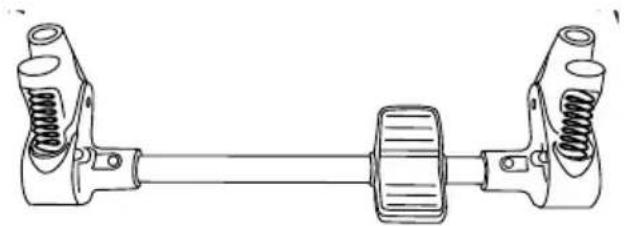
Rear axle
- Pram body mattress
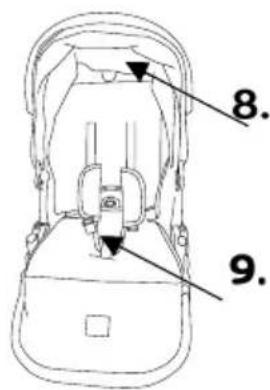
- Seat with canopy (8) and safety belts (9)
- Additional panel for canopy (stroller)
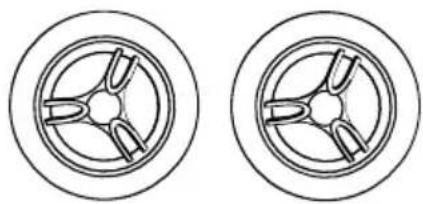
- Rear wheel x2
- Leg cover for stroller
- Mosquito net
- Adapters
II UNFOLDING THE FRAME
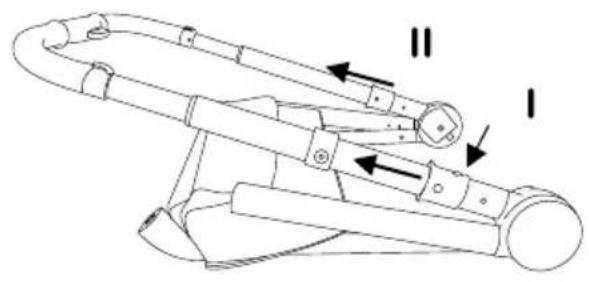
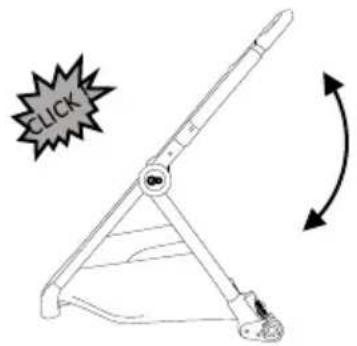
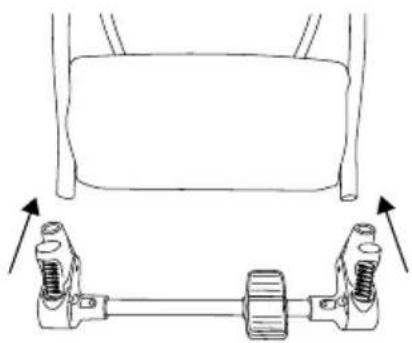
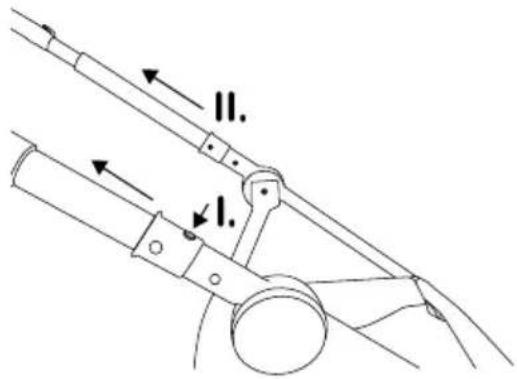
Stand the frame (1) with basket (2) on a flat surface, handle up. Press the lock button on the frame to unlock it (Fig.A.I) and pull up both levers simultaneously (Fig.A.II). Lift the handle and unfold the frame until it locks into position (Fig.B). Push the rear axle onto the frame until it clicks (Fig.C).
III ASSEMBLING/DETACHING THE WHEELS
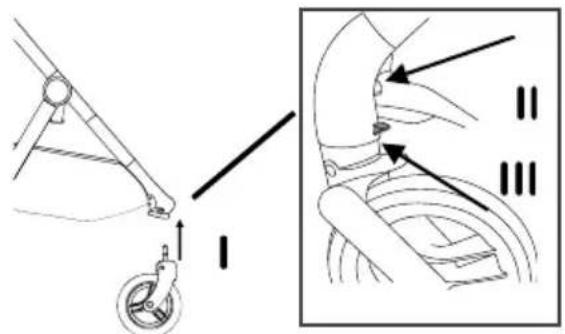
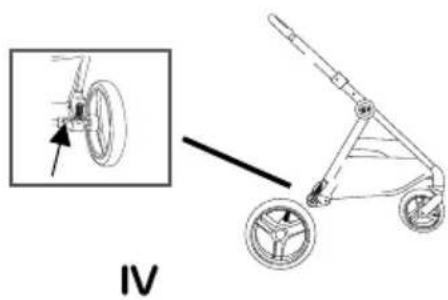
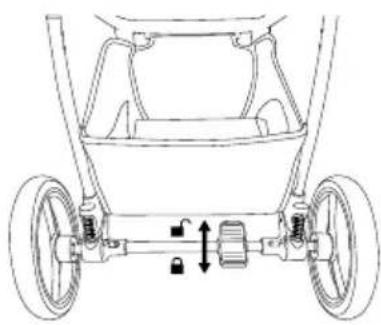
Click the front wheels (14) into the holes in the front part of the frame (Fig.D.I). Press the release button to remove the front wheels. The stroller is equipped with swivel front wheels which can be locked to move forward only. Pull the blocking lever up/down to unlock the swivel wheels (Fig.D.III). Insert the rear wheels (13) into the holes on the rear axle of the frame until they are locked completely. Make sure the flat surfaces of the axle and the hole are set properly (Fig.E.IV). Push the release button and pull the rear wheel to remove it (Fig.E.V).
NOTE! Before using the buggy make sure that all the wheels are properly installed.
IV. USING THE BRAKE
The stroller is equipped with a foot parking brake. Step on the brake. When the locking sound is heard, the brake is activated (Fig.F). You can release the brake by lifting the lock.
V ASSEMBLY/DISASSEMBLY
V.I PRAM BODY
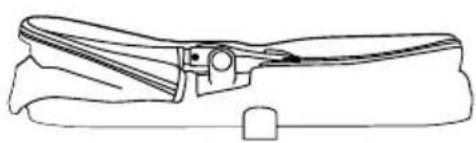
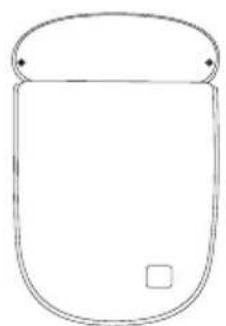
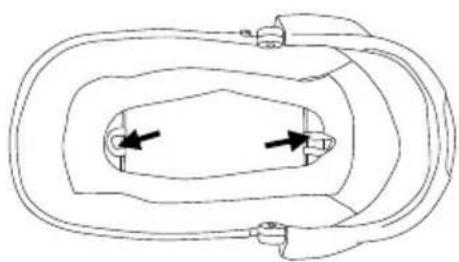
Stand the pram body (4) on a flat surface. To unfold the pram body, remove the leg cover and the mattress inside it and then pull the tape to fit the front bar until it is locked. Repeat these steps in order to fit the rear bar (Fig.G). Attach the additional panel (10) to the canopy with the zip (Fig.H). Place the mattress (5) inside the pram body.
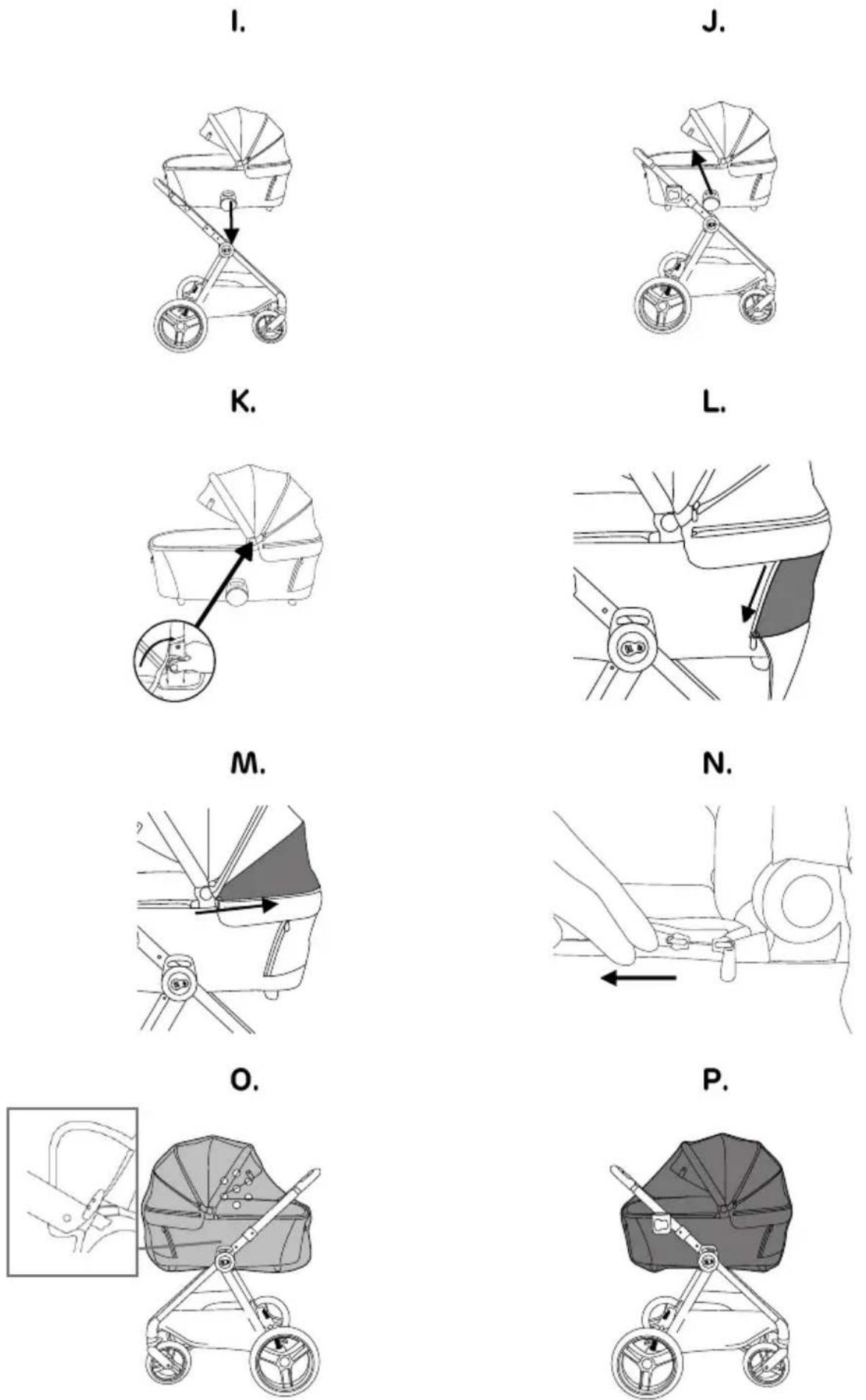
Place the so prepared pram body on the frame (Fig.1). Make sure the fasteners on both sides are locked. In order to remove the pram body, press the release buttons on both sides simultaneously (Fig.1).
Repeat these actions in reverse to fold the pram body.
NOTE! THE PRAM BODY CAN ONLY BE MOUNTED FACING
BACKWARDS (the child faces the person pushing the buggy).
NOTE! Do not fold the buggy frame when the Pram body is installed on it.
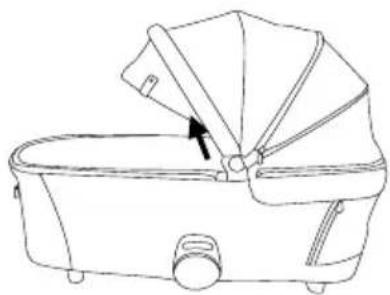
Set the canopy in a desired position with the use of folding and unfolding buttons on both sides of the pram body (Fig.K). You can use the zip on the canopy in order to extend it. The pram body has an additional ventilated panel at the front. To open the panel unzip the zip and pull down the cloth (Fig.L). The second ventilation panel is placed on the canopy. To open the second panel, unzip the zip and roll up the cloth (Fig.M). Fit the leg cover by using the zips. Both zip fasteners have to be on the right hand side. Move the lower fastener along the body to close the cover (Fig.N). The leg cover is equipped with an additional windproof panel which can be fitted with the use of snaps inside the pram body. Place the transparent rain cover over the body and secure it on both sides with the button and eye under the frame (Fig.O). The mosquito net should be placed over the pram body (Fig.P).
V.II SEAT
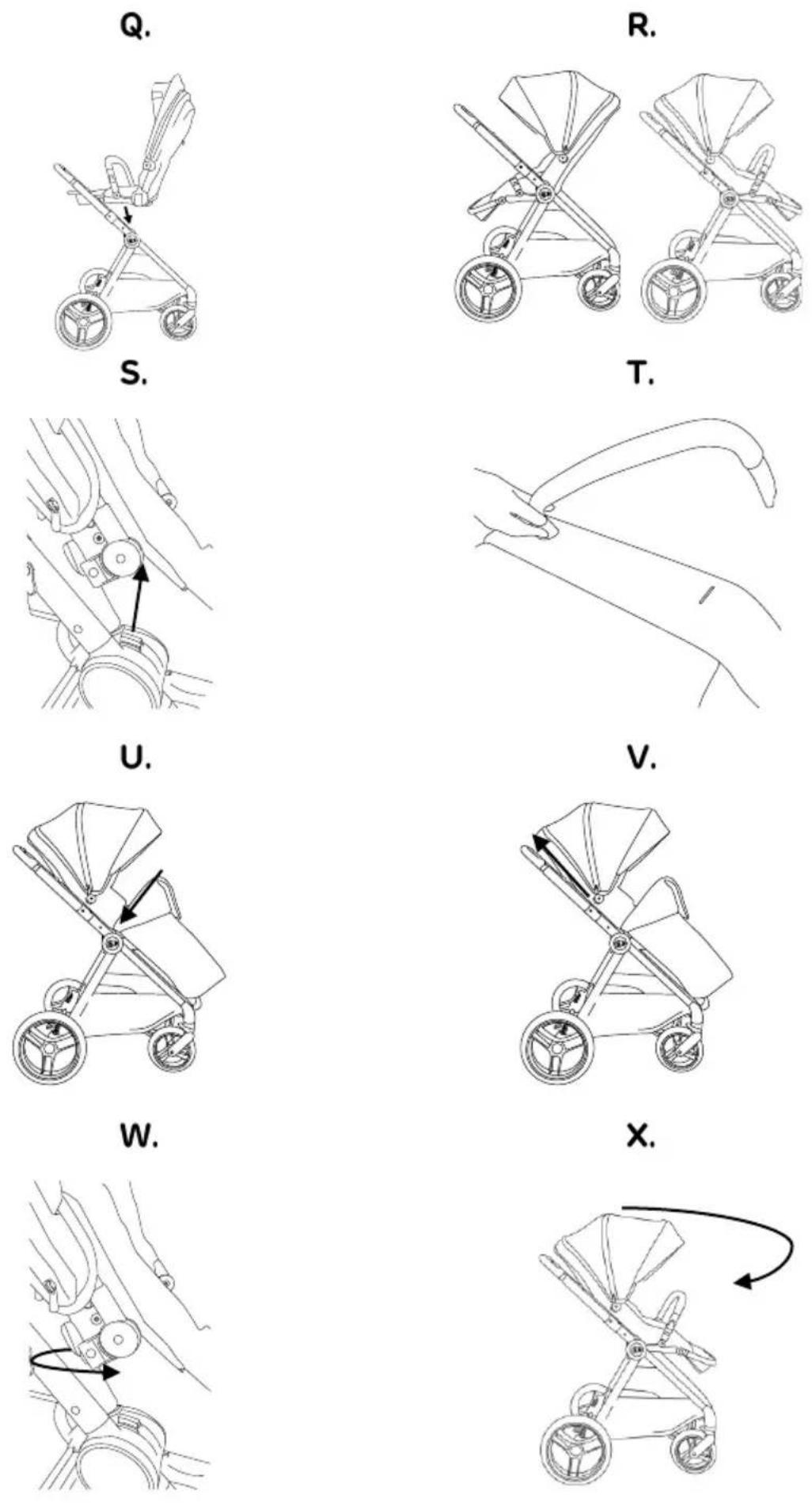
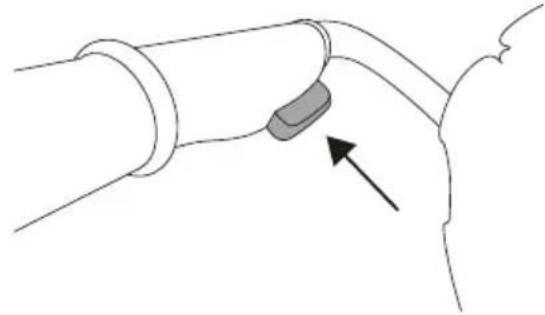
Place the seat (7) onto the frame until it clicks (Fig.Q). The seat can be attached in the forward facing position or in the rearward facing position (Fig.R). To remove the seat, press the buttons on both sides and pull up (Fig.S). To fit the cover, just remove the armbar (12) following the instructions in V.IV and then insert it through the holes in the cover (Fig.T). Next, locate the armbar in the right position into the seat frame (Fig.U). Use the button to fit the cover to the sides of the frame with the eye.
V.III CANOPY
NOTE! Install the canopy before using the buggy.
The canopy (8) is attached to the seat frame. You can zip the additional panel onto the canopy (11). To remove the canopy, undo the zip (Fig.V) and the snaps on the sides of the seat. Now pull the canopy on both sides of the frame, as shown in Fig.W. To refit the canopy, repeat the actions in reverse order. The canopy can be adjusted in several positions (Fig.X).
V.IV ARMBAR
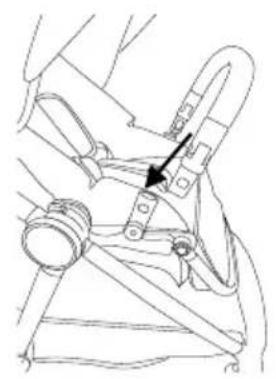
Push the armbar onto each side of the frame until it locks into position (Fig.Y). In order to detach the armbar, push the buttons on both sides of the frame and remove it (Fig.I).
V.V SAFETY BELTS
Safety belts (9) need to be adjusted each time to ensure proper protection of the baby.
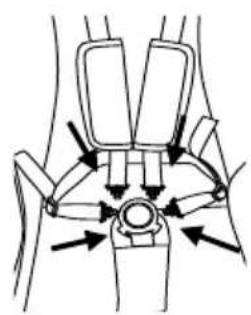
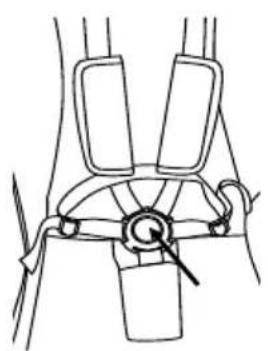
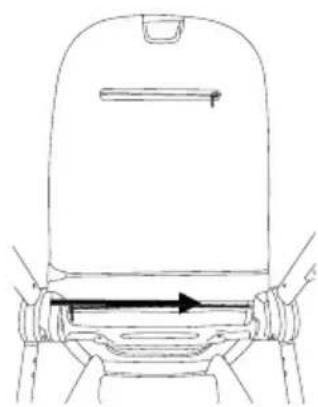
To secure your child, slide the hip and shoulder straps into the centre buckle until they engage (Fig.Z). Push the button on the buckle to unfasten the safety belts (Fig.AA). Safety belts can be fitted/removed. To remove the safety belts insert the shoulder straps and hip straps through the holes in the seat backrest and pull up the crotch strap. Next, undo the zip on the back of the seat and insert the shoulder straps and hip straps through the holes (Fig.BB). Before you insert the crotch strap through the hole, remove the seat liner, as shown in (Fig.CC). To fit the belts, repeat the steps in reverse order. The shoulder belts can be fitted on one of the three heights and the crotch strap can be fitted on one of the two heights. Make sure that the buckles holding the belts are locked properly.
VI SEAT POSITIONS
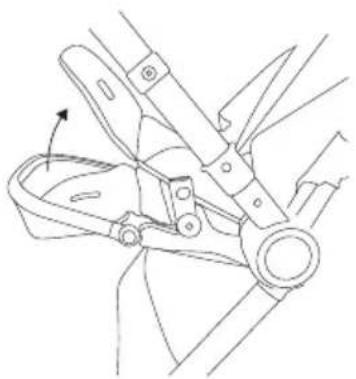
The seat can be set in 4 positions: 1 recumbent, 2 semi-recumbent, and 1 seated; the positions can be adjusted with the backrest adjustment lever (Fig.DD).
VII ADJUSTING THE FOOTREST
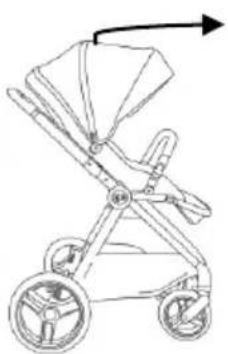
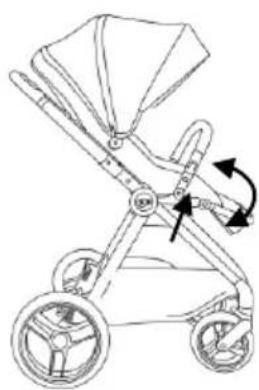
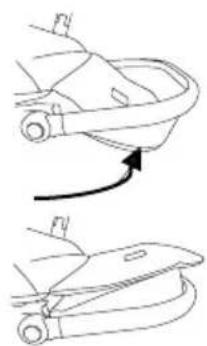
You can set the footrest in one of the three positions. Press the buttons on both sides of the footrest simultaneously and set the footrest in the desired position (Fig.EE). Additionally, you can push the footrest fabric liner up in order to lift the footrest (Fig.FF).
VIII ADJUSTING THE HANDLE
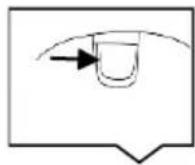
To adjust the handle, push the button in the centre and set the handle in a comfortable position. You can adjust the height of the handle to one of the 4 levels (Fig.GG).
IX ASSEMBLING THE CUP HOLDER, MOSQUITO NET AND THE TRANSPARENT RAIN COVER
Fit the cup holder to the shank on the right hand side of the stroller.
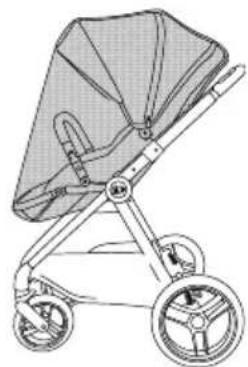
Place the mosquito net over the seat (Fig.HH). The elastic band inside the edge will keep the net in the position.
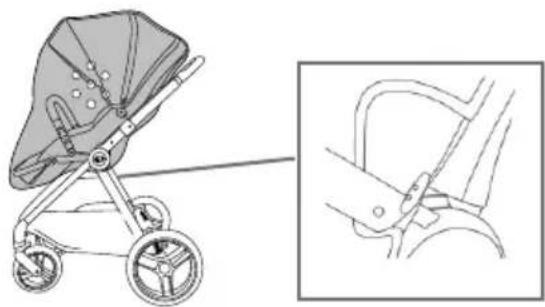
Place the rain cover over the stroller and secure it using the button and eye under the stroller frame on its both sides (Fig.Ⅱ).
When you use the stroller with the car seat or with the pram body, first remove these elements from the frame.
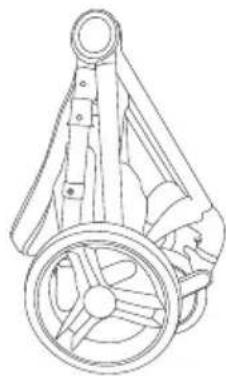
Detach the additional canopy (11) by using the zip (as shown in V.III). Fold the canopy. Fold the backrest flat towards the seat by pulling the adjustment lever. Now press the button and pull up both levers of the frame (Fig.JJ) handle down whilst pulling the front wheels to the rear wheels until the 'click' is heard. When the stroller is folded, the locking mechanism will activate automatically (Fig.KK). You can remove the wheels to reduce the size of the folded stroller. The stroller can be folded with the seat attached to it in the forward facing position or in the rearward facing position. When folded, the stroller is in the upright position, therefore the front wheels need to be locked so that the stroller cannot move forward; the handle has to be kept in its lowest position.
XI REMOVING THE SEAT COVER
The seat cover can be removed and washed. Detach the canopy first by following the instructions in V.III. Remove the armbar, unfasten the velcro strips under the seat and then unzip the zip on the rear side of the backrest. Now detach the safety belts (as shown in V.V), pull the seat cover out of the frame and remove the insert.
XII. ASSEMBLING THE CAR SEAT ON THE STROLLER FRAME
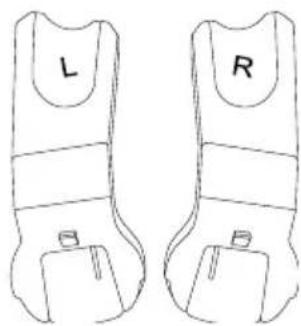
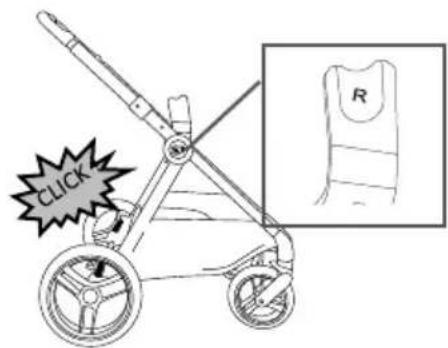
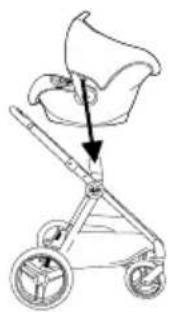
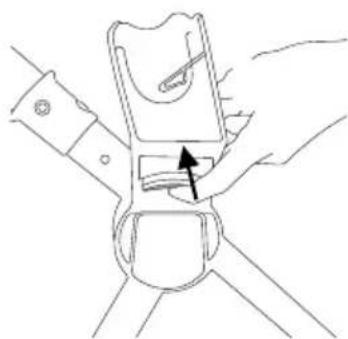
Adapters are compatible with the following car seats: Kinderkraft ® , Kiddy ® , Maxi Cosi ® , Cybex ® , BeSafe ® , Nuna ® and fit e.g. with the models: Kinderkraft MINK, Kinderkraft i-Care, Kiddy Evoluna i-Size 2, Evolution Pro 2, Cybex Aton, Aton 2, Aton Q, Maxi Cosi Mico, Mico AP, Mico NXT, Mico Max 30, Citi, Cabrio, CabrioFix, BeSafe iZi Go, iZi Go Modular, Nuna Pipa. Click the right (R) and left (L) adapters (19) into both sides of the frame (Fig.LL). To attach the car seat to the adapters, click the car seat into the buckles, one for each side of the stroller until you hear a distinctive clock (Fig.MM). To remove the adapters, press the buttons on both sides and pull up (Fig.NN).
NOTE! The car seat must always be fitted in such a way that the
child should face the carer.
XIII CARE AND MAINTENANCE The buyer is responsible for proper installation of all functional elements as well as for carrying out all required maintenance and adjustments in order to keep the buggy in good technical condition.
The buggy must be periodically checked for potential problems. Significant measures to be applied to ensure the child's safety and prevent shortening of the product life have been presented below:
- Check the strength and safety of all rivets and connections.
- Check all wheel locking equipment and tyres. If necessary, replace or repair.
- Check if all safety devices work properly, particularly the main and additional fasteners that should move freely at any time.
Please, stop using the buggy if there are doubts as to its proper use or a suspicion of any danger.
If the wheels squeak, apply a thin layer of silicone. Do not use oil or grease based products as they attract dirt, which makes buggy movement difficult.
XIV CLEANING If the elements of the buggy chassis have been exposed to saltwater, rinse with tap water as soon as possible.
 | Do not wash. Clean the product gently with a damp cloth and a mild detergent |  | Hand wash |
 | Wash at max. 30°C, gentle process |  | Do not dry in a tumble dryer |
 | Do not bleach |  | Do not dry clean |
 | Do not iron |
Do not fold or store the product when it is wet and never store it in wet conditions, as it can lead to mould growth.
Seat cover, Leg cover, Mosquito net, Pram body liner, Leg cover for pram body: maximum wash temp. 30°C; do not: bleach, tumble dry, iron, dry-clean.
Seat canopy, Basket, Canopy for the pram body, Transparent rain cover: do not wash. The product can be cleaned gently with a moist cloth and mild detergent; do not: bleach, tumble dry, iron or dry-clean.
Mattress cover: hand wash; do not: bleach, tumble dry, iron, dry-clean.
XV Warranty
-
All Kinderkraft products are covered by a 24-month warranty. The warranty period starts from the date the product is handed over to the Buyer.
-
The warranty is only valid in the member states of the European Union, excluding overseas territories (as currently defined, including in particular: Azores, Madeira, Canary Islands, French Overseas Departments, Åland Islands, Athos, Ceuta, Melilla, Helgoland, Büsingen am Hochrhein, Campione d'Italia and Livigno) and the territory of the United Kingdom of Great Britain and Northern Ireland excluding the British Overseas Territories (e.g. Bermuda, Cayman Islands, Falkland Islands).
-
The manufacturer's warranty does not apply to countries not listed above. The conditions of the additional warranty may be determined by the Seller.
-
In some countries, it is possible to extend the warranty to a limited period of 120 months (10 years). The complete terms and conditions and the warranty extension registration form are available at WWW.KINDERKRAFT.COM
-
The warranty is valid only in the territory indicated in paragraph 2.
-
Claims must be made by completing the form available at WWW.RMA.KINDERKRAFT.COM
-
The warranty does not cover:
A. Cosmetic damage, including but not limited to: scratches, dents and cracks in plastic, unless the failure is due to a material or manufacturing defect;
B. Damage resulting from misuse or poor maintenance - including but not limited to: mechanical damage to products caused by misuse or poor maintenance;
o Refer to the instructions for use and installation of the product contained in the user manual;
C. Damage caused by improper assembly, installation or disassembly of products and/or accessories;
o Refer to the instructions for use and installation of the product contained in the user manual;
D. Damage caused by corrosion, mould or rust, resulting from improper maintenance, care and storage;
E. Damage caused by normal wear and tear or otherwise resulting from the normal passage of time;
This includes: tears or punctures in inner tubes; tyre damage; tyre tread damage; fading of fabrics resulting from mechanical use (e.g. on joints and covering of moving parts);
F. Damage or erosion caused by sun, perspiration, detergents, storage conditions or frequent washing, etc;
G. Damage caused by accident, abuse, misuse, fire, contact with liquid, earthquake or other external causes;
H. Products that have been modified to change functionality without 4Kraft's written consent;
I. Products from which the serial number or lot number has been removed or tampered with in any way;
J. Damage caused by the use of third party components or products - including but not limited to: cup holders, umbrellas, reflectors, bells;
K. Damage caused by transport or by ground handling service providers.
-
The warranty period for accessories included with the product is 6 months from the date of sale, excluding the faults described above.
-
These warranty conditions are complementary to the Customer's statutory rights with respect to 4KRAFT sp. z o.o. The warranty does not exclude, limit or suspend the Customer's rights under warranty for defects in goods sold.
- The full text of the Terms and Conditions of the Warranty is available on the website WWW.KINDERKRAFT.COM.
All rights to the present document belong entirely to 4Kraft Sp. z o.o. Any unauthorized use of them against their purpose, including in particular: using, copying, reproducing, making available - in whole or in part, without the consent of 4Kraft Sp. z o.o. may result in legal consequences.
ES
ESTIMADO CLIENTE!
XI DEMONTÁŽ POŤAHU NA SEDADLO
(EN) In the interests of our Clients - we are at your disposal! If you have a problem with the product you received, contact us in the most convenient way for you!


- AR
- XI DEMONTÁŽ POTAHU NA SEDADLO
- IMPORTANT - READ CAREFULLY AND KEEP FOR FUTURE REFERENCE
- WARNING
- THE FOLLOWING APPLIES TO THE PRAM BODY
- THE FOLLOWING APPLIES TO THE PUSHCHAIR
- APPLIES TO THE CAR SEAT: THE KINDERKRAFT NEA BUGGY CAN BE OFFERED IN A SET WITH A COMPATIBLE CAR SEAT. IF THE CAR SEAT IS USED TOGETHER WITH THE BUGGY, IT DOES NOT REPLACE A CRADLE OR CRIB. FOR SLEEP, PLACE THE CHILD IN THE PRAM BODY, CRADLE OR CRIB. USE ONLY PARTS AND ACCESSORIES SUPPLIED OR RECOMMENDED BY THE MANUFACTURER
- I STROLLER PARTS
- II UNFOLDING THE FRAME
- III ASSEMBLING/DETACHING THE WHEELS
- NOTE! BEFORE USING THE BUGGY MAKE SURE THAT ALL THE WHEELS ARE PROPERLY INSTALLED
- USING THE BRAKE
- V ASSEMBLY/DISASSEMBLY
- V.I PRAM BODY
- NOTE! THE PRAM BODY CAN ONLY BE MOUNTED FACING
- BACKWARDS (THE CHILD FACES THE PERSON PUSHING THE BUGGY)
- NOTE! DO NOT FOLD THE BUGGY FRAME WHEN THE PRAM BODY IS INSTALLED ON IT
- V.II SEAT
- V.III CANOPY
- NOTE! INSTALL THE CANOPY BEFORE USING THE BUGGY
- V.IV ARMBAR
- V.V SAFETY BELTS
- VI SEAT POSITIONS
- VII ADJUSTING THE FOOTREST
- VIII ADJUSTING THE HANDLE
- IX ASSEMBLING THE CUP HOLDER, MOSQUITO NET AND THE TRANSPARENT RAIN COVER
- XI REMOVING THE SEAT COVER
- ASSEMBLING THE CAR SEAT ON THE STROLLER FRAME
- NOTE! THE CAR SEAT MUST ALWAYS BE FITTED IN SUCH A WAY THAT THE
- CHILD SHOULD FACE THE CARER
- XV WARRANTY
- ES
- ESTIMADO CLIENTE
- XI DEMONTÁŽ POŤAHU NA SEDADLO
Brand : Kindercraft
Model : NEA
Category : Stroller