Clipso Modulo 2 P42814 - Saucepan TEFAL - Free user manual and instructions
Find the device manual for free Clipso Modulo 2 P42814 TEFAL in PDF.



User questions about Clipso Modulo 2 P42814 TEFAL
0 question about this device. Answer the ones you know or ask your own.
Ask a new question about this device
Download the instructions for your Saucepan in PDF format for free! Find your manual Clipso Modulo 2 P42814 - TEFAL and take your electronic device back in hand. On this page are published all the documents necessary for the use of your device. Clipso Modulo 2 P42814 by TEFAL.
USER MANUAL Clipso Modulo 2 P42814 TEFAL
natural_image
Exterior view of a stainless steel cooking pot with black handles and lid (no text or symbols visible)User's Guide Guide de l'utilisateur Manuale d'uso Handleiding Bedienungsanleitung 使用說明手冊
www.tefal.com
text_image
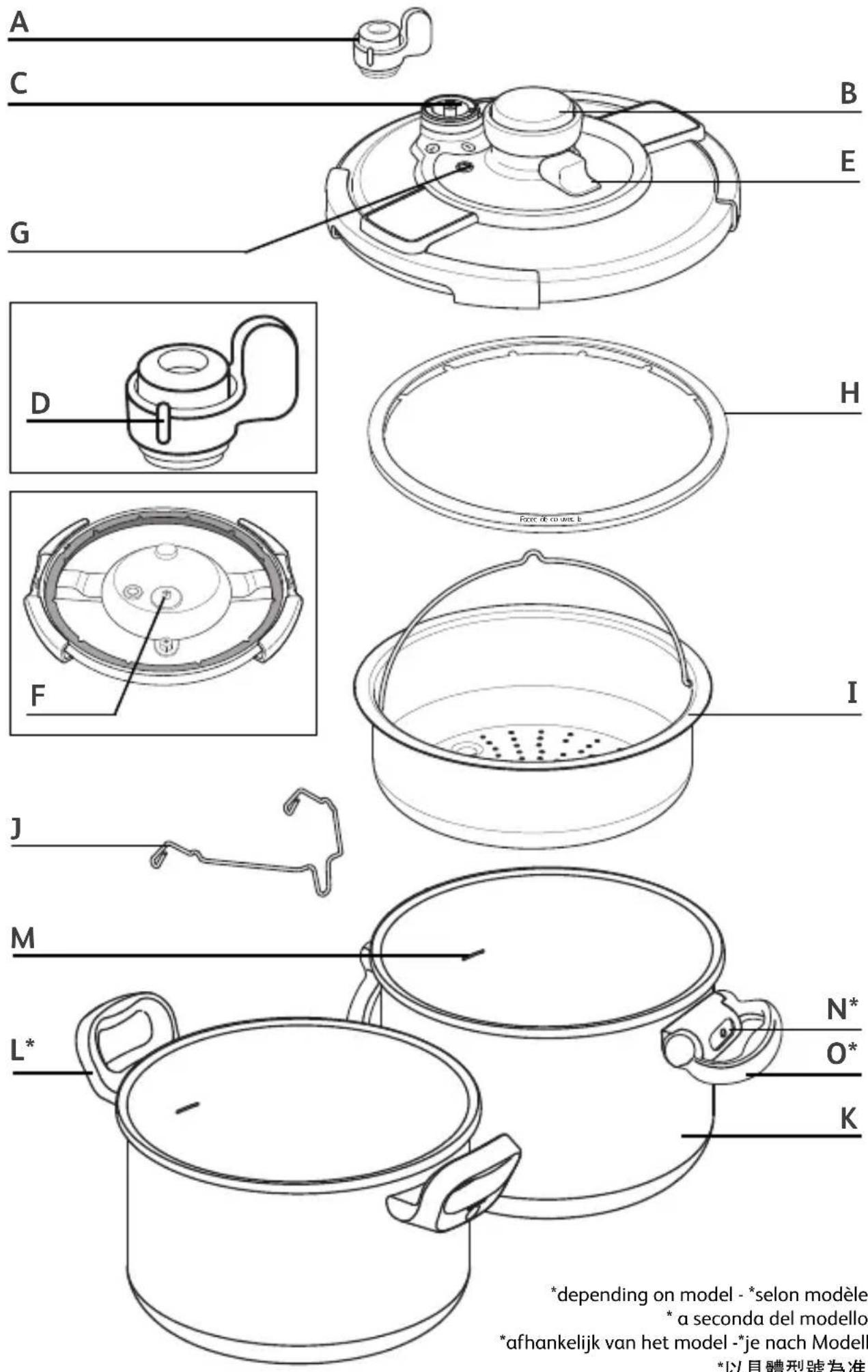
A C B E G D H F I J M L* N* O* K *depending on model - *selon modèle * a seconda del modèle *afhankelijk van het model -*je nach Modell *以具體型號為准*depending on model - *selon modèle * a seconda del modello *afhankelijk van het model -*je nach Modell *以具體型號為准

natural_image
Illustration of a hand pressing down on a cylindrical object with arrows indicating motion (no text or symbols)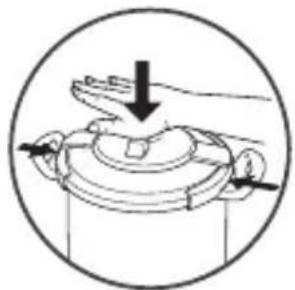
natural_image
Diagram of a hand pressing down on a mechanical component, showing a downward arrow (no text or symbols present)natural_image
Illustration of a hand holding a tool interacting with a lid and lid, showing a drop in liquid (no text or symbols)natural_image
Simple line drawing of a circular container with a lid and internal structure (no text or symbols)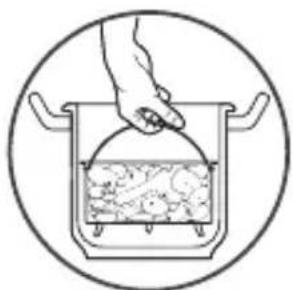
natural_image
Simple line drawing of a hand pouring liquid into a pot (no text or symbols)Fig. 7
natural_image
Circular diagram showing hands operating a mechanical component with arrows indicating motion (no text or symbols)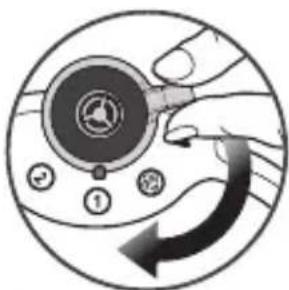
natural_image
Diagram of a hand holding a circular device with buttons and an arrow indicating rotation (no text or symbols)Fig. 9
natural_image
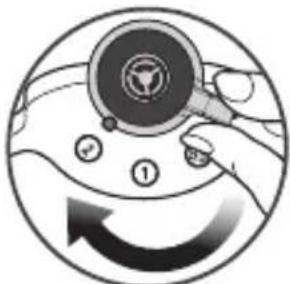
Diagram of a hand holding a magnifying glass over a circular dial with icons, no text or symbols presentFig. 10 Fig. 12
natural_image
Diagram of hands operating a mechanical device with directional arrows indicating motion (no text or symbols)Fig. 11
natural_image
Diagram of a human head and eye with concentric circular components and an arrow indicating direction (no text or symbols)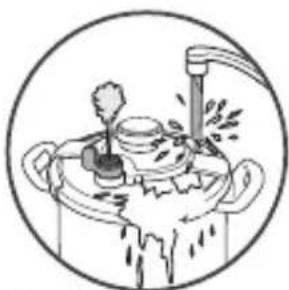
natural_image
Illustration of a cooking pot with a lid, sprinkler, and water droplets (no text or symbols)Fig. 13
natural_image
Diagram of a mechanical or electrical component with directional arrows indicating flow or movement (no text or symbols)Fig. 14
natural_image
Illustration of a hand using a tool to adjust or install a small object, enclosed in a circular frame (no text or symbols)Fig. 15 Fig. 16
natural_image
Illustration of a hand using a tool to adjust or install a mechanical component (no text or symbols visible)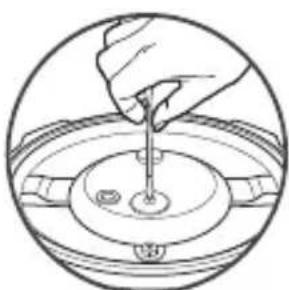
natural_image
Illustration of a hand using a pipette to press down a circular container with a small bowl (no text or symbols)Fig. 17 Fig. 18 Fig. 19 Fig. 20
natural_image
Line drawing of a cooking pot with lid and side handles, enclosed in a circular frame (no text or symbols)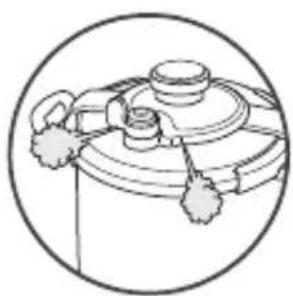
natural_image
Simple line drawing of a mechanical component inside a circular frame (no text or symbols)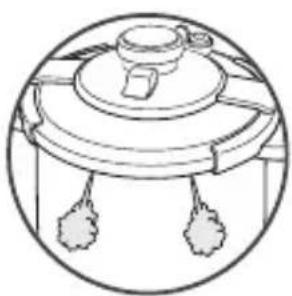
natural_image
Simple line drawing of a circular container with a lid and two hanging items (no text or symbols)Important safety information
For your safety, this appliance complies with applicable standards and regulations:
- Pressure vessel directive
- Materials in contact with food
- Environnement
- This product has been designed for domestic use only. Any commercial use, inappropriate use or failure to comply with the instructions, the manufacturer accepts no responsibility and the guarantee will not apply.
- Take time to read all of the instructions and always refer back to the "User's Guide".
- This appliance is not intended for use by persons (including children) with reduced physical, sensory or mental capabilities, or lack of experience and knowledge, unless they have been given supervision or instruction concerning use of the appliance by a person responsible for their safety. Children should be supervised to ensure that they do not play with the appliance.
- Never place your pressure cooker in a hot oven.
- Always be very careful when moving your pressure cooker under pressure. Never touch ho surfaces. Use the handles and knobs. Use gloves where necessary. Check regularly that the bowl's handles are correctly attached. Tighten them if necessary.
- Never use your pressure cooker for any purpose other than the one it was designed for.
- Your pressure cooker cooks under pressure. Scalding injuries may result from unsuitable use. Always make sure that the pressure cooker is properly closed before starting to use it. Refer to the “Closing” heading.
- Always make sure that the operating valve is in the open (pressure released) position before attempting to open your pressure cooker.
- Never force your pressure cooker open. Always make sure that the pressure inside it has dropped. Refer to the “Safety” heading.
- Never use your pressure cooker without any liquid in it for this will seriously damage it. Always make sure that there is enough liquid in it during cooking.
- Use heat source(s) that are compatible with your pressure cooker, in line with the instructions for use.
- Never make a recipe with milk in CLIPMODULO 2.
- Do not use rock salt in your pressure cooker, but rather add table salt when the cooking is nearly finished.
- Never fill your pressure cooker more than two-thirds full (the maximum mark).
- For food that expands during cooking, like rice or dried vegetables or stewed fruit, ... never fill your pressure cooker more than half full. For certain soups like pumpkin or courgette ...give your pressure cooker a few minutes to cool down, then cool it down fully by placing it under cold running water.
- For meat with an outer layer of skin (e.g. ox tongue..), which could swell due to the effects of pressure, pierce the meat before cooking. At the end of cooking, if the skin looks swollen wait before taking it out the cooker and never stab the meat as hot juices and steam may scald you.
- When cooking food with a thick texture (e.g. split peas, rhubard, stewed fruit, etc) the pressure cooker should be shaken slightly before opening to ensure that the food does not spurt out.
- Always make sure that the operating and safety valves are not blocked before use. Refer to the “Before cooking” heading.
- Never use your pressure cooker to deep fry using oil under pressure.
- Never take any action on the safety systems other than that which is described in the instructions for cleaning and maintenance.
- Only use TEFAL genuine spares designed for your model of appliance. This especially means only using a model cooker body and lid CLIP ^® MODULO 2.
- Alcohol vapour is inflammable. Bring alcohol to the boil two minutes before putting the lid on. Watch over your appliance when making alcohol based recipes.
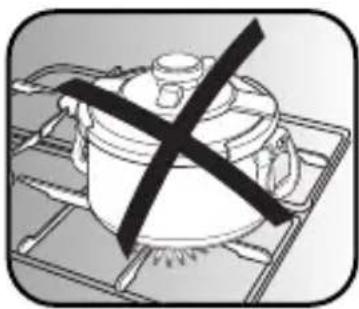
- Never place your pressure cooker on a heat source with the handles folded*.
Keep these instructions
Description diagram
EN
A. Operating valve
B. Closing button
C. Steam release conduit
D. Position valve indicator
E. Opening/Closing knob
F. Safety valve
G. Pressure presence indicator
H. Seal
I. Steam basket
J. Tripod
K. Pressure cooker body
L. Pressure cooker body handle*
M. Maximum filling mark
N.Handle unlocking button*
O. Folding pan handles*
Characteristics
Pressure cooker base diameter – references
| Capacity | Cooker diameter | Base diameter | CLIPSO® MODULO 2 | Material body and lid |
| 4,5 L 22 cm 18 cm | P42706 | Stainless steel | ||
| 6 L 22 cm 18 cm | P42807 | |||
| 8 L 25 cm 20 cm | P42814 | |||
| 10 L 25 cm 20 cm | P42815 |
Standards information
Upper operating pressure limit: 80 kPa
Maximum safety pressure limit: 120 kPa
Compatible heat sources
GASSOLID

HOTPLATE
CERAMIC or HALOGEN

INDUCTION

ELECTRIC HOTPLATE

Never heat your pressure cooker when it is empty or you may damage it.
- The CLIPSO® MODULO 2 pressure cooker can be used on all heat sources, except on Aga cookers.
-
When using an electric hob or induction, make sure that the size of the hot plate does not exceed the size of the pressure cooker base.
-
On a ceramic or halogen hob, always make sure that the pressure cooker base is clean and dry.
- On a gas hob, the flame should not lick past the diameter of the pressure cooker base.
- On all burners, make sure that the pressure cooker is properly centred.
TEFAL accessories
- The following CLIPSO ^ MODULO 2 accessories are available from shops:
| Accessories Reference | ||
| Seal | 4,5/6L | X1010004 |
| 8/10L | X1010003 | |
| Steam basket | 4,5/6L | 792185 |
| Tripod | X1030007 | |
- To replace other parts or have repairs performed, please call on your local TEFAL Approved Service Centre.
- Only use TEFAL genuine parts designed for your product model.
Use
Opening
- Press the open button (E) on the lid - Fig. 1
Closing
The jaws must be in contact with the edge of the lid.
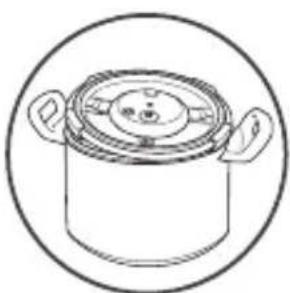
- Press the close button (B) on the lid - Fig. 2
Minimum and maximum filling \_\_\_\_
EN
- At least 250 ml (2 glasses) - Fig. 3
• Maximum two-thirds of the pressure cooker height (M) - Fig. 4
For some food
- For food that expands during cooking, like rice or dried vegetables or compotes...never fill your pressure cooker more than half full. In the case of soups we recommend you do a fast decompression.
Using the steaming basket
Food placed in the steam basket must not touch the pressure cooker lid.
- Poor 750 ml of water into the pressure cooker.
- Clip the tripod (J) under the steam basket (I) - Fig. 5 and 6
- Please the steam basket and its tripod into the bottom of the pressure cooker - Fig. 7
Using the operating valve
To fit the operating valve
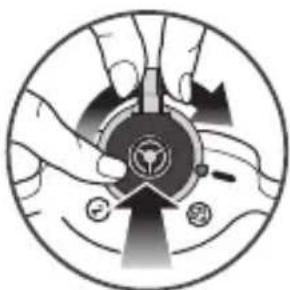
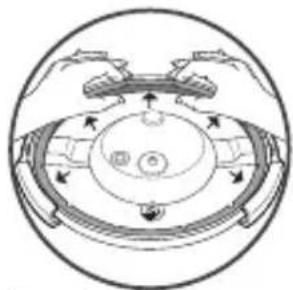
- Position the operating valve by aligning the position indicator (D) with the mark on the lid - Fig. 8.
- Push the operating valve home so that it fits onto the steam release shaft.
- Press down on the centre of the operating valve (A) and turn to the desired position - Fig. 8.
To cook delicate foods and vegetables
- Set the position indicator (D) on the operating valve (A) to 1 - Fig. 9.
To cook meat, fish and deep frozen food
- Set the position indicator (D) on the operating valve to 2 - Fig. 10.
To remove the operating valve
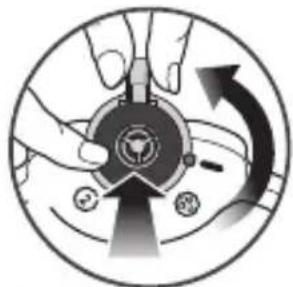
- Press down the centre of the operating valve (A) and align the position indicator (D) with the mark on the lid - Fig. 11.
- Remove the valve.
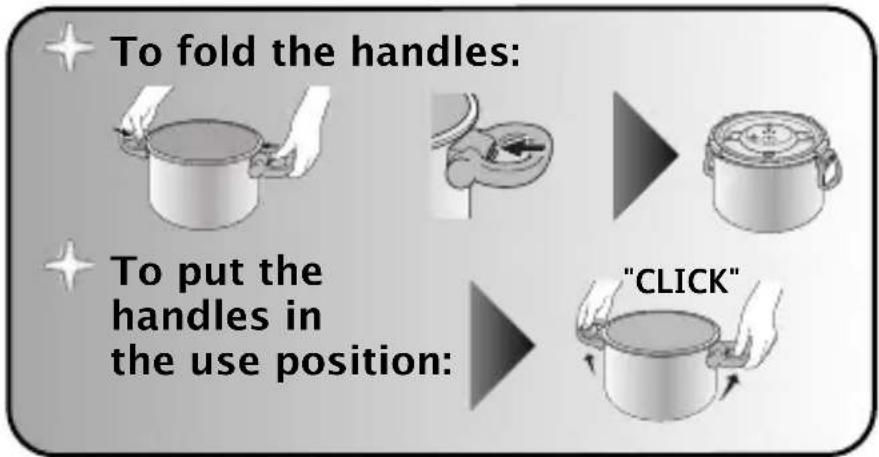
Folding handles\*
Never place your pressure cooker on a heat source with the handles folded.
natural_image
Simple line drawing of a cooking pot on a stove with a black X mark (no text or symbols)Before use, remove the labels on each handle.
Do not attempt to fold the handles without depressing the unlocking buttons
flowchart
graph LR
    A["To fold the handles:"] --> B["To put the handles in the use position:"]
    B --> C["CLICK"]
First use
- Clip the tripod (J) under the steam basket (I) - figs 5 and 6
- Place the steam basket (I) in the bottom of the pressure cooker - Fig. 7
- Fill the pressure cooker with water, up to the 2/3rds mark (M).
- Close the pressure cooker.
- Fit the operating valve (A) and set it to position 2.
- Place your pressure cooker on a heat source set to maximum power.
- When steam starts to escape from the valve, reduce the heat and time off 20 minutes.
-
Once the 20 minutes are up, turn off the heat and wait 5 minutes to let the pressure cooker cool down a little bit.
-
Turn the operating valve to the position.
- Once the pressure indicator (G) drops down,
your pressure cooker is no longer under pressure. - Open the pressure cooker - Fig. 1
Before cooking
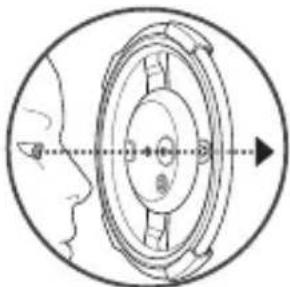
- Before using your pressure cooker, always visually make sure that the steam release conduit (C) is clear - Fig. 12
- Also make sure that the safety valve moves freely: refer to the “Cleaning and Maintenance” heading.
- Close your pressure cooker - Fig. 2
- Fit the valve (A) - Fig. 8
- Press it all the way down and turn it to the desired position - Fig. 9
●Always make sure that the pressure cooker is properly closed before using it. - Place your pressure cooker on a heat source set to maximum power.
During cooking
- Once the operating valve starts to continuously release steam and a regular hissing sound can be heard, reduce the heat level.
- Set a timer for the cooking time stated in your recipe.
- During cooking, make sure that regular hissing noises are heard from the valve. If there is not enough steam released, slightly increase the heat level, or on the contrary, reduce it a little.
Finishing cooking
If the pressure indicator (G) does not drop back, place your pressure cooker under a cold water tap - Fig. 13 Never tamper with the pressure indicator.
If you experience any abnormal discharges when releasing steam pressure: return the pressure control valve (A) to cooking position 1 or 2 and then release fast.
To release the steam
- Once the heat is turned off, you have two options:
- Slow pressure release: once the heat is turned off, wait 5 minutes to let the pressure cooker cool down a little bit. Then turn the operating valve (A) to the position. Once the pressure indicator (G) drops down, your pressure cooker is no longer under pressure.
- Fast pressure release: place your pressure cooker under a cold water tap - Fig. 13. Once the pressure indicator (G) drops down, your pressure cooker is no longer under pressure. Turn the operating valve (A) to the position.
- Now you can open your pressure cooker - Fig. 1
Cleaning and maintenance
Cleaning the pressure cooker
- For best appliance operation, be sure to follow these cleaning and maintenance recommendations every time the pressure cooker is used.
- Always wash the pressure cooker after use with warm water with a little washing up liquid added. Do the same for the basket.
- Never use bleach or chlorine products.
- Never overheat the pressure cooker body when it is empty.
Browning and scratching that may appear following long periods of use are normal and will not affect the performance of the pressure cooker.
To clean the inside of the pressure cooker
- Clean it with a scouring pad and washing up liquid.
- If the inside of the stainless steel cooker shows iridescent streaks, clean it with vinegar.
To clean the outside of the pressure cooker
- Clean it with a sponge and washing up liquid.
To clean the lid
- Wash the lid under a little stream of warm water using a sponge and washing up liquid.
To clean the lid seal
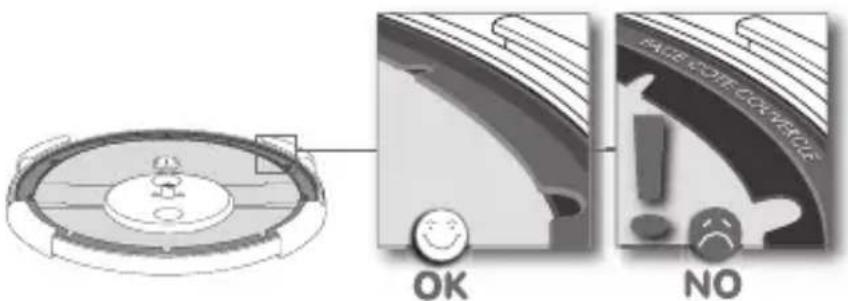
- After using the pressure cooker, always clean the seal (H) and its groove.
- To refit the seal, refer to - Fig. 14 and ensure that the words "face côté couvercle" (Cover side) are placed against the lid.
text_image
OK NOTo clean the operating valve (A)
- Remove the operating valve (A) - Fig. 11
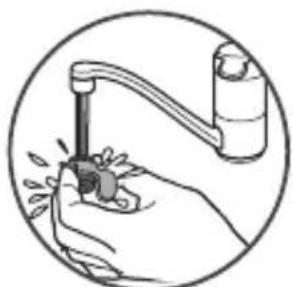
- Clean the operating valve (A) under running tap water - Fig. 15
- Check that it moves: see drawing opposite
To clean the operating valve conduit located in the lid
- Remove the valve (A) - Fig. 11
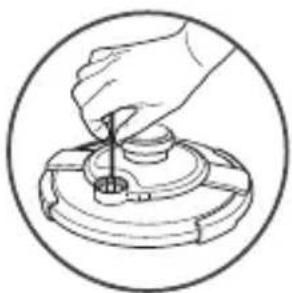
- Visually make sure that the steam release conduit is round and clear - Fig. 12. If necessary, clean it with a Q-tip - Fig. 16 and rinse it.
You can wash the pressure cooker body and the basket in a dishwasher.

After removing the operating valve (A) and the seal (H), you can wash the lid in a dishwasher.
Never remove the nut and bolt located inside the lid.
natural_image
Diagram of a hand pressing down on a mechanical component, enclosed in a circle (no text or symbols)To clean the safety valve (F)
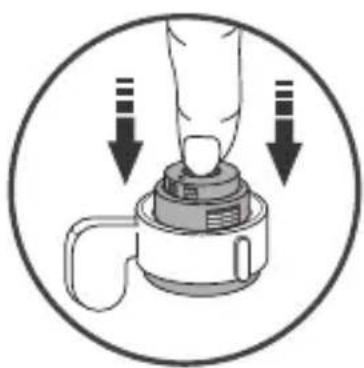
- Clean the part of the safety valve located inside the lid by placing it under running water.
- Check that it works properly by lightly pressing on the plunger that should move without difficulty - Fig. 17
To replace your pressure cooker seal
- Replace your pressure cooker seal every year.
- Replace your pressure cooker seal if it shows any signs of splitting or damage.
- Always use a TEFAL genuine seal that matches your model of pressure cooker.
To store your pressure cooker
- Turn the lid over and place it on the pressure cooker body.
If your pressure cooker has folding handles\*:
- Depress the handle unlocking buttons (N). See the paragraph "Folding handles".
- Do not attempt to fold the handles* without depressing the unlocking buttons.
Safety
Your pressure cooker is provided with a number of safety mechanisms:
- Closure safety:
- The jaws should be in contact with the lid edge. If this is not the case, then steam will escape from the pressure indicator and the pressure cooker will never come up to pressure.
- Opening safety:
- While the pressure cooker is under pressure, the opening knob cannot be actuated.
- Never force the pressure cooker open.
- Never tamper with the pressure indicator.
- Always make sure that the pressure inside the pressure cooker has been released.
Never use a cutting or pointed object to do this, you can use a cotton bud.
For a longer pressure cooker life: do not overheat your pressure cooker pan when it is empty.
Always have your pressure cooker checked by a TEFAL Approved Service Centre after ten years of use.
- Two excess pressure safety features:
- First feature: the safety valve (F) releases pressure - Fig. 19
- Second feature: the seal lets steam escape between the base and the lid - Fig. 20
If one of the two excess pressure safety systems is triggered:
- Turn off the heat.
- Allow the pressure cooker to cool down completely.
- Open it up.
- Check and clean the operating valve (A), the steam release conduit (C), the safety valve (F) and the seal (H).
- If after these checks and after cleaning, your appliance leaks or no longer operates, return it to a TEFAL Approved Service Center.
Recommendations for use
1 - The steam is very hot when it leaves the operating valve.
2 - As soon as the pressure indicator rises, you can no longer open your pressure cooker.
3 - Just as for any other cooking appliance, always pay close attention to it, especially during use in the presence of children.
4 - Beware of the steam jet.
5 - To move the pressure cooker, always use both of the handles.
6 - Never leave food in your pressure cooker.
7 - Never use bleach or chlorine products for they could affect the quality of the stainless steel.
8 - Never leave the lid to soak in water.
9 - Replace the seal every year.
10 - A pressure cooker may only be cleaned when cold and when empty.
11 - Always have your pressure cooker checked by a TEFAL Approved Service Centre after ten years of use.
Guarantee
- Your new TEFAL pressure cooker comes with a ten-year guarantee for use under the conditions set out in these instructions. This guarantee covers:
- Any defects relating to the metal structure of the pressure cookebody, - Any premature deterioration of the metal base.
- For other parts, a one year parts and labour guarantee is provided (except where applicable law in your own country states otherwise). This guarantee covers any defects or manufacturing faults.
- The contractual guarantee cover is provided only on presentation of a valid proof of purchase which shows the date of purchase.
• The guarantee cover excludes:
- The normal life of the seal, pressure control valve or locking indicator seal is limited. These parts are excluded from the guarantee and will require periodic renewal.
- Any damage consecutive to a failure to follow the major recommendations made or due to negligent use, especially:
- Dropping, falls, bangs or knocks, placing in an oven...
- Only TEFAL Approved Service Centres are authorised to provide service under guarantee.
- Please call the Helpline number below for the address of your nearest TEFAL Approved Service Center.
Regulation markings
EN
| Marking Location | |
| Manufacturer's identification or trademark | Closing knob |
| Year of and batch of manufactureModel referenceMax. operating pressureMax. safety pressure | On the top of the lid, when it is in the "Open" position |
| Capacity | On the outside of the pressure cooker body |
TEFAL answers your questions
| Problems | Recommendations |
| If you cannot close the lid: | Check that the Open knob (E) is pressed down.Check the way the seal is fitted, see the "Cleaning an Maintenance" heading.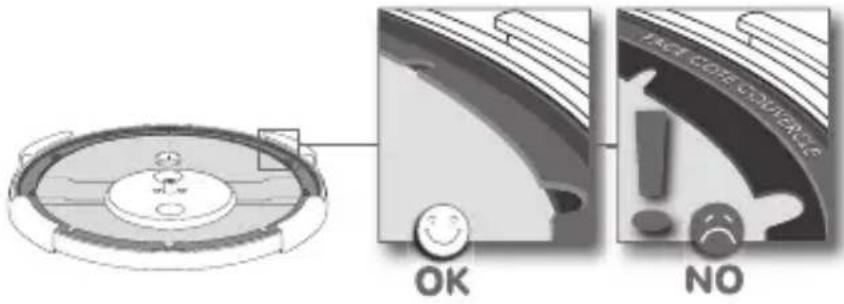 |
| If the pressure cooker has heated up under pressure with no liquid inside: | Have your pressure cooker inspected by a TEFAL Approved Service Centre. |
| If the pressure indicator did not rise and nothing escapes from the valve during cooking: | This is normal for the first few minutes.If the problem persists, check that:- The heat source is high enough, if not, increase it.- The amount of liquid in the pressure cooker is sufficient.- The operating valve is in position 1 or 2.- Your pressure cooker is properly closed.- The seal and the pressure cooker edge have not been damaged.- The seal is properly fitted, see the "Cleaning and Maintenance" heading. |
| If the pressure indicator has risen but still nothing escapes from the valve during cooking: | This is normal for the first few minutes.If the phenomena persists, place your appliance under a stream of cold water until the pressure presence indicator drops down.Clean the operating valve - Fig. 15 and the steam release conduit - Fig. 16 and check that the safety valve flap moves without difficulty - Fig. 17. |
| If steam escapes from around the lid, check: | That the lid is properly closed.The position of the lid seal.That the seal is in good condition, and if necessary, replace it.That the lid, the seal, its housing in the lid are clear.That the edge of the pressure cooker body is in good condition. |
| If you see steam escaping from around the lid accompanied by an ear-piercing noise : | Check that the seal is not caught between the pan and the lid. |
| If you cannot open the lid: | Check that the selector is set to ⏻.Check that the pressure indicator is down.If not: release pressure, if necessary by cooling the pressure cooker under cold running water.Never tamper with this pressure indicator. |
| If food is not cooked or has burnt, check: | The cooking time.The heat level.That the cooking program selector was in the right position.The amount of liquid. |
| If food has burnt in the pressure cooker: | Leave the pressure cooker to soak for a while before washing.Never use bleach or chlorine products. |
| If one of the safety systems is triggered: | Turn off the heat.Leave the pressure cooker to cool down without moving it.Wait for the pressure indicator to drop down and open the pressure cooker.Check and clean the operating valve, the steam release conduit, the safety valve and the seal.If the fault persists, have your appliance inspected by a TEFAL Approved Service Center. |
| If you are unable to put the folding handles* in the use position: | Check that:The unlocking button* can be moved.If the problem persists, have your pressure cooker checked by an TEFAL Approved Service Centre. |
| If you are unable to fold the folding handles*: | Do not force them.Make sure that you are fully depressing the handle unlocking buttons*. |
Précautions importantes
natural_image
Simple line drawing of a cooking pot on a stove with a black X mark (no text or symbols)natural_image
Diagram of a finger pressing a button into a device, with arrows indicating downward force (no text or symbols)natural_image
Simple line drawing of a cooking pot on a stove with a black X mark (no text or symbols)natural_image
Diagram of a hand pressing down on a mechanical component, enclosed in a circle (no text or symbols)natural_image
Simple line drawing of a cooking pot on a stove with a black X mark (no text or symbols)text_image
PACT CORN COVERAGE OK NODe binnenpan en de stoommand mogen in de vaatwasser.
natural_image
Diagram of a foot pressing down on a mechanical component, with arrows indicating downward motion (no text or symbols)natural_image
Simple line drawing of a cooking pot on a stove with a black X mark (no text or symbols)flowchart
graph LR
    A["Herunterklappen der Griffe:"] --> B["Step 1: Hand holding cup with lid"]
    B --> C["Step 2: Down arrow to cup with lid"]
    C --> D["Step 3: Down arrow to cup with lid"]
    E["Hochklappen der Griffe:"] --> F["Step 4: Down arrow to cup with lid"]
    F --> G["Step 5: Down arrow to cup with lid"]
    G --> H["KLICK"]
Erstbenutzung
natural_image
Diagram of a foot pressing down on a device with three downward arrows indicating force or pressure (no text or symbols present)natural_image
Simple line drawing of a pot on a stove with a black X mark (no text or symbols)