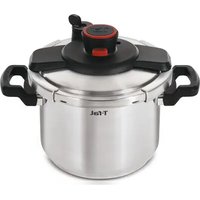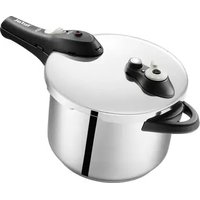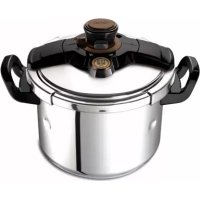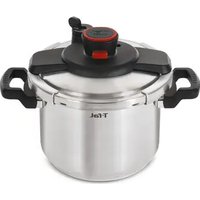
Clipso P45009 - Saucepan TEFAL - Free user manual and instructions
Find the device manual for free Clipso P45009 TEFAL in PDF.


User questions about Clipso P45009 TEFAL
0 question about this device. Answer the ones you know or ask your own.
Ask a new question about this device
Download the instructions for your Saucepan in PDF format for free! Find your manual Clipso P45009 - TEFAL and take your electronic device back in hand. On this page are published all the documents necessary for the use of your device. Clipso P45009 by TEFAL.
USER MANUAL Clipso P45009 TEFAL
natural_image
Exterior view of a stainless steel cooking pot with black lid and side handles (no text or symbols visible)Guía del usuario User's Manual Guide d'utilisation
www.t-fal.ca
www.t-fal.com
Descripción - Description - Description
text_image
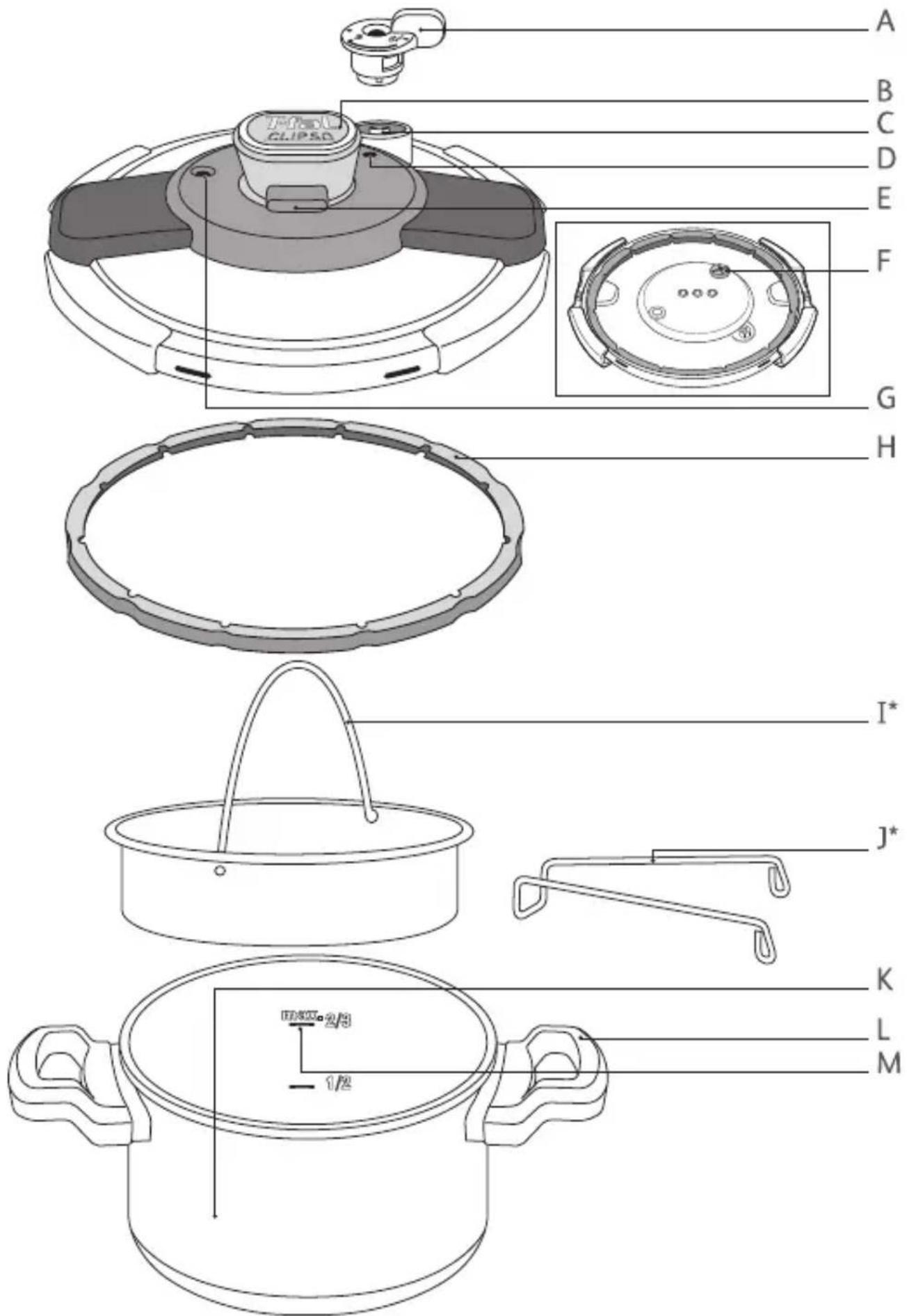
A B C D E F G H I* J* K L M 1/2*según modelo *depending on model *selon modèle
natural_image
Line drawing of a hand pressing down on a cylindrical object with a knob, enclosed in a circle (no text or symbols)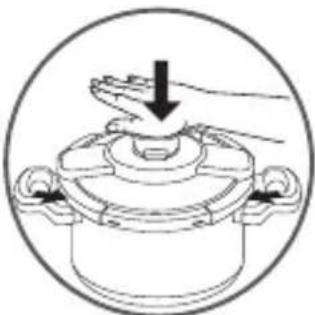
natural_image
Diagram of a hand pressing down on a mechanical component, enclosed in a circular frame (no text or symbols)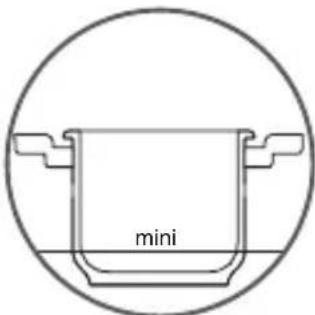
text_image
mini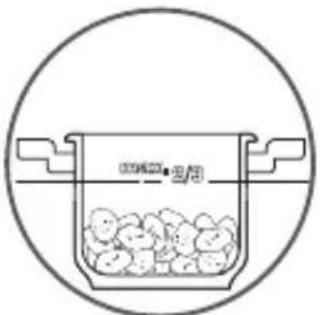
text_image
20% 20 2/3fig. 1 fig. 2 fig. 3 fig. 4
natural_image
Cross-sectional diagram of a mechanical component with an arrow indicating direction (no text or symbols)fig. 5
natural_image
Illustration of a hand pouring liquid into a pot with granular material inside (no text or symbols)fig. 6 *
natural_image
Illustration of a hand holding a small object with an upward arrow and double-headed arrow, no text or symbols present.fig. 7
text_image
40° -10°fig. 8
natural_image
Close-up of a mechanical component with a hand holding a tool, no visible text or symbolsfig. 9
cocción
cooking
cuisson
descompresión
pressure release
décompression
fig. 10
natural_image
Diagram of a human head and face with a circular dial and arrow indicating direction (no text or symbols)fig. 11
natural_image
Illustration of hands operating a cooking pot on a stove (no text or symbols visible)fig. 12
natural_image
Diagram of a mechanical or electrical component with directional arrows and circular features (no text or symbols)fig. 13
natural_image
Illustration of hands adjusting a curved object with a V-shaped mark (no text or symbols)fig. 14
natural_image
Illustration of a hand using a tool to clean or repair a small object, with no visible text or symbols.fig. 15 fig. 16
natural_image
Line drawing of a hand using a tool to press or install a mechanical component, enclosed in a circular frame (no text or symbols)广力云智慧零售收银系统

natural_image
Diagram of a hand using a tool to press or install a circular component with three dots on the surface (no text or symbols present)fig. 17 fig. 18 fig. 19 fig. 20
natural_image
Line drawing of a cooking pot with lid and side handles, enclosed in a circular frame (no text or symbols)9 fig. 20
natural_image
Technical line drawing of a mechanical component with no visible text or symbols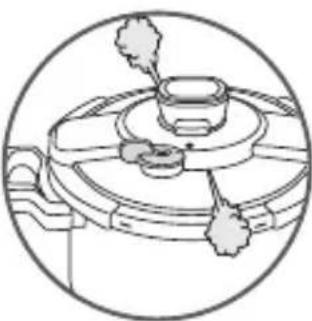
natural_image
Technical line drawing of a mechanical component with no visible text or symbols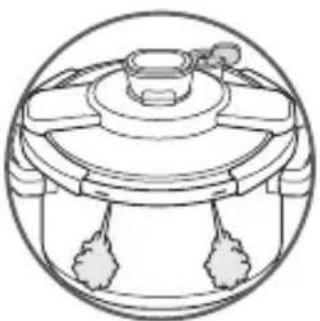
natural_image
Circular diagram of a mechanical or architectural component with symmetrical supports and a central circular base (no text or symbols)*según modelo *depending on model *selon modèle
PRECAUCIONES IMPORTANTES
natural_image
Diagram of a mechanical component with an arrow indicating direction (no text or symbols present)natural_image
Diagram of a hand pressing down on a device with three downward arrows indicating force or pressure (no text or symbols present)For your safety, this device complies with the applicable standards and regulations
- Pressure vessel directive
- Materials in contact with food
- Environment
- This product has been designed for domestic use only.
- Take time to read all of the instructions and always refer back to the “User's Guide”.
- As with any cooking appliance, ensure close supervision if you are using the pressure cooker with children nearby.
- Do not put your pressure cooker into a hot oven.
- When the pressure cooker is under pressure, take great care when moving it. Do not touch the hot surfaces. Use the handles and knobs. Wear gloves if necessary.
- Regularly check that the pan handles are fixed properly. Tighten if necessary.
- Do not use your pressure cooker for any purpose other than that for which it is designed.
- Your pressure cooker cooks under pressure. Burns could result from boiling over if not used properly. Make sure that the pressure cooker is properly closed before bringing it up to pressure. Refer to section “Closing”.
- Always make sure that the valve is in the decompression position before opening your pressure cooker.
- Never force the pressure cooker open. Make sure that the inside pressure has returned to normal. Refer to section “Safety”.
- Never use your pressure cooker without liquid: this could cause serious damage. Always make sure that there is enough liquid in it during cooking.
- Use heat source(s) that are compatible with your pressure cooker, in line with the instructions for use.
- Never make a recipe with milk in your pressure cooker.
- Do not use rock salt in your pressure cooker, but rather add table salt when the cooking is nearly finished.
- Never fill your pressure cooker more than two-thirds full (maximum fill mark).
- For food that expands during cooking, like rice or dried vegetables or stewed fruit etc., never fill your pressure cooker more than half full. For certain soups like pumpkin or zucchini, give your pressure cooker a few minutes to cool down, then cool it down fully by placing it under cold running water.
- After cooking meat which has an outer layer of skin (such as ox tongue), which could swell due to the effects of pressure, do not pierce the skin after cooking if it appears swollen: you could get burnt. Pierce it before cooking.
- When cooking food with a thick texture (chick peas, rhubarb, compotes, etc.) the pressure cooker should be shaken slightly before opening to ensure that the food does not spurt out.
- Always check that valves are clear before use. Refer to section “Before cool
- Do not use the pressure cooker to fry under pressure using oil.
- Do not interfere with the safety systems, except for cleaning and maintenance in accordance with instructions.
- Use only original T-FAL spare parts suitable for your model. Particularly, use a T-FAL pan and lid.
- Alcohol vapors are flammable. Bring to a boil for about 2 minutes before placing the lid. Watch your appliance when preparing alcohol-based recipes.
- Do not use your pressure cooker to store acidic or salty food before and after cooking to avoid damaging your pan.
KEEP THESE INSTRUCTIONS
Descriptive diagram
A. Operating valve
B. Closing button
C. Steam release outlet
D. Valve positioning mark
E. Opening button
F. Safety valve
G. Pressure indicator
H. Seal
I. Steam basket*
J. Tripod*
K. Pan
L. Pan handle
M. Maximum fill mark
Specifications
Pressure cooker base diameter - references
| Capacity | ∅ Pan diameter | ∅ Base diameter | CLIPSO® | Pan and lid material |
| 6 L / 6,3qt 2 | 2 cm / 8,6" 19 cm | m / 7,5" P45007 | Inox |
Technical information:
Maximum operating pressure: 80 kPa (12 psi)
Maximum safety pressure: 150 kPa (22 psi)
Compatible heat sources
GAS SOLID
HOTPLATE


GLASS CERAMIC RADIANT HALOGEN

INDUCTION
[Non-Text]

ELECTRIC COIL

Never heat your pan when empty, as you risk damaging your product.
- Your pressure cooker can be used on all heat sources including induction.
- On a solid hotplate, use a plate with a diameter equal to or less than that of the pressure cooker base.
- On glass ceramic cooktops, make sure that the base of the pan is clean and dry.
- On gas, the flame should not extend beyond the diameter of the pan.
- For all heat sources, make sure that your pressure cooker is well centered.
- The following Clipso pressure cooker accessories are available from shops:
| Accessory Reference number | |
| Gasket | X9010501 |
- To replace parts or for repairs, contact a T-FAL Approved Service Center.
- Use only original T-FAL parts suitable for your model.
Use
Opening
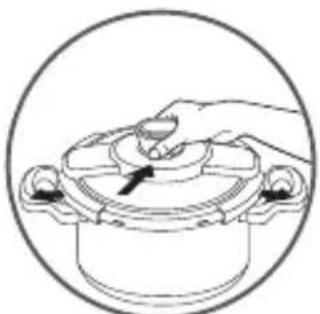
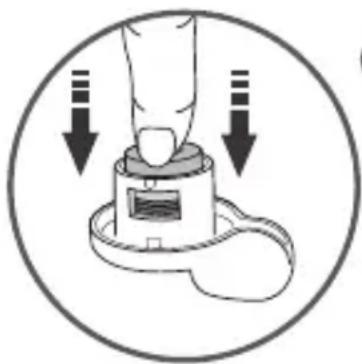
- Press the opening button (E) on the lid - fig. 1 and lift the lid off.
Closing
- Place the lid on the pan (K) and then press down on the closing button (B) - fig. 2.
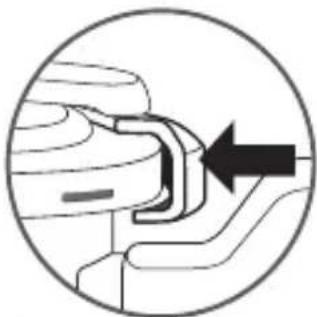
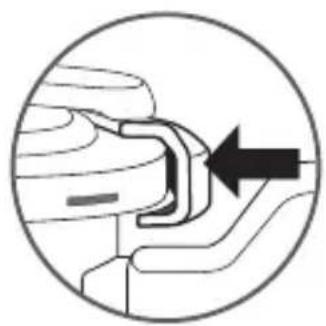
- The jaws must be in contact with the edge of the pan (K) - fig. 5.
Minimum and maximum filling
• Minimum 25 cl (2 glasses) - fig. 3.
- Maximum 2/3rd of the depth of the pan (M) - fig. 4.
For some foods:
- For foodstuffs that expand during cooking, like rice or dried vegetables or stewed fruit, etc., do not fill your pressure cooker more than half full. For soups, we recommend you carry out a fast decompression (refer to section "End of cooking").
Using the steam basket\*
Food placed in the steam basket* must not touch the pressure cooker lid.
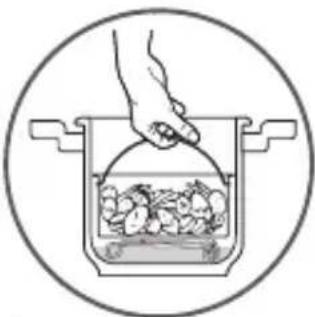
- Place the tripod* (J) in the base of the pan (K).
- Pour 75 cl of water into the base of the pan (K).
- Place the basket* (I) on the tripod* - fig. 6.
Using the operating valve
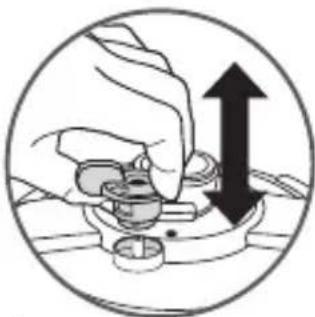
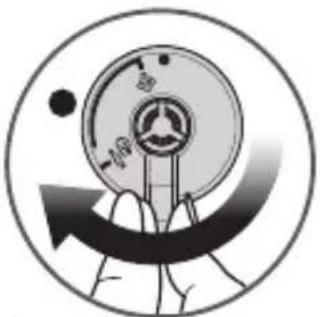
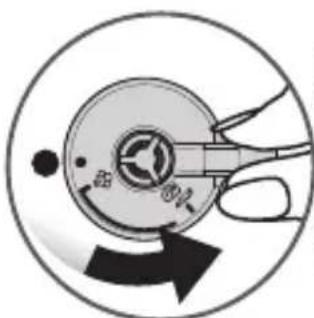
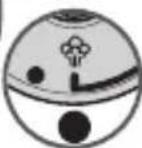
- Place the valve (A) on the steam release outlet (C) aligning the pictogram • on the valve with the valve positioning mark (D) - fig. 7 - 9.
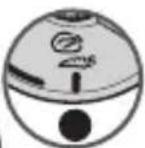
- Press it down and turn to the cooking position - fig. 10.
To cook food:
- Position the pictogram on the valve opposite the positioning mark (D) - fig. 10.
To remove the operating valve:
- Press down on the operating valve (A) and align the pictogram • with the positioning mark (D) - fig. 9.
- Remove it - fig. 7.
First use
- Place the tripod* (J) in the base of the pan (K).
- Place the steam basket* (I) on the tripod* - fig. 6.
- Fill the pressure cooker up to 2/3rd full with water (M).
- Close the pressure cooker.
- Place the operating valve (A) and position it on ⓞ - fig. 10.
- Place the pressure cooker on a heat source set to maximum power.
- When steam starts escaping through the valve, reduce the heat source and set the timer to 20 minutes.
• After 20 minutes, turn off the heat. - Turn the operating valve to position Fig. 10.
- When the pressure indicator (G) drops again, your pressure cooker is no longer under pressure.
- Open the pressure cooker - fig. 1.
Before cooking
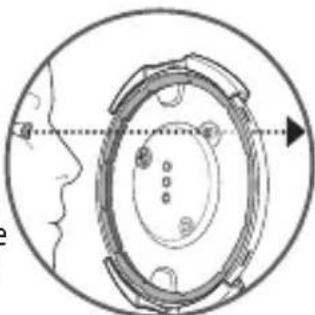
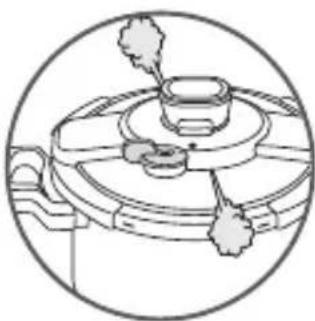
- Every time you use your cooker, first check visually and in plain daylight that the steam release outlet (C) is not blocked - fig. 11.
- Also check that the safety valve moves freely - fig. 17 (refer to section “Cleaning and maintenance”).
natural_image
Diagram of a hand fastening a car keyhole with an arrow indicating left motion (no text or symbols)- Close the pressure cooker - fig. 2.
• Fit the valve (A) - fig. 7. - Press it down and turn to the cooking position - Fig.10.
- Make sure that the pressure cooker is properly closed before bringing it up to pressure - fig. 5.
- Place the pressure cooker on a heat source set to maximum power.
During cooking
- When steam escapes through the operating valve continuously, and a regular hissing sound (PSCHHHT) is heard, reduce the heat source.
- Set a timer for the cooking time stated in your recipe.
- During cooking, check that the valve murmurs regularly. If there is not enough steam, increase the heat source slightly; if there is too much steam, reduce the heat source.
End of cooking
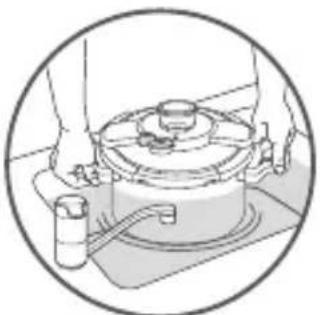
If the pressure indicator (G) does not drop, dip your pressure cooker until the pan handles level of the body into a sink filled with cold water - fig. 12. Never interfere with the pressure indicator.
If food or liquid starts to spray out while you are releasing the steam, return the operating valve (A) to cooking position 📋 then carry out a fast decompression into a sink filled with cold water.
To release the steam:
• After the heat has been turned off you have two alternatives:
- Slow pressure release: turn the operating valve (A) choosing the speed at which you want to release the pressure until it stops at . When the pressure indicator (G) drops again, your pressure cooker is no longer under pressure.
- Fast pressure release: dip your pressure cooker until the pan handles level of the body into a sink filled with cold water - fig. 12. When the pressure indicator (G) drops again, your pressure cooker is no longer under pressure. Turn the operating valve (A) up to position - fig. 10.
- You can open the pressure cooker - fig. 1.
When the pressure cooker is under pressure, take great care when moving it without shaking it.
- When cooking frothy or starchy foods, do not release the pressure and wait for the pressure indicator to drop before opening. Reduce the recommended cooking time a little.
Cleaning and maintenance Cleaning the pressure cooker
To ensure the correct operation of your pressure cooker, follow these cleaning and maintenance recommendations after each use.
- Wash the pressure cooker after each use using warm water with dishwashing liquid in it. Follow the same procedure for the basket*.
- Never use bleach or products containing chlorine.
- Do not overheat your pan when empty.
To clean the inside of the pan:
- Wash with a scouring pad and dishwashing liquid.
- If the interior of the steel pan has an iridescent sheen, clean it using white vinegar.
To clean the outside of the pan:
- Wash using a sponge and dishwashing liquid.
To clean the lid:
- Wash the lid using a sponge and dishwashing liquid.
To clean the lid seal:
- After each use, clean the seal (H) and its groove.
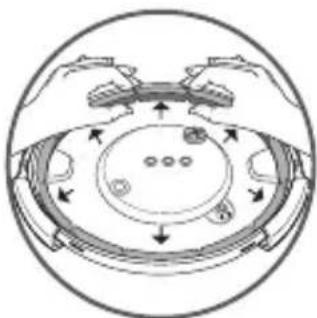
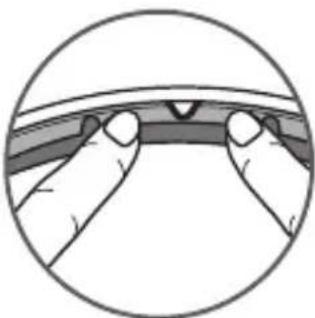
- To refit the seal, refer to- fig. 13 - 14.
To clean the operating valve (A):
- Remove the operating valve (A) - fig. 7.
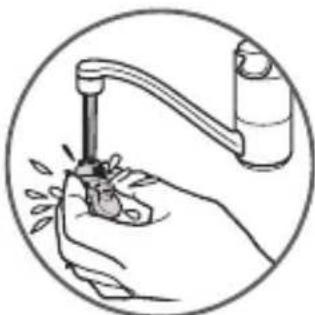
- Wash the operating valve (A) under running tap water - fig. 15.
- Check that it moves freely: see drawing on the right.
The browning and marks which may appear following long use do not affect the operation of the pressure cooker.
You can wash the pan and the basket* in the dishwasher.
Never unscrew the 3 central screws located inside the lid.
Never put the lid and the seal in the dishwasher.
To clean the steam release outlet on the lid:
- Remove the valve (A) - fig. 7.
- Check visually and in plain daylight that the steam release outlet (C) is clear and round - fig. 11. If necessary, clean with a toothpick - fig. 16 and rinse.
To clean the safety valve (F):
- Clean the part of the safety valve located inside the lid by placing it under running water.
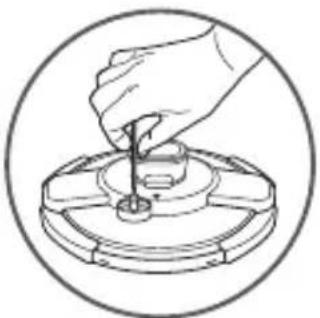
- Check its correct operation by pressing hard, using a cotton bud, on the pin, which should move freely - fig. 17.
To change the seal of your pressure cooker:
- Change the seal of your pressure cooker every year or if it has any cuts.
- Always use an original T-FAL seal suitable for your model.
To store your pressure cooker:
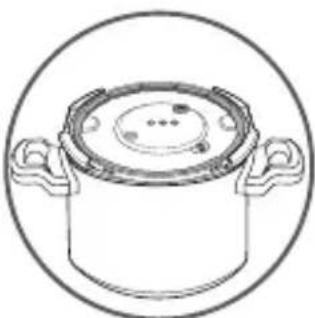
- Turn the lid over on the pan - fig. 18.
natural_image
Diagram of a hand pressing down on a device with three downward arrows indicating force or movement (no text or symbols present)
For a longer pressure cooker life, do not overheat your pressure cooker pan when it is empty.
Never use a sharp or pointed object to do this.
Safety
You must have your pressure cooker checked in a T-FAL Approved Service Center after 10 years of use.
Your pressure cooker is fitted with several safety devices:
- Closing safety:
- The jaws must be in contact with the edge of the lid - fig. 5. Otherwise, there is a steam leak in the pressure indicator (G) and the pressure cooker cannot be put under pressure.
- Opening safety:
- If the pressure cooker is under pressure, the opening button cannot be pressed.
- Never try to force the pressure cooker open.
- Above all do not touch the pressure indicator.
- Make sure that the interior pressure has fallen.
- Two safety devices against overpressure:
- First device: the safety valve (F) releases the pressure - fig. 19.
- Second device: the seal (H) allows steam to escape from between the lid and the pan - fig. 20.

If one of the overpressure safety systems is triggered:
- Turn off the heat source.
- Let the pressure cooker cool down completely.
- Open.
- Check and clean the operating valve (A), the steam release outlet (C), the safety valve (F) and the seal (H) - fig. 15 -16 -17.
- If, after these checks and cleaning, your product leaks or no longer works, take it to a T-FAL Approved Service Center.
Recommendations for use
1 - Steam is very hot when it leaves the operating valve.
2 - As soon as the pressure indicator rises, you can no longer open your pressure cooker.
3 - As with any cooking utensil, ensure close supervision if you are using the pressure cooker near children.
4 - Watch out for the jet of steam.
5 - To move the pressure cooker, use the two pan handles.
6 - Never leave food in your pressure cooker.
7 - Never use bleach or products containing chlorine, as these will alter the quality of the steel.
8 - Do not leave the lid soaking in water.
9 - Change the seal every year or if it has any cuts.
10 - You must only clean your pressure cooker when it is cold and empty.
11 - It is essential to have your pressure cooker checked in a T-FAL Approved Service Center after 10 years of use.
Warranty
EN
- When used under the conditions set out in these instructions, the pan of your new T-FAL pressure cooker comes with a 10-years warranty against:
- Any defects relating to the metal structure of your pan
- Any premature deterioration of the metal base.
- For other parts, a one year parts and labor warranty is provided (except where applicable law in your own country states otherwise). This warranty covers any defects or manufacturing faults.
- The contractual warranty cover is provided only on presentation of a valid proof of purchase which shows the date of purchase.
The warranty cover excludes:
- Any damage consecutive to a failure to follow the major recommendations made or due to negligent use, especially:
- Knocks, falls, placing in an oven, etc.
-
Washing the lid in the dishwasher.
-
Only T-FAL Approved Service Centers are authorized to provide service under this warranty.
- Please call the Helpline number below for the address of your nearest T-FAL Approved Service Center.
Groupe SEB Canada
Customer Service - 345 Passmore Ave.
TORONTO ON - CANADA - M1V3N8
1800.418.3325
Monday-Tuesday: 8.30 am - 4.30 pm
Friday: 8.30 am - 1.30 pm
Regulatory markings
| Marking Location | |
| Identification of manufacturer or commercial brand | Closing button |
| Production year and batch Inside of the lid | |
| CapacityModel referenceMaximum safety pressure (PS)Maximum operating pressure (PF) | On the exterior base of the pan |
| Problems Recommendations | |
| If you are unable to close the lid: | Check that the closing button (E) is pressed down properly.Check the correct positioning of the seal, refer to section "Cleaning and maintenance".Make sure the jaws are fully closed on the edge of the pan.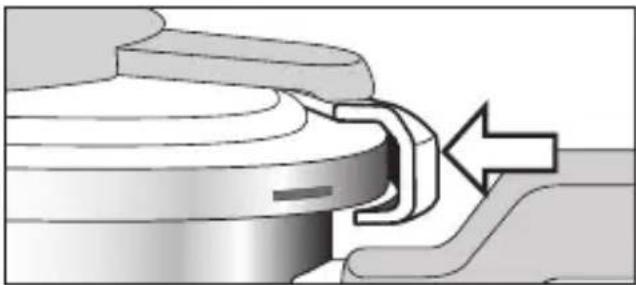 |
| If your pressure cooker has been heated under pressure without any liquid in it: | Have your pressure cooker checked by a T-FAL Approved Service Center. |
| If the pressure indicator has not risen and nothing is escaping through the valve during cooking: | This is normal during the first few minutes.If the phenomenon persists, check that:- The heat source is sufficiently high; if not, increase it.- The quantity of liquid in the pan is sufficient.- The operating valve is on -Fig. 10.- The pressure cooker is properly closed.- The seal or the edge of the pan is not damaged.- The seal is correctly positioned in the lid - fig. 13 - 14. |
| If the pressure indicator has risen and nothing is escaping through the valve during cooking: | This is normal during the first few minutes.If the phenomenon persists, dip your pressure cooker until the pan handles level of the body into a sink filled with cold water until the pressure indicator drop fig. 12.Clean the operating valve - fig. 15 and the steam release outlet - fig. 16 and using a cotton bud check that the safety valve pin sinks without difficulty - fig. 17. |
| If steam leaks from around the lid, check: | The correct closure of the lid.The position of the lid seal.The condition of the seal; replace it if necessary.The cleanliness of the lid, the seal and its groove in the lid.The condition of the edge of the pan. |
| If steam is escaping around the lid accompanied by a shrill noise: | Check that the seal is not pinched between the pan and the lid. |
| If you are unable to open the lid: | Check that the pressure indicator is in the lowered position.If not, decompress and if necessary dip your pressure cooker until the pan handles level of the body into a sink filled with cold water - fig. 12.Never interfere with the pressure indicator. |
| If the food is not cooked or is burned, check: | The cooking time.The power of the heat source.The correct position of the operating valve.The quantity of liquid. |
| If food has burned in the pressure cooker: | Leave the pan to soak before cleaning it.Never use bleach or products containing chlorine. |
| If one of the overpressure safety systems is triggered: | Turn off the heat source.Let the pressure cooker cool down without moving Wait for the pressure indicator to drop and open the pressure cooker.Check and clean the operating valve, the steam discharge outlet, the safety valve and the seal.If the problem persists, have your pressure cooker checked by a T-FAL Approved Service Center. |

FR
PRÉCAUTIONS IMPORTANTES
natural_image
Diagram of a hand holding a car seatbelt with an arrow indicating left motion (no text or symbols)natural_image
Diagram of a hand pressing down on a device with three downward arrows indicating force or pressure (no text or symbols present)Customer Service - 345 Passmore Ave.
TORONTO, ON, M1V3N8 - CANADA
1800.418.3325