
MultiSync LCD1525MBK - Monitor NEC - Free user manual and instructions
Find the device manual for free MultiSync LCD1525MBK NEC in PDF.




| Brand | NEC |
| Model | MultiSync LCD1525MBK |
| Category | 15-inch LCD Monitor |
| Panel Type | LCD True Colour |
| Native Resolution | 1024 x 768 (estimated) |
| Video Input | Mini D-SUB 15-pin (analog RGB) |
| Audio Input | 3.5mm audio jack |
| Audio Output | Headphones (front) |
| Connectivity | USB (1 upstream, 2 downstream) |
| Power Supply | Mains 100-240 V, 50/60 Hz |
| Power Consumption | Normal mode: approx. 30 W (estimated); Standby mode (IPM): < 2 W |
| Dimensions (W x H x D) | Approx. 360 x 360 x 200 mm (estimated) |
| Weight | Approx. 4.5 kg (estimated) |
| Tilt | Tiltable base (ergonomic advantage) |
| Viewing Angle | Horizontal/vertical: approx. 160° (estimated) |
| Contrast | Auto Adjust Contrast, adjustable via OSM |
| Brightness | Adjustable via OSM |
| OSM Functions | On-Screen Menu: brightness, contrast, position, image, tools, languages |
| Energy Saving | IPM (Intelligent Power Manager) system |
| Standards | MPR2, TCO, C-UL, Canada |
| Box Contents | Monitor, video signal cable, power cord, audio cable, USB cable, manual, CD-ROM |
| Cleaning | Lint-free, non-abrasive cloth; no cleaning liquid |
| Safety | Do not open, do not expose to water, do not cover ventilation openings |
| Usage Precautions | Avoid prolonged static images, warm up for 20 minutes |
Frequently Asked Questions - MultiSync LCD1525MBK NEC
User questions about MultiSync LCD1525MBK NEC
0 question about this device. Answer the ones you know or ask your own.
Ask a new question about this device
Download the instructions for your Monitor in PDF format for free! Find your manual MultiSync LCD1525MBK - NEC and take your electronic device back in hand. On this page are published all the documents necessary for the use of your device. MultiSync LCD1525MBK by NEC.
USER MANUAL MultiSync LCD1525MBK NEC
Declaration of the Manufacturer
We hereby certify that the colour monitor
MultiSync LCD1525M (LA-1528HMW)
(LA-1528HMW-BK)
are in compliance with
Council Directive 73/23/EEC:
- EN 60950
Council Directive 89/336/EEC:
- EN 55022
- EN 61000-3-2
- EN 61000-3-3
- EN 55024
and marked with

NEC-Mitsubishi Electric Visual Systems, Corp.
686-1, NISHIOI OI-MACHI
ASHIGARAKAMI-GUN
KANAGAWA 258-8533, JAPAN
For the Customer to use in U.S.A. or Canada
Canadian Department of Communications Compliance Statement
DOC: This Class B digital apparatus meets all requirements of the
Canadian Interference-Causing Equipment Regulations.
C-UL: Bears the C-UL Mark and is in compliance with Canadian Safety
Regulations according to C.S.A. C22.2 #950.
- Use the attached specified cables with the MultiSync LCD1525M colour monitor so as not to interfere with radio and television reception.
(1) The power supply cord you use must have been approved by and comply with the safety standards of U.S.A., and meet the following condition.
Power supply cord Nor
Length 1.8 m
Plug shape
shield type, 3-conductor

(2) Please use the supplied AC Adapter which is include in stand.
(3) Shielded video signal cable.
Use of other cables and adapters may cause interference with radio and television reception.
(4) Please use supplied USB cable.
(5) Please use supplied audio cable.
-
This equipment has been tested and found to comply with the limits for a Class B digital device, pursuant to part 15 of the FCC Rules. These limits are designed to provide reasonable protection against harmful interference in a residential installation. This equipment generates, uses, and can radiate radio frequency energy, and, if not installed and used in accordance with the instructions, may cause harmful interference to radio communications. However, there is no guarantee that interference will not occur in a particular installation. If this equipment does cause harmful interference to radio or television reception, which can be determined by turning the equipment off and on, the user is encouraged to try to correct the interference by one or more of the following measures:
-
Reorient or relocate the receiving antenna.
- Increase the separation between the equipment and receiver.
- Connect the equipment into an outlet on a circuit different from that to which the receiver is connected.
- Consult your dealer or an experienced radio/TV technician for help.
If necessary, the user should contact the dealer or an experienced radio/television technician for additional suggestions. The user may find the following booklet, prepared by the Federal Communications Commission, helpful: "How to Identify and Resolve Radio-TV Interference Problems." This booklet is available from the U.S. Government Printing Office, Washington, D.C., 20402, Stock No. 004-000-00345-4.
DECLARATION OF CONFORMITY
This device complies with Part 15 of FCC Rules. Operation is subject to the following two conditions. (1) This device may not cause harmful interference, and (2) this device must accept any interference received, including interference that may cause undesired operation.
U.S. Responsible party: NEC-Mitsubishi Electronics Display of America, Inc.
Address: 1250 N. Arlington Heights Road Itasca, Illinois 60143-1248
Tel. No.: (630)467-3000
Type of Product: Computer Monitor
Equipment Classification: Class B Peripheral
Models: MultiSync LCD1525M

We hereby declare that the equipment specified above conforms to the technical standards as specified in the FCC Rules.
LA-1528HMW-BK only
TCO'95
Congratulations! You have just purchased a TCO'95 approved and labelled product! Your choice has provided you with a product developed for professional use. Your purchase has also contributed to reducing the burden on the environment and also, to the further development of environmentally adapted electronics products.

Why do we have environmentally labelled computers?
In many countries, environmental labelling has become an established method for encouraging the adaptation of goods and services to the environment. The main problem, as far as computers and other electronics equipment are concerned, is that environmentally harmful substances are used both in the products and during the manufacturing. Since it is as yet not possible to satisfactorily recycle the majority of electronics equipment, most of these potentially damaging substances will eventually enter the environment.
There are also other characteristics of a computer, such as energy consumption levels, that are important from the viewpoints of both the work (internal) and natural (external) environments. Since all methods of conventional electricity generation have a negative effect on the environment (acidic and climate-influencing emissions, radioactive waste, etc.), it is vital to conserve energy. Electronics equipment in offices consume an enormous amount of energy since they are often left running continuously.
What does labelling involve?
This product meets the requirements for the TCO'95 scheme which provides for international and environmental labelling of personal computers. The labelling scheme was developed as a joint effort by the TCO (The Swedish Confederation of Professional Employees), Naturskyddsforeningen (The Swedish Society for Nature Conservation) and NUTEK (The National Board for Industrial and Technical Development in Sweden).
The requirements cover a wide range of issues: environment, ergonomics, usability, emission of electrical and magnetic fields, energy consumption and electrical and fire safety.
The environmental demands concern restrictions on the presence and use of heavy metals, brominated and chlorinated flame retardants, CFCs (freons) and chlorinated solvents, among other things. The product must be prepared for recycling and the manufacturer is obliged to have an environmental plan which must be adhered to in each country where the company implements its operational policy.
The energy requirements include a directive that the computer and/or display, after a certain period of inactivity, shall reduce its power consumption to a lower level. The length of time to reactivate the computer shall be reasonable for the user.
Labelled products must meet strict environmental demands, for example, in respect of the reduction of electric and magnetic fields, physical and visual ergonomics and good usability.
On the back page of this folder, you will find a brief summary of the environmental requirements met by this product. The complete environmental criteria document may be ordered from:
TCO Development Unit
S-114 94 Stockholm
Sweden
Fax: +46 8 782 92 07
Email: development@tco.se
Current information regarding TCO'95 approved and labelled products may also be obtained via the Internet, using the address:
http://www.tco-info.com/
TCO'95 is a co-operative project between TCO (The Swedish Confederation of Professional Employees), Naturskyddsforeningen (The Swedish Society for Nature Conservation) and NUTEK (The National Board for Industrial and Technical Development in Sweden).
Environmental Requirements
Brominated flame retardants
Brominated flame retardants are present in printed circuit boards, cables, wires, casings and housings. In turn, they delay the spread of fire. Up to thirty percent of the plastic in a computer casing can consist of flame retardant substances. These are related to another group of environmental toxins, PCBs, which are suspected to give rise to similar harm, including reproductive damage in fisheating birds and mammals, due to the bio-accumulative* processes. Flame retardants have been found in human blood and researchers fear that disturbances in foetus development may occur.
TCO'95 directive requires that plastic components weighing more than 25 grams must not contain organically bound chlorine and bromine.
Lead\*\*
Lead can be found in picture tubes, display screens, solders and capacitors. Lead damages the nervous system and in higher doses, causes lead poisoning.
TCO'95 requirement permits the inclusion of lead since no replacement has yet been developed.
Cadmium\*\*
Cadmium is present in rechargeable batteries and in the colour generating layers of certain computer displays. Cadmium damages the nervous system and is toxic in high doses.
TCO'95 requirement states that batteries may not contain more than 25 ppm (parts per million) of cadmium. The colourgenerating layers of display screens must not contain any cadmium.
Mercury\*\*
Mercury is sometimes found in batteries, relays and switches and backlight system. Mercury damages the nervous system and is toxic in high doses.
TCO'95 requirement states that batteries must not contain more than 25 ppm (parts per million) of mercury. It also demands that no mercury is present in any of the electrical or electronics components concerned with the display unit except the back-light system.
CFCs (freons)
CFCs (freons) are sometimes used for washing printed circuit boards and in the manufacturing of expanded foam for packaging. CFCs break down ozone and thereby damage the ozone layer in the stratosphere, causing increased ultraviolet light to enter the earth's atmosphere with consequent increased risks of skin cancer (malignant melanoma).
The relevant TCO'95 requirement: Neither CFCs nor HCFCs may be used during the manufacturing of the product or its packaging.
* Bio-accumulative is defined as substances which accumulate within living organisms. ** Lead, Cadmium and Mercury are heavy metals which are Bio-accumulative.
LA-1528HMW only
TCO'99
Congratulations! You have just purchased a TCO'99 approved and labelled product! Your choice has provided you with a product developed for professional use. Your purchase has also contributed to reducing the burden on the environment and also to the further development of environmentally adapted electronics products.

Why do we have environmentally labelled computers?
In many countries, environmental labelling has become an established method for encouraging the adaptation of goods and services to the environment. The main problem, as far as computers and other electronics equipment are concerned, is that environmentally harmful substances are used both in the products and during their manufacture. Since it is as yet not possible to satisfactorily recycle the majority of electronics equipment, most of these potentially damaging substances will eventually enter the environment.
There are also other characteristics of a computer, such as energy consumption levels, that are important from the viewpoints of both the work (internal) and natural (external) environments. Since all methods of electricity generation have a negative effect on the environment (e.g. acidic and climate-influencing emissions, radioactive waste), it is vital to save energy. Electronics equipment in offices is often left running continuously and thereby consumes a lot of energy.
What does labelling involve?
This product meets the requirements for the TCO'99 scheme which provides for international and environmental labelling of personal computers. The labelling scheme was developed as a joint effort by the.TCO (The Swedish Confederation of Professional Employees), Svenska Naturskyddsforeningen (The Swedish Society for Nature Conservation) and Statens Energimyndighet (The Swedish National Energy Administration).
Approval requirements cover a wide range of issues: environment, ergonomics, usability, emission of electric and magnetic fields, energy consumption and electrical and fire safety.
The environmental demands impose restrictions on the presence and use of heavy metals, brominated and chlorinated flame retardants, CFCs (freons) and chlorinated solvents, among other things. The product must be prepared for recycling and the manufacturer is obliged to have an environmental policy which must be adhered to in each country where the company implements its operational policy.
The energy requirements include a directive that the computer and/or display, after a certain period of inactivity, shall reduce its power consumption to a lower level. The length of time to reactivate the computer shall be reasonable for the user.
Labelled products must meet strict environmental demands, for example, in respect of the reduction of electric and magnetic fields, physical and visual ergonomics and good usability.
Below you will find a brief summary of the environmental requirements met by this product. The complete environmental criteria document may be ordered from:
TCO Development
SE-114 94 Stockholm, Sweden
Fax: +46 8 782 92 07
Email: development@tco.se
Current information regarding TCO'99 approved and labelled products may also be obtained via the Internet, using the address:
http://www.tco-info.com/
Environmental requirements
Flame retardants
Flame retardants are present in printed circuit boards, cables, wires, casings and housings. Their purpose is to prevent, or at least to delay the spread of fire. Up to 30% of the plastic in a computer casing can consist of flame retardant substances. Most flame retardants contain bromine or chloride, and those flame retardants are chemically related to another group of environmental toxins, PCBs. Both the flame retardants containing bromine or chloride and the PCBs are suspected of giving rise to severe health effects, including reproductive damage in fish-eating birds and mammals, due to the bioaccumulative* processes. Flame retardants have been found in human blood and researchers fear that disturbances in foetus development may occur.
The relevant TCO'99 directive requires that plastic components weighing more than 25 grams must not contain flame retardants with organically bound bromine or chlorine. Flame retardants are allowed in the printed circuit boards since no substitutes are available.
Cadmium\*\*
Cadmium is present in rechargeable batteries and in the colourgenerating layers of certain computer displays. Cadmium damages the nervous system and is toxic in high doses. The relevant TCO'99 requirement states that batteries, the colour-generating layers of display screens and the electrical or electronics components must not contain any cadmium.
Mercury\*\*
Mercury is sometimes found in batteries, relays and switches. It damages the nervous system and is toxic in high doses. The relevant TCO'99 requirement states that batteries must not contain any mercury. It also demands that mercury is not present in any of the electrical or electronics components associated with the labelled unit.
CFCs (freons)
The relevant TCO'99 requirement states that neither CFCs nor HCFCs may be used during the manufacture and assembly of the product. CFCs.(freons) are sometimes used for washing printed circuit boards. CFCs break down ozone and thereby damage the ozone layer in the stratosphere, causing increased ultraviolet light to enter the earth's atmosphere with increased risks of skin cancer (malignant melanoma) as a consequence.
Lead\*\*
Lead can be found in picture tubes, display screens, solders and capacitors. Lead damages the nervous system and in higher doses causes lead poisoning. The relevant TCO'99 requirement permits the inclusion of lead since no replacement has yet been developed.
* Bio-accumulative is defined as substances which accumulate within living organisms.
** Lead, Cadmium and Mercury are heavy metals which are Bio-accumulative.
ENERGYSTAR is a U.S. trademark,
As an ENERGYSTAR® Partner, NEC-Mitsubishi Electronics Display of America, Inc. has determined that this product meets the ENERGYSTAR guidelines for energy efficiency. The ENERGYSTAR emblem does not represent EPA endorsement of any product or service.
IBM PC/XT/AT, PS/2, MCGA, VGA, 8514/A and XGA are registered trademarks of International Business Machines Corporation.
Apple and Macintosh are registered trademarks of Apple Computer Inc.
Microsoft and Windows are registered trademarks of the Microsoft Corporation.
NEC is a registered trademark of NEC Corporation.
All other trademarks or registered trademarks are property of their respective owners.
natural_image
Diagram showing connections between a computer and an electrical outlet, with no visible text or symbols.
L1H1
bar
| Language | Value | |---|---| | English | 100 | | Česky | 95 | | Deutsch | 90 | | Ελληνικά | 85 | | Español | 80 | | Français | 75 | | Italiano | 70 | | Nederlands | 65 | | Polski | 60 | | Русский | 55 | | Türkçe | 50 |




Introduction to the NEC MultiSync LCD1525M
English
Congratulations on your purchase of the NEC MultiSync LCD1525M true colour monitor!
Wider Compatibility
Because the MultiSync LCD monitor is analog through and through, it does not require special analog to digital display or interface cards but can accept RGB input directly.
Reduced Footprint
Provides the ideal solution for environments requiring superior image quality but with size and weight limitations. The monitor's small footprint and low weight allow it to be moved or transported easily from one location to another.
Colour Control System
Allows you to adjust the colours on your screen and customize the colour accuracy of your monitor to a variety of standards.
OSM (On-Screen Manager) Controls
Allow you to quickly and easily adjust all elements of your screen image via simple to use onscreen menus.
ErgoDesign Features
Enhance human ergonomics to improve the working environment, protect the health of the user and save money. Examples include OSM controls for quick and easy image adjustments, tilt/swivel base for preferred angle of vision, small footprint and compliance with MPRII guidelines for lower emissions.
English-1
Plug and Play
The Microsoft® solution with the Windows® operating system facilitates setup and installation by allowing the monitor to send its capabilities (such as screen size and resolutions supported) directly to your computer, automatically optimizing display performance.
IPM (Intelligent Power Manager) System
Provides innovative powersaving methods that allow the monitor to shift to a lower power consumption level when on but not in use, saving two-thirds of your monitor energy costs, reducing emissions and lowering the air conditioning costs of the workplace.
Multiple Frequency Technology
Automatically adjusts monitor to the display card's scanning frequency, thus displaying the resolution required.
FullScan Capability
Allows you to use the entire screen area in most resolutions, significantly expanding image size.
Contents
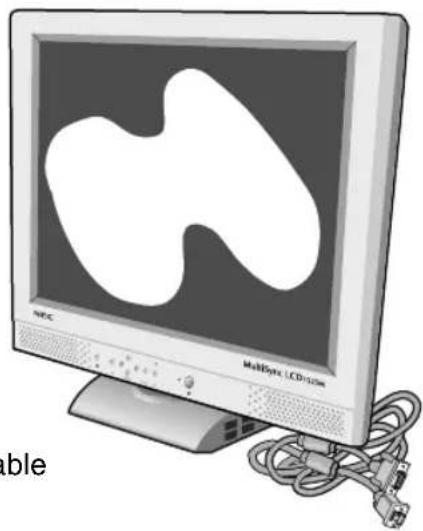
Your new NEC MultiSync LCD monitor box should contain the following:
natural_image
Illustration of a vintage desktop computer monitor with a white abstract logo on screen, connected to cables (no text or symbols visible)MultiSync LCD1525M monitor with video signal cable
natural_image
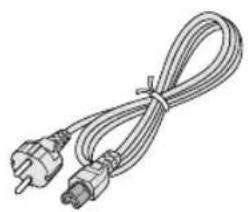
Coiled electrical plug and terminal outlet (no text or symbols visible)Power Cable Audio Cable
natural_image
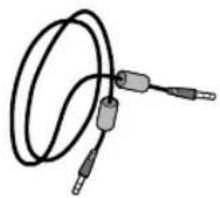
Simple line drawing of a coiled cable with two connectors (no text or symbols)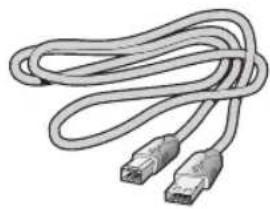
natural_image
Coiled network of USB connectors (no text or symbols visible)USB Cable
- NEC MultiSync LCD1525M.
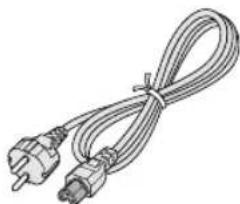
- AC Power Cable.
- Video Signal Cable.
- Audio Cable.
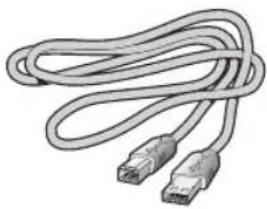
- USB Cable.
- User's Manual.
- CD ROM (includes complete User's Manual in PDF format).
Remember to save your original box and packing material to transport or ship the monitor.
English-3
Recommended Use
Safety Precautions and Maintenance
For optimum performance, please note the following when setting up and using the MultiSync LCD colour monitor:
- DO NOT OPEN THE MONITOR. There are no user serviceable parts inside and opening or removing covers may expose you to dangerous shock hazards or other risks. Refer all servicing to qualified service personnel.
- Allow adequate ventilation around the monitor so that heat can properly dissipate. Do not block ventilated openings or place the monitor near a radiator or other heat sources. Do not put anything on top of the monitor.
- Do not place any objects onto the monitor and do not use the monitor outdoors.
- Do not spill any liquids into the cabinet or use your monitor near water.
- Do not insert objects of any kind into the cabinet slots, as they may touch dangerous voltage points, which can be harmful or fatal or may cause electric shock, fire or equipment failure.
- Do not place any heavy objects on the power cord. Damage to the cord may cause shock or fire.
- Do not place this product on a sloping or unstable cart, stand or table, as the monitor may fall, causing serious damage to the monitor.
- The power cable connector is the primary means of detaching the system from the power supply. The monitor should be installed close to a power outlet that is easily accessible.
- When operating the MultiSync LCD monitor with its AC100-240V power supply, use a power supply cord that matches the power supply voltage of the AC power outlet being used. The power supply cord you use must have been approved by and comply with the safety standards of your country.
- Handle with care when transporting. Save packaging for transporting.
- The inside of the fluorescent tube located within the LCD monitor contains mercury. Please follow the bylaws or rules of your local municipality to dispose of this tube properly.
- Do not bend power cord.
- Do not use monitor in high tempered, humid, dusty, or oily areas.
English-4
- Do not cover vent on monitor.
- If the monitor is broken, do not come in contact with the liquid crystal.
- If glass is broken, handle with care.
Immediately unplug your monitor from the power outlet and refer servicing to qualified service personnel under the following conditions:
- When the power supply cord or plug is damaged.
- If liquid has been spilled or objects have fallen into the monitor.
- If the monitor has been exposed to rain or water.
- If the monitor has been dropped or the cabinet is damaged.

CORRECT PLACEMENT AND ADJUSTMENT OF THE MONITOR CAN REDUCE EYE, SHOULDER AND NECK FATIGUE. CHECK THE FOLLOWING WHEN YOU POSITION THE MONITOR:

- For optimum performance, allow 20 minutes for warmup.
- Adjust the monitor height so that the top of the screen is at or slightly below eye level. Your eyes should look slightly downward when viewing the middle of the screen.
- Position your monitor no closer than 40 cm and no further away than 70 cm from your eyes. The optimal distance is 53 cm for the MultiSync LCD1525M monitor.
- Rest your eyes periodically by focusing on an object at least 6 m away. Blink often.
- Position the monitor at a 90° angle to windows and other light sources to minimize glare and reflections. Adjust the monitor tilt so that ceiling lights do not reflect on your screen.
- If reflected light makes it hard for you to see your screen, use an anti-glare filter.
- Clean the LCD monitor surface with a lint-free, non-abrasive cloth. Avoid using any cleaning solution or glass cleaner!
- Adjust the monitor's brightness and contrast controls to enhance readability.
- Use a document holder placed close to the screen.
- Position whatever you are looking at most of the time (the screen or reference material) directly in front of you to minimize turning your head while you are typing.
- Avoid displaying fixed patterns on the monitor for long periods of time to avoid image persistence (after-image effects).
• Get regular eye checkups.
English-5
Installation
To attach the MultiSync LCD1525M monitor to your system, follow these instructions:
-
Turn off the power to your computer.
-
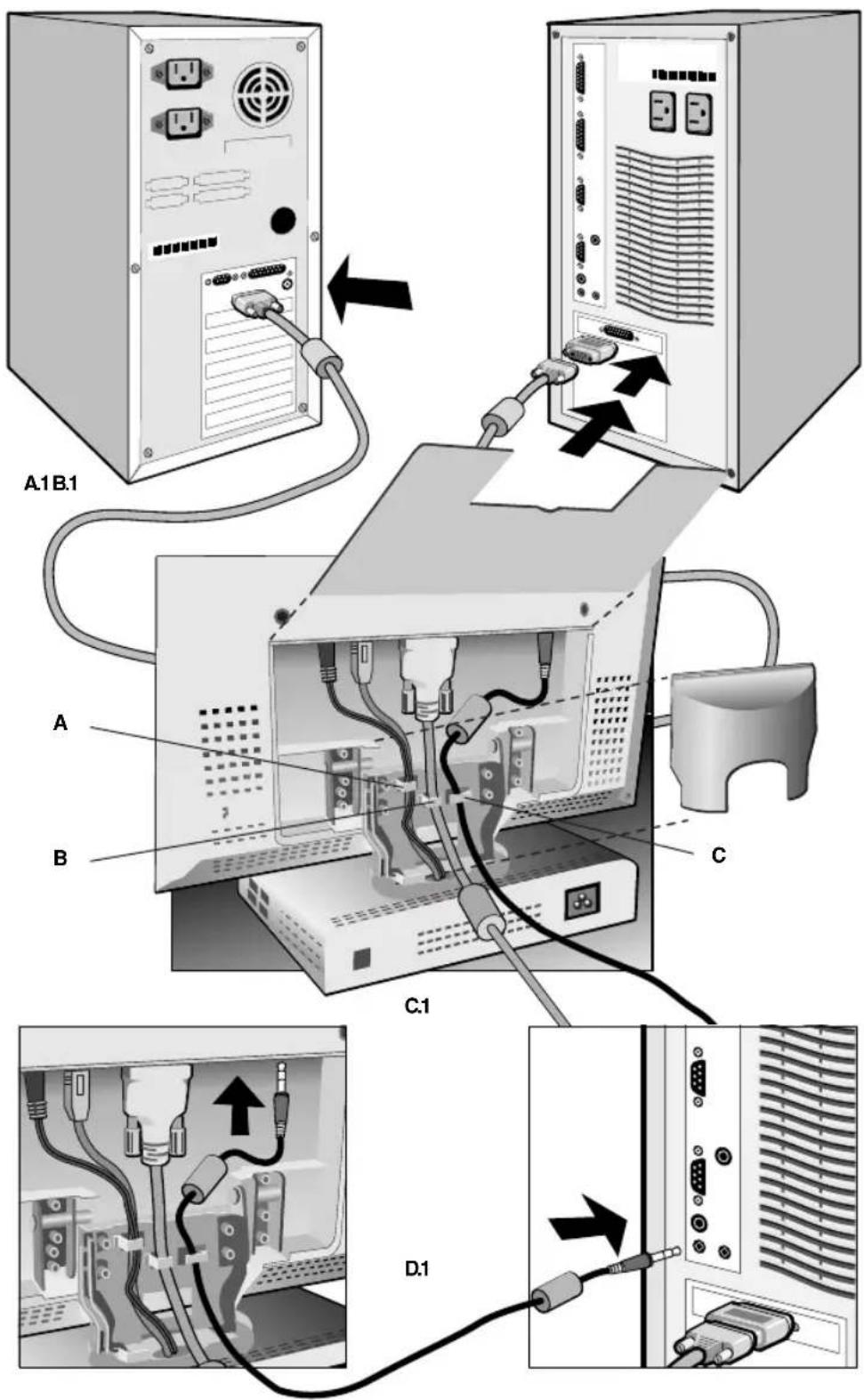
For PC: Connect the 15-pin mini D-SUB of the appropriate signal cable to the connector for the display card in your system (Figure A.1). Tighten all screws.
For Mac: Connect the MultiSync LCD1525M Macintosh cable adapter to the computer (Figure B.1). Attach the 15-pin mini D-SUB end of the appropriate signal cable to the MultiSync LCD1525M Macintosh cable adapter (Figure B.1). Tighten all screws.
-
Remove connector cover and cable cover. Connect the 15-pin mini D-SUB of the video signal cable to the appropriate connector on the back of the monitor (Figure C.1). Place the Video Signal Cable under Clip B.
-
Connect the audio cable to "AUDIO INPUT" on the back of the monitor and the other end to the "Audio out" terminal of the computer. Place the Audio cable under Clip C (Figure D.1). Replace connector cover and cable cover.
-
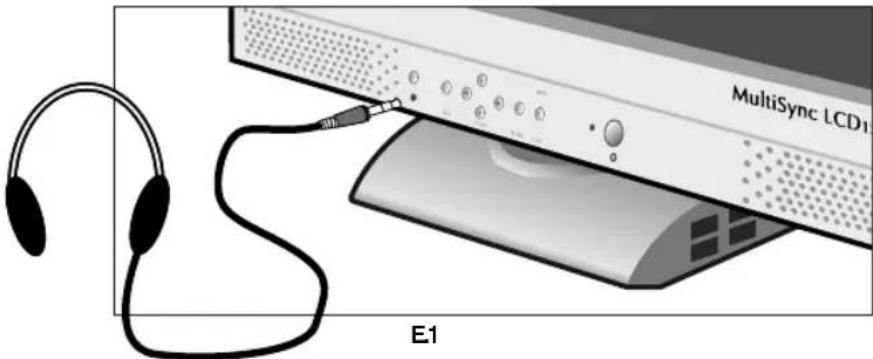
Headphones may be connected to the "Headphones" output on the front of the monitor's bezel marked "○" (Figure E.1). While the headphones are connected, the sound from the speakers will be disabled. Headphones can be purchased from your local electronics store.
-
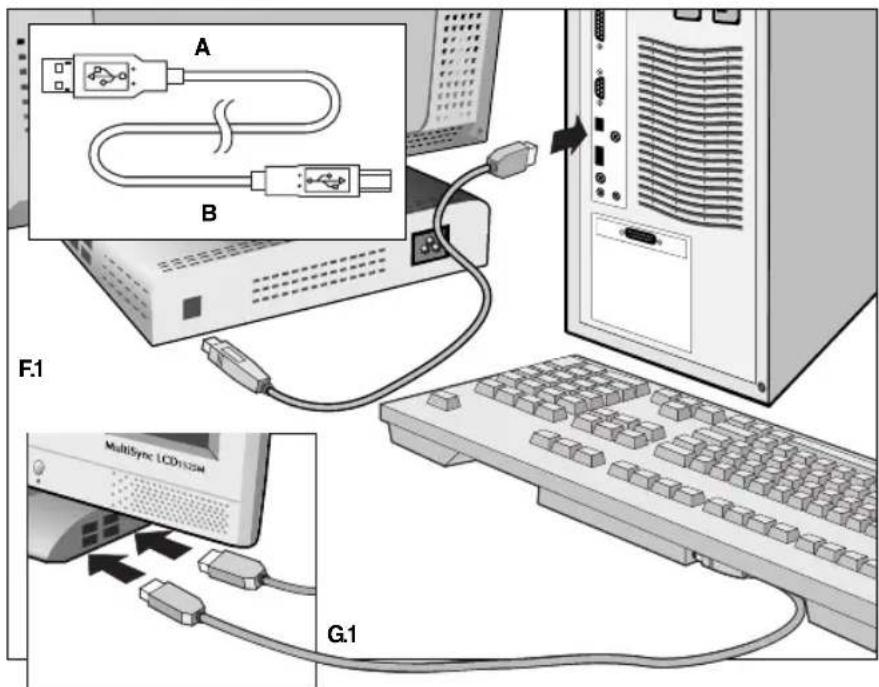
Using the USB cable, connect the B type connector to the USB upstream port on the back of the monitor and A type connector to the downstream part on the computer (Figure F.1). If you are using the cord from the USB device, use one of the downstream port on the side of the monitor (Figure G.1).
NOTE: Incorrect cable connections may result in irregular operation, damage display quality/components of LCD module and/or shorten the module's life.
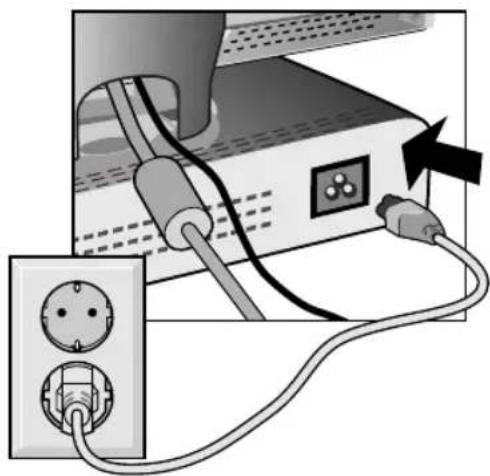
- Connect one end of the power cord to the MultiSync LCD Series monitor and the other end to the power outlet (Figure H.1). The power supply cord you use must have been approved by and comply with the safety standards of your country. (Type H05VV-F should be used except in UK)
English-6
- Turn on the monitor (Figure I.1) and the computer.
- To complete the setup of your MultiSync LCD monitor, use the following OSM controls:
• Auto Adjust Contrast
- Auto Adjust
Refer to the Controls section of this User's Manual for a full description of these OSM controls.
NOTE: If you have any problems, please refer to the Troubleshooting section of this User's Manual.
Controls
OSM Controls
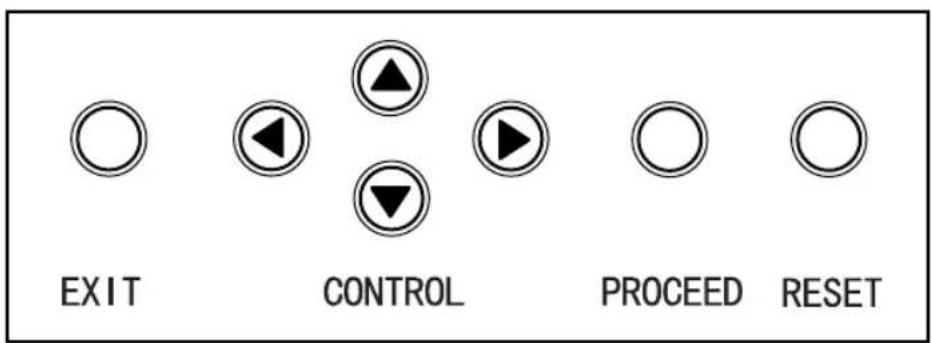
The OSM controls on the front of the monitor provide the following functions:
To access OSM press any of the control buttons (◀, ▶, ▲) or the PROCEED button.
To mute volume, press the RESET button.
| Main Menu | Sub-Menu | |
| EXIT | Exits the OSM controls. | Exits to the OSM main menu. |
| CONTROL ▲▼ | Moves the highlighted area up/down to select one of the controls. | Moves the highlighted area up/down to select one of the controls. |
| CONTROL ▲▶ | Moves the highlighted area left/right to select control menus. | Moves the bar left/right to increase or decrease the adjustment. |
| PROCEED | Has no function. | Activates Auto Adjust feature. In Tool and Information Mode, opens additional window. |
| RESET | Resets the highlighted control menu to the factory setting. | Resets the highlighted control to the factory setting. |
NOTE: When RESET is pressed, a warning window will appear allowing you to cancel the RESET function.
English-8


Brightness and Contrast

Brightness
Adjusts the overall image and background screen brightness.

Contrast
Adjusts the image brightness in relation to the background.

Auto Adjust
Corrects the image displayed for nonstandard video inputs.

Auto Adjust
Automatically adjusts the Position, H. size and Fine controls.

Position
Controls horizontal and vertical image position within the display area of the LCD.

LEFT/RIGHT
Controls Horizontal Image Position within the display area of the LCD.

UP/DOWN
Controls Vertical Image Position within the display area of the LCD.

Auto Adjust
Automatically sets the horizontal and vertical image position within the display area of the LCD.


Image Adjust

H. size
Adjusts the horizontal size by increasing or decreasing this setting.

Fine
Improves focus, clarity and image stability by increasing or decreasing the Fine setting.
English-9
AUTO
Auto Adjust
Automatically adjusts the H. Size or Fine settings.

Tools
Language: OSM control menus are available in seven languages.
Safety Instruction

WARNING

TO PREVENT FIRE OR SHOCK HAZARDS, DO NOT EXPOSE THIS UNIT TO RAIN OR MOISTURE. ALSO, DO NOT USE THIS UNIT'S POLARIZED PLUG WITH AN EXTENSION CORD RECEPTACLE OR OTHER OUTLETS UNLESS THE PRONGS CAN BE FULLY INSERTED.
REFRAIN FROM OPENING THE CABINET AS THERE ARE HIGH VOLTAGE COMPONENTS INSIDE. REFER SERVICING TO QUALIFIED SERVICE PERSONNEL.
CAUTION

TO REDUCE THE RISK OF ELECTRIC SHOCK, MAKE SURE POWER CORD IS UNPLUGGED FROMWALL SOCKET. TO FULLY DISENGAGE THE POWER TO THE UNIT, PLEASE DISCONNECT THE POWERCORD FROM THE AC OUTLET. DO NOT REMOVE COVER (OR BACK). NO USER SERVICEABLE PARTS INSIDE. REFER SERVICING TO QUALIFIED SERVICE PERSONNEL.

This symbol warns user that uninsulated voltage within the unit may have sufficient magnitude to cause electric shock. Therefore, it is dangerous to make any kind of contact with any part inside this unit.

This symbol alerts the user that important literature concerning the operation and maintenance of this unit has been included. Therefore, it should be read carefully in order to avoid any problems.
Caution:
When operating the MultiSync LCD1525M with a 220-240V AC power source in Europe except UK, use the power cord provided with the monitor.
In the UK, a BS approved power cord with a moulded plug has a Black (five Amps) fuse installed for use with this equipment. If a power cord is not supplied with this equipment please contact your supplier.
When operating the MultiSync LCD1525M with a 220-240V AC power source in Australia, use the power cord provided with the monitor.
For all other cases, use a power cord that matches the AC voltage of the power outlet and has been approved by and complies with the safety standard of your particular country.
English-10
Úvod k monitoru NEC MultiSync LCD1525M
Monitor LCD NEC MultiSync 1525M monitor s kabelem pro video signál
natural_image
Coiled electrical plug and terminal outlet (no text or symbols visible)natural_image
Simple line drawing of a coiled cable with two connectors and a terminal connector (no text or symbols)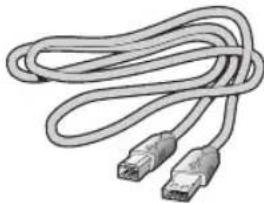
natural_image
Coiled network cable with two connectors (no text or symbols visible)Kabel USB
OSM (On Screen Manager)
natural_image
Illustration of a vintage computer monitor displaying a white abstract shape on its screen, with cables and connectors nearby (no text or symbols)MultiSync LCD1525M
natural_image
Coiled electrical plug and terminal outlet (no text or symbols visible)natural_image
Simple line drawing of a coiled cable with two connectors and a terminal connector (no text or symbols)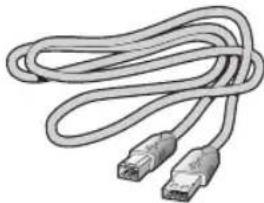
natural_image
Coiled network cable with two connectors (no text or symbols visible)USB-Kabel
Brightness (Helligkeit)
natural_image
Illustration of a vintage computer monitor displaying a white abstract shape on its screen, with cables and connectors nearby (no text or symbols)natural_image
Coiled electrical plug with two terminal connectors (no text or symbols visible)natural_image
Simple line drawing of a coiled cable with two connectors and a terminal connector (no text or symbols)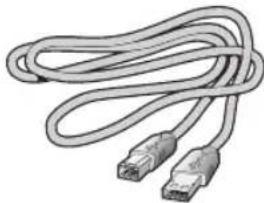
natural_image
Coiled network cable with two connectors (no text or symbols visible)Καλώδιο USB
natural_image
Illustration of a computer monitor displaying a white abstract shape on its screen, with cables and connectors nearby (no text or symbols on the device itself)MultiSync LCD1525M
natural_image
Coiled electrical plug and terminal outlet (no text or symbols visible)natural_image
Simple line drawing of a coiled cable with two connectors and a terminal connector (no text or symbols)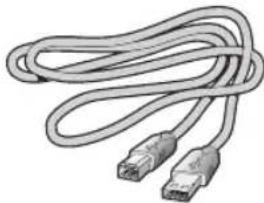
natural_image
Coiled network cable with two connectors (no text or symbols visible)Cable USB
natural_image
Illustration of a vintage computer monitor with a white abstract logo on screen, connected to cables (no readable text or symbols)natural_image
Coiled electrical plug and terminal outlet (no text or symbols visible)natural_image
Simple line drawing of a coiled cable with two connectors (no text or symbols)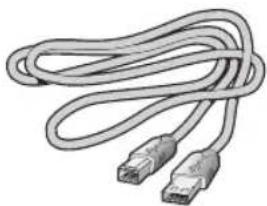
natural_image
Coiled network cable with two USB connectors (no text or symbols visible)Câble USB

Controlli OSM (On-Screen Manager)
natural_image
Illustration of a computer monitor displaying a stylized abstract shape, with cables and connectors nearby (no readable text or symbols)natural_image
Coiled electrical plug and terminal outlet (no text or symbols visible)natural_image
Simple line drawing of a coiled cable with two connectors (no text or symbols)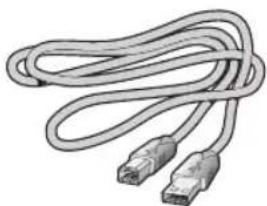
natural_image
Coiled network cable with two connectors (no text or symbols visible)Cavo USB
Multiple Frequency Technology
natural_image
Illustration of a vintage computer monitor displaying a white abstract shape on its screen, with cables and connectors nearby (no text or symbols)natural_image
Coiled electrical plug and terminal outlet (no text or symbols visible)natural_image
Simple line drawing of a coiled cable with two connectors and a probe inserted (no text or symbols)geluidssignaal
natural_image
Coiled network of two USB connectors (no text or symbols visible)USB-kabel
Brightness and Contrast
Brightness
natural_image
Coiled electrical outlet cable with two terminal plugs (no text or symbols visible)natural_image
Simple line drawing of a coiled cable with two connectors (no text or symbols)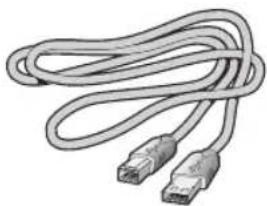
natural_image
Coiled network cable with two USB connectors (no text or symbols visible)Kabel USB
natural_image
Coiled electrical outlet cable with two terminal plugs (no text or symbols visible)natural_image
Simple line drawing of a coiled cable with two connectors (no text or symbols)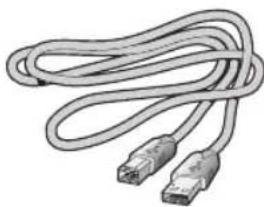
natural_image
Coiled network cable with two USB connectors (no text or symbols visible)Кабель USB
NEC MultiSync LCD1525M Giriş
natural_image
Illustration of a computer monitor displaying a stylized abstract shape, with cables and connectors nearby (no text or symbols on the device itself)natural_image
Coiled electrical plug and terminal outlet cable (no text or symbols visible)natural_image
Simple line drawing of a coiled cable with two connectors and a terminal connector (no text or symbols)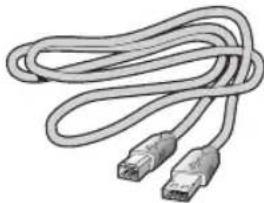
natural_image
Coiled network cable with two connectors (no text or symbols visible)USB Kablosu
Brightness (Parlaklık)


- Declaration of the Manufacturer
- For the Customer to use in U.S.A. or Canada
- Canadian Department of Communications Compliance Statement
- DECLARATION OF CONFORMITY
- LA-1528HMW-BK only
- TCO'95
- Why do we have environmentally labelled computers?
- What does labelling involve?
- TCO Development Unit
- Environmental Requirements
- Brominated flame retardants
- Lead\*\*
- Cadmium\*\*
- Mercury\*\*
- CFCs (freons)
- LA-1528HMW only
- TCO'99
- TCO Development
- Flame retardants
- Introduction to the NEC MultiSync LCD1525M
- Wider Compatibility
- Reduced Footprint
- Colour Control System
- OSM (On-Screen Manager) Controls
- ErgoDesign Features
- Plug and Play
- IPM (Intelligent Power Manager) System
- Multiple Frequency Technology
- FullScan Capability
- Contents
- English-3
- Recommended Use
- Safety Precautions and Maintenance
- English-4
- English-5
- Installation
- English-6
- Controls
- OSM Controls
- English-8
- Brightness and Contrast
- Brightness
- Contrast
- Auto Adjust
- Position
- LEFT/RIGHT
- UP/DOWN
- Image Adjust
- size
- Fine
- English-9
- Tools
- Safety Instruction
- WARNING
- CAUTION
- Caution:
- English-10
- Úvod k monitoru NEC MultiSync LCD1525M
- OSM (On Screen Manager)
- Brightness (Helligkeit)
- Controlli OSM (On-Screen Manager)
- NEC MultiSync LCD1525M Giriş
- Brightness (Parlaklık)
Brand : NEC
Model : MultiSync LCD1525MBK
Category : Monitor