
POWX4207 - Battery charger PowerPlus - Free user manual and instructions
Find the device manual for free POWX4207 PowerPlus in PDF.



| Brand | PowerPlus |
| Model | POWX4207 |
| Product type | Smart battery charger |
| Supply voltage | 220-240 V ~50 Hz |
| Rated power | 160 W |
| Rated output voltage | 12 V DC |
| Rated output current | 10 A |
| Max. current in power supply mode | 8 A |
| Reconditioning program | 15.3 V DC / 2.5 A |
| Ambient temperature | -20 °C to 40 °C |
| Battery capacity STD/AGM/Winter | 30-200 Ah |
| Battery capacity maintenance mode | 3-60 Ah (1 A max) |
| Charge programs | 12V STD, 12V AGM, Winter, 12V M, RECOND, SUPPLY |
| Protection | Reverse polarity, short circuit |
| Protection class | II (double insulation) |
| Usage | Indoor only |
| Compatible battery type | 12 V lead-acid (wet, Ca/Ca, EFB), GEL, AGM |
| Incompatible batteries | Lithium, non-rechargeable |
| Feature | Automatic microprocessor charging |
| Display | LCD screen |
Frequently Asked Questions - POWX4207 PowerPlus
User questions about POWX4207 PowerPlus
0 question about this device. Answer the ones you know or ask your own.
Ask a new question about this device
Download the instructions for your Battery charger in PDF format for free! Find your manual POWX4207 - PowerPlus and take your electronic device back in hand. On this page are published all the documents necessary for the use of your device. POWX4207 by PowerPlus.
USER MANUAL POWX4207 PowerPlus
natural_image
PowerPLUS 10-VAC power supply with black and yellow casing, connected to red and black clamp probes (no visible text or symbols on main body)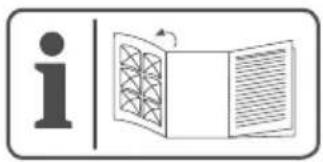
NL NEDERLANDS VERTAALDE VERSIE VAN DE ORIGINELE HANDLEIDING
FR FRANÇAIS TRADUCTION DU MODE D'EMPLOI D'ORIGINE
EN ENGLISH ORIGINAL INSTRUCTION MANUAL
2 BESCHRIJVING (FIG. A)
7.7 Foutindicator (G)
Temps de charge/h = Amp. (courant de charge)
natural_image
Simple hand-drawn sketch of a rounded rectangular shape with no text or symbolsPhilippe Vankerkhove
1 INTENDED USE 2
2 DESCRIPTION (FIG A) 2
3 PACKAGE CONTENT LIST....2
4 SYMBOLS 2
5 GENERAL POWER TOOL SAFETY WARNINGS....3
5.1 Working area....3
5.2 Electrical safety 3
5.3 Personal safety....3
5.4 Power tool use and care....4
5.5 Service....4
6 ADDITIONAL SAFETY INSTRUCTIONS .... 4
6.1 Chargers....4
7 OPERATION....4
7.1 Charging options....4
7.2 Automatic charging....5
7.3 Explanation of the symbols (fig.1)....5
7.4 Charging settings....5
7.4.1 Standard charging programs....6
7.4.2 Special charging programs 6
7.4.3 Additional function 6
7.5 Charging the battery....7
7.6 Calculate the charging time (fig.2)....7
7.7 Fault indicator (G)....7
7.8 Finishing charging the battery....8
8 TECHNICAL DETAILS....8
9 ENVIRONMENT 8
10 CONFORMITEITSVERKLARING....9
SMART BATTERY CHARGER 160W/10A/200AH POWX4207
1 INTENDED USE
The charger is designed for charging non maintenance-free or maintenance-free 12V lead acid batteries (wet/Ca/Ca/EFB batteries) and for lead gel and AGM batteries which are used in motor vehicles. The equipment is designed for mobile use only and not for installation in caravans, mobile homes or similar vehicles. Not suitable for professional use.

WARNING! Read this manual and general safety instructions carefully before using the appliance, for your own safety. Your power tool should only be passed on together with these instructions.
2 DESCRIPTION (FIG A)
- Function key
- LCD display
- Charging cable, black (-)
- Charging cable, red (+)
- Suspension eye
- Mains power cable
3 PACKAGE CONTENT LIST
■ Remove all packaging materials.
- Remove remaining packing and package inserts (if included).
- Check that the package contents are complete.
- Check the appliance, the power cord, the power plug and all accessories for transportation damage.
- Keep the packing materials as far as possible till the end of the warranty period. Dispose it into your local waste disposal system afterwards.

WARNING: Packaging materials are not toys! Children must not play with plastic bags! Danger of suffocation!
1 x charger
1 x Manual

If any parts are missing or damaged, please contact your dealer.
4 SYMBOLS
In this manual and/or on the machine the following symbols are used:
 | Denotes risk of personal injury or damage to the tool. |  | In accordance with essential requirements of the European directive(s) |
 | Read manual before use |  | "Class II - The machine is double insulated; Earthing wire is therefore not necessary (only for charger) |

Use battery and charger only in closed rooms
5 GENERAL POWER TOOL SAFETY WARNINGS
Read all safety warnings and instructions. Failure to heed warnings and follow instructions may result in electric shock, fire and/or serious injury. Keep safety warnings and instructions for future reference. The term "power tool" in the safety warnings refers to your mains-operated (corded) power tool or battery-operated (cordless) power tool.
5.1 Working area
- Keep working area clean and well lit. Untidy and dark areas can lead to accidents.
- Do not operate power tools in potentially explosive surroundings, for example, in the presence of inflammable liquids, gases or dust. Power tools create sparks which may ignite the dust or fumes.
- Keep children and bystanders at a distance when operating a power tool. Distractions can cause you to lose control of it.
5.2 Electrical safety
- Always check that the power supply corresponds to the voltage on the rating plate.
- Power tool plugs must match the outlet. Never modify the plug in any way. Do not use adapter plugs with earthed power tools. Unmodified plugs and matching outlets will reduce the risk of an electric shock.
- Avoid body contact with earthed surfaces such as pipes, radiators, kitchen ranges and refrigerators. There is an increased risk of an electric shock if your body is earthed.
- Do not expose power tools to rain or wet conditions. If water gets inside a power tool, it will increase the risk of an electric shock.
- Do not damage the cord. Never use the cord for carrying, pulling or unplugging the power tool. Keep the cord away from heat, oil, sharp edges or moving parts. Damaged or entangled cords increase the risk of an electric shock.
- When operating a power tool outdoors, use an extension cable suitable for outdoor use. Using a cord suitable for outdoor use reduces the risk of an electric shock.
- If operating a power tool in a damp location is unavoidable, use a power supply protected by a residual current device (RCD). Using an RCD reduces the risk of an electric shock.
5.3 Personal safety
- Stay alert, watch what you are doing and use common sense when operating a power tool. Do not use a power tool when you are tired or under the influence of drugs, alcohol or medication. A moment of inattention when operating a power tool may result in serious personal injury.
- Use safety equipment. Always wear eye protection. Using safety equipment such as a dust mask, non-skid safety shoes, a hard hat, or hearing protection whenever it is needed will reduce the risk of personal injury.
- Avoid accidental starts. Ensure the switch is in the off position before inserting the plug. Carrying power tools with your finger on the switch or plugging in power tools when the switch is in the on position makes accidents more likely.
- Remove any adjusting keys or spanners before turning on the power tool. A spanner or key left attached to a rotating part of the power tool may result in personal injury.
- Do not reach out too far. Keep your feet firmly on the ground at all times. This will enable you retain control over the power tool in unexpected situations.
- Dress properly. Do not wear loose clothing or jewellery. Keep your hair, clothing and gloves away from the power tool. Loose clothes, jewellery or long hair can become entangled in the moving parts.
POWX4207 EN
- If there are devices for connecting dust extraction and collection facilities, please ensure that they are attached and used correctly. Using such devices can reduce dust-related hazards.
5.4 Power tool use and care
- Do not expect the power tool to do more than it can. Use the correct power tool for what you want to do. A power tool will achieve better results and be safer if used in the context for which it was designed.
- Do not use the power tool if the switch cannot turn it on and off. A power tool with a broken switch is dangerous and must be repaired.
- Disconnect the plug from the power source before making adjustments, changing accessories, or storing power tools. Such preventive safety measures reduce the risk of starting the power tool accidentally.
- Store power tools, when not in use, out of the reach of children and do not allow people who are not familiar with the power tool or these instructions to operate it. Power tools are potentially dangerous in the hands of untrained users.
- Maintain power tools. Check for misalignment or jammed moving parts, breakages or any other feature that might affect the operation of the power tool. If it is damaged, the power tool must be repaired. Many accidents are caused by using poorly maintained power tools.
- Keep cutting tools sharp and clean. Properly maintained cutting tools with sharp cutting edges are less likely to jam and are easier to control.
- Use the power tool, accessories and cutting tools, etc., in accordance with these instructions and in the manner intended for the particular type of power tool, taking into account the working conditions and the work which needs to be done. Using a power tool in ways for which it was not intended can lead to potentially hazardous situations.
5.5 Service
- Your power tool should be serviced by a qualified specialist using only standard spare parts. This will ensure that it meets the required safety standards.
6 ADDITIONAL SAFETY INSTRUCTIONS
6.1 Chargers
■ Never attempt to charge non-rechargeable batteries.
■ Have defective cords replaced immediately.
- Do not expose to water.
■ Do not open the charger.
- Do not probe the charger.
■ The charger is intended for indoor use only.
- The equipment must not be used for charging lithium iron phosphate rechargeable batteries or other lithium rechargeable batteries.
7 OPERATION
Before you connect the equipment to the power supply make sure that the data on the specifications label are identical to the supply voltage.

WARNING: do not charge any frozen batteries.
7.1 Charging options
- The 12V M charging program is suitable for trickle charging and charging of batteries with small battery capacities.
- The SUPPLY function enables the device to be used as a buffer power supply as well, e.g. while changing a battery or for the operation of 12V d.c. consumers (observe the max. power consumption).
POWX4207 EN
- The RECOND program is intended to be used only for bringing lead acid batteries (not for AGM and GEL batteries) which have undergone exhaustive discharge back to life. Only use this program for a short time and under supervision.
7.2 Automatic charging
The charger is a microprocessor controlled automatic charger, i.e. it is suitable in particular for charging maintenance-free batteries and for the long-term charging and maintenance-charging of batteries which are not in constant use, e.g. for classic cars, recreational vehicles, lawn tractors and the like. The integrated microprocessor enables charging in several steps. The final charging step, maintenance charging, maintains the battery capacity at 95–100% and therefore keeps the battery fully charged at all times. The charging operation does not need to be monitored. However, do not leave the battery unattended if you charge it over an extended period of time, so that you can disconnect it from the mains power supply in the event of a fault in the charger.
7.3 Explanation of the symbols (fig.1)
- A Charging a 12V battery (lead acid battery and GEL battery).
■ B Charging a 12V AGM battery. - C Charging a 12V battery (lead acid battery, AGM battery and GEL battery) in winter mode with an ambient temperature of -20^ C to +5^ C.
- D Charging a 12V battery (lead acid battery, AGM battery and GEL battery) in charge maintenance mode.
- E Charging voltage in volts, faulty battery (BAt) / fully charged (FUL) / connected with reverse polarity or short-circuit at the clamps (Err)
- F Restoration of the charging capability of discharged lead acid batteries with higher charging voltage
■ G Clamps are wrongly connected (reverse polarity) or there is a short-circuit
■ H Power supply, e.g. when changing a battery - K Charge status of the battery in percent (1 increment = 25%) and charging process (increment lit = the battery has reached the charge level shown; increment in the battery symbol flashes = the battery is being charged to the next charge level; all increments are lit = the battery is fully charged).
7.4 Charging settings
- Press the “Mode” button (1) to switch to the various programs. The symbol for the applicable program will appear in the display. The batteries will be charged using the program which is displayed.
- To go to the RECOND program, press the "Mode" button for 5 seconds.
- To get back to the 12V STD program from the RECOND program or the SUPPLY function, also press the "Mode" button for 5 seconds.
If the voltage of the battery is less than 3.5 V or more than 15 V, the battery is either not suitable for charging or it is faulty. The message “BAt” will appear in the LCD display. The “G” symbol will flash. It is also possible that other battery errors or faults can mean that the battery cannot be charged.
- If there is a short-circuit between the charging terminals while the SUPPLY function is on, the message "Lo V" will appear in the LCD display. The "G" symbol will flash.
- When the charger is disconnected from the socket outlet, the last charging program to have been set will be saved (apart from RECOND and SUPPLY) and will be the default program the next time the charger is used.
- When the charger clamps are connected to the battery, the charger draws a very small amount of electricity from the battery and the LCD display comes on briefly. This is not a fault.
7.4.1 Standard charging programs
- 12V STD (A): Charging program for lead acid batteries (wet, Ca/Ca, EFB batteries) and gel batteries. When the charger is used for the first time, 12V STD will appear in the display.
- 12V AGM (B): Charging program for AGM batteries Press the "Mode" button to switch from the 12V STD to the 12V AGM charging program.
7.4.2 Special charging programs
- Winter (C): The recommended charging program for cold weather conditions (ambient temperature of -20°C to +5°C) for normal lead acid batteries (wet / Ca/Ca batteries). Press the “Mode” button to switch from the 12V AGM to the “Winter” charging program
- 12V M (D): Charging program for batteries with a low capacity and for trickle charging of all batteries listed before. Press the "Mode" button to switch from the "Winter" to the "12 M" charging program
- RECOND (F): Charging program with higher end of-charge voltage and constant current charging, used only for restoring the charging capability of lead acid batteries which have undergone exhaustive discharge. The RECOND process must be checked every half an hour and must never exceed a time of 4 hours. Refer to the instructions supplied by the battery manufacturer. To go to this program, the “mode” button must be pressed for 5 seconds. To get back to the 12V STD program from the RECOND program or the supply function, also press the “Mode” button for 5 seconds.

WARNING: gassing generates explosive gas-risk of explosion! Ensure there is good ventilation.
Only use the RECOND program for lead acid batteries and only as described below. Take care to avoid spilling any battery acid. Battery acid is aggressive. Read and observe the safety information. Never use for a battery which is of sealed design (VRLA battery such as, e.g. AGM or GEL battery). Refer to the instructions supplied by the battery manufacturer. Only use for batteries which are free-standing and have been taken out of the car, not while installed in your car with a connection to the car's electrical system. The higher charging voltage could damage the electrical system. Refer to and observe the operating manual for your car and/or contact the manufacturer of your car.
i. Connect the charger to a lead acid battery as described in section 7.5 and check the charging process every half hour.
ii. After 4 hours at the latest or as soon as the battery starts audibly gassing (bubbling), remove the charger as described in section 7.5.
iii. If possible, check the acid level and, if possible, top up the battery cells, if necessary just with distilled water. The acid level should ideally be between the marked max. and min. level and should be identical for all the cells. Screw the battery stoppers, if there are any, tightly in place.
7.4.3 Additional function
- SUPPLY (H): For supplying 12V d.c. voltage, e.g. when changing a battery or for operating 12V d.c. consumers. Press the "Mode" button to switch from the RECOND to the SUPPLY function.

WARNING: Protection against swapped poles will not be available. If the poles are swapped there is a risk of damaging the charger and the
POWX4207 EN
battery/on-board vehicle power supply or a connected consumer. It is imperative that you make sure the polarity is correct when you connect up. Observe the maximum power consumption of the consumer.
NOTE: The direct voltage which is provided (shown in the display) is load-dependent and without load it is approx. 14.5 V. This function can be used for consumers which are operated from a vehicle's cigarette lighter. Refer to and observe the operating manual for your 12 V consumer.
7.5 Charging the battery
- Release or remove the battery stoppers (if fitted) from the battery.
- Check the acid level in the battery. If necessary, top up the battery with distilled water (if possible). Battery acid is aggressive. Rinse off any acid splashes thoroughly with lots of water and seek medical advice if necessary.
- First connect the red charging cable to the positive pole of the battery.
- Then connect the black charging cable to the bodywork of the vehicle away from the battery and the petrol pipe.
- Warning! Under normal circumstances the negative battery pole is connected to the bodywork and you proceed as described above. In exceptional cases it is possible that the positive battery pole is connected to the bodywork (positive earthing). In this case, connect the black charger cable to the negative pole on the battery. Then connect the red charger cable to the bodywork at a point away from the battery and the petrol pipe.
- After the battery has been connected to the charger, you can connect the charger to a socket. You can now change the settings (see 7.4).
- Important! Charging may create dangerous explosive gas and therefore you should avoid spark formation and naked flames whilst the battery is charging. There is a risk of explosion! It is essential that you ventilate the rooms well.
- When “Ful” appears in the LCD display and all increments (K) are lit, charging has been completed. The charger holds the battery at 95% – 100% available battery capacity using pulsed charging. If the charger shows this after just a few minutes, this indicates that the battery capacity is low. The battery needs replacing.
7.6 Calculate the charging time (fig.2)
The charging time depends on the charge status of the battery. If the battery is fully discharged, the approximate charging time up to approx. 80% charged can be calculated using the following formula:
Battery capacity in Ah
Charging time/h =
Amp. (charging current)
The charging current should be 1/10 to 1/6 of the battery capacity.
7.7 Fault indicator (G)
The fault indicator will flash in the following cases:
- If the voltage of the battery is less than 3.5V or more than 15 V. The battery is either unsuitable for charging or is defective. It is also possible that other battery errors or faults can mean that the battery cannot be charged.
- If the terminal clamps are connected to the battery terminals with the wrong polarity. The protection against swapped poles ensures that the battery and charger do not get damaged. Remove the charger from the battery and start the charging process from the beginning again. CAUTION! Protection against swapped poles is not available when the SUPPLY program is used.
POWX4207 EN
- If there is a short-circuit between the two terminal clamps (the metal parts of the clamps come into contact with each other). The protection against short-circuits ensures that the battery and charger do not get damaged.
7.8 Finishing charging the battery
- Pull the plug out of the socket.
- First disconnect the black charging cable from the bodywork.
- Then release the red charging cable from the positive pole on the battery.
- Important! In case of positive earthing, first disconnect the red charging cable from the bodywork and then the black charging cable from the battery.
- Screw or push the battery stoppers back into position (if there are any).
- Important! If the mains plug is pulled out but the charger cables are still connected to the battery, the charger will draw off a small amount of electricity from the battery. We therefore recommend that you always completely remove the charger from the battery when not in use.
8 TECHNICAL DETAILS
| Type | POWX4207 |
| Mains voltage | 220-240V ~50Hz |
| Max. power rating | 160W |
| Nominal output voltage | 12V DC |
| Rated output current | 10A |
| Supply function output max. | 8A |
| Recond charging program | 15.3V DC/2.5A |
| Ambient temperature | -20°C – 40°C |
| Battery capacity STD/AGM/Winter | 30-200Ah |
| Battery capacity “maintain mode” (max.1A) | 3-60Ah |
9 ENVIRONMENT
Should your appliance need replacement after extended use, do not dispose of it with the household refuse, but in an environmentally safe way.
Waste produced by electrical machine items should not be handled like normal household rubbish. Please recycle where recycle facilities exist. Check with your Local Authority or retailer for recycling advice.
10 CONFORMITEITSVERKLARING

VARO – Vic. Van Rompuy N.V. – Joseph Van Instraat 9 – 2500 Lier – Belgium, declares that,

product Battery charger
trade mark PowerPlus
model POWX4207
is in conformity with the essential requirements and other relevant provisions of the applicable European Directives, based on the application of European harmonized standards.
Any unauthorized modification of the apparatus voids this declaration.
European Directives (including, if applicable, their amendments up to the date of signature);
2011/65/EU
2014/30/EU
2014/35/EU
European harmonized standards (including, if applicable, their amendments up to the date of signature);
EN60335-1 : 2012
EN60335-2-29 : 2004
EN55014-1:2017
EN55014-2:2015
EN61000-3-2:2014
EN61000-3-3:2013
Keeper of the Technical Documentation : Philippe Vankerkhove, VARO Vic. Van Rompuy N.V.
The undersigned acts on behalf of the company CEO,
natural_image
Simple hand-drawn sketch of a rounded rectangle with no text or symbolsPhilippe Vankerkhove
Regulatory Affairs – Compliance Manager
27/11/2020, Lier - Belgium
POWX4207 DE
natural_image
Simple line drawing of a rounded rectangular shape with no text or symbolsPhilippe Vankerkhove
Regulatory Affairs – Compliance Manager
Lier, 27/11/2020
natural_image
Simple line drawing of a rounded rectangular shape with no text or symbolsPhilippe Vankerkhove
7.1 Ladealternativer
natural_image
Simple line drawing of a rounded rectangular shape with no text or symbolsPhilippe Vankerkhove
Regulatoriske saker - Samsvarsleder
Lier, 27/11/2020
3 FÖRPACKNINGSINNEHÅLL
6 DODATNE SIGURNOSNE UPUTE
6.1 Punjači
6 DODATNA BEZBEDNOSNA UPUTSTVA
6.1 Punjači
natural_image
Simple line drawing of a boat hull (no text or symbols)Philippe Vankerkhove
natural_image
Simple hand-drawn outline of a rounded rectangular shape with no text or symbolsPhilippe Vankerkhove
natural_image
Electricity test kit with black and yellow body, red clamp, and red terminal (no visible text or symbols)varo
WWW.VARO.COM
DESIGNED AND MARKETED BY VARO
©copyright by varo
VARO - VIC. VAN ROMPUY nv
JOSEPH VAN INSTRAAT 9 - 2500 LIER - BELGIUM
OFFICES:


- BESCHRIJVING (FIG. A)
- Foutindicator (G)
- SMART BATTERY CHARGER 160W/10A/200AH POWX4207
- INTENDED USE
- DESCRIPTION (FIG A)
- PACKAGE CONTENT LIST
- SYMBOLS
- GENERAL POWER TOOL SAFETY WARNINGS
- Working area
- Electrical safety
- Personal safety
- POWX4207 EN
- Power tool use and care
- Service
- ADDITIONAL SAFETY INSTRUCTIONS
- Chargers
- OPERATION
- WARNING: do not charge any frozen batteries.
- Charging options
- Automatic charging
- Explanation of the symbols (fig.1)
- Charging settings
- Standard charging programs
- Special charging programs
- WARNING: gassing generates explosive gas-risk of explosion! Ensure there is good ventilation.
- Additional function
- WARNING: Protection against swapped poles will not be available. If the poles are swapped there is a risk of damaging the charger and the
- Charging the battery
- Calculate the charging time (fig.2)
- Fault indicator (G)
- Finishing charging the battery
- ENVIRONMENT
- CONFORMITEITSVERKLARING
- POWX4207 DE
- Ladealternativer
- FÖRPACKNINGSINNEHÅLL
- DODATNE SIGURNOSNE UPUTE
- Punjači
- DODATNA BEZBEDNOSNA UPUTSTVA
Brand : PowerPlus
Model : POWX4207
Category : Battery charger